Billy Budd, Sailor ~ A Capsule Book Review

Billy Budd, Sailor ~ A Capsule Book Review by Allen Kopp

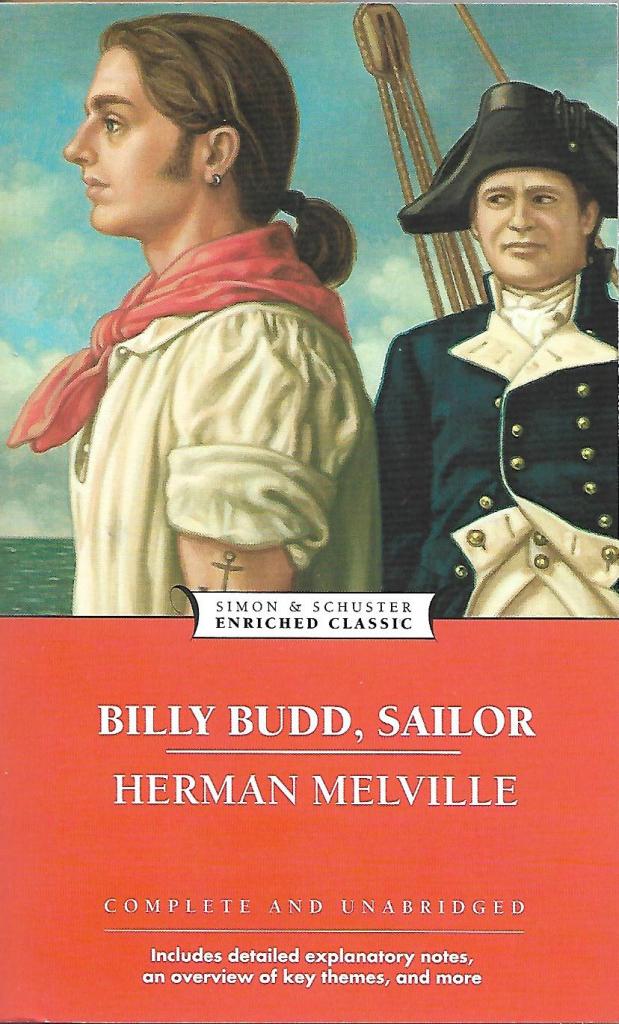
American author Herman Melville (1819-1891) wrote his last novel, Billy Budd, Sailor, toward the end of his life and it wasn’t published until more than thirty years after his death. As with his contemporary, Edgar Allan Poe (1809-1849), Melville wasn’t recognized as a literary genius until after he was in his grave.

Billy Budd, Sailor is set on board a British man-of-war (battleship) in the 1790s. It is a serious exploration of the ethics of capital punishment, the rights of the individual versus the good of the collective, and the what happens when a “decent” man is confronted with a situation where what he “feels” to be right (his conscience) is in conflict with what the law is saying must be done.

Billy Budd is twenty-one years old. He is “impressed” into naval service on a British man-of-war, the Bellipotent; this means he is forced to serve against his will as if he is a slave. (This was a common practice during these times.) Billy possesses great physical beauty, a child-like innocence, and charm; he is well-liked and even loved by most of the other sailors and also the officers on the Bellipotent. There is something about him that is almost noble. He is more than once likened to Christ. His only defect, as far as anybody can see, is a stutter that manifests itself at inopportune moments.

Naval commanders are more than usually aware of mutiny at the time of Billy Budd, Sailor, because a couple of mutinies have occurred that are still fresh in everyone’s minds. Enter John Claggart, the master-at-arms on board the Bellipotent. He is the snake in Billy Budd’s garden whose mission it is to corrupt innocence. He goes to the captain of the Bellipotent, Captain Edward Fairfax Vere, with stories that Billy Budd has been making remarks that could incite mutiny among the men. Anybody who knows Billy Budd knows this not to be true. Is it just that Claggart is envious of Billy Budd’s good looks and his popularity among the men and is out to “get” him?

When Captain Vere brings Billy Budd and John Claggart together and Billy Budd hears what Claggart is saying about him, he punches him once in the face; with just this one blow, Claggart falls to the floor dead. Now Captain Vere is faced with a dilemma. Will he follow the law, which calls for the execution of the offender, or will he allow his personal feelings for Billy Budd to stand in the way of his “duty?”

Billy Budd, Sailor is not an easy novel to read or comprehend. A great piece of writing though it may be, it’s not always “enjoyable” reading. Melville’s style of writing (the style of the time in which is was written) is wordy; he makes far too many digressions and parenthetical statements for the narrative to flow smoothly. Our interest is constantly challenged. How many readers just give up and don’t finish reading the book to the end? I doubt if Herman Melville cared or gave it much thought.

Copyright © 2019 by Allen Kopp

The City and the Pillar ~ A Capsule Book Review

The City and the Pillar ~ A Capsule Book Review by Allen Kopp

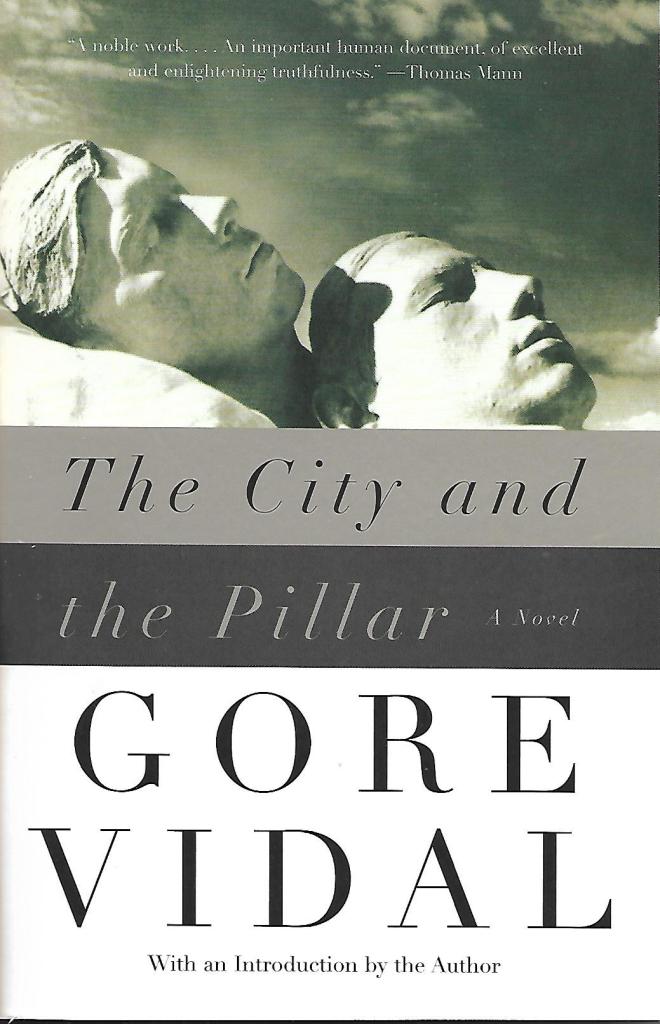
Jim Willard and Bob Ford are high school friends, growing up together in Richmond, Virginia, in the 1930s. Bob is one year older than Jim; when Bob graduates from high school, he and Jim spend the night together at the river in a falling-down “slave cabin.” During that one night before Bob goes off “to sea,” Jim and Bob do more than sleep. They have a never-to-be-forgotten (by Jim) and much-hoped-for (by Jim) sexual encounter. Of course, they are both “straight,” but that doesn’t keep them from commemorating their friendship with (then-taboo) homosexual sex. To Bob, their night of sexual adventuring has little or no meaning; to Jim it is of monumental significance.

After their one night together, Bob goes off on his seafaring adventures. For the next seven years or so, Jim carries around the memory of his night at the river with Bob. He believes, even though they both go their separate ways after high school, that he and Bob will get together again one day and will be together always. We, the reader, know this is never going to happen.

Jim has plenty of adventures while he is pining for Bob. He ends up in Hollywood, where he has a gay affair with a closeted gay movie star. (This is the most unrealistic part of the novel.) During World War II, he finds himself doing military duty but he never goes overseas and never sees any fighting. When he develops health problems, including rheumatoid arthritis, he is honorably discharged from the service.

Jim’s athleticism and masculinity, his “butchness,” are stressed throughout the novel. He is such a good tennis player that he makes his living for a time as a tennis instructor. Even though he is essentially “in love” with a man from his past, he is always masculine, never fitting into the stereotypes of gay men that were prevalent during the time this book was published (1947). He is not self-loathing because he is “different” and doesn’t destroy himself, either through drinking, pills, promiscuous sex, or self-pity. For that reason, The City and the Pillar by Gore Vidal (1925-1912) is a groundbreaking novel because it is a positive portrayal of a proudly gay man, written at a time when such a thing hardly existed.

Copyright © 2019 by Allen Kopp

Where Angels Fear to Tread ~ A Capsule Book Review

Where Angels Fear to Tread ~ A Capsule Book Review by Allen Kopp

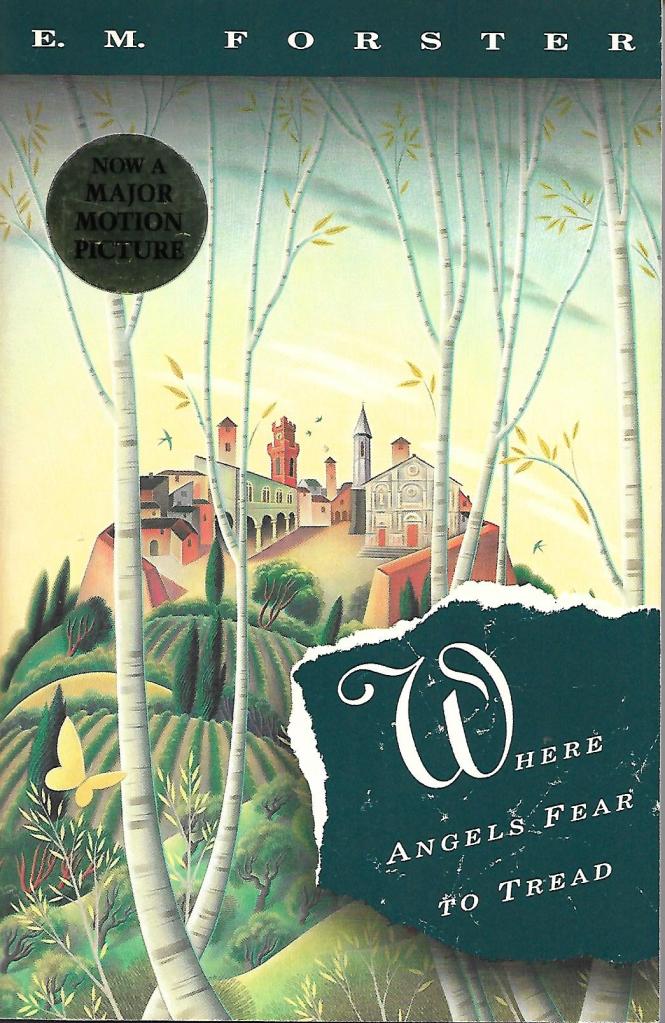
E. M. Forster (1879-1970) was one of the best and most readable English writers of the twentieth century. His first novel, Where Angels Fear to Tread, was published in 1905. It’s a story of a clash of cultures, in this case English and Italian. Stodgy, conventional, keeping-up-appearances, English middle-class morality goes head to head with emotional, hot-blooded Italian effusiveness. The English characters in Where Angels Fear to Tread are all fools who can’t see farther than the ends of their noses. The principal Italian character, Gino, is forgiving, kind and generous. Which would you rather be?

Lilia Herriton is an English widow, thirty-three years old. She lives with and is dominated by her late husband’s narrow-minded family in a small English town. She has a small daughter named Irma, who seems to prefer her grandmother and her aunt over her mother. When Lilia travels to Italy, she is captivated by its romance and beauty. Rebelling against the middle-class English morality to which she has long been captive, she meets, falls in love with, and marries a charming Italian fellow named Gino, ten years younger than she is. He has a handsome face and not much else in the way of prospects. When Lilia, early in her marriage, has a child, a boy, she dies in childbirth. Her first husband’s (the dead husband, if you will recall) family back in England believes they must go to Italy and “rescue” Lilia’s child and bring it back to England to give it a proper (English) upbringing.

Philip and Harriet Herriton, brother and sister of Lilia’s late husband, go to the little town of Monteriano, along with family friend, Caroline Abbott, ostensibly to get Lilia’s baby and bring it back to England. They fail to consider the father’s (Gino’s) feelings in the matter. Harriet is an unpleasant, bossy spinster who believes she can bully and bluff Gino into giving up the baby because it is the “right” thing to do. Philip is also of the same mind as Harriet, but when the trio arrives in Italy, Philip once again falls under Italy’s spell (partly as a result of the opera Lucia di Lammermoor) and is charmed by Gino into believing that he, Gino, is a loving and caring father and the baby is better off remaining where it is.

The Herritons don’t really give a hoot about Gino and Lilia’s baby. They want it only so they can assert their English superiority, keep up appearances, and make a point. They will do anything, including kidnapping, to get what they want. With pig-headed Harriet leading the way, they screw up monumentally, with tragic and unforeseen consequences.

Where Angels Fear to Tread was published when the author was only twenty-six. It is a meticulously written, intelligent English classic, accessible and easy to read, well worth another look. A faithful and memorable movie adaptation of the novel was made in 1991.

Copyright © 2019 by Allen Kopp

Alexander the Fabulous ~ A Capsule Book Review

Alexander the Fabulous ~ A Capsule Book Review by Allen Kopp

Alexander the Great (356-323 BCE) certainly made his mark on the ancient world. He lived about three-hundred-and-fifty years before Christ. He was born son of a king, one-eyed King Philip of the ancient kingdom of Macedonia and a strange woman named Olympias. While both of his parents were mere mortals, he was really believed to be the son of the god Zeus.

From an early age, Alexander showed a talent for military strategy and winning battles against the enemy. When King Philip died, Alexander became king (although he had been regent before that, which is almost the same as king). While still in his teens, he set about conquering the known world. He commanded the allegiance and love of a huge army. Within ten years, he had conquered the known world. He was the first and only “king of the world,” although others have aspired to that title since then.

Alexander’s role model was Achilles from Homer’s The Iliad. He patterned his life after Achilles, right down to the lifelong boyfriend (Achille’s boyfriend was Patroklos, Alexander’s was Hephaestion). As with Achilles, Alexander was a fierce adversary in warfare and he had a talent for winning battles when the odds were against him and he went against far bigger fighting forces. He was so good that Julius Caesar is known to have wept because he knew he would never be as good as Alexander.

Alexander never lost a battle, but his constant campaigning and warfare took their toll. He always went into the battle at the front line along with is men, never hanging back to give orders. He was wounded many times, including his lung being pierced by a crossbow. He wouldn’t rest or eat or take a drink of water until his men had been taken care of; this is one of the reasons why he was so loved and respected.

He was grief-stricken at the unexpected death of his boyfriend Hephaestion. The two of them had been inseparable since Alexander was fourteen. Just eight months after Hephaestion’s death, in 323 BCE, Alexander himself died at the age of thirty-two, either from pneumonia, typhoid, malaria, or infection. His heavy use of alcohol was believed to have been a contributing factor in his early death.

Alexander the Fabulous by Michael Alvear is an entertaining, campy, not-always-serious account of the life of one of the most interesting and influential men in history. If you like your ancient history entertaining and peppered with gay jokes and snarky and funny comments, this is it. A quote from the first paragraph of chapter eight reads: “The ancient world had crow’s feet, sagging tits, and a loose box. Then Alexander gave it the kind of makeover that inspires Cher to dedicate songs to her plastic surgeons. Alexander didn’t just inject a little botox; he radically transformed the face of the earth with a unique surgical tool known as Hellenism, which spread Greek language, ideas, arts, politics, architecture, science, and philosophy to the rest of the known world. Don’t confuse Hellenism with equally important “Nellyism,” which spread Greek musical theatre, flowing robes, Doric columns, rich Corinthian leather, and floral appliques.”

Copyright © 2019 by Allen Kopp

Querelle ~ A Capsule Book Review

Querelle ~ A Capsule Book Review by Allen Kopp

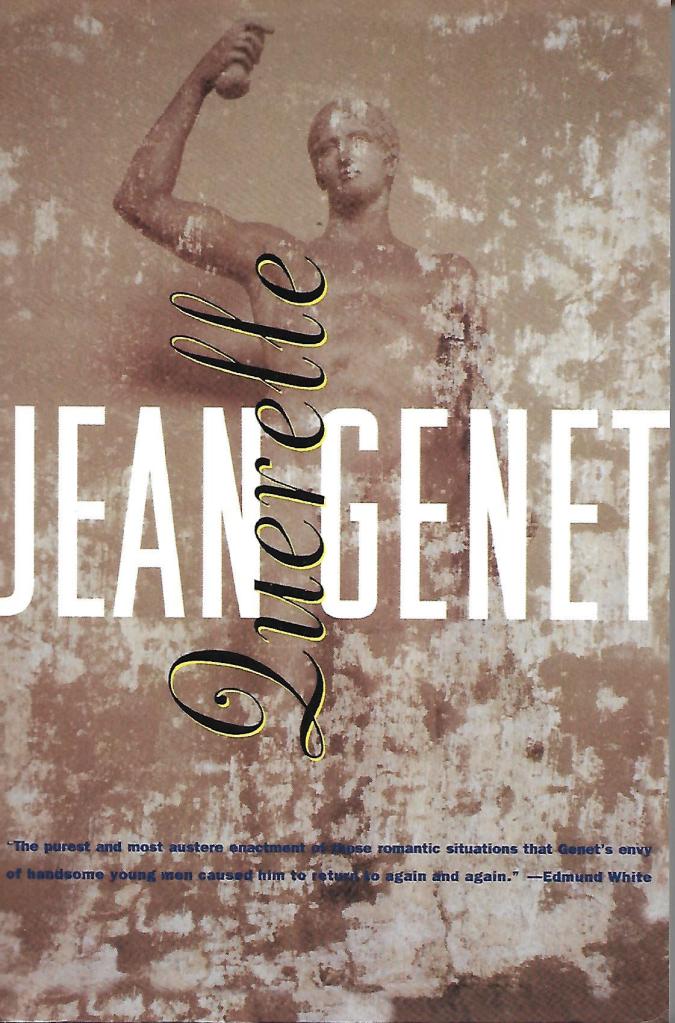
The notion of murder often brings to mind the notion of sailors and the sea.” This is the opening sentence of the novel Querelle by French author Jean Genet (1910-1986). Querelle (also known as Querelle de Brest) was written in 1945 and published anonymously in 1947. It was controversial for the 1940s (thus the anonymous publication), involving, as it does, homosexuality, murder, romantic obsession and prostitution.

Georges Querelle is a young, muscular, good-looking French sailor, in the French seaport town of Brest where the action of the novel takes place. His good looks make him a sort of magnet for almost anyone who sees him. His being a sailor and moving around from place to place makes him able to escape detection for the murders and thefts he commits. He has a look-alike brother, Robert, who is a gigolo in the local brothel in Brest called La Feria. There is this persistent theme running throughout the novel of the two brothers, Querelle and Robert, being so much alike that the love they have for each other is self-love, and the two brothers are, in fact, one and the same person.

The only female character in the book is Madame Lysiane. She is the madame of the Brest brothel, La Feria; Robert, Querelle’s brother, is her lover. Madame Lysiane is married to the owner of the brothel, whose name is Nono. Nono likes to roll dice with the young sailors who frequent his establishment. If Nono wins the throw of the dice, he takes the sailor into the back room and has sex with him. In this way, Querelle becomes Nono’s lover.

Lieutenant Seblon is an officer on the ship that Querelle serves on. He keeps to himself as much as he can and confides to his diary how much he loves, and lusts after, Querelle. Querelle figures out that Lieutenant Seblon loves him and, with this knowledge, exercises a sort of control over him. Lieutenant Seblon imagines scenes in which he and Querelle are in love and live together always.

Gilbert Turko is a young mason in Brest and an acquaintance of Querelle’s. He murders a coworker who taunts him and flees to an abandoned prison. Querelle helps him by bringing him food and encouraging him. In the meantime, Querelle has murdered a fellow sailor and left his body in the weeds to be found later. Querelle is able to make it appear that Gilbert Turko murdered the sailor that Querelle himself murdered, since Gilbert Turko is already known to have murdered a coworker. Querelle helps Gilbert Turko to get away by train but notifies police where he can be found before the train pulls out of the station.

Querelle is a walk on the wild side, a dark excursion down a fog-enshrouded alleyway. There’s nothing romantic about it, or charming or uplifting; it’s the dark side of human nature. Querelle might be thought of an agent of the devil with the face of an angel and the body of a god. People are drawn to him for his beauty, often at their own peril. He’s pretty poison. He has no equal in twentieth century literature.

Copyright © 2019 by Allen Kopp
Once Upon a Time in Hollywood ~ A Capsule Movie Review

Once Upon a Time in Hollywood ~ A Capsule Movie Review by Allen Kopp

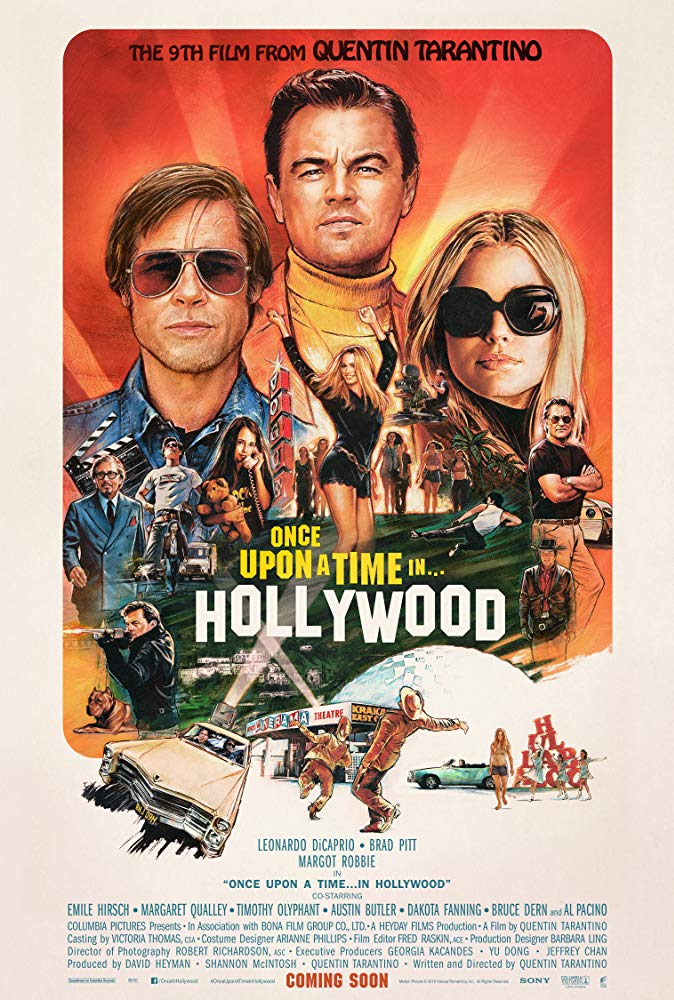
If you are an adult with a brain and you’re fed up with all the youth-oriented fluff at the multiplex this summer, you might want to see director Quentin Tarantino’s Once Upon a time in Hollywood. It’s not comic book superheroes, cute talking animals, a sequel to a previous movie, or a female-oriented melodrama. It’s a completely fictional story, set in Hollywood in 1969, although some of the characters are (or were) real people, principally Sharon Tate. And, no, the story is not a bloody recreation of her murder exactly fifty years ago and the murder of five other people (including Sharon’s unborn baby) at the hands of a group of Charles Manson-inspired hippies. Writer-director Quentin Tarantino presents an “alternative history” version of the crime in which the only people who die are the ones who deserve it. If you saw his movie Inglourious Basterds (misspelling intentional), you know this is not the first time he has fabricated an alternate ending, for the very simple reason, I suppose, that he’s in charge and he’s making a lot of stuff up because that’s what an “artist” does. It’s called “poetic license.”

Leonardo DiCaprio plays Rick Dalton, a TV cowboy star, with a successful series called Bounty Law. Brad Pitt is Cliff Booth, Rick Dalton’s stunt man, friend and factotum. They are likeable fellows, trying to navigate the nearly unnavigable waters of 1969 Hollywood. (Cliff isn’t popular among movie people because he has, presumably, killed his wife and gotten away with it.) Rick rents a house in the Hollywood Hills next door to budding actress Sharon Tate and her movie director husband Roman Polanski. She has been in a few movies by this time in 1969, including Valley of the Dolls. Roman Polanski is very “hot” in 1969 because he directed the hit movie Rosemary’s Baby the previous year.

There’s not a lot of story in Once Upon a Time in Hollywood. Cliff Booth commiserates with his pal Rick Dalton and rides around Hollywood a lot in Rick’s yellow Cadillac. He meets and is obviously (inexplicably) attracted to an underage female hippie named Pussy. When he gives her a ride back to her hippie commune (or whatever it’s called), he has a tense encounter with a band of repellent hippies, who, we find out later (or maybe we just deduce it) are in the thrall of creepy Charles Manson. I think this is the best sequence in the entire movie.

Rick Dalton, in the meantime, drinks a lot and stands by helplessly while his acting career fizzles out. He gives up his successful TV series in pursuit of a movie career, which never really takes off the way he wishes it would. He ends up going to Italy to make “spaghetti westerns.” When he returns to Hollywood, he has more money than he had before and an Italian wife who doesn’t speak English, but his career is still in the doldrums and will probably never get any better.

In the absence of good summer movies, Once Upon a Time in Hollywood is worth seeing and will probably be a big hit with its “star power” and its “name” director. It’s colorful and nostalgic, if you happen to feel nostalgic for 1969 miniskirts, blasting period music, powerful cars, hippies, 75-cent movies, smoking anywhere, no Internet, no cell phones, and no political correctness. The ending is violent, with a special kind of bizarre, grotesque violence that is the trademark of any Quentin Tarantino movie. The punishment that Cliff Booth metes out to the invading hippies is gratifying and almost worth the price of admission alone. Will somebody please shut her up?

Copyright © 2019 by Allen Kopp

The Car Thief ~ A Capsule Book Review

The Car Thief ~ A Capsule Book Review by Allen Kopp

Theodore Weesner’s 1972 novel, The Car Thief, is a slice-of-life, coming-of-age story about a troubled sixteen-year-old named Alex Housman and his (what is now called) dysfunctional family. It is set in Detroit, Michigan, in the early 1960s. Alex has a younger brother named Howard, a well-intentioned but alcoholic father who works in a car factory, and a mother who is, at best, a flighty floozie who has other things on her mind than being a good mother. She leaves home, presumably to be with another man, and leaves her two sons to the questionable care of their father.

Alex Housman is plenty smart enough, but he is what you might call an underachiever and, if that isn’t bad enough, he skips school and steals cars. He doesn’t try to make money from the cars he steals; he just drives them around for a while and then ditches them. When asked why he steals cars, he doesn’t have an answer, except to say that maybe he’s only showing off. The law eventually catches up with him and he ends up in a detention home. It will be determined later in court whether or not he will be sent on to boys’ vocational school instead of being allowed to go back home.

It’s while Alex is in the detention home that he finds a kind of peace he hasn’t known before. He finds satisfaction in the menial work he is given to do, and he develops a camaraderie of sorts with some of the other inmates. When he goes back home and returns to school, he finds that nothing has changed, but only worsened. He has missed so much school that he fails all of his classes except one. He feels alienated and excluded at school. He is drawn to a girl or two but scares them away with his unexplainable behavior. He decides to steal another car.

In the meantime, Alex’s younger brother Howard has gone to live with their mother, leaving Alex alone with his father. It’s when Alex goes to visit Howard on a summer weekend that he uncovers some painful truths about his family, not only his mother and father but also about Howard.

Car Thief is a serious and well-written portrait of teenage “acting out.” Alex Housman is not a devilishly clever teen like Holden Caulfield or a privileged brat like so many teens we have seen in movies and books but a troubled boy of the working class. What is really at the root of all his problems? What will it take to free him from his compulsion to steal cars? What will it take him to keep him from ruining his life and ending up in the penitentiary? Will the decent in him prevail in the end?

Copyright © 2019 by Allen Kopp

Chernobyl ~ A Capsule TV Review

Chernobyl ~ A Capsule TV Review by Allen Kopp

On April 26, 1986, a nuclear power reactor exploded and melted down at Chernobyl, Ukraine, Soviet Union, releasing deadly radiation into the air that was detected the next day as far away as Sweden. It was an accident, as accidents very often are, that was never supposed to happen. The Soviet Union didn’t want the world to know about the accident and tried to cover it up—not only that it happened but that it was as bad as it was. Over time the toll on people, animals, crops, forests, and the environment would be incalculable.

HBO’s five-episode series, Chernobyl, is a grim dramatization of the explosion and meltdown and the events that followed, including the politics, the obfuscation, the lies, the temper tantrums, and the hunt for a scapegoat. It makes for great TV viewing, if you don’t mind seeing graphic human suffering. It’s more disturbing than any horror movie because it’s real-life horror instead of the product of a writer’s imagination. Sometimes you just have to look away (or fast-forward or mute), as, for me, when pets were being killed because they, as everything else, was contaminated with radiation.

Chernobyl has an authentic Soviet Union look and feel, instead of a slick Hollywood feel. Everything, down to the smallest detail (clothes, shoes, hairstyles, interior furnishings, etc.), looks absolutely authentic. Every character, no matter how small (the old woman milking the cow, for example) seems perfect for the time, the place and the situation. If you’re looking for something seriously good to watch on TV this summer, I don’t think you’ll do better than Chernobyl.

Copyright © 2019 by Allen Kopp

1919 ~ A Capsule Book Review

1919 ~ A Capsule Book Review by Allen Kopp

American writer John Dos Passos wrote three novels in the 1930s that is really one extended novel of 1200 pages that came to be known as the trilogy U.S.A. The three installments of the U.S.A. trilogy are The 42nd Parallel (1930), 1919 (1932), and The Big Money (1936). U.S.A. is a saga of American life as seen through the eyes of some of its more ordinary everyday people: a sailor, a set designer, a stenographer, a marketing man, a college man, a labor activist, a pampered Texas belle, a mechanic, etc. Life for these characters is at times cynical, gritty, ugly, difficult, frightening, tiresome, worrisome, unglamorous, prosaic, confusing and confounding.

The Great War (“The War to End All Wars”) was the overlying event in American life in the late teens. Woodrow Wilson ran for (and won) the presidency in 1916 with the promise to keep America out of the European war, but it was drawn in eventually, anyway. In 1919, we see some of the characters who were introduced in The 42nd Parallel living in Paris in pursuit of the war effort. It seemed it was the thing to do for stylish young women to go to Paris and volunteer their services, more in the pursuit of glamor or having a good time or finding a suitable man than out of a sense of service to mankind.

Another important topic in the novel is socialism and the impending (it was believed) worldwide workers’ revolution. With the revolution in Russia in 1917 and then with the Great War, many people believed the stage was being set for the world (and the United States) to abandon capitalism and democracy and revert to a system of government for the people (the workers) and not for a few elites to accrue wealth. (Background information reveals that John Dos Passos was himself an ardent leftist.)

The U.S.A. trilogy is a landmark of American fiction, although it’s not what we might call a people pleaser or a bestseller. It’s accessible to the modern reader and well worth the time and effort to read it, but it doesn’t have a central character that we (the reader) might root for, and there is really no plot to speak of because the story moves around from one character and one situation to another. And, then, there are the Camera Eye and Newsreel sections, which are described as “experimental” (many people are put off, including me, by the word “experimental” when it’s applied to fiction). There’s plenty here of interest, though, especially if you are a student of literature or American fiction of the twentieth century.

Copyright © 2019 by Allen Kopp
The Euthanasia Clinic

The Euthanasia Clinic ~ A Short Story by Allen Kopp

The bus let me out at the bottom of a hill. I stood in the silence after the bus roared away and looked at the sign by the side of the road. An arrow on the sign pointed upward.

I began the ascent slowly, taking in the country view around me. It was spring and I couldn’t help noticing how blue the sky was, how vibrant the blues and yellows of the wildflowers. The tree-covered hills extended as far as the eye could see; there were birds everywhere, singing and zigzagging in the sky.

When I got to the place where I was going, I was out of breath and sweating. The young girl at the reception desk asked me if I needed assistance and when I said I didn’t she asked my name. She checked it against a list and then smiled and told me I could move on to admissions, down the hall on the left.

Another woman greeted me in admissions. After I told her my name, she asked me if I had any valuables or money. I gave her my watch and wallet containing two worthless dollars. “You can do whatever you want with them,” I said.

In exchange for my worthless valuables, she gave me a pair of loose-fitting pajamas with a matching robe and told me to go into a little room and put them on, putting all the clothes I was wearing into a basket on the table. When I came out, she led me down the hall and up a couple of flights of stairs, apologizing for the elevator being out of order. She took me through a door marked RECEIVING, told me somebody would be with me shortly, and left.

The room was nearly empty except for a couple of chairs and a low cabinet with a TV on top, tuned to the news from the city. I went to the window and looked out to keep from having to look at the TV, when a thin, tired-looking woman came in wearing a white coat like a doctor and I turned around to face her. The name tag on the white coat said her name was Margaret.

“I want to hear this!” she said, going to the TV and turning up the volume.

The pictures were of rioters turning over cars, hurling bricks through windows, setting fire to anything that would burn. Absolute chaos.

“I just came from there,” I said.

“I’m worried about my son,” she said. “He’s still in the city. I’ve tried calling him but the phones are dead.”

“I’m sure he’s safe,” I said.

“He was going to come here so I could administer the end drugs for him.”

“The buses are still running. He’ll probably be here any minute.”

“Any time someone comes in, I look to see if it’s him.”

“Have faith.”

“If I couldn’t administer the end drugs for him, I wanted to at least give him Father Time.”

“What’s Father Time?”

“The do-it-yourself end pill.”

“Why haven’t I ever heard of it?”

“There are only a few left. People in the city were killing each other for them up until a few days ago.”

“Ironic, isn’t it?” I said. “People killing each other for a pill that will kill them. ‘What fools these mortals be’.”

“The world has been off the rails for a long time now,” she said.

“I think we’re getting what we deserve,” I said.

“We?”

“The human race.”

She began crying. She took a handkerchief out of her pocket and covered her eyes.

“I’m sorry,” I said. “That wasn’t a very appropriate thing to say.”

“It’s all right,” she said, trying to smile. “Most of the time I’m resigned until I think about him being all alone in the city and I’m here.”

“Maybe he’s not alone. Maybe he’s with friends.”

“He isn’t able to get around very well. He has an artificial leg.”

“Oh.”

“The last time we spoke he promised he’d come here to me for the end. He’s all I have left now.”

“How old is he?”

“Twenty-one, but I still think of him as a child.”

“What’s his name?”

“Christopher.”

“Bearer of Christ,” I said.

“Yeah, that’s right. His father wanted him to have that name.”

“All my family died in the Final War,” I said. “So you can see I have no reason to want to go on.”

“A lot of other people share that sentiment.”

“Yes, I’ll have lots of company when I get to the other side.”

“I think we’d better get on with it,” she said. “Are we ready to proceed?”

More than ready.”

“I’m going to give you a shot to calm you down.”

“I’m already calm.”

“It’s just procedure. We do it for everybody.”

“Okay.”

“Then, after the shot I’ll take you upstairs and you’ll get into bed and get comfortable. Then I’ll hook you up to the machines and after a few minutes all your troubles will go flying out the window.”

“Will it hurt?”

“Only a feeling of euphoria, I promise.”

“Will I see the face of God?”

“If that’s what you want.”

“What about afterwards?”

“Afterwards?”

“My dead body?”

“You don’t need to worry about that.”

“I’m not worried. Just curious.”

“You’d be surprised at how many people ask that question,” she said. “We’re not supposed to say anything that will make you anxious in your final moments. Professional ethics.”

“The body isn’t important anyway,” I said. “When we die, it’s an empty shell that we cast off. What matters is the soul.”

“Each to his own beliefs,” she said.

“You don’t believe in the soul?”

“It doesn’t matter what I believe,” she said. “I’m here to help you.”

“When I was young, I was afraid of death.”

“You’re still young.”

“Now that I’m faced with it, I feel almost happy.”

“That’s the start of the euphoria.”

“You wouldn’t happen to have a cigarette on you, would you?” I asked. “Before we get on with it?”

“No smoking in here.”

At that we both had a good laugh. She went to the cabinet and opened one of the drawers and took out a pack of cigarettes and a book of matches and handed them to me.

“If there was ever a time to relax the rules,” I said, “it’s now.”

I lit up and took a big puff and drew the smoke down into my lungs. “I was always afraid of smoking,” I said. “Afraid of what it would do to my body. That seems kind of silly now, doesn’t it?”

“We’re afraid of dying only when we think we never will.”

“It’s been good to talk to you,” I said. “I haven’t had a chance to have a real conversation with anybody for a long time.”

“I’m not much of a conversationalist,” she said. She took my cigarette and took a couple of puffs on it and crushed it out in the trash can. “Are you ready for the shot now?”

“Wait a minute,” I said. “I was just thinking.”

“Time to stop thinking.”

“No, I don’t mean I was thinking about dying. The buses are still running, at least for today. I was thinking I could go back to the city and get your son and bring him back here.”

“Oh, no! I couldn’t ask you to do that.”

“You didn’t ask. I’m volunteering.”

“It’s too risky. I don’t think you’d make it back. I wouldn’t put you through that.”

“If I find him and if we aren’t able to get back out here to the clinic, I can take him a little gift from his mother.”

“Father Time?”

“Yes, and there’ll be one for me, too, I hope.”

“No, it’s too dangerous,” she said. “If people knew you were traveling with Father Time, they’d kill you to get it.”

“Nobody will know.”

“No, I don’t want you to…”

“Look, I’m going to die anyway. If not today, then tomorrow or the next day. I figure it doesn’t make any difference if I die here or in the city. This is my last chance to do a good thing. It might square me in heaven.”

“I wouldn’t want to be responsible for…”

“Then it’s settled?”

“Well…”

“I’ll bring Christopher back here if I can, if the buses are still running, but if I can’t he and I will die together. He won’t die alone.”

She started crying again, uncontrollably this time. Sobbing, she went out of the room and closed the door. She returned a few minutes later bearing a small envelope and my clothes I had put in the basket.

“Get dressed,” she said. “Put the envelope in your pocket. Father Time is in it, one for Christopher and one for you.”

“Got it,” I said.

“Here’s a small picture of him to give you an idea of what he looks like. It was taken when he was eighteen, but he hasn’t changed much since then. On the back I’ve written his address in the city.”

“Seems you’ve thought of everything.”

“Bring him back here if you can, but if you can’t you’ll know what to do. Tell him his mother is here, still alive, and thinking of him at the end.”

“Leave it to me.”

She turned away while I threw off the pajamas and got into my clothes. She gave me the pack of cigarettes and the matches, a bottle of water, and a couple of energy bars.

“Do what you can,” she said, patting me on the upper arm. “I’m not expecting any miracles.”

I went down the stairs and out the building without meeting anyone.

I jounced down the hill in half the time it took to go up. A few clouds had gathered in the sky and the air was cooler now, but the sun was still brightly shining.

I figured it was a waste of time to wait for the bus, which might be along but probably wouldn’t, so I began walking in the direction of the city. I wouldn’t think about how far it was but only about each step as I took it. If I laid down in a ditch along the road and died, I would have at least tried.

The world was beautiful, nature was thriving, and man was in his death throes. God’s million-year experiment with the human race was about to end. Soon the world would be given over entirely to other living creatures, as it had been for tens of millions of years before man came onto the scene. Maybe the human race would continue on other planets—there was all kinds of speculation on that subject—but for now, at least, humans on Earth were finished.

We had been told two days ago that everybody would be dead in a week, but when I got the city, I began to think it was happening sooner than expected. I saw few people and those I saw looked and acted like frightened animals. They were confused, looking for food or a place to hide out. It seemed I had nothing to fear from any of them; they didn’t approach me or even look at me.

The city was almost unrecognizable. Large sections of it had been burned and torn asunder in the rioting. Stores and businesses had been not only looted but ripped apart and burned. Bodies in various stages of decay lay everywhere. Cars had been smashed into each other and set on fire. A noxious stench mixed with thick smoked hung over everything and darkened the sun. It was a scene that I might have imagined out of hell.

I was tired from my long walk and found a place out of the way to sit down and rest. I was surprised I was still able to put one foot in front of the other and move forward. I took some small sips of the water I had and was glad I had it. Food was a distant memory; I hadn’t eaten in so long I wasn’t sure if I would ever be able to eat again.

After I felt at least partially rested, I took the picture of Christopher out of my pocket and studied it so I would recognize him if I saw him and then I turned the picture over and memorized the address on the back. From what I remembered of that part of the city, the address was ten or twelve blocks from where I was. It was going to be another long walk and I had no way of knowing if I would ever make it.

I walked for an hour or more and saw no signs of anything I knew. Buildings I had known or at least seen had been burned or lay in ruins. In places the streets were impassable and I found myself climbing over mountains of bricks and debris. I saw an occasional foot or arm sticking out, but I just looked away and went on. The few people I met moved slowly and dream-like; they seemed to pose no threat but if they challenged me I was more than ready to defend myself to the death.

Finally—quite by accident, it seemed—I found the street I was looking for and once I found the street, I found the number easily enough. It was a four-story brick apartment building. Some of the windows had been broken out and the side of the building was caved in as if it had been rammed by a tank, but the building still stood while many others were only piles of rubble.

The door to the building was blown off its hinges so I went inside as if I belonged there, quickly before somebody saw me and tried to stop me. I found my way down a dark, filthy hallway to a flight of stairs and I began going up them to the fourth floor. I found the door with the number I was looking for, amazed that I had made it this far. I knocked loudly and put my ear to the door.

I heard a faint rustle coming from inside and I knew somebody had heard my knock.

“Is anybody there?” I said.

“Go away,” came the voice from inside. “I have a gun and I don’t mind blowing your fucking head off.”

“Christopher?” I said.

“Who is it?”

“My name doesn’t mean anything to you. I just spoke with your mother.”

“My mother’s dead.”

“No, she’s not. I just saw her.”

“You just want to rob and torture me.”

“No, I don’t. Can you open the door? I have something I want to show you.”

He opened the door as far as the chain would allow and I held up the picture of him his mother had given me with his address written on the back.

“Where did you get that?” he asked.

“I just told you. I saw your mother at the clinic where she works.”

“I don’t believe you. It’s a trick.”

“Why would I want to trick you?”

“Why does anybody do anything?” he said.

“Could you open the door all the way and let me come in?”

“Do you have a gun or a knife?”

“No. No weapons of any kind.”

“I don’t mind killing you if I have to,” he said.

“So you said.”

He unfastened the chain and opened the door and I went inside. He was indeed the same person as the one in the picture. He had a crowbar in his hand instead of a gun. As soon as he take one step, I saw how debilitated he was with his artificial leg.

“I walked from the clinic,” I said. “I’ve been walking for hours to try to find you.”

“Why would you want to find me?”

“Your mother was worried about you. She thought you were coming to the clinic so she could give you the end drugs, but you never showed up.”

“Somebody on the street told me the clinic had been raided and everybody killed.”

“That’s not true. I just came from there.”

He insisted I turn out my pockets so he could see what was in them. When he decided I posed no threat, he put down the crowbar and relaxed.

“Are you a friend of my mother’s?”

“I never met her until today.”

“Why would you want to help us?”

“Why does anybody do anything?”

I sat down heavily in the nearest chair without being asked. I wasn’t able to stand on my feet any longer or take another step. He got me a cup of water and I took the envelope out of my pocket and tore it open and held the two of Father Time in my palm and then laid them side by side on the table where he could see them.

“What is that?” he asked.

“The way out of hell,” I said.

Copyright © 2019 by Allen Kopp