This Morning It Looked Like Rain

This Morning It Looked Like Rain ~ A Short Story by Allen Kopp

It was the annual end-of-school picnic for the teachers. Another school year filed and put away. Ethel Fix, Pauline Schoonover, Grace Wolfe and Margaret Durfee sat with Mr. Goodapple, the school principal, at his table along with Mr. Goodapple’s son, Zeke. Of the four women, three were married. Only Margaret Durfee was without a husband. Knowing that Mr. Goodapple was a recent divorcee, she made no secret of the fact that she would make herself available to him if he so desired. Mr. Goodapple, for his part, wasn’t interested in Margaret Durfee or anybody else. Whenever he realized that she was looking at him with a secret and suggestive smile (suggestive of what?), the only thing he felt for her was embarrassment.

“It turned out to be a lovely day after all,” Grace Wolfe said.

“Yes, lovely,” Ethel Fix said. “It’s supposed to rain tonight, though.”

“When we’re all safely in our beds.”

“The park is lovely in the springtime,” Pauline Schoonover said.

“Summer is right around the corner,” Grace Wolfe said.

“What are you going to do this summer?” Ethel Fix said.

“My husband and I bought a camping trailer. We thought we’d take a few little trips. Fishing trips, mostly.”

“Do you fish?”

“No, mostly I swat mosquitoes.”

“I’m going to give my house a thorough cleaning during vacation. Do a little painting.”

“Oh, do you paint landscapes or portraits?”

“No. Walls.”

“I’m going to keep to town,” Margaret Durfee said. “I don’t really have any special plans, other than to relax. I’m not seeing anybody special or anything like that. I’ll be alone most of the time.”

“Goodness!” Pauline Schoonover said. “Don’t you get lonely?”

“Well, sometimes. Maybe a little.”

Young Zeke Goodapple, age thirteen, sighed loudly and yawned. All the ladies turned and looked at him.

“I think we’re boring Zeke to death with our talk,” Ethel Fix said.

“I’m sure he didn’t mean to be rude,” Mr. Goodapple said. “Did you, Zeke?”

“Huh?”

“Tell the ladies you didn’t mean to be rude.”

“No.”

“No, what?”

“No, I didn’t mean to be rude.”

“Do you have some interesting plans for the summer, Zeke?” Margaret Durfee asked.

“No.”

“That’s not true, now, is it, Zeke?” Mr. Goodapple said. “You do have some interesting plans.”

“What kind of plans?” Grace Wolfe asked.

“Tell them, Zeke,” Mr. Goodapple said. “Tell the ladies what you’re going to be doing this summer.”

“Um, I don’t remember.”

“Zeke will be taking a couple of remedial courses in summer school so he’ll be ready for junior high when school takes up again. English and math. And that’s not all, is it, Zeke?”

“What?”

“When he’s not in school, he’ll be taking swimming lessons at the YWMC.”

“Oh, won’t that be fun!” Pauline Schoonover said.

“I don’t have a suit,” Zeke said.

“A suit? Why do you need a suit?”

“A swimsuit.”

“Oh, yes! Of course!”

“I don’t really want to go into the pool,” Zeke said. “I’m afraid of the water. I have dreams where I can see myself being pulled out with hooks. Dead.”

“Oh, my!”

“The boy has a vivid imagination,” Mr. Goodapple said. “He reads horror stories every night before going to bed and I’m afraid they make him a little more morbid than he should be.”

“He probably misses his mother,” Margaret Durfee said. “He needs the steadying influence of a woman.”

“We get along fine,” Mr. Goodapple said. “We’ve adjusted quite well to the new order of things.”

“Do you like to read, Zeke?” Grace Wolfe asked.

“Sure. I like stories where all the characters get killed. I also like monster movies. I always want the monsters to win and kill all the people, but that never happens.”

“See what I mean?” Mr. Goodapple said with a laugh.

“Well, I like monster movies, too,” Margaret Durfee said, looking appreciatively at Zeke.

“Did you know my mother went off and left me?” Zeke asked.

“I don’t think we need to talk about that now,” Mr. Goodapple said.

“She married some guy I never met. He already has three kids so they didn’t have room for me.”

“We discussed it at length and decided it was best for Zeke to remain with me,” Mr. Goodapple said.

“That seems the sensible thing,” Pauline Schoonover said.

“They live in New Mexico,” Zeke said. “I don’t think I’d like living in the desert. I have sensitive skin. Mother says she’ll send me the money for a plane ticket so I can come out and visit her sometime and meet her husband and his kids. I’ve never flown in a plane.”

“That should be quite an adventure,” Grace Wolfe said.

“I’m not afraid to fly by myself. If the plane crashes, I’ll probably die quick without really knowing what happened.”

“The plane won’t crash. You’ll be fine.”

“And when you come back,” Ethel Fix said, “you can tell your friends at school all about it.”

“I don’t have many friends,” Zeke said. “I mostly just like to be alone.”

Mr. Goodapple took out a pack of cigarettes and lit up, blowing smoke over the ladies’ heads.

“I didn’t know you smoked, Mr. Goodapple!” Pauline Schoonover said.

“Never at school. Only when I’m out like this.”

“Might I have one, dear?” Margaret Durfee asked, in imitation of a screen vamp.

He handed her the pack and his lighter, avoiding her touch, and looked away as she lit her own.

“You never really know people until you have lunch with them,” Ethel Fix said.

When everybody was finished eating, the ladies started cleaning up.

“Would you like to walk down the hill to the soldiers’ memorial with me, Zeke?” Margaret Durfee asked.

“I’m kind of tired and I have a sore toe,” Zeke said, “but I guess it’ll be all right.”

“Well, let’s go, then!”

Margaret Durfee took him by the hand as if he was a small child, but when he showed her he didn’t like that, she settled with putting her hand on his shoulder.

When they were out of sight, Grace Wolfe leaned over and said confidentially to Mr. Goodapple, “I think Miss Durfee has a terrible crush on you!”

“Don’t you see what she’s doing?” Pauline Schoonover  said. “She’s trying to get to you through your son!”

“I’d watch out for her if I were you!” Ethel Fix said. “She’s one of those crazy, passionate types and you never know what they’re up to!”

He had nothing to say, but only lit another cigarette and looked at his watch. The picnic was over and, thanks be to the Lord, it was time to go home.

Copyright © 2020 by Allen Kopp

Things I Must Have

Things I Must Have ~ A Short Story by Allen Kopp

Mrs. Koenig lay near death. Her four grown children had taken it upon themselves to gather in her house to discuss the disposition of her personal belongings.

“I want the Tiffany lamp,” Gwendolyn said.

“I already said the Tiffany lamp is mine!” Cupcake said.

“I’ve loved that lamp since I was a baby!”

“So? It’s still mine!”

“I want the dining room table and chairs,” Kent said. “Mother said I could have them.”

“Not so fast!” Gwendolyn said. “She said I could have them.”

“When did she say that?”

“I don’t know. Last Christmas, I think.”

“Well, she just told me last month that I could have them, so I guess that cancels you out.”

“I get the antique bed and dresser that were grandma’s,” Cupcake said. “Mother told me when I was fifteen that she wanted me to have them.”

“Well, isn’t that funny, Miss Cupcake!” Gwendolyn said. “I always thought I would get the antique bed and dresser.”

“I want the complete set of Dickens and the set of Britannica,” Kent said.

“You can have them!” Gwendolyn said. “Nobody cares about books.”

I care. The Dickens set is over a hundred years old. It’s valuable. I’m going to sell it and buy a car I’ve been wanting.”

“Why don’t you keep the Dickens books and pass them on to your children, chowderhead?”

“I don’t have any children. Remember?”

“Oh, that’s right! There’s something funny about you, isn’t there?”

“There’s something even funnier about you!”

“I get the set of antique china,” Cupcake said, “and I’m not going to sell it, either.”

“What are you going to do with it, dear?” Gwendolyn asked.

“I’m going to keep it. What do you think? I also want the china cabinet. What good is the china without the cabinet?”

“I want the rolltop desk,” Cupcake said. “Mother told me in high school when I made the honor roll that I could have it.”

“I think the rolltop desk should go to me!” Kent said.

“And why is that?” Cupcake asked.

“It’s a man’s desk. I’m a man. Remember?”

“Oh, yes, darling! I keep forgetting!”

“I get the piano,” Gwendolyn said. “I’m the only one who plays.”

“You haven’t played since you were twelve years old,” Kent said, “and you were horrible! You used to cry when mother made you practice, and then she cried when she heard how bad your playing was.”

“Well, maybe I’ll take it up again. I always feel there’s something lacking in my life. Maybe it’s the piano.”

“Maybe it’s good judgment and common sense!” Cupcake said.

“Oh, and I also get the antique vase from China,” Gwendolyn said. “Mother’s piano wouldn’t be mother’s piano without the vase sitting on it.”

“Wait a minute!” Cupcake said. “I’m the only one here who knows antiques. I think I should get the antique vase from China.”

“I want mother’s photo albums and the big picture in the attic of grandma and grandpa,” Kent said. “Also the hall tree, the antique sideboard, the library table and the brocade sofa.”

“You can have them!” Gwendolyn said. “I never liked them, anyway.”

“Excuse me!” Cupcake said. “The library table is mine! I’ve already decided where I’m going to put it!”

I’ll tell you where you can put it!” Kent said.

“I must have mother’s silver that she only used for special occasions,” Cupcake said. “The china is nothing without the silver to go with it.”

“I’m going to take the grandfather clock,” Kent said. “I’ve had my eye on it for  a long time. I’m sure mother wanted me to have it.”

“Then why didn’t she say so when she was in her right mind?”

“She did! She said it to me!”

“Don’t you think it’s funny she never told any of the rest of us?”

Dickie was the fourth and youngest child. He had not spoken until now. “You should hear yourselves!” he said. “Squabbling like a bunch of old hens over things! Mother’s not even dead yet! She may recover! She may come home from the hospital! She may live many more years!”

“We’re just trying to be prepared for when the time comes,” Kent said.

“These are the things we grew up with,” Gwendolyn said. “They’re meaningful to us. We want to make sure they end up in the right hands.”

“Meaning your hands,” Dickie said.

“Don’t you want to stake your claim to the things you want to keep” Cupcake asked. “To remember mother by?”

“No, I don’t want any of this stuff!”

“Why not?” Gwendolyn said.

“This stuff isn’t your stuff and it’s not my stuff!”

“What are you talking about?” Kent asked. “Of course it’s our stuff! Who else would it belong to?”

“I am in possession of some information that the rest of you sons-of-bitches don’t know!”

“What are you talking about?” Gwendolyn asked.

“Have you lost your mind?” Cupcake asked.

“No, I haven’t lost my mind. Mother’s lawyer called me yesterday. On the phone. Mother knew you would be fighting over her things, so she made a last-minute provision to her will. She wants everything in the house sold at auction and the money—all of it!—to go to charity.”

What?” Cupcake said.

“I don’t think mother would do that!” Gwendolyn said.

“I don’t believe it!” Kent said. “You’re making this up out of spite!”

“And that’s not all!” Dickie said. “She donated the house to the church.”

Church?” Cupcake said. “What church?”

“People from the church talked to her many times about giving them the house when she died. They finally broke her down and got her to sign an agreement.”

“This isn’t right!” Gwendolyn said. “Mother wasn’t right in the head! We can contest it! We can file a lawsuit! We can hold it up for years in the courts!”

“I don’t think so,” Dickie said. “It’s all legal and valid. If you don’t believe me, call mother’s lawyer. His name is Kenneth Ormiston.”

“Mother disinherited us!” Kent said, as if in a daze. “We don’t get anything!”

“Mother wouldn’t do that!” Cupcake said. “Not to me! I was always her favorite!”

“She won’t get away with this!” Gwendolyn said. “I’m going to have her buried face-down!”

“I don’t think it’ll make any difference to her,” Dickie said, “one way or another.”

“I don’t think I can walk!” Cupcake said, sobbing. “I need somebody to take me home!”

“Dickie,  you bastard!” Gwendolyn said. “Look what you did to your sister! I’m going to kill you!”

Copyright © 2020 by Allen Kopp

The Mirage Factory: Illusion, Imagination, and the Invention of Los Angeles ~ A Capsule Book Review

The Mirage Factory: Illusion, Imagination, and the Invention of Los Angeles ~ A Capsule Book Review by Allen Kopp

The Mirage Factory by Gary Krist is “historical narrative,” a fascinating nonfiction book that is as easy to read and as entertaining as good fiction. It is the story of how an improbable city, Los Angeles, came to exist in an improbable place, the parched American Southwest. More significantly, it is the story of how three different people (Amy Semple McPherson, William Mulholland and D. W. Griffith) contributed, in their own unique ways, to the formation, growth, moral fabric, and culture of what would one day be the second-largest city in the United Sates.

In the 1890s, Los Angeles was a small, dusty town in the California desert, where farms and citrus groves were the most prominent feature of the landscape. Nobody at that time envisioned Los Angeles as one day becoming a great American megalopolis. For one thing, there wasn’t enough water. It was, after all, the desert, plenty hot and largely inhospitable to most people’s way of thinking. (And what about those Gila monsters?)

One person, self-taught civil engineer William Mulholland, was largely responsible for bringing Los Angeles the water supply it needed to grow into a major city. People from all parts of the country were drawn to Los Angeles for its “newness” and “cleanness,” its almost perpetual sunshine, its scenic wonders, its proximity to the ocean and its uniquely Anglo-Saxon personality. So what if there wasn’t enough water to sustain a phenomenally growing population? That’s where William Mulholland came onto the scene. He devised and oversaw the building of an elaborate aqueduct system from the Owens River, over two hundred miles from Los Angeles. The project was beset with legal and logistical problems from the first. The residents of the Owens River Valley weren’t too happy about their water supply being commandeered (“stolen”) by distant Los Angeles. The situation erupted into small war.

The movies began as a cheap pastime for the lower classes in the large cities of the eastern United States in the 1890s. For one trifling nickel, a person seeking thrills and excitement could patronize the local “Nickelodeon” and see short films (some of which were only a minute or two long) of mundane scenes, such as an approaching train, a cow nurturing a newborn calf, or a scantily clad woman dancing the hoochie-koochie.

As movies became longer and technically more sophisticated, they gained a wider audience. The making, distribution and exhibition of movies became an industry, settled first around the East coast and then moving to California for its agreeable climate. Soon, movies were a bonafide American artform with the potential of generating obscene amounts of money for its artists. Hollywood and Los Angeles became synonymous.

David Wark Griffith was an early film pioneer. He is known as the “father” of movies, the creator of the movie picture narrative “language.” His vision for making movies was big and bold. His 1915 epic Birth of a Nation was a landmark film that set the standard for movies to follow. It made a tremendous amount of money and emboldened Griffith to make even bigger movies. His Intolerance was also a grand vision and expensive to produce. With its incoherent storyline about man’s inhumanity to man, Intolerance was a critical and commercial failure and a huge career setback for Griffith.

Aimee Semple McPherson was a Canadian Pentecostal evangelist who was instructed by God (she believed) to make Los Angeles her home base. She was a charismatic figure whose message was one of hope and redemption, rather than doom and hellfire. Her sermons were entertaining, uplifting and sometimes theatrical. (She even did “faith healings” on occasion.) She gained a huge and devoted following and established the influential Angelus Temple in Los Angeles. She held coast-to-coast radio services and was soon almost universally known. She became a cultural phenomenon and was arguably the most famous woman in the United States from the 1910s into the Depression era of the 1930s and the war years of the 1940s.

So, what did the Evangelist (Amy Semple McPherson), the Artist (D. W. Griffith), and the Engineer (William Mulholland) have in common? They were all flawed human beings in their own right and each experienced a spectacular fall from grace through pride, overreaching and the taint of early success. Their lives and destinies were inextricably interwoven with Los Angeles during the early days of its phenomenal growth from a small, sleepy desert town to a magnificent city, a megalopolis, that could compete with any other city in the world.

Copyright © 2020 by Allen Kopp

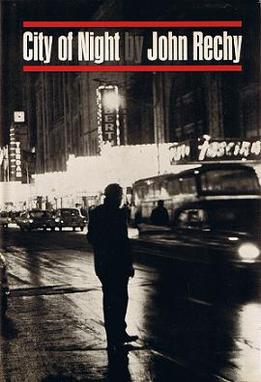
City of Night ~ A Capsule Book Review

City of Night ~ A Capsule Book Review by Allen Kopp

American author John Rechy was born in El Paso, Texas, in 1931. His novel, City of Night, was a literary sensation when it was first published in 1963, a best seller, and now an acknowledged “modern classic.” It’s an unusual novel in that it has no story or plot to speak of and is written in a loosely structured, stream-of-consciousness style.

The novel is narrated in the voice of an unnamed “youngman.” (The words “young” followed by “man” are always one word in the novel.) The narrator is on a nighttime quest for acceptance and validation in America’s largest cities in, let us say, the late 1950s. He is a drunk, a “hustler,” a male prostitute, a versatile homosexual who will never (hardly ever) turn anybody down, no matter how creepy or repellant they are. He gets money in exchange for sex with (all kinds of) strangers, but money isn’t the real reason he does what he does. He does what he does out of loneliness and a need for acceptance.

What large American city the narrator is in doesn’t matter, because when it comes to the nighttime, urban sex scene, all cities are the same, whether it’s New York, Los Angeles, Chicago, San Francisco, or New Orleans. His world is peopled by hustlers like himself, “scores” (men who pay hustlers for sex), sex-starved women, older men who prey on younger men in movie theatres or public toilets, “screaming queens” (gay men who try to be like women), and worn-out hustlers who no longer attract the kind of following they once had because their one saleable commodity, youthful sexual attractiveness, is not what it once was.

This one passage toward the end of City of Night encapsulates the novel perfectly:

Times Square, Pershing Square, Market Street, the concrete beach in Chicago…movie balconies, bars, dark hunting parks: fusing for me into one City…Yes, if I take the subway, I’ll be on 42nd Street. Or in Bryant Park, or on the steps of the library, waiting for Mr. King…or in the park in Chicago, also waiting…Or if I hitchhike on this street, I’ll be on Hollywood Boulevard, which will be lighted like a huge electric snake—and there, I’ll meet…

And ghostfaces, ghostwords, ghostrooms haunt me: Cities joined together by that emotional emptiness, blending with darkcity into a vastly stretching plain, into the city of night of the soul.

Despite its subject matter, City of Night is not overly sexually graphic by today’s standards. It was a “groundbreaking” novel for its time for its candor and explicitness, but that was fifty-seven years ago. What shocked people then does not necessarily shock them now.

Copyright © 2020 by Allen Kopp

Seven Seconds

Seven Seconds ~ A Short Story by Allen Kopp

Angela McNeill traveled down by train to see Harry Vance and they spent that last Sunday together. They walked in the park, holding hands, and sat for a long time watching the swans gliding back and forth across the lake. It was a day in April and the weather could not have been finer.

He took her hand and said he wanted to marry her in June.

She avoided looking directly at him. “That doesn’t give me much time,” she said.

“Time to do what?” he asked.

“A wedding takes a lot of planning,” she said.

“It’s going to be a small wedding,” he said.

“Yes, but I want everything to be just right.”

It was a conversation they had had many times before. She was in “no hurry” to get married, while he couldn’t get it done fast enough. He was a college student and wanted to get the wedding out of the way in June, between semesters. Then, by the beginning of the fall semester, they would have found a place to live and would be “settled.” His parents were giving them a thousand dollars as a wedding gift to “get started” on.

“I don’t think your parents like me very much,” she said.

“Of course they like you! Why wouldn’t they?”

“They think I’m not right for you.”

“Nobody said any such thing! You’re just looking for complications that don’t exist.”

“I just want everything to be right, that’s all.”

“You’re thinking about your parents, aren’t you?” he said.

“No. Why should I?”

“You’re afraid you’ll have a bad marriage just because they did.”

“I didn’t say that.”

“You don’t have to say it. I know what you’re thinking.”

“Let’s not talk about it,” she said. “Let’s not spoil the day.”

Angela hadn’t told Harry the whole truth about her mother. When Angela was little, her mother cast a pall over her family with her dark moods and sudden emotional shifts. In one evening or one afternoon, she would go from laughing and happy to raging and accusing. She’s just high-strung and emotional, Angela’s father used to say. She doesn’t mean anything by it.

Angela thought for years her mother was evil but then she found out the truth: she suffered from hereditary mental illness, passed down to her from her mother and grandmother. Feckless doctors gave her pills that were supposed to “calm her down,” but they only seemed to make her worse. When the pills didn’t provide the kick she wanted, she began supplementing them with whiskey. Soon she was an alcoholic in addition to being a drug abuser. She smoked countless cigarettes and had started at least two small fires in the house.

A divorce followed soon after. Angela and her brothers and sisters (nine all together) went with their father and moved to another city to make a fresh start. Angela’s mother, unable to take care of herself, went to live with her sister, who ran a kind of boarding house.

Angela was certain she was following in her mother’s footsteps. She would not escape the mental illness. She felt it, like a cancer inside her, that would one day consume her: the black moods, the despair, the hopelessness, the days when she couldn’t get out of bed. Could she marry Harry Vance and let him find out too late what she was going on inside her? The answer was no. She wasn’t going to inflict such pain on Harry or any children they might have.

That last Sunday evening they had a lavish, candlelit dinner together, paid for by money that Harry’s father gave him. When they were finished eating, it was almost time for Angela’s train.

“You can spend the night if you want to,” Harry said.

“I have a job to go to in the morning, dear,” she said. “I have to get up early.”

“When we’re married, you’re going to quit that job.”

“And what will we do for money until you graduate and get a job?”

“I don’t know. I can always rob a bank, I guess.”

“I don’t think that’s a very practical idea.”

He got her to the station just in time. She boarded her train and waved to him from the window. It was the last time they would ever see each other.

The next morning she arose at the usual time and ate a light breakfast. She dressed herself with care, making sure everything was exactly right. Before she was ready to go, she sat down at the kitchen table and wrote out a quick note. She didn’t even have to think before she wrote because she had thought it all out beforehand.

When it was time to leave for work, she put the note in her purse, put on her new spring jacket, slipped on her shoes and left her apartment. She didn’t go to her job, though, and didn’t bother to call to say she wasn’t coming.

She took a cab to the tallest building in the city, about twelve blocks from where she lived. She tipped the driver generously and he helped her out of the car and wished her a good day.

As usual, there were lots of people everywhere. Always a busy city. She took the crowded elevator to the eighty-sixth floor. She had been there before and knew there was an observation deck on that floor.

The people on the observation deck were so enthralled by the exhilarating view at more than eight hundred feet (it was like looking down from the top of a mountain) that nobody looked at her.

After standing at the rail for a few minutes, looking down, she took off her coat, folded it neatly and placed it over the rail, putting her purse on the floor underneath the coat. She then swung her legs over the rail, first the left and then the right, until she was sitting on the rail. Before anybody had a chance to see what she was doing and try to stop her, she let go of the railing and leaned forward slightly. Gravity did the rest.

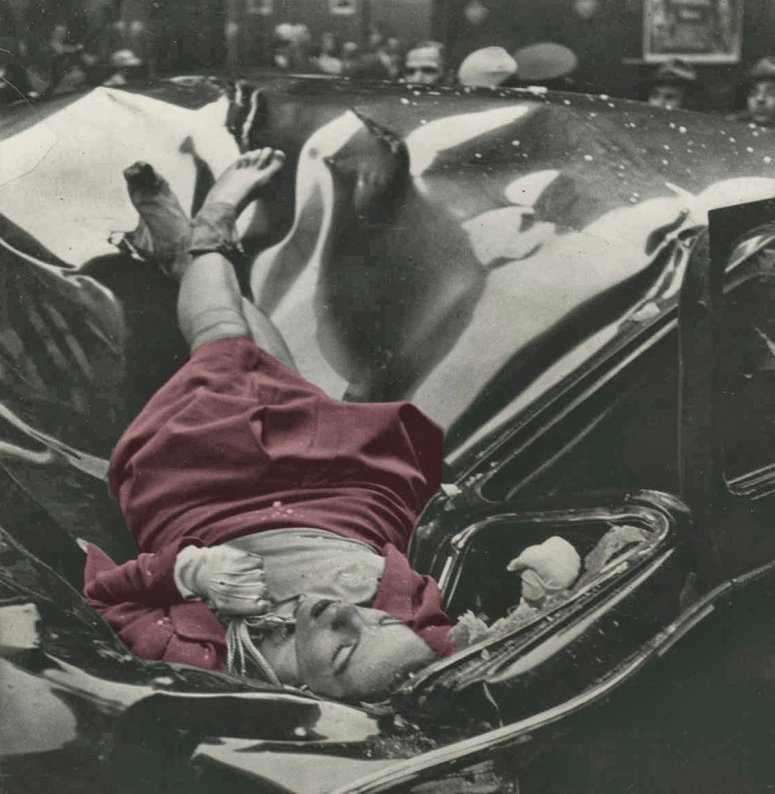
She landed, feet first, on the roof of a parked limousine. Hardly anybody saw it. It happened so fast. Somebody called for an ambulance. In a minute or two, a couple hundred people knew that something had happened and wanted to see what it was.

A student photographer happened to be nearby with his camera. Approximately four minutes after Angela died, the student photographer took her picture. Instead of a grisly, horrifying scene of a smashed body, the picture was of a young woman with her shoes off, her stockings down around her ankles, her clothing barely disarranged. The expression on her face was one of peace and composure. The picture, when printed in the newspaper, bore the caption: The Most Beautiful Suicide.

In her purse was the note she had written right before leaving her apartment: I don’t want anyone in or out of my family to see any part of me. Could you destroy my body by cremation? I beg of you and my family—don’t have any service for me or remembrance for me. My fiancé asked me to marry him in June. I don’t think I would make a good wife for anybody. He is much better off without me. Tell my father I have too many of my mother’s tendencies.

Harry Vance saw no hint (he told everybody), not the slightest suggestion, in all the time he spent with her on Sunday, that she was contemplating such a move. If he had known, he would never have let her out of his sight. She was the one he wanted to marry, the only one. There would be nobody else. Sixty years later, when he went to his grave, it was as a single man.

Copyright © 2020 by Allen Kopp

The Literary Hatchet, Issue #26

The Literary Hatchet
Issue #26

The Literary Hatchet is an independent international journal devoted to emerging and established voices crafting provocative short fiction and thoughtful poetry and prose. Published three times a year! (Stefani Koorey, editor; Eugene Hosey, editor; Michael Brimbau, editor.)

The latest issue of The Literary Hatchet, Issue #26, containing short stories, poems, and works of original art, is now available for purchase for $14 per copy on Amazon:

https://www.amazon.com/dp/B085RNP1CV/

(I have six short stories in this issue of The Literary Hatchet: “It’s Not the Pale Moon That Excites Me,” “Strange Innertube,” “Good Fortune Comes Your Way,” “His Butterfly,” “The Spring He Built the Garage,” “I Want People to See Us Together.”) 

Roanoke, Solving the Mystery of the Lost Colony ~ A Capsule Book Review

Roanoke, Solving the Mystery of the Lost Colony ~ A Capsule Book Review by Allen Kopp

During the long reign of Queen Elizabeth I of England (1558-1603), there were malcontents—religious dissenters and Separatists—who didn’t like their country and wanted to live elsewhere. England was overcrowded, disease-ridden, and becoming more and more libertine and loose in its values. Constant religious fighting raged among Catholics, Protestants, and Church of England. The New World, which meant the North American continent, beckoned. It was largely untouched and contained unlimited land and unimaginable natural resources, which would translate into wealth, power and prestige. Every European power wanted to be the first to claim this prize.

In 1587 a group of 115 colonists set out for the New World. Their destination was the Chesapeake Bay, but they ended up on Roanoke Island off the coast of what is today North Carolina. Roanoke Island was completely unsuited for colonization. The colonists believed they would, in time, be relocated to a better place. They were essentially abandoned, cast off, sacrificed. What was going on here? Their leader, John White, set off to England to get help (the voyage across the Atlantic took about four months). He promised to return as quickly as he could with supplies and whatever help was needed. He had a personal interest in the venture because his daughter was among the colonists. When he returned to Roanoke Island three long years later, there was not a sign of the 115 colonists. They seemed to have vanished, along with their houses and any other trace of them. What could have happened to them? Were supernatural forces at play? It’s a mystery that has endured for four hundred years.

In the nonfiction book, Roanoke, Solving the Mystery of the Lost Colony, author Lee Miller lays out a compelling case that the 115 Roanoke colonists were sabotaged by someone who didn’t want the venture to succeed. Who could that someone be? There were only a few men in the government powerful enough to pull off such a scheme. Lee Miller narrows it down to Walsingham, powerful member of the queen’s Privy Council. Walsingham despised the upstart Sir Walter Raleigh, who had become the queen’s favorite. If the colony had been a success, it would have been in a feather in Raleigh’s cap. If it failed, it would cast a pall over Raleigh’s career from which he might never recover.

Several rescue attempts were launched to save the 115 colonists stranded on the inhospitable Roanoke Island, but all of them failed or were scuttled by co-conspirators who were in on the plot. The 115 colonists were left to die, to fade away, to succumb to disease and starvation. And why was their fate such a mystery over all the centuries? Why was the public left to believe that the colonists simply “disappeared?” They didn’t just disappear; they were sacrificed and then the truth was covered up. If the truth had been told, it would have been very bad publicity for colonization in the New World.

Roanoke, Solving the Mystery of the Lost Colony is a minutely and meticulously detailed account of the feckless and ill-advised Roanoke Colony, of the treachery and political machinations that made the venture the failure it was. The message is simple: powerful politicians will screw over anybody they can, will double-deal their way into hell, and then lie about it to make sure the truth is never known. Sound familiar?

Copyright © 2020 by Allen Kopp

It’s You I Adore

It’s You I Adore ~ A Short Story by Allen Kopp

(I posted a different version of  this story previously.) 

Roland Finney is a mystery. He is forty-two years old and lives with his mother. He’s quiet and unassuming, keeps to himself, mows his lawn, picks up his morning newspaper, shovels the snow after a storm, never speaks to anybody. At seven-thirty every morning he leaves quietly for work and gets home at four in the afternoon and hardly ever goes out again. Nobody knows where he works or what kind of a job he has. On weekends he takes his mother on errands.

Carmen Giles lives next door to Roland Finney. She also lives with her mother. She is nearing forty years old, has been married and divorced two times. After the second divorce, she moved “back home,” as the saying goes, “to get her life in order.” She and her mother get along fine together as long as they avoid discussion of certain topics, such as Carmen’s choice of boyfriends.

Over a period of a year or more, Carmen Giles has developed an unhealthy interest in Roland Finney, amounting almost to obsession. It maddens her that he is single, she is single, they seem compatible in every appreciable way, and their paths never cross.

She watches him out the upstairs window with her binoculars as he cuts the grass in his back yard. He wears a sleeveless undershirt, khaki pants and tennis shoes. She likes the play of his biceps as he pushes and then pulls the mower. On his face is a look of concentration. She likes the neat, straight rows of his cutting. A man who cuts that precisely and evenly must have a lot of good qualities. He would hang up his own clothes and rinse his own dishes and not leave it for somebody else.

He shuts off the mower and sits in a lawn chair and picks up a newspaper and opens it. He is a man who likes to read and wants to know what’s going on in his world. He’s not the kind who would lay on the couch in front of the TV all the time. His mother comes out of the house and brings him a bottle of beer. She is a troll-like woman with stooped shoulders and hair dyed an awful red that hangs down to her shoulders. He takes a drink of the beer and holds the bottle between his thighs so his hands are free to turn the pages of the paper.

In the year-and-a-half that Carmen has lived next door to Roland Finney, she has never heard him utter a single syllable. He is possibly the quietest, most maddening man she has ever encountered. She has thought on occasion that she will go over and introduce herself, begin a friendly conversation with him, but somehow she just doesn’t have the nerve. Maybe he doesn’t speak, or maybe there’s something wrong with him, like mental retardation, and she would only embarrass him and herself, too.

When a letter is misdelivered to her mailbox, a letter that belongs to him, she sees it as her chance to engage him in conversation. She takes the letter and knocks on his door assertively, but he doesn’t answer—nobody answers, not even his troll-like mother—so she drops it through the mail slot in the door and leaves. She is certain he is at home since his car in the driveway and believes he might have come to the door if he had wanted to.

At night she lies in her upstairs bedroom and thinks about him and imagines him lying in his own bed in the room just across the yard from hers behind the heavily curtained window. When his light is off, she’s sure he must be asleep. He’s the type who would wear pajamas. His mother would take them out of the clothes dryer and fold them neatly and put them in his dresser drawer for him. He’d wear them for a few nights and then take them off and put them in the laundry and get out a clean pair.

One Saturday night she is watching TV with her mother when she hears a car stop out front and the honk of a horn. She goes to the front window and pulls back the curtain a little and peeks out. The idling car is stopped at the curb in front of Roland’s house, taillights gleaming in the darkness. The horn honks again and in a minute Roland comes running out of his house and gets into the car and it speeds off.

Where is he going on a Saturday night and who is he going with? With this question burning in her mind, she can no longer concentrate on the TV programs. Here she sits with her mother, while she should be the one going out having a good time on Saturday night. She feels lonely and left out, maybe even a little jealous.

“Aren’t you feeling well?” her mother asks.

“I feel all right,” Carmen says. “It must be something I ate.”

“Want an Alka-Seltzer?”

“No, I’m going to bed.”

“Don’t you want to watch the late movie? It’s Joan Crawford.”

“Joan Crawford gives me nightmares.”

Lying in her bed in the dark, she realizes she is in love with Roland Finney, or close to it. That’s why she feels so unhappy and jealous to know he left in a car with somebody else on Saturday night. Yes, she loves him. There can be no other explanation. Absolutely she loves him, in a way she’s never loved before. She knows deep down that he would love her too if only he was given the chance.

The next morning is Sunday. She sleeps late and when she wakes up she begins drinking vodka martinis instead of eating breakfast. While she’s enjoying the lightheaded feeling alcohol always gives her, she goes into the kitchen and begins making oatmeal raisin cookies. She prepares the batter and, while the cookies are in the oven, she washes her face, puts on clean clothes and makeup to make herself look better than she feels.

When the cookies are done baking and have cooled long enough, she puts three dozen in a tin box in a nest of wax paper and closes the lid. After a couple more quick drinks, she makes her drunken way out the door with the tin of cookies and goes over to Roland’s house and knocks on his door.

She is certain Roland will answer the door this time but, no, it’s the woman. She scowls at Carmen as if she’s an annoying vacuum cleaner salesman. The corners of her mouth turn down.

“Yes?” she says.

Carmen smiles but her mouth is suddenly dry. “Good morning! My name is Carmen. I’m your next door neighbor.”

“Yes?”

“I know we’ve never been properly introduced, but I just wanted to…”

“Are you selling something?”

“Why, no.”

“What’s that you got there?”

“It’s some cookies I baked. Oatmeal raisin. I baked more than my mother and I can possibly eat, so I thought you and your son might like to have some of them.”

“My son? What are you talking about?”

“Is he here?”

“Is who here?”

“I’d like to give them to him myself.”

Who is it?” she hears his voice call from another room. The first words she ever hears him speak.

Carmen pushes past the woman and enters the house uninvited.

“Wait a minute!” the woman says. “You can’t just come barging…”

Who is it?” Roland calls again.

She follows the sound of his voice into the kitchen. He’s sitting at the table with a newspaper spread out before him. When he stands up, she sees he’s wearing a bathrobe. His legs are bare.

What?” he says, and that one word is all he can say because she surprises him by running to him and holding him in a tight embrace around the shoulders. Dropping the tin of cookies to the floor, she tries to kiss him on the lips but he deflects it by stepping back.

He takes hold of her arms to try to free himself. “I think you have the wrong house!” he says. “I don’t know you!”

“I’ve wanted to meet you for the longest time!” she sobs.

What? Who are you, anyway?”

“Oh, I’m sorry! My name is Carmen Giles. I’m your next door neighbor. I see you every day. I watch you out the upstairs window with my binoculars.”

“I think you have the wrong person.” He pushes Carmen gently aside and goes out of the room.

The woman is standing in the doorway to the kitchen, looking at her, wondering what’s she’s going to do next.

“That’s about it, girly!” she says. “We don’t know you and from what I’ve seen we don’t want to know you.”

“Oh, dear!” Carmen says. “I’ve made a terrible mistake, haven’t I? I’ve been drinking vodka martinis all day and I’m not myself. I don’t ordinarily act like this. I hope you can forgive me.”

“Just go.”

“I’d like to apologize to your son.”

“What are you talking about? My son?”

“I’m sorry if I embarrassed him.”

“My son? You think he’s my son?”

“Well, isn’t he?”

She starts to say something else, but the words won’t come. She bends over and vomits vodka martinis all the floor. When she is finished, she stands up and wipes her mouth on her sleeve. The woman, the wife, takes her by the arm, escorts her to the door and ejects her with a little shove.

The next day, once again sober, she tells her mother about meeting the Finneys.

“I was feeling generous and a little sentimental, I guess, and I wanted some company. I baked more cookies than I wanted. I put some of them in one of those tins from Christmas and I took it over to give to them. Just a friendly gesture and so innocent! After living next door to them all this time, I wanted to meet them. In all innocence, I swear! When I knocked on the door, that horrible woman answered. She’s even worse-looking up-close than she is from a distance. She invited me into the kitchen for a cup of coffee. He was sitting at the kitchen table practically naked.  He stood up and smiled at me. Then he wanted to give me a big hug. I don’t object to an innocent hug, but I could see right away that he was putting more oomph into it than was necessary. He actually groped my backside with both hands until I squirmed loose. I was plenty embarrassed, but I tried to laugh it off. I handed him the tin of cookies and I said, ‘I have all these home-baked cookies, more than I will ever eat, and I thought you and your mother would like some.’ At that, they both started laughing, a sickening, cackling laugh! They were laughing at me! I felt humiliated! Then the old woman said, ‘You think he’s my son, you silly goose? He’s not my son! He’s my husband! I’m his wife! Hah-hah-hah!’ Then the man said, ‘Just because I’m married doesn’t mean I can’t have some fun!’ Then he leered at me suggestively and laughed. Well, I got out of there as fast as I could and came home. They are thoroughly distasteful people and when I see them again I’m going to pretend they’re not even there!”

“That reminds me of something I heard in the beauty shop,” her mother says. “Do you remember Arlene Trussell? I knew her all the way back in high school. Her name was Arlene Archer then. She married Benny Trussell. He had a face like a bulldog. I never could see what she saw in him, but I think she had a bun in the oven, so I suppose it was a case of marrying him or giving birth to a bastard child. Anyway, to make a long story short…”

Copyright © 2020 by Allen Kopp

Muscle for the Wing ~ A Capsule Book Review

Muscle for the Wing ~ A Capsule Book Review by Allen Kopp

We first met boxer-turned-policeman Rene Shade in Daniel Woodrell’s 1986 novel, Under the Bright Lights. He’s back two years later in Muscle for the Wing, another crime romp set in the fictional bayou city of St. Bruno. Muscle for the Wing is not as atmospheric as  Under the Bright Lights, but there’s still plenty of murder, mayhem and people doing ugly things to each other.

Wanda Bone Bouvier is the redhaired femme fatale in Muscle for the Wing. (She inflames men’s passions, don’t you know.) She’s married to the much-older Ronnie Bouvier, who is behind bars.  She claims to love Ronnie, but that does not keep her from being carnally unfaithful with tough-guy Emil Jadick. She’s going to get revenge on Emil for Ronnie’s sake (and at his direction from the state penitentiary), but she admits openly that she “digs” Emil’s muscular body. (She’s a good-time girl who will take her fun wherever she can get it.) Emil wants Wanda to be his number-one girl—and his alone—not knowing she will eventually hurt him in a big way. When she gets a job as a do-anything stripper in a naughty nightclub, it’s all part of Ronnie’s plan.

When young, off-duty police officer Gerry Bell is shot to death at a gentlemen’s poker game at the country club by intruders set on robbing the wealthy poker players, police officer Rene Shade is called in to figure out what happened. Evidence leads to Emil Jadick and his two dimwitted associates, all members of a white supremacist prison clique called “the Wing.”

World-weary, boxer-turned-policeman Rene Shade has lived in St. Bruno his whole life; he knows the city and he knows the people. In investigating the murder of Gerry Bell, he’s drawn into a morass of crime and corruption, involving some of his old friends and associates, including friend-since-childhood Shuggie Zeck, who beats his wife to a bloody pulp. In St. Bruno, everybody is tainted in some way. There’s no such thing as innocence. Everybody is guilty of something. You can’t even tell the good people from the bad ones.

Daniel Woodrell is one of the best current American writers. If you like redneck noir, nobody does it better. His books are a delight to read, even if you are on your second reading. I highly recommend The Death of Sweet Mister and Tomato Red.

Copyright © 2020 by Allen Kopp

The World That Comes After

The World That Comes After ~ A Short Story by Allen Kopp

Katherine Isabel Burkhardt was born in 1898 and died of a summer fever in 1912 at the age of fourteen. When she found herself in the family vault, she was more afraid than she had ever been in her life. She didn’t know where she was or why.

Hello!” she called. “Is anybody there? Hello! Mother! Father! Are you there? Do you see me? Can you figure out how to get me out of here? I don’t like it here! It’s spooky and I think I’m going to cry! I think there’s been some mistake! I don’t think I ought to be here!”

She was on the point of screaming when she saw an old woman standing over her. She didn’t know the old woman but was so relieved she wasn’t alone that it didn’t matter.

The words came out in a torrent: “Who are you? What is this place? Can you tell me where I am? I need to go home! My mother and father will be worried about me if I don’t come home for dinner!”

“Not so fast!” the old woman said. “All your questions will be answered, but only one at a time.”

“I don’t know where I am. I don’t like it here! I don’t remember how I…”

She stopped in the middle of a sentence because she saw, not having noticed before in her excitement, that the old woman had a mellow glow emanating from her chest.

“What is that?” she asked. “I’ve never seen anything like it! You’re glowing!”

“Of course I’m glowing,” the old woman said. “We’re all glowing. You’re glowing too.”

“What?”

When she looked down, she was delighted for a moment by her own glow coming from inside her.

“What is this?” she asked. “What does this mean?”

“It’s very simple,” the old woman said. “You’ve crossed over.”

“Crossed over where?”

“You’ve passed from the world of the living to the world that comes after.”

“The world that comes after? Are you telling me I’m dead?”

“Yes. You must accept it. Embrace it.”

“But I don’t want to be dead! I have things to do. I promised mother I’d clean out my closet. I have my schoolwork to do. I have my cats to take care of. I’m going to a church picnic on Saturday.”

“The picnic will go on without you. That’s what happens when we die. The world keeps right on spinning.”

“I don’t believe you. I think I’m just having a bad dream. In a little while I’ll wake up and everything will be fine.”

“It’s a dream, all right, but not the kind of dream you wake up from.”

“Who are you anyway?”

“I’m your grandmother. You never knew me because I crossed over before you were born.”

“Just what is this place? Where am I?”

“You’re in the family vault. In the cemetery.”

“I remember! I remember the family vault! Father showed it to us on one of our Sunday drives. It looks like a little church with spires.”

“That’s right. Your great-grandfather, my father, was a wealthy man and he had the vault built at great expense so all of us would have a place to go when we die.”

“That was very thoughtful of him, I’m sure. Now, can you tell me how to get out of here so I can go home?”

The old woman laughed. “You can’t get out. This is where you belong now. With us.”

“There are others?”

“Of course, there are others. You’ll meet them all soon.”

Katherine began to cry real tears, as opposed to tears for effect. “I didn’t get a chance to tell anybody goodbye because I didn’t know I was going to die! Mother and father and Boyd, my brother. My cats.”

“They knew what was happening. They were in the room. They all said goodbye to you, even though you didn’t know it.”

“Will I see them all again someday?”

“It doesn’t hurt to hope.”

“I’m worried about my cats. They’ll starve if I’m not there to feed them.”

“Don’t you think your brother will take care of them now?”

“Yes, I suppose he will. He was always quite fond of animals.”

“All your worldly cares are over. You are at peace. Peace like a river.”

“I’m feeling so sleepy now, as if I can barely hold up my head.”

“That’s right. Time to sleep. And when you wake up you’ll meet the others.”

A curtain descended as at the end of an act in a play, and Katherine knew nothing again until she was being led by the hand to meet the rest of the family.

She felt shy at being brought before a gallery of strangers. She was not at all  surprised, however, to see that they all carried the mysterious and arresting glow inside them, the same glow that she now had.

Cousins Parry and Lomax, twins, were ten at the time they crossed over. (They went over a roaring waterfall in a rowboat on a flawless June day and drowned.) They looked at Katherine with wide-eyed wonder; each of them gave her a quick, unsmiling bow from the waist and then they were gone.

Great-grandfather was tall and broad, wearing his fancy dress suit and sporting the elaborate mustache and side whiskers for which he was known. He was a successful businessman, the millionaire who financed the family vault. On meeting Katherine, he tilted his head back and looked at her as if he couldn’t quite believe his eyes.

“I don’t think we’ve met, my dear,” he said. “How are you?”

“I’m dead, thank you, sir,” she said. “How are you?”

Uncle Evan, great-grandfather’s son, was handsome in his military uniform. He was only twenty-five when he crossed over during the Spanish-American War. He shook Katherine’s hand politely, gave her a grim smile, and receded into the background as his military training dictated.

Aunt Ida was a sad-faced woman carrying a baby. The baby, Augustus, crossed over at the age of three months when Aunt Ida was only in her twenties. Now that she had him with her again, Aunt Ida vowed that she and Augustus would never be separated again.

A formidable woman was Aunt Zel, great-grandfather’s sister. She had an elaborate coiffure piled high on her head and a stunning array of jewelry gracing her person. By her side always was her diminutive husband, Uncle Ivor; he was a hundred-and-twenty pounds when he was alive and eight inches shorter than Aunt Zel. He had lost his right arm, not on the field of battle, but to a rabid skunk when he was eight years old.

“I’m so happy to make your acquaintance, my dear,” aunt Zel said to Katherine. “I just know we’re going to be great friends.”

Uncle Ivor took Katherine’s hand in his and bent over and kissed it until Aunt Zel turned and gave him a warning look.

Uncle Jordan wore a dress suit with a diamond stickpin and silk cravat. He kissed Katherine on each cheek and then he was gone as if he had a pressing engagement elsewhere. The truth was that he avoided being around the other family members for long because none of them approved of him. In life, he had enjoyed himself a little too much, spent money freely that didn’t belong to him and died, deeply in debt, in young middle age of alcoholism.

Cousin Talbot’s appendix burst when he was thirty-two. Immediately after he crossed over, his beautiful young wife, Magdalene, married a man she hardly knew by the name of Milt Clausen. Magdalene did not honor Talbot’s memory in her widowhood. She was not in the family crypt and never would be. Cousin Talbot didn’t want her anywhere near him. He had renounced women and marriage for all eternity.

“If you were a boy instead of a girl, I’d advise you never to get married,” Cousin Talbot said to Katherine.

“I don’t think my gender makes much difference now,” Katherine said.

Cousin Emory was sixteen when he crossed over as the result of a crushed larynx sustained in an impromptu game of tackle football with some of his friends. The glow in his chest was a little brighter than anybody else’s and, indeed, extended upwards to his neck, face and head. His smile was infectious and he seemed all the time to be on the verge of laughter. When he touched Katherine’s hand, she felt he was a kindred spirit.

“How do you like being a ghost?” he asked her.

She shook her head and blushed, not knowing what to say.

“It was the same for me when I first came here,” he said. “I didn’t know why God would have me die so young. We learn not to ask why but just to accept things as they are.”

“I don’t like it here and I want to go home,” she said but she wasn’t sure if Cousin Emory heard her.

Before moving on, he leaned over and whispered in her ear, “I can show you around if you like. There’s a lot more than just this.” He held out his arms to take in the whole family crypt.

“If you find you have the time,” she said, “I think that would be lovely.”

There were others after Cousin Emory, but the truth was they blended together in a blur and Katherine couldn’t remember them after she met them.

The next time Katherine saw Cousin Emory, he showed her, much to her delight, that she could leave the family crypt at will (hers and not anybody else’s). All she had to do was press her body against the outer wall. Since the wall was solid and she was not, she could pass through it. He tried to explain the laws of physics involved, but she didn’t understand what he was talking about.

The cemetery was much larger than Katherine imagined. Cousin Emory took her to visit some of his spirit friends: a tall, criminally handsome policeman with a handlebar mustache who loved to tell stories about apprehending cutthroat desperadoes; a Civil War soldier who shook hands with Abraham Lincoln and spent ten minutes engaged in conversation with him; a victim of the Johnstown Flood (“the water came roaring down the mountain and swept away everything in its path”); a governor of the state who once had presidential aspirations; a group of twenty girls who died in an orphanage fire, all occupying the same grave; a twelve-year-old boy named Jesse who stood just outside his massive vault until another spirit came along and engaged him in conversation.

On one of their forays outside the crypt, they came upon a funeral on a hillside that resembled, with all the attendees dressed in black, an aggregation of crows.

“This is the fun part,” Emory said.

He walked among the mourners, pretending to kiss or touch or put his arm around certain of them. He also demonstrated the technique of coming up quickly behind them and making the more sensitive of them turn around to see who—or what—was there.

“They sense I’m there but when they turn around they’re not so sure.”

He made her laugh when he floated over a couple of old ladies in large feathered hats and, assuming a reclining position over them, pretended to pat them on the sides of their heads.

“I, for one, love being a ghost!” he said.

“Can I fly, too?” Katherine asked.

“We don’t really fly like a duck going south for the winter. What we do is float. We float because we’re lighter than air.”

“Can I try it?” Katherine asked.

“You can do anything you want, now,” he said.

He demonstrated his floating technique and they spent the afternoon floating all over the cemetery.

“Maybe there are some good things about being a spirit,” Katherine said.

“Of course there are!”

“No more head colds, sore throats or stomach cramps. No more trips to the doctor or dentist. No more nightmares or math quizzes. No more being made to play badminton with my little cousins. No more boring church sermons that make everybody cranky, and no more liver and onions for dinner ever again!”

Cousin Emory laughed, but then Katherine started thinking about all the good things she had left behind, such as her cats and her beautiful room at home and her mother and father and brother and all her friends, and she started to cry.

“I think it’s time to go back,” Cousin Emory said.

Katherine began venturing outside the family crypt often, either with Cousin Emory or on her own. And then, on a beautiful Sunday afternoon in October, she happened to be in the right place at the right time and she saw them.

She recognized father’s automobile and then she saw that all three of them were riding inside: father, mother and her brother Boyd. She floated after the car—it wasn’t going very fast—and attached herself to the back of it as it turned out of the cemetery and headed toward home.

She held on easily enough until father pulled into the driveway of the old house. She was happy to see that everything looked exactly the same. The first thing she did was to go around back and check on her kittens. They were all there and seemed healthy and happy, but they were now adult cats. She cried when they meowed and purred and recognized her and begged to be picked up.

Her room upstairs was the same. Everything was just as she left it, the books and pencils on her desk, the dolls and stuffed animals on the bed and the chair, the pictures on the wall, the lamp, the rocking chair, the clothes hanging in the closet. Mother hadn’t changed a thing.

She was home again! With her family! Of course, her physical self—her body—was back at the family crypt in the cemetery, but the most important part of her was here—in her childhood home that she loved and never wanted to leave.

She would stay with her family always. She floated over the dining room table as had their dinner. She floated over their beds at night when they were sleeping. Sometimes she went up behind them and gently blew air on the backs of their necks. At those times, they seemed to know she was there because they smiled and sometimes they turned all the way around.

When they were all away for the day, she would go from room to room, touching the beloved objects: the piano where she learned to play, the horsehair sofa that was so comfortable for a nap, the dishes in the China closet, the books on the shelves, the worn rug on the floor, the ferns and philodendrons. All the things that made home what it was.

She spent time every day with her cats. She watched them as they grew up and had their own babies. Some of them left and ventured out into the world on their own, as cats will do. She watched as they grew old and cried whenever any of them became sick and died.

The years went by but, since she was a spirit, there was no such thing as time. She remained the same, always fourteen years old, but her family changed, as families will. Boyd went through college and got a job in New York City and left home. He sent postcards and letters, saying how happy he was. Father became old and stooped; he had a heart attack and had to stop working and draw a pension. Mother’s hair turned gray and her shoulders were perpetually bowed. She still fixed three meals a day and worked always at keeping the house clean and running smoothly.

Katherine was standing beside father’s bed when he died on a January night. She believed that in the last minute of his life he saw her and knew she was there. He died happily.

Mother continued in the big, empty house on her own. Always busy, she was never one to give up. She continued to cook meals and clean a different part of the house every day, even though nothing was the same for her. In the evenings, she sat in the parlor alone and read, sewed, or knitted. Sometimes she would stand up and go to the piano and play a hymn or a popular song from her youth that she recalled. And always, Katherine was close by. She longed to reach out and fold mother in her arms and comfort her.

In the time that was no time, mother also died. The house was sold and all the furnishings moved out. A family with four children took up residence. They were noisy and quarrelsome. They went in and out all day long, slamming the doors every time. They had two large dogs that barked at the slightest provocation.

Katherine couldn’t stay in a house that was no longer hers. She didn’t like the family that moved in. They were nothing like her own family and had their own way of doing things. They removed mother’s drapes from the living room and dining room and replaced the wallpaper in Katherine’s room with a print with sailboats that she didn’t like.

There was nothing left for her to do but go but back to the family crypt. Her grandmother was right; it was where she belonged.

In living time, she had been away for decades, but to the other spirits in the family crypt, it was no time at all. They weren’t aware she had even been away.

She was sad when she went back to the crypt, but not sad for long. Mother and father were both there with their own glows. Why had she not thought of it before? Weren’t they part of the family? Didn’t it stand to reason that they would be in the family crypt the same as any other member of the family? She had just never thought of them as dead in the same way she was dead.

They were all on the same side of the Great Divide now between Life and Death. There would be no more leave-taking. One day Boyd would be joining them. His spot was waiting for him on father’s right side.

In the middle of Katherine’s joyous reunion with mother and father, she heard a small sound like mewing. It could only mean one thing. Yes, they were all there. Every cat she had ever owned in her life was waiting for her, no farther away than the length of her arm. Now, at last, heaven was upon her.

Copyright 2020 by Allen Kopp