Thanksgiving With Mr. Doodles and the Others

Thanksgiving 2021
Thanksgiving With Mr. Doodles and the Others
~ A Short Story by Allen Kopp ~

(This short story is a repost. It has been published in The Literary Hatchet.)

It was Wednesday, the day before Thanksgiving, that great American holiday. The residence halls had to be vacated. The heat would be shut off and the cafeteria closed. Get the hell out and don’t come back until after seven o’clock Sunday night. This means you.

I took my suitcase to my last class Wednesday afternoon so I could leave from there and not have to go back to my room again. When the class was over, I walked the two miles downtown to the bus station in the rain. I had a sore throat that was bound to turn into a chest cold if I didn’t take care of myself. I used my umbrella; I had been called unkind names for carrying an umbrella, but I didn’t care. If there were any names in the dictionary that I hadn’t been called at some time in my life, I don’t know what they were.

The bus was about one-third full of the usual derelicts and undesirables. I sat in the back, next to the window, hoping that nobody came and sat too close. I tried to doze to pass the time but every time I went to sleep the bus gave a lurch or the brakes squealed or somebody coughed or talked in a loud voice and I got woke up. The world is full of people who don’t want you to sleep.

After two-and-a-half fairly uncomfortable hours the bus pulled into my hometown. It was raining there, too, making it only slightly more bleak than usual. I didn’t think much of my hometown and wouldn’t care if I never saw it again. I comforted myself with the thought that someday I would be free of my hometown and everybody who lived in it, my family included. One  day I would be the lucky fellow who got away.

My mother wasn’t happy that I called her and asked her to come and pick me at the bus station.

“I thought you weren’t coming home for Thanksgiving,” she said. I could see the menthol cigarette and the scarf tied around her just-washed hair.

“Everybody had to get out,” I said. “The residence halls are being shut down until Sunday.”

“Well, I never heard of such a thing!”

She slammed down the phone and in ten minutes her tank-like Chevrolet rolled onto the bus station lot. She glared at me while I stowed my suitcase in the back seat and got into the front.

“You don’t seem very happy to see me,” I said.

“I don’t appreciate having to come out in this rain,” she said.

“I didn’t make it rain.”

“Have you suddenly become too lazy to walk a couple of miles?”

“I have a sore throat and, besides, I’m tired.”

“Oh, listen to you! You sound just like your father every time somebody asks him to do something. He’s tired or he has this alarming pain right around the kidneys.”

My parents were divorced and my mother never passed up the chance to denigrate my father. She almost always found him horribly lacking in some way.

As for me, I’m sure my mother cared for me in her own peculiar way, but the truth is she and I were, and always had been, tuned to entirely different frequencies. I concluded in seventh grade that she and my father were both temperamentally unsuited for parenthood. Most people enter into it  (parenthood) blindly, without giving much thought to what’s in store for them. I would advise them to get a kitten or a puppy. They’re a lot more fun and their poop is a lot easier to clean up.

“In a way, it’s good you decided to come home,” she said.

“I didn’t decide. It was decided for me.”

“Your father called and asked if he could come for Thanksgiving dinner. He wants  to bring someone.”

“Who?”

“It seems he has a new girlfriend. Her name is Kitty Fox.”

“Is she a stripper?”

“I didn’t ask.”

“Is she going to pop out of a cake?”

“I guess we’ll find out.”

“Look,” I said. “I don’t feel very well and I’ve been really, really tired lately. I was just planning on staying in bed all day tomorrow. I was hoping you’d bring me my dinner on a tray.”

“I don’t think so, mister. You can help entertain your father and Kitty Fox.”

“I think I’ll just go to a hotel until it’s time to go back to school.”

“You have money for a hotel?”

“Not exactly. I was hoping you’d pay for it.”

“What do you think I am? A genie popping out of a bottle to grant your every wish?”

“I might have something catching.”

“It’s no use. You’re tagged for service tomorrow.”

“Just drop me off downtown. I’ll spend Thanksgiving at the homeless shelter until it’s time to catch the bus back to school.”

Grandma and her best friend Bunny arrived on Thursday morning to help with dinner before I was even out of bed. When I went into the kitchen in my bathrobe, grandma grabbed me and gave me a big kiss.

“Gilbert!” she screeched in my ear. “You’ve changed since the last time I saw you!”

“It’s only been three months,” I said.

As an extension of grandma, Bunny also gave me a kiss and a bear hug. “You’re just so good-looking!” Bunny said. “I don’t know where you get your looks from.”

“Not from his father’s side,” mother said.

Grandma and Bunny both had on their church dresses and their finest costume jewelry. Their shellacked beauty-parlor hairdos glistened in the light. They had known each other all their lives and now, in old age widowhood, were always together. Bunny sold her house after her husband died and moved in with grandma. When they died, they would be in side-by-side graves.

“How are things going up at that school of yours?” grandma asked.

“All right,” I said.

“Are you learning how not to be a loser like your father so you can make a good living?”

“Sure. That’s what I’m majoring in: how not to be a loser like my father.”

“And lots of girls, I’ll bet.”

“Girls?”

“Well, you have girlfriends, don’t you?”

“Oh, sure! Lots!”

“Be sure and marry the right one. We don’t want another failed marriage in the family.”

“I have several lined up right now,” I said. “I’ll let you know when I make my final decision.”

“Good boy!”

I fixed myself some eggs and toast and after I was finished eating mother told me she needed me go to the store to get ten or twelve last-minute items she needed for dinner.

Bunny’s Mexican Chihuahua dog Mr. Doodles was asleep on the floor beside the couch in the living room. When I passed through on my way upstairs to get dressed, he raised his head and growled at me, yawned, and then put his head back down. Bunny had had Mr. Doodles for a long time. Wherever Bunny went, Mr. Doodles went. She wasn’t about to leave him at home by himself on Thanksgiving while she went out and had a good dinner.

I had to drive to three different places to find a store that was open. I got all the stuff on the list and drove back as quick as I could. There were no other cars on the road. Anybody with any sense got themselves inside out of the icy rain.

While I was out, my sister Lindsey and her new boyfriend had arrived. Lindsey and I greeted each other tepidly as I carried the grocery bags into the kitchen and set them down on the table. There was still lots of childhood animosity between Lindsey and me, I suppose. She always pictured a rivalry between the two of us that, to me, never existed. She was jealous that I was going to college while she was stuck working in a bank with a high school diploma.

The boyfriend’s name was Chick Olmstead. He was thirty or so, a little on the short side, with thinning blond hair and stubbly cheeks. He was wearing a suit with a loud bow tie and suspenders. As I shook his hand, I could smell that he had been smoking.

“Chick’s a professional clown,” Lindsey told me.

“Well, that’s a new one!” I said. “Lindsey’s last boyfriend was an accountant.”

Mother gave me a warning looking as I steered Chick Olmstead into the living room. I wanted to hear more about being a professional clown. I knew lots of non-professional clowns and I was fascinated by the idea of one who made a living at it.

“Do you skydive?” Chick Olmstead asked me as we sat on the couch.

“Me? No, I don’t even like flying. I don’t think I’d ever be able to jump out of an airplane. I’d rather die in a crash.”

“It’s the thrill of a lifetime,” he said.

“Not for everybody, though.”

“I’ve been doing it now for about a year. I’m trying to get Lesley to try it, but I think she’s scared.”

“She’s scared of just about everything,” I said.

He laughed loudly and fidgeted with his hands. “Lesley tells me you go to state university.”

“Yeah.”

“That must be fun.”

“It’s a real blast.”

“I see you as the ironic sort,” he said.

“I don’t know. I guess irony can be a useful tool sometime.”

Chick Olmstead looked at me as if he didn’t know what I was talking about. He straightened his tie nervously and cleared his throat.

“Look,” I said, “you don’t have to be nervous around us. We’re just very casual around here. You can take off your jacket and tie. There’s no reason to put on the dog around us.”

“I think I’ll leave them on for now.”

“Would you like a beer?” I asked.

“Not just yet. Thanks.”

“How well do you know Lindsey?”

“Not very well. We’ve seen each other a few times.”

“Keep your right flank covered. She’s not what she appears to be.”

He laughed as if I was making a joke. “What do you mean?”

“She’s more trouble than you know, but you may not realize it until it’s too late.”

“Too late for what?”

“If you stick around long enough, you’ll find out.”

At looked at me with curiosity but didn’t pursue it any farther.

Mr. Doodles stood up, yawned effusively, and began washing his nether parts.

“Is that your dog?” Chick Olmstead asked.

“No, he’s Bunny’s dog. He’s her son. His name is Mr. Doodles.”

“Who’s Bunny?”

“You met her in the kitchen. She’s the old lady in the red church dress. She’s grandma’s best friend. They live together and will die together when the time comes.”

“Oh, yes. The one with orange hair.”

“Fresh from the parlor of beauty,” I said.

Bunny came in from the kitchen carrying Mr. Doodles’ leash. “I want him to have a little walk before dinner,” she said. “Would you be a dear and take him out for me? As soon as he wee-wees and drops a little turd or two, you can bring him back in. He really doesn’t like being outside after he’s finished his business.”

“It would be more than an honor and a privilege,” I said.

I slipped on my jacket and as I was on my way out the door with Mr. Doodles on his leash, Chick Olmstead was right behind me. Lindsey was ignoring him; he felt awkward and wanted to get out of the house. I can’t say I blamed him.

We walked Mr. Doodles down to the corner. He scratched in the wet leaves and relieved himself by the stop sign. Chick Olmstead lit up a cigarette and offered me one, which I declined.

“So, what’s it like being a clown?” I asked.

“It’s just more rewarding than I could ever say.”

“Do you travel with a circus?”

He laughed. “Nothing like that. I do children’s parties and events at the hospital for crippled children. Occasionally I get a gig at a church or a school.”

“Is that year-round work?” I asked.

“It’s seasonal,” he said. “I don’t work all the time.”

“What do you do the rest of the time?” I asked.

“I’m writing a novel,” he said.

When we got back to the house with Mr. Doodles, Bunny was waiting at the door with a towel to dry off his feet. Then I watched in amazement as she slipped little knitted booties on all four of his feet. She ran her fingertips along his nose and head to make sure he hadn’t caught a chill.

“Mr. Doodles is lucky,” I said, “to have someone to care about him so much.”

Mr. Doodles ran through the house and began yipping and begging to be let up on the dining room table, which mother had just laid out with her best china and cutlery. He jumped up on a chair but couldn’t quite make it all the way to the table.

Bunny gave him a little boost and he spent the next few minutes walking on the table among the plates, glasses, bowls, napkins and silverware, without ever touching anything.

“He likes shiny objects,” Bunny explained. “He just wants to take a good look so he doesn’t feel left out.”

While we all admiring how well-behaved Mr. Doodles was on the table in his little booties, the doorbell rang.

“That’ll be Frank,” mother said, meaning my long-lost father.

Mother went to the door and opened it with a put-upon smile. “You’re late,” she said. “We were just about to start eating without you.”

“You said two o’clock,” he said.

“Have you forgotten how to tell time? It’s after two-thirty.”

“Tell it to the marines.”

He stepped inside with his guest. It was Kitty Fox, whose name we already knew and, no, she didn’t look like a stripper; she looked more like a librarian or a schoolteacher. The thing about her that would surprise my mother, grandma and Bunny the most was that she wasn’t the same race as my father.

“I brought a cake,” Kitty Fox said. “I knew there’d be plenty of food, but I wanted to contribute something.”

“Thank you!” mother gushed, taking the cake and handing it to Bunny. “That’s just lovely of you!”

Kitty Fox shook mother’s hand. “You must be Frank’s wife,” she said.

“Used-to-be wife,” mother said.

Kitty Fox shook hands with me, Lindsey, Chick Olmstead, grandma and Bunny.

“Your house is lovely!” Kitty Fox said, as she took off her coat and handed it to grandma.

Father had brought a bottle of champagne. He handed it to me awkwardly and told me to open it and get some glasses. I took the bottle into the kitchen, opened it with a corkscrew, and scouted around in the upper cabinets for some glasses. We didn’t have any champagne glasses, so I settled for wine glasses. I arranged eight of them on a tray with the bottle of champagne in the middle and, with the tray balanced precariously in one hand like a waiter at the Trocadero, I went back into the front room.

Father picked the bottle of champagne off the tray, along with one of the glasses, filled it to the brim and handed it to Kitty Fox.

“Before we sit down for Thanksgiving dinner,” he said, “I have an announcement I want to make.”

“Why all the formality?” grandma asked.

After we all had a glass of the bubbly stuff in our hands, father held his glass high and put his other arm around Kitty Fox.

“This is a happy day for me!” he announced like a sideshow barker. “Maybe the happiest day of my life!”

“What is it, daddy?” Lindsey asked.

He beamed at all of us and I knew from his eyes that he had already had a few, even though he was supposed to have stopped drinking. Once an alcoholic, always an alcoholic.

“Kitty and I have just become man and wife!” he said with tears in his eyes. “And that’s not all!”

We waited breathlessly to hear the rest.

“And sometime next year! Sometime in the summer! Yes, it’s true! Believe it or not, ladies and gentlemen! Sometime next summer we will welcome a new addition to our little family!”

“What?” grandma asked. “You mean she’s going to have a baby?”

He grabbed hold of Kitty and held her against this chest. She squealed like a schoolgirl and tried to push away from him.

“Congratulations,” mother said, but I knew she was anything but pleased. She set down her glass of champagne and went into the kitchen.

“Daddy!” Lindsey said. “Who would have ever thought? At your age?”

“It looks like you’re going to have a little brother,” Chick Olmstead said, shaking my hand as if I should also be congratulated.

Grandma and Bunny went into the kitchen to help mother get the dinner on the table and, finally, we were ready to sit down and eat.

Mother was quiet during dinner. She kept drinking glass after glass of wine and soon she was glassy-eyed. She passed dishes automatically but ate little herself.

Lindsey launched into an involved story about a female co-worker at her bank who embezzled money for years and was finally caught. Nobody paid much attention. Everybody seemed lost in his or her own thoughts.

Mr. Doodles ran around the table yipping, until Bunny picked him up and set him on her lap. She fed him little bites of turkey and mashed potato with the fork she had been eating with. When he was finished eating, he wanted to climb from lap to lap all the way around the table.

“Isn’t he just the most precious little angel you’ve ever seen?” Bunny cooed.

My father and Kitty Fox sat side by side, nuzzling each other and giggling. It was pretty sickening, but I was all for letting them enjoy their moment of happiness. Soon reality and drunkenness would set in.

Grandma and Bunny shot curious glances at Kitty Fox as if they had never expected to see anybody so exotic sitting at the table with them. I hoped they would at least be civil to her, if that’s all they could manage. She seemed too good for my father.

Lindsey glared across the table at me as if she wanted to plunge the carving knife into my heart. She mostly ignored Chick Olmstead during dinner. I felt sorry for him for having Lindsey as his girlfriend. I hardly knew him, but he seemed like a decent fellow and I was certain he deserved better.

Finally the ritual of Thanksgiving dinner, including five different kinds of dessert, was at an end. Mother, grandma and Bunny washed the dishes and cleaned up in the kitchen, stowing all the leftovers in the refrigerator or in the trash can.

My father and Kitty Fox put on their coats to leave. My father surprised me by giving me a bear hug and kissing me on the cheek. He asked me if everything was all right at school and I told him everything was wonderful. He said he hoped to see me at Christmastime, and then they were gone.

Grandma and Bunny didn’t like to drive after dark, so they put Mr. Doodles in his carrier and left right after my father and Kitty Fox. Lindsey wanted to go to a movie and Chick Olmstead was obliged to take her to complete his Thanksgiving obligation, so the two of them also left.

After all the guests were gone, mother sat down on the couch and had a good cry. Crying spells were common with her.

“What’s wrong?” I asked, not really wanting or expecting to hear any kind of an answer. “Feeling a little blue about father’s getting married again?”

“I don’t care what he does. I hope he rots in hell.”

“That’s the spirit.”

“That poor woman doesn’t know what she’s in for, but she’ll soon find out.”

“I was thinking the same thing.”

“And a baby? Can you believe the old bastard is about to become a father again? He’s forty-seven years old!”

“It doesn’t seem real. I’ll have to see it to believe it.”

“Mother and child both have my sympathy.”

The next day mother wanted me to help her put up the artificial Christmas tree, string it with lights and decorate it, which I did without complaint. It was a ritual with her to put the tree up on the day after Thanksgiving and not take it down again until the day after New Year’s.

The Thanksgiving weekend passed in a blur. I ate leftovers and slept at ten-hour intervals. Mother wanted me to go to church with her on Sunday morning but I had a pretty good cough by then and I said I thought I was probably contagious. She accepted that as an excuse and went without me.

On Sunday evening she drove me to the bus station to catch the bus back to school.

“Will you be home for Christmas?” she asked as I was getting out of the car.

“I don’t think so,” I said. “Hang up my stocking and make sure Santa fills it with lots of good stuff.”

She smiled and waved and I slammed the door and boarded my bus. As soon as the bus pulled off the lot and picked up speed on the highway, I was feeling lonely. I was glad it was dark because I felt like I was going to cry.

Copyright © 2021 by Allen Kopp
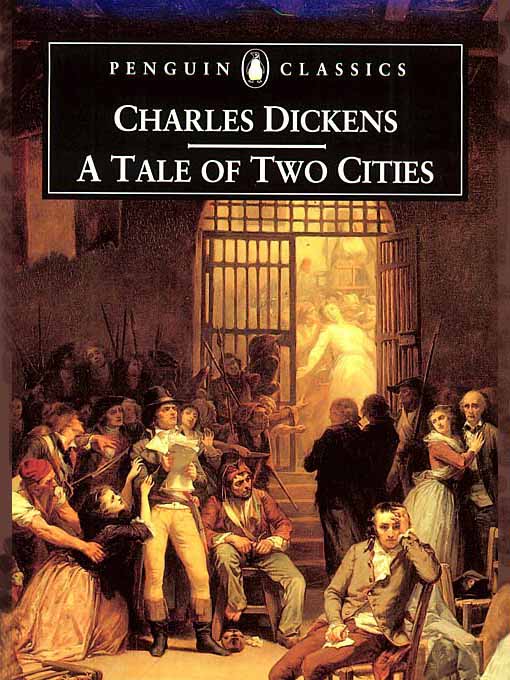
A Tale of Two Cities ~ A Capsule Book Review

A Tale of Two Cities Book Cover 2
A Tale of Two Cities
~ A Capsule Book Review by Allen Kopp ~

Charles Dickens’ superb historical novel, A Tale of Two Cities, is set in the late eighteenth century, before and during the bloody French Revolution. It was first published in 1859 and has long been a mainstay of English literature.

The French Revolution wasn’t called the Reign of Terror for nothing. It was what today might be called “class warfare.” The ordinary people of France had long been poor and oppressed. They saw the aristocracy as a blood-sucking class of soulless degenerates who spent lavishly and lived extravagantly, without regard for anybody of an inferior class. It was natural that the poor should rebel, but when they did, it was without all reason. They killed indiscriminately, anybody that for any reason they didn’t like, or anybody who had had any suspicious alliance with anybody they didn’t like. Ordinary rules of fairness and decency were tossed aside. The bloody Guillotine, used without restraint, became the dreaded symbol of the Revolution.

The plot of A Tale of Two Cities is driven by a handful of characters caught up in the tragic tide of events that is the French Revolution:

  • Alexandre Manette, a French physician wrongly imprisoned in the Bastille for eighteen years because he knows too much about a certain aristocratic family.
  • Lucie Manette, his daughter who believed he was dead.
  • Miss Pross, faithful companion/guardian of Lucie Manette.
  • Monsieur Defarge, the former servant of Dr. Manette who facilitates his release from the Bastille after eighteen years.
  • Madame Defarge, wife of Monsieur Defarge, virulently anti-aristo She personifies all that’s wrong with the Revolution.
  • Charles Darnay, heir of the aristocratic Evrémonde family who relinquishes his birthright and becomes a teacher in England under an assumed identity. He marries Lucie Manette and they are happy together for a while but, of course, the Revolution threatens to ruin their lives.
  • Jarvis Lorry, an elderly banker, a “man of business,” who befriends Alexandre Manette, Lucie Manette and Charles Darnay, and lends a helping hand to them throughout their ordeal.
  • Sydney Carton, a lawyer and drunkard who befriends Charles Darnay, Lucie Manette and Alexandre Manette. He appears to be a wastrel and a disenchanted cynic, but in the end he is the noble hero of the story, making the ultimate sacrifice for those he has come to love.

A Tale of Two Cities is about a radical political ideology that grew out of conditions of poverty and suffering and, while discarding the rule of law, disregarding decency and fairness, destroyed many lives and nearly destroyed a country. It’s a story that would be played out many times and in many places, in many different forms, up to the present day.

The 1936 black-and-white movie version of A Tale of Two Cities with Ronald Colman as Sydney Carton comes highly recommended. It’s moving, entertaining, engaging, perfectly cast, intelligent, and faithful to Charles Dickens’ great novel.

Copyright © 2021 by Allen Kopp

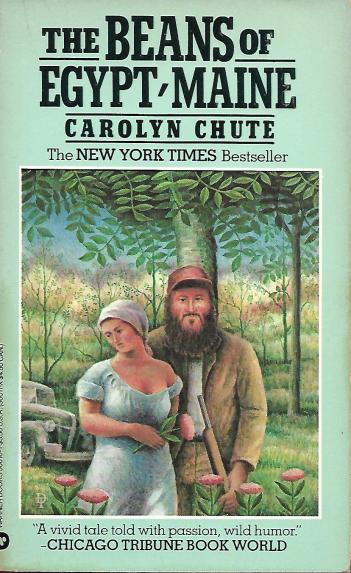
The Beans of Egypt, Maine ~ A Capsule Book Review

The Beans of Egypt, Maine cover
The Beans of Egypt, Maine
~ A Capsule Book Review by Allen Kopp ~

You probably wouldn’t want to live next door to the Bean family. There are a lot of Bean woman, a lot of Bean men, and a lot of Bean children. The Beans conceive children (sometimes with other family members) as carelessly as they raise them, and they are, to put it charitably, redneck trash. There are a lot of other adjectives that might also be applied to them: dirty, poor, ignorant, feckless, troublesome, contentious and scary.

Earlene Pomerleau lives with her tiny father, Lee Pomerleau, across the road from the turquoise-blue Bean trailer that is strung year-round with Christmas lights. As a child, she is alternately repelled and fascinated by the Beans. Her father and her Scripture-spouting grandmother warn her to stay away from the Beans, but she mixes with them every chance she gets.

The head Bean is Rubie (Reuben) Bean. He is large and crude, with a full, black beard. He is also illiterate. He doesn’t have a very good record with wives or with women in general. One of his wives, the one named Marie, says to a visitor: Did I tell you my ex-husband used to beat the shit out of me?

Rubie Bean is fertile and sexual. He has lots of children, maybe some that he doesn’t even know about. One of his sons is Beal Bean. He figures prominently in the story. He is the image of his father, Rubie Bean. He also has a way with women and is the father of many children, including offspring with his aunt.

When Earlene is a young woman, she has a fight with her father when he washes her mouth out with shampoo and runs away from home, where she consequently ends up spending the night with Beal Bean. He impregnates her on that night and she ends up marrying him, much to the chagrin of her father and grandmother. Several months later, she has a daughter whom she names Bonnie Loo.

Earlene’s life with Beal Bean is not an easy one. He is frequently out of work, gets into fights regularly, and is an all-round hell-raiser. Earlene, for some reason we don’t quite understand, is deeply in love with him. He will only ever be trouble for her. As long as she is married to him, she will never rise out of her redneck-trash status.

Carolyn Chute’s 1985 novel, The Beans of Egypt Maine, is a colorful and compelling novel with fascinating characters—funny and memorable reading. It is an important addition to the sub-genre of American literature known as “redneck-trash” literature. Other titles in this sub-genre include The Death of Sweet Mister and Tomato Red by Danial Woodrell and Tobacco Road and God’s Little Acre by Erskine Caldwell. For my money, people on the lower end of the socio-economic scale make for much more interesting reading than the PHDs with their angst-ridden marriages and left-leaning politics.

Copyright © 2021 by Allen Kopp  

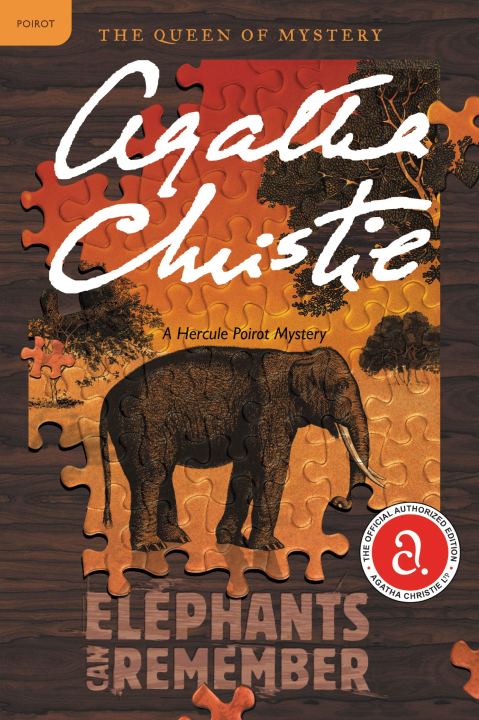
Elephants Can Remember ~ A Capsule Book Review

Elephants Can Remember book cover

Elephants Can Remember
 A Capsule Book Review by Allen Kopp  

English mystery writer Agatha Christie lived from 1890 to 1976. She wrote sixty-six novels and fourteen short story collections in her long career and is the most published fiction author of all time, with two billion copies of her books in print. She also wrote the world’s longest-running play, The Mousetrap, which ran in London from 1952 to 2020.

One of Agatha Christie’s last published works was her 1972 novel, Elephants Can Remember. The story involves a fifteen-year-old murder-suicide, or what appeared to be a murder-suicide. The “elephants” of the title are the people who remember the tragedy in all its detail because, as you know, elephants remember everything.

Ariadne Oliver is the character in Elephants Can Remember who sets the story in motion. As a successful novelist, she attends a “writers’ luncheon,” where she is accosted by an “odious” woman named Mrs. Burton-Cox. Ariadne Oliver’s goddaughter, a girl named Celia Ravenscroft, is considering marrying Mr. Burton-Cox’s adopted son, Desmond. In considering the murder-suicide tragedy that occurred fifteen years earlier, Mrs. Burton-Cox wants to know if Celia’s mother killed Celia’s father and then killed herself, or if Celia’s father murder Celia’s mother and then killed himself. (Got that?) It seems that Mrs. Burton-Cox can’t allow her adopted son to marry Celia Ravenscroft until this question is answered. She believes Ariadne Oliver knows the answer, or at least can find out.

Not being a detective, Ariadne enlists the aid of her friend Hercule Poirot, the Belgian detective who has solved so many different cases in so many other works of fiction by Agatha Christie. If anybody can find out what really happened, it is he.

Margaret “Molly” Ravenscroft and her husband, General Alistair Ravenscroft, seemed happy. He was about sixty and she thirty-five. People who knew them didn’t know of any reason why they would kill themselves. The police ruled the deaths a simple murder-suicide and nothing more. There are people, though (“elephants”) who never accepted the police version of what really happened. A lot of time has elapsed since the event (fifteen years), so the people Poirot talk to about the case have to dredge up fifteen-year-old memories. A lot of the “elephants” are old by this time.

We find that Mrs. Ravenscroft had an identical twin sister named Dorothea, who had severe mental illness. When Poirot uncovers the “truth” about this crazy twin sister, he is able to piece together what really happened, as only he can.

Elephants Can Remember is formulaic, as all of Agatha Christie’s novels are. They follow a certain predictable pattern. The reader is presented with a set of circumstances and a cast of “suspects”, and in the third act the intrepid detective (in this case, Hercule Poirot) gathers all the suspects together and explains in great detail the solution of the crime. The guilt party (or parties) is carted off to the hoosegow and the innocent suspects breathe a sigh of relief and go on their merry way.

Copyright © 2021 by Allen Kopp

It’s Not the Pale Moon That Excites Me

It's Not the Pale Moon That Excites Me image 2
It’s Not the Pale Moon That Excites Me
~ A Short Story by Allen Kopp ~

(This is a repost. It has been published in The Literary Hatchet.)

They sat on the front porch to catch the cooling breezes. Mrs. Llewellyn fanned herself with a cardboard fan courtesy of Benoist Funeral Home and took pulls on a bottle of “medicinal” whiskey she kept in her apron pocket. Miss Clemson, the nearest neighbor, sat on the steps close to Mrs. Llewellyn, holding her hands demurely around her ankles to keep her skirt in place.

“Gets mighty lonely over at my place sometimes,” Miss Clemson said. “Especially of an evening.”

“You should have found yourself a man to marry,” Mrs. Llewellyn said.

“I still might.”

“At your age?”

“I’m only fifty-four,” Miss Clemson said. “And, anyway, the world don’t revolve around no man. I know plenty of women manage just fine without a man orderin’ ‘em about the place.”

“Well, I’ve had four husbands and I can’t say I’d recommend it,” Mrs. Llewellyn said.

“There’s a rumor going around that you just received a proposal of marriage from a Mr. Chin. Is that right?”

“Yes, a Mr. Chin asked me to marry him,” Mrs. Llewellyn said, “but I turned him down.”

“Is he a Chinaman?”

“No, why would he be a Chinaman?”

“Well, that’s what the name sounds like.”

“No, he ain’t a Chinaman.”

“Well, what then?”

“I don’t know what he is, but he ain’t no Chinaman.”

“Why don’t you marry him if he wants to marry you?”

“Well, for one thing, he’s covered with scales.”

“You mean like a snake?”

“Exactly like a snake.”

“I guess a woman could get used to a few snake scales if the man was a good man,” Miss Clemson said.

“I don’t think I ever could. I’d have to turn away when he was gettin’ dressed, or at least turn the light off.”

“Maybe he’ll just shed them scales in the woods during moltin’ season and not have them anymore.”

“Why are you so interested in Mr. Chin’s scales?”

“Well, if he’s marriage-minded, maybe the two of us ought to meet. We might strike up a real lively friendship.”

“The next time I see him I’ll send him over your way,” Mrs. Llewellyn said.

“Will you really?”

“When you see them scales, you might change your mind.”

“Well, I really don’t think I’d mind the scales all that much as long as he keeps them hidden during the daytime when he’s dressed. The scales are not on his face, are they?”

“Not yet.”

“As long as they’re not on his face, I think we’d be all right, then.”

“The scales is not the only reason I don’t want to marry Mr. Chin,” Mrs. Llewellyn confided.

“What, then?”

“I don’t want him moonin’ around over my granddaughter Laura Louise all the time.”

“Oh, yes. I almost forgot about Laura Louise.”

“She lives with me, you know. I’m all the family she’s got left since her maw killed herself in the river.”

“Do you think Mr. Chin might be particularly drawn to her?”

“I think he’d never stop starin’ at her.”

“Well, if staring’s all he done, that wouldn’t be so bad.”

“Yeah, but the starin’ would lead to pawin’ and the pawin’ would lead to other things.”

“I think I see what you mean. She has turned into a right pretty little thing.”

“She’s got her womanly wiles. It’ll just take the right man to bring it out in her.”

“Do you think Mr. Chin might be the one to do that?”

“I think any man might do it, even one covered in scales.”

“Does she still go swimmin’ naked in the river?”

“I don’t think she swims naked no more, no. Not since she accepted the Lord Jesus Christ as her personal savior.”

“The Lord certainly works in mysterious ways His wonders to perform.”

“Don’t He, though?”

“There for a while she seemed headed down the road to damnation.”

“Most of that was rumor. You know what nasty tongues people have.”

“They said she was havin’ an affair with I-don’t-know-who-all, even Dr. Birke in town.”

“She went to him for a bladder infection. He treated her and she came home and that’s all there was to it.”

“That’s not what people says.”

“Do you think I care what people says?”

“No, I know you don’t care.”

“But, I’ll tell you on the other hand. I didn’t definitely turn Mr. Chin down.”

“What? You think you still might marry him?”

“If that’s the way the chips fall.”

“What do you mean? What chips?”

“Well, since Laura Louise has got herself so keen on religion, she thinks she might want to dedicate her life to the spreading of the Gospel.”

“You mean as a lady preacher?”

“Well, something like that. She’s got it into her head that she wants to go to Darkest Africa and become a missionary.”

“Darkest Africa? What would she do there?”

“She’d teach them headhunters to put down their spears and accept the Lord Jesus Christ as their personal savior, same as she done.”

“Lord, I wouldn’t want to go to Darkest Africa!” Miss Clemson said. “I’d be scared out of my wits every minute!”

“That’s because you’re an ignorant woman. Them missionaries get training before they go. They learn how to deal with them natives and make their sit down and read the Bible and listen to hymns.”

“Well, it might be right for some people, but I don’t think I would ever choose that kind of life for myself.”

“Laura Louise is all the family I got left. All my children and grandchildren has died or run off and left me. Laura Louise is the only one left to sweep out the house and fetch me what I need and cook me a little supper of an evening. She’s the only one left to keep me company in my old age. And she’s the only one to see that I’m put into the ground proper when my time comes.”

“Oh, I think I see what you’re sayin’,” Miss Clemson said. “If Laura Louise goes off to Darkest Africa, you could still marry Mr. Chin and he could do all them things for you that Laura Louise does now.”

“You catch on quick.”

“But you’d only marry Mr. Chin if you don’t still have Laura Louise at home?”

“That’s right.”

“I’m sure the Lord will work it all out for you. He’ll come up with the solution that’s right for all parties concerned.”

“I guess so,” Mrs. Llewellyn said.

“I think I see somebody comin’ up the road now,” Miss Clemson said.

“That’ll be Laura Louise, come from service.”

“Good evening, Laura Louise, dear!” Miss Clemson said in a loud voice. “How are you? There’s going to be a lovely full moon tonight, did you know that? It kind of puts you in mind of romance, don’t it?”

“Hello,” Laura Louise said.

“Them services are gettin’ longer and longer, ain’t they?” Mrs. Llewellyn said. “I’ve been waitin’ for my supper.”

“Your supper will just have to wait, gran,” Laura Louise said. “I just got some good news at the end of service and I’ve just got to tell you what it is!”

“Whatever could it be?” Miss Clemson asked.

“I’ve been accepted in missionary school in Memphis, Tennessee! School starts in two weeks. It’ll last for two months and after that I’ll go over to Darkest Africa to do the Lord’s work!”

“My goodness!” Miss Clemson said. “That is excitin’ news, ain’t it?”

“How long will you be gone?” Mrs. Llewellyn asked.

“Oh, I don’t know! Years and years, I guess! Isn’t it wonderful? Brother Rabbit arranged the whole thing over the telephone. He told the people in Memphis what a good worker I am and how dedicated I am to the Lord. They told him to send me on up. They can’t wait for me to get started.”

“That’s fine,” Mrs. Llewellyn said, “but who’s goin’ to do your work around here while you’re gone?”

“What work?” Laura Louise asked.

“You would say that, wouldn’t you? That’s because you’re so selfish! What work do you suppose? Cleanin’ and cookin’ and washin’ and all the rest of the housework waitin’ to be done, that’s what work!”

“Why, I don’t know, gran. I guess you’ll have to get yourself a hired girl to help out, won’t you?”

“And just where am I goin’ to get the money for that?”

“The Lord will provide.”

“I think it’s just wonderful!” Miss Clemson said. “You were turnin’ out to be such a tramp around these parts, takin’ up with any man that would give you the time of day—including Dr. Birke in town—and now just look at you! The Lord has taken a-holt of you and turned you around into the kind of girl He always wanted you to be! Praise the Lord!”

“I’m just so excited about it I’m about to burst! I don’t think I’ll be able to sleep a wink tonight!”

“Well, just go on in now and get started on my supper now,” Mrs. Llewellyn said. “There’ll be plenty of time later to be excited.”

“Do you want to stay and eat supper with us, Miss Clemson?” Laura Louise asked.

“I don’t think so, honey, but thanks for askin’. I need to get myself on home.”

After Laura Louise went into the house to start cooking supper, Miss Clemson turned to Mrs. Llewellyn and said, “I think I hear wedding bells!”

“Whatever do you mean?”

“Well, now that Laura Louise is goin’ off to Darkest Africa to be a missionary, you’ll want to marry Mr. Chin as fast as you can so he can do all your work for you, won’t you?”

“Not so fast! She thinks right now that she’s goin’ to Darkest Africa to be a missionary, but what if I say she’s not?”

“You mean you gonna try to stop her?”

“I think I’m goin’ to pay a call on Brother Rabbit at the church tomorrow and tell him to stop meddlin’ in my affairs. Laura Louise ain’t nothin’ but a child and she’s almost feeble-minded to boot. She needs her grandma, her only living family, to look after her and keep her safe. She can’t be goin’ off on her own to no Darkest Africa to be no missionary. She’d be a babe in the woods. Why, they’d eat her alive!”

“Well, I don’t know,” Miss Clemson said. “It certainly seems the Lord is pointin’ her in that direction and if He’s decided it’s the right thing for her to do, then He’ll make it happen, no matter what.”

“Well, we’ll see about that.”

“Are you really goin’ to see Brother Rabbit tomorrow at the church?”

“I said I am, didn’t I?”

“Do you want me to go with you?”

“No, I’d rather go alone.”

“Well, good luck, but I don’t think you should go pokin’ your nose in. Laura Louise is a grown woman and if she’s decided she wants to go to Darkest Africa to be missionary, then I think you should just let it alone.”

“Do you have a granddaughter?”

“You know I ain’t. I ain’t ever even been married.”

“Well, until you have your own granddaughter, you can’t know what it’s like to have her leave you and go off to Darkest Africa to be a missionary.”

“Well, all right, then, honey. I won’t say another word about it.”

“Now, if you’ll excuse me, I think my supper is about ready and I’m hungry. I don’t like to be kept waitin’.”

“All right, honey. I’ll go on home now and eat my own lonely supper. And after I’m finished and all the dishes are washed up and put away, I’ll get into bed and look out the window at the big old sad yellow moon. It’ll remind me of all the things that might have been and never were.”

Copyright © 2021 by Allen Kopp

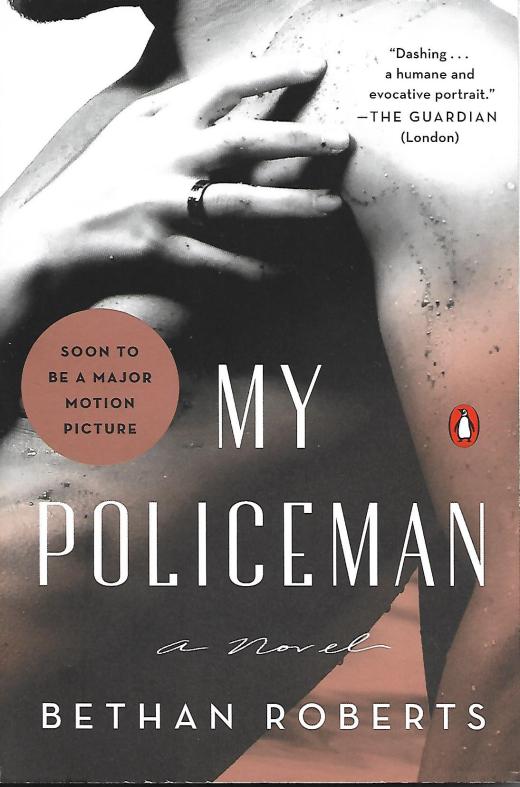
My Policeman ~ A Capsule Book Review

My Policeman cover

My Policeman
~ A Capsule Book Review by Allen Kopp ~

My Policeman, a novel by Bethan Roberts, is set mostly in 1957 in the seaside town of Brighton, England. Marion Taylor is an unmarried teacher of small children. There is a man she likes named Tom Burgess. She doesn’t understand Tom very well; she wonders why he is cool toward her and rather aloof. He is handsome, blond, athletic and well-built; he goes swimming in the sea every morning and he eventually teaches her to swim.

Tom is what might be called a straight-arrow type. As a police officer, he is interested in projecting an image of conventionality and respectability. Marion falls in love with him, while he remains blasé on the whole matter of courtship and marriage. She begins to suspect he is gay but believes that she can get him to change, if only he will marry her. Because marriage is what is expected of every young man and because he must project an image of respectability to the world, Tom marries Marion. We can see it’s a marriage that probably isn’t going to be a smashing success.

Tom meets a man thirteen years older than himself named Patrick Hazelwood. Patrick is worldly and sophisticated; he works as a curator in a museum and knows the world of art, music and books. He is also unabashedly gay, at a time in England when sexual activity between men was still a crime and punishable by confinement in prison.

Patrick and Tom begin a “discreet” relationship, although Tom, as a police constable, must be very careful that his “secret” is never revealed. Marion knows that Tom and Patrick are “friends” but doesn’t suspect (at first) the true nature of the relationship. She wants to believe that Tom, with her help, might be cured of his “affliction.” (None so blind as those who will not see.)

Patrick invites Tom to go on a trip with him to romantic Venice. While Tom thinks there is nothing wrong with the two of them going to Venice together, Marion, as Tom’s wife, doesn’t take it well; she is jealous and moved to commit an uncharitable act, to put it mildly. It is this trip to Venice that provides the catalyst for the novel’s tragic third act.

The novel alternates between first-person passages narrated first by Marion and then by Patrick. They are both besotted with Tom. While most of the action takes place in the late 1950s, some of the novel is set in the late 1990s, showing how these three characters change over forty years through the unique dynamic they share.

My Policeman espouses the themes of jealousy, guilt, and the stupidity of laws that govern human sexual behavior (the lengths to which these laws force people to go to conceal their true natures). It is a memorable, intelligent, adult story. It’s not a story I would recommend to my elderly mother but, then, she and I are tuned to completely different frequencies.

Copyright © 2021 by Allen Kopp   

Gender Ambiguity

Rita Hayworth
Gender Ambiguity
~ A Short Story by Allen Kopp ~

They sat in a semicircle in front of the television. Old black-and-white movies, they agreed, were the best thing to watch on TV. Not only were they clean, but they brought back memories of happier times.

“Rita Hayworth is certainly a lovely woman,” Ivy said.

Woman!” Jane said. “Don’t you know she’s really a man?”

“Rita Hayworth is a man? I don’t think so!”

“Hell yes, she’s a man! Everybody knows she’s a man!”

“That must have come as a surprise to Mr. Orson Welles,” Vernon said.

“He knew she was a man before he married her.”

“How do you know so much about it?” Ivy asked.

“I read those newspapers they sell at the supermarket checkout,” Jane said.

“Of course, that makes you an authority,” George said.

“I know what I see. If I see it in print, I believe it.”

“Haven’t you ever heard of being skeptical?”

“What’s that?”

Myrtle sat forward in her chair and pretended to burp her baby, a lifelike doll made of rubber. Everybody turned and looked at her.

“How is Baby Doe, Myrtle?” Ivy asked.

“He’s the best baby in the world,” Myrtle said.

“That’s because he’s not a real boy,” George said.

“Is he eating his carrots?”

“Oh, yes! He eats everything I give him!”

“We believe what we want to believe,” Vernon said with a roll of the eyes.

“Do you know today is my birthday?” Ivy asked.

“I don’t think so, dear,” Jane said. “I think your birthday is in December, isn’t it? Right before Christmas?”

“If I want today to be my birthday, then it’s my birthday.”

“How old are you?” George asked.

“You should never ask a lady her age,” Jane said.

“I’m as old as I want to be,” Ivy said. “If I want to be twenty-one today, then I’m twenty-one.”

“There you go!” Vernon said.

“I wouldn’t want to be twenty-one again and have to go through all that shit again,” George said. “When I was twenty-one, I was in jail.”

“What for?”

“They got me on a robbery charge but I was innocent. I was in the slammer for two and a half years.”

“I’m surprised they let you out,” Ivy said.

“I paid my debt.”

“I thought you said you were innocent.”

“I was.”

“Then why did you owe a debt?”

“Twenty-one was so long ago that I can’t even remember back that far,” Jane said.

“Wasn’t that about the time Lee surrendered to Grant?” George asked.

“It’s time for me to put Baby Doe down for his nap,” Myrtle said. She threw the baby by the arm behind the couch, hitting the wall with a thud. “He’ll be fine until his two o’clock feeding.”

“Whatever happened to your husband?” Ivy asked.

“He’s still in the war,” Myrtle said.

“What war is that?”

“Isn’t there always a war going on someplace?”

“When was the last time you saw him?”

“I don’t know. I think it’s been about fifty-seven years.”

“But what about Baby Doe? Are you saying that somebody besides your husband is Baby Doe’s father?”

“Of course, not! What kind of a tramp do you think I am?”

“She creates her own reality,” Vernon said, “which is not altogether a bad thing when you think about it.”

“And when my husband sees Baby Doe, he is going to be so happy!” Myrtle said, tears in her eyes.

“What is your husband’s name?” Jane said. “I haven’t ever met him.”

“His name is Percival, I think. Unless he’s changed it.”

“Why would he change it?”

“He’s impulsive that way.”

“Fifty-seven years is a long time for your man to be away at war.”

“Don’t I know it? I get so lonely for him sometimes I think I’m going to go mad! I don’t know what I’d do without my little Baby Doe.”

“My own children were never much of a comfort to me,” Jane said. “They never liked me very much.”

“That’s because they had a witch for a mother,” George said.

“And if you want to know the truth, I never liked them all that much, either.”

“How many children did you have, dear?” Myrtle asked.

“Seven.”

“That’s a lot for somebody who doesn’t like kids!” Vernon said.

“Where are they now?”

“I don’t know. Some are dead, I think. Some are in prison.”

“Hey!” Ivy said. “The movie with Rita Hayworth is over and another one is beginning.”

“Which movie is it?”

“This one stars Bette Davis.”

“Oh, I like her!”

“It’s the one where she steals Olivia de Havilland’s husband and drives her car through a fence and breaks her neck when the police are after her.”

In This Our Life,” Vernon said.

“What a memory you have for an old bastard!”

“We just watched it last week. Don’t you remember?”

“Is Bette Davis really a man?” Ivy asked.

“No, I believe she’s really a woman,” Jane said. “I’m not too sure about Olivia de Havilland, though.”

“I think Olivia is definitely a woman,” George said.

“I wouldn’t be too sure of that.”

“What is that movie where Lana Turner and John Garfield kill her husband?” Ivy asked.

The Postman Always Rings Twice.”

“Yes, that’s it. I’d like to see that one again.”

“Is Lana Turner really a man?”

“She started out as a man,” Jane said, “but she had a sex-change operation. Now she’s a woman.”

“Maybe she’ll go back to being a man again,” Vernon said.

“Anything goes with those motion picture people.”

“They get sick and die just like the rest of us,” Jane said. “Beauty fades and then what do you have?”

“Ugly.”

As if on cue, Nurse Tillinghast came into the room, rolling the medicine cart.

“Time for your meds, people,” she said in her voice that was like fingernails on a blackboard.

You take it,” George said. “I don’t want any.”

“Just what the doctor ordered,” Nurse Tillinghast said. “Take your meds and then you can get back to your movie.”

“We were just discussing whether Lana Turner is really a man,” George said. “We’re about evenly divided.”

“A lot of those movie actresses are really men, or so we’ve been told,” Ivy said.

“Everything is all illusion, you see,” Vernon said.

“I wish I had nothing better to do,” Nurse Tillinghast said, “than sit around all day and talk about which women might really be men.”

“Are you really a man? George asked.

“That’s for me to know and you to find out!” Nurse Tillinghast said. “To you, I’m just a sexless dispenser of meds. Now take your meds and let me get on with my rounds.”

The meds were handed out and swallowed and Nurse Tillinghast pushed the cart out of the room.

“What is that movie about a women’s prison where they have a cruel matron who shaves somebody’s head?” Jane asked.

Caged,” Vernon said.

“That’s it! Tillinghast looks just like the cruel matron in Caged.”

“The matron’s name is Evelyn.”

“That’s right. How do you remember all that stuff?”

“I’m having a really lucid day today. Tomorrow I might not remember a thing.”

“Come to think of it, I think Nurse Tillinghast really is a man,” George said. “She has a big nose and big hands.”

“That doesn’t mean anything,” Ivy said. “I think we should accept at face value all we see. That’s what God wants us to do.”

“How do you know what God wants?”

“I talk to Him all the time!”

“It’s all illusion,” Vernon said. “We create our own illusion. If you want to believe you’re talking to God, then you’re talking to God. If you want to believe that Bette Davis is really a man, then she’s a man.”

“Yes, isn’t it wonderful?”

Copyright © 2021 by Allen Kopp

Empty Mansions ~ A Capsule Book Review

Empty Mansions cover
Empty Mansions
~ A Capsule Book Review by Allen Kopp ~

W. A. Clark, who lived from 1839 to 1925, was an American entrepreneur who became known as the “Copper King.” He amassed a huge fortune with his copper mining (also banking and railroads) interests in Butte, Montana. He served as United States Senator from the state of Montana, but he became mired in political scandal that tarnished his name and reputation. He was famous for his flamboyant way of doing things and his expensive and showy homes, first in Butte and then on Millionaires’ Row in New York City, where he built a remarkable 121-room mansion at a staggering price.

W. A. Clark was married to two different women. His first wife, Katherine Louise, contracted typhoid fever at the Chicago World’s Fair in 1893 and died at age fifty. (They had seven children, four of whom survived past the age of sixteen.) He married his second wife, Anna Eugenia La Chapelle, in 1901, when he was 62 and she was 23. He had two daughters with Anna: Louise Amelia Andrée Clark (1902-1919), who went by the name Andrée, and Huguette Marcelle Clark (1906-2011). Huguette (pronounced oo-get) is the subject of the nonfiction book, Empty Mansions, by Bill Dedman and Paul Clark Newell, Jr.

Huguette Clark was born in France in 1906 and grew up in New York City in a world of unimaginable wealth with her father, her older sister, and her mother, in the fabulous Clark mansion on Millionaire’s Row on the edge of Central Park. When she was 22, she married a man named Bill Gower, who was a year older than she was. The marriage was never consummated and ended in a few months, although Huguette and Bill Gower remained friends until his death.

When W. A. Clark died in 1925 at age 86, his immense wealth was divided among his five surviving children, including Huguette. Huguette continued living with her mother, Anna, after her father’s death, but the two of them (Anna and Huguette) vacated the Clark mansion and moved into an exclusive apartment building at 907 Fifth Avenue.

Living alone with her mother in a luxurious New York apartment building, Huguette was isolated from the ugly realities of the real world. She cultivated her interests in music, painting, Japanese art and architecture, French illustration, and rare dolls. She owned at least two priceless Stradivari violins and collected paintings, painted by such artists as Monet, Degas, and Renoir. (Each of these paintings sells for upwards of ten to 25 million dollars.)

And then there were the homes. Huguette and her mother owned Bellosguardo, a fabulous mansion built on a cliff in Santa Barbara, California, overlooking the Pacific. Maintaining Bellosguardo cost a fortune in itself. Nearby, they kept a “farm,” which was  a place they could escape to if the Japanese attacked California during World War II. Huguette and her mother never lived at the farm.

Back in New York, Huguette bought another apartment in the building, where she and her mother lived, which was to be her primary residence. Later she bought another apartment above her to protect her from undesirable neighbors, for a total of three apartments in the same luxury apartment building. (After Huguette’s mother’s death at age 85 in 1963, Huguette kept her apartment exactly as she had left it.) In later years, Huguette bought an estate in Connecticut so she would have a place to live in case of a terrorist attack in New York City. All of these fabulous homes remained unoccupied for many years. These are the “empty mansions” of the book’s title.

Abandoning her apartment, Huguette moved to a hospital, where she lived in a small hospital room for the last twenty years of her life, surrounded by a small group of people she knew and trusted. The hospital very indulgently allowed her to occupy the same room for all those years because they hoped to get a large chunk of her fortune when she died.

Huguette was generous to the people close to her. She gave more than 30 million dollars to her long-time nurse. (There were accusations, of course, of people manipulating her for their own ends.) When she died at the remarkable age of 104 (two weeks short of her 105th birthday), her fortune was worth an estimated $300 million, counting her paintings, dolls, jewels, real estate, furniture, etc. Not surprisingly, a long battle ensued among her blood relatives, most of whom she had never even met, for her money.

Empty Mansions is the fascinating story of a super-rich American family, the Clark family: the flamboyant father, W. A. Clark, his two wives, his nine children, his life and times, but, more specifically, it’s about his youngest child, Huguette Marcelle Clark, who lived a life of secrecy, cut off from the world, but living life her own way and having lots of time (104 years) and an unlimited amount of money to indulge her eccentricities. Most of us can’t even begin to imagine what it’s like to have so much money that ten million dollars seems like so much pocket change.

Copyright © 2021 by Allen Kopp   

Robinson Crusoe ~ A Capsule Book Review

Robinson Crusoe cover
Robinson Crusoe
~ A Capsule Book Review by Allen Kopp ~

English author Daniel Defoe lived from 1660 to 1731. He was a prolific writer whose most famous work is the novel Robinson Crusoe, published in 1719. Robinson Crusoe is generally considered the first English novel and has appeared in many reprints and translations. It is the famous story of an “everyman” who is shipwrecked alone on an uninhabited island in the Caribbean, as all his shipmates perish.

As a young man, Robinson Crusoe (the man, not the novel) can’t decide what profession to take up. Against the better advice of his father, he becomes a sailor. After a brief (and might have been successful) stint as a plantation owner in Brazil, he goes to sea on a commercial voyage to the Caribbean. There is a terrible storm and (you guessed it), the ship that Robinson is on is wrecked. All his shipmates drown but he, miraculously, survives. He washes up on a tiny, uninhabited, isolated, tropic island in the Caribbean, which turns out to be forty miles from Trinidad.

At age twenty-six, Robinson has never learned how to be on his own and he doesn’t know how to do much of anything; he doesn’t have what we might call “survival skills.” Luckily he is able to retrieve some essential supplies from the shipwreck, such as tools, rum, gunpowder, guns, clothes, and some food items. He has also salvaged some seeds for planting, which will prove useful to him later on.

Alone on this terrible island, he must learn to survive, or he will die. He must construct a shelter of some kind to protect himself from the tropical rainstorms, hurricane winds and sweltering heat. When he first comes to the island, he lives in fear that he will be devoured by wild animals or eaten by cannibals, which, he believes, live nearby. He must learn to find enough food to eat to keep himself alive. He must cope with isolation, loneliness and his own fear. He lives always with the hope that he will see a friendly ship on the horizon, coming his way.

As the novel progresses, we see how Robinson Crusoe is transformed. He must learn to do the things he never imagined he would have to do, such as killing animals for food, planting crops, making bread, making pottery, baskets and building himself a sturdy shelter to protect himself from whatever might be out there. He comes to realize after being on the island for years that God played a part in his salvation, when all the others on board his ship died. He sees how God played a part in providing everything he needed to sustain life. Without God helping him, he would have died. How he changes, how he is transformed from one kind of man into another kind, is the emotional core of the novel.

It’s many years before Robinson Crusoe finds a way off the island. He endures and somehow he thrives and becomes stronger. He finds happiness, comfort, peace and contentment. The irony is that he probably wouldn’t have had those things if he had stayed at home in England where he was born.

Copyright © 2021 by Allen Kopp

A Thousand Others

A Thousand Others image 1
A Thousand Others
~ A Short Story by Allen Kopp ~

In September 1921, Mr. Fatty motored the three hundred miles—in his custom-made, $20,000 automobile—from his home in Hollywood, California, northward to San Francisco, for a much-needed hiatus from the arduous pursuit of making motion pictures. Mr. Fatty was, you see, the biggest star in Hollywood. People adored him. His pictures raked in prodigious amounts of cash.

If you ever saw Mr. Fatty act on the screen, you knew why he was so popular. He was funny. He was charismatic. He was charming. He was talented. He was Good with a capital G. He deserved the million dollars a year, tax-free, that he raked in. He deserved all the love, all the fame and popularity, that the world had to offer. He deserved it all, except, perhaps, the fate that awaited him in San Francisco.

On arriving in that picturesque, seaside city, Mr. Fatty checked himself and his entourage into his luxurious suite on the twelfth floor of the finest hotel. He refreshed himself with a bath and a brief nap. After taking some pills to pep himself up, he ate a steak sandwich and then began drinking prodigious amounts of alcohol.

The party guests began arriving before the sun went down. They were picture people, directors, producers, writers, and other actors; acquaintances, friends and friends of friends; flappers and party girls and party-girl flappers; would-be actresses, girls who would do anything with anybody to get their big break in motion pictures. Some were no more than fifteen, fresh off the farm. They took pills to crank themselves up, to make themselves happy, to make themselves lose whatever inhibitions they might still have.

And they were loud. They were raucous. They were crude. They were unleashed. They consumed bootleg hooch by the barrelful. They danced, some of them alone and some together. They removed part of their clothing and then all their clothing. They sang, they brayed like animals, they screamed, they whooped. They tore down the curtains and busted up the furniture. They coupled, on the couch, on the floor, in the bathroom, the kitchen, standing up, lying down, wherever they happened to be.

Any number of the unattached girls made a play for Mr. Fatty because they knew he was a major player in motion pictures. One kind word from him could get them in to see Hollywood’s top producers and directors. Making Mr. Fatty feel especially good, even for just a few minutes, might be the one little thing that could launch a motion picture career.

Some of the girls, of course, already had a few screen credits. They had played waitresses, maids, or “extras” in crowd scenes. They all hoped to be able to stand out from the others, to be noticed and get a chance to play the really substantial parts opposite the handsome, sleek-haired leading men who set their hearts aflutter.

May Beasley had appeared in twelve different motion pictures, but in most of them she didn’t get a screen credit because the part she played wasn’t big enough. She could play any kind of part—she could even sing and dance—but she thought of herself first and foremost as a comedic actress. She just hadn’t had the chance yet to prove to any influential person just how good she was. She could change all that if Mr. Fatty would just notice how pretty she was and how eager to make good.

Mr. Fatty noticed May, all right. He kept his eye on her as she moved like a cat around the room with a drink in her hand, flirting first with one man and then with another. Sometimes she danced her way from one person to the next, in time to the syncopated jazz music. He found her quite fetching. He couldn’t keep his eyes off her gyrating buttocks; he was sure she wasn’t wearing any underwear.

May also kept her eye on Mr. Fatty until he sat down on a French divan, where she went and sat beside him and put her arm around him, giving him a closeup view of her breasts. She whispered in his ear and nuzzled on his earlobe in the way she knew that drove men wild. He was so drunk and so high at that moment that he would have liked anything she did.

They kissed—a long, lingering kiss. He could have taken possession of her right there, but he was still a little conventional and didn’t like doing the things in public that he loved doing in private. He took her by the hand and led her into the bedroom, discreetly closing the door.

Mr. Fatty and May Beasley were in the bedroom for hours. The more playful of the party guests listened at the door, but heard nothing. They could only imagine the scene that was playing out, knowing as they did what a prodigious lover Mr. Fatty was.

The hour grew late and the party guests began to drift away. Mr. Fatty emerged from the bedroom, disheveled and sweating. The remaining guests cheered him, whistled and hooted. He smiled, wiped his brow, and bowed dramatically.

“You must have worn poor old May down to a nub,” someone said.

“She’s sleeping it off,” Mr. Fatty replied. “She’s feeling no pain.”

Mr. Fatty went downstairs for a bite to eat, telling everybody the party was over until next time. He hoped all his dear friends had a lovely time. He wanted everybody to have left by the time he came back upstairs to his suite because he needed to rest before driving back home. Au revoir, my dears! Until we meet again!

Late the next day, back home in Hollywood, Mr. Fatty received an urgent telephone call from his lawyer. Word was about that May Beasley was seriously injured from the treatment she received at the party in San Francisco. She had a ruptured bladder and was bleeding internally.

“What did you do to that poor girl?” the lawyer asked.

“Nothing that I haven’t done to a thousand others,” Mr. Fatty said.

“They’re saying you sexually assaulted her. If she dies, I’m afraid there’s going to be big trouble.”

“Should I go back up to San Francisco and see about her?”

“No, just go about your business. Go back to work at the studio. I’ll call you when I know more.”

Mr. Fatty went to work and for two days heard nothing. He was sure May Beasley was going to be all right. On the third day, he received another urgent call from his lawyer. May had developed peritonitis and was gravely ill.

“You weigh three hundred pounds,” the lawyer said. “May Beasley weighs a hundred and eight. People are saying you ravished her, crushed her.”

“I’m sure I didn’t do anything to her that hundreds of others haven’t done,” Mr. Fatty said. “She loved every minute of it.”

“She didn’t show any signs of being injured when you were with her?”

“None at all. She’s an actress. She’s just trying to get attention.”

“I hope that’s all it is.”

One week after the party, May Beasley died. The press ripped Mr. Fatty apart. They were calling him an animal, a cad, a monster, a ghoul, a fiend. Suddenly he was made to represent all the excesses of Hollywood and picture people: the heavy drinking and the use of narcotics and reefers; free love and out-of-wedlock birth; sexual perversion and the switching of the genders—feminine men and masculine women. In short, the casting aside of decency and the Christian values that made this country great.

To show his heart was in the right place, Mr. Fatty offered to pay all of May Beasley’s hospital and doctor bills. While his friends saw it as a magnanimous gesture, others saw it as tantamount to an admission of guilt.

He believed he should attend May Beasley’s funeral, but his lawyers and the studio bosses advised him to stay away. The last thing he needed, they said, was to show his face at her funeral and be inextricably linked to the tragedy of her death. He needed to begin thinking how he might extricate himself from the scandal and limit the damage done to his career and his public persona.

Mr. Fatty felt so sad about what happened to May Beasley, but the biggest blow of all came when his lawyer told him he was being charged with first-degree murder and must surrender himself to authorities in San Francisco.

He knew the world and he knew people. He had a few friends and admirers who would always believe in him, but the majority of people chose to believe he was a monster, a defiler and murderer of innocent young women. They were the ones, he knew, who would not rest until they had flailed all the flesh from his bones.

Copyright © 2021 by Allen Kopp