A Short Life and a Merry One ~ A Short Story

A Short Life and a Merry One
~ A Short Story by Allen Kopp ~

I had my friend Calvin Pears. He was in my class at school. We were both twelve years old and had known each other since we were five. We spent a lot of time together. We were good friends because we were both shy and not popular in school.

Calvin and I always had a lot of things to talk about. We laughed a lot. We laughed about things that nobody else would have thought funny. We made fun of people behind their backs. Calvin was a good imitator. He imitated our teachers, whether they were male or female. He imitated the way they walked or talked or smoked. He wanted to have a show business career after he finished school.

It was a Friday evening in October. After being in school all week, it was time to get out of the house and have some fun. Calvin and I decided we’d rather go roller skating than see the western movie at the Bijou. I liked roller skating and could skate circles around Calvin. He usually said he was tired or his legs hurt and he wanted to call it a night.

We were a couple blocks from the roller rink when we saw two boys from high school standing on the street corner. I had seen them but didn’t know their names.

“Well, here’s a couple of little kids!” the taller of the two boys said when he saw us. “Does your mommy let you out after dark?”

“Hi, Lonnie!” Calvin said enthusiastically.

“How’s it going, little man?”

“I’m doing spectacularly well!” Calvin said.

“Well, glad to hear it! What’s your sister, Bimbo, up to these days?”

“Bimbo’s fine. She was rolling her hair up at the kitchen table when I left home.”

“She wasn’t going out on a date, was she?”

“No, I think she was just going to pop some popcorn and watch TV.”

“Well, you be sure and tell her old Lonnie said ‘hi’!”

“I will.”

Lonnie’s friend’s name was Brent. He had red hair and a sly look about him like a fox. When Calvin introduced me to Lonnie and Brent, they both shook my hand without irony. I was used to high school boys calling me names or making fun of me.

“Where you little hoodlums headed?” Lonnie asked.

“We’re going roller skating,” Calvin said.

“Well, that’s a kids’ thing, isn’t it?”

“I guess it is,” Calvin said. “It’s fun, though.”

“Yeah, I guess you would think it’s fun!”

“They are kids,” Brent said.

“Yeah, and we’re grown men, ain’t we?” Lonnie said. “Hah-hah-hah!”

“Let’s go!” Brent said. “I’m tired of just standin’ here!”

“Now, look here, you two little kids!” Lonnie said. “I’ve got my brother’s car parked over there. I don’t have my own car yet, but I will soon. We were just about to go for a little hell-raising adventure, if you two would care to join us.”

“What do we need them for?” Brent said.

“It’s just for a little while,” Lonnie said. “I need to find out some stuff about Bimbo.”

“Oh, you and your girls! You make me sick!”

“So, how about it?” Lonnie said. “Do you two little sixth graders want to go with us for a little ride?”

“Sure!” Calvin said.

“We’re not sixth graders,” I said. “We’re in the seventh.”

“Do you want to go?” Calvin asked me.

“I guess so. If you do.”

“Well, let’s get crackin’, then!” Lonnie said.

On the way to the car, Lonnie put his hand on Calvin’s shoulder and leaned down and talked in his ear. So, that’s what this is all about, I thought. Lonnie only pays any attention to Calvin and me at all because he’s interested in Calvin’s sister, Bimbo. I’d rather go roller skating.

Lonnie opened the door for Calvin and me to climb into the back seat. He and Brent got into the front seat and Lonnie started the engine and pulled away from the curb with a jerk.

“Where do you kids want to go?” Lonnie asked over his shoulder.

“Any place is fine with us,” Calvin said.

“Isn’t this fun?”

“I’ve never had so much fun in all my life!”

“Does Bimbo ever talk about me?” Lonnie asked. “I mean, like at the dinner table or anything?”

“I never pay any attention to anything Bimbo says,” Calvin said.

“Do you know if she’s seeing anybody right now?”

“Seeing anybody? I don’t know what that means.”

“Is she dating anybody regularly?”

“I don’t know. I don’t pay any attention.”

“Well, are there any guys that hang around?”

“I haven’t seen any. Except for the man who reads the gas meter.”

“If you see any, you be sure and let me know.”

“I will.”

We went through town, past the chemical plant, over the railroad tracks and the bridge, and in ten minutes we were out in the country. The road was dark, now, and hilly, with abrupt dips in the road and signs about watching for high water. There were sharp curves that couldn’t be seen until we were right up on them.

Lonnie angled around in the front seat so he could see Calvin’s face. “Does Bimbo go around much? With other girls, I mean?”

“Yeah, they have stupid slumber parties and they go to shows and things like that. They’re all hoping a talent scout from Hollywood will discover them and want to put them in the movies.”

“Yeah, I know what they’re like,” Lonnie said. “Completely unrealistic. I mean, how many people get discovered by talent scouts?”

“I never heard of anybody.”

“Watch this!” Lonnie said.

He got the speed up to sixty miles an hour (the limit was twenty-five) and then he turned off the headlights, and we found ourselves speeding blindly through absolute darkness. I held on to the door beside me and closed my eyes.

Oh, my god!” Calvin gasped.

“Isn’t that the wildest thing you’ve ever seen!” Lonnie said.

“That’s a stupid trick, man!” Brent said. “What are you trying to do? Get us all killed?”

“If you don’t like it, man, I can always let you out here!”

“No thanks, man! It’s a long walk back to town! Just slow down a little.”

“Now it’s time for the roller coaster!” Lonnie said. “Don’t you kids in the back seat just love roller coasters?”

“Sure!” Calvin said.

He took a series of small hills at a high rate of speed, engine roaring. At times we were flying, all four tires off the road at the same time. We could hear the bottom of the car scraping the road in the low places.

“I’m glad this is not my car!” Brent said.

“Oh, my brother does this all the time!” Lonnie said. “He’s the one that told me about it!”

There was a sharp curve in the road and then another one. Lonnie had to fight the wheel to keep the car on the road.

“This is so much fun!” Lonnie said. “I’m going to turn the headlights off again!”

“Don’t be a jerk, man!” Brent said.

He didn’t turn the headlights off, but he went faster. There was a curve on a hill and then another curve going down the hill. There was a straightaway, then another hill.

“Isn’t this living!” Lonnie said. “It feels just like flying!”

He didn’t see the next sharp curve until it was too late and the car left the road. He struggled to regain control, but it was too late. The car glanced off a tree and kept going to the next tree—down a gulley, up the other side, taking out fence posts and small trees as it went. Finally it came to rest on a huge flat rock ten feet below the level of the road, smashed flat like a stepped-on bug.

I was thrown from the car. I didn’t know where the others were. I knew I was dead, but I also knew that I was aware of what was happening and that the same thing had happened to me before at an earlier time. All this went through my head in the briefest of flashes.

I was present at my funeral, and I don’t mean just as a dead body in a closed-up box at the front of the church. I saw the whole thing from up near the ceiling. My mother sat on the front row, a stunned look on her face. My father, divorced from my mother since I was four, sat on the other side of the room. Everybody from my seventh-grade class was there, even the ones who didn’t like me.

My mother, sparing no expense, had me buried in the Methodist cemetery beside my great-grandfather, who died long before I was born. I was dead, now, and buried and the people who had known me would soon forget about me.

The one person who remembered me years later was my father, though I had hardly known him in my short life. Since I was the only child he ever had, he became sentimental about me in his old age. When he was over ninety and aware that he was nearing the end, he had my body (what was left of it) disinterred from the grave where it had lain in for fifty years, flown halfway across the country, and cremated.

When he died a short time later, he had my ashes, along with his own, interred in a niche in a columbaria. Both our names were inscribed on the niche, along with the dates we were born and the dates we died. He had a long life and I had a short one. Father and Son. Together Forever.

Copyright © 2022 by Allen Kopp
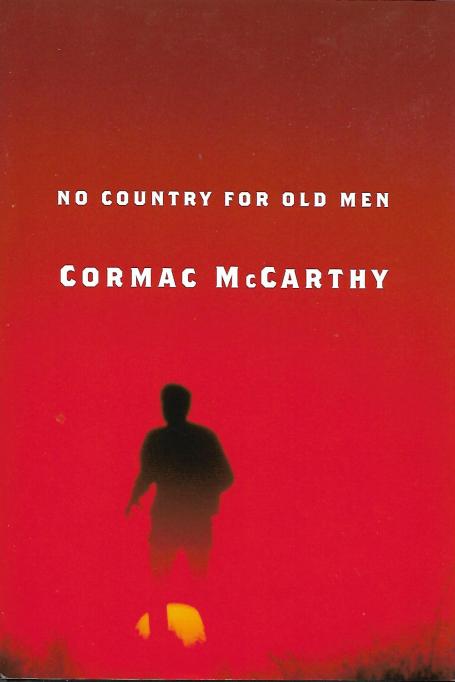
No Country for Old Men ~ A Capsule Book Review

No Country for Old Men book cover
No Country for Old Men
~ A Capsule Book Review by Allen Kopp ~

Cormac McCarthy’s 2005 novel, No Country for Old Men, is set in Texas around 1980.

There are three principal characters in No Country for Old Men:

  • Sheriff Ed Tom Bell, sheriff of Terrell County, Texas. He represents the old America where people said “sir” and “ma’am” and were polite to each other. He is approaching the end of his career as a lawman. He has little patience for, or understanding of, the modern world.
  • Anton Chigurh, a psychopathic killer with a philosophical bent. He kills, not so much because he enjoys killing, but because he believes it is what he is supposed to do. He has no sympathy or empathy for any of his victims. In reading the book, I eventually lost track of how much many people he kills.
  • Llewellyn Moss is the “everyman” character. He is thirty-six years old, a decent and ordinary fellow who works as a welder, lives in a trailer and has a pretty, nineteen-year-old wife named Carla Jean.

Out in an isolated spot in the Texas desert, Llewellyn Moss inadvertently stumbles across a scene of carnage: a drug deal gone wrong. There are several vehicles and eight dead bodies. It’s apparent there has been a shootout. After Llewellyn does a little snooping, he comes across a case containing over two million dollars. What does he do? Does he alert the police? No, he takes the case home with him. He may be unsophisticated, but he’s not stupid. He knows that somebody will be coming after him to get the money back and, even if they do get the money back, they will still kill him.

It’s up to traditional Texas lawman Ed Tom Bell to solve the drug-shootout crime in the desert, since it happened in his jurisdiction. Besides eight dead bodies and some shot-up vehicles, he doesn’t have much to go on. Llewellyn Moss knows that as long as he has the two million dollars in his possession, he is in deadly peril. He sends Carla Jean to her mama in Odessa and goes on the run. He comes to realize after a while that, in with the money, is a “transponder” sending a signal of his whereabouts to a receiver. This does not bode well for him.

It’s up to murderer Anton Chigurh to locate the money and get it back, inflicting pain, death, and mayhem with his every move. He might be thought of as the physical incarnation of Satan.

No Country for Old Men is a sort of modern-day western. It might just as easily have taken place in 1880 as 1980. There’s a crime committed and then the crime’s aftermath. There’s the hunter and the hunted. There are good men and bad. There are surprising twists and turns in the plot. There is much death, much violence. Cormac McCarthy turns it all on its ear.

Copyright © 2022 by Allen Kopp
Go and Sin No More ~ A Short Story

Go and Sin No More image 3
Go and Sin No More
~ A Short Story by Allen Kopp ~

They were acquaintances, though not quite friends. They lived the same kind of life, but they were a study in contrasts. Zelda Zane (a name she chose for herself) was in her late fifties but looked much older. She was an indiscriminate alcoholic, known to drink turpentine or paint thinner if it was all she had. A frequent user of drugs, she was always on the lookout for any new sensation, any kind of substance to ingest or pills to take. She would take anything, even pills intended for dogs. Sometimes pills she took made her feel good and other times they nearly killed her.

Her companion sitting beside her on the park bench in the mellow, late-October light was one Vicki-Vicki Vale. She was twenty-three and still wore the bloom of youth. Her hair was and clothes were not quite clean, but she made the effort every day to tidy herself up, the way a cat might do. She was a shoplifter, a sneak thief, a sometime prostitute (when she had no other choice), a dope fiend, a social drinker, a check forger, a con artist, a liar, a fourth for bridge, and just about anything else she needed to be when the occasion called for it. You name it and she had done it.

“Where did you sleep last night, princess?” Zelda asked.

“In the cemetery,” Vicki-Vicki replied.

“Anybody try to mess with you?”

“There was nobody around, except for a few ghosts. I went over to the oldest part, where the moss hangs down from the trees.”

“That’s where the cholera victims are. Their ghosts, I mean.”

“Yeah, but ghosts don’t bother me nearly as much as living men do.”

The grave’s a fine and private place, but none I think do there embrace,” Zelda said.

“Isn’t that the truth?”

“It got pretty cold last night,” Zelda Zane said.

“I would have been all right if I had just had a warm blanket to roll up in.”

“No blankets for bums.”

“I had to settle for leaves. I covered myself over with leaves, the way my brother and I used to do when we were little. I shivered my ass off for a while, but then I went to sleep. If anybody had come along, they wouldn’t have even known I was there unless they stepped on me.”

“Last night was a mild autumn night,” Zelda Zane said. “It’s nothing compared to what’s coming.”

“I know. Winter. I try not to think about it too much.”

“Winters are rough when you don’t have a roof over your head.”

“Winters are rough when you do have a roof over your head.”

“Why don’t you go back home before winter comes?” Zelda Zane said.

“I don’t have a home to go to.”

“You have family.”

“My mother said she’d kill me when she sees me again. She means it, too.”

“She couldn’t be that mad at you.”

“She is, though.”

“What did you do to her?”

“We got into a fight. A fist fight. We drew blood. It wasn’t pretty. She hit me, so I punched her in the face. Broke her nose.”

“Why don’t you give her a call? I bet she’d be glad to hear from you.”

“No, she wouldn’t. She’d tell me to go to hell.”

“She’s still your mother.”

“She’d like to kill me, honest and true.” Vicki-Vicki said. “I hope I never lay eyes on her again in my life.”

“More’s the pity. My own mother died when I was eight. I lived with my grandparents until I was married the first time.”

“How did that work out?”

“The results you see before you.”

“What about you? Where did you spend the mild autumn night last night?”

“I’ve stayed the last two nights at the mission shelter. I don’t like staying there, but sometimes you just have to get inside where there are four walls and a roof.”

“I stayed in the mission shelter one night,” Vicki-Vicki said. “I swore I’d never stay there again. I’d rather die. Some of the people there have diseases, coughing their lungs out. And some of them have got bugs crawling on them.”

“I know it’s not the best company, darling, but if you live on the streets long enough, you’ll have bugs crawling on you, too.”

“I haven’t quite reached that point yet.”

“Do you have a place to stay tonight?”

“Maybe. I don’t know.”

“Well, weep no more, my lady, because I hit the jackpot this morning!” Zelda Zane said.

“What do you mean?”

“When I left the shelter at eight o’clock this morning, I was cutting across the parking lot when I happened to notice, in a big black Cadillac sitting there, a lady’s purse inside the car, on the front seat, clearly visible through the window.”

“A lady’s purse? No kidding?”

“If there is a God, I thought, the door won’t be locked. And do you know what? It wasn’t!

“So, that means there’s a God?”

“Isn’t it obvious? I opened the door of the big black Cadillac and, as slick as a pig sliding down a chute, I grabbed the purse by its handle and ran away with it.”

“The dish ran away with the spoon! Did you remember to shut the door of the big black Cadillac?”

“Well, of course I shut the door! That just comes natural. You open a door and then you shut it.”

“Well, all right. Then what?”

“I went to the library across the street and went into the ladies’ room and closed myself up in one of the stalls and I opened the son of a bitch to see what was inside.”

“Well, what was inside?”

“A lot of junk that didn’t interest me, but what did interest me was a wallet with some money in it!”

“How much money?”

A hundred and seven dollars and sixty-three cents! I left the sixty-three cents and I took the rest and put it in my pocket.”

“Then what did you do?”

“I dumped the purse and the rest of the stuff in the trash and then I came over here to the park and I’ve been here ever since.”

“A hundred and seven dollars! What are you thinking of doing with all that money? Go on an epic toot?”

“No. I was thinking I might give it to somebody in need.”

“Yeah? Who’s that?”

“Well, I was thinking I might give it to you.”

Me! Why?”

“It’s enough for a bus ticket.”

Bus ticket? I don’t need a bus ticket. I’m not going anywhere!”

“I’d be happy to give you the whole kaboodle!”

“Why would you do that?”

“You need to get the hell out of the city and go home while you still can.”

“Haven’t you been listening to what I’ve been telling you? I don’t have a home to go to!”

“You don’t want to be stuck here when winter comes.”

“You don’t need to worry about me. I can worry about myself.”

“Just tryin’ to help a friend in need.”

“I could never take your money! It’s your money!”

“Not really my money. I stole it.”

“It is your money. You found it. You seized the opportunity and you took it.”

“It belongs to the woman I stole it from.”

“Then take it back to her!”

“You know I can’t do that! The only way for this money to do any good in the world is for you to take it and get yourself home with it!”

“I’d rather die first!”

“All right, then. I won’t say anything else about it.”

“Please don’t!”

“But if you should happen to change your mind, you know where I can be found.”

“I won’t.”

They parted then. Vicki-Vicki said she had an important appointment, but it was only an excuse to end the conversation with Zelda Zane.

After Vicki-Vicki left, Zelda Zane continued to sit on the bench in the park until the sun went down behind the trees and the air turned colder. She tried to cheer herself with the thought of the hundred and seven dollars she had in her pocket, but there wasn’t much pleasure in it for her.

She went directly to the liquor store and bought an ample supply of whiskey and wine. Carrying her bulky treasure to the Chichester Motel a few blocks away, she engaged a room for two nights and possibly three. Locked away from the world in her motel room, she began the epic drinking binge that would result in her stuporous death two nights later.

The winter to come was a harsh and cruel one. People were found frozen to death all over the city: in alleyways, in the park, in the cemetery. In December, Vicki-Vicki disappeared and was never heard from again. Nobody ever knew what really happened to her.

Copyright 2022 by Allen Kopp

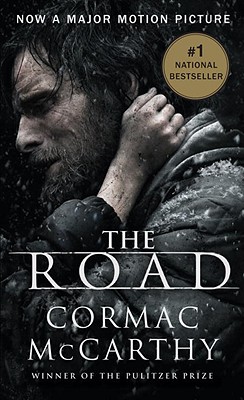
The Road ~ A Capsule Book Review

The Road book cover 3
The Road
~ A Capsule Book Review by Allen Kopp ~

A cataclysmic event has occurred. Planet Earth is dying and can no longer support life. Plant life is dying. Trees are toppling over, no longer able to hold themselves upright by their roots. Cities are burned to the ground. There is perpetual ash in the air. The landscape is littered with dead bodies in various stages of decay. Earth has become a living vision of hell.

This didn’t just happen yesterday or last week; it has been going on for years. Most of the people in the world have already died. The people remaining have a horrible life, trying to find enough to eat to keep themselves alive. The “good guys” have to work awfully hard to keep from being killed and eaten by the “bad guys.” The good guys refuse to stoop to eating other people. They have maintained a semblance of humanity; they “carry the fire within them.”

There are two principal characters in The Road, both unnamed: a man and a young boy, his son, about nine years old. They are referred throughout the novel as “the man” and “the boy.” They have left their home and are headed for some unnamed destination south of them. They are seeking more than safety, shelter, or food. As important as those things are, they seek something more profound. The man is driven by the desire to save the boy, his son. He believes God has given him the special task of delivering the boy to another place.

The Road is not a “doomsday thriller,” nor is it another diatribe about saving the environment. It is a simple human story about survival and the hope that there might be something on the other side of death. It is eerie, haunting, profound and memorable. Some readers might see a “God-Christ” metaphor in the “man-boy.”

I’ve read The Road by Cormac McCarthy twice, years apart, and was tremendously impressed both times. It is one the rare novels you will read in your lifetime that advances the art of fiction, that takes the reader to a place he has never been before. It makes you happy that a book can be that good.

Copyright © 2022 by Allen Kopp
The Only Adult in the Room

The Only Adult in the Room image 5

The Only Adult in the Room
~ A Short Story by Allen Kopp ~

Prentiss Fitch stood and watched as her mother stuffed a black dress and a pair of pointy black shoes into an already-full suitcase. She was happy that her mother was going away for the weekend but not happy that she wasn’t going to have the house all to herself.

“Please, mother! I’m old enough!”

“No, you’re not! Fourteen is too young!”

“I’m almost fifteen.”

“You still act like a child. When I see you acting like an adult, I’ll start treating you like one.”

“Squeak is as much a child as I am!”

“She’s eighteen and a senior in high school. I trust her. I’m paying her to be the adult while I’m away.”

“She’s not eighteen! She’s seventeen! I’d rather go to the funeral than to stay here with Squeak for three days!”

“I thought you liked Squeak.”

“I like her well enough, but I don’t want to be with her every minute for three days.”

“As you get older, you’ll find yourself having to do many things that you don’t especially like doing.”

“Oh, mother, I think I’ll just kill myself!”

“All right. Just don’t make a mess.”

“A fat lot you’d care if I did kill myself!”

“Whenever you say things like that, I’m aware of what a child you still are.”

“Just give me the money that you’d pay to Squeak, and when you get back you’ll never know she wasn’t here.”

“I’m not sure I follow that line of reasoning.”

“What I’m saying is, you don’t have to pay Squeak. Just call her and tell her not to come. Then you can give me the money that you would have paid her.”

“Why would I do that?”

“Because I don’t need a sitter, that’s why!”

“Would you rather stay at the county jail?”

“What?”

“I can drop you off at the county jail and you can spend the weekend there, safely locked in a cell.”

“They wouldn’t let you do that!”

“Oh, yes, they would! The sheriff is my third cousin. He’d do anything I asked. So, what’s it going to be? Squeak or the county jail?”

“That is such bullshit!”

“I’ve asked you not to use that kind of language. I’m your mother, not one of your school friends.”

“Nobody ever does what I want!”

“That’s not true.”

“I’m hungry! What am I supposed to eat while you’re gone?”

“Stop your whining! You sound like you’re three years old. I just spent my entire paycheck on food. If you can’t find anything to eat, I guess you’ll just have to starve.”

“I want fish sticks and Tater Tots.”

“Squeak will be here soon. She’ll fix them for you.”

“Squeak can’t cook.”

“There’s nothing to fixing fish sticks and Tater Tots. All you have to do is preheat the oven and then put them in when the oven is hot enough. The only hard part is remembering to take them out before they burn.”

“I don’t want her to fix them. I want you to do it.”

After her mother left, Prentiss tripled-locked the front and back doors and turned on all the lights in the house. She didn’t want to admit it to her mother, of course, but she was afraid alone in the house after dark. Until Squeak arrived, she would be listening for any little sound outside that might indicate somebody was trying to break in.

She went into the kitchen to find something to eat. She would leave the fish sticks and Tater Tots for another time. It would take too long to preheat the oven, anyway. She fixed herself a baloney sandwich with lots of mayonnaise, put the sandwich on a plate and carried it into the living room. Her mother didn’t like her eating in the living room, but what did it matter? When one was alone, one might do as one pleased.

She turned on the TV and sat in her favorite spot on the couch, balancing the plate on her knee. On TV was a show with singing and dancing. She saw the dancers leaping in the air and heard the singing but she didn’t care for that kind of entertainment at the moment, so she didn’t pay much attention. Her attention was focused on the front door and to any sounds that might mean Squeak had arrived.

The singing-and-dancing show ended, and a comedy show with lots of laughter came on. She tried to focus her attention on what the actors were saying, but she was too nervous. It was after eight o’clock. It had been dark out for more than two hours and Squeak hadn’t come yet. She was going to kill Squeak when she saw her!

The comedy show ended and another one started. When the second comedy show was nearly over, she decided to call Squeak’s home and find out what happened. She let the phone ring and ring, at least twenty or thirty rings, but nobody answered. Squeak’s mother, at least, should have answered.

She began to scare herself with thoughts that Squeak and her mother had been murdered by a madman lunatic prison escapee, like in a horror movie. He would rape both of them, of course, and then slit their throats. He probably knew that Prentiss was waiting at her house for Squeak to arrive. He had her address and would be coming for her next.

At night o’clock, a police drama began. There were car chases, sirens and gunshots, but Prentiss paid only the scantest attention. She heard voices outside, people passing on the street. As long as people were out there, she was probably safe from anybody breaking in. If somebody wanted to kill her, they would probably wait until two or three in the morning.

She needed to go to the bathroom, not having gone since she came home from school, but she didn’t want to leave the relative safety of the couch and the voices on the TV. Finally, when the need became dire, she armed herself with a huge flashlight and a sharp pair of scissors and went down the dark hallway to the bathroom, turning on every light as she went.

When she returned to the couch, she felt a little better and was able to breathe a little easier. After all, she wasn’t a baby. She could do whatever she had to do. It was like standing up in English class and giving a speech with her knees knocking together. Just the thought of it made her ill, but when it was all over she realized it wasn’t so bad and she had been foolish to be so scared.

As long as the police drama was on, she felt it was still early enough that Squeak might show up before bedtime. The voices of the actors, even if she couldn’t make out all the words, were comforting.

The police drama ended at ten o’clock, though, and that’s when she began to be really scared. The ten o’clock news started. She hated the ten o’clock news. She wanted to turn to another channel, but she was afraid that somebody might be watching. If they knew she didn’t like the ten o’clock news, it might make them mad enough to kill her. She was better off, she decided, to just leave the TV where it was.

She stood up and went to the front door, pulling back the curtain just an inch or so and looking out into the darkness of the front yard. She saw movement out there, close to the house, as if somebody was sneaking around, trying not to be seen. No, on second thought, it was probably only the shrubberies blowing in the breeze.

The ten o’clock news ended with a cavalcade of commercials, and the ten-thirty movie began. It was a riding-and-shooting western, but at least there was nothing horrifying about it.  She wanted to concentrate on the movie, to help her forget that she was alone, but she began to feel sleepy and longed to go to bed. She wished her mother was there and she didn’t need to be scared. She wished Squeak was there, silly and annoying, the way only Squeak knew how to be.

At eleven o’clock, she decided to call Squeak’s home again. If Squeak’s mother was in bed, the phone would wake her up, but that didn’t matter. She was an old crab anyway, and if she wasn’t on her high horse about one thing, she would be about a dozen things.

She let the phone ring and ring, as before, but still Squeak didn’t answer and neither did her mother. She seriously considered calling the police then, but she couldn’t think she would say if she did. No matter what she said, she’d sound like a fool. When you call the police, they expect you have some kind of crime to report, at the very least.

She returned to the western movie and was on the point of getting herself calmed down preparatory to going to bed when the phone rang. It was the most welcome sound she had ever heard! If it wasn’t Squeak, it had to be her own mother calling to check on her. She would let the words pour out of her, trying to keep from crying.

It wasn’t Squeak calling, though, and it wasn’t her mother. It was nobody. Or, rather, it was nobody who chose to speak. There was a brief intake of air from the other end of the line and then the connection was severed.

It could only mean one thing. Somebody was calling to make sure she was at home before they broke into the house to kill her.

Now she was scared beyond all reason. She clamped her hands over her mouth to keep from screaming. She went from the front door to the back door and back again. She turned on all the lights in the house that she hadn’t turned on already. She turned the radio on in the kitchen to dance music, loud enough so that anybody outside could hear it. She increased the volume of the TV, so that it sounded like there were many people in the house having a party.

Another hour went by. It was now after midnight. The phone didn’t ring again. She was less scared now and more sleepy. She ate a whole bag of marshmallows and some hot dogs, cold right out of the refrigerator. She wanted to go to bed, but she didn’t dare go into her bedroom and lock herself in, the way she did every other night. She thought about making a bed on the couch, but that was too out in the open and would make her too vulnerable. If anybody broke in, they’d find her without even having to look for her.

When she walked into the dining room, an idea came to her. Why couldn’t she sleep on the floor underneath the dining room table, where she would be hidden from view but would still know if anybody came into the house?

She went into her bedroom and pulled all the covers off the bed and covered the dining room table with them, making a sort of cave. Nobody would ever know she was under the table. It was dark under there, with the covers hanging down to the floor, and was probably the only place in the house where she would feel safe enough to go to sleep. Believing she was hearing voices that very moment outside in the yard, she scrambled under the table with the flashlight, wrapped herself in the blankets the best she could and soon she went to sleep.

She woke at three in the morning and didn’t know where she was. She thought she had died and was in her grave. She crawled out from under the dining room table, went to the bathroom, and walked sleepily all through the house, checking the doors and windows to make sure they will still secure. The TV was still going strong in the living room with talking and laughing, and the radio in the kitchen was broadcasting a sermon for the insomniac worshiper. She was still scared, but not like before. She went back to her bed under the table and went right back to sleep.

In the morning she didn’t wake up until after nine o’clock. She heard the blat of the TV and didn’t know at first where it was coming from. Her first waking thought was that it was Saturday and her mother wouldn’t be home until Sunday night. That meant she had to get through Saturday night the same way she got through Friday night. Damn everybody to hell for going off and leaving her alone! She couldn’t kill her own mother, of course, but she would definitely kill Squeak when she got the chance.

After a breakfast of cereal and toast, she got dressed and sat on the couch and watched some Porky Pig cartoons. She would just sit there all day long if she had to, waiting for somebody to remember that she was alone. Eventually her mother would call long-distance to check on her. She would enjoy telling her that Squeak never showed up and she was scared out of her wits in the house all night by herself, but she made it through on her own and was all the better for it.

While she was contemplating the long, lonely day ahead of her, she remembered that her mother kept a sizeable amount of cash in her jewelry box in her dresser drawer. Money for emergencies that never seemed to happen.

She went into her mother’s bedroom and rifled through the dresser until she found the jewelry box that she remembered but hadn’t seen in quite a while. She undid the little latch and opened the lid. There was the lovely money, just as she envisioned it: a fifty-dollar bill, some twenties, a few tens and some ones. Leaving the one-dollar bills behind, she took all the rest.

She went into her bedroom and packed her overnight bag, just the things she would need for one night: pajamas, house slippers, bathrobe, clean underwear, socks, toothbrush, toothpaste, and a clean change of clothes for Sunday.

When she was ready to go, she called a taxi and went out on the front porch to wait, holding her overnight bag in front of her with both hands. The yard and the outside of the house, she was happy to note, were not as frightening in the daylight. The taxi came after ten minutes.

She told the driver to take her to the Sir Francis Drake Hotel downtown. She and her mother had stayed there for two days in the middle of winter one year when the furnace broke and couldn’t be fixed right away.

She asked for a room for one night and when the man behind the desk looked at her, he asked her if she was alone.

“Shouldn’t I be?” she asked.

“Children are usually accompanied by an adult.”

“Well, I’m not! My mother is gone until Sunday night and I don’t have any place else to go.”

“I don’t think…”

“I have the money to pay for the room, if that’s what’s bothering you.”

After a little wrangling with the manager, they decided to let her stay for the night as long as she paid for the room in advance and as long as she wrote down the name and address of her mother and father as “responsible parties.”

“I don’t have a father,” she said. “My mother will have to do.”

After she checked into her room, she took the elevator down to the lobby and enjoyed a lavish meal in the hotel dining room of fried chicken, french fried potatoes, and lemon meringue pie, sparing not a penny of her mother’s money. Then she locked herself in her room (three locks on the door), where she watched movies all evening long, until she became sleepy.

In the morning, after a restful night of untroubled sleep, she again tried to get Squeak on the phone. Still Squeak didn’t answer, and neither did her mother. Something terrible must have happened there, she thought. It better be good.

She returned home by taxi in the evening. Her mother had been back from her trip for three hours and was “frantic” that Prentiss was nowhere to be found. She was getting ready to call the police.

Nothing bad had happened to Squeak. She wasn’t dead. Her mother was in the hospital for an emergency gall bladder operation. Squeak took advantage of her mother’s unexpected absence to go joyriding across three states with her twenty-year-old boyfriend in his new car. When she came back, she told everybody she had been abducted by aliens in a flying saucer in her back yard, but nobody believed her, and after a while she was forced to divulge what really happened.

Copyright © 2022 by Allen Kopp  

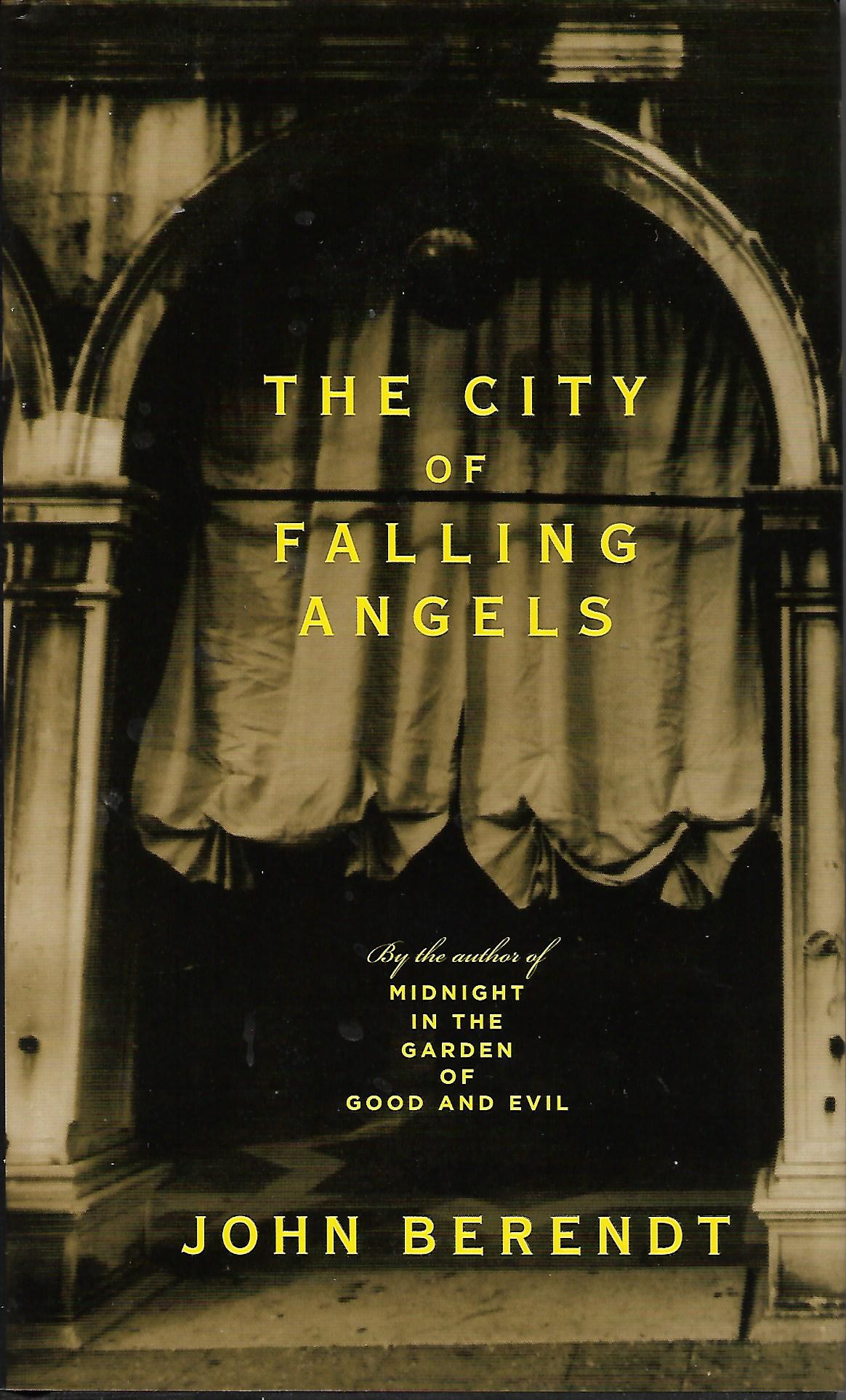
The City of Falling Angels ~ A Capsule Book Review

The City of Falling Angels cover
The City of Falling Angels
~ A Capsule Book Review by Allen Kopp ~

American writer John Berendt made the charts in 1994 with his first nonfiction book, Midnight in the Garden of Good and Evil, a real-life murder mystery set in Savannah, Georgia. It was phenomenally successful, occupying the New York Times Best-Seller list for 216 weeks, and was made into a movie in 1997 directed by Clint Eastwood.

John Berendt’s second nonfiction book, The City of Falling Angels, came over ten years after Midnight in the Garden of Good and Evil. The City of Falling Angels is set in Venice, Italy, and, as with Midnight in the Garden of Good and Evil, it’s full of local color and eccentric real-life characters.

Venice is one of the most unique cities in the world. It has been in existence since about the eighth century. It’s a quiet city because, with canals instead of streets, it has no automotive traffic. The people of Venice walk wherever they go, or take the vaporetto, the water taxi. Venice is a quaint and romantic city abounding in history. It was at one time a powerful city state. Many of its buildings are hundreds of years old.

In 1996, a historic Venetian opera house, Teatro La Fenice, over two hundred years old, caught fire and was entirely destroyed. Investigators, of course, had no clue as to what caused the fire. Was it the result of natural causes, or were sinister forces at work?

At the time of the Fenice fire, the theatre was closed to public performances and was undergoing renovation. The fire happened at night, when any daytime workmen had departed. Because the buildings in Venice are so old and so close together, many other structures were threatened by the fire. Firefighters eventually brought the fire under control, but the opera house was destroyed. Would it be possible to rebuild it as it had been before the fire, or was it a case for the wrecking ball?

The City of Falling Angels follows the years-long investigation into the fire, with many twists and turns, many false leads and conspiracy theories; much finger-pointing and gnashing of teeth.

Sometimes The City of Falling Angels veers off into subjects other than the fire, such as a Venetian glass-blowing family of many generations, a Venetian poet who committed suicide, the Ezra Pound Foundation (he was an expatriate American poet who lived in Venice), or in-fighting among the Venetian upper-crust. During these long digressions from the fire, we wish to return to the subject at hand. The fire is much more successful at holding the reader’s interest.

Copyright © 2022 by Allen Kopp  


The Gilded Age ~ A Capsule TV Review

The Gilded Age poster
The Gilded Age
~ A Capsule TV Review by Allen Kopp ~

The year is 1882. Mrs. Bertha Russell and her railroad tycoon husband, George Russell, have just built a gaudy new mansion on Fifth Avenue in New York. They represent the newly rich, or the nouveau riche. The Russells, especially Mrs. Russell, want to be accepted into the insular world of New York high society. This is the world that Henry James and Edith Wharton wrote about.

Right across Fifth Avenue from the Russells lives Mrs. Agnes Van Rhijn with her spinster sister, Ada. Mrs. Van Rhijn represents “old money” New York. She detests the Russells (and all they represent) and wants to keep them out of “her” world.

To celebrate the grand new house, Mrs. Russell gives a lavish reception, inviting all her Fifth Avenue neighbors. Hardly anybody attends. After instructing the servants to bag up all the food that wasn’t eaten, a disappointed Mrs. Russell vows to get revenge on New York high society. (“I’m not sure what New York’s poor will think of lobster salad,” Mr. Russell quips.) Mrs. Russell and Mrs. Van Rhijn across the street are set for an epic “battle of the bitches.”

Mrs. Van Rhijn’s niece, a “poor relation” named Marian Brook, has just arrived in New York to take up residence. She has no money and no job, so Mrs. Van Rhijn is obliged to take her in. Mrs. Van Rhijn doesn’t like Marian very much, but that’s all right because Mrs. Van Rhijn doesn’t like anybody very much. With Marian is a young black woman named Peggy Scott, whom she met while traveling to New York. Peggy has secretarial skills, so Mrs. Van Rhijn gives her employment and allows her to lodge in the servants’ quarters. It’s not going to be easy for Peggy to fit in with a bunch of white people, but her new friend Marian will smooth the way for her.

All right, already, after only one episode, we see a number of cliches, (not to mention some stilted dialogue), but The Gilded Age on HBO is so much fun and so beautiful to look at that we don’t mind these little shortcomings. If you are a fan of the British series, Downton Abbey, you’ll probably want to see The Gilded Age because both series have a lot in common, including a handsome gay man who doesn’t seem to be gay, servants’ lives intersecting with the lives of their employers, lavish sets and costumes, and meticulous attention to period detail. Both series were created by a British writer named Julian Fellowes. The Gilded Age is in a lot of ways like an American Downton Abbey.

Copyright © 2022 by Allen Kopp

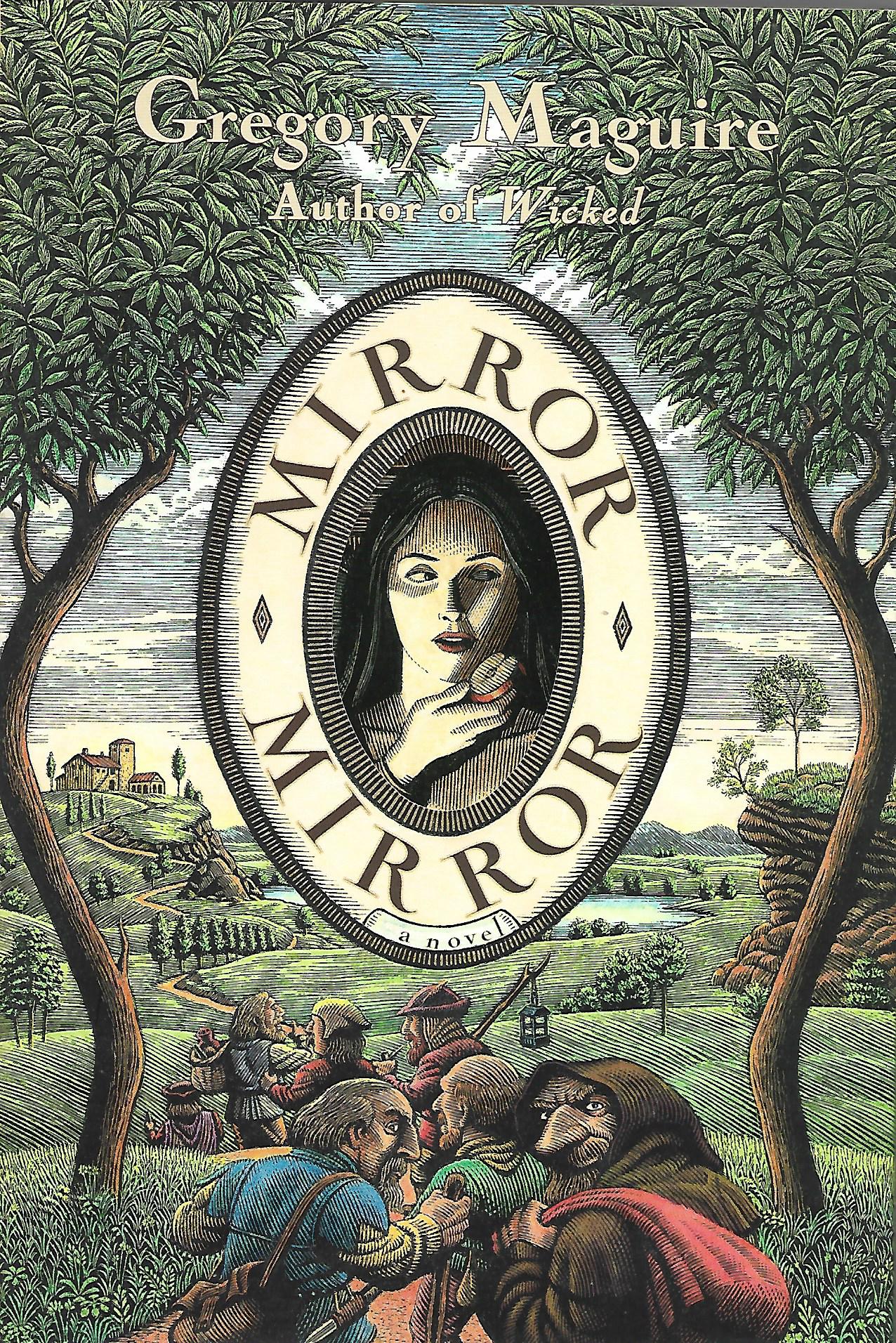
Mirror Mirror ~ A Capsule Book Review

Mirror Mirror cover
Mirror Mirror
~ A Capsule Book Review by Allen Kopp ~

Gregory Maguire’s 2003 novel, Mirror Mirror, is set in Tuscany, Italy, in the early 1500s. A beautiful girl named Bianca de Nevada lives with her father, Vicente, on an isolated hilltop estate called Montefiore. Bianca, a motherless girl, has lived a sheltered life and doesn’t know much of the world. Lucrezia Borgia, real-life daughter of Pope Alexander VI (the Borgia Pope), comes to Montefiore with her brother, Cesare Borgia. Lucrezia and her brother Cesare are both moved by Bianca in different ways: Cesare wants her for a sex toy, even though she is still a child, and Lucrezia is jealous of Bianca’s girlish beauty, which will soon be womanly beauty.

Lucrezia and Cesare decide they will stay at Montefiore for a while. Cesare is suffering from the French disease (we all know what that is). Cesare sends Bianca’s father on a (nearly) impossible quest (to get him out of the way) to find a fabled branch from the Tree of Life (you know, the one from the Garden of Eden), that still has three perfect apples attached to its branches. Bianca’s father doubts the branch with the apples on it even exists, but he has no other choice but to comply with Cesare’s commands. It might take him years to find it (if it even exists) and he might die in the effort.

With Bianca’s father on his quest, Bianca is left at Montefiore under the questionable care of Lucrezia Borgia, who just might do anything. Since Bianca has flowered into a lovely young woman and is no longer a child, Lucrezia is still jealous of her and has decided she will have her killed. She hires a young man to take Bianca into the woods and do away with her. The young man does as Lucrezia tells him to do, but he finds he is unable to kill her. He leaves her alone in the woods, making Lucrezia think he has done the deed.

Left alone in the woods, Bianca falls into a deep sleep that mimics death. Seven dwarfs (nothing like the Disney variety) find her and, believing she is dead, place her in a glass coffin and watch over her body. She will awake, though, and when she does she will go back to Montefiore. Her father, contrary to all expectations, has returned from his quest, bearing the ever-elusive branch from the Tree of Life.

Mirror Mirror blends elements of legend, history, fairy tale, and fantasy into an imaginative, lightning-speed novel. If you are an admirer of Gregory Maguire’s work (Wicked, Son of a Witch, Notes on a Cowardly Lion, Out of Oz, After Alice, etcetera.), you will find everything here that makes his work unlike anybody else’s. Highly recommended for connoisseurs of the different and unusual.

Copyright © 2021 by Allen Kopp    

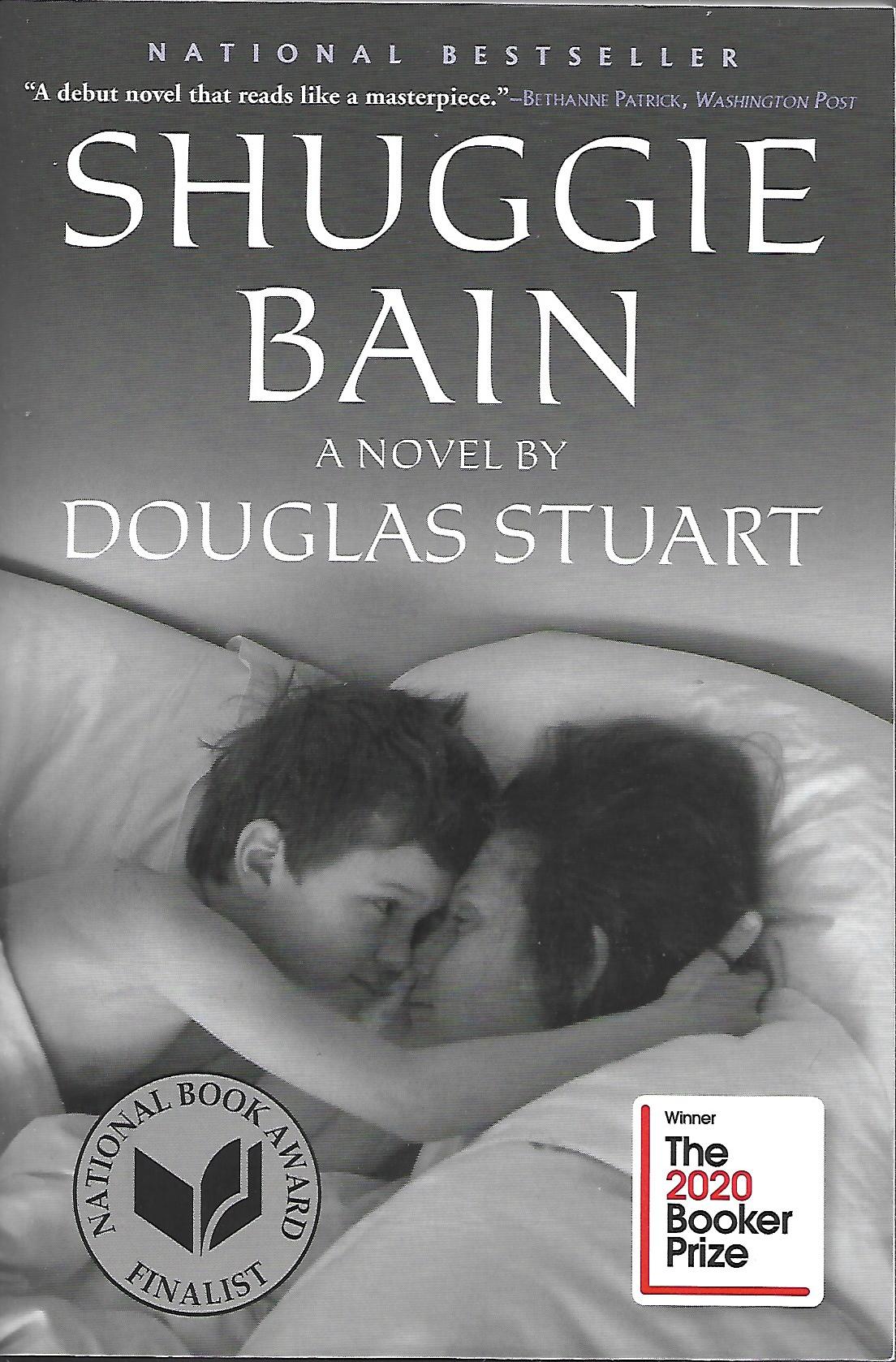
Shuggie Bain ~ A Capsule Book Review

Shuggie Bain cover

Shuggie Bain
 A Capsule Book Review by Allen Kopp  

Shuggie Bain’s real name is Hugh. He is a slight, sensitive, preteen boy (at school he is called a “wee tiny poof”) living with his mother and his older half-brother and half-sister in a wretched housing complex in Glasgow, Scotland, in the 1980s. Shuggie doesn’t have a very happy childhood. The family is poor and on the “dole,” but his biggest problem is that his mother, Agnes Bain, is a hopeless alcoholic, “hopeless” in the sense that she will never stop drinking, will never “get better,” and will eventually drink herself to death. Shuggie loves his mother and he believes, unrealistically, that if he stays by her side, when everybody else abandons her, he can protect her and get her to stop drinking.

Shuggie’s  estranged father is Shug Bain, or “Big Shug,” as he is called. He is a real bastard, a self-centered, womanizing, amoral taxi driver. Shuggie’s mother, Agnes, leaves her first husband, taking her two children with her, to marry Big Shug. From that unfortunate union is born the youngest of her three children, Shuggie “Hugh” Bain.

Shuggie’s older half-brother is named Alexander but everybody calls him “Leek.” Shuggie’s half-sister is Catherine. Agnes if the kind of mother who makes her children want to get away from her. She has good intentions as a mother, but she always manages to disgust and alienate her children with her incessant drunkenness. Catherine marries at an early age and moves to South Africa, thousands of miles away from her mother.

The housing complex where Shuggie lives with his family is called Pithead. It was originally intended for coal miners, but most of the coal mines have closed down. The residents of Pithead are crude, spiteful, and cruel. The women hate Agnes Bain because she dresses up whenever she goes out of the house. People who like her tell her she resembles Elizabeth Taylor. Her good looks don’t help her very much.

The Scottish people in Shuggie Bain speak working-class English. They use a lot of words that American readers probably won’t be unfamiliar with. For example, “boak” means vomit; “biro” is an ink pen; a “grass” is a snitch; a “dout” is a cigarette; “wellies” are boots; “papped” means to be thrown out of the house; “weans” are children or offspring; “scheme” is a housing project; “gallus” is an act of boldness or daring. If you don’t have a dictionary of Scottish colloquialisms and slang, these unfamiliar words can usually be deduced from their context in the sentence.

Shuggie Bain is an ambitious (430 pages), rich first novel by a writer named Douglas Stuart. It is a story as much about a self-destructive alcoholic as it is about being the child of an alcoholic. It is a book steeped in time and place (Glasgow, Scotland, of the 1980s). A compulsively readable book, a book well worth reading.

Copyright © 2021 by Allen Kopp

The Last of Our Money

The Last of Our Money image 4
The Last of Our Money
~ A Short Story by Allen Kopp ~

Vance Rutherford was a reckless driver, especially when he was mad or upset. He ran through a red light and barely missed hitting a car going in the other direction. A little farther along, he made a right turn so fast that Rachelle hit her head on the side window.

“Slow down, Vance!” she said. “You’re gonna get a ticket!”

“I don’t care! If they try to stop me, I’ll outrun them!”

Rachelle groaned and rubbed her head. “You don’t want them to start shooting at you, do you?”

“I can always shoot back.”

“How are you going to do that if you don’t have a gun?”

“Who says I don’t have a gun? I have a gun in the inside pocket of my coat.”

“You do not! You are such a liar!”

“I know. I’m a fool, too, and lots of other things.”

“Don’t I know it!”

“Are you sorry you married me?” Vance asked.

“Every day of my life.”

“You can always divorce me, you know.”

“You’re forgetting that little bundle of pink flesh we have waiting for us at home.”

“Oh, yeah. Arlene. I almost forgot about her.”

“She’s the only reason I stay married to you.”

“One day you might decide she’s better off without her daddy.”

“And when that day comes I’ll let you know.”

“I’m a loser, Rachelle. I need money. Bad.

“How much this time?”

“Four hundred.”

“I don’t have four hundred dollars, Vance.”

“I know you don’t. If you did, all my problems would be solved.”

“For the moment. Tomorrow you’d be in trouble again.”

“Are you sorry you married me?”

“Never more than at this moment.”

“Have you talked to your grandma this week?”

“No, I haven’t. And I’m not going to ask her for any more money.”

“You know she’s got it, Rachelle. She’s got whole boxfuls of cash stashed away in that house.”

“That’s just what you believe!”

“You’re her favorite grandchild, Rachelle. You know she would never say no to you.”

“I’m not going to ask her for four hundred dollars, so you can just forget about it.”

“Not even if it would save my skin?”

“It might save your skin today, but tomorrow it’ll be something else. Some other trouble. Some other desperate need for money.”

“No, you’re wrong. I’ve grown up a lot in the last year or so. I’m changing, Rachelle. Really I am.”

“Somehow I just don’t see it.”

“No, I promise. If I can just get my hands on four hundred dollars right now, I’ll be all squared away.”

“For how long, Vance?”

“How long what?”

“How long will you be squared away?”

“You’re not very encouraging, you know that?”

“Let’s go home. I can fix us something to eat.”

“How about if I swing by your grandma’s house and you go inside and ask her for a little loan?”

“You know it’s not a loan, Vance. You don’t ever have any intention of paying it back. A loan is something you pay back.”

“She’ll be sitting in her chair watching TV. She’ll be glad to see you.”

“No!”

“It’s the only way, Rachelle.”

“You’ll have to think of some other way. I’m not going to ask my grandma for more money. She needs her money.”

“For what?”

“She’s old, Vance! Old people like to hang onto their money.”

“So the answer is no?”

“Yes, the answer is definitely no!”

“Just tell her we don’t have any food in the house. The rent is past due and you need your asthma medication. She won’t be able to turn you down if you put it in those terms.”

“I’m not going to lie to her on top of everything else, Vance!”

“It’s not a lie!

“I thought you paid the rent!”

“I was going to but I had to use the money for something else.”

“What did you use it for?”

“I don’t remember now. It was something important.”

“Oh, Vance! You’ll never grow up, will you?”

“I’m as grown up as you.”

“Let’s go home and I’ll cook some spaghetti.”

“No. Grandma’s first.”

Rachelle knew it was useless to object further. In ten minutes, Vance pulled up in front of Rachelle’s grandma’s house.

“I don’t think she’s home,” Rachelle said. “It’s her night for church.”

“All the lights are on, as you can plainly see.”

“Oh, Vance! I don’t want to do this!”

“She’ll be glad to see you. Try to get five hundred.”

“You said four hundred!”

“Well, five hundred would be even better!”

“Oh, Vance, you’re hopeless!”

“I’ll wait right here. Take your time.”

He cracked the window and lit a cigarette and turned on the car radio. He had smoked two cigarettes and was on his third one when Rachelle came back.

“Well, how much did she give you?” he asked impatiently before she was all the way in the car.

“She only had fifty dollars on hand. I think it was her grocery money.”

“Fifty dollars! That’s all she gave you?”

“It’s all she had.”

 “She would let you starve to death? Her favorite grandchild?”

“I’m not going to starve to death, Vance. We can use the fifty dollars to get some groceries.”

“Yeah, but it’s not enough! I feel like going in there and talking to her myself! Fifty dollars! The very idea!”

“Leave her alone, Vance. She has a cold and she’s not feeling well.”

“Well, isn’t that just too bad? I’m not feeling very well, either.”

“Let it go, Vance! We’ll use the fifty dollars to buy some groceries. We can get quite a lot with that.”

“I don’t want any of that stuff. I’m hungry. I want a steak. Let’s go to Roland’s and get a steak. I think that’s the best idea I’ve had all day.”

“That’ll take all the fifty dollars!”

“So what?”

“You would use the last of our money for a steak dinner?”

“Sure. Wouldn’t you? That’s how hungry I am.”

“I told grandma we were going to use it to buy food.”

“We are going to use it to buy food.”

“You’re a pig, Vance.”

“No more of a pig than you are.”

They had to wait for a table at Roland’s. Eating there always made Vance feel like an important person. He always hoped he’d see somebody he knew.

Finally they were seated at a small booth in the back of the room. Vance ordered an expensive bottle of wine. While waiting for their food to arrive, Vance sipped the wine and gave Rachelle a sly grin across the table.

“I have a secret concealed somewhere on my person,” he said.

“How nice for you,” she said.

“Don’t you want to know what it is?”

“Not especially.”

He seemed pleased with himself as he opened his jacket and showed her the gun he had hidden there.

“You’re a lunatic!” she said. “What do you think you’re going to do with that?”

“Well, grandma didn’t come through for us. Now things are getting pretty desperate.”

“What are you going to do? Hold up a liquor store?”

“Not a liquor store, but I do have a plan.”

“What plan?”

“Well, since you are my wife, I’ll tell you. I’m going to drive twenty or thirty miles outside of town where nobody knows me and hold up an all-night gas station.”

“That’s the worst idea I’ve ever heard!”

“I won’t really shoot anybody. I’ll just use the gun to scare them.”

“Don’t think I’ll come and visit you behind bars.”

“You don’t like my idea? Do you have a better one?”

“Why not just rob the bank downtown? I’m sure they’d have a lot more money than an all-night gas station.”

“That’s my alternate plan in case the all-night liquor store doesn’t work out.”

They finished eating and the waiter brought the check. Vance stood up to go to the men’s room, taking off his jacket and laying it carefully across the chair.

Rachelle was sure he wouldn’t be back for at least ten minutes. He’d take his time going to the toilet and when he was finished he’d wash his hands thoroughly and comb his hair in the mirror. She reached around the table where he had been sitting and with one deft movement took the gun out of the pocket of his jacket and hid it in her purse. He had drunk too much wine; he wouldn’t notice for a long time that the gun wasn’t where he thought it was.

Copyright © 2021 by Allen Kopp