

Month: October 2016
Tonight When the Moon is Full

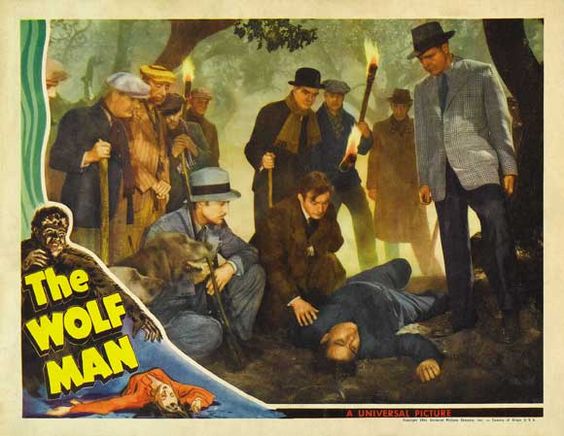
The Wolf Man (1941)
Lawrence Talbot is tormented. He bears the mark of the beast. He is a lycanthrope. When the moon is full, he turns into the Wolf Man, unable to control his urge to kill. Can his new love interest from the village help him? What about the old gypsy woman, Maleva? Does she have any magic spells or incantations that can release him from his horrible condition?
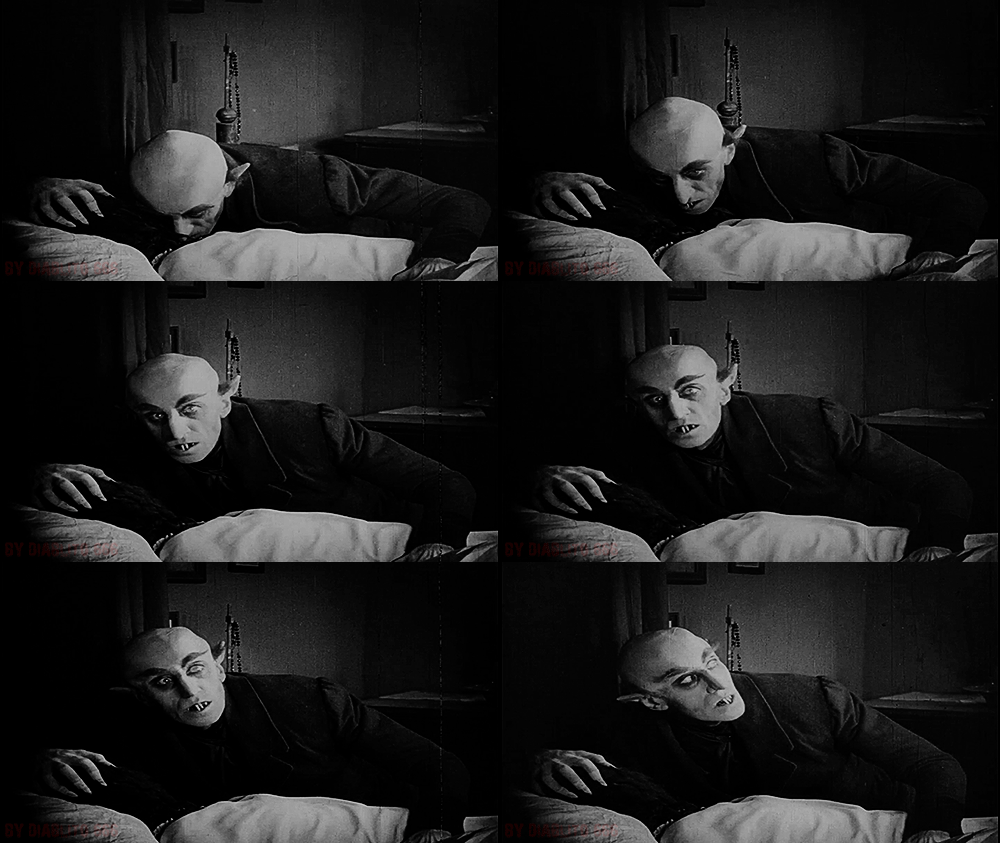
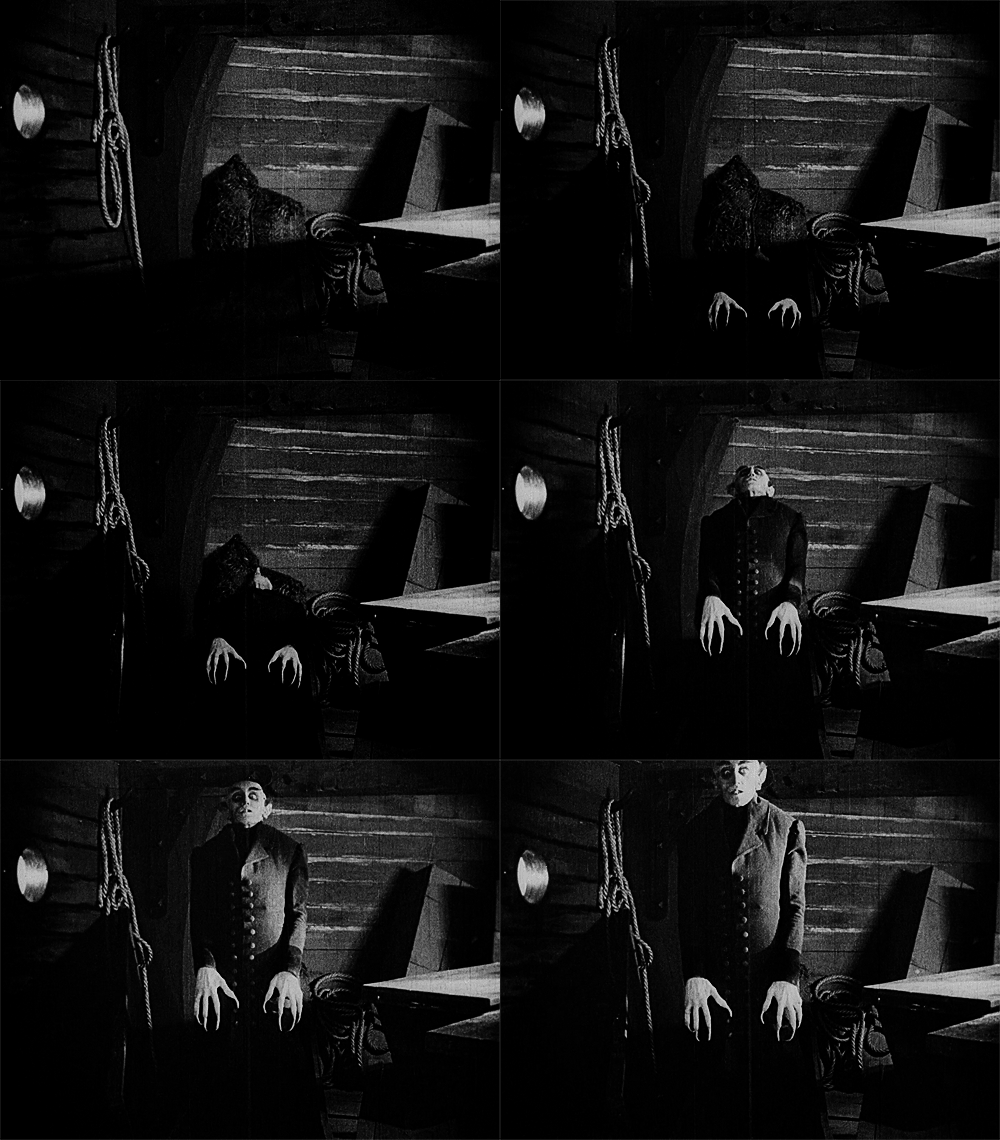
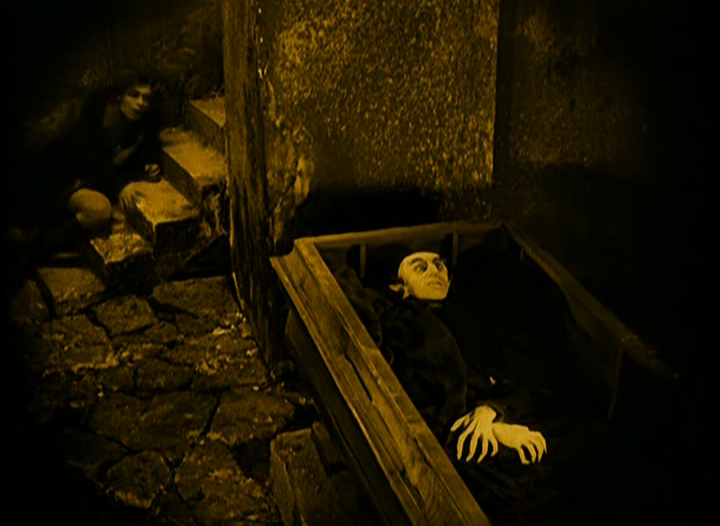
Nosferatu the Vampire
Max Schreck plays Nosferatu the Vampire in director H. W. Murnau’s silent horror classic, Nosferatu, made in 1922.

This House is Haunted ~ A Capsule Book Review

This House is Haunted ~ A Capsule Book Review by Allen Kopp
This House is Haunted by John Boyne is a gothic ghost story set in Norfolk, England, in 1867. Eliza Caine is a plain, twenty-one-year-old teacher at a girls’ school in London. When she and her father, her only living relative, go to hear Charles Dickens do a reading from his work on a cold, rainy night, her father, already ill, catches a chill and dies. Now alone in the world, Eliza applies for, and gets, the position of governess to the Westerley family at Gaudlin Hall in Norfolk, England. (She doesn’t know the family’s name until later.) From the beginning, she knows almost nothing about the job; how many children there are or what the family is like. Her feeling of mystery only intensifies when she arrives at the crumbling old family mansion to begin her duties anew and finds nobody there except the two children, Isabella and Eustace. Isabella is older and seems to know things that nobody else knows; Eustace, at eight, is sweet and innocent.
Miss Caine discovers, to her horror, that she is just the most recent in a string of governesses. Only the governess right before her got away. All the others died mysterious deaths. Is she going to be next? As if several dead governesses before her isn’t bad enough, she soon feels a mysteriously malevolent and unseen force in the house that wants to get rid of her, to kill her if necessary. Slowly and bit by bit she learns the secret of Gaudlin Hall and the mysterious Westerley family for whom she works. Why doesn’t she just leave and go back to her old teaching job in London? She has grown attached to Isabella and Eustace, especially Eustace, and doesn’t want to leave them alone in the house. And she isn’t thinking only of the children, but also of herself; she is beginning to feel a growing romantic attachment to Mr. Raisin, the Westerley family lawyer, even though he is in his late thirties and already has a wife.
This House is Haunted seeks to emulate the Victorian writing style of Charles Dickens, but in its tone is more like Jane Eyre by Charlotte Bronte. A young, plain woman, educated and alone in the world, strikes out on her own to take a job in an unknown place far away from what she knows and there encounters mystery and unexpected romance. Unlike the works of Charles Dickens, though, or Charlotte Bronte, This House is Haunted is quick, breezy, light-weight reading. There’s nothing too surprising here. The horror is very mild, unlike the recent trend in movies and books of horrific, shocking, grisly horror. The story is so familiar that it almost seems clichéd but is still thoughtful, entertaining, and well worth the time and effort to read it.
Copyright © 2016 by Allen Kopp
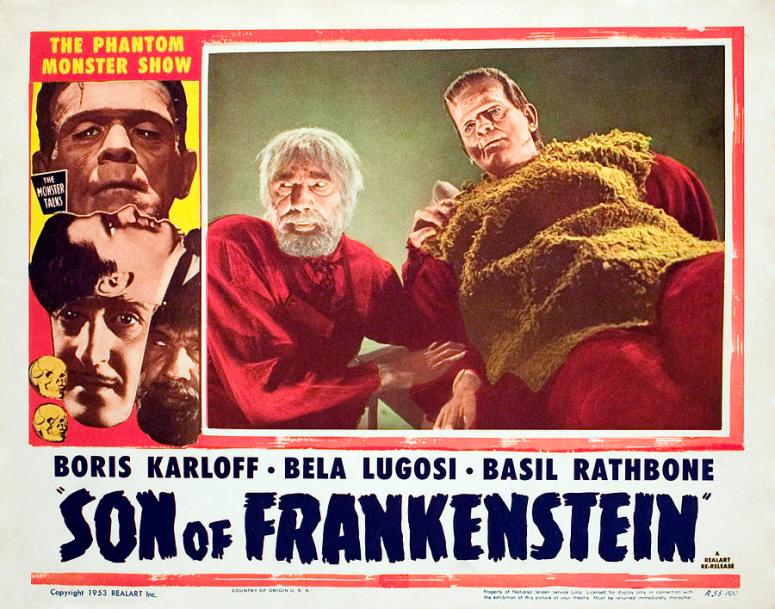
Son of Frankenstein (1939)

Son of Frankenstein (1939)
Mad scientist Dr. Heinrich Frankenstein is long dead but his son, Wolf Frankenstein, lives, and he is also a doctor. When Wolf returns to his ancestral home with his American wife and son, he finds out just how unpopular his father is because of the unholy experiments he conducted in his laboratory but, more specifically, for the terrifying, ten-foot-tall, killing-machine monster he made out of the body parts of cadavers. The villagers believe the monster was destroyed but Dr. Wolf Frankenstein learns, soon after his arrival at Castle Frankenstein, that the monster lives and is being nursed and tended to by none other than hunchbacked, broken-necked Ygor. The monster and Ygor are close friends and, in fact, have no other friends besides each other. When Wolf sees that the monster is ailing, he has no other choice as a doctor and nascent mad scientist but to try and make him well again, which might not be easy considering his super-human biological makeup. The villagers, who don’t like anybody by the name of Frankenstein anyway, begin to suspect that something nefarious is underway at Castle Frankenstein, especially when Ygor begins sending the monster out to kill certain of the villagers who served on the jury that condemned him to be hanged years earlier. Vengeance is mine, sayeth Ygor.
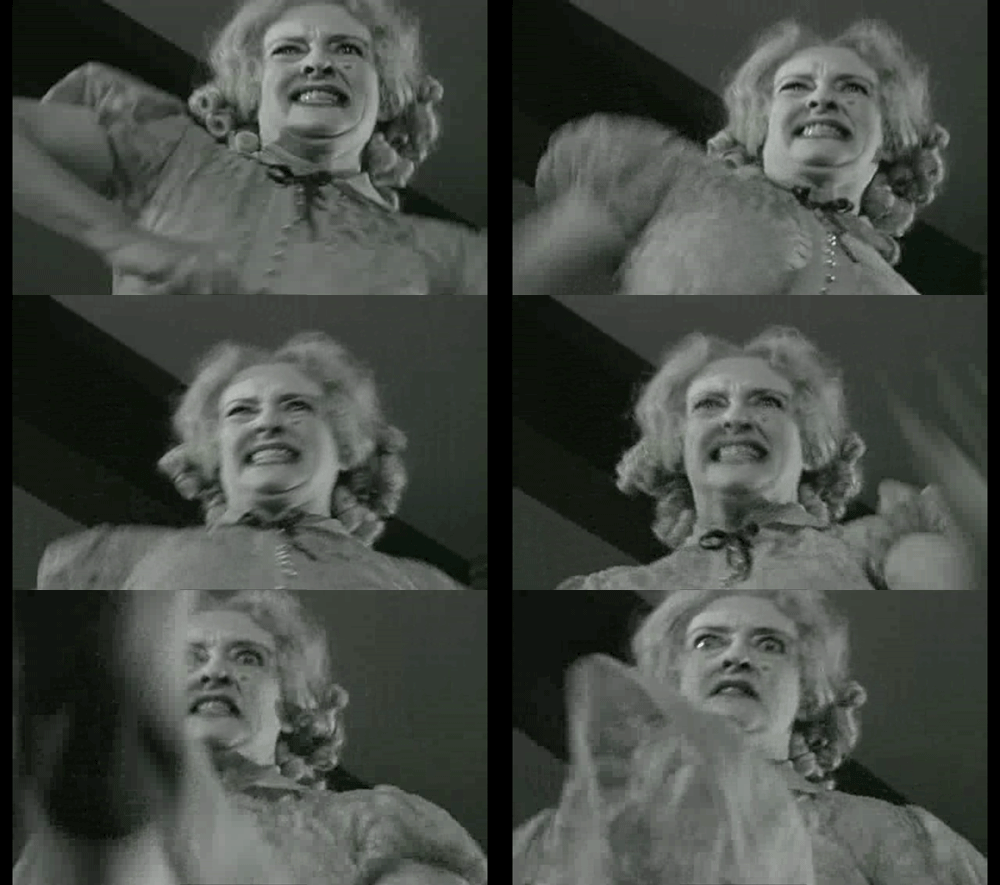
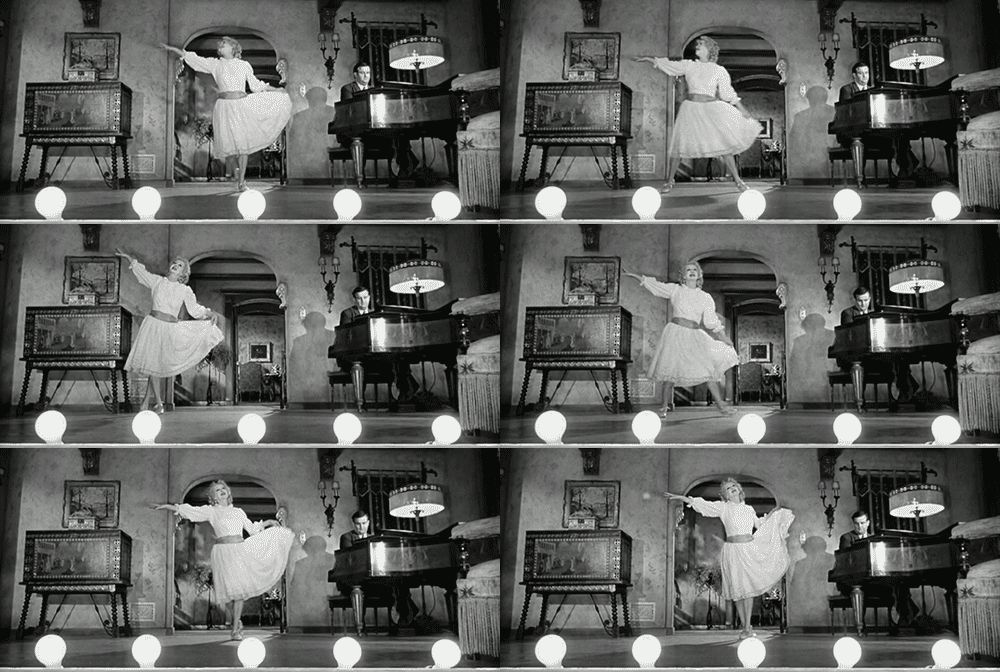
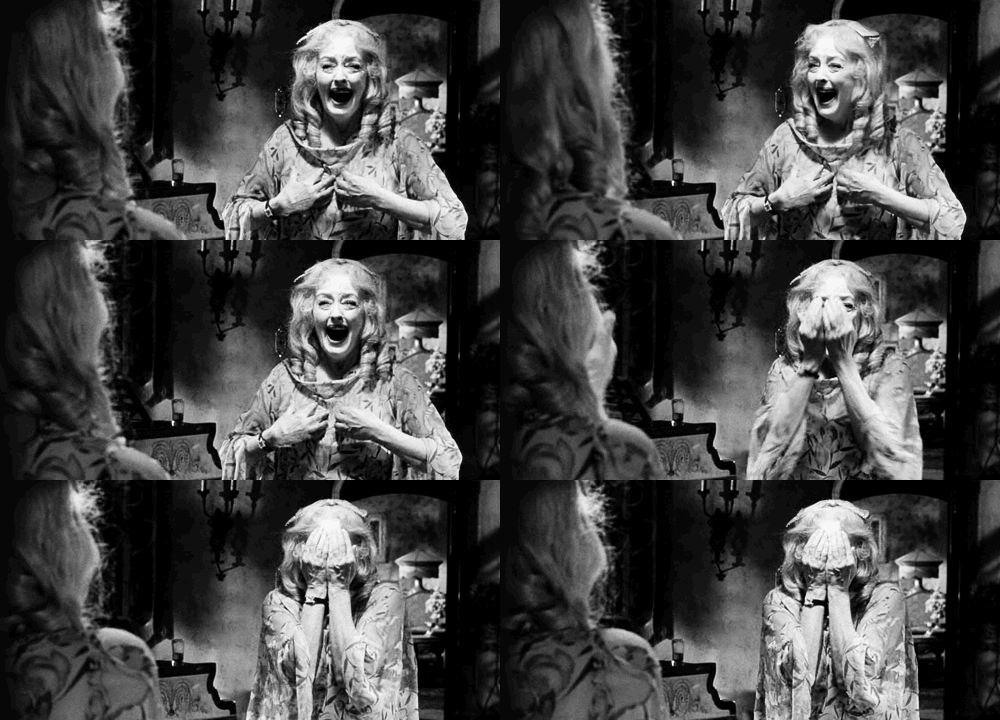
Jane Hudson ~ Hag Cinema
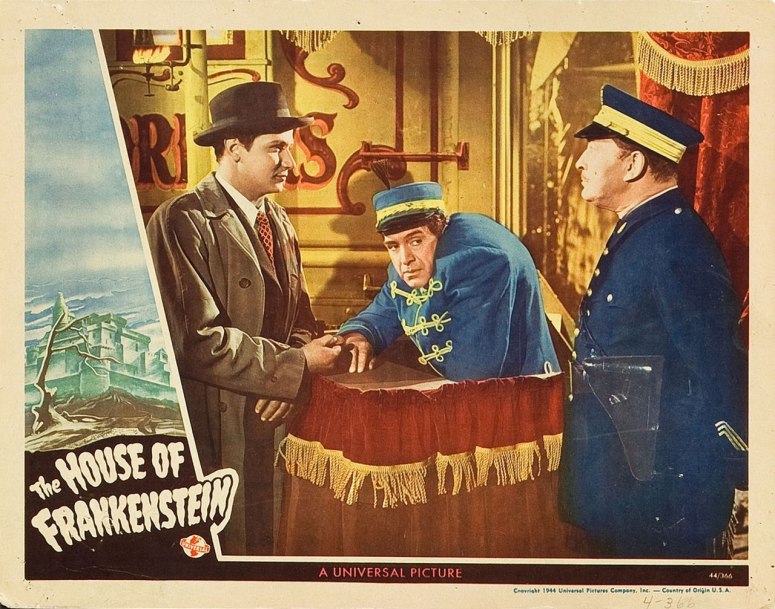
The House of Frankenstein (1944)

The House of Frankenstein (1944)
Dr. Niemann, mad scientist and protégé of Dr. Frankenstein, along with his hunchback assistant named Daniel, has been in prison for fifteen years for transplanting a human brain into a dog’s skull. A fortuitous storm/earthquake knocks down the prison walls, allowing Dr. Niemann and Daniel to escape. They find themselves in a traveling chamber of horrors that has, among other exhibits, the skeleton of Count Dracula. When Dr. Niemann removes the stake from the skeletal chest of Dracula (the stake that killed him), Dracula materializes into the blood-sucking vampire he once was, allowing him to have a brief infatuation with a young married matron in the neighborhood. Leaving the traveling chamber of horrors, Dr. Niemann and Daniel make their way to the castle of the late Dr. Frankenstein. The castle, you will recall, was dynamited by the villagers and then flooded, so it’s just a ruin. Dr. Niemann discovers, in the ice beneath the castle, the intact bodies of Lawrence Talbot, who becomes the Wolf Man during a full moon, and Frankenstein’s monster. He begins working to restore the monster, Dr. Frankenstein’s greatest achievement, to the fully functioning killing machine he once was. Lawrence Talbot, for his part, entreats Dr. Niemann to give him a new brain so he will be relieved forever of the curse of being the Wolf Man. Of course, none of this works out the way it’s supposed to.
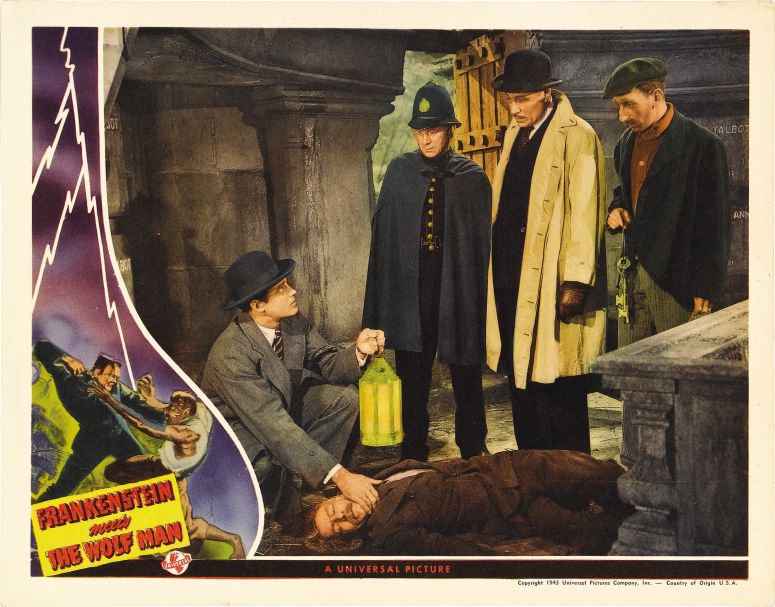
Frankenstein Meets the Wolf Man (1943)

Frankenstein Meets the Wolf Man (1943)
When grave robbers open the crypt of Lawrence Talbot (dead four years) they get the surprise of their lives: He isn’t dead. He can’t die because he is the Wolf Man. All the grave robbers do is release him into the world. Believing he wants to die more than anything, Lawrence seeks out Dr. Frankenstein to help him. Dr. Frankenstein is dead, of course, but his daughter, Baroness Frankenstein, is alive. She knows where her father’s diary is that contains all the secrets of life and death. Not only does Lawrence Talbot, the Wolf Man, meet the daughter of Dr. Frankenstein, he also meets, more notably, Frankenstein’s monster, encased in ice beneath the ruined castle. He frees the monster from his icy prison, believing he can also be helped by Dr. Frankenstein’s diary.
The Ghost of Frankenstein (1942)
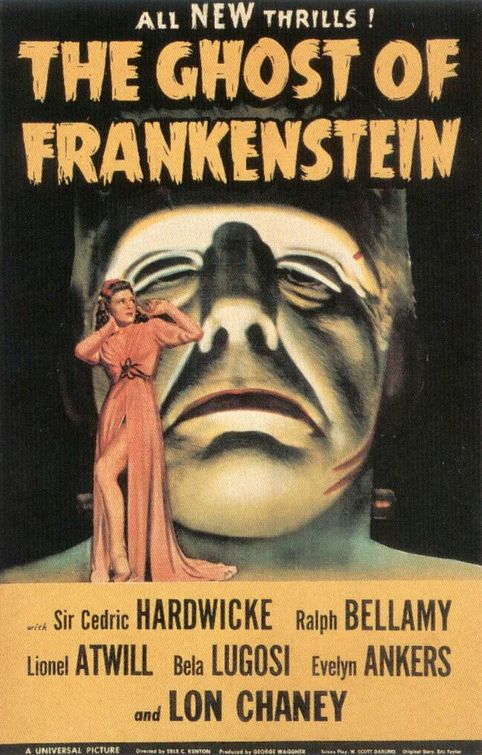
The Ghost of Frankenstein (1942)
Since Son of Frankenstein in 1939, the monster has been languishing in a sulfur pit in Frankenstein’s castle. In The Ghost of Frankenstein (1942), a torch-bearing mob, in an effort to rid the village of the Frankenstein curse, blows up Frankenstein’s castle, inadvertently releasing the monster from the pit. The monster is aided and abetted by his friend Ygor, whose twisted body is the result of being hanged but not dying. Ygor takes the monster to the son of the original Dr. Frankenstein, who knows all of his father’s secrets, to make him strong again, with the strength of a hundred men. Since the monster has a bad brain, Dr. Frankenstein will give him a new and better brain. The monster wants the brain of a little girl from the village that he has taken a liking to, but Ygor wants Dr. Frankenstein to give the monster his own brain, so he will live forever in a body that’s not twisted. The brain switch doesn’t work out quite as expected.

Verisimilitude

Verisimilitude ~ A Short Story by Allen Kopp
Irene Gribble hit her mother in the head with an iron and sent the old lady sprawling. She hit the far wall of the room, head first, and fell to the floor like a hundred-pound sack of flour. Irene, observing from the ironing board that she wasn’t moving, figured she was pretending, as she had always been a great one for self-dramatization.
“You can get up now, mother,” Irene said. “I know you’re not hurt.”
No sound issued from the recumbent old woman.
“If you don’t get up now and stop pretending, I’m going to pour a pitcher of water in your face. That’s what they always do in the movies.”
She went and stood over her mother, hands on hips, and nudged her with her foot. “Well, at least I got you to shut up for a while,” she said.
She finished her ironing, washed some dishes, threw away some rotten vegetables in the refrigerator, and in another few minutes she checked on her mother again. This time she knelt down beside her and put her ear to the old woman’s chest. She heard no sound of a beating heart but, then, she had always been certain there was no heart there, anyway. When she saw that her mother wasn’t breathing, though, she knew she was dead.
“Well, what do you know about that?” she said.
She stood up and took a deep breath. She felt surprisingly calm, considering that she had just killed her own mother. She sat down at the kitchen table, lit a Lucky Strike and thought about the phone call she needed to make.
“A song came on the radio that she liked and she was dancing,” Irene would tell the police. “She always loved to dance. Her eyes were closed and she had her arms around her imaginary partner. She didn’t see the rip in the carpet, caught her foot in it, and fell backward against the wall.”
No, that didn’t sound quite right. Whoever heard of anybody getting killed while they were dancing?
“I was outside in the back yard,” the story might go. “I found her like this when I came in from outside. She must have taken a terrific fall.”
Or this: “I don’t really know what happened. I was upstairs and I heard a crash. When I came running down, I saw that she had climbed on a chair to change a bulb in the ceiling fan. She must have fallen over backwards off the chair and hit the wall. She was taking a new medication that caused her to black out when least expected.”
A little better. I have to make it sound convincing. Give it verisimilitude. I always liked that word. That will be my word.
As she stubbed out her cigarette, she realized her hands were shaking and she erupted into a torrent of pitying tears, not for her mother but for herself. What if they don’t believe me? What if they suspect I killed her? I can’t let them think that. My own mother. It makes me sick just to think about it.
She felt more alone that she had ever felt before in her life. She had only one living relative, her brother Ernest, and, although the two of them had never been on the best of terms, he might help her to figure out the best way to handle the situation.
She called his number and was relieved that he was available; he answered his phone on the second ring.
“Ernest!” she said. “Something terrible has happened!”
“What?”
“It’s mother! I need you to come over right away!”
“Are you two fighting again? I told you I refuse to get involved.”
“No, it’s not that! It’s more than that! She’s down on the floor and I don’t think she’s breathing.”
“Call an ambulance.”
“I think it’s too late for that. I need some help.”
“With what?”
“Just come over and see for yourself.”
“I’ll be there in half an hour.”
An hour later he walked calmly into the house, removing his sunglasses. Irene was sitting on the couch in her bathrobe.
“Where is she?” he asked.
“In the kitchen.”
He went into the kitchen and a couple of minutes later came back into the living room. “She’s dead,” he said.
“I know she’s dead,” Irene said. She had taken tranquilizers, twice the recommended dosage, and felt calm, at least for the moment.
“Are you going to tell me what happened? The two of you were fighting, weren’t you? You think you might have killed her and you want me to help you cover it up.”
“That’s not quite true!” she said defensively. “You’re right about one thing, though. We were fighting.”
“I always said it would come to this. The two of you would end up killing each other.”
“Well, now she’s dead and I’m alive,” Irene said.
“You need to call somebody,” he said. “Call an ambulance, even if she is already dead.”
“How’s Malcolm?” she asked.
“Who?”
“Malcolm. Isn’t that his name?”
“His name is Martin and this is no time for small talk.”
“Are you two of you still living together?”
“Yes! And it’s not a crime!”
“Well, you don’t need to yell at me! I’ve had enough of that from her!”
“I knew it was a mistake for you to move in with her after your divorce.”
“She said she wanted me to. She said she was lonely.”
“The two of you have been fighting your entire lives.”
“I know, but it’s all over now. I feel a deep sense of relief, don’t you?”
“Well, at this moment, I can’t say relief is what I feel,” he said. “I’ve just seen my mother dead on the kitchen floor. That’s rather a shock in the middle of an uneventful day.”
“What do you think I should do?”
“Call somebody and tell them what happened. Call the police.”
“I’m scared!”
“Why?”
“I’m afraid they’ll think I was somehow responsible for what happened.”
“Weren’t you?”
“Well, in a way I suppose I was.”
“You’d better tell me exactly what happened.”
“She was a horrible person!”
“Yes, we’ve been through all that many times.”
“She always had to have somebody to fight with. Daddy or Aunt Jo, grandma when she was still alive, you, or me. Of course, now it’s me because I’m the one living with her.”
“Tell me what happened.”
“Well, a person can only take so much. She found fault with everything I did. I stay up too late at night and sleep too late in the morning. I smoke too much and I make slurping sounds when I eat soup. I’m not clean enough. I leave grease spots on the stove. I’m lazy. I don’t do my share of the housework. I’m a terrible daughter and a terrible person. I let my marriage fail. I take dope and I’m a shoplifter. I’m not a real woman because I never had any children. It goes on and on.”
“Same story, different day,” he said.
“I can take just about anything she heaps on, but when she accuses me of stealing money from her purse, that’s beyond the pale!”
“She said you stole money from her?”
“Two hundred dollars. Out of her purse when she while she was taking a nap.”
“Did you?”
“Of course not!”
“All right. The two of you came to blows over two hundred dollars that she said was missing from her purse.”
“I was ironing a blouse. She started screaming at me about the money. She called me a thief and whore and she said if I didn’t give it back she was going to call the police. When I told her I didn’t take the money and that she probably spent it and didn’t remember, she pulled a steak knife out of the drawer and threatened me with it. She held it to my stomach and said she was going to gut me like a fish and that it’s what she should have done the day I was born because I had always been a terrible curse to her. She kept on and on in that way and I hit her in the head with the iron to get her to shut up.”
“A hot iron?”
“It was on medium.”
“Then what happened?”
“I guess I hit her harder than I thought. I was so mad. It stunned her and she started falling backwards. It was really kind of funny, like the witch in The Wizard of Oz.”
“I don’t remember any witch falling over backwards in that movie.”
“For a few seconds it was like she was running backwards and then she slammed head first into the wall.”
He groaned and put his hands over his eyes. “What did you do then?”
“She didn’t move for a while. I figured she was all right and only pretending to be hurt to scare me. I finished my ironing and washed the dishes and then I went over to her and nudged her with my foot.”
“And nothing happened?” he asked. “She was already dead?”
“Well, I didn’t believe at first that she could really be dead. You know how melodramatic she’s always been and always making a play for sympathy.”
“When you realized she was dead, why didn’t you call an ambulance?”
“I was going to call, but then I thought how odd the whole thing must look to people who didn’t know what really happened. I was afraid they would come in and take a look around and just naturally assume that I killed her.”
“And you didn’t kill her?”
“No, it was an accident.”
“You have to call the police and let them decide if it was an accident or not. If she was threatening you with a knife, that’s self-defense, isn’t it? Weren’t you defending yourself?”
“It depends on what you choose to believe,” she said.
“I’d like to believe the truth,” he said.
“You know mother was always disappointed in you.”
“I know and I don’t care.”
“She wanted grandchildren,” she said.
“Tough,” he said.
“She called you all kinds of names. Not to your face, of course, but behind your back. To anybody that would listen.”
“Are you going to call the police or do you want me to do it?” he asked.
“She was a terrible person. Aren’t you at least a little bit glad she’s dead?”
“Right now the only thing I’m glad of is that I got away from home before it was too late.”
“You hate me for what happened, don’t you?”
“No, I don’t hate you. I’m worried about what’s going to happen to you.”
“I won’t go to jail,” she said. “I’ll kill myself first.”
“I’m going to call the police and tell them what you told me.”
“I have a better idea.”
“What is it?”
“We can wait until the middle of the night and drive down to the river and dump her in. Of course, we’d have to figure out a way to weight her down first.”
“Are you crazy? Do you think I want to be involved in covering up a murder?”
“I’d do it for you.”
He laughed. “Somehow I don’t think you would,” he said.
“There’s a space below the basement floor that has a metal covering over it,” she said. “Big enough to hide a body in. Nobody would ever find her there until long after we’re gone.”
“You should hear yourself! I can hardly believe what I’m hearing. You’re talking about hiding your mother’s body? What do you tell people when they come looking for her? That she just ‘stepped out’ and you don’t know when she’ll be back? I don’t think people are going to accept that.”
“Always such a pessimist!” she said.
“I’m going to call the police and try to explain what happened without sounding like a lunatic,” he said.
“No, you go on about your business,” she said. “I want to be alone for a while, to sit and think. To grieve for the lady who gave me life. I’ll call the police when I’m ready.”
“So you’re going to handle it on your own?”
“Yes.”
“And you’ll do what’s right?”
“Don’t I always?”
“I’m going to leave now. I’ll come back tonight around dark. I hope you’ll have called the police by then and tell them the truth about what happened.”
“Of course. You don’t have a thing to worry about. You’re the guiltless one, as ever.”
“Tomorrow I have a funeral to arrange,” he said, and then he was gone.
She drank a couple of vodka martinis and took a bath, her first in four days. When she was dressed again and her hair clean, she backed her car into the driveway, as close to the back door as she could get.
Taking the two spare tires out of the trunk—new and old—along with a jack and other tire-changing tools, some assorted rags, a flashlight, and other junk, she set them on the ground beside the car.
In the bottom of her trunk was a compartment underneath a panel held in place with thumb screws. She removed the screws and lifted out the panel and after she had done this she went back into the house.
She had thrown a blanket over her mother’s body, but it wasn’t enough. Thinking fast, she went upstairs to the walk-in closet and pulled down a large garment bag containing coats and dresses that hadn’t been worn in twenty years. She emptied the stuff out onto the floor and took the bag back downstairs.
Getting her mother’s body inside the bag and the bag zipped was easier than she anticipated. She dragged the bag to the back door and then, checking to make sure the woman next door was not snooping around in the back yard, she dragged it out the door and the few feet to the car. With one great heave and a shooting pain in her back, she lifted the bag off the ground and into the compartment, quickly replacing the panel with the thumbscrews and putting the spare tires and other stuff back into the trunk. She felt much better now, having removed the body from view.
Going back into the house, she sat down at the kitchen table and, cigarette in hand, wrote a note to Ernest, which he would see when he came by later. The note read, in part: Mother and I are going away for a while. I don’t know when, if ever, I’ll be back. The deed to the house, in your name, is in the safety deposit. Do what you think is right.
She packed a bag containing enough clothes for a few days, locked the doors, turned off the lights, and got into the car and drove away.
She drove all night and all day the next day, into the next state and then the next one after that. At dusk on the second day, she stopped in a small city that seemed like another world and spent the night in a beautiful old hotel on the bank of a river. In the morning, after a restful night’s sleep and a wonderful breakfast, she drove around for a while until she found a place where used cars were sold.
The car didn’t bring as much money as she thought it was worth, but she didn’t care to argue about price and accepted the first offer. She drove away in a newer model, only two years old, in almost perfect condition as if it had hardly been driven at all.
In her not-quite-new car, she continued driving in a westerly direction. She had always wanted to see the Grand Canyon, so she spent a couple of days there, enjoying the solitude and the wide-open spaces.
From the Grand Canyon, she drove to Las Vegas, a place she had heard about and dreamed about but never visited. She had a feeling of excitement to be there, just as she felt as a child when the whole family used to go to the beach or the amusement park.
In Las Vegas she checked into a hotel room with a magnificent view and locked herself in, ordering lavish meals from room service, charging all to a credit card. At night she would lie on the bed in her room, turn off the lights and open the curtains, drinking from a bottle of chianti. Looking out at the millions of other-worldly lights, she couldn’t remember ever feeling so contented and free from care in her life.
When she went out among the crowds, in the casinos or on the streets, she felt safe and anonymous. Nobody paid any attention to her. Everybody was there to enjoy themselves, just as she was.
On her fourth day in Las Vegas, she was walking on a crowded street when she saw an old woman up ahead in a bright yellow dress. It was the same stiff-jointed limp, the left shoulder lower than the right one, as her mother; the same hair tinted the color of apricot jam. She didn’t know how it could be, but she was sure it was her mother. She wasn’t dead after all! She had somehow got herself out of the trunk of Irene’s car and here she was, same as always! Just like a miracle!
In her happiness at seeing her mother alive, Irene started at an almost-run to catch up with her, but still she was two blocks away. With all the people milling about on the street, she lost sight of her for seconds at a time, but the yellow dress was like a beacon that she could not lose sight of.
Abandoning all caution, she stepped off a curb into traffic. She didn’t see the taxi cab that knocked her down and ran over her. The driver screeched his brakes and jumped out. A crowd gathered. Traffic became snarled. An ambulance came to take her away, but there was nothing to be done. She didn’t have any identification on her, so it took a while to piece together who she was and why she was running. Nobody had seen a thing out of the ordinary.
Copyright © 2016 by Allen Kopp
 Literary Fictions