The World That Comes After

The World That Comes After ~ A Short Story by Allen Kopp

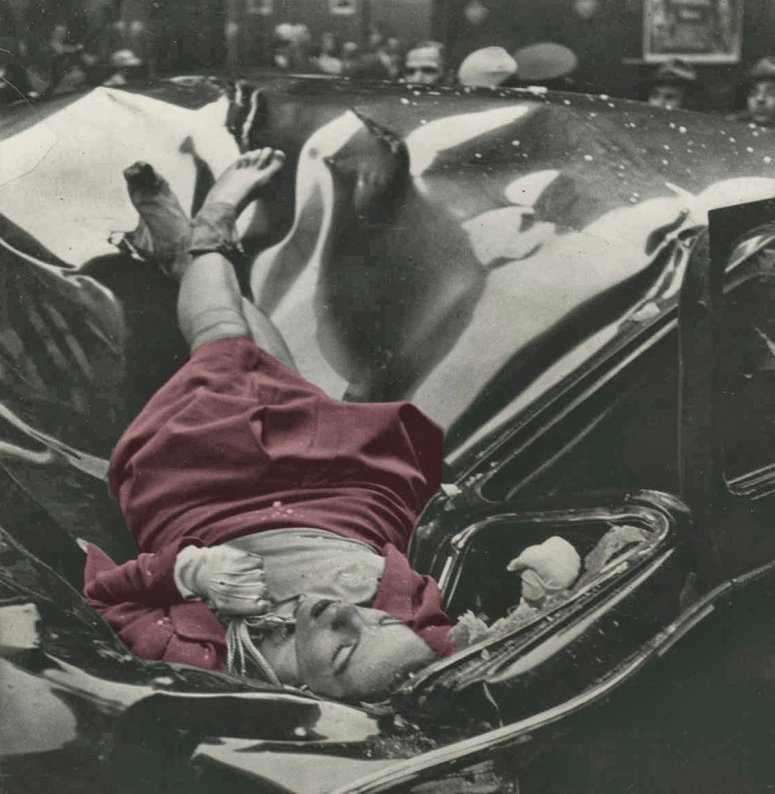
Katherine Isabel Burkhardt was born in 1898 and died of a summer fever in 1912 at the age of fourteen. When she found herself in the family vault, she was more afraid than she had ever been in her life. She didn’t know where she was or why.

Hello!” she called. “Is anybody there? Hello! Mother! Father! Are you there? Do you see me? Can you figure out how to get me out of here? I don’t like it here! It’s spooky and I think I’m going to cry! I think there’s been some mistake! I don’t think I ought to be here!”

She was on the point of screaming when she saw an old woman standing over her. She didn’t know the old woman but was so relieved she wasn’t alone that it didn’t matter.

The words came out in a torrent: “Who are you? What is this place? Can you tell me where I am? I need to go home! My mother and father will be worried about me if I don’t come home for dinner!”

“Not so fast!” the old woman said. “All your questions will be answered, but only one at a time.”

“I don’t know where I am. I don’t like it here! I don’t remember how I…”

She stopped in the middle of a sentence because she saw, not having noticed before in her excitement, that the old woman had a mellow glow emanating from her chest.

“What is that?” she asked. “I’ve never seen anything like it! You’re glowing!”

“Of course I’m glowing,” the old woman said. “We’re all glowing. You’re glowing too.”

“What?”

When she looked down, she was delighted for a moment by her own glow coming from inside her.

“What is this?” she asked. “What does this mean?”

“It’s very simple,” the old woman said. “You’ve crossed over.”

“Crossed over where?”

“You’ve passed from the world of the living to the world that comes after.”

“The world that comes after? Are you telling me I’m dead?”

“Yes. You must accept it. Embrace it.”

“But I don’t want to be dead! I have things to do. I promised mother I’d clean out my closet. I have my schoolwork to do. I have my cats to take care of. I’m going to a church picnic on Saturday.”

“The picnic will go on without you. That’s what happens when we die. The world keeps right on spinning.”

“I don’t believe you. I think I’m just having a bad dream. In a little while I’ll wake up and everything will be fine.”

“It’s a dream, all right, but not the kind of dream you wake up from.”

“Who are you anyway?”

“I’m your grandmother. You never knew me because I crossed over before you were born.”

“Just what is this place? Where am I?”

“You’re in the family vault. In the cemetery.”

“I remember! I remember the family vault! Father showed it to us on one of our Sunday drives. It looks like a little church with spires.”

“That’s right. Your great-grandfather, my father, was a wealthy man and he had the vault built at great expense so all of us would have a place to go when we die.”

“That was very thoughtful of him, I’m sure. Now, can you tell me how to get out of here so I can go home?”

The old woman laughed. “You can’t get out. This is where you belong now. With us.”

“There are others?”

“Of course, there are others. You’ll meet them all soon.”

Katherine began to cry real tears, as opposed to tears for effect. “I didn’t get a chance to tell anybody goodbye because I didn’t know I was going to die! Mother and father and Boyd, my brother. My cats.”

“They knew what was happening. They were in the room. They all said goodbye to you, even though you didn’t know it.”

“Will I see them all again someday?”

“It doesn’t hurt to hope.”

“I’m worried about my cats. They’ll starve if I’m not there to feed them.”

“Don’t you think your brother will take care of them now?”

“Yes, I suppose he will. He was always quite fond of animals.”

“All your worldly cares are over. You are at peace. Peace like a river.”

“I’m feeling so sleepy now, as if I can barely hold up my head.”

“That’s right. Time to sleep. And when you wake up you’ll meet the others.”

A curtain descended as at the end of an act in a play, and Katherine knew nothing again until she was being led by the hand to meet the rest of the family.

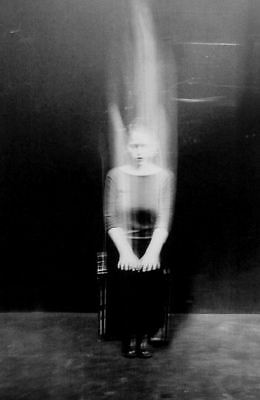
She felt shy at being brought before a gallery of strangers. She was not at all  surprised, however, to see that they all carried the mysterious and arresting glow inside them, the same glow that she now had.

Cousins Parry and Lomax, twins, were ten at the time they crossed over. (They went over a roaring waterfall in a rowboat on a flawless June day and drowned.) They looked at Katherine with wide-eyed wonder; each of them gave her a quick, unsmiling bow from the waist and then they were gone.

Great-grandfather was tall and broad, wearing his fancy dress suit and sporting the elaborate mustache and side whiskers for which he was known. He was a successful businessman, the millionaire who financed the family vault. On meeting Katherine, he tilted his head back and looked at her as if he couldn’t quite believe his eyes.

“I don’t think we’ve met, my dear,” he said. “How are you?”

“I’m dead, thank you, sir,” she said. “How are you?”

Uncle Evan, great-grandfather’s son, was handsome in his military uniform. He was only twenty-five when he crossed over during the Spanish-American War. He shook Katherine’s hand politely, gave her a grim smile, and receded into the background as his military training dictated.

Aunt Ida was a sad-faced woman carrying a baby. The baby, Augustus, crossed over at the age of three months when Aunt Ida was only in her twenties. Now that she had him with her again, Aunt Ida vowed that she and Augustus would never be separated again.

A formidable woman was Aunt Zel, great-grandfather’s sister. She had an elaborate coiffure piled high on her head and a stunning array of jewelry gracing her person. By her side always was her diminutive husband, Uncle Ivor; he was a hundred-and-twenty pounds when he was alive and eight inches shorter than Aunt Zel. He had lost his right arm, not on the field of battle, but to a rabid skunk when he was eight years old.

“I’m so happy to make your acquaintance, my dear,” aunt Zel said to Katherine. “I just know we’re going to be great friends.”

Uncle Ivor took Katherine’s hand in his and bent over and kissed it until Aunt Zel turned and gave him a warning look.

Uncle Jordan wore a dress suit with a diamond stickpin and silk cravat. He kissed Katherine on each cheek and then he was gone as if he had a pressing engagement elsewhere. The truth was that he avoided being around the other family members for long because none of them approved of him. In life, he had enjoyed himself a little too much, spent money freely that didn’t belong to him and died, deeply in debt, in young middle age of alcoholism.

Cousin Talbot’s appendix burst when he was thirty-two. Immediately after he crossed over, his beautiful young wife, Magdalene, married a man she hardly knew by the name of Milt Clausen. Magdalene did not honor Talbot’s memory in her widowhood. She was not in the family crypt and never would be. Cousin Talbot didn’t want her anywhere near him. He had renounced women and marriage for all eternity.

“If you were a boy instead of a girl, I’d advise you never to get married,” Cousin Talbot said to Katherine.

“I don’t think my gender makes much difference now,” Katherine said.

Cousin Emory was sixteen when he crossed over as the result of a crushed larynx sustained in an impromptu game of tackle football with some of his friends. The glow in his chest was a little brighter than anybody else’s and, indeed, extended upwards to his neck, face and head. His smile was infectious and he seemed all the time to be on the verge of laughter. When he touched Katherine’s hand, she felt he was a kindred spirit.

“How do you like being a ghost?” he asked her.

She shook her head and blushed, not knowing what to say.

“It was the same for me when I first came here,” he said. “I didn’t know why God would have me die so young. We learn not to ask why but just to accept things as they are.”

“I don’t like it here and I want to go home,” she said but she wasn’t sure if Cousin Emory heard her.

Before moving on, he leaned over and whispered in her ear, “I can show you around if you like. There’s a lot more than just this.” He held out his arms to take in the whole family crypt.

“If you find you have the time,” she said, “I think that would be lovely.”

There were others after Cousin Emory, but the truth was they blended together in a blur and Katherine couldn’t remember them after she met them.

The next time Katherine saw Cousin Emory, he showed her, much to her delight, that she could leave the family crypt at will (hers and not anybody else’s). All she had to do was press her body against the outer wall. Since the wall was solid and she was not, she could pass through it. He tried to explain the laws of physics involved, but she didn’t understand what he was talking about.

The cemetery was much larger than Katherine imagined. Cousin Emory took her to visit some of his spirit friends: a tall, criminally handsome policeman with a handlebar mustache who loved to tell stories about apprehending cutthroat desperadoes; a Civil War soldier who shook hands with Abraham Lincoln and spent ten minutes engaged in conversation with him; a victim of the Johnstown Flood (“the water came roaring down the mountain and swept away everything in its path”); a governor of the state who once had presidential aspirations; a group of twenty girls who died in an orphanage fire, all occupying the same grave; a twelve-year-old boy named Jesse who stood just outside his massive vault until another spirit came along and engaged him in conversation.

On one of their forays outside the crypt, they came upon a funeral on a hillside that resembled, with all the attendees dressed in black, an aggregation of crows.

“This is the fun part,” Emory said.

He walked among the mourners, pretending to kiss or touch or put his arm around certain of them. He also demonstrated the technique of coming up quickly behind them and making the more sensitive of them turn around to see who—or what—was there.

“They sense I’m there but when they turn around they’re not so sure.”

He made her laugh when he floated over a couple of old ladies in large feathered hats and, assuming a reclining position over them, pretended to pat them on the sides of their heads.

“I, for one, love being a ghost!” he said.

“Can I fly, too?” Katherine asked.

“We don’t really fly like a duck going south for the winter. What we do is float. We float because we’re lighter than air.”

“Can I try it?” Katherine asked.

“You can do anything you want, now,” he said.

He demonstrated his floating technique and they spent the afternoon floating all over the cemetery.

“Maybe there are some good things about being a spirit,” Katherine said.

“Of course there are!”

“No more head colds, sore throats or stomach cramps. No more trips to the doctor or dentist. No more nightmares or math quizzes. No more being made to play badminton with my little cousins. No more boring church sermons that make everybody cranky, and no more liver and onions for dinner ever again!”

Cousin Emory laughed, but then Katherine started thinking about all the good things she had left behind, such as her cats and her beautiful room at home and her mother and father and brother and all her friends, and she started to cry.

“I think it’s time to go back,” Cousin Emory said.

Katherine began venturing outside the family crypt often, either with Cousin Emory or on her own. And then, on a beautiful Sunday afternoon in October, she happened to be in the right place at the right time and she saw them.

She recognized father’s automobile and then she saw that all three of them were riding inside: father, mother and her brother Boyd. She floated after the car—it wasn’t going very fast—and attached herself to the back of it as it turned out of the cemetery and headed toward home.

She held on easily enough until father pulled into the driveway of the old house. She was happy to see that everything looked exactly the same. The first thing she did was to go around back and check on her kittens. They were all there and seemed healthy and happy, but they were now adult cats. She cried when they meowed and purred and recognized her and begged to be picked up.

Her room upstairs was the same. Everything was just as she left it, the books and pencils on her desk, the dolls and stuffed animals on the bed and the chair, the pictures on the wall, the lamp, the rocking chair, the clothes hanging in the closet. Mother hadn’t changed a thing.

She was home again! With her family! Of course, her physical self—her body—was back at the family crypt in the cemetery, but the most important part of her was here—in her childhood home that she loved and never wanted to leave.

She would stay with her family always. She floated over the dining room table as had their dinner. She floated over their beds at night when they were sleeping. Sometimes she went up behind them and gently blew air on the backs of their necks. At those times, they seemed to know she was there because they smiled and sometimes they turned all the way around.

When they were all away for the day, she would go from room to room, touching the beloved objects: the piano where she learned to play, the horsehair sofa that was so comfortable for a nap, the dishes in the China closet, the books on the shelves, the worn rug on the floor, the ferns and philodendrons. All the things that made home what it was.

She spent time every day with her cats. She watched them as they grew up and had their own babies. Some of them left and ventured out into the world on their own, as cats will do. She watched as they grew old and cried whenever any of them became sick and died.

The years went by but, since she was a spirit, there was no such thing as time. She remained the same, always fourteen years old, but her family changed, as families will. Boyd went through college and got a job in New York City and left home. He sent postcards and letters, saying how happy he was. Father became old and stooped; he had a heart attack and had to stop working and draw a pension. Mother’s hair turned gray and her shoulders were perpetually bowed. She still fixed three meals a day and worked always at keeping the house clean and running smoothly.

Katherine was standing beside father’s bed when he died on a January night. She believed that in the last minute of his life he saw her and knew she was there. He died happily.

Mother continued in the big, empty house on her own. Always busy, she was never one to give up. She continued to cook meals and clean a different part of the house every day, even though nothing was the same for her. In the evenings, she sat in the parlor alone and read, sewed, or knitted. Sometimes she would stand up and go to the piano and play a hymn or a popular song from her youth that she recalled. And always, Katherine was close by. She longed to reach out and fold mother in her arms and comfort her.

In the time that was no time, mother also died. The house was sold and all the furnishings moved out. A family with four children took up residence. They were noisy and quarrelsome. They went in and out all day long, slamming the doors every time. They had two large dogs that barked at the slightest provocation.

Katherine couldn’t stay in a house that was no longer hers. She didn’t like the family that moved in. They were nothing like her own family and had their own way of doing things. They removed mother’s drapes from the living room and dining room and replaced the wallpaper in Katherine’s room with a print with sailboats that she didn’t like.

There was nothing left for her to do but go but back to the family crypt. Her grandmother was right; it was where she belonged.

In living time, she had been away for decades, but to the other spirits in the family crypt, it was no time at all. They weren’t aware she had even been away.

She was sad when she went back to the crypt, but not sad for long. Mother and father were both there with their own glows. Why had she not thought of it before? Weren’t they part of the family? Didn’t it stand to reason that they would be in the family crypt the same as any other member of the family? She had just never thought of them as dead in the same way she was dead.

They were all on the same side of the Great Divide now between Life and Death. There would be no more leave-taking. One day Boyd would be joining them. His spot was waiting for him on father’s right side.

In the middle of Katherine’s joyous reunion with mother and father, she heard a small sound like mewing. It could only mean one thing. Yes, they were all there. Every cat she had ever owned in her life was waiting for her, no farther away than the length of her arm. Now, at last, heaven was upon her.

Copyright 2020 by Allen Kopp  

Prentiss Peckinpaugh Prefers Pornography

Prentiss Peckinpaugh Prefers Pornography ~ A Short Story by Allen Kopp

Miss Sullivan belched quietly into her handkerchief; the hamburger steak with onions she had for lunch didn’t quite agree with her. With the handkerchief over her mouth, she looked out over the thirty-two lost souls in her care until five minutes to the hour. They were all fifteen years old and most of them she would happily strangle if she could. She had been in the teaching profession for too long and was overdue for retirement.

Since it was Friday afternoon and everybody was waiting to be unleashed and unfettered until Monday morning, this group of ninth graders was engaged in what was called silent reading. Everybody must know that silent reading was serious business. You couldn’t write or giggle or daydream or think about what you were going to do when you got home or work on your algebra problems (it wasn’t study hall) or pass notes or whisper or gaze out the window or thumb through a magazine. You had to read a “good book,” preferably one from the reading list or one that Miss Sullivan herself had approved. You had to put the fifty-five minutes to good use, reading every word on every page, and absorbing what you read as if you would be tested on it.

Halfway through the hour, Miss Sullivan launched a surprise attack, suddenly standing up from her desk and walking the aisles between the desks, down one aisle and up another. If anybody was doing anything they weren’t supposed to be doing—reading a comic book or concealing a paperback of some kind behind a library book—she would catch them before they had a chance to hide it.

Prentiss Peckinpaugh was an odd boy from an odd family. He lived on a farm with his family; he had many brothers and sisters. His clothes always looked too big for him as if they had belonged to somebody else before he wore them. He always kept the top button of his shirt done up, even in warm weather. He walked with a cautious, forward tilt as if he had something wrong with his back.

Prentiss was sitting in the row of chairs against the wall. Miss Sullivan came upon him from behind, from the left, and her eyes fell upon the book he was reading, a paperback with a pink cover.

“What is that you’re reading?” she asked.

He closed the book so she could see the front cover. The title of the book was The Passionate Orphan.

“Where did you get that book?”

He shrugged his shoulders.

“May I see it?” she asked.

He handed her the book and she flipped through the pages and read several passages, standing there in the aisle between desks.

“You’re reading this book?” she asked.

“Yeah,” Prentiss said.

“It’s ‘yes, ma’am’.”

“Yes, ma’am.”

“How far along are you in the book?”

“Almost to the end.”

“Do you know what this book is about?”

“Yes, ma’am.”

“What is it about, then? Would you care to tell me?”

By now everybody in class had their attention focused on the conversation between Miss Sullivan and Prentiss Peckinpaugh.

“I don’t think I can say it,” Prentiss said.

“Don’t you know this book is not appropriate reading material for ninth grade English?”

“No, I didn’t know.”

“Who gave you this book?”

“Nobody gave it to me. It’s my book.”

“You don’t know where it came from?”

“No.”

“Did you steal it?”

“Why would I steal it when it already belonged to me?”

“Did a grown man give it to you? Maybe a friend of your father’s?”

“No. I already said nobody gave it to me. It’s my book.”

“Do you know the meaning of the word ‘pornography’?”

“No.”

“Well, that’s what this book is. It’s pornography and if somebody in this school gave it to you, we need to know who it was. This is a book that certainly doesn’t belong in a school, in a classroom, where other people can see it. Do you know what I’m saying?”

“I don’t see anything wrong with it.”

“How about if we go downstairs and show the book to Mr. Ball?”

“I have the feeling I don’t have a choice.” Prentiss Peckinpaugh said.

“Right you are,” Miss Sullivan said.

Miss Sullivan put the class in charge of Mavis Blaylock, a know-it-all, holier-than-thou toady who would stop at nothing to gain favor with the teacher and would take down names of those who misbehaved. Mavis smirked with superiority and took her place at teacher’s desk.

After an admonition to the class to continue their silent reading, Miss Sullivan escorted Prentiss Peckinpaugh down the three flights to the principal’s office.

Principal Ball was engaged on the phone, so Miss Sullivan and Prentiss had to wait for about five minutes until he was free. When at last they were ushered into the carpeted, wood-paneled office, Mr. Ball took one look at them, frowned and said, “What’s this?”

“Well, we’ve been having silent reading this hour,” Miss Sullivan said, “and I found this boy reading this book.”

She handed the book to Mr. Ball.

“Just what is this?” he asked.

“Well, as I was just saying to him…”

“What’s your name, boy?” Mr. Ball asked.

“Prentiss Peckinpaugh.”

“Say ‘sir’ when you’re speaking to me.”

“Prentiss Peckinpaugh, sir!

“I was just saying to Prentiss here that this book doesn’t belong in school and should never see the light of day,” Miss Sullivan said.

Mr. Ball laid the book on the desk and turned over several pages, reading as he went.

“Who gave you this book, Mr. Peckinpaugh?” Mr. Ball asked.

“Nobody gave it to me. It’s my book.”

“Where did it come from?”

“It didn’t come from anywhere. It’s my book.”

“Don’t you know that a book like this is not allowed in school?”

“I don’t see anything wrong with it. Nobody sees it but me.”

“Do you have other books of this nature?”

“I don’t know.”

“You don’t know.”

“No, sir.”

“Well, we’ll let you off with a warning this time because you’re young and you didn’t know, but I want you to know that if you ever bring pornographic material into this school again, we will take disciplinary action that will include a three-day suspension. Now, do you understand what I’m saying to you?”

“Yes, sir.”

“When you’re on your own free time at home, you can read whatever you want, but in a school like this with hundreds of other students, you must follow our guidelines for what is acceptable and what is not. Am I getting through to you?”

“Yes, sir!”

“Take him to the library, to the fiction section, Miss Sullivan, and have him check out Of Mice and Men by John Steinbeck. That’s a good book and, more importantly, it’s an appropriate book.”

“I’ve read it,” Prentiss Peckinpaugh said.

“Well, read it again!”

“Are you going to give me back my book, sir, that you took from me?”

“No! I want to absorb it more thoroughly. I need to know what the students in this school are up to.”

The library’s one copy of Of Mice and Men was checked out, so Miss Sullivan suggested The Old Man and the Sea by Ernest Hemingway.

“I’ve read it,” Prentiss Peckinpaugh said.

“Well, read it again! And after you’ve finished, I want a solid book report on it.”

“Okay.”

“That’s ‘yes, ma’am’.”

“Yes, ma’am.”

During study hall next hour, Prentiss Peckinpaugh went back to the library and checked out Lady Chatterley’s Lover by D. H. Lawrence. He wanted to choose for himself what books to read. He liked The Old Man and the Sea fine, but he didn’t want to read it again.

While reading Lady Chatterley’s Lover, he could easily hide it behind The Old Man and the Sea and nobody would ever know the difference.

Copyright © 2020 by Allen Kopp

The Ground My Bed, the Leaves My Blanket

The Ground My Bed, the Leaves My Blanket ~ A Short Story by Allen Kopp

(I posted a different version of this story previously.)

The vast cemetery was many splendid acres of hills, trees, ponds, statues, winding roads, mausoleums, columbaria (for cremated remains), crypts, and walk-in burial chambers gouged out of the sides of the hills. For those inclined to notice, there was every shape, style (a century and a half of changing styles) and description of grave marker known to man, from no bigger than a shoebox to magnificent enough for a Roman emperor.

It was a sprawling city of some one-half million departed souls, but also home, on any night of the year, to dozens of indigents who didn’t have the price of a room or an acceptable flop and so found themselves with no other place to rest their weary (living) bones than among the unsuspecting dead.

Anybody who ever took up residence in the cemetery, if only for one night, knew it afforded many excellent and discreet hiding places where one might sleep, copulate, administer drugs, perform bodily functions, eat, bathe, think, drink, cry—or do any number of other things—away from the prying eyes of man.

As with every person in reduced circumstances who found himself or herself residing in the cemetery, Vicki-Vicki Novak had a story. After graduating from high school, she believed she had everything she needed to find herself a good job, so she left her rancorous mother and her unhappy home and spent six nausea-inducing hours on the bus and moved to the city. Life for her had always been hard, but it wasn’t until she came to the city that she discovered how cruel and unforgiving it is.

She would have taken any job she could find but the truth was there were no jobs of any kind to be had. She was turned away repeatedly because she had no experience of any kind. It didn’t matter that she was good at figures, was a stellar reader, and made better-than-average grades in school. She couldn’t get a job as a cafeteria worker because there were already seventy-five girls on the list ahead of her. She applied for a job in a laundry but was told she was too young and too slightly built to carry heavy loads. The sad truth was she didn’t make a good impression on those who might have hired her; she was too diffident and naïve; she knew too little of the world.

She spent her first two weeks in the city in an old hotel but, when she saw how fast her money was being used up, she took what little she had left and moved to a cheap boarding house where she slept in a tiny, box-like room and ate two small meals a day.

Finally even the boarding house was too expensive for her and she ended up living on the streets, where she met a coterie of other down-and-outers just like her. They gave her advice about how to survive and where she might get a bite to eat or a place to flop for the night. More than once she engaged in sexual congress with nefarious men in exchange for a small amount of cash, a package of cigarettes, an orange, or a couple of pills that were guaranteed to make her feel wonderful and forget all her troubles. She abhorred these couplings at first but after a time didn’t mind them so much because she disconnected herself from the proceedings and felt nothing.

Vicki-Vicki was fortunate in one respect because when she first began living on the streets of the city, it was May and the cruel and dreadful winter was past and wouldn’t be coming around again for a while. During a police crackdown on the street people, she sought refuge in the cemetery on the advice of a friend, one Chester Burnside, a man who might at one time have been a woman (one of those aberrations of nature all too abundant in the large city). The number-one piece of cemetery advice that veterans like Chester Burnside had to offer to newcomers like Vicki-Vicki was this: Don’t get caught because if you do you might get your brains knocked out or you might end up in jail. All the veterans had horror stories about people getting their brain matter literally knocked out of their heads onto the ground by leering, sadistic cemetery guards.

On a Friday afternoon in October, Vicki-Vicki was washing up at one of the cemetery’s fountains. She trailed her hands in the water and brought them to her face. The water was fresh and clean. She wished she might take off all her clothes and get down in the water naked and give herself a good scrubbing, but if she dared to do such a thing, somebody was sure to come along and see her, so she just contented herself with rinsing her arms and face.

Towering above the fountain was a seven-foot tall lady angel. Her wings were only marginally chipped and bird-splattered; she looked down with a benevolent and loving expression.

“What are you doing here?” the angel asked, bending her head in Vicki-Vicki’s direction.

“I was washing myself,” Vicki-Vicki said.

“You might drown yourself if you have any sense.”

“Why would I do that?”

“It’s October. Winter’s coming. Are you going to go home while you still can?”

“I don’t have a home.”

“Everybody has a home.”

“My mother said she’d kill me if she ever saw me again.”

“When did you last eat?”

“I don’t know. Yesterday, sometime, I think.”

“Life is hard, isn’t it?”

My life is. I don’t know about anybody else’s.”

“You must do better.”

“Tell me how.”

Somebody was coming. They both heard the footsteps moving through the leaves at the same time. The angel went back to being mute and immobile, while Vicki-Vicki ran and hid behind the nearest large tree.

When she peered cautiously around the tree, she was relieved to see it was the old wino Eulah Knickerbocker and not a cemetery guard.

Hey! You!” she said, stepping out into the open.

Eulah Knickerbocker jumped and only kept from screaming by placing her filthy hand over her mouth. “You shouldn’t scare people like that!” she said. “My nerves is shot all to hell!”

“Why? What’s the matter?”

“I’m going around telling everybody I see. It’s lucky I found you. There’s going to be a purge tonight.”

“What’s a purge?”

“They’ve took on extra guards. They’re going to go through the cemetery and round up everybody who doesn’t belong. Some of us will end up dead.”

“Just hide,” Vicki-Vicki said. “That’s what I do.”

“No, dear! You won’t be able to hide from them this time. If you’re here, they’ll find you. You’d better get out before dark.”

“Where would I go?”

“How on earth should I know? Go back to the city.”

“But I came here to get away from the city!”

“I know! It’s terrible, ain’t it? But if they find you here tonight, it will go very bad for you. They might throw you in jail, and if they do you might never get out again.”

“They don’t scare me,” Vicki-Vicki said.

“Take it from somebody who’s been there, dearie. I’ve been living on the streets for seventeen years. I know how these things go.”

“You haven’t seen that fella they call Diego, have you?” Vicki-Vicki asked.

“If I did, I’d try to forget it.”

“He owes me money.”

“You’ll be lucky to get a nickel out of him, even if you do find him.”

“No, he’s been working, clearing brush. If I can catch him before he spends all his pay, I can get my money and have enough for a decent room for the night.”

“Say, you wouldn’t mind me coming along, would you, darling? Two can stay in a room for the same price as one.”

“Not this time, Eulah. I just need to be alone tonight.”

“Well, all right. I figure it don’t hurt to ask.”

“No, it don’t. Have you got anything to eat?”

“If I did I’d share it with you.”

“I know you would, Eulah.”

“Have you seen my twin sister, Beulah?”

“No, I don’t think I have.”

“She’s the great beauty of the family. Have I ever told you about her?”

“I believe so.”

“She’s coming to get me and take me home with her to live. I don’t know if it’ll be tonight but any day now.”

“I hope it all works out for you, Eulah.”

“It’s bound to, this time.”

The sun was going down and the air suddenly had the feel of late autumn. It would be about the time that normal people who live in houses would be sitting down to dinner. She needed to think about where she would spend the night in case she didn’t find Diego and get her money. The important thing was to find a snug little place out of the wind that hadn’t already been claimed by somebody else.

She went to the oldest part of the cemetery, the part she liked best and the part where she was mostly likely to see a ghost if there were any about. The trees were sheltering; the gravestones were large and close together. She began piling up dry leaves to make herself a bed in a secure little spot between stones when she heard someone coming. She started to hide but it was too late; she had already been spotted.

“Hey, there, little chicken!” a man’s voice said.

Right away she recognized the voice as that of Julius Orange. He was tall and rather handsome but his face and hands were crusted with dirt all the time as if he never washed them and one of his eyes was permanently half-closed.

“I thought you were one of the guards,” she said breathlessly.

“No, but I could have been. Have you heard the news about the raid tonight?”

“Eulah Knickerbocker told me.”

“You’d better get out while you can.”

“No, I’m going to stay,” Vicki-Vicki said. “I’m cold and I’m sick and I don’t feel like walking all the way back to the city tonight.”

“It’s your funeral.”

“I don’t think the guards will come all the way over here. They’re afraid of ghosts.”

“You’re cold, aren’t you?”

“I have ice water in my veins.”

“I know a way to warm you up.”

“You got a bottle of whiskey?”

“No, I don’t mean that,” he said. “I was wondering if you’re open for business. I got four dollars.”

“You’d spend your four dollars on me?”

“And a lot more.”

“Save your money. Tonight I’m not worth four cents.”

“Well, if you change your mind…”

“Say, you haven’t seen Diego around anywhere, have you?” she asked.

“Not that I remember.”

“He owes me money.”

“You can have my four dollars and catch yourself a bus back to town.”

“Thanks. That’s awfully sweet, but I’m just going to bed down here for the night and see how things go.”

“It’s your funeral,” he said, and then he was gone.

It was fully dark now. She kicked at the leaves and shivered in the rising wind. She looked up at the sky anxiously, hoping to forestall any rain, but the sky wasn’t telling any tales. She burrowed into the leaves like an animal and gathered the leaves around her like a warm comforter.

The smell of the leaves was earthy and good, an uncorrupted smell, untouched by human filth. She was completely hidden from view, she believed, but she could still breathe and could still see up into the trees as far as the darkness would allow. This is not so bad, she thought. If only life could be like this always.

She felt the cold rising from the ground. She shivered and her teeth chattered but soon she felt warmer and went to sleep. She dreamed she was in a big bed in a warm room in a snug house and those who cared for her were within the call of her voice and there was nothing to be afraid of.

She jerked awake to the sound of men’s voices. They were far away but coming closer. There might have been as many as ten of them and they might have been at a drunken party for all the fun they seemed to be having.

She lay still and breathed deeply. There were so many leaves on the ground and she was sure they wouldn’t bother looking through all of them. They would just make a quick sweep and, finding no one, move on. She would laugh later at how close they had been but still missed her.

She was right. They did move on, but one of the men had detached himself from the others and was searching through the leaves between the gravestones. She heard his slow, decisive steps and then felt a rush of cold air on her face as he scraped the leaves away that were covering her.

“Come out of there!” a deep voice said.

She gave a little yelp and covered her face with her hands but knew there was no use resisting.

“Leave me alone!” she whimpered. “I didn’t do anything!”

“You’re not supposed to be here!”

“I’m leaving. Please don’t hit me with your stick!”

“Nobody’s going to hit you. Get up and talk to me.”

She stood up. The man, towering over her, shone his flashlight in her face. She couldn’t get a good look at him, but she knew from his voice and his bearing that his face, if she could see it, would be beautiful beyond believing.

“How did you know I was here?” she asked.

“Magic,” he said.

“Please don’t take me to jail.”

“It’s where you belong. Don’t you know you’re trespassing?”

“I’m going, I swear!”

“It’s dangerous for you to be here.”

“I know! I’ll leave right now.”

“People freeze to death out here all the time. Last winter we picked up thirty frozen dead bodies.”

“I was looking for someone, but he’s not here now so I’ll just go.”

“If I turn you over to the others, you’ll go to jail.”

“Please don’t do that!”

“I’ll let you go this time, but only one condition.”

“Anything!”

“Promise me you’ll get out and don’t come back. If I see you again, I’ll remember you and I’ll turn you in. You don’t want to end up in jail, do you?”

“No!”

“Go home. Don’t you have a home?”

“No.”

“Go to a shelter in town, then. There are people there who will help you.”

“I will. I promise.”

He handed her a small paper sack, which she took unquestioningly. Switching off his flashlight, he took off his coat and dropped it on the ground beside her. He gave her one last look and then he was gone.

“Wait a minute!” she said. “I was…”

She could still here his voice after he was gone. If I see you here again, I’ll remember you and you’ll go to jail.  

“Take me with you!” she called out, but he was already gone and couldn’t have heard.

She remembered the paper bag she held in her hand and opened it. Inside were a ham sandwich wrapped in paper and a little carton of milk.

She ate the sandwich and drank the milk as if tasting those things for the first time and when she was finished she vomited, bending over at the waist and leaning against a tree.

When she was finished, she wiped her mouth on her sleeve and then as she was turning away from the tree she remembered the coat lying on the ground and picked it up and put it on. It was much too big for her, going almost to her knees, and it still held the warmth of the man’s body and traces of his man smell.

She hugged her arms to her body and, like a princess in a fairy story, was transformed. A celestial light appeared above her head and shone down on her, entering her brain and settling around her heart. She heard the sweetest music she had ever known, coming from a faraway place. She trembled all over and fell to the ground in a kind of religious ecstasy, having looked, at last, upon the face of the one and only God.

Two hours later, by which time she could no longer remember she was supposed to hide herself, she was taken into custody by a second wave of guards making their way through the cemetery. Nobody hit her with a stick or beat her, but she was taken to jail and locked up.

She spent the night sitting up in a filthy, stinking cell with about two dozen other women. In the morning at seven o’clock, she was given an egg sandwich and a cup of coffee and released. When she stepped out onto the sidewalk, the sun blinded her and she didn’t know where she was or where she was supposed to go.

A sympathetic soul, someone who knew the kind of person she was, gave her a ride back to the cemetery. She wept when she found herself back in the familiar place. It was like going home.

It was a much warmer day than the day before. The sun shone and the breeze was refreshing instead of chilling. After the night in jail, she wanted only to sleep.

She went to what she thought was the most secluded part of the cemetery and found an ideal sleeping spot under some bushes. It was like a little cave or animal’s lair. The ground was dry, covered with soft needles, and there was just enough sunlight filtering through the leaves to create a soporific warmth.

Knowing she would not be disturbed, she slept comfortably throughout the day. When she awoke, it was just turning dark. She pulled herself out of the bushes, trying to remember the last thing that happened to her. Oh, yes, there was Diego. She would find him and get the money he owed her. She would get herself a roast beef sandwich, a bottle of wine and a room for the night, and it would be just like heaven.

Copyright © 2020 by Allen Kopp

Never Mix, Never Worry (I Was Dancing and I Was Ridiculous)

Never Mix, Never Worry (I Was Dancing and I Was Ridiculous) ~ A Short Story by Allen Kopp

(I posted a different version of this story previously.) 

They were out all night and didn’t get home until after dawn. Honey was sick from too much to drink and went right to bed. Nick slept on the couch in the living room, slept the morning away, and didn’t wake up until the middle of the afternoon. When he awoke, he had a terrible headache that he hadn’t been aware of while he slept. He wasn’t sure if his body was going to allow him to get up, but after a while he pulled himself to a standing position, head reeling, and went into the kitchen.

Honey was sitting at the table reading a book. She had a cup of tea beside her; she always said tea with lemon settled her stomach. When Nick came into the room, she didn’t look at him but concentrated on her book.

“Hello, Honey,” Nick said, going up behind her and affectionately putting his hands on her shoulders close to her neck. She flinched and leaned forward; he took his hands away as from a hot stove.

“What a night!” he said with a little laugh. “Whew! I feel like eating something but when I think about what I might eat I think I’m going to puke.”

She marked her place in the book, closed it, and laid it aside. “Want me to fix you scrambled eggs?” she asked.

Nick groaned. “I can’t stand the thought of eggs.” He went to the refrigerator and opened the door. “Don’t we have any bacon?”

“I haven’t been to the market yet. I was planning on going today but I don’t think I’m up to it.”

He poured himself a glass of orange juice and sat down at the table across from her. “Can somebody please tell me what happened last night?” he said.

“You haven’t asked me how I feel,” she said.

“How do you feel?”

“Lousy. I feel lousy.”

“Were you able to stop the vomiting?” he asked, pulling downward on his face with both hands as if trying to pull it into shape.

“Yes, a person can only vomit so much. I’ve stopped for now, but I don’t dare eat anything. I think it’s going to take several days for me to feel right again.”

“Do you want me to fix you some toast? Do we even have any bread?”

“No, if I eat anything, I’ll vomit again.”

“All right.”

“We need to talk about last night,” she said.

“Not now, Honey,” he said. “I don’t really feel like a serious discussion at the moment. And, really, I think it’s better if we don’t talk about last night at all. Don’t you agree?”

“Better for you, you mean,” she said.

“I’m going to take a shower,” he said, standing up. “If you feel better later, we’ll go out and get some chicken or something.”

“Maybe I need to talk now!” she said in an insistent voice that made him stop in his tracks.

“Talk about what, Honey?”

“I humiliated myself last night.”

“You didn’t! You didn’t do anything the rest of us didn’t do.”

“I was dancing and I was ridiculous.”

“We were all dancing. It was all in good fun.”

“Then why do I feel so humiliated today?”

“You’re tired and you’re overly sensitive.”

“Don’t talk down to me!”

“I don’t mean to…”

“I’m humiliated. I drank bourbon and scotch. Not together, but one after the other.”

“That isn’t anything to be humiliated about. We were all drinking. It was a drinking party. We’re all grownups. Grownups get to drink as much as they want. That’s what it means to be a grownup.”

“Yes, but you know my one steadfast rule: Never mix, never worry. Well, I mixed and I’m paying the price.”

“Honey, nobody’s perfect,” he said. “We all have little lapses.”

“Stop treating me as if I were a child!”

“Why don’t you go back to bed? You can stay there all day and I’ll wait on you. How will that be? If there’s anything you’d like to have to eat, I’ll go and buy it.”

“The faculty party was bad enough, but after that was over we couldn’t just go home and go to bed and quit while we were ahead the way any two normal people would. No, we had to go to an after-party party.”

“Yeah, I admit it was a mistake,” he said. “I wish we had never gone.”

“Then why did we?”

“She’s the daughter of the president of the college and he’s a senior professor in the English department.”

“The history department.”

“It never hurts to cozy up to the entrenched people. They’ve both been around a long time. They’re part of the landscape. She’s daughter of the president of the college, for Christ’s sake!”

“You’re thinking of your career, of course.”

“Well, one does what one can to get ahead.”

“Just once I wish you would give the same consideration to me that you give your career.”

“Honey, that’s absurd,” he said. “There’s no comparison.”

“Well, I’m glad you admit it!”

“That isn’t what I meant!”

“A night like last night causes me to question my entire existence.”

“What do you mean?”

“Are we going to spend our lives hobnobbing with disgusting people just so you can get ahead in your career?”

“No!”

“Because I’m telling you, Nick, I don’t want to live that way.”

“It was just one party.”

“You can find out a lot from one party.”

“I don’t know what you mean.”

“If those people, that George and his wife Martha, are representative of the life in this college, then I don’t want any part of it. The way they tear each other apart is indecent. And when they’re finished attacking each other they go after whoever happens to be present at the moment. Just being in their presence makes you feel degraded.”

“You’ve been reading too many books.”

“Did you know he called me ‘angel boobs’?”

He laughed. “Yeah, I think I heard that,” he said.

“And ‘monkey nipples’.”

“He really called you ‘monkey nipples’? I didn’t hear that. When did he call you that?”

“When you were doing your provocative dance with that horrible woman.”

“He was making a joke! You ought to be able to take a joke! You’re not a child!”

“How can you stand by and do nothing when a strange man calls your wife filthy names?”

She began to cry. He sat down next to her and put his arm around her shoulder. “You take things too seriously, Honey.”

“How would you like it if he called you those names?”

“I think I might have punched him in the nose!”

“But it’s all right when it’s me?”

“That’s not what I meant!”

“I can never face those two again,” she said. “I vomited all over their bathroom. It was as if they saw me without my clothes.”

“You were just being human, Honey. It happens to the best of us.”

“How can we live here and you teach here when I feel so uncomfortable?”

“It’s just something you’re going to have to get over.”

“I don’t think I can. I want you to start looking for another position right away. If not today, then tomorrow.”

“But, Honey, we just got here! Do you know how hard it was for me to get this job?”

“I don’t care! If you have as much regard for me as you do for your career, we’ll leave right away!”

“Honey, that’s so unreasonable! You can’t be serious!”

“I have never been more serious in my life.”

“We’re not going anywhere,” he said. “We’re here and we’re going to stay.” He picked her book up off the table and threw it hard against the far wall, not because he was so angry but because he wanted to make a point.

“I can always leave on my own,” she said. “I don’t necessarily need you.”

“Fine. Go home to your mother. Tell her what a mistake it was to marry me.”

“I want to know what happened between you and that woman, that Martha, while I was passed out.”

“Nothing happened! What do you mean?”

“I’m not as stupid as you obviously think I am. I heard them talking about it afterwards.”

“Heard who talking?”

“George and Martha. They thought I was still passed out, but I was just lying there, fully awake, with my eyes closed. I heard the words stud and houseboy. They were talking about you! Were you a stud or were you a houseboy?”

“I didn’t hear any such thing, so I don’t know what you mean.”

“How are you going to face them again?”

“I don’t think I’ll see them again until the next faculty party and that probably won’t be for several months. Everything that happened last night will be forgotten by then.”

“Well, I can tell you right now I’m not going to any more faculty parties.”

“What do I say when people ask me where my wife is? She’s too squeamish for university life? She throws up a lot and can’t stand to be teased a little bit?”

“I don’t care what you tell people. It’s your career, not mine.”

“What are you saying?”

“I’m going away tonight.”

“Where are you going?”

“I don’t know yet. I’ll think of something.”

She stood up from the table and went upstairs.

“I’m hungry,” he said to the empty chair where Honey had sat. “I’m going to see what I can find to eat.”

A little bit of humoring would bring Honey around. She would never leave him. She was too dependent on him. He’d finesse her, just the way he finessed everybody. He’d cajole her, buy her a new coat or a piece of jewelry and everything would be fine. She needed to get out more and meet more people. If she happened to meet a young fellow, a handsome athletic type, who wouldn’t mind romancing her, so much the better. Nick would encourage it. Casual infidelity was all part of the game. The sooner she realized it, the better off she’d be.

And as for Martha, she wasn’t half-bad. A little bit gone to seed, but obviously with a few good years left in her. If she really liked Nick—and he would give her every reason to like him—she could help him in ways he hadn’t yet imagined. Of all the pertinent wives he might plow to further his career, the daughter of the university president had to be the most pertinent. And what could he do for her? He could make her feel good, make her feel young again. Remind her, if she had been inclined to forget, what it’s like to be with a real man.

He started to make himself a sandwich but then stopped what he was doing and went to the phone and picked up the receiver. He looked over his shoulder to make sure Honey wasn’t in earshot and then he dialed Martha’s number, which he had committed to memory. He let it ring twelve times and was about to hang up when she answered.

“Hello,” she said.

“Martha?” he said.

“Yeah, who is this?”

“It’s Nick.”

“Nick? I don’t know any Nick.”

“Nick from last night?

“Oh, yeah! You woke me up, you bastard!”

“Well, I’m sorry.”

“Yeah, I’m sure you are! Tell that little slim-hipped wife of yours she vomited all over my downstairs bathroom last night. Nobody can stand to go in there today. I ought to make the little twit get her ass over here and get down on her hands and knees and clean it all up.”

“She’s not feeling very well today.”

“Got a hangover, huh?”

“Something like that.”

“Well, what can I do for you, lover boy? It’s Sunday, you know.”

“Is your husband at home?”

“No, he’s at school. Even on Sunday the old bastard goes to the old salt mines, just to get away from little old me.”

“I was wondering if we might get together today. You know, just the two of us.”

“My goodness! You are an eager beaver, aren’t you?”

“I had a really nice time last night.”

“So did I, lover boy. What did you say your name is again?”

“Nick. The stud. Remember.”

“Sure, baby, I remember! Who could forget?”

“So what time can I come over?”

“Make it about an hour.”

“Perfect!”

“And when you get here, you can clean up the vomit in the downstairs bathroom.”

“What about my wife?”

“You can drop her down a well as far as I’m concerned.”

After he hung up the phone, he had the distinct impression that Honey had been listening in on the upstairs extension. He was sure she took down every word in her secretarial shorthand. She would use it in a court of law during the divorce proceeding.

He crept to the bottom of the stairs and looked up. Not a sound came from Honey’s bedroom. He went halfway up the stairs and stopped, as if afraid to go the rest of the way.

“Honey!” he called. “I just remembered some work I have to get done today in my office at school! I’m going to be gone for a couple of hours. When I come home, I’ll bring you a cheeseburger and a milkshake. How does that sound? Bye-bye!

Copyright © 2020 by Allen Kopp

Baby No Baby

Baby No Baby ~ A Short Story by Allen Kopp

Little Thelma Kane, eleventh grader at Button Gwinnett High School, had been absent for two weeks. When she returned to school, it was with her mother, Nova Kane. The two of them presented themselves in the administrative office.

“I’m Nova Kane,” Little Thelma Kane’s mother said to Ima Chiclet, the receptionist. “I want to see the principal, Mr. Middledyke.”

“Do you have an appointment?” Ima Chiclet asked.

“No.”

“You have to have an appointment to see Principal Middledyke. He’s terribly busy.”

“Well, I don’t have one, so where does that leave us?”

“You don’t get in.”

“Look here, doll face,” Nova Kane said. “I’m in no mood. I had to take time off from my job to be here.”

“What is the nature of your business?”

“It only concerns Mr. Middledyke.”

Ima Chiclet sighed and stuck the tip of her tongue out between her ruby-red lips. “I don’t think Mr. Middledyke will see you without knowing the reason.”

“Just tell him it’s personal.”

“Name?”

“Nova Kane, mother of eleventh grader Little Thelma Kane.”

“I’ll see if he’s free.”

Ima Chiclet stood up, swiveled her hips across the floor, tapped on a door in the back wall, went through the door and closed it. In less than a minute she came back out.

“Mr. Middledyke says he will see you, but I have to check you for firearms before I let you in.”

“Check me for what?”

“I’ll need to look inside your purse.”

“Look inside my what?”

“Your purse!” Ima Chiclet said. “Please open your purse and let me take a look inside!”

Nova Kane reluctantly opened her purse. “If you find anything interesting in there, let me know.”

Ima Chiclet squinted into the depths of Nova Kane’s purse and then lifted her head and nodded.

“What about you?” she asked Little Thelma Kane.

“I don’t have a purse.”

“Are you hiding a gun in your coat?”

“Why would I be?”

“I don’t know. That’s why I’m asking.”

“No, I’m not hiding a gun anywhere.”

“Hold your coat open please.”

“What?”

“Hold your coat open!”

Little Thelma Kane held her coat open. Ima Chiclet stood up and patted her down, inside her coat and out.

“Hey!” Little Thelma Kane said. “Not so rough!”

“You’re both clean,” Ima Chiclet said. “You may go right in.”

Mr. Middledyke was a small man sitting behind a large desk. He didn’t bother to smile or stand up as Little Thelma Kane and Nova Kane walked in. He knew they weren’t important.

“What can I do for you today?” he asked.

“Mr. Middledyke?” Nova Kane asked.

“Yes. Who might you be?”

“I’m Nova Kane, mother of eleventh grade Little Thelma Kane.”

“And who might you be?” Mr. Middledyke asked Little Thelma Kane. He pulled his thick-lensed glasses down so he could look at her over the top of them.

“She’s my daughter, eleventh grader Little Thelma Kane,” Nova Kane said.

“Can’t she answer for herself?” Mr. Middledyke asked.

“I’m eleventh grader Little Thelma Kane,” Little Thelma Kane said.

“Are you a student at this school?” he asked.

“Yeah.”

“Say ‘yes, sir’ when addressing me.”

“Yes, sir.”

“That’s better,” Mr. Middledyke said. “What can I do for you today?”

“Little Thelma Kane wants to quit school,” Nova Kane said.

What?

Nova Kane leaned over the desk and said in a loud voice: “MY DAUGHTER, ELEVENTH GRADER LITTLE THELMA KANE, WANTS TO QUIT SCHOOL!”

“I need to hear it from her own lips,” he said.

“I WANT TO QUIT SCHOOL!” Little Thelma Kane shouted.

Oh, no, no, no!” he said. “We discourage anyone from dropping out of school! I need to know the reason for your contemplating such a move.”

He gestured to the two chairs in front of his desk and Nova Kane and Little Thelma Kane seated themselves in them.

“I’m getting married in a couple of weeks,” Little Thelma Kane said.

“That’s right,” Nova Kane said. “She’s getting married.”

“Married? At your age? You’re too young!”

“I’m sixteen,” Little Thelma Kane said.

“Just give me the paper to sign giving my permission for her to quit school and I’ll sign it,” Nova Kane said.

Mr. Middledyke looked from Little Thelma Kane to Nova Kane and back again, as if he couldn’t believe what he was hearing. “It’s never a good idea to quit school,” he said. “If you quit school, you’ll always regret it. We’ll do whatever we can to make sure you stay in school.”

“You don’t understand,” Nova Kane said. “And how could you? I don’t understand it myself.”

“I’m going to have a baby in about seven months,” Little Thelma Kane said.

Oh, my, my, my!” Mr. Middledyke said in the voice of a fussy old woman. “You should never have let that happen! Is the boy a student at this school?”

“Boy?” Little Thelma Kane asked.

“The father of the baby!”

“He’s not a boy,” Nova Kane offered. “He’s thirty-two years old.”

“No, my boyfriend is out of school,” Little Thelma Kane said.

“He’s been married a couple times before and he’s got several kids already,” Nova Kane said.

“Three,” Little Thelma Kane said. “He has three children.”

Oh my! Mr. Middledyke said. “Do you know what you’re taking on?”

“The kids don’t live with him. They live with their mothers, but he pays plenty in child support.”

“And what does this man do for a living?”

“He’s a hair burner.”

“He’s a what?”

“She means he’s a hairdresser,” Nova Kane said.

“He does men and women,” Little Thelma Kane said.

“So this man you’re going to marry is twice your age and he works as a hairdresser?”

“That’s right.”

“Where does he live? Does he have a home?”

“Right now he lives in a mobile home.”

“She means a trailer,” Nova Kane said.

“Yeah, he lives in a trailer right now,” Little Thelma Kane said. “It’s all he can afford with all the child support he pays.”

“Do you really want to marry him?” Mr. Middledyke asked. “This…what’s his name?”

“His name is Lester Upjohn, but his professional name is Mr. Lance.”

“Do you really want to marry this Lester Upjohn?”

“Of course I do! I’m in love with him!”

“At age sixteen, are you sure you know what love is?”

“Of course I do!”

“She’s terribly in love,” Nova Kane said.

“And you encourage this?” he asked.

“Do I have a choice?” Nova Kane said. “Now that there’s a baby on the way, I want Little Thelma Kane to marry the baby’s father. I won’t have any bastard children in my family!”

“She doesn’t have to get married just because she’s going to have a baby,” Mr. Middledyke said.

“Of course she has to get married! Do you think I want people saying she’s a whore?”

“She could have the baby and put it up for adoption,” he said.

“Nobody in my family has ever given away a baby before,” Nova Kane said.

“What do you think about it?” he asked Little Thelma Kane.

“Can’t we just sign the paper and go?” Little Thelma Kane said.

“I’m just trying to get you to see there are other alternatives,” Mr. Middledyke said. “You can get married and still stay in school and have the baby. Other people have done it.”

“People would make fun of her,” Nova Kane said. “She’s already a freak as it is.”

“Not everybody thinks I’m a freak!”

“You can stay in school until right before your baby is born. Other girls have done it.”

“And then what?” Thelma Kane asked.

“When she’s over the ordeal of giving birth, she can come back to school and start afresh. She can make up the classes she missed or she can go to summer school. I just want her to know she doesn’t have to leave school just because she’s going to have a baby.”

“Can I strap the baby to my back and bring it to school with me?” Little Thelma Kane asked.

“Well, I don’t know…”

“Can I nurse it in class and get up from my seat and change its diaper when I need to?”

“Well, I think you’d have to get somebody to take care of it during the day when you’re in school.”

“And then, when I go home in the afternoon, will I be able to spend all the rest of my time taking care of it and listening to it scream all night?”

“That’s what it means to be a mother,” Mr. Middledyke said.

“I don’t think so!”

“What are you saying?” Nova Kane asked.

“I don’t want a baby!  I don’t want to get married! I don’t want to quit school! I don’t want to do anything! I only want to sign the paper and go home!”

“She’s overwrought,” Nova Kane said to Mr. Middledyke by way of explanation.

“A hormonal swing, I’d say,” Mr. Middledyke said.

“I don’t want to marry Lester. I thought I did but I don’t. I don’t love him. I don’t even like him.”

“What about the baby?” Nova Kane asked. “The baby needs a father. I don’t want an out-of-wedlock baby for a grandchild!”

Baby, baby, baby! I’m sick of everybody talking about the baby all the time, as if I don’t matter at all! Don’t you get it? There is no baby!”

What?” Nova Kane said. “You’ve been lying the whole time?”

“No, not the whole time. When I was sick, I thought I had a baby coming, but then the sickness went away and I started having my period again.”

“Why didn’t you tell me all this?” Nova Kane asked.

“Because I thought I really wanted to marry Lester. He said he loved me and he’d be good to me and the baby. We’d be a regular little family and we’d be happy.”

“You little liar!” Nova Kane said. “Wait till I get you home!”

Now, now!” Mr. Middledyke said. “There’s no need for any of that!”

“I thought it would be fun to not have to go to school and stay at home in Lester’s trailer all day waiting long for him to come home from the shop, smelling like hair chemicals and lady’s perfume. But then I realized that’s all my life would ever be for as long as I live, and I want more from life than that!”

“So Lester believes you have a baby on the way?”

“Yeah, I haven’t told him the truth yet. I thought I’d wait until after we’re married and tell him the baby was a false alarm.”

“You should never lie to a man about something as important as that,” Mr. Middledyke said.

I don’t know where she ever learned to be such a little liar,” Nova Kane said. “That’s not the way she was raised.”

“So, can we call the whole thing off?” Little Thelma Kane asked. “I don’t want to quit school, and I’m sorry I wasted your time.”

“I’m glad you’re not quitting school,” Mr. Middledyke said. “It always breaks my heart to see anybody quit school.”

“I think you really mean it,” Little Thelma Kane said.

“You’ve given me a splitting headache,” Nova Kane said. “I just want to go home and lie down and try to get this awful thing out of my mind.”

“I’d like to come back to school on Monday morning,” Little Thelma Kane said to Mr. Middledyke. “If that’s all right.”

“I think you’re making the right decision.”

That evening Little Thelma Kane had what would be her last date with Lester Upjohn, otherwise known as Mr. Lance. She told him the truth about the baby. In his relief that he wasn’t about to become a father again, he became overly affectionate, but Little Thelma Kane was having none of it. She had become revirginized, and a virgin she would remain, at least until she had her high school diploma.

Copyright © 2020 by Allen Kopp
A Bee’s Life

A Bee’s Life ~ A Short Story by Allen Kopp

Queen Lucretia XXV, the Queen of all the Bees, came into the hive dragging her enormous egg sac, a cigarette dangling from her lips.

“Where the hell is everybody?” she said with a sneer. When she spoke, her ill-fitting dentures made a whistling sound, sending a chill down the spine of all the worker bees. Her harlequin glasses were crooked from when she sat on them on the bed with her full weight. If anybody felt like laughing, they didn’t.

When she saw one of the worker bees—her own offspring—working a crossword puzzle, she bit his head off and ate it without a moment’s hesitation. Before she went into her office and slammed the door, she turned to the room at large and said, “Now let that be a lesson to everybody!

“My goodness, she certainly is in a foul mood today!” Wallace said to Marge, the worker bee closest to him.

“She always gets that way right before she lays her eggs.”

“I’m not scared of her,” Vivian said. “She’s full of turkey doodle. Somebody’s going to drive a stake through her heart one of these days, and a lot of bees are going to be very happy.”

“And I suppose you’ll be the one driving the stake,” Wallace said.

“I’ve imagined it many times.”

“And then who will be our queen?” Carpathia asked.

“I’d make a better queen than her any day!” Vivian said. She stood up and sashayed up and down the aisle, trying her best to be queen-like. “My first official act would be to have her thrown out of the hive!”

“Be realistic,” Wallace said. “She’d raise an army and come back and re-take the hive.”

“That’s right,” Carpathia said. “Just ejecting her from the hive wouldn’t do any good. You’d also have to kill her.”

“I can’t do it alone,” Vivian said. “I’m going to need some help.”

“We’ll all help, Carpathia said.

“If she ever tries to eat my head,” Sherwood said tearfully. “I’m not going to just stand there like a statue and let her do it. I’ll put up a fight.”

Sherwood was still a little shaken over seeing the queen eat a worker bee’s head. He knew it happened all the time but had never seen it before.

“Oh, and just what do you think you’re going to do about it?” Wallace asked, turning around and facing Sherwood. “You know you’re powerless against the queen.”

“I’ll punch her in her egg sac and then when she doubles over I’ll stick a knife in her eye. When she’s howling in pain, I’ll leave the hive. I’ll fly so far away nobody will ever find me. I’ll fly to Tanzania.”

“You know that would never work,” Wallace said. “The drones would catch you, no matter where you are, and bring you back. She’d eat your head anyway and she wouldn’t do it quick either. It wouldn’t be pretty.”

“He’s right,” Carpathia said. “The queen always wins. The rest of us are puny nothings compared to her.”

“Be careful what you say,” Wallace whispered to the others. “I think Georgie is listening.”

They all turned and looked at Georgie. He seemed to be engrossed in his work but they knew he was listening to every word and would repeat it all to the queen the first chance he got. He was her pet worker bee. There were even rumors that she took him to bed with her sometimes.

“I say we kill him, too,” Sherwood said. “If we kill her, we’ll have to kill others.”

“We’re bees!” Wallace said. “Bees don’t kill other bees!”

“They do when they have to,” Sherwood said.

“Oh, he’s not going to kill anybody,” Vivian said. “He wouldn’t have the nerve to kill a maggot!”

“You think so, do you?” Sherwood said. “Maybe I’ll surprise you one day. Maybe this will be the day.”

The door to the queen’s office opened; she stepped out and stood at the front of the room, hands on hips. Everybody suddenly became very busy.

“There seems to be a lot of non-work going on here!” she screamed. “You jerk-offs need to realize I’m not blind and I’m not deaf. Just because I’m not in the room doesn’t mean I don’t know what’s going on!”

All the bees kept their eyes on their work and pretended the queen wasn’t yelling at them. Georgie was the only one who looked at her, and that was with adoration.

“Georgie!” the queen said, bringing him out of his reverie. “I want to see you in my office! Right now!”

“Yes, your majesty,” Georgie said.

He stood up, almost falling over his own wings, and ran into the queen’s office and slammed the door.

“He has always been such a toady!” Wallace said.

“She needs him to wipe her ass and she knows he’s the only one that will do it without complaining,” Sherwood said.

“Well, I’m relieved he’s out of the room,” Carpathia said. “I think I’m going to take a break and go to the little girls’ room. Want to come along, Vivian?”

“No thanks,” Vivian said. “My boyfriend’s going to call. I don’t want to be out of the room when the call comes through.”

A few minutes later Carpathia had returned from the little girls’ room and was freshening her makeup at her desk. Vivian was blatting into the phone to her boyfriend about where they were going to have dinner. Wallace was balancing his checkbook, trying to figure out exactly where he had made his latest mistake. Sherwood had taken off his shoe and sock and was picking at a scab on his foot while he whistled a happy tune. Suddenly the door to the queen’s office opened with a suck of air, and once again she was upon the worker bees like a Kansas cyclone.

“You should see yourselves!” she bellowed. “You all look like you think you’re vacationing on the Riviera. Well, I’m got a news flash for you! You’re not vacationing—but you are all really close to being on permanent vacation, if you get my drift!”

“Call you later!” Vivian said into the phone and hung up, hoping the queen hadn’t noticed she was on a personal call.

“Is there something we can do for you, Your Majesty?” Carpathia asked sweetly.

“I want all you lazy slugs to get your worthless asses into my office right now! And that means this minute! Pronto! Post-haste! Chop, chop!

The worker bees filed into the queen’s office with a sense of foreboding. They knew something unusual had occurred. Wallace had a lump of dread in his stomach. Carpathia had gone pale and her lipstick was smeared because the queen startled her when she was putting it on.

When they were all seated around the table, the queen closed the door loudly and regarded everybody with disgust.

“Is anything wrong, Your Majesty?” Wallace asked with a nervous smile.

“Wrong? I’ll say there’s something wrong! I’ve just been going over the figures from the last month. Honey production is down twenty-five percent! This is unacceptable! I feel like firing the whole lot of you!”

“Then who would make the honey?” Sherwood asked.

“I’ve just been discussing this problem with my lieutenant, Georgie. He suggests we work longer hours with fewer days off until honey production is what it should be.”

They all looked turned their heads and looked at Georgie. He was smirking with superiority. Wallace, remembering the remark he had made earlier about bees not killing other bees, wanted to kill him.

“Now, after today I’m going to be on maternity leave,” the queen said, “for I don’t know how long. Georgie will be in command while I’m gone. He will be my eyes and ears. He has assured me he knows how to increase honey production, so I’m going to turn everything over to him. We’ll see what stuff he’s made of. If production hasn’t increased by the time I get back, there’ll be some heads eaten, of that you can be sure!”

After the meeting, the calm after the storm, the worker bees were silent and worked very diligently. Georgie was working on a new work schedule whereby days-off and vacations were to be canceled. All worker bees were going to have to come in an hour earlier in the morning and stay an hour later in the evening until honey production was up.

When the queen left for the day, the worker bees still had hours to go before their day was over. They were tired and didn’t know if they were going to be able to keep up the pace, but they knew that Georgie was watching them and would report everything to the queen, so they at least tried to give the appearance of being productive.

“Killing the queen never seemed like a better idea,” Vivian whispered to Sherwood when Georgie had stepped out for a moment.

“You can’t kill the queen,” Wallace said. “It just isn’t done.”

“Wouldn’t you kill her if you had the chance?”

“You have to be realistic. Even if we could get rid of her, we might get stuck with a queen ten times worse. I know it’s hard to imagine anybody being worse than her, but, believe me, it’s a real possibility.”

“I don’t think we should even be talking about it,” Carpathia said. “The walls have ears, you know, even with Georgie out of the room.”

“Maybe there’s another way,” Sherwood said.

“What do you mean?” Wallace asked.

“I’m going to keep wishing for her to die, praying for her to die. She deserves to die. If there’s any justice in the world, she will die. I’ve willed bees dead before!”

“Just a coincidence,” Wallace said. “They would have died anyway.”

Die, queen! Die, queen! Die, queen! Die, queen! Die, queen!” he chanted.

“I don’t think it’ll work,” Carpathia said.

“I can certainly try,” Sherwood said. “Would anybody like to place a bet?”

Georgie took over the queen’s office, making it his own during her absence, but he kept the door open at all times so he could keep an eye on the worker bees. He was going to enjoy being boss and he hoped the queen might have some complications with laying her eggs so she’d take a much longer-than-expected maternity leave.

The afternoon progressed slowly. While the worker bees gave the impression of being immersed in their work, they all had their minds on other things. Wallace was trying to keep from watching the clock; it was only two minutes later than the last time he looked. Vivian was considering how familiar she was going to let her boyfriend, Alphonse, get on their date that night. Carpathia was thinking about her children at home by themselves; she longed to get home and make sure they were all right. Sherwood was thinking about the movies he had seen in the last few months and was arranging in his head a list of the ones he liked best.

Once, when Wallace raised his head from his work and looked at the ceiling to relieve his stiff neck, he saw two drones, looking very business-like, go into the queen’s office and close the door. In a little while, everybody in the hive heard Georgie wailing, as if in great pain.

“What the hell is going on?” Vivian asked.

“Maybe they’re arresting Georgie,” Sherwood said with a hopeful smile.

In a little while Georgie and the two drones came out of the queen’s office. The drones left and Georgie stood at the front of the room and solemnly raised his arms for quiet. When he had everybody’s attention, he began, with difficulty, to speak.

“It is my painful duty to inform all the worker bees: we have confirmed reports that the queen has died.”

There was an intake of breath as everybody absorbed the momentous news.

“It worked! It worked!” Sherwood said, but only loud enough so those closest to him could hear what he said.

“What happened to her?” Carpathia asked.

“Not long after she left the hive this afternoon,” Georgie said, “she stopped on a tree branch to rest and have a sup of water.” He stopped and lowered his head and dabbed at his eyes with a handkerchief.

“Yes?” Wallace said. “Go on.”

“A crow came along from out of nowhere and, seeing her majesty sitting on the branch, swooped in and ate her in one gobble and then flew off. There were two worker bees there who saw the whole thing. They’re being questioned by the bee police this very minute.”

“Are you sure this is not a trick?” Vivian said.

“That crow must be dead or really sick by now,” Sherwood said.

“Out of respect for our beloved queen, “Georgie said, “I’m going to shut down the hive for the rest of the day. You are all free to go, but remember to be back here tomorrow morning bright and early. We’re all going to have to work extra hard now to honor her memory.”

After Georgie had left, bent over with his grief, all the worker bees who had heard Sherwood’s boast turned and looked at him.

“Do you have some kind of magical powers?” Carpathia asked him. She had started to cry in spite of herself.

“I don’t know what you would call it,” Sherwood said, “but I definitely have something.”

“We’d better all try to stay on Sherwood’s good side,” Vivian said.

“Hey, didn’t you bees hear what the man said?” Wallace said. “We are free to go home now! Tomorrow is another day.”

“I wonder what we’ll do now for a queen?” Carpathia said.

“They’ll probably bring one in from outside,” Sherwood said. “I think that’s what usually happens in these cases.”

“They don’t need to bring anybody in,” Vivian said. “I am fully positioned to assume the throne.”

“I think you have to be born to it,” Wallace said, trying to keep from laughing.

“I have a feeling Georgie is going to initiate a coup to make himself the new queen,” Carpathia said.

“Aren’t you forgetting one little detail?” Wallace asked. “Georgie is a male bee. A male bee can’t be queen.”

“Well, anything is possible.”

“Maybe Georgie really is a woman,” Sherwood said. “I’ve always had my suspicions about him.”

When they were all outside, ready to leave the hive together, Sherwood said, “Now that the queen is dead, I’m going to take a few days off from the hive. I want to find that crow and tell him what a hero he is to all of us, even if he doesn’t know it.”

“Make sure he doesn’t eat you, too,” Wallace said.

“Not a chance,” Sherwood said and buzzed off happily.

“The queen is dead!” Vivian said, waving her handkerchief in the air as she flew away. “Long live the queen!”

All the worker bees, as they left the hive that day, felt hopeful and happy. They were sure the good feeling was going to last forever.

Copyright © 2020 by Allen Kopp

The Euthanasia Clinic

The Euthanasia Clinic ~ A Short Story by Allen Kopp

The bus let me out at the bottom of a hill. I stood in the silence after the bus roared away and looked at the sign by the side of the road. An arrow on the sign pointed upward.

I began the ascent slowly, taking in the country view around me. It was spring and I couldn’t help noticing how blue the sky was, how vibrant the blues and yellows of the wildflowers. The tree-covered hills extended as far as the eye could see; there were birds everywhere, singing and zigzagging in the sky.

When I got to the place where I was going, I was out of breath and sweating. The young girl at the reception desk asked me if I needed assistance and when I said I didn’t she asked my name. She checked it against a list and then smiled and told me I could move on to admissions, down the hall on the left.

Another woman greeted me in admissions. After I told her my name, she asked me if I had any valuables or money. I gave her my watch and wallet containing two worthless dollars. “You can do whatever you want with them,” I said.

In exchange for my worthless valuables, she gave me a pair of loose-fitting pajamas with a matching robe and told me to go into a little room and put them on, putting all the clothes I was wearing into a basket on the table. When I came out, she led me down the hall and up a couple of flights of stairs, apologizing for the elevator being out of order. She took me through a door marked RECEIVING, told me somebody would be with me shortly, and left.

The room was nearly empty except for a couple of chairs and a low cabinet with a TV on top, tuned to the news from the city. I went to the window and looked out to keep from having to look at the TV, when a thin, tired-looking woman came in wearing a white coat like a doctor and I turned around to face her. The name tag on the white coat said her name was Margaret.

“I want to hear this!” she said, going to the TV and turning up the volume.

The pictures were of rioters turning over cars, hurling bricks through windows, setting fire to anything that would burn. Absolute chaos.

“I just came from there,” I said.

“I’m worried about my son,” she said. “He’s still in the city. I’ve tried calling him but the phones are dead.”

“I’m sure he’s safe,” I said.

“He was going to come here so I could administer the end drugs for him.”

“The buses are still running. He’ll probably be here any minute.”

“Any time someone comes in, I look to see if it’s him.”

“Have faith.”

“If I couldn’t administer the end drugs for him, I wanted to at least give him Father Time.”

“What’s Father Time?”

“The do-it-yourself end pill.”

“Why haven’t I ever heard of it?”

“There are only a few left. People in the city were killing each other for them up until a few days ago.”

“Ironic, isn’t it?” I said. “People killing each other for a pill that will kill them. ‘What fools these mortals be’.”

“The world has been off the rails for a long time now,” she said.

“I think we’re getting what we deserve,” I said.

“We?”

“The human race.”

She began crying. She took a handkerchief out of her pocket and covered her eyes.

“I’m sorry,” I said. “That wasn’t a very appropriate thing to say.”

“It’s all right,” she said, trying to smile. “Most of the time I’m resigned until I think about him being all alone in the city and I’m here.”

“Maybe he’s not alone. Maybe he’s with friends.”

“He isn’t able to get around very well. He has an artificial leg.”

“Oh.”

“The last time we spoke he promised he’d come here to me for the end. He’s all I have left now.”

“How old is he?”

“Twenty-one, but I still think of him as a child.”

“What’s his name?”

“Christopher.”

“Bearer of Christ,” I said.

“Yeah, that’s right. His father wanted him to have that name.”

“All my family died in the Final War,” I said. “So you can see I have no reason to want to go on.”

“A lot of other people share that sentiment.”

“Yes, I’ll have lots of company when I get to the other side.”

“I think we’d better get on with it,” she said. “Are we ready to proceed?”

More than ready.”

“I’m going to give you a shot to calm you down.”

“I’m already calm.”

“It’s just procedure. We do it for everybody.”

“Okay.”

“Then, after the shot I’ll take you upstairs and you’ll get into bed and get comfortable. Then I’ll hook you up to the machines and after a few minutes all your troubles will go flying out the window.”

“Will it hurt?”

“Only a feeling of euphoria, I promise.”

“Will I see the face of God?”

“If that’s what you want.”

“What about afterwards?”

“Afterwards?”

“My dead body?”

“You don’t need to worry about that.”

“I’m not worried. Just curious.”

“You’d be surprised at how many people ask that question,” she said. “We’re not supposed to say anything that will make you anxious in your final moments. Professional ethics.”

“The body isn’t important anyway,” I said. “When we die, it’s an empty shell that we cast off. What matters is the soul.”

“Each to his own beliefs,” she said.

“You don’t believe in the soul?”

“It doesn’t matter what I believe,” she said. “I’m here to help you.”

“When I was young, I was afraid of death.”

“You’re still young.”

“Now that I’m faced with it, I feel almost happy.”

“That’s the start of the euphoria.”

“You wouldn’t happen to have a cigarette on you, would you?” I asked. “Before we get on with it?”

“No smoking in here.”

At that we both had a good laugh. She went to the cabinet and opened one of the drawers and took out a pack of cigarettes and a book of matches and handed them to me.

“If there was ever a time to relax the rules,” I said, “it’s now.”

I lit up and took a big puff and drew the smoke down into my lungs. “I was always afraid of smoking,” I said. “Afraid of what it would do to my body. That seems kind of silly now, doesn’t it?”

“We’re afraid of dying only when we think we never will.”

“It’s been good to talk to you,” I said. “I haven’t had a chance to have a real conversation with anybody for a long time.”

“I’m not much of a conversationalist,” she said. She took my cigarette and took a couple of puffs on it and crushed it out in the trash can. “Are you ready for the shot now?”

“Wait a minute,” I said. “I was just thinking.”

“Time to stop thinking.”

“No, I don’t mean I was thinking about dying. The buses are still running, at least for today. I was thinking I could go back to the city and get your son and bring him back here.”

“Oh, no! I couldn’t ask you to do that.”

“You didn’t ask. I’m volunteering.”

“It’s too risky. I don’t think you’d make it back. I wouldn’t put you through that.”

“If I find him and if we aren’t able to get back out here to the clinic, I can take him a little gift from his mother.”

“Father Time?”

“Yes, and there’ll be one for me, too, I hope.”

“No, it’s too dangerous,” she said. “If people knew you were traveling with Father Time, they’d kill you to get it.”

“Nobody will know.”

“No, I don’t want you to…”

“Look, I’m going to die anyway. If not today, then tomorrow or the next day. I figure it doesn’t make any difference if I die here or in the city. This is my last chance to do a good thing. It might square me in heaven.”

“I wouldn’t want to be responsible for…”

“Then it’s settled?”

“Well…”

“I’ll bring Christopher back here if I can, if the buses are still running, but if I can’t he and I will die together. He won’t die alone.”

She started crying again, uncontrollably this time. Sobbing, she went out of the room and closed the door. She returned a few minutes later bearing a small envelope and my clothes I had put in the basket.

“Get dressed,” she said. “Put the envelope in your pocket. Father Time is in it, one for Christopher and one for you.”

“Got it,” I said.

“Here’s a small picture of him to give you an idea of what he looks like. It was taken when he was eighteen, but he hasn’t changed much since then. On the back I’ve written his address in the city.”

“Seems you’ve thought of everything.”

“Bring him back here if you can, but if you can’t you’ll know what to do. Tell him his mother is here, still alive, and thinking of him at the end.”

“Leave it to me.”

She turned away while I threw off the pajamas and got into my clothes. She gave me the pack of cigarettes and the matches, a bottle of water, and a couple of energy bars.

“Do what you can,” she said, patting me on the upper arm. “I’m not expecting any miracles.”

I went down the stairs and out the building without meeting anyone.

I jounced down the hill in half the time it took to go up. A few clouds had gathered in the sky and the air was cooler now, but the sun was still brightly shining.

I figured it was a waste of time to wait for the bus, which might be along but probably wouldn’t, so I began walking in the direction of the city. I wouldn’t think about how far it was but only about each step as I took it. If I laid down in a ditch along the road and died, I would have at least tried.

The world was beautiful, nature was thriving, and man was in his death throes. God’s million-year experiment with the human race was about to end. Soon the world would be given over entirely to other living creatures, as it had been for tens of millions of years before man came onto the scene. Maybe the human race would continue on other planets—there was all kinds of speculation on that subject—but for now, at least, humans on Earth were finished.

We had been told two days ago that everybody would be dead in a week, but when I got the city, I began to think it was happening sooner than expected. I saw few people and those I saw looked and acted like frightened animals. They were confused, looking for food or a place to hide out. It seemed I had nothing to fear from any of them; they didn’t approach me or even look at me.

The city was almost unrecognizable. Large sections of it had been burned and torn asunder in the rioting. Stores and businesses had been not only looted but ripped apart and burned. Bodies in various stages of decay lay everywhere. Cars had been smashed into each other and set on fire. A noxious stench mixed with thick smoked hung over everything and darkened the sun. It was a scene that I might have imagined out of hell.

I was tired from my long walk and found a place out of the way to sit down and rest. I was surprised I was still able to put one foot in front of the other and move forward. I took some small sips of the water I had and was glad I had it. Food was a distant memory; I hadn’t eaten in so long I wasn’t sure if I would ever be able to eat again.

After I felt at least partially rested, I took the picture of Christopher out of my pocket and studied it so I would recognize him if I saw him and then I turned the picture over and memorized the address on the back. From what I remembered of that part of the city, the address was ten or twelve blocks from where I was. It was going to be another long walk and I had no way of knowing if I would ever make it.

I walked for an hour or more and saw no signs of anything I knew. Buildings I had known or at least seen had been burned or lay in ruins. In places the streets were impassable and I found myself climbing over mountains of bricks and debris. I saw an occasional foot or arm sticking out, but I just looked away and went on. The few people I met moved slowly and dream-like; they seemed to pose no threat but if they challenged me I was more than ready to defend myself to the death.

Finally—quite by accident, it seemed—I found the street I was looking for and once I found the street, I found the number easily enough. It was a four-story brick apartment building. Some of the windows had been broken out and the side of the building was caved in as if it had been rammed by a tank, but the building still stood while many others were only piles of rubble.

The door to the building was blown off its hinges so I went inside as if I belonged there, quickly before somebody saw me and tried to stop me. I found my way down a dark, filthy hallway to a flight of stairs and I began going up them to the fourth floor. I found the door with the number I was looking for, amazed that I had made it this far. I knocked loudly and put my ear to the door.

I heard a faint rustle coming from inside and I knew somebody had heard my knock.

“Is anybody there?” I said.

“Go away,” came the voice from inside. “I have a gun and I don’t mind blowing your fucking head off.”

“Christopher?” I said.

“Who is it?”

“My name doesn’t mean anything to you. I just spoke with your mother.”

“My mother’s dead.”

“No, she’s not. I just saw her.”

“You just want to rob and torture me.”

“No, I don’t. Can you open the door? I have something I want to show you.”

He opened the door as far as the chain would allow and I held up the picture of him his mother had given me with his address written on the back.

“Where did you get that?” he asked.

“I just told you. I saw your mother at the clinic where she works.”

“I don’t believe you. It’s a trick.”

“Why would I want to trick you?”

“Why does anybody do anything?” he said.

“Could you open the door all the way and let me come in?”

“Do you have a gun or a knife?”

“No. No weapons of any kind.”

“I don’t mind killing you if I have to,” he said.

“So you said.”

He unfastened the chain and opened the door and I went inside. He was indeed the same person as the one in the picture. He had a crowbar in his hand instead of a gun. As soon as he take one step, I saw how debilitated he was with his artificial leg.

“I walked from the clinic,” I said. “I’ve been walking for hours to try to find you.”

“Why would you want to find me?”

“Your mother was worried about you. She thought you were coming to the clinic so she could give you the end drugs, but you never showed up.”

“Somebody on the street told me the clinic had been raided and everybody killed.”

“That’s not true. I just came from there.”

He insisted I turn out my pockets so he could see what was in them. When he decided I posed no threat, he put down the crowbar and relaxed.

“Are you a friend of my mother’s?”

“I never met her until today.”

“Why would you want to help us?”

“Why does anybody do anything?”

I sat down heavily in the nearest chair without being asked. I wasn’t able to stand on my feet any longer or take another step. He got me a cup of water and I took the envelope out of my pocket and tore it open and held the two of Father Time in my palm and then laid them side by side on the table where he could see them.

“What is that?” he asked.

“The way out of hell,” I said.

Copyright © 2019 by Allen Kopp

Every Word on Every Page

Every Word on Every Page ~ A Short Story by Allen Kopp

His name was Mr. Crimm. He was a man in his fifties with the bulk of a gorilla. There was something about him not quite savory; he was missing a finger on his right hand and he had bristly hairs growing out of his nostrils. He looked more like an auto mechanic than a book dealer. He knocked savagely on the door. Mrs. Fairleigh went to let him in, disliking him at once.

“You got some books?” he said, baring his yellow monkey teeth.

“You’re the book expert?” she asked.

“That’s what they tell me,” he said. “You called for somebody to come and take a look at some books?”

She opened the door for him. She took two steps ahead of him and then stopped and turned to look at him. “My late husband was the book collector. He loved books, mostly novels and books on history. The Renaissance and Magellan and that sort of thing.”

“Uh-huh,” Mr. Crimm said, obviously not impressed.

“I don’t know much about them myself. The books, I mean.”

“Are you going to show me the books,” Mr. Crimm said, “or are we going to stand here all day and gab?”

She took him up the stairs, along the hallway to the last door on the left. She opened the door and stepped inside, Mr. Crimm following her.

“This is a bedroom, but all it has in it now is books,” Mrs. Fairleigh said.

Shelves from floor to ceiling were loaded with all manner of books, old books and newer books, every shape, size and color. Where the shelves were overflowing, books on their sides were laying on books standing upright. Books were stacked on the floor in front of the shelves, in corners and in every available space. Cardboard and wooden boxes full of books allowed only a narrow path through the room.

Mr. Crimm made a sound in his throat of disapproval, as if about to discharge a ball of phlegm.

“They’re not very well organized, I’m afraid,” Mrs. Fairleigh said. “Ever since my husband died, I thought I’d go through them and organize them in some way but I never seemed to find the time.”

Mr. Crimm selected a book at random from the shelf, opened it and turned a few pages. Putting the book back, he did the same thing with another one.

“Not worth much,” he said.

“What?”

“I said nobody wants books like these. They’re not worth anything.”

“You’ve hardly even looked at them.”

“I’ve been in business for a long time. I know what people want and what they don’t want.”

“It seems you’d look at each book individually and establish a price for each one.”

“I ain’t got time for that. That’s not the way I do business.”

“Well, I’m sorry to have wasted your time, but I don’t think…”

“I give you two hundred dollars for the lot.”

“What?”

“I said I give you two hundred dollars for every book in this room. That’s very generous. I might even buy the shelves if the price is right.”

“They’re worth a lot more than that, I’m sure!” Mrs. Fairleigh said.

“You just said you don’t know nothing about no books,” Mr. Crimm said. “Believe me, this is a lot of junk and it’s not worth anything. A thing is only worth as much as somebody is willing to pay for it. This is a lot of crap, I can tell, and I’m offering you two hundred dollars to take the whole mess off your hands this very day.”

“No, I’ve changed my mind. I’m going to call somebody else.”

Mr. Crimm gave an exasperated sigh and leaned his monkey-like paw against the door frame. “You can call any book seller in the city and they’ll all say the same thing. Do you want me to give you a little time to think about it? That’s what people always say.”

“No, I’ve already made up my mind. I’m not going to sell to you.”

“Do you mean to say you got me all the way out here for nothing?” Mr. Crimm asked.

“I’ll give you fifty dollars for your time and effort and that’s the best I can do.”

Mr. Crimm looked at her as if she was a very difficult case. “I give you two hundred fifty dollars,” he said. “That’s the best offer you’ll get anywhere.”

“No, that’s not enough for this many books. There are thousands of books in this room. I’m sure they’re worth more than that.”

“You won’t do no better, believe me.”

“I’m sorry your time had been wasted. I’ll write you a check for fifty dollars and we’ll call it even.”

“Three hundred! That is my last and final offer!”

“No! Don’t you understand English? I’m not going to sell to you!”

“That’s no way to treat a businessman, you know!” Mr. Crimm said. “You get me all the way out here in good faith and then you back out of the deal? I don’t think I’m going to let you treat me in this way! There’s such a thing as ethics in business, you know! Don’t you have no ethics?”

“I’m not going to stand here and argue with you!” Mrs. Fairleigh said. “I want you out of my house this very minute!”

“I think we can work something out.”

“There’s nothing to work out!”

“You have a very bad attitude, you know that?” Mr. Crimm said. “You can’t treat people like dirt and expect them to take it lying down!”

“Is there any way I can make it any clearer? I want you out of my house! Right now!”

“I’m not leaving until we’ve concluded the transaction.”

“The transaction is concluded!”

“I’ll make it four hundred dollars but only if you throw in the shelves. That is a very generous offer and I know I’ll never make a cent of it back.”

“That’s not enough for this many books. Some of these books might be worth four hundred dollars on their own!”

“My driver is outside in the truck. His name is Paolo. I’ll get him to come in and help me and we’ll have this room emptied out in no time at all.”

“I don’t believe you’re an expert on books, at all,” Mrs. Fairleigh said. “I think you’re a junk dealer.”

“You don’t have to insult me on top of everything else!” Mr. Crimm said.

“A person who knows books would take the time to look at each book separately and assess its value. I’m sure some of these books are rare. Some of them alone may be worth thousands of dollars!”

“I’ve already told you what they’re worth, and they ain’t worth diddly squat!”

“You think I’m only a stupid woman. You’re trying to cheat me, but I’m not going to let you do it! I knew the second I saw you that you didn’t know a thing about books.”

“I know as much as anybody else and I know these books ain’t worth shit!”

“Well, they’re my books and I’m going to keep them!”

Mr. Crimm was no longer listening. He had been writing out a check. He tore it from his book and handed it to her.

“What’s this?” she asked.

“It’s your check for four hundred dollars for the books! Did you think I wouldn’t pay you what I said?”

She looked at the check and tried to give it back. “I don’t want it!” she said.

When he wouldn’t take the check from her, she tore it up in little pieces and threw them in his face.

“I see you are a very unstable woman,” he said.

“Get out of my house now or I’ll call the police!”

Ignoring her, Mr. Crimm called his driver, Paolo, on his two-way radio and instructed him to come inside. Paolo was no more than a boy, but in less than two minutes he and Mr. Crimm were hefting boxes over their shoulders, carrying them down the stairs and out the door.

“I’d advise you to stop with that right now!” Mrs. Fairleigh said, but she knew they were ignoring her. She had no other choice but to stand by and watch them.

She was going to call the police but she believed she needed more immediate help than they could offer. She went to her bedroom and got her husband’s loaded gun out of the dresser drawer. Holding the gun to her side, she went outside.

Mr. Crimm was loading boxes into the dark interior of the nearly empty truck and didn’t see Mrs. Fairleigh standing at the curb looking in at him. Paolo was still inside the house.

“Unload those boxes from your truck and set them here on the sidewalk!” Mrs. Fairleigh commanded.

Mr. Crimm was pointedly ignoring her. His face was inscrutable. “I’ll mail you a check for four hundred dollars,” he said, “since you tore the other one up.”

She pointed the gun at him. He didn’t bother to look at her until he heard the gun cock.

He laughed. “You going to shoot me?” he said.

“You think I won’t?”

“You going to shoot me over a load of old books?”

“No, I’m going to shoot you because you’re robbing me.”

“Put the gun down and stop acting like a child,” he said.

She fired the gun one time above his head. The bullet hit the far wall of the truck and made a hole clean through to the outside.

Mr. Crimm threw his arms up in surprise. “You shoot me, you crazy bitch!” he said. “What’s the matter with you? Are you insane?”

“No, I wasn’t trying to shoot you that time, but next time I will.”

“Wait just a minute!” he said. “You don’t have to shoot again! We’ll talk about this thing!”

“There’s nothing to talk about. Unload those boxes and set them here on the sidewalk and then get into your truck and drive away and forget you were ever here.”

“You crazy woman!” he said.

“Unload the boxes! Now!”

“All right! All right! It just ain’t worth it!”

He set the boxes on the sidewalk as he was told and when he was finished he stood looking at Mrs. Fairleigh as he rubbed his hands together. “You going to shoot me now?” he asked.

“Get back up in the truck!” she said.

“What?”

“I said get back up into the truck!”

“Why?”

“You’ll see why.”

He did as he was told. About halfway to the back of the truck, he turned and looked down at her. He put his hands on his hips and smiled. If he had been afraid of her before, his fear had passed.

“I don’t like you,” she said. “I didn’t like you from the moment you first knocked on my door.”

“Let’s just say it’s mutual,” Mr. Crimm said.

She shot him in the thigh of his right leg. He grabbed the leg, looked at her in surprise, screamed and fell back, cursing her in a language she didn’t recognize. Still holding the gun in her right hand, she slammed the doors of the truck, effectively shutting Mr. Crimm off from the light and air and out of her life.

Paolo came out of the house carrying a carton of books under each arm. When she saw him, she smiled.

“I don’t know if you understand English,” she said, “because I haven’t heard you speak a syllable, but I want you to listen very carefully to what I’m about to say.”

He smiled, nodding to show he understood. He set the cartons down alongside the others on the sidewalk, took a cigarette from behind his ear and lit it.

“I don’t know what relation this man is to you,” Mrs. Fairleigh said, “but I hope for your sake he isn’t somebody important to you because I just shot him in the leg. You probably heard the gun fire. Take him to the nearest hospital. Tell them a stray bullet hit him in a violent neighborhood you were passing through. You didn’t see exactly where the bullet came from. If you don’t follow these instructions to the letter, I have another bullet for you, with your name on it, and I have to tell you I’m not a very good shot. If I aim for your leg, I might hit something more vital.”

Paolo shrugged and smiled again and tossed his cigarette into the street. He climbed into the driver’s seat and slammed the door. He started the truck, grinding the gears and, pulling away from the curb, rattled away down the block and disappeared from view.

While Mrs. Fairleigh was still standing on the sidewalk, her next-door neighbor Mrs. Bushmiller came out and stood beside her. She had a cigarette hanging from the corner of her mouth and her hair was pinned up in bobby pins, making her appear to be wearing a tight-fitting brown cap.

“What was that noise?” Mrs. Bushmiller asked.

“I didn’t hear anything,” Mrs. Fairleigh said.

“It sounded like a car backfiring.”

“That’s probably what it was, then, dear.”

“Why are these cartons sitting here on the curb?”

“They’re some books I had delivered. I need help carrying them in the house and up the stairs.”

“Don’t worry,” Mrs. Bushmiller said. “I’ll get my sixteen-year-old son, Trippy, to help you. All he does is lay around the house anyway.”

“I’d be glad to pay him.”

“You won’t pay him a cent. What are neighbors for?”

Mrs. Fairleigh stood and waited while Mrs. Bushmiller went to get Trippy. In no more than a minute, he came running out of the house, eager to help a neighbor lady with a lifting job. How kind people are, Mrs. Fairleigh thought, as Trippy leaned over to get a good grip on the first box and she stared intently at the elastic of his underwear.

Copyright © 2019 by Allen Kopp

By Appointment or By Chance

By Appointment or By Chance ~ A Short Story by Allen Kopp

(Published in The Literary Hatchet Issue 21.) 

The year was 1899. The old century was in its death spiral and a new century was about to be born. At this auspicious time of new beginning, I opened a business on Main Street in the town of Echo Bend.

I had worked as a teacher, editor at a small newspaper and clerk in a department store, but I dreamed of a profession where I was in sole command. I hated having to be accountable to anybody for anything. I wanted to be accountable only to myself.

I went to a demonstration of photography in a college lecture hall and, after sitting through a lecture and a practical demonstration, I was certain portrait photography was something at which I could make a living. I bought a couple of books and studied them, front to back, with interest. I took my savings and bought a camera and all the necessary equipment. In Echo Bend, I rented commercial space in the heart of the business district. I engaged a carpenter to construct a wall, so that the front part of the space would be public and the back part private. A professional sign painter painted my name across the window and underneath my name these words: Portrait Photographer, By Appointment or By Chance.

Photography had been around for a long time but to most people it was still a novelty. If you had the money to spend, it was all the rage to put on your glad rags and go and sit for your portrait. Then, no matter how poorly time treated you, no matter how ugly and corpulent you became, you would always have the photographic image of yourself to remind you of what you once looked like, when you were at your best. Your descendants would still have your photographic image in a quaint little frame decades after your death, and one day they would sit around and say to each other, “Now, just who was he?” or, “Didn’t she die of diphtheria when she was only about twenty-three?”

Families wanted their portraits taken as a group and then separately. Some families had as many as eight or ten children. Mothers wanted their children to sit for a portrait every year, traditionally on their birthdays. Mantelpieces and chairside tables abounded with portraits in frames. People gave them to relatives as gifts at Christmas. Photography as a business was a modest gold mine for the right sort of fellow.

And then, of course, there was death photography. People wanted portraits of their deceased family members, in a coffin or on a bed, sometimes sitting in a chair, oftentimes posed with the living members of the family or with the family dog. Some photographers painted eyes or rosy cheeks on the finished portraits, but I never employed that vulgar technique. I figured that once a person was dead, it was pointless to try to make him or her seem alive again.

While business was booming in town, I was willing, more often than not, to go out of town to take portraits of the deceased, since the deceased were by necessity bound to one spot. I could usually charge any amount for this service and people would pay it willingly because the resultant photo was a blessed remembrance of the departed loved one and money was, where the death sentiment was concerned, no object. This is not to say I cheated people; I charged them what I thought they could pay. If someone lived in a fine house with many rooms and beautiful furnishings, I had no qualms about charging top prices. If, however, they dressed in rags and lived in a falling-down shack, I did the work for practically nothing.

At this time I was still traveling by horse-drawn wagon. I had a specially made enclosed wagon to keep my equipment dry if it should happen to rain, and it rained most days at certain times of the year. Often I found myself slogging over unfamiliar country roads, looking for a place I wasn’t sure existed. Sometimes it took me all day to get to where I needed to go and I would end up staying the night. I wasn’t above bedding down inside my wagon if there was no other choice. I kept telling myself that next year, or maybe the year after, I’d hire an assistant to do the driving, carry the equipment and perform other trivial tasks. I might even train him to go on the out-of-town forays on his own.

Children died more often than adults. There was always a fever or an infection or pneumonia to carry them off. If you thought about it at all, you knew that a competent doctor might have fixed them up with a pill, a bottle of medicine, or just a word of advice, if only a doctor had been around when needed. I photographed dead babies in sateen-covered boxes in the family parlor, surrounded by sprays of forget-me-nots; babies in their mother’s arms, with a brood of older children looking on; babies just ready to go into their graves with smiles on their faces and a toy animal in their arms; twin babies in one tiny coffin with their arms entwined. Once I photographed a baby and a little brown-and-white dog side by side in a wooden box, ready to embark together on their journey through eternity.

Then there were the older children: the tiny six-year-old girl whose father accidentally shot her through the heart while cleaning a gun; the boy, eight years old, who didn’t get out of the way of the train fast enough; the girl, age ten, who died of heart failure when her mother locked her in a basement with rats to punish her. Most parents were good parents, though, and brokenhearted at the loss of a child. I provided them with the photographic remembrance that helped to ease their pain and made the child seem forever close and not so far away after all.

I was on my way back to town after one of these missions to photograph a ten-year-old boy who had fallen on a pitchfork when I saw a woman standing beside the road waving a handkerchief at me. I pulled up with impatience and stopped, ready to growl at her like an old bear.

“You’re the photography man?” she asked.

“I am,” I said. “What can I do for you?”

“I’m Mrs. Trenton Fairman. I live in that house over there.” She pointed and I looked at a large brick house set back about two hundred feet from the road.

“I’m just coming off a case,” I said. “I’m headed back to town.”

“Well, you might come back in the morning, if you’re agreeable.”

“I don’t think I can do that,” I said. “Just what is it you need?”

She sighed and wiped tears from her cheeks. “Death has paid a call at my house.”

“You want a photograph of the deceased?”

“Yes, but it’s more than that.”

“What, may I ask?”

“You look like a strong man,” she said, “and quite young.”

“Yes?”

“My husband, Trenton Fairman Senior, is lying in his coffin in the bay window between the parlor and the dining room. The sun shines on him most of the day. He hasn’t been embalmed and it’s been three days now.”

“Why don’t you go ahead and bury him?”

“Tomorrow, April twenty-third, would have been his fifty-seventh birthday. When he knew he was dying, he made me promise that I wouldn’t have him buried until that day. He was very superstitious. He studied numerology and he believed that nothing would ever go right for him in the afterlife or for his kinfolk still living on the earth if he did not go into the ground on the day he was born.”

“I don’t think I’ve ever heard of that superstition,” I said.

“So, if you could consent to take my dear husband’s photograph before he goes at last into the ground on his birthday, I will make it worth your while.”

“I couldn’t do it for less than fifty dollars,” I said, believing she would balk at the price and that would end the matter.

“All right, but we’ll negotiate terms later on. You see, there’s more to my request than I’ve stated.”

“I haven’t eaten since early this morning,” I said.

“I believe we might deign to find something suitable in the house for you to eat, sir.”

She instructed me to pull my wagon around to the side of the house where she was waiting for me. When she took me inside, there was the unmistakable stench of death.

“I know,” she said. “He’s starting to smell. Nature takes its course.”

I took my handkerchief out of my pocket and held it over my mouth and nose. It was probably a good thing I hadn’t eaten.

She instructed the housemaid, a large, ungainly girl named Myrtle, to fix me a sandwich but I said, “Never mind. A drink of water will do. Just show me where the deceased is and we’ll get this thing over with.”

He was lying in a mahogany casket, very expensive looking, suffused with milky light from a bay window. Enormous potted ferns lay at the head and foot of the casket. Smaller containers of flowers were ranged on the floor along the front.

“He loved the sunlight,” Mrs. Fairman said. “I just couldn’t see blocking out the light with heavy curtains. It’ll be the last earthly light that will ever shine on him.”

“All right,” I said. “I’ll bring my equipment in from the wagon and we’ll have this over in no time at all.”

While I got the camera set up and everything ready to take the picture, Mrs. Fairman and the housemaid, Myrtle, hovered in the background, watching my every move. I would have preferred that they go about their business, but they had never seen picture-taking before and were interested in how it worked.

I took two photographs of the deceased from different angles and then Mrs. Fairman wanted one with her standing next to the casket looking down into her husband’s face. When I was finished, I said, “That’ll be fifty dollars, ma’am, if you please. When your photographs are ready, I’ll send you a postcard and you can pick them up in town at your convenience.”

“I believe I mentioned there was something else,” Mrs. Fairman said.

“Yes?”

“My son, Trenton Fairman Junior, died a day and a half after his father. He is upstairs in his room, lying on his bed. He has been bathed and dressed for burial.”

“You want a photograph of him, too?” I asked.

“Yes, I do and then…”

“Then what, ma’am?”

“Myrtle and I are here alone. Neither one of us are very strong. After you take Junior’s picture, I would like to prevail upon you to pick him up and carry him downstairs and place him in the coffin with his father and then close the lid. The boys will be here early in the morning—on my husband’s fifty-seventh birthday, I believe I mentioned—to perform the burial.”

“How old is the boy?”

“He’s fifteen years old, sir, and not very big. I think he could not weigh more than a hundred pounds. I’ll pay you an extra twenty dollars to carry him downstairs and place him in the coffin beside his father and close the lid.”

“Are you sure they’ll both fit in the same coffin?”

“Oh, yes, sir! Comfortably, I think.”

“So, that’ll be fifty to photograph your husband, thirty to photograph your son, and twenty to carry the boy downstairs. That’s a hundred all together.”

“That seems fair, sir. I have the cash in the wall safe in my bedroom.”

“All right, let’s photograph the boy, then.”

Mrs. Fairman took me up a broad carpeted staircase, up one flight and then up another. We went down a hallway to a closed door, Mrs. Fairman first, then me, and then silent Myrtle. Mrs. Fairman turned to look at me before she opened the door.

“Why does God punish us so?” she said.

She opened the door and I saw the boy, Trenton Fairman Junior, lying on his back on the bed. He was a fine-looking boy, nothing like his hatchet-faced father, dressed in a dark suit with knickers, gray stockings and expensive-looking, high-top leather shoes. He wore a high collar with a cravat, just as a grown man would, with a diamond stickpin.

“He looks to be asleep,” I said.

Mrs. Fairman and Myrtle sobbed behind me.

“Maybe it would best if you leave me to my work,” I said.

They went out of the room and I went back downstairs to the parlor where the father lay and got my photographic equipment and carried it back up. I set up to take the picture and, as usual, I photographed the deceased from three different angles.

When I was finished, I carried my equipment back down, out the door, and loaded it into my wagon so I would be ready to leave as soon as Mrs. Fairman paid me the money she owed me.

Mrs. Fairman and Myrtle were waiting for me when I went back inside. Now it was time to carry the boy downstairs. The three of us went silently back up the stairs.

With Mrs. Fairman and Myrtle standing in the doorway, I approached the bed. Cautiously, I slipped my right arm under the boy’s back and my left arm under his knees. As I hefted him off the bed, I got the surprise of my life. His body went rigid, he opened his eyes and looked at me and gasped for air as if he had been under water.

“He’s not dead!” I said, laying him back down.

“Oh, oh, oh!” Mrs. Fairman said and Myrtle screamed.

“What made you think he was dead?” I said.

He continued to revive, moving his arms and legs, pulling at his clothes, as if he had suddenly become animated by the throwing of a switch. When I looked away from him over to Mrs. Fairman, I saw that she had collapsed on the floor. She convulsed violently and then stopped moving.

“Has she also been sick?” I asked Myrtle.

I approached the recumbent woman and took her hand in mine and began patting it because I didn’t know what else to do. I administered these little slaps to her hands and face and after a while I could see she wasn’t breathing. I put my ear to her chest and heard nothing.

“I’m afraid she’s dead,” I said. “The shock was too much for her.”

Myrtle gasped and ran from the room. I heard her shoes clomping all the way down the stairs.

I turned to the boy, Trenton Fairman Junior, sitting on the bed, feet on the floor. “Are you all right?” I asked him.

“I don’t know,” he said. “Who are you?”

“I photograph the dead. Your mother asked me to come up here and take your picture.”

“Why would she do that?”

“She believed you to be dead for the last day and half.”

“Oh, yes. That’s right.”

“You know your father is dead, lying downstairs in the parlor?”

“Yes, we were going to have a funeral.”

“I’m afraid your mother is dead, too.”

He looked over at her lying on the floor and shook his head.

“Where is the nearest doctor?” I asked.

“I don’t know. I’m not sure there is one.”

“What about that girl? Myrtle? Does she live in the house with the family?”

“I don’t know where she lives.”

“She’s the only one left.”

“She’s ignorant,” he said.

“Would she be able find a doctor?”

“She wouldn’t be able to find her bunghole with both hands.”

“I’m going back to town now,” I said. “I’ll go to the sheriff and tell him what happened. Do you want to stay here do you want to go with me?”

“I’ll go.”

“You don’t want to stay here with your mother?”

“She wasn’t my mother. She was only play-acting.”

He asked me to wait while he changed his clothes and got a drink of water. I went outside and leaned against a tree in the front yard. In five minutes he came out of the house wearing a dress suit, carrying a small valise. He locked the door and we departed in my carriage.

It was late afternoon and the sky was threatening rain. I didn’t like the way the day had turned out. On top of everything else, I hadn’t collected the hundred dollars that was owed me and there would be no way to get it now.

For the first couple of miles, Trenton Fairman Junior said nothing, so after a while I turned to him to see how he was faring. With both of his parents dead, I expected him at least to need a reassuring adult to speak to.

“Do you have any family in town?” I asked.

“I don’t think so,” he said.

“You’ll have to have somebody to stay with,” I said.

“After the dead bodies are removed from my house, I can stay there. The house belongs to me now.”

“I don’t think they’ll let you stay in that big house all by yourself without an adult present.”

“Why not?”

“You’re a minor.”

“What does that mean?”

“You’re underage. Still a child.”

“I’ll bet I’m more grown up than you.”

“It’s not a subject for argument. I’m just telling you the law won’t let you live in the house alone until you’re old enough.”

“I’d like to see them try and stop me.”

“Didn’t your father have a lawyer who handled his estate?”

“Yes, I think so. A lawyer in town. I think him name was Henry something.”

“Well, that’s a start. There can’t be that many lawyers in Echo Bend with Henry for a first name.”

He was silent then. He looked straight ahead as if I wasn’t even there.

“Your mother thought you were dead,” I said. “How’s that for irony?”

“She wasn’t my mother, I told you. She was my stepmother.”

“Well, whatever she was, she thought you were dead.”

“I was dead.”

“As you stated earlier. You were dead and then what happened? You just came back to life?”

“I don’t have any explanation for it, but that’s what happened. Not everything is explainable.”

“What happened while you were dead? Do you remember anything?”

“I saw God. He spoke to me.”

“What did he say?”

“I would expect you to ask a silly question like that.”

“Don’t you think anybody would want to know what God says when he speaks.”

“God is a compact man with thin lips and a small mustache, almost as if it had been drawn on. People think of him as being big and old and having a long white beard, but he isn’t any of those things.”

“I don’t think I would have known him,” I said.

“He wears a black dress suit with a gray cravat and a ruby stickpin. And a monocle in his right eye.”

“Don’t tell me God has an eye deficiency! Or is the monocle just more of an affectation?”

“Go ahead and make fun of me. I don’t care.”

“All right. What did God say to you?”

“He said the Saints are with him in heaven.”

“Is that all?”

“He told me to await further instructions.”

“What did He mean by that?”

“You tell me.”

I sighed. I was starting to get bored with the conversation. “You must be hungry,” I said for a change of subject.

“Why must I be hungry?” he asked.

“You were dead for a day and a half. Dead people don’t eat.”

“Yes, I suppose I’m hungry,” he said. “I could eat.”

“When we get to town, we’ll get you a good dinner.”

“In the morning I’ll go see Henry what’s-his-name and tell him my stepmother decided to die along with my father. He’ll advise me what to do.”

“You’ll need a place to stay tonight,” I said.

“I can manage.”

“We’ll get you a room in the hotel for tonight.”

“I don’t have any money. I know that she had money in the safe, my father’s money, but she never told me the combination.”

“I’ll advance you the money.”

“Forget it. I’ll just walk around until morning. I’ve done it before.”

“That doesn’t seem the right thing to do,” I said.

When we got back to town, I went straight to the sheriff’s office, went inside and told him what had happened at the Fairman place, that there were two dead bodies there and nobody to tend to them. He asked me a dozen questions, where I might be reached for further questioning, and then he told me I could go. I went back out to my carriage and drove to the hotel. I stabled my horse and locked my wagon so nobody would become curious about what might be inside worth stealing. These trivial matters tended to, Trenton Fairman Junior and I went into the crowded hotel dining room and sat at a round table in the middle of the room. After we placed our order, I noticed the people in the restaurant looking at us and then I realized they were looking at him.

“You see the way they’re looking at me?” he said.

“They’re not used to seeing a young fellow all dressed up in a dress suit. Not in this town. You look like you just got here from someplace else.”

“It isn’t what I’m wearing.”

“What is it then?”

“They know I’ve seen God and will see Him again.”

“They don’t know any such thing.”

The food came, huge amounts of beefsteak, fried potatoes, carrots and green beans. After we ate, the boy said he was tired and wanted to go to bed. I figured he must be upset at the strange turn of events his life had taken that day, but he seemed perfectly calm and unemotional.

After I paid for our meal, we went into the hotel, where I engaged a room for him for the night. I asked him if he was afraid to stay by himself in a strange hotel room and he laughed. “You can’t be serious,” he said. “I’ve always been by myself. Since the day I was born.”

He had such a grownup way about him that I sometimes forgot I was dealing with a child.

He signed his name in the hotel register and the clerk handed him the key. Before he went upstairs to his room, I put my hand on his shoulder and told him I’d come by in the morning at eight-thirty to take him to his father’s lawyer and for him to meet me in the lobby. He nodded and turned and went up the stairs.

When I got home, I took a hot bath and fell into bed and slept soundly until thunder woke me up at seven in the morning. I dressed and consumed a light breakfast and then I set out for the hotel. I was sitting in the lobby reading a newspaper at twenty minutes after eight. I expected Trenton Fairman Junior to come down the stairs at any moment.

At eight forty-five he still hadn’t made an appearance and at nine o’clock I was still sitting there holding the newspaper in my foolish hands. At ten minutes after nine, I went over to the desk and asked the clerk if he could check on the boy in room three-twelve for me. He had been supposed to meet me and he never appeared.

The clerk checked his book and looked up at me and said, “A boy, you say?”

“Yes, a boy,” I said.

“A small boy?”

“No, a big boy. Almost an adult.”

The clerk looked down and then looked back at me and sighed. “Room three-twelve has not been occupied for several days,” he said.

“Are you sure?”

“Yes, sir.”

“I was with the boy last night. I engaged the room for him to spend the night in and he was supposed to meet me here, in the lobby, this morning at eight-thirty.”

“Are you sure it was this hotel?” the clerk asked.

“Will you let me take the key and go up to room three-twelve and check for myself?”

“That would be against regulations, sir.”

“Then open the door yourself to make sure the boy is all right.”

The clerk went with me up to the third floor. We walked to the door of room three-twelve and he inserted the key into the lock and pushed the door open for me to enter. The bed was neatly made up. The window shades were drawn. It was clear the room had not been occupied the night before.

“He signed the register last night,” I said to the clerk. “I was with him. His name, Trenton Fairman Junior, will be there if you only bother yourself to look.”

We went back down to the lobby and the clerk checked the register from the night before. “No such name here,” he said.

“Can I look?”

He turned the register around and I read over the four or five names from the night before. The name Trenton Fairman Junior was indeed not there.

So much for Trenton Fairman Junior. I had no explanation for why his name wasn’t in the hotel register, but I figured he didn’t need or want my help any more and had gone to find his father’s lawyer on his own.

I thanked the clerk and went back out into the rain. I went to my photography studio and opened for business. It was a slow morning, so I had a chance to process my plates from the day before: two shots from different angles of the boy who died of the pitchfork wound through the stomach, two of Trenton Fairman Senior lying in his coffin, one of Mrs. Fairman standing next to her husband’s coffin. They all turned out beautifully.

When I processed the plates I had taken of Trenton Fairman Junior lying dead on his bed, I saw only a dim outline of a bed and that’s all. No Trenton Fairman Junior. Why would I have taken photographs of just a bed? I tried to recall the events of the day before to make some sense of it. I began to think I had experienced a kind of lapse while I was in the Fairman house. Had Trenton Fairman Junior even existed outside of my own mind? Was he a ghost? I couldn’t be sure. Not all things, as had recently been pointed out to me, are explainable.

After that I didn’t do any more work. I was beginning to feel tired and lightheaded so I closed the shop for the rest of the day and went home.

That night I was sick and was sure I was dying. I ached in every joint and was having trouble swallowing. I couldn’t keep anything on my stomach, not even a sip of water. I knew I had a fever.

When I was trying to think what might be the matter with me, the truth came to me as if spoken by a voice inside my head. I had failed to ask the reason for Trenton Fairman Senior’s death. He had obviously died of something catching and I had caught it. I had spent two hours at least inside a house breathing in disease germs and death.

I didn’t want to die alone and have my bloated body found only after the neighbors noticed the smell, so I checked myself into the nearest hospital. The doctor examined me briefly and put me in the isolation ward. I was sure I was going to die; if not that night, then very soon.

For two days and nights I passed in and out of consciousness. I was barely aware of anything but I knew there were other people moving at all hours around the bed on which I lay. I didn’t know who they were, or care: I only wanted them to go away and let me die in peace.

Hours passed, maybe days, but I had no real sense of time. The light at my window went from light to dark and back to light. I was aware of the sounds of rain and thunder, the perfect accompaniment, I thought, to dying.

Once when I woke up from one of my naps, Trenton Fairman Junior was standing at the foot of my bed, smiling at me.

“I wondered what happened to you!” I said. “I’m happy to know you made it all right.”

Then I realized that somebody else was standing beside Trenton Fairman Junior. He was a compact man with thin lips and a small mustache, almost as if it had been drawn on. He had a Continental air about him, rather than an American one.

“Who are you?” I asked.

He smiled and said, “It’s time for me to ask you a question.”

“What is it?”

“Do you want to go or do you want to stay?”

“What? Go where?”

“I asked you if you want to go or if you want to stay?”

“I think I’d like to stay if it’s all the same to you,” I said.

I must have drifted off to sleep after that because when I came to myself again, Trenton Fairman Junior and the man with the monocle were gone.

I was several more days in the hospital and then they said I was well enough to go home. As I was getting dressed to leave, one of the nurses told me how lucky I was to be alive because I had come so close to dying.

“I saw God,” I said. “He spoke to me.”

“What did he say?”

“He asked me if I wanted to go or if I wanted to stay.”

“What did you say?”

I thought it an unnecessary question, but I answered all the same.

“I said I wanted to stay.”

“You’re not usually given a choice, I believe,” she said.

After a few days at home by myself I felt almost well again. On Sunday morning I rode out to the Fairman place, for what reason I don’t know. It looked abandoned. Grass and weeds had grown up in the yard. The windows were shuttered. A large for-sale sign was placed so that people would see it coming from either direction on the road. Just being near the house made me start to feel ill again, so I left.

In a month or so I moved to the city. I borrowed some money from a bank and set up a photography studio in a fashionable location (fashionable meaning people with money). I did well and moved into expensive lodgings with maid service. I bought myself a motor car, something every man of means was doing. I paid back the money I borrowed and was as happy as I ever expected to be.

My photographic subjects now were all living. I wanted nothing more to do with death. My own would be coming for me soon enough.

Copyright © 2019 by Allen Kopp

Welcome to the Neighborhood

Welcome to the Neighborhood ~ A Short Story by Allen Kopp

A moving van pulled up at the house across the street and three bear-like men got out and began unloading furniture. A late-model red car pulled into the driveway from which four people emerged: a gangly boy wearing a backwards baseball cap and an older man from the front and a girl and a middle-aged woman from the back. The man had white hair and walked with a limp. The girl looked like a younger version of the woman, obviously mother and daughter.

“Looks like a girl about my age,” Carmen said. “She’s fat and ugly but I’ll bet she has her driver’s license. Probably even her own car.”

“You’d better quit spying on the neighbors,” Zane said from his spot on the couch, where he was reading a story in True Romance magazine about a woman with four husbands at the same time. “They’re going to see you and know what a crazy person you are.”

“You ought to see this old couch they’ve got. It looks like it’s about a hundred years old. If it was mine, I’d set it out in the yard and douse it with kerosene and set fire to it.”

“Maybe they’re just waiting for the right moment to do that very thing.”

“And there’s a big glass thing that looks like a fish tank. I always wanted a fish tank.”

“Why don’t you go over there and ask them if they’ll give it to you?”

“If they can afford a fish tank, that must mean they have lots of money and that girl must have her own car. I wonder what her name is. I’m sure she’ll have an ugly-girl name like Mabel or Bertha.”

“When she sees you, she’ll think the same thing about you.”

“Hey, look at this! They’ve got a big thing that looks like a sun lamp and a huge dining room table and one, two, three, four, five, six chairs that go with it. They must have a lot of people over for dinner if they need six dining room chairs.”

“Who cares?”

“Now here comes a dresser with a big round mirror and a bed and some mattresses and a chest of drawers and—wait a minute!—here’s another bed and some more mattresses. The mattresses look brand new. They haven’t been peed on yet. Now they’re bringing out a couple of big upholstered chairs and some more boxes and—oh, my gosh!—here’s another bed and another set of mattresses. How many beds do they have, anyway?”

“Your interest in their beds is a little disturbing.”

“Now, what do you suppose that thing is? It looks like a big square washing machine.”

“Why do you care what it is?”

“I have natural curiosity. I want to know what’s going on around me. Oh, wait a minute! The girl is standing on the sidewalk looking up at the roof with her hands on her hips. She just pulled her underpants out of her crack. That’s the kind of thing people do when they think nobody’s looking at them. Come and take a look!”

“I don’t want to see any ugly girl messing with her crack or anybody else’s,” Zane said, but he put the magazine aside and stood up from the sofa and went over to the window. He took the binoculars from Carmen and adjusted them to his own eyes.

“She’s ugly all right,” he said. “Her hair looks like a fright wig you’d wear on Halloween.”

“What did I tell you? Wait until she turns around and you get a look at her face.”

“She’s turning around now and she’s saying something to one of the moving men. She’s telling him where to take some boxes. I can almost read her lips because her mouth is so big.”

“What are you talking about?” Carmen said. She snatched the binoculars back from him. “That’s not the girl, you goof! That’s the mother! Oh, wait a minute! Here’s the girl now, just coming out of the house.”

“Oh,” he said. “The mother and the daughter look just alike. They’re both horribly freakish.”

“Well, the mother is middle-aged and has on a ton of makeup and the girl is about my age. That’s how you tell them apart.”

“What do I care how to tell them apart? Maybe I just want to ignore them and mind my own business.”

“I think we should go over there and welcome them to the neighborhood. That’s what you’re supposed to do when somebody new moves in.”

“Not me!”

“You won’t go with me?”

“No.”

“I might just have to tell mother about the collection of questionable magazines hidden in your room.”

“I don’t have any magazines in my room.”

“Don’t you know there isn’t anything that goes on in this house that I don’t know about?”

“I think you should mind your own damn business and stop snooping around!”

“So you will admit that you have magazines hidden in your room?”

“I admit nothing.”

“Just the suggestion of those magazines in the house would probably kill mother. You know she’s not a well woman.”

“Could we please talk about something else, or not talk at all?”

“Then you’ll go with me?”

“I’ll go because you’re a sick person who needs help, not because I have any magazines in my room.”

Carmen put on grandma’s widow’s hat with black feathers. The almost-opaque veil resembled a mosquito net that hung down past her chin. She got her baton out of the closet and held it in the crook of her arm, ready to twirl. Zane put on his steampunk goggles and his Trader Horn pith helmet. Arm in arm, they went out to the front yard.

The woman and the girl were taking boxes out of the back of the red car and didn’t look up when Carmen and Zane appeared. The moving men were moving something heavy out of the back of the van, keeping up a steady patter of invective.

“They look busy,” Zane said. “Maybe we’d better wait and go over later when they’re finished moving.”

“I know how to get them to notice me,” Carmen said. She began marching up and down in front of the house like a soldier on sentry duty with the baton as her gun. She marched until she was out of breath.

When they still didn’t pay any attention to her, she went into her drum majorette routine. She had auditioned for drum majorette two years earlier and, even though she hadn’t been chosen, she still knew all the moves. She kicked her left leg as high as her head, and then her right leg. She threw the twirling baton six feet into the air and caught it with the tips of her fingers.

“I saw a woman doing this on TV with both ends of the baton flaming,” she said. “She was blindfolded, but she never burned her hands. I’d like to try that sometime.”

While Carmen was twirling frenetically, Zane began doing experimental cartwheels on the grass. His pith helmet fell off every time, so he began doing them much faster. When he was able to do a cartwheel and not have the helmet fall off, he congratulated himself effusively.

The baton twirling and the cartwheels still garnered no attention from the new people, as they continued to be absorbed in the business of moving furniture, boxes and barrel-like cartons into the house.

“Am I going to set off an explosion to get them to notice me?” Carmen said. She threw the baton down and began walking on her hands on the sidewalk and then up the steps of the porch and down again, all the time maintaining her superb balance.

Zane left off doing cartwheels and began walking on his hands too, but he wasn’t as accomplished a hand-walker as Carmen. When he tried going up the steps to the porch, his arms weakened and he fell on his head.

“You’ll never be able to do that,” Carmen said. “There are some things I’m just naturally better at than you.”

“I could do it with more practice,” he said.

“This isn’t working,” Carmen said. “They haven’t looked over here a single time. I think I should sing a showtune.”

“Please don’t do that!”

“How about ‘Seventy-Six Trombones’?”

“No, I hate that song!”

“I know! I’m going to get grandpa’s wheelchair out of the basement.”

It was in a corner underneath some old clothes and a box of fur pieces and hats. Carmen brushed away the cobwebs and rolled the chair to the door and out into the yard.

They took turns riding the wheelchair down the slope of the yard toward the street, stopping just short of the sidewalk. The chair didn’t move very well on the grass, so Carmen sat in the chair and Zane got behind and pushed.

On one run, he pushed a little too hard and the chair didn’t stop at the sidewalk but kept on going and jumped the curb and went out into the street, out of Carmen’s control. She put her hands on the wheels to try to stop them but she was going too fast.

Up the hill, half a block away, Milton Sills the midget was working on his classic Cadillac-with-no-engine in front of his house. He was lying on his back and, as he was coming out from underneath, he accidentally kicked the jack loose that was holding up the front end of the car. It began rolling backwards down the hill at about fifteen miles an hour.

Carmen was on a collision course with the Cadillac but she couldn’t stop the chair. She tried dragging her feet but it didn’t help; she was going too fast. She screamed and closed her eyes and threw her arms up over her head.

The wheelchair grazed off the rear bumper of the Cadillac and turned over. The Cadillac continued down the hill until it came to rest against a tree in the yard of an old woman who wore a white pageboy wig named Mrs. Franchetti.

Carmen was half in and half out of the wheelchair. She had hit her head on the pavement and was dizzy. She was bleeding from her the bump on her head and skinned places on her arm and leg. She was certain the people across the street would have seen what happened to her, but they had all gone inside and hadn’t seen a thing.

She spent five hours in the emergency room at the hospital waiting to get fixed up. When the doctor finally saw her, he had her admitted to a semi-private room overnight, where she had to listen to the all-night moaning and gurgling of an elderly roommate. In addition to contusions and bruises, she had a mild concussion and a fractured wrist. The doctor asked her why she was playing around with old an old wheelchair. She was lucky she wasn’t killed.

When mother found out, she called Carmen a dangerous fool. She ought to be ashamed of herself for dishonoring grandpa’s memory by using his wheelchair as a toy. She was confined to the house for the rest of the summer. It was a setback to her mad desire to get her driver’s license before school started. Since she was twelve, she had dreamed of having her own car to drive to school and anyplace else she wanted to go.

After a few days, the headaches lessened and she was able to come out of her room. She sat in the living room with the TV on, looking out the window, when Zane came in, looking pleased with himself.

“Leave me alone,” Carmen said, before he had said a word.

“I heard some news that might be of interest to you,” he said.

“What is it?”

“No, if you don’t want to be bothered, I’ll just keep it to myself.”

“You’d better tell me and tell me quick.”

“I’ve been over at Kent Collier’s house all morning.”

“How could that possibly interest me? Kent Collier is a weasel.”

“His mother knows those people.”

“What people?”

“Don’t be coy.”

“You know that old thing about appearance versus reality?”

“I don’t think I’ve heard that one.”

“To bring it down to your level: appearances can be deceiving.”

“What are you talking about?”

“That ugly girl’s name is Gwennie Bell.”

“So?”

“You won’t be going to school with her and you won’t have to suck up to her so she’ll take you places in her car.”

“Why not?”

“Every morning she’ll be walking the three blocks down the hill to catch the retarded bus to take her to retarded school.”

“Oh, my gosh! She’s retarded?”

“You catch on fast.”

Mother came in from the kitchen and stood in the doorway so she could hear every word. Carmen and Zane knew she was there but pretended she wasn’t.

“And that’s not all,” Zane said. “That skinny ‘boy’ in the backward baseball cap is really a woman, thirty-three years old.”

“Are you making this up?” Carmen said.

“She’s a lesbian.”

“A what?”

“It gets better. That middle-aged woman that you thought was the mother of the ugly girl is really her sister and she’s also a lesbian. She and the ‘boy’ in the backward baseball cap are lesbian lovers.”

“Hey!” mother said. “We don’t use that kind of language in this house!”

“Who is the old man?” Carmen asked, continuing to ignore mother. “Are you going to tell me he’s really a woman, too?”

“No, he’s the father of the middle-aged woman and retarded Gwennie. So, you have an old man, two lesbian lovers and a retarded girl living in the house, making up the family. It’s a story of sexual deviancy and mental retardation.”

“You’d better not be spreading gossip,” mother said, “or you’re going to be confined to the house for the rest of the summer like your sister.”

“If you don’t believe me, call Kent Collier’s mother and ask her.”

When Carmen and Zane were out of hearing, she called the Collier home, spoke to Kent’s mother, an old friend from her school years, and confirmed all that Zane had said.

As part of Carmen’s punishment for the wheelchair, mother had the “really good idea” of making Carmen take a small gift to retarded Gwennie across the street, introducing herself and asking her to go with her to the outdoor concert in the park on Friday night. It was a lesson that would help teach Carmen humility and having respect for other people’s feelings.

“I’d rather die that be seen out in public with her!” Carmen moaned.

“That’s all the more reason for you to do it, then,” mother said.

The next day, Carmen, holding a potted philodendron as a gift, went and knocked on the door of the house across the street. The old man, the father, came to the door and when he saw Carmen he frowned and the corners of his mouth turned down.

“Is Gwennie at home?” Carmen asked, swallowing hard.

“Who are you?” the old man asked.

“I live across the street.”

“Just a minute. I’ll see if she’s busy.”

The old man went away and in less than a minute, Gwennie appeared in his place. When Gwennie saw Carmen, she had an I-don’t-know-you look on her face but then she managed a small smile. Carmen held out the potted plant; Gwennie took it from her and invited her in.

“She’s in!” Zane said, watching from the window across the street. “I just know they’re going to be the best of friends!”

Copyright © 2019 by Allen Kopp