The Trial ~ A Capsule Book Review

The Trial ~ A Capsule Book Review by Allen Kopp

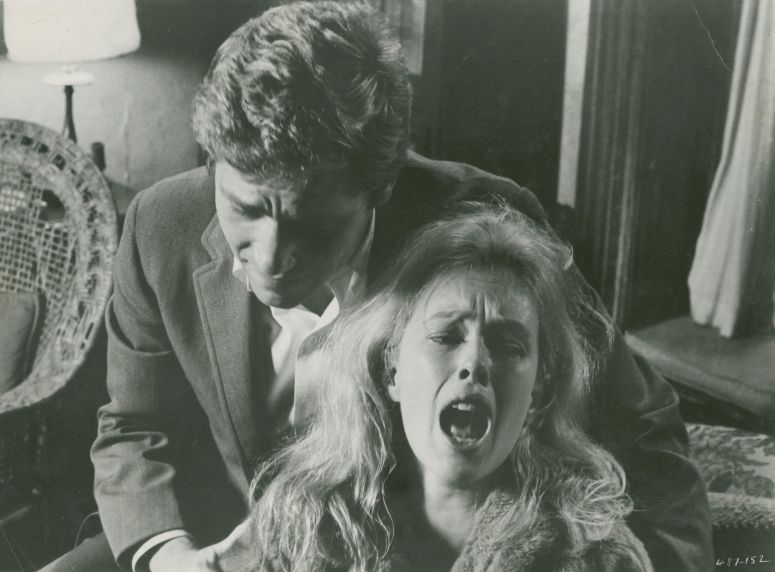
Franz Kafka, one of the most celebrated writers of the twentieth century, was born in Prague, Czechoslovakia, in 1883, and died of tuberculosis at the young age of forty in 1924. His famous novel, The Trial, was written in 1914 but not published until 1925, after his death.

The Trial is set in an unnamed city in an unnamed European country. The principal character is Josef K., age thirty. He lives in a boarding house and has an important job, that of chief loan officer, in a large bank. One morning, just as Josef K. is getting out of bed to go to the bank, some men show up at his boarding house and arrest him for a crime. What is the crime? We never know and Josef K. never knows either.

After his arrest, he optimistically believes that it (his arrest) will all just go away if he ignores it and does nothing, but soon he is drawn into an inexplicable and nightmarish world of court procedures that go nowhere, nonsensical meetings with a bedridden lawyer, flirtation with the lawyer’s servant, paranoia, fear, a meeting in a dark cathedral on a rainy day (the person he goes there to meet never shows up, but he has a strange encounter with a priest), flirtation with a woman in his boarding house, speculation and worry about what is going to happen to him and to his position at the bank. (His trial is taking up so much of his time and energy that he hardly has enough energy anymore to do his job.)

So here we have a person, Josef K., with a pleasant life and a successful career whose world is shattered in a flash. Isn’t this the kind of thing that could happen to anybody anywhere? Isn’t it the stuff of nightmares?

The Trial is a less-than-perfect exploration in weirdness, but well worth reading. It contains long, long paragraphs (in some cases going on for pages), but the sentences are not long and tortured, as you might expect, so it is mostly easy to read. The long scenes and long chapters should hold your interest about ninety percent of the time. It’s a novel that might have been improved by some judicious editing. Since the original novel was written in German, I (of course) read it in an English translation. I’d like to be able to see I read German fluently, but if I said it, it wouldn’t be true.

Copyright © 2020 by Allen Kopp
Baby No Baby

Baby No Baby ~ A Short Story by Allen Kopp

Little Thelma Kane, eleventh grader at Button Gwinnett High School, had been absent for two weeks. When she returned to school, it was with her mother, Nova Kane. The two of them presented themselves in the administrative office.

“I’m Nova Kane,” Little Thelma Kane’s mother said to Ima Chiclet, the receptionist. “I want to see the principal, Mr. Middledyke.”

“Do you have an appointment?” Ima Chiclet asked.

“No.”

“You have to have an appointment to see Principal Middledyke. He’s terribly busy.”

“Well, I don’t have one, so where does that leave us?”

“You don’t get in.”

“Look here, doll face,” Nova Kane said. “I’m in no mood. I had to take time off from my job to be here.”

“What is the nature of your business?”

“It only concerns Mr. Middledyke.”

Ima Chiclet sighed and stuck the tip of her tongue out between her ruby-red lips. “I don’t think Mr. Middledyke will see you without knowing the reason.”

“Just tell him it’s personal.”

“Name?”

“Nova Kane, mother of eleventh grader Little Thelma Kane.”

“I’ll see if he’s free.”

Ima Chiclet stood up, swiveled her hips across the floor, tapped on a door in the back wall, went through the door and closed it. In less than a minute she came back out.

“Mr. Middledyke says he will see you, but I have to check you for firearms before I let you in.”

“Check me for what?”

“I’ll need to look inside your purse.”

“Look inside my what?”

“Your purse!” Ima Chiclet said. “Please open your purse and let me take a look inside!”

Nova Kane reluctantly opened her purse. “If you find anything interesting in there, let me know.”

Ima Chiclet squinted into the depths of Nova Kane’s purse and then lifted her head and nodded.

“What about you?” she asked Little Thelma Kane.

“I don’t have a purse.”

“Are you hiding a gun in your coat?”

“Why would I be?”

“I don’t know. That’s why I’m asking.”

“No, I’m not hiding a gun anywhere.”

“Hold your coat open please.”

“What?”

“Hold your coat open!”

Little Thelma Kane held her coat open. Ima Chiclet stood up and patted her down, inside her coat and out.

“Hey!” Little Thelma Kane said. “Not so rough!”

“You’re both clean,” Ima Chiclet said. “You may go right in.”

Mr. Middledyke was a small man sitting behind a large desk. He didn’t bother to smile or stand up as Little Thelma Kane and Nova Kane walked in. He knew they weren’t important.

“What can I do for you today?” he asked.

“Mr. Middledyke?” Nova Kane asked.

“Yes. Who might you be?”

“I’m Nova Kane, mother of eleventh grade Little Thelma Kane.”

“And who might you be?” Mr. Middledyke asked Little Thelma Kane. He pulled his thick-lensed glasses down so he could look at her over the top of them.

“She’s my daughter, eleventh grader Little Thelma Kane,” Nova Kane said.

“Can’t she answer for herself?” Mr. Middledyke asked.

“I’m eleventh grader Little Thelma Kane,” Little Thelma Kane said.

“Are you a student at this school?” he asked.

“Yeah.”

“Say ‘yes, sir’ when addressing me.”

“Yes, sir.”

“That’s better,” Mr. Middledyke said. “What can I do for you today?”

“Little Thelma Kane wants to quit school,” Nova Kane said.

What?

Nova Kane leaned over the desk and said in a loud voice: “MY DAUGHTER, ELEVENTH GRADER LITTLE THELMA KANE, WANTS TO QUIT SCHOOL!”

“I need to hear it from her own lips,” he said.

“I WANT TO QUIT SCHOOL!” Little Thelma Kane shouted.

Oh, no, no, no!” he said. “We discourage anyone from dropping out of school! I need to know the reason for your contemplating such a move.”

He gestured to the two chairs in front of his desk and Nova Kane and Little Thelma Kane seated themselves in them.

“I’m getting married in a couple of weeks,” Little Thelma Kane said.

“That’s right,” Nova Kane said. “She’s getting married.”

“Married? At your age? You’re too young!”

“I’m sixteen,” Little Thelma Kane said.

“Just give me the paper to sign giving my permission for her to quit school and I’ll sign it,” Nova Kane said.

Mr. Middledyke looked from Little Thelma Kane to Nova Kane and back again, as if he couldn’t believe what he was hearing. “It’s never a good idea to quit school,” he said. “If you quit school, you’ll always regret it. We’ll do whatever we can to make sure you stay in school.”

“You don’t understand,” Nova Kane said. “And how could you? I don’t understand it myself.”

“I’m going to have a baby in about seven months,” Little Thelma Kane said.

Oh, my, my, my!” Mr. Middledyke said in the voice of a fussy old woman. “You should never have let that happen! Is the boy a student at this school?”

“Boy?” Little Thelma Kane asked.

“The father of the baby!”

“He’s not a boy,” Nova Kane offered. “He’s thirty-two years old.”

“No, my boyfriend is out of school,” Little Thelma Kane said.

“He’s been married a couple times before and he’s got several kids already,” Nova Kane said.

“Three,” Little Thelma Kane said. “He has three children.”

Oh my! Mr. Middledyke said. “Do you know what you’re taking on?”

“The kids don’t live with him. They live with their mothers, but he pays plenty in child support.”

“And what does this man do for a living?”

“He’s a hair burner.”

“He’s a what?”

“She means he’s a hairdresser,” Nova Kane said.

“He does men and women,” Little Thelma Kane said.

“So this man you’re going to marry is twice your age and he works as a hairdresser?”

“That’s right.”

“Where does he live? Does he have a home?”

“Right now he lives in a mobile home.”

“She means a trailer,” Nova Kane said.

“Yeah, he lives in a trailer right now,” Little Thelma Kane said. “It’s all he can afford with all the child support he pays.”

“Do you really want to marry him?” Mr. Middledyke asked. “This…what’s his name?”

“His name is Lester Upjohn, but his professional name is Mr. Lance.”

“Do you really want to marry this Lester Upjohn?”

“Of course I do! I’m in love with him!”

“At age sixteen, are you sure you know what love is?”

“Of course I do!”

“She’s terribly in love,” Nova Kane said.

“And you encourage this?” he asked.

“Do I have a choice?” Nova Kane said. “Now that there’s a baby on the way, I want Little Thelma Kane to marry the baby’s father. I won’t have any bastard children in my family!”

“She doesn’t have to get married just because she’s going to have a baby,” Mr. Middledyke said.

“Of course she has to get married! Do you think I want people saying she’s a whore?”

“She could have the baby and put it up for adoption,” he said.

“Nobody in my family has ever given away a baby before,” Nova Kane said.

“What do you think about it?” he asked Little Thelma Kane.

“Can’t we just sign the paper and go?” Little Thelma Kane said.

“I’m just trying to get you to see there are other alternatives,” Mr. Middledyke said. “You can get married and still stay in school and have the baby. Other people have done it.”

“People would make fun of her,” Nova Kane said. “She’s already a freak as it is.”

“Not everybody thinks I’m a freak!”

“You can stay in school until right before your baby is born. Other girls have done it.”

“And then what?” Thelma Kane asked.

“When she’s over the ordeal of giving birth, she can come back to school and start afresh. She can make up the classes she missed or she can go to summer school. I just want her to know she doesn’t have to leave school just because she’s going to have a baby.”

“Can I strap the baby to my back and bring it to school with me?” Little Thelma Kane asked.

“Well, I don’t know…”

“Can I nurse it in class and get up from my seat and change its diaper when I need to?”

“Well, I think you’d have to get somebody to take care of it during the day when you’re in school.”

“And then, when I go home in the afternoon, will I be able to spend all the rest of my time taking care of it and listening to it scream all night?”

“That’s what it means to be a mother,” Mr. Middledyke said.

“I don’t think so!”

“What are you saying?” Nova Kane asked.

“I don’t want a baby!  I don’t want to get married! I don’t want to quit school! I don’t want to do anything! I only want to sign the paper and go home!”

“She’s overwrought,” Nova Kane said to Mr. Middledyke by way of explanation.

“A hormonal swing, I’d say,” Mr. Middledyke said.

“I don’t want to marry Lester. I thought I did but I don’t. I don’t love him. I don’t even like him.”

“What about the baby?” Nova Kane asked. “The baby needs a father. I don’t want an out-of-wedlock baby for a grandchild!”

Baby, baby, baby! I’m sick of everybody talking about the baby all the time, as if I don’t matter at all! Don’t you get it? There is no baby!”

What?” Nova Kane said. “You’ve been lying the whole time?”

“No, not the whole time. When I was sick, I thought I had a baby coming, but then the sickness went away and I started having my period again.”

“Why didn’t you tell me all this?” Nova Kane asked.

“Because I thought I really wanted to marry Lester. He said he loved me and he’d be good to me and the baby. We’d be a regular little family and we’d be happy.”

“You little liar!” Nova Kane said. “Wait till I get you home!”

Now, now!” Mr. Middledyke said. “There’s no need for any of that!”

“I thought it would be fun to not have to go to school and stay at home in Lester’s trailer all day waiting long for him to come home from the shop, smelling like hair chemicals and lady’s perfume. But then I realized that’s all my life would ever be for as long as I live, and I want more from life than that!”

“So Lester believes you have a baby on the way?”

“Yeah, I haven’t told him the truth yet. I thought I’d wait until after we’re married and tell him the baby was a false alarm.”

“You should never lie to a man about something as important as that,” Mr. Middledyke said.

I don’t know where she ever learned to be such a little liar,” Nova Kane said. “That’s not the way she was raised.”

“So, can we call the whole thing off?” Little Thelma Kane asked. “I don’t want to quit school, and I’m sorry I wasted your time.”

“I’m glad you’re not quitting school,” Mr. Middledyke said. “It always breaks my heart to see anybody quit school.”

“I think you really mean it,” Little Thelma Kane said.

“You’ve given me a splitting headache,” Nova Kane said. “I just want to go home and lie down and try to get this awful thing out of my mind.”

“I’d like to come back to school on Monday morning,” Little Thelma Kane said to Mr. Middledyke. “If that’s all right.”

“I think you’re making the right decision.”

That evening Little Thelma Kane had what would be her last date with Lester Upjohn, otherwise known as Mr. Lance. She told him the truth about the baby. In his relief that he wasn’t about to become a father again, he became overly affectionate, but Little Thelma Kane was having none of it. She had become revirginized, and a virgin she would remain, at least until she had her high school diploma.

Copyright © 2020 by Allen Kopp

Under the Bright Lights ~ A Capsule Book Review

Under the Bright Lights ~ A Capsule Book Review by Allen Kopp

Daniel Woodrell (born 1952) is among the best current American writers. His novels The Death of Sweet Mister, Tomato Red, and The Maid’s Version are among my favorites. His 1986 novel, Under the Bright Lights, is a noirish story set in the fictional Missouri town of Saint Bruno, a medium-sized city of 200,000 residents. Saint Bruno sits on edge of the roiling, mysterious Mississippi River and has a distinctly Southern quality to it, as well as a French flavor. A lot of the residents of Saint Bruno are of French descent; a largely French section of town is known as “Frogtown.”

When Arthur Rankin, prominent black politician and porno-movie theatre owner, is shot and killed in his own home, police detective Rene Shade is called in to investigate. Rene is a former boxer who might have been a “contendah” but wasn’t. He has lived in Saint Bruno his whole life and has a less-than-spectacular personal life, living over a poolroom with his mother. In his professional capacity as police detective, he peels back the layers of corruption to get to the truth behind the murder of Arthur Rankin. There are low-level gangsters and high-level gangsters, shady politicians (sometimes politicians and gangsters are the same thing), thugs, bimbos, redneck punks, losers, not-very-bright paid killers, and lots of local color in the steamy river town of Saint Bruno, Missouri. Oh, and let us not forget, there’s a slam-bam climactic scene and shootout in the primeval swamp called “Marais de Croche” (Crooked Swamp). You wouldn’t want to be stuck in this creepy swamp alone at night. You might never get out.

Under the Bright Lights is an atmospheric, smart-talking, tightly written short novel (160 pages) by a very talented writer, Daniel Woodrell. I met him once at one of his book signings in St. Louis and he’s as unpretentious in person as his writing is impressive on the printed page.

Copyright © 2020 by Allen Kopp

Hotel de Dream ~ A Capsule Book Review

Hotel de Dream ~ A Capsule Book Review by Allen Kopp

American writer Stephen Crane was born in Newark, New Jersey, in 1871, and died of tuberculosis in Germany in 1900 at the age of twenty-eight. He was one of the most gifted young writers of his generation. His 1895 Civil War novel, The Red Badge of Courage, achieved worldwide acclaim for its realistic depiction of war, which Crane wrote without ever having seen battle.

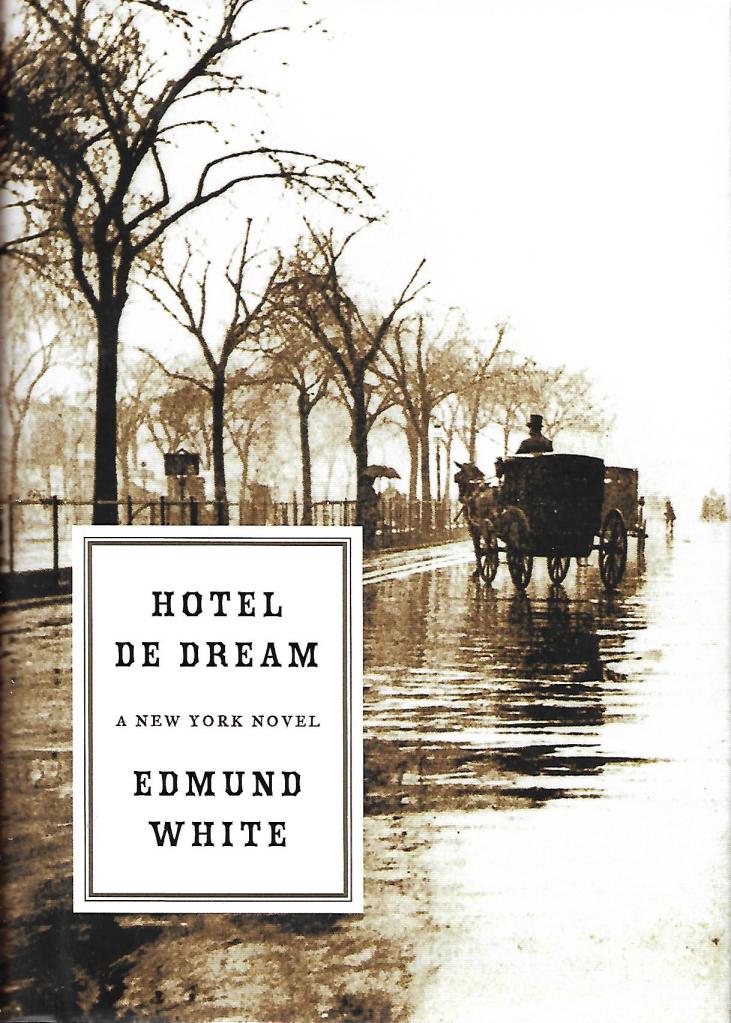
Hotel de Dream, a 2007 novel by Edmund White, is a fictionalized account of Stephen Crane’s final illness and his struggle to complete his final work of fiction called The Painted Boy (which only exists in Hotel de Dream and Crane never actually wrote). The Painted Boy was in the mold of Crane’s earlier novel, Maggie, Girl of the Streets, and was quite daring for its time because it deals with an “invert” (a coy, turn-of-the-century word for a homosexual). The invert in question is named Elliott. He’s a sixteen-year-old boy of the streets, a male prostitute, who comes to New York from a farm, where he was sexually abused by his father and older brothers. As a rent-boy, Elliott meets stodgy, married, middle-aged banker Theodore Koch. After a few “dates,” Koch is convinced he is in love with the syphilitic boy and is willing to risk everything—career, marriage, home, children, place in the world—to be with him. He rents a room where he and Elliott can meet every day. When he is blackmailed, he begins stealing money from the bank where he works. This cannot end well, for him or for Elliott.

Hotel de Dream is a story-within-a-story. Sections about Crane’s private life are interspersed with his fictional story of Theodore Koch and Elliott. Crane is too weak from his tuberculosis to write, so he “dictates” The Painted Boy to his common-law wife, Cora. She knows that Crane is dying, is in love with him, and will do anything to help him.

If you are a student of American literature or a fan of Stephen Crane’s naturalistic style of writing, Hotel de Dream is well worth your time. It’s a fascinating fictional excursion into the life of a real-life American writer, his time and the people he knew. And it’s a reminder, once again, of what a terrible disease tuberculosis is and how fortunate we are to live in an age in which it has been eradicated.

Copyright © 2020 by Allen Kopp

The Rise of Silas Lapham ~ A Capsule Book Review

The Rise of Silas Lapham ~ A Capsule Book Review by Allen Kopp

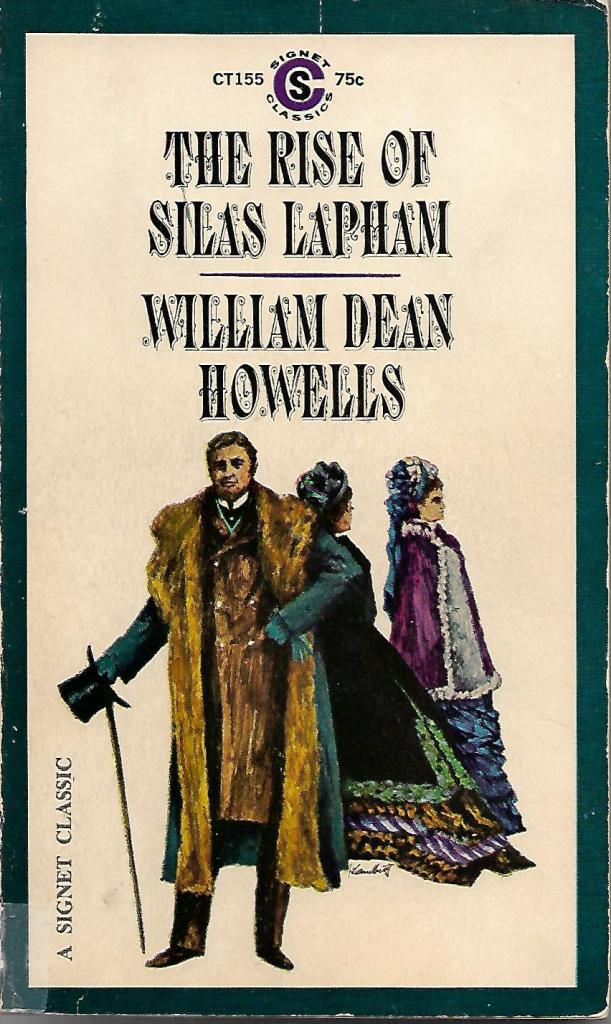
American writer William Dean Howells lived from 1837 to 1920. After the “romanticist” writers of the nineteenth century such as Hawthorne and Poe, Howells was an advocate of “realism” in fiction; realism, that is, that’s not sordid. He was at the forefront of a new wave of American writing and has been called the “Dean of American Letters.” Of the thirty-five novels he wrote, The Rise of Silas Lapham is the most popular and most enduring.

The fictional Silas Lapham is an American “type,” a self-made millionaire, one of Boston’s nouveau riche in the decades after the Civil War. Despite his fortune and his station in the business world, “Corporal” Lapham (he fought at the Battle of Gettysburg) is a little rough around the edges and doesn’t quite fit in with Boston crème de la crème. His grammar borders on the atrocious and he tends to be a bit of a blowhard.  He has a matter-of-fact (she nags) wife named Persis who speaks her mind and doesn’t mind telling Silas exactly what she thinks of him and his business dealings. He also has two deb daughters, Penelope and Irene, of marriageable age. Penelope is the older of the two; she’s serious, clever and not so pretty as Irene.

As you might expect, Silas came from humble beginnings. His family were people of the earth. When his father discovers a “mineral paint mine” on their property in Vermont, Silas is able to turn the enterprise into a successful money-making venture. Soon he is at the forefront of the American paint market and has all the heartache and responsibilities of a titan of industry. To solidity his family’s status in Boston society, he has his heart set on building a showy, expensive ($100,000 in 1875) mansion in one of the most fashionable sections of Boston.

The Coreys are a snooty, blue-blood Boston family of Silas Lapham’s acquaintance. He would like to be like the Coreys if only he had more “class.” He believes that any association with the Corey family would benefit him professionally and socially. The Coreys have a handsome son named Tom. When Tom begins hanging around the Lapham home, everybody believes he’s interested in Irene, the younger and prettier of the two daughters. No, wait a minute! He’s not interested in Irene, but in the older, homelier daughter, Penelope. This confusion sets up a love-story subplot with many complications. How can Penelope marry a man with whom her younger sister was once in love?

As might be expected, Silas Lapham experiences financial reverses in his business empire, facing some unexpected competition from a rival paint manufacturer. Not only that, his beloved Boston mansion, still under construction, is destroyed in a fire, one week after its insurance policy lapsed. As quick as you can say “financial collapse,” he faces insolvency and the loss of his world.

The Rise of Silas Lapham is a solid American classic, easy to read and with none of the antique qualities that are sometimes associated with 19th century American writing, such as tortured, twisted sentences and high-blown syntax. If you, like me, first encountered The Rise of Silas Lapham in your younger days in school, it is well worth another look.

Copyright © 2020 by Allen Kopp

A Bee’s Life

A Bee’s Life ~ A Short Story by Allen Kopp

Queen Lucretia XXV, the Queen of all the Bees, came into the hive dragging her enormous egg sac, a cigarette dangling from her lips.

“Where the hell is everybody?” she said with a sneer. When she spoke, her ill-fitting dentures made a whistling sound, sending a chill down the spine of all the worker bees. Her harlequin glasses were crooked from when she sat on them on the bed with her full weight. If anybody felt like laughing, they didn’t.

When she saw one of the worker bees—her own offspring—working a crossword puzzle, she bit his head off and ate it without a moment’s hesitation. Before she went into her office and slammed the door, she turned to the room at large and said, “Now let that be a lesson to everybody!

“My goodness, she certainly is in a foul mood today!” Wallace said to Marge, the worker bee closest to him.

“She always gets that way right before she lays her eggs.”

“I’m not scared of her,” Vivian said. “She’s full of turkey doodle. Somebody’s going to drive a stake through her heart one of these days, and a lot of bees are going to be very happy.”

“And I suppose you’ll be the one driving the stake,” Wallace said.

“I’ve imagined it many times.”

“And then who will be our queen?” Carpathia asked.

“I’d make a better queen than her any day!” Vivian said. She stood up and sashayed up and down the aisle, trying her best to be queen-like. “My first official act would be to have her thrown out of the hive!”

“Be realistic,” Wallace said. “She’d raise an army and come back and re-take the hive.”

“That’s right,” Carpathia said. “Just ejecting her from the hive wouldn’t do any good. You’d also have to kill her.”

“I can’t do it alone,” Vivian said. “I’m going to need some help.”

“We’ll all help, Carpathia said.

“If she ever tries to eat my head,” Sherwood said tearfully. “I’m not going to just stand there like a statue and let her do it. I’ll put up a fight.”

Sherwood was still a little shaken over seeing the queen eat a worker bee’s head. He knew it happened all the time but had never seen it before.

“Oh, and just what do you think you’re going to do about it?” Wallace asked, turning around and facing Sherwood. “You know you’re powerless against the queen.”

“I’ll punch her in her egg sac and then when she doubles over I’ll stick a knife in her eye. When she’s howling in pain, I’ll leave the hive. I’ll fly so far away nobody will ever find me. I’ll fly to Tanzania.”

“You know that would never work,” Wallace said. “The drones would catch you, no matter where you are, and bring you back. She’d eat your head anyway and she wouldn’t do it quick either. It wouldn’t be pretty.”

“He’s right,” Carpathia said. “The queen always wins. The rest of us are puny nothings compared to her.”

“Be careful what you say,” Wallace whispered to the others. “I think Georgie is listening.”

They all turned and looked at Georgie. He seemed to be engrossed in his work but they knew he was listening to every word and would repeat it all to the queen the first chance he got. He was her pet worker bee. There were even rumors that she took him to bed with her sometimes.

“I say we kill him, too,” Sherwood said. “If we kill her, we’ll have to kill others.”

“We’re bees!” Wallace said. “Bees don’t kill other bees!”

“They do when they have to,” Sherwood said.

“Oh, he’s not going to kill anybody,” Vivian said. “He wouldn’t have the nerve to kill a maggot!”

“You think so, do you?” Sherwood said. “Maybe I’ll surprise you one day. Maybe this will be the day.”

The door to the queen’s office opened; she stepped out and stood at the front of the room, hands on hips. Everybody suddenly became very busy.

“There seems to be a lot of non-work going on here!” she screamed. “You jerk-offs need to realize I’m not blind and I’m not deaf. Just because I’m not in the room doesn’t mean I don’t know what’s going on!”

All the bees kept their eyes on their work and pretended the queen wasn’t yelling at them. Georgie was the only one who looked at her, and that was with adoration.

“Georgie!” the queen said, bringing him out of his reverie. “I want to see you in my office! Right now!”

“Yes, your majesty,” Georgie said.

He stood up, almost falling over his own wings, and ran into the queen’s office and slammed the door.

“He has always been such a toady!” Wallace said.

“She needs him to wipe her ass and she knows he’s the only one that will do it without complaining,” Sherwood said.

“Well, I’m relieved he’s out of the room,” Carpathia said. “I think I’m going to take a break and go to the little girls’ room. Want to come along, Vivian?”

“No thanks,” Vivian said. “My boyfriend’s going to call. I don’t want to be out of the room when the call comes through.”

A few minutes later Carpathia had returned from the little girls’ room and was freshening her makeup at her desk. Vivian was blatting into the phone to her boyfriend about where they were going to have dinner. Wallace was balancing his checkbook, trying to figure out exactly where he had made his latest mistake. Sherwood had taken off his shoe and sock and was picking at a scab on his foot while he whistled a happy tune. Suddenly the door to the queen’s office opened with a suck of air, and once again she was upon the worker bees like a Kansas cyclone.

“You should see yourselves!” she bellowed. “You all look like you think you’re vacationing on the Riviera. Well, I’m got a news flash for you! You’re not vacationing—but you are all really close to being on permanent vacation, if you get my drift!”

“Call you later!” Vivian said into the phone and hung up, hoping the queen hadn’t noticed she was on a personal call.

“Is there something we can do for you, Your Majesty?” Carpathia asked sweetly.

“I want all you lazy slugs to get your worthless asses into my office right now! And that means this minute! Pronto! Post-haste! Chop, chop!

The worker bees filed into the queen’s office with a sense of foreboding. They knew something unusual had occurred. Wallace had a lump of dread in his stomach. Carpathia had gone pale and her lipstick was smeared because the queen startled her when she was putting it on.

When they were all seated around the table, the queen closed the door loudly and regarded everybody with disgust.

“Is anything wrong, Your Majesty?” Wallace asked with a nervous smile.

“Wrong? I’ll say there’s something wrong! I’ve just been going over the figures from the last month. Honey production is down twenty-five percent! This is unacceptable! I feel like firing the whole lot of you!”

“Then who would make the honey?” Sherwood asked.

“I’ve just been discussing this problem with my lieutenant, Georgie. He suggests we work longer hours with fewer days off until honey production is what it should be.”

They all looked turned their heads and looked at Georgie. He was smirking with superiority. Wallace, remembering the remark he had made earlier about bees not killing other bees, wanted to kill him.

“Now, after today I’m going to be on maternity leave,” the queen said, “for I don’t know how long. Georgie will be in command while I’m gone. He will be my eyes and ears. He has assured me he knows how to increase honey production, so I’m going to turn everything over to him. We’ll see what stuff he’s made of. If production hasn’t increased by the time I get back, there’ll be some heads eaten, of that you can be sure!”

After the meeting, the calm after the storm, the worker bees were silent and worked very diligently. Georgie was working on a new work schedule whereby days-off and vacations were to be canceled. All worker bees were going to have to come in an hour earlier in the morning and stay an hour later in the evening until honey production was up.

When the queen left for the day, the worker bees still had hours to go before their day was over. They were tired and didn’t know if they were going to be able to keep up the pace, but they knew that Georgie was watching them and would report everything to the queen, so they at least tried to give the appearance of being productive.

“Killing the queen never seemed like a better idea,” Vivian whispered to Sherwood when Georgie had stepped out for a moment.

“You can’t kill the queen,” Wallace said. “It just isn’t done.”

“Wouldn’t you kill her if you had the chance?”

“You have to be realistic. Even if we could get rid of her, we might get stuck with a queen ten times worse. I know it’s hard to imagine anybody being worse than her, but, believe me, it’s a real possibility.”

“I don’t think we should even be talking about it,” Carpathia said. “The walls have ears, you know, even with Georgie out of the room.”

“Maybe there’s another way,” Sherwood said.

“What do you mean?” Wallace asked.

“I’m going to keep wishing for her to die, praying for her to die. She deserves to die. If there’s any justice in the world, she will die. I’ve willed bees dead before!”

“Just a coincidence,” Wallace said. “They would have died anyway.”

Die, queen! Die, queen! Die, queen! Die, queen! Die, queen!” he chanted.

“I don’t think it’ll work,” Carpathia said.

“I can certainly try,” Sherwood said. “Would anybody like to place a bet?”

Georgie took over the queen’s office, making it his own during her absence, but he kept the door open at all times so he could keep an eye on the worker bees. He was going to enjoy being boss and he hoped the queen might have some complications with laying her eggs so she’d take a much longer-than-expected maternity leave.

The afternoon progressed slowly. While the worker bees gave the impression of being immersed in their work, they all had their minds on other things. Wallace was trying to keep from watching the clock; it was only two minutes later than the last time he looked. Vivian was considering how familiar she was going to let her boyfriend, Alphonse, get on their date that night. Carpathia was thinking about her children at home by themselves; she longed to get home and make sure they were all right. Sherwood was thinking about the movies he had seen in the last few months and was arranging in his head a list of the ones he liked best.

Once, when Wallace raised his head from his work and looked at the ceiling to relieve his stiff neck, he saw two drones, looking very business-like, go into the queen’s office and close the door. In a little while, everybody in the hive heard Georgie wailing, as if in great pain.

“What the hell is going on?” Vivian asked.

“Maybe they’re arresting Georgie,” Sherwood said with a hopeful smile.

In a little while Georgie and the two drones came out of the queen’s office. The drones left and Georgie stood at the front of the room and solemnly raised his arms for quiet. When he had everybody’s attention, he began, with difficulty, to speak.

“It is my painful duty to inform all the worker bees: we have confirmed reports that the queen has died.”

There was an intake of breath as everybody absorbed the momentous news.

“It worked! It worked!” Sherwood said, but only loud enough so those closest to him could hear what he said.

“What happened to her?” Carpathia asked.

“Not long after she left the hive this afternoon,” Georgie said, “she stopped on a tree branch to rest and have a sup of water.” He stopped and lowered his head and dabbed at his eyes with a handkerchief.

“Yes?” Wallace said. “Go on.”

“A crow came along from out of nowhere and, seeing her majesty sitting on the branch, swooped in and ate her in one gobble and then flew off. There were two worker bees there who saw the whole thing. They’re being questioned by the bee police this very minute.”

“Are you sure this is not a trick?” Vivian said.

“That crow must be dead or really sick by now,” Sherwood said.

“Out of respect for our beloved queen, “Georgie said, “I’m going to shut down the hive for the rest of the day. You are all free to go, but remember to be back here tomorrow morning bright and early. We’re all going to have to work extra hard now to honor her memory.”

After Georgie had left, bent over with his grief, all the worker bees who had heard Sherwood’s boast turned and looked at him.

“Do you have some kind of magical powers?” Carpathia asked him. She had started to cry in spite of herself.

“I don’t know what you would call it,” Sherwood said, “but I definitely have something.”

“We’d better all try to stay on Sherwood’s good side,” Vivian said.

“Hey, didn’t you bees hear what the man said?” Wallace said. “We are free to go home now! Tomorrow is another day.”

“I wonder what we’ll do now for a queen?” Carpathia said.

“They’ll probably bring one in from outside,” Sherwood said. “I think that’s what usually happens in these cases.”

“They don’t need to bring anybody in,” Vivian said. “I am fully positioned to assume the throne.”

“I think you have to be born to it,” Wallace said, trying to keep from laughing.

“I have a feeling Georgie is going to initiate a coup to make himself the new queen,” Carpathia said.

“Aren’t you forgetting one little detail?” Wallace asked. “Georgie is a male bee. A male bee can’t be queen.”

“Well, anything is possible.”

“Maybe Georgie really is a woman,” Sherwood said. “I’ve always had my suspicions about him.”

When they were all outside, ready to leave the hive together, Sherwood said, “Now that the queen is dead, I’m going to take a few days off from the hive. I want to find that crow and tell him what a hero he is to all of us, even if he doesn’t know it.”

“Make sure he doesn’t eat you, too,” Wallace said.

“Not a chance,” Sherwood said and buzzed off happily.

“The queen is dead!” Vivian said, waving her handkerchief in the air as she flew away. “Long live the queen!”

All the worker bees, as they left the hive that day, felt hopeful and happy. They were sure the good feeling was going to last forever.

Copyright © 2020 by Allen Kopp

The Literary Hatchet Issue #25

The Literary Hatchet
Issue #25

The Literary Hatchet is an independent international journal devoted to emerging and established voices crafting provocative short fiction and thoughtful poetry and prose. Published three times a year!

The latest issue of The Literary Hatchet, Issue #25, containing 17 short stories, 26 poems, and two works of original art, is now available for purchase for $14 per copy on Amazon:

The featured writer for this issue is Allen Kopp, with eleven short stories: “Brother,” “Buses Boarding,” “I Had a Bone,” “In the Shape of a Man,” “Lamented,” “November Night,” “She Can Bake a Cherry Pie,” “Spiritus,” “Thanksgiving with Mr. Doodles and the Others,” “Until I Die,” “Yellow Bird.”

Viking Age ~ A Capsule Book Review

Viking Age: Everyday Life During the Extraordinary Era of the Norsemen ~ A Capsule Book Review by Allen Kopp

The Vikings of the ancient world came from Sweden, Norway, Denmark and Iceland. The time in which they were active was 800 A.D. to 1100 A.D. They were a fearsome bunch (bearded men in horned helmets wielding battle axes) to their neighbors because they were raiders, plunderers and invaders. Their major contributions to the world were navigation and the building of “longboats.” In other words, they were seaworthy and could go about any place they wanted to go, including the North American continent about 500 years before Columbus. Not all people who came from Sweden, Norway, Denmark and Iceland were Vikings. They were called Scandinavians or Norsemen. The Vikings comprised but a small part of the Scandinavian population, but they are the people from this period we remember.

The Scandinavians of the Viking age were pagan, worshiping multiple gods, until they converted to Christianity. Life expectancy was only 30-40 years. They were not particularly clean or hygienic, which accounts in part for the low life expectancy. Old people were virtually nonexistent. Many women died in childbirth. Many children died in infancy Men ended up raising children on their own or abandoning them to strangers. Despite the reputation of the Vikings, the Scandinavians were not a particularly war-like people. They were farmers, hunters, fishermen, cattle producers.

Kirsten Wolf, professor of Scandinavian studies at the University of Wisconsin, wrote Viking Age. The subtitle is Everyday Life During the Extraordinary Era of the Norsemen. It is an overview of everything you might want to know about this ancient age and its Scandinavian people, including what they ate, what they wore, how they lived, their politics, their religion, their belief (or nonbelief) in an afterlife, their art, their recreational life, etc. I’m not a scholar or an academic, but I found the book readable and fascinating; that is, if you have an inquiring mind and are open to historical subjects.

Copyright © 2020 by Allen Kopp

The Praise Singer ~ A Capsule Book Review

The Praise Singer ~ A Capsule Book Review by Allen Kopp

Simonides of Keos was a real-life lyric poet who lived in ancient Greece from 556 B.C. to 469 B.C. The Praise Singer is a 1978 historical novel by Mary Renault (real name Eileen Mary Challans). Though fiction, The Praise Singer is a biography of sorts based on the life and times of Simonides, and is narrated in his first-person voice. Simonides experienced during his lifetime a flowering of the arts in ancient Greece, especially in poetry and the written word. Up until that time, poetry and literature had mostly been an oral tradition. Simonides was possibly the first person to set down the works of Homer (The Iliad, The Odyssey) in writing.

Simonides has an unusually long life for his time. He is telling the story as an old man in his eighties. He has much to tell, including lots of political intrigue and associations with some of the great and celebrated people of his age. He is so accomplished at his art (a traveling singer, a bard, a performer of his own poems) that he himself becomes a celebrity through his talent rather than good looks, which he didn’t possess. He never marries and has no children but raises his nephew as his own son and teaches him to follow in his footsteps as a traveling bard and poet.

Simonides is brought up in strict discipline by his father, Leoprepes. He finds encouragement in the love of his handsome older brother, Theasides, and in music. When he meets a traveling musician and performer, Kleobis, Simonides persuades him to take him on as an apprentice. Under Kleobis’ tutelage he becomes a talented composer and performer. He attempts to find a patron at the court of Polycrates in Samos but is held back by his lack of physical beauty.

Simonides then finds a patron in Peisistratos the tyrant (a word that has a different meaning now than it did then) of Athens. He becomes a successful musician and after Peisistratos’ death, his sons Hippias and Hipparchos continue the family’s patronage. Through Hipparchos, Simonides is introduced to the prostitute Lyra, whose lover he becomes. Hipparchos sexually favors boys over women, and as the novel concludes we witness his eventual downfall as he uses his political power to punish the family of a young boy who rejects his advances. The boy and his lover retaliate by murdering him.

If you are a fan of historical fiction and the works of Mary Renault, then you will probably like The Praise Singer. I found it rather tedious at times and was glad when I came to the end. There are a lot of characters coming and going all the time and their names are not always easy to keep straight. When you stop reading the novel and then pick it up again, neither is it always easy to remember what happened the last time you read because it wasn’t that interesting to begin with. It’s best when reading a book like this to consider the whole rather than the parts. It could have used some judicious editing and restructuring to juice it along.

Copyright © 2020 by Allen Kopp

Meditations of Marcus Aurelius ~ A Capsule Book Review

Meditations of Marcus Aurelius ~ A Capsule Book Review by Allen Kopp

Marcus Aurelius lived in the early Christian era, from the year 121 to 180. He was a Stoic philosopher and emperor of Rome from 161 until his death. He wrote his Meditations as a source for his own guidance and self-improvement. He was able “to write down what was in his heart just as it was, not obscured by any consciousness of the presence of listeners or any striving after-effect.” To put it another way, he probably never planned for Meditations to be published as a book and read by people nearly two thousand years later.

Meditations is divided into twelve books, each book representing a different period in Marcus Aurelius’ life. The books are not in chronological order. A central theme is the importance of analyzing one’s judgment of self and others, and the development of a cosmic perspective. In Marcus Aurelius’ own words, “”You have the power to strip away many superfluous troubles located wholly in your judgment, and to possess a large room for yourself embracing in thought the whole cosmos, to consider everlasting time, to think of the rapid change in the parts of each thing, of how short it is from birth until dissolution, and how the void before birth and that after dissolution are equally infinite.” Another important theme is maintaining focus and being without distraction, while maintaining strong ethical principles.

Marcus Aurelius’ Stoic philosophy advocated avoiding indulgence in sensory affections, which will free a man from the pains and pleasures of the material world. The only way a man can be harmed by others, he says, is to allow his reaction to overpower him. Order, or “logos” (the principle of divine reason and creative order) permeates existence, allowing one to rise above perceptions of “good” and “bad.”

Meditations is not exactly entertaining or breezy reading, but it’s interesting on a historical level because it was written by a Roman Emperor, it’s a product of its time, and it explains the Stoic philosophy, which is in itself quite interesting. Meditations held my interest (mostly) throughout its one hundred pages and I never once wanted to set it aside and read something else, but I was glad when I came to the end.

Copyright © 2020 by Allen Kopp