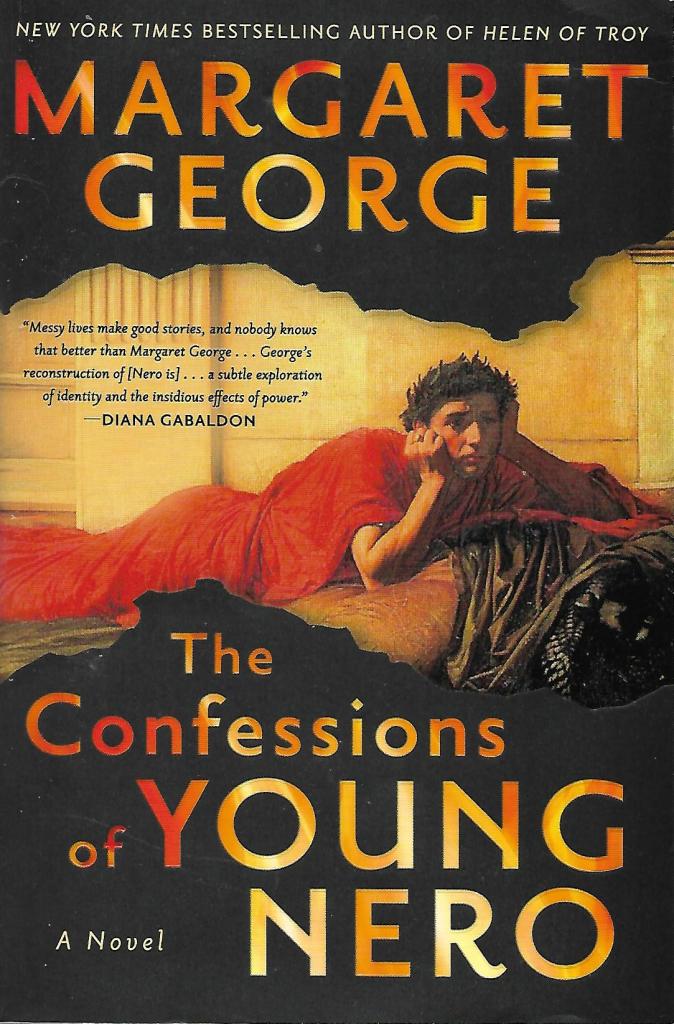
The Confessions of Young Nero ~ A Capsule Book Review

The Confessions of Young Nero ~ A Capsule Book Review by Allen Kopp

The Emperor Nero (real name Nero Claudius Caesar Augustus Germanicus) was born in the year 37 AD and died at age thirty in 68 AD. He became the fifth Roman emperor in 54 AD at the age of seventeen.

History for the most part has not been kind to the Emperor Nero. Historians, writing about Nero in the decades after his death, advanced the narrative that he was an over-the-top lunatic, whose cruelty, depravity and sexual excesses brought the Roman Empire to its knees. He reportedly had sexual relations with his own mother, Agrippina, and had her killed five years into his reign. He is believed to have tortured and killed thousands of Christians and earned the distinction of being designated the “Beast” in the Book of Revelations. He had poisoned (or otherwise murdered) anybody who challenged his authority. He spent money lavishly and lived luxuriously. He murdered his wife, Poppea, and then, feeling remorseful, marring a surgically altered boy who resembled Poppea. It might be said that he was a perfect example of the adage: Absolute authority corrupts absolutely.

Nero certainly did have his own mother, Agrippina, killed (as a desperate act of self-preservation), but the rest of the ugly stories about him might only be based on rumor, innuendo and fabricated tales. Historians didn’t like him because he was popular with the common people (but not the aristocrats and the elites). He was an unconventional emperor who engaged in sports competitions, musical performances, chariot racing and other activities deemed unworthy of an emperor.

The historical novel The Confessions of Young Nero, by Margaret George, is an attempt to set the record straight about the real Nero: what he was really like, instead of what his enemies and detractors thought of him and his reign. One of the reasons the common people liked him was because he engaged (at great expense) in many public-works projects, including bathhouses, stadiums, theatres and other entertainment venues. He sometimes gave away expensive “gifts” (including tracts of land and horses) to people who attended sporting events. As an artist (poet and musician), he promoted the arts and public performance. As a military leader (but never on the field of battle himself), he scored impressive victories against foreign enemies, including in Britain and Parthia.

The Confessions of Young Nero is over 500 pages long, but it is only half the story of Nero’s life, told in his first-person voice. The second book, also over 500 pages, is The Splendor Before the Dark. As author Margaret George explains in her lengthy Afterword,   The Confessions of Young Nero is her attempt at an honest portrayal of the life of a fascinating, controversial, long-ago historical figure who has been frequently misunderstood, maligned, and misinterpreted by history.

Copyright © 2021 by Allen Kopp

Cemetery Christmas

Cemetery Christmas ~ A Short Story by Allen Kopp

Calvin Horne took the wreath out of the back of his car and walked down the hill with it slung over his shoulder like a garden hose to his parents’ grave. It was the day before Christmas and he didn’t want to be in the cemetery; didn’t want to be reminded of death on a joyous holiday. Christmas was about birth, about what’s good in the world.

He hadn’t been especially close to either of his parents. His mother, dead two years, was a difficult and obstinate old woman. The two of them, Calvin and his mother, could hardly be in the same room together without a clash of wills. His father had been dead for twenty years and was only a distant memory.

He trudged down one hill and up another one. It was there, at the top of the next hill, where his parents were buried. His mother had generously offered to buy the plot for him on the other side of her, but he declined the offer. (He wanted simply to vaporize into the air as if he never existed at all.) Now that space was occupied by a stranger that his mother, in all probability, wouldn’t have liked.

His parents had a large and rather ostentatious granite headstone as tall as a man’s head that his mother bought and paid for. In the middle of the stone, at the top, the name Horne was etched in large letters. Below were the names, birth and death dates of Byron and Julia. Under the names were two intertwined hearts with an arrow shot through them and, in fancy script, the ironic words Together Forever. They were together, he was sure, only in the sense that they were both dead.

He took a deep breath, a little winded from his climb up the hill, and pushed the legs of the wreath’s tripod into the soft earth in front of the headstone. Now, if his sister or any other family members came snooping around, they wouldn’t be able to say he hadn’t discharged his duty to his parents at Christmas.

The wreath seemed secure enough to withstand any winter blasts, so he pulled his gloves back on over his frozen fingers and was just about to retrace his steps back to the car, when he heard someone coming.

“I hear voices in the cemetery, don’t you?” a voice said.

He turned and saw a large woman in a fur coat and fur hat coming toward him. “What?” he asked.

“I said I hear voices when I’m in the cemetery. Don’t you?”

He thought she might be making a joke, but he wasn’t sure.

“No, I don’t hear any voices,” he said. “All I hear is quiet.”

“Yes, the quiet of the grave,” the woman said. “Do you need any help?”

“Why, no,” he said. “I was just leaving.”

“What are you doing here today?”

“I came to put a Christmas wreath on my parents’ graves.”

The woman looked down at the headstone and nodded. “They’re dead,” she said.

“Yes, that’s why they’re buried in the cemetery.”

“I’ll bet you were a good son.”

“Well, I can say I at least tried.”

“Do you have other family?”

“A sister and a son.”

“How old’s your son.”

“Twenty-two.”

“What happened to your wife?”

“We got divorced. She’s married to somebody else now.”

“What does she…

“I think that’s enough questions,” he said. “Especially since we don’t know each other.”

“Are you in a hurry to get away?” she asked.

“No more questions, I said.”

“I’ll bet you have a girlfriend waiting for you someplace, don’t you? Or maybe a boyfriend?”

“Let’s just say that’s for me to know and you to find out.”

“Okay. I get the picture. You don’t want to talk to me.”

“Well, it’s cold and it is Christmas.”

“Not today. Today is the day before Christmas. Tomorrow is Christmas.”

“Yeah. Enjoy your walk through the cemetery, or whatever it is you’re doing. I’ve got to be going.”

“Can’t you stay and visit a while?”

“No. I did what I came to do and now I need to go.”

“Haven’t we met before?” she asked. “A long time ago.”

“It isn’t likely.”

“I feel as if I’ve always known you.”

“We’ve never met, I’m sure of it.”

“Do you find me at all attractive?” she asked.

“What kind of a question is that? Of course I don’t!”

“What’s wrong with me?”

“I have to be going.”

He started to move away and she stepped in front of him.

“Could you spare me some change?” she asked.

“No, I can’t spare you any change. I don’t have any change. I might ask why you need change in a cemetery, wearing a fur coat, but the honest truth is I don’t care.”

“That’s not very nice. I thought at first you were a nice man.”

“Well, I’m not!”

“Where is your Christmas spirit?”

“It disappeared as soon as you started talking to me.”

“Don’t you like me?”

“I have no opinion of you one way or the other.”

“My brother, Ogden, will be along to pick me up any minute. He went to buy some cigarettes. When I tell him how you insulted me, he’ll be awfully mad.”

“I didn’t insult you!”

“You did! You said you found me unattractive and you didn’t want to talk to me.”

“If you hadn’t spoken to me first, I would never have said anything to you at all!”

“Well, how are people supposed to get to know one another?”

“They’re not!”

“Can I come home with you?”

“No!”

“I’ll bet you have a beautiful home, don’t you?”

“None of your business!”

“I’ll do anything you want!”

“None of your… I don’t want anything from you except for you to stop annoying me!”

“If you get to know me, I’m sure you’ll like me.”

“Dear Lord, why me?”

She lifted her arms up and put her hands behind his neck, locking her fingers at the back of his head.

“Stop that!” he said. “What do you think you’re doing?”

He took hold of her wrists and forced her to release her grasp.

“You don’t like women at all, do you?” she asked.

“It isn’t any of your business what I like! When I leave here, I’m going straight to the police station and tell them there’s a crazy woman in a bearskin coat accosting people in the cemetery. They’ll send a squad car out here and pick you up.”

“Well, you don’t have to be so unkind about it!”

Down the hill she saw Ogden, her brother, lurking behind a tree. She called to him, he spotted her and began walking up the hill. In less than a minute, he was standing before them.

“Who’s this bozo?” Ogden said with a sneer. With his fat face, fur coat and fur hat, he was the male equivalent of the woman.

“He wanted to leave, but I kept him here,” she said.

“Good work, Bootsie girl!” Ogden said.

“Your names are Bootsie and Ogden?” Calvin asked.

“Yeah, what of it?” Ogden said.

“He insulted me, Oggie!” Bootsie said.

“Oh, he did, did he? How did he insult you?”

“He doesn’t like me. I offered to go home with him and do anything he wants, but he said he’s not interested.”

“Well, that’s not very gentlemanly, is it?”

“Oh, I get it.” Calvin said. “She’s a whore and you’re her pimp.”

Ooh! Some words are so ugly, don’t you think?” Ogden said.

He pulled a small gun out of his jacket and pointed it at Calvin.

“You’re wasting your time robbing me,” Calvin said. “I only have about two dollars.”

“Prove it!” Ogden said. “Give me your wallet!”

Calvin removed his wallet and handed it to Ogden as if it was something he did every day. Ogden opened it; after he had thoroughly examined its interior, he looked back at Calvin with hatred.

“You’ve got two lousy dollars? And no credit cards? What kind of a loser doesn’t have any credit cards?”

“I always pay for everything in cash.”

“You’re a deadbeat, you know that?”

“I told you it wouldn’t do you any good.”

“How about if I drive you to your bank and you withdraw about two thousand dollars from your account and give it to me and Bootsie here as a Christmas present?”

“What makes you think I have two thousand dollars in the bank?” Calvin said.

“Fellows like you always have lots of money in the bank.”

“The bank is closed for the Christmas holiday.”

“Well, isn’t that that just too convenient!”

Bootsie whispered in Ogden’s ear. His bewildered expression faded and he smiled. “I’ll bet you’ve got an expensive watch, haven’t you?”

“I have a Timex. It cost twenty-nine dollars and ninety-five cents and I’ve had it for six years.

“All right, Mr. Smart Aleck! Hand it over!”

Calvin unfastened the watch and gave it to Ogden with a smile.

“All right!” Ogden said. “I have two dollars from you and a cheap watch. If that’s the best you can do, I’m going to have to kill you and if I do nobody will find your frozen body at least for a couple of days, since it’s a holiday and all.”

“No, don’t kill him,” Bootsie said reasonably. “He’s not worth it. Just let him go.”

“And he’ll go straight to the police.”

“We’ll be long gone by the time they get here.”

“He knows what we look like, for Christ’s sake!”

“So what? Do you really want to spend the rest of your life in the penitentiary? I don’t think I do! Only a crazy person would kill a guy over two dollars and a cheap watch.”

“I can’t just let him go without doin’ nothin’ to him,” Ogden said.

“Just kick his ass good.”

“No, I know!” Ogden said. “I’ll make him strip naked and he’ll have to walk home with his best parts on display for all the world to see.”

“You really are sick, you know that?” Bootsie said. “Nobody’s going to strip naked! It’s too damn cold for that shit!”

“Hey! You know what?” Calvin said. “I just saw two police cars turn into the cemetery. They’ll be on top of us in about one minute!”

Ogden and Bootsie turned all the way around in confusion and, seeing nothing, began running down the hill to get away.

A couple of professional criminals!” Calvin said to himself and laughed.

He picked up the gun where Ogden had dropped it beside the trunk of a tree and slipped it into the pocket of his coat. He doubted the gun would even shoot, but it would be an interesting piece of evidence to turn over to the police so they could know he wasn’t just making the whole thing up.

Copyright © 2020 by Allen Kopp

The Moving Picture

The Moving Picture ~ A Short Story by Allen Kopp

People said we didn’t need an opera house, but an opera house we had, and it was smack in the middle of a row of commercial buildings in the downtown district, between a furniture store and the bank. Two or three times a year the opera house opened its doors for a “serious” play or for a semi-famous author who gave a “reading” from a book he had written in an attempt to boost sales of said book. The vast majority of people in the town were happily ignorant of these, and all, cultural events.

I had been in the opera house on a couple of earlier occasions. The first time was to hear a lecture on the Egyptian pyramids and the second time for a political rally given by a candidate for the United States Senate. (He lost.) Now, here I was at the opera house again, for the third time, to witness for myself the miracle, in the year of our Lord nineteen hundred and twelve, the innovation called the “moving picture.” People in places like New York City would already be familiar with this phenomenon, but out here in the hinterlands of the North American continent, we were still as uninitiated as pygmies in the wilds of Africa.

Standing on the sidewalk, I looked up at the less-than-impressive edifice of the opera house and shivered in the wind. I paid my twenty cents admission to the pompadoured lady behind the window out front and went inside.

The cave-like interior of the opera house smelled like every old attic or damp basement I had ever been in. About half the seats were already taken (a surprising turnout for this town), at fifteen minutes before the moving picture was even supposed to start, so I went down close to the front and took a seat on the aisle.

The first thing I noticed after sitting down was that a tarpaulin or large canvas had been stretched across the stage. It didn’t take a genius to know, I suppose, that the moving picture would be projected onto the canvas, which glowed as if a lamp were burning behind it. (It occurred to me when I saw the glow that the opera house might be on fire and nobody knew it yet.)

In a few minutes, a young man in a frock coat came down the aisle; the audience knew instinctively that he had something to do with the moving picture and stopped talking and shuffling about. The young man took a seat at an upright piano to the right of the stage, struck a few chords of music, and the moving picture began right before our eyes. (The piano music will be continuous throughout the moving picture. The music will reflect and embellish what’s going on in the moving picture.)

The moving picture is called Cleopatra: The Romance of a Woman and a Queen. I wouldn’t be surprised if most of the people in this town had never heard of Cleopatra, but I knew she was a Queen of Egypt who lived a long time ago in biblical times. I didn’t find her unsavory life all that compelling, but I could see that there were people who found her interesting enough to make a moving picture about her, and I was sure there would be plenty of other people on the receiving end willing to put forward their twenty cents to see it.

The Cleopatra of the moving picture is as broad and tall as a man, a formidable woman and a force to be reckoned with. She has copious amounts of black hair gathered around her face and hanging down her back to her waist. She wears a loose-fitting gown almost down to her ankles and strapped sandals. The tiniest hint of cleavage shows. Her armpits are shaved; we know this because she gestures a lot with her arms, raising them above her head.

Pharon also gestures a lot with his arms. He is thin and young, dressed in a short tunic that shows his legs. He is in love with Cleopatra, but it won’t matter because he is, not only a fisherman, but also a slave. He can only worship Cleopatra from afar and gather flowers that he hopes to give her. Iras, attendant to Cleopatra, is in love with Pharon and is jealous of his love for the queen.

When Cleopatra discovers that Pharon is in love with her, she decides she will kill him. But—wait a minute—she will give him another chance. She will give him ten days of bliss with her, in her arms, at the end of which he must kill himself. He readily agrees to die at the end of the ten days.

Cleopatra likes Pharon more than she expected to, but, a bargain is a bargain, so at the end of ten days she poisons him. The attendant Iras, loving Pharon as she does, goes to him and revives him by giving him an antidote to Cleopatra’s poison. Iras lies to Pharon and tells him that Cleopatra wanted her (Iras) to save Pharon’s life and he believes her. With Pharon once again among the living, Iras tells him he must leave Alexandria. He is taken to the outskirts of the city and released.

Marc Antony, Roman general, has heard all about Cleopatra and wants to meet her. He has heard rumors that she has been conspiring against Rome. He summons her to come to Tarsus to meet with him. She is late but finally arrives in her stately barge. When Cleopatra steps off her barge and Marc Antony looks into her seductive eyes, he falls instantly in love her. He can’t keep his hands off her. Then he is easily swayed to go back to Alexandria with Cleopatra and live with her in adulterous sin. To hell with Rome and its politics!

Marc Antony and Cleopatra are happy together at Cleopatra’s home in Alexandria, but the happiness can’t last. A messenger arrives to inform Marc Antony that his wife Flavia is dead and Rome is in turmoil. He says he doesn’t care and won’t go, but Cleopatra entreats him to go and take care of matters at home, even though she loves and will miss him terribly.

Cleopatra waits months for Marc Antony to return, but he doesn’t come back for the longest kind of time. Finally she receives word that he has taken another wife, this one named Octavia, and is arming for war. She agrees to send her warships to help him at a place called Actium.

Well, the Battle of Actium doesn’t go well and Marc Antony is defeated and terrifically embarrassed. He returns to Alexandria and here is where the slave Pharon re-emerges. He takes an assassin’s arrow in his chest meant for Marc Antony because he knows how much Cleopatra loves him (Marc Antony). Cleopatra sees the sacrifice that Pharon has made her and decides he is an all right fellow.

Marc Antony can’t live with the humiliation of his defeat at Actium and kills himself by “running” on his own sword. He apparently dies without pain and makes a beautiful corpse.

Cleopatra doesn’t want to go on living without her boyfriend Marc Antony. A sympathetic friend gives her a basket of figs with a tiny, poisonous asp (snake) in it. She picks up the basket of figs, the asp bites her, and she dies with her body draped across the body of Marc Antony.

The piano music ended with a flourish, the canvas across the stage became a piece of canvas again, and everybody in the audience got up and left. I walked home with a feeling of satisfaction, knowing I had seen my first moving picture. Was it something I would tell my grandchildren about, or something I would forget about in one week?

Moving pictures caught fire (not literally but figuratively) in the United States and around the world. In a few years, the opera house was converted into a moving picture theatre. Moving pictures became the most popular form of entertainment in our town, surpassing the dance hall, the tavern, the church and the whorehouse.

In 1920 I got on a train and traveled across the plains and the desert to get to Hollywood, California, the moving picture capital of the world, and I stayed there for the rest of my life. I became employed in the moving picture business, not as an actor, but as a publicist and then a scenario writer, and it all began in the little opera house in my home town on an autumn night in 1912 when I first met Cleopatra.

Copyright © 2020 by Allen Kopp

Give Us a Kiss ~ A Capsule Book Review

Give Us a Kiss ~ A Capsule Book Review by Allen Kopp

Daniel Woodrell’s 1996 novel, Give Us a Kiss, is set in the fictional Missouri Ozarks town of West Table. It is the story of a hillbilly family, and specifically the story of two hillbilly brothers: Doyle Redmond, age 35, and his 39-year-old brother, Smoke. Doyle is the main character in the book and is telling the story in his first-person voice.

Doyle is something of a conflicted hillbilly. He can never get away from his hillbilly roots, but after he left the town of West Table he became something more than a hillbilly: he went to college, became a semi-successful writer with four non-selling books to his credit, and was once married to a striving, snooty bitch named Lizbeth. (The name alone says it all.)

When Doyle returns to West Table after an absence of several years, he embraces all that is hillbilly and all that he left behind (as exemplified by his elderly grandfather, Panda). He moves in with his brother, Smoke, and Smoke’s girlfriend, Big Annie, in their trailer home out in the country. Big Annie has a beautiful 19-year-old daughter named Niagra (after the movie of the same name with Marilyn Monroe). Despite the age disparity (Doyle is 35 and Niagra is 19), we know the two of them are going to be a hot item.

We learn that Doyle and Smoke, in their younger days, were hell-raisers of the highest order and were frequently on the wrong side of the law (typical of their family). Now, as men approaching middle age, they grow a marijuana crop out in the woods where they believe it will never be detected. They nurture the crop until it is ready to harvest and process into saleable pot bricks (with the aid of a trash compactor and large bottles of Coca-Cola). Just as they are ready to sell the crop and get the long-awaited bundle of money the crop will bring, they are betrayed and fall afoul of a nasty hillbilly family called the Dollys. (Murder and Mayhem are the Dolly family’s stock in trade.) The Dollys and the Redmonds have a history of bad blood between them going back many years and several generations.

Daniel Woodrell is the leading exemplar of hillbilly fiction in American letters. Give Us a Kiss is another fast-paced page-turner from him about rednecks living the hillbilly dream. And aren’t the lives of hillbillies a lot more fun and so much more interesting (as Mr. Woodrell has proved in book after book) than college professors, Wall Street brokers, doctors and lawyers? Those people bore me unto death. Who wants to read about them?

Copyright © 2020 by Allen Kopp

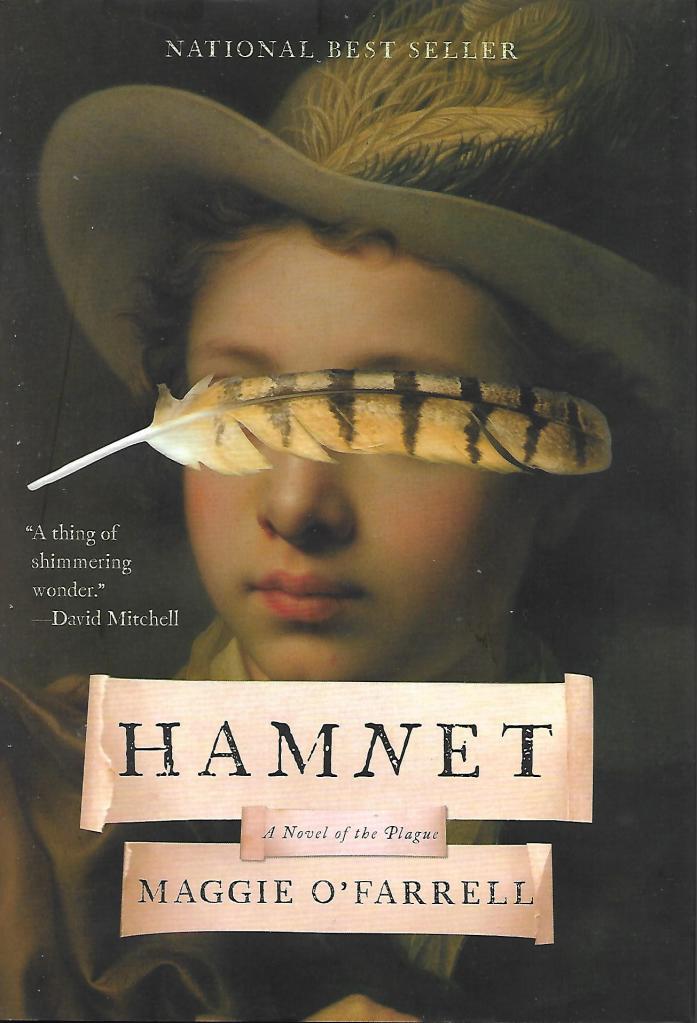
Hamnet ~ A Capsule Book Review

Hamnet ~ A Capsule Book Review by Allen Kopp

A little background information, please: English playwright William Shakespeare (1564-1616) lived in the small town of Stratford-on-Avon, a hundred miles or so from London. The business of his family was making and selling gloves. When he was eighteen, he married a twenty-six-year-old woman named Anne Hathaway (1556-1623) who was expecting his child. William Shakespeare and his wife Anne Hathaway had three children: Susanna (1583-1649) and twins Hamnet (1585-1596) and Judith (1585-1662). Hamnet died, age eleven, in 1596. The cause of his death is not known. Since the plague was a persistent threat during this period of history, it might be assumed—or has been speculated—that Hamnet died of the plague. Nobody will ever know for sure.

Little is known about Shakespeare’s private life or the life of the family. What is known is that Shakespeare’s profession (playwright, actor and theatre manager) made it necessary for him to leave his family behind and spend most of his time in London. He tried to spend at least spend part of every year with his family in Stratford-on-Avon.

The novel Hamnet by Maggie O’Farrell is a purely speculative historical novel about Shakespeare’s family, mostly minus Shakespeare. While the title of the novel is Hamnet, it is more about Shakespeare’s wife, Anne, who is called Agnes here. (Apparently, as explained in a note at the end of the book, she went by either name.)

Hamnet, the novel, is told from the female point of view: that is, Anne Hathaway’s point of view. There is a lot of material here (female angst) about domestic concerns, raising children, dealing with difficult relatives and having a mostly absent husband. The great man himself is a secondary character in this story. If you’re looking for a book that gives insight into Shakespeare’s life and times, his private life and character, this isn’t it.

With her husband (William Shakespeare) away so much of the time, Anne (Agnes) has a lot of time to be jealous and to wonder what he might be doing (and with whom) in London. At the end of the book, she, along with her brother, Bartholomew, makes a surprise visit to London on horseback. She doesn’t find William at his lodgings, but she is told she might find him at the theatre. It’s providential (and coincidental) that she, an unlettered woman who never understood her husband’s passion for writing, finds him acting in his own production of his new play, Hamlet, as the ghost of the king’s father. She understands, for the first time, the alchemy that occurs from the spoken dialogue that her own husband writes, and how the play is, in a way, a tribute to their departed—and much lamented—son, Hamnet.

Copyright © 2020 by Allen Kopp

The Ones You Do ~ A Capsule Book Review

The Ones You Do ~ A Capsule Book Review by Allen Kopp

Missouri writer Daniel Woodrell continues his saga of the lowbrow Shade family in the 1992 novel, The Ones You Do. This novel, of course, follows the earlier Shade novels Under the Bright Lights from 1986 and Muscle for the Wing from 1988. These three novels are set, for the most part, in the fictional town of St. Bruno, a small city located on the banks of a large U.S. river. (We assume the river is the Mississippi, although the name is never mentioned; neither is the state that St. Bruno is in.)

The principal character of The Ones You Do is John X. Shade. He is the sixty-two-year old patriarch of the Shade family. He is, possibly, one step up from being a bum. He has ruined his health with alcohol, smoking, and chasing after the ladies. His one accomplishment in life is that when he was younger, he was a competitive pool player. He made his living from betting on pool games and then taking the money from the suckers who played with him. His pool game isn’t what it used to be, however; his hands shake from alcoholism and his eyesight is shot. When he was in his twenties, he married a fourteen-year-old girl named Monique Blanqui (in a shotgun wedding) and fathered three sons (Tip, Rene and Francois) with her, whom he proceeded to abandon to pursue his own selfish pleasures.

Later in life, long after he and Monique are divorced, John X. Shade marries a much younger woman named Randi Tripp. She is a “singer,” calls herself the ‘Bama Butterfly, and is determined to become a big-time singer. She and John X. have a punkish, ten-year-old daughter named Etta, who has a mullet hairdo, a crucifix earring and bizarre makeup.

John X. Shade has been keeping a large sum of money ($47,000) for one Lunch Pumphrey, a sociopathic gunman, in the safe of the bar where he works. To repay John X. for all his failings as a husband, Randi Tripp steals the $47,000 and takes off for parts unknown to pursue her showbiz career. Well, as you might have guessed, Lunch Pumphrey wants his money and his plenty peeved that John X. Shade does not have it in the safe at the bar where he works. He will kill over a lot less.

Throughout the novel, Lunch Pumphrey pursues John X. Shade, and John X. Shade eludes him, barely, with his weird daughter, Etta, in tow. A showdown between Lunch Pumphrey and John X. Shade is inevitable and comes in the final chapter. John X. Shade’s family can forget about him showing up for his ex-wife Monique’s birthday party.

The Ones You Do is part crime novel, part Southern Gothic, part small-town elegy, part character study. One of the major themes of the novel is “the way things used to be but no longer are.” As with all Daniel Woodrell’s novels (I’ve read them all at least once), it’s good reading and well worth the time and small amount of effort it takes to read it.

Copyright © 2020 by Allen Kopp

Lolita ~ A Capsule Book Review

Lolita ~ A Capsule Book Review by Allen Kopp

Russian-American writer Vladimir Nabokov was born in St. Petersburg, Russia, in 1899. He became an American citizen in 1945 and died in 1977. His 1956 novel, Lolita, was a huge success and has earned the lofty number-four position on the Modern Library’s List of the Hundred Greatest Books in English of the Twentieth Century. Some critics consider Lolita the greatest American novel of the twentieth century.

In the language of the 1950s, Lolita was “frank,” “daring,” and even “shocking.” Some even went so far as to label it “pornographic” or “obscene.” What’s all the fuss about, you may ask? The character Lolita (real name Delores Haze) in the novel is an American “nymphet.” She’s twelve years old and is, to put it mildly, sexually precocious, unlike any twelve-year-old ever seen before. She has had sexual experiences with both male and female partners alike.

Well, there wouldn’t be any story in Lolita without the main character in the book, Humbert Humbert. He is a forty-year-old English academic, transplanted to America, who, since his earliest days, has had an intense interest, and attraction to, prepubescent girls of nine to twelve years of age. He is narrating the novel in his first-person voice.

Humbert marries an obstreperous widow named Charlotte Haze. He doesn’t care for Charlotte very much and, in fact, can hardly stand her, but she just happens to be the mother of a stunningly seductive (Humbert thinks) daughter, the eponymous little girl nicknamed Lolita. If you were anybody other than Humbert, you might see Lolita as an uncouth, bratty pre-teen without any attractive or appealing qualities at all, but then, nobody sees her as Humbert sees her. He takes advantage of every opportunity to be near Lolita, hold her in his arms, or come into close contact with her.

He makes the fatal mistake of writing in his diary of his intense passion for Lolita. His wife (Lolita’s mother) finds his diary in its hiding place and reads it. Finally she knows the truth! Distraught, she runs from the house and is struck by a car and killed. Humbert is now Lolita’s “guardian” and may engage with her sexually any time his heart desires, and his heart desires often.

With Mama Charlotte out of the way, these two highly unusual people (forty-year-old Humbert and twelve-year-old Lolita) embark on a year-long road trip, traveling around the U.S. Humbert knows he is a reprehensible man for taking sexual advantage of Lolita. (Though a willing participant, she is still a minor.) Lolita could go to the police at any time and blow the whistle on Humbert, but she knows that, without him, she would be an orphan. This cannot end well.

Some people will still undoubtedly find the subject matter of Lolita distasteful, but it is a book that must be read and experienced for the joy that Vladimir Nabokov seems to take in writing it. He is a master stylist of the English language. He has a penchant for unusual or rarely used words, such as: undinist, logomancy, valetudinarian, lithophanic, caravansary, and selenian. They are all legitimate words but words you might not find anyplace else.

Copyright © 2020 by Allen Kopp

Dickie Manly

Dickie Manly ~ A Short Story by Allen Kopp 

Arlene Upjohn sat on the high porch of the old house she shared with her mother, swinging herself gently in the old-fashioned porch swing that belonged to her grandparents. She held a woman’s magazine on her knees and, turning the pages, looked at the pictures and the advertising without much interest. When someone passed on the street in front of the house, she watched them warily to see if it was anybody she knew.

In a little while a young man approached on foot. When Arlene saw him, she felt a little flush of pleasure and interest. One didn’t often see his kind on this street. He wore dark glasses and a dark suit and carried a briefcase.

Arlene watched him without letting him know she was watching him. Surprising her, he approached the porch and, looking up, spoke to her.

“Excuse me, ma’am,” he said. “I’m a little lost. I’m looking for the Presbyterian church.”

“The what church?”

“Presbyterian.”

“It’s not on this street,” she said. “Keep going for a couple more blocks and then turn to the right when you come to Fulton Street. That’s where the church is.”

“I’m not too far off then.”

“Are you a minister?” she asked.

“Do I look like a minister? I’m a salesman.”

“What do you sell at a church?”

“Books.”

“Books for people to sing songs out of?”

“Something like that.”

She went back to her magazine, thinking the young man would walk on, but he continued to look up at her.

“My name’s Dickie Manly,” he said.

“Well, isn’t that fine!”

“What’s your name?”

“I don’t think my name could possibly be of any concern to you.”

“Why don’t you come down off that porch and let me get a better look at you?”

“I’ll stay where I am, thank you!”

“Can I come up there and sit beside you? I’ve been on my feet all morning and I’m pretty tired.”

“No! Don’t come up! My mother’s in the house! She’s getting ready to go for her doctor’s appointment and she wants me to go with her.”

“Is she sick?”

“That’s why she’s seeing the doctor.”

“Well, could I trouble you for a glass of water? I’m very thirsty.”

“You can have a drink of water if you promise to leave before my mother sees you.”

“All right. I’ll leave.”

“I’ll go inside now and get your water.”

“Might I come inside with you?”

“No! My mother is very particular! I’ll get the water and bring it out here.”

“When you have the glass of water in your hand, will it be all right if I come up the porch steps and take it from you?”

“No, that won’t do! I’ll set the glass on the top step and after I’ve resumed my seat you can come up the steps and get it.”

“Well, if that’s the best you can do.”

“I’ll be right back in just a minute. If you go away before I come back, it’ll be altogether fine with me.”

“I won’t go away. I’ll wait right here.”

Entering the house, she went into the kitchen, filled a clean glass with cool water and took it back out to the porch. When she saw that Dickie Manly was still there, she set the glass on the top step and stepped back.

With a smile, he climbed the eight steps and picked up the glass of water and drank until it was empty.

“Thank you,” he said, setting the glass back down.

“Now, will you please go before my mother comes down from upstairs and sees you?”

“All right. I’ll go. Might I ask you a question first?”

“What is it?”

“What do people do in this town for fun?”

“Stay at home and mind their own business.”

Hah-hah! You’re really not as hard as you pretend to be! You’re lonely like everybody else. Why don’t you loosen up and have some fun?”

“Look, mister…”

“Dickie.”

“Look, Mr. Dickie, you don’t know anything about me and I’ll thank you to stop pretending you do.”

“You must be thirty years old. I would venture to guess you don’t get asked out on too many dates. You have a lot of lonely evenings at home with mama.”

“How do you know I don’t have a husband and three children?”

“I noticed right away you’re not wearing a wedding ring. That generally means a person isn’t married. I’ve trained myself to notice little details like that.”

“You might do well to mind your own business.”

“For myself, I’m twenty-six. If you’re thirty or thirty-one, I don’t mind a few years’ age difference.”

“I think I hear my mother coming.”

“Will you have dinner with me tonight at my hotel?”

“No! I can’t! You’re a stranger!”

“What’s so bad about that? We’re all strangers until we get to know each other.”

“You’re trying my patience!

“It’s the Edgewater Hotel. Meet me in the lobby at six-thirty and I’ll reserve a table in the restaurant.”

“No! Don’t expect me to be there because I won’t!”

“I’ll bet it’s been a long time since a man asked you out to dinner. Maybe never.”

“I have a boyfriend.”

“No, you don’t!”

“I’ll be spending the evening with my boyfriend, if it’s all the same to you!”

“I know when people are lying.”

“Why would I take the trouble to lie to you?”

“Edgewater Hotel, room three-twenty-six. Dickie Manly’s the name.”

“Good-bye, Mr. Manly.”

“Call me Dickie.”

“I can’t say it’s been a pleasure meeting you because it hasn’t.”

“Until this evening, then.”

“I won’t be there! Plain and simple!”

He bowed from the waist like a viscount and then he was gone.

As Arlene sat and waited in the doctor’s office waiting room for her mother that afternoon, she felt a pang of conscience that she had been so unyielding with Dickie Manly. He was probably a very decent fellow and not at all bad looking. What would be the harm in having dinner with him at his hotel? How many times was she going to be asked out before she was too old to be of interest to anybody?

She was restless all the rest of the day and her mother said she looked “peaked.” She could hardly stand her mother’s incessant chatter about trivialities. She went out into the back yard to be alone, but her mother soon came out, too, wanting polish applied to her fat fingers and toes.

“I want you to drive me to prayer meeting tonight,” her mother said. “We’ll  need to leave at about quarter to seven.”

“Sorry, mother. I have plans. You’ll have to call a cab or get Beulah to come by and pick you up.

Plans? What plans?”

“My friend Edith Farris and I are going to take in the new movie at the Odeon downtown.”

“I thought you said Edith Farris was in New York.”

“She’s back.”

“Well, isn’t that strange?”

“What’s strange about it?”

“She was on a trip to New York and now suddenly she’s back.”

“Well, you know what people are like. They change their minds pretty fast sometimes.”

“Well, all right! If seeing a movie with a high school friend is more important that doing what your mother wants, then go ahead and see the damned movie!”

“I’ll call Beulah and ask her to come by and pick you up.”

“Don’t bother! I think I can take care of it myself!”

Her mother didn’t speak to her or look at her for the rest of the day.

She changed her clothes and at six o’clock sped off in her mother’s old Chrysler that her mother was no longer able to drive. She arrived at the Edgewater Hotel at twenty minutes after six and went into the lobby and sat down in a conspicuous spot where anybody getting off the elevators would be sure and see her.

At fifteen minutes before seven Dickie Manly hadn’t appeared. She began to worry that possibly he forgot that he invited her to dinner. He had seemed so determined, though, so confident. She was certain he wouldn’t give up so easily.

At five minutes after seven she went to the hotel desk and asked the clerk to ring Dickie Manly’s room, number three-twenty-six.

“Mr. Manly checked out, ma’am,” the clerk said cheerfully.

“Checked out?”

“That’s right.”

“Did he say where he was going?”

“Not to me, ma’am.”

She didn’t want to go back home so early, with nothing to show for her evening. She thought about going into the restaurant and ordering dinner alone, but she wasn’t hungry and couldn’t eat. She had to ask herself an important question: What do people do when they feel lonely, disappointed and foolish?

She went into the dark hotel cocktail lounge and took a seat at the bar. She ordered a martini and after she drank it down ordered another one. When she was on her fourth martini, a man came and sat down on the stool beside her. He smiled and offered her a cigarette which she readily accepted.

“Could I buy you a drink?” he asked.

She nodded and the drink was placed on the bar in front of her.

“My name is Cleo Hall,” the man said.

“Happy to meet you,” she said, but didn’t offer her own name.

In ten minutes Cleo Hall was nuzzling against her. He put his hand on her shoulder and when she didn’t object he put his other hand on her upper thigh.

“Would you like to go someplace more…intimate?” he breathed his hot alcohol breath into her ear.

She looked at him and nodded solemnly. Standing up from the stool, a little shakily, she waited for him to disentangle his feet and stand beside her. She took his arm then, like an old acquaintance, and together they walked out of the bar—through the hotel lobby—through the slapping revolving door—and out into the cover of night.

Copyright © 2020 by Allen Kopp

Maroon and Yellow

Maroon and Yellow ~ A Short Story by Allen Kopp

Everybody knew Miss Penny. She was the elderly widow who lived in the trim white house on the corner with green window shutters and a pear tree in the front yard. She was frequently seen tending her lawn, walking along the street carrying groceries, or soliciting donations in the neighborhood for a charitable cause or to buy flowers for someone who had died. When she saw any of her neighbors, she always called out to them cheerily and waved and smiled. Everybody loved Miss Penny.

Suffer the little children to come unto me. Miss Penny’s home was something of a haven for the better-behaved, calmer children of the neighborhood. On warm summer evenings, they liked to sit in the glider on Miss Penny’s screened-in porch, sipping Kool-Aid and eating cookies, while she sat in her old-fashioned rocking chair beside her huge fern and listened to them prattle on about school or their families. She smiled and laughed, encouraged them to be themselves, not be sullen and withdrawn. She was like the indulgent grandmother they wished they had. Sometimes she gave them small amounts of money to do little jobs for her, such as sweeping the front walk, putting birdseed out for the birds, or lifting down a box from the top shelf in the closet.

Tippy Kepke lived on the other side of the street, down the block from Miss Penny. She was fourteen years old and lived with her parents and her two manly older brothers. She thought all her teachers in school were bitches or assholes. Her parents were assholes, and she wanted, more than anything, to see her two brothers eat shit and die. She regarded Miss Penny warily and pondered why a woman that old was still allowed to live.

Tippy was unpopular in school, but she knew a way to change all that. She would try out for cheerleader, and if she was lucky enough to be chosen over the other nitwits who tried out, she would be welcomed into the world to which she so fervently aspired: the world of handsome, sleek, well-dressed boys, and pretty girls with perfect hair and skin; the world in which boys would pick her up in their very own cars for Saturday night dates; the world in which she, even she, might be homecoming queen and get her picture in the society column.

She stole a book from the library that told all about cheerleading, with cheerleader routines and yells; pictures of how cheerleaders dressed, how they deported themselves. There were drawings at the back of the book that demonstrated exercises that cheerleaders ought to undertake, because—don’t you know?—a cheerleader needs to be in tiptop physical condition and have winning muscle tone. A cheerleader is a winner and not a whiner. A cheerleader sets an example for the other students in the school, girls and boys alike. A cheerleader excels in all things, at all times. Yes, being a cheerleader is not something to be taken lightly. The cheerleader of today might be the movie star of tomorrow. Anything is possible in the world of the cheerleader.

She began to think of herself as the “cheerleader type.” She tried to do the exercises in the book but she hated any kind of physical exertion and soon became bored and achy. What she was able to do, though, was to pay closer attention to her grooming and appearance. She began washing her hair and face more often and making sure she didn’t have dirt under her fingernails.

The biggest obstacle to not becoming a cheerleader, she believed, was not having the cheerleader outfit with the school colors, maroon and yellow. The outfit consisted of short skirt, long-sleeved blouse, jumper, knee socks, and optional sweater for colder weather. The entire outfit might be purchased at Delaney’s department store for thirty-nine dollars and ninety-five cents: not a lot of money when one considered what it might mean to her future. If she had the outfit, she’d wear it to the tryouts and, surely—if there was a God in heaven—that would give her an edge over the others, even if her cheerleader moves were not all they should be.

She knew it was useless to ask her mother for the money. It would only get her started on one of her boring lectures about how hard money is to earn and to keep after it’s earned. She might steal the money if she knew who she might steal it from.

Then she thought of Miss Penny. She knew that Miss Penny sometimes paid children in the neighborhood money for doing little things for her. She would go to Miss Penny and offer her services for the paltry sum of thirty-nine and ninety-five cents, plus tax. She could work the money out somehow: cleaning house, washing dishes, doing laundry, yard work, or whatever the silly old cow needed.

It was a good plan and she congratulated herself for thinking of it.

The next morning after her mother left for work and her brothers were away doing whatever brothers do, she went to Miss Penny’s front door and knocked timidly. Not getting any answer, she walked all the way around the house a couple of times. Then she tried the back door, found it unlocked, and entered the kitchen without making a sound.

Standing for a moment just inside the door, listening, she heard nothing. Miss Penny must be gone, probably to the store or the beauty parlor, or maybe visiting a neighbor. Maybe she would only be gone for a minute or two. Whatever Tippy was going to do, she had to do it fast before Miss Penny came back and found her. If she could find some money and take it and then leave, that would be perfect. Miss Penny would never know who took it. But where would an old woman keep money in her house? That was the question.

She crept soundlessly through the kitchen and then the dining room into the front room, and there was Miss Penny, asleep on her back on the couch, her chest moving up and down with her breathing. Her right arm was up over her head and her left arm by her side. The television set, to the right of the couch, was on, but with the sound turned so low it could barely be heard.

If Miss Penny woke up at that moment and saw her in her house, she’d scream and jump up and call the police and have a great squawking fit. Tippy couldn’t let that happen. They’d come and take her away in handcuffs and lock her up and she’d never, ever, be cheerleader after a thing like that happened.

She had to act fast. A sound outside scared her. Someone was coming! She felt genuine panic rising inside her, the panic of being found out doing something horrible. She felt faint with confusion and fear. Not knowing what else to do, she ran into the kitchen and grabbed a knife from a knife rack on the counter beside the sink. Gripping the knife so hard it hurt her hand, she ran back into the front room where Miss Penny lay.

A sudden solution occurred to her, as though whispered into her ear. Stab the old bitch to death and take the money out of her purse and get out of the house as quickly as she could! Nobody would ever know she did it. She had hardly known Miss Penny and had never been in her house before. The police would think a burglar or a drifter had done it.

With the first thrust of the knife into her flesh, the old woman woke up, gasped for air, tried to sit up. She opened her eyes and when she saw Tippy and knew what was happening to her, she closed them again quickly, as if on a horrible vision. The life went out of her so fast and so easily!

The deed done, Tippy took the knife back into the kitchen, washed it off with hot water—including the handle—and put it back into its rack along with the other knives.

Miss Penny’s purse was easy to find. It sat on top of the dresser in the bedroom, plain as day. Tippy didn’t even have to look for it. She opened the purse, took out the wallet and inside found two twenties, a ten, and two ones. Fifty-two dollars! Enough to buy the cheerleader outfit and have some left over to buy something else. It had all been easier than she thought it would be.

That evening she was especially kind to her family. She smiled at her brothers and helped her mother with dinner and then, when the meal was over, cleared the table and washed the dishes while the rest of the family watched television.

The next morning she slept late, after a night of untroubled sleep. After a light breakfast, she got dressed and walked downtown to Delaney’s. The day was sunny and fresh and much cooler than it had been. There was a hint of autumn in the breeze.

Delaney’s had the cheerleader outfit in stock, in exactly the right size. Tippy’s heart sang! Finally, good things were going to happen for her. Doors would open that had previously been closed. It was the turning point she had been hoping for.

With the bulky Delaney’s bag containing its treasure gripped tightly in her fingers, she went straight home, without any dawdling. She couldn’t wait to take the bag up to her room, lock herself in, take the things out of the bag, admire them one by one and try them on in front of the mirror.

When she got home, she went into the house by the back door, as she usually did. She couldn’t have seen the police cars parked at the curb.

Her mother was standing in the living room. When she heard Tippy entering from the kitchen, she turned and looked in her direction, her face pale and stricken. She took the Delaney’s bag from Tippy’s hands as if not really seeing it and gestured to the two police officers standing a few feet away. Tippy hadn’t seen them at first. She showed by the look on her face that she knew why they were there and what it was going to mean to her future.

Copyright © 2020 by Allen Kopp

The Maltese Falcon ~ A Capsule Book Review

The Maltese Falcon ~ A Capsule Book Review by Allen Kopp

In 1930 San Francisco—that city of hills and fog by the bay—Brigid O’Shaughnessy (if that’s really her name) believes she is in danger and goes to detective Samuel L. Spade to protect her. She’s young and attractive, as you might expect, and Sam Spade knows his way around with the dames. She tells him a story that’s all lies, but it doesn’t matter very much to Sam because she pays him well and he’d like to get to know her better, if you know what I mean.

The truth is, as Sam Spade learns later, the lovely Miss O’Shaughnessy has fallen in with a band of cutthroats and thieves, and she might be the worst of the lot. (“I’ve been bad, Sam,” she says. “Worse than you know.”) Among those posing a threat to her, we have Casper Gutman, the genial fat man who is so corpulent he seems to be made of bubbles strung together. Then there’s Joel Cairo, an effeminate “Levantine” (a person from the area of Turkey or Egypt) who is sweet on Casper Gutman’s gun-wielding psycho named Wilmer.

Brigid O’Shaughnessy, Casper Gutman, and Joel Cairo all want the Maltese Falcon so badly they will kill for it, or do whatever it takes to possess it. Just what is the Maltese Falcon? It’s a foot-high statuette that has been kicking around since the sixteenth century. It’s laden with precious stones, incalculably valuable, and has been covered over with a thick layer of black varnish to disguise what it really is from those who covet it. The falcon was originally intended, all those centuries ago, as a tribute to the King of Spain from a wealthy order of knights, but the King of Spain never received it, and it has subsequently been bandied about from owner to owner in all that time.

So, Sam Spade the detective is drawn into this knotted web of intrigue because Casper Gutman promises him a wad of money if he can deliver the falcon into his (Gutman’s) hands, but also because Brigid O’Shaughnessy is such a tasty dish of femaleness. Has Spade taken on more than he can handle in dealing with these desperate characters? Will he get the money promised him? Will he get the girl? Will the desperate characters get what they want and play nice and go away when it’s all over? Don’t count on it.

Dashielle Hammett, American novelist, lived from 1894 to 1961. The Maltese Falcon is his most famous and best-known work. It is the detective story that has served as the model for detective stories ever since it was first published in 1930. It is so highly regarded  that it’s number 56 on the Modern Library’s list of the Hundred Greatest Books in English of the Twentieth Century. The 1941 movie version, with Humphrey Bogart and Mary Astor, is a perfect example of how a movie should be made from a book. Sydney Greenstreet as Casper Gutman is cinematic perfection, along with bug-eyed Peter Lorre as Joel Cairo. They’ll kill you if you keep them from getting what they want or, at the very least, slip you a mickey, from which you’ll wake up on the floor in twelve hours or so.

Copyright 2020 by Allen Kopp