Neighbors ~ A Capsule Movie Review

Neighbors

Neighbors ~ A Capsule Movie Review by Allen Kopp 

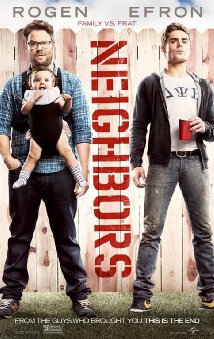
A couple in their thirties, Mac and Kelly Radner (played by Seth Rogen and Rose Byrne), spend all their money to buy a house in a comfortable neighborhood. Everything is fine with them until the house next door is turned into a fraternity house. (Apparently a college is nearby, although it’s never mentioned.) Mac and Kelly try to be “hip” and “with it,” but they realize right away that having a fraternity next door is not going to be in their best interests.

When they are being kept awake by the late-night, raucous partying, Mac and Kelly decide to confront the rowdies themselves, instead of calling the police, and ask the fraternity boys to “keep it down.” They meet party-boy Teddy (Zac Efron), the muscular “president” of the fraternity who charms them in a way to make them think he cares about them. They enter into an agreement with Teddy whereby they won’t call the police if they are again bothered by the noise; all they have to do is call him and ask him to “keep it down.” Thereafter they are known by the fraternity as “the old people.”

The partying continues unabated. Mac, Kelly and their baby are being kept awake far into the night. Mac tries to call Teddy to ask him to “keep it down,” but Teddy isn’t available after ten or so tries, so Mac calls the police, even though he promised he wouldn’t. Teddy, of course, knows it was Mac who called and not somebody else in the neighborhood. Thereafter a sort of “war” exists between the fraternity and Mac and Kelly, the “old people.” Mac takes an axe to a pipe on the fraternity house, causing the basement to flood; he hopes that will be enough to get the fraternity to move. When the fraternity boys use the flooded basement to their own advantage, Mac resorts to other measures. He and Kelly pay a thousand dollars to a mousey college boy to claim that he was “hazed” by the fraternity. This ploy also backfires.

You won’t need to use your brain at all when you see Neighbors, which has humor deriving from college kids who never attend class or study, sex, pot smoking, drug use, breast milk, dildos, condoms, etc. It’s a likeable, harmless movie if that’s what you’re looking for. It’s also a huge success with the public. It made back its production costs on the first day of its release and is the number one movie right now. Draw your own conclusions.

Copyright © 2014 by Allen Kopp

The Railway Man ~ A Capsule Movie Review

The Railway Man

The Railway Man ~ A Capsule Movie Review by Allen Kopp 

In 1980 Eric Lomax (Colin Firth) is a pleasant-seeming, middle-aged man who meets a recently divorced woman named Patti (Nicole Kidman) while indulging in his passion for railways (“I’m a railway enthusiast,” he says.) After they are married, Patti discovers that Eric has deep psychological scars from his experiences in World War II. She wants to help him but doesn’t know how. She is afraid he will commit suicide, as did one of his friends who was with him during the war.

As a young British officer, Eric was held in a Japanese prisoner of war camp. He and other captured Allied soldiers were forced to work for the Japanese to build a railway from Thailand to Burma, a job that was deemed almost impossible—and very cruel—because of the mountain and jungle terrain. It was a hellish life from which most of the men were expected to die.

By stealing different radio parts, Eric secretly builds a small radio receiver so he and his fellow captives can hear something of the outside world. They hear news from home, particularly how the war is going. (“We’ve got Hitler on the run!”) When the Japanese guards find the radio, Eric admits that he built it and that it was his idea, to spare his fellow officers from punishment. The Japanese believe the radio is a transmitter to send information about them to their enemies. Eric is beaten savagely and tortured. His body eventually heals but his mind never does.

Eric discovers, all those years later, that his principal Japanese tormentor and torturer in the prison camp, one Takeshi Nagase, is still alive. He operates the World War II prison camp where Eric was held as a sort of tourist attraction. In other words, he is profiting from his war crimes. Eric travels from England to confront him and to somehow exact revenge. He wants, above all, to let Nagase to know he also is still alive and how his treatment at the hands of the Japanese affected his life after the war.

The Railway Man is a true story, based on a book by the real-life Eric Lomax, who died in 2012. Those seeking light-hearted, escapist entertainment will not find it here. The scenes of torture are grim and graphic. It’s a story about the brutality of war, but, more than that, it’s about the scars that are left behind long after the war has ended. 

Copyright © 2014 by Allen Kopp

Their First Mistake

Laurel and Hardy, Their First Mistake image 1

Their First Mistake (1932)

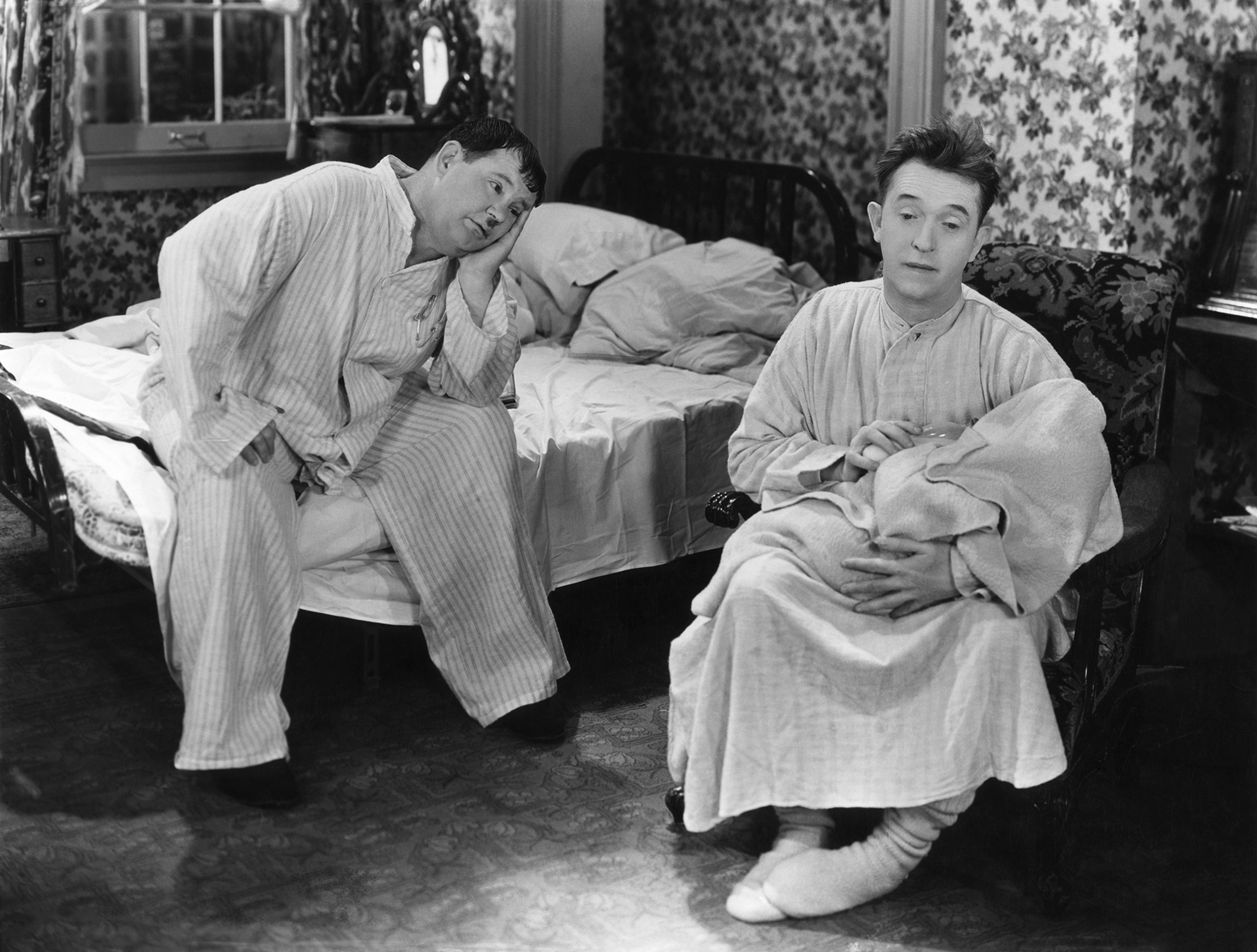
In the comedy short Their First Mistake (1932), Ollie’s nagging wife is jealous of Ollie’s friendship with Stan, so she leaves. Stan and Ollie think that adopting a baby will get her to return, but after they get the baby home (and the wife still nowhere in sight) they don’t have a clue about how to take care of him. He won’t stop crying and the neighbors are complaining. When Stan is going to go home and leave Ollie alone to take care of the baby, there is a very funny exchange between the two of them.

Laurel and Hardy, Their First Mistake image 2

“I’m a Transvestite”

Ed Wood image 1

“I’m a Transvestite”

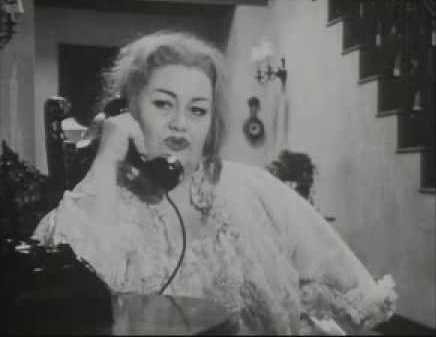
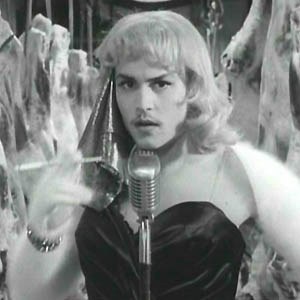
In Ed Wood, one of my all-time favorite movies, Ed (Johnny Depp) calls Miss Vampira, the tacky TV hostess, on the phone and asks her for a date.

“I was wondering,” he says, “if you’d like to go out sometime, have some dinner?”

“I thought you were a fag,” Miss Vampira says.

“No!” he says. “I’m a transvestite!” 


Ed Wood image 3

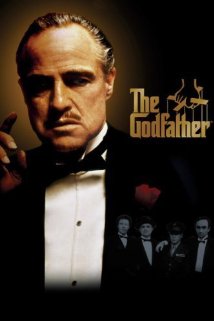
The Godfather ~ A Capsule Movie Review

The Godfather poster

The Godfather ~ A Capsule Movie Review by Allen Kopp 

In any list of the best American movies of all time, The Godfather is always near the top, along with Citizen Kane, Casablanca, and The Wizard of Oz. It was a huge critical and financial success at the time of its release and still resonates with audiences forty-two years later. It’s a multi-generational story about the American dream that touches on the themes of loyalty, honor and family; an epic gangster film on a lavish scale with a running time of almost three hours.

The Godfather covers the period from 1945 to about 1955. Marlon Brando plays Vito Corleone, the humble Italian immigrant who becomes one of the most feared and respected crime bosses in America—the Don, the Godfather. People kiss his hand as if he is a pope or a king. They come to him for “justice,” for favors that only he can grant. He doesn’t do their bidding, however, without expecting something in return—loyalty and friendship, if nothing more.

When we first meet Don Vito Corleone, he is old, nearing the end of his productive years. He has three sons: the hothead stud Sonny, the fool Fredo, and straight-arrow Michael, who has a Barbie doll-like girlfriend and an illustrious war record. One of the sons will one day take over the family business. He also has a daughter, Connie. When the story begins, the family is celebrating her marriage. Her choice of a husband, however, proves, in time, to not be a happy one.

When Don Corleone is shot five times by his rivals early in the movie while buying fruit, his son Michael (played by Al Pacino) steps in and takes charge of things, even though he seems constitutionally unfit to lead a criminal empire. He is sensitive and seems physically slight in comparison to his brother Sonny. He wants to marry his girlfriend and have a quiet, peaceful (crime-free) life, but he is being pulled in the opposite direction. When he shoots and kills two of his father’s rivals, he hides out in Sicily for an extended period, where he falls in love with, and marries, a young Italian girl. When she is murdered by a car bomb that is meant for him, he eventually returns to the United States, a hardened man, determined to take his place as head of the Corleone family. He becomes the new Don as his father (who recovered from his gunshot wounds but was never the same again) recedes into the background and eventually dies of a heart attack.

Of course, there’s much more to the story that we see in The Godfather. Two years later, in 1974, there was The Godfather Part II, which explores the early life of Vito Corleone, and The Godfather Part III in 1990. It’s a story that goes on and on.

The Godfather has been digitized and restored and looks flawless in its current iteration on the Cinemax network. If you haven’t seen it in a long time, as I hadn’t, it’s worth seeing again, if for no other reason that to see how much Al Pacino, Diane Keaton, James Caan, and others, have changed in forty-two years. Abe Vigoda, at the current age of 93, still looks about the same. Some people never change.

Copyright 2014 by Allen Kopp

Churn Thy Butter, Volume 3, April 2014

Churn Thy Butter cover

Churn Thy Butter ~ Issue 3, April 2014

(My short story “Happy Trails” is in this issue of Churn Thy Butter.)

Time to traverse the eccentricities of Church Thy Butter, Issue 3. First is Aaron Polson’s “Evidence,” which offers up a creepy VHS tape. Next is Colin Dodds’ poem “The Last Will and Testament of Spill-O.” It features surreptitious sausages, but really isn’t that the only kind of sausage? Harkens back to Upton Sinclair’s The Jungle. Lastly is a tale called “Happy Trails” written by Allen Kopp. Reminiscent of Kafka’s The Metamorphosis, but thankfully not as sad or disgusting.

Volume 3 may be read at the link below. (You might find the PDF version easier to read than the version where you have to turn the pages with the mouse.)

http://www.iridumsound.co.uk/magazines/issue.php?issue_id=22


Heaven is for Real ~ A Capsule Movie Review

Heaven is for Real

Heaven is for Real ~ A Capsule Movie Review by Allen Kopp 

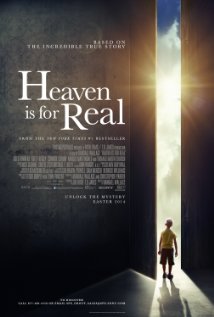
Heaven is for Real is based on a book and is supposedly a true story. Greg Kinnear plays a down-to-earth, small-town Nebraska minister named Todd Burpo. (I know—that’s kind of an absurd name.) He has a wife and two children. His son, named Colton, becomes inexplicably sick with a high fever. When Todd and his wife take Colton to the hospital after four days (why didn’t they take him sooner?), doctors find he has a ruptured appendix. They rush him into surgery but he is seriously ill and might not live. He eventually recovers, though, and the life of the family resumes as it was before Colton’s illness.

Soon, however, Colton begins to speak in a matter-of-fact way about things he saw when he was sick. He says he left his body (how could a four-year-old understand an out-of-body experience?) and saw himself on the operating table from above. He knew where his parents were and what they were doing while he was unconscious. He saw winged angels flying down toward him and when he was in heaven, he sat on Jesus’ lap and the lap of his long-dead great-grandfather. He met a little girl in “heaven” who, we find out later, was his sister who died before she was born, an event that Colton never knew about.

Were these “visions” just a childish fantasy, or did Colton really experience them? How is this story going to affect the community and Todd’s family? Believers continue to believe, but there’s plenty for scoffers to scoff at. Questions of faith are raised. Do you believe blindly, “taking out your brain and replacing it with the Bible,” as one character says, or do you harbor a certain amount of skepticism? When one child lives and another dies, what is the reason? Of course, there aren’t any answers to these questions, but people continue to ask them. Colton’s mother says at one point, during all the attempts at analysis, “Why can’t it just be a mystery?”

Heaven is for Real is a portrait of a family and a community. Like The Son of God earlier this year, it’s the kind of mainstream movie you don’t usually see at the multiplex. With all the Spiderman, Captain America, and X-Men movies being fed to the public these days, it’s good to see a movie every now and then that examines questions of faith and other issues that actually affect people’s lives.

Copyright © 2014 by Allen Kopp
Color TV

L111455

Color TV ~ By Allen Kopp 

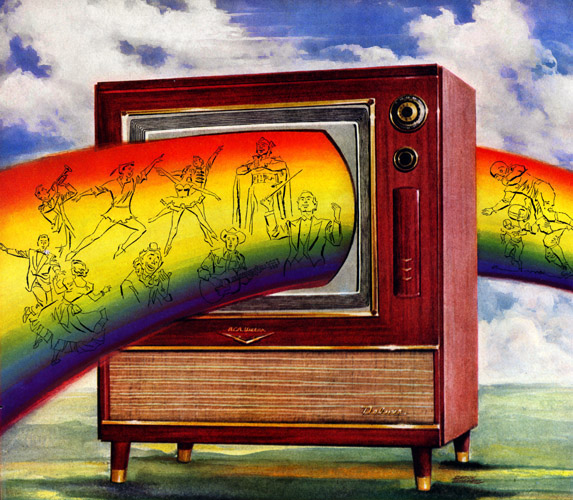
In the early 1960s everybody wanted a color TV, but few people had them. They were expensive and, in the small town where we lived, not easy to get. You had to pay a nonrefundable deposit of twenty-five dollars to get your name on a waiting list to purchase one, which might take six months to a year, depending on how fast the dealer could get them from the factory. And, even if you had a color set, you were still going to be watching black-and-white TV most of the time because there were only three shows on in color. When you think of the early years of color TV, you think of The Wonderful World of Disney and Bonanza on Sunday nights and Hazel in the middle of the week. (I was never able to understand the appeal of Bonanza, in color or black and white.)

Color TV was so much to be desired that Woolworth’s offered a low-cost (cheap) solution to those who wanted a color set but, for whatever reason, didn’t have one. For one dollar, the lucky shopper could have the illusion of color TV with a cheesy little item that was essentially a sheet of plastic with three bands of horizontal colors; the top band was blue to represent the sky; the middle band green for trees or grass; the bottom band brown for the ground. You attached this sheet of plastic over your black-and-white TV screen with adhesive and, if you squinted hard enough, almost closing your eyes, you might have been able to convince yourself you were watching color TV. Of course, if you were watching indoor scenes where you don’t see the sky, trees or the ground, the colors didn’t make much sense, but who’s to quibble with such innovation? Our next-door neighbors had one of these things and their cat, apparently not liking it, shredded it with his claws.

My grandparents were the first to have a real color TV. They were modestly well off and had only themselves to look after, so they bought themselves a top-of-the-line model. It was a squat metal cube with a twenty-four-inch screen with rounded corners. It sat on four spindly legs canted outward, making it look like a Martian spaceship that had landed on earth. If we were ever at their house on one of the nights that a color show was on, we were thrilled (well, I was, anyway) to see TV in color. It was a real novelty. It didn’t matter what the show was; its being in color was the thing that made it cry out to be seen. I could tell everybody about it at school the next day and watch their grimaces of envy.

As thrilling and desirable as color TV was, though, it wasn’t without its problems. The color had to be adjusted every time the TV was turned on. This meant bending over and fiddling with knobs to try to get the color just right. With one knob you adjusted the color of the color. You waited for a face to appear on the screen and then turned the knob until the face was as close to the color of flesh as possible, which turned out to be about the color of baloney. With another knob you adjusted how much color you wanted. Did you want the color to look like it was just barely color, or did you want it to jump out at you in a blatant, unnatural way whenever you entered the room?

By the mid-to-late sixties, everything on TV was in color, so it was no longer the novelty that it once was; it was just one more thing to take for granted like electric lights and the internal combustion engine. TV technology improved, of course, but it would still be many years before we had more than three (five at the most) choices of what to watch. We had a channel for each of the three broadcast networks, an “educational” channel that had shows about such things as blue babies and dentistry, and one “independent” channel that was fuzzy all the time because it had a “weak signal” but had the huge advantage of showing The Three Stooges every weekday afternoon.

Things have come a long way in fifty years. TVs now are sleek and lightweight. Gone are the heavy cabinets and consoles that weighed two or three hundred pounds. No more “picture tubes” (and other small tubes) that burn out like light bulbs and have to be replaced periodically. No more fiddling to adjust the color. No more knobs. No more metal TV antennas on roofs—most people are now connected to some cable or satellite system that offers hundreds of choices instead of just a handful. There’s a “niche” channel for every interest.

Old  black-and-white movies (movies made before the wide-screen format became the norm) are shown on a high-definition TV with the same proportions as they had on the movie screen (with a black space on both sides of the picture), or you can see them “stretched,” in which case they cover the entire rectangular screen and you lose some of the crispness of the picture. Recent movies look much the same as they do in a movie theatre. With a high-end, high-definition, flat-screen TV, it’s almost like having a miniature movie screen in your living room. And the best thing about it is that movies are broadcast as they were meant to be seen. We no longer have to put up with movies being cut up to allow for endless, idiotic commercials and “reformatted” in dreadful “pan and scan.” There are some people who apparently care about the integrity of the art form. That’s the kind of innovation we don’t often see.

Copyright 2014 by Allen Kopp

The Lantern Bearers


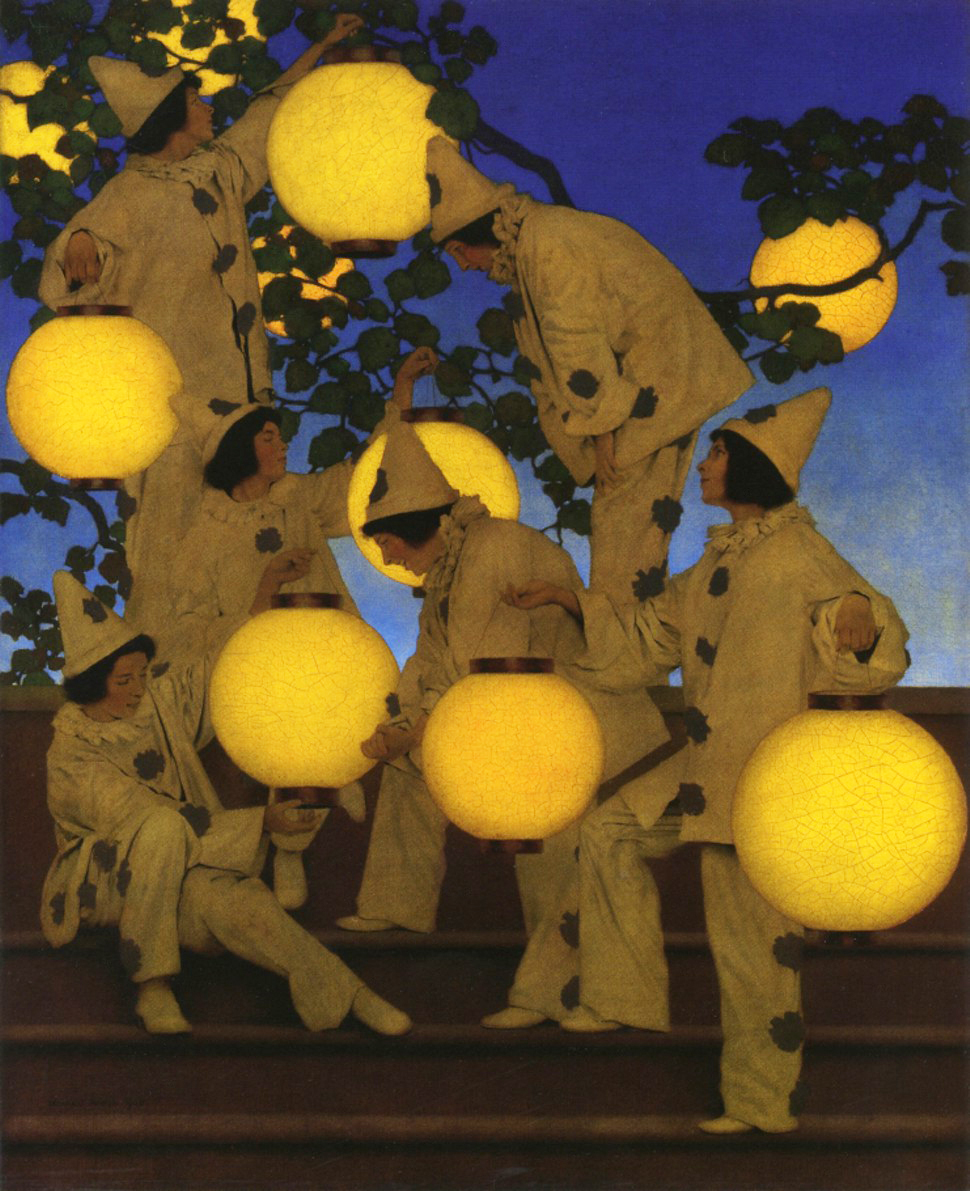
The Lantern Bearers (1908) by Maxfield Parrish

The Lantern Bearers (1908) by Maxfield Parrish

Maxfield Parrish (1870-1966) was an American painter and illustrator, known for his distinctive saturated hues and idealized neoclassical imagery. 

He painted The Lantern Bearers for Collier’s magazine in 1908.