Chauncey Peeps

Chauncey Peeps image 2

Chauncey Peeps ~ A Short Story by Allen Kopp 

From the time she was a small child, Juniper Trent wanted to be a mother. She was a lonely child and so treated her roomful of dolls like living children or like the younger brothers and sisters she was never to have. She gave them all names, scolded them when scolding was needed—dressed, bathed, fed them—and treated them with the kindest loving care of which she was capable. In short, she taught herself how to be a mother, and, by the time she was in her early twenties, believed she was ready to embark on real—rather than pretend—motherhood.

She married the first boy who asked her, one Frederick Peeps, and, in a little over a year, she had her own real-live baby. He was a fine animal specimen in every way but not exactly what she or her husband expected. He was covered in dark hair, had a snout and a long tail, a large mouth and perfectly formed teeth. He resembled a baby ape more than a human child and, in fact, an ape is what he was. The doctor explained in his dry manner that these things sometimes happened, a little trick of nature, but there was no reason to believe that the monkey baby wouldn’t live a full and happy life.

She named him Chauncey and, after she recovered from the shock of his being so different from what she expected, she was delighted with him, as pleased and as proud as a mother could be. Her husband was a little pouty at first, wondering just who this woman was who could produce such a child, but took only a few days to get used to the idea of having a son unlike any other and came to love him as much as a father could, taking singular pride in his first steps, his first words and in his first bicycle ride.

Mrs. Peeps took Chauncey with her wherever she went. She soon became used to people staring and whispering, of wanting to get a closer look. Just about everybody who saw him wanted to touch him, to take his picture, or to have him grip their thumb with his furry little hand. They cooed in his face and made faces at him and, in so doing, made complete fools of themselves. Soon Mr. and Mrs. Peeps were receiving invitations to parties and dinners on the condition that they bring their unusual little Chauncey with them. They were invited to join the country club, the lodge and several church congregations, none of which held any appeal for them. They weren’t in any way “group” people or the joining kind.

Chauncey developed rapidly, physically and emotionally. He could read the newspaper at age three, recite Tennyson at age four, and, before he was five, perform the soliloquy from Hamlet. The summer before he started to school, he was juggling and doing acrobatics, singing, dancing and performing pantomime skits. His mother believed he was a natural-born performer.

When it came time for Chauncey to go to school, Mr. and Mrs. Peeps took a long, hard look at the situation. They had both attended public school as children and they knew what a cruel place it can be for someone who is different. They couldn’t stand to think of Chauncey being bullied, taunted, mistreated and made unhappy. They would rake together the money and send him to a special school for oddly turned, one-of-a-kind or freakish children.

He became a student at the Sore Bone Academy when he was six years old. For his entrance examination, he recited The Gettysburg Address (with much feeling) and did impressions of movie stars, including Marie Dressler and Zasu Pitts. The examining board, of course, was delighted, and accepted him on the spot without the usual expect-to-hear-from-us period. (They were privately thinking about the notoriety that such a talented and unusual child might bring to their school.)

At the Sore Bone, for the first time in Chauncey’s life, he had the chance to consort with other children who were as unique as he was. His classmates included an albino boy, Siamese twin girls, a boy with webbed hands and feet, a girl with a “twin” sticking out of her side, another girl with telekinetic powers who could make objects fly around the room, a boy with an exoskeleton and a tail, a girl who was covered all over with silky white hair, a boy whose head was attached backwards to his body, a girl with four working arms but no legs, a boy with the bodily proportions of a beach ball, and on and on. After one came to know them, they were more than just “freaks.” They were all bright and friendly in their own way and all fortunate to be shut away from the cruel world at the Sore Bone. Chauncey fit right in and became a student leader.

He excelled in all his studies and was encouraged to become the clown that he knew he was always meant to be. As he grew older, he began living his life as a clown instead of just as a monkey boy. He developed his “Mr. Peeps” persona that would serve him well in the years to come.

He had a complete clown wardrobe that his mother ran up for him on her sewing machine in her little attic room at home. And what a wardrobe it was, complete with junkyard tuxedos, top hats, the traditional red-and-white striped one-piece suits with ruffled colors, oversized suits containing compartments inside for the traditional rubber chicken and other clown paraphernalia, hobo pants with patches in the knees and seat, a long frock coat that dragged five feet behind him as he walked, and female clown dresses with voluminous padding for boobs and hips for when he performed in drag.

The school years passed happily and then it was time for graduation. Of all the clown students in his class, Chauncey (alias “Mr. Peeps”) was at the top of his clown class. As he accepted his diploma in his deep-purple cap and gown festooned with rubber chickens, his mother and father sat in the audience and beamed their happy smiles.

With school behind him, Chauncey had some important decisions to make. Was he going to be a clown all his life, or was he going to set his clownhood aside and pursue some more serious profession, such as lawyering or doctoring? He knew that many doctors and lawyers are also clowns, but he didn’t think he had it in him to combine the two professions. It had to be one or the other.

Just when he was beginning to enjoy his summer vacation, a bad thing happened. His father was run over by a pie wagon in Philadelphia. It was one of those events that just happens for which no planning is possible. After the funeral, Chauncey promised his mother that he would never leave her, no matter what. He would abandon all thoughts of pursuing a profession to stay at home with her. They had plenty of money and he was tired of the world anyway.

“We will defer all important matters for the time being,” his mother said. “I want to take a little vacation and get away from it all.”

They planned on going to a spa in the mountains to take the curative waters when, on the day before they were to catch their train, Chauncey received a telephone call from the Valeria Brothers Combined Shows. They knew his work, were great admirers, and were prepared to offer him a lucrative clown contract. He and his mother put off their trip for the time being, and he traveled alone two days later to meet with Valeria Brothers to discuss the job.

They gave him more money than he ever imagined and for his very first job! He knew that if he signed with them he was going to have to travel around from place to place, wherever the circus was performing, and he wasn’t altogether happy with that prospect. When he expressed a reluctance to leave his mother behind, they told him he could bring her along if she didn’t object to the nomadic life. The circus might even employ her in some capacity if she was interested.

When he told his mother the news, she was happy for a fresh start in life. What had seemed like the end of things was really the beginning of a new kind of life for her and her monkey boy.

Chauncey’s first experience at performing with the Valeria Brothers Combined Shows was a swing through the Southern states. And he was an instant success! As word of him spread, the Valeria Brothers saw their box-office receipts increase wherever they went. His mother became a sort of wardrobe mistress for Chauncey and for some of the other performers. She repaired their costumes when needed and saw that they were cleaned and pressed and ready for the next performance.

It was in the circus that Chauncey found true love. He was instantly drawn to a midget fat-lady clown who went by the name of Ima Pigg. She was about the same age as Chauncey and very naïve, having been sheltered by her wealthy family. When her father died and her mother remarried, she had stepped out into the world on her own and joined the circus and never looked back. Chauncey was her first romantic attachment and she was his.

In a few months, Ima Pigg became Ima Peeps. The wedding was  performed before a capacity audience in the middle of the regular show. The Valeria Brothers realized they could have sold three times as many tickets if only they had had the space for that many people. They considered making marriage ceremonies part of the regular show.

Within a year, Ima Peeps gave birth to her own little monkey boy and named him Chauncey Junior. He was a tiny duplicate of his father. Chauncey and Ima were very happy, as was Chauncey’s mother, the wardrobe mistress.

But the work of performing in the circus came first. The Valeria Brothers were constantly pushing Chauncey to try new routines. They didn’t want him to get stale. They had him juggling swords and live hand grenades and hanging from his teeth from a trapeze thirty feet in the air. It wasn’t enough for him just to be a clown anymore. The audience expected more from him. He had to do things that had never been done before.

One night to a packed house, when Chauncey and several of his clown colleagues were performing a stunt with rings of fire, the fire got out of control and began to spread very fast. All the lights had been turned off, making the situation more frightening for the audience when they began to see the fire coming toward them. They began screaming and running for the exits, trampling whoever got in their way. Eight people died and many others were injured without the flames ever getting to them.

Of the performers, Chauncey and three other clowns were killed. Those who were present stated later that Chauncey was a hero. He was able to get several people out of the way of the flames at the expense of his own life.

His mother left the circus and went home. She was heartbroken, of course, but not alone. Ima Peeps went with her and her grandson, Chauncey Junior. When she looked at him, she saw her monkey boy and she knew he wasn’t really dead. When she took him out into the world with her, she witnessed the stares and whispers. She was there for his first words, his first steps and his first time alone on a bicycle. Everything that had happened before was happening again.

Copyright © 2014 by Allen Kopp

The Resurrection Day

Resurrection Day images 9

~~~

John 20:16-18

Jesus said to her, “Mary.” She turned toward him and cried out in Aramaic, “Rabboni!” (meaning “teacher”).  Jesus said, “Do not hold on to me, for I have not yet returned to the Father. Go instead to my brothers and tell them, ‘I am returning to my Father and your Father, to my God and your God.’ ”  Mary Magdalene went to the disciples with the news: “I have seen the Lord!” And she told them that he had said these things to her.

~~~

Transcendence ~ A Capsule Movie Review

Transcendence

Transcendence ~ A Capsule Movie Review by Allen Kopp 

Transcendence has all the elements of a summer movie and it isn’t even summer yet: a one-word title, a big-name movie star (Johnny Depp) and a fast-paced techno plot with plenty of action. Johnny plays Dr. Will Caster (a part that almost any actor could have played). Dr. Caster works in the field of artificial intelligence. He and his team (including his wife, Evelyn, and his best friend, Max) are working on a computer system so advanced that it far surpasses human capabilities. The potential for helping mankind, curing illnesses, healing the planet, etc., are staggering. The one problem they can’t seem to figure out, though, is how to make the AI system “self-aware.”

A radical group wants to end the study of artificial intelligence, believing it has the potential to bring about the end of the human race, and murders some of the researchers. When Dr. Caster is shot, the gunshot doesn’t kill him, but it seems the bullet that entered his body was treated in some way to cause him radiation poisoning. He has only a short time to live. Before he dies, though, he will “upload” his consciousness into the computer system, providing the missing element of self-awareness that has hitherto been lacking. His fellow researchers, Evelyn and Max, are complicit in this plan. Evelyn sees it as a way for Dr. Caster to live on after his physical body has died. Max is more skeptical.

So, Dr. Caster is dead but his intellect and consciousness live on in the sophisticated, highly advanced artificial intelligence computer system. His wife is delighted at first that she can still talk to him and interact with him, but after a couple of years she sees where the whole thing is headed: he has a god complex. He believes he is so far superior to “simple organic” life (meaning humans) that he comes to see himself (the computer system) as the future and the human race as a thing that is completely unnecessary. He is sort of a modern-day Dr. Frankenstein in that he ventures into an unknown place where man is perhaps better off not to go.

Transcendence is engaging enough (more in the first half than in the second) for what it is, but there’s nothing unique about it. It’s in the cookie cutter mold of American movie making. There are other movies with the same look and feel. Now that summer is coming on, there will be lots of them because they make a ton of money and then are quickly forgotten until they turn up on TV.

Copyright © 2014 by Allen Kopp

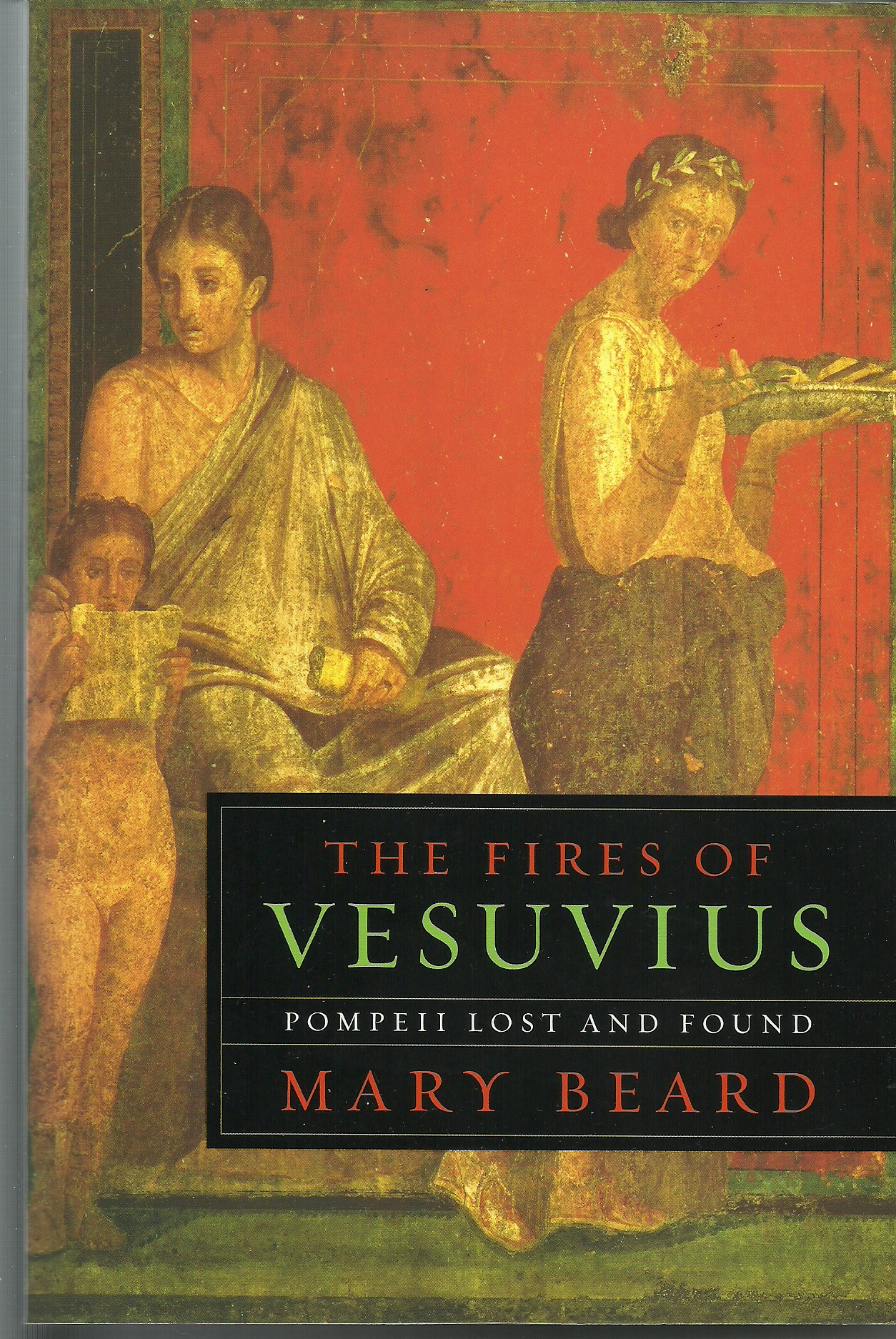
The Fires of Vesuvius ~ A Capsule Book Review

The Fires of Vesuvius cover

The Fires of Vesuvius ~ A Capsule Book Review by Allen Kopp 

During the early Christian era and for hundreds of years before, Pompeii was a thriving seaside town of 20,000 people or so, about 150 miles southeast of Rome. In the year 79 AD (or BCE), the volcanic mount Vesuvius erupted and literally buried the town alive under layers of pumice and volcanic debris. Scholars had known of the existence of Pompeii from written records, but the town itself wasn’t “rediscovered” until the 1700s, at which time archaeologists began the painstaking job of digging it out bit by bit. (Excavation continues to this day, 250 years later.) Since the town hadn’t been touched for all those centuries, its streets, temples, houses, paintings, etc., were remarkably well preserved. It gave the world a chance to know a lot more about a long-lost period in history than had been previously been known.

The Fires of Vesuvius by Mary Beard is an exhaustively detailed account of what the ruins and artifacts teach about what life was actually like in the Pompeii of two thousand years ago: how people lived (bad teeth, no toothbrushes), what their dwellings were like (those made of wood mostly don’t remain except for nails and fittings), how they navigated about town (one-way streets), how they got water into their homes (a fairly sophisticated system of “running” water that not everybody could get), how and what they ate (a fairly healthy diet of fruits and vegetables; cooking utensils and ovens for baking bread remain), how they made a living (farmers in the immediate vicinity around the town; shopkeepers, fullers and small-business owners in the town), what they did for entertainment (plays and gladiatorial games), how and who they worshipped (many gods to choose from; few or no signs of Christianity at the time of the eruption), what their political structure was like (only the rich could stand for office because they were expected to use their money to benefit the public in some way), what they wore (not so many togas), what artwork they admired (phallic symbols carved everywhere, meaning prosperity and good fortune), how they buried their dead (on the roads outside of town, elaborate memorials for the cremated remains of the rich; barely a hole in the ground for the poor), where they went to take a bath (elaborate public baths with little or no sanitation; sometimes turds floating in the water), and in some cases, their private thoughts expressed in “graffiti” that is everywhere in the town. The people of Pompeii were apparently a fairly literate bunch, and they took advantage of the quaint custom of writing their thoughts and feelings on walls or wherever they happened to be, much of which survives. Thankfully this custom has mostly died out. I, for one, don’t want to have to look at scribbled writing on every surface, which, I’m sure, would be unbelievably ugly.

Readers who have more than just a passing interest in Pompeii, or those who plan to go there, will find plenty in The Fires of Vesuvius to recommend it. The casual reader will probably be put off by the dense text (although it isn’t that difficult to absorb) and the wealth of minute detail, more than the average person reading for pleasure is going to want to know. If, however, you are a student of archaeology or are writing a research paper, this book will prove to be a valuable storehouse of information.

A tiny footnote that I found interesting that I hadn’t known before: During World War II, the Allies, in bombing Italy to subdue Il Duce, destroyed parts of the ruins of Pompeii. Whether this was deliberate or accidental isn’t stated. The irony is that some of the ruins had to be reconstructed to make them look the way they did before the bombing.

Copyright © 2014 by Allen Kopp
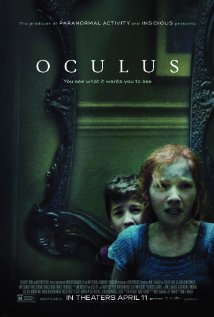
Oculus ~ A Capsule Movie Review

Oculus

Oculus ~ A Capsule Movie Review by Allen Kopp 

An antiques-loving yuppie couple purchase a quaint, old, full-length mirror that hangs on the wall. The couple don’t know it, of course, but the mirror has a history, going back four hundred years, of bringing about violent death to its owner. An evil spirit resides in the mirror and this spirit protects the mirror from destruction as if it (the spirit) and the mirror are the same.

The couple, the Russells, have two children (Kaylie, age 12 and Tim, age 10). The father of these two becomes withdrawn and secretive. He won’t let anybody go into one room in the house that he calls his office. (It’s the room where the mirror is kept.) Kaylie, when she and her brother are playing in the yard, sees a strange woman embracing her father through the window, when she knows there is nobody else in the house except her parents. The man’s wife, the mother of the two children, becomes suspicious of her husband’s activities and begins doing some investigating on her own. This, as one might expect, leads to tragedy. Kaylie and Tim make a vow to each other that, when they are grown, they will do whatever they can to find out exactly what happened and to clear their family of wrongdoing.

Eleven years later, Tim, age 21, is being released from a mental institution, where he has been since he was 10. Kaylie, his sister, is now 23. In the intervening years, she has discovered the history of the mirror and is determined, with the help of Tim, to make good on the vow they made to each other 11 years earlier.

Oculus is an acceptable horror movie with a cast of unknown (at least by me) actors. While it doesn’t have the chills of Insidious or Mama, it’s intelligent and well-made with a few tense moments. It isn’t junk or schlock. If you are a fan of good horror films, like me, you will like it. If you try to dissect it too much, though, you’ll expose the holes in the plot, so just enjoy it without getting too analytical.

Copyright © 2014 by Allen Kopp

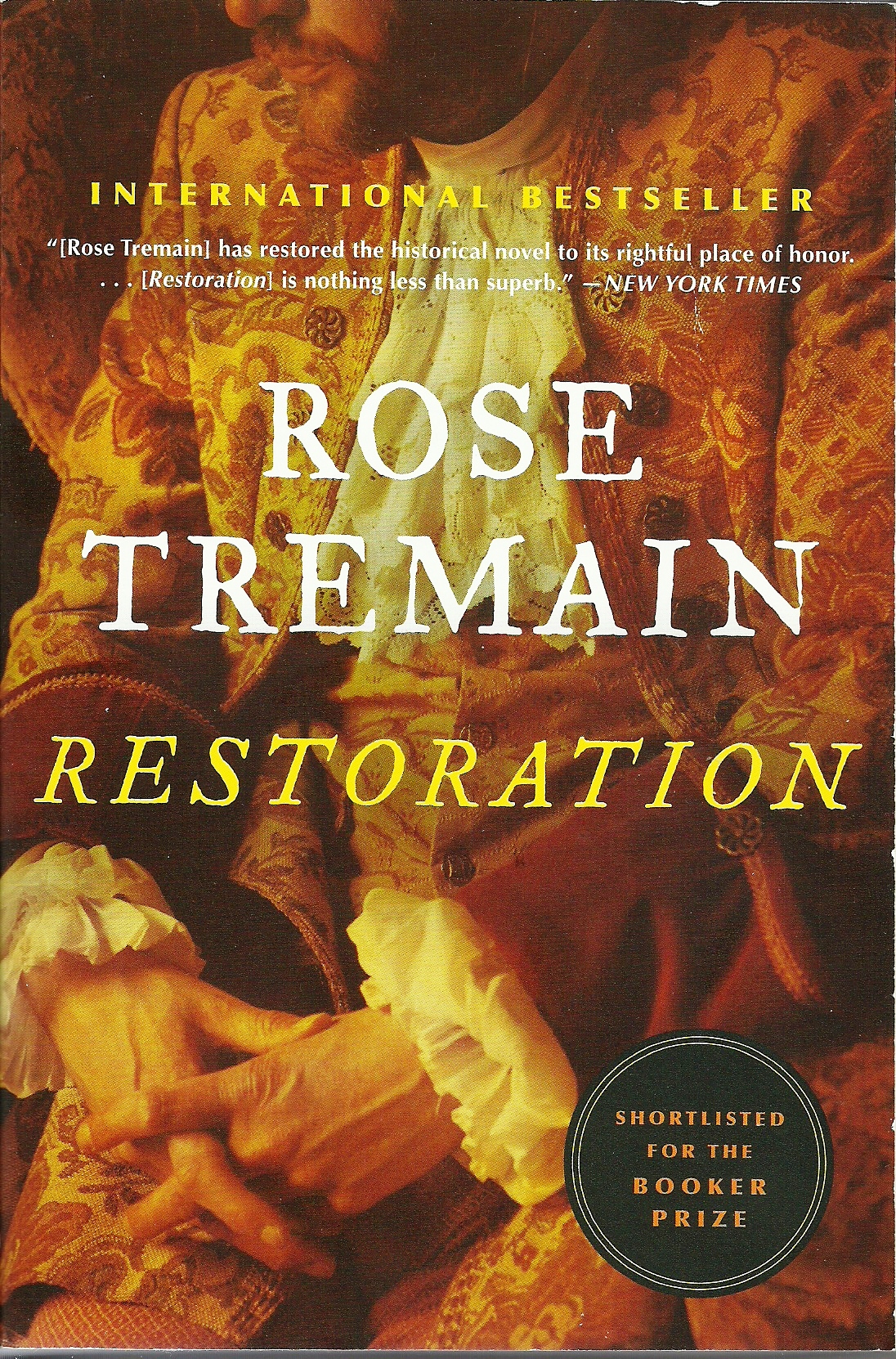
Restoration ~ A Capsule Book Review

Restoration cover

Restoration ~ A Capsule Book Review by Allen Kopp

From 1649 to 1658 was the period in English history known as the English Interregnum or the English Commonwealth. The country during this period was a de facto republic with Oliver Cromwell as virtual dictator. A political crisis resulting from Cromwell’s death in 1658 led to the restoration of the monarchy with Charles II as king. The period that followed is known as the “Restoration.” It was a time of fashion (plumes, powdered wigs, knee britches with stockings, high-heeled shoes with polished buckles—all for the men), relaxed moral values, hedonism, excesses of every kind, greed and materialism. The historical novel Restoration by Rose Tremain is about this period in English history and about one man in particular, the fictional Sir Robert Merivel.

Merivel is very much a man of his times. He comes from humble beginnings, begins studying to be a doctor as a young man, and is soon caught up in the pursuit of fulfillment of his appetites. He abandons his study of medicine, becomes a sort of courtier in the court of King Charles and, for a brief period, is a favorite of the king. The king, however, is known for his mercurial personality and for his whims, for taking up one person one day and throwing him down the next. Merivel makes the king laugh but the king finds for him another purpose: the king will marry Merivel to the king’s mistress, Lady Celia, a marriage in name only. In return for this marriage, the king sets Merivel up in a magnificent country estate called Bidnold, which has everything an English country gentleman could ask for: lots of servants, a park filled with abundant wildlife, and lots of room to pursue a life of idleness and pleasure. (Merivel takes up painting and playing the oboe but finds he has little talent for either pursuit.) Like Adam and Eve in Paradise, however, Merivel does the one thing he is absolutely not supposed to do: he falls in love with Lady Celia. When the king finds out, he dispossesses Merivel, telling him he needs to go find himself, to “restore” himself to the kind of man he was always meant to be. Suddenly without money or a home, Merivel must embark on a quest to find out who he really is and to fulfill his purpose in life. Fate takes him to a mental hospital run by Quakers in a rural part of England (where he inadvertently finds himself a father) and back to London again where he deals with a plague epidemic and the Great Fire of 1666.

Restoration is not the potboiler one might expect it to be. It elevates the “historical fiction” genre into the realm of “good literature.” It’s beautifully written and contains not a dull or extraneous word. It illuminates a fascinating period in English history without ever being academic or seeming like a history lesson. It brings a remote period of history alive and makes it somehow relevant.

Copyright © 2014 by Allen Kopp 

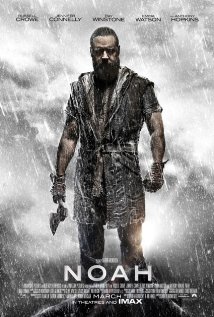
Noah ~ A Capsule Movie Review

Noah

Noah ~ A Capsule Movie Review by Allen Kopp

The long-awaited Noah is finally in movie theatres. Russell Crowe plays the biblical patriarch for whom God has assigned a special task: build a gigantic wooden boat, an ark, and place on it (or, according to the movie, allow them to come voluntarily onto the boat) one pair, male and female, of every animal on earth (everything that crawls, flies, walks or slithers, including snakes because they serve a purpose). Noah has a wife, Naameh (played by Jennifer Connelly) and three sons (Ham, Shem, and Japheth). God is disappointed in man and is sending a flood to wipe out every living thing on earth. Only Noah, his family (including his sons’ wives), and the animals on the boat will survive, the idea being that they will start afresh after the flood waters have receded. God has chosen Noah because he is a righteous man and hasn’t been “ruined by the world,” as, it seems, everyone else has.

Anyone expecting a faithful adaptation of the biblical story of Noah is going to be disappointed by this movie. While it is a slick and well-crafted piece of cinema, it’s a fictionalized account. Not enough is known about Noah to make a dramatic two-hour-and-fifteen-minute movie, so the filmmakers have had to improvise, creating events and people that never existed. For example, the wicked world is represented by the fictional character, Tubal-cain (Ray Winstone), who wants to live so badly that he stows away on the ark and is aided and hidden by Noah’s son, Ham, who is taking revenge on his father for not saving a girl he liked from the trampling hordes who were storming the ark.

While Noah and his family are on the ark, waiting for the flood waters to recede so they can once again walk upon dry land, tensions arise over the question of whether man will continue after Noah and his family are all dead, or if the world will be another unspoiled Eden in which only animals will live without the wicked and evil man to spoil everything. Noah is all for letting man die out with them, while his wife wants their children to live on in their own descendants. When Shem’s young wife, Ila, who is supposed to be unable to bear children, discovers she is going to have a baby, Noah vows to kill the baby unless it’s a boy.

While Noah is worth seeing, it’s not worth taking seriously. It’s entertaining in its way but no more believable than movies about hobbits. When the “Watchers” (fallen angels, who, as punishment from God, have become huge beings made of rock and mud) first appear early in the movie, you know you are in the realm of fantasy and not in a world that anybody is supposed to believe exists or ever existed.

Copyright 2014 by Allen Kopp 

Hold All Calls

Hold All Calls image 1


Hold All Calls ~ A Short Story by Allen Kopp
 

“Oh, how I hate Monday mornings!” Dakin said as he sat down at his desk.

“The countdown to the weekend has begun,” Christopher said. “Only one hundred and five hours until five o’clock Friday afternoon.”

“It’s too far away,” Dakin said. “I shall perish before then.”

“Well, you’d better look busy. Pinky is already in this morning and he’s not happy. Production is down again or something.”

Dakin took some papers out of the drawer and spread them out. “I hate everybody on Monday morning,” he said, “but I especially hate my parents for bringing me into the world and not providing me with a family fortune.”

“Alas,” Christopher said, “so few of us have a family fortune.”

“If I had even a small fortune, I would blow this place so fast.”

“A couple million would do.”

“I’d travel. I’d have a home on the Riviera and another one in Rome.”

“Only two?”

“Two to start with.”

“I hear somebody coming. Look alive!”

Agnes Simpkins came into the room, wearing a funereal black dress and a scowl on her face. She was looking at the floor and didn’t look at Dakin or Christopher. She walked to the far corner of the room, stood for a moment facing the wall, and went out again without speaking.

“What’s she looking for?” Dakin asked.

“Her soul,” Christopher said.

“Have you ever seen a more hideous woman? Her dress looks like she’s got it on backwards. Her hair looks like it was chewed off by a wolverine. Her lipstick looks like a chimp put it on for her.”

“There’s a rumor going around that she’s really a man.”

“That would explain a lot.”

“I think Pinky sent her in here to spy on us.”

Dakin shuffled some papers, held a pencil in his right hand and made a few squiggles. “I woke up with a headache this morning and a sick feeling in the pit of my stomach. I really should have stayed at home.”

“Why didn’t you?”

“Production is down, you know.”

“Hah!”

“If I collapse at my desk, go get somebody to help me, as long as it’s not Agnes Simpkins.”

“I’m sure she would be more than willing to administer mouth-to-mouth resuscitation.”

“I’d rather die.”

“Really, are you planning on doing any work today at all?”

“Not if I can help it. I’m too sick. I’m fine until I get to work and then after I get here I’m sick. I think it sounds like I need to stay away from work altogether for my health, doesn’t it?”

“It’s a conundrum.”

“I saw these friends on the weekend that I hadn’t seen in years. They own their own yacht. Can you believe it? They were going on a cruise in the Caribbean and they invited me to go along. I would love to have gone with them, but instead I’m here. I am in hell! Why was I even born?”

“Another conundrum.”

“And to top it all off, I’m hungry. I skipped breakfast.”

“I thought you said you were sick.”

“I am sick but that doesn’t mean I don’t desire food.”

“Anytime I’m sick, I…”

“How about if you be a dear and go see if anybody brought any donuts in today?”

“Why don’t you go?”

“I have all this work to do and, truly, I don’t have the strength to walk down the hall and witness the sickening sight of all those frightened little people working themselves into a frenzy just because production is down or something and Pinky is in an uproar. I mean, Pinky is always in an uproar about something or other, isn’t he?”

“I have a candy bar in my drawer if you want it.”

“That’s sweet of you but I really don’t want to eat candy on an empty stomach. It might make me vomit.”

“If you vomit, forcibly—and in front of everybody—you can legitimately go home sick. There’s nothing like a little projectile vomiting to drive home your point.”

“Yes, yes, that’s a good idea and I will keep it in mind.”

“How about if you proofread a report for me and correct any errors?”

“Oh, buddy, not you too!”

“Well, somebody’s got to get some work done around here.”

“I am not in any shape, physically or emotionally, to do any work today.”

“All right, I’ll do it myself.”

“Do you really care if it gets done or not?”

“I don’t care for myself but it would be nice to get it done.”

“’Nice to get it done’. I’m afraid you’re even starting to sound like them.”

“Please forgive me.”

“Where are you going for lunch today?”

“I think I’ll just stay here and get something out of the vending machine.”

“How banal! I’m going to take an extra long one today. I feel like walking down the block to Luigi’s and having some linguini in marinara sauce, a crisp salad, and spumoni for dessert. Would you like to come with me?”

“Somebody’s got to stay here and do some of this work.”

“Will you cover for me if I don’t come back?”

“I’ll say I haven’t seen you and I don’t know where you are.”

“Good thinking.”

Christopher put his head back and closed his eyes. “I can smell Pinky’s cologne!” he said. “He’s within thirty feet! Look busy!”

No sooner than the words were spoken, they spotted the man himself. He came toward them carrying a sheath of papers. He was winded, his face was red and the corners of his mouth turned down.

“Mr. Pinkley!” Dakin said cheerfully. “How lovely to see you! Is that a new toupee you’re wearing? It certainly looks handsome!”

“Humph!” Mr. Pinkley said. “I’ve heard reports that there’s been some hanky-panky going on in this department.” The wattles under his chin quivered with emphasis.

“Hanky-panky, sir?”

“Talking and loafing and not focusing on the work at hand.”

“Not focusing? I don’t know what would give anybody that idea, sir. We’re just as busy as a colony of beavers.”

“I’m warning you that I won’t have any slackers working in this company. If you aren’t prepared to give me a full day’s work, then you might as well leave now.”

“I wouldn’t dream of leaving, sir!”

“Production is down for the third straight quarter! That tells me that a house cleaning is in order, but I believe in giving everybody a second chance. You can consider this your warning. If I have to speak to you again, it’ll be to dismiss you.”

“I understand, sir! I believe I’ll be deserving of any punishment you see fit to mete out.”

“I want a written report from you every day outlining what you are working on and how much you have done that day. Do I make myself clear?”

“As a bell, sir! I only have one question.”

“What is it?”

“Will I be the only one submitting a daily report on my activities?”

“None of your business!”

“Yes, sir! Thank you, sir!”

After Mr. Pinkley left, Dakin and Christopher looked at each other and laughed.

“Who does he think he is, speaking that way to me?” Dakin said. “I have a good mind to call up my lawyer and sue the bastard.”

“I’d like to see that,” Christopher said.

“I don’t have to take that kind of crap from him or anybody else.”

“No, indeed, you do not!”

“I’m ten times smarter than he is. I can outclass him any day in the week and twice on Sunday with one hand tied behind my back. He can’t even write a coherent sentence without some help from a secretary.”

“He is an ignorant son of a bitch,” Christopher said. “It goes with the territory.”

“Now I am completely thrown off my game after being spoken to in such a manner.”

“Some people are just too sensitive for the world of business.”

“Yes, thank you! I’m glad that someone in this rotten, stinking world recognizes that fact.”

“What are you going to do now? It sounds like you’re going to have to show Mr. Pinkley some results or he’s going to fire you.”

“What am I going to do? I’m going to take a long, long lunch and then I’m going home and taking an extended bubble bath to get the stench of this place off my body. After that I’m going to put on a dressing gown and telephone my lawyer. He and I are going to have an illuminating little discussion about how I have been harassed and pressured in the workplace to the point of nervous collapse. Then he will advise me about how we might proceed with a lawsuit. I know a very good doctor who will say on my behalf whatever needs to be said.”

“It sounds like you’ve thought it all out carefully.”

“I have.”

“Just do me one favor.”

“Anything.”

“Don’t mention my name.”

“I don’t even know your name. You are one of the millions of anonymous downtrodden office workers who toil and die. The only way you will ever give your life any meaning is to leave this hellish existence and take control of your own destiny.”

“Those are only words. I don’t know how to do it.”

“Believe me, dear friend, I will pave the way for you and countless others just like you.”

“So, I’ll be hearing from you again?”

“Of course you will!”

“What shall I say to people when they ask me where you are?”

“Tell them to hold all calls, for now I belong to history!”

Copyright 2014 by Allen Kopp

The Grand Budapest Hotel ~ A Capsule Movie Review

The Grand Budapest Hotel

The Grand Budapest Hotel ~ A Capsule Movie Review by Allen Kopp 

The Grand Budapest Hotel was directed by Wes Anderson and is based on the works of author Stefan Zweig (1881-1942). It concerns M. Gustave (Ralph Fiennes), the concierge of the Grand Budapest Hotel, a luxurious mountain hotel that, even in 1932, was the symbol of a vanishing age. New to the hotel is a “lobby boy” named Zero, a wide-eyed “refugee” whose family was murdered and who is smarter than he appears to be. He becomes M. Gustave’s trusted friend and confident and is always by his side in whatever situation he finds himself.

Among the wealthy patrons of the hotel are one Madame M. (Tilda Swinton), an eighty-four-year-old grande dame who enjoys the attentions and even the sexual favors of M. Gustave. (Bedding rich old patrons is something he doesn’t seem to mind doing.) When Madame M. dies, she bequeaths to M. Gustave a priceless painting called Boy with Apple. Her villainous son (Adrien Brody) and her three strange daughters take exception to this bequest, of course. Her entire will, in fact, is so confusing and has been changed so many times that nobody can figure it out. M. Gustave takes the painting that Madame M. wanted him to have and eventually winds up in jail, where he manages to pull off an ingenious escape through a sewer with several of his fellow inmates.

If you are familiar with any of the directorial efforts of Wes Anderson (The Fabulous Mr. Fox, Moonrise Kingdom, among others), you know that he has a distinctive visual style that must be seen to be appreciated. It incorporates elements of the fantastic with whimsy, irony, and subtle humor. The Grand Budapest Hotel is an art film that is not for everybody and will probably not be playing at the multiplex theatre in your neighborhood that shows only mainstream movies. Various adjectives that might be applied to The Grand Budapest Hotel are “quaint,” “eccentric,” “charming,” “unusual,” “quirky.” I know people who would also call it “weird” and “far out” and would be completely flummoxed from first frame to last. If, however, you are one of those who likes things a little off-kilter and oddly tilted and, let us say, “outside the norm,” then you should probably get in line to buy your ticket.

Copyright © 2014 by Allen Kopp

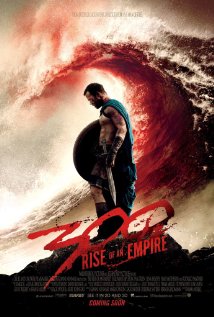
300: Rise of an Empire ~ A Capsule Movie Review

300, Rise of an Empire

300: Rise of an Empire ~ A Capsule Movie Review by Allen Kopp 

In 300: Rise of an Empire, the Persian god-king Xerxes, who we first met in the 2006 movie 300, is still intent on taking control of the city states of Greece. In 300, King Leonidas met the Persian army at the famous battle of Thermopylae in 480 BCE, with 300 Spartan soldiers. The outnumbered Spartans were badly defeated by the Persians, although they put up a valiant fight. Concurrent with the Battle of Thermopylae was the naval battle at Artemisium, led by the Athenian general Themistocles. 300: Rise of an Empire is the story of the battle at Artemisium, which had a different outcome for the Greeks, who were fighting for their freedom and for democracy (a new concept at the time). The story of the two battles is interwoven in 300: Rise of an Empire, which is more another chapter of the same story than a sequel to the earlier movie. The “third act” of 300: Rise of an Empire is what came about after the two battles.

The main character and the hero of 300: Rise of an Empire is the Athenian general Themistocles (played by Sullivan Stapleton). He has a toned body as did King Leonidas (Gerard Butler) in 300 and looks good in leather underwear. In fact, all the Greek soldiers, whether Athenians or Spartans, appear to be at the peak of physical perfection. There’s not a flabby gut in the bunch. Immodestly attired as they are, they are able to give the Persian army a run for its money. Maybe conquering Greece wasn’t such a good idea after all.

There are two strong female characters in 300: Rise of an Empire. Queen Gorgo, the recently widowed wife of the heroic King Leonidas, takes on the roll of warrior queen after her husband’s death. She engages in battle with the Persians the same as the men do. Artemisia is a Greek-born woman who, because she witnessed her family killed at the hands of a Greek army, has gone over to the Persian side. She is an advisor to King Xerxes, something of a military commander, and wants nothing more than to see Greece defeated at the hands of Persia. She cuts men to pieces as easily as she breathes. During a sexual encounter with Themistocles, she offers him a job with her if he’ll come over to her side. He refuses, of course, since he has devoted his life to Greece and to making the army strong.

300: Rise of an Empire (as 300 was before it) is based on a graphic novel and has a kind of other-worldly beauty (a world that exists only in the imagination). There’s lots of action, stylized violence—severed heads and limbs—and a generous use of slow motion. The battle sequences, especially the naval battle, are impressive and engaging. The pounding music score really stood out for me. If you are a fan of 300, as I am, you won’t be disappointed by 300: Rise of an Empire. 

Copyright © 2014 by Allen Kopp