Anti-electricity cartoon from 1900. No matter how good an idea comes along, there will always be somebody opposed.
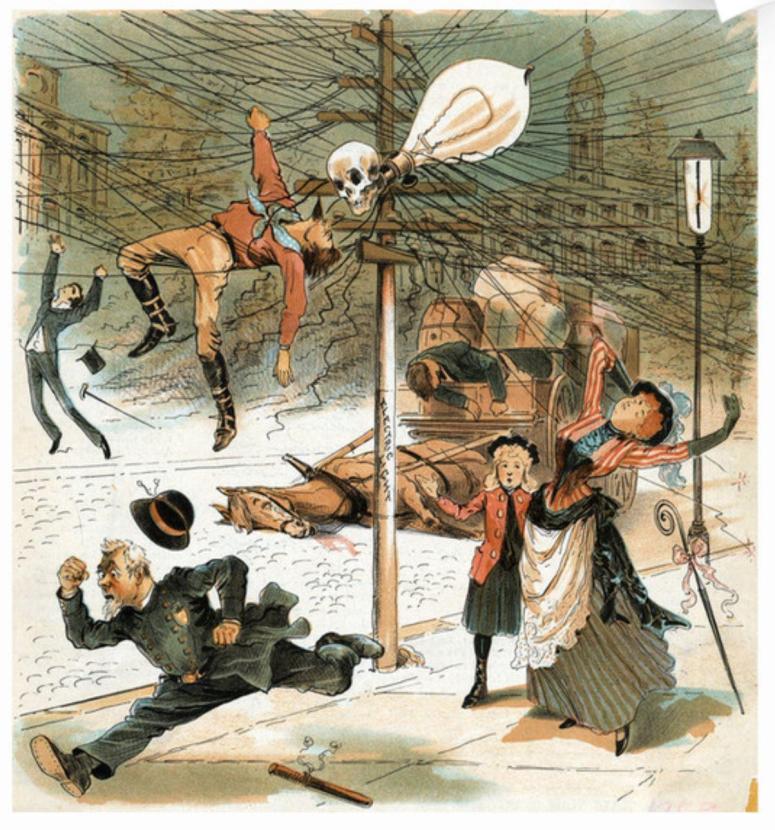

Anti-electricity cartoon from 1900. No matter how good an idea comes along, there will always be somebody opposed.

Hereditary ~ A Capsule Movie Review by Allen Kopp
The Grahams are a middle-aged couple who live in a big house in the woods. Annie Graham (an overwrought Toni Collette) is a sort of artist who makes dollhouses and miniatures. Her husband, Steve (Gabriel Byrne), doesn’t seem to do much of anything except stand around and be fatherly to the two Graham children: a very odd thirteen-year-old girl (inexplicably) named Charlie and Peter, a dope-smoking high-schooler.
Annie Graham’s strange (“strange” is the operative word here) mother dies. Annie speaks at her mother’s funeral, explaining how “private” her mother was in her “associations.” (We find out later the reason for this.) Annie’s mother had a special bond with the little girl Charlie. At one point Charlie says that her grandmother wanted her to be a boy, which might explain her being given a boy’s name.
Charlie is not the usual thirteen-year-old girl. She is distant and preoccupied, with a face that is mask-like. Also, she has a peanut allergy, which is an important plot point to remember later. When Peter, Charlie’s brother, is invited to a teenage party, his mother makes him take Charlie along, which she will sadly regret later. What happens to Charlie, which I will not give away here, is the most disturbing image in the movie.
Grieving, Annie meets Joan, an older woman who seems sympathetic. (Joan, as we discover later, is not what she seems to be.) Joan is also grieving; her son and grandson have both died in a drowning accident. These two women seem to have a lot in common.
At a later date, Annie meets Joan when she is out shopping. Joan feels so much better, she says, because she has met a spiritual medium who has shown her how to get in touch with her grandson in the spirit world. Annie is skeptical, of course, but eventually drawn in.
When Annie is going through some boxes of her dead mother’s possessions, she finds some pictures that she can’t explain and also a book with some of its passages highlighted that tell how a demonic spirit is looking for the body of a human boy to occupy on earth. These fleeting images help to explain what is going on. If you’re not paying attention during these few seconds, you will miss it because it won’t be explained later.
Hereditary is a better-than-average summer movie. It’s slow-moving at times, especially during the first third, and is probably a little too long at 127 minutes. It takes a long time getting to the payoff, but when it comes (to music that sounds like Wagner’s “Entrance of the Gods into Valhalla”), we find that it was well worth the wait.
Copyright © 2018 by Allen Kopp
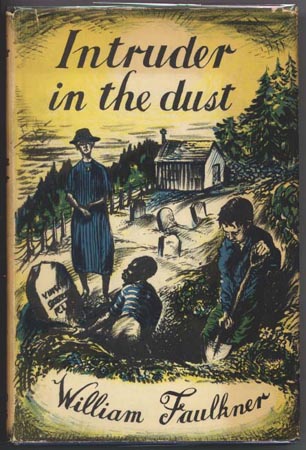
Intruder in the Dust ~ A Capsule Book Review by Allen Kopp
In the small town of Oxford, Mississippi, a white man named Vinson Gowrie is murdered, while a black man named Lucas Beauchamp stands accused and is put in jail. The Gowries (from “Beat Four”) are sure to want revenge. They can get enough of their redneck friends together to storm the jail and remove Lucas Beauchamp and lynch him. The law is conceivably helpless against such a mob.
A sixteen-year-old boy name Charles “Chick” Mallison is convinced of Lucas’s innocence, while everybody else believes he is guilty. When he was twelve years old, out hunting in the woods, Chick fell into the river and was pulled out by Lucas Beauchamp. Lucas took him home with him, gave him dry clothes and half his dinner. Chick tried to pay him for his kindness with some coins he had, but Lucas didn’t take well to being given money by a white child. Chick never forgot Lucas’s kindness, his dignity, and how much he was unlike other black people of his acquaintance.
With little more than a hunch to go on, Chick wants to prove that Lucas is innocent. He gets his friend, Aleck Sander (a black youth his own age), to go along with him to the cemetery where Vincent Gowrie is buried, miles outside of town. But, wait a minute, there’s at least one adult who also believes Lucas is innocent. A seventy-year-old spinster named Miss Habersham grew up with Lucas’s now-deceased wife, so she has a personal interest in the matter. She goes along on the nighttime visit to the cemetery to dig up Vinson Gowrie’s body and take it back to town so it can be examined by an expert to prove that Lucas’s gun didn’t fire the fatal bullet.
Well, wouldn’t you know it? There’s a body in Vincent Gowrie’s grave all right, but it’s not Vincent Gowrie. Now it becomes a murder mystery. While everybody else is waiting around for the Gowries to lynch Lucas Beauchamp, a handful of people (Chick Mallison, his lawyer uncle, Miss Habersham) are willing to miss sleep and put themselves out to prove that something more sinister is going on that a black man murdering a white man in a small Southern town.
Intruder in the Dust was first published in 1948. It is, we are told, William Faulkner’s answer to race relations in the South. It’s written in a stream of consciousness style, making it wordy and at times difficult to read. Some of the sentences are hundreds of words long and some of the paragraphs go on for two pages or more. A thought will obtrude on a thought and then another thought will obtrude on that thought. Faulkner was the supreme literary stylist of American literature. Nobody else even comes close.
Copyright © 2018 by Allen Kopp
1956 Bel-Air V8 Hardtop

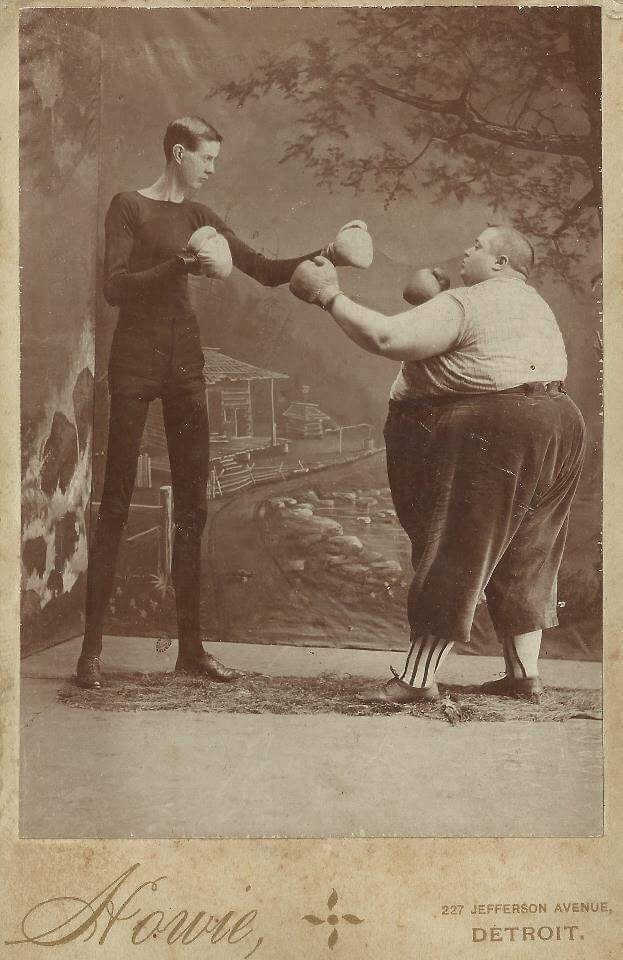
May the best man win.
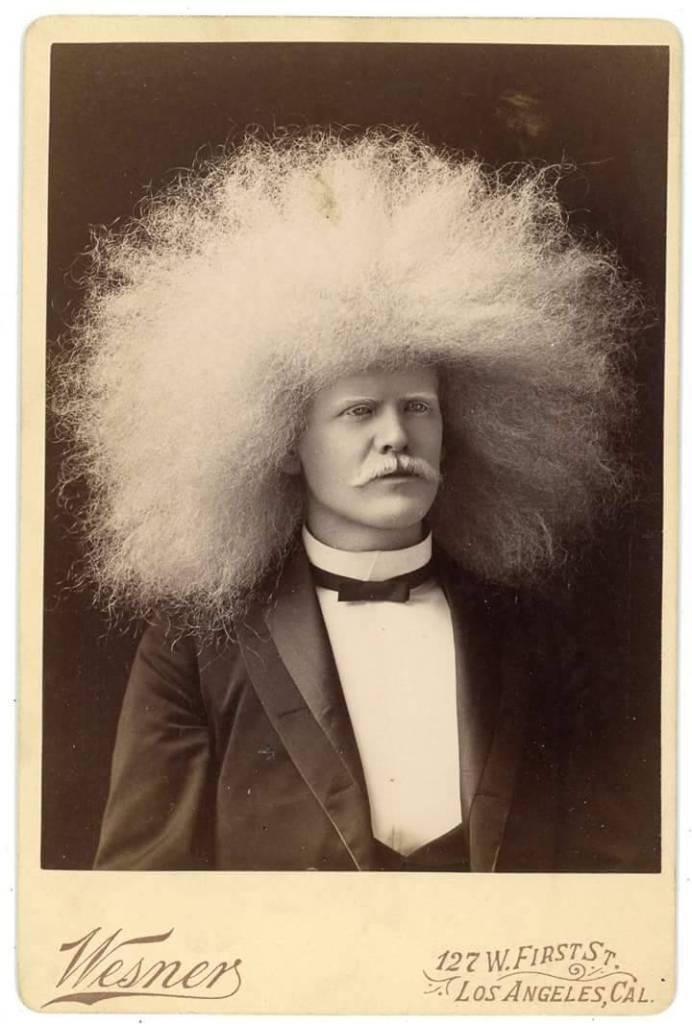
Nobody has hair like that.
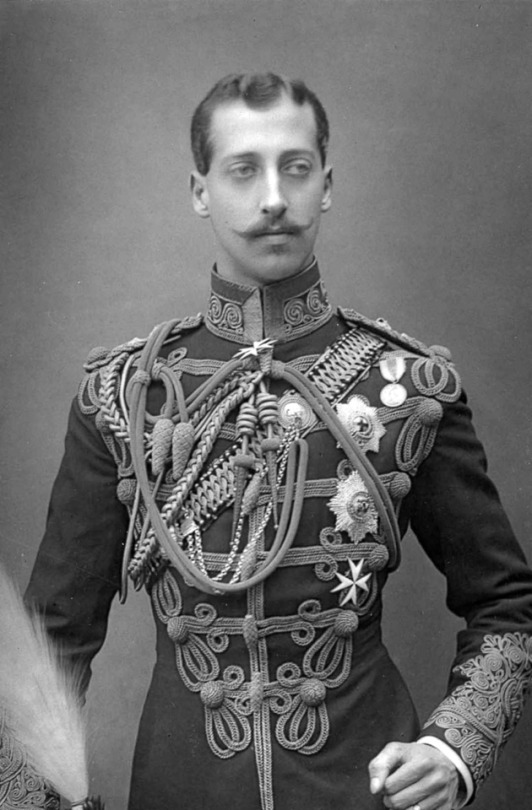
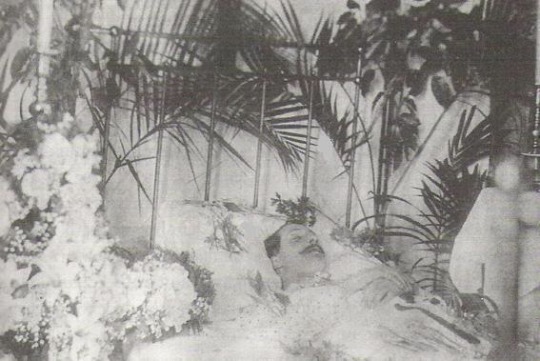
Prince Albert Victor (1864-1892), grandson of Queen Victoria and second in line of succession to the British throne, died at age 28 of influenza.