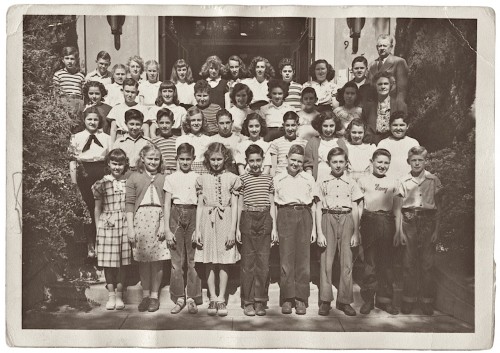
At the Time of His Disappearance ~ A Short Story

At the Time of His Disappearance image 7
At the Time of His Disappearance
~ A Short Story by Allen Kopp ~

Trent arrived home from school at the usual time. He threw down his school books and went into the kitchen. His mother was sitting at the kitchen table, reading a magazine and smoking a cigarette. Without a word of greeting, he ate some cookies and drank a glass of water, standing between the table and the back door. When he was finished, he set the glass on the table and went out the door.

“Dinner in an hour!” she called, but he gave no indication of having heard her.

It was October and the yard was full of golden sunlight and the smell of leaves. The yard was a refuge for squirrels and birds and other small animals. It was, by far, the best place to be on an autumn afternoon. And it was private. Nobody ever came snooping around. The nearest neighbor was over a mile away. The boy had it all to himself.

Abutting the yard at the south side was an old cemetery. The boy spent a lot of time in the cemetery. He loved the old gravestones and the elaborate growth of trees, bushes, vines and weeds. It was a private world unto itself. The newest grave that he had found so far was fifty years old. If there were any graves more recent than that, he had yet to find them. It was a lost world with all those long-ago dead people. He imagined some of them in their graves, exactly as they were when they were when they were alive. He could hear them laughing and whispering. Sometimes they reached out and touched him on the shoulder or the back.

From the bay window in the dining room, his mother watched him go into the cemetery. She told him to stay out of there, but since he turned twelve he had a mind of his own and he did exactly as he pleased. That was the problem with children getting older, she thought.

She believed he was developing a morbid interest in the dead because of all the time he spent in the cemetery. Any time she didn’t know where he was, it only took one guess to figure it out. One night she heard him talking long after he should have been asleep, and when she opened his door and asked him who he was talking to, he said he was talking to a sixteen-year-old boy who died in a flood in 1893.

It was time for the evening meal, and still the boy hadn’t come back. She was going to have to have a very serious talk with him. He might at least show some respect for her after all the trouble she went to to cook the dinner.

She put on a sweater and went out the back door to try to find him. She went all the way around the house, calling his name, but she knew he wasn’t there; he was in the cemetery.

She went to the entrance to the cemetery and stopped. She called his name, but she knew he wouldn’t answer, even if he could hear her. He loved playing tricks on her. It would be just like him to jump out at her from behind a gravestone and make her jump and scream. And of course he’d laugh at her and call her a panty waist.

It was almost dark now. She went back to the house and sat down at the table and began eating the food she had fixed. She could only manage a few bites. She was nearly in tears. She was a little worried about him, but she assured herself he was all right and had just lost track of time, as children do.

By ten o’clock, his customary bedtime, he still hadn’t returned. She got her flashlight out of the drawer and went outside. She walked all the way around the house, calling his name, shining the light into the darkest places. She didn’t see any sign of him. She knew the cemetery was the place to look.

She had been in cemeteries before, but never at night and never alone. She assured herself that the cemetery was full of people long dead. There were no ghosts, nothing  to bother her or cause her worry. She had to find her son, and she couldn’t be a big baby about it. Maybe he was in trouble. He might have fallen and broken his leg or something.

She gathered her courage and, walking slowly, shone her light all around, at the tops of the trees and all over the ground. Some of the gravestones were huge slabs, and others were so small you might easily trip over them if you weren’t paying attention. She called his name every few feet, but her voice was drowned out by the wind and the rustling leaves.

There was nothing out of the ordinary in the cemetery. Just the graves of those long forgotten. There were no signs of the boy having been there. All she could think to do was go back to the house and wait for him to return.

Rather than go to sleep in her bedroom upstairs, she took a comforter out of a closet and made a bed for herself on the couch in the living room. If he came in the back door, left unlocked for him, she would hear him. He would come back, she believed, with a wild story about having been abducted by a spaceship. He had quite an imagination. She would be torn between laughing at him and wanting to slap his face for scaring her so.

She spent a nearly sleepless night. Any time she almost went to sleep, she would be awakened by what she thought was the back door opening and closing, or by his calling out to her across a vast distance.

At seven in the morning she called the police and told them her twelve-year-old son never came home yesterday. Within a few minutes, two uniformed officers appeared at her door. One of them was old and the other one young.

Sobbing intermittently, she told them what happened: Her twelve-year-old son disappeared in the yard and/or cemetery the day before and didn’t come home all night. She went looking for him with a flashlight and even called his name repeatedly, but it was all to no avail.

The older officer said, “In about fifty percent of these cases, the adolescent runs off on his own and comes back on his own when he gets hungry enough. Do you think he might be one of these?”

“Oh, no! I don’t think so.”

“Has he ever run off before?”

“He hasn’t run off now.”

“Might he have been abducted by strangers?”

“I don’t have any reason to think that.”

“Was he having trouble at school?

“No!”

“Was he being bullied?”

“No, I don’t think so. No.”

“Did he ever use drugs or alcohol?”

“Of course not! He’s twelve years old!”

“What about the boy’s father?”

“My husband and I are divorced.”

“Was the boy upset when you got your divorce?”

“No. He was four years old at the time.”

“Do you ever see or hear from your ex-husband?”

“No.”

“Might your ex-husband have had anything to do with the boy’s disappearance?”

“Certainly not!”

The older officer had been writing her responses on a yellow legal pad. He stopped writing and, with his pencil poised above the paper, turned and looked at the younger officer. “Can you think of anything else?” he asked.

“Was the boy, um, I mean, is the boy sexually active?” the younger officer asked.

“Of course not! He’s a child!”

“Do you have a recent picture of him?”

She stood up, walked a few feet, opened the drawer of a desk, took out a picture and handed it over to the older officer.

“We’ll need to keep this picture.”

“Of course.”

“What was he wearing at the time of his disappearance?”

“A shirt and pants. A jacket. A cap.”

“Does he have any distinguishing features?”

“A small mole on his right cheek.”

“Height?”

“What?”

“How tall is the boy?”

“I couldn’t say for sure. He’s rather small for his age. I’d say about four feet, six inches.”

“Can you tell us anything else about him?”

“He loves to spend time in the cemetery.”

The older officer shifted his big legs and coughed. “And why is that?”

“We have an old cemetery adjoining our property. My son has been fascinated by it for years.”

“Why is that?”

“I’m not sure. I always told him he should stay out of there.”

“And what did he say when you told him to stay out?”

“He said he felt close to some of the dead people. Don’t ask me why. He’s a lot like  his father, I suppose.”

“Would you say he is obsessed with death?”

“No, I wouldn’t say he’s obsessed with death. He’s going through a phase.”

They’d keep a close watch out for him, the officer assured her. They’d send the boy’s picture and his description to every law enforcement agency in the state. They’d talk to every person in a ten-mile radius. If anybody saw anything, they’d say so.

“We’ll find him,” the older officer said.

She wanted to believe the boy would be found, but something about the way he disappeared defied logical explanation. It was going to take somebody smarter than the local police to figure it out.

They sent a team of men and boys to search the cemetery, the woods and the fields. After five days of finding nothing, they called off the search. The search would resume at a later date.

The story appeared in newspapers and on television. There was an outpouring of interest and sympathy. The mother’s phone rang all the time. Most of the calls were from well-meaning people, but a few of them were crank calls. One person claimed to know where the boy was and would divulge his location for five thousand dollars.

After the boy had been missing for a week, the mother received a phone call from a woman named Hortense Rathbone. She said she was a psychic who had been helping locate missing children for sixty years. She would do a “reading” for a hundred and fifteen dollars.

“I don’t believe in that sort of thing,” the mother said.

“I can tell things about the boy just by looking at his picture.”

“What things?”

“You’re not his real mother. You adopted him.”

“Nobody knows that. Not even he knows that.”

“Also, he’s a very old soul.”

“What does that mean?”

“It means his soul is prized.”

“Prized by whom? What are you talking about?”

“I can come to your house and do a reading. You have nothing to lose. I won’t charge you a penny if you get no results.”

“What results? Do you mean you can find him?”

“I don’t know, but I can try. No charge. This is an interesting case.”

“All right. This is Thursday. You can come on Saturday morning. And if  you’re another crackpot, I’ll throw you out and I won’t be nice about it.”

“I’ve been called a lot of things,” Hortense Rathbone said.

She was a very old woman, dressed in a man’s suit and wearing combat boots. She drove a fifty-year-old Cadillac, once white but now many other colors. When she walked into the house, she wanted to walk from room to room, but she especially wanted to spend time in the boy’s room, absorbing his “essence,” as she said. She wanted a shirt of his that he had recently worn. She wadded up the shirt into a ball and held it over her mouth. She lay down on the bed where he slept and closed her eyes.

“I’ll leave you alone,” the mother said. “Come back downstairs when you’re finished.”

The psychic wanted to know every detail about the boy’s disappearance: time of day, what he said before he left the house, what he was wearing. Did he mention any other person by name? What was his mental state at the time of his disappearance?  When the mother told the old woman about the cemetery, she said she needed to see it right away. It might contain an important clue that nobody else was able to see.

She spent four hours crisscrossing the cemetery, and when she came out she looked happy.

“I’ve had a breakthrough in the case,” she said. “I know what happened to the boy.”

“You know where he is?” the mother said.

“I don’t know where he is, but I know what happened to him.”

“What are you talking about?”

“There’s lots of psychic activity in that old cemetery.”

“Yeah? What about my son?”

“You said he spent a lot of time there?”

“Yes.”

“He’s passed through a portal. I can hear his voice. He’s calling for you to help him. He wants out.”

“What are you talking about? What portal?”

“It’s not something in the ground, but in the air. Think of it as being a door into another dimension.”

“Another dimension? That sounds too fantastic!”

“Well, believe it or not, portals are everywhere. People, especially children, will fall into them. It doesn’t happen very often, but it does happen.”

“But how do we get him back here?”

“I wish I knew, honey.”

The mother half-believed, half-disbelieved, the old woman’s version of what happened to her son. It made sense in a way, but it strained credulity. Another dimension? Is such a thing possible?

She began going to the cemetery every day. She wanted to find the portal that her son had fallen into. She wanted to hear his voice, pleading with her to get him out. If she just heard his voice, she’d do anything in the world to get him back home. She didn’t know how to look for a portal, but if it was there she’d find it. Being in the cemetery made her feel  close to him. She’d sit for hours, listening to the wind and hoping to hear his voice.

The police investigation was going nowhere. An officer called her occasionally to report nothing at all, but also to reassure her the case would remain open.

Sometimes she caught a fleeting glance of the boy out the window, turning a corner of the house. Other times, she heard him moving around in his room late it night. He was there. She was sure of it.

Copyright © 2024 by Allen Kopp
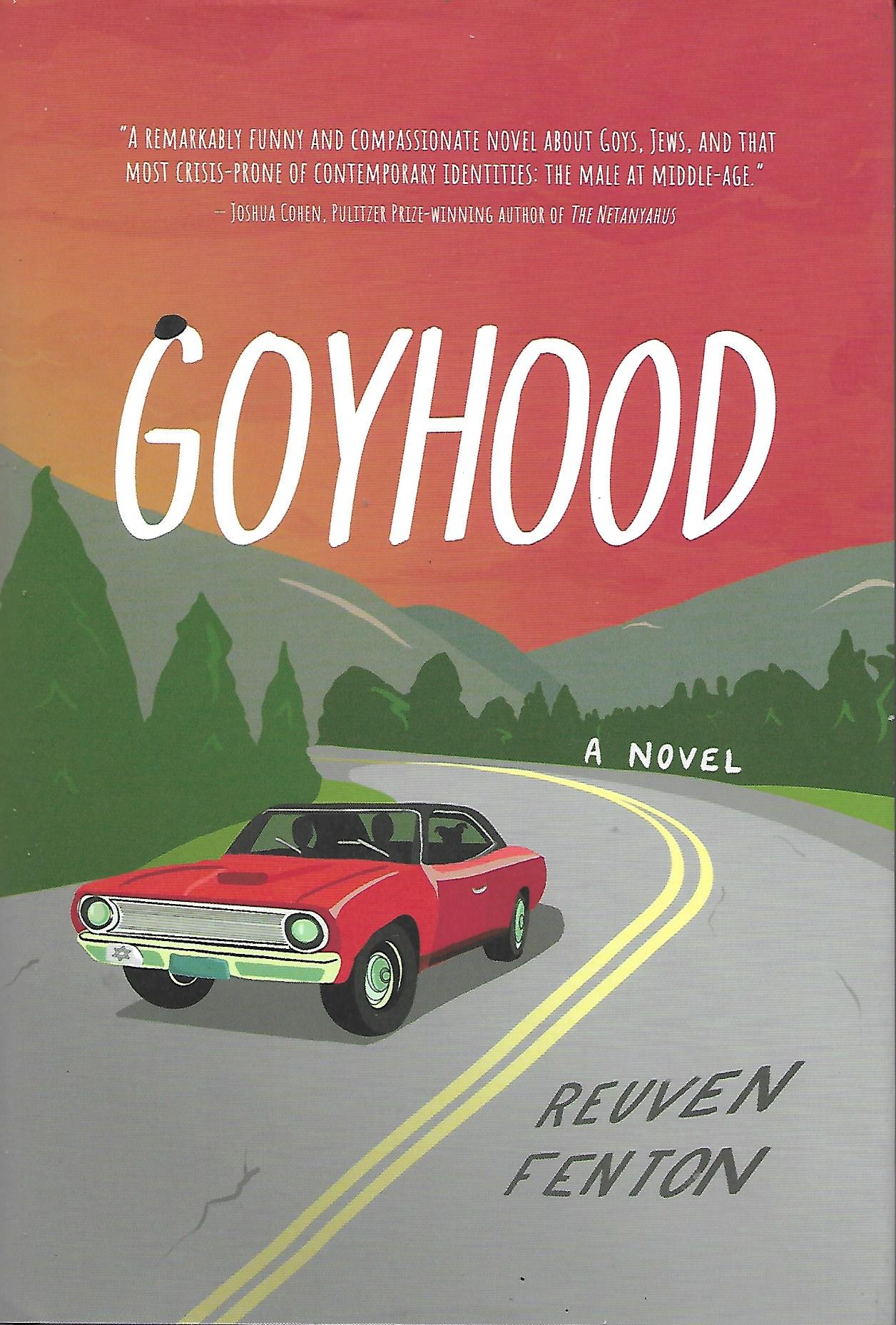
Goyhood ~ A Capsule Book Review

Goyhood cover
Goyhood
~ A Capsule Book Review by Allen Kopp ~

The main characters in Goyhood are twin brothers Marty (later Mayer) and David Belkin. They live with their eccentric mother, Ida Mae, in the small town of New Moab, Georgia. When they are ten years old, Ida Mae informs them they are Jewish. Devil-may-care David doesn’t really care if he is Jewish or not. Marty, however, is shaken to the core by this revelation. He changes his name to Mayer and becomes an Orthodox Jew, making a profession of studying the Torah. When he becomes a man, he marries a Jewish woman named Sarah, whose father is a famous rabbi.

Years later, when Mayer and David are in their forties, they receive word that their (by-now) enormously obese mother has committed suicide. (Mayer lives in Brooklyn and David in Atlanta.) They both converge on their hometown of New Moab, Georgia, to attend the funeral. However, they learn there will be no funeral because their mother has been cremated. They are presented with an urn containing her ashes, which they, quite sensibly, refer to as Ida Mae. That’s not all, though. She has left Mayer and David a suicide not in which she reveals that they aren’t really Jewish after all.

Mayer is shattered. He has been living a lie, albeit an unwitting lie. He isn’t a Jew; he’s a gentile. He’s a fake; he’s a liar, he’s a sham. He only wants to get back to Brooklyn to convert to Judaism and make thing right with Sarah. His brother David, though, has other ideas. How about a road trip through the South? They can have some adventures, and it will give them some time to reconnect as brothers. Mayer reluctantly agrees against his better judgment. They rent a jazzed-up, red, retro car that David names Daisy.

Right away on their travels, Mayer and David encounter a lovable stray dog alongside the highway. David wants to keep the dog, but Mayer is against it. David wins, and they take the dog wherever they go, even into restaurants. David names the dog Popeye because he has been mauled in a fight and only has one eye. Despite his rough appearance, Popeye is very sweet, and both brothers fall in love with him.

The brothers spend several days in New Orleans, where David encounters an old friend named Charlayne Valentine. She is black and is on her way to hike the Appalachian Trail, which is over 2,000 miles long. She becomes a significant addition to the duo and a major character.

During the trip, Mayer unwinds a little and has some startling self-revelations: For one thing, he realizes he has been married to the wrong woman for eighteen years. And the question about his Jewishness is an obvious one. Even though he isn’t really a Jew, he can become one. We are what we think we are, even when we are (unwittingly) something else.

Goyhood is a first novel by New York Post writer Reuven Fenton, who writes some very smart dialogue. I had a little trouble with some of the Hebrew words and phrases, but that’s a minor quibble. It’s an entertaining novel, filled with droll humor, some surprising twists and turns, and a minimum of heart-rending tragedy. Highly recommended for summer reading or reading at any other season.

Copyright © 2024 by Allen Kopp

You Were Kind to Me ~ A Short Story

You Were Kind to Me image 1
You Were Kind to Me
~ A Short Story by Allen Kopp ~

The once-every-two years carnival was in town. Anybody who was anybody would go at least one night. Vicki-Vicki LaGrasse went on Saturday night, accompanied by two friends from high school, Pansy Dowd and Mary Lee Kaiser. When they arrived at the fairgrounds, it wasn’t quite dark yet and the crowds were thin.

“I want to go on the Ferris wheel first thing,” Pansy said.

“Before it’s even dark?” Mary Lee said.

Mary Lee was afraid of heights and, so she sat in the middle and kept her eyes closed the whole time.

“What good does it do you to ride the Ferris wheel if you don’t look down?” Pansy said.

“With my eyes closed it feels like I’m flying. I don’t have to have my eyes open to appreciate it.”

“When we get all the way to the top, I’ll push you out, and then you can really get the sensation of flying!”

After the Ferris wheel, they went to the House of Mirrors and howled with laughter at their ridiculous, distorted images. The three of them together looked three times sillier than one.

“We look like freaks!” Pansy laughed.

“Well, isn’t that what we are?” Mary Lee said.

“Say, I’m starting to get hungry. Let’s go get something to eat.”

They went to the food pavilion and ordered hot dogs and Cokes. While they were waiting for their food, they saw a tall boy across the way who seemed to be looking at them.

“Hey! Do you know him?” Pansy said. “He’s kind of cute.”

“I don’t know him,” Vicki-Vicki said without looking up.

“He’s been following us since the mirrors,” Mary Lee said.

“He’s not looking at me,” Pansy said.

“He’s not looking at me, either,” Mary Lee said. “I think he’s looking at Vicki-Vicki.”

“He’s not looking at me,” Vicki-Vicki said.

“He’s an older boy,” Pansy said. “He’s got whiskers.”

“Are you sure you don’t know him, Vicki-Vicki?”

“No, I said I don’t know him.”

“I never saw him before in my life,” Pansy said.

“He is definitely looking at Vicki-Vicki,” Mary Lee said.

“Well, I don’t want to be looked at,” Vicki-Vicki said. “So why don’t we just forget about it and go ride the Tilt-a-Whirl?”

They rode twice until Mary Lee began vomiting and the attendant had to stop the thing and let her off.

“I always get sick when I ride the Tilt-a-Whirl,” Mary Lee said.

“Then why do you ride it?” Vicki-Vicki asked.

“I’ll be all right once my head stops spinning.”

They found a place to sit quietly for a while until Mary Lee felt better. While they were sitting doing nothing, the tall boy walked past, eating from a box or popcorn.

“There he is again,” Pansy said. “It’s no coincidence that he keeps popping up.”

“Just ignore him,” Vicki-Vicki said. “He obviously just wants attention.

“He is so cute!”

“I don’t see anything about him that’s appealing.”

“Maybe you’re not looking at him in the right way.”

“I don’t want to look at him at all.”

“I’m feeling better now,” Mary Lee said. “Let’s do the Haunted House.”

“Are you sure?” Vicki-Vicki said. “I don’t want you vomiting on me again.”

“I only vomited on your shoes,” Mary Lee said. “I said I was sorry.”

They stood in a long line at the Haunted House. When they finally got in, they were surrounded by screaming younger kids.

“I didn’t know this was such a kiddie attraction,” Pansy said. “They need to be at home in bed.”

The Haunted House was screaming ghouls, severed heads, clanking chains, puffs of air, moaning corpses, flashing lights, and lots of screaming. Mary Lee admitted that she wet her pants when a monster jumped out at her but that it would dry on its own as soon as she got out into the air.

After the Haunted House, they were on their way to get some cotton candy when they stopped to watch the “Dunk the Clown” booth. A clown with an enormous nose and a painted-on mouth sat on a swing over a pool of water. For twenty-five cents, anybody could try to hit the target with a baseball that would dump the clown into the water. While the clown was in the water, he gestured to the crowd and made faces, eliciting screams and jeers. After a while he climbed out of the water and got back on the swing again for somebody else to try.

“Can you imagine being the clown?” Pansy said. “So degrading!”

“It’s his job,” Vicki-Vicki said. “Like any other job.”

“Wait a minute,” Mary Lee said. “There’s that guy again.”

“What guy?”

They all turned their heads toward the person trying to knock the clown into the water. There were lots of people standing in the way, so they had to wait for somebody to move before they could get a good look.

“Yes, it’s him,” Pansy said. “He’s there and then he’s here. He’s everywhere.”

He hit the target effortlessly with the baseball and the crowd roared. A carnival worker man handed him his prize of a stuffed animal, and the next person in line took his place.

“Now we’ve seen everything,” Pansy said.

“Let’s get some cotton candy,” Mary Lee said.

“No, he’s coming this way,” Pansy said. “He’s looking right at us.”

“Just ignore him,” Vicki-Vicki said. “He might be looking for somebody to knife.”

“I don’t think so,” Pansy said. “He looks very sweet.”

Ignoring Pansy and Mary Lee, he walked up to Vicki-Vicki and smiled at her. He towered over her.

“You don’t remember me, do you?” he said.

“I don’t think we’ve met,” she said with a tight smile.

“I remember you.”

“I don’t think so.”

“Here. I want to give you this stuffed toy.”

“Thanks, but I don’t accept stuffed animals from strangers.”

“You really don’t remember me, do you?”

“I’m with a couple of my friends from school. We were just leaving.”

“That’s all right,” he said. “Don’t let me intrude.”

She looked at the stuffed animal in her hand and gave it back to him.

When she turned to go, he said, “It was in sixth grade.”

“What was in sixth grade?”

“When we knew each other.”

“That was years ago.”

“I know,” he said, “but I always remembered you.”

“I think you have me mixed up with somebody else.”

“It was Miss Spengler’s class. She had white hair and she looked just like the picture of George Washington hanging on the wall.”

“It wasn’t me. It was somebody else.”

“No, it was you, all right.”

Pansy and Mary Lee were standing behind Vicki-Vicki, taking in every word. Mary Lee giggled and Pansy pinched her on the arm.

“Maybe if you told me your name, I might remember.”

“It’s Harry.”

“Harry what?”

“Just Harry.”

“You don’t have a last name?”

“I was living in a foster home. I moved around a lot. I left school after a few months to go someplace else.”

“You sat in the back of the room?”

“Yes, I did.”

“You were taller than anybody else in the class.”

“I think you remember me now.”

“You were the only one in the class who could spell the hardest words.”

“That was me.”

“You had fried chicken for lunch. Everybody else had junk food.”

“What a memory you have!” he said.

She blushed, in spite of herself, and turned to Mary Lee and Pansy for support.

“Since you remember me now, I wonder if you’d let me give you a ride home.”

“What? Oh, no! As I said, I’m with some friends.”

“I can give them a ride, too.”

“I don’t think so. My friend’s mother is going to pick us up.”

“How about if you go with me, and your two friends can go with your friend’s mother.”

“I don’t think I should go off and leave them.”

“Surely they wouldn’t mind. Just this once. It’s a beautiful evening. There’s a full moon. We can go for a ride in the country. Tell me that doesn’t sound good.

“I’m sorry. I can’t.”

“Why not?”

“I just don’t think I should leave my friends.”

“Ask them.”

She turned away and consulted with Mary Lee and Pansy. They shook their heads and shrugged, showing how indifferent they were to Vicki-Vicki’s comings and goings.

In a minute she returned to him. “It’s all right,” she said. “My friends think I should go with you.”

She knew that if she didn’t accept his offer, there might never be another one. Never as in not ever. She’d die a dried-up old spinster, playing bingo in the church basement on Friday nights while smoking Marlboro cigarettes. She would be forced to remember that she had once been asked but had foolishly declined.

He drove far out into the country, twenty miles or more. She didn’t ask where they were going. She didn’t tell him she had to be home by a certain time. She didn’t care about any of that.

Finally he stopped on a bluff overlooking a river.

“I didn’t even know this was here,” she said, trying to keep her voice from shaking.

“People don’t know about it,” he said. “It’s private. That’s why I like it.”

“It’s kind of scary in the dark. You don’t know what’s lurking in those trees over there.”

“Maybe an owl or two.”

After a while she asked him about his life since sixth grade. He lived in foster homes until he was sixteen and then he struck out on his own. After he got his high school diploma, he said, he no longer needed to live with strangers.

“You’re self-sufficient. Most boys your age are still such adolescents.”

He reached her for and began kissing her. He smelled of soap and peppermint. She resisted a little bit, but not much.

“I like you,” he said. “I’ve liked you since sixth grade.”

“It’s funny how people meet again after years. When somebody appears unexpectedly in your life, I always think there’s a reason.”

“I know you didn’t think about me after the sixth grade, but I thought about you a lot. You made a very favorable impression on me.”

“Why me out of all the others?”

“You were kind to me. Nobody else bothered.”

“I’ve never done this before with a boy.”

“It’s all right. I won’t hurt you.”

Soon she was on her back and he was on top of her.

When he drove her back to town, it was almost three in the morning. She was relieved to see that her house was all dark, meaning that her mother had gone to bed. She opened the door of the truck. Before she got out, he said, “I want to marry you.”

It was the last time she ever saw him.

In a few weeks she knew that something was happening with her body. She missed one cycle and then another. She was pretty sure what was wrong, but she hoped it was something else. When she told the school nurse the symptoms she was having, the nurse gave her a test to do on herself when she got home. When she saw the results of the test, she felt a stab of panic. She was going to have to tell her parents about the carnival, the boy from sixth grade, and all the rest of it. She couldn’t keep it a secret forever.

Copyright © 2024 by Allen Kopp

Map of the World ~ A Short Story

Map of the World image 3

Map of the World
~
A Short Story by Allen Kopp ~ 

On the first day of the new school term, Joanne Torrance was sullen and unhappy. She wasn’t ready for summer vacation to be over; she wanted to be able to stay at home and do as she pleased all the time. It wouldn’t have mattered to her if school had never taken up again for as long as she lived. She was sure she could learn all she needed to know from reading books and magazines and seeing lots of movies and watching the really important shows on TV like Superman and Lassie and The Three Stooges.

As soon as she met her new teacher for the first time—one Ruby Chinn—she hated her on sight. She had long yellow teeth that showed even when her mouth was closed. She had dyed hair the color of beets that she wore pulled into a severe bun on top of her head that resembled a cake made out of hair and that showed the fleshy folds on the sides of her face and neck. Joanne could have told her how she might adopt a more flattering hairdo to complement her round face, but she didn’t care how ridiculous a person’s hair looked when she despised that person as much as she despised Miss Chinn.

Since it was the first day of the new term and people didn’t know each other very well, Miss Chinn had each person write his (or her, as the case may be) name on the blackboard in colored chalk. After writing his or her name, the person was to turn around and face the class and introduce himself (or herself) in a loud clear voice. The boys were then supposed to bow from the waist and the girls to curtsey. This was a chance for everybody to get to know what face went with what name. Miss Chinn referred to this exercise as an ice breaker.

When Joanne’s turn came, she went to the blackboard and picked up the pink chalk and wrote her name in a neat cursive script underneath the babyish scrawl of the person who went before her. Then she turned around and bowed from the waist instead of curtseying. A howl went up from the class and she flushed with embarrassment.

“No, no, no!” Miss Chinn said impatiently with her forefingers extended, two feet apart, as though measuring the length of a fish she had caught. “What do girls do?”

“Curtsey!” the class said in unison.

“And what do boys do?”

“Bow from the waist!”

“That’s right! Now, Joanne, I have a simple question for you and it isn’t that difficult. Are you a girl or a boy?”

Again a howl of laughter erupted from the class. They were enjoying her discomfort, which went a long way toward relieving the tedium of the first day of class.

“I’m a girl,” she said in a small voice.

“What was that?” Miss Chinn said. “I can’t hear you!”

“I said I’m a girl!”

“Well, you certainly look like a girl, but we all just saw you do the thing that boys do. Now, can you prove that you’re a girl and do what girls do?”

“No.”

“What do you mean ‘no’?”

“I mean I would rather not.”

“And why would you rather not?”

“It’s silly.”

“Not as silly as you are in refusing to do it.”

“I don’t think I have to do it just because you tell me to do it.”

Miss Chinn rolled her eyes and the class laughed again. “If there is one thing I will not tolerate in the classroom,” she bellowed, “it is insolence!”

“You and me both,” Joanne said, but not loud enough for Miss Chinn to hear it.

“You are wasting precious time! Sit down this instant! We’ll deal with this matter later.” She opened her grade book. “I could send you to the principal’s office, but I know he’s busy on the first day and would rather not be bothered, so I’m giving you a failing grade for the day. You may be the only student in the history of this school to get a failing grade for the first day of the new term.”

“Whoo-whoo-whoo!” went the class.

Joanne returned to her seat, wishing she had a pirate dagger to plunge far into the heart of Miss Chinn and everybody else in the class.

The next person to the blackboard to write her name was Veronica Kennedy. She had blonde hair and dimples and a beauty mark on her right cheek. People said she looked like a movie star and would go far in life. She already had breasts and was wearing a brassiere, the outline of which could be clearly seen through her lovely yellow blouse. She wrote her name beautifully with yellow chalk (yellow seemed to be her color) underneath Joanne’s name, and then she turned and faced the class and executed a perfect curtsey, holding her skirt out just far enough so that the edge of her underpants showed. The class erupted in cheers and applause.

“You see?” Miss Chinn said triumphantly. “That is what girls do!”

“Yaw-yaw-yaw!” went the class as Veronica Kennedy smirked with superiority and resumed her seat.

Later in the day, during the social studies lesson, Miss Chinn pulled down a map of the world like a window shade and stood before it with her pointer.

“Now,” she said, “who can tell me where Peru is?”

Joanne was the only person in the class who raised a hand.

“Come now,” Miss Chinn said. “Doesn’t anybody know where Peru is?”

Joanne raised her hand even higher. She was all the way at the back of the room, so maybe Miss Chinn hadn’t noticed her.

“Nobody?” Miss Chinn asked. “Can’t anybody tell me where Peru is? No? It’s in South America. Can anybody tell me where South America is?”

“I can!” Joanne said, waving her hand.

“Who said that?” Miss Chinn asked.

“I did!” Joanne said.

“I believe I’m had quite enough of you for one day,” Miss Chinn said. “You should know by now that we don’t speak in class until we’ve been called on. You haven’t been called on.”

“Hoo-hoooooo!” went the class.

“Now, can anybody tell me where South America is?”

Joanne lowered her hand and slumped down in her chair.

“Nobody? Shame on you! It’s right there!” She pointed to South America, outlining it with the pointer. “And there is Peru!”

During lunch in the school cafeteria, Joanne sat by herself facing the wall. She heard sniggers behind her back and knew they were coming from the next table where Veronica Kennedy and her coterie of followers were sitting. Somebody threw a wet bread ball and hit her in the side of the head, followed by a volley of snorting laughter. She was only half-finished with her lunch, but she didn’t feel like eating the rest of it and so stood up and emptied her tray and went outside.

Rosalie Dunphy was leaning against the side of the building with her head tilted back against the brick and her eyes closed, like a cat sunning itself. She was a large, silent girl with wild unkempt hair who was a couple of years older than anybody else because she had been held back two grades. Joanne knew her slightly from the year before. When she walked up to her, Rosalie opened her eyes and looked at her but didn’t move her head.

“I’d like to poison Miss Chinn,” Joanne said.

Rosalie reached in her pocket and took out a folded-up piece of paper and handed it to Joanne. “I drew this,” she said.

Joanne unfolded the paper and saw there a picture of a witch flying on a broomstick with her heels up in the air and a leer on her face. She was wearing a pointed hat and had a hump on her back and a wart on her chin with hairs coming out of it. It was a perfect likeness of Miss Chinn.

“That’s pretty good,” she said, handing the drawing back to Rosalie.

“I like to draw.”

She stood next to Rosalie against the wall and she somehow felt better and not so alone. “I hate everybody in this school,” Joanne said after a while.

“Come with me,” Rosalie said. “I have something I want to show you.”

She led the way around the building to the long flight of concrete steps that went down from the school grounds to Main Street. The steps were strictly off-limits during school hours, but that didn’t make any difference to Rosalie. She went down near the bottom of the steps and sat down. Joanne followed her and sat next to her.

“You have to promise not to tell anybody about this,” Rosalie said.

“I won’t,” Joanne said.

She reached into her pocket again and took out a package of Lucky Strike cigarettes and a little box of kitchen matches.

Joanne wanted to say is that all, but she said nothing because Rosalie surprised her by taking a cigarette out of the pack and putting it in her mouth and lighting it as expertly as if she had been smoking her whole life.

Rosalie took a deep drag on the cigarette and inhaled the smoke into her lungs. “Ah, that is so good,” she said.

After another drag, she held the cigarette out to Joanne. “Try it,” she said.

“I haven’t ever smoked before,” Joanne said.

“Try it.”

She took the cigarette from her and drew a little of the smoke into her mouth and breathed it out. “That tastes awful,” she said.

“It takes some practice before you’re any good at it,” Rosalie said.

They smoked the cigarette, handing it back and forth, until it was smoked down to the filter. Joanne didn’t like the taste of it at all, but she smiled every time she handed the cigarette back as if she approved and was enjoying it. When they heard the bell ring to go back inside, Rosalie flipped the cigarette butt away out to the street and they went back up the steps unnoticed.

That evening when Joanne was having dinner with her mother, she had been going to tell her that she had smoked her first cigarette at school that day, but she decided it wouldn’t be a good idea. She had already had enough disapproval for one day. Instead she asked her mother if she knew where Peru is.

“Isn’t that in South America?” her mother asked. “They have those strange animals with the long necks.”

“Llamas,” Joanne said.

“That’s it!”

“I’m going to murder Old Cakehead.”

“Who’s that?”

“Miss Chinn, my new teacher.”

“Well, all right,” her mother said. “Just don’t get caught. The trick is to try to make it look like an accident or to make it look like somebody else did it. Somebody you don’t like.”

At ten o’clock Joanne got into bed, but before she turned off the light she looked at the map on the wall of her room that had been there for as long as she could remember. It was somehow reassuring to look at it every night before she went to sleep. She loved the colors—the pinks, oranges, browns, greens, yellows—surrounded by a dazzling expanse of blue that was the ocean. And, yes, from looking at the map every night of her life, she knew where Peru was and just about every other country in the world. She knew a lot more than some people were willing to give her credit for.

Copyright © 2024 by Allen Kopp

At the River ~ A Short Story

Floating,In,San,Marcos

At the River
~
A Short Story by Allen Kopp ~ 

(This short story has been published in The Sim Review.)

All day long he had nothing to do. His legs didn’t work so well anymore; neither did his eyes or his ears. He slept at night and got up in the morning and there was somebody always there, sometimes a stranger he had never seen before, to help him get himself into the bathroom and dressed and downstairs to breakfast, where he sat with thirty or forty others just like him, making a mess of his oatmeal and eggs and not saying anything. After breakfast somebody always sat him down in a comfortable spot in the solarium or the TV room and he just sat there, usually all day, until they came and got him for the next meal. After that it was time to get into bed and sleep again and wake up again and get dressed and go down for breakfast and do the same thing all over again; again and again as if that was what he was put on the earth for: a lot of nothing that seemed to have no end. Whoever said life was short?

He wondered what happened to the people he used to know. Didn’t he have a wife and a couple of children? Didn’t he have at one time some grandparents, uncles and aunts, a mother and father, a sister and a couple of brothers? What happened to all of them? Did he just dream them up? Oh, yes, that’s right: one after the other they all died. He came to see life as a kind of lottery: the winners went on ahead and the losers had no other choice but to stay behind. In the end there would be one loser left, and he was it. When they were children and they played tag or kick-the-can or hide-and-seek, somebody always had to be “it.” He didn’t like being “it” then, and he didn’t like it now.

Since he had no current life to speak of, he dwelt mostly in the past. Once, when he was eight years old, he and his whole family—including grandparents, aunts, uncles and cousins—went on a camping trip to a river. The men went fishing while the women went in swimming. He had never fished and wasn’t interested in learning, so he stayed with the women. His mother told him he didn’t need to be embarrassed about staying with the women, but somebody always teased him about it and it hurt him enough that he thought he should probably learn to fish so it wouldn’t happen again. His mother took his swimming trunks out of her suitcase and gave them to him and told him to go into the tent and take everything off and put on the trunks and come back out as soon as he could because they were all waiting to go in swimming.

After he put on the trunks, he was ashamed of the way he looked. His arms and legs were a pale yellow color and as thin as sticks. His chest was ugly and not at all manly. His stomach stuck out farther than he would have liked. He imagined that he looked like a monkey without any hair, a shaved monkey. He couldn’t let anybody see him almost naked with just a strip of red cloth around his middle. He stayed in the tent until his mother came and pulled him out, looking plenty silly herself in her green swimsuit and matching bathing cap that wrinkled the skin on her forehead. When he insisted that he had to stay in the tent because he felt sick, she slapped at him and told him she was in no mood for any of his nonsense. He slapped her back on the arm, which later he regretted. He could tell that she wasn’t quite herself; her tongue seemed thick in her mouth and her movements were jerky; she had been drinking. She dragged him out into the sunlight and held him to her hip as if she thought he might get away if she let him go.

Nobody looked at him in his silly red swimming trunks so he started to relax. He went into the water up to his elbows and then got back out and sat on a towel in the shade on the bank. The women were splashing around in the middle of the river, talking and laughing. The older kids were playing in a spot farther off, screaming and trying to hold each other under. He wanted no part of any of them.

He realized after a while that he couldn’t just sit there all day while everybody else was having fun, so he went back to the water. He waded in slowly until he was up to his chest and then, taking a quick look over his shoulder, began walking downriver. He walked until he was out of sight and hearing of the others.

He went farther and farther, staying in the middle of the river. The farther he went the deeper the water became. It was up to his breastbone and then past his shoulders to his neck. When he looked down all he saw was green-black murkiness; he could no longer see his feet, but still he kept going.

Every couple of feet he advanced, the water came closer to swallowing him up. It was up to his chin and then to just beneath his mouth. If he stepped off a drop-off that he couldn’t see, he would go under. He knew the drop-off was there, up ahead, waiting for him; he could see it without seeing it. All he had to do was keep going and he would find it. He would drown because he had never learned to swim. And even if he had had a chance to yell before he drowned, nobody would hear him because they were all too far away. He knew, even at his young age, that he was flirting with death.

As he stood in the water up to his mouth—unable to swim if he should go under—he looked over at the river bank; at the sky and the wild foliage that began on the other side of the trees. He was watching some birds doing acrobatic loops in the air when he noticed a smell in the air, a smell that he realized had been hanging over him all day. It seemed to him to be the smell of death. He thought for a moment that it was his own death he had been smelling, but as he turned around and began walking back upriver he knew it was somebody else’s.

When he got back to camp, everybody who had been in the water earlier was now out. His mother, as he was soon to find out, had had an argument with her younger sister and swam off by herself to another part of the river. Everybody expected her to come back in a few minutes, after she cooled off, but more than an hour had gone by and nobody had seen her. They were starting to get a little worried.

After another hour or two, they were certain something bad had happened, or she would have come back on her own. Somebody drove to the nearest phone and called for help. The police came in due time and, after they had asked their myriads of questions, conducted a search of the river. They found her body near some bluffs where it had been swept by the current and become lodged against some rocks. The green bathing cap was what they saw that led them to her.

His mother’s drowning was the terrible event of his life, the one event by which all other events were measured; the event that changed everything. It was his primer in death—the death that prepared him for all the others, including his own.

Not a day—and barely a waking hour—had gone by in his life that he didn’t think of her. She was and always would be the unknowable thirty-three-year-old wife and mother of four and he, the frightened eight-year-old boy clinging to her memory. He had—and always would have—unanswered questions that only she could answer.

After dinner he had a sinking spell; he blacked out on the way to his room and fell in the hallway. The nurses got him to his room and into bed and called his doctor.

He had been dozing in the darkened room when he opened his eyes and saw a nurse he had never seen before standing beside his bed. He smiled at her and she smiled back.

“I knew you would come,” he said.

“Of course I came.”

“Where’s the green bathing cap?”

“This is my day not to wear it.”

“You don’t look a day older.”

“That’s the way it is. You look much older.”

“Isn’t it awful?”

“Don’t talk now. The doctor is on his way.”

She straightened the blanket around his shoulders and went to the window and pulled back the curtain and looked out. “It’s starting to rain,” she said.

“You won’t leave again?” he asked.

“No,” she said. “I’ll be right here.”

Copyright © 2024 by Allen Kopp

Find Out Where the Train is Going ~ A Short Story

Find Out Where the Train is Going image 1
Find Out Where the Train is Going
~ A Short Story by Allen Kopp ~ 

(This short story has been published in Selected Places: An Anthology of Short Stories.)

We’re in a long room that was once used for something else. There are thirty beds in two rows. These are accommodations for guests of the state: check bouncers, bigamists, shoplifters, pickpockets, prostitutes. You could go on and on calling out their misdeeds, but why bother? They are the morally bankrupt repeat offenders who are not beyond being redeemed or reformed. Give them two years, or four or five, and they’ll be out if they’re lucky. Redeemed? Not very likely. The really bad ones, the hardened criminals, the murderers, the ones that would throw acid in your face and enjoy doing it, are in another part.

Juniper Tarrant has only been in residence for a few days. She didn’t do anything. She is innocent. She was left with some hash or blow or something—she wasn’t even sure what it was called—that belonged to her boyfriend, a man named Ed King. He disappeared and she went to jail, no matter how many times she told them it wasn’t her fault. Her one hope is that he comes back and tells them what really happened. Of course, she’s going to stick a knife in his ribs if she ever gets the chance, but that’s something that is going to have to wait.

On her fifth or sixth day (she has lost count already), her lawyer, an elderly man named Arthur Lux, comes to see her. She meets with him in a tiny room with a table and two chairs. A blank-faced guard stands against the wall, a silent observer. As she tells the lawyer again everything that happened, he writes it all down.

“When I woke up,” she says, “he was gone.”

Who was gone?” the lawyer asks. “You have to be specific in your answers.”

“Ed King.”

“Was that his real name?”

“It’s the name he gave me.”

“Did he use any other names?”

“I don’t know. Why would he do that?”

“How long had you known him?”

“I don’t know. A few months.”

“How many months?”

“About six.”

“You didn’t know he was involved in the selling and distribution of drugs?”

“No! And if he was, I wasn’t!”

“Do you have any reason to believe he deliberately framed you?”

“No! Why would he do that?”

“So, the two of you were living in this hotel together. What was it called?”

“The Excelsior. And I wouldn’t say we were living there. We were staying there for a few days.”

“For what purpose?”

“Why does anybody stay in a hotel?”

“Hotel records show the room was registered in your name alone.”

“Ed always took the room in my name.”

“Why is that?”

“He always had the feeling that somebody was following him. Watching him.”

“And you suspected nothing?”

“No. I stayed out of his business.”

“After the Excelsior Hotel, where were you planning on going?”

“I don’t know. If Ed knew what our next move was, he hadn’t told me.”

“So, you traveled around with him from place to place and you didn’t know what kind of activities he was involved in?”

“He told me he was a salesman.”

“What did he tell you he sold?”

“In his day he sold cars, washing machines, life insurance policies and other things, too. He didn’t like to talk about it.”

“And you didn’t question him?”

“Why should I?”

“And you thought he was a perfectly legitimate salesman?”

“I had no reason to believe otherwise.”

Arthur Lux closes his notebook, puts his pen away and places one hand on top of the other. “Would you be able to identify him if you saw him again?” he asks.

“Of course!” she says.

“Were you in love with him?”

“I thought I was but right now I hate him so much I could kill him.”

“Did you give him money?”

 She shrugs and pushes her hair back out of her face. “All I had,” she says.

“How much?”

“Five thousand dollars and some change.”

“It seems he did you a dirty deed.”

“If he would only come back and square me with the police,” she says. “Tell them the truth about what really happened. That’s all I ask. I would never bother him again.”

“Maybe you should be more prudent in your associations in the future,” Arthur Lux says with a sad smile.

“Thanks for the advice. It’s a little late.”

“We’re doing all we can but, in spite of our best efforts, we haven’t been able to locate him.”

“You’ve got to find him!”

“There’s no indication that he even exists.”

“What are you saying? Do you think I made him up?”

“I’m not saying that at all. I’m saying that he probably gave you a false name and that he planned on running out on you from the very beginning.”

“I fell for his line. I was such a fool.”

“We’re all fools.”

“Can’t you pull some strings to get me out of here? Some writ of habeas corpus or something? I don’t belong in prison.”

Arthur Lux reaches across the table and pats her arm. “Don’t despair, my dear. Something is bound to turn up.”

Now, every night at nine-ten, just before lights out, a passenger train goes by the prison. For fifteen or twenty seconds the long room with the thirty beds is filled with the clatter and excitement of a train on its way to some undisclosed location. Some of the prisoners cover their heads with their pillows to try to drown it out, while others wait to catch a glimpse of it and, if the light is just right, to catch a glimpse of some of the people riding on it. The train goes by so fast that it is just a blur, but some of the prisoners claim to have seen passengers on the train that they recognized. One woman said she saw her husband who was supposed to be in a mental institution but was obviously out having a good time. Another claimed to see the daughter and son, twins, that she gave up for adoption at the time of their birth twenty-seven years earlier.

Juniper Tarrant falls into the habit of watching the train every night. She is one of those who, for a few seconds at least, feels a curious sense of release and possibility as the train goes by in the night. As long as trains carry happy people from city to city, the world cannot be all terrible and bad. Some day I’ll be free and I’ll be the one on the train.

After a week or so of watching the train, she sees Ed King, looking out at her from one of the sleek passenger cars that glides through the night like a bullet. She sees his face so clearly she cannot be mistaken: the dark hair with a little gray mixed in, the brown-green eyes, the little scar above the right eyebrow, the commanding chin. He is wearing a gray suit with a light-blue shirt and a red tie. She remembers the tie. It was the one tie of his that he liked the best.

She turns away from the window, lets out a little cry and is sick. Lying on the floor, she has a kind of seizure. The prisoner in the bed next to her calls for help and she is taken to the infirmary. When the doctor examines her, he tells her she is going to be a mother in about seven months time.

She is given a sedative and kept in the infirmary overnight for observation. In the morning she is desperate to talk to Arthur Lux, her lawyer. When she asks to call him, she is denied. (“What do you think this is, a finishing school?”) One of the matrons will try to get a message to him if she can. The message is simple: I saw Ed King on the train. Find out where the train is going and there you will find Ed King.

Copyright © 2024 by Allen Kopp

He Fell Over Dead ~ A Short Story

He Fell Over Dead
~ A Short Story by Allen Kopp ~ 

They lived on a small farm. They grew corn and wheat, strawberries, peaches, tomatoes, lettuce, eggplant, melons and cucumbers, among other things. Their chickens yielded four or five dozen eggs a week. They sold most of their eggs and whatever happened to be in season to two different stores in the town of Marburg twelve miles away. In the lush season, they set up a stand out in front of their property on the highway and sold whatever surplus they had to passing cars.

Lathrop was fifteen. He had gone to school through the eighth grade, and then he wasn’t obliged to go any farther. He wanted to go on to high school in Marburg but father said he was needed on the farm. Lathrop did the work of a hired hand without any pay. When he was younger, they had a hired hand, but his father fired him when he found he was stealing vegetables and selling them on his own in town. 

Lathrop liked working at the vegetable stand. It was easy work in the shade of an enormous oak tree, and it gave him a chance to see and talk to other people, who were mostly friendly and cheerful. Sometimes somebody he knew from his school days would stop by and he would talk to them, but most of the people he had never seen before. They were just passing by on the highway on their way home from wherever they had been. They would see the stand, and the idea of fresh tomatoes, corn or cucumbers for supper would make them stop.

On a warm Tuesday afternoon in the middle of June, Mr. Wessel, the nearest neighbor, came by. He was happy to see that Lathrop still had a dozen eggs left and some tomatoes.

“How are you doing today, Lathrop?” Mr. Wessel asked as he counted out his money.

Lathrop felt flattered, somehow, that Mr. Wessel would speak to him in this way. Nobody else ever did. “I’m just dandy,” he said jauntily, with a smile. He put Mr. Wessel’s purchases in a wrinkled paper sack and handed the sack over the makeshift counter. 

“Do you ever read books, Lathrop?” Mr. Wessel asked.

“I did when I was in school,” Lathrop said. He was reluctant to say that he lived in a house without books or that he had only gone through the eighth grade and would probably never go any farther.

“You seem like a smart boy. I have many, many books in my house. If you ever want to borrow, drop by and I’ll see if I have anything that might interest you.”

“Yes, sir! I’d like that!”

“You don’t have to call me ‘sir’. My first name is Eldridge, so you can see why people call me Wessel. It’s my handle.”

Lathrop smiled, even though he didn’t know what it meant. “I might just do that, sir,” he said. “Stop by and borrow a book, I mean.”

Late in the afternoon Lathrop was happy. He sold all the vegetables and eggs and had a cigar box full of change and one-dollar bills. He handed the money box over to mother.

“Mr. Wessel came by the stand today,” Lathrop said at the supper table. “He told me I could come over to his house and borrow some books to read.”

“You stay away from him!” father said.

“Why?”

“I don’t like him, that’s why!”

“If you don’t like him, does that mean I’m not supposed to like him, too?”

“If I find out you’ve been over there, I’ll knock your head off your shoulders and feed it to the hogs.”

After supper, when mother was clearing the table and father had gone outside, Lathrop asked her, “Why doesn’t he like Mr. Wessel?”

“He’s heard something about him, I guess,” mother said. “You know how he is.”

“What did he hear?”

“God only knows.”

“Well, I like Mr. Wessel. He’s nice to me. Most people don’t even look at me. I’m only Hodge’s kid and I don’t mean a damn thing.”

“I don’t like you to use that kind of language in the house.”

“Mother, when I was in school, I heard ten times worse than that every day.”

“I don’t want you to be like him.”

“Why did you ever marry him?”

“You never met my mother.”

She laughed then, something she hardly ever did, and Lathrop wiped the crumbs off the table onto the floor.

“I want to go back to school,” he said. “Eighth grade isn’t enough.”

“I know,” she said. “We’ll manage it somehow. And if you want to borrow books from Mr. Wessel, go ahead and do it. Just don’t let your paw find out. Keep the books hidden in your room.”

The next time father went to visit his ailing mother, a trip that always took all day, Lathrop, with his dog Ruff, walked the mile to Mr. Wessel’s house. His heart hammered in his chest as he knocked timidly at the door. He half-hoped that Mr. Wessel wouldn’t be at home. 

Mr. Wessel came to the door and when he saw Lathrop he smiled and motioned him inside. Ruff settled himself on the porch for a nap.

“I hope I’m not bothering you,” Lathrop said.

“Not at all,” Mr. Wessel said. “I’m always glad of visitors.”

The house was cool and dark. Lathrop sat in a large padded chair across from the couch. Mr. Wessel sat on the couch and crossed his legs. He wasn’t wearing any shoes.

After some polite talk in which Mr. Wessel asked Lathrop about his family, his dog Ruff, where he went to school and other mundane things, he took Lathrop into the next room, his “study,” where he wrote and had his books.

Lathrop never saw so many books in one place before. There were shelves and shelves of books, so many books that the ones that wouldn’t fit on the shelves were stacked neatly in rows on the floor.

“Where did you get so many books?” Lathrop asked.

“Some are mine and some belonged to my family. When you’re the last one left alive, you get, by default, everything that belonged to everybody who came before.”

Lathrop wasn’t sure what Mr. Wessel was talking about, but he smiled and nodded his head.

Lathrop looked over the books. There were novels, volumes of poetry, short stories, books on history and books that people had written about their own lives.  

“Do you have anything in mind that you’d like to read?” Mr. Wessel asked.

“I don’t know much about books,” Lathrop said. “In school, I only read what I had to to get by.”

“Have you ever read anything by Charles Dickens?”

“No. I’ve heard of him, though.”

“How about David Copperfield? Do you think you’d like to read that?”

“Sure, I guess so.”

“I read it when I was about you age. I don’t think you’ll have too much trouble with it.”

“Sure, I’d like to give it a try.”

With David Copperfield clutched tightly in his hands, he followed Mr. Wessel back into the front room. They sat again and after they had talked for a while Mr. Wessel got up and went into the kitchen and came back with two glasses of sweet cider and a little plate of walnut cookies.  

After an hour or so, Lathrop realized he had been in Mr. Wessel’s house for over an hour. He would like to have stayed much longer, but he didn’t want to overstay his welcome. He thanked Mr. Wessel for David Copperfield and walked back home with Ruff trailing along behind.

He showed mother the book when he got home and inside the front cover where Mr. Wessel had written his name.

“That’s so you’ll remember who the book belongs to,” mother said.

He hid the book in the bottom of his dresser drawer. He couldn’t let father see it. He would be mad at him for disobeying orders to stay away from Mr. Wessel’s house and would make fun of him for reading such a story book.

That might after mother and father had gone to bed, he began reading David Copperfield in his bed. If father came and unexpectedly opened the door, which he never did, Lathrop could easily thrust it under the covers and pretend it wasn’t there.

He considered himself mostly ignorant and uneducated, but he didn’t have any trouble reading David Copperfield or knowing what was going on. There were some words he didn’t know and the characters talked in a funny way, but Lathrop knew it was just because they were in a different country and the book was written a long time ago. 

The next time he worked the vegetable stand, he overhead two ladies from town talking as they picked out their vegetables. Lathrop didn’t care what they were saying, but when he realized they were talking about father he paid closer attention.

Lathrop gleaned from the ladies’ talk that father had a “girlfriend” in town and she had a small child by him. He paid the rent on the house she lived in and visited her regularly. The ladies had seen father, the woman and their child together at a fireworks display in the park on the Fourth of July. 

“That old coot,” one of the ladies said. “He ought to be ashamed of himself. And she’s half his age, too.”

She’s the one that ought to be ashamed,” the other lady said. “Damned old home wrecker!”

“Well, you never know about people.”

In a little over a week, Lathrop finished David Copperfield and was glad for a reason to make another trip to Mr. Wessel’s house.

Mr. Wessel asked Lathrop how he liked the book and Lathrop said he was surprised he was able to get through such a big book so fast and with seemingly so little effort. He forgot about the time when he was reading it.

Next Mr. Wessel gave him A Tale of Two Cities, which, he said, was a little more challenging than David Copperfield but of moderate length. Lathrop agreed to give it a try.

When the conversation switched from books to other matters, Lathrop told Mr. Wessel how he hated his father and was sure his father hated him. His father was gruff with him and impatient and turned his head away whenever Lathrop walked into a room. The two of them had very little to say to each other and never talked about anything that mattered.

He told Mr. Wessel his father didn’t want him to come there and borrow books but that he was doing it anyway when his father was away. His mother knew about it and thought it was all right. To Lathrop’s surprise, Mr. Wessel smiled and nodded his head.

“I never got along well with my father, either,” he said.

“What did you do about it?” Lathrop asked.

“Left home and didn’t come back until after he was dead.”

“What did you do away from home?”

“Went to college. Taught high school. Worked in a lumber mill and as a copy boy at a newspaper. I was clerk in a book store. I was even a waiter for about ten months.”

“Did you like that?”

“It made my legs tired.”

“Then what did you do?”

“When my mother died, I got a little money. Not enough to make me rich but enough to keep me from having to work, at least for a while.”

Then, even though he was embarrassed to say it, Lathrop told Mr. Wessel what he had heard the town ladies say at the vegetable stand.

“Do you think it’s true or just gossip?” Mr. Wessel asked.

“I think it could be true. He’s away from home a lot.”

“Does your mother know?”

“I don’t think so.”

Then there were other books: The House of Seven Gables, The Scarlet Pimpernel, The Sea Wolf, The Red Badge of Courage, Life on the Mississippi. There was a whole world in them that Lathrop didn’t know existed.

On a stifling afternoon in August, Lathrop was sitting in the wagon in the barn looking at an old newspaper he had found when his father came in. Ruff went to meet him, tail wagging, and Lathrop’s father kicked him. Ruff yelped and leaped out of the way.

“What did you do that for?” Lathrop said. “He only wants you to notice him.”

“I’m going to take him out and shoot him!” his father said.

What?

“I can’t stand that dog and I never could.”

“The only reason you can’t stand him is because he’s mine and you know I like him!”

His father wiped the sweat from his mouth with the back of his hand and grabbed Lathrop by the arm and pulled him off the wagon onto the floor.  

“What’s the matter with you?” Lathrop said, trying to stand up.

“Yeah, what’s the matter with me? You’d like to know what’s the matter with me, wouldn’t you? The question is, what’s the matter with you?”

“I haven’t done anything!”

“You’ve been going over to that Wessel’s house. Don’t bother to lie about it because I know you have. What filthy things have you been up to with that man?”

“What?”

“What have you been up to with that Wessel?”

“I don’t know what you’re talking about! He lends me books. I read them and then I take them back.”

“Yeah, and what do you do for him in return?”

“I don’t do anything!”

He grabbed Lathrop by the arms and turned him around and struck him on the side of the head with the flat of his hand.

“Let go of me, you bastard!”

“What did you just call me, you little chicken shit?”

Lathrop started to run and his father grabbed him from behind and slammed him to the floor. He was straddling him, undoing his belt to thrash him with it when Lathrop pulled himself up and started running again. He nearly ran into the wall of the barn and when he did he saw the big knife in the leather case his father used when he butchered hogs. He pulled the knife out of its case and when his father charged him he stabbed him in the throat. He then stabbed him two more times, once in the side of the neck and then just above the heart until he went down.

Right away Lathrop knew his father was dead. When he caught his breath, he took an old canvas tarpaulin and threw it over him so he wouldn’t have to look at him. Then he thought about all the blood that was leaking all over the floor of the barn that would be very difficult to clean up, so he wrapped his father in the canvas the best he could and pushed the body against the wall. Ruff jumped up and wagged his tail and seemed to think he was helping.  

After he got himself a long drink of water, he went into the house and told mother what had happened. She dried her hands and sat down at the kitchen table and looked at him and didn’t say a word.

He thought about what he could do with his father’s body so that nobody would ever find it. Just burying it didn’t seem the right thing.

Two miles away was an old homestead that had been abandoned for seventy-five years or more, people said. There was an old well that went down two hundred feet, maybe three hundred. Lathrop remembered seeing it when he was seven years old. It had given him bad dreams for a long time.

After midnight, while mother was sleeping the sleep of the innocent, Lathrop went out to the barn and, without too much effort, pulled his father’s body, using ropes, into the back of the wagon. He then hitched the sleepy mule, the one they called Timmy, to the old wagon and set off into the woods along a road that could hardly be called that.

There was no moon. Lathrop could barely see past Timmy’s ears, but he found the old homestead from memory. He pulled the wagon around to the back of where the house once stood and jumped down. The well was right where he remembered it.

A metal plate covered the well. He was able to lift it by one corner and, with a huge amount of effort, slide it to the side far enough to drop a body in.   

He pulled the wagon as close to the well as the remaining foundation of the old house would allow and, pulling on the ropes, maneuvered his father’s body to the opening and dropped it down, canvas and all. He listened for the body to hit bottom, but he heard nothing so he believed that meant the well was hopelessly deep.

He pushed the metal plate back into place and kicked the leaves and sticks that he had disturbed back so that the well would look undisturbed.

When he got back home, it was after three o’clock in the morning. He washed his hands and face and fell into bed, exhausted. He slept until nine o’clock and when he woke up breakfast was waiting for him in the kitchen.

For supper that day mother cooked fried chicken and mashed potatoes, Lathrop’s favorite. She baked a chocolate cake as a sort of celebration and put little red candy stars on top. It tasted so good that Lathrop ate almost half of it at one time.

In the evening it was rainy and cool and the dark came early, as if announcing the arrival of fall. Lathrop laid a fire in the front room, the first since April.

“You killed your father,” mother said, and it was the first words she had spoken about it.

“He was going to kill me.”

“Yes, but you killed him.”

“I couldn’t let him hurt Ruff.”  

“You killed him.”

“We don’t need him. We can get along with him.”

“You killed your own father.”

“He got tired of farming and ran off to California or someplace even farther. He hated me and I’m pretty sure he hated you. He doesn’t want us to find him. Anybody who ever knew him could easily believe it of him.”

“I don’t know what to think of a boy who kills his father.”

“You’re as glad as I am that he’s gone.”  

She looked at him in her quiet way and picked up her knitting and sat in her rocker near the fire. Lathrop lay on his back in front of the fire, a pillow from the couch underneath his head, and read a book. Ruff lay beside him. Now he could read all the books he wanted without having to hide. He was going to start to high school in September. It was a fine life.

Copyright © 2024 by Allen Kopp

Your Time, My Time ~ A Short Story

Your Time, My Time image 3
Your Time, My Time
~ A Short Story by Allen Kopp ~  

(This short story has been published in The Literary Hatchet.)

Severin Dinwiddie was eleven when his family moved into a different house. And a big house it was, with six rooms upstairs, seven downstairs, a spacious attic and a basement divided by concrete walls into separate little rooms.

Severin was an only child and, since he had always liked being alone, the house was perfect for him. There were more doors in the house than he had ever seen, and they all led to interesting places, sometimes into other rooms and sometimes only to other doors. The ceilings were high and the rooms dark. The attic, reached by steep wooden steps, was cavernous and shadowy, lit by a single bulb that hung down from the ceiling. In the kitchen was a dumbwaiter that was no longer used and a dark, narrow staircase that went down into the basement. It was a house, it seemed, that held secrets of its own and that might even harbor a ghost or two. If there were ghosts, Severin was sure to see them.

It was a house in which Severin might be absorbed and forgotten. His father was gone most of the time, a traveling businessman, and his mother was so wrapped up in her fat self that she forgot from time to time that she was a mother. She was enormously obese, called herself an invalid, and once she had installed herself in the master bedroom upstairs, seldom left it. She had a “girl” to wait on her and bring her her medicine or food from the kitchen. The girl’s name was Karla. She used to work as a bouncer in a nightclub and had spent some time in women’s prison. She had tattoos on her arms and a mustache. Severin avoided her. Whenever he saw her, he ran the other way as if she was a cat and he a mouse.

When Severin played his old-time jazz records, his mother complained.

Nobody listens to that kind of music, you little freak!” she railed.

He needed a place where he could feel free, at least where he could do what he wanted and be left alone. That’s when he began spending a lot of time in the basement.

In the corner of the basement, underneath the stairs, was the perfect space for a small boy to do as he wished. He set up his card table, brought his record player and a few records down, along with a comfortable chair, a couple old quilts to make a pallet on the floor, a few books, and sundry other items. Luckily there was an electrical outlet nearby for him to plug in his record player and an old floor lamp he found that was left behind by the former resident.

Right away he felt safe and secure in the space under the stairs. His mother wouldn’t be bothered by his music, no matter how loud he played it, and he didn’t have to worry about running into Karla. As for his father, there was no chance he’d bother him because he was never home.

Severin tried to think back to the last time he saw his father and couldn’t remember how long it had been. Where was his father now? He might be anywhere in the world, flying in a jet above pink clouds or getting ready to go to bed in a hotel room in some strange, foreign city.

And no matter how many hours Severin spent in the basement—listening to music, reading, napping, or just thinking—his mother never seemed to realize he was gone. She never asked where he had been or how he had spent his day. In fact, he hardly ever saw her. At suppertime, he went upstairs to the kitchen, where he would find a sandwich, some fruit, or a bowl of soup that Karla had left there for him.

After he ate, he would go upstairs to his room and get ready for bed, lingering for a few seconds outside the closed door of his mother’s room, where he would hear her television or the low murmur of her voice as she spoke to Karla. He didn’t much like his mother and didn’t feel any special connection with her. If she died, he wouldn’t feel very sad, except that his father would probably put him into some kind of a children’s home because he didn’t know how to be any kind of a real father. Severin looked forward to the day when he was old enough to leave them.

One afternoon, after he had spent all day since breakfast in the basement, he went to sleep on his pallet on the floor. When he woke up, he noticed a trap door in the ceiling above his head that he had never noticed before. Where did the trap door lead? He wasn’t going to be able to put it out of his mind until he found out.

Standing on the card table, Severin found he could just reach the trap door. He pushed it and it opened easily. There were footholds and handholds enough that he was able to pull himself all the way through. When he stood all the way up, he saw he was standing in the kitchen, but it wasn’t the same kitchen. It was the same, but somehow different. To begin with, the refrigerator was different, the stove, the kitchen sink and the linoleum on the floor. The most striking difference, though, was that four people were sitting around a table: a father, a mother, a son and a daughter. He didn’t know who they were and had never seen them before. The father had a bald head; the mother was a blonde; the girl was about nine and the boy about thirteen.

Severin was confused but mostly he was embarrassed that he was intruding. They were having dinner and they wouldn’t like it that he, a complete stranger, was in their house. He couldn’t explain it even if he tried. He didn’t know what to say to them, but he believed he should say something.

He approached the table. The four people were eating and talking. When he stood close to them, he could see their mouths moving when they spoke, but their voices were muffled and he couldn’t understand what they were saying. It was as if something had suddenly gone wrong with his hearing.

“Hello!” he said, thinking they would all look at him in surprise, but they went right on eating and talking and didn’t look at him at all.

“I’m sorry to be in your house this way,” he said, “but I thought I was in my own house and I don’t know how I got here. I know that sounds crazy, but…”

He stopped talking when he realized they couldn’t see him or hear him and didn’t know he was there. He must be having a dream, he thought, but if it was a dream it was the most realistic dream he ever had.

He went back down through the trap door into the basement, dropped down onto the card table, and went to sleep again on the pallet on the floor.

He didn’t think about the four people again until, asleep in his room in the middle of the night, he woke up and remembered them. No matter how much he thought about them and tried to remember, he didn’t know who they were or where they came from. Did he just think them up out of his imagination? Were they out of a book he read or a movie he saw? Were they ghosts?

The next afternoon, in his basement hideaway, he was going to forget about the trap door, but his eyes kept going up to it. Before he knew it, he was standing on the card table, shimmying his way through the small opening again.

The house was still, as if nobody was at home. He stood quietly in the kitchen for a minute or two and heard nothing. When he was reasonably certain no one was there, he proceeded into the living room and dining room.

Those rooms were the same rooms he was familiar with, but everything else was different: the dining room table and chairs, the sideboard, the couch and overstuffed chair, coffee table, lamps, pictures on the walls, rugs on the floor. All the furniture was neat and straight, everything in its proper place. There was no television, though. (What kind of a family didn’t have a television?)

He went upstairs, his feet sounding too loud on the treads. He didn’t think there was anybody at home, but if he did happen to meet one of them, he would try to explain (explain what?), or he would turn around and run and hope he wasn’t seen.

He made a circuit of all the upstairs rooms, checking the bathroom and each one of the bedrooms. All the bedrooms had beds in them and other furniture he had never seen before. His own bedroom was the same room, of course, but his bed and chest-of-drawers were gone and in their place furniture he had never seen before. He opened the closet door and saw his clothes were gone and somebody else’s clothes in their place.

Believing he heard a door opening downstairs, he crept back downstairs, through the living room and into the kitchen. He was making for the trap door, when he saw, hanging on the wall, something that stopped him in his tracks: a calendar showing the year 1937. He didn’t know much about history, but he knew that 1937 was a long time ago. That would explain why there was no television in the house. Nobody had televisions yet in 1937. Also, that would explain the old-fashioned furniture and drapes and all the rest of it. These people, whoever they were, were from a long time ago, but they were living in his house, or what seemed like his house.

He went back down through the trap door and into his familiar basement hideaway. Out of breath, he sat on the floor with his back against the wall, having the feeling that he had just barely escaped. He had been in somebody else’s house and they were going to come after him. He had seen things he wasn’t supposed to see. Something bad was going to happen if he wasn’t careful. He would never go through the trap door again. He would put it out of his mind.

But he wasn’t able to put the trap door out of his mind. He kept thinking about it again and again. He woke up several times in the night thinking about it. He woke up in the morning thinking about it. The trap door was inviting him to climb through.

And climb through it he did, right after lunch. Since it was Saturday, all four members of the family were at home. The mother was in the kitchen baking a cake; the father was in the living room reading a newspaper. The son and the daughter were nowhere to be seen, probably upstairs in their rooms.

Feeling bolder now, Severin walked up to the mother in the kitchen and stood three feet away, where she was sure to see him. She didn’t see him, though, but went right on mixing her cake. When he went into the living room and stood in front of the couch, the father went right on turning the pages of the newspaper and didn’t look up, even when Severin made little popping sounds with his mouth. That’s when it occurred to Severin that maybe he was the ghost and not them.

Just then the little girl came down the stairs and said something to her father. Severin stood right in front of her where she would be sure to see him, but she walked right past him and went into the kitchen. He had never felt invisible before and found it a most agreeable sensation.

After that Severin began visiting the family every day. In time, he learned their names. The boy’s name was Gunner and the girl’s name was Phoebe. The mother was Marcella and the father Clyde. Their last name was Pettibone. Clyde Pettibone taught history in high school.

After six or eight of these silent and anonymous visits, Severin began to feel more comfortable with the Pettibone family. He sat with them when they were eating or listening to the radio and he had to admit he liked them. He listened to their talk and their laughter and he saw how free and easy they were with each other. There were no temper tantrums, arguing, tears or hurt feelings—all the things he was accustomed to with his own family.

On one of these visits, the mother looked directly at Severin, smiling, and said, “We hear your music.”

Her voice still sounded to him like a voice under water, but her smile told him she didn’t disapprove of old-time jazz.

A few days later she asked him if he’d like to stay and have dinner with them. He nodded his head and she set him a place at the table.

She put the food on a plate in front of him. He saw the food, picked up a fork and tried to eat it, but by the time he put the fork to his mouth, the food had disappeared because for him it didn’t exist. He tried to pretend he was eating when he wasn’t, but he didn’t think he was very convincing.

On succeeding visits, Phoebe and Gunner were able to see him, and then when their father came into the room, he acknowledged that he could also see him.

“Where do you come from?” Phoebe asked. “We haven’t ever seen you before.”

“I live here!” Severin said, but he knew it wouldn’t make any sense to them.

After a while, Severin knew he was beginning to become like the Pettibones. He was fading from his own world and being absorbed into the world of 1937, the world of the Pettibones. When he ate with them now, the food seemed real to him. He put it in his mouth, chewed and swallowed, and it made him feel full. And when they spoke, he could hear their voices more clearly now without the underwater sensation.

“We love having you here,” Marcella said to him. “You don’t have to go back to that other place if you don’t want to. We have plenty of room for you here.”

“Yes, I think I’d like that,” Severin said.

“I always wanted a brother about my own age,” Gunner said. “I’ll show you my stamp collection and we can have a lot of fun together.”

“I’ll teach you to do the waltz,” Phoebe said, “and you can help me with my arithmetic homework.”

“I wasn’t planning on having another son,” Clyde said with a laugh, “but those things happen!”

Severin had much to tell them about his own time, which to the Pettibones was the future, but the more time he spent with them the more he became like them and forgot about his own time. He took the name Severin Pettibone and after a while he forgot he had ever been anything else. Clyde was his father, Marcella his mother, Gunner his brother and Phoebe his sister.

As for the fat-lady invalid upstairs in the master bedroom, it took her a while to realize that the old Severin Dinwiddie was gone and wasn’t coming back. She cried and wailed and called the police and insisted they find her little boy, but secretly she was glad he was gone.

Copyright © 2024 by Allen Kopp

A Niece Visits Her Uncle ~ A Short Story

A Neice Visits Her Uncle image 6
A Niece Visits Her Uncle
~ A Short Story by Allen Kopp ~

(This short story has been published in The Literary Hatchet with a different title.)

He heard her voice downstairs and her heavy tread across the floor as if a cow had been let into the house. He saw, without seeing, her fat feet in their white old-lady shoes climbing the stairs and her sausage-like fingers groping the banister. He closed his eyes to give the impression he was sleeping but he knew it was no good. Before he knew it, before he had time to take a deep breath, she was in his room and upon him.

“Uncle Jeff!” she screamed. “How the hell have you been?”

“I was taking a nap. Don’t you ever knock?”

She leaned over and kissed him on the cheek. The smell of her perfume almost made him gag.

“You don’t look very sick to me,” she said with a laugh. “I think you need to get out of that bed and stop pretending.”

“I’m a lot sicker now,” he said, “than I was a few minutes ago.”

“No, seriously, honey, how are you? What does the doctor say?”

“He says I’ll live to be a hundred if family doesn’t kill me.”

“Oh, now, you can’t pretend to be a grouchy old bear with me because I know you’re just bluffing. Underneath you’re just a just the kindest, sweetest old man in the world.”

“What can I do for you today, Vera? I know you want something or you wouldn’t have dropped in unannounced.”

“Can’t a gal stop by and see her favorite uncle without having some ulterior motive?”

“In your case, no!”

She grabbed hold of the nearest chair and pulled it close to the bed and sat down and rested her pocketbook on her knees.

“My, it’s warm in here!” she said. “Do you think we could open a window?”

“No, it aggravates my hay fever.”

“I think that’s all in your head, honey.”

“It looks like you’ve put on a lot more weight since I last saw you, Vera. You need to stop eating so much.”

“I don’t eat any more now than I ever did. It’s just my age.”

“What does age have to do with it?”

“A woman my age retains water.”

“It looks more like you retain chocolate cream pie.”

Hah-hah-hah! You can’t hurt my feelings, no matter how hard you try!”

“You’re going to get so fat you won’t be able to make it through the door. What will you do then?”

“We don’t need to talk about my weight. I know you’re just trying to embarrass me and it won’t work.”

“Go to the top of the stairs and call Esther,” he said, “and tell her to come up here.”

“Oh, we don’t need Esther, uncle Jeff! I wanted to have a little chat, just you and me.”

“I want my nurse here.”

“She’s not a nurse. I doubt if she even has a high school diploma.”

“You either get her up here like I said, or you can get back into your fancy Cadillac and drive off into the sunset.”

“Oh, very well! But I don’t know why we need to have her here.”

“I might need a witness.”

“Witness for what?”

“In case I decide to rise up out of this bed and kill you.”

“Oh, dear, you are such a card! I’m happy to see you still have your sense of humor!”

She stood up and went to the top of the stairs and shrieked down: “Esther, he says he wants you to come up here! Right away, please!”

“With a voice like that,” he said, “you could go out to the cemetery and wake the dead any night.”

“Don’t you think I would if I could?”

“All right, sit your fat ass back down and tell me why you’ve come.”

She smiled bravely. “I will tell you,” she said, “that no matter how much you berate me with that evil tongue of yours, I will not let you get under my skin.”

“That’s very noble of you.”

“I have more important things on my mind.”

Hah! I doubt it!”

Esther came into the room just then. “Did you need something, Mr. Talmadge?” she asked.

“I just want you to sit with us for a while and take a load off. I want you to be here to show my niece the door when it’s time for her to go.”

“Yes, sir.”

Esther sat in the chair across the room, next to the window, held her elbows and looked at the floor. She could be as invisible as she needed to be.

“I can’t very well talk over family matters with a domestic in the room,” Vera said.

“Why not?” uncle Jeff asked.

“It isn’t very nice.”

“So? Esther has heard things before that are not very nice.”

“Well, very well, since it seems I have no other choice.”

“You don’t.”

“It’s about Ricky.”

“Why am I not surprised?”

“Ricky has got himself into trouble with some other boys.”

“Ricky is forty. I think he no longer qualifies as a boy.”

“He’s not forty. He’s thirty-nine.”

“Well, what did Ricky and these other boys do?”

“They were all at the river, drinking and whooping it up. You remember what it was like to be young.”

“If you say so.”

“There were four boys and one girl. It seems they all pleasured themselves with the girl one at a time.”

“Very gentlemanly.”

“The girl was willing, Ricky says. She was drunk as a skunk. She took her clothes off and was dancing naked around the campfire. Well, the boys were all drinking and, with the girl dancing naked as she was, they started to get ideas.”

“Is she underage?”

“Oh, no! She’s as old as Ricky.”

“So, she was willing, they were all drunk and whooping it up and they decided to take things a little farther that usual and have a little more fun than they were used to.”

“That’s about the size of it.”

“Well, what happened? They didn’t kill her, did they?”

“Oh, no. Nothing like that. When the party was over and they all sobered up a little and went back to town, the girl wasn’t so willing anymore. She went to the police and told them she had been gang-raped. She gave them a list of the boys’ names. She had some bruises on the inside of her legs and some fingernail scratches on her arms.”

“All very sordid, I’m sure.”

“I need your help, uncle Jeff. You’re the only family I have left, the only person in the world I can turn to for help. I need eighteen thousand dollars.”

“What?”

“I have to retain a good lawyer to defend my Ricky in court. Eighteen thousand is just the beginning.”

“Why can’t he use a public defender? If he’s innocent, that should be good enough.”

“I don’t want to risk it. I want to get somebody who will really fight for him.”

“If you think I’m going to sit down and write you a check for eighteen thousand dollars, you’re crazier than I thought.”

“It’s not as if you don’t owe me.”

Owe you? How do I owe you?”

“Ricky and I are your only living family. When you die, we’ll be the only ones to weep over your body down at Hartsell Brothers’ Funeral Home.”

“You flatter yourself, Vera.”

“You’re old and soon you’ll die. We know you have money and you’re not going to be able to take any of it with you.”

“So I’ve heard.”

“Just what are you planning on doing with all your money when you die?”

“Wouldn’t you like to know!”

“Don’t you think Ricky and I are entitled to at least some of it?”

“I don’t hear you, Vera! I think I’m starting to have another one of my spells.”

“You live in this big twelve-room house all alone. Why does any old man living alone need twelve rooms, I ask you?”

“Some people need lots of space.”

“I think that’s very selfish of you. There’s a lovely new nursing home opening up downtown. I hear the accommodations are lovely. With just one little phone call, you can get your name on the list and you’ll be able to move in as soon as they have an opening. Doesn’t that sound heavenly?”

“And what would I do with this big house with its twelve rooms?”

“Ricky and I would be happy to move in and take care of it for you.”

“Hah! I just bet you would!”

It was time now for tears. She took a wad of Kleenex out of her purse and dabbed pitifully at both eyes. “I’m afraid they’ll send Ricky up for a long time. It isn’t his first offense, you know. Things will go very hard with him this time.”

“Ricky’s been a habitual criminal since he was five years old. I knew it was only  a matter of time before he was called to a reckoning.”

“Don’t say that! If you had ever been a mother, you’d know what it’s like to be faced with the prospect of having your only child being locked up for life.”

“Do you want some advice?”

“No, but I know you’ll give it anyway.”

“Find out the name of the girl, the woman, who says Ricky and the other boys violated her.”

“I already know her name. It’s Willie Walls.”

“Something tells me she’s trash.”

“What else would she be?”

“Offer her a thousand dollars to drop the case. That’s probably more money than she’s ever imagined having in her life.”

“A thousand dollars?”

“Tell her she can have a thousand dollars to drop the case or risk going to court and losing and not getting anything.”

“I’m not sure that’s wise, uncle Jeff.”

“If it goes to court, they’ll get her on the witness stand and it’ll be her word against the word of the four boys. She’ll be humiliated. They’ll bring up everything she’s ever done or said in her life. They’ll bring in every person she’s ever known who might have any dirt on her, and there’s probably plenty, if she’s the kind of girl who gets drunk and dances naked in front of a bunch of boys at the river.”

“I guess it’s worth a try.”

“It might keep Ricky out of jail this time.”

“So you won’t give me the eighteen thousand?”

“I already said I won’t. I’ll advance you the thousand dollars to pay the girl, but you’ll have to sign a note promising to pay it back.”

“I think that’s very hard-hearted of you.”

“Was that all you wanted, Vera? I’m getting tired.”

“I wasn’t going to tell you, but I think it’s probably good for you to know. I’m dying. I might only have a short time to live.”

“Who says?”

“The doctor says. Who do you think?”

“What’s the matter with you?”

“I have a fatty liver.”

“Not just your liver.”

“I might need an operation.”

“Well, have the operation, then.”

“I’ve been worried sick. Not about myself but about Ricky. I’m afraid I’ll die with him in the mess he’s in. With me gone there’ll be nobody to help him.”

“So, what is it you want me to do?”

“Sign your house over to him so it’ll be his when you die.”

What? Why would I do that?”

“I’m not asking for myself. I’m asking for my child. I could die easy if I knew this fine old house was in his name. And even if he goes to jail, maybe it won’t be for long and when he gets out he’ll have this haven, this refuge, to come back to.”

“I’d laugh if it wasn’t so ridiculous. Do you know how long it’d take Ricky to lose this house in a poker game or sell it for practically nothing to get money to buy drugs?”

“He’s not like that now. He’s grown up a lot. You’d hardly know him. He’s really a very fine young man now.”

“Yes, a fine young man who rapes women at the river.”

Oh! You can insult me all you want, but I won’t stand by and do nothing while you insult my child!”

“If there was ever a child who needed to be insulted, it’s Ricky.”

“You’ve always been so filled with hatred, uncle Jeff, I don’t know what keeps you from choking on it!”

“Esther, my niece is leaving now. Take her downstairs and show her the door.”

“I don’t need to be ‘shown the door’, you old bastard!”

“Don’t let it hit you in the ass on your way out.”

“All right, I’ll go. I should have known I was wasting my time trying to reason with a senile old fool like you. I want you to know one thing, though. You’re not holding all the cards in the deck.”

“Are you threatening me, Vera? Do you think it’s wise to threaten an old man who holds most of the cards in the deck?”

“I’ve been to see a lawyer about you!”

“About me? How you flatter me!”

“As your only living relative, as your next of kin, I can start a court proceeding to have you declared incompetent. Do you know what that means, uncle Jeff? If the court agrees with me, I gain control of all your assets. I can put you in the nursing home of my choosing or in the state mental institution if that’s the way the wind blows.”

“Oh, my! You’re scaring me now, Vera!”

“Oh, yes, I can put you away, uncle Jeff, and please believe me when I tell you I won’t hesitate for one second! Not for one second! Ever since I was a small child, I knew what a mean, contemptible person you are. When I was as young as ten years old, my poor mother, your sister, used to sit in the front parlor and cry over the way you treated her and, as young as I was, I would pat her on the shoulder and say, ‘There, there, mother, he doesn’t mean anything by it. He’s just been disappointed in the way life has turned out for him and he takes it out on the whole world. I know you love him. We all love uncle Jeff, no matter how mean a son-of-a-bitch he is.’ And she would just smile her sad smile and take my hand and wet it with her tears.”

“All right, Vera. I think you’ve put the fear of God in me. You can go home now.”

She stood up and began gesticulating, growing ever more agitated. “You disapproved of my husband. You always thought you were better than us. And then from the moment Ricky was born you laughed at him and said he looked like a gorilla and wasn’t right in the head. What do you think that does to a child’s self-esteem?”

She gasped for breath and put her hand on the bed post to steady herself. “My greatest fear now,” she said, “is that I’ll die before you and I won’t be there to celebrate when you draw your final breath. I was just telling Ricky a few days ago how I wanted to dance on your grave. How I wanted to…How I want…How I hoped…”

Her mouth gaped open, but the words seemed to have stopped coming of their own accord. She grabbed the middle of her chest with both hands and, with a startled expression on her face, rolled onto the bed to the floor.

Esther!” uncle Jeff called.

But she had seen and heard all that had happened and was at the ready. She knelt on the floor and rolled Vera onto her back. Vera’s body shook with tremors; she made gurgling sounds in her throat.

“Is she all right?” uncle Jeff asked from the side of the bed.

“I think we need an ambulance,” Esther said.

“It might all be an act. I know what she’s like.”

“I don’t think so.”

“I don’t want that old heifer dying in my house. Call an ambulance and tell them to come and get her and to send about six strong men. She’s roughly the size of a small elephant.”

When the ambulance arrived eight minutes later, Vera was unconscious. She was colorless and dead-looking, her carefully coiffed hair askew. They strapped her onto a stretcher and administered oxygen.

Half an hour after the ambulance had left, Esther went up to uncle Jeff’s room to make sure he was all right.

“You’re not to let that woman into the house again, you understand?” he said.

Esther smiled. “If she decides she wants to come in, I won’t be able to stop her.”

“Then I’ll buy you a gun and teach you how to use it.”

“Yes, sir. I sure would hate to shoot her, though.”

“I’ll come downstairs for dinner. Set the table in the dining room. I’m not sick anymore. I have a long way to go to one hundred.”

Copyright © 2024 by Allen Kopp

The Doctor Dispenses Drugs from His Office ~ A Short Story

The Doctor Dispenses Drugs from His Office image 6
The Doctor Dispenses Drugs from His Office
~ A Short Story by Allen Kopp ~

(This short story has been published in The Literary Hatchet with a different title.)

Patsy Ruth Quilley moved to a new town, far away from the old one. At age thirty-four, she was looking for a new start in life. Her marriage had failed, her career was on the ash heap, and she had two small children to raise on her own. Summoning all her courage, she loaded all her possessions into her old car and drove the hundred and fifty miles to the new town, barely knowing where she was going or what she would do when she got there.

After spending three nights in an unsavory motel (along with children Cullen and Corinne), she found a small, four-room house to rent close to some railroad tracks on the edge of town. The rent was reasonable and the house seemed clean and decent enough. The previous tenant, she was told, was an old man who had occupied the house for years until the grim reaper came and took him away.

After the move and after paying the rent for the first month on the house, she had only a few dollars left. She was fortunate to find a new job in less than two weeks.

His name was Dr. Boren. He was an older doctor with a booming practice on Main Street. Everybody went to him and he never turned anybody away. He needed an office assistant, somebody to manage appointments, answer the phone, and do anything else that needed to be done. He hired Patsy Ruth after talking to her only a few minutes. He had a good feeling about her, he said, and he was never wrong about those things.

Dr. Boren was the type of doctor who didn’t write prescriptions. He kept a well-supplied drug closet in his office and distributed whatever drugs his patients needed, whenever they needed them. The drug closet contained at least three-quarters of million dollars in drugs of all different kinds, Dr. Boren said.

In her third week in the office, Dr. Boren gave Patsy Ruth the key to the drug closet and told her how important it was to keep it from ever falling into the wrong hands. She must guard it with her life and never let it out of her sight. Patsy Ruth smiled solemnly and crossed her heart. Nobody would ever get the key away from her. She’d die before she’d ever let that happen.

She didn’t like the job at first—she felt she was being pulled in a hundred different directions every minute of the day and she was sure Dr. Boren would fire her for the mistakes she was making—but after a few weeks she settled into the routine of the place and found the job more to her liking. She didn’t have to struggle so much to stay on top of things, and she was able to do everything that needed to be done before closing time and was even able to take a lunch break every day of an hour or more.

Finally she was getting her life back in order. Cullen and Corinne were doing well in their new school and making new friends. Every morning they willingly got out of bed and got themselves ready to meet the bus down the street. Patsy Ruth gave Cullen the key to the house, since he was the older one, and told him what to do if he and Corinne got home first. He was to lock himself and Corinne inside and never open the door to anybody, no matter how hard they knocked. He had the number to the police, the fire department and the ambulance. He could call Patsy Ruth at the office if he ever needed to just hear her voice.

Patsy Ruth was resigned now to being a single mother. She told herself she was finished with men, after years of being locked in a miserable marriage. She would always put her children first now and forget about herself. She had given up on the idea of men in all their forms.

Then she met Gale McIlhenny.

He came into the office to see Dr. Boren. He was in town for only a few days, he said; he was away from home and from the doctor he would ordinarily see. He didn’t have an appointment, but he hoped the doctor would somehow work him in. He had picked up a bug on the airplane and felt terrible. He had a cough and a sore throat and he was sure he was running a fever. He hoped the doctor would give him something to keep it from turning into the flu.

She took his name and told him the doctor would see him, but he would have to wait until the doctor was free.

“I don’t mind waiting!” he said with a disarming smile.

He took a seat in the waiting room and she went on with her work. Without looking directly at him, she knew he was stealing little glances at her and smiling.

The next day when she was on her way to lunch at the café up the street, she met him coming toward her on the sidewalk. He smiled as if he knew her.

“Hi, there!” he said, taking off his hat.

Oh, hello!” she said. “You’re the man in the office yesterday!”

“That’s right!”

“I didn’t expect to see you again!”

“Just doing a little window shopping.”

“Is your cold better?”

“My cold?”

“Yes, you wanted to see the doctor for your cold?”

“Oh, yeah! I feel some better today.”

“I was just on my way up the street to get some lunch.”

“Lunch? Yes, it is lunchtime, isn’t it? How about if you let me buy you lunch?”

“Well, if you have nothing better to do, I guess there’s no law against it.”

She blushed right down to the roots of her hair.

It wasn’t really a date, she told herself. Nothing to get excited about. He was just a nice man and he didn’t know anybody in town. He was undoubtedly lonely. He was just a little too good to be true, though: handsome, well-dressed, obviously educated and cultured. He was about thirty-five, dark-haired, blue-eyed and angel-faced. The kind of man you might go your entire life and never meet.

When lunch was over, he walked her back to Dr. Boren’s office and shook her hand like a business associate.

“I enjoyed lunch tremendously,” he said.

“Me too!” she said. “Thank you so much!”

“I’ll be in town for a week or more. Would you like to have dinner one evening?”

“Yes, of course, I would!”

“All right, then. I’ll call you in a day or two.”

She watched him walk away, expecting never to see him again.

He called her the next day, though, and asked her to have dinner with him the next night at a new French restaurant in town. She readily agreed.

“Tell me where I can pick you up,” he said.

She wasn’t quite ready to divulge to him that she was a divorcee with two growing children. She would save that information for another time. She didn’t want to scare him off before they even got to the starting gate.

“Pick me up at Dr. Boren’s office,” she said.

“Around Six o’clock?”

“Fine.”

The day after the dinner at the French restaurant, she knew she was in love. Gale was everything she wanted in a man, and so much more. She never expected in a thousand years to find anybody like him. He was a gentleman—so unlike Mike, her former husband, and unlike any other man of her acquaintance. He was funny and charming, intelligent and a good conversationalist. She could easily see herself marrying him and spending every minute with him until she died. And when she died, it would be in his arms!

But, wait a minute! She really didn’t know anything about him. In the four hours they spent together at the restaurant, he didn’t reveal anything about himself. He didn’t wear a wedding ring, but that doesn’t always mean anything. A lot of married men don’t wear a ring. She wanted to ask him about his personal life, but she didn’t want him to think her presumptuous. If he wanted her to know, he’d tell her. Those things could wait until they knew each other better.

The next time they saw each other, she told herself, she would tell him about Corinne and Cullen. How could she keep them hidden? Most people in their thirties have children. Why would he be surprised? If she told him the unvarnished truth about her past, maybe he would do the same about his.

On Friday afternoon, right before closing time, he called her at Dr. Boren’s office. He was going to be in town longer than he thought, at least for one more week, and maybe two. He had a comfortable room at the motor lodge. He wouldn’t be able to see her on the weekend—he was going to be tied up with work—but he’d be sure and catch up with her early next week.

She was happy, of course, that he was going to be in town longer than expected, but a little hurt that he didn’t want to see her on Saturday or Sunday. Not even a shout-out or a phone call.

She spent the weekend at home with Cullen and Corinne, trying not to think about Gale, about where he was and what he was doing. Really, why should she care? He was so noncommittal, so mysterious, and he had said nothing to indicate that he was interested in marriage, or in even getting to know her better. She was acting like a sixteen-year-old schoolgirl with a crush on her English teacher. After all she had seen and been through in her life, she ought to know better.

On Monday she went to work at Dr. Boren’s office in a better frame of mind. She had undertaken a large dose of reality over the weekend and considered Gale nothing more than a chance acquaintance. Just another man out of the many men she’d meet in her life. There was no deeper meaning in anything he said or did. When he went back to wherever he came from, she would forget him in a few days.

He called her on Monday morning at ten o’clock and asked her to meet him for lunch. When they met, he was all smiles and charm. She was happy to see him, of course, but much less the gushing adolescent than she had been. She answered his questions politely, but didn’t have much to say otherwise.

“You seem kind of quiet today,” he said.

“Well, you know, it’s Monday morning. Blue Monday.”

“No, it’s something more than that. Something’s bothering you. I want you to tell me what it is.”

“It’s nothing. You should try the pea soup here. It’s really good.”

“I was going to ask you if you wanted to take a little trip with me, but now I don’t think I will.”

“A trip where?”

“Too late now.”

When he walked her back to Dr. Boren’s office, he again shook her hand.

“Call you in a day or two,” he said.

The next afternoon she received a bouquet of roses with a note that read: Hope Tuesday Better Than Monday. Kindest Regards, Gale McIlhenny.”

Kindest Regards? She wondered if he was real or if she had just imagined him.

She didn’t hear from him again until Thursday morning. He called and asked how she was feeling.

“I’m fine,” she said.

“Did you get my roses?”

“Yes. Thank you.”

“Did they cheer you up?”

“Yes.”

“Would you like to have dinner with me this evening? I have a little matter I want to discuss with you.”

“Well, I suppose I do, if I can arrange a sitter.”

“Sitter? You didn’t tell me you have kids.”

“I have two. A boy and a girl.”

“Well, no matter! Can I pick you up at the office about six-thirty?”

“If the sitter isn’t available, I’ll have to bring them with me.”

“Bring who?”

“My son and daughter.”

“Oh, that’s not so good! I wanted to be alone with you tonight.”

“Just kidding. I’ll be alone.”

“Fine. See you then.”

He was a little late, but she wasn’t overly concerned. If he didn’t show up, it would be a chance for her to end the odd little relationship and never see him again. If he were to call her again, she wouldn’t take any more calls from him.

Finally he arrived, thirty-five minutes late.

“Sorry I’m late,” he said. “I got tied up on the phone.”

She wanted to ask him again what kind of work he did, but instead she said nothing.

“Just down the highway from the motor lodge is a steak place I’ve been wanting to try,” he said. “Do you know about it?”

“I’ve been there once or twice.”

“After we’ve eaten, we can go to my room and talk privately.”

They had a lavish, candlelit dinner in a cozy booth that made them feel like they were alone. He ordered a bottle of red wine and made sure her glass was full at all times.

“Tell me about yourself,” he said. “I hardly know you. Do you like working in a doctor’s office.”

“It’s all right. It’s better than some of the jobs I’ve had.”

“What were they?”

“Better forgotten.”

“As we move along in life,” he said, “we discover that much of what we’ve lived through is better forgotten.”

Emboldened by the three glasses of wine, she asked him if he had children.

“Oh, no!” he said with a little laugh. “I’ve never been married. I leave that to the others.”

“Don’t you like women?”

“Sure, I like women! I like everybody! Right at this moment, I love everybody in the world!”

“Why haven’t you ever kissed me?”

“There’s no reason, I suppose,” he said. “I just haven’t.”

“Don’t you like me?”

“Of course, I like you! Why would I be here if I don’t like you?”

“You tell me!”

After dinner, he took her to his room at the motor lodge. They sat and talked for a while and then he ordered a bottle of champagne. When it was delivered, he poured two glasses to the brim and handed her one. She emptied it and he filled her glass again.

“You said you had something you wanted to talk to me about?” she asked. “Isn’t that why you wanted me to come to your room?”

“There’s plenty of time for that,” he said.

“I’m divorced, you know.”

“You don’t have to talk about that if you don’t want to.”

“I moved to this town to get away from everything I knew and to start over.”

“Most admirable,” he said.

“What about you? Have you ever been divorced?”

“I’ve never been married. Remember I told you that earlier.”

“Oh, yes! You’ll have to forgive me. I’m not used to drinking. It does things to my brain. First wine and now champagne. A lethal combination.”

“Not too lethal, I hope.”

“Oh, no! Hah-hah-hah! I think I’ll live.”

“Would you like to take a nap? You can lie down on the bed if you want to.”

“Oh, no! I have to get home.”

“Why?”

“Two little ones. I told you about them.”

“Oh, yes. Just try to relax. They’ll be fine.”

She went to sleep then, and in a little while she was aware of Gale picking her up and carrying her to the bed. He’ll kiss me now, she thought. He’ll finally kiss me.

She expected him to take off her dress and then and the rest of her clothes, but she blanked out at that moment and the rest of what happened was unknown to her.

It was early morning. The sun was shining through the window beside the bed. The birds were singing in the trees. She gasped for air and sat up, not knowing at first where she was. The first thing she was fully aware of was that she was still wearing her dress and she had been asleep in somebody else’s bed. Whose bed? What happened to that man I was with?

She stood up from the bed on wobbly legs and ran into the bathroom because she was uncontrollably sick, in a way she hadn’t been since she was a small child. When the sickness passed, she wiped her face with a wet washcloth.

The clock told her she still had plenty of time to get to work without being late. It was Friday morning. Dr. Boren was counting on her to be on time. He was a stickler for being on time. She didn’t want to spoil her spotless record.

Her purse was still on the round table near the door. As she approached the purse, she saw a bill sticking out of the top of it: a hundred-dollar bill. Partly underneath the purse was a piece of paper on which a note was written. She picked it up and began  reading: I had to leave early this morning before you woke up. I hope you don’t mind. It’s been wonderful knowing you. Maybe we’ll meet again at some time in the not-too-distant future. I’m leaving you money for taxi fare. All the best, Gale McIlhenny.

She arrived at the office fifteen minutes before her starting time. She thought she would have to use her key to get in because the office wasn’t opened yet, but the door was standing open. She went inside, hearing strange voices coming from Dr. Boren’s private office.

When Dr. Boren heard her, her came out of his office with two uniformed police offices. He looked white-faced and shaken.

“Why, what’s the matter?” she asked. “What’s happened?”

“We’ve been robbed!” Dr. Boren said.

Robbed? No!

“The thieves emptied out the drug closet. Three-quarters of a million dollars in drugs!”

“Who would do such a thing?”

“Have you checked your keys?” Dr. Boren asked.

“My keys? What about my keys?”

She took her key ring out of her purse with her house keys, car keys and office keys. The keys to the main door of the doctor’s office and the drug closet were the only keys that was missing. All the other keys were there. Nothing else in the purse had been disturbed. Gale was such a careful gentleman.

Copyright © 2024 by Allen Kopp