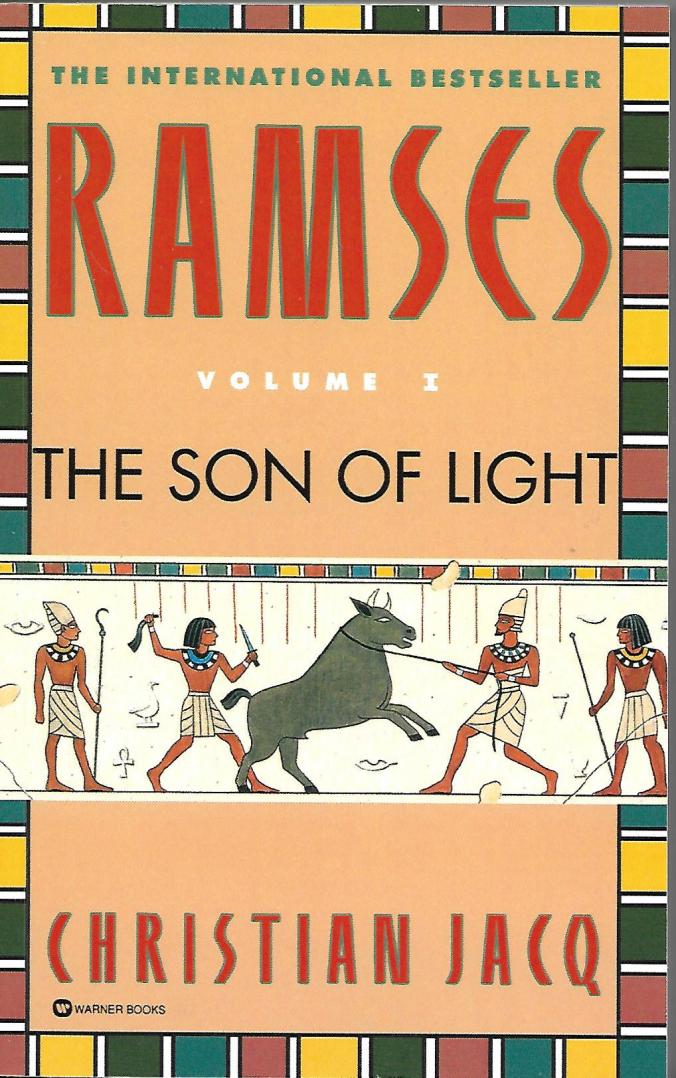
Ramses, the Son of Light ~ A Capsule Book Review

Ramses, The Son of Light Book Cover
Ramses, The Son of Light
~ A Capsule Book Review by Allen Kopp ~

Egyptian Pharaoh Ramses II (also known as Ramses the Great) lived an astonishing ninety years, from 1303 BCE to 1213 BCE, about twelve hundred years before Christ. As Pharaoh, he was a builder of mighty monuments and an effective administrator. His father, Seti, was Pharaoh before him. Seti made Ramses his regent when Ramses was only fourteen years old, meaning he would be Pharaoh after Seti.

French writer Christian Jacq has written a series of six fictional books about the long-ago life of Ramses. The first book in the series is Ramses, the Son of Light. It’s about the early life of Ramses, from childhood into young adulthood. Though he was born into privilege, he did not have an easy life. There were always those who wanted to destroy him or marginalize him. His older brother, Shaanar, was his biggest rival and his greatest enemy. Shaanar saw himself as the future Pharaoh and would have done anything to remove Ramses from the scene, especially after it became clear that Seti wanted Ramses to succeed him.

Being regent meant that Ramses had to undergo many tests to prove that he could be an effective Pharaoh when the time came for him to ascend the throne. Not only would he have to deal with treachery and opposition in his own sphere, he would have to keep Egypt’s enemies at bay and do what needed to be done to avoid war.

Ramses was precocious, as one might expect, and manly in his teen years. He had a girlfriend, Iset the Fair, with whom he shared many passionate embraces, beginning when they were barely out of their teens. When it came time to marry, though, Ramses chose Nefertari as his blushing bride. A Pharaoh wasn’t limited to only one wife, so Iset the Fair became his number-two wife after Nefertari. With Nefertari he felt love, while with Iset the Fair he felt passion.

Ramses, the Son of Light is lightweight reading. It’s not a serious examination of a long-ago monarch or the time in which he lived. It’s what is called pop fiction instead of serious literature. Book two in the series, which I haven’t read, will be sure to pick up at the beginning of Ramses’ long and successful reign as Pharoah. There will be wars, there will be rivals, there will be intrigue, there will be dishonesty, there will be plenty of ugly and destructive human nature to go around.

Copyright © 2022 by Allen Kopp   
The Castle on Sunset ~ A Capsule Book Review

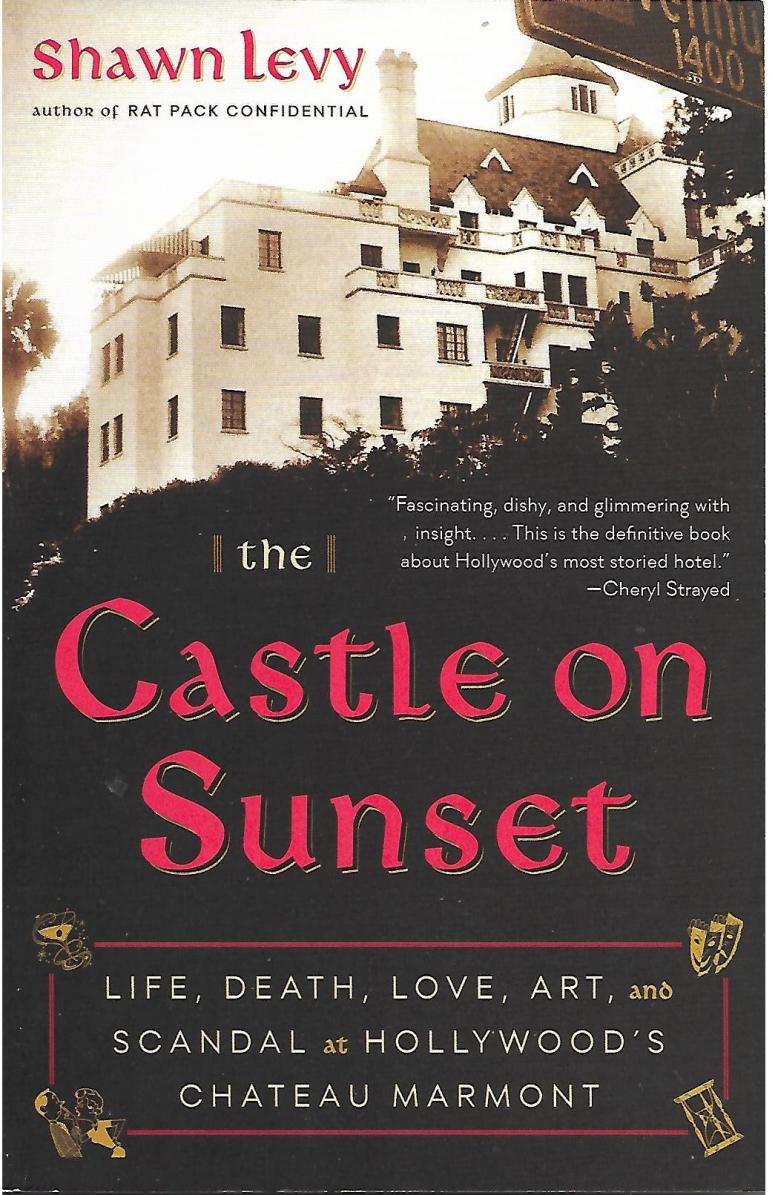
The Castle on Sunset cover

The Castle on Sunset
~ A Capsule Book Review by Allen Kopp ~

It overlooks the famous Sunset Strip in Hollywood. It stands seven stories tall and was built, in 1929, in imitation of a French chateau. It was an apartment building at first and was later turned into a residential hotel. It has long been a mecca for artists and creative people, in an out of the movie business. It is the Chateau Marmont.

Shawn Levy’s nonfiction book, The Castle on Sunset, is a detailed account of the life of the Chateau Marmont, a Hollywood landmark that has seen its fortunes rise and fall. It has had many different owners over the decades, some indifferent and uncaring, while others were scrupulously caring and attentive. The Chateau Marmont was a quiet, “un-Hollywood” retreat in the thirties through the fifties; a favorite of stage-trained, New York, Method actors in the fifties and sixties who came to Hollywood to make movies; in the seventies and eighties, it was a bohemian enclave, slightly seedy and run-down; in the twenty-first century, it became, with its upgrading and renovations, a trendy destination for hip, young Hollywood. Over the years it went from being a reasonably priced hotel to one that only the wealthy can afford. If you think you can go to Hollywood and stay in the Chateau Marmont, you won’t be able to get in unless you are a Hollywood A-lister. (Do you know anybody who is? Neither do I.)

I might not have learned much that I didn’t already know by reading The Castle on Sunset, but it’s intermittently interesting to read, depending on how interested you are in the person being discussed. If you are interested in the death of John Belushi, you will be riveted by the section on his drug overdose death that occurred in one of the hotel’s bungalows in 1982. You didn’t know that Anthony Perkins was gay? He was known for entertaining his male dates at the Chateau Marmont. Movie director Nicholas Ray conceived of his classic film, Rebel Without a Cause, while staying at the Chateau Marmont, while simultaneously having an affair with his sixteen-year-old leading lady, Natalie Wood. He was considerably older than she was.

If you are interested in Hollywood lore, gossip, and naughtiness, you are sure to find The Castle on Sunset a valuable addition to your reading list.

Copyright © 2022 by Allen Kopp

The Bridge of San Luis Rey ~ A Capsule Book Review

The Bridge of San Luis Rey first edition cover
The Bridge of San Luis Rey
~ A Capsule Book Review by Allen Kopp ~

American author Thornton Wilder lived from 1897 to 1975. He wrote his most famous novel, The Bridge of San Luis Rey, in 1927, when he was thirty years old. The novel is set in Peru in 1714. A certain primitive bridge that had been constructed by the Incas a hundred years earlier falls into the ravine below, killing the five people who happen to be on it at the time. The question the novel poses is this: Was the collapse of the bridge just a matter of “chance,” or was there some “design” to the deaths of the five victims?

Those who die in the bridge collapse are male and female, young and old:

  • The Marquesa de Montemayor is an aristocratic woman, all alone in the world except for a daughter who marries and moves to Spain. The mother and daughter do not get along well when they’re in the same location, so they communicate by letter, between Peru and Spain. Since it is the eighteenth century, a letter takes six months to reach its destination. She and her servant girl, Pepita, die in the bridge collapse.
  • Pepita is a girl from the convent whom the Marquesa de Montemayor takes as a companion.
  • Esteban has an identical twin named Manual. They have been educated in the convent and become scribes, writing letters for people for pay. Esteban and Manual are so close they develop a secret language between them. When Manuel falls in love with a famous actress in the theatre named Camila Perichole, the relationship of the twins is tested. Manuel meets a sad fate before Esteban dies in the bridge collapse.
  • Uncle Pio is an old man who works for Camila Perichole, as a kind of all-purpose servant and father figure. Camila Perichole isn’t very kind to Uncle Pio, but he persuades her to let him take her only son, Jaime, to Lima with him to educate him.
  • Jaime is with Uncle Pio on the bridge when it collapses. He is the fifth victim of the collapse.

After the bridge collapse, Brother Juniper spends years investigating the lives of the five victims to try to make sense of the collapse and to ascertain if there was any design in the accident or if it was all purely chance. Of course, in the end he realizes he has wasted his time and effort. It is a conundrum, a question without an answer.

The Bridge of San Luis Rey is one of the twentieth century masterpieces of American literature and ranks number 37 on The Modern Library List of the 100 Best Works of Fiction in English of the twentieth century.

Copyright © 2022 by Allen Kopp

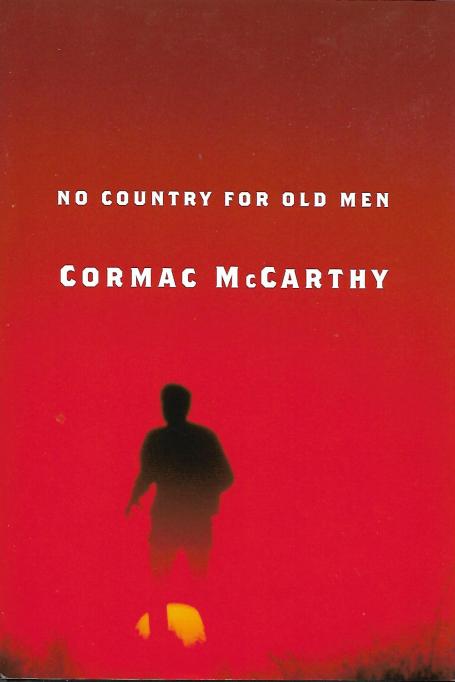
No Country for Old Men ~ A Capsule Book Review

No Country for Old Men book cover
No Country for Old Men
~ A Capsule Book Review by Allen Kopp ~

Cormac McCarthy’s 2005 novel, No Country for Old Men, is set in Texas around 1980.

There are three principal characters in No Country for Old Men:

  • Sheriff Ed Tom Bell, sheriff of Terrell County, Texas. He represents the old America where people said “sir” and “ma’am” and were polite to each other. He is approaching the end of his career as a lawman. He has little patience for, or understanding of, the modern world.
  • Anton Chigurh, a psychopathic killer with a philosophical bent. He kills, not so much because he enjoys killing, but because he believes it is what he is supposed to do. He has no sympathy or empathy for any of his victims. In reading the book, I eventually lost track of how much many people he kills.
  • Llewellyn Moss is the “everyman” character. He is thirty-six years old, a decent and ordinary fellow who works as a welder, lives in a trailer and has a pretty, nineteen-year-old wife named Carla Jean.

Out in an isolated spot in the Texas desert, Llewellyn Moss inadvertently stumbles across a scene of carnage: a drug deal gone wrong. There are several vehicles and eight dead bodies. It’s apparent there has been a shootout. After Llewellyn does a little snooping, he comes across a case containing over two million dollars. What does he do? Does he alert the police? No, he takes the case home with him. He may be unsophisticated, but he’s not stupid. He knows that somebody will be coming after him to get the money back and, even if they do get the money back, they will still kill him.

It’s up to traditional Texas lawman Ed Tom Bell to solve the drug-shootout crime in the desert, since it happened in his jurisdiction. Besides eight dead bodies and some shot-up vehicles, he doesn’t have much to go on. Llewellyn Moss knows that as long as he has the two million dollars in his possession, he is in deadly peril. He sends Carla Jean to her mama in Odessa and goes on the run. He comes to realize after a while that, in with the money, is a “transponder” sending a signal of his whereabouts to a receiver. This does not bode well for him.

It’s up to murderer Anton Chigurh to locate the money and get it back, inflicting pain, death, and mayhem with his every move. He might be thought of as the physical incarnation of Satan.

No Country for Old Men is a sort of modern-day western. It might just as easily have taken place in 1880 as 1980. There’s a crime committed and then the crime’s aftermath. There’s the hunter and the hunted. There are good men and bad. There are surprising twists and turns in the plot. There is much death, much violence. Cormac McCarthy turns it all on its ear.

Copyright © 2022 by Allen Kopp

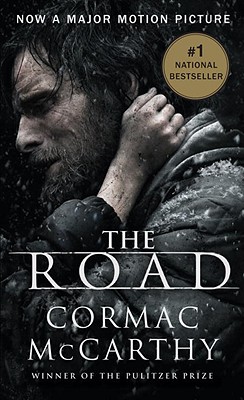
The Road ~ A Capsule Book Review

The Road book cover 3
The Road
~ A Capsule Book Review by Allen Kopp ~

A cataclysmic event has occurred. Planet Earth is dying and can no longer support life. Plant life is dying. Trees are toppling over, no longer able to hold themselves upright by their roots. Cities are burned to the ground. There is perpetual ash in the air. The landscape is littered with dead bodies in various stages of decay. Earth has become a living vision of hell.

This didn’t just happen yesterday or last week; it has been going on for years. Most of the people in the world have already died. The people remaining have a horrible life, trying to find enough to eat to keep themselves alive. The “good guys” have to work awfully hard to keep from being killed and eaten by the “bad guys.” The good guys refuse to stoop to eating other people. They have maintained a semblance of humanity; they “carry the fire within them.”

There are two principal characters in The Road, both unnamed: a man and a young boy, his son, about nine years old. They are referred throughout the novel as “the man” and “the boy.” They have left their home and are headed for some unnamed destination south of them. They are seeking more than safety, shelter, or food. As important as those things are, they seek something more profound. The man is driven by the desire to save the boy, his son. He believes God has given him the special task of delivering the boy to another place.

The Road is not a “doomsday thriller,” nor is it another diatribe about saving the environment. It is a simple human story about survival and the hope that there might be something on the other side of death. It is eerie, haunting, profound and memorable. Some readers might see a “God-Christ” metaphor in the “man-boy.”

I’ve read The Road by Cormac McCarthy twice, years apart, and was tremendously impressed both times. It is one the rare novels you will read in your lifetime that advances the art of fiction, that takes the reader to a place he has never been before. It makes you happy that a book can be that good.

Copyright © 2022 by Allen Kopp

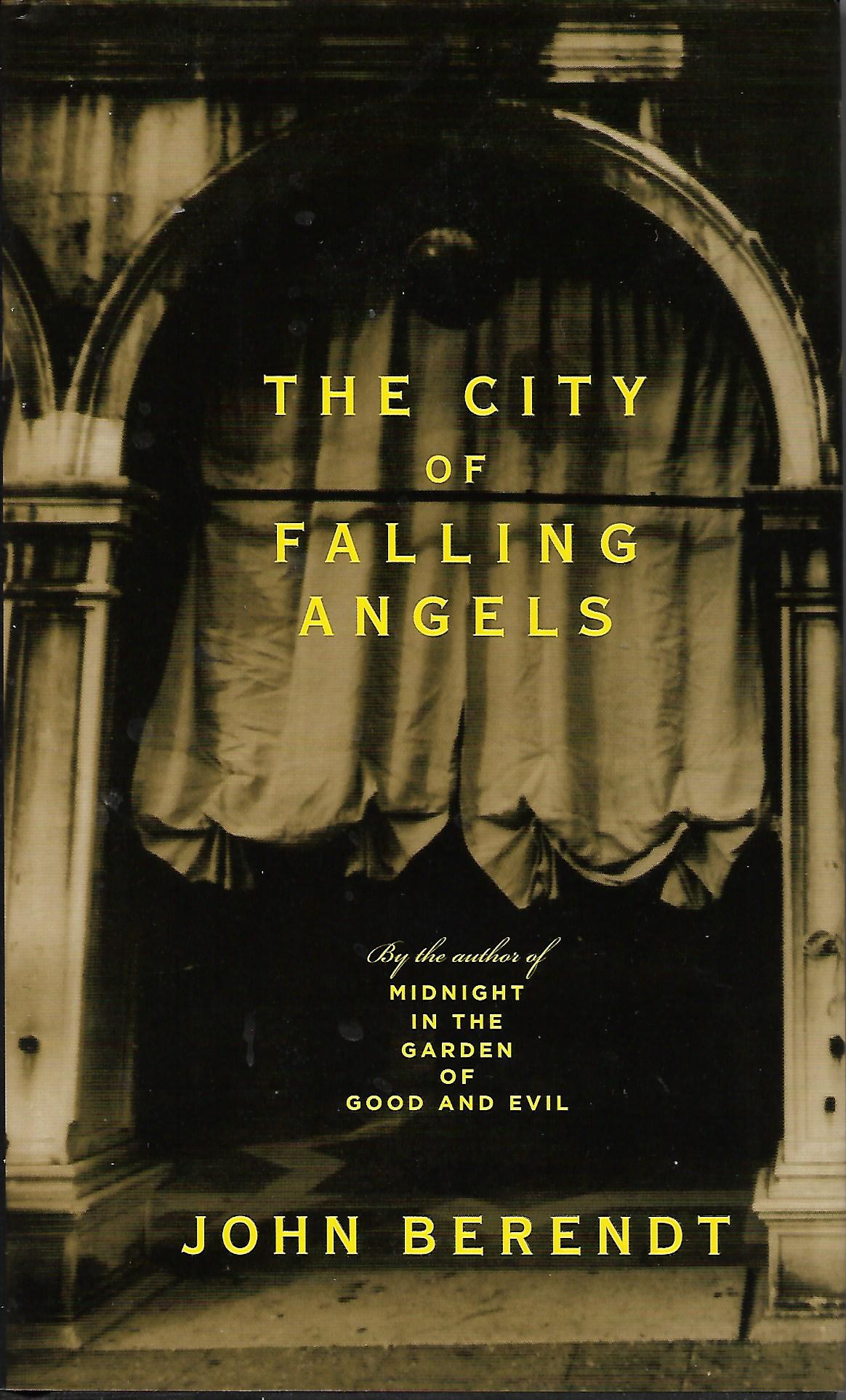
The City of Falling Angels ~ A Capsule Book Review

The City of Falling Angels cover
The City of Falling Angels
~ A Capsule Book Review by Allen Kopp ~

American writer John Berendt made the charts in 1994 with his first nonfiction book, Midnight in the Garden of Good and Evil, a real-life murder mystery set in Savannah, Georgia. It was phenomenally successful, occupying the New York Times Best-Seller list for 216 weeks, and was made into a movie in 1997 directed by Clint Eastwood.

John Berendt’s second nonfiction book, The City of Falling Angels, came over ten years after Midnight in the Garden of Good and Evil. The City of Falling Angels is set in Venice, Italy, and, as with Midnight in the Garden of Good and Evil, it’s full of local color and eccentric real-life characters.

Venice is one of the most unique cities in the world. It has been in existence since about the eighth century. It’s a quiet city because, with canals instead of streets, it has no automotive traffic. The people of Venice walk wherever they go, or take the vaporetto, the water taxi. Venice is a quaint and romantic city abounding in history. It was at one time a powerful city state. Many of its buildings are hundreds of years old.

In 1996, a historic Venetian opera house, Teatro La Fenice, over two hundred years old, caught fire and was entirely destroyed. Investigators, of course, had no clue as to what caused the fire. Was it the result of natural causes, or were sinister forces at work?

At the time of the Fenice fire, the theatre was closed to public performances and was undergoing renovation. The fire happened at night, when any daytime workmen had departed. Because the buildings in Venice are so old and so close together, many other structures were threatened by the fire. Firefighters eventually brought the fire under control, but the opera house was destroyed. Would it be possible to rebuild it as it had been before the fire, or was it a case for the wrecking ball?

The City of Falling Angels follows the years-long investigation into the fire, with many twists and turns, many false leads and conspiracy theories; much finger-pointing and gnashing of teeth.

Sometimes The City of Falling Angels veers off into subjects other than the fire, such as a Venetian glass-blowing family of many generations, a Venetian poet who committed suicide, the Ezra Pound Foundation (he was an expatriate American poet who lived in Venice), or in-fighting among the Venetian upper-crust. During these long digressions from the fire, we wish to return to the subject at hand. The fire is much more successful at holding the reader’s interest.

Copyright © 2022 by Allen Kopp  


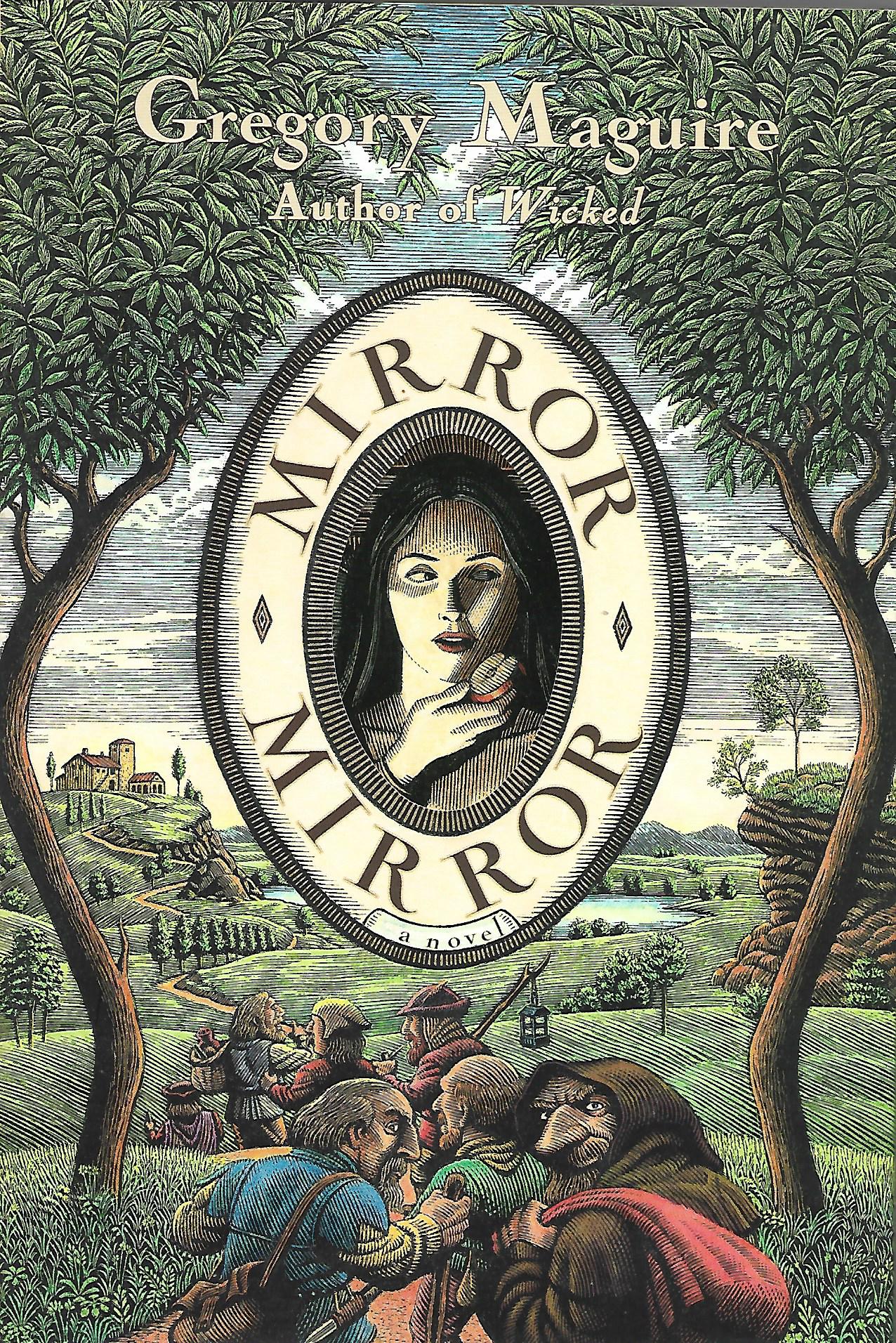
Mirror Mirror ~ A Capsule Book Review

Mirror Mirror cover
Mirror Mirror
~ A Capsule Book Review by Allen Kopp ~

Gregory Maguire’s 2003 novel, Mirror Mirror, is set in Tuscany, Italy, in the early 1500s. A beautiful girl named Bianca de Nevada lives with her father, Vicente, on an isolated hilltop estate called Montefiore. Bianca, a motherless girl, has lived a sheltered life and doesn’t know much of the world. Lucrezia Borgia, real-life daughter of Pope Alexander VI (the Borgia Pope), comes to Montefiore with her brother, Cesare Borgia. Lucrezia and her brother Cesare are both moved by Bianca in different ways: Cesare wants her for a sex toy, even though she is still a child, and Lucrezia is jealous of Bianca’s girlish beauty, which will soon be womanly beauty.

Lucrezia and Cesare decide they will stay at Montefiore for a while. Cesare is suffering from the French disease (we all know what that is). Cesare sends Bianca’s father on a (nearly) impossible quest (to get him out of the way) to find a fabled branch from the Tree of Life (you know, the one from the Garden of Eden), that still has three perfect apples attached to its branches. Bianca’s father doubts the branch with the apples on it even exists, but he has no other choice but to comply with Cesare’s commands. It might take him years to find it (if it even exists) and he might die in the effort.

With Bianca’s father on his quest, Bianca is left at Montefiore under the questionable care of Lucrezia Borgia, who just might do anything. Since Bianca has flowered into a lovely young woman and is no longer a child, Lucrezia is still jealous of her and has decided she will have her killed. She hires a young man to take Bianca into the woods and do away with her. The young man does as Lucrezia tells him to do, but he finds he is unable to kill her. He leaves her alone in the woods, making Lucrezia think he has done the deed.

Left alone in the woods, Bianca falls into a deep sleep that mimics death. Seven dwarfs (nothing like the Disney variety) find her and, believing she is dead, place her in a glass coffin and watch over her body. She will awake, though, and when she does she will go back to Montefiore. Her father, contrary to all expectations, has returned from his quest, bearing the ever-elusive branch from the Tree of Life.

Mirror Mirror blends elements of legend, history, fairy tale, and fantasy into an imaginative, lightning-speed novel. If you are an admirer of Gregory Maguire’s work (Wicked, Son of a Witch, Notes on a Cowardly Lion, Out of Oz, After Alice, etcetera.), you will find everything here that makes his work unlike anybody else’s. Highly recommended for connoisseurs of the different and unusual.

Copyright © 2021 by Allen Kopp    

Shuggie Bain ~ A Capsule Book Review

Shuggie Bain cover

Shuggie Bain
 A Capsule Book Review by Allen Kopp  

Shuggie Bain’s real name is Hugh. He is a slight, sensitive, preteen boy (at school he is called a “wee tiny poof”) living with his mother and his older half-brother and half-sister in a wretched housing complex in Glasgow, Scotland, in the 1980s. Shuggie doesn’t have a very happy childhood. The family is poor and on the “dole,” but his biggest problem is that his mother, Agnes Bain, is a hopeless alcoholic, “hopeless” in the sense that she will never stop drinking, will never “get better,” and will eventually drink herself to death. Shuggie loves his mother and he believes, unrealistically, that if he stays by her side, when everybody else abandons her, he can protect her and get her to stop drinking.

Shuggie’s  estranged father is Shug Bain, or “Big Shug,” as he is called. He is a real bastard, a self-centered, womanizing, amoral taxi driver. Shuggie’s mother, Agnes, leaves her first husband, taking her two children with her, to marry Big Shug. From that unfortunate union is born the youngest of her three children, Shuggie “Hugh” Bain.

Shuggie’s older half-brother is named Alexander but everybody calls him “Leek.” Shuggie’s half-sister is Catherine. Agnes if the kind of mother who makes her children want to get away from her. She has good intentions as a mother, but she always manages to disgust and alienate her children with her incessant drunkenness. Catherine marries at an early age and moves to South Africa, thousands of miles away from her mother.

The housing complex where Shuggie lives with his family is called Pithead. It was originally intended for coal miners, but most of the coal mines have closed down. The residents of Pithead are crude, spiteful, and cruel. The women hate Agnes Bain because she dresses up whenever she goes out of the house. People who like her tell her she resembles Elizabeth Taylor. Her good looks don’t help her very much.

The Scottish people in Shuggie Bain speak working-class English. They use a lot of words that American readers probably won’t be unfamiliar with. For example, “boak” means vomit; “biro” is an ink pen; a “grass” is a snitch; a “dout” is a cigarette; “wellies” are boots; “papped” means to be thrown out of the house; “weans” are children or offspring; “scheme” is a housing project; “gallus” is an act of boldness or daring. If you don’t have a dictionary of Scottish colloquialisms and slang, these unfamiliar words can usually be deduced from their context in the sentence.

Shuggie Bain is an ambitious (430 pages), rich first novel by a writer named Douglas Stuart. It is a story as much about a self-destructive alcoholic as it is about being the child of an alcoholic. It is a book steeped in time and place (Glasgow, Scotland, of the 1980s). A compulsively readable book, a book well worth reading.

Copyright © 2021 by Allen Kopp

A Tale of Two Cities ~ A Capsule Book Review

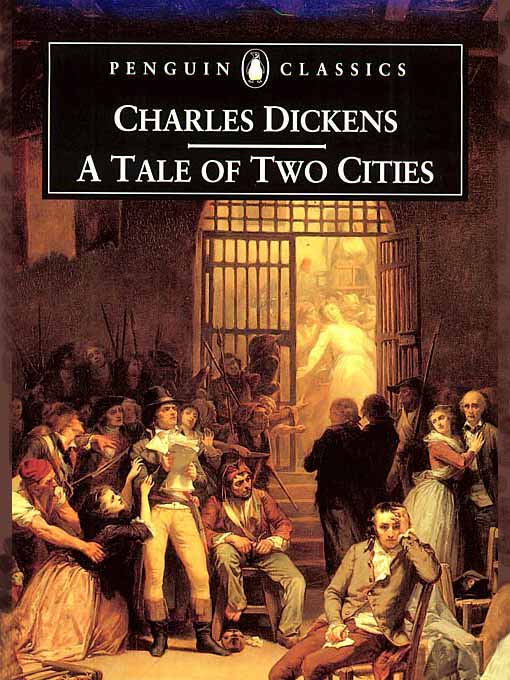
A Tale of Two Cities Book Cover 2
A Tale of Two Cities
~ A Capsule Book Review by Allen Kopp ~

Charles Dickens’ superb historical novel, A Tale of Two Cities, is set in the late eighteenth century, before and during the bloody French Revolution. It was first published in 1859 and has long been a mainstay of English literature.

The French Revolution wasn’t called the Reign of Terror for nothing. It was what today might be called “class warfare.” The ordinary people of France had long been poor and oppressed. They saw the aristocracy as a blood-sucking class of soulless degenerates who spent lavishly and lived extravagantly, without regard for anybody of an inferior class. It was natural that the poor should rebel, but when they did, it was without all reason. They killed indiscriminately, anybody that for any reason they didn’t like, or anybody who had had any suspicious alliance with anybody they didn’t like. Ordinary rules of fairness and decency were tossed aside. The bloody Guillotine, used without restraint, became the dreaded symbol of the Revolution.

The plot of A Tale of Two Cities is driven by a handful of characters caught up in the tragic tide of events that is the French Revolution:

  • Alexandre Manette, a French physician wrongly imprisoned in the Bastille for eighteen years because he knows too much about a certain aristocratic family.
  • Lucie Manette, his daughter who believed he was dead.
  • Miss Pross, faithful companion/guardian of Lucie Manette.
  • Monsieur Defarge, the former servant of Dr. Manette who facilitates his release from the Bastille after eighteen years.
  • Madame Defarge, wife of Monsieur Defarge, virulently anti-aristo She personifies all that’s wrong with the Revolution.
  • Charles Darnay, heir of the aristocratic Evrémonde family who relinquishes his birthright and becomes a teacher in England under an assumed identity. He marries Lucie Manette and they are happy together for a while but, of course, the Revolution threatens to ruin their lives.
  • Jarvis Lorry, an elderly banker, a “man of business,” who befriends Alexandre Manette, Lucie Manette and Charles Darnay, and lends a helping hand to them throughout their ordeal.
  • Sydney Carton, a lawyer and drunkard who befriends Charles Darnay, Lucie Manette and Alexandre Manette. He appears to be a wastrel and a disenchanted cynic, but in the end he is the noble hero of the story, making the ultimate sacrifice for those he has come to love.

A Tale of Two Cities is about a radical political ideology that grew out of conditions of poverty and suffering and, while discarding the rule of law, disregarding decency and fairness, destroyed many lives and nearly destroyed a country. It’s a story that would be played out many times and in many places, in many different forms, up to the present day.

The 1936 black-and-white movie version of A Tale of Two Cities with Ronald Colman as Sydney Carton comes highly recommended. It’s moving, entertaining, engaging, perfectly cast, intelligent, and faithful to Charles Dickens’ great novel.

Copyright © 2021 by Allen Kopp

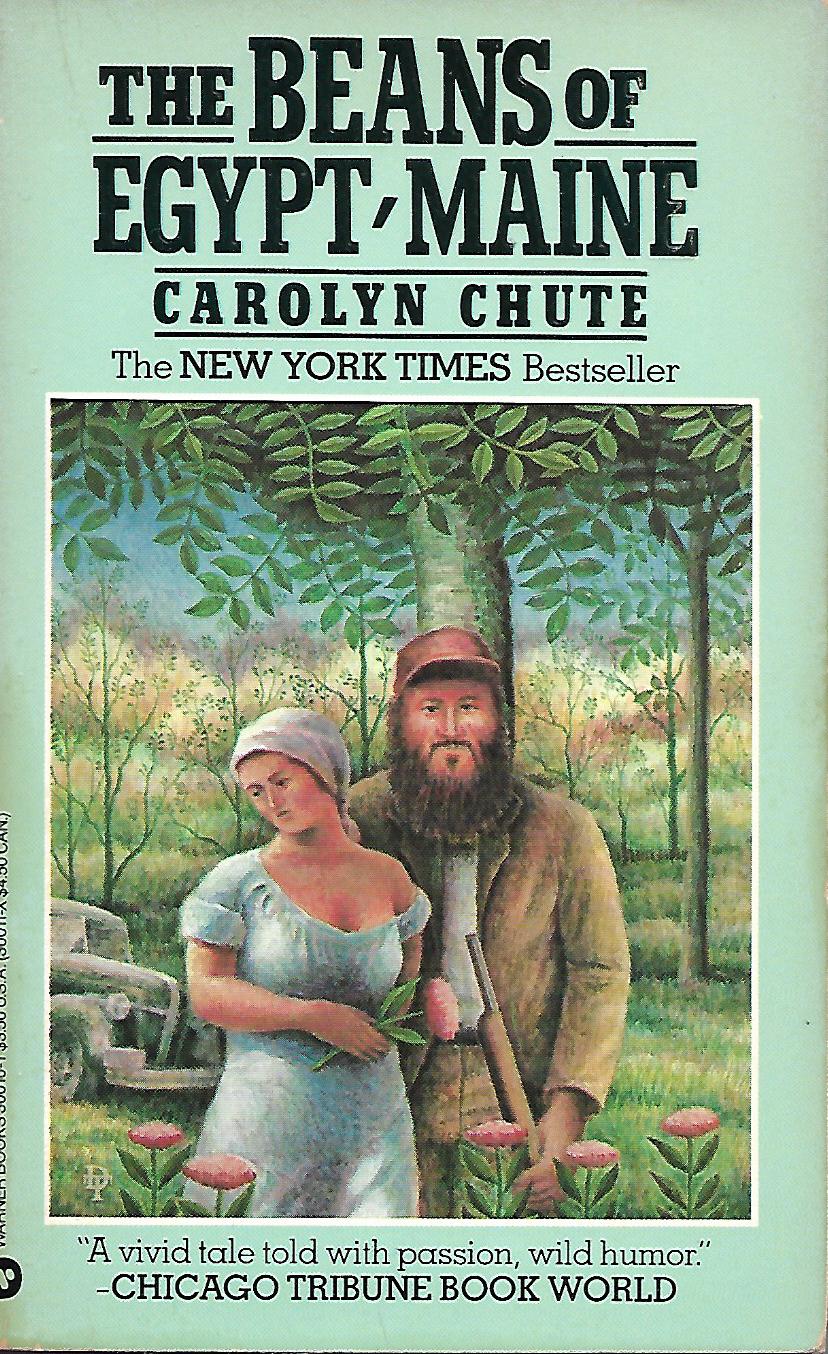
The Beans of Egypt, Maine ~ A Capsule Book Review

The Beans of Egypt, Maine cover
The Beans of Egypt, Maine
~ A Capsule Book Review by Allen Kopp ~

You probably wouldn’t want to live next door to the Bean family. There are a lot of Bean woman, a lot of Bean men, and a lot of Bean children. The Beans conceive children (sometimes with other family members) as carelessly as they raise them, and they are, to put it charitably, redneck trash. There are a lot of other adjectives that might also be applied to them: dirty, poor, ignorant, feckless, troublesome, contentious and scary.

Earlene Pomerleau lives with her tiny father, Lee Pomerleau, across the road from the turquoise-blue Bean trailer that is strung year-round with Christmas lights. As a child, she is alternately repelled and fascinated by the Beans. Her father and her Scripture-spouting grandmother warn her to stay away from the Beans, but she mixes with them every chance she gets.

The head Bean is Rubie (Reuben) Bean. He is large and crude, with a full, black beard. He is also illiterate. He doesn’t have a very good record with wives or with women in general. One of his wives, the one named Marie, says to a visitor: Did I tell you my ex-husband used to beat the shit out of me?

Rubie Bean is fertile and sexual. He has lots of children, maybe some that he doesn’t even know about. One of his sons is Beal Bean. He figures prominently in the story. He is the image of his father, Rubie Bean. He also has a way with women and is the father of many children, including offspring with his aunt.

When Earlene is a young woman, she has a fight with her father when he washes her mouth out with shampoo and runs away from home, where she consequently ends up spending the night with Beal Bean. He impregnates her on that night and she ends up marrying him, much to the chagrin of her father and grandmother. Several months later, she has a daughter whom she names Bonnie Loo.

Earlene’s life with Beal Bean is not an easy one. He is frequently out of work, gets into fights regularly, and is an all-round hell-raiser. Earlene, for some reason we don’t quite understand, is deeply in love with him. He will only ever be trouble for her. As long as she is married to him, she will never rise out of her redneck-trash status.

Carolyn Chute’s 1985 novel, The Beans of Egypt Maine, is a colorful and compelling novel with fascinating characters—funny and memorable reading. It is an important addition to the sub-genre of American literature known as “redneck-trash” literature. Other titles in this sub-genre include The Death of Sweet Mister and Tomato Red by Danial Woodrell and Tobacco Road and God’s Little Acre by Erskine Caldwell. For my money, people on the lower end of the socio-economic scale make for much more interesting reading than the PHDs with their angst-ridden marriages and left-leaning politics.

Copyright © 2021 by Allen Kopp