Another Mile from Home

Another Mile from Home ~ A Short Story by Allen Kopp

(I posted this short story earlier with a different title.) 

We were lost again. We had a map but didn’t know how to use it. I had been driving earlier but now Drusus was driving. His wife, Alma, sat between us, and I sat next to the window. Mama and Chickie were in the back.

The seat wasn’t long enough for mama to stretch out all the way so when she needed to lie down she used Chickie’s lap as a pillow. We were all a little worried about mama. She was so thin and now a little stoop-shouldered as if she didn’t have the strength to stand up straight anymore. We had to stop every now and then for her to get out of the car and walk around. She was car sick and sometimes she vomited. I couldn’t help but notice one time that there was some blood coming up.

“Sing to me, honey,” mama said.

“Oh, mama, I don’t want to sing now,” Chickie said. “I’m supposed to be resting my voice anyhow.”

“Are you nervous about the radio contest?” Alma asked.

“A little jittery,” Chickie said. “I’m trying not to think too much about it.”

“I just know you’re going to win with your lovely voice.”

“I wouldn’t be so sure,” Drusus said. “There’s thirty or forty other people think they’re going to win, too.”

“I’ll do my best,” Chickie said. “That’s all I can do.”

The old woman giving Chickie singing lessons had taught her some opera from a piece called Madame Butterfly, but she was best at singing popular tunes like “Pennies from Heaven” and “Ten Cents a Dance.” She could sing anything, though, even church music; that’s the kind of voice she had.

“And I just know that doctor at the clinic is going to make you well again, Mrs. McCreary,” Alma said.

“I’m not sure he’ll even see me,” mama said. “We leave it in the hands of the Lord.”

“We’re praying for you and Chickie both.”

“He’ll see you, mama!” Drusus said. “We’ll make him see you.”

“How you gonna do that, son?”

“I don’t know. We’ll think of something. Rough him up a little bit, if we have to.”

We all laughed but mama groaned. “He’ll think you’re a bunch of ruffians,” she said.

“We are a bunch of ruffians.”

We came to a tiny town with a cutoff to a different highway. Drusus took the cutoff a little too fast. Mama almost fell to the floor and gave a little yelp. Alma fell over against me and pulled herself away as if I was poison to the touch.

“We’re not in no race, honey!” she said to Drusus.

“Well, this is it!” Drusus said. “This is the right way now. I just know it. We are officially not lost anymore. We are found!”

Happy days are here again,” sang Chickie. “The skies above are clear again. So let us sing a song of cheer again. Happy days are here again!”

We passed a sign then that told how far it was to the city. “Only two hundred and thirty-seven more miles,” I said.

“I don’t know if I can last that long,” Chickie said. “Seems like we’ve already gone about a thousand miles.

“We’re doing it all for you,” Drusus said.

“I know,” Chickie said. “I didn’t mean it that way.”

“How about you, Wynn?” Drusus asked me. “Do you want to drive for a while?”

“No thanks,” I said. “You’re doing fine.”

I went to sleep with my head against the door and woke up when we had a blowout and Drusus pulled off the highway to change the tire.

We all got out of the car, including mama. She took a few steps and smoked a cigarette and said she was feeling a little better. She wanted to know what state we were in. When I told her I wasn’t sure, she laughed.

We took advantage of the unscheduled stop to have a drink of water and a bite to eat. We still had some bread left over, Vienna sausages, fruit, cookies and other stuff. Mama didn’t want anything to eat but she drank a little water. Alma spread a blanket on the ground for her and Chickie to sit on. Mama sat for a while and then lay down and looked up into the trees.

“This is nice,” she said, “laying on the ground and not having no tires turning underneath me.”

“I think mama’s sicker than she lets on,” I said to Drusus when we were changing the tire.

“The doctor in the city will fix her up,” he said.

“She’s trying to put a good face on it for Chickie’s sake. She doesn’t want to spoil her chance of singing on the radio.”

“Everything will be all right,” he said. “Don’t worry so much.”

Mama went to sleep on the blanket and we had to wake her up to get her back in the car. I took over driving from there, even though I liked it better when Drusus drove and I could just sit and watch the scenery and think.

We were all tired and we knew we were going to have to stop someplace for the night. We hadn’t made very good time, what with our getting lost and mama being sick and all.

At dusk we stopped at an auto court where, according to the sign, the cabins were clean and cheap. I went into the little office in the front and engaged our room and then we drove around to our cabin, number twelve in the back. With the shade trees, the two rows of trim white cabins, and the azalea bushes everywhere, it was a pretty place and plenty inviting.

We tried to get mama to eat some supper, but she just wanted to go to bed. Alma and Chickie helped to get her out of her clothes and into bed while Drusus and I sat on the front step and smoked.

“If Chickie wins the prize money,” Drusus said, “we can pay back Uncle Beezer the money he advanced us for this trip.”

“We can’t expect her to give up the prize money for that,” I said. “If she wins, I hope she’ll use it to advance her singin’.”

“Advance her singin’ how?”

“Go to the city and live there and meet the right people in the music business, agents and promoters and people like that. She could get a real singing career going for herself.”

“Do you really think she has a chance?”

“You’ve heard her sing,” I said. “Isn’t she as good as anybody you’ve ever heard?”

“Yeah, she’s good,” he said.

“If she wins the money, it’s hers. We can’t touch it.”

“Okay, but maybe she’ll offer part of it to help pay for this little trip.”

“We wouldn’t take it,” I said.

After a couple of minutes in which neither of us spoke, Drusus said, “Alma thinks she’s going to have a baby.”

“A baby!” I said. “You’ve only been married a month!”

“The curse of the married man,” he said.

“What do you mean? Don’t you want it?”

“We’re poor,” he said. “We don’t have anything. Even the car I’m driving belongs to somebody else. If we start off married life havin’ babies left and right, we’ll always be poor. Just like mama and papa.”

“There’s things even poor people can do, I guess, to keep from havin’ so many.”

“I’m not ready to be anybody’s daddy yet. I’m still young.”

I laughed at that line of reasoning. “People are gonna have babies, I guess, no matter what.”

“That’s a lot of comfort.”

“You’re not sorry you married Alma, are you?” I asked.

“Well, no. Not exactly. I probably wouldn’t do it again, though, if I had it to do over.”

“I’ll be sure and tell Alma you said that.”

“Don’t tell anybody about this,” he said. “She doesn’t want anybody to know about the baby just yet, because it makes it look like we had a shotgun wedding. I swear the baby wasn’t on the way yet when we got married.”

“You don’t have to convince me of anything,” I said.

“Not a word to mama or Chickie yet. Alma wants to make sure about the baby before she tells anybody.”

“I won’t breathe a word of it,” I said.

The women took the beds, so Drusus and I had to sleep on the floor of the cabin but I didn’t mind. I was just glad to be able to stretch out and rest my weary bones. I laid down near the screen door where I could feel a cool breeze and hear the trees rustling. After being on the dusty road all day, it felt like heaven.

As I drifted off to sleep, I could hear Chickie softly singing to mama her favorite song: “Deep night, stars in the sky above. Moonlight, lighting our place of love. Night winds seem to have gone to rest. Two eyes, brightly with love are gleaming. Come to my arms, my darling, my sweetheart, my own. Vow that you’ll love me always, be mine alone. Deep night, whispering trees above. Kind night, bringing you nearer, dearer and dearer. Deep night, deep in the arms of love...”

I slept all night long without waking up a single time and woke up at seven in the morning to the sound of the birds singing. I stood up from my makeshift bed on the floor to slip into my shirt and pants and that’s when I saw Chickie and Alma sitting quietly at the foot of the bed where mama lay. Alma was smoking a cigarette and I could tell Chickie had been crying, I knew her so well.

“What’s the matter?” I asked.

“We can’t wake mama,” Chickie said.

“Is she breathing?”

“I don’t think so.”

“We’d better get a doctor,” I said.

Alma looked at me and shook her head and that’s when I knew mama was dead.

I shook Drusus by the shoulder to wake him up. When I told him what had happened, he had to see for himself. He went over to the bed and put his ear to mama’s chest and then he took Alma’s makeup mirror and held it to mama’s nose. He looked at the mirror and threw it down on the bed like a child with a toy that no longer works.

“What should we do?” I asked.

“I don’t want to go another mile from home,” Chickie said.

“We’d better call somebody and tell them what happened,” Alma said.

“No!” Drusus said. “We’re not calling nobody! They’ll ask us a lot of nosy questions. They won’t believe the truth about what really happened, that mama was sick a long time and we were on our way to the city to take her to a clinic. They’ll keep us here and make Chickie miss her chance to sing on the radio.”

“I think he’s right,” I said.

“We can’t go off and leave mama here,” Chickie said.

“Of course not,” Drusus said. “We’re taking her with us.”

After Chickie and Alma got mama dressed, Drusus carried her out to the car across his arms. I opened the door for him and he slid mama into the corner of the back seat with her head held in place on two sides so it wouldn’t wobble. He then took a length of rope and tied it around mama’s chest so she would stay upright and not fall over from the movement of the car. Chickie gave mama’s dark glasses to Drusus to put on her and we found a straw hat that belonged to Uncle Beezer in the trunk and put it on her head. With the hat and the glasses and in her regular clothes, she didn’t look like a dead person.

We all got into the car and Drusus started her up. As we were pulling out of the place, the manager stopped us and leaned in at the window and said he was glad to have had us stay in his establishment and he hoped we had a pleasant journey, wherever we were going. He never noticed or suspected anything unusual about mama.

“I’m glad she died in a pretty place like this instead of on the road,” I said.

“She went quick and peaceful,” Drusus said. “That’s about as much as anybody can expect.

“We have a lot to be thankful for,” Alma said.

Drusus turned around in the seat and said to Chickie, “You’ve got to win the radio contest now. Not for fame or fortune, but for mama’s sake.

When we were on the highway again, going at full speed, Chickie began singing mama’s favorite hymn: “O Lord, my God, when I in awesome wonder, consider all the works Thy hand hath made, I see the stars, I hear the mighty thunder, Thy power throughout the universe displayed. When through the woods and forest glades I wander I hear the birds sing sweetly in the trees. When I look down from lofty mountain grandeur and hear the brook and feel the gentle breeze, then sings my soul, my savior God, to Thee, how great Thou art! How great Thou art! Then sings my soul, my savior God, to Thee, how great Thou art! How great Thou art!

“I felt the baby stir in my womb just then,” Alma said.

Drusus groaned. “I could sure use some ham and eggs,” he said, turning and looking at some cows standing alongside the road.

Nobody said anything after that. Nobody needed to. We all felt good, though, even though everything hadn’t worked out as we hoped. We had the feeling, or at least I did, that nothing was going to stop us now. That old car of ours was sure burning up the miles.

Copyright © 2018 by Allen Kopp
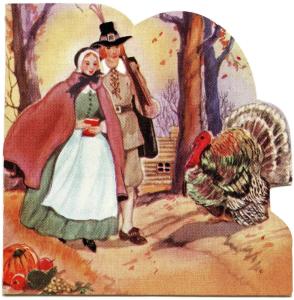
Thanksgiving Like the Pilgrims


Thanksgiving Like the Pilgrims ~ A Short Story by Allen Kopp

Veradean held up a picture from a magazine of a family seated around a large table for Thanksgiving dinner—all good-looking, clean and healthy, about to partake of the bountiful meal spread out before them.

“I wish this was my family,” Veradean said.

“Do they look poor to you?” Vicki-Vicki asked.

“No.”

“You’re poor. A poor family doesn’t set a table like that.”

“But why are we poor?” Veradean asked. “Why was I born into a poor family?”

“There has to be poor people in the world, I guess.”

“Why?”

“To balance things out. For every twenty or thirty poor people, there is one rich one.”

“Well, that isn’t fair!”

“Yeah, tell me about it,” Vicki-Vicki said.

“When I grow up, I’m going to be a famous movie actress. I’ll make a million dollars and live in a mansion and I’ll never be poor again.”

“Every young person thinks they’re going to be rich and famous, but then when they grow up they see it’s never going to happen. The sooner you face reality, the better off you’ll be.”

“What are we going to have for Thanksgiving dinner?”

“I don’t know. We’ll think of something. You don’t have to worry about it. You won’t go hungry.”

“But are we going to have turkey and all the other stuff they have in the picture?”

“No.”

“Why not?”

“No money.”

“Can’t you get us some money?”

“When you find out a good way, you let me know.”

“I sure wish we had a TV,” Veradean said.

“You say that at least once a day.”

“Everybody I know has a TV.”

“Maybe you should go and live with them.”

“It’s terribly boring sitting here all the time with no TV to watch.”

“Read a book. It doesn’t cost anything.”

“Everything is always about money, isn’t it?”

“I didn’t make the world,” Vicki-Vicki said.

Baby Eddie came into the room laughing, wearing his pajamas backwards. He twirled around so Veradean and Vicki-Vicki could see them from the back.

“You look so stupid!” Veradean said.

Vicki-Vicki groaned. “Go put ‘em on right!” she said.

“No! I like ‘em like this! I’m always gonna wear ‘em like this! I’m gonna start wearin’ all my clothes backwards!”

“That’s because you’re trash,” Veradean said.

“I am not trash! You’re trash!”

“We’re all trash,” Vicki-Vicki said. “That’s why we live in a falling-down dump like this in a rat-infested neighborhood!”

I’m not trash!” Baby Eddie screamed. “You’re trash! You’re trash! You’re trash!”

“The pilgrims were trash,” Veradean said. “They didn’t have any money and look what they did.”

“What did they do?”

“They started their own country.”

“What’s a pilgrim?” Baby Eddie screamed.

“Go to bed, Baby Eddie,” Vicki-Vicki said. “You’re giving me a headache.”

“No! I don’t want to go to bed!”

“Miss Edmonds read us a story about the pilgrims,” Veradean said. “They wore black and prayed all the time. The king got mad at them and kicked them out of the country. They didn’t have any place to go so they came over here from England in a little wooden boat. They just about died on the ocean on the way over and when they got here they landed on a big rock. When they climbed down off the rock and looked around, they saw it was nothing but woods and wild animals. There were no hotels or stores or anything like that. The only other people around were Indians and the Indians were afraid of the pilgrims. They hid from them and shot arrows at them.”

“I know what Indians are!” Baby Eddie shrieked.

“The pilgrims didn’t know how to take care of themselves and a lot of them died right away in the snow. They didn’t have any food because they didn’t know how to grow corn and stuff in the ground. Finally the Indians started to feel sorry for the pilgrims and came out of their hiding places and helped them. They showed them how to grow corn and pumpkins and green beans and stuff and raise turkeys so they’d always have something to eat.”

“That’s bullshit!” Baby Eddie said.

“You’re not supposed to use that word,” Vicki-Vicki said.

“But I like to say it! Bullshit! Bullshit! Bullshit!

“After the first harvest when the pilgrims had all the food they needed, they were so happy they decided to thank God and have a big party. They all sat down at a big table and the Indians served food to them and they all ate so much they had to go lay down. Some of them vomited. That was the first Thanksgiving.”

“The Indians served food to the pilgrims?” Vicki-Vicki asked.

“Yes, they did.”

“When did the Indians eat?”

“They sat down and had their Thanksgiving dinner after all the pilgrims were finished eating.”

“I want a hot dog!” Baby Eddie said.

“So, are we going to have turkey and all the stuff the pilgrims had for our Thanksgiving?” Veradean asked.

“Not unless you know some Indians,” Vicki-Vicki said.

On the day before Thanksgiving, Vicki-Vicki saw the ad in the paper: Thanksgiving Day dinner served at the Heavenly Light Mission. Everybody welcome! Come early! Bring the entire family!

When Veradean came home from school Wednesday afternoon, Vicki-Vicki told her, “We’re going to have turkey on Thanksgiving after all and it’s not going to cost us anything.”

“How we gonna do that?” Veradean asked.

“It’s a surprise.”

On Thursday morning Vicki-Vicki awoke early with a sense of purpose. She made Veradean and Baby Eddie get out of bed and take baths and wash their hair. She dressed Veradean in a hand-me-down schoolgirl dress of plaid material with a sash in the back. For Baby Eddie she found an old sailor suit in grandma’s trunk that some little boy had worn long ago.

For herself she had a gray, vintage suit she had been saving for a special occasion, exactly like the one Kim Novak wore in Vertigo. She always believed that she looked at least a little like Kim Novak without the blond hair and dramatic eyebrows.

Trash though they were, they didn’t have to go looking like trash. They would look distinctive, different from anybody else.

It was a mile or so into town, to the Heavenly Light Mission. A cold wind was blowing and the sky threatened rain.

“What’ll we do if it rains before we get there?” Veradean asked.

“Get wet.”

Baby Eddie complained that his shoes hurt, so Vicki-Vicki had to carry him part of the way, with her high heels pinching her toes every step of the way. Veradean tried carrying him some, but he was too much for her.

“It’s like carrying a calf,” she said.

Finally they reached the Heavenly Light Mission. There were already a lot of people and cars, even though the place hadn’t opened its doors yet. They took their place at the end of the long line.

“How long do we have to wait here?” Veradean asked.

“I’m hungry!” Baby Eddie said.

The doors opened at the appointed time and the line began moving, slowly at first and then faster.

“Oh, boy! I smell the turkey!” Veradean said.

While waiting in line, Vicki-Vicki was aware of a group of young men standing off to the side, talking and laughing. She saw after a while that they had noticed her and were looking her way. She made a point of ignoring them, looking down at Baby Eddie and taking his hand.

After a while one of the young men detached himself from the group and approached her.

“You probably don’t remember me,” he said.

“No.”

“Rollo Ruff? People used to call me RR?”

“I don’t think so.”

“High school?”

“Oh,” she said, feeling let down. “That was a long time ago.”

“Not that long,” he said.

“I know so many people.”

“These your kids?”

Veradean and Baby Eddie both looked at Vicki-Vicki to see what she would say.

“No, they’re foundling children,” she said. “I don’t know where they came from.”

“Sister and brother,” Veradean said.

“Yes, my mother is touring the Continent,” Vicki-Vicki said, “and I stayed behind this time to take care of the little ones.”

“Yes, that’s always a problem with the better people,” he said.

“Well, it was so nice seeing you again. Be sure and remember me to your people.”

“Thought I might call you up some time.”

“That would be rather difficult,” Vicki-Vicki said, “since I live in a house where there are no phones.”

“No phones! Hah-hah! You were always so funny!”

“I don’t know what’s funny about it.”

“Tell me where you live and I’ll drop by later this evening and we can get reacquainted.”

“I’m afraid that isn’t possible,” she said.

“Well, okay for now. I’ll be seeing you again, though. You can be sure of that.”

“You don’t like him?” Veradean asked after he was gone.

“No, I never saw him before in my life.”

“I think he’s cute. He’s got a quiff.”

“He’s got a what?

“I think a man looks cute with a quiff.”

“Oh, what do you know? You’re in fourth grade.”

“Why didn’t you tell him mama’s in jail?”

“That’s the same as admitting we’re trash,” Vicki-Vicki said.

“We are trash.”

The line lurched forward and they were all the way inside the Heavenly Light Mission. They were handed trays and, as they moved forward in the line, fat women in hairnets and white aprons began thrusting plates of food at them across a counter.

There were rows of tables placed end to end, covered with white table cloths. Balancing her own tray with one hand and helping to keep Baby Eddie from dropping his tray with the other hand, Vicki-Vicki jostled her way through the noisy crowd to the edge and took a seat at the end of a table. Veradean sat on her left and Baby Eddie across from her.

Veradean began stuffing food into her mouth. “This is just like the pilgrims,” she said.

“What’s this stuff?” Baby Eddie asked.

“It’s good,” Vicki-Vicki said. “Eat it.”

Soon Vicki-Vicki noticed a man moving down the table toward them, shaking people’s hands and patting them on the backs. He was dressed all in black like a pilgrim. She knew she was going to have to talk to him.

“So happy to see you here today, sister,” he said, touching Vicki-Vicki on the shoulder and moving around to the end of the table where he stood beside her. “My name is Brother Galvin. I don’t think I’ve seen you here before. What is your name?”

“My name is Vicki-Vicki Novak,” she said, almost choking.

“Are you the mother of these two children?”

“No.”

“I’m her sister and he’s her brother,” Veradean said.

“My, my!” Brother Galvin said. “I might have guessed as much.”

He flashed them all a grin and patted Baby Eddie on the head.

“All are welcome in the house of the Lord,” he said. “All are welcome. I hope the three of you will honor us with your presence at the service that begins in about half an hour in the building next door.”

“Thank you,” Vicki-Vicki said, and Brother Galvin moved on.

“I’ll bet he’s rich,” Veradean whispered. “Maybe you could marry him and we could come and live with you.”

“He’s at least forty years old.”

“What difference does that make as long as he’s got money?”

After they finished eating, they stood up to let others take their places and went outside.

“Now it’s time for church,” Vicki-Vicki said.

“Do we have to go?” Veradean asked.

“It’s the least we can do.”

The church was part of the same building but reached by going out one door and through another. There were about ten people inside sleepily waiting for the service to begin. An old woman played hymns on a small organ at the front.

In a couple of minutes, Brother Galvin came to the front and looked out at the people assembled. He held up his hands and smiled and the organ music stopped.

“Brothers and sisters!” he said. “Is there anybody here who does not believe that this is a day that the Lord hath made.”

“No!” somebody shouted from the back.

“We are so happy that you have made your way into our little fold on this blessed Thanksgiving Day. I’m here to tell you that the Lord loves you, no matter what you’ve done and no matter how low you might have sunk in this life. That is our message of hope at the Heavenly Light Mission: You are loved, in spite of all your transgressions, as only He can love, and you will be redeemed!”

“Amen!”

“Amen!”

A-men!

Now,” Brother Galvin said, looking directly at Vicki-Vicki, “I’m going to ask each of you to come forward, one by one, on this glorious Thanksgiving Day, and be washed of your sins in the house of the Lord! What better thing could you do on this Thanksgiving Day than be washed in the blood of our blessed savior?”

Baby Eddie quickly went to sleep, while Veradean played with a piece of string. Vicki-Vicki listened and watched the people stand up one at a time and go forward to the front timidly, where Brother Galvin prayed over them and listened to their oaths that they were ready to turn their lives and hearts over to the Lord Jesus Christ.

Vicki-Vicki knew her turn was coming and she was going to have to go to the front of the church with everybody watching. It was the kind of display she hated and the thought of it made her feel shy and awkward. What if she fell down in her high heels and everybody laughed? She wasn’t going to let that happen.

When Brother Galvin had his eyes closed in prayer, Vicki-Vicki scooped Baby Eddie up in her arms and, with Veradean following closely behind, made for the door. As soon as they were outside, it began to rain.

“We don’t even have an umbrella!” Veradean said.

“Carry me!” Baby Eddie whined.

They hadn’t walked very far when a red-and-white Chevrolet came along slowly and, honking at them first, pulled off the highway in front of them. The driver’s side door opened and a head popped up.

“Care for a lift?” Rollo Ruff asked.

“Who’s that?” Veradean said.

“Oh, it’s that silly boy, Rollo Ruff, from high school,” Vicki-Vicki said.

“What kind of a name is that?”

Other cars were slowing down and people were gawking, thinking they were witnessing an accident.

“Come on!” he yelled. “Get in before we all get killed!”

Vicki-Vicki got into the passenger seat beside Rollo Ruff and Veradean and Baby Eddie got into the back seat.

“I wouldn’t ordinarily accept a ride from a stranger,” Vicki-Vicki said, “but I have these little ones to think about.”

“I’m not such a stranger,” he said. “We knew each other in high school. Remember?”

“Well, if you say so.”

“You don’t remember me at all?”

“I guess I do. You were just one of so many silly boys.”

“I asked you to a Halloween dance once and you turned me down.”

“I’ll bet I wasn’t very nice about it, either, was I?”

He laughed and looked at her appreciatively. “No, you weren’t. You just about broke my heart.”

“You’re exaggerating!”

“Well, maybe a little.”

She hated now to have him know where she lived, but there was no other choice.

“Turn left on Bryson Road going out of town,” she said. “Go past the mill and the sewage treatment plant and I’ll tell you where to turn.”

“Oh, you live down here!” he said and she heard the disappointment in his voice.

“It’s just temporary,” she said. “We plan on moving soon.”

“I didn’t know we were moving,” Veradean said.

When Rollo Ruff pulled up in front of the house, Vicki-Vicki was glad it was raining so hard that he wouldn’t be able to see the peeling paint and sagging porch.

Vicki-Vicki made Veradean and Baby Eddie both thank Rollo Ruff for giving them all a ride and keeping them from having to walk home in the rain.

“Can I see you a little later?” Rollo Ruff asked.

“What for?” Vicki-Vicki asked.

“I can swing by about seven o’clock and we can have a little fun.”

“I don’t think so.”

“Why not?”

She pointed with her thumb toward the back seat.

“Put them to bed and we can go for a drive.”

“I can’t leave them alone. They’re too young.”

“Well, then,” he said, “put them to bed and you and I can just sit and talk.”

“I don’t think so. I’m tired. My feet ache. We walked all that way.”

“I’m not giving up,” Rollo Ruff said. “When I saw you again today, I wondered why I let you get away in high school.”

“You’re a smooth talker, aren’t you?”

“Not really. I’m usually tongue-tied.”

“Well, good night. It was lovely seeing someone from high school again.”

She opened the door and started to get out.

“I can’t call you because you don’t have a phone,” he said. “If I give you my number, will you call me?”

“Well, I suppose I might consider calling you some time when it’s convenient, if I don’t forget.”

“Do you have a piece of paper?”

“No.”

He took a pen out of his pocket and wrote the number on the back of Vicki-Vicki’s hand.

“Write it down before you wash it off,” he said.

“I will,” she said. “If I don’t forget.”

Rollo Ruff drove off into the night and Vicki-Vicki carried Baby Eddie into the house and put him to bed.

“I hope I don’t catch a cold,” Veradean said.

At ten o’clock, Vicki-Vicki and Veradean were sitting at the kitchen table. Vicki-Vicki leafed through a magazine and Veradean shuffled a deck of cards. The house was silent except for the rain on the roof.

“Do you want to play some two-handed pinochle?” Veradean asked.

“I hate card games,” Vicki-Vicki said.

“That was the best Thanksgiving dinner I ever had. It made me feel just like a pilgrim.”

“I’m so happy for you.”

“Are you going to marry that boy?”

“What boy?”

“That Rollo boy.”

“I don’t even know him.”

“I think he really likes you.”

“He’ll get over it.”

“Are you going to call him up sometime?”

“I don’t know. It depends on how bored I get sitting around this dump.”

“If you marry him, will you let me and Baby Eddie come and live with you?”

“I’m not going to marry him.”

“Okay, but if you do.”

“Don’t worry about it.”

“I don’t want to end up in foster care.”

“You worry like an old woman.”

“I wonder if I’ll ever make it to high school,” Veradean said.

“Don’t be in any hurry to get to high school,” Vicki-Vicki said. “It’s a hell hole.”

“It’s supposed to be a good time.”

“Well, it’s not.”

They heard a car out front and then voices and then a thump followed by another thump. Veradean ran and looked out the front window.

“Mama’s coming up the front walk!” she said.

“What?” Vicki-Vicki said, running into the front room.

The front door opened and mama came into the house, dripping wet.

Veradean ran to mama and put her arms around her big waist. “Mama! Oh, mama! Why didn’t you tell us you were coming home?”

“I didn’t know it myself until last night. They let me out to spend Thanksgiving with my family.”

“I’m so glad you’re here!”

“Are you home for good this time?” Vicki-Vicki asked.

“Well, we’ll see, won’t we? Get me a towel. Can’t you see I’m dripping water on the floor?”

Veradean took mama’s little suitcase and mama sat down on the couch, out of breath, and dried her hair with the towel Vicki-Vicki handed her.

“Where’s Baby Eddie?” she asked.

“He was tired out. He went to sleep.”

“I want to see him.”

“Don’t wake him up!” Vicki-Vicki said. “I’ll never get him to go back to sleep.”

“Who do you think are you telling me what to do in my own home?”

“I just meant…”

“I don’t care what you meant.”

“Mama, what did you do to your hair?” Veradean asked. “It’s blond now!”

“You like it?”

“Yes, it looks very glamorous.”

“A gal in prison who murdered her husband fixed it for me. I think it’s a little too short, but I guess it’ll grow out quick enough.

“Oh, it’s elegant!

“Did you kids eat today?”

“Oh, mama! We had the most wonderful Thanksgiving dinner I ever saw. We had turkey and dressing and candied sweet potatoes and corn and pumpkin pie and all the stuff the pilgrims had. The only difference was religious people took the place of the Indians.”

“Where did this take place?”

“At the Heavenly Light Mission in town,” Vicki-Vicki said.

“You walked all that way?”

“It’s the only way we could get there.”

“I was going to stop and pick up some chicken on my way home,” mama said. “I’m glad now I didn’t bother, since you already ate.”

“We started walking home in the rain and one of Vicki-Vicki’s boyfriends came along and gave us a ride.”

“He’s not my boyfriend,” Vicki-Vicki said.

“He was cute, too,” Veradean said.

Mama looked suspiciously at Vicki-Vicki. “You been whoring around while I was gone?”

“Isn’t that what you do? Isn’t that how you get three kids by three different men without ever being married to any one of them?”

“You’d better watch that smart mouth of yours, my girl. I can still slap you silly and don’t think I won’t do it, either!”

“Mama, can I sleep with you tonight?” Veradean said. “I’ve missed you so much!”

“Hell no!” mama said. “I don’t want you breathin’ on me all night. And, anyway, I’ve got a date. I just came home to change clothes. Somebody’s pickin’ me up in about ten  minutes.”

She went into the bedroom and closed the door. In a few minutes she emerged wearing her fancy black dress and left in a hurry without speaking another word.

“Can you sleep with me and Baby Eddie tonight?” Veradean asked. “When mama comes home she’ll be drunk and I don’t want to be around her when she’s like that.”

At two in the morning Vicki-Vicki was still awake. She lay in the bed next to Veradean, listening to the rain and wind buffeting the house. Baby Eddie lay in another smaller bed on the other side of the room. Sometimes he made little mouse sounds in his throat like there was something inside that was trying to come out.

There was a flash of lightning, unusual for the time of year, and sirens out on the highway. The sirens usually meant a car wreck. If Vicki-Vicki could have any wish tonight, it would be for one particular traffic fatality. Just the one and no others.

Copyright © 2018 by Allen Kopp

Thanksgiving Like the Pilgrims

Thanksgiving Like the Pilgrims ~ A Short Story by Allen Kopp

Veradean held up a picture from a magazine of a family seated around a large table for Thanksgiving dinner—all good-looking, clean and healthy, about to partake of the bountiful meal spread out before them.

“I wish this was my family,” Veradean said.

“Do they look poor to you?” Vicki-Vicki asked.

“No.”

“You’re poor. A poor family doesn’t set a table like that.”

“But why are we poor?” Veradean asked. “Why was I born into a poor family?”

“There has to be poor people in the world, I guess.”

“Why?”

“To balance things out. For every twenty or thirty poor people, there is one rich one.”

“Well, that isn’t fair!”

“Yeah, tell me about it,” Vicki-Vicki said.

“When I grow up, I’m going to be a famous movie actress. I’ll make a million dollars and live in a mansion and I’ll never be poor again.”

“Every young person thinks they’re going to be rich and famous, but then when they grow up they see it’s never going to happen. The sooner you face reality, the better off you’ll be.”

“What are we going to have for Thanksgiving dinner?”

“I don’t know. We’ll think of something. You don’t have to worry about it. You won’t go hungry.”

“But are we going to have turkey and all the other stuff they have in the picture?”

“No.”

“Why not?”

“No money.”

“Can’t you get us some money?”

“When you find out a good way, you let me know.”

“I sure wish we had a TV,” Veradean said.

“You say that at least once a day.”

“Everybody I know has a TV.”

“Maybe you should go and live with them.”

“It’s terribly boring sitting here all the time with no TV to watch.”

“Read a book. It doesn’t cost anything.”

“Everything is always about money, isn’t it?”

“I didn’t make the world,” Vicki-Vicki said.

Baby Eddie came into the room laughing, wearing his pajamas backwards. He twirled around so Veradean and Vicki-Vicki could see them from the back.

“You look so stupid!” Veradean said.

Vicki-Vicki groaned. “Go put ‘em on right!” she said.

“No! I like ‘em like this! I’m always gonna wear ‘em like this! I’m gonna start wearin’ all my clothes backwards!”

“That’s because you’re trash,” Veradean said.

“I am not trash! You’re trash!”

“We’re all trash,” Vicki-Vicki said. “That’s why we live in a falling-down dump like this in a rat-infested neighborhood!”

I’m not trash!” Baby Eddie screamed. “You’re trash! You’re trash! You’re trash!”

“The pilgrims were trash,” Veradean said. “They didn’t have any money and look what they did.”

“What did they do?”

“They started their own country.”

“What’s a pilgrim?” Baby Eddie screamed.

“Go to bed, Baby Eddie,” Vicki-Vicki said. “You’re giving me a headache.”

“No! I don’t want to go to bed!”

“Miss Edmonds read us a story about the pilgrims,” Veradean said. “They wore black and prayed all the time. The king got mad at them and kicked them out of the country. They didn’t have any place to go so they came over here from England in a little wooden boat. They just about died on the ocean on the way over and when they got here they landed on a big rock. When they climbed down off the rock and looked around, they saw it was nothing but woods and wild animals. There were no hotels or stores or anything like that. The only other people around were Indians and the Indians were afraid of the pilgrims. They hid from them and shot arrows at them.”

“I know what Indians are!” Baby Eddie shrieked.

“The pilgrims didn’t know how to take care of themselves and a lot of them died right away in the snow. They didn’t have any food because they didn’t know how to grow corn and stuff in the ground. Finally the Indians started to feel sorry for the pilgrims and came out of their hiding places and helped them. They showed them how to grow corn and pumpkins and green beans and stuff and raise turkeys so they’d always have something to eat.”

“That’s bullshit!” Baby Eddie said.

“You’re not supposed to use that word,” Vicki-Vicki said.

“But I like to say it! Bullshit! Bullshit! Bullshit!

“After the first harvest when the pilgrims had all the food they needed, they were so happy they decided to thank God and have a big party. They all sat down at a big table and the Indians served food to them and they all ate so much they had to go lay down. Some of them vomited. That was the first Thanksgiving.”

“The Indians served food to the pilgrims?” Vicki-Vicki asked.

“Yes, they did.”

“When did the Indians eat?”

“They sat down and had their Thanksgiving dinner after all the pilgrims were finished eating.”

“I want a hot dog!” Baby Eddie said.

“So, are we going to have turkey and all the stuff the pilgrims had for our Thanksgiving?” Veradean asked.

“Not unless you know some Indians,” Vicki-Vicki said.

On the day before Thanksgiving, Vicki-Vicki saw the ad in the paper: Thanksgiving Day dinner served at the Heavenly Light Mission. Everybody welcome! Come early! Bring the entire family!

When Veradean came home from school Wednesday afternoon, Vicki-Vicki told her, “We’re going to have turkey on Thanksgiving after all and it’s not going to cost us anything.”

“How we gonna do that?” Veradean asked.

“It’s a surprise.”

On Thursday morning Vicki-Vicki awoke early with a sense of purpose. She made Veradean and Baby Eddie get out of bed and take baths and wash their hair. She dressed Veradean in a hand-me-down schoolgirl dress of plaid material with a sash in the back. For Baby Eddie she found an old sailor suit in grandma’s trunk that some little boy had worn long ago.

For herself she had a gray, vintage suit she had been saving for a special occasion, exactly like the one Kim Novak wore in Vertigo. She always believed that she looked at least a little like Kim Novak without the blond hair and dramatic eyebrows.

Trash though they were, they didn’t have to go looking like trash. They would look distinctive, different from anybody else.

It was a mile or so into town, to the Heavenly Light Mission. A cold wind was blowing and the sky threatened rain.

“What’ll we do if it rains before we get there?” Veradean asked.

“Get wet.”

Baby Eddie complained that his shoes hurt, so Vicki-Vicki had to carry him part of the way, with her high heels pinching her toes every step of the way. Veradean tried carrying him some, but he was too much for her.

“It’s like carrying a calf,” she said.

Finally they reached the Heavenly Light Mission. There were already a lot of people and cars, even though the place hadn’t opened its doors yet. They took their place at the end of the long line.

“How long do we have to wait here?” Veradean asked.

“I’m hungry!” Baby Eddie said.

The doors opened at the appointed time and the line began moving, slowly at first and then faster.

“Oh, boy! I smell the turkey!” Veradean said.

While waiting in line, Vicki-Vicki was aware of a group of young men standing off to the side, talking and laughing. She saw after a while that they had noticed her and were looking her way. She made a point of ignoring them, looking down at Baby Eddie and taking his hand.

After a while one of the young men detached himself from the group and approached her.

“You probably don’t remember me,” he said.

“No.”

“Rollo Ruff? People used to call me RR?”

“I don’t think so.”

“High school?”

“Oh,” she said, feeling let down. “That was a long time ago.”

“Not that long,” he said.

“I know so many people.”

“These your kids?”

Veradean and Baby Eddie both looked at Vicki-Vicki to see what she would say.

“No, they’re foundling children,” she said. “I don’t know where they came from.”

“Sister and brother,” Veradean said.

“Yes, my mother is touring the Continent,” Vicki-Vicki said, “and I stayed behind this time to take care of the little ones.”

“Yes, that’s always a problem with the better people,” he said.

“Well, it was so nice seeing you again. Be sure and remember me to your people.”

“Thought I might call you up some time.”

“That would be rather difficult,” Vicki-Vicki said, “since I live in a house where there are no phones.”

“No phones! Hah-hah! You were always so funny!”

“I don’t know what’s funny about it.”

“Tell me where you live and I’ll drop by later this evening and we can get reacquainted.”

“I’m afraid that isn’t possible,” she said.

“Well, okay for now. I’ll be seeing you again, though. You can be sure of that.”

“You don’t like him?” Veradean asked after he was gone.

“No, I never saw him before in my life.”

“I think he’s cute. He’s got a quiff.”

“He’s got a what?

“I think a man looks cute with a quiff.”

“Oh, what do you know? You’re in fourth grade.”

“Why didn’t you tell him mama’s in jail?”

“That’s the same as admitting we’re trash,” Vicki-Vicki said.

“We are trash.”

The line lurched forward and they were all the way inside the Heavenly Light Mission. They were handed trays and, as they moved forward in the line, fat women in hairnets and white aprons began thrusting plates of food at them across a counter.

There were rows of tables placed end to end, covered with white table cloths. Balancing her own tray with one hand and helping to keep Baby Eddie from dropping his tray with the other hand, Vicki-Vicki jostled her way through the noisy crowd to the edge and took a seat at the end of a table. Veradean sat on her left and Baby Eddie across from her.

Veradean began stuffing food into her mouth. “This is just like the pilgrims,” she said.

“What’s this stuff?” Baby Eddie asked.

“It’s good,” Vicki-Vicki said. “Eat it.”

Soon Vicki-Vicki noticed a man moving down the table toward them, shaking people’s hands and patting them on the backs. He was dressed all in black like a pilgrim. She knew she was going to have to talk to him.

“So happy to see you here today, sister,” he said, touching Vicki-Vicki on the shoulder and moving around to the end of the table where he stood beside her. “My name is Brother Galvin. I don’t think I’ve seen you here before. What is your name?”

“My name is Vicki-Vicki Novak,” she said, almost choking.

“Are you the mother of these two children?”

“No.”

“I’m her sister and he’s her brother,” Veradean said.

“My, my!” Brother Galvin said. “I might have guessed as much.”

He flashed them all a grin and patted Baby Eddie on the head.

“All are welcome in the house of the Lord,” he said. “All are welcome. I hope the three of you will honor us with your presence at the service that begins in about half an hour in the building next door.”

“Thank you,” Vicki-Vicki said, and Brother Galvin moved on.

“I’ll bet he’s rich,” Veradean whispered. “Maybe you could marry him and we could come and live with you.”

“He’s at least forty years old.”

“What difference does that make as long as he’s got money?”

After they finished eating, they stood up to let others take their places and went outside.

“Now it’s time for church,” Vicki-Vicki said.

“Do we have to go?” Veradean asked.

“It’s the least we can do.”

The church was part of the same building but reached by going out one door and through another. There were about ten people inside sleepily waiting for the service to begin. An old woman played hymns on a small organ at the front.

In a couple of minutes, Brother Galvin came to the front and looked out at the people assembled. He held up his hands and smiled and the organ music stopped.

“Brothers and sisters!” he said. “Is there anybody here who does not believe that this is a day that the Lord hath made.”

“No!” somebody shouted from the back.

“We are so happy that you have made your way into our little fold on this blessed Thanksgiving Day. I’m here to tell you that the Lord loves you, no matter what you’ve done and no matter how low you might have sunk in this life. That is our message of hope at the Heavenly Light Mission: You are loved, in spite of all your transgressions, as only He can love, and you will be redeemed!”

“Amen!”

“Amen!”

A-men!

Now,” Brother Galvin said, looking directly at Vicki-Vicki, “I’m going to ask each of you to come forward, one by one, on this glorious Thanksgiving Day, and be washed of your sins in the house of the Lord! What better thing could you do on this Thanksgiving Day than be washed in the blood of our blessed savior?”

Baby Eddie quickly went to sleep, while Veradean played with a piece of string. Vicki-Vicki listened and watched the people stand up one at a time and go forward to the front timidly, where Brother Galvin prayed over them and listened to their oaths that they were ready to turn their lives and hearts over to the Lord Jesus Christ.

Vicki-Vicki knew her turn was coming and she was going to have to go to the front of the church with everybody watching. It was the kind of display she hated and the thought of it made her feel shy and awkward. What if she fell down in her high heels and everybody laughed? She wasn’t going to let that happen.

When Brother Galvin had his eyes closed in prayer, Vicki-Vicki scooped Baby Eddie up in her arms and, with Veradean following closely behind, made for the door. As soon as they were outside, it began to rain.

“We don’t even have an umbrella!” Veradean said.

“Carry me!” Baby Eddie whined.

They hadn’t walked very far when a red-and-white Chevrolet came along slowly and, honking at them first, pulled off the highway in front of them. The driver’s side door opened and a head popped up.

“Care for a lift?” Rollo Ruff asked.

“Who’s that?” Veradean said.

“Oh, it’s that silly boy, Rollo Ruff, from high school,” Vicki-Vicki said.

“What kind of a name is that?”

Other cars were slowing down and people were gawking, thinking they were witnessing an accident.

“Come on!” he yelled. “Get in before we all get killed!”

Vicki-Vicki got into the passenger seat beside Rollo Ruff and Veradean and Baby Eddie got into the back seat.

“I wouldn’t ordinarily accept a ride from a stranger,” Vicki-Vicki said, “but I have these little ones to think about.”

“I’m not such a stranger,” he said. “We knew each other in high school. Remember?”

“Well, if you say so.”

“You don’t remember me at all?”

“I guess I do. You were just one of so many silly boys.”

“I asked you to a Halloween dance once and you turned me down.”

“I’ll bet I wasn’t very nice about it, either, was I?”

He laughed and looked at her appreciatively. “No, you weren’t. You just about broke my heart.”

“You’re exaggerating!”

“Well, maybe a little.”

She hated now to have him know where she lived, but there was no other choice.

“Turn left on Bryson Road going out of town,” she said. “Go past the mill and the sewage treatment plant and I’ll tell you where to turn.”

“Oh, you live down here!” he said and she heard the disappointment in his voice.

“It’s just temporary,” she said. “We plan on moving soon.”

“I didn’t know we were moving,” Veradean said.

When Rollo Ruff pulled up in front of the house, Vicki-Vicki was glad it was raining so hard that he wouldn’t be able to see the peeling paint and sagging porch.

Vicki-Vicki made Veradean and Baby Eddie both thank Rollo Ruff for giving them all a ride and keeping them from having to walk home in the rain.

“Can I see you a little later?” Rollo Ruff asked.

“What for?” Vicki-Vicki asked.

“I can swing by about seven o’clock and we can have a little fun.”

“I don’t think so.”

“Why not?”

She pointed with her thumb toward the back seat.

“Put them to bed and we can go for a drive.”

“I can’t leave them alone. They’re too young.”

“Well, then,” he said, “put them to bed and you and I can just sit and talk.”

“I don’t think so. I’m tired. My feet ache. We walked all that way.”

“I’m not giving up,” Rollo Ruff said. “When I saw you again today, I wondered why I let you get away in high school.”

“You’re a smooth talker, aren’t you?”

“Not really. I’m usually tongue-tied.”

“Well, good night. It was lovely seeing someone from high school again.”

She opened the door and started to get out.

“I can’t call you because you don’t have a phone,” he said. “If I give you my number, will you call me?”

“Well, I suppose I might consider calling you some time when it’s convenient, if I don’t forget.”

“Do you have a piece of paper?”

“No.”

He took a pen out of his pocket and wrote the number on the back of Vicki-Vicki’s hand.

“Write it down before you wash it off,” he said.

“I will,” she said. “If I don’t forget.”

Rollo Ruff drove off into the night and Vicki-Vicki carried Baby Eddie into the house and put him to bed.

“I hope I don’t catch a cold,” Veradean said.

At ten o’clock, Vicki-Vicki and Veradean were sitting at the kitchen table. Vicki-Vicki leafed through a magazine and Veradean shuffled a deck of cards. The house was silent except for the rain on the roof.

“Do you want to play some two-handed pinochle?” Veradean asked.

“I hate card games,” Vicki-Vicki said.

“That was the best Thanksgiving dinner I ever had. It made me feel just like a pilgrim.”

“I’m so happy for you.”

“Are you going to marry that boy?”

“What boy?”

“That Rollo boy.”

“I don’t even know him.”

“I think he really likes you.”

“He’ll get over it.”

“Are you going to call him up sometime?”

“I don’t know. It depends on how bored I get sitting around this dump.”

“If you marry him, will you let me and Baby Eddie come and live with you?”

“I’m not going to marry him.”

“Okay, but if you do.”

“Don’t worry about it.”

“I don’t want to end up in foster care.”

“You worry like an old woman.”

“I wonder if I’ll ever make it to high school,” Veradean said.

“Don’t be in any hurry to get to high school,” Vicki-Vicki said. “It’s a hell hole.”

“It’s supposed to be a good time.”

“Well, it’s not.”

They heard a car out front and then voices and then a thump followed by another thump. Veradean ran and looked out the front window.

“Mama’s coming up the front walk!” she said.

“What?” Vicki-Vicki said, running into the front room.

The front door opened and mama came into the house, dripping wet.

Veradean ran to mama and put her arms around her big waist. “Mama! Oh, mama! Why didn’t you tell us you were coming home?”

“I didn’t know it myself until last night. They let me out to spend Thanksgiving with my family.”

“I’m so glad you’re here!”

“Are you home for good this time?” Vicki-Vicki asked.

“Well, we’ll see, won’t we? Get me a towel. Can’t you see I’m dripping water on the floor?”

Veradean took mama’s little suitcase and mama sat down on the couch, out of breath, and dried her hair with the towel Vicki-Vicki handed her.

“Where’s Baby Eddie?” she asked.

“He was tired out. He went to sleep.”

“I want to see him.”

“Don’t wake him up!” Vicki-Vicki said. “I’ll never get him to go back to sleep.”

“Who do you think are you telling me what to do in my own home?”

“I just meant…”

“I don’t care what you meant.”

“Mama, what did you do to your hair?” Veradean asked. “It’s blond now!”

“You like it?”

“Yes, it looks very glamorous.”

“A gal in prison who murdered her husband fixed it for me. I think it’s a little too short, but I guess it’ll grow out quick enough.

“Oh, it’s elegant!

“Did you kids eat today?”

“Oh, mama! We had the most wonderful Thanksgiving dinner I ever saw. We had turkey and dressing and candied sweet potatoes and corn and pumpkin pie and all the stuff the pilgrims had. The only difference was religious people took the place of the Indians.”

“Where did this take place?”

“At the Heavenly Light Mission in town,” Vicki-Vicki said.

“You walked all that way?”

“It’s the only way we could get there.”

“I was going to stop and pick up some chicken on my way home,” mama said. “I’m glad now I didn’t bother, since you already ate.”

“We started walking home in the rain and one of Vicki-Vicki’s boyfriends came along and gave us a ride.”

“He’s not my boyfriend,” Vicki-Vicki said.

“He was cute, too,” Veradean said.

Mama looked suspiciously at Vicki-Vicki. “You been whoring around while I was gone?”

“Isn’t that what you do? Isn’t that how you get three kids by three different men without ever being married to any one of them?”

“You’d better watch that smart mouth of yours, my girl. I can still slap you silly and don’t think I won’t do it, either!”

“Mama, can I sleep with you tonight?” Veradean said. “I’ve missed you so much!”

“Hell no!” mama said. “I don’t want you breathin’ on me all night. And, anyway, I’ve got a date. I just came home to change clothes. Somebody’s pickin’ me up in about ten  minutes.”

She went into the bedroom and closed the door. In a few minutes she emerged wearing her fancy black dress and left in a hurry without speaking another word.

“Can you sleep with me and Baby Eddie tonight?” Veradean asked. “When mama comes home she’ll be drunk and I don’t want to be around her when she’s like that.”

At two in the morning Vicki-Vicki was still awake. She lay in the bed next to Veradean, listening to the rain and wind buffeting the house. Baby Eddie lay in another smaller bed on the other side of the room. Sometimes he made little mouse sounds in his throat like there was something inside that was trying to come out.

There was a flash of lightning, unusual for the time of year, and sirens out on the highway. The sirens usually meant a car wreck. If Vicki-Vicki could have any wish tonight, it would be for one particular traffic fatality. Just the one and no others.

Copyright © 2018 by Allen Kopp

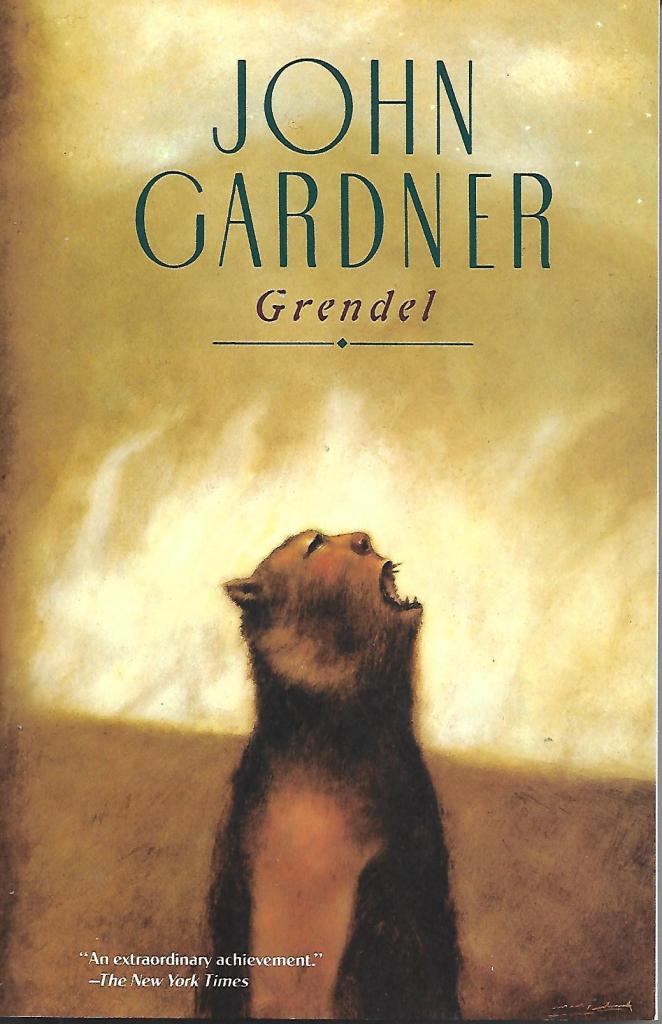
Grendel ~ A Capsule Book Review

Grendel ~ A Capsule Book Review by Allen Kopp 

If you majored in English in college, as I did, you will remember Beowulf, the anonymous epic poem, written in Old English almost a thousand years ago. Beowulf  is one of the first literary works in English, even though it’s an English nobody today would identify or understand.

The story of Beowulf is set in frozen Scandinavia around 1000 A.D., and it concerns a small groups of Danes (or thanes) ruled over by a king named Hrothgar. When these thanes are not fighting wars and conquering their enemies, they sit around in the Meadhall where they drink mead, swap stories, have sex, listen to music, fight and have a good time until they drink themselves to sleep. They seem to have an enjoyable life, but there is one fierce and vicious enemy that might show up at any time and spoil their good times. This enemy is the manlike monster known as Grendel.

Grendel kills as many thanes as he can by picking them up and biting off their heads and generally spreading terror and mayhem whenever and wherever he can. No matter how much the thanes fear him and do battle with him, they can’t seem to prevail over him because, early in the story, he is made invincible by a dragon. (An invincibility that, in the end, seems to wear itself out.) This background sets the stage for the 1974 novel, Grendel, by John Gardner (1933-1982).

Grendel is told in Grendel’s own first-person voice. He lives in a cave that has an underground lake with his blob of his mother who doesn’t speak. We (the reader) never learn anything about where Grendel came from or how he came to be. He just is, that’s all, like the universe.

We see that Grendel isn’t really such a bad fellow. He’s lonely, unhappy, unloved, misunderstood and an outcast. He kills because it is in his nature to kill. There are times when he could kill but doesn’t. He has a sensitive spirit and never fails to appreciate the beauty of nature. He spies on the thanes as they party in their Meadhall because, in reality, he would like to be one of them, to be accepted by them. He just can’t always resist the urge to kill them.

Grendel takes the story of Beowulf a little farther. It’s a psychological examination of a monster and an outcast. No matter how despicable a person or a thing is, we must realize that he (it) always has his (its) own story with which we might sympathize if we could but know the details. It’s been many years since I’ve read Mary Shelley’s Frankenstein, but the astute reader will, I think, see similarities between the two monsters.

Copyright © 2018 by Allen Kopp

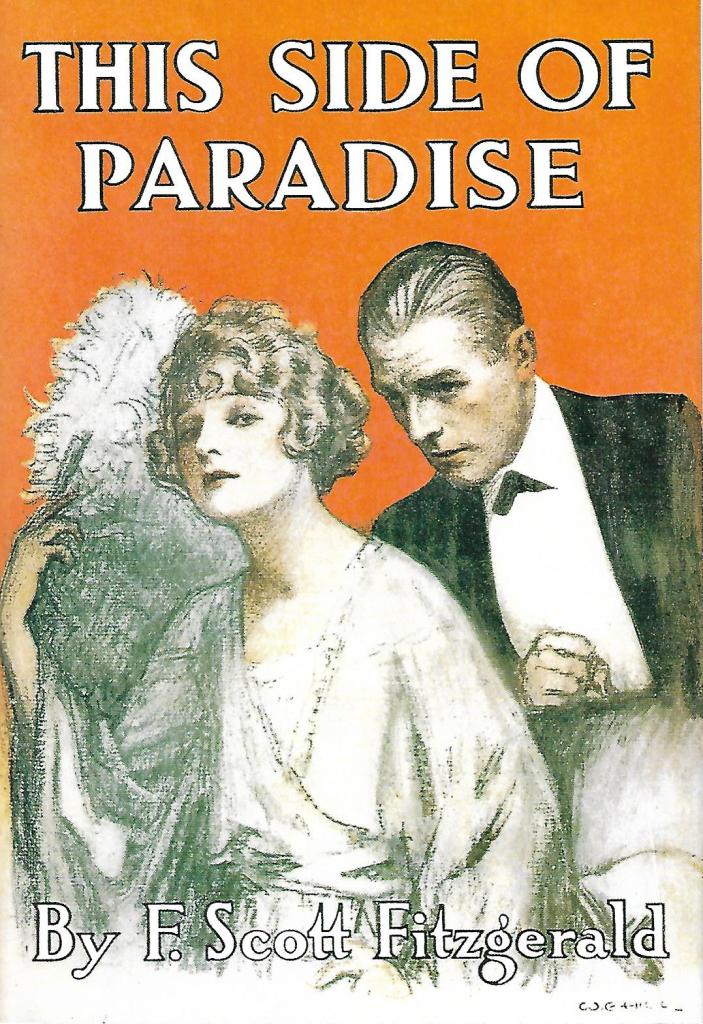
This Side of Paradise ~ A Capsule Book Review

1920 First Edition Cover

This Side of Paradise ~ A Capsule Book Review by Allen Kopp 

Francis Scott Fitzgerald was born in 1896. His reputation as a great American writer of the twentieth century rests firmly on his four novels (especially The Great Gatsby) and dozens of short stories that he wrote for magazines. More than any other writer of his generation, he was a chronicler of his age, which became known as the Jazz Age. He died in 1940, age forty-four, of a heart attack.

Fitzgerald’s first novel, This Side of Paradise, was published in 1920, when he was only twenty-four years old. The central character in the novel is Amory Blaine, an arrogant, good-looking, heavy-drinking young man from a prosperous family. He has an indulgent mother who spoils him and a mousy father who doesn’t do much of anything except make money. Amory has what might be called a “golden” youth. He attends Princeton University where he and his friends spend a lot of time drinking, socializing, talking and intellectualizing, and having a good time.

The glory of Amory’s youth is rather tarnished by a series of unsuccessful love affairs with spoiled, vacuous debutantes. Each time he begins a new love affair, he believes it is the all-consuming passion of his life that will bring him eternal happiness and peace. None of them turn out the way he wants them to, however. He plans on marrying a girl named Rosalind Connage, but she throws him over at the last minute because she thinks he is essentially a loser who won’t ever be able to make enough money to suit her. Here we have one of the major themes of the novel: how the quest for money and social standing kill romance.

World War I is the defining event of Amory’s generation, but for him it’s no more than a blip. He enlists, as everybody else is doing, but he remains stationed on Long Island and doesn’t see any fighting before the war ends. He says later that he loathed the army.

After the war ends, Amory finds himself in a changed world. Some of his best friends from college have died in the war. His father dies and his mother discovers they don’t have nearly as much money as they thought they did. Is Amory going to be forced to go to work to earn a living?

As Amory grows older, he becomes more disillusioned. His mother dies. His college friends die or drift away. Some investments left by his family that provide a portion of his income dry up (and this is long before the Depression). He’s afraid of being poor. He wants to write but doesn’t. He sees his youth slipping away, its promise unfulfilled. The book concludes with a long philosophical conversation he has with two men he doesn’t know (one of them turns out to be the father of a college friend who was killed in the war), in which he espouses his belief that Socialism will cure all the world’s ills. After all he goes through, he ends up by saying, “I know myself, but that is all.”

On examining Fitzgerald’s life, we see that This Side of Paradise is largely autobiographical. Amory Blaine, his protagonist in the novel, is a heavy drinker, as was Fitzgerald (probably contributing to his early death). Like Amory Blaine, Fitzgerald attended Princeton University, served a brief stint in the army during the war without seeing any real action, had some unhappy love affairs with debutantes, experienced financial reverses, and was disillusioned in early middle age.

This Side of Paradise is a novel that stops rather than ends. We don’t know what Amory’s future life will be. Will he overcome his disillusionment and became a great writer? Will he find another love to fill the void left by the departure of Rosalind? Will he find the thing he wants, whatever it is, as soon as he stops looking for it? Probably not. He’ll probably die in his mid-forties of alcoholism, as unfulfilled as ever, never knowing of his literary legacy that will endure through the decades.

Copyright © 2018 by Allen Kopp
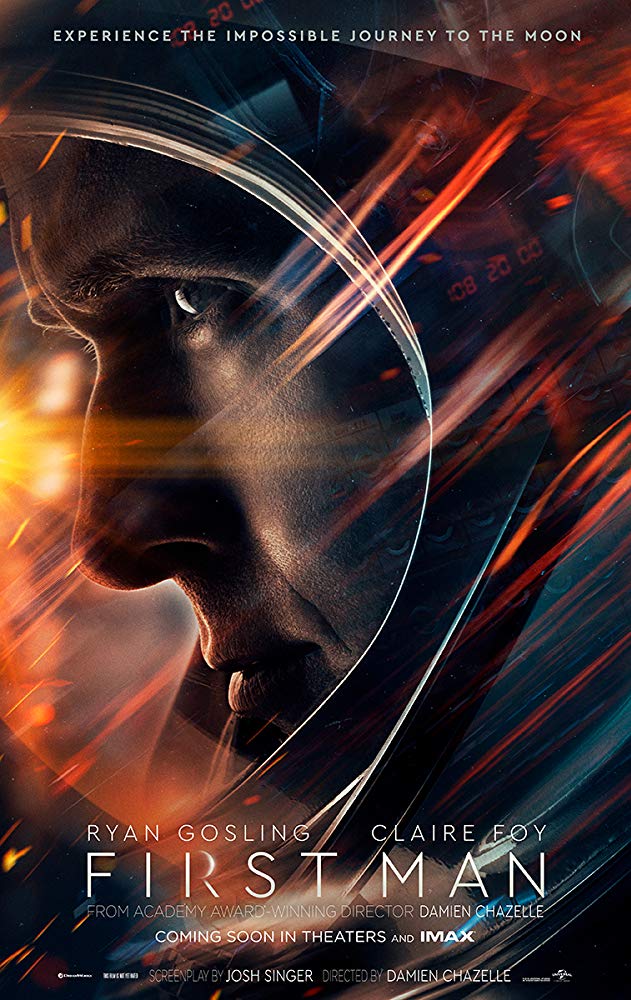
First Man ~ A Capsule Movie Review

First Man ~ A Capsule Movie Review by Allen Kopp 

It’s hard to believe it’s been forty-nine years since the first manned space flight to the moon. In July 1969, America bested the Soviet Union in the space race by overcoming the immense dangers and technological challenges of putting a living, breathing human man on the face of the moon and safely returning him to earth. It was the culmination of all the manned space flights of the sixties. The moon was always the ultimate goal. As John F. Kennedy said in 1961, “We do it not because it’s easy but because it’s hard.”

First Man is about the first manned space flight to the moon but, more than that, it’s a personal story about the man, Neil Armstrong, who first stepped out of the “lunar module” onto the surface of the moon—the first-ever human being from earth to set foot on another world outside his own. First Man chronicles the difficulties involved in getting a man on the moon and the personal toll to those involved.

Neil Armstrong was a regular-guy family man. He was quiet, modest, self-effacing and not given to displays of ego or emotion, even with his family. When his small daughter, Karen, dies of cancer, he carries his grief alone. He works in one of the most dangerous professions known to man, but he never shows his fear or lets it get the best of him, even when some of his colleagues die in horrific “accidents.” And when he becomes, for a time, the most famous man on earth for being the first man on the moon, he doesn’t care about adoration or fame. During a press conference when a reporter asks him how he felt when he was chosen to be the head of the first manned mission to the moon, he says, “I was pleased.” When called upon to expound upon these feelings, he says, “I was pleased.” This simple phrase encapsulates his demeanor perfectly.

Current movie star Ryan Gosling (La La Land, Blade Runner 2049) plays Neil Armstrong with humility and sincerity. We never feel like we’re watching a movie star justifying his twelve-million dollar paycheck so he can line up his next twelve-million-dollar project. An actress named Claire Foy, whom I had never seen before, is impressive as Neil Armstrong’s wife, Janet. She also seems simple and sincere. We see what she’s going through, knowing that her husband might never come home again from his latest mission. She has to corral the kids and deal with obstreperous reporters on her front lawn. At one point she stands up to the fellows at NASA when they try to assure her that everything is all right and she tells them they’re like a bunch of little boys playing with balsawood airplanes and they don’t know what they’re doing.

First Man is an impressive October movie (with a knock-out music score and special effects) that might disappear without being seen amid all the youth-oriented fluff and crap that floods multiplex movie screens. It’s a serious movie for the serious moviegoer. There are no women in lingerie, no risqué jokes, no bad language (one use of the “F” word that I noticed), no car chases, no explosions, no boudoir scenes, and no reason not to see it.

Copyright © 2018 by Allen Kopp


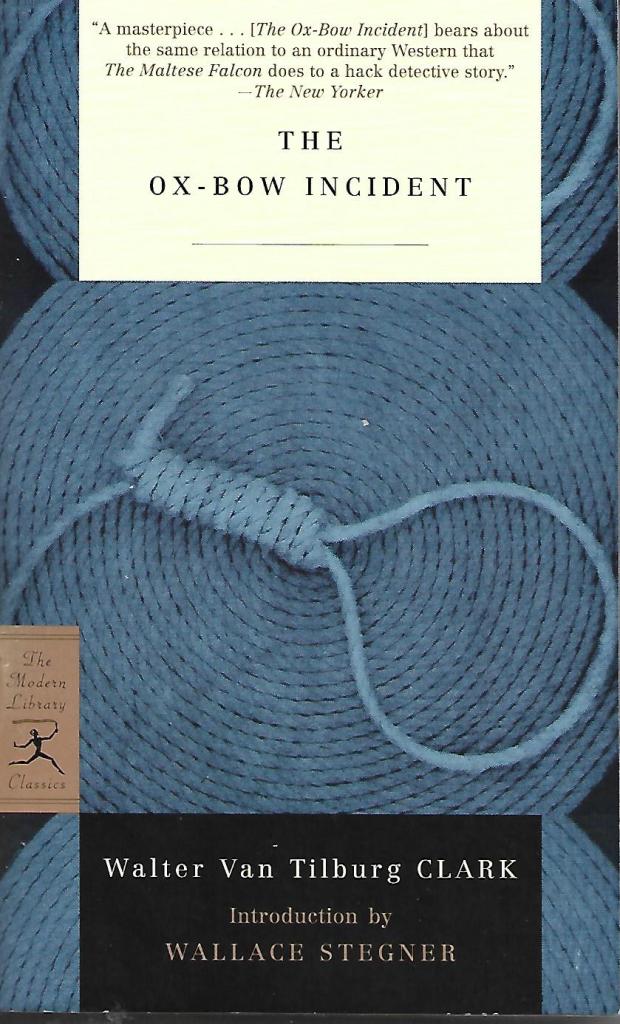
The Ox-Bow Incident ~ A Capsule Book Review

The Ox-Bow Incident ~ A Capsule Book Review by Allen Kopp 

Walter Van Tilburg Clark’s 1940 novel, The Ox-Bow Incident, is set in the American West in 1895. While ostensibly a “western,” it’s about something more than ridin’ and shootin’ and shootin’ and ridin’. It’s about a group of mostly decent men who, following their “leader,” with nothing more to go on than hearsay,  take the law into their own hands and perform an act that is reprehensible and inexcusable.

Art Croft and Gil Carter are cowboys and best friends (not the kind in Brokeback Mountain). While the story is not about Art Croft, he is narrating; he is the “voice” of the story. Cattlemen in 1895 fear nothing more than rustlers. Word has reached town that a well-liked man named Kincaid has been murdered and his cattle stolen by three desperadoes. The cowpokes drinking in the saloon are easily riled when it comes to stealing cattle. They immediately want to set off and find the perpetrators, and they don’t intend to be gentlemen about it, either.

Calling themselves a “posse,” twenty-eight men set out from town to track down the thievin’ scum who killed one of their own and stole his cattle. A snowstorm is threatening, but these men are not to be deterred by a little inclement weather. A man named Tetley is the de facto leader—he is the unfeeling “brain” of the group. We see how decent men with a forceful, commanding leader will follow that leader and not think for themselves because they are afraid to be seen as different.

An old man named Davies has gone along with the posse, not because he has the customary “blood lust” that the others have, but because he believes he might prevail upon the more sensible of the men to desist and not do anything they’ll regret later. He is the “heart” of the group, its conscience.

The posse rides and rides through the winter night until they do, in fact, come upon three men sleeping around a campfire. This is exactly what they have been looking for. They begin bullying the three and asking them questions, with no attempt at uncovering the real truth. They have found three men who fit the description of the rustlers (any evidence against this is circumstantial), and they intend to take matters into their own hands in the only way they know how. Davies tries to get the men to take the three back to town, where they might be investigated properly, but the men ridicule him and call him names. A couple of the other men are also in favor of turning the three over to the “real” law, but that is not the will of the “mob,” so they are shouted down.

From the time the posse comes upon the three men accidentally, the outcome is inevitable. Spurred on by the leader Tetley, the mob wants a hanging and they won’t be satisfied with anything less. Of the three supposed rustlers, the young man Martin tries to argue his case and the case of the other two men with him (a Mexican and an old man named Hardwick), but it’s no use, no matter what he says.

The hanging of the three innocent men takes place at sunrise. Ironically, after the men are dead, it becomes glaringly apparent that the mob has made a mistake and, as might be expected, they need someone to blame.

The Ox-Bow Incident is scrupulously detailed, beautifully written, sometimes slow-moving (patience is required), with lots of dialogue and lots of character touches. It is a story about mob rule, the strange phenomenon known as “groupthink” that, under certain circumstances, can bring about disastrous results. When people are not willing to think for themselves and when they know that what they are being told to think is immoral or unfair, they are relinquishing their humanity to the bully or the tyrant. Only afterwards will they become aware of the little thing they have inside them known as conscience.

Copyright © 2018 by Allen Kopp

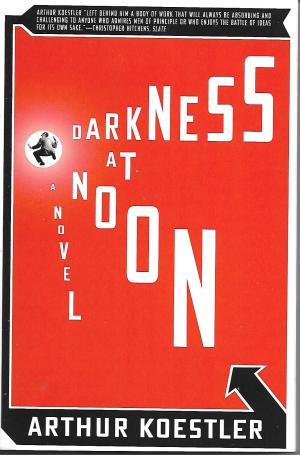
Darkness at Noon ~ A Capsule Book Review

Darkness at Noon ~ A Capsule Book Review by Allen Kopp 

Arthur Koestler was a Hungarian-born British writer who lived from 1909 to 1983. He was a Communist who quit the Communist party when he became disillusioned with Stalinism. This personal experience forms the basis for his most famous novel, Darkness at Noon, published in 1940.

Nicholas Rubashov is the fictional protagonist of Darkness of Noon, the “one against many.” He is a man in his fifties, once an important party figure, one of the men who built the Party (Communist) up. When he objects to the direction the Party is taking, however, he engages in “counter-revolutionary” activities. He ends up in prison to await his fate, which is certain from the outset.

In his tiny prison cell, Rubashov has plenty of time for reflection. He recounts his past life, the experiences that has brought him to his present state, and the people he betrayed along the way, including a loyal secretary named Arlova with whom he was romantically involved. He did all the things a Party member was supposed to do, until he had a change of heart and came to believe the Party was ruining the country with its philosophy of “the end justifies the means” and “the individual doesn’t matter—only the state matters.” In other words, he believed the Party was sacrificing the present for the future.

While in prison, Rubashov has many interrogations, which become increasingly brutal. At first his interrogator is Ivanov, an old friend. Ivanov doesn’t take a hard enough line with people like Rubashov, so he is killed and replaced by Gletkin, a young, ruthless, heartless, not-very-bright Party man who doesn’t believe in sentiment or in the importance of old friendships. Gletkin has only one goal in mind with people like Rubashov: to seal his fate and hasten his inevitable conclusion.

Darkness at Noon is bleak reading but only moderately difficult to read, despite its heavy subject matter. It’s not for everybody, of course, but is considered one of the great novels of the twentieth century, a story about an “individual” in a system in which the individual doesn’t matter. It is not light reading, but it moves along at a fairly rapid pace and is under 300 pages long; in the hands of another writer, I can see how it might easily have been twice as long.

Copyright © 2018 by Allen Kopp

The Nun ~ A Capsule Movie Review

The Nun ~ A Capsule Movie Review by Allen Kopp 

The Nun is set in 1952 in a spooky castle/convent in a remote part of Romania. The castle has a history of its own; it was built in the Middle Ages by a duke who was a practitioner of black magic and who wrote books on demonology and witchcraft. After the castle became a nunnery, the nuns engaged in perpetual prayer (adoration) to keep the evil spirits away. (Why didn’t they just leave?)

A young nun has apparently committed suicide in a disturbing manner at the Romanian convent. The Vatican has sent a middle-aged priest, Father Burke (Demian Bichir) to investigate. Father Burke has a history of dealing with cases that involve or seem to involve demonic possession. With him is a young novitiate (a nun who hasn’t taken her final vows) named Sister Irene (Taissa Farmiga).  Sister Irene has a history of “visions,” so that apparently is what qualifies her to help with the investigation of the nun’s suicide. Father Burke and Sister Irene are guided by a young man who calls himself Frenchie, a French-Canadian living near the convent; he’s the one who found the body of the nun who apparently committed suicide. He has put the body in the ice house to help preserve it, but when he takes Father Burke and Sister Irene to see it, it (the dead body) has moved from a lying to a sitting position.

Well, as might be expected, an evil spirit, a demon, is at work in the convent. This spirit takes the form of a grotesque nun named Valak, whom we saw briefly in the earlier movie The Conjuring 2. Valak doesn’t take kindly to people from the church trying to exorcise her. She will fight back with everything she has. Will she prevail over Father Burke and Sister Irene? I wouldn’t count on it, since they have the force of “good” on their side. They also have an ancient holy relic containing the blood of Christ. Now, that I would like to see!

If you’ve seen The Conjuring and The Conjuring 2 and enjoy horror movies of this kind, you will probably find The Nun worth your time, even though there isn’t much new here that we haven’t already seen in other movies. Ever since movies like Rosemary’s Baby and The Exorcist, hellish demons are a staple of American movies. They’re going to be around for a long time until people stop paying money to see them. Isn’t it better to see demonic possession on the movie screen than to experience it yourself? From what I’ve heard, I think it’s an experience that none of us want to know firsthand.

Copyright © 2018 by Allen Kopp

The 42nd Parallel ~ A Capsule Book Review

The 42nd Parallel ~ A Capsule Book Review by Allen Kopp 

With the trilogy U.S.A., John Dos Passos (1896-1970) took a stab at writing the great American novel of the twentieth century. The first book in the trilogy, The 42nd Parallel, is a panorama of American life from 1900 to the First World War, told through its fictional characters. All the characters are striving, desiring, climbing, grappling with the world in one way or another, trying to overcome the circumstances of their birth and attempting to rise in the world.

The 42nd Parallel is written in an “experimental” style (but still very accessible to the reader), meaning that there is no continuous narrative, but the story moves from character to character (some of whose paths eventually converge). All the characters are fascinating American types (the handsome business tycoon with an eye for the ladies and a difficult wife; the young working man who believes in workers’ rights and the coming socialist revolution; the young woman struggling to make a place for herself in a business world dominated by men; the young auto mechanic who doesn’t have much luck with the women or with keeping a job). The characters are swept along on the wave of history, whether it’s revolution in Mexico or Russia, war, labor unrest, the loosening of nineteenth century moral standards, or the changing political landscape which seems to be tending toward socialism.

Another thing that makes The 42nd Parallel unique is that the narrative is interspersed with brief:

  • “The Camera Eye” sections, autobiographical vignettes in the stream of consciousness style, which means they don’t always make much sense.
  • “Newsreels” sections, consisting of (sometimes) relevant front-page headlines.
  • “Biography” sections, short accounts of the some of the notable people of the first two decades of the twentieth century, such as Thomas Edison, Eugene Debs and Henry Ford.

“The Camera Eye,” “Newsreels,” and “Biography” sections are not as annoying and intrusive to the story as you might think. They are thankfully short and easy to read. They serve more as a brief respite (like a scene change) to the story.

If you are an avid reader (like me) or a student of American literature, you will love The 42nd Parallel. It’s a real piece of Americana and one of the greatest and most unique literary creations of the twentieth century. I haven’t yet read the other two parts of the trilogy (1919 and The Big Money), but I intend to read them very soon.

Copyright © 2018 by Allen Kopp