The Martian Chronicles ~ A Capsule Book Review

The Martian Chronicles ~ A Capsule Book Review by Allen Kopp

The Martian Chronicles, by Ray Bradbury, was first published in 1950 and is set in a future time in the early 21st century, a time that we have now exceeded and passed. It is a collection of interrelated short stories that are almost but not quite a novel. The stories are all set on the planet Mars and are about earth people traveling to Mars, living on Mars and trying to survive on Mars. Mars may be the one planet in our solar system that is most like earth but, as the people in the book discover, living on Mars is not quite the same as living on earth.

In The Martian Chronicles, tens of thousands of people from earth are traveling to Mars because—you guessed it—mankind has defiled and annihilated earth and, for people to go on living, they must find a new planetary home. Mars, as we see it, is an eerie, lonely planet, with dried-up oceans, deserts and canals, and remnants of Martian cities that are thousands of years old.

Earth people on Mars, as you might imagine, are not good for Mars. They set about destroying Mars the same way they destroy earth and there’s nobody to stop them. The once-proud Martian race has all but died by the time the bulk of earth people arrive. There may be a few Martians still living, but they keep themselves hidden in the hills and are rarely seen.

The stories in The Martian Chronicles are divided into three parts. The first part is about the attempts of men from earth to reach Mars and the methods Martians use to keep them away. In the second part, humans from earth set about colonizing Mars, having all but wiped out the Martians with earth diseases, and are preoccupied with making Mars as much like earth as they can. However, as earth is about to be destroyed in a nuclear war, most of the earth colonists on Mars pack up and return home. The third part deals with the aftermath of the destructive war on earth and the few earth people still remaining who will become the new Martians because earth is gone and they have no place to return to.

The Martian Chronicles is intelligent, inventive and engaging, with just a touch of creepiness to enlighten the proceedings, as when an inventor, whose wife and children have died on Mars, makes look-alike robots to replace them, or when the Martians eliminate one of the expeditions from earth by using telepathy to make the men of the expedition think their long-dead relatives are alive and well on Mars. It’s classic sci-fi fantasy as only Ray Bradbury can do it.

Copyright © 2019 by Allen Kopp

Tolkien ~ A Capsule Movie Review

Tolkien ~ A Capsule Movie Review by Allen Kopp

Thirty-year-old, blue-eyed actor Nicholas Hoult plays English fantasy writer John Ronald Reuel (J. R. R.) Tolkien in the film biography of Tolkien’s life, called, appropriately, Tolkien. J. R. R. Tolkien’s work is probably more popular now than it was during his lifetime due, in large part, to the two popular film trilogies (six movies in all), based on his works The Lord of the Rings and The Hobbit.

J. R. R. Tolkien lived from 1892 to 1973. Both of his parents check out early, so he and his younger brother are left under the guardianship of a priest. He attends a traditional boys’ boarding school, where he, as usually the case with creative people, occupies his own world, in this case the world consisting of sketching fantastic creatures, creating his own language, and dreaming of a fantasy world of his own making. (His early preoccupation with fantasy is fueled mostly by his soon-to-be-dead mother.) While still in school, he develops an infatuation for a young girl named Edith, who is the “paid companion” of a wealthy woman named Mrs. Faulkner. His love affair with Edith doesn’t work out right away and she announces she’s marrying somebody else, but eventually they end up together and marry.

While still at school, Tolkien develops a close relationship with several other boys, who are all unique in their own way. This friendship is very intense and lasts presumably for a lifetime or until death. The theme of friendship (“fellowship”) becomes an important theme in Tolkien’s yet-to-be written fantasy works. Other important themes would be questing for something that is lost and the titanic, never-ending battle between good and evil.

Tolkien experiences The Great War (“The War to End All Wars”) firsthand, on the front line of battle. He survives the war, while so many others do not, marries, has four children, and goes on to become a college professor and a prolific writer. We have to presume he would be surprised by the continuing fascination with his life and work 46 years after his death.

Tolkien covers roughly the first half of J. R. R. Tolkien’s life. The movie ends before he came to write the books that would make him famous. It’s a fairly standard movie biography, well-made, but not as compelling as films based on the lives of other famous Britishers, Alan Turing (The Imitation Game) and Stephen Hawking (The Theory of Everything.) The British accents in Tolkien are sometimes difficult to comprehend, but that’s usually the case with British movies (some English subtitles for American audiences might not be amiss).

Copyright © 2019 by Allen Kopp

Outer Dark ~ A Capsule Book Review

Outer Dark ~ A Capsule Book Review by Allen Kopp

The two main characters in Cormac McCarthy’s novel Outer Dark, brother and sister Culla and Rinthy Holme, are victims of poverty and ignorance. (She has no shoes, while he wears stolen boots.) Rinthy is nineteen. Culla is some older. Rinthy has a baby and Culla is the father. Apparently because he is ashamed of impregnating his own sister, Culla takes the nameless baby, a boy, and leaves him alone in the woods to die. The baby is picked up by a ragtag, itinerant tinker who travels around with his cart. Where the tinker takes the baby or for what reason is never made quite clear, but it can’t be for any good or because he is concerned for the baby’s welfare.

Rinthy and Culla undertake separate journeys, Rinthy to find the baby (her “chap”) and Culla to find Rinthy, or maybe he’s just looking for work. Wherever Rinthy goes in her quest to find her baby, she is mostly met with kindness, with people who feed and shelter her. With Culla it is just the opposite. Death and disaster follow in his wake. The people he encounters are menacing and more than once threaten him in some way. (Does the trio of despicable desperadoes who seem to be trailing him really exist, or have they been called forth by his sin?) Even nature is unforgiving for Culla. When he is crossing a ferry on a river, the cable holding the ferry in place inexplicably breaks and Culla nearly drowns. He survives, but would have possibly been better off to have drowned, considering what happens to him afterwards.

Can we say, then, that Rinthy is a child of light and Culla a child of darkness because of his sin of engaging in incestuous relations with his sister and then trying to destroy the evidence of the relationship? His biggest sin, however, is possibly his lack of awareness of his sin and his failure to seek redemption. (At the end of the book, Rinthy finds herself in a glade and Culla in a swamp.)

Cormac McCarthy, now 85 years old, is one of America’s greatest living writers, the only writer we have comparable to William Faulkner. Outer Dark is a fascinating exploration of sin and retribution (or the absence of retribution). I’ve read it twice, years apart, and found it compelling both times. It’s an example of how good contemporary American literature can be in the hands of an undisputed master.

Copyright © 2019 by Allen Kopp

Full Service ~ A Capsule Book Review

Full Service ~ A Capsule Book Review by Allen Kopp

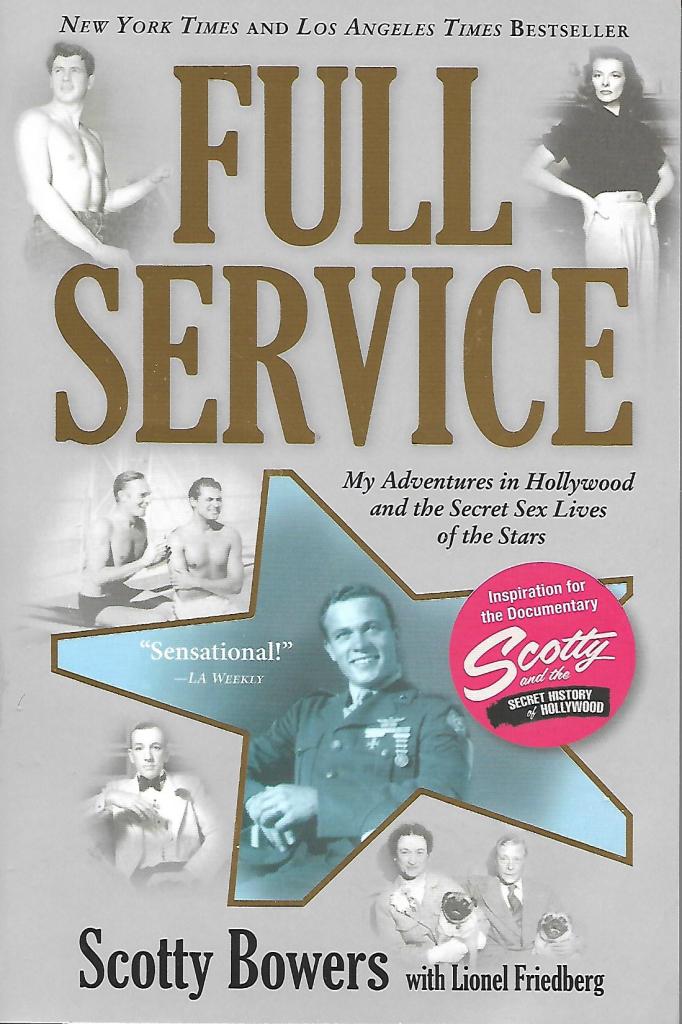
Scotty Bowers was born in 1923 and is now 95 years old. He grew up in a small town in Illinois, served in the Marine Corps in World War II and began living in California after the war. He started out as a gas station attendant in Hollywood in the 1940s and became a male prostitute (for either sex), a procurer (for anybody of any sexual orientation who wanted a sex partner), bartender, handyman (repairing anything from plumbing to electrical wiring), husband and father, sexual powerhouse, friend to many, including famous and celebrated people in and out of the movie industry, including Ramon Navarro (silent screen star), Katharine Hepburn, Spencer Tracy, Harold Lloyd (silent film comedian), George Cukor (movie director), Cary Grant, Randolph Scott, Vivien Leigh, Laurence Olivier, Walter Pidgeon, Charles Laughton, Noel Coward (English playwright), Cecil Beaton (English photographer and set designer), Cole Porter, Rita Hayworth, William Randolph Hearst, Marion Davies, Lana Turner, Errol Flynn, Vincent Price, Rock Hudson, J. Edgar Hoover, Tennessee Williams, Mae West, Edith Piaf (French singer), Tyrone Power and the Duke and Duchess of Windsor. The list goes on and on. According to Scotty Bowers’ memoir, Full Service, everybody loved Scotty and looked upon him as a great friend. He was the “go-to-guy” for fulfillment of many of their desires and needs. There was nobody ever who didn’t need and love Scotty. He was known as “Mr. Sex.”

If all of Scotty Bowers’ claims are true, he was one of the most extraordinary human beings who ever lived. He was equally accommodating for sex with either gender—of how many heterosexual men have you known this to be true?—and could perform easily at least three times a day. He was never squeamish about bizarre or repellant sexual practices or fetishes and could engage in them without reservation. According to Scotty Bowers, it’s all about giving and receiving pleasure and, as long as those requirements are met, what could possibly be wrong?

Full Service is an entertaining memoir by a man who claims to have “been there,” done it all, and known just about everybody worth knowing in the Hollywood of the 1940s, ‘50s, ‘60s and ’70s. Whether or not you believe that one man could know so many famous and celebrated people and be as prodigiously sexual as Scotty Bowers claims to have been is up to you. As with Kenneth Anger’s equally entertaining Hollywood Babylon, it might be a good idea to consider large parts of Full Service as pure fiction, especially since all the people mentioned are dead now and can’t be solicited for their opinions (and can’t sue from wherever they are).

Copyright © 2019 by Allen Kopp

Dream Boy ~ A Capsule Book Review

Dream Boy ~ A Capsule Book Review by Allen Kopp

The novel Dream Boy by Jim Grimsley is set in rural North Carolina. No time is given when the novel takes place, so we’ll assume it’s in the 1950s since it has a 1950s feel. Nathan and Roy live on neighboring farms. Nathan has just moved to the area with his mother and his creepy, alcoholic father, so he’s new to the local high school. Roy is older than Nathan but still in high school. Roy drives the school bus and when they start out in the morning, Nathan is his first passenger. Nathan seems troubled and withdrawn. Roy reaches out to Nathan and they become friends, despite their obvious differences.

Since they live in an isolated farming community, Nathan and Roy have lots of chances to be alone together. They take long walks in the lonely woods where they discover an old cemetery and, later, an abandoned and long-neglected plantation house. Expectedly or not, surprisingly or not, their friendship develops into a furtive sexual relationship. Later, Roy becomes jealous when Nathan seems to be experienced in the practice of being with another man. Where did he learn it, Roy wonders?

Nathan has a secret. We know it if Roy doesn’t. Since he was a small boy, Nathan has been sexual abused by his own father, a person who has plenty of problems of his own, alcoholism being just one of them. Nathan’s mother just hangs in the background and, doing nothing to help, wallows in her own sorrows.

Afraid that his father will come into his room at night and try to rape him, Nathan begins sleeping in Roy’s barn or in the old cemetery that he and Roy discovered on one of their walks. Roy knows that something is wrong with Nathan but doesn’t suspect what it is. He helps Nathan all he can and tries to protect him. When Nathan and Roy go on a weekend camping trip with two other boys, the other boys learn firsthand the nature of Nathan and Roy’s special friendship, leading to the novel’s tragic conclusion.

Jim Grimsley is a talented, interesting writer. Besides Dream Boy, I’ve read some of his other books, including Boulevard, My Drowning, and Winter Birds. Dream Boy is a slim novel, under 200 pages, with elements of the southern gothic. The ending is a little ambiguous, but I suppose that’s the way it’s meant to be. Nathan’s victimhood is to become Roy’s lifelong sorrow.

Copyright © 2019 by Allen Kopp

Downton Abbey ~ A Capsule TV Review

Downton Abbey ~ A Capsule TV Review by Allen Kopp

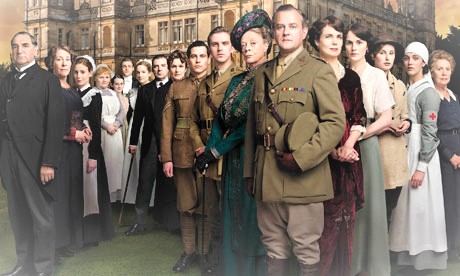
The British TV series Downton Abbey is set on a large country estate in Yorkshire in Northern England in the early years of the twentieth century. The abbey of Downton Abbey is an enormous house of imposing appearance and many rooms, set in a park-like environment of lovely vistas, rolling hills, beautiful trees and lawns. The occupants of the house, the Crawleys, are, as you might expect, members of the aristocracy, which was becomingly increasingly irrelevant as the world and society changed around the time of World War I.

Robert Crawley, the owner of the abbey, is a member of the peerage, so his title is Lord Grantham. His wife, Cora Crawley, is Lady Grantham but you can call her m’lady or her ladyship. She is a rich American and a lot (most) of the Crawley money comes from her side of the family. And, of course, what family in a period costume drama would be complete without a matriarch? The matriarch in this instance is Violet Crawley, the Dowager Countess. She is Robert Crawley’s mama (accent on second syllable). She is outspoken, presumably because she is in her eighties, and opinionated. If she likes you, she will treat you well, but if she doesn’t like you, you’d better watch out. Except for the late Dame Edith Evans, who could play the Dowager Countess better than Dame Maggie Smith?

The Crawleys have three daughters (Lady Mary, Lady Edith and Lady Sybil) and no sons, so that means there’s no male heir to inherit the title. In the very first episode, the Crawleys receive word that the heir to the title, Patrick Crawley, a cousin of Robert Crawley, has drowned in the sinking of the Titanic. That opens the door for cousin Matthew Crawley, the next male heir to the title, to appear on the scene with his well-meaning—though at times, overbearing—mother, Isobel.

Matthew Crawley is wholesome and handsome and just the right age to marry Lady Mary Crawley, the oldest daughter of Robert and Cora Crawley—such a marriage might keep Lady Mary from being penniless in later years—but—wait just one damn minute!—Lady Mary and Matthew don’t really like each other very much. Or do they? As you can see, there are (and are going to be) lots of complications of the romantic and other varieties.

They may be rich and pretty (mostly), but the three Crawley sisters are not without their personal problems. The lovely Lady Mary is drawn into scandal early in the series when a visiting Turkish diplomat (a real babe) just happens to die in her bed. This kind of thing can ruin the “reputation” of a young society woman, so her future is put in jeopardy. No decent man would ever want to marry her after her name has been dragged through the mud. Lady Edith, the middle daughter, is, of the three daughters, the one who might be called “plain.” As expected, she has a hard time attracting male admirers and she is afraid she will end up an “old maid.” The youngest daughter, Lady Sybil, thinks class distinctions are passé; she personifies how society is changing by falling in love with the handsome, young, Irish chauffeur, Tom Branson.

As you can see, there’s lots of drama on Downtown Abbey and that’s just the upstairs, for heaven’s sake! Below stairs we have the servants and they are just as interesting, if not more so, than the aristocratic Crawley family. Mr. Charles Carson is the no-nonsense butler. He’s British to the core, meaning that he hides his feelings, but we know he has them (feelings) and quite a lot them. Mrs. Hughes is the Scottish-accented housekeeper, a middle-aged matron who passed up her chance at marriage when she was younger because she is a servant and that is more important to her than anything. She has a kind heart and a mothering touch. Mrs. Patmore is the rotund, redhaired cook, not unlike a little red hen whose sky is always falling. After you get to know her, you like her fine. Daisy is the kitchen maid who is the soul of innocence. She has to take plenty of guff from Mrs. Patmore. William is the woebegone footman who courts Daisy (sort of) and then persuades her to marry him right before he dies of wounds sustained in World War I. The other footman, Thomas, is an extravagantly handsome, black-haired fellow with a black heart who seems to be willing to do just about anything to get ahead. Oh, and to make Thomas more interesting, he also happens to be gay. In the early going, he tries to blackmail a visiting aristocrat with incriminating letters written after they had a sexual liaison. He also, foolishly enough, makes an unsuccessful attempt to get the aforementioned Turkish diplomat into bed with him. (Homosexuality was a crime in England at this time, punishable by imprisonment.) Mr. John Bates is a pudgy fellow with a kind smile and a lame leg, a veteran (with Lord Grantham) of the African war. Anna Bates is a kind-hearted, saintly maid who falls in love with Mr. Bates and sees him through his woes with his wicked wife. Miss O’Brien is the sour-faced, acid-tongued lady’s maid of Lady Cora Crawley. She doesn’t seem to be able to decide whether to put her employers on a pedestal and worship them or stab them through the heart. As Thomas the footman says to her, “You’re sweet and sour.”

Season One of Downton Abbey was bookended by the sinking of the Titanic in April of 1912 and the beginning of World War I in August 1914. Season Two concerned itself mostly with the war, and it was fascinating to see how the abbey was turned into a field hospital for wounded officers, with the Crawley daughters all becoming nurses. So, you see, we have a large dose of history here and a lesson in how world-altering events shape the lives of a handful of mostly good and extremely interesting fictional people.

So far I’ve watched the first two seasons of Downton Abbey and am free to watch the other four seasons when the mood takes me. (That’s 52 episodes in all.) It’s a veritable feast of drama and escape into a world of fantasy that I prefer, when all is said and done, over the world I currently occupy.

Copyright © 2019 by Allen Kopp

Portnoy’s Complaint ~ A Capsule Book Review

Portnoy’s Complaint ~ A Capsule Book Review by Allen Kopp

Alexander Portnoy’s father, Jack, is a downtrodden insurance salesman, under-appreciated professionally and personally. He is perpetually constipated (presumably from worry) and obsessed with his bowel movements. Alexander Portnoy’s mother, Sophie, is a stereotypical Jewish mother, a loud-mouthed, opinionated yenta who knows all the clichés and doesn’t mind using them liberally. (These two elder Portnoys are, as Alexander says, “masters of guilt.”) Alexander Portnoy’s older sister, Hannah, is a plain, quiet, mousey girl who knuckles down under Jewish parental authority and makes her parents happy by marrying a nice Jewish boy and becoming a mother.

Alexander Portnoy himself is a sex-obsessed adolescent and then a sex-obsessed adult. He is complex-ridden, psychologically “constipated,” unable to find the one thing or one person that will make him whole and satisfied. He has lots of girlfriends but, when all is said and done, he doesn’t really like any of them very much. He is confused by love and its various meanings. He is “screwed up,” presumably by his Jewishness and by his parents’ own particular brand of lunacy. When he reaches his thirties and still has not taken a wife and “settled down,” his parents wonder where they went wrong.

This is Portnoy’s Complaint, Philip Roth’s satirical, fantastical (at times), outrageous, irreverent (nothing is sacred), sexually explicit, compulsively readable, funny, 1969 novel. (It must have offended a lot of Puritans back in 1969.) It’s an unusual novel, a novel not in the traditional sense of the word, but more of a loosely structured, extended monologue by Alexander “Alex” Portnoy (born 1933) to his “therapist,” Dr. Spielvogel. (In talking about his life, A. P. has a lot of territory to cover from his approximately 33 neurotic years.)

Fifty years after its initial publication, Portnoy’s Complaint has stood the test of time and stands as an American classic. It was chosen by Modern Library as number 52 on the list of the hundred greatest novels in the English language of the twentieth century.

Copyright © 2019 by Allen Kopp

By Appointment or By Chance

By Appointment or By Chance ~ A Short Story by Allen Kopp

(Published in The Literary Hatchet Issue 21.) 

The year was 1899. The old century was in its death spiral and a new century was about to be born. At this auspicious time of new beginning, I opened a business on Main Street in the town of Echo Bend.

I had worked as a teacher, editor at a small newspaper and clerk in a department store, but I dreamed of a profession where I was in sole command. I hated having to be accountable to anybody for anything. I wanted to be accountable only to myself.

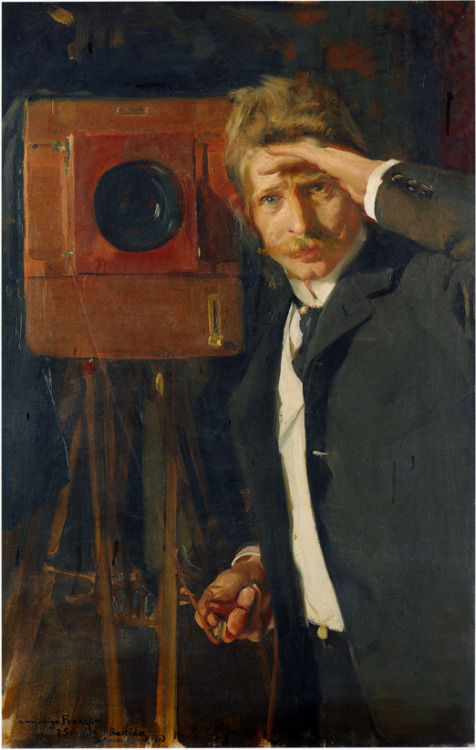
I went to a demonstration of photography in a college lecture hall and, after sitting through a lecture and a practical demonstration, I was certain portrait photography was something at which I could make a living. I bought a couple of books and studied them, front to back, with interest. I took my savings and bought a camera and all the necessary equipment. In Echo Bend, I rented commercial space in the heart of the business district. I engaged a carpenter to construct a wall, so that the front part of the space would be public and the back part private. A professional sign painter painted my name across the window and underneath my name these words: Portrait Photographer, By Appointment or By Chance.

Photography had been around for a long time but to most people it was still a novelty. If you had the money to spend, it was all the rage to put on your glad rags and go and sit for your portrait. Then, no matter how poorly time treated you, no matter how ugly and corpulent you became, you would always have the photographic image of yourself to remind you of what you once looked like, when you were at your best. Your descendants would still have your photographic image in a quaint little frame decades after your death, and one day they would sit around and say to each other, “Now, just who was he?” or, “Didn’t she die of diphtheria when she was only about twenty-three?”

Families wanted their portraits taken as a group and then separately. Some families had as many as eight or ten children. Mothers wanted their children to sit for a portrait every year, traditionally on their birthdays. Mantelpieces and chairside tables abounded with portraits in frames. People gave them to relatives as gifts at Christmas. Photography as a business was a modest gold mine for the right sort of fellow.

And then, of course, there was death photography. People wanted portraits of their deceased family members, in a coffin or on a bed, sometimes sitting in a chair, oftentimes posed with the living members of the family or with the family dog. Some photographers painted eyes or rosy cheeks on the finished portraits, but I never employed that vulgar technique. I figured that once a person was dead, it was pointless to try to make him or her seem alive again.

While business was booming in town, I was willing, more often than not, to go out of town to take portraits of the deceased, since the deceased were by necessity bound to one spot. I could usually charge any amount for this service and people would pay it willingly because the resultant photo was a blessed remembrance of the departed loved one and money was, where the death sentiment was concerned, no object. This is not to say I cheated people; I charged them what I thought they could pay. If someone lived in a fine house with many rooms and beautiful furnishings, I had no qualms about charging top prices. If, however, they dressed in rags and lived in a falling-down shack, I did the work for practically nothing.

At this time I was still traveling by horse-drawn wagon. I had a specially made enclosed wagon to keep my equipment dry if it should happen to rain, and it rained most days at certain times of the year. Often I found myself slogging over unfamiliar country roads, looking for a place I wasn’t sure existed. Sometimes it took me all day to get to where I needed to go and I would end up staying the night. I wasn’t above bedding down inside my wagon if there was no other choice. I kept telling myself that next year, or maybe the year after, I’d hire an assistant to do the driving, carry the equipment and perform other trivial tasks. I might even train him to go on the out-of-town forays on his own.

Children died more often than adults. There was always a fever or an infection or pneumonia to carry them off. If you thought about it at all, you knew that a competent doctor might have fixed them up with a pill, a bottle of medicine, or just a word of advice, if only a doctor had been around when needed. I photographed dead babies in sateen-covered boxes in the family parlor, surrounded by sprays of forget-me-nots; babies in their mother’s arms, with a brood of older children looking on; babies just ready to go into their graves with smiles on their faces and a toy animal in their arms; twin babies in one tiny coffin with their arms entwined. Once I photographed a baby and a little brown-and-white dog side by side in a wooden box, ready to embark together on their journey through eternity.

Then there were the older children: the tiny six-year-old girl whose father accidentally shot her through the heart while cleaning a gun; the boy, eight years old, who didn’t get out of the way of the train fast enough; the girl, age ten, who died of heart failure when her mother locked her in a basement with rats to punish her. Most parents were good parents, though, and brokenhearted at the loss of a child. I provided them with the photographic remembrance that helped to ease their pain and made the child seem forever close and not so far away after all.

I was on my way back to town after one of these missions to photograph a ten-year-old boy who had fallen on a pitchfork when I saw a woman standing beside the road waving a handkerchief at me. I pulled up with impatience and stopped, ready to growl at her like an old bear.

“You’re the photography man?” she asked.

“I am,” I said. “What can I do for you?”

“I’m Mrs. Trenton Fairman. I live in that house over there.” She pointed and I looked at a large brick house set back about two hundred feet from the road.

“I’m just coming off a case,” I said. “I’m headed back to town.”

“Well, you might come back in the morning, if you’re agreeable.”

“I don’t think I can do that,” I said. “Just what is it you need?”

She sighed and wiped tears from her cheeks. “Death has paid a call at my house.”

“You want a photograph of the deceased?”

“Yes, but it’s more than that.”

“What, may I ask?”

“You look like a strong man,” she said, “and quite young.”

“Yes?”

“My husband, Trenton Fairman Senior, is lying in his coffin in the bay window between the parlor and the dining room. The sun shines on him most of the day. He hasn’t been embalmed and it’s been three days now.”

“Why don’t you go ahead and bury him?”

“Tomorrow, April twenty-third, would have been his fifty-seventh birthday. When he knew he was dying, he made me promise that I wouldn’t have him buried until that day. He was very superstitious. He studied numerology and he believed that nothing would ever go right for him in the afterlife or for his kinfolk still living on the earth if he did not go into the ground on the day he was born.”

“I don’t think I’ve ever heard of that superstition,” I said.

“So, if you could consent to take my dear husband’s photograph before he goes at last into the ground on his birthday, I will make it worth your while.”

“I couldn’t do it for less than fifty dollars,” I said, believing she would balk at the price and that would end the matter.

“All right, but we’ll negotiate terms later on. You see, there’s more to my request than I’ve stated.”

“I haven’t eaten since early this morning,” I said.

“I believe we might deign to find something suitable in the house for you to eat, sir.”

She instructed me to pull my wagon around to the side of the house where she was waiting for me. When she took me inside, there was the unmistakable stench of death.

“I know,” she said. “He’s starting to smell. Nature takes its course.”

I took my handkerchief out of my pocket and held it over my mouth and nose. It was probably a good thing I hadn’t eaten.

She instructed the housemaid, a large, ungainly girl named Myrtle, to fix me a sandwich but I said, “Never mind. A drink of water will do. Just show me where the deceased is and we’ll get this thing over with.”

He was lying in a mahogany casket, very expensive looking, suffused with milky light from a bay window. Enormous potted ferns lay at the head and foot of the casket. Smaller containers of flowers were ranged on the floor along the front.

“He loved the sunlight,” Mrs. Fairman said. “I just couldn’t see blocking out the light with heavy curtains. It’ll be the last earthly light that will ever shine on him.”

“All right,” I said. “I’ll bring my equipment in from the wagon and we’ll have this over in no time at all.”

While I got the camera set up and everything ready to take the picture, Mrs. Fairman and the housemaid, Myrtle, hovered in the background, watching my every move. I would have preferred that they go about their business, but they had never seen picture-taking before and were interested in how it worked.

I took two photographs of the deceased from different angles and then Mrs. Fairman wanted one with her standing next to the casket looking down into her husband’s face. When I was finished, I said, “That’ll be fifty dollars, ma’am, if you please. When your photographs are ready, I’ll send you a postcard and you can pick them up in town at your convenience.”

“I believe I mentioned there was something else,” Mrs. Fairman said.

“Yes?”

“My son, Trenton Fairman Junior, died a day and a half after his father. He is upstairs in his room, lying on his bed. He has been bathed and dressed for burial.”

“You want a photograph of him, too?” I asked.

“Yes, I do and then…”

“Then what, ma’am?”

“Myrtle and I are here alone. Neither one of us are very strong. After you take Junior’s picture, I would like to prevail upon you to pick him up and carry him downstairs and place him in the coffin with his father and then close the lid. The boys will be here early in the morning—on my husband’s fifty-seventh birthday, I believe I mentioned—to perform the burial.”

“How old is the boy?”

“He’s fifteen years old, sir, and not very big. I think he could not weigh more than a hundred pounds. I’ll pay you an extra twenty dollars to carry him downstairs and place him in the coffin beside his father and close the lid.”

“Are you sure they’ll both fit in the same coffin?”

“Oh, yes, sir! Comfortably, I think.”

“So, that’ll be fifty to photograph your husband, thirty to photograph your son, and twenty to carry the boy downstairs. That’s a hundred all together.”

“That seems fair, sir. I have the cash in the wall safe in my bedroom.”

“All right, let’s photograph the boy, then.”

Mrs. Fairman took me up a broad carpeted staircase, up one flight and then up another. We went down a hallway to a closed door, Mrs. Fairman first, then me, and then silent Myrtle. Mrs. Fairman turned to look at me before she opened the door.

“Why does God punish us so?” she said.

She opened the door and I saw the boy, Trenton Fairman Junior, lying on his back on the bed. He was a fine-looking boy, nothing like his hatchet-faced father, dressed in a dark suit with knickers, gray stockings and expensive-looking, high-top leather shoes. He wore a high collar with a cravat, just as a grown man would, with a diamond stickpin.

“He looks to be asleep,” I said.

Mrs. Fairman and Myrtle sobbed behind me.

“Maybe it would best if you leave me to my work,” I said.

They went out of the room and I went back downstairs to the parlor where the father lay and got my photographic equipment and carried it back up. I set up to take the picture and, as usual, I photographed the deceased from three different angles.

When I was finished, I carried my equipment back down, out the door, and loaded it into my wagon so I would be ready to leave as soon as Mrs. Fairman paid me the money she owed me.

Mrs. Fairman and Myrtle were waiting for me when I went back inside. Now it was time to carry the boy downstairs. The three of us went silently back up the stairs.

With Mrs. Fairman and Myrtle standing in the doorway, I approached the bed. Cautiously, I slipped my right arm under the boy’s back and my left arm under his knees. As I hefted him off the bed, I got the surprise of my life. His body went rigid, he opened his eyes and looked at me and gasped for air as if he had been under water.

“He’s not dead!” I said, laying him back down.

“Oh, oh, oh!” Mrs. Fairman said and Myrtle screamed.

“What made you think he was dead?” I said.

He continued to revive, moving his arms and legs, pulling at his clothes, as if he had suddenly become animated by the throwing of a switch. When I looked away from him over to Mrs. Fairman, I saw that she had collapsed on the floor. She convulsed violently and then stopped moving.

“Has she also been sick?” I asked Myrtle.

I approached the recumbent woman and took her hand in mine and began patting it because I didn’t know what else to do. I administered these little slaps to her hands and face and after a while I could see she wasn’t breathing. I put my ear to her chest and heard nothing.

“I’m afraid she’s dead,” I said. “The shock was too much for her.”

Myrtle gasped and ran from the room. I heard her shoes clomping all the way down the stairs.

I turned to the boy, Trenton Fairman Junior, sitting on the bed, feet on the floor. “Are you all right?” I asked him.

“I don’t know,” he said. “Who are you?”

“I photograph the dead. Your mother asked me to come up here and take your picture.”

“Why would she do that?”

“She believed you to be dead for the last day and half.”

“Oh, yes. That’s right.”

“You know your father is dead, lying downstairs in the parlor?”

“Yes, we were going to have a funeral.”

“I’m afraid your mother is dead, too.”

He looked over at her lying on the floor and shook his head.

“Where is the nearest doctor?” I asked.

“I don’t know. I’m not sure there is one.”

“What about that girl? Myrtle? Does she live in the house with the family?”

“I don’t know where she lives.”

“She’s the only one left.”

“She’s ignorant,” he said.

“Would she be able find a doctor?”

“She wouldn’t be able to find her bunghole with both hands.”

“I’m going back to town now,” I said. “I’ll go to the sheriff and tell him what happened. Do you want to stay here do you want to go with me?”

“I’ll go.”

“You don’t want to stay here with your mother?”

“She wasn’t my mother. She was only play-acting.”

He asked me to wait while he changed his clothes and got a drink of water. I went outside and leaned against a tree in the front yard. In five minutes he came out of the house wearing a dress suit, carrying a small valise. He locked the door and we departed in my carriage.

It was late afternoon and the sky was threatening rain. I didn’t like the way the day had turned out. On top of everything else, I hadn’t collected the hundred dollars that was owed me and there would be no way to get it now.

For the first couple of miles, Trenton Fairman Junior said nothing, so after a while I turned to him to see how he was faring. With both of his parents dead, I expected him at least to need a reassuring adult to speak to.

“Do you have any family in town?” I asked.

“I don’t think so,” he said.

“You’ll have to have somebody to stay with,” I said.

“After the dead bodies are removed from my house, I can stay there. The house belongs to me now.”

“I don’t think they’ll let you stay in that big house all by yourself without an adult present.”

“Why not?”

“You’re a minor.”

“What does that mean?”

“You’re underage. Still a child.”

“I’ll bet I’m more grown up than you.”

“It’s not a subject for argument. I’m just telling you the law won’t let you live in the house alone until you’re old enough.”

“I’d like to see them try and stop me.”

“Didn’t your father have a lawyer who handled his estate?”

“Yes, I think so. A lawyer in town. I think him name was Henry something.”

“Well, that’s a start. There can’t be that many lawyers in Echo Bend with Henry for a first name.”

He was silent then. He looked straight ahead as if I wasn’t even there.

“Your mother thought you were dead,” I said. “How’s that for irony?”

“She wasn’t my mother, I told you. She was my stepmother.”

“Well, whatever she was, she thought you were dead.”

“I was dead.”

“As you stated earlier. You were dead and then what happened? You just came back to life?”

“I don’t have any explanation for it, but that’s what happened. Not everything is explainable.”

“What happened while you were dead? Do you remember anything?”

“I saw God. He spoke to me.”

“What did he say?”

“I would expect you to ask a silly question like that.”

“Don’t you think anybody would want to know what God says when he speaks.”

“God is a compact man with thin lips and a small mustache, almost as if it had been drawn on. People think of him as being big and old and having a long white beard, but he isn’t any of those things.”

“I don’t think I would have known him,” I said.

“He wears a black dress suit with a gray cravat and a ruby stickpin. And a monocle in his right eye.”

“Don’t tell me God has an eye deficiency! Or is the monocle just more of an affectation?”

“Go ahead and make fun of me. I don’t care.”

“All right. What did God say to you?”

“He said the Saints are with him in heaven.”

“Is that all?”

“He told me to await further instructions.”

“What did He mean by that?”

“You tell me.”

I sighed. I was starting to get bored with the conversation. “You must be hungry,” I said for a change of subject.

“Why must I be hungry?” he asked.

“You were dead for a day and a half. Dead people don’t eat.”

“Yes, I suppose I’m hungry,” he said. “I could eat.”

“When we get to town, we’ll get you a good dinner.”

“In the morning I’ll go see Henry what’s-his-name and tell him my stepmother decided to die along with my father. He’ll advise me what to do.”

“You’ll need a place to stay tonight,” I said.

“I can manage.”

“We’ll get you a room in the hotel for tonight.”

“I don’t have any money. I know that she had money in the safe, my father’s money, but she never told me the combination.”

“I’ll advance you the money.”

“Forget it. I’ll just walk around until morning. I’ve done it before.”

“That doesn’t seem the right thing to do,” I said.

When we got back to town, I went straight to the sheriff’s office, went inside and told him what had happened at the Fairman place, that there were two dead bodies there and nobody to tend to them. He asked me a dozen questions, where I might be reached for further questioning, and then he told me I could go. I went back out to my carriage and drove to the hotel. I stabled my horse and locked my wagon so nobody would become curious about what might be inside worth stealing. These trivial matters tended to, Trenton Fairman Junior and I went into the crowded hotel dining room and sat at a round table in the middle of the room. After we placed our order, I noticed the people in the restaurant looking at us and then I realized they were looking at him.

“You see the way they’re looking at me?” he said.

“They’re not used to seeing a young fellow all dressed up in a dress suit. Not in this town. You look like you just got here from someplace else.”

“It isn’t what I’m wearing.”

“What is it then?”

“They know I’ve seen God and will see Him again.”

“They don’t know any such thing.”

The food came, huge amounts of beefsteak, fried potatoes, carrots and green beans. After we ate, the boy said he was tired and wanted to go to bed. I figured he must be upset at the strange turn of events his life had taken that day, but he seemed perfectly calm and unemotional.

After I paid for our meal, we went into the hotel, where I engaged a room for him for the night. I asked him if he was afraid to stay by himself in a strange hotel room and he laughed. “You can’t be serious,” he said. “I’ve always been by myself. Since the day I was born.”

He had such a grownup way about him that I sometimes forgot I was dealing with a child.

He signed his name in the hotel register and the clerk handed him the key. Before he went upstairs to his room, I put my hand on his shoulder and told him I’d come by in the morning at eight-thirty to take him to his father’s lawyer and for him to meet me in the lobby. He nodded and turned and went up the stairs.

When I got home, I took a hot bath and fell into bed and slept soundly until thunder woke me up at seven in the morning. I dressed and consumed a light breakfast and then I set out for the hotel. I was sitting in the lobby reading a newspaper at twenty minutes after eight. I expected Trenton Fairman Junior to come down the stairs at any moment.

At eight forty-five he still hadn’t made an appearance and at nine o’clock I was still sitting there holding the newspaper in my foolish hands. At ten minutes after nine, I went over to the desk and asked the clerk if he could check on the boy in room three-twelve for me. He had been supposed to meet me and he never appeared.

The clerk checked his book and looked up at me and said, “A boy, you say?”

“Yes, a boy,” I said.

“A small boy?”

“No, a big boy. Almost an adult.”

The clerk looked down and then looked back at me and sighed. “Room three-twelve has not been occupied for several days,” he said.

“Are you sure?”

“Yes, sir.”

“I was with the boy last night. I engaged the room for him to spend the night in and he was supposed to meet me here, in the lobby, this morning at eight-thirty.”

“Are you sure it was this hotel?” the clerk asked.

“Will you let me take the key and go up to room three-twelve and check for myself?”

“That would be against regulations, sir.”

“Then open the door yourself to make sure the boy is all right.”

The clerk went with me up to the third floor. We walked to the door of room three-twelve and he inserted the key into the lock and pushed the door open for me to enter. The bed was neatly made up. The window shades were drawn. It was clear the room had not been occupied the night before.

“He signed the register last night,” I said to the clerk. “I was with him. His name, Trenton Fairman Junior, will be there if you only bother yourself to look.”

We went back down to the lobby and the clerk checked the register from the night before. “No such name here,” he said.

“Can I look?”

He turned the register around and I read over the four or five names from the night before. The name Trenton Fairman Junior was indeed not there.

So much for Trenton Fairman Junior. I had no explanation for why his name wasn’t in the hotel register, but I figured he didn’t need or want my help any more and had gone to find his father’s lawyer on his own.

I thanked the clerk and went back out into the rain. I went to my photography studio and opened for business. It was a slow morning, so I had a chance to process my plates from the day before: two shots from different angles of the boy who died of the pitchfork wound through the stomach, two of Trenton Fairman Senior lying in his coffin, one of Mrs. Fairman standing next to her husband’s coffin. They all turned out beautifully.

When I processed the plates I had taken of Trenton Fairman Junior lying dead on his bed, I saw only a dim outline of a bed and that’s all. No Trenton Fairman Junior. Why would I have taken photographs of just a bed? I tried to recall the events of the day before to make some sense of it. I began to think I had experienced a kind of lapse while I was in the Fairman house. Had Trenton Fairman Junior even existed outside of my own mind? Was he a ghost? I couldn’t be sure. Not all things, as had recently been pointed out to me, are explainable.

After that I didn’t do any more work. I was beginning to feel tired and lightheaded so I closed the shop for the rest of the day and went home.

That night I was sick and was sure I was dying. I ached in every joint and was having trouble swallowing. I couldn’t keep anything on my stomach, not even a sip of water. I knew I had a fever.

When I was trying to think what might be the matter with me, the truth came to me as if spoken by a voice inside my head. I had failed to ask the reason for Trenton Fairman Senior’s death. He had obviously died of something catching and I had caught it. I had spent two hours at least inside a house breathing in disease germs and death.

I didn’t want to die alone and have my bloated body found only after the neighbors noticed the smell, so I checked myself into the nearest hospital. The doctor examined me briefly and put me in the isolation ward. I was sure I was going to die; if not that night, then very soon.

For two days and nights I passed in and out of consciousness. I was barely aware of anything but I knew there were other people moving at all hours around the bed on which I lay. I didn’t know who they were, or care: I only wanted them to go away and let me die in peace.

Hours passed, maybe days, but I had no real sense of time. The light at my window went from light to dark and back to light. I was aware of the sounds of rain and thunder, the perfect accompaniment, I thought, to dying.

Once when I woke up from one of my naps, Trenton Fairman Junior was standing at the foot of my bed, smiling at me.

“I wondered what happened to you!” I said. “I’m happy to know you made it all right.”

Then I realized that somebody else was standing beside Trenton Fairman Junior. He was a compact man with thin lips and a small mustache, almost as if it had been drawn on. He had a Continental air about him, rather than an American one.

“Who are you?” I asked.

He smiled and said, “It’s time for me to ask you a question.”

“What is it?”

“Do you want to go or do you want to stay?”

“What? Go where?”

“I asked you if you want to go or if you want to stay?”

“I think I’d like to stay if it’s all the same to you,” I said.

I must have drifted off to sleep after that because when I came to myself again, Trenton Fairman Junior and the man with the monocle were gone.

I was several more days in the hospital and then they said I was well enough to go home. As I was getting dressed to leave, one of the nurses told me how lucky I was to be alive because I had come so close to dying.

“I saw God,” I said. “He spoke to me.”

“What did he say?”

“He asked me if I wanted to go or if I wanted to stay.”

“What did you say?”

I thought it an unnecessary question, but I answered all the same.

“I said I wanted to stay.”

“You’re not usually given a choice, I believe,” she said.

After a few days at home by myself I felt almost well again. On Sunday morning I rode out to the Fairman place, for what reason I don’t know. It looked abandoned. Grass and weeds had grown up in the yard. The windows were shuttered. A large for-sale sign was placed so that people would see it coming from either direction on the road. Just being near the house made me start to feel ill again, so I left.

In a month or so I moved to the city. I borrowed some money from a bank and set up a photography studio in a fashionable location (fashionable meaning people with money). I did well and moved into expensive lodgings with maid service. I bought myself a motor car, something every man of means was doing. I paid back the money I borrowed and was as happy as I ever expected to be.

My photographic subjects now were all living. I wanted nothing more to do with death. My own would be coming for me soon enough.

Copyright © 2019 by Allen Kopp

Jordan County ~ A Capsule Book Review

Jordan County ~ A Capsule Book Review by Allen Kopp

Shelby Foote was an American writer and historian who lived from 1916 to 2005. He is best known for his monumental, three-volume The Civil War: A Narrative, but he also wrote works of fiction, including Jordan County, called a novel but really a collection of novellas, short stories and sketches, all set in or around the fictional town of Bristol, Mississippi.

The collection begins with “Rain Down Home,” a story about a disturbed World War II veteran returning to his hometown after the war. He just got off the train; it’s early morning and rain is falling. He seems all right when he goes into a café and orders breakfast but before the story ends he is unexpectedly moved to violence.

Since “Ride Out” is fifty pages long, it’s more a novella than a short story. It’s about a young, disadvantaged black man named Duff Conway. He has no father and a decent mother who loves him but is barely able to provide for him. At an early age, he discovers a talent and a love for music, which he apparently inherited from his wayward father. He teaches himself to play rustic instruments and begins hanging out at night spots where jazz is played. He ends up in reform school and when he finally gets out and goes home, he pursues his music earnestly. He has some early success playing the cornet professionally, but he gets mixed up with the “wrong” kind of woman and jealously murders a rival for her affections. He is sentenced to be executed in the electric chair, but here irony intervenes. He has contracted tuberculosis from breathing “bad air” for years in nightclubs where he has played and would be dead soon anyway, even without being executed.

“Child by Fever” is a novella or short novel (150 pages) comprising half the length of Jordan County. It is the story of one Hector Sturgis, child of a wealthy family. He is dominated by his grandmother and, when she dies during an epidemic of yellow fever, his mother (who almost dies in the epidemic but doesn’t) becomes the dominating force in his life (it’s a matriarchal family). He is lonely and isolated from the rest of the world and looks for love in all the wrong places. He marries an unsuitable woman named Ella and, after the initial sexual attraction grows thin, he realizes what a mistake he has made. Ella dies tragically while committing adultery with another man (the man dies too), and Hector lapses into insanity. He stays isolated in his room all the time, imagining that his dead wife Ella has returned to him.

“Pillar of Fire” is the story of one Isaac Jameson, a soldier who fought with Andrew Jackson in the War of 1812 and who is still alive, a very old man, when the Civil War is fought. His life story is the story of much of the history of the South. When Union soldiers burn his lifelong home over his head, he has no other choice but to stand by and watch.

Jordan County is not the best of Southern writing, but if you’ve read all the Flannery O’Connor, William Faulkner and Carson McCullers you can lay your hands on, don’t count it out. It’s engaging and thoughtful writing (if second-tier) that’s worth your time and effort, if you, like me, are a compulsive reader of anything that’s good.

Copyright © 2019 by Allen Kopp

Welcome to the Neighborhood

Welcome to the Neighborhood ~ A Short Story by Allen Kopp

A moving van pulled up at the house across the street and three bear-like men got out and began unloading furniture. A late-model red car pulled into the driveway from which four people emerged: a gangly boy wearing a backwards baseball cap and an older man from the front and a girl and a middle-aged woman from the back. The man had white hair and walked with a limp. The girl looked like a younger version of the woman, obviously mother and daughter.

“Looks like a girl about my age,” Carmen said. “She’s fat and ugly but I’ll bet she has her driver’s license. Probably even her own car.”

“You’d better quit spying on the neighbors,” Zane said from his spot on the couch, where he was reading a story in True Romance magazine about a woman with four husbands at the same time. “They’re going to see you and know what a crazy person you are.”

“You ought to see this old couch they’ve got. It looks like it’s about a hundred years old. If it was mine, I’d set it out in the yard and douse it with kerosene and set fire to it.”

“Maybe they’re just waiting for the right moment to do that very thing.”

“And there’s a big glass thing that looks like a fish tank. I always wanted a fish tank.”

“Why don’t you go over there and ask them if they’ll give it to you?”

“If they can afford a fish tank, that must mean they have lots of money and that girl must have her own car. I wonder what her name is. I’m sure she’ll have an ugly-girl name like Mabel or Bertha.”

“When she sees you, she’ll think the same thing about you.”

“Hey, look at this! They’ve got a big thing that looks like a sun lamp and a huge dining room table and one, two, three, four, five, six chairs that go with it. They must have a lot of people over for dinner if they need six dining room chairs.”

“Who cares?”

“Now here comes a dresser with a big round mirror and a bed and some mattresses and a chest of drawers and—wait a minute!—here’s another bed and some more mattresses. The mattresses look brand new. They haven’t been peed on yet. Now they’re bringing out a couple of big upholstered chairs and some more boxes and—oh, my gosh!—here’s another bed and another set of mattresses. How many beds do they have, anyway?”

“Your interest in their beds is a little disturbing.”

“Now, what do you suppose that thing is? It looks like a big square washing machine.”

“Why do you care what it is?”

“I have natural curiosity. I want to know what’s going on around me. Oh, wait a minute! The girl is standing on the sidewalk looking up at the roof with her hands on her hips. She just pulled her underpants out of her crack. That’s the kind of thing people do when they think nobody’s looking at them. Come and take a look!”

“I don’t want to see any ugly girl messing with her crack or anybody else’s,” Zane said, but he put the magazine aside and stood up from the sofa and went over to the window. He took the binoculars from Carmen and adjusted them to his own eyes.

“She’s ugly all right,” he said. “Her hair looks like a fright wig you’d wear on Halloween.”

“What did I tell you? Wait until she turns around and you get a look at her face.”

“She’s turning around now and she’s saying something to one of the moving men. She’s telling him where to take some boxes. I can almost read her lips because her mouth is so big.”

“What are you talking about?” Carmen said. She snatched the binoculars back from him. “That’s not the girl, you goof! That’s the mother! Oh, wait a minute! Here’s the girl now, just coming out of the house.”

“Oh,” he said. “The mother and the daughter look just alike. They’re both horribly freakish.”

“Well, the mother is middle-aged and has on a ton of makeup and the girl is about my age. That’s how you tell them apart.”

“What do I care how to tell them apart? Maybe I just want to ignore them and mind my own business.”

“I think we should go over there and welcome them to the neighborhood. That’s what you’re supposed to do when somebody new moves in.”

“Not me!”

“You won’t go with me?”

“No.”

“I might just have to tell mother about the collection of questionable magazines hidden in your room.”

“I don’t have any magazines in my room.”

“Don’t you know there isn’t anything that goes on in this house that I don’t know about?”

“I think you should mind your own damn business and stop snooping around!”

“So you will admit that you have magazines hidden in your room?”

“I admit nothing.”

“Just the suggestion of those magazines in the house would probably kill mother. You know she’s not a well woman.”

“Could we please talk about something else, or not talk at all?”

“Then you’ll go with me?”

“I’ll go because you’re a sick person who needs help, not because I have any magazines in my room.”

Carmen put on grandma’s widow’s hat with black feathers. The almost-opaque veil resembled a mosquito net that hung down past her chin. She got her baton out of the closet and held it in the crook of her arm, ready to twirl. Zane put on his steampunk goggles and his Trader Horn pith helmet. Arm in arm, they went out to the front yard.

The woman and the girl were taking boxes out of the back of the red car and didn’t look up when Carmen and Zane appeared. The moving men were moving something heavy out of the back of the van, keeping up a steady patter of invective.

“They look busy,” Zane said. “Maybe we’d better wait and go over later when they’re finished moving.”

“I know how to get them to notice me,” Carmen said. She began marching up and down in front of the house like a soldier on sentry duty with the baton as her gun. She marched until she was out of breath.

When they still didn’t pay any attention to her, she went into her drum majorette routine. She had auditioned for drum majorette two years earlier and, even though she hadn’t been chosen, she still knew all the moves. She kicked her left leg as high as her head, and then her right leg. She threw the twirling baton six feet into the air and caught it with the tips of her fingers.

“I saw a woman doing this on TV with both ends of the baton flaming,” she said. “She was blindfolded, but she never burned her hands. I’d like to try that sometime.”

While Carmen was twirling frenetically, Zane began doing experimental cartwheels on the grass. His pith helmet fell off every time, so he began doing them much faster. When he was able to do a cartwheel and not have the helmet fall off, he congratulated himself effusively.

The baton twirling and the cartwheels still garnered no attention from the new people, as they continued to be absorbed in the business of moving furniture, boxes and barrel-like cartons into the house.

“Am I going to set off an explosion to get them to notice me?” Carmen said. She threw the baton down and began walking on her hands on the sidewalk and then up the steps of the porch and down again, all the time maintaining her superb balance.

Zane left off doing cartwheels and began walking on his hands too, but he wasn’t as accomplished a hand-walker as Carmen. When he tried going up the steps to the porch, his arms weakened and he fell on his head.

“You’ll never be able to do that,” Carmen said. “There are some things I’m just naturally better at than you.”

“I could do it with more practice,” he said.

“This isn’t working,” Carmen said. “They haven’t looked over here a single time. I think I should sing a showtune.”

“Please don’t do that!”

“How about ‘Seventy-Six Trombones’?”

“No, I hate that song!”

“I know! I’m going to get grandpa’s wheelchair out of the basement.”

It was in a corner underneath some old clothes and a box of fur pieces and hats. Carmen brushed away the cobwebs and rolled the chair to the door and out into the yard.

They took turns riding the wheelchair down the slope of the yard toward the street, stopping just short of the sidewalk. The chair didn’t move very well on the grass, so Carmen sat in the chair and Zane got behind and pushed.

On one run, he pushed a little too hard and the chair didn’t stop at the sidewalk but kept on going and jumped the curb and went out into the street, out of Carmen’s control. She put her hands on the wheels to try to stop them but she was going too fast.

Up the hill, half a block away, Milton Sills the midget was working on his classic Cadillac-with-no-engine in front of his house. He was lying on his back and, as he was coming out from underneath, he accidentally kicked the jack loose that was holding up the front end of the car. It began rolling backwards down the hill at about fifteen miles an hour.

Carmen was on a collision course with the Cadillac but she couldn’t stop the chair. She tried dragging her feet but it didn’t help; she was going too fast. She screamed and closed her eyes and threw her arms up over her head.

The wheelchair grazed off the rear bumper of the Cadillac and turned over. The Cadillac continued down the hill until it came to rest against a tree in the yard of an old woman who wore a white pageboy wig named Mrs. Franchetti.

Carmen was half in and half out of the wheelchair. She had hit her head on the pavement and was dizzy. She was bleeding from her the bump on her head and skinned places on her arm and leg. She was certain the people across the street would have seen what happened to her, but they had all gone inside and hadn’t seen a thing.

She spent five hours in the emergency room at the hospital waiting to get fixed up. When the doctor finally saw her, he had her admitted to a semi-private room overnight, where she had to listen to the all-night moaning and gurgling of an elderly roommate. In addition to contusions and bruises, she had a mild concussion and a fractured wrist. The doctor asked her why she was playing around with old an old wheelchair. She was lucky she wasn’t killed.

When mother found out, she called Carmen a dangerous fool. She ought to be ashamed of herself for dishonoring grandpa’s memory by using his wheelchair as a toy. She was confined to the house for the rest of the summer. It was a setback to her mad desire to get her driver’s license before school started. Since she was twelve, she had dreamed of having her own car to drive to school and anyplace else she wanted to go.

After a few days, the headaches lessened and she was able to come out of her room. She sat in the living room with the TV on, looking out the window, when Zane came in, looking pleased with himself.

“Leave me alone,” Carmen said, before he had said a word.

“I heard some news that might be of interest to you,” he said.

“What is it?”

“No, if you don’t want to be bothered, I’ll just keep it to myself.”

“You’d better tell me and tell me quick.”

“I’ve been over at Kent Collier’s house all morning.”

“How could that possibly interest me? Kent Collier is a weasel.”

“His mother knows those people.”

“What people?”

“Don’t be coy.”

“You know that old thing about appearance versus reality?”

“I don’t think I’ve heard that one.”

“To bring it down to your level: appearances can be deceiving.”

“What are you talking about?”

“That ugly girl’s name is Gwennie Bell.”

“So?”

“You won’t be going to school with her and you won’t have to suck up to her so she’ll take you places in her car.”

“Why not?”

“Every morning she’ll be walking the three blocks down the hill to catch the retarded bus to take her to retarded school.”

“Oh, my gosh! She’s retarded?”

“You catch on fast.”

Mother came in from the kitchen and stood in the doorway so she could hear every word. Carmen and Zane knew she was there but pretended she wasn’t.

“And that’s not all,” Zane said. “That skinny ‘boy’ in the backward baseball cap is really a woman, thirty-three years old.”

“Are you making this up?” Carmen said.

“She’s a lesbian.”

“A what?”

“It gets better. That middle-aged woman that you thought was the mother of the ugly girl is really her sister and she’s also a lesbian. She and the ‘boy’ in the backward baseball cap are lesbian lovers.”

“Hey!” mother said. “We don’t use that kind of language in this house!”

“Who is the old man?” Carmen asked, continuing to ignore mother. “Are you going to tell me he’s really a woman, too?”

“No, he’s the father of the middle-aged woman and retarded Gwennie. So, you have an old man, two lesbian lovers and a retarded girl living in the house, making up the family. It’s a story of sexual deviancy and mental retardation.”

“You’d better not be spreading gossip,” mother said, “or you’re going to be confined to the house for the rest of the summer like your sister.”

“If you don’t believe me, call Kent Collier’s mother and ask her.”

When Carmen and Zane were out of hearing, she called the Collier home, spoke to Kent’s mother, an old friend from her school years, and confirmed all that Zane had said.

As part of Carmen’s punishment for the wheelchair, mother had the “really good idea” of making Carmen take a small gift to retarded Gwennie across the street, introducing herself and asking her to go with her to the outdoor concert in the park on Friday night. It was a lesson that would help teach Carmen humility and having respect for other people’s feelings.

“I’d rather die that be seen out in public with her!” Carmen moaned.

“That’s all the more reason for you to do it, then,” mother said.

The next day, Carmen, holding a potted philodendron as a gift, went and knocked on the door of the house across the street. The old man, the father, came to the door and when he saw Carmen he frowned and the corners of his mouth turned down.

“Is Gwennie at home?” Carmen asked, swallowing hard.

“Who are you?” the old man asked.

“I live across the street.”

“Just a minute. I’ll see if she’s busy.”

The old man went away and in less than a minute, Gwennie appeared in his place. When Gwennie saw Carmen, she had an I-don’t-know-you look on her face but then she managed a small smile. Carmen held out the potted plant; Gwennie took it from her and invited her in.

“She’s in!” Zane said, watching from the window across the street. “I just know they’re going to be the best of friends!”

Copyright © 2019 by Allen Kopp