A Bee’s Life

A Bee’s Life ~ A Short Story by Allen Kopp

Queen Lucretia XXV, the Queen of all the Bees, came into the hive dragging her enormous egg sac, a cigarette dangling from her lips.

“Where the hell is everybody?” she said with a sneer. When she spoke, her ill-fitting dentures made a whistling sound, sending a chill down the spine of all the worker bees. Her harlequin glasses were crooked from when she sat on them on the bed with her full weight. If anybody felt like laughing, they didn’t.

When she saw one of the worker bees—her own offspring—working a crossword puzzle, she bit his head off and ate it without a moment’s hesitation. Before she went into her office and slammed the door, she turned to the room at large and said, “Now let that be a lesson to everybody!

“My goodness, she certainly is in a foul mood today!” Wallace said to Marge, the worker bee closest to him.

“She always gets that way right before she lays her eggs.”

“I’m not scared of her,” Vivian said. “She’s full of turkey doodle. Somebody’s going to drive a stake through her heart one of these days, and a lot of bees are going to be very happy.”

“And I suppose you’ll be the one driving the stake,” Wallace said.

“I’ve imagined it many times.”

“And then who will be our queen?” Carpathia asked.

“I’d make a better queen than her any day!” Vivian said. She stood up and sashayed up and down the aisle, trying her best to be queen-like. “My first official act would be to have her thrown out of the hive!”

“Be realistic,” Wallace said. “She’d raise an army and come back and re-take the hive.”

“That’s right,” Carpathia said. “Just ejecting her from the hive wouldn’t do any good. You’d also have to kill her.”

“I can’t do it alone,” Vivian said. “I’m going to need some help.”

“We’ll all help, Carpathia said.

“If she ever tries to eat my head,” Sherwood said tearfully. “I’m not going to just stand there like a statue and let her do it. I’ll put up a fight.”

Sherwood was still a little shaken over seeing the queen eat a worker bee’s head. He knew it happened all the time but had never seen it before.

“Oh, and just what do you think you’re going to do about it?” Wallace asked, turning around and facing Sherwood. “You know you’re powerless against the queen.”

“I’ll punch her in her egg sac and then when she doubles over I’ll stick a knife in her eye. When she’s howling in pain, I’ll leave the hive. I’ll fly so far away nobody will ever find me. I’ll fly to Tanzania.”

“You know that would never work,” Wallace said. “The drones would catch you, no matter where you are, and bring you back. She’d eat your head anyway and she wouldn’t do it quick either. It wouldn’t be pretty.”

“He’s right,” Carpathia said. “The queen always wins. The rest of us are puny nothings compared to her.”

“Be careful what you say,” Wallace whispered to the others. “I think Georgie is listening.”

They all turned and looked at Georgie. He seemed to be engrossed in his work but they knew he was listening to every word and would repeat it all to the queen the first chance he got. He was her pet worker bee. There were even rumors that she took him to bed with her sometimes.

“I say we kill him, too,” Sherwood said. “If we kill her, we’ll have to kill others.”

“We’re bees!” Wallace said. “Bees don’t kill other bees!”

“They do when they have to,” Sherwood said.

“Oh, he’s not going to kill anybody,” Vivian said. “He wouldn’t have the nerve to kill a maggot!”

“You think so, do you?” Sherwood said. “Maybe I’ll surprise you one day. Maybe this will be the day.”

The door to the queen’s office opened; she stepped out and stood at the front of the room, hands on hips. Everybody suddenly became very busy.

“There seems to be a lot of non-work going on here!” she screamed. “You jerk-offs need to realize I’m not blind and I’m not deaf. Just because I’m not in the room doesn’t mean I don’t know what’s going on!”

All the bees kept their eyes on their work and pretended the queen wasn’t yelling at them. Georgie was the only one who looked at her, and that was with adoration.

“Georgie!” the queen said, bringing him out of his reverie. “I want to see you in my office! Right now!”

“Yes, your majesty,” Georgie said.

He stood up, almost falling over his own wings, and ran into the queen’s office and slammed the door.

“He has always been such a toady!” Wallace said.

“She needs him to wipe her ass and she knows he’s the only one that will do it without complaining,” Sherwood said.

“Well, I’m relieved he’s out of the room,” Carpathia said. “I think I’m going to take a break and go to the little girls’ room. Want to come along, Vivian?”

“No thanks,” Vivian said. “My boyfriend’s going to call. I don’t want to be out of the room when the call comes through.”

A few minutes later Carpathia had returned from the little girls’ room and was freshening her makeup at her desk. Vivian was blatting into the phone to her boyfriend about where they were going to have dinner. Wallace was balancing his checkbook, trying to figure out exactly where he had made his latest mistake. Sherwood had taken off his shoe and sock and was picking at a scab on his foot while he whistled a happy tune. Suddenly the door to the queen’s office opened with a suck of air, and once again she was upon the worker bees like a Kansas cyclone.

“You should see yourselves!” she bellowed. “You all look like you think you’re vacationing on the Riviera. Well, I’m got a news flash for you! You’re not vacationing—but you are all really close to being on permanent vacation, if you get my drift!”

“Call you later!” Vivian said into the phone and hung up, hoping the queen hadn’t noticed she was on a personal call.

“Is there something we can do for you, Your Majesty?” Carpathia asked sweetly.

“I want all you lazy slugs to get your worthless asses into my office right now! And that means this minute! Pronto! Post-haste! Chop, chop!

The worker bees filed into the queen’s office with a sense of foreboding. They knew something unusual had occurred. Wallace had a lump of dread in his stomach. Carpathia had gone pale and her lipstick was smeared because the queen startled her when she was putting it on.

When they were all seated around the table, the queen closed the door loudly and regarded everybody with disgust.

“Is anything wrong, Your Majesty?” Wallace asked with a nervous smile.

“Wrong? I’ll say there’s something wrong! I’ve just been going over the figures from the last month. Honey production is down twenty-five percent! This is unacceptable! I feel like firing the whole lot of you!”

“Then who would make the honey?” Sherwood asked.

“I’ve just been discussing this problem with my lieutenant, Georgie. He suggests we work longer hours with fewer days off until honey production is what it should be.”

They all looked turned their heads and looked at Georgie. He was smirking with superiority. Wallace, remembering the remark he had made earlier about bees not killing other bees, wanted to kill him.

“Now, after today I’m going to be on maternity leave,” the queen said, “for I don’t know how long. Georgie will be in command while I’m gone. He will be my eyes and ears. He has assured me he knows how to increase honey production, so I’m going to turn everything over to him. We’ll see what stuff he’s made of. If production hasn’t increased by the time I get back, there’ll be some heads eaten, of that you can be sure!”

After the meeting, the calm after the storm, the worker bees were silent and worked very diligently. Georgie was working on a new work schedule whereby days-off and vacations were to be canceled. All worker bees were going to have to come in an hour earlier in the morning and stay an hour later in the evening until honey production was up.

When the queen left for the day, the worker bees still had hours to go before their day was over. They were tired and didn’t know if they were going to be able to keep up the pace, but they knew that Georgie was watching them and would report everything to the queen, so they at least tried to give the appearance of being productive.

“Killing the queen never seemed like a better idea,” Vivian whispered to Sherwood when Georgie had stepped out for a moment.

“You can’t kill the queen,” Wallace said. “It just isn’t done.”

“Wouldn’t you kill her if you had the chance?”

“You have to be realistic. Even if we could get rid of her, we might get stuck with a queen ten times worse. I know it’s hard to imagine anybody being worse than her, but, believe me, it’s a real possibility.”

“I don’t think we should even be talking about it,” Carpathia said. “The walls have ears, you know, even with Georgie out of the room.”

“Maybe there’s another way,” Sherwood said.

“What do you mean?” Wallace asked.

“I’m going to keep wishing for her to die, praying for her to die. She deserves to die. If there’s any justice in the world, she will die. I’ve willed bees dead before!”

“Just a coincidence,” Wallace said. “They would have died anyway.”

Die, queen! Die, queen! Die, queen! Die, queen! Die, queen!” he chanted.

“I don’t think it’ll work,” Carpathia said.

“I can certainly try,” Sherwood said. “Would anybody like to place a bet?”

Georgie took over the queen’s office, making it his own during her absence, but he kept the door open at all times so he could keep an eye on the worker bees. He was going to enjoy being boss and he hoped the queen might have some complications with laying her eggs so she’d take a much longer-than-expected maternity leave.

The afternoon progressed slowly. While the worker bees gave the impression of being immersed in their work, they all had their minds on other things. Wallace was trying to keep from watching the clock; it was only two minutes later than the last time he looked. Vivian was considering how familiar she was going to let her boyfriend, Alphonse, get on their date that night. Carpathia was thinking about her children at home by themselves; she longed to get home and make sure they were all right. Sherwood was thinking about the movies he had seen in the last few months and was arranging in his head a list of the ones he liked best.

Once, when Wallace raised his head from his work and looked at the ceiling to relieve his stiff neck, he saw two drones, looking very business-like, go into the queen’s office and close the door. In a little while, everybody in the hive heard Georgie wailing, as if in great pain.

“What the hell is going on?” Vivian asked.

“Maybe they’re arresting Georgie,” Sherwood said with a hopeful smile.

In a little while Georgie and the two drones came out of the queen’s office. The drones left and Georgie stood at the front of the room and solemnly raised his arms for quiet. When he had everybody’s attention, he began, with difficulty, to speak.

“It is my painful duty to inform all the worker bees: we have confirmed reports that the queen has died.”

There was an intake of breath as everybody absorbed the momentous news.

“It worked! It worked!” Sherwood said, but only loud enough so those closest to him could hear what he said.

“What happened to her?” Carpathia asked.

“Not long after she left the hive this afternoon,” Georgie said, “she stopped on a tree branch to rest and have a sup of water.” He stopped and lowered his head and dabbed at his eyes with a handkerchief.

“Yes?” Wallace said. “Go on.”

“A crow came along from out of nowhere and, seeing her majesty sitting on the branch, swooped in and ate her in one gobble and then flew off. There were two worker bees there who saw the whole thing. They’re being questioned by the bee police this very minute.”

“Are you sure this is not a trick?” Vivian said.

“That crow must be dead or really sick by now,” Sherwood said.

“Out of respect for our beloved queen, “Georgie said, “I’m going to shut down the hive for the rest of the day. You are all free to go, but remember to be back here tomorrow morning bright and early. We’re all going to have to work extra hard now to honor her memory.”

After Georgie had left, bent over with his grief, all the worker bees who had heard Sherwood’s boast turned and looked at him.

“Do you have some kind of magical powers?” Carpathia asked him. She had started to cry in spite of herself.

“I don’t know what you would call it,” Sherwood said, “but I definitely have something.”

“We’d better all try to stay on Sherwood’s good side,” Vivian said.

“Hey, didn’t you bees hear what the man said?” Wallace said. “We are free to go home now! Tomorrow is another day.”

“I wonder what we’ll do now for a queen?” Carpathia said.

“They’ll probably bring one in from outside,” Sherwood said. “I think that’s what usually happens in these cases.”

“They don’t need to bring anybody in,” Vivian said. “I am fully positioned to assume the throne.”

“I think you have to be born to it,” Wallace said, trying to keep from laughing.

“I have a feeling Georgie is going to initiate a coup to make himself the new queen,” Carpathia said.

“Aren’t you forgetting one little detail?” Wallace asked. “Georgie is a male bee. A male bee can’t be queen.”

“Well, anything is possible.”

“Maybe Georgie really is a woman,” Sherwood said. “I’ve always had my suspicions about him.”

When they were all outside, ready to leave the hive together, Sherwood said, “Now that the queen is dead, I’m going to take a few days off from the hive. I want to find that crow and tell him what a hero he is to all of us, even if he doesn’t know it.”

“Make sure he doesn’t eat you, too,” Wallace said.

“Not a chance,” Sherwood said and buzzed off happily.

“The queen is dead!” Vivian said, waving her handkerchief in the air as she flew away. “Long live the queen!”

All the worker bees, as they left the hive that day, felt hopeful and happy. They were sure the good feeling was going to last forever.

Copyright © 2020 by Allen Kopp
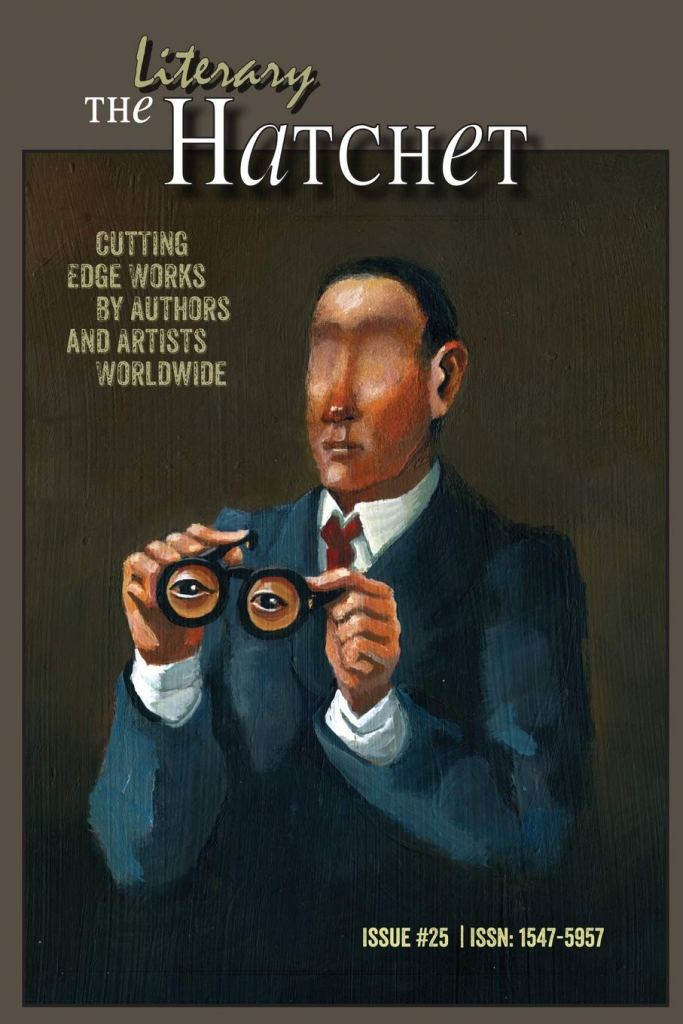
The Literary Hatchet Issue #25

The Literary Hatchet
Issue #25

The Literary Hatchet is an independent international journal devoted to emerging and established voices crafting provocative short fiction and thoughtful poetry and prose. Published three times a year!

The latest issue of The Literary Hatchet, Issue #25, containing 17 short stories, 26 poems, and two works of original art, is now available for purchase for $14 per copy on Amazon:

The featured writer for this issue is Allen Kopp, with eleven short stories: “Brother,” “Buses Boarding,” “I Had a Bone,” “In the Shape of a Man,” “Lamented,” “November Night,” “She Can Bake a Cherry Pie,” “Spiritus,” “Thanksgiving with Mr. Doodles and the Others,” “Until I Die,” “Yellow Bird.”

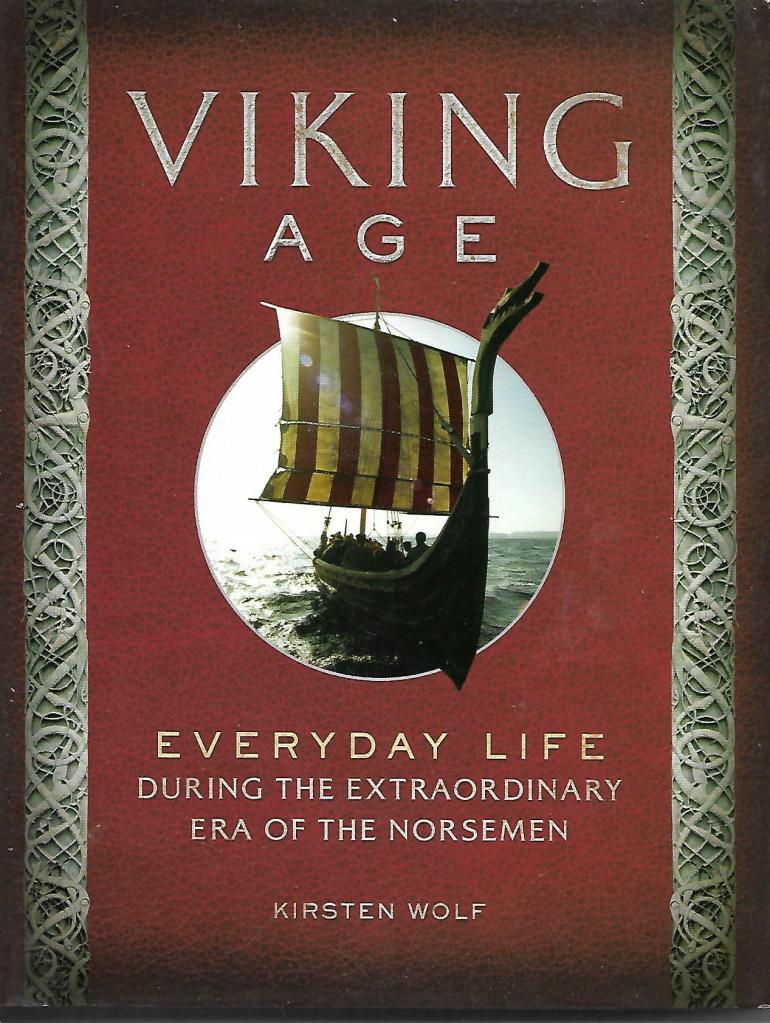
Viking Age ~ A Capsule Book Review

Viking Age: Everyday Life During the Extraordinary Era of the Norsemen ~ A Capsule Book Review by Allen Kopp

The Vikings of the ancient world came from Sweden, Norway, Denmark and Iceland. The time in which they were active was 800 A.D. to 1100 A.D. They were a fearsome bunch (bearded men in horned helmets wielding battle axes) to their neighbors because they were raiders, plunderers and invaders. Their major contributions to the world were navigation and the building of “longboats.” In other words, they were seaworthy and could go about any place they wanted to go, including the North American continent about 500 years before Columbus. Not all people who came from Sweden, Norway, Denmark and Iceland were Vikings. They were called Scandinavians or Norsemen. The Vikings comprised but a small part of the Scandinavian population, but they are the people from this period we remember.

The Scandinavians of the Viking age were pagan, worshiping multiple gods, until they converted to Christianity. Life expectancy was only 30-40 years. They were not particularly clean or hygienic, which accounts in part for the low life expectancy. Old people were virtually nonexistent. Many women died in childbirth. Many children died in infancy Men ended up raising children on their own or abandoning them to strangers. Despite the reputation of the Vikings, the Scandinavians were not a particularly war-like people. They were farmers, hunters, fishermen, cattle producers.

Kirsten Wolf, professor of Scandinavian studies at the University of Wisconsin, wrote Viking Age. The subtitle is Everyday Life During the Extraordinary Era of the Norsemen. It is an overview of everything you might want to know about this ancient age and its Scandinavian people, including what they ate, what they wore, how they lived, their politics, their religion, their belief (or nonbelief) in an afterlife, their art, their recreational life, etc. I’m not a scholar or an academic, but I found the book readable and fascinating; that is, if you have an inquiring mind and are open to historical subjects.

Copyright © 2020 by Allen Kopp

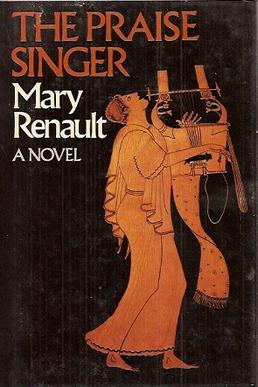
The Praise Singer ~ A Capsule Book Review

The Praise Singer ~ A Capsule Book Review by Allen Kopp

Simonides of Keos was a real-life lyric poet who lived in ancient Greece from 556 B.C. to 469 B.C. The Praise Singer is a 1978 historical novel by Mary Renault (real name Eileen Mary Challans). Though fiction, The Praise Singer is a biography of sorts based on the life and times of Simonides, and is narrated in his first-person voice. Simonides experienced during his lifetime a flowering of the arts in ancient Greece, especially in poetry and the written word. Up until that time, poetry and literature had mostly been an oral tradition. Simonides was possibly the first person to set down the works of Homer (The Iliad, The Odyssey) in writing.

Simonides has an unusually long life for his time. He is telling the story as an old man in his eighties. He has much to tell, including lots of political intrigue and associations with some of the great and celebrated people of his age. He is so accomplished at his art (a traveling singer, a bard, a performer of his own poems) that he himself becomes a celebrity through his talent rather than good looks, which he didn’t possess. He never marries and has no children but raises his nephew as his own son and teaches him to follow in his footsteps as a traveling bard and poet.

Simonides is brought up in strict discipline by his father, Leoprepes. He finds encouragement in the love of his handsome older brother, Theasides, and in music. When he meets a traveling musician and performer, Kleobis, Simonides persuades him to take him on as an apprentice. Under Kleobis’ tutelage he becomes a talented composer and performer. He attempts to find a patron at the court of Polycrates in Samos but is held back by his lack of physical beauty.

Simonides then finds a patron in Peisistratos the tyrant (a word that has a different meaning now than it did then) of Athens. He becomes a successful musician and after Peisistratos’ death, his sons Hippias and Hipparchos continue the family’s patronage. Through Hipparchos, Simonides is introduced to the prostitute Lyra, whose lover he becomes. Hipparchos sexually favors boys over women, and as the novel concludes we witness his eventual downfall as he uses his political power to punish the family of a young boy who rejects his advances. The boy and his lover retaliate by murdering him.

If you are a fan of historical fiction and the works of Mary Renault, then you will probably like The Praise Singer. I found it rather tedious at times and was glad when I came to the end. There are a lot of characters coming and going all the time and their names are not always easy to keep straight. When you stop reading the novel and then pick it up again, neither is it always easy to remember what happened the last time you read because it wasn’t that interesting to begin with. It’s best when reading a book like this to consider the whole rather than the parts. It could have used some judicious editing and restructuring to juice it along.

Copyright © 2020 by Allen Kopp
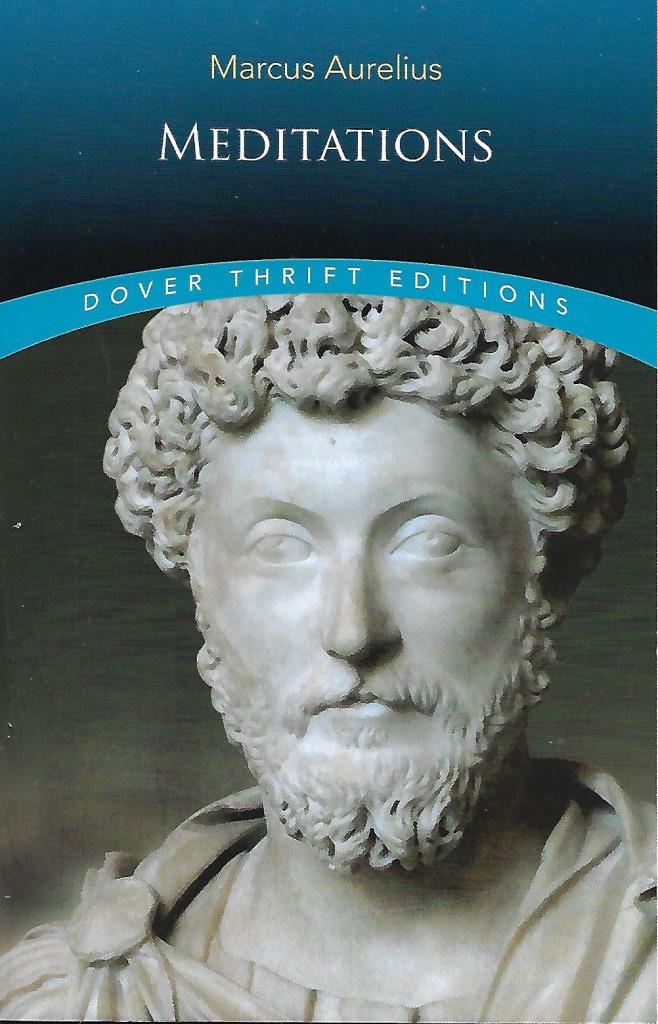
Meditations of Marcus Aurelius ~ A Capsule Book Review

Meditations of Marcus Aurelius ~ A Capsule Book Review by Allen Kopp

Marcus Aurelius lived in the early Christian era, from the year 121 to 180. He was a Stoic philosopher and emperor of Rome from 161 until his death. He wrote his Meditations as a source for his own guidance and self-improvement. He was able “to write down what was in his heart just as it was, not obscured by any consciousness of the presence of listeners or any striving after-effect.” To put it another way, he probably never planned for Meditations to be published as a book and read by people nearly two thousand years later.

Meditations is divided into twelve books, each book representing a different period in Marcus Aurelius’ life. The books are not in chronological order. A central theme is the importance of analyzing one’s judgment of self and others, and the development of a cosmic perspective. In Marcus Aurelius’ own words, “”You have the power to strip away many superfluous troubles located wholly in your judgment, and to possess a large room for yourself embracing in thought the whole cosmos, to consider everlasting time, to think of the rapid change in the parts of each thing, of how short it is from birth until dissolution, and how the void before birth and that after dissolution are equally infinite.” Another important theme is maintaining focus and being without distraction, while maintaining strong ethical principles.

Marcus Aurelius’ Stoic philosophy advocated avoiding indulgence in sensory affections, which will free a man from the pains and pleasures of the material world. The only way a man can be harmed by others, he says, is to allow his reaction to overpower him. Order, or “logos” (the principle of divine reason and creative order) permeates existence, allowing one to rise above perceptions of “good” and “bad.”

Meditations is not exactly entertaining or breezy reading, but it’s interesting on a historical level because it was written by a Roman Emperor, it’s a product of its time, and it explains the Stoic philosophy, which is in itself quite interesting. Meditations held my interest (mostly) throughout its one hundred pages and I never once wanted to set it aside and read something else, but I was glad when I came to the end.

Copyright © 2020 by Allen Kopp

The Hound of the Baskervilles ~ A Capsule Book Review

The Hound of the Baskervilles ~ A Capsule Book Review by Allen Kopp

Sir Arthur Conan Doyle (1859-1930) wrote five novels and over fifty short stories featuring the most famous fictional detective in literature, Sherlock Holmes. The Hound of the Baskervilles, first published in 1902, was the second novel of the five and is the most famous and popular.

The Hound of the Baskervilles is set (mostly) on the lonely, desolate moor in England, far from civilization. The wealthy Baskerville family has been plagued by a curse since the days of the English Civil War (1642-1651). According to the curse, a hellish hound has killed every male heir in the Baskerville line. The most recent heir to be killed was Sir Charles Baskerville; the devil hound never touched him, however; he died of fright when he believed the hound was pursuing him. The new heir is Sir Henry Baskerville. After the death of Sir Charles, he moves in to take over the Baskerville estate and fortune.

Believing his life to be in danger, Sir Henry Baskerville, along with his friend Dr. James Mortimer, enlists the aid of world-renowned detective Sherlock Holmes to solve the mystery of the hound. Since Holmes is busy with other cases in London, he sends his assistant and sidekick, Dr. Watson, down to the country to help make sure that Sr. Henry Baskerville doesn’t become the next victim of the fiendish hound.

From Baskerville hall on the moor, Dr. Watson uncovers what he can about the hell hound and the characters involved in the case and forwards written reports to Sherlock Holmes in London. The case is too fascinating for Holmes to stay away, however, and soon he makes an unexpected appearance in the middle of the proceedings. With his uncanny insights, he unravels the truth behind the hound of the Baskervilles and exposes the villain and the reasons for his villainy.

The Hound of the Baskervilles is a genre novel, classic detective fiction, easy to read at under two hundred pages, for the casual reader or the student of literature. It has served as the blueprint for many stories of its kind and has been made available in many different film versions. What actor could have made a better Sherlock Holmes than Basil Rathbone in the 1939 film version of the novel? It was the part he was born to play.

Copyright © 2020 by Allen Kopp

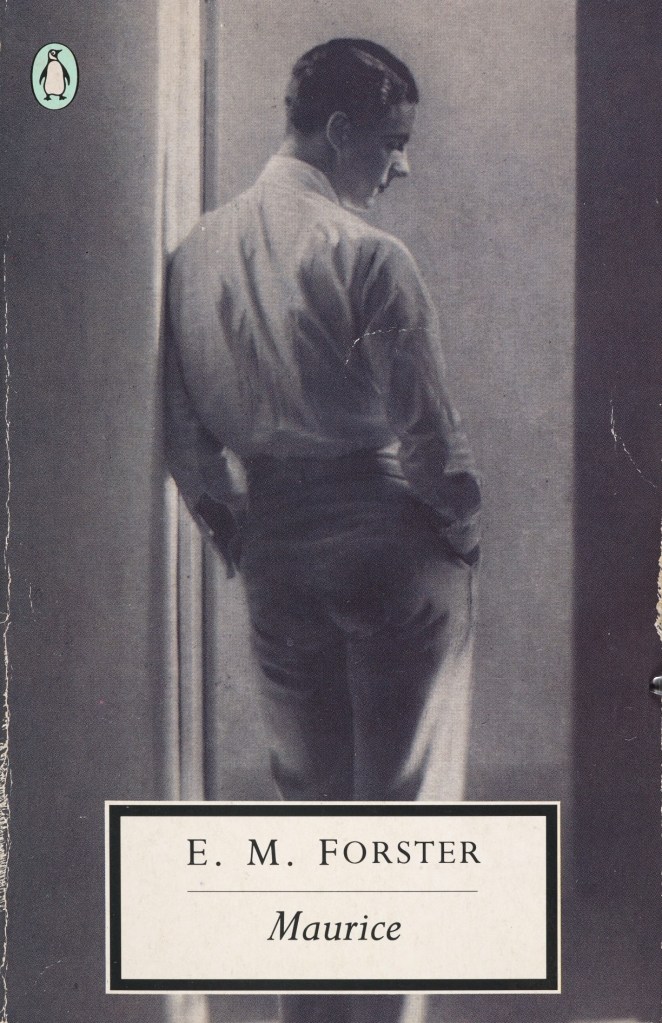
Maurice ~ A Capsule Book Review

Maurice ~ A Capsule Book Review by Allen Kopp 

E. M. Forster (1879-1970) was one of the best English novelists of the twentieth century. His novels are intelligent and literate, while also being entertaining and broadly appealing. He wrote the novel Maurice in 1913, but, because of its unconventional subject matter, it wasn’t published for decades, not until 1971.

The novel is set during the years before World War I. Maurice Hall is an upper middle-class youth from a conventional family; his father is dead; he has a mother and two sisters. He attends Cambridge University, where he meets and comes to know Clive Durham. These two “boys” (young men) are quite different from each other. Maurice doesn’t mind breaking the rules when it suits him, which eventually gets him “sent down” (expelled) from school. Clive is more mindful of convention.

As was common with English schoolboys living away from home, Maurice and Clive enter into a furtive homosexual relationship. For Maurice, his passion for Clive is all-consuming, all-important, and built to last a lifetime. He comes to care more for Clive than for anything else in the world.

The love affair (to others, it’s a very close friendship) between Maurice and Clive continues after school. Maurice works in the business his father worked in. Clive manages his family’s estate and gives dinner parties. Maurice spends as many evenings a week with Clive (and weekends) as he can manage.

A bad bout of influenza at age twenty-four leaves Clive weak and debilitated, but, more to the point, it leaves him preferring women. He and Maurice are finished as lovers but they can, of course, remain friends. Clive soon lands a woman named Anne, with whom he becomes besotted in a very short time. They soon marry, which is what every young man is supposed to do.

Maurice doesn’t really understand how Clive can suddenly prefer Anne over him, but he takes the news with apparent equanimity. As hurt as he is, he knows, logically, that turning to women is the exact right thing for men of his sort. He consults a medical doctor who instructs him to quit having morbid thoughts. A hypnotist advises him to move to Italy or France, where homosexuality is not recognized as a crime.

Enter Alec Scudder. He is an uncouth country lad, the gamekeeper on Clive’s estate. Even though Maurice and Alec are of separate classes, Alec recognizes in Maurice a fellow traveler. They come together when Maurice is visiting Clive’s estate and soon they are in love. As Maurice says, there is “one chance in a thousand” that he and Alec found each other. The only problem is that Alec is emigrating to the Argentine in about a week. Can Maurice persuade him to remain in England? Any kind of a longtime relationship between the two is by definition going to be fraught with difficulties. Not only are they of different classes, but they are outcasts from the world. (He was despise-ed, he was rejected, and acquainted with grief.)

The novel has a happy ending. How can that be? The happy ending is why the novel wasn’t publishable at the time it was written. Homosexuality was a criminal offense in England. Any novel, regardless of its literary merit, that allows two homosexual men to go on their merry way without destroying themselves or ending up in prison was an outrage against public morals. People wanted to see these people punished. Not happy. Never happy.

Copyright © 2020 by Allen Kopp

1917 ~ A Capsule Movie Review

1917 ~ A Capsule Movie Review by Allen Kopp

Film director Sam Mendes hit it big twenty years ago with American Beauty (Best Picture, Best Director, Best Actor Oscars). He has hit it big again with his latest directorial effort, 1917, a war drama set in France in World War I.

1917 is a simple story with a simple premise. Two young British soldiers, Lance Corporal Blake and Lance Corporal Schofield—who would rather be anyplace else other than fighting a war—are given an urgent assignment by their commanding officer. They must cross enemy territory to deliver a message of the utmost importance. Two battalions (1600 men) of English soldiers are being tricked by the Germans. These 1600 men and their commanders believe they are going to engage with the enemy, but the truth is they are being tricked and led into a slaughter. The message the two young British soldiers carry to the two battalions is that they are to “stand down” and don’t go on with the battle as planned.

Time is of the essence. If Lance Corporal Blake and Lance Corporal Schofield don’t deliver their message in time, the results will be disastrous. Lance Corporal Blake is told at the outset that his own brother is among the 1600 English soldiers, so he has an additional reason for wanting to succeed.

The odds are against Lance Corporal Blake and Lance Corporal Schofield making their way across enemy territory without being shot or captured. What they see and experience over the next two hours is what we (the audience) sees: endless mud, foxholes, dead bodies of men and animals, flies, stench, rats, barbed wire, gray skies. It’s a story told in “real time,” meaning that the two-hour runtime of the movie is how much time elapses in the story. We (the viewers) see it as it happens. The camera movement is so fluid that we are hardly aware of any edits. It’s an amazing two hours of filmmaking.

Lance Corporal Blake doesn’t make it. He’s stabbed, ironically, by a downed German pilot whose life they save by pulling him out of his burning aircraft, and bleeds to death. Lance Corporal Schofield must carry on alone. He is the “one against many,” “the last man standing.”

There is much to admire in 1917, including its sense of realism and its stirring music score by Thomas Newman. It’s a movie that pushes the boundaries of art. I can’t wait to see it again.

Copyright © 2020 by Allen Kopp

At the Mountains of Madness ~ A Capsule Book Review

At the Mountains of Madness ~ A Capsule Book Review by Allen Kopp

H. P. Lovecraft (1890-1937) wrote At the Mountains of Madness in 1931. (It was first published in serialized form in a magazine in 1936). It’s a horror/fantasy/science fiction novel about an exploratory expedition to Antarctica, possibly the most inhospitable place on earth, where men go, not to get a good suntan or to meet girls, but to engage in scientific research. Besides frigid temperatures, rugged terrain, discomfort and loneliness, these explorers must also deal with something unexplained: the massive ruins of a fantastic, ancient city. (“Ancient” in this case meaning 500 million years.)

The Antarctic expedition in At the Mountains of Madness is led by a geologist named William Dyer from the fictional Miskatonic University from the fictional Arkham, Connecticut. He is relating the story in his first-person voice. After the explorers discover the remains of fourteen prehistoric life forms, previously unknown to science and also unidentifiable as either plants or animals, they find a vast, abandoned stone city, alien to any human architecture. By exploring these fantastic structures, they learn through hieroglyphic murals that the creatures (dubbed the “Elder Things”) who built the mysterious city came to earth shortly after the moon took form and built their cities with the help of “shoggoths,” biological entities created to perform any task, assume any form, and reflect any thought. There is a suggestion that life on earth evolved from cellular material left over from creation of the shoggoths.

The explorers soon realize the Elder Things have returned to life and to their ancient city. They (the explorers) are ultimately drawn towards the entrance of a tunnel, into the subterranean region depicted in murals. Here, they find evidence of various Elder Things killed in a brutal struggle and blind six-foot-tall penguins wandering placidly, apparently used as livestock. They are then confronted by a black, bubbling mass, which they identify as a shoggoth, and escape. The survivors of the expedition then make it their mission to discourage any future exploration to the region.

H. P. Lovecraft is considered the premiere American fantasy writer of the twentieth century. I think he is not an easy writer to read. His work is generally very wordy, laden with ponderous description. It’s not light or breezy reading. You have to pay particular attention to the text and if you’re reading late it night, it might put you to sleep.

Along with the short novel At the Mountains of Madness, there are three short stories in this Belle Epoque Original edition: “The White Ship,” “The Doom that Came to Sarnath,” and “Herbert West—Reanimator.” “The White Ship” and “The Doom that Came to Sarnath” are verbose fantasies set in other realms. “Herbert West—Reanimator” is the famous story about a doctor obsessed with bringing the dead back to life. He rifles cemeteries for fresh corpses, aided by his assistant and friend, also a doctor. These two “mad scientists” conduct unholy experiments with dead people, often with tragic and horrifying results. Delicious.

Copyright © 2020 by Allen Kopp

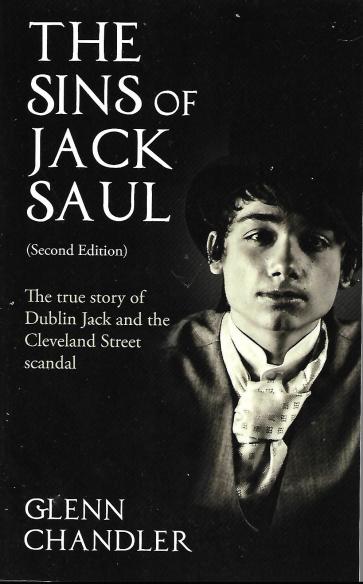
The Sins of Jack Saul ~ A Capsule Book Review

The Sins of Jack Saul ~ A Capsule Book Review by Allen Kopp

Who the hell is John “Jack” Saul, you might ask. He was a real-life person who lived from 1857 to 1904. He was five feet, five inches tall, well-endowed sexually, slightly effeminate, and a notorious male prostitute. He was born in Dublin, Ireland, and when he went to London he was widely known as “Dublin Jack.” He is known today for writing (or at least partly writing) a pornographic novel titled The Sins of the Cities of the Plain and for being a witness in a high-profile libel case involving an important person known as Henry James Fitzroy, Earl of Euston, who was reported to have visited a male brothel in London at 19 Cleveland Street. When the male brothel was discovered and publicized, it became the major sex scandal of the Victorian Era.

Lord Euston filed a suit and (and won) against a crusading newspaper man, Ernest Parke, who claimed that he (Lord Euston) went to the brothel to have sex with young men. Lord Euston claimed in court that he was taken to the brothel under false pretenses and that when he realized what kind of establishment he was in, he left. Jack Saul was a witness for the defense, meaning that he testified against Lord Euston. He was defiant on the witness stand and admitted he was a professional male prostitute and that Lord Euston did indeed visit the male brothel at 19 Cleveland Street to engage in forbidden sex acts with men. The court eventually decided the case in favor of Lord Euston, although his later life was plagued with blackmail and allegations of homosexuality.

In the 1880s, as now, the news media and the public love a good sex scandal, especially if it involves important or highly connected persons. Other important or notable people were implicated in the Cleveland Street brothel scandal, including Lord Arthur Somerset (equerry to the Prince of Wales) and several high-ranking army officers. (There was a persistent rumor at the time, that has never been disproved, that Prince Albert Victor, son of the Prince of Wales and grandson of Queen Victoria, second in line for the English throne, was a visitor to the brothel.) At this time in English history, any sex act between two men was illegal and punishable by imprisonment. Many of the male prostitutes working in the brothel were only about seventeen and worked as messenger boys for the post office. They became prostitutes to supplement their meager wages.

The Sins of Jack Saul by Glenn Chandler is as much about the times (Victorian era) as it is about a single person. Jack Saul had a sad, difficult, dangerous life, oftentimes picking up men on the street to have sex with them. He worked at several “legitimate” jobs from time to time, but nothing was as lucrative for him as prostitution. He could read and write, as many of his contemporaries could not. He died at age forty-six in 1904 of tuberculosis in his native Dublin. There has been a renewed interest in his life because he was a kind of symbol of gay defiance long before there was anything resembling gay rights. (He disproved the belief, widely held at the time, that homosexuality was a vice of the wealthy that corrupted the innocent.) He was what he was and if you didn’t like it, that was just too bad. He claimed to be covered in shame, but on the other hand he made no apologies and always sent money home to his mother.

Copyright 2019 by Allen Kopp