Spiritus

Spiritus ~ A Ghost Story by Allen Kopp 

(This is a re-post. It has been published in The Literary Hatchet.)

My name is Igor Dillingham. In 1893 I was twenty-one years of age. I was twenty-one then and I’m twenty-one now. Twenty-one I shall always be. Every time I look at myself in a mirror, I see my twenty-one-year-old self looking back at me. I will never be forty or sixty or eighty, but always the same as I am now, for I am dead and I dwell in the spirit world.  

A lot of years have gone by, I know, although time, the passage of years, means nothing to me. I still dwell in our old house. The house, old as it is, is also big. I forget exactly how many rooms there are in it but, since I am the only one left, all the rooms belong to me. The house, I was told, was built a long time ago by a rich man with many children. All of the original family are gone—I’ve never met any of them—and I have never encountered any of them in the spirit world. They have all moved on, as the saying goes.

Now the house is falling down in places. The paint is all gone, the wood is old, ugly and gray, the roof has holes in it; mice, bats and spiders are my eternal companions. I hear, always, the flutter of wings above my head as birds nest in the attic. Some of the windows are broken out, but it makes no difference to me because I am a spirit and spirits don’t mind the cold wind and rain.       

Sometimes I go out of the house, but the truth is I have no place to go. On occasion, just to prove to myself that I still can, I go outside and travel a mile or two in any direction. In these little forays out into the world, I never see a living person but only wild animals and birds, which is altogether fine with me. Animals, even if they can’t see me, sense that I’m there and are not afraid.

The road that leads down to our house was washed out in a flood forty years ago. Nobody bothered to build the road back. Even if people could get down here, they have no reason to do so. It is a place completely shut off from the world and forgotten. I think isolated is the word. If I saw a living person who wasn’t a spirit, like me, I wouldn’t know what to do. I suppose I’d run and hide and make sure I gave him good enough reason to want to leave.  

In my aloneness, I am sometimes reminded of the people I once knew when I was alive. I had a sister, Sobriety, and a brother, Claxon. Sobriety had an enormous head; she was what’s known as hydrocephalic. She stayed in a crib in an upstairs room most of the time, tended only by a mute servant that mother employed. I used to go into her room to visit her and try her to keep from feeling lonely, but I’m not sure if she ever knew I was even there. Mother sold her to a traveling freak show when she was about twelve years old for fifty dollars. After the freak show people took her away, I never saw her again. I don’t know what ever became of her but I hope one day I will meet her in the spirit world and rejoice to see that she is cured of her affliction.

My brother Claxon was covered with a scaly growth all over his body that made him look like a human frog. He never spoke in words but he made croaking sounds and he knew how to laugh. He was my closest friend; he and I communicated without words in the way of brothers. One day he made the mistake of defying mother in a very bad place—at the top of the stairs. She rushed him and pushed him. He fell all the way to the bottom of the stairs and broke his neck. He died later the same day. She didn’t want anybody to know what she had done, so she buried him in the hog yard out back before anybody had a chance to ask any questions. I nailed together a small cross and put it over the place where I thought he was buried, but the hogs trampled it into the mud.

Claxon wasn’t the first person mother killed, nor would he be the last. When I was six years old, she poisoned the man who was my father, or the man I believed was my father. She claimed he became sick in the night of unknown causes and was dead by the rising of the sun. She collected on his life insurance and become a modestly wealthy woman. That’s when she realized how profitable death could be for her.

She soon married another man with whom she had been communicating through a lonely hearts club. After six months of marriage, she murdered him by dropping a meat grinder on his head and claiming it was an accident. He didn’t have life insurance, but he had over a thousand dollars in a bank account and a small horde of silver coins, all of which became hers as his grieving widow.

About the time mother killed her second husband, she hired an itinerant worker to do small jobs for her. She had him tend the garden, paint the barn and mend the fence before she took him into her bed. He was her plaything for a few weeks, until he became tiresome to her and then she poisoned him—making certain first, however, that he had no relations who might come looking for him later. 

There were others after that. She placed an ad in a newspaper in the city for single gentlemen who might be interested in the pastoral life on a lush farm away from the hustle-bustle of the city. With a small investment of a thousand dollars, they might “buy into” a growing enterprise that had unlimited potential for growth and profit.

I don’t know how many “gentlemen” mother lured away from the city and killed, but I do know our hog yard out behind the barn became quite crowded with rotting corpses, while the wad of cash she kept hidden underneath the floorboards in her bedroom grew ever larger.    

I was the only living witness to mother’s depredations, but she thought I was too stupid to see anything, to know anything. From the time I was eight years old, I began writing everything down: names and ages of the people who ended up in the hog yard, where they came from, physical characteristics (bald, wears glasses, speaks with a stutter, speaks with an accent, missing fingers on right hand), how much money they brought to the “enterprise” and anything else I could see that set each one apart from the others. I also added to the record the details of how she sold Sobriety to a traveling freak show for fifty dollars and how she pushed Claxon down the stairs and broke his neck. I spared none of the distasteful details.

By the time I was a grown man, I had filled an entire notebook with these observations. If mother killed me, as I was certain she would one day, I hoped that my notebook would end up in the proper hands and justice would be served.  

She was gone for three days and didn’t tell me where she was going. When she came back, she had a new husband, a man named Jules DuFray. He was slick, well-dressed, the opposite of a farming man; he wore suits instead of overalls, even all the way out here where nobody ever saw him. I don’t know whatever possessed him to want to marry a pizzle-faced old harridan like my mother, but there you have it. She had always had a way with men. There’s no accounting for tastes, I suppose.

For several days I stayed out of mother’s way, keeping to myself in my room or in the woods. She and her new husband spent most of their time in mother’s bedroom with the door closed. When I passed by in the hallway, I could hear them grunting, breathing,  groaning. When we all sat down to dinner (cooked by a moronic “serving girl” that mother hired with one of her newspaper ads), mother was polite and subdued, almost as if she had been drugged. I knew she was putting on an act for her new husband, while all the time hatching some scheme in her head that would bring her enough money to live like the queen she imagined herself to be.

When I saw the cans of kerosene she had stored under the stairs, I knew that her plans involved burning the house—with me in it, of course—and then collecting on the insurance. She would make it look so convincingly like an accident that she would fool anybody who needed fooling.

I was afraid to go to bed and go to sleep, afraid that I would wake up and the house would be burning and it would be too late for me to get out. I sat in a chair in my room, fully clothed, dozing lightly, clutching my notebook, ready to escape the house at the first sign of smoke or fire.

Finally I could stand it no longer, this waiting for mother to kill me, waiting for the house to go up in flames. One morning I set out on the road for the nearest town, over ten miles away, to deliver my notebook to a man of the law, a person of authority who could set about bringing mother’s killing to an end.

I hitched rides part of the way, so I came to the town of Wadsworth by noontime. I asked an old man sweeping the sidewalk in front of a store where I might find the sheriff. He told me what I needed to know and in a half-hour I was sitting across a desk from an old man wearing a badge. I gave him my notebook and told him my fantastic story, or as much of it as I could get out without crying. He listened to me with unremitting seriousness and told me he would read every word of what I had written and look into my allegations as soon as time permitted. He gave me some water and some jailhouse food and, after I had rested for a while, I began the long walk back home.

Mother was waiting for me. She somehow knew where I had been and who I had been talking to. Without a word, she split my head with an ax and then hit me with a cane until I was dead as I lay on the floor. I felt my spirit leave my body and go up through the ceilings and floors of the house to the attic. It is here I have been ever since.

Mother and her new husband Jules DuFray got away before the sheriff and his men arrived. I don’t know where they went, but my mother, true to her fashion, disappeared as completely as if she had never existed. I’d like to think that she somehow, somewhere, met justice, but I’m more inclined to believe she just transferred her activities to another location.

I stood at the attic window and watched the men exhume the thirty or so bodies from the hog yard. When they were all finished collecting bodies and collecting evidence from the house, they put a heavy padlock on the front door and left. They didn’t know I was still here, and if they had known they wouldn’t have cared. I was as nothing, a tiny puff of air that disappears as soon as you see it.  

Copyright © 2020 by Allen Kopp
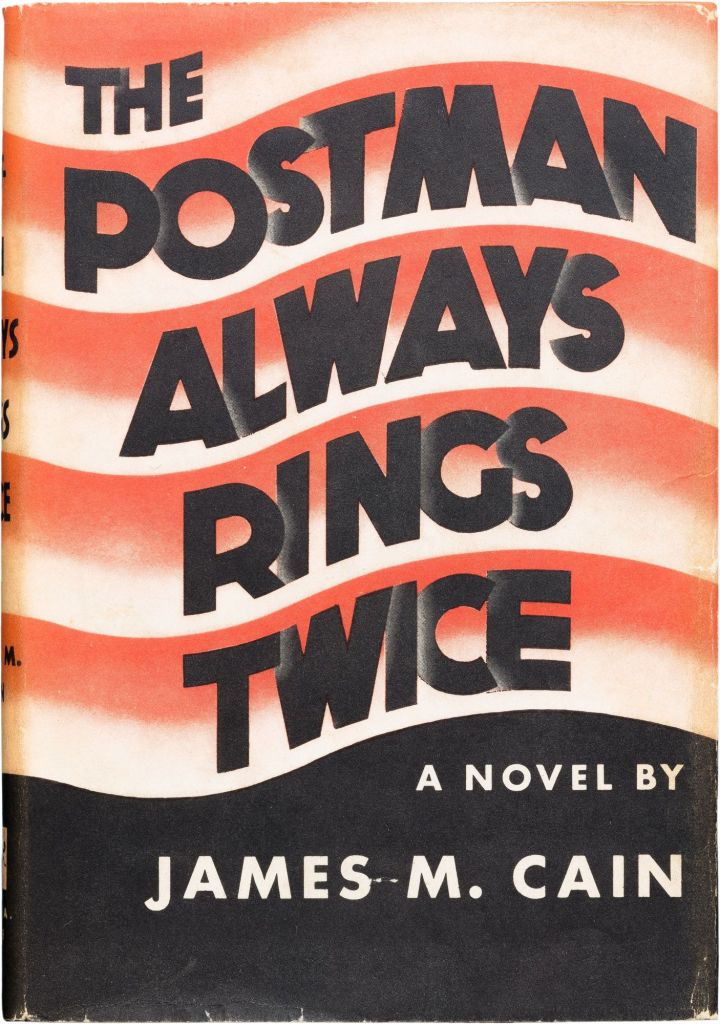
The Postman Always Rings Twice ~ A Capsule Book Review

The Postman Always Rings Twice ~ A Capsule Book Review by Allen Kopp

James M. Cain was an American author who lived from 1892 to 1977. His 1934 crime novel, The Postman Always Rings Twice, is an ironic and steamy (for its time) story of adultery and murder set in a California roadside restaurant. Even though it’s a “genre” novel, it’s ranked number 98 on the Modern Library’s list of the hundred greatest books in English of the twentieth century.

Cora Smith is a self-described “cheap trollop from Des Moines.” She goes to California seeking movie stardom, but when the movies don’t quite work out for her, she marries an older man, an unattractive Greek named Nick Papadakis, who she describes as “smelly and greasy.” Even though Nick doesn’t make Cora’s pulse race, he can provide her with some security, a job and a home. He owns his own business, a thriving roadside diner called Twin Oaks. Cora can work out her life slaving away there, cooking and slinging hash.

Along comes a drifter by the name of Frank Chambers. He is narrating the story in his first-person voice. Frank sees right away that Cora is unhappy; the two of them begin a clandestine love affair. Cora tells Nick she is desperate; she wants out of her marriage with Nick, but if she leaves, where will she go? They decide they will kill Nick and make it look like an accident. With Nick dead, the two of them will be free to sell Twin Oaks and take the money and go away together somewhere.

Frank and Cora plot to kill Nick in the bathtub. Frank will hit him in the head while he’s taking a bath; he’ll go under and drown; it will look like an accident, except that when the time comes it doesn’t go off as planned and Nick is injured. Frank and Cora are badly shaken, spooked at how close they came to committing the crime of murder and being found out. They are relieved that Nick will live and happy that he has to spend a week convalescing in the hospital, giving the two of them the chance to sleep together in the same bed while he’s away.

When Nick returns to Twin Oaks from the hospital, he realizes he has had a brush with death and is once again ready to embrace life to the fullest. He wants Cora to have to baby. In the funniest line in the book, Cora says: “I can’t have no greasy Greek child, Frank.” Murder is back on the table.

The second attempt to kill Nick is successful. This time, it’s an elaborately staged auto accident on a mountain road. Nick dies, but Frank is (unexpectedly) severely injured. When a canny prosecutor learns the facts of the case, he sees through Frank and Cora’s story that it was all an accident and knows that they killed the Greek. He makes Frank and Cora turn on each other.

There are a couple more ingenious plot twists but, suffice it to say, things do not go well for Frank and Cora. There is no happy ending in the noir world they inhabit.

The Postman Always Rings Twice is a slice of Americana, a small literary gem from the 1930s. (Never mind that it was naughty enough to be banned in Boston.) The book translated well to the screen in a movie adaption from 1946, with Lana Turner and John Garfield thoroughly believable as murderous lovers.

Copyright © 2020 by Allen Kopp

Brideshead Revisited ~ A Capsule Book Review

Brideshead Revisited ~ A Capsule Book Review by Allen Kopp

Evelyn Waugh (1903-1966) was one of the most celebrated English novelists of the twentieth century. His (yes, he was a man) 1945 novel, Brideshead Revisited, is number 80 on the Modern Library’s list of the hundred greatest books in English of the twentieth century.

The novel is narrated in the first-person voice of the fictional Captain Charles Ryder. (The subtitle is The Sacred and Profane Memories of Captain Charles Ryder.) The action extends over a period of about twenty years, from the early 1920s to the early 1940s. As a college student at Oxford in the 1920s, Charles meets fellow student Lord Sebastian Flyte. The two of them become inseparable friends and Charles’s life is changed forever. (It’s always convenient to have a wealthy friend when you yourself come from a family of modest means.)

Charles eventually goes to Sebastian’s home with him, a palatial mansion called Brideshead Castle, and meets his aristocratic family: two sisters, Julia and Cordelia, and an odd older brother named Brideshead, whom they call “Bridey” for short. Charles sees at once that Sebastian and his sister Julia are very much alike, to the point that she almost seems a “female Sebastian.” (This sets up an interesting dynamic with the three of them, especially later in the book when Charles believes he is in love with Julia.)

Sebastian’s mother, Lady Marchmain, lives at Brideshead Castle, but his father, Lord Marchmain, lives elsewhere with a mistress named Cara. Everybody knows that Lord Marchmain despises his wife, but there will be no divorce because they are Catholic. (The question of religion, being a devout Catholic versus being a non-believer, becomes a prominent theme throughout the novel.)

Sebastian’s family, in effect, becomes Charles’s family. Sebastian becomes more and more estranged from his family and descends into alcoholism, while his family members, especially his two sisters and his mother, come to rely on Charles and confide in him. They all do everything they can to curb Sebastian’s drinking, but he is a dedicated alcoholic and nothing they can do will help. He goes to Morocco or some such exotic locale and lives the life of a bum with a male German friend who has a “wound that won’t heal.”

Charles, meanwhile, drifts away from the Flyte family. He marries a woman he doesn’t much like—she cheats on him, he cheats on her—they have two children, and he becomes an architectural painter. He spends several years in South America, painting and documenting the architectural splendors there, and when he comes back, it’s ten years later and he is he is now twenty-nine years old. He has a reunion with the Flyte family and, because he has an unhappy marriage, believes he wants to marry Julia, Sebastian’s sister, whereas before he didn’t like her very much. The insurmountable obstacle to their happiness is religion: Julia is a devout Catholic and Charles a non-believer. They decide they won’t marry after all.

So, ten years farther along, Charles is thirty-nine years old, alone (no wife), lonely, disillusioned and unhappy. It’s the early 1940s, and World War II is raging. As a captain in the British army, he once again finds himself back at Brideshead Castle. The army has requisitioned it as a base of operations for fighting the Germans. When he sees Brideshead Castle again, in altogether different circumstances from when he was a younger man, the happy and bitter memories of the past come flooding back to him.

Copyright © 2020 by Allen Kopp

Don’t Wait Up

Don’t Wait Up ~ A Short Story by Allen Kopp

On a beautiful Friday evening in October, nobody under the age of twenty wanted to stay at home and listen to Jack Benny on the radio. Ruby Leftridge arranged to meet her friend Marcella Rogers on the corner by the cemetery. They were going to walk downtown to see the horror double feature at the Odeon Theatre.

“I don’t want you to go!” Ruby’s mother said. “There’s a crazed killer on the loose killing people! He strangles women!”

“Nobody’s going to strangle me, mother!” Ruby said. “You can’t let your life be ruled by fear. I’ll be fine. I won’t be alone. I’ll be with Marcella the whole time.”

“And what could she do for you?”

“She can scream really loud!”

“You always have to make a joke out of everything, don’t you?”

“Not always, but usually.”

“I don’t want two uniformed officers to wake me up late tonight with the sad news that my daughter has been murdered!”

“You won’t! I’ll be home about eleven. Don’t wait up!”

Ruby had known Marcella Rogers since sixth grade. She was a tall girl who sometimes seemed all knees and elbows. She saw herself as a great beauty. She had a receding chin and an unflattering mane of hair that she barely kept clean. She was twenty years old and worked as a typist in a real estate office full of men. She was always imagining the men in her office were in love with her and would leave their wives if only she gave them a little encouragement.

“Did you hear about the killer on the loose?” Marcella asked.

“Yes,” Ruby said.

“Isn’t it thrilling?”

“No.”

“Why not?”

“It scares all the old ladies, including my mother.”

“I think it’s tremendously exciting to have a maniac on the loose,” Marcella said.

“I hope they catch him soon,” Ruby said.

“Why? Are you afraid?”

“No. I don’t think it’s my destiny to die at the hands of a strangler.”

“Well, you never know. I wonder if he’s good-looking!”

“Who?”

“The strangler, silly!

“As long as he’s killing people, I don’t think it matters whether he’s good-looking or not. He can be an absolute perfect specimen of manhood and they’ll still fry his carcass in the electric chair. He’ll make a handsome corpse, as if anybody will be paying attention to the way he looks.”

“Oh, Ruby! You have no romance in your soul!”

“Not when it comes to cold, sadistic killers, I don’t.”

“You don’t know anything about him. Maybe he’s just misunderstood.”

“We’re all misunderstood but we don’t go around murdering people.”

“Say, I want to tell you about this new man in our office,” Marcella said. “His name is Jake something or other. I haven’t spoken one word to him yet, but I feel a sort of connection with him. I’ll be sitting at my desk working and I’ll look up and he’ll be looking at me from across the room. He can’t seem to take his eyes off me.”

“He’s probably the strangler and he’s planning on making you his next victim,” Ruby said.

“He is so good-looking and he has the most beautiful eyes! I’m hoping he’ll ask me out on a date.”

“Why don’t you ask him?”

“Oh, Ruby! I could never do anything so forward!”

“Send him a love note the way we used to do in junior high school.”

“Now you’re being silly.”

In two more blocks they came to the Odeon, its marquee of a thousand lights that welcomed all comers to step in out of the darkness and escape in a cinematographic dream.

“I wonder if I’ll see anybody here tonight I know,” Marcella said, as they took their place in line.

“You’d better not go off with one of your cute boys and leave me to walk home by myself at eleven o’clock. If you do that, our friendship is over!”

“Oh, honey, I would never do that!

After they bought their tickets, they went inside and stood in line at the refreshment stand to buy popcorn and sodas.

“It’s really crowded tonight!” Marcella said. “Hey, you! I want a large popcorn with extra butter and a large Coke!”

Most of the good seats were taken, so they sat close to the screen to get away from the rowdy high-schoolers who whistled and stamped their feet and threw popcorn.

The lights went down and the audience grew quiet. For the next three hours they would be drawn into the fabulous black-and-white fantasy world so far removed from real life. The first feature cast its spell and when it finished the second feature began after a five-minute interval.

When the show was over and Ruby and Marcella were filing out with the crowd, Marcella said, “There wasn’t a single person here I knew tonight.”

“You knew me,” Ruby said.

“Of course, dear,” Marcella said. “I wasn’t talking about you.”

“Well, after that horror extravaganza, are you ready to go home?”

“Let’s walk slow. The wind is blowing the leaves so beautifully.”

Three blocks past the movie theatre, the streetlights were farther apart; the streets were dark and deserted. They met a dark figure walking toward them, but he walked past without seeming to notice them.

“That might have been the strangler,” Marcella said.

“If it was, he wasn’t interested in us,” Ruby said.

“Don’t horror movies make you a little afraid to go upstairs by yourself with no lights on?” Marcella asked.

“Horror movies are just make-believe.”

“Well, I guess it’s kind of fun to be scared,” Marcella said, “as long as you know it’s not going to hurt you. In ninth grade, we used go into the cemetery at midnight without a flashlight and try not to scream. The first person to scream had to buy the next pack of ciggies.”

“My mother would never let me go out at midnight,” Ruby said.

“Mine, either, but I did anyway. I climbed out the window after she went to bed.”

“If my mother thought I was smoking, she would have killed me.”

“Mine too. Ever hear of Sen-Sen?”

“Yeah, it tastes worse than the cigarettes.”

“You’ve smoked?”

“Once or twice. I’d never take it up as a regular habit.”

“Well, I think it’s fun to smoke,” Marcella said. “It makes you feel sophisticated. Do you have any cigarettes on you?”

“No, do you?”

“No, I smoked my last one at the office this afternoon.”

“When did you take up smoking?”

“Oh, ages ago! I smoked all the way back in high school.”

“I never knew it.”

“Say, did you notice that boy taking the tickets when we went in tonight? He was awfully good-looking. I’ve seen him before. When I handed him my ticket, his hand touched mine and I felt an electric current pass between us.”

“He might be the strangler.”

“Oh, honey! You can’t believe that every man you see is the strangler!”

“Isn’t that what we’re supposed to think to protect ourselves?”

“The strangler is probably far away from here by now, in another state. Maybe ‘he’ is a ‘she’.”

“Did you ever hear of a woman strangling other women?”

“No, but I’ll bet it’s happened before.”

“That would really surprise people!”

“Yeah, what fun!”

They came to the corner by the cemetery.

“Well, I guess it’s time to go home,” Marcella said. “I hope my mother has gone to bed so I don’t have to listen to any more of her nagging.”

“It’s been fun,” Ruby said. “We’ll have to do it again sometime.”

“Surest thing you know!”

“Don’t let the strangler get you!”

“Not a chance!”

They parted there, Ruby going in one direction and Marcella in another.

In the three blocks she had to walk to get home, Ruby saw no one. A dog barked at her and a car passed, blinding her with its headlights, but all was quiet except for the wind in the trees.

Her mother had left a light on for her downstairs and gone to bed. She went into the kitchen and made sure the back door was locked and then she went upstairs and went to bed.

She went to sleep right away and slept soundly. She was in a deep sleep when her mother came into her bedroom and woke her up after three o’clock.

“Marcella’s mother is on the phone,” she said. “She wants to talk to you.”

The voice sounded remote and far away when it said, “Marcella didn’t come home last night.”

“Who is this?”

“It’s Eunice Rogers, Marcella’s mother. I thought maybe she decided to spend the night at your house.”

“No, she’s not here. I left her on the corner about eleven o’clock and came home. That was the last I saw of her.”

“Did she say where she was going after you left her?”

“She didn’t say, but I’m sure she meant to go home.”

“I’m worried.”

“Have you called the police?”

“No, I wanted to check with you first.”

“I’m sure she’s all right.”

“I’m not sure. This is so unlike her.”

“If I can do anything to help, let me know.”

“Thank you, dear, and if you hear from Marcella, will you call me?”

“Of course I will!”

Ruby didn’t sleep any more that night. She was sure something terrible had happened. If Marcella had been going someplace else after they parted, she would have mentioned it.

Two grim-faced police officers came in the morning and questioned Ruby in her bathrobe. She told them everything, about the two of them walking to the movies and then walking home, but she knew she wasn’t able to add anything they didn’t already know.

Marcella’s body was found in a ditch alongside the highway a mile or so out of town late the next day. She had been strangled with a two-foot length of rope. Police were investigating but had few leads.

After Marcella, everybody was waiting for the next strangulation. If it could happen to a girl like her, who would be next? People were afraid to go out at night and talked of little else. There were neighborhood watches and vigilantes roaming the streets with guns.

The strangler never struck again and was never apprehended. People speculated about what happened to him. Did he go away to continue his killing in some other location? Did he decide he had killed enough and didn’t need to do it anymore? Was he alive or was he dead? Was he somebody who people saw everyday shopping and paying his bills and going about his business in town? The possibilities were almost limitless.

Copyright © 2020 by Allen Kopp

A Passage to India ~ A Capsule Book Review

A Passage to India ~ A Capsule Book Review by Allen Kopp

E. M. Forster’s 1925 novel, A Passage to India, is number 25 on the Modern Library’s list of the hundred greatest fiction books in English of the twentieth century. It is set in Chandrapour, India, in the 1920s, during the English occupation of India. As one might expect, India was eager to be free of English domination and declare its independence, which it eventually did.

Adela Quested is an English lady in her thirties who travels to India with an older woman, a widow named Mrs. Moore. Miss Quested is described as plain and physically unattractive. She is the nervous type, inclined to hysteria. She goes to India with the intention of marrying (maybe not) Mrs. Moore’s son, a British government official named Ronny Heaslop. Ronny is very British, lacking in warmth and spontaneity. He follows all the rules assiduously and is overly concerned with “appearances.” (A union between Adela and Ronny sounds like a recipe for misery.)

In India, Adela and Mrs. Moore meet Cyril Fielding and Dr. Aziz. Cyril Fielding is principal at a government-run English school. He is 45 years old and is cynical about the world, but especially cynical about the English occupation of India; he doesn’t like the way most English people treat the native Indians. Dr. Aziz is a young Moslem doctor (most Indians are Hindu), a widower with three small children. He lives modestly in a rundown bungalow because he sends most of his money home for the care of his children (they live with their grandmother). He and Cyril Fielding are good friends.

Having made the acquaintance of this small group of English people, Dr. Aziz wants to treat them to a picnic at the famous Marabar caves. At great expense, he arranges the food and train transport, and sees to all the details of the outing, including elephant transport from the train to the site of the picnic. After seeing one of the caves, Mrs. Moore becomes tired and decides to rest in the shade while the others see the other caves. That leaves Adela and Dr. Aziz alone in the caves, along with the guide.

A little while later, Adela runs out of the caves, disheveled and hysterical. She claims that Dr. Aziz assaulted and attacked (insulted or violated her) her in the caves, the details of which remain vague (not exactly attempted rape, but something less). This sets the stage for an ugly legal battle between the British and the native Indians, bringing to a boil all the ugly racial tensions that exist between the races. The English naturally believe in Dr. Aziz’s guilt, while his Indian friends all stand beside him and maintain his innocence. Alone among the English, Cyril Fielding believes in Dr. Aziz’s innocence.

A sensational trial follows, during which conflicting testimony is given. The question becomes one, not of guilt or innocence, but of racial allegiance: Who are you going to believe, based, not on the evidence brought out in the trial, but on the race of the two principal parties involved?

A Passage to India is a great classic novel that has stood the test of time. It is still relevant today, not at all dated or stale, nearly a hundred years after its publication. It’s a book I first read many years ago and find it well worth another look. The excellent 1985 movie version directed by David Lean captures the essence and the nuances of the novel.

Copyright © 2020 by Allen Kopp

The Sun King ~ A Capsule Book Review

The Sun King ~ A Capsule Book Review by Allen Kopp

King Louis XIV was born in 1638 and became king of France in 1643 at age five. He remained king until his death in 1715. His reign of 72 years and 110 days is the longest reign in history for any European monarch. Beginning in 1682 and for about the last 32 years of Louis’s reign, the Palace of Versailles (about twelve miles from Paris) was the seat of French government and the home of the king, his family and the French court.

Louis XIV himself built the Palace of Versailles, starting with a small chateau with a moat, into the most lavish palace in Europe. It remained the seat of French government for over a hundred years, until the beginning of the French Revolution. Today it still stands as one of the most popular tourist destinations in the world.

Louis XIV was anointed by God, or so he believed (and so did everybody else). He was God’s representative on earth. People stood in awe of him; even his own children trembled in his presence. He was a tyrant when he needed to be, but he also had a more human side. He loved and hated in equal measure.

The Sun King by Nancy Mitford is an account of King Louis XIV and his life in the Palace of Versailles, his family and associates, his enemies, his weaknesses, his foibles, his hunting and eating habits, his mistresses, his children (legitimate and otherwise), his wars, and his political successes and failures. He was called the Sun King because he chose the sun as his personal symbol.

The Palace of Versailles was, at any given moment, home to hundreds if not thousands of courtiers, servants, hangers-on, members of the royal family and others. People were always seeking the gain the King’s favor. Most of the jobs in the palace, down to the most menial, were held by members of one family, from generation to generation. These positions were lucrative and much desired.

Life wasn’t always wonderful for the people living at the Palace of Versailles. Many people died young. Infant mortality rates were high. The King himself fathered seventeen children; ten of them died in infancy. Doctors were, at best, barely capable and many were incompetent. No matter what the illness, doctors “bled” the patient, which proved to be largely ineffective. People died of “stone” (kidney or gall). Smallpox was a constant threat, even among the highborn. The king himself had surgery for an anal fistula, without, of course, any anesthetic. He survived it, without complaint.

No matter what was happening in their lives, no matter what tragedy befell them, these lords and ladies loved to go out hunting. Pity the poor stags and other animals that lived in the woods nearby.

The Sun King is mostly fascinating reading. The narrative bogs down, in my estimation, when the focus is on politics and the political rivals of the king. It is sometimes hard to keep all the names straight because different people are referred to at different times by different names. There are so many children, grandchildren, nieces and nephews, friends and enemies of the king (some with unpronounceable and forgettable names) that we don’t always know who’s who, no matter how carefully we’re reading. For example, Mme. de Montespan (sometimes referred to as Athenais) is the King’s longtime mistress. Then the King marries Mme. de Maintenon. Montespan and Maintenon are both prominent characters in the King’s life and their names are almost interchangeable. Such is history.

Copyright © 2020 by Allen Kopp

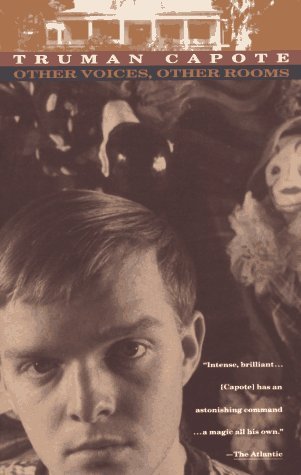
Other Voices, Other Rooms ~ A Capsule Book Review

Other Voices, Other Rooms ~ A Capsule Book Review by Allen Kopp

Truman Capote (1925-1984) is one of those twentieth century American writers whose life nearly overshadows his work. In the 1960s and ‘70s he became a media celebrity and a New York fixture of the jet-setting social scene. He counted as his friends politicians, actors, artists, entertainers, and other writers (to whom he wasn’t always very charitable). He was known for his fey wit, his eccentricity, and his alcoholism, which eventually ended his life prematurely at age fifty-nine.

He was only twenty-three or so when he published his famous coming-of-age novel, Other Voices, Other Rooms. It is a floridly descriptive account of an odd thirteen-year-old boy named Joel Harrison Knox (Capote himself). Joel lives with eccentric relatives in New Orleans in, it is to be supposed, the 1940s. When his mother dies, his New Orleans guardian receives a letter from his father (supposedly), inviting Joel to come and live with him in another (unidentified) Southern state.

The place that Joel goes to live is called Skullys Landing, or simply “the Landing.” It is an old house without electricity on the edge of a swamp. It seems the swamp is reclaiming the house; it is slowly sinking (four inches last year). It is the perfect Southern Gothic setting.

The residents of the Landing are—you guessed it!—even more eccentric than the relatives Joel left behind in New Orleans. There’s Zoo, the black girl in her twenties who keeps house for the family. She has a scar on her neck where a bad man tried to slit her throat. She lives in fear that the man will escape from jail and finish the job. Zoo is kind to Joel, so the two of them become friends. Miss Amy is Joel’s stepmother; she is married to Joel’s father and is something of a nonentity. And then there’s flamboyant, fluttery, kimono-wearing Cousin Randolph. He apparently owns the Landing. He talks a lot about the past in flowery language because his present life is that of a shut-in.

But what of Joel’s father? Why is everybody being so mysterious about him? It takes a while for Joel to unravel the mystery of his father. The father does indeed exist but he’s a helpless invalid. (He didn’t write the letter inviting Joel to come and live with him; it was written by Randolph.)

In a long monologue (soliloquy?), Randolph tells the sordid story of the boxer Pepe Alvarez, a woman whom Randolph claimed to be in love with named Delores, Randolph himself, Joel’s father, Miss Amy, and how they all arrived at the point where they are now.

Joel meets other colorful characters while he’s living at the Landing: the rough-and-tumble, acid-tongued tomboy Idabel Thompkins, with whom he plans to run away; the black midget man over a hundred years old named Jesus Fever (he’s Zoo’s grandfather or something); Miss Wisteria, the vivacious, midget circus performer with whom Idabel becomes infatuated.

Other Voices, Other Rooms was a literary sensation when it was first published in 1948, mostly because Truman Capote was only twenty-three years old, it was his first novel and it launched his literary career. It is an essential work in the canon of twentieth century American fiction, not to be missed.

Copyright © 2020 by Allen Kopp       

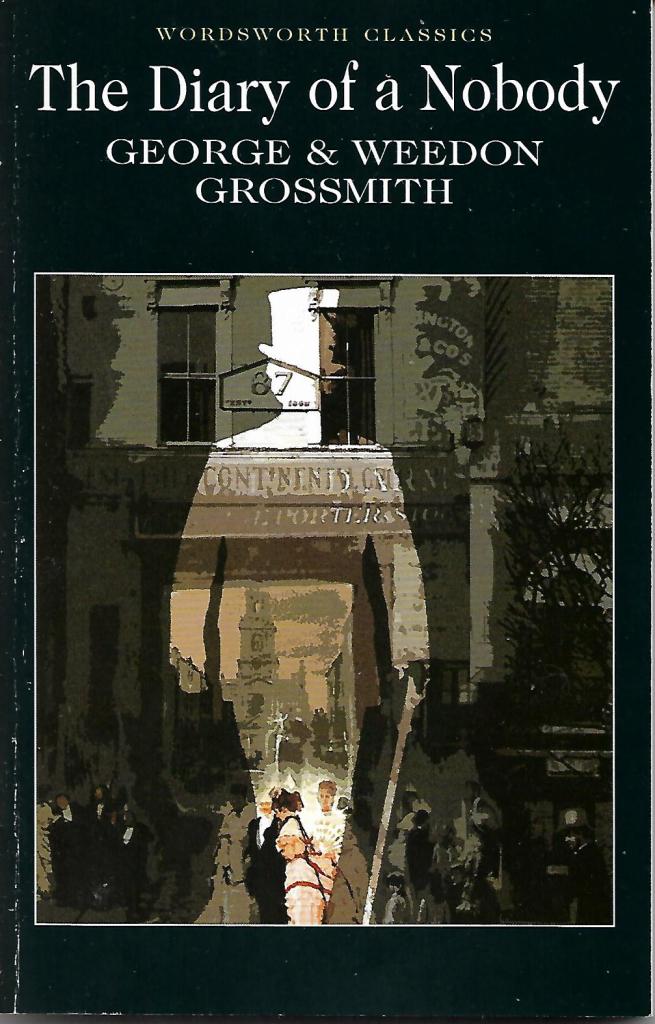
The Diary of a Nobody ~ A Capsule Book Review

The Diary of a Nobody ~ A Capsule Book Review by Allen Kopp

Charlie Pooter is a middle-aged, middle-class Englishman living his proper English life in the 1880s. He has a wife named Carrie and two bosom friends named Mr. Gowing and Mr. Cummings. He also has an exasperating twenty-year-old son named Lupin Pooter. Charlie and his son Lupin almost always find themselves on opposite sides of any issue. Lupin is brash, irreverent, spontaneous and impulsive, all qualities his father deplores.

Charlie is a clerk in an accounting firm. He has an almost reverential respect for his company and for his boss, Mr. Perkupp. He believes that Mr. Perkupp is infallible in all things, almost god-like. He calls Mr. Perkupp his “principal” and his “superior.” We, the reader, see Mr. Perkupp as a company functionary and nothing more, completely unworthy of adoration.

In an attempt to document his thoroughly mundane and uneventful life, Charlie Pooter undertakes the writing of a diary. This diary is the odd little novel called The Diary of a Nobody by a writer named George Grossmith. (The book contains illustrations by Weedon Grossmith, brother of George.) We are told in the background information that George Grossmith was more of a musical performer and an actor than a writer, but he wrote this novel and it has endured for more than 130 years. I never heard of it until recently.

The novel is all diary entries and many of the entries deal with Charlie Pooter being bettered and outdone by his wife, his son, his friends, the servant, or just about anybody else he comes into contact with. Charlie means well, but he is feckless and not very bright. (When he’s leaving a room, trying to be dignified, he will more likely than not catch his foot on the edge of the rug and fall down.) His fondest hope in life is that Mr. Perkupp with take Lupin into his office. When this dream is realized, Lupin discovers right away that he is made for better things. He is never going to be happy with the kind of bowing-and-scraping, subservient life that is good enough for his father.

The Diary of a Nobody is a satire, breezy, light reading, fun to read and entertaining. It may be just the thing you’re looking for after you’ve finished War and Peace.

Copyright © 2020 by Allen Kopp

Cleanness ~ A Capsule Book Review

Cleanness ~ A Capsule Book Review by Allen Kopp

American author Garth Greenwell’s (born 1978) new novel, Cleanness, is told in the first-person voice of an American high school teacher in present-day Sofia, Bulgaria. The narrator of Cleanness never tells us his name. He is only ever known to us as “I” or “me.” Since I don’t know anything about Garth Greenwell, I strongly suspect he’s writing about himself and his own experiences in Bulgaria, since he seems to know the country—and the city of Sofia—so well.

Cleanness is more a collection of interrelated short stories than a plot-driven novel. Each chapter (story) is told in the same voice, the same point of view, but each story could stand alone. There is no plot to speak of, but that doesn’t mean it’s a dud as a novel. Each chapter is compelling in its own right; you don’t know where the whole thing is going until the end. At the end, we get a sense of completeness, of wholeness.

The narrator of  Cleanness is gay but, since he lives in a former communist country that is not particularly welcoming to the gay way of life, he mostly is “closeted,” adhering, as a teacher of high school students, to a code of ethics. He never touches, or becomes too familiar with, any of his male students, no matter how much he might want to. In one chapter near the end of the book he and two of his male students go out drinking in clubs to celebrate his leaving; he is attracted to the older of the two boys, who is about eighteen (and the feeling seems to be reciprocated), but it never goes any farther than dancing together and flirting.

The narrator never mentions his age, but we assume he is in his thirties. He is not a particularly happy man. He alludes to, obliquely, an unhappy childhood that has left him scarred. We get the sense that he’s teaching school in Bulgaria to escape an unhappy life. He says he likes living abroad, so he is in a way a disaffected American. He has a “boyfriend,” known only as “R,” who is younger and from Portugal. He and R. are in love, the narrator says, but it’s a love that’s not going to work out, we see, because R. is young, unsettled, and doesn’t seem to know what he wants.

A couple of the chapters are intensely sexual. In one, the narrator (in trying to recover from a broken heart) has an encounter with an older man he has met on the Internet. The older man is frightening because he is a sadist who likes to inflict pain on his sexual partners. This episode ends up being repellent and distasteful. In another episode, the narrator meets a man who recognizes no limits when it comes to sex. He doesn’t care if his sexual partners are “old and ugly.” He doesn’t care if he gets sick; he only lives for the moment and wants only to be “used.” (This is a not a book I’d recommend to my ninety-year-old mother.)

Garth Greenwell’s previous novel, published in 2016, is What Belongs to You, which is also about an American man teaching high school in Sofia, Bulgaria. It also is told in the first-person point of view. The narrator, it seems, in both novels is the same. Cleanness if not exactly a continuation or a sequel to What Belongs to You, but the two books are enough alike to make a matched pair. For my money, the first book is the stronger of the two. It will be interesting to see what Garth Greenwell does for his next novel. Will he set it in Sofia, Bulgaria again, or some other highly unusual, foreign locale?

Copyright 2020 by Allen Kopp

A Room With a View ~ A Capsule Book Review

A Room With a View ~ A Capsule Book Review by Allen Kopp

E. M. Forster’s 1908 novel, A Room With a View, has as its heroine an upper-middle-class English girl named Lucy Honeychurch. Lucy is about twenty-two and is a product of her time. She has hairy armpits, plays the piano (too much Beethoven makes her cross), and is thoroughly conventional. She has a fussy mother and an obstreperous eighteen-year-old brother named Freddy.

Lucy is engaged to a fellow name Cecil Vyse. He is everything you might expect in a prospective match for Lucy: snobby, prissy, conventional, priggish. He has his own idea of the “feminine ideal” and expects Lucy to conform to it. He is constantly “correcting” Lucy to “make her better.” Lucy is all too willing to try to be what Cecil wants her to be. At first.

Lucy’s family, even though they’re not rich, have time and money to travel. When Lucy undertakes a trip to Florence, Italy, she takes as her “companion” and “chaperone” her cousin, Miss Charlotte Bartlett. Charlotte is described as a “nervous old maid.” She is annoyingly self-effacing and proper. When Lucy looks at Charlotte, she sees what she is likely to become herself in twenty or twenty-five years if she isn’t careful.

At their “pension” (small hotel) in Florence, Lucy and Charlotte encounter a problem with their room. They were promised a room with a view of the River Arno, but instead have only a view of a courtyard. Two “gentlemen” staying at the pension, Mr. Emerson and his son George, kindly offer to switch rooms with the two English ladies. Charlotte doesn’t think it’s “proper” to exchange rooms with two strange men, but she agrees in the end for Lucy’s sake.

Lucy doesn’t know what to make of the Emersons. Mr. Emerson is eccentric and seems to not have a full row of buttons; he is rumored to have murdered his wife. George is alarmingly uninterested in propriety or in what people might think of him. When he evinces a romantic interest in Lucy (culminating in a furtive kiss among a profusion of flowers on a hillside), she doesn’t know what to make of it. Her instinct is to run away.

Back in England, Lucy is preparing to marry Cecil Vyse, believing she has put the memory of George Emerson behind her. Wait a minute, though! George and his father are renting a “small villa” in the neighborhood where Lucy lives with her mother and brother. She and George will be neighbors and she’ll be running into him around every corner! Gasp! What’s a girl to do?

George and Freddy, Lucy’s brother, become friends. When Freddy invites George to the Honeychurch home for a round of Sunday tennis, George, cad that he is, steals another kiss from Lucy, this time on the “garden path” when he thinks nobody is looking. Now Lucy is completely thrown off-course! Can she go ahead and marry Cecil Vyse when she has such conflicting (hot and cold) feelings about George?

It seems that spending time in Italy has changed Lucy, made her look at life in a different way. She has “found her soul” and it’s all because of Italy. She is ready to slough off the stultifying convention of her age and upbringing. She is ready to step away from the straight-and-narrow course that has been laid out for her and step into a course of her own choosing.

E. M. Forster’s novels are gem-like, so carefully and precisely written; never pretentious or overly wordy. Every word has its place. There’s none of the extraneous claptrap and tortuously twisted sentences that you might find in the work of writers such as Virginia Woolf or Henry James. If you’ve never ready any books by E. M. Forster, you’re missing out on something good. If, on the other hand, you don’t give a rat’s ass about good writing or good fiction, you’re probably better off to have never heard the name.

Copyright © 2020 by Allen Kopp