My Policeman ~ A Capsule Book Review

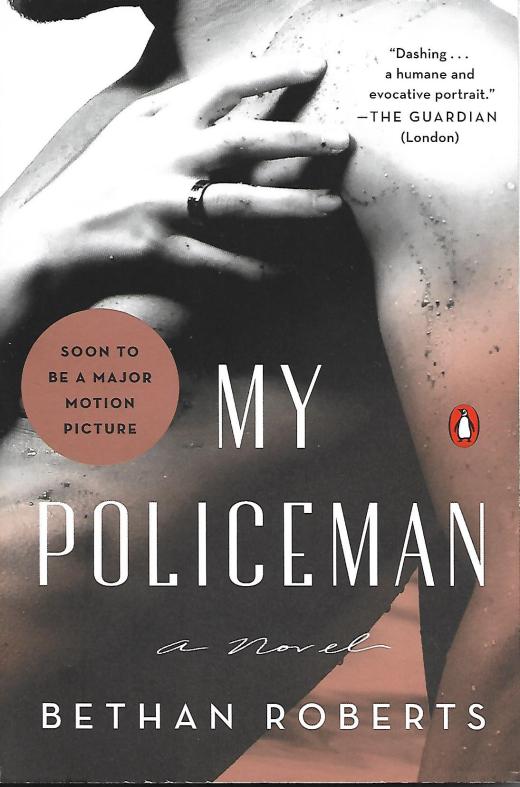
My Policeman cover

My Policeman
~ A Capsule Book Review by Allen Kopp ~

My Policeman, a novel by Bethan Roberts, is set mostly in 1957 in the seaside town of Brighton, England. Marion Taylor is an unmarried teacher of small children. There is a man she likes named Tom Burgess. She doesn’t understand Tom very well; she wonders why he is cool toward her and rather aloof. He is handsome, blond, athletic and well-built; he goes swimming in the sea every morning and he eventually teaches her to swim.

Tom is what might be called a straight-arrow type. As a police officer, he is interested in projecting an image of conventionality and respectability. Marion falls in love with him, while he remains blasé on the whole matter of courtship and marriage. She begins to suspect he is gay but believes that she can get him to change, if only he will marry her. Because marriage is what is expected of every young man and because he must project an image of respectability to the world, Tom marries Marion. We can see it’s a marriage that probably isn’t going to be a smashing success.

Tom meets a man thirteen years older than himself named Patrick Hazelwood. Patrick is worldly and sophisticated; he works as a curator in a museum and knows the world of art, music and books. He is also unabashedly gay, at a time in England when sexual activity between men was still a crime and punishable by confinement in prison.

Patrick and Tom begin a “discreet” relationship, although Tom, as a police constable, must be very careful that his “secret” is never revealed. Marion knows that Tom and Patrick are “friends” but doesn’t suspect (at first) the true nature of the relationship. She wants to believe that Tom, with her help, might be cured of his “affliction.” (None so blind as those who will not see.)

Patrick invites Tom to go on a trip with him to romantic Venice. While Tom thinks there is nothing wrong with the two of them going to Venice together, Marion, as Tom’s wife, doesn’t take it well; she is jealous and moved to commit an uncharitable act, to put it mildly. It is this trip to Venice that provides the catalyst for the novel’s tragic third act.

The novel alternates between first-person passages narrated first by Marion and then by Patrick. They are both besotted with Tom. While most of the action takes place in the late 1950s, some of the novel is set in the late 1990s, showing how these three characters change over forty years through the unique dynamic they share.

My Policeman espouses the themes of jealousy, guilt, and the stupidity of laws that govern human sexual behavior (the lengths to which these laws force people to go to conceal their true natures). It is a memorable, intelligent, adult story. It’s not a story I would recommend to my elderly mother but, then, she and I are tuned to completely different frequencies.

Copyright © 2021 by Allen Kopp   

Gender Ambiguity

Rita Hayworth
Gender Ambiguity
~ A Short Story by Allen Kopp ~

They sat in a semicircle in front of the television. Old black-and-white movies, they agreed, were the best thing to watch on TV. Not only were they clean, but they brought back memories of happier times.

“Rita Hayworth is certainly a lovely woman,” Ivy said.

Woman!” Jane said. “Don’t you know she’s really a man?”

“Rita Hayworth is a man? I don’t think so!”

“Hell yes, she’s a man! Everybody knows she’s a man!”

“That must have come as a surprise to Mr. Orson Welles,” Vernon said.

“He knew she was a man before he married her.”

“How do you know so much about it?” Ivy asked.

“I read those newspapers they sell at the supermarket checkout,” Jane said.

“Of course, that makes you an authority,” George said.

“I know what I see. If I see it in print, I believe it.”

“Haven’t you ever heard of being skeptical?”

“What’s that?”

Myrtle sat forward in her chair and pretended to burp her baby, a lifelike doll made of rubber. Everybody turned and looked at her.

“How is Baby Doe, Myrtle?” Ivy asked.

“He’s the best baby in the world,” Myrtle said.

“That’s because he’s not a real boy,” George said.

“Is he eating his carrots?”

“Oh, yes! He eats everything I give him!”

“We believe what we want to believe,” Vernon said with a roll of the eyes.

“Do you know today is my birthday?” Ivy asked.

“I don’t think so, dear,” Jane said. “I think your birthday is in December, isn’t it? Right before Christmas?”

“If I want today to be my birthday, then it’s my birthday.”

“How old are you?” George asked.

“You should never ask a lady her age,” Jane said.

“I’m as old as I want to be,” Ivy said. “If I want to be twenty-one today, then I’m twenty-one.”

“There you go!” Vernon said.

“I wouldn’t want to be twenty-one again and have to go through all that shit again,” George said. “When I was twenty-one, I was in jail.”

“What for?”

“They got me on a robbery charge but I was innocent. I was in the slammer for two and a half years.”

“I’m surprised they let you out,” Ivy said.

“I paid my debt.”

“I thought you said you were innocent.”

“I was.”

“Then why did you owe a debt?”

“Twenty-one was so long ago that I can’t even remember back that far,” Jane said.

“Wasn’t that about the time Lee surrendered to Grant?” George asked.

“It’s time for me to put Baby Doe down for his nap,” Myrtle said. She threw the baby by the arm behind the couch, hitting the wall with a thud. “He’ll be fine until his two o’clock feeding.”

“Whatever happened to your husband?” Ivy asked.

“He’s still in the war,” Myrtle said.

“What war is that?”

“Isn’t there always a war going on someplace?”

“When was the last time you saw him?”

“I don’t know. I think it’s been about fifty-seven years.”

“But what about Baby Doe? Are you saying that somebody besides your husband is Baby Doe’s father?”

“Of course, not! What kind of a tramp do you think I am?”

“She creates her own reality,” Vernon said, “which is not altogether a bad thing when you think about it.”

“And when my husband sees Baby Doe, he is going to be so happy!” Myrtle said, tears in her eyes.

“What is your husband’s name?” Jane said. “I haven’t ever met him.”

“His name is Percival, I think. Unless he’s changed it.”

“Why would he change it?”

“He’s impulsive that way.”

“Fifty-seven years is a long time for your man to be away at war.”

“Don’t I know it? I get so lonely for him sometimes I think I’m going to go mad! I don’t know what I’d do without my little Baby Doe.”

“My own children were never much of a comfort to me,” Jane said. “They never liked me very much.”

“That’s because they had a witch for a mother,” George said.

“And if you want to know the truth, I never liked them all that much, either.”

“How many children did you have, dear?” Myrtle asked.

“Seven.”

“That’s a lot for somebody who doesn’t like kids!” Vernon said.

“Where are they now?”

“I don’t know. Some are dead, I think. Some are in prison.”

“Hey!” Ivy said. “The movie with Rita Hayworth is over and another one is beginning.”

“Which movie is it?”

“This one stars Bette Davis.”

“Oh, I like her!”

“It’s the one where she steals Olivia de Havilland’s husband and drives her car through a fence and breaks her neck when the police are after her.”

In This Our Life,” Vernon said.

“What a memory you have for an old bastard!”

“We just watched it last week. Don’t you remember?”

“Is Bette Davis really a man?” Ivy asked.

“No, I believe she’s really a woman,” Jane said. “I’m not too sure about Olivia de Havilland, though.”

“I think Olivia is definitely a woman,” George said.

“I wouldn’t be too sure of that.”

“What is that movie where Lana Turner and John Garfield kill her husband?” Ivy asked.

The Postman Always Rings Twice.”

“Yes, that’s it. I’d like to see that one again.”

“Is Lana Turner really a man?”

“She started out as a man,” Jane said, “but she had a sex-change operation. Now she’s a woman.”

“Maybe she’ll go back to being a man again,” Vernon said.

“Anything goes with those motion picture people.”

“They get sick and die just like the rest of us,” Jane said. “Beauty fades and then what do you have?”

“Ugly.”

As if on cue, Nurse Tillinghast came into the room, rolling the medicine cart.

“Time for your meds, people,” she said in her voice that was like fingernails on a blackboard.

You take it,” George said. “I don’t want any.”

“Just what the doctor ordered,” Nurse Tillinghast said. “Take your meds and then you can get back to your movie.”

“We were just discussing whether Lana Turner is really a man,” George said. “We’re about evenly divided.”

“A lot of those movie actresses are really men, or so we’ve been told,” Ivy said.

“Everything is all illusion, you see,” Vernon said.

“I wish I had nothing better to do,” Nurse Tillinghast said, “than sit around all day and talk about which women might really be men.”

“Are you really a man? George asked.

“That’s for me to know and you to find out!” Nurse Tillinghast said. “To you, I’m just a sexless dispenser of meds. Now take your meds and let me get on with my rounds.”

The meds were handed out and swallowed and Nurse Tillinghast pushed the cart out of the room.

“What is that movie about a women’s prison where they have a cruel matron who shaves somebody’s head?” Jane asked.

Caged,” Vernon said.

“That’s it! Tillinghast looks just like the cruel matron in Caged.”

“The matron’s name is Evelyn.”

“That’s right. How do you remember all that stuff?”

“I’m having a really lucid day today. Tomorrow I might not remember a thing.”

“Come to think of it, I think Nurse Tillinghast really is a man,” George said. “She has a big nose and big hands.”

“That doesn’t mean anything,” Ivy said. “I think we should accept at face value all we see. That’s what God wants us to do.”

“How do you know what God wants?”

“I talk to Him all the time!”

“It’s all illusion,” Vernon said. “We create our own illusion. If you want to believe you’re talking to God, then you’re talking to God. If you want to believe that Bette Davis is really a man, then she’s a man.”

“Yes, isn’t it wonderful?”

Copyright © 2021 by Allen Kopp

Empty Mansions ~ A Capsule Book Review

Empty Mansions cover
Empty Mansions
~ A Capsule Book Review by Allen Kopp ~

W. A. Clark, who lived from 1839 to 1925, was an American entrepreneur who became known as the “Copper King.” He amassed a huge fortune with his copper mining (also banking and railroads) interests in Butte, Montana. He served as United States Senator from the state of Montana, but he became mired in political scandal that tarnished his name and reputation. He was famous for his flamboyant way of doing things and his expensive and showy homes, first in Butte and then on Millionaires’ Row in New York City, where he built a remarkable 121-room mansion at a staggering price.

W. A. Clark was married to two different women. His first wife, Katherine Louise, contracted typhoid fever at the Chicago World’s Fair in 1893 and died at age fifty. (They had seven children, four of whom survived past the age of sixteen.) He married his second wife, Anna Eugenia La Chapelle, in 1901, when he was 62 and she was 23. He had two daughters with Anna: Louise Amelia Andrée Clark (1902-1919), who went by the name Andrée, and Huguette Marcelle Clark (1906-2011). Huguette (pronounced oo-get) is the subject of the nonfiction book, Empty Mansions, by Bill Dedman and Paul Clark Newell, Jr.

Huguette Clark was born in France in 1906 and grew up in New York City in a world of unimaginable wealth with her father, her older sister, and her mother, in the fabulous Clark mansion on Millionaire’s Row on the edge of Central Park. When she was 22, she married a man named Bill Gower, who was a year older than she was. The marriage was never consummated and ended in a few months, although Huguette and Bill Gower remained friends until his death.

When W. A. Clark died in 1925 at age 86, his immense wealth was divided among his five surviving children, including Huguette. Huguette continued living with her mother, Anna, after her father’s death, but the two of them (Anna and Huguette) vacated the Clark mansion and moved into an exclusive apartment building at 907 Fifth Avenue.

Living alone with her mother in a luxurious New York apartment building, Huguette was isolated from the ugly realities of the real world. She cultivated her interests in music, painting, Japanese art and architecture, French illustration, and rare dolls. She owned at least two priceless Stradivari violins and collected paintings, painted by such artists as Monet, Degas, and Renoir. (Each of these paintings sells for upwards of ten to 25 million dollars.)

And then there were the homes. Huguette and her mother owned Bellosguardo, a fabulous mansion built on a cliff in Santa Barbara, California, overlooking the Pacific. Maintaining Bellosguardo cost a fortune in itself. Nearby, they kept a “farm,” which was  a place they could escape to if the Japanese attacked California during World War II. Huguette and her mother never lived at the farm.

Back in New York, Huguette bought another apartment in the building, where she and her mother lived, which was to be her primary residence. Later she bought another apartment above her to protect her from undesirable neighbors, for a total of three apartments in the same luxury apartment building. (After Huguette’s mother’s death at age 85 in 1963, Huguette kept her apartment exactly as she had left it.) In later years, Huguette bought an estate in Connecticut so she would have a place to live in case of a terrorist attack in New York City. All of these fabulous homes remained unoccupied for many years. These are the “empty mansions” of the book’s title.

Abandoning her apartment, Huguette moved to a hospital, where she lived in a small hospital room for the last twenty years of her life, surrounded by a small group of people she knew and trusted. The hospital very indulgently allowed her to occupy the same room for all those years because they hoped to get a large chunk of her fortune when she died.

Huguette was generous to the people close to her. She gave more than 30 million dollars to her long-time nurse. (There were accusations, of course, of people manipulating her for their own ends.) When she died at the remarkable age of 104 (two weeks short of her 105th birthday), her fortune was worth an estimated $300 million, counting her paintings, dolls, jewels, real estate, furniture, etc. Not surprisingly, a long battle ensued among her blood relatives, most of whom she had never even met, for her money.

Empty Mansions is the fascinating story of a super-rich American family, the Clark family: the flamboyant father, W. A. Clark, his two wives, his nine children, his life and times, but, more specifically, it’s about his youngest child, Huguette Marcelle Clark, who lived a life of secrecy, cut off from the world, but living life her own way and having lots of time (104 years) and an unlimited amount of money to indulge her eccentricities. Most of us can’t even begin to imagine what it’s like to have so much money that ten million dollars seems like so much pocket change.

Copyright © 2021 by Allen Kopp   

Robinson Crusoe ~ A Capsule Book Review

Robinson Crusoe cover
Robinson Crusoe
~ A Capsule Book Review by Allen Kopp ~

English author Daniel Defoe lived from 1660 to 1731. He was a prolific writer whose most famous work is the novel Robinson Crusoe, published in 1719. Robinson Crusoe is generally considered the first English novel and has appeared in many reprints and translations. It is the famous story of an “everyman” who is shipwrecked alone on an uninhabited island in the Caribbean, as all his shipmates perish.

As a young man, Robinson Crusoe (the man, not the novel) can’t decide what profession to take up. Against the better advice of his father, he becomes a sailor. After a brief (and might have been successful) stint as a plantation owner in Brazil, he goes to sea on a commercial voyage to the Caribbean. There is a terrible storm and (you guessed it), the ship that Robinson is on is wrecked. All his shipmates drown but he, miraculously, survives. He washes up on a tiny, uninhabited, isolated, tropic island in the Caribbean, which turns out to be forty miles from Trinidad.

At age twenty-six, Robinson has never learned how to be on his own and he doesn’t know how to do much of anything; he doesn’t have what we might call “survival skills.” Luckily he is able to retrieve some essential supplies from the shipwreck, such as tools, rum, gunpowder, guns, clothes, and some food items. He has also salvaged some seeds for planting, which will prove useful to him later on.

Alone on this terrible island, he must learn to survive, or he will die. He must construct a shelter of some kind to protect himself from the tropical rainstorms, hurricane winds and sweltering heat. When he first comes to the island, he lives in fear that he will be devoured by wild animals or eaten by cannibals, which, he believes, live nearby. He must learn to find enough food to eat to keep himself alive. He must cope with isolation, loneliness and his own fear. He lives always with the hope that he will see a friendly ship on the horizon, coming his way.

As the novel progresses, we see how Robinson Crusoe is transformed. He must learn to do the things he never imagined he would have to do, such as killing animals for food, planting crops, making bread, making pottery, baskets and building himself a sturdy shelter to protect himself from whatever might be out there. He comes to realize after being on the island for years that God played a part in his salvation, when all the others on board his ship died. He sees how God played a part in providing everything he needed to sustain life. Without God helping him, he would have died. How he changes, how he is transformed from one kind of man into another kind, is the emotional core of the novel.

It’s many years before Robinson Crusoe finds a way off the island. He endures and somehow he thrives and becomes stronger. He finds happiness, comfort, peace and contentment. The irony is that he probably wouldn’t have had those things if he had stayed at home in England where he was born.

Copyright © 2021 by Allen Kopp

A Thousand Others

A Thousand Others image 1
A Thousand Others
~ A Short Story by Allen Kopp ~

In September 1921, Mr. Fatty motored the three hundred miles—in his custom-made, $20,000 automobile—from his home in Hollywood, California, northward to San Francisco, for a much-needed hiatus from the arduous pursuit of making motion pictures. Mr. Fatty was, you see, the biggest star in Hollywood. People adored him. His pictures raked in prodigious amounts of cash.

If you ever saw Mr. Fatty act on the screen, you knew why he was so popular. He was funny. He was charismatic. He was charming. He was talented. He was Good with a capital G. He deserved the million dollars a year, tax-free, that he raked in. He deserved all the love, all the fame and popularity, that the world had to offer. He deserved it all, except, perhaps, the fate that awaited him in San Francisco.

On arriving in that picturesque, seaside city, Mr. Fatty checked himself and his entourage into his luxurious suite on the twelfth floor of the finest hotel. He refreshed himself with a bath and a brief nap. After taking some pills to pep himself up, he ate a steak sandwich and then began drinking prodigious amounts of alcohol.

The party guests began arriving before the sun went down. They were picture people, directors, producers, writers, and other actors; acquaintances, friends and friends of friends; flappers and party girls and party-girl flappers; would-be actresses, girls who would do anything with anybody to get their big break in motion pictures. Some were no more than fifteen, fresh off the farm. They took pills to crank themselves up, to make themselves happy, to make themselves lose whatever inhibitions they might still have.

And they were loud. They were raucous. They were crude. They were unleashed. They consumed bootleg hooch by the barrelful. They danced, some of them alone and some together. They removed part of their clothing and then all their clothing. They sang, they brayed like animals, they screamed, they whooped. They tore down the curtains and busted up the furniture. They coupled, on the couch, on the floor, in the bathroom, the kitchen, standing up, lying down, wherever they happened to be.

Any number of the unattached girls made a play for Mr. Fatty because they knew he was a major player in motion pictures. One kind word from him could get them in to see Hollywood’s top producers and directors. Making Mr. Fatty feel especially good, even for just a few minutes, might be the one little thing that could launch a motion picture career.

Some of the girls, of course, already had a few screen credits. They had played waitresses, maids, or “extras” in crowd scenes. They all hoped to be able to stand out from the others, to be noticed and get a chance to play the really substantial parts opposite the handsome, sleek-haired leading men who set their hearts aflutter.

May Beasley had appeared in twelve different motion pictures, but in most of them she didn’t get a screen credit because the part she played wasn’t big enough. She could play any kind of part—she could even sing and dance—but she thought of herself first and foremost as a comedic actress. She just hadn’t had the chance yet to prove to any influential person just how good she was. She could change all that if Mr. Fatty would just notice how pretty she was and how eager to make good.

Mr. Fatty noticed May, all right. He kept his eye on her as she moved like a cat around the room with a drink in her hand, flirting first with one man and then with another. Sometimes she danced her way from one person to the next, in time to the syncopated jazz music. He found her quite fetching. He couldn’t keep his eyes off her gyrating buttocks; he was sure she wasn’t wearing any underwear.

May also kept her eye on Mr. Fatty until he sat down on a French divan, where she went and sat beside him and put her arm around him, giving him a closeup view of her breasts. She whispered in his ear and nuzzled on his earlobe in the way she knew that drove men wild. He was so drunk and so high at that moment that he would have liked anything she did.

They kissed—a long, lingering kiss. He could have taken possession of her right there, but he was still a little conventional and didn’t like doing the things in public that he loved doing in private. He took her by the hand and led her into the bedroom, discreetly closing the door.

Mr. Fatty and May Beasley were in the bedroom for hours. The more playful of the party guests listened at the door, but heard nothing. They could only imagine the scene that was playing out, knowing as they did what a prodigious lover Mr. Fatty was.

The hour grew late and the party guests began to drift away. Mr. Fatty emerged from the bedroom, disheveled and sweating. The remaining guests cheered him, whistled and hooted. He smiled, wiped his brow, and bowed dramatically.

“You must have worn poor old May down to a nub,” someone said.

“She’s sleeping it off,” Mr. Fatty replied. “She’s feeling no pain.”

Mr. Fatty went downstairs for a bite to eat, telling everybody the party was over until next time. He hoped all his dear friends had a lovely time. He wanted everybody to have left by the time he came back upstairs to his suite because he needed to rest before driving back home. Au revoir, my dears! Until we meet again!

Late the next day, back home in Hollywood, Mr. Fatty received an urgent telephone call from his lawyer. Word was about that May Beasley was seriously injured from the treatment she received at the party in San Francisco. She had a ruptured bladder and was bleeding internally.

“What did you do to that poor girl?” the lawyer asked.

“Nothing that I haven’t done to a thousand others,” Mr. Fatty said.

“They’re saying you sexually assaulted her. If she dies, I’m afraid there’s going to be big trouble.”

“Should I go back up to San Francisco and see about her?”

“No, just go about your business. Go back to work at the studio. I’ll call you when I know more.”

Mr. Fatty went to work and for two days heard nothing. He was sure May Beasley was going to be all right. On the third day, he received another urgent call from his lawyer. May had developed peritonitis and was gravely ill.

“You weigh three hundred pounds,” the lawyer said. “May Beasley weighs a hundred and eight. People are saying you ravished her, crushed her.”

“I’m sure I didn’t do anything to her that hundreds of others haven’t done,” Mr. Fatty said. “She loved every minute of it.”

“She didn’t show any signs of being injured when you were with her?”

“None at all. She’s an actress. She’s just trying to get attention.”

“I hope that’s all it is.”

One week after the party, May Beasley died. The press ripped Mr. Fatty apart. They were calling him an animal, a cad, a monster, a ghoul, a fiend. Suddenly he was made to represent all the excesses of Hollywood and picture people: the heavy drinking and the use of narcotics and reefers; free love and out-of-wedlock birth; sexual perversion and the switching of the genders—feminine men and masculine women. In short, the casting aside of decency and the Christian values that made this country great.

To show his heart was in the right place, Mr. Fatty offered to pay all of May Beasley’s hospital and doctor bills. While his friends saw it as a magnanimous gesture, others saw it as tantamount to an admission of guilt.

He believed he should attend May Beasley’s funeral, but his lawyers and the studio bosses advised him to stay away. The last thing he needed, they said, was to show his face at her funeral and be inextricably linked to the tragedy of her death. He needed to begin thinking how he might extricate himself from the scandal and limit the damage done to his career and his public persona.

Mr. Fatty felt so sad about what happened to May Beasley, but the biggest blow of all came when his lawyer told him he was being charged with first-degree murder and must surrender himself to authorities in San Francisco.

He knew the world and he knew people. He had a few friends and admirers who would always believe in him, but the majority of people chose to believe he was a monster, a defiler and murderer of innocent young women. They were the ones, he knew, who would not rest until they had flailed all the flesh from his bones.

Copyright © 2021 by Allen Kopp

This Storm ~ A Capsule Book Review

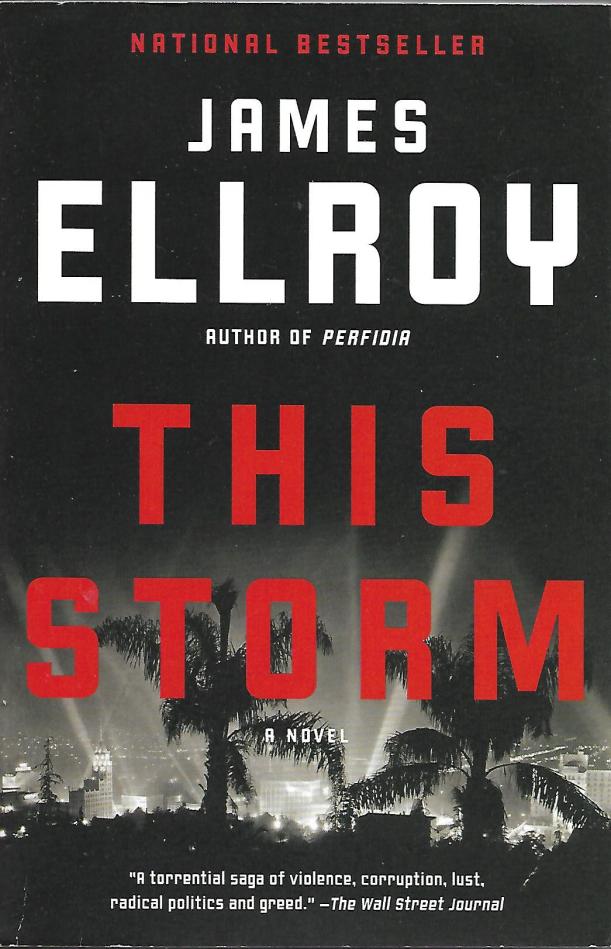
This Storm cover
This Storm by James Ellroy
~ A Capsule Book Review by Allen Kopp ~

James Ellroy’s noir-mystery novel, This Storm, is set in and around Los Angeles in the early days and months of World War II. It is a time of rainstorms, blackouts, fear, paranoia, murder, suicide, racial unrest, Nazis, fascists, European refugees, Japanese internment camps, police corruption, cover-ups, violence, prostitution, promiscuous sex, and Simons Drive-in, where you can get a fantastic cheeseburger and a pineapple malt served by a floozy carhop.

This Storm is a gargantuan novel, almost 700 pages. If you are familiar with James Ellroy’s writing style, you know he doesn’t write like any other writer. “If you want political correctness, you’ll have to go someplace else,” he plainly states. He uses racial epithets the way other writers use adjectives. In short, there is nobody else quite like him. His style is choppy, with lots of slang expressions, punchy chapters, lots of tough-guy language and hair-trigger violence. We see the bad-boy cops in The Storm kill “suspects” they are pursuing when nobody is looking or pound them in the head with the massive LA phone directory while they are “interrogating” them. The war has unleashed all of men’s (and women’s) worst instincts, it seems. Almost all the characters The Storm are horrible people. Some are worse than others. These people are beyond redemption, but they also make for entertaining reading.

Of all the many dozens of characters in The Storm, you might say that police lieutenant Dudley Smith is the principal character. He is an Irish immigrant who killed many British soldiers in his homeland before coming to America, a “shit-heel,” a self-serving, arrogant, corrupt, lying, cheating bastard with the looks and savoir faire the ladies toss their panties over. In Baja during the war, he’s involved in several nefarious and illegal enterprises, such as “selling” Japanese laborers to the highest bidder. If he was ever called to ground, he could be locked up in prison for many lifetimes for all his transgressions. Nothing seems to touch him, though.

Hideo Ashida is the most interesting character in the novel. He’s a Japanese-American, working as a forensic chemist for the Los Angeles Police Department. As a Japanese man, he is spit at and reviled in the days after Pearl Harbor. He is a homosexual and is believed to be in love with Dudley Smith, flaws and all. They have a special kind of man-to-man friendship, which Hideo knows will never be realized sexually.

There are many other characters, sometimes so many of them that it’s hard to keep them all straight and remember their names; some of them are, by necessity, one-dimensional. Barbara Stanwyck, Ellen Drew, Orson Welles and symphony conductor Otto Klemperer are real-life characters among all the fictional ones. (If these people weren’t all dead, they might have grounds for legal action based on the way they are portrayed here.)

This Storm is a follow-up to the earlier novel Perfidia. These two novels are the first two parts of James Ellroy’s Second LA Quartet. (You remember the First LA Quartet, don’t you?) We will be eagerly awaiting the third novel, which, we presume, will pick up where This Storm leaves off.

Copyright © 2021 by Allen Kopp

Alec ~ A Capsule Book Review

Alec cover
Alec
~ A Capsule Book Review by Allen Kopp ~

English author E. M. Forster lived from 1879 to 1970. He wrote his novel Maurice in 1912-1913, but it wasn’t published until 1971, after his death. The reason for the delay in publication is the novel’s unusual subject matter: an upper-class gentleman, Maurice Hall, has a homosexual affair with a man of the lower class, Alec Scudder, who happens to work as a gamekeeper for the salary of twelve pounds a year. Homosexuality was still a crime in Britain in 1912-1913, so Forster feared serious backlash from such a novel, especially since it has a happy, positive conclusion. Maurice Hall and Alec Scudder are not freaks and they don’t destroy themselves at the end of the book.

Fifty years after its publication and more than a hundred years after it was written, Maurice remains enduringly popular. Now a writer named William di Canzio has written a novel, Alec, that picks up where Maurice left off.

It’s 1913, a repressive time in England for men of a different stripe. When Maurice Hall goes to his friend’s estate for a visit, he encounters a gamekeeper named Alec Scudder. They both harbor a secret that they keep from the world. When Alec boldly climbs into the window of Maurice’s room late at night, a barrier between them falls away. They find they connect in all the important ways, even though they belong to different classes. Alec plans to emigrate soon to Argentina, but Maurice gets him to stay in England. They decide they will spend their lives together, knowing they will face tremendous disapproval from the world.

That might be the end of the story, but it’s 1914 and war breaks out (what will later become known as World War I). Maurice and Alec must do their part for their country, so they both enlist. They think they can be together during their military service, but it doesn’t quite work out that way. Alec joins the Welsh Fusiliers and Maurice ends up fighting in Gallipoli in Turkey, a hell-hole if there ever was one, where fighting conditions for English soldiers could not have been worse.

Almost the second half of Alec is about the hellish trials that Alec and Maurice both face in the war. They are both wounded and must endure loneliness, hardship and deprivation. What’s worse, they aren’t able to communicate with each other, so neither knows if the other still lives. In the chaos and confusion of war, Maurice is listed as “missing in action.” Is he one of the many fatalities of war, or does he still live?

If you have ever read Maurice by E. M. Forster and are a fan, you must by all means read Alec. It may offer nothing new about the struggle that gay men face in a hostile world, but it’s a  compelling and intelligent reading experience. The war in Alec is well-researched and has a feeling of immediacy. As with many wars before and after, it was a war of blunders and mismanagement, of “lions being led by donkeys.” The more things change, the more they remain the same.

Copyright © 2021 by Allen Kopp

Do You Take This Clown?

Do You Take This Clown image 5

Do You Take This Clown?
~ A Short Story by Allen Kopp ~

(This short story is a re-post. It has been published in the Australian literary journal, Skive.)

Mercy Buckets felt pains in her midsection. She knew there was something inside her that needed to come out. She checked herself into Clown General Hospital, believing she was dying. After a clown doctor did a perfunctory examination, he knew right away what was wrong with her. She was about to have a clown baby and, being the silly goose she was, didn’t even know it.

Almost at once she went into clown labor. When she was being wheeled into the clown delivery room, she didn’t know what was happening and became distraught.

“Somebody help me!” she screamed, her round red nose quivering with emotion. “They’ve taken my clothes! They’re holding me prisoner and they’re going to do awful things to me! Somebody call the clown authorities before it’s too late!” 

Nobody called the authorities, of course, or anybody else. A clown nurse clonked her on the head with a frying pan and after that she was quite manageable. She wasn’t able to help in the birth of her child, being unconscious as she was, but Dr. Stitches managed just fine, with the help of several clown nurses, and delivered her of a perfect baby boy.

When she woke up, she was in a bed in a little room all to herself where everything was so white and shiny she thought for a moment she might be in heaven. She heard sounds from behind the closed door but they seemed remote and far away and comforting in a way. She felt funny as if all her bodily parts had been stretched and then allowed to snap back into place. She still didn’t know what had happened to her.

In a little while a smiling clown nurse came into her room to check on her. “Are we feeling better now?” she asked. She had an upturned nose that resembled a sweet potato and a huge head with great waves of flame-red hair.

“Who are you?” Mercy Buckets asked.

“I’m Nurse Precious,” she said. “I’m here to take care of you.”

“But where am I?”

“You are on the third floor of Clown General Hospital.”

“Have I been in an accident or something?”

Nurse Precious laughed. “We do have a wry sense of humor, don’t we?”

“I want to go home.”

“Of course we do, but we’re not ready yet. If you and your baby get along well, you should be able to leave by Tuesday.”

“Me and my what?”

Nurse Precious looked at Mercy and wrinkled her brow. “You don’t remember why you came to hospital?”

“I don’t remember anything.”

Nurse Precious looked at Mercy’s medical chart. “Oh, I see,” she said. “They had to put you out, over, and under during the birth. You haven’t even seen your baby yet.”

“If you don’t tell me what you’re talking about right now,” Mercy said, “I’m going to walk out of here and take a jitney home, even though I am wearing a bed sheet with nothing on underneath.”

As if on cue, the door opened with a suck of air and Nurse Nimbus came into the room with what looked like a bundle of dirty laundry in her arms. “Here we are!” she said cheerily. She laid the bundle on the bed beside Mercy Buckets and pulled back a flap to reveal the face of a small animal.

“Ugh!” Mercy said. “That is the ugliest thing I ever saw.”

“You be sure and think of a good name for him now,” Nurse Precious said.

The two nurses linked arms and twirled around in a little jig as if that were part of the ritual that Mercy was unable to understand.

“But what is this thing?” Mercy asked. “It doesn’t even look like a clown. It looks like an ape. It’s all covered with hair.”

“Why, it’s your baby, dear,” Nurse Nimbus said. “What else would it be?”

“Are you telling me that thing came out of my body?”

“Well, the stork didn’t deliver it, if that’s what you mean,” Nurse Precious said, laughing at her own cleverness.

“Take it away!”

“Oh, you have to feed it, dear! The little fellow is hungry.”

“And just what do you have in mind that I feed it?”

Nurse Precious and Nurse Nimbus exchanged a significant look and then Nurse Nimbus discreetly exited while Nurse Precious showed Mercy what was to be done.

Later in the day, after the baby had been fed and taken away again, Mercy was dozing when Dr. Stitches dropped by her little room to see how she was doing. He was wearing a long white doctor’s gown and a rubber chicken on each shoulder like epaulettes. On his old head was a powdered wig like George Washington, only pink.

“Well, well, well,” he said. “That was quite a harrowing scene we had in the delivery room this morning, wasn’t it?”

“Who the hell are you?” Mercy asked, irritated at being awakened.

“I’m only the old fellow who saved your life and the life of your baby,” he said.

“I want to go home. My clown mother and clown father must be worried about me.”

“All in due time, my dear.”

“And when I leave, I’m not taking that thing with me.”

“What thing are we talking about, dear?”

“The little animal that they say came out of my body.”

“I take it you are referring to your son?”

“I go. It stays.”

Dr. Stitches made a note on his clipboard and looked at Mercy over the tops of his Ben Franklin glasses. “You wish to give the baby up for adoption?” he asked.

“I don’t care what you do with it. We’re not even the same species.”

“Hmm,” he said. “Mother exhibits marked ambivalence toward baby,” he said aloud as he wrote.

“My clown mother and clown father are going to die when they find out about this. They don’t know I was ever even with a man. Hell, I don’t even know it myself!”

“So, you have no knowledge or recollection of the act that brought your baby into being?”

“I don’t know anything except that I want to go home and forget that any of this ever happened.”

“You’ve had a shock,” Dr. Stitches said, patting her on the shoulder. “You just rest now and don’t worry about a thing.”

He left and in a few moments Nurse Precious came in and gave Mercy another clonk on the head to calm her down.

When she awoke she was confused. She had been dreaming that a giant chicken was holding her down, trying to put its beak into her mouth. She sputtered and picked some imaginary feathers from between her teeth. She realized then that someone was standing beside her bed and that someone was her own clown mother, Clarabelle Patootie, and her clown father, Petey Patootie. They had both been clown headliners in the biggest show in clowndom but were now retired from the show business.

“My dear!” her mother said, realizing at once that Mercy was awake. “Your clown father and I have been frantic with clown worry.”

“It’s not what you think!” Mercy said, trying to sit up. “I swear I don’t know where that thing came from!”

“Now, now, now,” her mother said. “We’re not judging you. We’ve just had a long talk with Dr. Stitches. He told us the whole story.”

“I’d like to hear that story myself,” Mercy said.

“It’s going to take some time to sort this all out.”

“Have you seen that thing?”

“Yes, we saw him. Our grandson. He’s a fine little fellow.”

“Yes, but he’s some kind of a gorilla or something. I never saw anything like it before in my life!

“You just rest now, dear. You’ve been through a terrible ordeal. We’ll talk it all out later.”

Petey Patootie never had much to say. He always let his clown wife do the talking. He patted Mercy on the hand and looked into her eyes. “You hang in there, old girl,” he said. “We’ll be here if you need us.”

She dozed off again and didn’t know when her clown mother and clown father left. The next time she opened her eyes, she saw a huge clown face looming over her. As she screamed and sat up in the bed, the clown face withdrew to a safe distance.

“Who the hell are you!” she said. “Why are you standing over me like a spook?”

“It’s Mr. Ticklefeather,” a voice said. “I was leaning close to see if you were asleep or only faking it.”

It took her a moment to see the clown from whence the voice came. “You act like a crazy person,” she said. “You scared me nearly half to death.”

“Well, I am sorry, I’m sure,” Mr. Ticklefeather said, putting his hand over his mouth.

“What are you doing here?”

“I came as soon as I heard.”

“Heard what?”

“You know. About the b-a-b-y.”

“Why would that concern you?”

“Well, I’m assuming I’m the f-a-t-h-e-r since we went out together that one time.”

“Stop that spelling! We went rowing on the lake. I’m pretty sure that doesn’t result in a baby of any species.”

“Don’t you remember when we kissed?”

“That doesn’t do it, either.”

“You finished a hot dog that I started and we drank out of the same cup.”

“Mr. Ticklefeather!” she said. “Don’t you know anything about the birds and the bees? You are not the father!”

“Who is, then?”

“That’s just it. I don’t know!”

“Oh, my!” Mr. Ticklefeather said.

“No, no, no! It’s not like that, Mr. Ticklefeather! I don’t know who the father is because there is no father!”

“What do you mean?”

“We’ll save that one for another time.”

Mr. Ticklefeather had only a moment to look perplexed because the door opened and Nurse Precious came into the room bearing the bundle of dirty laundry again.

“Time for the little chappie to feed again,” she said in her sing-song, setting the bundle beside Mercy on the bed as Nurse Nimbus had done earlier and pulling back the face flap.

“Oh, no!” Mercy said. “How many times a day does this happen?”

“It never ends,” Nurse Precious said.

“I want a bottle! Bring me a bottle with milk in it, or whatever it is they drink! I’m not doing that other thing again!”

“I’ll leave,” Mr. Ticklefeather said.

“No!” Mercy said. “I want you to see this odd little baby, even though you are not the father.”

“It’s better if you feed it the old-fashioned way,” Nurse Precious said.

“It won’t matter with this one because I’m not going to keep it anyway,” Mercy said.

Nurse Precious produced a bottle from the folds of her uniform and handed it to Mercy. As Mercy held the baby in the crook of her arm and held the nipple of the bottle to its baby snout, Mr. Ticklefeather leaned in to get a better look.

“He looks a little like me, doesn’t he?” he said.

“He doesn’t look a thing like you!” Mercy said. “You have nothing to do with him at all!”

“He looks like a Percy to me,” Mr. Ticklefeather said. “I’ve always liked the name Percy. How about if we name him Percy? Percy Ticklefeather. I like the way that sounds.”

“You can name him Boll Weevil, for all I care,” Mercy said.

“I know this is going to sound funny to you,” Mr. Ticklefeather said. “I know I’m not really his father, but I wish I was. Since he doesn’t have a father, or at least doesn’t have one that we know about, I’d like to take him and raise him as if I really were his father.”

“I don’t care what you do with him.”

“Since you are the mother and, to the world at least, I’m the presumed father, how would it be if we get married and bring the little fellow up properly, in a home with a mother and a father?”

Mercy looked at him with disbelief. “Why would I want to marry you?” she asked. “I don’t love you. I hardly even know you, even though we went rowing on the lake that one time.”

“We can get married and figure out together who the father really is and what really happened and when it happened. All will be revealed in time.”

“No,” Mercy said. “I suppose I should thank you for the offer, but I won’t ever marry you or anybody else. Not if having peculiar babies is the result.”

The baby drank the entire contents of the bottle, belched and went to sleep. By and by, Nurse Precious came back to collect the baby to take him back to the nursery.

“I’m going to take him,” Mr. Ticklefeather said to Nurse Precious. “Mercy Buckets wants nothing to do with him.”

“Are you his father?” Nurse Precious asked.

“In the absence of the truth,” Mr. Ticklefeather said, “let us say yes. I am the baby’s father.”

“Very well,” Nurse Precious said, slinging the baby onto her shoulder. “Come with me. You’ll have to sign some papers saying you assume full responsibility for his upbringing.”

Mr. Ticklefeather beamed with satisfaction and pride. He followed Nurse Precious and the baby out of the room without saying goodbye to Mercy Buckets.

Mercy got out of the bed and walked slowly to the window. She opened the blind and, looking out at the sky, saw the full yellow moon beaming down on the tired old world, exactly the way it had done on the night she and Mr. Ticklefeather went rowing on the lake. She felt tears welling up in her eyes. Agreeing to give up the baby to Mr. Ticklefeather, who wasn’t really the father, made her feel sad and lonely and a little bit sorry for herself. 

Copyright © 2021 by Allen Kopp

Porch Light


Summer Evening by Edward Hopper

Porch Light  
~ A Short Story by Allen Kopp ~ 

(Note: This is a re-post. It has been published in Dew on the Kudzu, a Journal of Southern Writing.)

Nola was reading a book sitting beside an open window in the quiet house when she heard a soft knock on the door. It was eleven o’clock at night and she wasn’t wearing very much, but she went to the door and opened it anyway. She was feeling lonely, and a little blue, and was glad for the chance to talk to someone.

“Oh, hello,” she said, when she saw Roy standing there. She was neither happy nor unhappy to see him.

“Is she asleep?” he asked.

“For hours.”

“Why don’t you come out and talk to me. I’m not in any hurry to get home just yet.”

“Oh, all right. I suppose I could for a little while.”

She turned on the porch light and stepped out the door.

“What is that you’re wearing?” he asked. “Is that what you sleep in?”

“Of course not! After I took off my uniform, I put this on to try to keep cool. I wasn’t expecting any callers.”

“It looks like your brassiere and your step-ins. And pink, at that!”

“Well, you shouldn’t be looking. If your delicate sensibilities are offended, I’ll go put on a robe.”

“No, no, no, I don’t care what you have on. It’s your porch and you’re a grown-up person and it’s too hot to wear a robe.”

“It was over a hundred degrees today and will be again tomorrow.”

“It’s hotter here than the Sahara Desert in Africa. Did you know?”

“We’ve still got two more months of summer,” she said. “I don’t know if I’m going to last. I just wish it would rain.”

He looked up at the clear, star-laden sky and held out his hand. “Not a chance,” he said.  He sat on the porch railing and she leaned her backside against it beside him. A moth fluttered crazily around the light.

“Do you want a cigarette?” he asked.

“I’ll just take a puff or two off yours.”

He lit up and handed the burning cigarette to her.

“I might call Nellie in the morning,” she said, “and tell her I’m sick and can’t make it in. It won’t be too much of a lie.”

“I thought you were going to quit that job.”

“I can’t quit until I have another job lined up.”

“Let’s go to the park,” he said. “It’s too hot to go home. We can spend the night under the stars.”

“I can’t. I have to get up in about six hours and go to work.”

“I thought you were going to call in sick.”

“Well, I haven’t definitely made up my mind about that yet.”

“I’ll have you back in time to go to work.”

“I can’t stay awake all night and work all day.”

“You won’t sleep anyway in this heat.”

“I’m usually able to forget how hot it is and go to sleep about two o’clock.”

“And then you have to get up at five.”

“And the whole rotten routine starts over again. What a life.”

“Let’s run away together.”

She laughed and blew out a spluttering stream of smoke. “Where to?” she asked.

“I don’t know,” he said. “We could hop a freight train somewhere.”

“Oh, sure! That sounds worse than what I have now. As lousy as my life is, I at least have a bed to sleep in and food to eat.”

“If you ran away, you’d be free of everything here. You could start over somewhere else.”

“What would I do about my mother?”

“Send her a postcard.”

“You’re not being very practical.”

“That doesn’t get you anywhere.”

A police car drove past, slowed almost to a stop, sped away again.

“Must be looking for somebody,” she said.

“I didn’t do anything,” he said.

“Are you still looking for a job?”

“Off and on. I could maybe go to work for my uncle if I wanted to, but I don’t want to.”

“Doing what?”

“Moving furniture.”

“That doesn’t sound very promising.”

“I applied for a job as an usher at a movie theatre downtown, but I probably won’t get it.”

“Why not?”

“Don’t want it.”

She watched the fireflies in the yard and didn’t say anything for a while. “Can you see us going on this way for the next forty or fifty years?” she asked. “Until we die?”

“I don’t think about it much,” he said.

“I think there has to be more to life.”

“Maybe tomorrow will be better. That’s what you have to hope for.”

“I might get married to somebody someday,” she said, “but it’s going to have to be to somebody who can take me away from all this.”

“You wouldn’t marry me?” he asked. She knew he was joking.

“No,” she said. “You’re a bum like everybody else I know.”

“Well, that can always change. I haven’t completely given up on life.”

“Go to school and become a doctor or a lawyer,” she said. “Then I’ll consider marrying you.”

“I’m lacking some necessary ingredients for that,” he said. “Namely, money and ambition.”

“You can’t be a bum all your life.”

“Who says? My father has been a bum all his life and his father before him.”

“Maybe you’re better than that.”

“My mother wants me to join the army. She’s threatened to throw me out of the house if I don’t do something.”

“Maybe that’s what you need.”

“If she tosses me out, can I come and live with you?”

“No. You and my mother wouldn’t get along.”

“You see how it is? If it’s not my mother giving me grief, it’s somebody else’s.”

“What a life,” she said.

“Are you sure you won’t go to the park with me?”

“It’s late. I need to try to go to sleep so I can get up and go to work in the morning.”

“What a life,” he said. “My room is so hot I can’t stand to lie on the bed. I put a quilt on the floor underneath the window and sleep on it naked until the sun comes up.”

“I really should be going in now.”

“Will you go to the park with me tomorrow night?”

“Maybe.”

“Something good is going to happen tomorrow,” he said. “I just know it. Maybe a thunderstorm.”

“Good night,” she said.

“Good night.”

She knew he would leave whenever she told him to. He wouldn’t try to kiss her or touch her, the way some would. He never did that; he wasn’t that kind of a boy. She had known him so long. He was more like the brother she never had.

She went back inside and turned off the porch light, locked the door. She went to the door of her mother’s room to make sure she was still sleeping and then she walked through the dark house she knew so well and got into her bed. Far off in the distance she heard the low rumble of thunder that could only mean one thing. If she stayed awake long enough, she might see lightning and hear some rain on the roof.   

Copyright © 2021 by Allen Kopp 
A Mate for the Monster

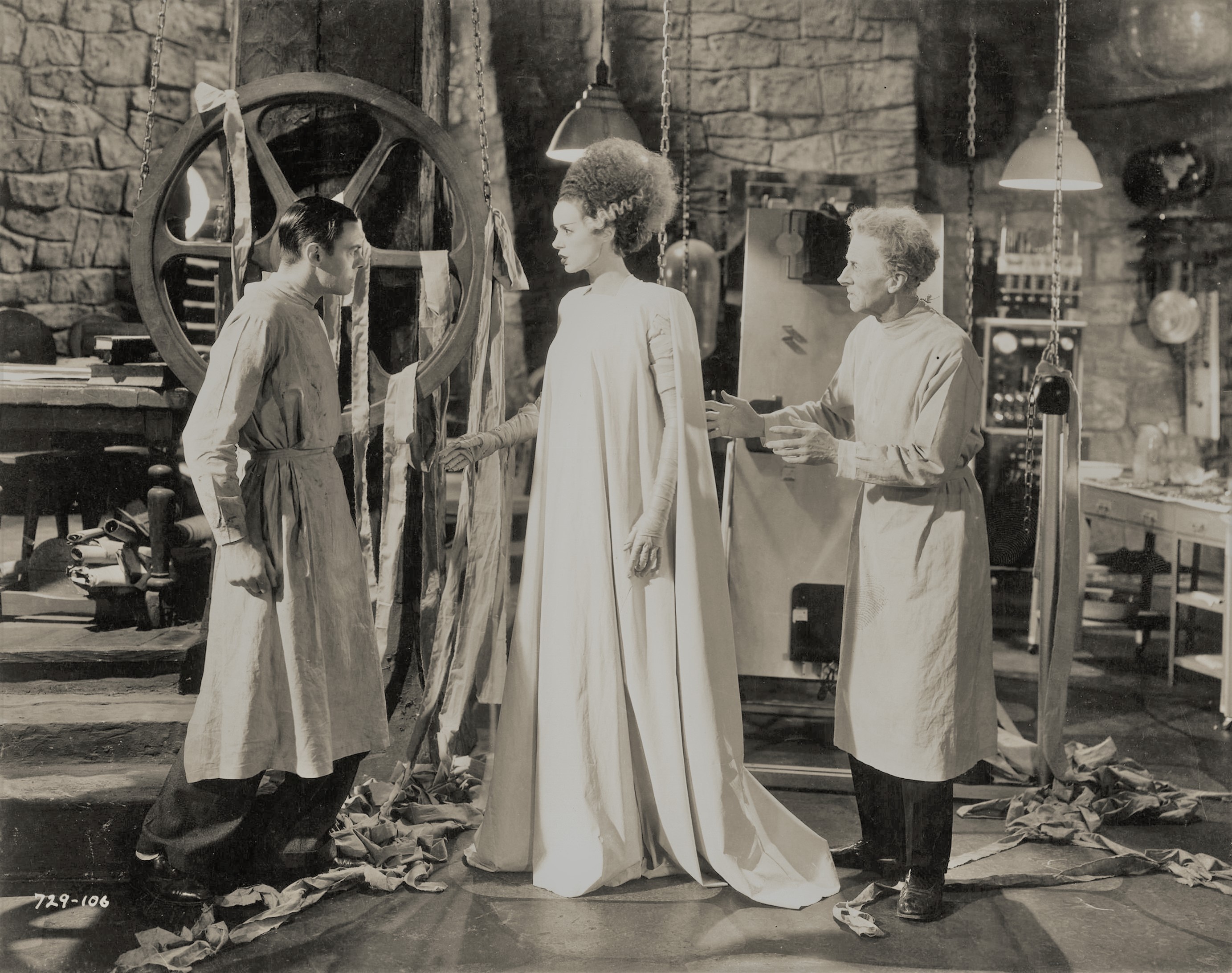
The mate for the monster.

A Mate for the Monster
~ A Short Story by Allen Kopp ~

(This is a re-post.)

The monster is seven and a half feet tall and as strong as ten men. He walks in a frightening, slow-gaited, halting manner. He has a bolt in his neck; his face is stitched onto his enormous head. He probably doesn’t know that he is made up of body parts from dead people (and if he did know he wouldn’t care). No matter where he goes or what he does, he scares people without even trying. That’s what makes him a monster.

He lives in a lonely castle on a mountaintop. He has no friends and his days are empty and pointless. His brain is not so addled that he can’t ask himself why he was ever created in the first place. He has recently taken to talking a bit and, when he’s not smoking cigars, drinking wine, or running around the countryside scaring people, he says things like, “Love dead—hate living.” This is not a good sign.

The mad scientist who made him, Dr. Victor Frankenstein, and his equally mad colleague, Dr. Pretorius, see that the monster is not happy. He is not fulfilled and is not living up to his full potential as a monster. After much thought and deliberation, the two mad scientists decide that the monster needs one thing above all others: a mate who will appreciate him for what he is and won’t be repulsed by the way he looks or by his crude manners. They toy with the idea of creating a male mate but that just doesn’t seem the thing, somehow, so they decide they will create for him a female mate.

Dr. Frankenstein sends his hunchback assistant, Fritz, out on a midnight graveyard run. From the graves of the newly dead, Fritz will gather the body parts needed to cobble together a female mate for the monster. He knows just the place, he says. Leave everything to him.

Now, Fritz has never been overly scrupulous about where he gets what he needs. He isn’t above going to the village and, seeing a lone woman standing on a corner singing a song, hitting her in the head to subdue her and then strangling her. When he makes sure she’s dead, he puts her in a burlap bag and throws it over his shoulder like a sack of potatoes and goes back to the castle. He knows Dr. Frankenstein will never ask questions as long as Fritz delivers the goods. The woman was just a nobody anyway. She’ll never be missed.

Dr. Frankenstein and Dr. Pretorius spend about two weeks creating what they think is a perfect mate for the monster. They take as much time as they need without rushing; they want to get every little detail just right. When the next violent thunderstorm occurs, they will be ready to harness the lightning.

They don’t have long to wait. All day long the next Saturday the sky is turbulent and dark. Finally, at night, a fearsome storm comes down the mountain, tearing at the castle walls. The wind howls and the rain falls as if a spigot has been opened in the sky. The lightning seems to be exactly on top of the castle, as if made to order. The two mad scientists place the as-yet lifeless body of the female mate on a table, connect the conductors that will attract the life-giving lightning, and hoist the table upwards through a hole in the ceiling.

The monster knows what is going on in the laboratory and paces his chamber nervously. Dr. Frankenstein has told him he must stay away until they are ready for him to see his mate. He combs his hair; he tries on several suits of clothes but nothing seems just exactly right. He fears that his mate will be afraid of him and will try to get away. He wonders if he will have to tie her up or club her in the head to be able to get a kiss from her. He lies on the bed and watches the storm out the window until there is a knock at the door; it’s the hunchback Fritz telling him that Dr. Frankenstein and Dr. Pretorius are ready for him to come to the laboratory.

When the monster sees his mate for the first time he is a little disappointed. She is standing between Dr. Frankenstein and Dr. Pretorius and she’s swaying from side to side as if she might fall over. Her hair is very high off her head and frizzy as if electrified; white strands on both sides resemble bolts of lightning. Dr. Pretorius has dressed her in a flowing white gown that goes all the way to the floor.

She tries to pull away when she sees the monster standing in the doorway, but Dr. Frankenstein and Dr. Pretorius hold her by the arms. As the monster walks across the room to her with a welcoming smile, she screams a piercing scream that rattles the castle to its very foundations. The monster is not put off by the scream but advances toward her. When he is face to face with her, Dr. Frankenstein and Dr. Pretorius let go of her arms and withdraw to the dark recesses of the room. She surprises the monster by hissing at him like a snake, which he finds very arousing. When she screams again, he puts his enormous hands around her throat to get her to shut up. And so begins a great romance.

Dr. Frankenstein proposes a toast and they all have a friendly glass of champagne. They break the champagne glasses in the fireplace for good luck and then Dr. Pretorius, who is also an ordained minister, marries the monster and his mate so there won’t be any question of immorality going on in the castle.

They all live happily for many years to come in Castle Frankenstein on their mountaintop. Eventually Dr. Frankenstein and Dr. Pretorius—even Fritz—all die because they are just ordinary men. The monster and his mate, however, live on and on. Through studying the writings of Dr. Frankenstein—and also Dr. Frankenstein’s father and grandfather—the monster has learned how to prolong his life and that of his mate for a very long time. The next thing he is working on is how to resurrect Dr. Frankenstein and Dr. Pretorius from the dead. If he is able to do that, there will be no stopping any of them.

Copyright © 2021 by Allen Kopp