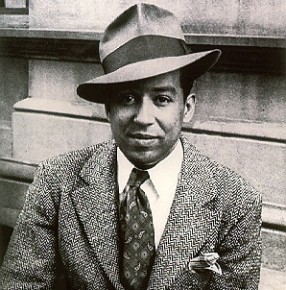
Three Christmas Poems of Langston Hughes

Langston Hughes (1902-1967)

Three Christmas Poems by Langston Hughes

Shepherd’s Song at Christmas ~ 

Look there at the star!
I, among the least,
Will arise and take
A journey to the East.
But what shall I bring
As a present for the King?
What shall I bring to the Manger?
I will bring a song,
A song that I will sing,
In the Manger.
Watch out for my flocks,
Do not let them stray.
I am going on a journey
Far, far away.
But what shall I bring
As a present for the Child?
What shall I bring to the Manger?
I will bring a lamb,
Gentle, meek, and mild,
A lamb for the Child
In the Manger.
I’m just a shepherd boy,
Very poor I am—–
But I know there is
A King in Bethlehem.
What shall I bring
As a present just for Him?
What shall I bring to the Manger?
I will bring my heart
And give my heart to Him.
I will bring my heart
To the Manger.

Merry Christmas (Published in 1930) ~ 

Merry Christmas, China
From the gun-boats in the river,
Ten-inch shells for Christmas gifts,
And peace on earth forever.
Merry Christmas, India,
To Gandhi in his cell,
From righteous Christian England,
Ring out, bright Christmas bell!
Ring Merry Christmas, Africa,
From Cairo to the Cape!
Ring Hallehuiah! Praise the Lord!
(For murder and rape.)
Ring Merry Christmas, Haiti!
(And drown the voodoo drums –
We’ll rob you to the Christian hymns
Until the next Christ comes.)
Ring Merry Christmas, Cuba!
(While Yankee domination
Keeps a nice fat president
In a little half-starved nation.)
And to you down-and-outers,
(“Due to economic laws”)
Oh, eat, drink, and be merry
With a bread-line Santa Claus –
While all the world hails Christmas,
While all the church bells sway!
While, better still, the Christian guns
Proclaim this joyous day!
While holy steel that makes us strong
Spits forth a mighty Yuletide song:
SHOOT Merry Christmas everywhere!
Let Merry Christmas GAS the air! 

Christmas Eve: Nearing Midnight In New York ~ 

The Christmas trees are almost all sold
And the ones that are left go cheap 
The children almost all over town 
Have almost gone to sleep.

The skyscraper lights on Christmas Eve
Have almost all gone out
There’s very little traffic
Almost no one about.

Our town’s almost as quiet
As Bethlehem must have been
Before a sudden angel chorus
Sang PEACE ON EARTH
GOOD WILL TO MEN!

Our old Statue of Liberty
Looks down almost with a smile
As the Island of Manhattan
Awaits the morning of the Child.

Rockefeller Center at Christmas image 2

The Hobbit: The Desolation of Smaug ~ A Capsule Movie Review

The Hobbit, The Desolation of Smaug

The Hobbit: The Desolation of Smaug ~ A Capsule Movie Review by Allen Kopp 

The epic quest begun in The Hobbit: An Unexpected Journey (released one year ago at this time) is continued in The Hobbit: The Desolation of Smaug, which is part two in The Hobbit trilogy. The third part, The Hobbit: There and Back Again, will be released in December of next year.

As you recall (or maybe you don’t), twelve dwarves are on their way to reclaim their homeland and their gold from a very large, flying, fire-breathing dragon sleeping inside a mountain. They have enlisted the aid of Bilbo Baggins, a hobbit, who is a burglar. Once they get to the mountain, they will need Bilbo to use his skills to get a large white stone, called the Arkanstone, from the extravagant piles of gold and riches the dragon stands guard over inside the mountain. (It seems they need the stone to carry out their plans.) The dragon is sleeping most of the time, but if anybody tries to mess with his riches, he is sure to wake up and be very unpleasant.

On their long journey to the mountain, the dwarves encounter Orcs, a warlike race of creatures who want to kill them. The elves don’t like dwarves, either, but they assist the dwarves because they dislike Orcs even more. (The enemy of my enemy is my friend.) In one standout scene, the dwarves are captured by giant spiders who wrap them in cocoons (presumably to keep them as a snack for a later time). The elves assist the dwarves to escape the spiders, as does Bilbo. Time and again, Bilbo displays unexpected bravery and resourcefulness. When the dwarves are trying to open the door into the mountain where the gold is, which, they are told, will open with a key by the last light of the day, Bilbo figures out that the door will open (after the dwarves have given up) by the light of the moon rather than the sun. Where would they be without Bilbo?

At the end of The Desolation of Smaug, Bilbo and the dwarves have inadvertently unleashed the death-dealing dragon on Middle Earth. As the dragon flies off to wreak all kinds of havoc, Bilbo says, “What have we done?” We’ll have to wait until December 2014 to find out.

The trilogy is based, of course, on books by J.R.R. Tolkien, the premier fantasy writer of the twentieth century. I’m not a big fan of this kind of fantasy, but these movies are beautifully made in 3D and well worth seeing. Even if you don’t care that much for the story and think you have had your fill of hobbits, dwarves, elves, and wizards, there’s no more beautiful place to visit than Middle Earth.

Copyright © 2013 by Allen Kopp

It was not death, for I stood up ~ Emily Dickinson

Emily Dickinson (1830-1886)

It was not death, for I stood up ~ A classic American poem by Emily Dickinson (Born on this day, December 10, in 1830.)

It was not death, for I stood up,
And all the dead lie down;
It was not night, for all the bells
Put out their tongues, for noon.

It was not frost, for on my flesh
I felt siroccos crawl,
Nor fire, for just my marble feet
Could keep a chancel cool.

And yet it tasted like them all;
The figures I have seen
Set orderly, for burial,
Reminded me of mine,

As if my life were shaven
And fitted to a frame,
And could not breathe without a key;
And I was like midnight, some,

When everything that ticked has stopped,
And space stares, all around,
Or grisly frosts, first autumn morns,
Repeal the beating ground.

But most like chaos,–stopless, cool,
Without a chance or spar,–
Or even a report of land
To justify despair.

Boardwalk Empire, Season Four ~ A Capsule Review

Richard Harrow image 5

Boardwalk Empire, Season Four ~ A Capsule Review by Allen Kopp 

Boardwalk Empire on HBO is the best show on television. Of course, I might be a little prejudiced in that opinion because it’s the only show I watch. It just completed its fourth season, I’ve seen every episode, and I think it’s better than ever. It’s involving, beautifully written and beautifully played. The characters are well-rounded and believable. For the most part they are not “good” people, but human. We understand their jealousy, greed, hatred, desire, revenge, love, or whatever it is that motivates them. We don’t want to be like them (could any of us get away with it?), but we love watching them, including their killing without remorse. How bad can a person be? Apparently there’s no limit.

And then there’s the “look” of the show. Obviously a lot of research has gone into getting each detail historically accurate for the period. Each scene is beautifully appointed and you wonder how they can create those fabulous sets, some of which are just seen for a few seconds. (Is it all computer-generated illusion?) The music is all from the period and there’s lots of it and it always fits the scene. So, even if you don’t like the story, it’s a feast for the eyes and ears, especially if you, like me, find the 1920s fascinating.

There were some interesting developments in season four. Gillian Darmody, that youthful grandmother, is addicted to heroin. The new man in her life, Roy Phillips (who isn’t what he appears to be), helps her kick the habit. While she is fighting for custody of her grandson, Tommy, a very bad thing that she has done in one of the earlier seasons catches up with her. Nucky Thompson runs a nightclub, The Onyx Club, with his business partner Chalky White (whites only, black performers). Daughter Maitland, a singer at the club, is a protégé of the mysterious Dr. Narcisse, another man who isn’t what he appears to be. Dr. Narcisse and Chalky White are rivals (they both want the same things). When Chalky begins an adulterous affair with Daughter Maitland, it intensifies the dislike between the two men. Nucky has a new love interest, Sally Wheet, whom he meets in Florida when he is there on “business.” His wife, Margaret, has receded into the background with her two children and just plays a minimal part in season four. Nucky’s nephew, Will, accidentally kills a fellow student in college when a prank goes too far. When Will is caught, Nucky uses his considerable influence to get him off. Will doesn’t want to go to school but wants to be a gangster like his father and his uncle.

Among those who meet their ends in season four are Mr. Purnsley, Maybelle White, Agent Knox, Dean O’Banion, Frank Capone, and a host of minor characters. Eddie Kessler, Nucky’s faithful valet, commits suicide when he is bullied by two federal agents into giving an insignificant confession against Nucky. So long, Eddie!

And then there’s Richard Harrow. From the first time he appears in season one in what was supposed to be a minor role, he dominates every scene he’s in with his quiet dignity. After we see him a couple of times, we see beneath the tin mask he wears that hides his horribly disfigured face. He has lived through the horrors of war and returns to a world in which he has no place. For a while he is a hired killer but that isn’t really who he is. He wants nothing more than to have a family and to be normal. When he dies at the end of season four, it’s for love. Not for romantic love—that would be too silly—but for a more profound kind of love. As he’s dying, he sees himself with his handsome face intact, returning “home” to those who love him. A tragic hero in the end. Does TV get any better than this?

Copyright 2013 by Allen Kopp

Give Thanks

Giving Thanks on This Day ~ 

~~~

Thanksgiving3 (2)

~~~

James 1:17 ~
Every good gift and every perfect gift is from above, coming down from the Father of lights with whom there is no variation or shadow due to change.

~~~

Psalms 100:4 ~
Enter into His gates with thanksgiving, and into His courts with praise: be thankful unto Him, and bless His name.

~~~

Philippians 4:6 ~
Do not fret or have any anxiety about anything, but in every circumstance and in everything, by prayer and petition, with thanksgiving, continue to make your wants known to God. 

~~~

Thanksgiving graphic 2

~~~

The Hunger Games: Catching Fire ~ A Capsule Movie Review

The Hunger Games, Catching Fire

The Hunger Games: Catching Fire ~ A Capsule Movie Review by Allen Kopp 

The Hunger Games is a series of books and now a movie franchise. The second movie in the franchise, just out, is The Hunger Games: Catching Fire. It stars Jennifer Lawrence as an extraordinarily resourceful girl named Katniss Everdeen, who has acquired fame and fortune as the victor in the 74th Annual Hunger Games, along with her partner, Peeta Mellark (played by Josh Hutcherson). Katniss and Peeta believe that, as victors, they can live the rest of their lives in peace until they discover that every twenty-five years the participants in that year’s Hunger Games will be drawn from previous victors. So, guess what? Katniss and Peeta will have to participate in the 75th Annual Hunger Games, whether they want to or not.

For those who don’t already know, The Hunger Games is set in a future dystopian society (a country called Panem) where life is not easy. The Hunger Games is a sort of public relations gambit to instill a sense of national pride in people and to take their minds off how terrible their lives are. Since Katniss sees things as they really are and sees through the veil of lies, she is viewed by the political ruling class as a possible danger, as someone who might lead a revolution against them. They believe it is in their best interests to kill her.

Meanwhile, Katniss and Peeta are forced to pretend to be in love to make things more interesting for the masses. While they like each other, there doesn’t seem to be much romance between them. (Or is there?) She has a boyfriend on the sidelines, the handsome Gale Hawthorne (played by Liam Hemsworth), with whom she wants to run away, but they both know it’s no use. If they don’t do what’s expected of them, their families will probably be killed.

The games themselves are held in a huge fake jungle, every aspect of which is controlled by people the participants don’t see. Using their skill, cunning, and physical prowess, the twenty participants must kill each other any way they can. Every time one of them dies, a cannon is fired. When the participants hear the cannon, they know how many are left that must be killed. All kinds of dangers are put in their way (a different one every hour) such as lightning, killer baboons, and floods. As they survive or die, they are being watched by millions of people on television.

If you saw the first movie in the franchise, you will know what to expect from The Hunger Games: Catching Fire. The two movies are much the same. You know from the way the second one ends (no surprise here) that there will be a third. Will Katniss lead a revolution against the evil government? Will she be a sort of Joan of Arc? Will she decide she is really in love with Peeta instead of Gale? Who will live and who will die? If the third movie isn’t any different from the first two, will we even care?

Copyright © 2013 by Allen Kopp

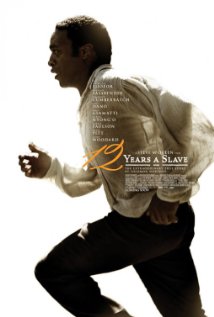
12 Years a Slave ~ A Capsule Movie Review

12 Years a Slave

12 Years a Slave ~ A Capsule Movie Review by Allen Kopp 

Solomon Northup was a real person, a free Northerner, who was kidnapped in 1841, taken to the South and sold into slavery. He wrote a book about his experiences, 12 Years a Slave, and that book has been made into one of the best movies of 2013. It was directed by Steve McQueen (yes, there’s more than one person besides the deceased movie star with that name), who directed the impressive Shame a couple of years ago. In Shame, Michael Fassbender played a sex-addicted New Yorker and in 12 Years a Slave, a sadistic Southern slave owner who has a harpy of a wife as bad as he is.

During the years of his captivity, Solomon Northup (played by Chiwetel Ejiofor), struggles to maintain his identity, his dignity, and his hope. He is the victim of unspeakable cruelty but, even worse, he sees the same cruelty meted out to others. (When a slave girl named Patsy goes to a nearby plantation to get a piece of soap because she wants to be clean, she is beaten savagely.) The only way Solomon can survive as a slave is to not try to rise above his station. If he reveals that he is an educated, cultivated man, he will likely be killed. He wants desperately to get a letter to his wife and children to let them know where he is and to get them to help him, but he isn’t even supposed to know how to write. Simply getting paper and ink to write a letter is impossible for him. Nobody is to be trusted.

Throughout his long ordeal, Solomon Northup admonishes others not to “give in to despair.” Heeding this advice himself is the only way he survives. One never knows when fate—or the hand of Providence—will intervene on one’s behalf.

In 12 Years a Slave a long-dead world is brought back to life and it’s not a pretty world like Gone with the Wind. It’s an ugly place where cruelty and greed are the order of the day. The little bit of kindness that exists is tempered with fear. With the moss hanging from the trees, the heat, the insect sounds, the plantation houses that look lived in, the cane and cotton fields—but most of all with the slaves—you can almost feel what the South was like before the Civil War. Where else can you find this?

Copyright © 2013 by Allen Kopp
One Way

One Way image 1

One Way ~ A Short Story by Allen Kopp 

There she was, Mrs. Velda Millis, age seventy-eight, taking a bus trip on her own. Her hairdo was beauty-parlor fresh and she was wearing a new dress, bought on sale for the occasion. She had her purse, her ticket and her suitcase and was wearing her comfortable shoes. All she had to do was sit and wait for her bus.

The bus station scared her a little. It was too big, there were too many people moving too fast, too much noise. The noise alone set her on edge; every time an announcement was blatted over the loudspeaker, she jumped as if a gun had been fired behind her head. When a woman with a screaming baby sat down near her, she got up and moved to a different seat farther away.

She watched the minutes ticking away on a clock high up on the wall until her vision blurred. She was bored and wasn’t used to being bored. How did people stand to wait for hours in such a place?

Her hand started to cramp and when she looked down she realized she was holding onto her ticket for dear life. She wouldn’t need the ticket until time to board the bus. She slipped it into her purse and massaged her thumb. “Calm down,” she told herself. “You’re going to make it through this.”

Her daughter, Teresa, had given her the ticket and some instructions. What were they? Oh, yes, she was supposed to wait until two-fifteen (or was it three-thirty?) and then make her way over to gate five (or was it gate three?) and wait there until they announced over the loudspeaker that she could get on board. She hoped the announcement was in English. If it was in any other language, she wouldn’t know what they were saying.

It was only eleven-thirty. She still had hours to go. She closed her eyes and took a few deep breaths and thought about her son’s house where she was going to live.

Julian was a successful businessman and had a large house with an upstairs where she could have her own room. She would make herself useful by helping Susie, Julian’s wife, with the housework and by minding the two kids. She hardly even knew her grandchildren and was looking forward to getting acquainted.

She had lived with Teresa for the last two years and Teresa didn’t want her anymore. They got on each other’s nerves and had taken to quarreling over little things. She realized for the first time that she didn’t like Teresa very much and that the feeling was mutual. After one of their fights that lasted several days, Teresa told her she wanted her out of her house and was going to put her in a nursing home. Teresa had a long conversation with her brother Julian that night on the phone, the upshot of which was that they were going to put mama on a bus and send her to him.

“It’s your turn to deal with her,” Teresa had said to him with mama sitting right there. “I’m at the end of my tether. Maybe you can talk some sense into her.”

“Talk some sense into me about what?” she asked when Teresa hung up the phone.

“None of your business!” Teresa snapped. “Oh, to have some privacy again in my own home!”

When Teresa presented her with the bus ticket, she saw right away that it was marked One Way. She was going away from her home and never coming back.

When she was realistic and looked the facts in the face, she knew she wasn’t going to have her own room at Julian’s place and be able to help with the housework and the children. Telling her that was just a trick, she saw now. Julian and Susie would be there to take her off the bus, all right, but they would then whisk her off to one of those places where blank-eyed old people sit in chairs and wait to die, forced to surrender control of their lives to absolute strangers. She was not to be given any choice in the matter.

Now that she knew what they were going to do to her, wasn’t it her last chance to escape? She didn’t have to get on that bus, just because snooty Teresa had bought her a ticket. There was something else she could do.

She picked up her suitcase that sat at her feet and opened it. Underneath the clothes were her Bible and a bulky manila envelope. These were the things that gave her strength and comfort: the Bible because the words in it sustained her in times of trouble and the envelope because it contained one hundred and eighty one-hundred-dollar bills. (She had counted them over and over.)

She found the money in the bottom of one of Teresa’s dresser drawers when she was cleaning and took it as her own. Teresa would say she stole it, of course, while she maintained it was money due her. For what? For keeping herself from slapping Teresa across the room all the times she had wanted to.

Having decided she wasn’t going to take that bus, she couldn’t stand being in the bus station another minute. She went outside, finding herself on an unknown city sidewalk. She followed her nose, as the saying goes, to the old Windsor hotel, which sparked some memories for her of long ago. She went inside and engaged a room, registering under the name of Ann Harding, the name of a long-ago movie actress. Nobody would ever know it was her.

After she was shown to a room by a dwarfish bellboy, she kicked off her shoes and called room service and ordered a steak sandwich and a bottle of beer. When the boy came with her order, she tipped him generously. She had money and money will take you a long way in this world.

Copyright © 2013 by Allen Kopp