Offbeat Christmas Story ~ An Anthology

Offbeat Christmas Story, an Anthology cover

(My short story, “The Third Day of Winter,” is in this new anthology of Christmas stories. )

It’s available on Amazon:

http://www.amazon.com/Offbeat-Christmas-Story-misc-authors/dp/1492972592/ref=sr_1_1?ie=UTF8&qid=1383387421&sr=8-1&keywords=offbeat+christmas+story+ashley+parker+owens

Weary of the holiday crowds? Try Offbeat Christmas Story, a collection of seasonal tales sure to make you grin! Some funny stories include ‘Xmas Traditions,’ where the narrator celebrates Christmas by turning off all the dripping faucets in skyscrapers. In ‘A Wall Street Fairy Tale,’ a genie helps the narrator torture his old girlfriend and new lover with telemarketing. ‘A Christmas Tale’ tells the story of a war veteran as he readjusts to the American milieu. Then, the search for the perfect Christmas tree finally pays off in ‘Can’t See the Tree for the Forest.’ ‘It Came Upon a Midnight Clear’ is a contemporary story structured around a folktale of a mad miner and the Christ child. In ‘The Third Day of Winter,’ a woman spends her Christmas Eve opening her arms to those who need love the most. For those that cherish the holiday spirit, we have ‘Double Blessing,’ a contemporary Nativity story told from a barn owl’s point of view, and ‘When Tomorrow Comes,’ a story about starting over after life takes a hefty downturn. Esteemed authors include Scathe meic Beorh, Rebecca T. Dickinson, Lori Gilbert, Jane Hertenstein, Reynold Junker, Allen Kopp, Lance Manion, and Michail Mulvey.

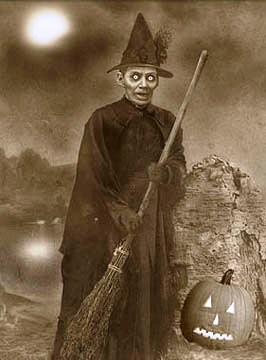
Broomstick

Broomstick image 1

Broomstick ~ A Short Story by Allen Kopp 

She was old and stayed shut up inside her castle high on a lonely mountaintop. There was one night in the year, though, that she had to go out into the world, and that night was Halloween. She wouldn’t be much of a witch if she didn’t fly on Halloween.

As the sun sank behind the mountains in the west, she woke up her old black cat, Lucifer, who was sleeping in front of the fire, and told him to get up and have a snack and wash his face in preparation for leaving.

“I’m not going with you this time,” he said.

“Why not?” she asked.

“I’ve seen enough of the world. I’ve flown with you on countless Halloweens. I just want to be left in peace.”

“Well, suit yourself,” she said. “You’ll be missing a good time.”

“I’ll guard the castle while you’re gone,” he said, going back to sleep.

As she flew off on her broomstick, she realized she hadn’t flown since the previous Halloween. She really needed to get out more. She was a little wobbly at first, as if she might fall off, but soon she hit her stride and did a couple of loop-the-loops and reverse maneuvers to prove to herself that she still could.

After she had flown a good distance away from her castle, she felt an urgent need to do something bad, to cause some mischief and mayhem, as witches do on Halloween. Seeing a church in a village, she threw a ball of fire that caused the steeple to burst into flame. Then, outside the village, she caused some railroad tracks to buckle so that the next train to come along would derail. She turned a cow standing in a field into stone and two small children into white mice. Feeling less than fulfilled, she redirected a creek so that it would flood some farmland. These things were nothing, though, compared to what she did next: Hovering over the roof of a maternity hospital, she cast a spell that would cause the next baby to be born to have two heads. Now there was a fiendish accomplishment!

As good a time as she was having, she felt that something was missing. In the old days of her witchery, she always had somebody with her; if not a victim, then a fellow witch. Doing bad things just wasn’t as much fun if there wasn’t somebody along to tell her how terrible she was. She needed to hunt up the old gang to see what they were up to.

She flew on until she came to the environs of her youth, the place where she got her start as a witch. The forests, mountains, and rivers all looked the same. The village was much the same but had grown shabbier and poorer. The witches’ nightclub, Eye of Newt, was still there, thank goodness! She went inside, carrying her broomstick in her hand.

A hunchback dwarf greeted her at the door. She recognized him at once.

“Raphael, is that you?” she said.

The dwarf squinted up at her in the dim light. “Have we met?” he asked.

“It’s Mignonette, the witch. Don’t you remember me?”

“Oh, yes! Mignonette! Of course, I remember you, but I thought you were dead.”

“Not yet.”

“My eyes are not what they used to be.”

“Any of the old crowd here?”

“I think you’ll find a few of them at the table in the corner.”

As she made her way through the crowd to the last table against the wall, nobody turned to look at her. There was a time when she could command an entire room with her presence.

Two witches and a ghoul were sitting at the table. She recognized the two witches from the long-ago, but she didn’t know the ghoul.

“And who might you be?” one the witches, the one known as Hildegard, asked.

“Why, it’s Mignonette,” she said. “Your old friend.”

“I don’t remember anybody by the name of Mignonette,” Hildegard said stubbornly.

“Why, of course you remember her!” the other witch said. (Her name was Carlotta.) “There was the time that Mignonette was the toast of the town.”

“Oh, yes, I remember now,” Hildegard said. “She tried to kill me once.”

“Only once?” the ghoul asked, standing to hold the chair out for Mignonette as she sat down.

He was Erich, a holdover from the Third Reich. (People always wanted to hear the stories about his association with Herr Hitler.) He wore a top hat and pince nez. With his long, emaciated body, skin the color of ivory and black circles around his eyes, he was every inch the ghoul.

“I’m so happy to make your acquaintance, mademoiselle,” he said in his smooth continental accent, taking Mignonette’s hand in his own and kissing it.

“Likewise, I’m sure,” Mignonette said.

He motioned for the waiter and ordered a round of witches’ brew.

“So, I’m wondering where all our old friends are this evening,” Mignonette said. “Ethelbert, Lulu, Patsy, Lucille, Laverne and the others.”

“Oh, haven’t you heard?” Carlotta asked.

“Heard what?”

“Lucille and Patsy are dead. Ethelbert got married and went back to the Old Country. Lulu’s in a hospital for the criminally insane and, last I heard, Laverne was in jail for something or other.”

“So, it’s just the two of you left in our little coven?” Mignonette asked.

“I’m afraid so.”

“There are lots of new young witches coming along,” Carlotta said, ever the optimist. “I’m thinking we can recruit some of them to join us in our crusade of evil.”

At the mention of young witches, they all turned to look at the crowd that was hemming them in against the wall. The young witches were nothing like the older generation, which included Mignonette, Carlotta and Hildegard. They were sleek and didn’t go in for scary ugliness as the older generation had done. They had done away with the long black dresses, pointed hats, green skin, facial hair, and warts. Some of them didn’t even look like witches. They seemed to be more interested in flaunting their assets than in casting spells and riding around on broomsticks.

“I’m afraid things have changed,” Hildegard said.

“The old ways are still the best,” Mignonette said. “We can still have fun doing what we always did.”

“My motto exactly!” Erich said.

“It’s the one night in the year that witches should be having a good time.”

“Yes, yes, that’s so true,” Hildegard said.

“You’re not going to sit here all evening and drink witches’ brew, are you?”

“Well,” Carlotta said, “Hildegard and I were thinking about kidnapping a couple of teenagers from lovers’ lane and scaring the hell out of them. Make them think we’re going to kill them and then let them go at the last minute.”

“We’ve done all that,” Mignonette said. “Time and again. Maybe it’s time of think of other things to do.”

“Like what?”

“May I make a suggestion?” Erich asked. “Forget your teenagers. Some friends of mine, fellow ghouls, are getting up a party in the Cemetery of the Holy Ghost for around midnight. It’ll be a lot of fun. Skeletons dancing around a fire and that sort of thing. I’d be happy for the three of you lady witches to accompany me. And you won’t have to fly on your broomsticks. I have my car outside.”

“Can you imagine three witches and a ghoul in a car on Halloween night?” Carlotta said. “What do we do if a policeman stops us?”

“You either turn him into a toad or we tell him we’re on our way to a costume ball,” Erich said.

“It really isn’t any of his business,” Hildegard said.

“You three run along,” Mignonette said. “I don’t think I’ll come along.”

“Why not?” Carlotta asked.

“I think my time as a witch has passed. Do you know that I haven’t even left my castle since last Halloween night? My black cat, Lucifer, didn’t feel like coming with me tonight. It just isn’t the same without him.”

“Oh, I haven’t had a black cat for years,” Hildegard said.

“I have another suggestion,” Erich said. “The two of you run along and I’ll stay here with Mignonette. I’ll even lend you my car. You know how to drive, I trust?”

“Well, I like that!” Hildegard said. “She’s still doing it, after all these years! Stealing away all the men!”

“I’m not stealing away anybody,” Mignonette said.

“It’s parked just down the street,” Erich said. “You can’t miss it. It’s a 1932 Cadillac V16 Fleetwood sedan. The keys are in the ignition.”

“Let’s go,” Carlotta said. “I haven’t been to a cemetery party in years. We’ll have the pick of the men there.”

After Hildegard and Carlotta were gone, Erich ordered more drinks and moved his chair over as close to Mignonette as he could get. He put his arm around her waist and whispered in her ear.

“My place is very cozy,” he said. “I have embalming fluid.”

“Why me?” she asked. “I’m just as old and ugly as they are.”

“No, you’re not,” he said. “You’re different.”

“I’m not.”

“Wouldn’t you like to see my collection of Nazi memorabilia?”

“If I go with you, will you tell me all about Herr Hitler?”

“Would you be surprised if I told you I have his body in a trunk in my bedroom?”

“What for?”

“We’re going to try to bring him back to life.”

“Who is?”

“Come along with me and you can meet them.”

She blushed and pulled the brim of her hat down farther so her eyes were hidden. He stood up and took her by the hand.

She hadn’t had a passenger behind her on her broomstick for many years, especially a man. As he leaned forward and put him arms around her waist, she felt a quickening in her blood that she thought was long dead. He was a gentleman, she could see, and a Nazi gentleman at that. It was turning out to be a very fine evening after all.

Copyright © 2013 by Allen Kopp

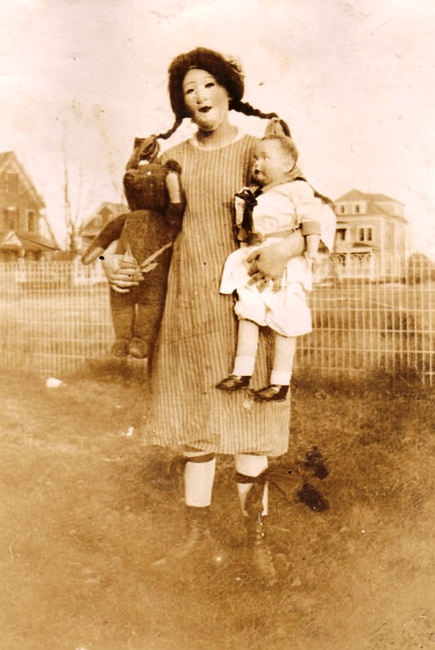
Celeste

Celeste image 1

Celeste ~ A Short Story by Allen Kopp

She owed everything to M and F. They brought her into the world, fed and clothed her, educated her, gave her a wonderful childhood. When the world was against her, M and F were always in her corner.

After she grew up, she married and left M and F. The marriage didn’t last, though, and after it came to its sad end she moved back home. M and F were growing old by then and needed her in the same way she needed them when she was a little girl growing up. She would never leave them again.

She did everything for them. They were helpless without her. She got them up in the morning, dressed them, sat them in their chairs, turned the TV or radio on for them. She read the newspaper to F and helped M with all the housework. She loved them so much that she told them all her secrets, like the time she pushed a girl down a long flight of stairs or the time at the lake when she could have saved a drowning boy but instead let him die.

On a beautiful autumn day, when the leaves were bright colors and the air held that wonderful crispness that can only mean the end of October, she bundled M and F up in their coats. F looked so sweet in the knit cap she made for him and M seemed to glow with the prospect of the fun they were going to have.

With M and F snuggly secured in the back seat, she drove out to the country road that she remembered from her childhood. They used to take long drives on Sunday afternoons in autumn, stopping to pick bittersweet or wild flowers or a few persimmons off a scraggly tree. She laughed to remember how eating a persimmon would make the inside of her mouth so puckery that she would have to spit it out on the ground. Autumn was her favorite time of year.

The road was just as she remembered it, the hills, curves, and sudden dips that made the stomach turn over. In fact, everything was exactly the same. There was the old red barn, there the grain silo and over there the horses grazing in a field behind a fence. The rickety old bridge still spanned the creek and the old country store still sold ice-cold drinks and pumpkins.

She looked away for a moment and when she looked back a porcupine was running across the road in front of the car. Porcupines don’t run very fast. If she had run over it and killed it, she would have been upset for the rest of the day. She swerved the car too much and lost control. The car careened off the road, across a ditch and into a tree.

Her first thought was for M and F. They had slid off the seat onto the floor but were unhurt. After she tended to them, she got out of the car to assess the damage. She had hit the tree squarely; water was dripping out of the radiator. She could not drive the car another inch in its present state.

It was too far to walk to town and, besides, she couldn’t leave M and F in the car alone. She could think of nothing else to do but stand by the side of the road and wait for somebody to come along and help.

There wasn’t much traffic and the few people who went by just stared at her as if she were a lunatic and went on past. Finally a police officer in a patrol car came along and, seeing her and the car smashed into the tree, pulled off onto the shoulder and got out.

“Anybody hurt?” the officer asked.

“No,” she said.

“I’ll call a tow for you.”

“Thank you.”

He spotted M and F in the back seat of the car. “Are they all right?” he asked.

“I think so,” she said.

He went closer to the car and leaned over to get a better look. “Why, they’re wax figures!” he said. “Aren’t they?”

“They’re…my family,” she said.

He straightened up and looked closely at her to see if she was making a joke. “Are you made of wax, too?”

“They’re surrogates.” she said.

“They’re what?”

She was wearing an old coat that belonged to F. She thrust her hands into the pockets and felt in the right-hand pocket a small knife that F used to use for whittling. She brought the knife out and stabbed the officer in the forearm.

He yelped with surprise. When she saw the knife sticking into his arm, she turned and started to run, but he grabbed onto her and wrapped his arms around her to subdue her. He pushed her toward the patrol car, opened the back door and shoved her inside.

“What do you think you’re doing?” she said. “I haven’t done anything wrong!”

“Shut up!” he said.

He slammed the door, locking her inside.

“Let me out of here!” she said. “They need me!”

The officer went over to her car and opened the back door. F tumbled out onto the ground head-first in a very undignified manner. The officer picked him up by the arm and tossed him back inside.

She winced as if she had been struck and then laughed at herself because she knew then that it wasn’t the real F. They—the real F and the real M—were asleep in a big trunk in the basement. Only she knew where they were. Nobody else would ever know. She was so much smarter than she had ever been given credit for.

Copyright © 2013 by Allen Kopp

American Tabloid ~ A Capsule Book Review

American Tabloid cover

American Tabloid ~ A Capsule Book Review by Allen Kopp 

I once met James Ellroy at one of his book-signing events. He is outspoken and some might say outrageous. He greets the audience with something like: “Hey, all you pimps, whores, scumbags, screwheads, weirdos, daddy-o’s, etc…” He isn’t afraid to be what he is and makes no apologies. He is the self-described “white knight of the far right.” I like his style. If you dare to challenge him on political matters, he will cut you off at the knees. (I love seeing that.) Another point that he gets across is that if you want political correctness, you won’t get it from him, so go someplace else. He wrote an interesting inscription in my copy of his novel The Cold Six Thousand concerning the writer Frank McCourt, who wrote Angela’s Ashes. I hope that one day my copy of that book is worth—oh, I don’t know—about six thousand dollars, but I don’t think I would sell it even for that much.

If you’ve ever read any of James Ellroy’s books, you know that he’s probably the only person who writes the way he does. If there are any others, I’m sure they’re imitators. He writes about a shadowy world of crime, of bad people doing bad things, in an age when the world was different. His sentences are short and punchy. You will never have to go back and try to unravel one of his compound-complex sentences to figure out what he’s saying, because he doesn’t write them. Of the books I’ve read by him, my favorite is his only nonfiction book, My Dark Places, which is an account of his mother’s murder in 1958, when he was ten years old, and his lifelong obsession with finding her killer. (He never does.)

His novel American Tabloid is a massive (575 pages) saga of corruption, malfeasance, wiretapping, eccentricity bordering on insanity, union criminality, dirty politics, Mob violence, hypocrisy, ego, hatred and vengeance. It is set in the tumultuous period of the late 1950s and early 1960s, when Castro took control of Cuba and America found a communist dictatorship on its doorstep. It was also the first time that America elected a president based on the way he looks and speaks rather than on his ability to lead.

The action of the book is driven by three main fictional characters—Kemper Boyd, Pete Bondurant, and Ward Littell—who are all involved in some capacity with the CIA, FBI, or Justice Department; their association with these organizations doesn’t mean they are ethical or fair, law-abiding or honest. They also have Mob connections and are involved in clandestine efforts to remove Castro from power.

The three fictional characters (Boyd, Bondurant, and Littell) interact throughout the novel with the real-life characters, including J. Edgar Hoover, Howard Hughes, Jimmy Hoffa, John Kennedy, Robert Kennedy, Jacob Rubinstein (“Jack Ruby”), etc. None of them are presented in a flattering light. John Kennedy (“Jack the Haircut”) is portrayed as a sexually voracious, pretty-boy airhead who will choose political expediency over genuine leadership when the “Bay of Pigs” invasion doesn’t go well. His brother, Robert, is a priggish opportunist, a truly unlikeable man. The novel ends with the Kennedy assassination, which is a Mob hit with a patsy “fall guy.” The Mob despised Kennedy (according to the fictional premise of this novel) because he wouldn’t take decisive action to remove Castro from Cuba, depriving the Mob of its Cuban casino profits.

American Tabloid has so many characters and situations that it’s kind of hard at first to keep them all straight, but the pieces come together in the end. It’s a fast-paced, though long, reading experience; always interesting; at times fascinating; not to be taken too seriously or taken for truth. Read and enjoy.

Copyright © 2013 by Allen Kopp

The Counselor ~ A Capsule Movie Review

The Counselor

The Counselor ~ A Capsule Movie Review by Allen Kopp 

American writer Cormac McCarthy won a Pulitzer Prize for Fiction for The Road. Another of his novels, No Country for Old Men, was adapted into a movie that won Best Picture honors for 2007 at the Oscars. As if those aren’t accolades enough, the 80-year-old writer has written the screenplay for the new movie, The Counselor.

Michael Fassbender plays the title role. He is never known by any name other than “counselor.” He lives in El Paso, Texas, near the Mexican border. He has a pretty girlfriend named Laura (Penelope Cruz), whom he wants to marry. He buys her an expensively ostentatious diamond engagement ring (she doesn’t want to know how much it’s worth). Because he has pressing financial needs (which are never explained), he decides to enter into the business of illegal drug trafficking, where he believes he can make huge sums of money. (He is warned about what he might be getting himself into, but doesn’t heed the warning.) He has a spiky-haired friend named Reiner (Javier Bardem) who lives lavishly from drug-trafficking proceeds. Reiner facilitates the drug deal that the counselor will take part in, and it turns out to be a huge one: twenty million dollars.

Reiner has a creepy girlfriend with a lopsided hairdo and tons of eye makeup named Malkina (Cameron Diaz). Reiner says at one point that all that women want is to be entertained. Malkina apparently wants more than that. She has her own private agenda and doesn’t know the meaning of the word loyalty. She prates on and on about how bad she is. At one point she goes to a Catholic priest to confess her sins, but when she tells the priest she isn’t Catholic, he tells her he can’t give her absolution. When she starts talking dirty to him, he leaves the confessional.

As expected, the drug deal doesn’t go well. The twenty-million-dollars worth of drugs are hijacked and stolen. The counselor, Reiner and another intermediary in the deal (Brad Pitt, with another unflattering hairdo) are all in deep trouble. The men who own the drugs (who we never see) are ruthless and unforgiving. They will not listen to excuses. They will only exact revenge and it won’t be pleasant. There is no way out for the counselor. The people to whom he turns for help are unwilling or unable to assist. He is told: You did this; now you must suffer the consequences.

The Counselor was directed by renowned director Ridley Scott, whose impressive list of credits, going back more than thirty years, includes Alien, Blade Runner, and Gladiator. With all the talent behind and in front of the camera, why isn’t it a better movie? While it’s very slick and pretty to look at, it’s talky and predictable. There are no surprises, other than the fact that the two hours running time seems like it will never end.

Copyright © 2013 by Allen Kopp

Horse Face

Horse Face image

Horse Face ~ A Short Story by Allen Kopp

I bought only two items, a pound of butter and a jar of pickles. I could have gone through the express lane and been on my way in thirty seconds, but I waited twenty minutes or more behind an old lady with a couple hundred dollars worth of stuff in an overflowing cart. When my turn finally came, I smiled at the checker and placed my items on the conveyor belt. When she looked at me, she blushed a little. I know she did.

Her name, displayed on her name tag for all the world to see, was Patricia. She was twenty-eight years old, wasn’t married, and lived with her mother the same as me. I knew these things from hearsay. I had been seeing her in the Food Giant for two years. We had been on a first-name basis ever since I had told her my name.

“Hi, Patricia!” I said, hoping she wasn’t catching any bad smells coming off my body.

“Hello, Morgan. All alone this evening?”

“I’m just stopping by on my way home from work.”

“Most people go through the express lane when they only have two items. It saves time.”

“I know, but I prefer your lane.”

She laughed and pushed her glasses in place up her knobby nose. “Why is that?” she asked.

“You’re my favorite checker.”

“I didn’t know I was anybody’s favorite anything,” she said with a little deprecatory laugh.

The trouble with buying two items is that it takes such a short time to pay for them. It was over all too fast. I gave her a pained smile, took the bag with my two items in it, and left.

When my mother and I were having dinner that evening, I decided to bring up the subject of Patricia to see what she would say.

“At the Food Giant,” I said carefully, “have you ever noticed a checkout girl named Patricia?”

“I don’t pay any attention to their names,” mother said. “The only thing that matters to me is whether they’re fast or slow. The fast ones I like. The slow ones I don’t.”

“Patricia is the one with brown-blond hair that looks like a curtain that’s about to close over her face.”

“Does she have spots on her hands?”

“I don’t think so.”

“Is she the one that’s so fat it looks like she’s eaten half the food in the store before she started her shift?”

“No, mother. The one I’m talking about isn’t fat.”

She thought for a moment. “I know who you mean!” she said. “She’s the one with a long face like a horse.”

“Well, if you want to be cruel about it, that’s the one.”

“What about her?”

“I’m thinking about asking her over for dinner.”

She was speechless for a moment. Then she laughed as though I had made a joke. “Why would you want to do that?” she asked.

“I think she’s lonely.”

“Why should that concern you?”

“Maybe I’m lonely, too.”

“Do you mean you’re thinking of asking her out on a date?”

“Why shouldn’t I?”

“You don’t know anything about her. She might have filthy habits. She might have insanity in her genes. She might have diseases, for heaven’s sake!”

“Yes, the possibilities are limitless, are they not?”

“Why her?”

“I seem to feel some kind of connection between us, and I have ever since the first time I saw her.”

“The last girl you dated turned out to be a man!”

“That isn’t fair. She was a girl stuck in a man’s body.”

“She could be a frog stuck in a man’s body and she’d still be a man. It’s the body that counts.”

“That doesn’t prove anything.”

“It proves you have poor judgment.”

“My judgment is as good as anybody else’s!”

“I don’t care what you do. It’s your life.”

“Thank you!”

“But I refuse to stand idly by and see you ruin your life on…”

We went on and on in that way until she couldn’t stand to look at me anymore and retired to her room to watch her TV shows, leaving me to wash the dishes on my own.

The next day I again stopped at the Food Giant on my way home from work. I bought a bag of peanuts in the shell and a bottle of maple syrup and stood in line to pay for them. When Patricia saw me, the pained look on her face went away and she brightened.

“Back again, are we?” she said.

“Always the loyal customer,” I said.

“If you buy only two items at a time, it’ll take you forever to finish your grocery shopping.”

“What are you doing Saturday night?” I blurted it out before I lost my nerve.

“I don’t know,” she said. “I haven’t thought about it. I’ll probably catch up on my sleep.”

“Would you like to have an adventure?”

“What kind of adventure?”

“Come to my house and have dinner with my mother and me.”

“Well, um, I don’t know.”

“I’ll make lasagna. Tell me you don’t like lasagna.”

“I do like lasagna.”

“Well, then?”

“What time?”

“You mean you’ll come?”

I gave her directions to my house and told her to be there around six o’clock.

My mother was still peeved with me that evening. She didn’t chatter on about her soap operas and the things that had happened to her that day, as she usually did. She hardly spoke at all and when she did speak, she let me know how much it pained her.

“Is horse face coming for dinner?” she asked, looking down at her plate.

“Yes. And her name is Patricia.”

“When?”

“Saturday.”

“I’ll make it a point to be gone. I’ll go to a movie or something.”

“I’d like for you to be here. I want you to meet Patricia.”

“Why would I want to meet her?”

“Because she’s a friend of mine. I think you’ll like her.”

“When she ruins your life, don’t say I didn’t warn you.”

On Saturday I cleaned house, or at least the parts that Patricia was likely to see, and then I took a long bubble bath. I put on a brand-new plaid sports shirt and pants I had been saving for a special occasion. I set the table for three with the good dishes.

Patricia arrived right on time. I gave her a glass of wine and we sat on the couch and talked about small things—the weather, traffic, and her job at the Food Giant. Then we went into the kitchen and I showed her the place at the table where I wanted her to sit. She pulled out the chair and sat down with a set-in-place smile.

Before I took the lasagna out of the oven, I went upstairs to the door of mother’s bedroom and knocked softly. I could hear the voices coming from her TV.

“Mother,” I said, “dinner’s ready and we have a guest.”

She said nothing so I thought maybe she had fallen asleep. I knocked again, this time a little louder.

“It’s time for dinner, mother,” I said. “Please come to the table before the food gets cold.”

I heard her say, seemingly from far away, “I don’t want anything.”

“You have to eat, mother,” I said. “You haven’t eaten all day.”

“Go away and leave me alone,” she said. “I have a headache and I just want to be alone.”

When I went back into the kitchen, I smiled at Patricia and said, “Mother is doing the Greta Garbo routine this evening,” I said. “She just vants to be alone.”

“She what?” Patricia said.

“She has a headache and doesn’t want any dinner.”

After we ate, Patricia helped me clean up the dishes and then we went into the living room and watched Now, Voyager on TV. I had seen it maybe ten times, but Patricia had never seen it. When it was over, I could see she was puzzled about something.

“Did Charlotte Vale really kill her mother?” she asked.

“Not literally,” I said. “Only figuratively.”

“I don’t know what that means.”

I could see then that Patricia wasn’t as bright as I might have wished.

The dinner went well, I thought, in spite of mother’s refusal to come to the table, and the next time I saw Patricia I planned on asking her out on a real date.

Mother was fine the next day, her usual self. She went to church with her girlfriends, Pansy and June Ellen, and when she got home she was laughing about some gossip she had heard involving the minister’s wife. She didn’t mention my dinner with Patricia.

After my third date with Patricia, I realized that if mother was ever going to meet her, I was going to have to force it.

It was Sunday again and she wanted to drive out to the cemetery and put some plastic flowers on my father’s grave. Before we left home, I called Patricia without telling mother and asked her if she’d like to join us for a drive in the country. She said yes, so I told her I’d stop by and pick her up on our way out of town.

As soon as I deviated from the expected route, mother knew something was up.

“Why are you turning here?” she said. “This is not the right way.”

“I have a little surprise for you,” I said.

“You know how I hate surprises!”

When I pulled up in front of Patricia’s house, she came out the door in her coat with a big smile on her face. Her mother, who could pass for Marie Dressler, was right behind her in her bathrobe. She waved to us from the front porch.

“Would your mother like to go with us?” I asked Patricia as she climbed into the back seat. (Mother wasn’t about to give up her spot in the front.)

“No, she’s having a bad day,” Patricia said. “She’s got the twitches.”

“Patricia, I want you to meet my mother,” I said.

Patricia pulled herself forward on the seat back and reached awkwardly for mother’s hand with her left hand. Mother shook her hand and then looked at her own to see if anything had been left behind.

“I’m so happy to finally meet you, Mrs. Fenwick!” Patricia gushed. She seemed about to climb over the seat and crawl into mother’s lap.

“Hello,” mother said.

“You have a wonderful son!”

“I know.”

“And isn’t it a beautiful day to be out of the house?”

“I suppose so.”

Mother seemed disinclined to speak further, so Patricia shut up. I knew what mother was thinking and I was glad that Patricia didn’t know. I was hoping we could get through the day without mother calling her horse face.

At the cemetery when we were standing over my father’s grave and mother was fussing with the artificial flowers, Patricia wanted to know all the details about his death.

“Was it a painful death?” she asked.

“I’m afraid you’d have to ask him that,” I said. “He was in coma for the last ten days of his life.”

“The gophers have been digging again,” mother said.

“How did he die?” Patricia asked.

I mimed dying, the best I could standing up, but that’s not what she meant.

“Silly,” Patricia said.

“Do you mean of what did he die?”

“Yes.”

“He had a heart condition.”

Patricia seemed disappointed that there was so little drama surrounding his death. “Don’t you feel sorry for the people who kill themselves?” she said.

“That’s enough of the chatter,” mother said. “This is a solemn occasion.”

“What’s the occasion?” Patricia asked.

“Anytime you’re in a cemetery, it’s a solemn occasion,” I whispered.

“That’s my place there, right next to him,” mother said. “It’s waiting for me.”

“You’ll outlive us all,” I said.

“I’m going to be cremated,” Patricia said, “unless, of course, I die in a place where my body is never found, like outer space.”

When we were walking back down the hill to the car, Patricia took my hand and twined her fingers through mine. She giggled like an adolescent girl on her first date and whispered in my ear. Mother was right behind us taking it all in.

After I had dropped Patricia back at her house, mother said, “I don’t like her.”

“You haven’t given her a chance,” I said.

“It’s not what I see that I don’t like. It’s what I don’t see.”

“I don’t know what that means,” I said.

“I think you should get rid of her.”

“I’m thinking of asking her to marry me.”

I continued to see Patricia on a regular basis. On the two or three nights a week I was gone, I knew mother knew I was with Patricia, but we didn’t talk about it. She filled in her time alone like the stalwart she was, with her lodge functions, TV programs, and phone conversations.

Patricia won a three-day, all-expenses-paid trip to a lakeside resort in the mountains for two. She asked me if I’d like to go with her and I said yes. I planned to propose to her in the romantic setting of the resort. When we returned from our three-day trip, we would announce our plans to be married. There was no turning back now.

“When I told mother I was going to be gone for three days, she said, “With her?”

“Yes,” I said. “With her.”

“I’m not going to let it upset me,” she said.

“Good,” I said.

“I’m not going to try to interfere because you are an adult now and you have your own life to live apart from me.”

“That’s very sensible of you,” I said.

She sniffled a little into her hanky but that was the end of it.

Patricia and I had a wonderful time in those three days. We indulged in lavish meals, swam in the lake, rode horses, hiked, and just got to know each other better. It was a sort of preview of what our future life together would be like. On our last night there, I asked her to marry me and she accepted.

I couldn’t wait to share my happy news with mother. I was sure she would overcome her reluctance and would come to love Patricia as much as I did. We would be sure to include her in all our future plans and would, of course, expect her to live with us.

When I got home on Sunday evening, I knew right away that something was wrong. All the lights were on, but there was an abandoned feel to the house as if it had not been lived in the whole time I was away. Mother wasn’t in the kitchen or in any of the downstairs rooms.

I found her upstairs in her bedroom. She was in her bed, wearing her pajamas, barely breathing. She had taken a bottle of sleeping pills and had timed it, apparently, so I would find her when I arrived home.

On the bedside table was the empty bottle, minus the lid. Underneath the bottle was a suicide note: “Dear Morgan,” the note read, “If I’m going to lose you, I don’t want to go on living. Love, Mother.”

I called an ambulance. They came and took her to the hospital, where emergency room doctors pumped her stomach. I sat beside her bed for twelve hours until she regained consciousness. When she woke up, she had a terrible headache and a sore throat.

When I told Patricia I couldn’t marry her and wasn’t going to see her again, she took it well. She said she never really believed me anyway. I didn’t know what she meant by that, but I didn’t press it any further.

Now when I go to the Food Giant, I use the express lane. If I have more than twelve items, I use one of the regular lanes, as long as it’s not Patricia’s. I keep my eyes down and don’t look her way. I’m sure it’s all for the best.

Copyright © 2013 by Allen Kopp

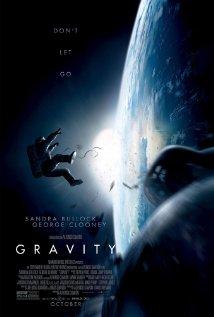
Gravity ~ A Capsule Movie Review

Gravity 

Gravity ~ A Capsule Movie Review by Allen Kopp 

Gravity, with Sandra Bullock and George Clooney (why can’t I ever take him seriously?), is about two astronauts on a space station hundreds of miles above the earth. On this particular day that the action begins, Dr. Ryan Stone (yes, even though she’s a girl, she has a boy’s name) and Matt Kowalski, brother of Stanley (just kidding), happen to be “spacewalking,” meaning they’re working outside the space station when they receive a warning from “mission control” that a “satellite debris field” is headed their way. Dr. Stone is reluctant to leave unfinished the job she has started, so they don’t make it back inside fast enough before the debris hits them. And it’s a good thing they don’t, because the debris has hit the space station (their “home” in space) and ripped it apart, killing the other crew members. Dr. Stone and Matt Kowalski aren’t much better off, though, because they are left adrift in space with their limited oxygen supply. From that point on, it becomes a question of survival. Here’s another fine mess you’ve gotten me into. Does anybody have any bright ideas?

Dr. Stone would be dead right out of the gate if it wasn’t for the more seasoned, cool-headed Matt Kowalski. When she is spinning uncontrollably through space, head over heels, he catches her and tethers her to himself. Off in the far distance (too far) they can see the Chinese space station. Their only chance of survival is to go there and get help. It will be like “swimming” through nothing to get there. Will their oxygen hold out? Probably not, but they have to at least try.

Of course, while all this is going on, they have the panorama of earth, hundreds of miles below them, to look at. All they can see are the swirls of cloud formations and outlines of continents, but still it is a beautiful sight that the vast majority of us will never see except in pictures.

Gravity is only ninety minutes long (including the expansive end credits) which, I read, is the time it takes the space station to go around the globe. (Ninety minutes seems short compared to the length of other movies.) The theme of the movie is perseverance, not giving up in the face of overwhelmingly adverse odds; experiencing a kind of “rebirth” after terrible things have happened.

While Gravity is expensively made and worth seeing for those who are so inclined, I don’t really buy George Clooney and Sandra Bullock as astronauts. Instead of two besieged humans in an inhospitable environment, they seem like nothing more than two middle-aged movie stars trying to justify their twelve-million-dollar salaries. Other problems involve plausibility. When they are in such danger and have so much time for talk, why do they not mention God or at least the possibility that God exists? Wouldn’t most people who know they are likely to die in the next few minutes offer up some kind of prayer for deliverance, or is that concept too offensive nowadays? And, on another note, why are the Chinese and Russian space stations abandoned and accessible to American astronauts? Are the Chinese and Russian astronauts just “out” for the moment? If this is explained at any point in the movie, I must have missed it.

Copyright © 2013 by Allen Kopp

John 14:27

Autumn 4


John 14:27

~~~

“Peace I leave with you; my peace I give you. I do not give to you as the world gives. Do not let your hearts be troubled and do not be afraid.”

~~~

All earthly things disappoint. Our need is deeper, more sublime than any possession or accomplishment can satisfy.