~ The Feminine Ideal ~
The frizzy hair, hissing and screaming only add to her allure.


~ The Feminine Ideal ~
The frizzy hair, hissing and screaming only add to her allure.
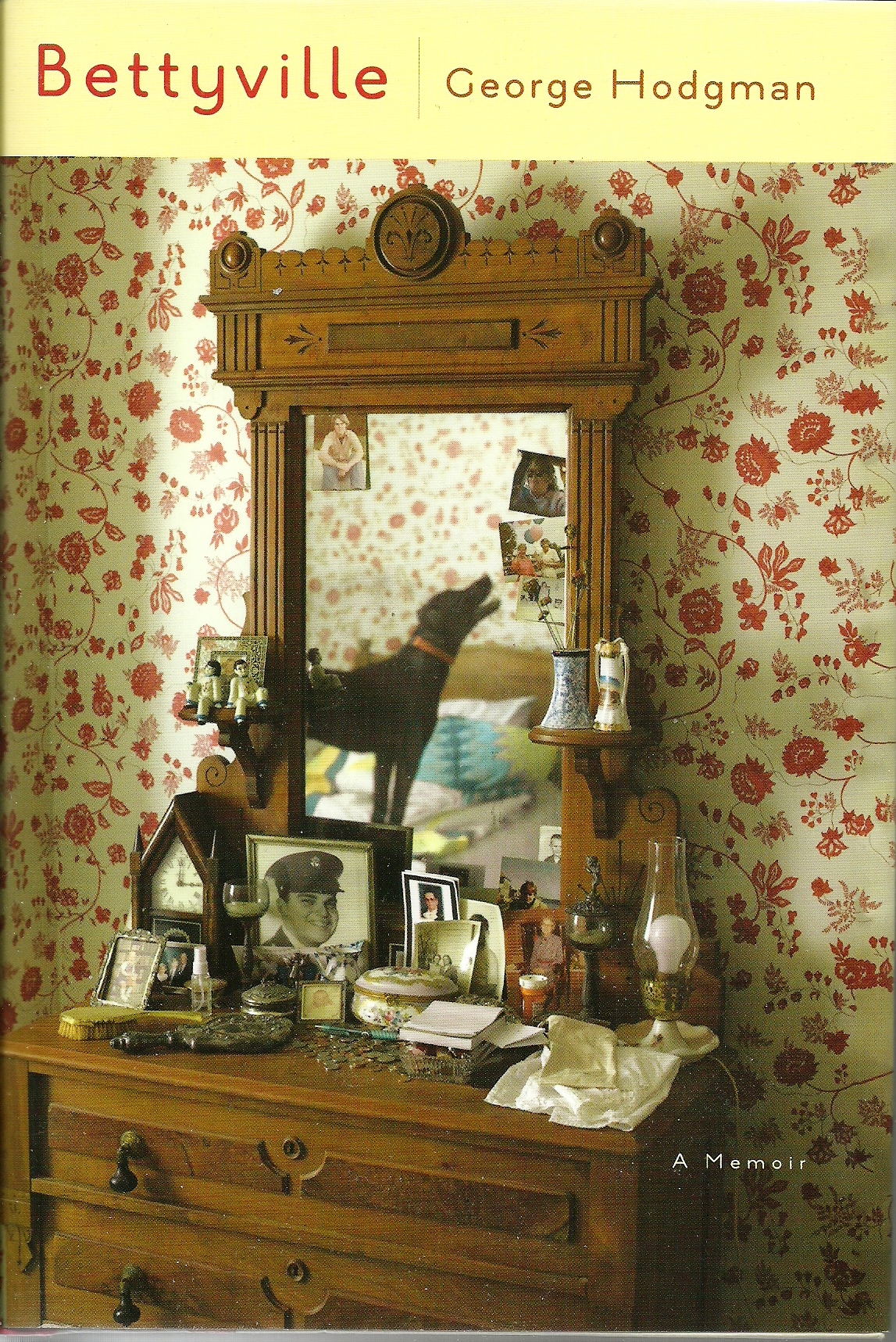
Bettyville ~ A Capsule Book Review by Allen Kopp
Bettyville is a memoir by a writer named George Hodgman set in the small town of Paris, Missouri. Paris is an insignificant town in a state full of insignificant towns. George is a middle-aged man and is gay, always feeling that there is something wrong with him or he doesn’t quite measure up. (“The people who feel okay in the world,” he says, “don’t understand those of us who don’t feel okay.”) He knows his conservative parents will never understand or embrace his sexuality, so he chooses to never discuss it with them. He becomes adept at secrecy and at hiding his true feelings. At the age of forty, when he finally admits to his mother that he’s gay (“Surely you must have known.”), she replies, “Well, then, I guess you’ll go your way and I’ll go mine.” She doesn’t make it easy for him.
Knowing he will never fit in or be accepted in his home town, George goes to New York, where he embraces the “gay lifestyle.” He spends summers on Fire Island. He has a series of “relationships,” somehow never managing to make one of them last for the long haul. He works for publishing houses as a book editor or at places like Vogue magazine. He turns to drugs to help him cope with his demanding job and eventually becomes an addict. In spite of all this, though, he manages to go back to Missouri a couple of times a year to visit his family.
When George’s father dies (George senior), his mother, Betty, is left alone. As she gets older and more frail, it is up to George, an only child, to care for her. He would like to put her in a nursing home so he can live his own life, but, as expected, she won’t hear to it. After George loses his job (making him feel like more of a failure than ever), he moves back home with his mother and takes on the difficult job of caring for her full-time. So, a fifty-year-old repressed, secretive man is taking care of his failing, often difficult, emotionally reserved ninety-year-old mother who has dementia. He wants to “do right” by her and see her through to the end, whatever the end is. That’s what Bettyville is about: acceptance of one’s own failings, putting another person’s interests before one’s own, and doing it all with humor and grace.
Bettyville is almost effortless reading and is full of humor. When George takes his mother to see the art film The Master, she says in a loud voice, “Why would anybody want to make a movie like that?” When they go to the Muny Opera in St. Louis to see The Music Man, George’s father sings along, embarrassing George and Betty. In drug rehab, when somebody asks George when he became aware that his emotions had shut down, he replies, “I don’t think they were ever opened up.” George is a clever man who uses self-deprecating humor to keep people from seeing what he really is, as if what he is needs covering up.
Copyright © 2015 by Allen Kopp
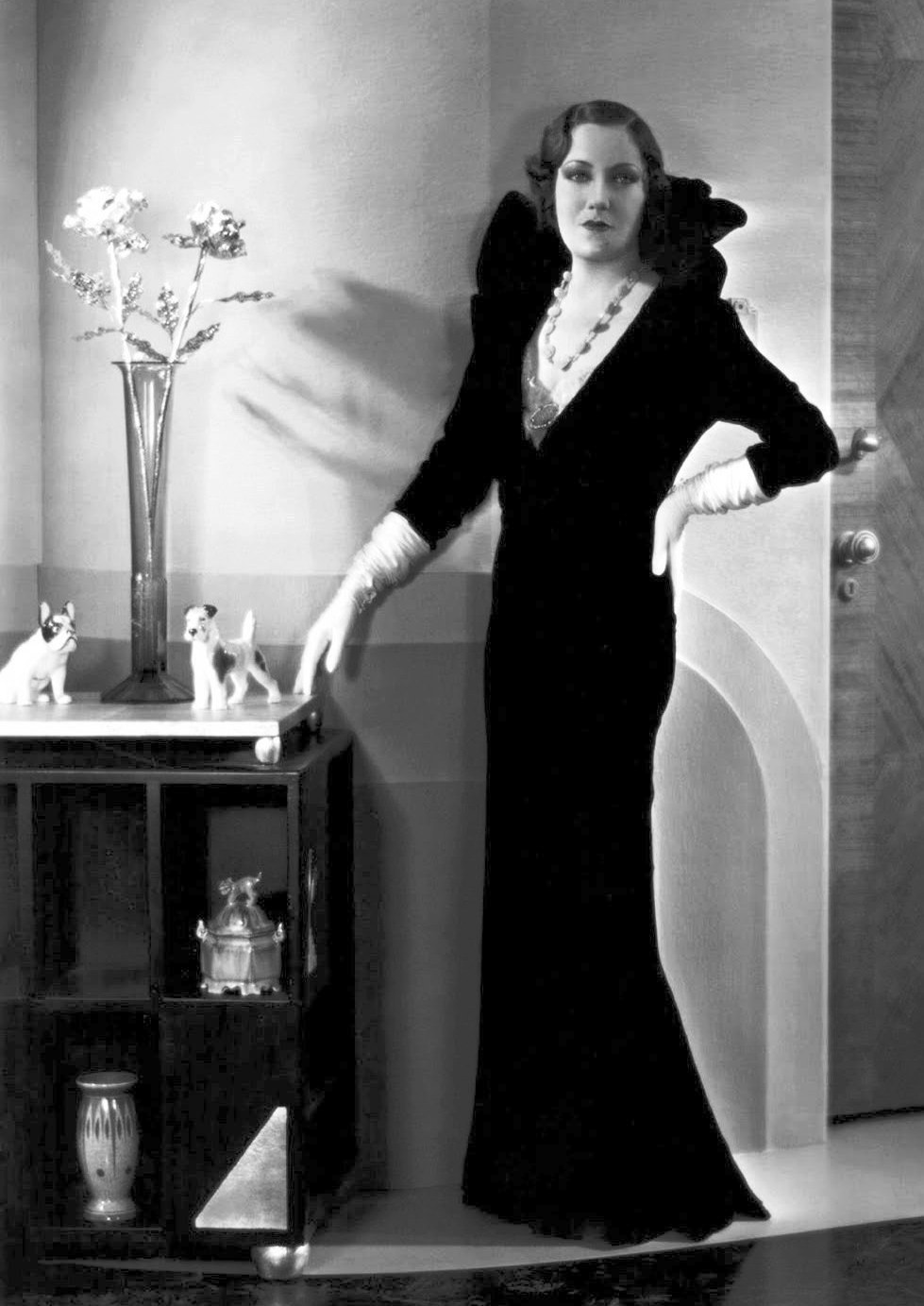
The Queen Bee of Café Society ~ A Short Story by Allen Kopp
It’s early November and the nights are getting colder. Ouida Longworth makes her way through the dark city streets to the only place left to her. She struggles up the stairs, through the door, and stops before a low table with an old woman sitting behind it.
“Need a bed,” Ouida says.
“All full up tonight.”
“Got one left,” a man’s voice says from the shadows. “A lady checked out a little while ago.”
“All right,” the old woman says. “You know the rules. No smoking, cussing, gambling or alcoholic beverages. No fraternizing with the other guests. You got to be out by nine o’clock in the morning.”
“Thank you, madam.”
“Go down them stairs and hold your nose.”
Ouida isn’t sure if she has the strength to find the one empty bed, but find it she does and when she comes to it she sits down heavily and takes off her shoes and rubs her feet. They are so numb she can hardly feel them—one day they will stop working altogether. Holding her shoes against her abdomen to keep them safe, she gets under the covers to lose herself in sleep for a few hours.
A roomful of sleeping women and a few children. It is semi-lit, one bulb high up on the wall in a little metal cage, and quiet except for a few rustles like the sounds mice make. The wild-haired woman in the bed next to Ouida raises herself on her elbow, eyes glowing in the dark. Ouida is certain the woman is going to speak to her, so she covers her head with the musty blanket and is left only with herself and her recollections of the life she had before the one she has now.
She was once the wife of Franklin Longworth, a man of many millions. She wore glittery gowns, smoked custom-made cigarettes in a foot-long holder and articulated in a faux English accent. Besides having a penthouse apartment on Park Avenue, the Longworths spent a part of each year at one of their homes in the South of France, Switzerland or Italy.
Ouida Longworth was one of the leading lights of her social set, which included sixty or so of the best people. During the social season, she gave parties or attended them nearly every night. On off nights, there was always the opera, the theatre, or any one of the fashionable cafés and clubs. The revels often lasted until dawn and nobody was written up in the society columns more than Ouida Longworth. To be seen in her company—and especially to be photographed with her—was much desired by those hoping to get a leg up in society. Any man of letters, painter, or actress was fortunate to be taken up and admired by her.
One such man was a fellow named Ricky Beaumont. Establishing himself as a playwright proved to be more problematic than he anticipated. His one play that he managed to have produced folded after six performances. He was badly in need of a patroness, someone to pay his liquor bills and leave him alone while he cultivated his untapped genius.
Ouida claimed to be the “discoverer” of Ricky Beaumont. He was, she said, the most gifted young playwright of his generation and she would see that he had every advantage. Men of genius should not be bothered with worldly matters such as how to pay the grocery bill and the rent.
She started out advising Ricky in his career, but soon her professional interest turned personal. Helping matters along were his youth and the fact that he had piercing blue eyes, a head full of thick brown hair and stood six feet, two inches tall in his stocking feet. He recalled to Ouida the thrilling days of her youth, before she married stodgy Franklin Longworth, when she could have any man for the taking and there were plenty willing to be taken.
She began being seen everywhere in Ricky Beaumont’s company. Rumors abounded. Some of her friends reviled her, while most were blasé in the matter. A silly older woman with a rich and serious husband falling for a good-looking younger fellow who, everybody could see, was taking her for a ride. It’s been happening since the beginning of time.
She admitted to her husband before a roaring fire in his study after a large dinner that she was in love with Ricky Beaumont and he was in love with her.
“Has it ever occurred to you, my dear,” her husband said, “that Ricky Beaumont might be more in love with what you can do for him than he is with you?”
“Only a person with a vile mind would think of such a thing,” she replied.
“I’ve known for a long time that you weren’t happy in our marriage.”
“It isn’t so much that, Frank. It’s just that I’m young and pretty and I want to be with a man who thrills me.”
“You’re forty-seven.”
“My age doesn’t matter. I don’t look a day over thirty.”
“Age has a way of catching up with you when you least expect it.”
“I’m not surprised that you turn the conversation into something as trivial as age.”
“Does Ricky also believe the age difference to be trivial?”
“Ours is a love for the ages! That I’ve lived a few years longer than he has is absolutely inconsequential.”
“All right. We’ll meet with my attorney and arrange for you to get your divorce.”
Always one to be generous, Franklin Longworth settled ten million dollars on his wife. Almost before the ink was dry on the divorce agreement, Ouida and Ricky Beaumont were married at city hall in a simple ceremony. She wore a modest navy suit and a small hat with a veil. No photographers were present.
They rented a villa in Tuscany, where they spent the first few months of their married life. From there they went to Monte Carlo, Barcelona, Paris, Vienna, Budapest, and Berlin. After a few months in London, Ricky was tired of the rain and cold, he said, so they moved on to sunnier climes.
Before they had celebrated their first wedding anniversary, Ouida began to notice a change in him. Instead of being charming all the time, as she expected him to be, he was moody and withdrawn. He abandoned his writing career, which she had hoped he would pursue. He went for days at a time without speaking to her and insisted on separate bedrooms. When she asked what was wrong, he became violent and accused her of being an old nag. He slapped her in the mouth on more than one occasion and blackened both eyes.
He began drinking heavily, alone, and then with male companions that to Ouida seemed unsavory. He was sometimes gone overnight and when he returned in the morning he was always dirty and disheveled. He lived a separate, secret life apart from hers and remained drunk much of the time.
To have something to do to pass the time, he took up gambling. At first it was races and sporting events and then he began frequenting casinos. He was, she soon discovered, addicted to the roulette table and other games of chance. He squandered huge sums of money every night and never gained a cent.
“Our money does have a limit, you know,” she said to him during one of his infrequent sober periods. “As does my patience.”
“Can’t you leave me alone for just one minute?” he said.
“What will we do when you’ve squandered all our money and we have nothing left?”
“I’m not going to do that, I promise.”
“I can see now that our marriage was a mistake,” she said. “I gave up a good man for you.”
“Oh, shut up.”
“I gave up everything for you.”
“Go stick your head in the oven.”
When she was just on the verge of trying to figure out a way to extricate herself from the marriage, he came to her one night in her bedroom with tears in his eyes.
“I’m afraid I have some bad news, old girl,” he said.
“You’re in trouble with the police?”
“Worse than that. We’re broke.”
“We’re what?”
“All our money is gone.”
“What? How are we going to live?”
“I know what I’m going to do. It’s every man for himself now.”
That was the last time she saw him. In the morning he was gone and he didn’t tell her where he was going. He didn’t even bother to take any of his belongings with him.
She sold what jewelry she had left to pay a few outstanding debts and to buy a plane ticket home. When she arrived back in America, all the people in her crowd had moved on. There was no one to whom she could turn for help. Anybody who had known her wouldn’t recognize her anymore. She had gained weight and let herself go. Her hair was gray, her skin sallow, her appearance haggard. Age had caught up with her, as Franklin had told her it would.
Her small reserve of money was dwindling. She tried to find a job but couldn’t. Nobody wanted a fifty-year-old waitress or sales girl with no experience. In her previous life, she had never learned to do anything and had never envisioned a time when she would be forced to earn her own living.
The hotel where she was staying locked her out of her room when she stopped paying. They kept her bags and clothes, which they would be happy to return after she paid the money that was owed.
She began walking the streets, learning where other people like her congregated. She learned the safe places to hide out, to get a bite to eat or a bed for the night. Few had ever fallen so far and so fast.
She awakes in the long, low room with all the beds. It’s daylight, time to get up and move on. When she reaches for her shoes to put them on, they are gone. The wild-haired woman in the bed beside her is also gone.
She begins crying uncontrollably. “How could this happen to me?” she sobs.
“Are you all right, honey?” a woman with a little girl asks her.
“Somebody took my shoes! What am I going to do now?”
“See the lady at the desk. She’ll fix you up.”
The old woman from the night before has a cardboard box of discarded shoes under her desk. Ouida looks through it until she finds a pair of red tennis shoes that fit her.
“Thank you for your kindness,” she says. “I’m all right now.”
She goes out into the bright, cold air and begins walking. The streets are crowded, the time of morning when people are headed for their places of business. Somebody is certain to notice her and hand her some money, enough to get a decent breakfast, without her having to ask for it. These things happen much more often than she might have imagined.
She rarely looks directly at individual people, but she can’t help noticing an older man walking toward her, a man unlike anybody else. He wears an overcoat and a bowler hat. He has an air of assurance and respectability. When she realizes it’s Franklin Longworth, her heart skips a beat. She makes a sharp turn to the left to try to avoid him, but he has already seen her.
“Ouida!” he calls. “Is that you?”
“Hello, Franklin,” she says.
“Why didn’t you let me know you were in town?”
“I don’t know.”
He looks her up and down. “Things not going so good?” he asks.
“Well, I…”
“Let me buy you breakfast. We can talk.”
“Well, I…”
He takes her by the arm and leads her to a restaurant down the street.
“You’re looking well,” she says, after they are seated.
“I wish I could say the same for you.”
“I know. I’m not the person I was.”
“You and Ricky all washed up?”
“Yes. I’m finished with him. Or rather, he’s finished with me.”
“Did you hear I got married again?”
“No, I hadn’t heard.”
“Her name is Katherine. You’d like her. She was a widow, has two sons. I’ve come to think of them as my own.”
“I’m happy for you, Frank.”
“Where are you staying?”
“Well, I was staying at the Fulbright Hotel, but…”
“You could no longer afford it?”
“You always had a way of seeing right through me, Frank.”
“Can I help in any way.”
“You were always so good, Frank, and I was such a fool. You gave me everything a woman could possibly want and I threw it all away.”
“For love?”
“For love.”
“Well, it’s all in the past now,” he says. “Time to move forward.”
“Yes, move forward.”
“We have an opening for a maid if you’d be interested.”
“A maid?”
“Yes.”
“You’d hire me as a maid?”
“I don’t see why not. Nobody has to know about your past. We’ll keep it between ourselves.”
“What would your wife think?”
He takes a pad out of his pocket and begins writing. “I got rid of the old place,” he says. “Too many painful associations. We now live at this address.” He rips a page from the pad and hands it to her.
“You’ve always treated me better than I deserve, Frank,” she says.
“You won’t have to start to work right away. Take some time to get yourself rested up. A couple of weeks, if you want.”
“Thank you.”
“Now, if you’ll excuse me,” he says, “I was just on my way for an appointment. I’m late as it is.” He takes his wallet out and hands her a fifty-dollar bill. “Order anything you want to eat.”
“Always so thoughtful, dear.”
“Come to us when you’re ready. I’ll tell my wife you’re coming and she’ll make the necessary arrangements.”
“It’s been wonderful seeing you again, Frank.”
He pats her on the hand and smiles and then he’s gone.
She leaves the restaurant a few minutes after he does with the fifty-dollar bill in her hand and the piece of paper on which he has written his address. When she sees a man on the street who looks worse than she does, minus a leg, she gives him the money. As for the address, she lets the wind take it from her hand and watches as it blows into the gutter. After she has done these things, she fades into the crowd and is seen or heard of no more.
Copyright © 2015 by Allen Kopp
Happy and Having a Good Time!

An American Son ~ A Capsule Book Review by Allen Kopp
Marco Rubio was born in Miami in 1971. His parents came to the United States from Cuba during the 1950s, in search of a better life for themselves and their children. They had no formal education and job skills that would only ever allow them to work in menial jobs, but they were determined that their four children would have better lives than they had had. They survived as Americans without exactly thriving and saw their son Marco become an attorney, a family man with four children of his own, and a successful and powerful politician.
An American Son is Marco Rubio’s story, from his modest upbringing in Miami to his hard-fought election in 2010 as Florida’s junior senator. He began in Florida politics when he was elected to the West Miami City Commission. From there he went to the Florida House or Representatives, where he was eventually elected speaker of the house. When his term of office ended there, he considered leaving politics for good and concentrating on his law practice, but the opportunity came up for him to run for the United States Senate. At a time when nobody believed he could win, he challenged a powerful and popular sitting governor, Charlie Crist, for the nomination of his party to run in the general election. Defying the odds and also conventional wisdom (not to mention a barrage of vicious personal attacks), he won the nomination of his party and went on to the win the general election in a three-way race. It’s a story of perseverance, of not giving up in the face of overwhelming odds.
Too often politicians in Washington, with their $1500 suits and their luxury vacations, come across as elitist and out of touch. Marco Rubio might prove over time to be a different kind of politician. He wasn’t born into a privileged environment. He has lived in the real world and he knows what it’s like to struggle. He comes across as a decent man, maybe overly ambitious but not overly egotistical. He’s not perfect, he makes mistakes, and he’s figuring out the way as he goes along the same as everybody else.
An American Son is breezy reading, never ponderous or bogged down in unnecessary detail. I found the whole book interesting but especially the second half where Marco details his up-and-down campaign for the Senate where he was attacked daily by the opposition. Some politicians have the job dropped into their laps because of what their names are, while others have to work for it, night and day, over months and sometimes years. It’s not an easy road and it takes a certain kind of person to want to do it. Somebody with plenty of drive and ambition but also with the conviction he can make a difference in the world.
Copyright © 2015 by Allen Kopp
~ Easter Sunday 2015 ~
~~~
I am the Resurrection and the Life: he that believeth in Me, though he were dead, yet shall he live. And whosoever liveth and believeth in Me shall never die.
~~~

~ Good Friday 2015 ~
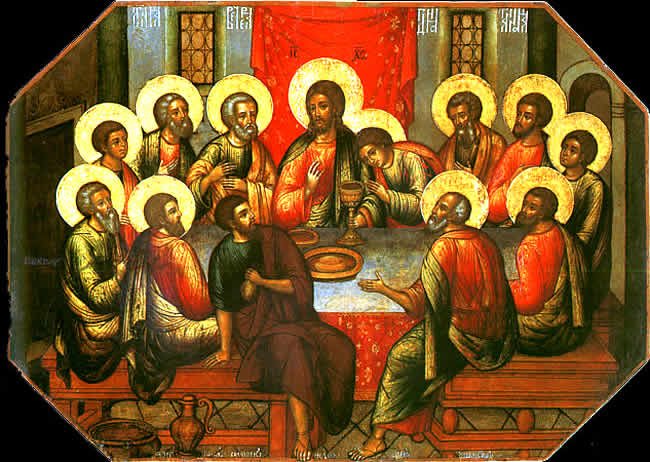
On the night before He was crucified, Christ met with his disciples. He bade them to eat the bread that represented his body and drink the wine that represented his blood. Then He said, “Keep doing this in remembrance of me.”
In this picture, you will note that Judas is the only one without a halo. He looks furtively over his shoulder as he grasps his bag of money to his chest. He has a lot to hide.
~ Wishing Will Make It So, Part 2 ~
(A Short Story by Allen Kopp)

Part 2 of my short story “Wishing Will Make It So” published in the current issue of Circus Book. Click on this link:
https://circusbook.org/2015/allen-kopp-wishing-will-make-it-so-2/
~ Wishing Will Make It So, Part 1 ~
(A Short Story by Allen Kopp)
Part 1 of my short story “Wishing Will Make It So” published in the current issue of Circus Book. Click on this link:
https://circusbook.org/2015/allen-kopp-wishing-will-make-it-so-1/

The Yack-Yack Club ~ by Allen Kopp
When you’re making your way home in rush-hour traffic after a demoralizing day at the office, it’s scary to think that as many as twenty to thirty percent of drivers on the road are yapping or texting on cell phones. They don’t signal when they should and their driving is erratic, at best. Not only are they jeopardizing their own life and limb, but they are also jeopardizing yours. There are statistics about traffic accidents caused by driver inattention, but how many of those are caused by driver inattention due to cell phone use?
People like me who are not addicted to cell phones don’t understand the attraction. I have a cell phone that I use only for emergencies, and I hate it. I have never sent or received a text message because I have no desire to do so. I can be reached on the phone when I’m at home, but when I’m out somewhere there is nobody in the world I care to talk to. Being away from home means I cannot be reached by phone and I don’t want to be bothered. Leave a message and I’ll call you back when I get home if I feel like it.
Like it or not, I’ve seen advanced cases of cell phone addiction. On the first day of a new job, when I was introduced to a woman who was to be my co-worker, she was yacking on the cell phone and couldn’t put it down long enough to meet me. She yacked on her cell phone almost the entire time I knew her. She told me she never turned her cell phone off, even when she was sleeping, meaning that she was available to receive callers, not only during the day, but also all night long. When we flew on a business trip, she was indignant that airline safety regulations required that her cell phone be turned off. She turned it back on the first second she was allowed to—you could see the relief written all over her. Just think of the important calls that came in when she was thirty-five thousand feet in the air!
And then there are the people who wear the cell phone in their ear all the time, without having to hold it in their hands. When you’re at the mall or in some other public place and someone comes near you and says something, you think, wrongly, that they are talking to you. What they are doing is merrily pretending you don’t exist while regaling you with their idiotic cell phone banter in a very loud voice. (“Well, I’m at the mall. Where the f**k do you think I’m at? Don’t you remember I said I was going to the f**kin’ mall? Well, where the f**k are you at? Well, what the f**k are you doing there? Don’t you remember you were supposed to…”) Did they forget their manners, or did they just not have any manners to begin with?
Speaking of bad manners, what about the person you’re having lunch with who drags out his cell phone and gets or receives a call right after placing the order with the waiter? Does he think I came out to lunch with him to sit silently while I listen to his inane conversation with his ex-wife or his teenage son? I might as well be back at my desk listening to the fluorescent light hum above my head.
I’ve heard people yapping into cell phones in public places in Chinese or other foreign languages. I’ve heard people yapping into cell phones at five-thirty in the morning when I’m lucky to be able to put one foot in front of the other. I’ve seen a woman bring out a cell phone at the movie theatre during a very loud movie and talk over the movie. I’ve seen people who can’t leave their cell phones alone long enough to have their kidney stones irradiated, vote, or renew their driver’s license. I’ve seen a woman talking into a cell phone while eating a salad and nursing a baby at the same time. I’ve seen people on roller skates talking on cell phones. (If alien intelligences are picking up all the cell phone jibber-jabber from earth, they will conclude that the planet does not have intelligent life on it as previously thought.) I sometimes wonder what all those people are saying and who they are talking to. All I know for sure is they are not talking to me.
Copyright © 2015 by Allen Kopp

