Marion

Marion 1

Marion ~ A Short Story by Allen Kopp 

Bruno loved the carnival, the noise, the laughter and gaiety, the calliope music, the merry-go-round, the shooting gallery and games of chance, the fun house with its crazy mirrors, the man who would guess your weight for a quarter, the fortune teller, the fat lady and the sword swallower. He marveled at how beautiful the Ferris wheel looked, outlined against the night sky in lights of blue, red, yellow and green.

He wore a dark suit as if he had come from a funeral and kept his hat pulled down low over his face. As he walked among the crowds, he felt invisible because nobody looked at him. The air was cool and soft on his face. He ate his popcorn and smiled, genuinely happy.

When Bruno saw Marion, he knew right away she was the one he wanted. She was standing in line at the Ferris wheel, accompanied by not one young man but two. She had brown hair, curled and pulled to the back of her head. She wore a print dress, glasses, lots of lipstick, earrings and a necklace. Her appearance said that she thought quite a lot of herself. She was nothing to rave about but she wasn’t ugly, either.

Bruno watched the three of them, Marion and her two young men, as they got on the Ferris wheel and the fellow closed the bar over them so they wouldn’t fall out. Before the Ferris wheel started moving again, she looked over at Bruno and something passed between them. Call it a spark or a look of recognition. He felt it and he was sure she felt it, too.

The Ferris wheel went around a few times and Bruno kept his eyes on the car that Marion was in. When the ride was over and it was time for her to get out, he was still standing in the same spot looking at her. As she and her two young men walked away from the Ferris wheel, her shoulder brushed lightly against Bruno’s. He stepped back with deference and she turned and looked at him over her shoulder and gave him a little smile that he believed was fraught with meaning.

The next time Bruno saw Marion was at the shooting gallery. One of her young men was trying to shoot the metal ducks and was missing most of the time. When he failed to win Marion a teddy bear, she punched him on the arm and pretended to sulk. Before the other young man picked up the gun to give the ducks a try, Marion cast a quick glance behind her. Bruno was standing beside the refreshment booth looking at her. She quickly looked away, but he knew she had seen him and had expected him to be there.

Then it was on to the merry-go-round. Marion sat side-saddle on the outside horse, her purse dangling from her elbow, and clung to the pole. There was room for only one of her young men on the horse beside her, so the other one stood awkwardly by the horse’s head, holding on to the reins. Bruno stood in a spot so that every time the merry-go-round went around Marion would see him.

Round and round it went and Bruno was there, looking intently at Marion with that fixed smile of his while he slowly chewed his popcorn. And then he wasn’t there. He was playing a little trick on her. He could still see her but he had moved to a spot farther away where she couldn’t see him. When she saw he was no longer there, she craned her head around abruptly as far as the movement of the merry-go-round would allow. Her smile faded and she looked, to Bruno, disappointed.

At Lovers’ Lane, the three of them got into a small boat, Marion between the two young men. The idea was to row across the lake to a little island, from which all the bright lights of the carnival could be seen as in a picture. Bruno let the two other couples waiting in line go ahead of him and then he took the next boat after them and rowed across.

On the island, Bruno stood in the shadows and watched. He knew that Marion wasn’t far away. He heard her shriek playfully and figured that one of the young men was trying to get overly familiar with her in the dark. He saw her running with both young men chasing her. The three of them stopped out in the open and laughed, like children playing a game of tag.

After that, Marion and the two young men went to another part of the island, presumably to neck and to be alone. Bruno waited patiently, though, leaning his back against a tree. He knew Marion would come to him. He smoked one cigarette down to the end and had just lighted another one when he saw her.

She walked across the open space between the trees, alone, toward him. He didn’t know yet if she knew he was there, but soon she would know. He stepped out of the shadows and went to meet her. She smiled familiarly at him and he smiled back.

“Marion?” he said.

“Why, yes,” she said.

She had been about to ask him how he came to know her name when he surprised her by putting his hands around her neck and squeezing. Her expression changed to one of surprise and then of fear and pain. She put her hands on his to try to get him to stop, but she had little resistance against his far-superior strength. He watched her closely as he strangled her and for a moment he saw the face of his father.

He knew how to apply just the right amount of pressure with the thumbs and in a short time she was dead. He let her body fall gently to his feet. The two young men would come along soon looking for her and he wanted to be gone when they did. He crossed over to the far side of the island and circled back around to the little pier where the boats were kept.

After he left the carnival, he wasn’t ready to go home yet, so he drove around for a while before stopping off at a bar. He sat on a stool, drinking his drink and smoking his cigarette, enjoying the feeling of anonymity the place gave him. No one looked at him or spoke to him. He was nameless and faceless.

When he got home, it was almost midnight. His mother was waiting up for him, sitting on one of the leather chairs in her green bathrobe in the elegant sitting room. She rose to kiss him when he came in.

“Mother, you should be in bed!” he said.

“Did you have a good time, dear?” she asked.

“I always have a good time.”

“I worry when you stay out so late.”

“I know you do,” he said, putting his arm around her shoulder, “but there’s no reason for you to.”

“Your father and I had a terrible row after dinner,” she said. “It has put me in such a frightful state!”

“What was it about?”

“Oh, you know. The usual.”

“Is he here now?”

“He’s in his room,” she said. “Been asleep for hours.”

“Mother, what if I was to tell you that soon we’ll be rid of him?”

“What do you mean?”

“I can’t really tell you now, except to say that we’re going to be so happy when it’s just the two us. We’ll be able to breathe freely and do all the things together we always wanted to do.”

“Oh, if only!” she said, her eyes glistening like a child’s.

“Now, you go on to bed,” he said, “and we’ll speak in the morning.”

“All right, Bruno dear.” She kissed him and was gone.

He walked down the hallway to his own room and closed the door. After taking off his jacket and throwing it on the bed and kicking off his shoes, he sat down at his writing desk. He took a blank piece of paper and wrote two brief sentences (I did your murder. Not it’s time for you to do mine.) in his beautiful handwriting, folded the paper and put it in an envelope. After sealing the envelope, he wrote the address on it of a man he had met one time on a train and left it on the desk standing upright against a book so he would see it and remember to mail it in the morning.

Copyright 2015 by Allen Kopp

American Sniper ~ A Capsule Movie Review

American Sniper

American Sniper ~ A Capsule Movie Review by Allen Kopp 

From producer/director Clint Eastwood comes American Sniper, the true story of Chris Kyle, the Navy Seal (Sea, Air and Land) who became something of a hero and a legend during four tours of duty in Iraq due to his sharpshooting skills. With at least 160 confirmed kills, Chris Kyle became the most successful (deadly to the enemy) sniper in American military history.

Chris Kyle is a Texan and starts out wanting to be a cowboy, but he is moved to serve his country when it is attacked on September 11, 2001. He joins the Navy Seals and finds himself fighting the enemy in Iraq. After one tour of duty, he has the deep conviction that he is still needed and signs up for another tour, and then a third and a fourth. With a wife and two small children at home, he is torn between his duty to them and what he sees as his duty to his country.

Bradley Cooper, who we have seen in a lot of other movies lately, plays Chris Kyle with a clenched-jaw Texas accent that at times I find difficult to understand. Once again, we are left with getting the gist of what is being said without the actual words. No other actor could have played Chris Kyle any better, though; he even bears a strong physical resemblance to him.

American Sniper isn’t a justification for war and isn’t making a political statement. Rather, it is about the people who fight the war (one person in particular) and the actions they must take to survive and to help their fellow soldiers survive. If that means shooting and killing a woman or a child who is lobbing missiles at Americans, then so be it.

Not the least amazing thing about American Sniper is that Clint Eastwood is still making action movies like this in his 85th year.

Copyright © 2015 by Allen Kopp

Mr. Turner ~ A Capsule Movie Review

Mr. Turner

Mr. Turner ~ A Capsule Movie Review by Allen Kopp 

J.M.W. Turner was an English landscape painter who lived from 1775 to 1851. The new movie, Mr. Turner, is a stately (slow-moving) look at his life and times. Timothy Spall plays Turner and the movie was directed by celebrated director Mike Leigh.

While Turner (known to his friends as “William”) was a profoundly gifted painter whose work influenced landscape painting for generations, the movie focuses more on his eccentric private life than on his work. He lives with his elderly father and calls him “daddy” until the older gentleman’s death. He never marries but fathers two daughters with a shrewish woman who comes around periodically to berate him and his work and to tell him how worthless he is. He cares little for the woman or the two daughters but must, seemingly, tolerate them. (When one of the daughters dies as a young woman, he barely bats an eyelash.) He has an unattractive housekeeper, one Hannah Danby (she reminds me of the character actress Margaret Hamilton, who played the wicked witch in The Wizard of Oz), with whom he enjoys furtive sexual congress from time to time. He travels a lot, seeking inspiration for his work, and it is on one of these trips that he meets Mrs. Booth, a widow with a soothing nature. The two are drawn to each other, not for the sake of physical appearance (“When I look in the mirror, I see a gargoyle,” he says.), but for what each sees in the other. He has a dalliance with Mrs. Booth that lasts eighteen years or so, in effect leading a double life apart from his life in London. He is at the home of Mrs. Booth when he dies at the age of 76 of a heart ailment. Hannah Danby is, wordlessly, left with a broken heart.

Mr. Turner is an English art film, rather than a mainstream movie, so its audience is limited. Turner is very jowly (or at least that’s the way he is portrayed here), so I had a little trouble understanding what he was saying, especially in the early going. The other characters are, mostly, more intelligible. Sometimes we are left to catch the gist of what they are saying, rather than the words themselves. All in all, though, Mr. Turner is a fascinating glimpse, for the serious moviegoer, at the life of a nineteenth century genius.

Copyright © 2015 by Allen Kopp

A Woman Named Ruby

Ruby 7

~ A Woman Named Ruby ~

(This is for my old friend, Rick DeGrant, who departed for the other shore on November 25th, 2014.) 

Ruby Upjohn, Ruby Goldfarb, Ruby Hagwell, Ruby Pickles, Ruby Fudge, Ruby Bankhead, Ruby Sherwood, Ruby Tubbs, Ruby Costello, Ruby DeFazio, Ruby Peebles, Ruby Hackles, Ruby Ludlow, Ruby Fuddles, Ruby Jitters, Ruby Feeney, Ruby Butts, Ruby Wang, Ruby Smoot, Ruby Fish, Ruby Gambini, Ruby Weiner, Ruby Frogley, Ruby Bumpus, Ruby Zasa, Ruby Farquhar, Ruby Pompadour, Ruby Clutch, Ruby Toddler, Ruby Peabody, Ruby Jerkewitz, Ruby Buggs, Ruby Cornblatt, Ruby Blathers, Ruby Dalzell, Ruby Shockley, Ruby Wooley, Ruby Wimpy, Ruby Belanovi, Ruby Slapwell, Ruby Snitley, Ruby Flywheel, Ruby Frankfurter, Ruby Dunkfeather, Ruby Chin, Ruby Arbuckle, Ruby Clapsaddle, Ruby Bumble, Ruby Davenport, Ruby Dejesus, Ruby Dill, Ruby Diesel, Ruby Ghostley, Ruby Dibble, Ruby Gooch, Ruby Hardapple, Ruby Hoyden, Ruby Mangles, Ruby Polkratz, Ruby Mims, Ruby Nugent, Ruby Punsley, Ruby Poovey, Ruby Rickets, Ruby Teetlebaum, Ruby Dithers, Ruby Waddler, Ruby Snork, Ruby Tudball, Ruby Hunsdorfer, Ruby Oglethorpe, Ruby Pilbeam, Ruby Flan, Ruby Buckles, Ruby Glasscock, Ruby Woo, Ruby Gulwart, Ruby Mushnick, Ruby Zorina, Ruby Stickles, Ruby Turnblad, Ruby Fishpaw, Ruby Ziffle, Ruby Van Peep, Ruby Wagstaff, Ruby Gribble, Ruby Dillweed, Ruby Moonlove, Ruby Snitzler, Ruby Hogwaters, Ruby Clohessy, Ruby Bobolinski, Ruby Ouspenskaya, Ruby Nermi, Ruby Nankler, Ruby Bitchelli, Ruby Lupino, Ruby Pasquesi, Ruby Shumway, Ruby Hogchow, Ruby Wigglesworth, Ruby Skeffington, Ruby Beragon, Ruby Hudson, Ruby Broadnax. Ruby Lafarge, Ruby Wellenmellon, Ruby Thorndike, Ruby Dubois, Ruby Sheeny, Ruby Tull, Ruby Gaylord, Ruby Weems, Ruby Ogilvie, Ruby Moncrieff, Ruby Cumberbunch, Ruby Gombell, Ruby Ignatowski, Ruby Mayfair, Ruby Snitzler, Ruby Otis Skinner, Ruby Chomley, Ruby Toluboff, Ruby Tenuta, Ruby Heeny, Ruby Terhune, Ruby Laflamme, Ruby Montague, Ruby Miggles, Ruby Gummidge, Ruby Dalrymple, Ruby Nemecek, Ruby Gilhooley, Ruby Delmage, Ruby Mullendorfer, Ruby Odets, Ruby Chuffee, Ruby Philpotts, Ruby Mudge, Ruby Mertz, Ruby Yurka, Ruby Ricardo, Ruby Flynn of the Memphis Flynns, Ruby E. Tata, Ruby Rifka, Ruby Fafara, Ruby Frizzell, Ruby Rapf, Ruby Fonzarello, Ruby Beavers, Ruby Finkelstein, Ruby Nerdlinger, Ruby Scafie, Ruby Lipchitz, Ruby Dragonette, Ruby Franzoni, Ruby Frimmle, Ruby Morehead, Ruby Magarulian, Ruby Tweedy, Ruby Schwump, Ruby DeFafa, Ruby Belcher, Ruby Bigglesworth, Ruby Blodney, Ruby “Champagne” King, Ruby Biggerstaff, Ruby Wang, Ruby Wigmore, Ruby Lashutsky, Ruby Flipwig, Ruby DeGasse, Ruby DeBouva, Ruby Noddler, Ruby Grody, Ruby Jigglewater, Ruby Fuddington, Ruby Fromkiss, Ruby Creech, Ruby Firpo, Ruby Hathaway, Ruby Won Fat Ching, Ruby Zizz, Ruby Bartholomew, Ruby Foster Kane, Ruby Sisley, Ruby Nazimova, Ruby Rambova, Ruby Wiggenstein, Ruby Terwilliger, Ruby Fortescue, Ruby Chickwell, Ruby Noodleman, Ruby Scammington, Ruby Cundiff, Ruby Fontaine, Ruby Whipsnade, Ruby Ritz, Ruby Hickey, Ruby Clawmute, Ruby Traherne of the sleepy Trahernes, Ruby Meisenbach, Ruby Gonzales the Fastest Bitch in all Meh-e-co. Two hundred and four were not enough.

Copyright © 2015 by Allen Kopp
The Grey Wolfe Storybook 2014 ~ An Anthology of Poems, Essays, Stories

The Grey Wolfe Storybook 2014

(My short story, “Bye Bye Blackbird,” is in this collection of stories about childhood.)

Grey Wolfe Publishing is pleased to announce this collection of  twenty-four poems, essays, and short stories about childhood memories. 

100% of the proceeds from this book will go to support Michigan’s special needs children. 

Now Available: $12.50

May be purchased at this link:

https://squareup.com/market/grey-wolfe-publishing

Write to Meow 2014 ~ Anthology of Stories, Poems, Essays

Write to Meow 2014

(My short story, “Cotton,” is in this collection of stories about cats.)

Grey Wolfe Publishing is pleased to announce the generous collaboration of authors from around the globe for this spectacular collection of 226 pages of poetry, prose and personal essay, all in tribute to cats!

100% of the proceeds of the sale of this book are going to support the extraordinary work of Almost Home Animal Shelter, a no-kill shelter in Southeast Michigan.

Now Available: $18

May be purchased at this link:

https://squareup.com/market/grey-wolfe-publishing

Or on Amazon at this link: 

http://www.amazon.com/Write-Meow-Lisa-M-Wolfe/dp/1628280697/ref=sr_1_1?s=books&ie=UTF8&qid=1421282938&sr=1-1&keywords=Write+to+Meow+2014&pebp=1421282943887&peasin=1628280697


Unbroken ~ A Capsule Movie Review

Unbroken

Unbroken ~ A Capsule Movie Review by Allen Kopp 

Unbroken is a true American story about a boy born of Italian immigrant parents, one Louie Zamperini. As a child, Louie is bullied and inclined toward fighting and mischief, which includes smoking cigarettes surreptitiously and drinking liquor out of milk bottles. Feeling worthless, Louie turns to running at the urging of his older brother, Pete. He finds he is very good at running, becomes the fastest runner in history for a high school student, and ends up in the 1934 Olympic games, held in Nazi Berlin.

Fast forward a few years to World War II when Louie is a bombardier on a fighter plane. When the plane he is on goes down somewhere in the South Pacific, he and only two other members of his crew (Phil and Mac) survive. Adrift on a life raft, they believe someone will rescue them, but they find it difficult to maintain the hope that will keep them alive. After many days at sea with slim hope of rescue, one of the three, Mac, dies. Louie and Phil hang on, but just barely. Just when you think things couldn’t get any worse for them, they are captured by the Japanese and put in a prisoner-of-war camp, where they are routinely beaten, tortured and brutalized. The snarling young Japanese commandant of the camp, known by the prisoners as “Bird,” knows that Louie was an Olympic athlete and singles him out for special mistreatment, at one point forcing all the other prisoners to punch Louie in the face, which they are, of course, reluctant to do.

The only thing that keeps Louie Zamperini and the others alive in the face of unspeakable brutality at the hands of the Japanese is the determination not to give up. At one point, Louie says that making it through alive to the end of the war is the best way to get revenge. The will to persevere that he learned as an athlete in his younger days serves him well.

We’ve seen life in Japanese prisoner-of-war camps in plenty of other movies—The Bridge on the River Kwai, King Rat, Empire of the Sun, Paradise Road, The Railway Man, to name a few—so that aspect of Unbroken seems familiar. Also we have seen plenty of harrowing stories about survival in World War II. What makes Unbroken unique is that it was directed by a woman (Angelina Jolie) and that Louie Zamperini was a real—not a fictional—person that almost anybody could identify with. He died in 2014 at the age of 97. If you won’t give up, neither will I.

Copyright © 2015 by Allen Kopp
Selma ~ A Capsule Movie Review

Selma

Selma ~ A Capsule Movie Review by Allen Kopp 

In the American South of the 1960s, black citizens were guaranteed the right to vote but were systematically denied the right to register to vote by a system controlled by white officials. (If you can’t register, you can’t vote.) The new movie, Selma, is about the struggle to right this wrong and about the symbolic fifty-mile protest march from Selma to Montgomery that galvanized the country’s attention.

To politicians of the day, suppression of black voters in the South was a political football they preferred to stay away from. When Dr. Martin Luther King (David Oyelowo) seeks the help of the sitting president, Lyndon Johnson (Tom Wilkinson, the actor who seems to be able to play any part, from Ben Franklin to a transgendered woman), he (Johnson) wants to defer the matter to a future time, believing the country has more pressing problems, such as the Vietnam War and poverty. The demagogic governor of Alabama, George Wallace (a snarling Tim Roth), seems unable to effectively deal with racial issues in his state. He wants the president to handle the matter, while the president dresses Wallace down for not handling it on a state level. When the protesters, mostly black but some white, attempt to cross the bridge over the Alabama River, led by Dr. King, there is a bloody melee with an all-white police force. When the story and its accompanying images are beamed across the national airwaves, people everywhere are suddenly paying attention to what is happening in the South and waiting for what happens next.

Of course, the focus of Selma is Dr. Martin Luther King, his life and struggles. In the many scenes between him and his wife, we sense a tension between them and get the impression that their marriage is not all it should be. (These interior scenes are, for some reason, grungy-looking and dark.) Dr. King’s well-publicized marital infidelities are played down. (The couple’s children are nonentities, mentioned in passing and seen only from a distance.) Dr. King seems to not know that the FBI is snooping on him, listening in on his private conversations, seeking to destroy his family and his life. Once again, J. Edgar Hoover’s FBI is the villain.

Selma is a history lesson wrapped up as mainstream entertainment. How historically accurate is it? Only those who were there and remember the events as they happened can say for sure. What is known is that President Johnson signed into law in 1965 the Voting Rights Act that prohibits racial discrimination in voting.

Copyright © 2015 by Allen Kopp  
A Brief History of Time ~ A Capsule Book Review

A Brief History of Time

A Brief History of Time ~ A Capsule Book Review by Allen Kopp 

Did the universe have a beginning and, if so, will it have an end? Is the universe infinite, or is it curved around in on itself so that it appears to be infinite when it is, in fact, finite? What role does gravity play in the universe? Is the universe expanding or contracting? What are black holes and what causes them? What are worm holes? What is man’s place in the universe and how did he come into existence? Why are certain locations in the universe suitable for advanced life, such as man, and other places unsuitable? Is the universe what it is just so man can observe it and ask questions about it? (This would imply the existence of an intelligent creator.) What does Einstein’s general theory of relativity tell us? What is the uncertainly principle? What are quantum mechanics and how do they affect the study of the universe? What is a quark? A proton? A neutron? Of what is light composed? It is possible to travel faster than light? Is time travel ever going to be a reality? These and many other weighty questions are addressed by Stephen Hawking in his book, A Brief History of Time.

I don’t ordinarily read science books but was compelled to read A Brief History of Time after seeing the movie about Stephen Hawking’s life, The Theory of Everything. It’s written in clear, concise English (not overly wordy, as is the usual academic style), obviously aimed toward the reader who isn’t scientific and who doesn’t ordinarily read books on scientific subjects. While I can’t say I always understood what I was reading, I was sufficiently interested to keep going through to the end. I learned a few things I didn’t know before, not the least of which is the universe is a lot more complicated than people thought. With technological advances, new theories are being formulated all the time to understand the universe better. Maybe someday man will know the mind of God, or at least a part of it.

Copyright © 2015 by Allen Kopp
Hat in the House

card00216_fr

Hat in the House ~ A Short Story by Allen Kopp

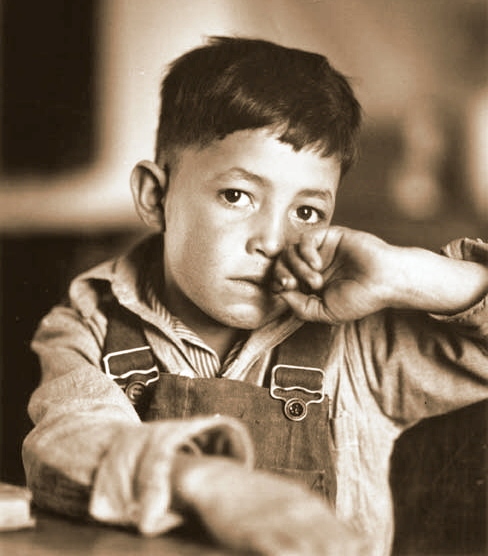
Luster Gilman was from one of the poorest families in town. He had six brothers and sisters and he always wore overalls or hand-me-downs from his older brothers. He was small for his age, had intense brown eyes like a little fox and a hit-or-miss haircut given to him by his often-drunk father. All the Gilman boys had the same haircut, usually with a bloody knick or two.

I liked Luster because there was nobody else like him. He was funny in a way that nobody else was and he didn’t mind making fun of the teacher, Miss Meeks, behind her back when she lifted her fat arms above her head and showed the tops of her stockings. He could walk like her and he even claimed to have seen her smoking one time. He said she held the cigarette like she thought she was Lana Turner, which, of course, she wasn’t.

When Luster began to grow tiny horns on his head, he called my attention to them on the playground one morning at recess. They were little nubs about the size of baby beans.

“Now, why in the world would I be growing horns?” he asked.

“Maybe it’s not horns,” I said. “Maybe it’s something else.”

“Like what?”

“I don’t know. Warts.”

“Did you ever know of anybody to grow warts like horns?” he asked.

“Can’t say I have,” I said.

“What can I do about it?”

“Comb your hair over them.”

“It’s too short. Do you know how long it would take to grow my hair long enough to cover them?”

“Well, wear a hat until your hair grows out,” I said.

The next day Luster wore a French beret to school. It suited him somehow and nobody seemed to notice it much, but I knew Miss Meeks wouldn’t let it alone. About the middle of the morning, during arithmetic, she stopped what she was doing and looked around the room.

“Does anybody know what a gentleman is?” she asked.

After a moment of thought, somebody said, “A person who lights your cigarette and opens your beer for you?”

“Well, yes,” Miss Meeks said, “but there’s more to it than that.”

“Somebody who opens the door for a lady?” somebody else said.

“Yes, but these are things a gentleman does, not what a gentleman is.”

“A gentleman is a man who abides by all the rules of behavior and who thinks of others before the thinks of himself,” Latrice Laflamme said, eager, as always, to set us straight.

“Very good, Latrice!” Miss Meeks said. “Now can somebody tell me what is the opposite of a gentleman?”

“A lady?” somebody said.

“A bum?”

“A convict?”

“A lawyer?”

“Yes, but we can go farther than that,” Miss Meeks said. “A person who isn’t a gentleman is a selfish person. A lout. Does anybody know what a lout is?”

“A bug?”

“No, a lout is a person who flaunts the rules of polite society and does things that nobody else does just because he thinks he has a right to do them. A lout is a person who. Wears his hat in the house!

She pointed to Luster Gilman with a flourish and everybody turned and looked at him.

“Go hang the hat in the cloakroom, Luster,” Miss Meeks said.

“What?”

“I said take off the hat and go hang it up.”

When Luster came back from the cloakroom, minus the beret, everybody was laughing at him and pointing. Miss Meeks just let them go wild for a few minutes before settling them down again to arithmetic.

After school that day I waited to have a word with Miss Meeks as she was leaving.

“Miss Meeks,” I said. “Luster had on that hat for a reason.”

“What? What hat?”

“The hat you made him take off.”

“Nobody has a hat on in the house for a reason,” she said.

“He’s growing horns and he was trying to cover them up to keep people from seeing them and laughing at him.”

“He’s growing horns?” she said, staring at me with her frog-like eyes. “Why would he be growing horns?”

“He doesn’t know why.”

“Evolution seems to have taken a strange turn with him,” she said.

“So you’ll let him wear the hat in class?” I asked.

“Absolutely not! If I let him wear a hat in the classroom, others will want special privileges for themselves. We can’t let that kind of thing get started. There are rules, you know.”

When Luster’s horns grew to be about an eighth of an inch long, everybody started noticing them. He tried to cover them up with his lank, sandy-colored hair, but they still stood out like nipples on a boar hog. People began calling him names like goat boy, nipple head, and the little devil.

After a few days of teasing, ribbing, and name-calling, Luster was sick of the whole thing.

“I’m going to take a knife and gouge them out,” he said.

“That’d hurt too much and they might grow back,” I said.

“I wish I was dead.”

“There’s worse things than growing horns.”

“Like what?”

“I don’t know. Having two heads.”

“I’m going to run away,” he said.

“Where to?”

“Someplace where horns are appreciated and other people have them besides me.”

I wasn’t surprised when Luster disappeared. He was there and then he wasn’t. Everybody thought he had been kidnapped or murdered. Volunteers searched for him in the woods. They dragged the rivers but, of course, found no trace of him.

Luster’s mother and father were in the newspaper and on TV. They were both suspected at first of doing away with Luster but were eventually cleared. I had to believe they were secretly relieved they had one less child to take care of.

In a few months people stopped talking about Luster and moved on to something else. If most people chose to believe he was dead, I believed he was alive somewhere, laughing at the colossal joke he had played on the world.

Twenty-five years later I had escaped the small town and was living in the city. One evening I was at the library, thinking about absolutely nothing, when I noticed a man sitting at a table looking at me. I looked at him, looked away, and then looked back. Something about him was terribly familiar.

He stood up and, as he came toward me, I knew it was Luster Gilman as a grown man. The same fox-like eyes, small nose and ears. I couldn’t tell if he still had the horns because if they were there his hair covered them up.

“I think I know you,” he said.

“You’re Luster Gilman,” I said.

“You remembered.”

“Everybody thought you were dead.”

“I know.”

“Where were you?”

“If I told you, you probably wouldn’t believe me,” he said.

“Is it that fantastic?”

He looked over his shoulder. “I can’t talk here,” he said. “I only have a minute. Give me your phone number and I’ll call you in a few days.”

I wrote my address and phone number on a piece of paper and gave it to him and he was gone.

I waited for Luster Gilman to call me but he never did. Not in a few days. Not ever. I tried to find him but there was no trace of him in the phone listings or anyplace else. I even consulted a private investigator but he came up with nothing.

Had Luster Gilman as a man even existed? Had I imagined seeing him at the library because there was a part of me that needed an answer to what happened to him? Was my seeing him just another one of his impish jokes? Maybe I would have to wait another twenty-five years to find out. There had to be an answer somewhere.

Copyright © 2015 by Allen Kopp