
Things I Must Have

Things I Must Have ~ A Short Story by Allen Kopp
Mrs. Koenig lay near death. Her four grown children had taken it upon themselves to gather in her house to discuss the disposition of her personal belongings.
“I want the Tiffany lamp,” Gwendolyn said.
“I already said the Tiffany lamp is mine!” Cupcake said.
“I’ve loved that lamp since I was a baby!”
“So? It’s still mine!”
“I want the dining room table and chairs,” Kent said. “Mother said I could have them.”
“Not so fast!” Gwendolyn said. “She said I could have them.”
“When did she say that?”
“I don’t know. Last Christmas, I think.”
“Well, she just told me last month that I could have them, so I guess that cancels you out.”
“I get the antique bed and dresser that were grandma’s,” Cupcake said. “Mother told me when I was fifteen that she wanted me to have them.”
“Well, isn’t that funny, Miss Cupcake!” Gwendolyn said. “I always thought I would get the antique bed and dresser.”
“I want the complete set of Dickens and the set of Britannica,” Kent said.
“You can have them!” Gwendolyn said. “Nobody cares about books.”
“I care. The Dickens set is over a hundred years old. It’s valuable. I’m going to sell it and buy a car I’ve been wanting.”
“Why don’t you keep the Dickens books and pass them on to your children, chowderhead?”
“I don’t have any children. Remember?”
“Oh, that’s right! There’s something funny about you, isn’t there?”
“There’s something even funnier about you!”
“I get the set of antique china,” Cupcake said, “and I’m not going to sell it, either.”
“What are you going to do with it, dear?” Gwendolyn asked.
“I’m going to keep it. What do you think? I also want the china cabinet. What good is the china without the cabinet?”
“I want the rolltop desk,” Cupcake said. “Mother told me in high school when I made the honor roll that I could have it.”
“I think the rolltop desk should go to me!” Kent said.
“And why is that?” Cupcake asked.
“It’s a man’s desk. I’m a man. Remember?”
“Oh, yes, darling! I keep forgetting!”
“I get the piano,” Gwendolyn said. “I’m the only one who plays.”
“You haven’t played since you were twelve years old,” Kent said, “and you were horrible! You used to cry when mother made you practice, and then she cried when she heard how bad your playing was.”
“Well, maybe I’ll take it up again. I always feel there’s something lacking in my life. Maybe it’s the piano.”
“Maybe it’s good judgment and common sense!” Cupcake said.
“Oh, and I also get the antique vase from China,” Gwendolyn said. “Mother’s piano wouldn’t be mother’s piano without the vase sitting on it.”
“Wait a minute!” Cupcake said. “I’m the only one here who knows antiques. I think I should get the antique vase from China.”
“I want mother’s photo albums and the big picture in the attic of grandma and grandpa,” Kent said. “Also the hall tree, the antique sideboard, the library table and the brocade sofa.”
“You can have them!” Gwendolyn said. “I never liked them, anyway.”
“Excuse me!” Cupcake said. “The library table is mine! I’ve already decided where I’m going to put it!”
“I’ll tell you where you can put it!” Kent said.
“I must have mother’s silver that she only used for special occasions,” Cupcake said. “The china is nothing without the silver to go with it.”
“I’m going to take the grandfather clock,” Kent said. “I’ve had my eye on it for a long time. I’m sure mother wanted me to have it.”
“Then why didn’t she say so when she was in her right mind?”
“She did! She said it to me!”
“Don’t you think it’s funny she never told any of the rest of us?”
Dickie was the fourth and youngest child. He had not spoken until now. “You should hear yourselves!” he said. “Squabbling like a bunch of old hens over things! Mother’s not even dead yet! She may recover! She may come home from the hospital! She may live many more years!”
“We’re just trying to be prepared for when the time comes,” Kent said.
“These are the things we grew up with,” Gwendolyn said. “They’re meaningful to us. We want to make sure they end up in the right hands.”
“Meaning your hands,” Dickie said.
“Don’t you want to stake your claim to the things you want to keep” Cupcake asked. “To remember mother by?”
“No, I don’t want any of this stuff!”
“Why not?” Gwendolyn said.
“This stuff isn’t your stuff and it’s not my stuff!”
“What are you talking about?” Kent asked. “Of course it’s our stuff! Who else would it belong to?”
“I am in possession of some information that the rest of you sons-of-bitches don’t know!”
“What are you talking about?” Gwendolyn asked.
“Have you lost your mind?” Cupcake asked.
“No, I haven’t lost my mind. Mother’s lawyer called me yesterday. On the phone. Mother knew you would be fighting over her things, so she made a last-minute provision to her will. She wants everything in the house sold at auction and the money—all of it!—to go to charity.”
“What?” Cupcake said.
“I don’t think mother would do that!” Gwendolyn said.
“I don’t believe it!” Kent said. “You’re making this up out of spite!”
“And that’s not all!” Dickie said. “She donated the house to the church.”
“Church?” Cupcake said. “What church?”
“People from the church talked to her many times about giving them the house when she died. They finally broke her down and got her to sign an agreement.”
“This isn’t right!” Gwendolyn said. “Mother wasn’t right in the head! We can contest it! We can file a lawsuit! We can hold it up for years in the courts!”
“I don’t think so,” Dickie said. “It’s all legal and valid. If you don’t believe me, call mother’s lawyer. His name is Kenneth Ormiston.”
“Mother disinherited us!” Kent said, as if in a daze. “We don’t get anything!”
“Mother wouldn’t do that!” Cupcake said. “Not to me! I was always her favorite!”
“She won’t get away with this!” Gwendolyn said. “I’m going to have her buried face-down!”
“I don’t think it’ll make any difference to her,” Dickie said, “one way or another.”
“I don’t think I can walk!” Cupcake said, sobbing. “I need somebody to take me home!”
“Dickie, you bastard!” Gwendolyn said. “Look what you did to your sister! I’m going to kill you!”
Copyright © 2020 by Allen Kopp
The Mirage Factory: Illusion, Imagination, and the Invention of Los Angeles ~ A Capsule Book Review

The Mirage Factory: Illusion, Imagination, and the Invention of Los Angeles ~ A Capsule Book Review by Allen Kopp
The Mirage Factory by Gary Krist is “historical narrative,” a fascinating nonfiction book that is as easy to read and as entertaining as good fiction. It is the story of how an improbable city, Los Angeles, came to exist in an improbable place, the parched American Southwest. More significantly, it is the story of how three different people (Amy Semple McPherson, William Mulholland and D. W. Griffith) contributed, in their own unique ways, to the formation, growth, moral fabric, and culture of what would one day be the second-largest city in the United Sates.
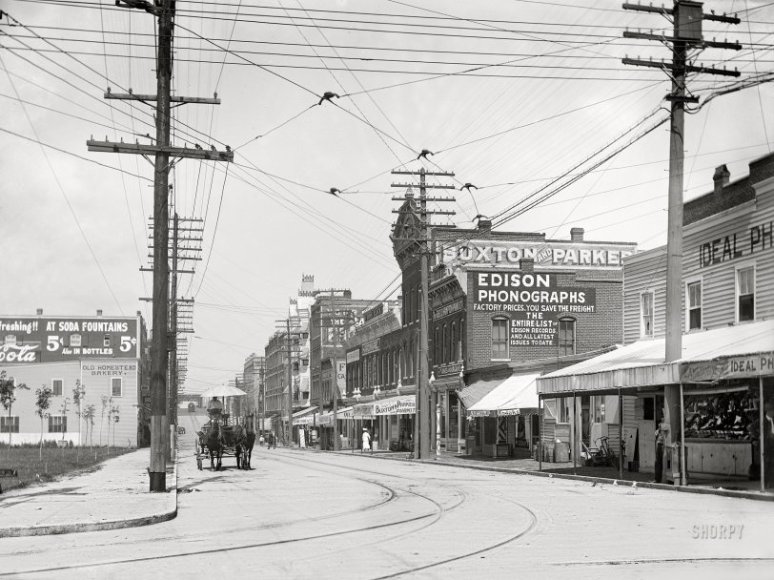
In the 1890s, Los Angeles was a small, dusty town in the California desert, where farms and citrus groves were the most prominent feature of the landscape. Nobody at that time envisioned Los Angeles as one day becoming a great American megalopolis. For one thing, there wasn’t enough water. It was, after all, the desert, plenty hot and largely inhospitable to most people’s way of thinking. (And what about those Gila monsters?)
One person, self-taught civil engineer William Mulholland, was largely responsible for bringing Los Angeles the water supply it needed to grow into a major city. People from all parts of the country were drawn to Los Angeles for its “newness” and “cleanness,” its almost perpetual sunshine, its scenic wonders, its proximity to the ocean and its uniquely Anglo-Saxon personality. So what if there wasn’t enough water to sustain a phenomenally growing population? That’s where William Mulholland came onto the scene. He devised and oversaw the building of an elaborate aqueduct system from the Owens River, over two hundred miles from Los Angeles. The project was beset with legal and logistical problems from the first. The residents of the Owens River Valley weren’t too happy about their water supply being commandeered (“stolen”) by distant Los Angeles. The situation erupted into small war.
The movies began as a cheap pastime for the lower classes in the large cities of the eastern United States in the 1890s. For one trifling nickel, a person seeking thrills and excitement could patronize the local “Nickelodeon” and see short films (some of which were only a minute or two long) of mundane scenes, such as an approaching train, a cow nurturing a newborn calf, or a scantily clad woman dancing the hoochie-koochie.
As movies became longer and technically more sophisticated, they gained a wider audience. The making, distribution and exhibition of movies became an industry, settled first around the East coast and then moving to California for its agreeable climate. Soon, movies were a bonafide American artform with the potential of generating obscene amounts of money for its artists. Hollywood and Los Angeles became synonymous.
David Wark Griffith was an early film pioneer. He is known as the “father” of movies, the creator of the movie picture narrative “language.” His vision for making movies was big and bold. His 1915 epic Birth of a Nation was a landmark film that set the standard for movies to follow. It made a tremendous amount of money and emboldened Griffith to make even bigger movies. His Intolerance was also a grand vision and expensive to produce. With its incoherent storyline about man’s inhumanity to man, Intolerance was a critical and commercial failure and a huge career setback for Griffith.
Aimee Semple McPherson was a Canadian Pentecostal evangelist who was instructed by God (she believed) to make Los Angeles her home base. She was a charismatic figure whose message was one of hope and redemption, rather than doom and hellfire. Her sermons were entertaining, uplifting and sometimes theatrical. (She even did “faith healings” on occasion.) She gained a huge and devoted following and established the influential Angelus Temple in Los Angeles. She held coast-to-coast radio services and was soon almost universally known. She became a cultural phenomenon and was arguably the most famous woman in the United States from the 1910s into the Depression era of the 1930s and the war years of the 1940s.
So, what did the Evangelist (Amy Semple McPherson), the Artist (D. W. Griffith), and the Engineer (William Mulholland) have in common? They were all flawed human beings in their own right and each experienced a spectacular fall from grace through pride, overreaching and the taint of early success. Their lives and destinies were inextricably interwoven with Los Angeles during the early days of its phenomenal growth from a small, sleepy desert town to a magnificent city, a megalopolis, that could compete with any other city in the world.
Copyright © 2020 by Allen Kopp

 Literary Fictions