We might look like this:


We might look like this:

We are indebted to the Founding Fathers (George Washington, Benjamin Franklin, Thomas Jefferson, James Madison, John Adams, John Hancock, and others) for their wisdom and foresight in establishing a system of government with “checks and balances,” meaning that the United States government is a government of many rather than one. We don’t want—and never did want—a king or a dictator.
The Declaration of Independence
IN CONGRESS, July 4, 1776.
The unanimous Declaration of the thirteen united States of America,
When in the Course of human events, it becomes necessary for one people to dissolve the political bands which have connected them with another, and to assume among the powers of the earth, the separate and equal station to which the Laws of Nature and of Nature’s God entitle them, a decent respect to the opinions of mankind requires that they should declare the causes which impel them to the separation.
We hold these truths to be self-evident, that all men are created equal, that they are endowed by their Creator with certain unalienable Rights, that among these are Life, Liberty and the pursuit of Happiness.–That to secure these rights, Governments are instituted among Men, deriving their just powers from the consent of the governed, –That whenever any Form of Government becomes destructive of these ends, it is the Right of the People to alter or to abolish it, and to institute new Government, laying its foundation on such principles and organizing its powers in such form, as to them shall seem most likely to effect their Safety and Happiness. Prudence, indeed, will dictate that Governments long established should not be changed for light and transient causes; and accordingly all experience hath shewn, that mankind are more disposed to suffer, while evils are sufferable, than to right themselves by abolishing the forms to which they are accustomed. But when a long train of abuses and usurpations, pursuing invariably the same Object evinces a design to reduce them under absolute Despotism, it is their right, it is their duty, to throw off such Government, and to provide new Guards for their future security.–Such has been the patient sufferance of these Colonies; and such is now the necessity which constrains them to alter their former Systems of Government. The history of the present King of Great Britain is a history of repeated injuries and usurpations, all having in direct object the establishment of an absolute Tyranny over these States. To prove this, let Facts be submitted to a candid world.
He has refused his Assent to Laws, the most wholesome and necessary for the public good.
He has forbidden his Governors to pass Laws of immediate and pressing importance, unless suspended in their operation till his Assent should be obtained; and when so suspended, he has utterly neglected to attend to them.
He has refused to pass other Laws for the accommodation of large districts of people, unless those people would relinquish the right of Representation in the Legislature, a right inestimable to them and formidable to tyrants only.
He has called together legislative bodies at places unusual, uncomfortable, and distant from the depository of their public Records, for the sole purpose of fatiguing them into compliance with his measures.
He has dissolved Representative Houses repeatedly, for opposing with manly firmness his invasions on the rights of the people.
He has refused for a long time, after such dissolutions, to cause others to be elected; whereby the Legislative powers, incapable of Annihilation, have returned to the People at large for their exercise; the State remaining in the mean time exposed to all the dangers of invasion from without, and convulsions within.
He has endeavoured to prevent the population of these States; for that purpose obstructing the Laws for Naturalization of Foreigners; refusing to pass others to encourage their migrations hither, and raising the conditions of new Appropriations of Lands.
He has obstructed the Administration of Justice, by refusing his Assent to Laws for establishing Judiciary powers.
He has made Judges dependent on his Will alone, for the tenure of their offices, and the amount and payment of their salaries.
He has erected a multitude of New Offices, and sent hither swarms of Officers to harrass our people, and eat out their substance.
He has kept among us, in times of peace, Standing Armies without the Consent of our legislatures.
He has affected to render the Military independent of and superior to the Civil power.
He has combined with others to subject us to a jurisdiction foreign to our constitution, and unacknowledged by our laws; giving his Assent to their Acts of pretended Legislation:
For Quartering large bodies of armed troops among us:
For protecting them, by a mock Trial, from punishment for any Murders which they should commit on the Inhabitants of these States:
For cutting off our Trade with all parts of the world:
For imposing Taxes on us without our Consent:
For depriving us in many cases, of the benefits of Trial by Jury:
For transporting us beyond Seas to be tried for pretended offences
For abolishing the free System of English Laws in a neighbouring Province, establishing therein an Arbitrary government, and enlarging its Boundaries so as to render it at once an example and fit instrument for introducing the same absolute rule into these Colonies:
For taking away our Charters, abolishing our most valuable Laws, and altering fundamentally the Forms of our Governments:
For suspending our own Legislatures, and declaring themselves invested with power to legislate for us in all cases whatsoever.
He has abdicated Government here, by declaring us out of his Protection and waging War against us.
He has plundered our seas, ravaged our Coasts, burnt our towns, and destroyed the lives of our people.
He is at this time transporting large Armies of foreign Mercenaries to compleat the works of death, desolation and tyranny, already begun with circumstances of Cruelty & perfidy scarcely paralleled in the most barbarous ages, and totally unworthy the Head of a civilized nation.
He has constrained our fellow Citizens taken Captive on the high Seas to bear Arms against their Country, to become the executioners of their friends and Brethren, or to fall themselves by their Hands.
He has excited domestic insurrections amongst us, and has endeavoured to bring on the inhabitants of our frontiers, the merciless Indian Savages, whose known rule of warfare, is an undistinguished destruction of all ages, sexes and conditions.
In every stage of these Oppressions We have Petitioned for Redress in the most humble terms: Our repeated Petitions have been answered only by repeated injury. A Prince whose character is thus marked by every act which may define a Tyrant, is unfit to be the ruler of a free people.
Nor have We been wanting in attentions to our Brittish brethren. We have warned them from time to time of attempts by their legislature to extend an unwarrantable jurisdiction over us. We have reminded them of the circumstances of our emigration and settlement here. We have appealed to their native justice and magnanimity, and we have conjured them by the ties of our common kindred to disavow these usurpations, which, would inevitably interrupt our connections and correspondence. They too have been deaf to the voice of justice and of consanguinity. We must, therefore, acquiesce in the necessity, which denounces our Separation, and hold them, as we hold the rest of mankind, Enemies in War, in Peace Friends.
We, therefore, the Representatives of the United States of America, in General Congress, Assembled, appealing to the Supreme Judge of the world for the rectitude of our intentions, do, in the Name, and by Authority of the good People of these Colonies, solemnly publish and declare, That these United Colonies are, and of Right ought to be Free and Independent States; that they are Absolved from all Allegiance to the British Crown, and that all political connection between them and the State of Great Britain, is and ought to be totally dissolved; and that as Free and Independent States, they have full Power to levy War, conclude Peace, contract Alliances, establish Commerce, and to do all other Acts and Things which Independent States may of right do. And for the support of this Declaration, with a firm reliance on the protection of divine Providence, we mutually pledge to each other our Lives, our Fortunes and our sacred Honor.
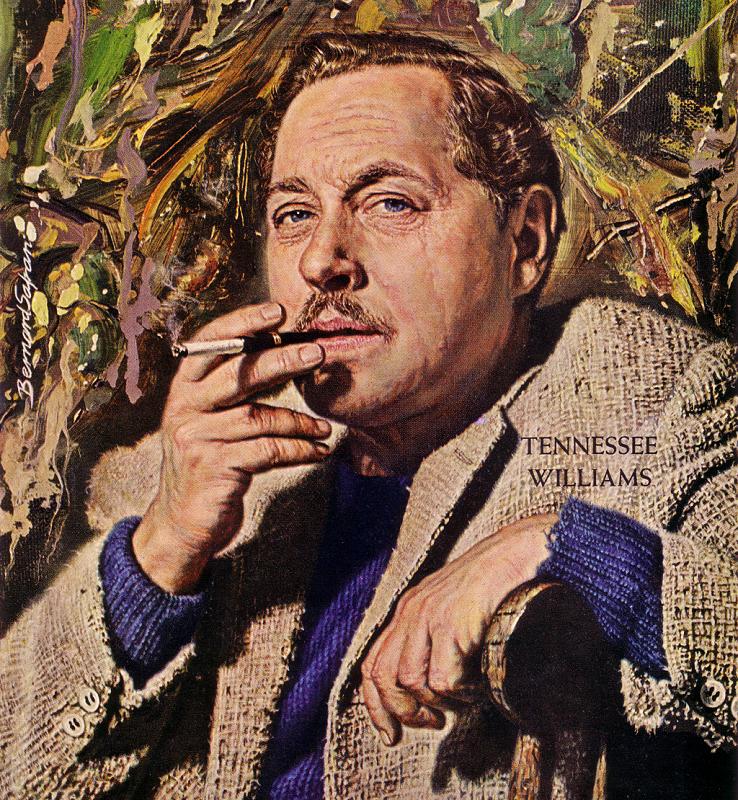
Tennessee Williams (1911-1983)
~~~
“There is a time for departure even when there’s no certain place to go.”
~~~
“Don’t look forward to the day you stop suffering, because when it comes you’ll know you’re dead.”
~~~
“Enthusiasm is the most important thing in life.”
~~~
“Most of the confidence which I appear to feel, especially when influenced by noon wine, is only a pretense.”
~~~
“I don’t want realism. I want magic! Yes, yes, magic! I try to give that to people. I misrepresent things to them. I don’t tell the truth. I tell what ought to be the truth. And if that’s sinful, then let me be damned for it!”
~~~
“All cruel people describe themselves as paragons of frankness.”
~~~
“Physical beauty is passing—a transitory possession—but beauty of the mind, richness of the spirit, tenderness of the heart—I have all these things—aren’t taken away but grow! Increase with the years!”
~~~
“Life is an unanswered question, but let’s still believe in the dignity and importance of the question.”
~~~
“Friends are God’s way of apologizing to us for our families.”
~~~
Our Insect Friends ~
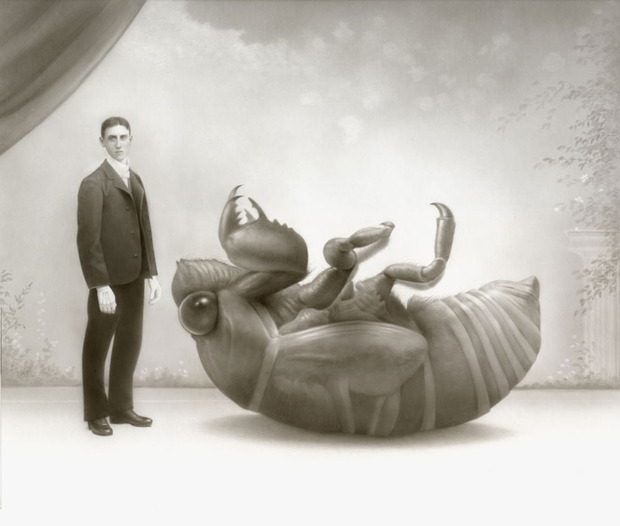
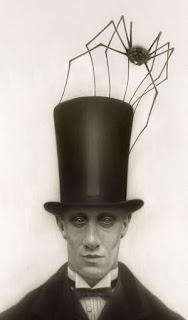
Being drawn to the bizarre, the macabre and the twisted as I am, I’m a fan of the artistry of Travis Louie, as seen in these four examples:



Bye Bye Blackbird ~ A Short Story by Allen Kopp
The year Nellis Folts was eleven years old was the year he decided he would enter the school talent contest. He chose Bye Bye Blackbird for the number he would perform, and he wouldn’t just stand there and move his lips to some stupid record the way some people did. He would actually sing the song. He asked Miss Mullendorfer, the assistant music teacher, to accompany him on the piano and she readily agreed, saying that she thought it was “simply splendid” that a boy like Nellis, who was usually so standoffish, was going to participate in something she knew was going to be “lots of fun.”
“I’m not doing it for fun,” he said. “I’m doing it for the prize money.”
That evening when Nellis told his mother at the dinner table that he was going to perform in the talent show, she was less than enthusiastic.
“Are you sure you want to be up there on the stage in front of all those people?” she asked. “They’ll laugh at you.”
“I know. They laugh at me anyway.”
“I didn’t know you could sing.”
“Well, I can.”
“I’ve never heard you.”
“I want you and father to come to the talent show. You can hear me sing then.”
“I’m sure your father will be too tired to go out after having worked all day, but I’ll try to come if it’s a night I’m free.”
“You’re free every night.”
For two weeks before the talent show, he practiced Bye Bye Blackbird every night in front of a full-length mirror in his bedroom, with hand gestures and a couple of dance steps that he made up himself. He sang in a quavery tenor that sometimes verged on the soprano:
Pack up all your cares and woes. Here I go, singin’ low. Bye bye blackbird! Where somebody waits for me, Sugar’s sweet and so is she. Bye bye blackbird! No one here can love or understand me. Oh, what hard-luck stories they all hand me! So make the bed, light the light! I’ll be home late tonight. Blackbird byyyye byyyye!(At the end of the song, he held out his arms and went down on one knee.)
For his clothes, he would wear black pants, a white shirt, and, from a trunk in the attic, a decades-old yellow sport jacket with wide shoulder pads and a red-and-yellow bow tie. Just the thing.
The night of the talent show brought with it heavy rains and thunderstorms. Nellis’s mother heard on the radio that storm warnings had been issued, but Nellis was not to be deterred. At six o’clock, one hour before the talent show was to begin, he put on his yellow plastic patrol-boy raincoat and, with his satchel containing the clothes he was going to perform in, walked the half-mile to school. He was soaked all the way through when he got there but was gratified to see that a lot of people had already shown up and taken their seats in the auditorium. The school was abuzz with excitement, in spite of the weather.
Without speaking to anyone, Nellis went into the deserted boys’ room to prepare. He took off his raincoat and set his satchel on the floor and opened it. His hair was still wet, so he took a wad of paper towels and dried it off the best he could and poured some Vitalis into his palm, rubbed his hands together and smoothed down his thick mess of dark hair. He then combed his hair exactly the way Sammy Davis Junior would have combed his if he had been there. He felt certain that anybody who owned a television set could not fail to make the comparison.
After dressing, he checked himself in the mirror and, when he was satisfied with the way he looked, especially the bow tie, he went “back stage,” where he and all the other contestants had been told to gather at seven o’clock sharp to draw their numbers out of a hat to determine in what order they would appear on stage. When he picked his number from the hat and realized he was last, his heart did a little thump-jump inside his ribcage. But no matter, he told himself. He didn’t mind being last; he would be freshest in the minds of the judges.
To begin the show, Mrs. Pepper, the music teacher, went out on the stage and waved her flabby arms to shush the audience. She was only four-and-a-half feet tall and almost as wide. Somebody in back of the auditorium whistled at her and yelled “Oh, baby!” but she pretended not to hear.
“Welcome to the annual school talent show!” Mrs. Pepper said in her whiny voice, training her myopic gaze on the middle distance. “It looks like we’ve got a capacity crowd! I’m happy to see that so many of you have braved the bad weather to be with us tonight! And I don’t think you’ll be disappointed! We’ve got a great show for you!”
The public address system squawked and sputtered, eliciting whistles and hoots from the audience.
She tapped on the microphone before continuing. “To make our competition a little more interesting,” she intoned, “our first-place winner, as decided by our three judges, will win a prize of fifty greenbacks. Our second-place winner will win twenty-five greenbacks, while our third-place winner will receive a complementary pass for dinner for two at the Lonesome Pine Restaurant and Grill on Highway 32.”
“Woo-woo-woo!” somebody in the audience yelled. Mrs. Pepper frowned for a moment before resuming her smile. “So, without further adieu,” she said, “we now bring to you our little show.”
The first contestant was Cecelia Upjohn, wearing lots of makeup, even though she was only twelve years old, and a skin-tight, glittery costume with red-white-and-blue diagonal stripes. She twirled her baton to a recording of I’m a Yankee Doodle Dandy, all the time with a fixed, doll-like grin on her face. When she tossed the baton high above her head, she somehow caught it without even looking at it. She finished her routine with a perfect split, one leg in front and the other behind as she went down on the floor with seemingly no effort at all. The audience rewarded her with resounding applause.
Then Ralph Krupperman with his hair the color of a new penny and Belinda Cornish took to the stage to do their Fred Astaire and Ginger Rogers dance routine. He wore a tuxedo with a swallow-tail coat and she a curly blond wig and a satiny white dress that clung to her immature body and dragged the floor. He flung her around and around at a dizzying pace to keep time with the music as the tails of his coat flapped and she tried hard to keep from falling. After a frenetic five minutes, the music ended and the routine was over. Ralph and Belinda clasped hands and smiled like onscreen lovers as they took their bows and exited stage left to polite applause.
When Curtis Bellinger came onto the stage, a questioning murmur arose from the audience because he carried a chair in one hand and a saw in the other. (What was he going to do? Saw the chair in half?) He carried the chair to the middle of the stage and set it down. Then he sat on the chair, put the saw between his knees, and, producing a violin bow, began playing Some Enchanted Evening. The audience was transfixed as the mournful sounds of the saw carried over their heads and out the doors into the rainy night. When the song was over, the audience applauded enthusiastically—more for the novelty and daring of the act than for its musicality.
(As Curtis Bellinger was leaving the stage, a huge crack of lightning caused everybody to gasp and the lights to flicker, but the lights stayed on, and the moment of danger, if that’s what it was, was forgotten in the wake of the next act.)
Three large-for-their-age girls, who looked enough alike to be sisters but weren’t, came onto the stage, their hair in snoods and dressed in women’s army uniforms. They stood side-by-side, looking silly and self-conscious as they waited for their music to begin and, when it did, they began swiveling their hips and moving their arms like marionettes. They moved their lips to Boogie-Woogie Bugle Boy, while everybody (even the most naïve person in the audience) knew they weren’t really singing.
The next act was Gus Goldblatt, a fifth grader who already weighed over two hundred pounds and wore men’s clothes. His grandfather had started teaching him the accordion when he was only two years old and since that time he had become steadily more proficient with that instrument. He favored the audience with Lady of Spain, segueing smartly into I’m Just a Vagabond Lover. The audience was most appreciative.
Gus Goldblatt’s exit brought Bertha Terhune to the stage. She was dressed in a black, full-body leotard with red ribbons in her hair and what appeared to be a bedroll under her arm. She curtsied in the direction of the audience, and, spreading out the bedroll that was really a tumbling mat, began her routine. She did a series of cartwheels, then forward somersaults and backward somersaults. She jumped into the air one way and then the other, twirled, twisted, leapt, spun, and turned, all with the agility of a flea and so fast that she was only a blur. The audience hooted and whistled.
Nellis watched all the acts from the wings as he waited to go on. He stood near a window and was aware of the storm, but what the weather might or might not do was the least of his worries. He knew he could remember all the words to Bye Bye Blackbird, but what he was worried about was “putting the song over,” as they say. The audience had sat though a lot of acts. Would they be ready for his? Would they laugh at him, as his mother had said? Would they boo him off the stage? Suddenly he wanted the whole thing to be over and to be back home where it was safe and quiet. He took deep breaths, felt light in the head, and hoped he wouldn’t be sick.
Miss Mullendorfer was standing beside him with her sheet music when Mrs. Pepper came to him and told him it was time for him to go on. He took a deep breath and walked out onto the stage. When he was installed behind the microphone, he looked out at the audience and tried to smile and they looked back at him, waiting to see what he was going to do. Two hundred eyes trained just on him, waiting for him to begin. Could he remember how the song began?
When Miss Mullendorfer from the piano played the little intro she had worked out, Nellis opened his mouth to let out the first notes. That’s when the storm hit with all its force and fury. The row of windows behind the audience blew inward as if from an explosion. The audience screamed, a prolonged wail of terror, and, as if being awakened from a dream, jumped to their feet and began running in every conceivable direction, except toward the exits and safety.
Nellis was stunned. He didn’t know what was happening. He looked over at Miss Mullendorfer at the piano to see if she might give him some cue as to what he should do, but she was gone. He was all alone on the stage, grasping the microphone stand in both hands. The thing sputtered and sparked. He might have been electrocuted if the power hadn’t failed at that moment, bringing him to the reality of the situation. He was just able to make his way out of the building in the dark as the roof was picked up and deposited someplace else and the walls around him began to collapse like a house of cards.
Copyright © 2014 by Allen Kopp

Edgar Allan Poe (1809-1849)
~~~
“Deep into that darkness peering, long I stood there, wondering, fearing, doubting, dreaming dreams no mortal ever dared to dream before.”
~~~
“I became insane, with long intervals of horrible sanity.”
~~~
“Those who dream by day are cognizant of many things that escape those who dream only at night.”
~~~
“The boundaries which divide Life from Death are at best shadowy and vague. Who shall say where the one ends, and where the other begins?”
~~~
“All that we see or seem is but a dream within a dream.”
~~~
“Beauty of whatever kind, in its supreme development, invariably excites the sensitive soul to tears.”
~~~
“The true genius shudders at incompleteness and usually prefers silence to saying something which is not everything it should be.”
~~~
“I wish I could write as mysterious as a cat.”
~~~
“That pleasure which is at once the most pure, the most elevating and the most intense, is derived, I maintain, from the contemplation of the beautiful.”
~~~
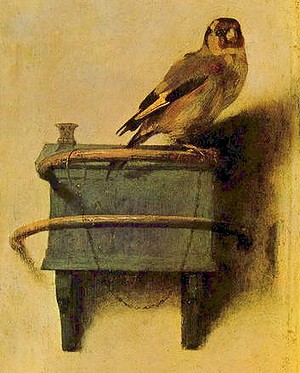
The Goldfinch ~ A Painting by Carel Fabritius (1622-1654)
The gifted Dutch painter, Carel Fabritius, was a student of Rembrandt. He died at the age of 32 in the explosion of a munitions store in Delft in 1654, a blast that destroyed one-quarter of that city. His painting, The Goldfinch, is one of only a few of his paintings that survive and figures prominently in the current novel by Donna Tartt, The Goldfinch.
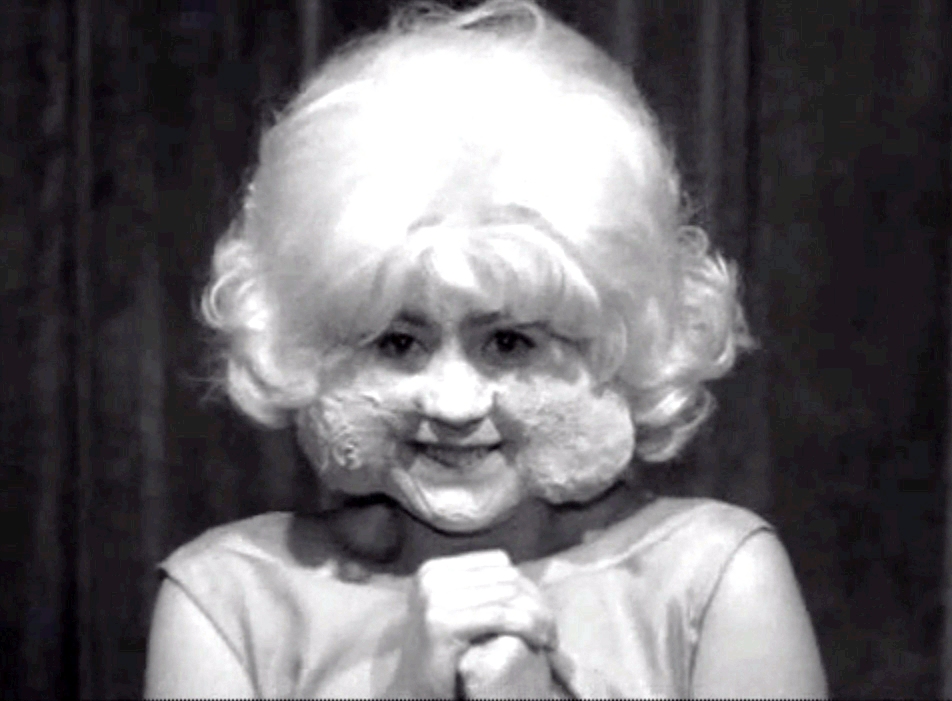
“The Girl in the Radiator” from David Lynch’s 1977 film Eraserhead ~
There has never been any other movie like Eraserhead. It’s a dream world, a nightmare vision, that draws us in, even though we don’t always understand what’s going on. It takes itself completely seriously, never laughing at itself or attempting to elicit laughter from the audience. Instead of being “camp,” it is somehow elevated into the realm of high art. One of my all-time favorite movies.
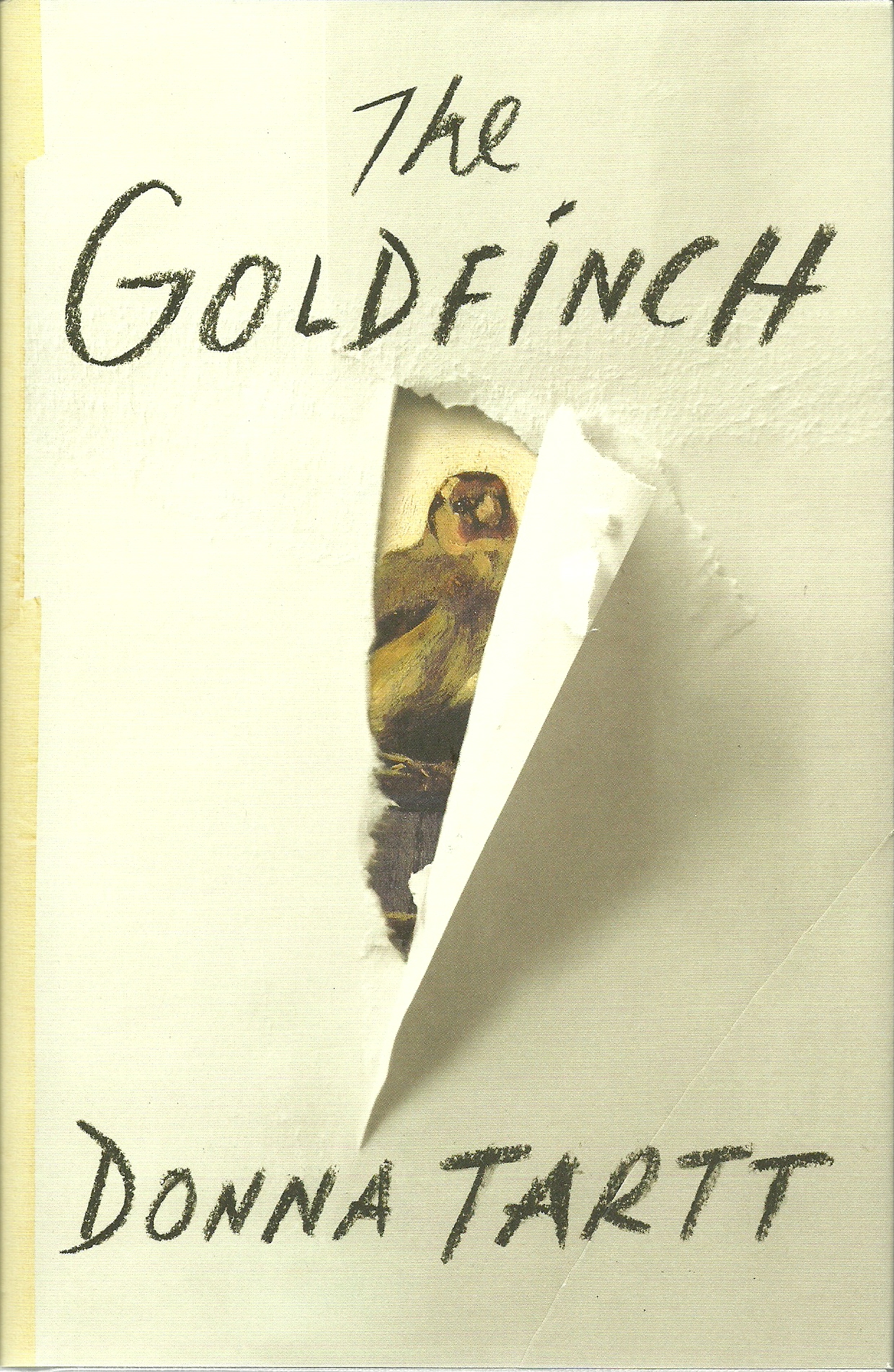
The Goldfinch ~ A Capsule Book Review by Allen Kopp
The Goldfinch by Donna Tartt won the Pulitzer Prize for best fiction book this year. It’s a contemporary American story with a Dutch painting from the seventeenth century at its core and a central character, one Theodore Decker, for whom chance or fate or luck—whatever you choose to call it—plays a significant role.
Theodore, or “Theo” as he is called, is twelve years old when the story begins. He is with his mother at a New York City art museum (his parents are divorced and his father has long since departed) when a terrorist’s bomb kills his mother and several other people and destroys a large part of the museum. Theo, through circumstance (chance?), narrowly escapes being killed himself.
Right before the blast, Theo’s mother goes off alone to look at something in another part of the museum. Theo is compelled to stay behind because he is intrigued by a young girl with red hair with an old man, possibly her grandfather. (When the blast occurs, Theo doesn’t know right away that his mother is killed but thinks she will have gotten out safely and will wait for him at home.) Theo goes to the aid of the old man and the girl with red hair (the man dies but not before giving Theo a ring he is wearing; the girl is badly injured). This chance meeting (chance again) significantly alters Theo’s future.
In the after-explosion confusion, Theo finds his way out of the wrecked museum alone and is largely ignored by the rescue people. Before he leaves, however, he sees a small, priceless painting, The Goldfinch (that he and his mother had been looking at a short time before), hanging out of its frame. He slips the painting into the school bag he is carrying, in effect stealing it. He doesn’t know why he takes the painting or what he plans to do with it. (Chance makes the thief.)
The Goldfinch is an actual painting by gifted Dutch painter Carel Fabritius, who was a student of Rembrandt’s. Fabritius was killed at age 32 in 1654 when a gunpowder storehouse exploded in Delft, destroying one-quarter of that city. All but a dozen or so of the paintings of Fabritius were destroyed. (These two violent explosions, one real and the other fictional, bookend the painting.)
Finding himself without family or anyone to care for him, Theo remembers a school friend, one Andy Barbour, that he at one time felt close to. The Barbours are a snooty, upper-crust Park Avenue family, but they (rather reluctantly) take Theo in—for the time being, anyway—because he has no place else to go. He shares a room with his old friend Andy Barbour and tries to resume his life the best he can, living without his mother with a strange family. While he is living with the Barbours, he allows the ring that the old man at the museum gave to him to lead him to the home, in another part of the city, of one James Hobart (or “Hobie,” as he is known). Hobie is the partner in the antiques business of the old man killed in the museum blast. He is kind to Theo and begins to introduce him to the antiques business, specifically furniture restoration.
Through Hobie, Theo becomes acquainted with the red-haired girl who made such an impression on him the day of the museum bombing. Her name is Pippa and, when Theo discovers her, she is recovering from her injuries, as is he (his more emotional than physical). Over the years, his obsession for Pippa grows, even though their lives take divergent paths.
When Theo’s good-for-nothing father, Larry, reappears to assume his parental duties, he has a creepy girlfriend in tow named Xandra. (It seems that Larry is interested, above all, in how he might benefit from his late wife’s estate.) Larry and Xandra take Theo out of the Barbours’ home to live with them in Las Vegas.
Theo’s life takes a decided turn for the worse in Las Vegas. His father is volatile and unreliable; Xandra a self-obsessed bitch who is in no way a mother figure. Theo befriends a Russian boy his own age, Boris, who is, at best, a terrible influence on him. Boris leads Theo down a path of illegal drug use, shoplifting, binge drinking, and other disgusting activities that teenagers without parental authority are sometimes left to engage in.
Theo’s father eventually meets his sad end (we saw it coming), causing Theo to take the wrapped-like-a-mummy The Goldfinch (which he has kept hidden in his room all this time) and take a bus to New York City, with Xandra’s tiny dog, Popper.(It seems that Xandra isn’t even responsible enough to care for a small dog.) He ends up at the home/business of Hobie, who was so kind to him when he was younger. Not having anyplace else to go, he lives in a room at Hobie’s house and learns the front end of the antiques business, while Hobie works with the behind-the-scenes restoration.
In a short time, Theo turns the antiques business into a success but not without some shady business dealings on his part that Hobie doesn’t know about. Outwardly he shows all the signs of success (expensive suits, hobnobbing with wealthy antiques patrons), but inwardly he is never really happy (his philosophy of life being that it’s better never to have been born). He begins using drugs heavily and becomes engaged to a frosty society bitch named Kitsey Barbour (even though he secretly pines for Pippa), who just happens to be the daughter of the family who took him in after his mother died.
During these years of growing into young adulthood, Theo believes he has The Goldfinch with him, although he never takes it out anymore and looks at it. He puts the painting, or what he believes is the painting, in a storage locker for the safekeeping of art objects. Hearing of other cases where art thieves receive stiff prison sentences, he is naturally afraid of what will happen to him if it is discovered he has the lost painting. He isn’t even able to explain why he took it in the first place. He would never be able to sell it or own it in the usual sense.
When Theo’s friend Boris from his Las Vegas days shows up in New York (he hadn’t heard from Boris since he left), Boris tells him, much to his surprise, that he (Boris) “stole” the painting from him when they were still high school students in Las Vegas. The wrapped-up article that Theo believes is the painting is, in reality, an old civics book. (“I thought you knew,” says Boris.) It seems that gangsters and high-level drug dealers use stolen art as “collateral” to get financial backing for their enterprises. In trying to recover the painting, Theo is drawn into the shadowy world of art theft.
The problem with the painting (what to do with it, how to turn it in to authorities without winding up in jail, etc.) is eventually resolved for Theo, after many twists and turns and a near-suicidal trip to Amsterdam at Christmas. Boris is such bad news for Theo most of the time but more often than not turns out to be his salvation. He (Boris) is a kind of tarnished, bad angel, who goes recklessly through life in his own way, ignoring all the rules that “good” people follow.
The Goldfinch is an interesting—if overly long—reading experience. It is so long, in fact (771 pages), and reading it requires so much time and effort that the less dedicated reader might give up before he/she begins. That’s not to say that it’s a boring book or that it’s not written in an easy, readable style. It is compulsively readable most of the time and only in the last couple of hundred pages did my interest begin to flag. (The eighty or so pages in Amsterdam seem to be overly drawn out.) When I was wanting the book to finally end, it seemed to me to go on and on and on. It’s a book, though, that if you do undertake to read it, you will feel at the end that you are better and smarter for having done so.
Copyright © 2014 by Allen Kopp

Cold in July ~ A Capsule Movie Review by Allen Kopp
Cold in July starts out as a story about revenge but turns into something else. The time is 1989 and the place East Texas. Michael C. Hall (who I remember so well as the uptight mortician in the great HBO series Six Feet Under) plays regular guy Richard Dane. There’s nothing heroic about Richard Dane. He owns a small business and has a wife and son. When an intruder breaks into the Dane home in the middle of the night, Richard goes to investigate with a loaded gun. He ends up shooting and killing the intruder on the spot. The police arrive and identify the intruder as one Freddie Russell, a known felon. As it is an open-and-shut case of self-defense, Richard isn’t charged with any crime. He believes the ugly incident is over until Freddie Russell’s father, Ben (Sam Shepard), recently released from prison himself, shows up and begins making subtle threats, threatening specifically Richard Dane’s young son, Jordan.
When Richard sees a wanted poster showing the real Freddie Russell, he knows that wasn’t the person he shot and killed. The police, for some reason, are covering up. They want the world to believe that Freddie Russell is dead when they know in fact he isn’t. Richard saves Ben’s life when the police try to kill him by drugging him and placing his body on railroad tracks. He wants to convince Ben that it wasn’t his son he killed, but Ben, of course, doesn’t believe him. When they go and exhume the body of the person believed to be Freddie, they find a mutilated corpse with its teeth ripped out and its fingertips cut off. Ben knows from the face, however, that the body is not that of his son.
Richard and Ben are joined by good-old-Texas-boy Jim Bob (Don Johnson), a private investigator who wears cowboy boots and drives a flashy red convertible. Jim Bob and Ben go way back, having served in Korea together. The three of them set out to find out what is really going on and why the police are obfuscating the mystery. What they uncover is the stuff of which nightmares are made.
Cold in July is based on a novel by Joe R. Lansdale. It’s well-made, with some interesting, likeable characters. The character Ben Russell is frightening at first but turns out to be a decent, if eccentric, fellow. It’s his decency that drives the story to its violent end. The one thing that bothers me is how two men are able to dig up a recently buried body in a cemetery and not be seen. Isn’t that a crime in itself? Also, why is the body only a couple of feet down instead of the customary six? I guess these are things that don’t matter because movies don’t always deal in reality.
Copyright 2014 by Allen Kopp

