Penny Dreadful ~ A Capsule Review

Penny Dreadful

Penny Dreadful ~ A Capsule Review by Allen Kopp 

Three episodes have aired so far of the new Showtime series, Penny Dreadful. It’s set in London in the 1890s and has a gallery of interesting characters. Sir Malcolm Murray (Timothy Dalton) plays a wealthy explorer whose daughter, Mina, is missing. She seems to have fallen into the clutches of a fiend or a really bad person along the lines of Count Dracula. In an ongoing effort to rescue his daughter, Sir Malcolm has joined forces with a woman known as Vanessa Ives (Eva Green), who, we are told, “is affected by forces outside our world.” Sir Malcolm and Vanessa have engaged the services of one Ethan Chandler (Josh Hartnett), an American sharpshooter traveling in England with a Wild West show; his unerring deadly aim might come in handy. For any medical services, Sir Malcolm enlists the aid of Dr. Victor Frankenstein (Harry Treadaway).

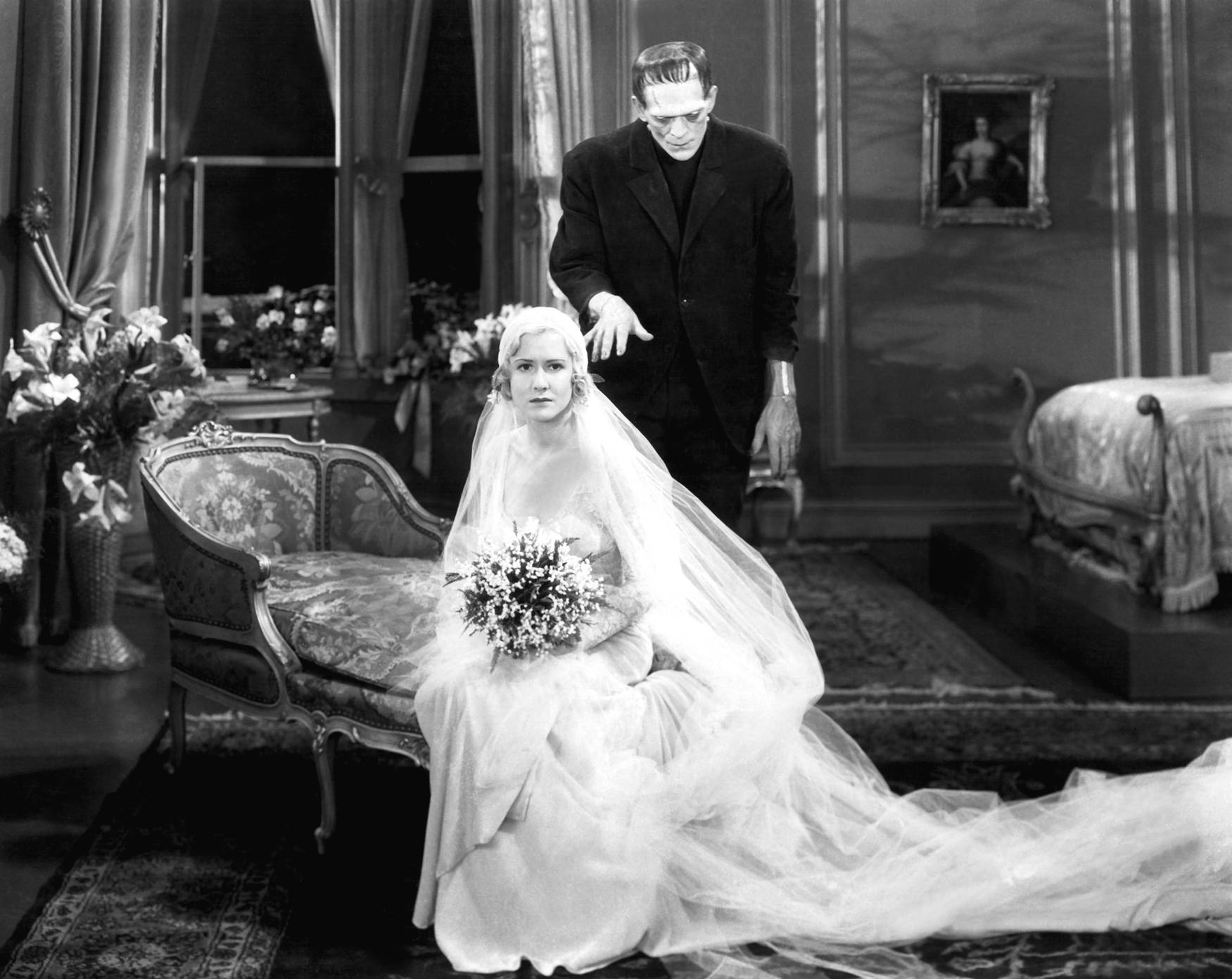
Victor Frankenstein is my favorite character. He has a sort of soulful intensity and the dimple in his chin doesn’t hurt either. He lives in a dark hovel and experiments with creating “men” from parts culled from cadavers. When the series begins, we find that the “creature” he has created is doe-eyed, sweet and gentle, not at all a “monster.” Victor names him “Proteus” from Shakespeare. (My favorite scene is when Victor realizes during a thunderstorm that Proteus is up and walking around, meaning that he is “alive.” Victor is so astounded he is breathless.) Just when Victor and Proteus are getting on so well, Victor’s first “creature” (that we didn’t know about until that moment) returns and kills Proteus. He is much scarier than Proteus and knows how to spread mayhem to get what he wants. He is befriended by an actor drawn to freakish people who gives him a job as a sort of stage hand in the Grand Guignol theatre, which specializes in theatrical bloodletting and gory stagecraft. The actor gives him the name “Caliban,” also from Shakespeare.

Penny Dreadful is a horror story with elements of other famous horror stories interwoven—Dracula and Frankenstein to name two—with a subplot involving an Egyptologist, the Egyptian Book of the Dead, an ancient curse from a couple of Egyptian deities who are upset about something, and a cadaver with Egyptian hieroglyphics written on it (or in it). Also thrown in (to what purpose we don’t know this early in the story) is Dorian Gray, the principal character from Oscar Wilde’s novel The Picture of Dorian Gray, a man who, while steeped in venality and vice, maintains his youthful appearance while his portrait displays the ravages of corruption.

Even if Penny Dreadful isn’t groundbreaking in its originality, it is still beautifully appointed in every detail, beautifully written and acted, and fun to watch. Quality TV for the viewer with discriminating tastes. My only complaint is that some of the night scenes (and it’s mostly all night scenes) are so dark that you sometimes don’t know what’s going on. It’s the darkness that’s the mood and theme of the show.

Copyright © 2014 by Allen Kopp 
Fancies and Goodnights by John Collier ~ A Capsule Book Review

Fancies and Goodnights cover

Fancies and Goodnights by John Collier ~ A Capsule Book Review by Allen Kopp 

English writer John Collier’s (1901-1980) most famous short story is “Wet Saturday.” I remember reading this story in tenth grade, which was, of course, the first I had heard of John Collier. “Wet Saturday” is for John Collier what “The Lottery” is for Shirley Jackson and “Metamorphosis” for Franz Kafka. “Wet Saturday” is a sly story about a murder, a crime of passion from a person who is ordinary passionless, and the efforts on the part of the murderer’s father to find somebody to pin the murder on. It’s such a famous and well-known story because it’s simple to understand, a lot of the action is revealed in dialogue, and it packs a memorable punch at the end.

John Collier’s short story collection, Fancies and Goodnights, which was first published in 1951, is a collection of fifty short stories (including “Wet Saturday”) with Collier’s signature wit and dark, ironic humor. Most of these stories are not grounded in reality but in flights of fancy. There are demons from hell, an orchid that absorbs people into it, a man who spends an evening with his wife after she has just died, a man obsessed with a store mannequin, a doctor who murders his wife, a strange talking bird that reveals a secret to its owner that the owner would have been better off not to know, a man who pretends to be twins so he can marry two woman, a flea that takes Hollywood by storm, and on and on. As Ray Bradbury says in the introduction, “Anything can happen in a story by John Collier and it usually does.”

Of the fifty stories in Fancies and Goodnights, a few are about fifteen or twenty pages, but most of them are much shorter and can be read in one sitting or in a matter of minutes. It’s interesting to note that several of John Collier’s stories were adapted for TV in the 1950s and ‘60s, most notably for Alfred Hitchcock Presents.

John Collier considered himself a “third-rate writer,” but he was clearly a master of the short story form. Students of writing can learn a lot from his stories.

Copyright © 2014 by Allen Kopp
Neighbors ~ A Capsule Movie Review

Neighbors

Neighbors ~ A Capsule Movie Review by Allen Kopp 

A couple in their thirties, Mac and Kelly Radner (played by Seth Rogen and Rose Byrne), spend all their money to buy a house in a comfortable neighborhood. Everything is fine with them until the house next door is turned into a fraternity house. (Apparently a college is nearby, although it’s never mentioned.) Mac and Kelly try to be “hip” and “with it,” but they realize right away that having a fraternity next door is not going to be in their best interests.

When they are being kept awake by the late-night, raucous partying, Mac and Kelly decide to confront the rowdies themselves, instead of calling the police, and ask the fraternity boys to “keep it down.” They meet party-boy Teddy (Zac Efron), the muscular “president” of the fraternity who charms them in a way to make them think he cares about them. They enter into an agreement with Teddy whereby they won’t call the police if they are again bothered by the noise; all they have to do is call him and ask him to “keep it down.” Thereafter they are known by the fraternity as “the old people.”

The partying continues unabated. Mac, Kelly and their baby are being kept awake far into the night. Mac tries to call Teddy to ask him to “keep it down,” but Teddy isn’t available after ten or so tries, so Mac calls the police, even though he promised he wouldn’t. Teddy, of course, knows it was Mac who called and not somebody else in the neighborhood. Thereafter a sort of “war” exists between the fraternity and Mac and Kelly, the “old people.” Mac takes an axe to a pipe on the fraternity house, causing the basement to flood; he hopes that will be enough to get the fraternity to move. When the fraternity boys use the flooded basement to their own advantage, Mac resorts to other measures. He and Kelly pay a thousand dollars to a mousey college boy to claim that he was “hazed” by the fraternity. This ploy also backfires.

You won’t need to use your brain at all when you see Neighbors, which has humor deriving from college kids who never attend class or study, sex, pot smoking, drug use, breast milk, dildos, condoms, etc. It’s a likeable, harmless movie if that’s what you’re looking for. It’s also a huge success with the public. It made back its production costs on the first day of its release and is the number one movie right now. Draw your own conclusions.

Copyright © 2014 by Allen Kopp

The Railway Man ~ A Capsule Movie Review

The Railway Man

The Railway Man ~ A Capsule Movie Review by Allen Kopp 

In 1980 Eric Lomax (Colin Firth) is a pleasant-seeming, middle-aged man who meets a recently divorced woman named Patti (Nicole Kidman) while indulging in his passion for railways (“I’m a railway enthusiast,” he says.) After they are married, Patti discovers that Eric has deep psychological scars from his experiences in World War II. She wants to help him but doesn’t know how. She is afraid he will commit suicide, as did one of his friends who was with him during the war.

As a young British officer, Eric was held in a Japanese prisoner of war camp. He and other captured Allied soldiers were forced to work for the Japanese to build a railway from Thailand to Burma, a job that was deemed almost impossible—and very cruel—because of the mountain and jungle terrain. It was a hellish life from which most of the men were expected to die.

By stealing different radio parts, Eric secretly builds a small radio receiver so he and his fellow captives can hear something of the outside world. They hear news from home, particularly how the war is going. (“We’ve got Hitler on the run!”) When the Japanese guards find the radio, Eric admits that he built it and that it was his idea, to spare his fellow officers from punishment. The Japanese believe the radio is a transmitter to send information about them to their enemies. Eric is beaten savagely and tortured. His body eventually heals but his mind never does.

Eric discovers, all those years later, that his principal Japanese tormentor and torturer in the prison camp, one Takeshi Nagase, is still alive. He operates the World War II prison camp where Eric was held as a sort of tourist attraction. In other words, he is profiting from his war crimes. Eric travels from England to confront him and to somehow exact revenge. He wants, above all, to let Nagase to know he also is still alive and how his treatment at the hands of the Japanese affected his life after the war.

The Railway Man is a true story, based on a book by the real-life Eric Lomax, who died in 2012. Those seeking light-hearted, escapist entertainment will not find it here. The scenes of torture are grim and graphic. It’s a story about the brutality of war, but, more than that, it’s about the scars that are left behind long after the war has ended. 

Copyright © 2014 by Allen Kopp
Their First Mistake

Laurel and Hardy, Their First Mistake image 1

Their First Mistake (1932)

In the comedy short Their First Mistake (1932), Ollie’s nagging wife is jealous of Ollie’s friendship with Stan, so she leaves. Stan and Ollie think that adopting a baby will get her to return, but after they get the baby home (and the wife still nowhere in sight) they don’t have a clue about how to take care of him. He won’t stop crying and the neighbors are complaining. When Stan is going to go home and leave Ollie alone to take care of the baby, there is a very funny exchange between the two of them.

Laurel and Hardy, Their First Mistake image 2

“I’m a Transvestite”

Ed Wood image 1

“I’m a Transvestite”

In Ed Wood, one of my all-time favorite movies, Ed (Johnny Depp) calls Miss Vampira, the tacky TV hostess, on the phone and asks her for a date.

“I was wondering,” he says, “if you’d like to go out sometime, have some dinner?”

“I thought you were a fag,” Miss Vampira says.

“No!” he says. “I’m a transvestite!” 


Ed Wood image 3

The Godfather ~ A Capsule Movie Review

The Godfather poster

The Godfather ~ A Capsule Movie Review by Allen Kopp 

In any list of the best American movies of all time, The Godfather is always near the top, along with Citizen Kane, Casablanca, and The Wizard of Oz. It was a huge critical and financial success at the time of its release and still resonates with audiences forty-two years later. It’s a multi-generational story about the American dream that touches on the themes of loyalty, honor and family; an epic gangster film on a lavish scale with a running time of almost three hours.

The Godfather covers the period from 1945 to about 1955. Marlon Brando plays Vito Corleone, the humble Italian immigrant who becomes one of the most feared and respected crime bosses in America—the Don, the Godfather. People kiss his hand as if he is a pope or a king. They come to him for “justice,” for favors that only he can grant. He doesn’t do their bidding, however, without expecting something in return—loyalty and friendship, if nothing more.

When we first meet Don Vito Corleone, he is old, nearing the end of his productive years. He has three sons: the hothead stud Sonny, the fool Fredo, and straight-arrow Michael, who has a Barbie doll-like girlfriend and an illustrious war record. One of the sons will one day take over the family business. He also has a daughter, Connie. When the story begins, the family is celebrating her marriage. Her choice of a husband, however, proves, in time, to not be a happy one.

When Don Corleone is shot five times by his rivals early in the movie while buying fruit, his son Michael (played by Al Pacino) steps in and takes charge of things, even though he seems constitutionally unfit to lead a criminal empire. He is sensitive and seems physically slight in comparison to his brother Sonny. He wants to marry his girlfriend and have a quiet, peaceful (crime-free) life, but he is being pulled in the opposite direction. When he shoots and kills two of his father’s rivals, he hides out in Sicily for an extended period, where he falls in love with, and marries, a young Italian girl. When she is murdered by a car bomb that is meant for him, he eventually returns to the United States, a hardened man, determined to take his place as head of the Corleone family. He becomes the new Don as his father (who recovered from his gunshot wounds but was never the same again) recedes into the background and eventually dies of a heart attack.

Of course, there’s much more to the story that we see in The Godfather. Two years later, in 1974, there was The Godfather Part II, which explores the early life of Vito Corleone, and The Godfather Part III in 1990. It’s a story that goes on and on.

The Godfather has been digitized and restored and looks flawless in its current iteration on the Cinemax network. If you haven’t seen it in a long time, as I hadn’t, it’s worth seeing again, if for no other reason that to see how much Al Pacino, Diane Keaton, James Caan, and others, have changed in forty-two years. Abe Vigoda, at the current age of 93, still looks about the same. Some people never change.

Copyright 2014 by Allen Kopp

Churn Thy Butter, Volume 3, April 2014

Churn Thy Butter cover

Churn Thy Butter ~ Issue 3, April 2014

(My short story “Happy Trails” is in this issue of Churn Thy Butter.)

Time to traverse the eccentricities of Church Thy Butter, Issue 3. First is Aaron Polson’s “Evidence,” which offers up a creepy VHS tape. Next is Colin Dodds’ poem “The Last Will and Testament of Spill-O.” It features surreptitious sausages, but really isn’t that the only kind of sausage? Harkens back to Upton Sinclair’s The Jungle. Lastly is a tale called “Happy Trails” written by Allen Kopp. Reminiscent of Kafka’s The Metamorphosis, but thankfully not as sad or disgusting.

Volume 3 may be read at the link below. (You might find the PDF version easier to read than the version where you have to turn the pages with the mouse.)

http://www.iridumsound.co.uk/magazines/issue.php?issue_id=22


Heaven is for Real ~ A Capsule Movie Review

Heaven is for Real

Heaven is for Real ~ A Capsule Movie Review by Allen Kopp 

Heaven is for Real is based on a book and is supposedly a true story. Greg Kinnear plays a down-to-earth, small-town Nebraska minister named Todd Burpo. (I know—that’s kind of an absurd name.) He has a wife and two children. His son, named Colton, becomes inexplicably sick with a high fever. When Todd and his wife take Colton to the hospital after four days (why didn’t they take him sooner?), doctors find he has a ruptured appendix. They rush him into surgery but he is seriously ill and might not live. He eventually recovers, though, and the life of the family resumes as it was before Colton’s illness.

Soon, however, Colton begins to speak in a matter-of-fact way about things he saw when he was sick. He says he left his body (how could a four-year-old understand an out-of-body experience?) and saw himself on the operating table from above. He knew where his parents were and what they were doing while he was unconscious. He saw winged angels flying down toward him and when he was in heaven, he sat on Jesus’ lap and the lap of his long-dead great-grandfather. He met a little girl in “heaven” who, we find out later, was his sister who died before she was born, an event that Colton never knew about.

Were these “visions” just a childish fantasy, or did Colton really experience them? How is this story going to affect the community and Todd’s family? Believers continue to believe, but there’s plenty for scoffers to scoff at. Questions of faith are raised. Do you believe blindly, “taking out your brain and replacing it with the Bible,” as one character says, or do you harbor a certain amount of skepticism? When one child lives and another dies, what is the reason? Of course, there aren’t any answers to these questions, but people continue to ask them. Colton’s mother says at one point, during all the attempts at analysis, “Why can’t it just be a mystery?”

Heaven is for Real is a portrait of a family and a community. Like The Son of God earlier this year, it’s the kind of mainstream movie you don’t usually see at the multiplex. With all the Spiderman, Captain America, and X-Men movies being fed to the public these days, it’s good to see a movie every now and then that examines questions of faith and other issues that actually affect people’s lives.

Copyright © 2014 by Allen Kopp