

Author: allen0997
1917 ~ A Capsule Movie Review
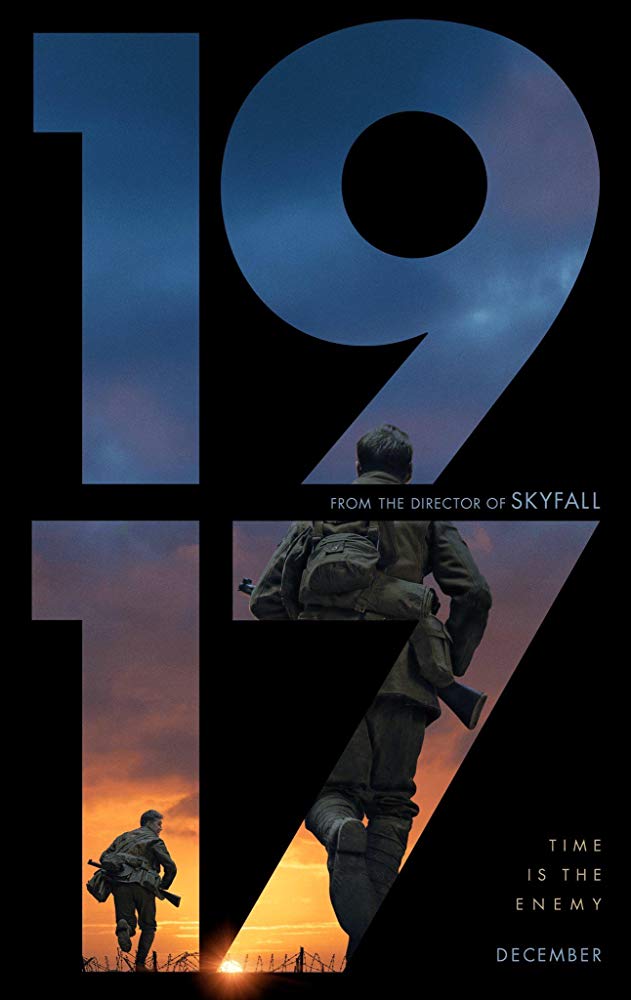
1917 ~ A Capsule Movie Review by Allen Kopp
Film director Sam Mendes hit it big twenty years ago with American Beauty (Best Picture, Best Director, Best Actor Oscars). He has hit it big again with his latest directorial effort, 1917, a war drama set in France in World War I.
1917 is a simple story with a simple premise. Two young British soldiers, Lance Corporal Blake and Lance Corporal Schofield—who would rather be anyplace else other than fighting a war—are given an urgent assignment by their commanding officer. They must cross enemy territory to deliver a message of the utmost importance. Two battalions (1600 men) of English soldiers are being tricked by the Germans. These 1600 men and their commanders believe they are going to engage with the enemy, but the truth is they are being tricked and led into a slaughter. The message the two young British soldiers carry to the two battalions is that they are to “stand down” and don’t go on with the battle as planned.
Time is of the essence. If Lance Corporal Blake and Lance Corporal Schofield don’t deliver their message in time, the results will be disastrous. Lance Corporal Blake is told at the outset that his own brother is among the 1600 English soldiers, so he has an additional reason for wanting to succeed.
The odds are against Lance Corporal Blake and Lance Corporal Schofield making their way across enemy territory without being shot or captured. What they see and experience over the next two hours is what we (the audience) sees: endless mud, foxholes, dead bodies of men and animals, flies, stench, rats, barbed wire, gray skies. It’s a story told in “real time,” meaning that the two-hour runtime of the movie is how much time elapses in the story. We (the viewers) see it as it happens. The camera movement is so fluid that we are hardly aware of any edits. It’s an amazing two hours of filmmaking.
Lance Corporal Blake doesn’t make it. He’s stabbed, ironically, by a downed German pilot whose life they save by pulling him out of his burning aircraft, and bleeds to death. Lance Corporal Schofield must carry on alone. He is the “one against many,” “the last man standing.”
There is much to admire in 1917, including its sense of realism and its stirring music score by Thomas Newman. It’s a movie that pushes the boundaries of art. I can’t wait to see it again.
Copyright © 2020 by Allen Kopp
At the Mountains of Madness ~ A Capsule Book Review
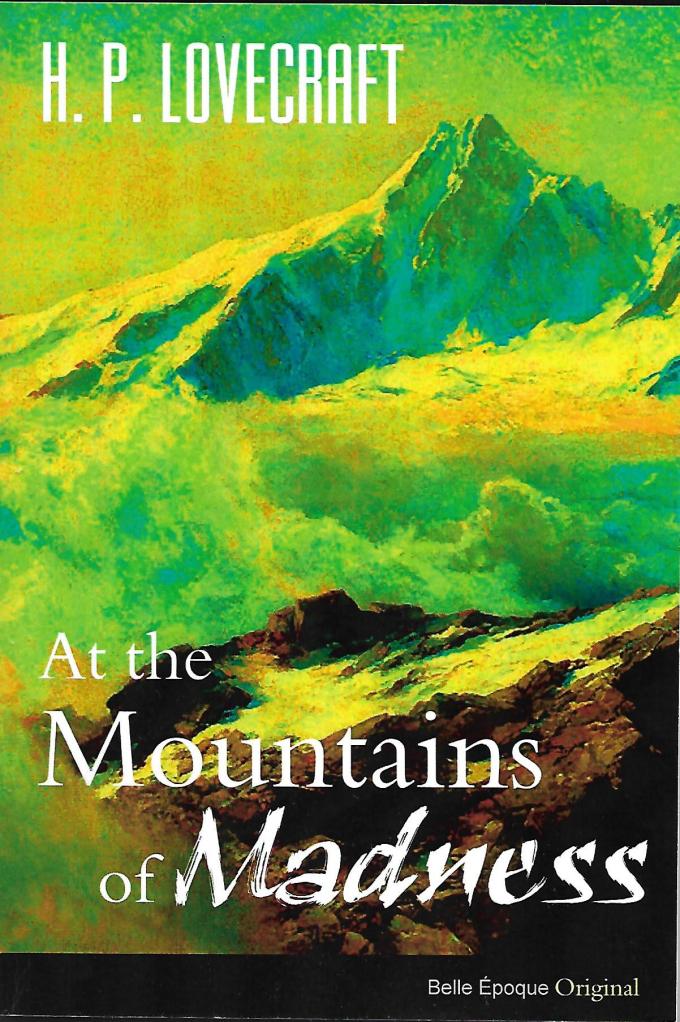
At the Mountains of Madness ~ A Capsule Book Review by Allen Kopp
H. P. Lovecraft (1890-1937) wrote At the Mountains of Madness in 1931. (It was first published in serialized form in a magazine in 1936). It’s a horror/fantasy/science fiction novel about an exploratory expedition to Antarctica, possibly the most inhospitable place on earth, where men go, not to get a good suntan or to meet girls, but to engage in scientific research. Besides frigid temperatures, rugged terrain, discomfort and loneliness, these explorers must also deal with something unexplained: the massive ruins of a fantastic, ancient city. (“Ancient” in this case meaning 500 million years.)
The Antarctic expedition in At the Mountains of Madness is led by a geologist named William Dyer from the fictional Miskatonic University from the fictional Arkham, Connecticut. He is relating the story in his first-person voice. After the explorers discover the remains of fourteen prehistoric life forms, previously unknown to science and also unidentifiable as either plants or animals, they find a vast, abandoned stone city, alien to any human architecture. By exploring these fantastic structures, they learn through hieroglyphic murals that the creatures (dubbed the “Elder Things”) who built the mysterious city came to earth shortly after the moon took form and built their cities with the help of “shoggoths,” biological entities created to perform any task, assume any form, and reflect any thought. There is a suggestion that life on earth evolved from cellular material left over from creation of the shoggoths.
The explorers soon realize the Elder Things have returned to life and to their ancient city. They (the explorers) are ultimately drawn towards the entrance of a tunnel, into the subterranean region depicted in murals. Here, they find evidence of various Elder Things killed in a brutal struggle and blind six-foot-tall penguins wandering placidly, apparently used as livestock. They are then confronted by a black, bubbling mass, which they identify as a shoggoth, and escape. The survivors of the expedition then make it their mission to discourage any future exploration to the region.
H. P. Lovecraft is considered the premiere American fantasy writer of the twentieth century. I think he is not an easy writer to read. His work is generally very wordy, laden with ponderous description. It’s not light or breezy reading. You have to pay particular attention to the text and if you’re reading late it night, it might put you to sleep.
Along with the short novel At the Mountains of Madness, there are three short stories in this Belle Epoque Original edition: “The White Ship,” “The Doom that Came to Sarnath,” and “Herbert West—Reanimator.” “The White Ship” and “The Doom that Came to Sarnath” are verbose fantasies set in other realms. “Herbert West—Reanimator” is the famous story about a doctor obsessed with bringing the dead back to life. He rifles cemeteries for fresh corpses, aided by his assistant and friend, also a doctor. These two “mad scientists” conduct unholy experiments with dead people, often with tragic and horrifying results. Delicious.
Copyright © 2020 by Allen Kopp
The Sins of Jack Saul ~ A Capsule Book Review
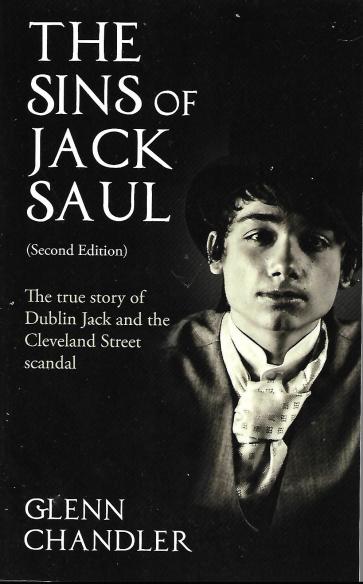
The Sins of Jack Saul ~ A Capsule Book Review by Allen Kopp
Who the hell is John “Jack” Saul, you might ask. He was a real-life person who lived from 1857 to 1904. He was five feet, five inches tall, well-endowed sexually, slightly effeminate, and a notorious male prostitute. He was born in Dublin, Ireland, and when he went to London he was widely known as “Dublin Jack.” He is known today for writing (or at least partly writing) a pornographic novel titled The Sins of the Cities of the Plain and for being a witness in a high-profile libel case involving an important person known as Henry James Fitzroy, Earl of Euston, who was reported to have visited a male brothel in London at 19 Cleveland Street. When the male brothel was discovered and publicized, it became the major sex scandal of the Victorian Era.
Lord Euston filed a suit and (and won) against a crusading newspaper man, Ernest Parke, who claimed that he (Lord Euston) went to the brothel to have sex with young men. Lord Euston claimed in court that he was taken to the brothel under false pretenses and that when he realized what kind of establishment he was in, he left. Jack Saul was a witness for the defense, meaning that he testified against Lord Euston. He was defiant on the witness stand and admitted he was a professional male prostitute and that Lord Euston did indeed visit the male brothel at 19 Cleveland Street to engage in forbidden sex acts with men. The court eventually decided the case in favor of Lord Euston, although his later life was plagued with blackmail and allegations of homosexuality.
In the 1880s, as now, the news media and the public love a good sex scandal, especially if it involves important or highly connected persons. Other important or notable people were implicated in the Cleveland Street brothel scandal, including Lord Arthur Somerset (equerry to the Prince of Wales) and several high-ranking army officers. (There was a persistent rumor at the time, that has never been disproved, that Prince Albert Victor, son of the Prince of Wales and grandson of Queen Victoria, second in line for the English throne, was a visitor to the brothel.) At this time in English history, any sex act between two men was illegal and punishable by imprisonment. Many of the male prostitutes working in the brothel were only about seventeen and worked as messenger boys for the post office. They became prostitutes to supplement their meager wages.
The Sins of Jack Saul by Glenn Chandler is as much about the times (Victorian era) as it is about a single person. Jack Saul had a sad, difficult, dangerous life, oftentimes picking up men on the street to have sex with them. He worked at several “legitimate” jobs from time to time, but nothing was as lucrative for him as prostitution. He could read and write, as many of his contemporaries could not. He died at age forty-six in 1904 of tuberculosis in his native Dublin. There has been a renewed interest in his life because he was a kind of symbol of gay defiance long before there was anything resembling gay rights. (He disproved the belief, widely held at the time, that homosexuality was a vice of the wealthy that corrupted the innocent.) He was what he was and if you didn’t like it, that was just too bad. He claimed to be covered in shame, but on the other hand he made no apologies and always sent money home to his mother.
Copyright 2019 by Allen Kopp

 Literary Fictions