
Author: allen0997




The Praise Singer ~ A Capsule Book Review
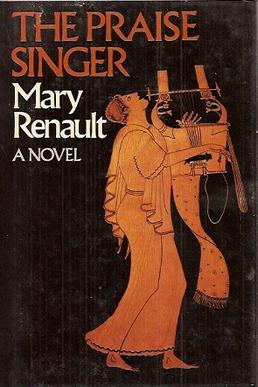
The Praise Singer ~ A Capsule Book Review by Allen Kopp
Simonides of Keos was a real-life lyric poet who lived in ancient Greece from 556 B.C. to 469 B.C. The Praise Singer is a 1978 historical novel by Mary Renault (real name Eileen Mary Challans). Though fiction, The Praise Singer is a biography of sorts based on the life and times of Simonides, and is narrated in his first-person voice. Simonides experienced during his lifetime a flowering of the arts in ancient Greece, especially in poetry and the written word. Up until that time, poetry and literature had mostly been an oral tradition. Simonides was possibly the first person to set down the works of Homer (The Iliad, The Odyssey) in writing.
Simonides has an unusually long life for his time. He is telling the story as an old man in his eighties. He has much to tell, including lots of political intrigue and associations with some of the great and celebrated people of his age. He is so accomplished at his art (a traveling singer, a bard, a performer of his own poems) that he himself becomes a celebrity through his talent rather than good looks, which he didn’t possess. He never marries and has no children but raises his nephew as his own son and teaches him to follow in his footsteps as a traveling bard and poet.
Simonides is brought up in strict discipline by his father, Leoprepes. He finds encouragement in the love of his handsome older brother, Theasides, and in music. When he meets a traveling musician and performer, Kleobis, Simonides persuades him to take him on as an apprentice. Under Kleobis’ tutelage he becomes a talented composer and performer. He attempts to find a patron at the court of Polycrates in Samos but is held back by his lack of physical beauty.
Simonides then finds a patron in Peisistratos the tyrant (a word that has a different meaning now than it did then) of Athens. He becomes a successful musician and after Peisistratos’ death, his sons Hippias and Hipparchos continue the family’s patronage. Through Hipparchos, Simonides is introduced to the prostitute Lyra, whose lover he becomes. Hipparchos sexually favors boys over women, and as the novel concludes we witness his eventual downfall as he uses his political power to punish the family of a young boy who rejects his advances. The boy and his lover retaliate by murdering him.
If you are a fan of historical fiction and the works of Mary Renault, then you will probably like The Praise Singer. I found it rather tedious at times and was glad when I came to the end. There are a lot of characters coming and going all the time and their names are not always easy to keep straight. When you stop reading the novel and then pick it up again, neither is it always easy to remember what happened the last time you read because it wasn’t that interesting to begin with. It’s best when reading a book like this to consider the whole rather than the parts. It could have used some judicious editing and restructuring to juice it along.
Copyright © 2020 by Allen Kopp