

Author: allen0997

A Room With a View ~ A Capsule Book Review
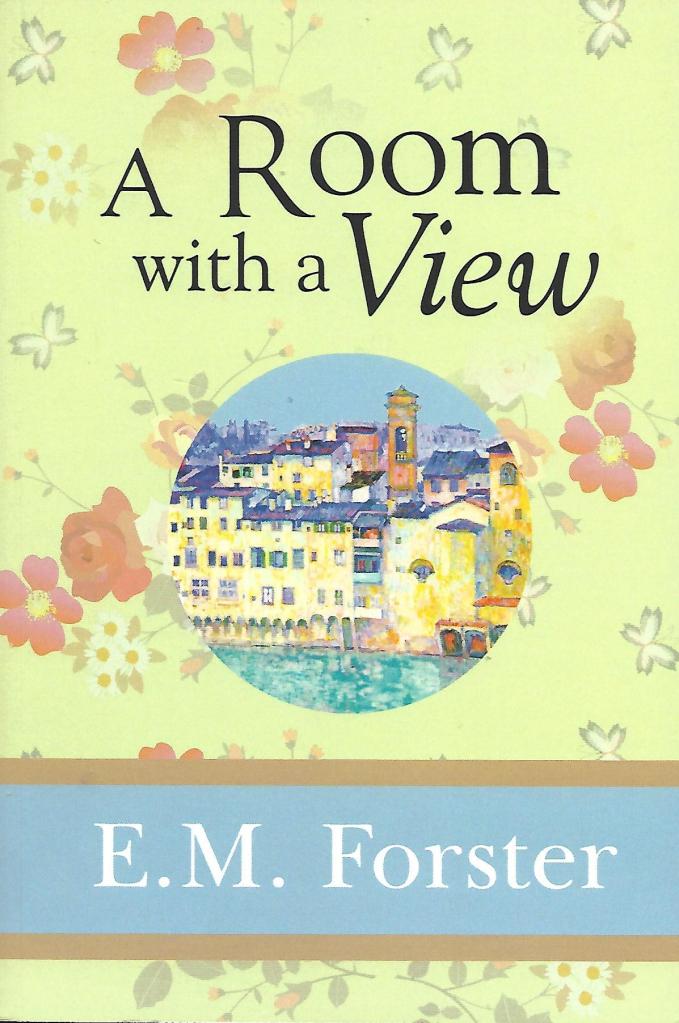
A Room With a View ~ A Capsule Book Review by Allen Kopp
E. M. Forster’s 1908 novel, A Room With a View, has as its heroine an upper-middle-class English girl named Lucy Honeychurch. Lucy is about twenty-two and is a product of her time. She has hairy armpits, plays the piano (too much Beethoven makes her cross), and is thoroughly conventional. She has a fussy mother and an obstreperous eighteen-year-old brother named Freddy.
Lucy is engaged to a fellow name Cecil Vyse. He is everything you might expect in a prospective match for Lucy: snobby, prissy, conventional, priggish. He has his own idea of the “feminine ideal” and expects Lucy to conform to it. He is constantly “correcting” Lucy to “make her better.” Lucy is all too willing to try to be what Cecil wants her to be. At first.
Lucy’s family, even though they’re not rich, have time and money to travel. When Lucy undertakes a trip to Florence, Italy, she takes as her “companion” and “chaperone” her cousin, Miss Charlotte Bartlett. Charlotte is described as a “nervous old maid.” She is annoyingly self-effacing and proper. When Lucy looks at Charlotte, she sees what she is likely to become herself in twenty or twenty-five years if she isn’t careful.
At their “pension” (small hotel) in Florence, Lucy and Charlotte encounter a problem with their room. They were promised a room with a view of the River Arno, but instead have only a view of a courtyard. Two “gentlemen” staying at the pension, Mr. Emerson and his son George, kindly offer to switch rooms with the two English ladies. Charlotte doesn’t think it’s “proper” to exchange rooms with two strange men, but she agrees in the end for Lucy’s sake.
Lucy doesn’t know what to make of the Emersons. Mr. Emerson is eccentric and seems to not have a full row of buttons; he is rumored to have murdered his wife. George is alarmingly uninterested in propriety or in what people might think of him. When he evinces a romantic interest in Lucy (culminating in a furtive kiss among a profusion of flowers on a hillside), she doesn’t know what to make of it. Her instinct is to run away.
Back in England, Lucy is preparing to marry Cecil Vyse, believing she has put the memory of George Emerson behind her. Wait a minute, though! George and his father are renting a “small villa” in the neighborhood where Lucy lives with her mother and brother. She and George will be neighbors and she’ll be running into him around every corner! Gasp! What’s a girl to do?
George and Freddy, Lucy’s brother, become friends. When Freddy invites George to the Honeychurch home for a round of Sunday tennis, George, cad that he is, steals another kiss from Lucy, this time on the “garden path” when he thinks nobody is looking. Now Lucy is completely thrown off-course! Can she go ahead and marry Cecil Vyse when she has such conflicting (hot and cold) feelings about George?
It seems that spending time in Italy has changed Lucy, made her look at life in a different way. She has “found her soul” and it’s all because of Italy. She is ready to slough off the stultifying convention of her age and upbringing. She is ready to step away from the straight-and-narrow course that has been laid out for her and step into a course of her own choosing.
E. M. Forster’s novels are gem-like, so carefully and precisely written; never pretentious or overly wordy. Every word has its place. There’s none of the extraneous claptrap and tortuously twisted sentences that you might find in the work of writers such as Virginia Woolf or Henry James. If you’ve never ready any books by E. M. Forster, you’re missing out on something good. If, on the other hand, you don’t give a rat’s ass about good writing or good fiction, you’re probably better off to have never heard the name.
Copyright © 2020 by Allen Kopp
This Morning It Looked Like Rain

This Morning It Looked Like Rain ~ A Short Story by Allen Kopp
It was the annual end-of-school picnic for the teachers. Another school year filed and put away. Ethel Fix, Pauline Schoonover, Grace Wolfe and Margaret Durfee sat with Mr. Goodapple, the school principal, at his table along with Mr. Goodapple’s son, Zeke. Of the four women, three were married. Only Margaret Durfee was without a husband. Knowing that Mr. Goodapple was a recent divorcee, she made no secret of the fact that she would make herself available to him if he so desired. Mr. Goodapple, for his part, wasn’t interested in Margaret Durfee or anybody else. Whenever he realized that she was looking at him with a secret and suggestive smile (suggestive of what?), the only thing he felt for her was embarrassment.
“It turned out to be a lovely day after all,” Grace Wolfe said.
“Yes, lovely,” Ethel Fix said. “It’s supposed to rain tonight, though.”
“When we’re all safely in our beds.”
“The park is lovely in the springtime,” Pauline Schoonover said.
“Summer is right around the corner,” Grace Wolfe said.
“What are you going to do this summer?” Ethel Fix said.
“My husband and I bought a camping trailer. We thought we’d take a few little trips. Fishing trips, mostly.”
“Do you fish?”
“No, mostly I swat mosquitoes.”
“I’m going to give my house a thorough cleaning during vacation. Do a little painting.”
“Oh, do you paint landscapes or portraits?”
“No. Walls.”
“I’m going to keep to town,” Margaret Durfee said. “I don’t really have any special plans, other than to relax. I’m not seeing anybody special or anything like that. I’ll be alone most of the time.”
“Goodness!” Pauline Schoonover said. “Don’t you get lonely?”
“Well, sometimes. Maybe a little.”
Young Zeke Goodapple, age thirteen, sighed loudly and yawned. All the ladies turned and looked at him.
“I think we’re boring Zeke to death with our talk,” Ethel Fix said.
“I’m sure he didn’t mean to be rude,” Mr. Goodapple said. “Did you, Zeke?”
“Huh?”
“Tell the ladies you didn’t mean to be rude.”
“No.”
“No, what?”
“No, I didn’t mean to be rude.”
“Do you have some interesting plans for the summer, Zeke?” Margaret Durfee asked.
“No.”
“That’s not true, now, is it, Zeke?” Mr. Goodapple said. “You do have some interesting plans.”
“What kind of plans?” Grace Wolfe asked.
“Tell them, Zeke,” Mr. Goodapple said. “Tell the ladies what you’re going to be doing this summer.”
“Um, I don’t remember.”
“Zeke will be taking a couple of remedial courses in summer school so he’ll be ready for junior high when school takes up again. English and math. And that’s not all, is it, Zeke?”
“What?”
“When he’s not in school, he’ll be taking swimming lessons at the YWMC.”
“Oh, won’t that be fun!” Pauline Schoonover said.
“I don’t have a suit,” Zeke said.
“A suit? Why do you need a suit?”
“A swimsuit.”
“Oh, yes! Of course!”
“I don’t really want to go into the pool,” Zeke said. “I’m afraid of the water. I have dreams where I can see myself being pulled out with hooks. Dead.”
“Oh, my!”
“The boy has a vivid imagination,” Mr. Goodapple said. “He reads horror stories every night before going to bed and I’m afraid they make him a little more morbid than he should be.”
“He probably misses his mother,” Margaret Durfee said. “He needs the steadying influence of a woman.”
“We get along fine,” Mr. Goodapple said. “We’ve adjusted quite well to the new order of things.”
“Do you like to read, Zeke?” Grace Wolfe asked.
“Sure. I like stories where all the characters get killed. I also like monster movies. I always want the monsters to win and kill all the people, but that never happens.”
“See what I mean?” Mr. Goodapple said with a laugh.
“Well, I like monster movies, too,” Margaret Durfee said, looking appreciatively at Zeke.
“Did you know my mother went off and left me?” Zeke asked.
“I don’t think we need to talk about that now,” Mr. Goodapple said.
“She married some guy I never met. He already has three kids so they didn’t have room for me.”
“We discussed it at length and decided it was best for Zeke to remain with me,” Mr. Goodapple said.
“That seems the sensible thing,” Pauline Schoonover said.
“They live in New Mexico,” Zeke said. “I don’t think I’d like living in the desert. I have sensitive skin. Mother says she’ll send me the money for a plane ticket so I can come out and visit her sometime and meet her husband and his kids. I’ve never flown in a plane.”
“That should be quite an adventure,” Grace Wolfe said.
“I’m not afraid to fly by myself. If the plane crashes, I’ll probably die quick without really knowing what happened.”
“The plane won’t crash. You’ll be fine.”
“And when you come back,” Ethel Fix said, “you can tell your friends at school all about it.”
“I don’t have many friends,” Zeke said. “I mostly just like to be alone.”
Mr. Goodapple took out a pack of cigarettes and lit up, blowing smoke over the ladies’ heads.
“I didn’t know you smoked, Mr. Goodapple!” Pauline Schoonover said.
“Never at school. Only when I’m out like this.”
“Might I have one, dear?” Margaret Durfee asked, in imitation of a screen vamp.
He handed her the pack and his lighter, avoiding her touch, and looked away as she lit her own.
“You never really know people until you have lunch with them,” Ethel Fix said.
When everybody was finished eating, the ladies started cleaning up.
“Would you like to walk down the hill to the soldiers’ memorial with me, Zeke?” Margaret Durfee asked.
“I’m kind of tired and I have a sore toe,” Zeke said, “but I guess it’ll be all right.”
“Well, let’s go, then!”
Margaret Durfee took him by the hand as if he was a small child, but when he showed her he didn’t like that, she settled with putting her hand on his shoulder.
When they were out of sight, Grace Wolfe leaned over and said confidentially to Mr. Goodapple, “I think Miss Durfee has a terrible crush on you!”
“Don’t you see what she’s doing?” Pauline Schoonover said. “She’s trying to get to you through your son!”
“I’d watch out for her if I were you!” Ethel Fix said. “She’s one of those crazy, passionate types and you never know what they’re up to!”
He had nothing to say, but only lit another cigarette and looked at his watch. The picnic was over and, thanks be to the Lord, it was time to go home.
Copyright © 2020 by Allen Kopp

Things I Must Have

Things I Must Have ~ A Short Story by Allen Kopp
Mrs. Koenig lay near death. Her four grown children had taken it upon themselves to gather in her house to discuss the disposition of her personal belongings.
“I want the Tiffany lamp,” Gwendolyn said.
“I already said the Tiffany lamp is mine!” Cupcake said.
“I’ve loved that lamp since I was a baby!”
“So? It’s still mine!”
“I want the dining room table and chairs,” Kent said. “Mother said I could have them.”
“Not so fast!” Gwendolyn said. “She said I could have them.”
“When did she say that?”
“I don’t know. Last Christmas, I think.”
“Well, she just told me last month that I could have them, so I guess that cancels you out.”
“I get the antique bed and dresser that were grandma’s,” Cupcake said. “Mother told me when I was fifteen that she wanted me to have them.”
“Well, isn’t that funny, Miss Cupcake!” Gwendolyn said. “I always thought I would get the antique bed and dresser.”
“I want the complete set of Dickens and the set of Britannica,” Kent said.
“You can have them!” Gwendolyn said. “Nobody cares about books.”
“I care. The Dickens set is over a hundred years old. It’s valuable. I’m going to sell it and buy a car I’ve been wanting.”
“Why don’t you keep the Dickens books and pass them on to your children, chowderhead?”
“I don’t have any children. Remember?”
“Oh, that’s right! There’s something funny about you, isn’t there?”
“There’s something even funnier about you!”
“I get the set of antique china,” Cupcake said, “and I’m not going to sell it, either.”
“What are you going to do with it, dear?” Gwendolyn asked.
“I’m going to keep it. What do you think? I also want the china cabinet. What good is the china without the cabinet?”
“I want the rolltop desk,” Cupcake said. “Mother told me in high school when I made the honor roll that I could have it.”
“I think the rolltop desk should go to me!” Kent said.
“And why is that?” Cupcake asked.
“It’s a man’s desk. I’m a man. Remember?”
“Oh, yes, darling! I keep forgetting!”
“I get the piano,” Gwendolyn said. “I’m the only one who plays.”
“You haven’t played since you were twelve years old,” Kent said, “and you were horrible! You used to cry when mother made you practice, and then she cried when she heard how bad your playing was.”
“Well, maybe I’ll take it up again. I always feel there’s something lacking in my life. Maybe it’s the piano.”
“Maybe it’s good judgment and common sense!” Cupcake said.
“Oh, and I also get the antique vase from China,” Gwendolyn said. “Mother’s piano wouldn’t be mother’s piano without the vase sitting on it.”
“Wait a minute!” Cupcake said. “I’m the only one here who knows antiques. I think I should get the antique vase from China.”
“I want mother’s photo albums and the big picture in the attic of grandma and grandpa,” Kent said. “Also the hall tree, the antique sideboard, the library table and the brocade sofa.”
“You can have them!” Gwendolyn said. “I never liked them, anyway.”
“Excuse me!” Cupcake said. “The library table is mine! I’ve already decided where I’m going to put it!”
“I’ll tell you where you can put it!” Kent said.
“I must have mother’s silver that she only used for special occasions,” Cupcake said. “The china is nothing without the silver to go with it.”
“I’m going to take the grandfather clock,” Kent said. “I’ve had my eye on it for a long time. I’m sure mother wanted me to have it.”
“Then why didn’t she say so when she was in her right mind?”
“She did! She said it to me!”
“Don’t you think it’s funny she never told any of the rest of us?”
Dickie was the fourth and youngest child. He had not spoken until now. “You should hear yourselves!” he said. “Squabbling like a bunch of old hens over things! Mother’s not even dead yet! She may recover! She may come home from the hospital! She may live many more years!”
“We’re just trying to be prepared for when the time comes,” Kent said.
“These are the things we grew up with,” Gwendolyn said. “They’re meaningful to us. We want to make sure they end up in the right hands.”
“Meaning your hands,” Dickie said.
“Don’t you want to stake your claim to the things you want to keep” Cupcake asked. “To remember mother by?”
“No, I don’t want any of this stuff!”
“Why not?” Gwendolyn said.
“This stuff isn’t your stuff and it’s not my stuff!”
“What are you talking about?” Kent asked. “Of course it’s our stuff! Who else would it belong to?”
“I am in possession of some information that the rest of you sons-of-bitches don’t know!”
“What are you talking about?” Gwendolyn asked.
“Have you lost your mind?” Cupcake asked.
“No, I haven’t lost my mind. Mother’s lawyer called me yesterday. On the phone. Mother knew you would be fighting over her things, so she made a last-minute provision to her will. She wants everything in the house sold at auction and the money—all of it!—to go to charity.”
“What?” Cupcake said.
“I don’t think mother would do that!” Gwendolyn said.
“I don’t believe it!” Kent said. “You’re making this up out of spite!”
“And that’s not all!” Dickie said. “She donated the house to the church.”
“Church?” Cupcake said. “What church?”
“People from the church talked to her many times about giving them the house when she died. They finally broke her down and got her to sign an agreement.”
“This isn’t right!” Gwendolyn said. “Mother wasn’t right in the head! We can contest it! We can file a lawsuit! We can hold it up for years in the courts!”
“I don’t think so,” Dickie said. “It’s all legal and valid. If you don’t believe me, call mother’s lawyer. His name is Kenneth Ormiston.”
“Mother disinherited us!” Kent said, as if in a daze. “We don’t get anything!”
“Mother wouldn’t do that!” Cupcake said. “Not to me! I was always her favorite!”
“She won’t get away with this!” Gwendolyn said. “I’m going to have her buried face-down!”
“I don’t think it’ll make any difference to her,” Dickie said, “one way or another.”
“I don’t think I can walk!” Cupcake said, sobbing. “I need somebody to take me home!”
“Dickie, you bastard!” Gwendolyn said. “Look what you did to your sister! I’m going to kill you!”
Copyright © 2020 by Allen Kopp
The Mirage Factory: Illusion, Imagination, and the Invention of Los Angeles ~ A Capsule Book Review

The Mirage Factory: Illusion, Imagination, and the Invention of Los Angeles ~ A Capsule Book Review by Allen Kopp
The Mirage Factory by Gary Krist is “historical narrative,” a fascinating nonfiction book that is as easy to read and as entertaining as good fiction. It is the story of how an improbable city, Los Angeles, came to exist in an improbable place, the parched American Southwest. More significantly, it is the story of how three different people (Amy Semple McPherson, William Mulholland and D. W. Griffith) contributed, in their own unique ways, to the formation, growth, moral fabric, and culture of what would one day be the second-largest city in the United Sates.
In the 1890s, Los Angeles was a small, dusty town in the California desert, where farms and citrus groves were the most prominent feature of the landscape. Nobody at that time envisioned Los Angeles as one day becoming a great American megalopolis. For one thing, there wasn’t enough water. It was, after all, the desert, plenty hot and largely inhospitable to most people’s way of thinking. (And what about those Gila monsters?)
One person, self-taught civil engineer William Mulholland, was largely responsible for bringing Los Angeles the water supply it needed to grow into a major city. People from all parts of the country were drawn to Los Angeles for its “newness” and “cleanness,” its almost perpetual sunshine, its scenic wonders, its proximity to the ocean and its uniquely Anglo-Saxon personality. So what if there wasn’t enough water to sustain a phenomenally growing population? That’s where William Mulholland came onto the scene. He devised and oversaw the building of an elaborate aqueduct system from the Owens River, over two hundred miles from Los Angeles. The project was beset with legal and logistical problems from the first. The residents of the Owens River Valley weren’t too happy about their water supply being commandeered (“stolen”) by distant Los Angeles. The situation erupted into small war.
The movies began as a cheap pastime for the lower classes in the large cities of the eastern United States in the 1890s. For one trifling nickel, a person seeking thrills and excitement could patronize the local “Nickelodeon” and see short films (some of which were only a minute or two long) of mundane scenes, such as an approaching train, a cow nurturing a newborn calf, or a scantily clad woman dancing the hoochie-koochie.
As movies became longer and technically more sophisticated, they gained a wider audience. The making, distribution and exhibition of movies became an industry, settled first around the East coast and then moving to California for its agreeable climate. Soon, movies were a bonafide American artform with the potential of generating obscene amounts of money for its artists. Hollywood and Los Angeles became synonymous.
David Wark Griffith was an early film pioneer. He is known as the “father” of movies, the creator of the movie picture narrative “language.” His vision for making movies was big and bold. His 1915 epic Birth of a Nation was a landmark film that set the standard for movies to follow. It made a tremendous amount of money and emboldened Griffith to make even bigger movies. His Intolerance was also a grand vision and expensive to produce. With its incoherent storyline about man’s inhumanity to man, Intolerance was a critical and commercial failure and a huge career setback for Griffith.
Aimee Semple McPherson was a Canadian Pentecostal evangelist who was instructed by God (she believed) to make Los Angeles her home base. She was a charismatic figure whose message was one of hope and redemption, rather than doom and hellfire. Her sermons were entertaining, uplifting and sometimes theatrical. (She even did “faith healings” on occasion.) She gained a huge and devoted following and established the influential Angelus Temple in Los Angeles. She held coast-to-coast radio services and was soon almost universally known. She became a cultural phenomenon and was arguably the most famous woman in the United States from the 1910s into the Depression era of the 1930s and the war years of the 1940s.
So, what did the Evangelist (Amy Semple McPherson), the Artist (D. W. Griffith), and the Engineer (William Mulholland) have in common? They were all flawed human beings in their own right and each experienced a spectacular fall from grace through pride, overreaching and the taint of early success. Their lives and destinies were inextricably interwoven with Los Angeles during the early days of its phenomenal growth from a small, sleepy desert town to a magnificent city, a megalopolis, that could compete with any other city in the world.
Copyright © 2020 by Allen Kopp

 Literary Fictions