Without Sin

Without Sin image x

Without Sin ~ A Short Story by Allen Kopp

(This short story was published in Paranormal Horror Anthology and is a re-post on my website.) 

The service ended. All the mourners departed, and the caretaker, whose name was Lemon, was left alone. He stood beside the open grave, his hands in his pockets, looking off into the distance. He was waiting for the two grave diggers to come and finish the job.

He approached the coffin. The lid had not yet been secured; he lifted it and looked inside. The deceased was a woman with artificial-looking red hair, about fifty years old. He wondered, as he always did, what had taken her. She looked healthy enough. He had heard of many suicides—something inexplicable in the air, perhaps, that made people melancholy and want to do away with themselves. Maybe she was one of those.

She was wearing a necklace with one fairly large red stone, apparently a ruby, and several smaller ones. It could be a real ruby or it could be colored glass. Her family looked prosperous enough. They wouldn’t want her to go to her eternal glory wearing fake stones. She was also wearing a wedding ring with a medium-sized diamond and some smallish earrings, no doubt worth a lot of money. He shook his head in amazement, as he had many times before, at the foolishness of people. Burying precious jewelry forever in the ground where it will never do anybody any good.

He heard someone coming and closed the lid. He looked up and saw the two gravediggers coming toward him. Drexel was the older of the two and out in front. He walked with a swagger wherever he was, even when no one was around. He thought he was cock of the walk and wasn’t bothered one bit that he displaced dirt and buried dead people for a living. The profession, for him, had certain advantages. He had few rules and could always do the job no matter how drunk he was.

The other gravedigger was as much a boy as a man. His name was Lanier. He lived with his mother in town. People believed him simple-minded but he was a good worker and never complained or caused trouble. He was happy to work as a gravedigger and looked up to Drexel, who was his third or fourth cousin. The two of them got along well because Drexel didn’t mistreat Lanier and Lanier always did as he was told without question.

“Where the hell have you been?” Lemon asked.

“Around,” Drexel said. “We’re here now.”

“I could have you fired in a flash for not being here when you’re supposed to be.”

“Well, we’re here now,” Lanier said in the cheeky tone he used only when he was backing up Drexel.

“What have we got here?” Drexel asked, pointing toward the coffin.

“A good lady, waiting for you to send her off to her eternal slumber,” Lemon said.

Drexel raised the lid and looked inside. “Looks like she’s already started on that,” he said with a little laugh.

Lanier looked away when the lid was opened. He didn’t like looking at dead people.

“That’s a ruby necklace she’s wearing around her neck,” Drexel said. “Must be worth something, if I know my jewelry.”

“Not this time,” Lemon said.

“What do you mean ‘not this time’?”

“I mean the good lady keeps her jewelry.”

“How is it that you get to say? You’re not the only one here.”

“Every living thing on earth is part of a hierarchy,” Lemon said.

“Part of a what?”

“In the hierarchy of things, the caretaker of the cemetery is above the gravedigger in all matters.”

“That’s crazy talk.”

“Nevertheless, it seems this woman is a distant relative of my mother’s. I don’t want to defile her person at a time when she is most unable to prevent it.”

“You haven’t got a mother.”

 “Very well, then. We’ll let a coin toss decide the matter.” He reached into his pocket and took out a coin. “Call it,” he said.

“Tails,” Drexel said.

“Very well. If the coin lands on its tail, we take the goods, bury the lady, and nobody is any the wiser. If, however, the coin lands on its head, the lady goes to her eternal slumber fully equipped.”

He flipped the coin into the air and made no attempt to catch it when it came down. It landed at his feet.

“Hah!” Drexel said. “It’s tails! I want the ruby necklace. I have a dear friend that it would look very good on.”

“I saw it first!” Lemon said. “The necklace is mine. And I’m not so stupid as to give it to somebody who might wear it in public and have it recognized.”

“Oh, and what are you going to do with it?”

“I’ll sell it to the acquaintance of mine in the faraway city who pays a good price and doesn’t ask questions, as with the other stuff. You see, there’s a way to remount a stone like that so the lady herself would never recognize it.”

“Says you!”

“A worthy rejoinder, if I ever heard one!”

“You talk like a damn fool. Let’s get the goods before somebody comes and get the old dame in the ground and get it over with.”

Lemon opened the coffin again and took hold of the necklace and gave it a tug. He couldn’t see how to get it off and didn’t want to break it, so he slipped it off over the dead woman’s head. Once he had the necklace in his hands, he held it up to his own neck, waggled his hips and took a few mincing steps.

“Oh, what a lovely girl!” Drexel said with a sneer.

Lanier had turned his back on Drexel and Lemon and didn’t want to think about what they were doing. He knew they were doing something bad and he wanted no part of it, although he did nothing to stop it.

“I’m going over there,” he said and walked quickly away out of sight.

“That boy is without sin,” Lemon said, “rather like those three little monkeys: Hear no evil, see no evil, speak no evil.”

Drexel removed the woman’s wedding ring with a devilish chortle and put it in his pocket. When he tried to remove the earrings, though, he couldn’t see how to get them off.

“There’s a little thing in back that releases them,” Lemon said.

He helped Drexel turn the woman partway over so they could see the backs of her ears. She was as stiff as a pillar of salt and didn’t bend at the joints.

“She’s really truly dead,” Lemon said.

“I think I hear someone coming,” Drexel said.

He let the woman fall back into place and took out the pruning shears. He cut off the woman’s earlobes neatly and wrapped them, earrings and all, in a rag and put it in his pocket along with the wedding ring.

“The good woman will arrive at the gates of heaven with her earlobes missing,” Lemon said. “St. Peter will take one look at her and believe she has met with an accident.”

“It doesn’t matter,” Drexel said. “When you’re dead, nothing matters.”

“Nevertheless, she shall be welcomed with open arms!”

Drexel whistled for Lanier to come back and began to secure the lid of the coffin.

“One moment!” Lemon said. “I wish to bid the good lady the fond farewell that she so richly deserves.”

He bent over and kissed the dead woman full on the lips. Drexel did the same and, not to be outdone, licked her lips and squeezed her breast.

“Ah-ah-ah!” Lemon said. “There’ll be no necrophilia in my presence.”

“As if you yourself don’t engage in the practice every chance you get!”

Lanier returned and they secured the lid and lowered the coffin into the grave. Before they were finished replacing all the dirt, another service began in another part of the cemetery. They tidied up the gravesite, cleared away their tools and left unnoticed.

Two days later Lemon and Drexel were both dead.

When Lemon failed to appear to perform his duties as caretaker, the cemetery owner and his assistant went looking for him, expecting to find him in a drunken stupor. Instead they found him in the caretaker’s cottage, lying on the bed in full woman’s rigging, including dress, stockings, shoes and curly red wig. Around his neck was the ruby necklace he filched from the dead woman. They thought to revive him but on closer inspection discovered he had been dead long enough to stiffen. His tongue was swollen out if his mouth and his eyes and ears were seeping old blood.

As for Drexel, an old farmer saw him standing in the middle of an empty field with his arms outraised. When the farmer went to him to find out who he was and what he was doing, Drexel was babbling and insensate. While the farmer was asking Drexel useless questions, he fell dead at the farmer’s feet. The farmer looked through Drexel’s clothing to try to find some clue to his identity and discovered the handkerchief containing the earlobes with the diamond earrings attached and the wedding ring.

The woman with the ruby necklace had sickened and died with alarming suddenness. Her doctors didn’t know how to treat her illness because they didn’t know what the illness was. How or where she contracted it was never known. It was obviously an illness that came about through contact with one infected, rather than through the air. Had the lady led a secret life of some kind?

Lanier never touched the woman or her jewelry, so he escaped the illness. His mother forced him to abandon his profession as grave digger, however, as she suspected that Lemon’s and Drexel’s deaths had something or other to do with acts they performed on a dead body when nobody was around. The thought sickened her.

When Lanier was asked what Lemon and Drexel were doing on that last day in the cemetery that might have made them sick, he shrugged his shoulders and smiled his benign smile. They were always doing and saying things that didn’t interest him, he said. He was in another part of the cemetery tending to some flowers he had planted, minding his own business while other people minded theirs.

Copyright © 2014 by Allen Kopp

Mademoiselle Lulu

Mademoiselle Lulu graphic6

Mademoiselle Lulu ~ A Short Story by Allen Kopp

(This short story was published in Danse Macabre and is a re-post on my website.)

A family of the living dead resided in a fine old house on a ten-acre estate outside the town of Harmony Hill. Their name was Farrier and they were a mother and her seven children. People said that Mrs. Farrier was hundreds of years old, although her age had never been verified. The children were five males (Cottonwood, Maurice, Eustace, Junius, and Percy) and two females (Lulu and Esther). Mrs. Farrier’s husband and the father of the brood of seven had long ago departed for the other realm. Mrs. Farrier ate him one evening for dinner.

Most of the people of the town of Harmony Hill knew about the Farriers, but few of them had ever seen the Farriers. There were those who believed that the Farriers were nothing more than an old wives’ tale or a story told around campfires. Everybody had, of course, seen the fenced-in ten-acre estate that belonged to the Farriers with its mysterious old house, but people had been led to believe (by whom, nobody knew) that a very old witch-like woman lived there in seclusion with her two strange daughters.

The truth was that, long ago, the town had come to an agreement with the Farriers; to wit, the town and its people would not bother the Farriers on their estate if the Farriers did not bother the town. If the Farriers should ever go back on their agreement and eat anybody from the town, the town would go after the Farriers with a vengeance, burn down their house and cut off their heads. Cutting off the head was the most commonly known method of killing the flesh-eating living dead.

Mrs. Farrier had learned to control her family of flesh-eaters and make them stay out of the town. The family had developed a system whereby they could have the requisite number of flesh-bearers to eat without putting themselves in danger by letting their appetites run away with them. Eustace and Junius were the most accomplished—and the subtlest—hunters in the family, so they, in general, went out on nighttime hunting excursions. They fed themselves on the “game” they were able to bag and, by daybreak every morning, took the remainder home to their mother, who took a generous portion for herself and distributed the remainder to her other children.

Of the other Farrier children, Percy and Lulu had the most rampant, the most uncontrollable, appetites. They were more likely than not to go into the town and eat the first person that came to hand without ever considering the consequences.

Percy was cunning, very strong and capable of tearing a victim to shreds with one hand tied behind his back. He was also an insensate beast with frightening, blank eyes, a wild man who could not be controlled. His brothers had no other choice but to keep him chained in the basement. His personality—his “self”—had been entirely subverted to his appetite for flesh. He was worse than any wild animal.

Lulu was very fat and hardly ever left her boudoir in the upper floor of the old house. When she was hungry, she paced the floor and sometimes picked up heavy objects and threw them against the wall. Appetite was for her a physical pain. When she wasn’t eating, though—when her appetite was satisfied—she simpered around the room in her satins and silks, a Chinese fan in her hand, and engaged in lengthy conversations with people who existed only in her imagination; in this way she dealt with her loneliness and isolation.

The other Farrier children—Esther, Cottonwood and Maurice—were docile enough as long as they had enough flesh to eat, although they themselves didn’t possess the penchant for killing. They were content to stay in the background and not bother their mother or their brothers. After they had fed, they would remain on their beds, bloated and happy, for hours or sometimes even days at a time, their blank eyes staring at nothing.

Eustace and Junius were not happy with the arrangement of going out almost every night, in all weathers, to get flesh for themselves and the rest of the family. Since they had to stay out of the town, they had to travel a long way to go to another town. And it was more than just a matter of plucking the first person they saw off the street. They couldn’t kill indiscriminately, as they would have done in a world more favorable to them. They had to plan their strikes with subtlety and finesse. The idea was to make disappearances seem random: a man here and a woman there; a child the next night thirty miles from where they had been the night before; hikers in the mountains sleeping around a campfire; lovers trysting in a deserted country cemetery; hobos waiting at night for a freight train; a drunk making his painful way home after drinking all night in a tavern.

Junius had heard stories about a conclave of the living dead in the Metropolis. For him, the principle attraction of the Metropolis was that there were millions of flesh-bearers living there, milling around on the streets at all hours of the day or night, ripe for the taking. If he could make his way to the Metropolis and become a member of the conclave, he imagined there would be no end of flesh to eat, and he wouldn’t have to spend the better part of every night looking for it. He told his brother Eustace about the conclave, and Eustace agreed that life for the two of them would certainly be easier in the Metropolis. What were they going to do about the rest of the family, though? They would not be able to just run off and leave the others behind, defenseless and with no way of getting flesh for themselves.

After lengthy conversations on the matter, Eustace and Junius agreed that they would go to the Metropolis to live, but first they would abide at home for a while and teach their two younger brothers, Cottonwood and Maurice, the skill of locating, stalking and killing the prey that was necessary to their continued existence. After Cottonwood and Maurice became adept at providing for the family, Eustace and Junius would go to the Metropolis and, in time, they would send for the others, where they would all live the easy life that was to be had there.

Cottonwood and Maurice were dismayed when they learned they were to go hunting with their older brothers, but Junius gave them a lecture about assuming the responsibilities of adulthood. They couldn’t go their entire lives expecting flesh to be brought to them by someone else; they needed to learn to be self-sufficient so they would never have to depend on anybody else. Maurice sniffled and looked at Cottonwood and nodded his head grudgingly, as if to say that, as much as he disliked the idea, he had to admit that he agreed with the logic of the argument.

Eustace and Junius decided not to tell their mother that they were taking Cottonwood and Maurice hunting with them. She would not have been receptive to a different way of doing things and, besides, she was resting in her room until the time that she could feed and was not to be disturbed.

The four of them—Junius, Eustace, Cottonwood and Maurice—set out from home at about eleven o’clock on a balmy moonlit night in the middle of October. They would make a detour around the mountain, covering a range of about twenty miles, and come back toward home from the other direction. They were certain to find at least two or three flesh-bearers out on such a warm and agreeable night.

They had gone a dozen or so miles and were nearing the hamlet of Benbow. Maurice was complaining about his feet hurting because he wasn’t used to walking so far, when Junius with a wave of the hand bade him to be still. He could smell a flesh-bearer nearby; he believed he had spotted movement at the edge of a clump of trees.

As they were closing in on their supposed prey, Eustace stopped and held out his hand for his brothers to halt. He had an uneasy feeling about what lay ahead. He was about to motion to the others to turn around and go back the way they had come, when there was a loud yell, like a signal, and then another yell from another direction. Before they had a chance to take cover, there was a blast of gunfire coming at them. They had walked into an ambush.

Eustace and Junius, with their lightning reflexes born of years of experience, seemed to the eyes of the flesh-bearers to melt into the earth—that’s how fast they disappeared—while Cottonwood and Maurice simply stood where they were, not understanding what was happening. They were knocked down by bullets and then a group of flesh-bearers—at least ten or twelve of them—swarmed over them and cut off their heads with axes, cheering and laughing the whole time. Eustace and Junius had no other choice but to stand in the darkness and helplessly watch their two younger brothers being slaughtered.

When dawn came, they made their way forlornly back home. Not only did they not have any flesh, but they were going to have to tell their mother and their sisters, Esther and Lulu, that their family had, in the course of the night, been diminished by two.

Their mother accepted the news with equanimity at first, but after her initial shock had passed she became enraged. She began screaming uncontrollably, calling Eustace and Junius every name she had at her command. She struck both of them repeatedly about the head, face and shoulders with her fists and kicked at their legs. She spit and swore and frothed at the mouth. She was as dismayed that Cottonwood and Maurice were dead as she was that no flesh had been brought home.

Esther, who was waiting in the other room to begin her feeding, heard the disturbance and came running. When she saw her mother pummeling her two older brothers, she became frightened and began flailing her arms. Her eyes rolled up into her head and she jumped up and down repeatedly, moaning in a kind of archaic ecstatic chant.

When Junius and Eustace had recovered themselves to a degree and retreated to the far side of the room, they began hurling objects at their mother—a book, a metronome, a marble bust of Nero. Junius picked up a chair and threw it at her, hitting her in the head and knocking her down. She was stunned for a moment, but she soon stood up again and re-entered the fray with renewed vigor.

Reading a romance in her boudoir upstairs, Lulu heard the terrible row that was taking place below stairs. It sounded as if all the forces of hell had been unleashed upon the house. She crept down the stairs slowly, faint with hunger and frightened, but nevertheless determined to discover the source of the disturbance.

She was used to seeing her family members hurling objects at each other, but never before with such anger and vehemence. Her mother had a gash in her forehead oozing purplish liquid and was jerking crazily as though she had taken leave of her senses. Junius, always so dapper and calm, was disheveled and screaming epithets at his mother and hurling anything he get could get his hands on across the room at her. Eustace was lying on the floor behind a table, cradling his arm, bellowing in pain and frustration. Esther was standing in the corner—or rather jumping up and down in the corner—screeching and pulling her hair out by handfuls.

More than anything, Lulu wanted the screaming to stop. Without thinking about what she was doing, she went into the kitchen and picked up the meat cleaver her mother used for dismembering prey, took it back into the parlor and, with one powerful stroke, cut off Esther’s head. Her eyes went blank as if a lamp had been extinguished and her head fell to the floor with a melon-like thud. A spray of foul-smelling black-and-purple matter spewed from the stub of her neck; her body fell over like a collapsing wall.

Seeing what Lulu had done, her mother went for her like a madwoman, hands upraised like claws. She managed to get her hands around Lulu’s neck in an attempt to strangle her but Lulu pulled free and swung the meat cleaver at her in a powerful backhanded motion and cut off her head. Her head left her body and sailed across the room and smashed against the wall. Her body, after she fell, continued to writhe and jerk as with an electric shock.

Having dispatched her sister and her mother, Lulu had no intention of stopping there. She raised the meat cleaver over her head and ran toward Junius. Understanding her intention, he made a valiant attempt to get away but it was no good. She caught him with the meat cleaver across the back of his neck. His head separated from his body as he fell against the wall, purple matter spewing out the hole where his head had been.

Eustace was still lying on his back on the floor behind a table, groaning and emitting intermittent screams. As Lulu approached him, she knew he didn’t see her. His eyes were covered with a gauzy scum and he had lapsed into a sort of stupor. He never saw the meat cleaver as it took off his head, a coupe de grace if there ever was one.

Lulu pulled the four bodies one by one—along with their severed heads—across the room and pushed them into the enormous fireplace. When she had all four of them—her mother, sister and two elder brothers—arranged in the fireplace like stacked firewood, she poured a can of gasoline over them and set fire to them. The fire took hold very fast and in just a few minutes the flames consumed the bodies.

Worn out from her exertions and weak from not having fed at the customary time, Lulu went to the door and went outside. The sky was just brightening with the rising sun and the birds were singing cheerily in the trees. The beauty of the landscape was not lost on her.

She hadn’t been outside the house for so long that just the simple act of walking along the ground felt good. She walked a short distance into the woods until she heard a sound that made her hide behind a tree. When she was sure she hadn’t been seen, she looked around the tree and spotted a hunter carrying a gun, a brown-and-white dog by his side. Before the hunter even knew what was happening, she crept up on him and ate him in the flash of an eye. The dog, not understanding where his master had gone, approached her shyly, wagging his tail. She reached down and patted him on the head and told him to run along home.

Her appetite sated for the moment, she went back to the house, climbed the stairs to her boudoir and had a good rest. When she awoke, she packed her clothes and a few books and keepsakes into two trunks. She dressed herself in a long, flowing black dress that came down to her ankles and an enormous black hat with a veil that hid her face.

When she went down to the basement to unchain her only remaining brother, Percy, she was sure he didn’t know who she was, but he seemed grateful to be out of his chains. She looked into his clouded eyes and pointed toward the door to let him know he was free to leave. When he nodded his head to show that he understood what she was saying, she put her arms on his shoulders in a kind of embrace and helped him to his feet. He needed to be allowed to leave the house or he would starve to death; go into the town if he must.

She called a taxi and, as the taxi man was loading her trunks, she closed the front door and locked it, probably for the last time. The house already had a forlorn, abandoned feel. As the taxi was driving away, she took a last look over her shoulder at the house and saw that a wisp of smoke was still rising from the chimney.

She went to the Metropolis, not to join the conclave of flesh-eaters, but to arrange to go abroad. With the money her father had left her before her mother ate him, she engaged a lavish stateroom on one of the finest passenger ships in the world. She hired a personal maid to help her with her clothes and carry out small errands.

Her destination for the moment was not definite, but she planned on sailing into every port city in the world. When she got tired of traveling, she would settle down for a time in one of the European capitals. She might someday return home, but she couldn’t see herself living by herself in that lonely old house.

While traveling, she rarely had occasion to leave her stateroom, but anytime she appeared in public she always wore the long black dress and the hat with the veil. She effected a slight foreign accent when she spoke, causing her fellow shipmates to refer to her as Mademoiselle Lulu. Everybody knew there was some secret thing about her, but nobody could figure out what it was. She was mysterious; she wasn’t like anybody else. People could gossip all they wanted but they would never know her truth.

At every port of call where passengers were allowed to go ashore for a few hours or an entire day, Lulu was always among them. She loved being in a new place and seeing sights she had never seen before but, most of all, she loved the abundance of flesh-bearers that were always in those places. She always had her fill. Unencumbered by family, she was living the kind of existence she had always dreamed about.

Copyright © 2014 by Allen Kopp

Where I’m Going

Where I'm Going image 1

Where I’m Going ~ A Short Story by Allen Kopp 

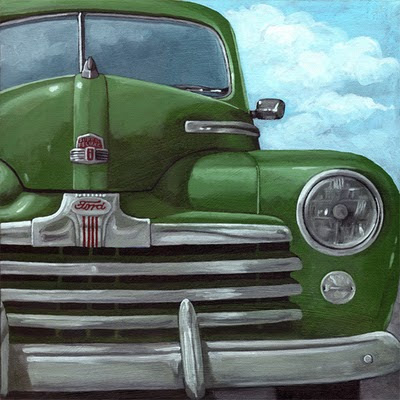
Willis was a few minutes late. Worried that he was in a wreck, his mother stood at the door and watched for him. When she saw his old familiar green Ford pull into the driveway, she felt the relief in her abdomen through her legs all the way down to her toes. She smiled, picked up a wooden spoon to stir the spaghetti boiling on the stove, and waited for him to come in.

When he opened the door and stepped into the kitchen, she felt the little blast of cold air at her back and turned from the stove to greet him. Her smile faded, though, when she saw he had someone with him.

Willis smiled across the kitchen at her and took off his coat. “Mother,” he said. “This is my friend Sten. He’s going to be staying with us for a few days.”

Sten smiled shyly and stepped forward and shook her hand. “I hope it’s not an inconvenience,” he said.

“Dinner will be ready in a few minutes,” she said.

With the three of them seated at the table, she avoided looking directly at Sten. She had developed an instant dislike for him based somehow on the set of his mouth and the unfamiliarly of his eyes but more on the fact of his being an intruder in her home. She smiled, though, because that’s what she thought a mother should do. Smile and it will soon be over.

“Did you have an interesting day today, dear?” she asked.

“More interesting than most,” Willis said.

When she looked at him, the most familiar person in the world to her, he looked different somehow. His eyes had a spark in them and his skin seemed to have taken on a glow she had never seen before. Instead of asking what was the matter with him, she asked, “Is there anything you want to tell me?”

Willis took a deep breath and set down his fork. “I quit the factory today,” he said. He smiled foolishly like an eight-year-old boy blowing out the candles on his birthday cake.

“All right,” she said, “what’s the joke?”

“No joke,” he said. “It’s true.”

“What are you saying?”

“I’m saying I quit my job today. Do you want me to spell it out for you?”

“Why on earth would you do that?”

“Don’t you think sixteen years in a factory is long enough?”

“I thought you liked your job.”

“I’ve always loathed it!”

“You never told me that.”

“Well, I guess it was all right in the beginning, but I came to hate it after a while. I want to do something else with the rest of my life.”

“And what would that be?”

“I don’t know yet, but it’ll come to me.”

“You surprise me,” she said.

“I’ve never done that before, have I?”

She looked at Sten, believing he must have something to do with it. “Did you quit the factory today, too?” she asked.

“Sten doesn’t work at the factory, mother” Willis said.

“Nope,” Sten said. “Never worked in the factory.”

“What do you do, then? If you don’t mind my asking.”

“Sten doesn’t need to work,” Willis said.

“Can’t Sten answer for himself?”

“No, I, uh, never found it necessary to work for a living,” Sten said.

“Sten is an artist,” Willis said. “Like I’ve always wanted to be.”

“He paints pictures?” she asked.

“Not exactly.”

She wiped her mouth and pushed her plate aside. There would be no more dinner for her.

“Did the two of you just meet?” she asked.

Willis and Sten looked at each other and laughed. “Of course not, mother!” Willis said. “How old-fashioned and quaint you are!”

“Well, I don’t think I like that,” she said, feeling herself on the verge of tears. “Why ‘old-fashioned and quaint’?”

“I’ve known Sten since the day I was born,” Willis said. “We share the same skin.”

“How is it I’ve never met him?”

“It doesn’t matter, mother. Everything will be sorted out in the end.”

“What will be sorted out? What end?”

“Finish your dinner, Sten,” Willis said. “We’ve got lots to talk about.”

When they finished eating, Willis stacked the dishes for her to wash and he and Sten went upstairs and shut themselves away in Willis’s room.

The next morning she was in the kitchen when Willis came down alone.

“Where’s your friend?” she asked.

“He was a little late waking up,” Willis said. “He’ll be down in a few minutes.”

“Who is he?” she asked.

“He’s my friend. His name is Sten.”

“I know that, but what I don’t know is why he’s here.”

“He’s my guest.”

“You never had a guest before,” she said.

“This is my house, too, isn’t it? Just as much as it is yours?”

“If you put it that way, yes, it is.”

“Well, then. What more is there to say?”

She was prevented from asking further questions by the arrival of Sten from upstairs.

“I’ve starving,” he said, sitting down familiarly at the table.

She cooked the breakfast and set it on the table and busied herself while they ate. With their heads together, Willis and Sten talked in low voices and occasionally laughed. It bothered her that they seemed so intimate together and she didn’t know what they were saying. They seemed to have forgotten she was in the room.

“It’s almost eight-thirty,” she said in a loud voice. “You’re going to be late for work.”

Not go-ing!” Willis said in a sing-song voice and he and Sten laughed in their private way.

After breakfast they put on their coats and left. “Won’t be here for lunch,” Willis said. “Expect us for dinner, though.”

All day her nerves were on edge, wondering what had got into her Willis. He was always such a good boy, so steady and reliable. Never did anything erratic or impulsive before. From high school he went to work in the factory and never uttered a single word of complaint in all those years. What could have made him change so much?

She opened the door to Willis’s room and went inside with the intention of tidying up, but everything was perfect. Bed neatly made. Clothes hung up. Shoes perfectly aligned in the closet. Dresser and chest of drawers straight and neat. Floor clean. Not a speck of dust anywhere.

She sighed heavily and sat down on the bed and ran her hands over the beautiful light-green chenille bedspread that Willis had picked out on his own. As she sat on the bed, she thought of Willis and Sten in the bed together, their whispering and intimacy. What did it mean when two grown men slept in the same bed together? She had no experience with such matters. Maybe she hadn’t known Willis as well as she thought all those years.

She fixed fried chicken for dinner, Willis’s favorite, and she hoped above hope that when he came home he would be alone, but it wasn’t to be. At a few minutes before six, about the time he would have come home from work if he had gone to work, Willis and Sten came in the back door. They were laughing and seemed happy.

“Where did you go all day if you didn’t go to work?” she asked.

“This morning we went to a museum,” Willis said. “Then we had lunch in a restaurant and after that we went to a movie. Then we did some shopping.”

“I’m exhausted,” Sten said, pretending to collapse into a chair. “This son of yours has a lot more energy than I do!”

“Is that what you’re going to do every day for the rest of your life?” she asked.

“I don’t know,” Willis said. “Maybe.”

That evening they left again without telling her where they were going. To keep herself from witnessing their happiness and to keep from knowing what time they returned, she took a sleeping pill and retired early, locking the door to her bedroom.

She slept until nine o’clock the next morning and when she awoke and went downstairs, Willis and Sten were in the kitchen, putting away the groceries they had just bought.

“What’s all this?” she asked, indicating the bags on the table.

“It was Sten’s idea,” Willis said. “He has some notion that he needs to contribute to your table.”

“It’s the way I was brought up,” Sten said. “I can’t take without giving in return.”

She wanted to object but could find nothing to object to. Without speaking a word, she made a pot of tea and set about cooking the breakfast.

After Willis and Sten went on in this way for almost two weeks, Willis’s mother decided the time had come to confront him while Sten was taking a bath.

“How much longer is he going to be here?” she asked.

“I don’t know. We haven’t talked about it.”

“I want him gone.”

“It bothers you to see me happy, doesn’t it?” he said.

He makes you happy?”

“Taking control of my life is what has made me happy.”

“I have the feeling he’s taking you away from me. You’re all I have in the world. I want us to be as we were.”

“Did you really expect me to remain in a state of arrested adolescence forever? People do change, you know, mother! It’s the only way to stay alive.”

“I don’t know what you’re talking about,” she said.

“Do you want him to leave?”

“If it can be done tactfully,” she said. “I would rather not offend him.”

“If you want him gone, then you must want me gone, too.”

“No. I want him to go and you to stay.”

“If he goes, I will go, too.”

The next morning Willis and Sten loaded Willis’s suitcases into his car. Sten shook Willis’s mother’s hand, thanked her for her hospitality and went out the door, leaving two one-hundred dollar bills on the kitchen table.

“Where will you go?” Willis’s mother asked him.

“I don’t know yet,” he said. “I’ll let you know when I get there.”

She watched the car until it was out of sight and then she sat down at the table and had breakfast. Willis will be back, she thought, and when he comes back he will be without Sten. It’s not that easy to leave your life behind and the only home you’ve ever known. He will choose his mother over his friend.

Weeks went by and she heard nothing. She thought about Willis all the time and wondered where he was and how he was faring. She blamed herself for his sudden change and for his leaving. She sat and pondered over his picture for hours and wondered where she had gone wrong. Had she been too smothering, too possessive, or had she been too lax in letting him have his own way? She didn’t know what she was. People rarely see themselves as they are.

She thought how alike Willis and Sten were. How had she failed to see it before? They were the same age, height, coloring and build. They even walked alike and spoke in the same way. After a while they became indistinguishable in her mind. When she thought of Sten she saw Willis and when she saw Willis in her mind’s eye she also saw Sten. There they were, side by side, just alike. No, wait a minute. They’re not two. They’re one. Two become one.   

Copyright © 2014 by Allen Kopp

Andrew Magenti

Andrew Magenti image b

Andrew Magenti ~ A Short Story by Allen Kopp

(This short story was published in Necrology Shorts Magazine and is a re-post on my website.)

For as long as I live I won’t forget the night the young master was born. It was during a night of the worst thunderstorms I ever witnessed in all my life. All the fury of the heavens was unleashed upon us. The rain, thunder, lightning and wind tore at the old house on the outside, and the mistress’s screams tore at the inside. I don’t know which was more terrifying.

The mistress had the midwife with her and two women from the town. All night long the women toiled over the mistress and silently wept to witness her agony.  Around three o’clock in the morning, at the height of the storm, the mistress was delivered of the child. Those of us who had heard her screams through the long night and seen the bundles of bloody rags being brought from her room were at a loss to explain how the mistress could still be alive. Toward dawn, while the storm was still raging, the women placed the tiny bundle in the mistress’s arms and withdrew without a word.

When the master was sure his wife was safely delivered of the child and the women had left, he went into his wife’s room. Thinking her asleep, he crept to the bed without making a sound and pulled back the coverlet. The room was dark—a sudden flash of lightning afforded him his first look at the newborn child. He recoiled as with an electric shock and bellowed like a wounded animal at what he saw. He ran downstairs and out of the house and was insensible and unable to speak for several hours.

Grotesque as the child was, we all thought it would die right away but, in spite of all our predictions to the contrary, it lived and began to grow.  The mistress nursed it as she would a normal child. When it was three or four weeks old, it began to grow a coat of lustrous brown fur all over its body. Those of us who had seen the child every day from the beginning were less horrified at its appearance than we had been at the first, and all agreed that it was better looking with the fur than without. The mistress named it Andrew after a beloved departed uncle and told all of us firmly that, when referring to the child, we would use the personal pronouns he and him, rather than it. We all liked the name Andrew and it seemed to go well with the last name, which was Magenti.

When the mistress looked at Andrew, she didn’t see the monster that other people saw. He was fine just as he was—her darling boy. She had him moved into her room from the nursery so she could be with him and watch out for him all the time. Being of a religious bent, she believed that he was the way he was because God made him that way—for a reason. God knew the reason, even if she didn’t, and it was not up to her to question the workings of the Lord. It was her job to be a mother to the poor little thing and protect him from those who would hurt him.

The master didn’t like being in the same room with Andrew. He avoided looking at Andrew or having any kind of contact with him. By mutual consent, he never shared the mistress’s bed again. He believed she was responsible for Andrew, saying loudly and frequently that there never had been any freaks in his family but she obviously had some dark taint in her lineage that she should have told him about before he married her. If he had only known, he would have followed a different path.

As Andrew became older, his appearance changed. His head, which had been very large and elongated at birth, became rounder and more proportionate to his body. His face took on definition and didn’t seem the half-formed face that it once was. His amber eyes, which had once looked like expressionless fish eyes peering out of raw slits that never closed, became very large and expressive and had about them a haunting quality that was part human, part animal—eyes unlike any I had ever seen before or will ever see again.

There were times when the master and the mistress argued over Andrew’s fur. The master wanted all of it shaved off, believing that shaving was the one thing that could be done to give Andrew at least the appearance of being human, but the mistress wouldn’t hear to it. She knew that underneath the fur was pale pink skin like that of a pig and shaving it off would be a cruel denuding and a thwarting of nature. She did agree, as a concession, to have the fur trimmed around Andrew’s mouth and over his eyes to give him, she said, a more civilized appearance.

The mistress had all of Andrew’s clothes custom-made at great expense, including a long cloak with a cape attached in which he could place his hands that were like an animal’s paws but nevertheless as flexible as human hands. With the cloak was an odd tri-cornered hat with an opaque black net attached that could be let down when necessary, allowing Andrew to see where he was walking but keeping anyone from seeing Andrew’s face underneath.

The mistress believed that Andrew should not be kept prisoner in the house, that he should see something of the world, if only a small part of it. She was fond of taking him on little excursions in her closed carriage—visits to an old aunt and uncle in the next county—or to witness the beauty of the countryside in the spring or fall. Occasionally she would take him with her on shopping trips to town, where he, never leaving her side for a second, would draw the stares and gasps of the curious, swathed all in black as he was from head to toe.

For obvious reasons, Andrew wasn’t able to go to school the way other children did, so the mistress undertook to educate him herself. She set aside an attic room as a schoolroom, and there she spent three or more hours every day teaching him to read. (He learned to read and to write in a peculiar scrawl, but I never knew of him to speak a word, other than to make sounds in his throat.)

She bought picture books for him so that he could know about places like Africa, China, and the South Pole. He especially liked books about elephants, tigers, and curious animals like anteaters and lemurs. She read to him from the novels of Charles Dickens and the poetry of John Keats. On his birthday she presented him with a leather-bound volume of Keats’s poems for his very own to keep always.

The master awoke one morning in the spring saying he had a funny feeling in his head. When he tried to go about his daily business, he collapsed on the floor and we carried him upstairs to his bed. The doctor came as soon as he was called, but there was nothing he or anybody could do. The master died that night of what turned out to be a massive hemorrhage to the brain. He was barely forty-five years old.

He was laid out in the parlor in his elegant mahogany coffin banked with lilies and roses, looking more handsome and spruce than he ever had in life. A tiny smile on his lips and a hint of roses in his cheeks told us that dying might not have been what he would have chosen for himself at that particular time in his life, but, now that it had come upon him, all was well. Happy I live and happy I die.

A photographic studio in town offered a service they called postmortem or memento mori photography, meaning they would travel to wherever you wanted them to go (for a handsome fee) with their photographic equipment and photograph a deceased person before he or she was laid to rest. This gave friends and family the chance to own a likeness of the person in death without having to rely entirely on memory.  The marriage of death and photography made perfect sense and proved a lucrative enterprise for those engaged in it.

The mistress engaged the photographer and his assistant to come to the house and photograph the master in his coffin on the day before the funeral. The men set up their equipment and took one shot of the master from the front and another from an angle and a third one from the doorway so that the whole room was included. Then they took a photograph of the mistress standing in front of the coffin in her fancy black silk dress with her hand resting on the satin edge of the coffin. When the photographic assistant asked the mistress if she wanted any other photographs taken, she brought Andrew down from upstairs and stood him in front of the coffin where she had stood.

Dressed in his black wool suit and stiff white collar and black cravat, perfectly tied, Andrew looked like something that wasn’t real but only imagined. To the photographer and his assistant, he appeared to be half-child and half-beast, but neither of them flinched or made a move to indicate that they were not accustomed to seeing such sights every day. Andrew looked straight into the camera with his strangely luminous eyes, his huge incisors slightly overlapping his lower lip, waiting for the man to take the photograph that would have unexpected consequences for him, the mistress and all of us.

Two weeks after the master’s death, the picture of Andrew appeared on the cover of a cheap periodical called The Nocturne, a paper that catered to the vulgar tastes of the masses. We discovered later that the photographic assistant had stolen a copy of the picture from his employer and sold it to the highest bidder, making enough money that he was able to go to the city and begin his own photographic establishment.

Many people who saw Andrew’s picture on the cover of The Nocturne wanted to know if it was a hoax or if such a creature really did exist. If he did exist, they wanted to see him with their own eyes. The Nocturne didn’t go so far as to publish Andrew’s name or where he lived, but many who knew about the master and mistress’s strange freak child —but had never seen him—knew it had to be the same child.

A newspaper reporter appeared on the doorstep, waving a copy of The Nocturne as though it was his pass to enter. He wanted to write a story for his paper, he said, about the life of the strange child that everybody was talking about. We turned him away without his story, but he swore he would be back.

Next came two men claiming to be doctors. They wanted to examine Andrew and explain to the world from a scientific standpoint how such a phenomenon had come to be. When we asked to see their credentials, they blustered and threatened to bring the law into the matter and force us to let them examine Andrew.

After the episode with the “doctors,” there came many other people, curiosity-seekers and the ghoulish who just wanted to laugh and marvel at Andrew as if he was a feature in a freak show. People would gather on the lawn and stare at the front door, hoping to catch a glimpse of something they could tell their friends about. The mistress said she had never wished more fervently in her life to own a shotgun and to know how to use it.

The people would not stay away, no matter how discourteous we were to them. There were those who would have walked right through the front door without so much as a knock as if it was their right to do so. The mistress had a ten-foot-tall iron fence installed all the way around the house. She hired a detective agency to keep some of its agents on the premises at all times. She believed the interest in Andrew would eventually fade and die when the idle masses had something else to occupy their time.

The fence and the detective agency men were effective in keeping people away from the house. Life resumed as it had been before the master died and before Andrew’s picture was published in The Nocturne. The mistress believed that soon people would forget and she would no longer need to retain the men guarding the house. The fence would be enough to discourage unwelcome visitors.

On an evening in late summer, several months after the master had died, we had finished with dinner; the mistress and Andrew were in the parlor. The mistress was seated at the piano, trying to work out a difficult passage in the Chopin piece she was trying to learn by heart. Andrew was seated next to the open window looking through a picture book. The air was stifling and humid and had been all day, but a thunderstorm that was brewing had brought with it a welcome suggestion of cooler air.

About the time the thunder and lightning began in earnest and the rain began pelting the house, there was a knock at the door. The young maid, the one named Alberta, went to the door as she had been instructed to do.

When Alberta opened the door a few inches and looked out into the darkness to see who was knocking, she was knocked off her feet and slammed against the wall. She regained her feet and began screaming hysterically. We all went running to see what was the matter.

Two dark, hooded figures had come into the house, silent and swift. They seemed to know the layout of the house because they moved with certainty, without hesitation. They went into the parlor where Andrew was, while the rest of us stood in stunned silence and watched them. One of the figures picked Andrew up in its arms; the other stood back as if to keep us at bay, but we did nothing. We just stood and stared, so shocked were we at what we were witnessing.

When they were making for the front door, the mistress made to put herself in their way to keep them from leaving with Andrew, but the other figure—the one not carrying Andrew—grabbed her arms and moved her out of the way as easily as if she had been stuffed with straw. While he held her arms in his gloved hands, he leaned into her face and said one sentence: He belongs to us.

They went out into the night, into the pouring rain. We all went running blindly after them but there was no use. They were lost from sight immediately, as if they had vanished into the air. We went to get a light and followed them a half mile or so away from the house in the direction in which we thought they had gone, but the rain and darkness kept us from seeing anything at all. We discovered the detective agency men unconscious in a ditch but still breathing. We carried them into the house out of the rain and tried to revive them.

When we called the county sheriff and told him what had happened, he came at once, bringing with him eight men. The sheriff questioned each one of us in turn. We all told him what we had seen but we weren’t able to give him any kind of a description of the hooded figures because every part of them was covered. When he asked me what Andrew said or did when he was being abducted, I could only answer that Andrew made not a single sound. When he asked me if Andrew seemed to be a willing participant in his own abduction, I could only answer that of that I wasn’t sure.

The sheriff’s men searched the area for any clues but found none. In the daylight, after the rain had ceased, even more men were brought onto the scene. The search went on for several days, but not a single shred of evidence was ever turned up. After that, the mistress hired private investigators to try to find Andrew and bring him back, but their search also was fruitless. There was no trail to follow and nothing to go on; no basis for a real investigation.

Nothing of Andrew was ever turned up. One year after his abduction, the mistress sold the house and all her belongings. She turned over all her holdings to the church and went into a convent to escape the unhappy world. She died in the convent two years later of a heart ailment. She was laid to rest beside the master in the Cemetery of the Holy Ghost on the edge of town. An ornate granite monument marks their resting place.

Several years after the mistress died, the night watchman of the Cemetery of the Holy Ghost, who I had known since childhood, sent me a message and asked me if I could come to see him. When I went to his room, he handed me a little leather-bound book that I did not at first recognize. I opened the book and saw that it was a volume of the poetry of John Keats. Then I remembered that Andrew had once owned a volume of poems exactly like the one I held in my hand.

When I asked the night watchman what this was all about, he said the book was left on the mistress’s grave and he, knowing I was the mistress’s step-brother, wanted me to have it before it was ruined by being left outdoors in the rain. I asked him if he had seen who left the book and he smiled and nodded his head.

I knew then that Andrew was alive. I knew also that I had to find him and talk to him. I wanted to know what happened on the night of his abduction. Most of all, though, I wanted to know where he had been and what he had seen in the intervening years.

Copyright © 2014 by Allen Kopp

Tomorrow You Shall Find Me a Grave Man

Tomorrow You Shall Find Me a Grave Man

Tomorrow You Shall Find Me a Grave Man ~ A Short Story by Allen Kopp

(This short story was published in Deadman’s Tome and is a re-post on my website.)

I had fallen on some hard times and was forced to hire myself out as a grave sitter. No sooner had I placed my notice in the newspaper than a bereaved family engaged me to watch over, for three days and three nights, the grave of their recently deceased son. The agreement called for me to remain by the graveside and remain unfailingly vigilant through all the hours of darkness. I was to be allowed to leave for short periods of time during the daylight hours to refresh myself, but only on the stipulation that I would be away for minutes at a time rather than hours. I was told that I would be paid for my time at the conclusion of the three days and not one second before. If so much as a clump of dirt was disturbed on the fresh grave, however, I was not to be paid a cent for my seventy-two tedious and uncomfortable hours, and a warrant would be sworn out for my arrest, the result of which would be that I would never hold another job again, of any kind, for as long as lived upon this earth. I had heard such threats before and had a good laugh that people still thought they could bluff me in this manner.

The profession of grave sitter had come into being as a result of the recent illegal and highly unethical practice of “resurrectionists” stealing fresh corpses from graves. The enterprising and unscrupulous individuals who engaged in this activity were able to sell the corpses to medical schools for dissection for a good price. I had heard it said that just one body of a recently deceased, healthy young male could bring the equivalent of a month’s factory or mill wages. The medical schools, of course, denied any involvement in such a ghoulish practice. They claimed to have their cadavers provided to them in a reputable manner by city morgues and by the doctors of indigent patients.

Since only fresh corpses were desired, only recent graves were in danger of being violated. If the body had been in the ground for more than three days, the process of decay had begun and the body was no longer fresh enough to be useful for medical study. A grave sitter was engaged for three days and nights only. At the end of that time he was no longer needed.

I arrived at the cemetery at about four o’clock on a Thursday to take up my post. I found the caretaker easily enough and he directed me to the fresh grave of the boy who had been buried that day. It was near a large tree and also near a little pavilion where I could take shelter if it happened to rain during my three days and nights there. I was fortunate the month was October and the weather still quite warm.

I was determined to make myself as comfortable as I could with the few provisions I had brought. The ground was a good enough resting place for me as long as it remained dry. I had brought a blanket and a little pillow and a canteen of water and some nuts and bread and dried beef; also a couple of books to keep me company and some writing paper and a pencil if I needed it. The caretaker had told me about an old woman named Miss Beck who lived just over the ridge a quarter of a mile away. She would provide me with a simple meal for a reasonable price and also a place to wash up if I desired it. The caretaker would keep a watchful eye on the grave while I was away at Miss Beck’s, as long as I went while he was on duty. He went home every day at about five o’clock. After that I should find the place quite lonely, with only the squirrels, rabbits, owls, field mice, and the occasional deer for company.

I found my surroundings pleasant enough. I installed myself under the tree a few yards from the grave—what I had come to think of as my grave for the next three days and nights—wrapped myself in my blanket, leaned against the tree in a sitting position to help me to stay awake, and began my long vigil. It was so quiet I would have been able to hear anybody approaching from a long way off. I amused myself by watching the clear night sky with its myriads of stars and its three-quarter moon and by meditating on a number of topics that occupied my mind during such quiet times.

I couldn’t help thinking about the poor fellow whose grave I was watching. He was only sixteen, as I had found out from the caretaker, and the picture of health. He had been playing a rough game with three of his friends in a field and had received a sharp blow to his neck, fracturing his windpipe. He was rushed to a doctor but died within minutes from not being able to breath. It was a freak accident that sometimes unexpectedly claims the lives of young people.

From where I sat underneath my tree, I could see almost the entire cemetery. If any other person had set foot inside the gates, I would have seen him in an instant, long before he would see me. It was plenty light enough that I could have read my book to help me pass the time, but I wasn’t in the mood for reading. I had fallen under the spell of the night and I wanted to drink it in and not have my attention diverted away from it by the words on a page. When I grew tired of sitting, I stood up and walked around some, breathing in the smells of the grass and the leaves, but always remaining within sight of my grave. Along about midnight, the air turned decidedly cooler and the wind picked up and I huddled into my blanket. I was so sleepy I longed to stretch out on the ground beside the grave and go to sleep, but this would have seemed a sign of weakness. I was determined to remain in a sitting position to keep myself as alert as I could.

After dozing lightly and waking several times in this upright position, I fell into a deeper sleep. I had slept for possibly three-quarters of an hour when I first heard the sounds that woke me up. It was a light thumping sound and then a tearing sound, followed by a faint cry of distress. I was on my feet almost before I was awake and I looked for the source of the sounds I thought I had heard. Seeing nothing, I decided I had been dreaming; my surroundings had affected the kind of dreams I was having. My mind had played such tricks on me before. Once when I was much younger I woke up in the middle of the night, believing I had been hearing my older brother’s voice, but my older brother had been dead since I was twelve years old.

I stayed awake—or mostly awake—for the next couple of hours. Staying awake all night was more difficult than I remembered. About three o’clock in the morning, though, I gave in to my impulse to sleep and wrapped myself in my blanket like a giant cocoon and lay down next to the grave. The mound of dirt helped to block the wind from me. I was as comfortable and as cozy as I could be sleeping on the ground, and I went to sleep as soundly as I’ve ever slept in any bed in my life.

The next time I awoke it was to a whimpering, crying sound, punctuated by a muffled banging. The ground on which I was reclining actually seemed to move and shake slightly. I jumped to my feet, forgetting for a moment where I was. Then when I focused my attention, it occurred to me the sounds had been coming from the grave. That poor boy wasn’t really dead, only unconscious, and he had been buried alive. He was frantically trying to signal to someone to get him out of the grave before it was too late. How horrible to be buried alive and to suffocate, knowing you would never be able to claw your way out of the grave no matter how hard you tried. Your only chance—and a remote chance at that—was to make someone hear you. Maybe he somehow knew I was there and he was trying to signal to me to help him to get out.

Almost without thinking, I was on my knees clawing at the mound of dirt with my fingers. If I had had a shovel, I would have dug down without stopping until my heart and lungs burst to get to him.

When my mind cleared from the fog of sleep, I realized how ridiculous I must look down on my knees clawing at the dirt. How illogical it was that he could be alive! It was just a dream. I had only been dreaming. Dreams defy logic. A doctor had attended to the boy after he was injured. A doctor would know if someone was alive or dead, wouldn’t he? He would never make the mistake of believing someone was dead who was really alive.

Morning came and the caretaker arrived at about seven o’clock. I was still a little shaken and I had never been more glad to see another human being in my life. I met him as he was coming in at the gate. He greeted me and asked me how I had fared through the night. He asked me jokingly if I had seen any ghosts.

When I told him about the sounds I thought I heard coming from the grave of the boy, he smiled and patted me reassuringly on the shoulder. He asked me if I had slept any during the night and when I told him I had, he said I had only been dreaming. He said it isn’t easy to spend the night alone in a cemetery and the place had been playing tricks on my mind. He offered me a shot of whiskey and when I declined, he advised me to go to Miss Beck’s and get some breakfast; it would make me feel better.

I walked over the ridge, glad to be out of the cemetery for a while, and found Miss Beck’s place. When I knocked at her back door, she came to the door and allowed me into her kitchen. She said she had been expecting me and when I asked how she knew about me, she said the caretaker was a friend of hers. He told her everything that went on in the cemetery.

She provided me with a simple yet satisfying meal of strong tea, cornmeal mush, and eggs with little squares of potato cooked in with them. When I was finished eating she told me I could wash up in the spring house if I wanted to. I would find everything there I needed.

I returned to the cemetery in a calmer state of mind than when I had left. I was happy that I had concluded my first night and was heartened to think that my three days and nights would soon be up and I could return to my own home, which at that moment seemed more inviting to me than it ever had before. I didn’t see the caretaker or anybody else upon my return, so I thought to take advantage of the solitude by sitting against the tree and dozing, with one eye, so to speak, on the grave of the boy.

The day passed pleasantly enough, without incident, and then it was night again. I felt my apprehensions returning when I saw the caretaker leave for the day. I had discovered the night before that a cemetery is the most solitary place in the world at night. I was sorry I had ever signed on to be a grave sitter, and I considered giving up and going home before dark came, but I had promised the boy’s father I would remain for three days and nights and I didn’t feel right about going back on my promise. More than anything else, though, I needed the money I was going to get at the end of the three days.

The sky had turned cloudy and darkness came earlier than expected. The air was very still and I could hear every sound within a hundred yards of where I sat underneath the tree. I tried reading for a while, but my mind couldn’t absorb the words on the page so I gave it up. Since no one was around, I tried singing to myself, but my voice sounded so hollow and foolish to my own ears that I blushed with embarrassment and looked around. If anybody had heard me singing they would have thought I was insane.

As I had done on the previous night, I slept lightly against the tree and awoke and then slept again. Once when I heard a rustling sound in the leaves near me I opened my eyes with alarm and saw a small fox standing a few feet away. When I held out my hand to the fox, which seemed as docile as a kitten, it eyed me suspiciously and bolted into the brush.

Whereas the previous night had been clear and moonlit enough to read by, this one was cloudy and dark. I wouldn’t have been surprised to see some rain before morning. Several times I stood up and walked around among the headstones down the hill to stretch my legs and help to pass the time. I had never seen a longer night and I longed for the morning.

Finally, very late in the night, I wrapped myself in my blanket and lay down on the ground next to the grave, as I had done the night before. My last thought before going to sleep was that this was my second night and that when I woke up it would be morning and there would be only one more day and one more night to get through, and part of the day after that, until I could get my money and go home.

I slept for a couple of hours—I don’t know exactly how long. I was dreaming I was in a boat on the open sea when someone touched me roughly on the shoulder and I awoke with a violent start. I sat up in a panic. I think I said something incomprehensible, but I don’t remember what it was. My first waking thought was the awareness that somebody had been able to come upon me and I hadn’t seen or heard them. When I opened my eyes and looked around me, I saw that I was surrounded by three men I had never seen before. I tried to stand up but one of them pushed me back to a sitting position. The second man shone a bright light in my face, while the third one brandished a rope.

When I saw they meant to tie me to the tree, I grunted like an animal and tried to get away from them in a blind panic, but I was outnumbered and easily subdued.  When I started to speak to ask what they meant to do, or at least to attempt to bargain with them not to hurt me, the first man—who was the youngest of the three—brandished a gun in my face.

“You see this?” he asked. “If you so much as make one sound, I’ll blow your head off and we’ll put you in the grave that we take him out of.” He gestured with his thumb toward the grave of the poor boy and I knew at once that they meant to steal the body.

“You can’t do that!” I began, but when he held the gun six inches from my nose, I knew he meant business and I would do better not to speak.

They dragged me to the tree and tied me to it in a sitting position. They made the ropes so tight that I felt a crushing weight around my heart and I thought I would probably die. When they had me securely in place and helpless, two of them set to digging, while the one who had spoken to me—obviously the leader—stood and watched them and held the light.

I figured they were going to kill me, anyway, whether I spoke or not. I had seen all of their faces and would be able to identify them if they let me get away. Maybe, I thought, their tying me up was a good sign. If they had meant to kill me, why hadn’t they done so at the outset? They could easily have squashed my head like a melon while I slept and I would never have known anything.

With the two of them digging fast and efficiently, they had unearthed the coffin in a very short time. When they had piled all the dirt beside the grave, one of the diggers disappeared into the hole and tied ropes to the handles of the coffin, and in a couple of minutes they had hoisted the coffin out of the ground.

“Hurry up!” snapped the leader. “We haven’t got all night!”

One of the diggers was on his knees trying to pry the lid off. The leader brought the lamp closer and I realized with a little thrill that I was going to get a good look at the face of the dead boy whose grave I had been sitting beside for all those hours. I had never seen a coffin unearthed before and I had to admit I felt a personal interest in this one. It was almost as if the boy was a long-standing friend of mine or a member of my family.

When the man had the lid ready to open, he paused for a moment and looked up at the leader, almost as if he wanted to make sure that everyone was ready before he revealed what it was they had come to steal. I started to say something foolish and banal, such as, “You’ll never get away with this,” but before I could get the words out the man lifted the lid and the contents of the coffin were revealed.

There in the coffin lying on a bed of satin was a wax dummy of a man dressed in evening attire with a painted-on face. His mouth was a rosy cupid’s bow and his cheeks as red as apples. Black hair was painted on the head in the semblance of curls.

“What is this?” the leader asked as though he had been duped. He raised the gun and pointed it at me as if he thought I was the one who had duped him. He knelt down and picked up the wax dummy by the lapels of its suit. When he had confirmed to himself that it was indeed what it appeared to be, he threw it back into the coffin. Its arms and legs splayed crookedly.

I started to speak but the words wouldn’t come. I had no explanation. I was as surprised by what I saw as the three men were. I was thinking that now they would be sure to kill me, when I heard a sound and twisted my head on my neck to try to see around the tree to which I was tied.

Several men were approaching. They had obviously been hiding and observing in the brush off to the edge of the cemetery without me or the three grave robbers knowing they were there. When the men were closer, I recognized the one in front as Mr. Sage, the grieving father who had engaged me to watch over his son’s grave.

 The men with Mr. Sage were carrying rifles, which they pointed at the grave robbers. The leader of the grave robbers pointed his gun at Mr. Sage and the men and acted as if to fire, but when he saw all the firepower arrayed behind Mr. Sage he desisted.

“Good work!” Mr. Sage said.

His men subdued the grave robbers, who put up no resistance. As they led them away, Mr. Sage pointed at me and instructed one of his men to untie me.

“What is this all about?” I asked as soon as I was on my feet.

“You just helped us to apprehend a gang of body snatchers,” Mr. Sage said.

“Do you mean none of this was real?” I asked. I punched him on the shoulder to keep from hitting him in the mouth. “Those men could have killed me!” I said.

“Oh, come now,” Mr. Sage said with a laugh. “You were never in any real danger.”

“You’re a policeman?” I asked.

“That’s right.”

“Well, why then?”

“We circulated the story about the death of the sixteen-year-old boy.  It seems that healthy young males bring a better price. There is no boy. I have no son.”

“Why did you involve me in this?”

“We needed a sitter who knew nothing about what we were doing. If there had been no sitter, the snatchers would have been suspicious.”

“I want my money!” I said foolishly, not knowing what else to say.

I discovered later that the caretaker and Miss Beck were both involved in the business of stealing bodies. The caretaker informed the body snatchers when there was a likely candidate to be had, while Miss Beck acted as a lookout and provided a good hiding place whenever one was needed.

And so began and ended by brief career as a grave sitter. After that, I would rather have died than to spend another night alone in a country cemetery.

Copyright © 2014 by Allen Kopp
A Good Part of the Afternoon

A Good Part of the Afternoon image 5

A Good Part of the Afternoon ~ A Short Story by Allen Kopp 

(This short story was published in Cease, Cows and has appeared on my website before.)

She called herself Penelope but that wasn’t really her name. She lived in a small but comfortable third-floor apartment in a large building. She paid her rent on time and never caused anybody any trouble. She rarely went out and knew none of the other people in her building except to pass them in the hallway.

Most of her days were the same but she didn’t mind. She was happy with her life, as narrow as it was. If contentment was happiness and happiness contentment, then she had both.

Her baby, whom she called Alexander, lay in his crib in the bedroom. He was such a good baby. Never caused any trouble at all. And she attended to him assiduously. When she was in the kitchen washing the dishes, she thought she heard him whimper, but when she went in to check on him he was still asleep. A perfect little angel.

Feeling a little bit lonely, she picked Alexander up in her arms and carried him into the living room and sat down with him in the rocking chair. She cooed at him, laughed, and sang him a little song that she made up. She felt him looking at her with his wide eyes, his bow-shaped lips drawn back over his perfect teeth in a sweet smile. He was such a handsome boy. So much like his father.

She held him, rocked him, and sang to him for a good part of the afternoon, thanking the Lord above all the while for giving him to her. Then when she heard the clock chime three o’clock she knew it was time to start dinner. She took Alexander back into the bedroom and placed him carefully in the crib.

She went into the kitchen and put on her apron. She would fix a casserole with some leftovers from the refrigerator. It would be ready about the time that Alexander’s father arrived home.

While the dinner was baking, she set the little table for two and then fixed herself up some, washed her face, combed her hair and put on some lipstick.

When she knew he would be arriving any second, she felt the blood quicken in her veins. She went into the bedroom and picked Alexander up and carried him to the front door. She looked out the little peephole in the door and, just like clockwork, she heard his footsteps in the hallway. He was dressed in a dark suit, carrying his briefcase just like always.

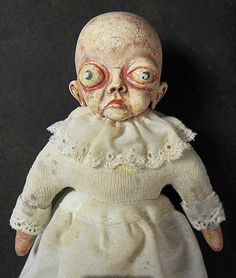
She saw him through the peephole as he opened the door across the hall and went inside. She held Alexander up to the peephole to get a glimpse of him before it was too late. It didn’t matter that Alexander was made out of plastic, had plastic eyes, and the man across the hall didn’t know her. The day for her was complete. She was as fulfilled as any woman could be.

Copyright © 2014 by Allen Kopp
In a Cemetery on Halloween Night

In a Cemetery on Halloween Night ~ A Short Story by Allen Kopp

(This short story was published in Creaky Door Magazine and is a re-post on my website.)

When we were younger, the three of us were fascinated by the subject of death. We had lengthy discussions about the possibility of a continued existence after life has ended. We all wanted to believe in such an existence. Since Halloween is the one day in the year that the veil between the living and the dead is supposed to be at its most transparent, we decided to put all talk aside and conduct a little experiment.

There were no fewer than eighteen cemeteries in our county, some of them tucked away in forgotten corners. Each of the three of us would select a cemetery to spend the night in—the night of October thirty-first. We believed it was important for each of us to be alone, as spirits were more likely to make themselves known to an individual rather than to a pair or a group. We would meet the next evening and discuss our experiences. We hoped that at least one of us would have the proof we longed for.

I chose the Cemetery of the Holy Ghost because I remembered my grandmother telling me when I was a child that some of her family were buried there, and I also had a vague recollection of being there a time or two with my grandparents when I was in grade school.

It was a once-fine cemetery that had fallen out of vogue about a hundred years ago. It contained many interesting mausoleums, above-ground crypts, stones and monuments. Some of the illustrious (but now forgotten) inhabitants of the cemetery included governors of the state and their “consorts,” a United States senator or two, a celebrated writer (all of his books out of print for fifty years), several war heroes, an actress who appeared on the stage in both New York and London, and a notorious multiple murderer. In checking the records, I discovered that the cemetery had not received a newly deceased person in almost fifty years.

In the early evening of October thirty-first, I drove my car out into the country. I made sure I knew the way before I started and found the cemetery without any trouble. I parked the car in a low spot where it couldn’t be seen from the road (if anybody happened to be passing by, which was unlikely), and went in. There was an iron fence all the way around the cemetery that had fallen down in places. Nobody who wanted in was going to be kept out. I walked around for a while, taking in the sights as much as I could before it was too dark to see.

I found a good place under a big maple tree to sit down where the ground was covered with fragrant, dry leaves. The spot had the advantage of making me feel safe from anything or anybody that might approach me in the dark, so I planned on staying there most of the night until daylight when I would get back into my car and go home again. I took the things out of my backpack that I had brought—a flashlight, some drinking water and snacks, a lightweight blanket, a paperback book in case I became bored with the whole scene—and as I made myself comfortable on the ground under the tree, I realized just how peaceful and lonely an abandoned country cemetery is on a beautiful autumn evening.

I sat with my back against the tree as night came on. I wasn’t especially afraid of the dark but I had to admit that every sound I heard made my heart beat a little faster. Was the snap of a twig or the crunch of leaves someone—or something—coming toward me? What if I really did have an encounter with a spirit of some kind? Would my nerve fail me? Whatever happened, I promised myself that I would leave and go home if the situation became too unpleasant.

Once when I heard a sudden rustling sound right above my head, I jumped up with a little yell, ready to defend myself. When I realized that it had only been an owl—in fact, a pair of owls—I felt a little foolish and was glad nobody was there to see how skittish I was.

I sat underneath the tree for what seemed several hours. I had to get up several times to get the circulation going in my legs and to keep warm. The balmy evening had turned into a chilly night. I was a little disappointed—but not altogether surprised—to see that a country cemetery on Halloween night is the same as on any other night. The dead are sleeping peacefully and there is nothing to be seen or felt. The only thing I was sure of was that it was without a doubt the loneliest place I had ever spent a night in.

When I looked at my watch and saw it was only a few minutes before midnight, I longed to go home and go to bed, but I didn’t. I just didn’t want the night to end that way, with my leaving long before I was supposed to because I wasn’t having any fun. Instead I wrapped myself in my blanket like a cocoon and laid down on the bed of leaves with my head a couple feet from the tree. If I could spend a few hours sleeping, it would be dawn when I woke up and I could go home and have a good breakfast and sleep until noon.

I was more tired than I thought and lying on the ground was more comfortable than I expected it to be. In a very short time I was lost in sleep.

I woke up long before dawn to what sounded like the strings being plucked on a musical instrument. I gasped, believing for a moment I was choking, and sat up.

“That’s Edith playing her ukulele,” a male voice said.

Since it was too dark for me to see anything, I reached for the flashlight but wasn’t able to find it. “Who’s there?” I asked.

“I’m right here,” the voice said.

I squinted into the darkness but couldn’t see anything. Then, as my eyes seemed to adjust a little bit, I could see what seemed to be the blurry outline of a person. After a few seconds I could see the features of a face—nose, eyes, a mouth—but they were very faint. I seemed to be looking at a person who was there and not there at the same time. Lit from within, he seemed to be, as when you put a small lighted candle inside a large paper sack.

“Who are you?” I asked.

“I belong here,” he said. “You don’t.”

“Who’s Edith?”

“She’s my daughter. Ukulele player extraordinaire.”

As soon as her name was mentioned, a small girl “lit up” beside the man. Apparently they were able to turn the light on and off at will.

“Is there anybody else here?” I asked stupidly, running my hand across my eyes.

“My son Tom is here and several others who are just now hearing about you.”

A boy of about fifteen made himself known to me the way Edith had done. Then several others behind him did the same thing. As I looked out at them over the man’s shoulder, I saw that they were not quite touching the ground but “floating” above it.

“What are you doing here?” the man asked. I could hear the amusement in his voice.

“Do you know what day it is?” I asked.

“Time doesn’t mean anything here,” he said.

“Well, it’s Halloween,” I said.

“Oh, that,” he said, as if disappointed.

“So you understand the significance of the holiday?”

“Yes. And you are one of those who believe that Halloween is the one day in the year you will be able to see for yourself that we exist.”

“It sounds rather silly when you put it that way.”

“Are there others here also?”

“No. I’m by myself.”

“Are you some kind of medium between the world of the living and the world of those who have passed over?”

“No! Oh, no!”

“Then why are you seeing us right now?”

“This isn’t really happening. It’s just a dream. I’m afraid I’ve fallen under the spell, the romance, of being in an old country cemetery on Halloween.”

There was a murmur among the spirits behind the man. He listened to them for a moment and then turned back to me.

“They’re saying we can’t let you go like this,” he said.

“Why not?” I asked.

“They think, and I agree, that you’ll go back and spread the word that you’ve seen proof of life after death and then this place will never be the same. There’ll be people coming out here in droves—curiosity seekers like yourself and newspaper men and the like. I haven’t been dead so long that I don’t remember what people are like!”

“I won’t tell a soul.”

“No, indeed, you will not!”

I couldn’t help noticing that the spirits had increased in number. Before there were just a few but now there were dozens and behind them dozens and maybe hundreds more. I began to feel a little afraid at what they were going to do to me.

“Why are there so many of you here?” I asked.

“They all want to get a look at you,” he said.

“That’s not what I mean. Why haven’t you moved on in the spirit world? Do you have to stay here because this is where your bodies are interred?”

I heard faint laughter but couldn’t see who was doing the laughing.

“Of course not,” he said. “We’re everywhere. We can go wherever we want. There are no restrictions. That’s what being a spirit is. Some choose to stay here because their loved ones are here; others don’t want to leave because they’ve been here so long they don’t remember any other place.”

“You don’t like living people like me coming around bothering you, do you?”

“Most spirits choose to remain solitary or with other spirits. We would prefer that you left us alone. Nothing good comes out of it for us when you try to prove that we exist.”

“So, are you going to scare me to death so I won’t go back and tell people that I’ve seen you?”

“No, I have to tell you that a spirit can’t kill a living person unless it’s by suggestion. I’ve also heard of spirits causing heavy objects to fall on living people, but that doesn’t happen very often.”

“Well, I think I’ll get into my car now and drive home, then, if it’s all the same to you. And I promise you I’ll forget I was ever here.”

“You’ll go back to sleep. You’ve never really woken up. At dawn you’ll wake up and leave this place. You’ll forget any of this ever happened. You’ll have nothing to report to your friends.”

“I won’t remember any of this,” I said, “because it’s a dream and I never remember dreams after I wake up.”

Just as the sun was coming up I awoke to the enthusiastic singing of birds. As I stood up from my bed of leaves and folded my blanket, I was relieved that morning had arrived, I had survived the night intact and it was time to go home. I had done what I said I would do, which was spend Halloween night alone in a country cemetery. I wondered if my friends had fared as well as I had.

I walked to my car, started the engine, and turned on the heater. By the time I got out to the highway, morning was well on its way and the sky a brilliant autumnal blue.

I didn’t see the deer that came rushing out of the brush toward me like the angel of death. All I saw of it was its back legs as it sailed over the hood of my car. I suppose I had been thinking too much about bacon and pancakes and wasn’t paying as much attention to my driving as I should have. I swerved the car sharply to avoid colliding with the deer. Since I was going about sixty miles an hour, I lost control and ran the car off into a deep culvert that, lucky for me, had no water in it. I hit my head and was knocked out cold.

Somebody passing by on the highway saw my car in the ditch and called for help. An ambulance came and took me, still unconscious, to the hospital. The police had my car towed into town.

While I was still unconscious, I could hear a song being played on the ukulele. I didn’t know what the song was, but it was the same song over and over. A ukulele is not an instrument I’m used to hearing or would expect to hear. It forced me to recall in vivid detail the dream I was supposed to forget. When I regained consciousness, I asked for a pencil and some paper. I knew I had to write it down while I remembered it or risk losing it forever.

Copyright © 2014 by Allen Kopp

Celeste

Celeste image 1

Celeste ~ A Short Story by Allen Kopp

(This short story was published in Gothic City Press: Gas Lamp and is a re-post on my website.)

She owed everything to M and F. They brought her into the world, fed and clothed her, educated her, gave her a wonderful childhood. When the world was against her, M and F were always in her corner.

After she grew up, she married and left M and F. The marriage didn’t last, though, and after it came to its sad end she moved back home. M and F were growing old by then and needed her in the same way she needed them when she was a little girl growing up. She would never leave them again.

She did everything for them. They were helpless without her. She got them up in the morning, dressed them, sat them in their chairs, turned the TV or radio on for them. She read the newspaper to F and helped M with all the housework. She loved them so much that she told them all her secrets, like the time she pushed a girl down a long flight of stairs or the time at the lake when she could have saved a drowning boy but instead let him die.

On a beautiful autumn day, when the leaves were bright colors and the air held that wonderful crispness that can only mean the end of October, she bundled M and F up in their coats. F looked so sweet in the knit cap she made for him and M seemed to glow with the prospect of the fun they were going to have.

With M and F snuggly secured in the back seat, she drove out to the country road that she remembered from her childhood. They used to take long drives on Sunday afternoons in autumn, stopping to pick bittersweet or wild flowers or a few persimmons off a scraggly tree. She laughed to remember how eating a persimmon would make the inside of her mouth so puckery that she would have to spit it out on the ground. Autumn was her favorite time of year.

The road was just as she remembered it, the hills, curves, and sudden dips that made the stomach turn over. In fact, everything was exactly the same. There was the old red barn, there the grain silo and over there the horses grazing in a field behind a fence. The rickety old bridge still spanned the creek and the old country store still sold ice-cold drinks and pumpkins.

She looked away for a moment and when she looked back a porcupine was running across the road in front of the car. Porcupines don’t run very fast. If she had run over it and killed it, she would have been upset for the rest of the day. She swerved the car too much and lost control. The car careened off the road, across a ditch and into a tree.

Her first thought was for M and F. They had slid off the seat onto the floor but were unhurt. After she tended to them, she got out of the car to assess the damage. She had hit the tree squarely; water was dripping out of the radiator. She could not drive the car another inch in its present state.

It was too far to walk to town and, besides, she couldn’t leave M and F in the car alone. She could think of nothing else to do but stand by the side of the road and wait for somebody to come along and help.

There wasn’t much traffic and the few people who went by just stared at her as if she were a lunatic and went on past. Finally a police officer in a patrol car came along and, seeing her and the car smashed into the tree, pulled off onto the shoulder and got out.

“Anybody hurt?” the officer asked.

“No,” she said.

“I’ll call a tow for you.”

“Thank you.”

He spotted M and F in the back seat of the car. “Are they all right?” he asked.

“I think so,” she said.

He went closer to the car and leaned over to get a better look. “Why, they’re wax figures!” he said. “Aren’t they?”

“They’re…my family,” she said.

He straightened up and looked closely at her to see if she was making a joke. “Are you made of wax, too?”

“They’re surrogates.” she said.

“They’re what?”

She was wearing an old coat that belonged to F. She thrust her hands into the pockets and felt in the right-hand pocket a small knife that F used to use for whittling. She brought the knife out and stabbed the officer in the forearm.

He yelped with surprise. When she saw the knife sticking into his arm, she turned and started to run, but he grabbed onto her and wrapped his arms around her to subdue her. He pushed her toward the patrol car, opened the back door and shoved her inside.

“What do you think you’re doing?” she said. “I haven’t done anything wrong!”

“Shut up!” he said.

He slammed the door, locking her inside.

“Let me out of here!” she said. “They need me!”

The officer went over to her car and opened the back door. F tumbled out onto the ground head-first in a very undignified manner. The officer picked him up by the arm and tossed him back inside.

She winced as if she had been struck and then laughed at herself because she knew then that it wasn’t the real F. They—the real F and the real M—were asleep in a big trunk in the basement. Only she knew where they were. Nobody else would ever know. She was so much smarter than she had ever been given credit for.

Copyright © 2013 by Allen Kopp

On the Face of It

On the Face of It image 13

On the Face of It ~ A Short Story by Allen Kopp

(This short story was published in Gaia’s Misfits Fantasy Anthology and is a re-post on my website.)

In the morning when Blanche Mims stepped outside to sweep away the autumn leaves that had gathered around her front door, there was a very small man dressed in black formal attire, a midget, standing in the yard looking at her. She stopped sweeping, adjusted her glasses, and snorted through her nose.

“Looking for somebody?” she asked.

“I’ve found her,” he said.

So, he was one of those! He had heard about her in town and wanted to see for himself. She went back inside as fast as she could, slamming the door. She peeked out at him as he got back into a long gray car and drove away. Oh, but he had an evil grin!

She was not like other women, so she had good reason for caution. She had what was, by any measure, a monstrous deformity: her face was not in front of her head but on top. Her nose was exactly at the top of her head, her mouth tucked in underneath her nose. Since her eyes were always pointed skyward, she had to wear a special kind of glasses made with tilted mirrors so she could walk upright and see in front of her. On the sides of her head, all the way around (covering her ears), was thick hair, the color and texture of a lion’s mane. For several years she had been a headliner in a traveling freak show and was, for a time, billed as The Lion Woman. (To her credit, she was, except for the misplacement of her face, exactly the same as anybody else.)

She continued to see the midget every day for nearly two weeks. He either drove by slowly or stopped the car and got out and stood looking at the house for a while before driving on.

“There’s been a strange man hanging around outside for several days now,” she said casually to her mother, Olga Mims, one evening when they were getting ready for bed. “A tiny man.”

Olga laughed. “I’ve seen the little bastard,” she said. “That’s a hearse he’s driving. He’s an undertaker.”

“What’s he looking for?”

“Maybe he’s trying to drum up some business.”

“In Scraptown? Nobody comes to Scraptown if they don’t have to.”

“Why don’t you ask him the next time you see him?” Olga said as she removed her wig and put it on the head of the mannequin that she kept by her bed to keep her company at night.

All day long the next day Blanche kept an eye out for the little man, but she didn’t see him. The day after, though, he parked his hearse under the trees across the road and got out and stood in the front yard and looked up at the house. He was wearing a top hat and a cape as if he thought he was Spencer Tracy in Dr. Jekyll and Mr. Hyde and was smoking a cigarette in a long holder. She decided it was time to confront the little son of a bitch. She ran her fingers through her mane-like hair to smooth it down and went out the door.

“May I help you?” she asked in a too-loud voice.

He took off his hat, took the cigarette holder out of his mouth, made a sweeping gesture with his arm and bowed. “I am so pleased to finally make your acquaintance,” he said. “Allow me to introduce myself. I am Ferris Peabody, mortician. At your service.”

“What makes you think I need a mortician?” she asked.

“I don’t,” he said. “This is purely a personal call, rather than a professional one.”

“All right,” she said. “I think you’d better state your business and be quick about it, or I’m going to call the sheriff and have you removed from my property.” She bent over from the waist so she was really facing him, rather than looking at him through the mirror glasses.

“You have a lovely face,” he said. “It’s too bad the world doesn’t see more of it.”

“What’s the gag? Do you have a hidden camera somewhere?”

“Nothing of the kind, I assure you.” He bowed again as though addressing a queen.

“If this is some kind of trick, I don’t think it’s the least bit funny and I want you to know that I keep a loaded gun in the house.”

“No gag and no trick,” he said.

Hearing their voices, Olga came out of the house. She was wearing a seventy-year-old sailor suit that was too big for her, complete with hat. She smiled at the little man and saluted like a real sailor.

“How-do, ma’am,” he said. “Ferris Peabody at your service.”

“Charmed, I’m sure,” Olga said.

“You are, I take it, the young lady’s mother?”

“I was the last time I looked.”

“You have a sense of humor, ma’am, I can see. I like that and I think it’s so important in this cruel world we live in.”

Already Olga was fascinated by the little man and found him inexpressibly piquant.

“You still haven’t told me what your business is,” Blanche said.

“I come to pay a social call.”

“Why would you do that? I don’t even know you.”

“So that we may come to know each other.”

“If you’re selling funeral plans, we’re not interested.”

“I’m not, I swear.”

“Well, come on inside,” Olga said. “We don’t have to stand out here like a bunch of statues.”

Blanche opened her mouth to object but she saw no reason to be overly rude and, besides, she was curious enough to want to know what the little mortician was going to say.

They went into the parlor and sat down, Blanche and Olga on the old horsehair sofa and he on the overstuffed easy chair facing the sofa. Since he was about the size of a three-year-old child, he had some difficulty getting on the chair but, once he was settled, he smiled broadly, pleased to have been asked inside.

“I have some beer on ice, if you’d like one,” Olga said.

“I’d love one,” he said.

Blanche sat upright on the sofa so that when he looked at her all he could see was the lion’s mane. She was deliberately being cold to him, which he could read in her posture.

“You’re probably wondering how I drive the hearse,” he said to Blanche with an ingratiating smile, “being deprived of height the way I am.”

“I haven’t given it a single thought.”

Olga came back from the kitchen. She had poured the beer into a glass, which she only did for special guests. She handed it to him and watched carefully as he took a sip of the beer.

“Ah, so refreshing!” he said.

She smiled, ever the gracious hostess, and sat back down.

“Now, to get on with my story,” he said.

“I didn’t know you were telling one,” Blanche said.

“I became acquainted with your cousin, Philandra Burgoyne, about a year ago when she came to me for her after-death needs.”

“Oh, yes,” Olga said. “How is dear Philandra?”

“She’s fine,” he said. “She’s dead.”

“Isn’t that odd? I hadn’t heard that she had passed over.”

“She was very large at the end of her life. There was no coffin available that would accommodate, so we had to bury her in a piano crate.”

“I would have gone to the funeral, had I only known.” Olga said.

“The funeral was quite spectacular, if I do say so myself, but that’s not what I came to tell you. To get right to the point, I had many deeply heartfelt conversations with Philandra in the last few months of her life. I was her spiritual advisor, in a way, as there was no one else to fill that position.”

“You must have been a great comfort to her,” Olga said.

When Blanche sighed with boredom, he turned and faced her. He had no way of knowing if she was even listening to him. It was rather like talking to a mop. “When Philandra told me about you, I knew I had to come and pay you a visit, get to know you any way I could.”

“How flattering,” Blanche said. “I still don’t understand where you’re going with this.”

“I have a successful business,” he said. “I began The Ferris Peabody Mortuary and Funeral Parlor from the ground up. I have a very select clientele. People like us.”

“People like what?”

“Unique people. People like you and me and your cousin Philandra. People that the world thinks of as freaks.”

“Oh, well, thank you very much for calling me a freak!”

“To the world that’s what we are because the world only sees what’s on the outside and never considers what’s on the inside.”

“Ho-hum,” Blanche said, covering her mouth to yawn.

“I’ve taken care of the after-death needs of Hortense the Hippopotamus Girl, Isador the Invisible Irishman, Allesandro the Monkey Boy, Lulu the Flipper Baby, and Otto Osgood the Only Human on Earth with an Exoskeleton, to name but a few.”

“Otto and I used to be sweethearts,” Olga said. “He was very proud of his physical endowments.”

“I don’t believe you ever knew him,” Blanche said.

“Well, maybe not.”

“The point I’m trying to make,” he said, “is that my business is successful and getting more so. I have everything I need, except for one thing, and that’s where you come in.”

“You want me to die,” Blanche said, “and let you take care of my after-death needs so you can drop my name whenever and wherever it’s convenient, the way you drop the names of those other freaks? You little name-dropper, you!”

“I want someone to share my success with.”

“Get a dog.”

“The clock is ticking away. I’m no longer young and neither are you.”

”Speak for yourself!”

“You would complement my business in a way that nobody else could. My clients would feel comfortable with you. The women folk like it better if a woman is seeing to the arrangements. You know, what shroud goes with the casket lining and all that. What panties to wear. What shoes.”

“Are you offering me a job?”

“More than that. I’m offering to marry you.”

Phht! And wouldn’t we make a fine pair! A woman whose face is in the wrong place and a man who doesn’t even measure up to the yard stick! We could put on a show for Halloween, but I don’t know what we’d do the rest of the year.”

“You’ve been hurt by life and so have I,” he said.

“Me too,” Olga said. “I’ve been hurt by life a lot.”

“In my world you wouldn’t be an outcast. You wouldn’t have to hide yourself away in a little house built into the side of a hill because you wouldn’t be any more freakish than anybody else.”

“Oh, and where is this world, anyway, where everybody’s a freak but doesn’t know it?”

“It’s closer than you think.”

“It sounds delightful, your world, but there’s just one problem.”

“What?”

“How can I believe you? How do I know you’re not just some evil dwarf come to carry my soul to hell?”

He laughed heartily. “I assure you I’m not,” he said.

“I think you should listen to what he’s saying,” Olga said.

“I want to show you something,” he said. “Maybe it will help to convince you.”

He took her by the hand and led her to a mirror on the wall. After he had positioned a chair behind her to stand on so they were of more or less equal height, he placed his hands on both sides of her head and said, “Watch closely.”

She adjusted her mirror glasses and sighed. All she saw was her lion mane of hair, which is what she expected to see, but after a few seconds she saw something different. Her face was somehow projected on the front of her head so that she looked like a normal person whose face was where it should be and not a freak.

“How do you do that?” she said.

“Never mind how I do it. Just know that I can.”

The image in the mirror faded and she turned around and looked at him as he got down off the chair. “That’s just a trick,” she said. “I’ve had enough tricks in my life.”

“I think there’s something to that,” Olga said.

“Come with me now,” he said.

“I can’t marry you without knowing anything about you.”

“We can put off marrying for as long as you like.”

“And you won’t touch me?”

“You’ll have your own private boudoir with the strongest lock you ever saw on the door.”

“And I can come back home if I so choose.”

“It’s not a prison.”

“Can she come too?” Blanche asked, tilting her head toward Olga.

“I can’t leave now,” Olga said. “Poor Butterfly is about to have her babies.”

“She loves her cats more than anything,” Blanche said.

“We can come back and get her and her cats, too, just as soon as she’s ready,” he said.

“That will give me time to get my wig washed and styled and get my nails done,” Olga said. “What should I wear?”

“You can wear whatever you want,” he said.

“Can I come as a clown? I’ve always loved clowns.”

“You can come as a clown, a sailor, a chicken, or anything you want.”

“I have the cutest clown getup you ever saw!”

“Do I need to pack a bag?” Blanche asked.

“No,” he said. “You’ll have everything you need when we get to where we’re going.”

“What are we waiting for, then?”

Suddenly Blanche Mims seemed in a hurry to leave her little house built into the side of a hill in the section of town known as Scraptown. She gave Olga a little squeeze about the shoulders and followed the tiny mortician outside to his long gray hearse waiting for them under the trees.

Olga stood and watched as they drove away, waving and blowing kisses. She saw the hearse as it disappeared from view down the hill in the lane. Unlike other cars, though, it just never reappeared at the top of the next hill.

Copyright © 2014 by Allen Kopp

On This Day

On This Day image 3

On This Day ~ A Short Story by Allen Kopp 

Traffic was light. Billie Rose Flint arrived at the cemetery at five minutes after three on a bright October afternoon. She knew the cemetery well and parked the car in the same familiar spot, underneath an old oak tree that at the moment was so suffused with sunstruck color that it was as pretty as any picture in a magazine. She breathed deeply of the pleasant leafy smell and, not even bothering to lock the car, walked up the hill that she knew so well, past the gravestones whose names she knew by heart.

By the time she came to her son’s grave, she was winded and her legs ached; she was, after all, getting old. She spread the blanket on the ground, kicked off her shoes and sat down facing the gravestone. It was a simple red-granite affair, not as showy as some of the others, with the name, Randall Wallace Flint, the date of his birth and the date of his death.

As always when she was in the cemetery and there was no one else around, she began to feel sleepy. She reclined on her back and looked up into the trees. The breeze on her face was fragrant and cooling. A little hump in the ground pressed comfortably into the small of her back as if it had been placed there especially for that purpose.

She dozed and in a moment she was aware of someone standing beside her. She opened her eyes and looked up into his face but the sun kept her from seeing him. He smiled and sat down beside her on the edge of the old quilt.

“How have you been keeping yourself?” he asked.

“Just peachy keen,” she said.

“I had a feeling you’d be here today.”

“It’s a special anniversary,” she said.

“Anniversary of what? You can say it.”

She looked at him and saw he was trying to keep from laughing, as if it was all a joke to him.

“Thirty years ago today,” she said, “you hanged yourself from a rafter in the garage after school.”

“Go on,” he said.

“I found you when I opened the door to pull the car in. You were just hanging there. There was a tipped-over chair. I knew right away it was too late.”

“And then what did you do?”

“I screamed. The woman who lived next door, Doris Ellsworth, was in her backyard and heard me. She came running to see what was wrong. When she saw what had happened, she closed the garage door and took me into the house and called an ambulance.”

“And then what?”

“They came and cut you down. By then, all the neighbors had gathered around to watch. The paramedics carried you out on a stretcher and put you into the back of the ambulance. They were moving very slowly because they knew there was nothing to be done.”

“What did you do then?”

“I drank a glass of scotch and called your father and told him he needed to come home.”

“And did he?”

“He was there in a few minutes. At first he didn’t believe you were really dead. He wanted to see to make sure for himself. They let him see you, with all those people watching, and then he turned to the ambulance driver and very calmly told him to take you to the funeral home. Then he made me get into the car with him and we drove there behind the ambulance and bought you a casket. Your father wrote a check to pay for it.”

“It was some funeral, though, wasn’t it?” he said.

“Yes, it was a big funeral.”

“Everybody from school was there. Standing-room only. There wasn’t a dry eye in the place. Suddenly everybody likes you when you’re dead.”

“They liked you before you were dead but you didn’t see it.”

“I was going through an adolescent phase. I thought I couldn’t go on.”

“If only there had been some way to help you before it was too late.”

“It doesn’t do any good to think that way. What’s done is done.”

“Was your life really so unbearable?”

“I was a misfit. I was failing algebra. I had acne. I couldn’t take being chosen last for basketball any more. Do you know how much I despise basketball to this day?”

“Those things would have passed. If you had only talked to me about what was bothering you, I could have helped.”

“Maybe not,” he said. “Who knows?”

“Insanity has always run in my family,” she said.

He laughed. “Do you think that’s what was wrong with me?”

“Who can say?”

“If that helps you to understand what I did,” he said, “I guess it’s as logical an explanation as any.”

“Do you think about all the things you missed?”

“Not much,” he said. “ I think more about the things I avoided. Like having to get a job, paying taxes and having a bad marriage.”

“What makes you think you would have had a bad marriage?”

“I don’t know. Aren’t all marriages bad in one way or another?”

“It depends on who you talk to, I guess.”

“You and father had a terrible marriage.”

“I wouldn’t say it was terrible.”

“You fought all the time.”

“Did we? I don’t remember.”

“I call that ‘convenient forgetting’,” he said.

“Anyway, it’s all in the past now and no longer matters.”

“Yes, all in the past.”

“I’m just glad you’re not in torment for what you did,” she said.

“No, not in torment. Not in heaven, either.”

“I won’t ask you what it’s like where you are because I don’t want to know. All I want to know is that you’re not being made to suffer for what you did.”

“Of course I’m not. There isn’t any such thing as hell.”

“Now you’re forty-five,” she said. “Or you would be if you had lived. When I look at you, I see a forty-five-year-old man. You look a little like your father but more like my side of the family.”

“You see what you want to see,” he said.

“The unhappy fifteen-year-old is gone. I can no longer even see his face.”

“Good riddance,” he said. “I never liked him much, anyway.”

“Are you sorry for what you did? I mean, ending your life before it even had a chance to begin?”

“If you say so, mother.”

She heard voices and when she turned her head to see who it was, she saw two very old ladies hovering over a fresh grave nearby. When she turned back to her son, he was gone. The spell was broken. He wouldn’t have wanted anybody else to see him.

She picked up her blanket and walked over to where the old ladies were and greeted them. One of the old ladies had an excess of makeup caked on her face and the other wore a man’s hat and suit, as if they had just come from a costume party.

“Lovely day,” the woman dressed as a man said.

“Fall is my favorite time of the year,” makeup face said.

“A sad day for me,” Billie Rose Flint said. “My son died thirty years ago today.”

“Oh, my!” makeup face said. “How sad! How old was he?”

“Fifteen.”

“Aww.”

She picked up a lily from the flowers that were left on the fresh grave and handed it to Billie Rose Flint. “In remembrance,” she said.

Billie Rose Flint took the flower and, in spite of herself, began crying uncontrollably, trying to cover her face with her handkerchief to keep the old ladies from looking at her. She opened her mouth to speak again but instead hurried off with the flower before she felt compelled to tell them the whole story.

Copyright © 2014 by Allen Kopp