Baby

Baby

Baby ~ A Short Story by Allen Kopp

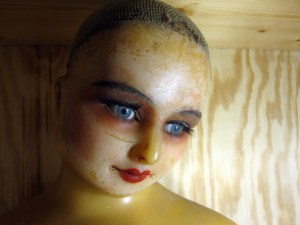
Louise was gone for three days. When she returned home, she was carrying a bundle in the crook of her arm.

“Where have you been all this time?” Theodore asked. “I was about to call the police.”

“Oh, you silly man!” Louise said. “Where do you think I’ve been? I’ve been giving birth to your son.”

She lifted the corner of the blanket to show him the baby’s face.

“This one has blue eyes,” Theodore said.

“He has your eyes.”

“My eyes are brown.”

“I think I’m going to name him Nathaniel,” she said. “After Hawthorne.”

“Name him whatever you want.”

“If I give him the name of a great writer, he might turn out to be a great writer himself.”

“Uh-huh.”

“You like that name?”

“It’s as good as any other, I suppose.”

She laid the baby down gently on the couch and took off her coat and laughed. “Believe me,” she said. “It’s not easy carrying a newborn baby home on the uptown bus. I had to stand up the whole way, holding the baby in one hand and trying to keep from falling with the other. You’d think a gentleman might have given me his seat, but nobody even noticed me.”

“I could have come down and met you.”

“Oh, that’s all right,” she said. “I managed perfectly fine. And, anyway, I wanted to surprise you. What do you think of our new son?”

“He’s, uh…I can’t seem to find the words. I’m speechless.”

“I know! It’s a shock, isn’t it? Seeing him for the first time?”

“Especially since I didn’t know he was expected.”

“But that makes it that much more fun, doesn’t it?”

“If you say so.”

“Now, don’t you be an old grump puss! I’m going to need lots of help from you with this baby. Feeding him, changing his diapers, bathing him, and all the rest of it.”

“I don’t think that baby is going to be any trouble at all,” he said.

“No, of course not! He’s such a good baby! I can tell already, as young as he is.”

Theodore played piano in a jazz combo in a bar, so he had to leave to go to work. “Don’t wait up for me,” he said.

“Have a good time,” she said, “and don’t worry about me. The baby and I will be here when you get back.”

With Theodore gone, Louise was glad to have some time alone with the baby. She carried him into every room in the apartment, talking to him all the while, even though she knew he didn’t understand a word she said. She fed him, bathed him, and put him to bed in the crib at the foot of her own bed.

She slept until one o’clock, at which time she got up and fed him again. After she put him back in his crib and got back into bed, she had trouble going back to sleep. She kept thinking about how Theodore didn’t seem very happy about the baby. Well, men, she thought. You can’t ever tell what they’re thinking or how they really feel. They keep it all bottled up inside.

At two o’clock she still hadn’t gone back to sleep. She got up and checked on the baby and when she saw he was sleeping peacefully she knew the problem wasn’t with the baby but with her. She was lonely and sad. She picked up the sleeping baby and put him in the bed beside her. After that she was able to go to sleep.

Theodore came home about three-thirty. He undressed quietly and got into bed and after he had lain there a couple of minutes Louise began to cry.

“What’s the matter?” he asked.

“I’m not going to have any more children,” she said.

“Okay.”

“I don’t think you love them.”

“Could we postpone this conversation to another time? I’m very tired.”

“Take Nathaniel and put him with the others. They need to get acquainted.”

“I just got into bed. Can’t you do it?”

“You’re the father.”

He sighed and got out of bed again without turning on the light. He picked Nathaniel up by the neck and carried him out of the room and down the hallway to another room. In this room was a bed with six lifelike plastic dolls lying side by side, all exactly like Nathaniel. He added Nathaniel to the collection and went back to bed.

“Better now?” he asked Louise.

“Yes.”

“And this is going to be the last one?”

“Yes, I think so. Seven is my lucky number.”

Copyright © 2015 by Allen Kopp

I Don’t Want to Miss Any of This

I Don't Want to Miss Any of This image 2

I Don’t Want to Miss Any of This ~ A Short Story by Allen Kopp

Alva Fritchie, age ten, tap danced in his tennis shoes on the bare wood floor between the kitchen and dining room. He didn’t seem to be able to stand still anymore but always wanted to be dancing. When his mother called told him to come to supper, he danced his way to the kitchen table, where his mother, father and sister were already seated.

“I’m going to get taps put on my shoes,” Alva said as he sat down.

“I don’t think so,” mother said. “They make marks on the floors.”

“Does it matter?”

“It matters if you have to get down on your hands and knees and try to get rid of them.”

“Dancing is for sissies,” father said. “What do you want to dance for?”

“He’s not really dancing,” Cecelia, his sister, said. “He’s only imitating what he’s seen on TV.”

Cecelia was sixteen. She had washed and pinned up her hair after school and had a scarf on her head, peasant style. She also had an outbreak of acne on her chin.

“I can so dance, pimple face,” he said. “I’m good at it. I can give you a demonstration any time you want.”

“That would be never,” Cecelia said.

“I like to dance. It makes me feel young.”

“You are young,” mother said.

“Anybody can stand and move their feet,” father said. “That doesn’t make it dancing.”

“He’s such an idiot,” Cecelia said.

“Don’t call your brother that,” mother said. “We should be glad he isn’t an idiot. I’ve seen idiots and they’re no laughing matter.”

“Isn’t Bobo Mitchell an idiot?” his father said.

“I think he might be a moron. Or maybe an imbecile. A long time ago I knew the difference but I guess I forgot.”

“I guess you forgot,” father said mockingly. “I’ve forgotten more than you’ll ever know.”

“That’s stupid,” Cecelia said.

“Don’t be disrespectful to your father.”

“He’s disrespectful to me. You hear all the time about kids being disrespectful to their parents. What about parents being disrespectful to their kids?”

“I guess that doesn’t matter so much,” mother said.

“Life’s a bitch,” Alva said.

“We don’t use that kind of language at the supper table,” mother said. “It’s a vulgar, ugly word.”

“Kids at school say it all the time.”

His mother shook her head. “And that’s today’s ten-year-olds,” she said. “I never heard that kind of language until I was married to your father.”

“That’s a kindergarten word compared to the things I hear,” Cecelia said.

“What do you hear?” Alva asked.

“Never mind,” mother said. “Eat your stew.”

“I don’t like it. I want a hamburger.”

“Well, then, why don’t you just hop in your car and run downtown and get yourself one while the rest of us sit here and eat this stew?”

“I don’t have a car,” Alva said. “If I did, I’d get in it and drive a long way from here.”

“Where do you think you’d go?” Cecelia asked.

“I’d go to Hollywood, California and get a job dancing in the movies.”

“Hah!” Cecelia said. “Who’d pay money to see you? You’re a freak!”

“What is this obsession with dancing?” father asked.

“I don’t know,” mother said. “It’s something he saw on TV. Tomorrow it might be something different.”

“All I want to do is dance, dance, dance!” Alva said.

“If you only knew how stupid you look,” Cecelia said.

“Shut up!”

You shut up!”

“Both of you shut up and finish your dinner,” father said.

Alva took a couple bites of the tepid stew and said, “Birdie Leonard went to the bathroom in her pants today at school.”

“Oh, my!” mother said. “Why didn’t she ask to be excused to visit the restroom?”

“I guess she didn’t know she had to go until it started coming out on its own.”

“I’m not sure that’s a fit subject for conversation at the dinner table.”

“What was funny, though, was she started blubbering. Miss Gottschalk slapped her across the mouth.”

“She did not!” Cecelia said. “Teachers aren’t allowed to do that anymore. They can get into a lot of trouble.”

“Well, she wanted to slap her. I could tell she was thinking about it.”

“So, you know what people are thinking now?”

“Sometimes I do.”

“You’re a liar.”

“So they had to call Birdie’s mother to come and get her and take her home. When Birdie got home, she washed off and put on some clean underpants.”

“How do you know what she did when she got home?” Cecelia asked.

“Well, isn’t that what you’d do if you went to the bathroom in your pants at school?”

“Whatever I did, it wouldn’t be any of your business.”

“That’s enough of that kind of talk at the table,” mother said.

“Why don’t you go study up for your driving test so you can fail it again?” Alva said.

“Mother, make him shut up!” Cecelia said.

“You both shut up!” father said. “You’re making my headache worse.”

“He’s such a little weasel.”

“At least I didn’t fail the driving test six times.”

“It was not six times!”

“How many was it then?”

“None of your business! That’s how many it was!”

“You’re a sloppy pig. You’ve got pimples all over your face. You look like a whore!”

“Why don’t you go dance yourself over a cliff and make us all very happy?”

“Don’t you ever let me hear you call your sister a whore again,” mother said. “Do you understand me?”

“I didn’t call her a whore,” Alva said. “I said she looked like a whore.”

“I don’t even want to hear that word.”

“It’s a good word,” father said.

“Don’t encourage him!” mother said.

“I saw her getting into a black car with a man down at the corner,” Alva said.

“Shut up, you little liar! You did not!”

“She was standing there all by herself. She didn’t know I was watching. A man drove up in a black car and stopped. When he got out and walked over to where she was standing, she became all girly and giggly. She flapped her arms and rolled her eyes and waggled her hips.”

“I did not!”

“They talked for a minute and then they both got into the black car and he peeled out.”

“He did not!”

Mother took a deep breath. “What are you saying?” she asked.

“I saw it all and I wished I had had a camera so she wouldn’t be able to lie her way out of it.”

Mother turned and looked closely at Cecelia. “Anything to this?” she asked.

“Oh, he’s got it all wrong. It wasn’t anything like he said.”

“So you did get into a black car with a man you didn’t know?”

“Who said I didn’t know him?”

Hah-hah-hah!” Alva laughed.

“You little snake!” Cecelia said. “I’m going to slit your throat the first chance I get!”

“You’d better explain yourself while your head is still attached to your shoulders,” father said.

“It was Alice Terry’s brother. He’s home on leave from the navy.”

“How old is he?”

“I don’t know. About twenty-two, I guess.”

“What were you doing with him?”

“He was just giving Alice and me a ride to the library.”

“Alice wasn’t there!” Alva said.

“Oh, yes, she was, you little turd! She was in the back seat.”

“I didn’t see her.”

“That’s because her brother has tinted windows on his car.”

“I’m not liking the sound of this,” father said.

“It was all perfectly innocent, believe me.”

“Why should anybody believe a big liar like you?” Alva said.

“That’s enough, Alva!” mother said. “If you’re finished eating, you may go to your room.”

“I want some dessert and, besides, I don’t want to miss any of this.”

“Give me Alice Terry’s telephone number,” mother said. “I’m going to call her and see if she confirms what you’re telling me.”

“She isn’t home.”

“Where is she?”

“She’s going to be in a play at school. They’re having rehearsal tonight.”

“I will be talking to Alice Terry and her mother,” mother said, “even if I have to wait until midnight to do it.”

Cecelia threw down her fork. “Why are you all picking on me?” she said. “I haven’t done anything!”

She began bawling in much the same way that Birdie Leonard had done when she went to the bathroom in her pants at school. Her eyes bulged tragically and bits of food came out her thin-lipped mouth and dripped off her chin. She reminded Alva at that moment of a frog, but he kept it to himself. He would have a new name to taunt her with later, though.

Cecelia ran out of the room with mother right behind her. “Women!” father said to himself. He threw his napkin down disgustedly and went out the back door.

Alva was left alone at the table. He stood up and danced his way to the refrigerator, where he opened the freezer and helped himself to a generous bowlful of chocolate ice cream.

While he sat at the table and ate it, he heard the drama going on upstairs: Cecelia’s wailing, slamming doors and hurried footsteps. Mother would be trying to console Cecelia, as she always did, but Cecelia, at this moment, would be inconsolable.

When he was finished, he left the bowl on the table, pushed the chair in and danced in the big space between the table and the sink. The floor was tile and good for dancing. He was working on some new steps that he made up himself. He would dance the night away if only he could.

Copyright © 2015 by Allen Kopp

His Last Good Time

His Last Good Time

His Last Good Time ~ A Short Story by Allen Kopp 

He stepped off the bus onto the hot asphalt and looked around at the strange place he was in that he had never seen before. He walked a few blocks and was amazed at the sight of the monoliths that rose hundreds of feet into the air and blotted out the sun. Other people didn’t look up and didn’t seem to notice anything at all other than what was in front of their faces and maybe not even that. When he spotted a well-dressed old couple walking toward him—his idea of mother and father—he took off his hat and approached them with a smile. “Where do people go around here to die?” he asked. The woman looked insulted and the man angry and they passed on as quickly as they could. He didn’t see anything wrong with asking this question. The rebuff was his first experience with the coldness of the city.

His name was Ellis Gage and he had ridden six hundred miles for two days on the bus. It was incumbent upon him to leave home because he had killed his stepfather. He had seen enough movies to know that nobody gets away with killing another person and he wouldn’t get away with it either.

This is how it happened. His mother was away tending to a sick relative and he was left alone in the house with the man who had been his stepfather for five years, Nelson Niles. Nelson had been drinking all day, as he often did. In the evening after supper, a thunderstorm came up. Rain pelted the house and lightning ripped the sky. Nelson became blubbery. He said he was lonely. He didn’t like to admit it, he said, but he had always been afraid of thunderstorms.

“Go to bed and sleep it off,” Ellis said. “The thunderstorm is nothing.”

The lights went off but Ellis didn’t mind. He liked storms and he planned on getting into bed and listening to the rain. There’s no sweeter music to drop off to sleep by.

“I want you to sleep in my bed with me,” Nelson said.

“What?”

“I don’t like sleeping alone.”

“Mother will be back in a few days,” Ellis said.

“Yes, but she’s not here now. I want you to sleep with me.”

“Just get into bed and close your eyes and soon you’ll be asleep.”

“You’re like a son to me.”

“You sleep in your bed and I’ll sleep in mine.”

“There’s nothing wrong with it. Nobody will ever know.”

“I’ll know!”

“We can have us a fine time.”

“What are you saying?”

“I’m sorry.” He rubbed his head as with a headache. “I can see how you misunderstand. It’s the liquor talking.”

“Why do you drink so much?”

“I was born this way. My daddy was an alcoholic and his daddy before him and his before him. All the way back to Adam.”

“That’s no excuse.”

“Not excusing. Only explaining.”

“I’m going to bed now and I think you should do the same,” Ellis said.

He went into the kitchen to make sure the door was closed and locked and then he went up the stairs. By the time he was at the top, though, Nelson was right there behind him in the dark, quick as a cat. He grabbed Ellis in a hug and tried to put his mouth on his in a drunken semblance of a kiss.

Ellis was caught off-guard. “Get off me!” he said. “What’s the matter with you?”

Nelson was not to be deterred this time, though. Even though he let go of Ellis, he wouldn’t let him pass into his room. “When your mother and I got married,” he said, “you were underage, but you’re not underage anymore. We can do whatever we want. I’ve always been drawn to you in a way that nobody ever knew about. When I found out your ma was going to be gone for a few days, I knew the time had come to do the thing I’ve always wanted to do.”

“You stink!” Ellis said. “You make me sick! I could kill you and no jury would ever convict me after I told them what you just said to me.”

“Oh, don’t push me away!”

They grappled at the top of the stairs. When Nelson tried to kiss Ellis again, he pushed him, not to hurt him but only to get away. Nelson misjudged the distance between himself and the top of the stairs. He staggered and tried to right himself and in doing so lost his balance and fell headlong to the bottom. Ellis believed he could hear his bones cracking as he fell.

A tremendous lightning flash rocked the house. Ellis went down the stairs slowly, feeling his way along the wall. He didn’t want to touch Nelson but he did so only to the extent that he had to. He put his ear to Nelson’s chest and wasn’t able to detect a heartbeat; his face to Nelson’s face and could feel no movement of air.

He had never been in any kind of trouble with the law. He believed they would put him in jail now and never let him out. They wouldn’t believe it had been an accident. They would think he had meant to do it. They might even execute him. It would be the end for his mother. Her husband and her son both gone. She’d take to her bed and never get up again.

After a night of thinking, he decided what he would do. He would go away to spare his mother and do away with himself. He wasn’t sure how he would do it, but he would figure it out when he needed to. It would be better to take care of his own end, he believed, than to be captured and hauled off to jail. He couldn’t stand the thought of being locked up. There was only one way out and he was going to take it.

Packing a small bag, he took what money he had out of his dresser drawer and left the house before dawn. The rain had stopped but there were still a tumult of clouds in the sky and a low rumble like a growl. He walked the three miles into town to the bus station. By the time he was able to get on the bus, he was so exhausted from a night without rest and from his long walk that he fell asleep next to a window with the hot wind in his face.

In the city, he checked into a modest hotel and on his first night there he counted his money out on the bed. Factoring in the cost of the room per day and of eating every meal in a restaurant, he figured he would last about a week in the city. It took him more than a year to save that money, but it didn’t matter. He would have as good a time as he could in the time left to him because it would be the last good time he would ever have.

The first couple of days he spent mostly in his room, lying on the bed and smoking cigarettes. (He had recently picked up the habit in spite of his mother’s objections.) He thought about his life but mostly he thought about his mother coming home after her trip and finding Nelson (dead for several days by then) at the bottom of the stairs. Of course, she would wonder where Ellis was, but he hoped she didn’t connect his being gone with Nelson’s death in any way. She would think that Nelson had fallen down the stairs because he was drunk while Ellis was away visiting his friend Delroy, who had a cabin on the river.

When he became so hungry he could no longer stand it, he would go out and get something to eat. There was a restaurant on the first floor of the hotel but, finding the food there tasteless and overpriced, he preferred to go to a café three or four blocks from the hotel where there was a waitress named Rosalie.

Rosalie was older than him, about thirty, and married, but it didn’t make any difference. She made him feel good because she smiled at him and told him what was good from the bill of fare and what wasn’t. She had thick auburn hair and when she smiled she showed front teeth that overlapped. She joked with him and asked him questions, not too personal, about where he was from and where he was headed. He told her he had always wanted to see the city and had decided finally to have his little fling. She laughed when he said the word fling as if she had never heard it before and set down a piece of apple pie in front of him with vanilla ice cream on top. She told him if he wanted anything else to give her a holler. He wanted to ask her to go someplace with him other than the café where they might talk, but he saw the wedding ring on her finger and knew that doing so would be too forward and might spoil the friendly feeling between them. He always left her a tip, though, more than he could afford, and would catch her eye and give her a friendly wave as he left.

As his days in the city began to pile one of top of the other, he began to think about how he might do himself in. He didn’t want to create a public spectacle, so that eliminated the possibility of jumping out a window or throwing himself in front of a bus. He had heard about people going to sleep and not waking up from the right combination of strong liquor and pills. He could get himself a bottle of whiskey, all right, all right, but he didn’t know what kind of pills to get and if he knew he wasn’t sure he could get them.

He began walking the streets to see as much of the city as he could before checking out. He visited a museum, where he looked at some paintings; when he discovered a park with a zoo, he began to spend a lot of his time there with the monkeys and lions. People rarely spoke to him, as if he wasn’t there at all, but when they did they were cordial and friendly enough; they had no reason not to be. Rosalie remained the only person in the city, though, with whom he had any real connection.

The day came when he realized, on counting his money again, that he only had enough to make it through the next day, which was Sunday. Sunday seemed a good day to die.

He didn’t want to spend Saturday night, his last night on earth, moping around in his room, so he spent the whole night walking the streets, which were always thronging with people. And in everything he saw—drunks and prostitutes, a bar brawl spilling out into the streets, two women engaged in a fistfight,  a well-dressed crowd pouring out of a theatre, a taxicab smashing into the back of a truck—he was as detached as a ghost. At a newsstand, when he saw a length of thin rope on top of a pile of newspapers, he asked the vendor if he might have it. The vendor thought for a moment and told him he could take it for the price of thirty cents.

When he got back to his hotel room, the sun was just coming up. He was glad to see it was going to be a sunny day. He ate a light breakfast and went up to his room and took a hot bath. He slept for a couple of hours and when he awoke he put on his clean clothes and sat down at the desk to write his mother a farewell letter.

With pen in hand, he couldn’t think of what to write. Trying to explain to her what he was going to do and why didn’t make any sense. If it didn’t make any sense to him, it certainly wouldn’t to her. He could simply apologize and tell her goodbye, but he believed she deserved more than that.

The only thing that would do would be for him to speak to her on the phone one last time. And he wouldn’t tell her what he was going to do because that would only alarm her. Just hearing her voice, though, would give him the courage he needed. It would be the fitting end to his time on earth that he needed.

His heart was pounding as he picked up the phone. He had to go through the hotel switchboard to make the call, but it only took a minute and after the phone rang just two rings his mother answered.

“Did I wake you up, mother?” he asked casually.

“Ellis, is that you?”

“Yes, it’s me.”

“Where in the world are you?”

“Delroy invited me up to his cabin. I’ve been here for a few days.”

“Thank goodness. We didn’t know where you were.”

“We?”

“Nelson and me.”

“Nelson?”

“Yes, he was drunk and had a bad fall while I was gone but he’s better now. He broke his shoulder and three ribs. He’s such a baby. He wants his pain pills regularly. I don’t know what he’d do if he ever had any real pain.”

“You said Nelson?”

“Yes. Who else? Are you all right? You sound a little funny.”

“I’m fine now.”

“Nelson didn’t remember a thing because he was so drunk. He said you were in the house before he fell and gone after he fell. He didn’t know where you were. He was worried about you.”

“I’m fine, mother.”

“When are you coming home?”

“I don’t know. In a day or two.”

“So you’re having a good time?”

“The best time I’ve ever had. I’d like to stay for a few more days but I’m afraid I’m out of money.”

“Oh, honey! Do you want me to send you some?”

“No, that’s all right, mother. I don’t want to take your money.”

“Well, it certainly is good to hear your voice, son, and I’m so relieved you’re all right.”

“Why wouldn’t I be all right?”

“I guess I still think of you as my little boy, as big as you are.”

“I’ll be home soon, mother. Don’t worry about me.”

He hung up the phone and laughed. He danced around the room as if he had an invisible waltzing partner, as there was no one there to see him. How happy he was! How agreeably his dilemma had resolved itself! He loved his mother so much and, yes, he even loved Nelson. He loved Rosalie, his friend Delroy, the news vendor who sold him the rope and everybody else he had ever seen or known.

He put on his shoes, his hat and jacket and took the elevator down to the hotel lobby. He went out to the sidewalk. He would go down to Rosalie’s café and have a good lunch. She would be happy because he was happy. Maybe she would sit down across from him while he ate and talk to him. Maybe she wasn’t really married but only wore the ring to discourage any unwanted advances from male customers.

He had to cross the street but was too impatient to wait until he got to the intersection so he crossed in the middle of the block. He looked both ways but didn’t see the speeding taxicab. When it hit him, he was thrown through the air about ten feet. A woman screamed. People ran toward him. Somebody covered his face. There was nothing else to be done.

Copyright © 2015 by Allen Kopp  

Suicide Hotel

Suicide Hotel
Suicide Hotel ~ A Short Story by Allen Kopp

(This is an expanded version of a short story I posted before.)

Margaret Pendler was to be passed over again for promotion, after seventeen years with the company. A younger, prettier girl named Stephanie with only three years got the nod. Stephanie with her blond hair and tight skirts that showed the contours of her can; shapely, nylon-clad legs that she was all too willing to show off; a touch of cleavage, perfect teeth and lips the color of a valentine.

After Margaret received the news right before morning coffee break, she sat at her desk holding a pencil in her right hand, her left hand on her cheek, barely moving. Not even pretending to do any work. When the girls, all atwitter at Stephanie’s promotion, went for coffee, Margaret stayed behind.

In one minute or less, she had lost all interest in everything around her. When Mr. Dauphin came in, she didn’t even look up and smile as she always did. He was her favorite and she had even believed, at infrequent intervals, that she was in love with him. Never mind that he had been married three times and was working his way through all the pretty young things in the office.

At lunchtime she was still sitting exactly as she had been two hours earlier. Her coworkers had been giving her curious glances but she ignored them. If anybody had said anything to her, she might have pulled a knife out of the drawer and stabbed them.

Finally, when the lunch hour was almost over, she stood up and said, to no one person in particular, “I have no wish to be here.” She took her purse and her raincoat and left, without bothering to straighten the clutter on her desk or even to push the chair in. Without a word to anybody, she went down the stairs and out the building, her intention being never to return.

At home her mother, Georgina, was going through trunks, trying on clothes and wigs for a social function she was going to go to at her lodge. She held up a forties-vintage green dress with huge fabric-covered buttons and a long red wig and said, “What do you think of this?”

“Is it a costume party?” Margaret asked.

“No. I just want to look different from anybody else there.”

“That ought to do the trick.”

“What do you think of these?” She held up a silk Pagliacci lounging set.

“Oh, I think you ought to put those on now,” Margaret said.

“I think I will.”

Georgina went behind the screen to change. “I think I’m getting married again,” she said in a too-loud voice, believing that if she wasn’t seen she wasn’t heard.

“Who’s the lucky fellow?” Margaret asked.

“His name is Herman Mudge. I don’t think you’ve had the pleasure. He hasn’t actually asked me yet, but I think he will.”

“Let me be the first to congratulate you.”

“What do you think about having a stepfather?” Georgina asked, stepping out from behind the screen and turning around one time so Margaret could see the silk Pagliacci lounging set.

“Stunning,” Margaret said. “Is he younger than you?”

“Is who younger than me?”

“Herman Mudge.”

“He’s eighty-three. I’m seventy-nine. I think that’s a nice age difference, don’t you? My father was four years older than my mother.”

“Where are you going to live after you get married?”

“Why, here, of course. He’s got a small room in a hotel. You don’t think a newly married couple can live there, do you?”

“Well, I hope you’ll both be very happy,” Margaret said.

“I want cornflakes for supper and macaroons,” Georgina said.

After the evening meal was finished and the dishes washed and put away, Georgina installed herself on the couch in front of the television set for her endless parade of police dramas and situation comedies. Soon she was asleep with her head thrown back, her mouth open because she had trouble breathing through her nose. Her dentures had slipped down and were partway out of her mouth, giving her a rather strange and unnatural appearance.

Margaret went upstairs to her bedroom, threw some clothes into a suitcase and left the house, her intention being never to return. She took a taxi to the bus station where she stood in line for fifteen minutes to buy a ticket to the nearest large city. After she had her ticket, she sat on a hard plastic chair for nearly two hours until time for her bus.

When her bus was finally announced, she stood up and ran for the door as if it might leave without her. Heart pounding, she boarded and took a seat next to the window near the back. As the bus roared off, she laughed, relieved that the ordeal of waiting was at an end.

She slept at intervals during the trip but it was a troubled sleep, the kind she had when she was sick with one of her bronchitis infections. At about four-thirty in the morning the bus arrived at its destination. Stiff from the long hours of sitting, she had a cup of coffee and a light breakfast in the coffee shop of the sprawling bus depot and set out walking, not certain where she was going.

The St. George Hotel had nothing to recommend it other than its neon sign glowing invitingly in the early-morning light and its height of fifteen stories. She went inside and asked for a room on one of the upper floors. When the desk clerk asked her how long she would be staying, she said she didn’t know.

Her room on the twelfth floor was dark and musty-smelling like a long-undiscovered tomb. She turned on the lights, hung her coat in the closet and slung her suitcase on the bed. Crossing the room to the lone window, she pulled back the heavy curtain and looked down at the street a hundred and twenty feet below. She calculated the approximate spot on the sidewalk where she would land when she jumped. Someone would scream (they always did in the movies). There would be loud excited voices, a screech of brakes. She wouldn’t hear any of it.

But she didn’t have to be in any hurry. She would work up to the thing, to the jumping. When she decided the time was right, she would do it. She had the nerve all right, the nerve to just let go. And it would all be over in a matter of seconds. Lights out. Lower the curtain. What was any of it for, anyway?

She stayed in the room for two days and on the third day she ventured out to have dinner in the restaurant downstairs. The day after that she took a walk, had lunch in a diner, bought a pair of gloves and two books and went to a movie. It was when she was having a drink in the bar before going to her room and going to sleep that he approached her. He was a small man, about thirty-five, dark hair and three or four days of stubble on his face. He stood beside her and offered to buy her a drink.

“I have a drink,” she said, not looking at him.

“Are you having a good time?” he asked.

“I was until you came along.”

“I saw you the day you checked in,” he said. “I was sitting in the lobby watching you but you didn’t see me.”

“What of it?”

“Women don’t usually check into this hotel alone. They’ve usually got kids with them or a man.”

“I’m waiting for my husband to get here.”

“What does he look like? Maybe I’ve seen him.”

She stood up abruptly. “I don’t know what your game is,” she said, “but I’ll thank you to leave me alone.”

She brushed past him and took the elevator up to her room.

The next day she saw him and the day after that. She didn’t look directly at him but she knew he was there. He seemed to just appear wherever she was. Once when she saw him standing by the elevator, she asked the desk clerk who he was.

“I don’t see anybody there, ma’am,” the clerk said. “The person you’re talking about must have gone up.”

The next night at ten o’clock she was in her room, getting ready to get into bed when there was a soft knock at the door. “Who is it?” she asked. When no one answered, she went to the door and opened it a couple of inches. She wasn’t surprised when she saw him standing there.

“Can I come in?” he asked.

“No, you may not.”

He pushed the door open farther and when she did nothing to stop him, he came inside and closed the door again as if it were his door to do with as he pleased.

“My husband went to get some cigarettes,” she said. “He’ll be back in just a minute.”

“You don’t have a husband. You know it and I know it.”

She looked at him and took a deep breath. She wondered why she wasn’t more afraid.

“Who are you?” she asked. “Are you a murderer who preys on women alone?”

He laughed and took off his hat, took a step toward her. “Now, do I look to you like a person who would do that?”

“Did my mother send you? Are you a private detective?”

“I could be just about anything, I suppose. Anything or nothing.”

“If it’s money you want, I don’t have any.”

He surprised her by taking hold of her arm and leading her to the window. “Look down,” he said. “It’s a long way to the sidewalk. Your body bursts like a balloon, but instead of water it’s blood. Those who see it never forget. You’ll be dead but they’ll have to carry the horror of what you did around with them for the rest of their lives.”

“Why should you care about that?”

“That’s not the question you should be asking.”

“Get out my room or I’m going to call for help.”

When he made no move to leave, she picked up the phone and put it to her ear. A few clicks and then someone came on the line.

“There’s an intruder in my room,” she said. “Yes. A man. Room twelve sixty-eight. Yes. Thank you.”

She put the phone back in its cradle and said to him, “They’re sending someone up. You’d better be gone when they get here.”

He crossed the room to the door and opened it.

“Wait!” she called. “Don’t go!”

“You change your mind awfully fast.”

“I’m afraid I won’t see you again and I won’t ever know who you are.”

He reclosed the door. “You don’t know?”

“If I knew, would I be asking?”

“I’m the devil come to take your soul back to hell.”

“Where’s your pitchfork?”

“I’m an angel sent to try to keep you from destroying yourself.”

“Which is it? You can’t be both!”

“I’m whatever you want me to be. Maybe I’m nothing at all. Maybe I’m not even here.”

“I’m not in the mood for riddles,” she said. “Just go. I want you to stop bothering me.”

“I’ll go,” he said. “If that’s what you want.”

Instead of leaving, though, he leaned against the wall near the door, hands in pockets, and looked at her. He was like a man waiting for a bus or doing nothing in particular, as if time were nothing at all.

She went to the window and pushed the curtain out of the way and looked down to the street once again. How long would it take her to reach the sidewalk? She would close her eyes so she wouldn’t have to see anything. Just a few seconds and it would all be over.

The window wouldn’t raise as she thought it would, no matter how hard she pushed and pulled. So, there it was, a pane of glass, the only thing between herself and oblivion. It wasn’t going to stop her, though. Nothing was going to stop her now.

She kicked at the glass and hit it with her fists until it shattered, letting in the noise from the street and a sickening stench of gasoline, asphalt and burning rubber.

With the glass gone, the way was open for her. It was so easy now. The only question remaining was if she should go out feet first or head first. Would somebody cover her up right away or would people stand and gape at her until an ambulance arrived? What would her mother say when she received the phone call? Who would call her mother, anyway? Would she come and identify the body? Would sweet Mr. Dauphin with his doe-like eyes and the other people from the office come to her funeral?

“Are you losing your nerve?” he asked from across the bed over by the door.

“What did you say?”

She had forgotten he was in the room with her and, remembering, felt a little embarrassed, as though a stranger were watching her in her most private and intimate moment.

“I asked if you were having second thoughts.”

“I asked you to leave.”

“You’re bleeding.”

She hadn’t realized that blood was pouring from the juncture of her thumb and forefinger. She held out her hand and watched the blood as it dripped onto the floor.

He got a towel from the bathroom. “Here,” he said. “You probably need some stitches.”

“You’re with me in my final moments,” she said. “The only one.”

“You’re not going to jump,” he said.

“I’m not?”

“You’re going to go down to the desk and apologize for breaking the window and you’re going to offer to pay for it.”

“What did you say your name is?”

“You can call me by any name you like.”

She knelt on the floor and leaned against his leg because it was the closest object. “You thought I was going to jump out the window?” she asked.

“It looked that way.”

“Take me away from here, will you?”

“Where to?”

“A place so far away I’ll never get back.”

“Oblivion?”

“No, not there. Farther away than that.”

Copyright © 2015 by Allen Kopp

The Queen Bee of Café Society

The Queen Bee of Cafe Society image 1

The Queen Bee of Café Society ~ A Short Story by Allen Kopp

It’s early November and the nights are getting colder. Ouida Longworth makes her way through the dark city streets to the only place left to her. She struggles up the stairs, through the door, and stops before a low table with an old woman sitting behind it.

“Need a bed,” Ouida says.

“All full up tonight.”

“Got one left,” a man’s voice says from the shadows. “A lady checked out a little while ago.”

“All right,” the old woman says. “You know the rules. No smoking, cussing, gambling or alcoholic beverages. No fraternizing with the other guests. You got to be out by nine o’clock in the morning.”

“Thank you, madam.”

“Go down them stairs and hold your nose.”

Ouida isn’t sure if she has the strength to find the one empty bed, but find it she does and when she comes to it she sits down heavily and takes off her shoes and rubs her feet. They are so numb she can hardly feel them—one day they will stop working altogether. Holding her shoes against her abdomen to keep them safe, she gets under the covers to lose herself in sleep for a few hours.

A roomful of sleeping women and a few children. It is semi-lit, one bulb high up on the wall in a little metal cage, and quiet except for a few rustles like the sounds mice make. The wild-haired woman in the bed next to Ouida raises herself on her elbow, eyes glowing in the dark. Ouida is certain the woman is going to speak to her, so she covers her head with the musty blanket and is left only with herself and her recollections of the life she had before the one she has now.

She was once the wife of Franklin Longworth, a man of many millions. She wore glittery gowns, smoked custom-made cigarettes in a foot-long holder and articulated in a faux English accent. Besides having a penthouse apartment on Park Avenue, the Longworths spent a part of each year at one of their homes in the South of France, Switzerland or Italy.

Ouida Longworth was one of the leading lights of her social set, which included sixty or so of the best people. During the social season, she gave parties or attended them nearly every night. On off nights, there was always the opera, the theatre, or any one of the fashionable cafés and clubs. The revels often lasted until dawn and nobody was written up in the society columns more than Ouida Longworth. To be seen in her company—and especially to be photographed with her—was much desired by those hoping to get a leg up in society. Any man of letters, painter, or actress was fortunate to be taken up and admired by her.

One such man was a fellow named Ricky Beaumont. Establishing himself as a playwright proved to be more problematic than he anticipated. His one play that he managed to have produced folded after six performances. He was badly in need of a patroness, someone to pay his liquor bills and leave him alone while he cultivated his untapped genius.

Ouida claimed to be the “discoverer” of Ricky Beaumont. He was, she said, the most gifted young playwright of his generation and she would see that he had every advantage. Men of genius should not be bothered with worldly matters such as how to pay the grocery bill and the rent.

She started out advising Ricky in his career, but soon her professional interest turned personal. Helping matters along were his youth and the fact that he had piercing blue eyes, a head full of thick brown hair and stood six feet, two inches tall in his stocking feet. He recalled to Ouida the thrilling days of her youth, before she married stodgy Franklin Longworth, when she could have any man for the taking and there were plenty willing to be taken.

She began being seen everywhere in Ricky Beaumont’s company. Rumors abounded. Some of her friends reviled her, while most were blasé in the matter. A silly older woman with a rich and serious husband falling for a good-looking younger fellow who, everybody could see, was taking her for a ride. It’s been happening since the beginning of time.

She admitted to her husband before a roaring fire in his study after a large dinner that she was in love with Ricky Beaumont and he was in love with her.

“Has it ever occurred to you, my dear,” her husband said, “that Ricky Beaumont might be more in love with what you can do for him than he is with you?”

“Only a person with a vile mind would think of such a thing,” she replied.

“I’ve known for a long time that you weren’t happy in our marriage.”

“It isn’t so much that, Frank. It’s just that I’m young and pretty and I want to be with a man who thrills me.”

“You’re forty-seven.”

“My age doesn’t matter. I don’t look a day over thirty.”

“Age has a way of catching up with you when you least expect it.”

“I’m not surprised that you turn the conversation into something as trivial as age.”

“Does Ricky also believe the age difference to be trivial?”

“Ours is a love for the ages! That I’ve lived a few years longer than he has is absolutely inconsequential.”

“All right. We’ll meet with my attorney and arrange for you to get your divorce.”

Always one to be generous, Franklin Longworth settled ten million dollars on his wife. Almost before the ink was dry on the divorce agreement, Ouida and Ricky Beaumont were married at city hall in a simple ceremony. She wore a modest navy suit and a small hat with a veil. No photographers were present.

They rented a villa in Tuscany, where they spent the first few months of their married life. From there they went to Monte Carlo, Barcelona, Paris, Vienna, Budapest, and Berlin. After a few months in London, Ricky was tired of the rain and cold, he said, so they moved on to sunnier climes.

Before they had celebrated their first wedding anniversary, Ouida began to notice a change in him. Instead of being charming all the time, as she expected him to be, he was moody and withdrawn. He abandoned his writing career, which she had hoped he would pursue. He went for days at a time without speaking to her and insisted on separate bedrooms. When she asked what was wrong, he became violent and accused her of being an old nag. He slapped her in the mouth on more than one occasion and blackened both eyes.

He began drinking heavily, alone, and then with male companions that to Ouida seemed unsavory. He was sometimes gone overnight and when he returned in the morning he was always dirty and disheveled. He lived a separate, secret life apart from hers and remained drunk much of the time.

To have something to do to pass the time, he took up gambling. At first it was races and sporting events and then he began frequenting casinos. He was, she soon discovered, addicted to the roulette table and other games of chance. He squandered huge sums of money every night and never gained a cent.

“Our money does have a limit, you know,” she said to him during one of his infrequent sober periods. “As does my patience.”

“Can’t you leave me alone for just one minute?” he said.

“What will we do when you’ve squandered all our money and we have nothing left?”

“I’m not going to do that, I promise.”

“I can see now that our marriage was a mistake,” she said. “I gave up a good man for you.”

“Oh, shut up.”

“I gave up everything for you.”

“Go stick your head in the oven.”

When she was just on the verge of trying to figure out a way to extricate herself from the marriage, he came to her one night in her bedroom with tears in his eyes.

“I’m afraid I have some bad news, old girl,” he said.

“You’re in trouble with the police?”

“Worse than that. We’re broke.”

“We’re what?”

“All our money is gone.”

“What? How are we going to live?”

“I know what I’m going to do. It’s every man for himself now.”

That was the last time she saw him. In the morning he was gone and he didn’t tell her where he was going. He didn’t even bother to take any of his belongings with him.

She sold what jewelry she had left to pay a few outstanding debts and to buy a plane ticket home. When she arrived back in America, all the people in her crowd had moved on. There was no one to whom she could turn for help. Anybody who had known her wouldn’t recognize her anymore. She had gained weight and let herself go. Her hair was gray, her skin sallow, her appearance haggard. Age had caught up with her, as Franklin had told her it would.

Her small reserve of money was dwindling. She tried to find a job but couldn’t. Nobody wanted a fifty-year-old waitress or sales girl with no experience. In her previous life, she had never learned to do anything and had never envisioned a time when she would be forced to earn her own living.

The hotel where she was staying locked her out of her room when she stopped paying. They kept her bags and clothes, which they would be happy to return after she paid the money that was owed.

She began walking the streets, learning where other people like her congregated. She learned the safe places to hide out, to get a bite to eat or a bed for the night. Few had ever fallen so far and so fast.

She awakes in the long, low room with all the beds. It’s daylight, time to get up and move on. When she reaches for her shoes to put them on, they are gone. The wild-haired woman in the bed beside her is also gone.

She begins crying uncontrollably. “How could this happen to me?” she sobs.

“Are you all right, honey?” a woman with a little girl asks her.

“Somebody took my shoes! What am I going to do now?”

“See the lady at the desk. She’ll fix you up.”

The old woman from the night before has a cardboard box of discarded shoes under her desk. Ouida looks through it until she finds a pair of red tennis shoes that fit her.

“Thank you for your kindness,” she says. “I’m all right now.”

She goes out into the bright, cold air and begins walking. The streets are crowded, the time of morning when people are headed for their places of business. Somebody is certain to notice her and hand her some money, enough to get a decent breakfast, without her having to ask for it. These things happen much more often than she might have imagined.

She rarely looks directly at individual people, but she can’t help noticing an older man walking toward her, a man unlike anybody else. He wears an overcoat and a bowler hat. He has an air of assurance and respectability. When she realizes it’s Franklin Longworth, her heart skips a beat. She makes a sharp turn to the left to try to avoid him, but he has already seen her.

“Ouida!” he calls. “Is that you?”

“Hello, Franklin,” she says.

“Why didn’t you let me know you were in town?”

“I don’t know.”

He looks her up and down. “Things not going so good?” he asks.

“Well, I…”

“Let me buy you breakfast. We can talk.”

“Well, I…”

He takes her by the arm and leads her to a restaurant down the street.

“You’re looking well,” she says, after they are seated.

“I wish I could say the same for you.”

“I know. I’m not the person I was.”

“You and Ricky all washed up?”

“Yes. I’m finished with him. Or rather, he’s finished with me.”

“Did you hear I got married again?”

“No, I hadn’t heard.”

“Her name is Katherine. You’d like her. She was a widow, has two sons. I’ve come to think of them as my own.”

“I’m happy for you, Frank.”

“Where are you staying?”

“Well, I was staying at the Fulbright Hotel, but…”

“You could no longer afford it?”

“You always had a way of seeing right through me, Frank.”

“Can I help in any way.”

“You were always so good, Frank, and I was such a fool. You gave me everything a woman could possibly want and I threw it all away.”

“For love?”

“For love.”

“Well, it’s all in the past now,” he says. “Time to move forward.”

“Yes, move forward.”

“We have an opening for a maid if you’d be interested.”

“A maid?”

“Yes.”

“You’d hire me as a maid?”

“I don’t see why not. Nobody has to know about your past. We’ll keep it between ourselves.”

“What would your wife think?”

He takes a pad out of his pocket and begins writing. “I got rid of the old place,” he says. “Too many painful associations. We now live at this address.” He rips a page from the pad and hands it to her.

“You’ve always treated me better than I deserve, Frank,” she says.

“You won’t have to start to work right away. Take some time to get yourself rested up. A couple of weeks, if you want.”

“Thank you.”

“Now, if you’ll excuse me,” he says, “I was just on my way for an appointment. I’m late as it is.” He takes his wallet out and hands her a fifty-dollar bill. “Order anything you want to eat.”

“Always so thoughtful, dear.”

“Come to us when you’re ready. I’ll tell my wife you’re coming and she’ll make the necessary arrangements.”

“It’s been wonderful seeing you again, Frank.”

He pats her on the hand and smiles and then he’s gone.

She leaves the restaurant a few minutes after he does with the fifty-dollar bill in her hand and the piece of paper on which he has written his address. When she sees a man on the street who looks worse than she does, minus a leg, she gives him the money. As for the address, she lets the wind take it from her hand and watches as it blows into the gutter. After she has done these things, she fades into the crowd and is seen or heard of no more.

Copyright © 2015 by Allen Kopp

A Cross-Eyed Woman

A Cross-Eyed Woman

A Cross-Eyed Woman ~ A Short Story by Allen Kopp

“Did I tell you I’ve got a new girlfriend, grandpa?”

“Is that so? What’s her name?”

“Lucille Meisenbach.”

“How much does she weigh?”

“A hundred and thirty.”

“How old is she?”

“She’s a year younger than me, grandpa.”

“Don’t be in no hurry to marry a person with a name like Lucille Meisenbach.”

“I’m not. I only just met her.”

“Make sure you know everything about her before you marry her. Her people, too.”

“I’m not going to marry her.”

“What’s wrong with her?”

“Nothing, except that she’s cross-eyed.”

“You don’t want to marry no cross-eyed woman.”

“Okay, I won’t.”

“Cross-eyed woman is a sign of trouble.”

“How do you know, grandpa?”

“I’m seventy-three years old. I’ve seen everything and what I haven’t seen I’ve heard about.”

“I wouldn’t want to marry her, anyway.”

“Why not?”

“She’s got six toes on one foot.”

“How many on the other?”

“Just five.”

“Eleven toes is bad luck. It’s a mark of the devil.”

“If you say so, grandpa.”

“You don’t think you’d want to marry her after you’ve known her for a while?”

“No, sir.”

“You say that now, but if she gets it into her head to marry you, she’ll find a way to ensnare you against your will.”

“I don’t think that’s going to happen, grandpa.”

“Why not?”

“She’s not very smart.”

“You don’t have to be smart to be evil.”

“I wouldn’t exactly say she’s evil, grandpa.”

“You probably just don’t know her well enough to see her evil side.”

“If I start to see it, I’ll dump her.”

“Maybe she won’t let you dump her.”

“If I want to dump her, she can’t stop me.”

“I see you know very little about women.”

“I know enough.”

“Just make sure you find out everything there is to know before you marry her. If she’s got them two flaws, she’s bound to have others.”

“I haven’t seen any others.”

“Well, she’ll be setting her trap to catch you.”

“I don’t think so, grandpa.”

“Well, don’t say I didn’t warn you.”

“I went to dinner at her house on Sunday after church. We had fried chicken. Her mother’s name is Vera Meisenbach.”

“How old is she?”

“Forty-three.”

“How much does she weigh?”

“Two hundred.”

“A big woman.”

“Yes, sir. Big and tall. Broad shoulders. A wild look in her eye. Kind of scary.”

“And that’s not all, is it?”

“No, sir. She’s got a hump on her back.”

“Uh-oh! A big woman with a hump on her back has a cross-eyed daughter with eleven toes. Freakishness runs in the family. That’s not good.”

“I can’t claim to be perfect myself.”

“You’ve got the right number of toes, you’re not cross-eyed and there’s no hump on your back.”

“That’s true.”

“Count your blessings.”

“Yes, sir. I also met Lucille’s daddy. He’s a little bitty man like a midget.”

“A pattern has been established.”

“Lucille told me he’s got a metal plate in his head that lets him pick up radio transmissions. I tried to keep from laughing.”

“How much does he weigh?”

“Ninety-four pounds.”

“His wife weighs more than twice what he weighs?”

“Yes, sir.”

“Not pleasant to contemplate. How old is he?”

“He’s forty-nine years old.”

“And his name?”

“Luther Meisenbach.”

“Any other progeny besides Lucille?”

“A brother named Norland Meisenbach. He’s sixteen.”

“Is he cross-eyed?”

“Not that I noticed, but I didn’t pay that much attention.”

“How much does he weigh?”

“A hundred and ten.”

“That’s small for sixteen, isn’t it?”

“I guess so.”

“Anything freakish about him?”

“He’s got a turned-in foot and he doesn’t talk much because he’s got a stutter.”

“So there’s something wrong with every one of the Meisenbachs.”

“Yes, sir. I guess you could say that.”

“If you take my advice, sonny, you’ll get as far away from that bunch as you can. They’re not wholesome to be around.”

“Yes, sir. I don’t really care that much for Lucille, anyway. When she looks at me, it looks like she’s looking over my shoulder.”

“She’s probably looking to her master for direction.”

“You sure have opened my eyes, grandpa. I’m glad we had this little talk.”

“Not at all, sonny. I’m always glad to give you the benefit of my superior knowledge. That’s what grandpas are for.”

Copyright © 2015 by Allen Kopp

In the Fullness of His Years

In the Fullness of His Years

In the Fullness of His Years ~ A Short Story by Allen Kopp 

A man named Cyril Johns, age seventy-eight, lived in the basement apartment of an eighteen-story apartment building. He once was the janitor of the building but had been forced to stop working because of his age. Upon his retirement, the owner of the building gave him a deluxe television set and allowed him to keep his basement apartment for a nominal rent. He had, of course, to turn over all his tools and keys to the man hired to replace him.

He used to have lots of friends, people to help pass the time and make the day brighter, but just about everybody he knew had died or moved out of the neighborhood. He no longer had anybody to play cards with or talk over the baseball scores or how the fools in Washington were messing up the country. The TV droned on, but he ignored it.

The new people were a speeded-up version of the old ones. They were mostly young, with lots of small children. They would sooner knock a person down than wait for him to get out of the way. The young mothers eyed him in a funny way, he thought, as if he had it in mind to grab one of their screaming brats and gut it like a catfish. They had never been taught to show respect for an old person.

Patsy Ruth was different. She smiled at him, spoke to him, asked him how he was. She didn’t mind when he touched her frail-looking little boy, named Frankie, on the face or picked him up and held him in his arms. She didn’t have a dirty mind like the others. She knew he meant no harm.

When they finally had a chance to speak, Patsy Ruth told him she had grown up on a farm.

“That’s why you’re not like the others,” he said.

“I’m having a hard time adjusting to this place,” she said. “I’ve never lived in the city before.”

“If I can ever be of any help,” he said. “I’ve lived here my whole life.”

She was afraid to ride downtown on the bus with Frankie alone. She asked Cyril if he would go with them the first time and then afterward she wouldn’t be afraid.

“I’ll pay you for your time,” she said.

“You’ll do nothing of the kind.”

They took Frankie for his doctor’s appointment and afterwards had lunch at a nearby café.

“It was good of you to come with me,” Patsy Ruth said. “I hate being such a baby.”

“What’s wrong with the little fellow, if you don’t mind my asking?”

“He was born at seven months. He’s always had weak lungs.”

“Won’t he outgrow it?”

“That’s my hope, but we don’t know yet. He might be sick his whole life.”

Knowing his mother was talking about him, Frankie looked at her with his bright, inquisitive eyes. “When I’m five I can go to school,” he said solemnly.

“So, you want to go to school?” Cyril asked.

“Sure,” Frankie said. “I want to learn how to read.”

“He sees the other kids playing,” Patsy Ruth said. “He wants to join in but they’re twice his size and I’m afraid they’d hurt him.”

“They wouldn’t hurt me, mother.”

“When you’re older, you can play with the bigger kids.”

“Because I’ll be bigger myself.”

When they left the café, Cyril insisted on picking up the tab.

“I should be buying your lunch,” Patsy Ruth said.

“I get a check in the mail every month that I don’t have to work for,” he said. “I have more than I need.”

For five days after the doctor’s visit he didn’t see Patsy Ruth or Frankie in the courtyard and began to be worried that something was wrong. He coaxed the manager with a five-dollar-bill to give him Patsy Ruth’s apartment number.

He took the creaking elevator up to the fourteenth floor and found the apartment. He knocked and Patsy Ruth opened the door only as far as the chain would allow. When she saw it was him, she unfastened the chain.

“I thought it might be you,” she said, smiling.

“I didn’t think you’d mind if I came by to see how you were doing.”

“Of course not. Come in.”

She moved some stuff off the couch to make a place for him to sit. “Sorry the place is still such a mess,” she said. “We’re still getting settled, deciding where to put things.”

“When I didn’t see you for a few days, I thought maybe the tyke wasn’t doing very well.”

“No, the tyke is fine. We’ve been staying indoors because of the rain and cold wind.”

“Where is he now?”

“He’s taking his nap.”

“I wanted to tell you if you want me to go downtown with you and Frankie on the bus again, I’d be happy to.”

“I might take you up on that.”

“I hope you do.”

“Would you like a cup of tea?”

“Sure.”

He followed her into the kitchen and sat at the Formica-topped table next to the window while she boiled the water.

“You’re living among the clouds,” he said, looking out.

“I know. I can’t get over the feeling I’m going to be sucked out the window into the void.”

“If there’s a bad enough storm, you’ll want to go down to the bottom floor. That’s what people usually do. Until the storm passes. Of course, you don’t have to if you don’t want to.”

“I’d rather not even think about storms.”

“When it comes, it’ll seem worse than it is.”

“My husband will be home in a couple of hours and I need to start my dinner.”

“Oh, okay. I’ll go.”

“No, stay a while.”

When the tea was ready she brought it to the table and sat down across from him.

“Of course, I don’t have to worry about storms,” he said, “living in the basement apartment as I do.”

“Must be pretty lonely down there for you.”

“I’m used to being on my own. My wife has been gone for fifteen years. It’s probably a terrible thing to say, but she’s not the one I miss the most. It’s friends I miss. You know, my pals. They’ve all either died or moved to a better place.”

“You could move to a better place, too.”

“I don’t know where I’d go. I’ve lived here for so long I’d feel like a fish out of water. You stay where you feel at home.”

“I don’t think I’ll ever feel at home here,” she said. “This place scares me.”

“Why?”

“Too many people. Too impersonal. Too much crime, dirt and noise. And then there’s Frankie.”

“What about him?”

“If he’s ever going to have a chance to get better and live a normal life, it won’t be in a place like this. He needs clean air and wide-open spaces where people aren’t so crowded up together. And then, when he’s older, I worry about the kind of influences he’ll have here.”

“Why don’t you move back to the place where you grew up?”

“My husband would never agree to that.”

He had been going to suggest that she leave her husband and take Frankie and go live in the country, but he knew that wasn’t the right thing to say. You don’t go around giving married women that kind of advice.

“You can always hope for something better,” he said.

“Ever since we came here, my husband and I have been fighting. We’ve been married for eight years. It never has been what I would call a happy marriage, but since we came here it’s been worse. You reach a point where you can’t fight and argue any more and then there’s silence, which, I suppose is not as bad as the fighting. He sometimes doesn’t even come home at night. When I ask him where he’s been, he gives me a threatening look and tells me he’s been working so Frankie and I will have a home and food to eat.”

“I’m sorry for you.”

“Don’t be. We all choose our own path in life. Or it chooses us.”

“Well, listen, I have to go,” he said. “I have some phone calls to make. Thanks for the tea.”

He lied, of course. He didn’t have any phone calls to make, but it was a lie that allowed him to make a graceful exit. He was hurt by talk of how bad her marriage was.

He began seeing Patsy Ruth every day and, if for some reason he didn’t, he was disappointed. He began spending more time on his personal grooming, getting more frequent haircuts, cleaning his nails, making sure the collar of his shirt looked clean and, if it didn’t, putting on a fresh one. He didn’t think about what he was doing. He just did it because he wanted to.

He went downtown on the bus with Patsy Ruth and Frankie a couple more times and had lunch at the same place. They went to an afternoon movie and stood in line in the rain to buy their tickets, he holding out the tail of his coat to keep Frankie dry. Most often, though, they sat on a bench in the sun and talked. She told him about her past life, growing up with six brothers and sisters in a small farmhouse. Her older sister drowned when she was seven and one of her brothers spent time in prison. For his part, he told her about getting married when he was too young, getting divorced, and a few years later getting married again. After his wife died, he was through with women.

“I guess I’m a born bachelor,” he said. “I never minded being alone.”

When Patsy Ruth had him to dinner one night so he could meet her husband, he felt strained and awkward. He couldn’t speak to Patsy Ruth as freely as he was used to doing with her husband looking on. He was afraid, with a  movement or a word, that he would betray what he was thinking, and what he was thinking was how mismatched they were and how tragic that they were married. He left the first chance he got and went to a bar and drank.

And then he became sick. It was a reoccurrence of an old problem with his liver. The day before he went into the hospital, he met Patsy Ruth and Frankie in the park. He told her he was going in for some tests, not letting on how sick he was. He gave her the key to his apartment, asked her to keep an eye on things for him and water his plants.

“I’ll be home in a few days,” he said.

“I’ll miss you,” she said.

“Me, too,” Frankie said.

“If I die,” Cyril said.

“You’re not going to die!”

“I know, but if I do, I want you to know something.”

“What is it?”

“In the closet is an old suitcase with your name on it. If I die, I want you to go immediately to my apartment and take it before somebody else gets it.”

“What’s in it?”

“Never mind. You don’t need to know that now, but you’ll find out soon enough.”

“All right, but I wish you’d tell me what this is all about.”

“I just want you to know that I’ve had the best time with you and Frankie that I’ve had in years.”

Those were the last words he ever spoke to her.

As he lay in his hospital bed looking at the ceiling, he knew he was dying and he didn’t mind so much. Almost everybody he had ever known was dead and now it was his turn.

He dozed and when he woke, a nurse stood beside his bed.

“I used to gamble,” he said.

“Uh-huh,” she said.

“I used to place bets on horses and sporting events. I had an instinct for it. I won a lot more than I lost.”

She smiled and looked at her clipboard.

“Every time I got an extra twenty or fifty or hundred-dollar bill, I’d stash it in an old suitcase in my closet. Last time I counted, I had over two hundred thousand dollars.”

“My goodness!” she said. “You should have invested it. You could have been drawing interest.”

“No. That isn’t my way of doing things. If I can’t see my money and hold it in my hands, it doesn’t seem like it’s mine.”

“Somebody might have robbed you.”

“I was never worried about that.”

“Is your wife keeping an eye on it for you while you’re away?”

“My wife died many years ago.”

“Oh.”

“I believe people meet for a reason, don’t you?”

“I’ve never really thought about it. I suppose so.”

“The money is for my daughter and grandson after I’m gone. My grandson is only four and he isn’t well. My daughter needs to take him away so he can breathe the air and have a chance to grow up. That’s what the money is for. I believe people meet for a reason, don’t you?”

“You rest now, Mr. Johns,” the nurse said and then she was gone.

He turned his head toward the window. He could see a patch of blue sky and white clouds. Two pigeons lighted on the window sill and seemed to look in at him. He smiled. He knew he was dying and he didn’t mind it so much.

Copyright © 2015 by Allen Kopp

Pink Eye

Pink Eye

Pink Eye ~ A Short Story by Allen Kopp 

Alvin Fritchie lived on a farm a few miles outside of town. He had so many brothers and sisters that nobody knew exactly how many. He missed a lot of school because he had to depend on his mother or some other family member to drive him in and sometimes their car was broken down or the creek was up and they couldn’t get across the little bridge that separated their property from the highway. I thought Alvin was lucky that he got so much time off.

One day in our fourth grade class we noticed that Alvin kept rubbing his eye, first one eye and then the other. When you looked right at him and he looked back, he looked “sick out of his eyes,” as my grandmother would have said. Finally our teacher, Miss Meeks, called him out into the hallway to have a word with him. When Miss Meeks came back in and Alvin wasn’t with her, we knew she had sent him to the nurse’s office.

In a little while the nurse, Miss Bullard, knocked on the door. Miss Meeks stopped what she was doing and went to the door and the two of them talked for a couple of minutes in voices too low for us to hear. We were sure it had something to do with Alvin, but, of course, Miss Meeks didn’t tell us what it was. She was too good at keeping secrets.

The next day two other people had eye trouble and were sent home. The day after that, there were three others. After conferring with the nurse, Miss Meeks informed us that it was an epidemic (or starting to become an epidemic) of something called the pink eye (the very mention of which reminded me of white rabbits). Not exactly the plague but something you didn’t want to catch, no matter how bad you wanted to miss school.

Miss Bullard wanted us to believe she was on top of the situation. She had the janitor bring in scrub brushes, rags and disinfectants and watched him as he went over every inch of Alvin’s desk and the desks on either side. She showed us a film on the proper way to wash one’s hands by using plenty of soap and hot water, frequently throughout the day, but especially after using the toilet. She sent a letter home with each of us, informing our parents of the existence of pink eye in our school but assuring them it wouldn’t be a problem as long as proper sanitation was observed.

“Above all,” Miss Bullard said, her enormous breasts jutting out in front of her like guided missiles, “if your eyes itch and start to get red, don’t scratch them! Don’t even touch them!”

“Roo-roo-roo!” a boy named Leonard Scallion said from the back of the room, but everybody ignored him.

That evening at the dinner table, my mother examined my eyes with a magnifying glass until I was squirming in the chair to get away from her.

“Leave me alone!” I said.

“I don’t see any sign that he has the disease,” she said to my father. “As far as I can tell.”

“Do your eyes itch?” he asked me.

“Not yet.”

“But you think they will?”

“Just about everybody in my class has it,” I said. This was an exaggeration, of course, but, like everybody else in my family, I was prone to exaggeration.

“What do you want to do?” my father asked my mother. “Keep him at home until this passes?”

“That sounds like a good idea to me!” I said.

“No,” she said. “We’ll just let him go to school and check his eyes every day.”

“Thanks a lot!” I said.

I didn’t get the pink eye, but the next Monday morning when I woke up and started to get dressed for school, I had spots on my chest that extended up to my neck and shoulders. When I showed my mother, she took my temperature and, finding I had a fever of a little over a hundred, called the doctor. He said it sounded like the three-day measles. I was to stay in bed and rest and keep away from other people because it was contagious.

“How on earth did you get the measles?” she asked.

“How should I know?” I said.

Having the measles wasn’t as bad as having a cold or the flu. I could have anything I wanted to eat and everybody left me alone to do as I pleased. The only thing I didn’t like about the measles was that I had to stay away from the TV.

My spots (or my fever) didn’t go away after three days, so I ended up getting the whole week off from school. When I went back on the following Monday, a few people were still out with the pink eye (taking full advantage, I knew). I learned that two others besides me (so far) had the three-day measles. One had returned and the other was still out.

I noticed that Alvin Fritchie, the one who started the whole pink eye thing, hadn’t returned to school yet. I asked several people what happened to him, but nobody knew. I figured he got the three-day measles on top of the pink eye. He might have died and nobody would even know or care. I wouldn’t have been surprised if they had given his desk to somebody else.

Finally Alvin returned without fanfare after more than two weeks. I looked for him at recess and found him standing by himself, as usual, over by the fence.

“How do you feel, Alvin?” I asked.

“I feel all right.”

“Get over the pink eye?”

“Yeah.”

“Why were you gone for so long?”

“My mother died.”

“Oh? Did she have the pink eye, too?”

“I came back just for today to tell everybody I’m leaving and I won’t be back.”

“Where are you going?”

“I’m going to live with my aunt in Kansas. I guess I’ll be going to school there.”

Those were the last words I ever heard him say. He left at the end of the day without saying a word to anybody. No goodbyes or anything else. Nobody ever mentioned him again. He just faded away like something you thought was there that really wasn’t.

Copyright © 2015 by Allen Kopp

Deep in the Arms of Love

Deep in the Arms of Love

Deep in the Arms of Love ~ A Short Story by Allen Kopp

(This is a story I posted earlier.)

We were lost again. We had a roadmap but didn’t seem to know how to use it. I had been driving earlier but now Drusus was driving. His wife, Pearline, sat between us, and I sat next to the window. Mama and Adele were in the back.

The seat wasn’t long enough for mama to stretch out all the way so when she needed to lie down she used Adele’s lap as a pillow. We were all a little worried about mama. We had to stop every now and then for her to get out and walk around. She was carsick and sometimes she vomited. I couldn’t help but notice there was some blood coming up. I had to look away.

We were on our way to the city, which was a lot farther away than we had thought. Adele was going to sing in a radio contest and mama was going to see a specialist.

Mama had been asleep and when she woke up, she said, “Sing me a song, honey.”

“I don’t feel like singing,” Adele said. “I feel like throwing up.”

“Give us just one song,” I said. “You can entertain us while you practice up for the contest.”

“I don’t need any practice. I know those songs backwards and forwards. I sing them in my sleep all night long.”

“I know you’re going to win,” Pearline said. “It’s a feeling I have, deep down.”

“I wouldn’t be so sure of it,” Drusus said. “There’s hundreds of other people with that same deep-down feeling.”

“I have as much chance as anybody,” Adele said.

“We leave it in the hands of the Lord,” mama said.

The hick singing teacher giving Adele lessons thought she had great promise. She could sing any kind of music—opera, even—but she was best at popular tunes like “Makin’ Faces at the Man in the Moon” and “Love, You Funny Thing.” She was as good as anybody on the radio or in the movies.

“And I have a good feeling about the new doctor you’re going to see, Mrs. McCreary,” Pearline said. (She and Drusus were so newly married that she still couldn’t bring herself to call her mother-in-law Hazel.)

“You and your feelings,” Drusus scoffed.

“She has a positive attitude,” I said.

“I try not to fret about it,” mama said. “It’s in the hands of the Lord. He has already ordained what will be.”

We didn’t like to talk about it, but mama’s doctor at home had just about given up on her. We called him a horse doctor because he didn’t seem to know very much. If you went to him with anything more serious than a cold or a sore toe, he was in over his head. The specialist in the city was just about her last chance to be well again.

Mama groaned a couple of times and when she was finished groaning, she said to Adele, “You still got the name and address of that doctor I’ve got the appointment with on Friday, don’t you, baby?”

“It’s in my bag,” Adele said. “You saw me put it in there.”

“Don’t you lose it.”

“I won’t.”

“Dr. Ficke says he’s one of the best doctors in the state and you don’t have to be rich to get in to see him.”

“I bet it helps, though,” I said.

We came to a tiny town with a cutoff to a different highway. Drusus took the cutoff going a little too fast. Mama almost fell onto the floor and let out a little yelp. Pearline fell over against me and righted herself as if I was poison to the touch.

“Be careful, honey!” Pearline said.

“Well, this is it!” Drusus said. “This is the right way now. I just know it. We are officially not lost anymore.”

Happy days are here again,” sang Adele. “The skies above are clear again. So, let us sing a song of cheer again. Happy days are here again!”

As if to confirm that we were finally going in the right direction, we passed a sign that you couldn’t miss if you were alive. “Only two hundred and thirty-seven more miles,” I said.

“Seems like we already came about a thousand miles,” Adele said.

“How about you, Wynn?” Drusus asked me. “Do you want to drive for a while?”

“No thanks,” I said. “You’re doing fine.”

I went to sleep with my head against the door and woke up when we had a blowout and Drusus pulled off the highway to change the tire.

We all got out of the car, including mama. She took a few wobbly steps and smoked a cigarette and said she was feeling a little better. She wanted to know what state we were in. When we told her, she laughed for some reason.

We took advantage of the unscheduled stop to have a drink of water and a bite to eat. We still had some bread left over, Vienna sausages, fruit, and other stuff. Mama didn’t want anything to eat but she drank a little bit of water and some coffee. Pearline spread a blanket on the ground for her and Adele to sit on. Mama sat for a while and then lay down and looked up into the trees.

“This is nice,” she said, “lying still on the ground and not having tires turning underneath me.”

“I think mama’s sicker than she lets on,” I said to Drusus when we were changing the tire.

“That doctor in the city will fix her up,” he said.

“She’s trying to put a good face on it for Adele’s sake. She doesn’t want to spoil her chance of singing on the radio.”

“Everything will be all right,” he said, as if trying to convince himself as much as me.

Mama went to sleep on the blanket and we had to wake her up to get her back in the car. I took over driving from there, even though I liked it better when Drusus drove and I could just sit and think.

We were all tired and we knew we were going to have to stop someplace for the night. We hadn’t made very good time, what with our getting lost and mama being sick and all.

At dusk we stopped at an auto court where, according to their sign, they had clean cabins and cheap. I went inside and engaged the room and then we drove around to our cabin, which was cabin number twelve in the back. With the shade trees, the two rows of trim white cabins, and the azalea bushes everywhere, it was a pretty place and plenty inviting.

We tried to get mama to eat something, but she just wanted to go to bed. Pearline and Adele helped to get her out of her clothes and into bed while Drusus and I sat on the front step and smoked.

“If Adele wins that prize money,” he said, “we can pay back Uncle Beezer the money he advanced us for this trip.”

“We can’t expect her to give up the prize money for that,” I said. “If she wins, the money is hers to do with as she pleases.”

“And what would she do with it, anyhow?” he asked.

“I don’t know. Maybe it would be her one chance to get away from home, out into the real world. She might get a real singing career going for herself.”

“Do you really think she has a chance?”

“You’ve heard her sing,” I said. “Isn’t she as good as anybody you’ve ever heard?”

“Yeah, she’s good,” he said.

“If she wins the money, it’s hers. We can’t touch it.”

“Maybe she’ll offer it. At least part of it.”

“We can’t ask her for it, though.”

After a couple of minutes in which neither of us spoke, Drusus said, “Pearline thinks she’s going to have a baby.”

“A baby!” I said. “That was fast work. You’ve only been married a month.”

“The curse of the married man,” he said.

“What do you mean? Don’t you want it?”

“We’re poor,” he said. “We don’t have anything. Even the car I’m driving belongs to somebody else.”

I laughed. “How do you think other people manage?” I asked. “How do you think mama and daddy managed? They were dirt poor and they had eight kids.”

“The poorer they are the more kids they have, and the more kids they have the poorer they are.”

“You’re not sorry you married Pearline, are you?” I asked.

“Well, no. Not exactly. I probably wouldn’t do it again, though, if I had it to do over.”

“I’ll be sure and tell Pearline you said that.”

“Don’t tell anybody any of this,” he said. “She doesn’t want anybody to know about the baby just yet, because it makes it look like we had a shotgun wedding. I swear the baby wasn’t on the way yet when we got married.”

“You don’t have to convince me of anything,” I said.

“Not a word to mama or Adele yet. Pearline wants to make sure about the baby before she tells anybody.”

“Mum’s the word,” I said.

Drusus and I had to sleep on the floor in the cabin but I didn’t mind. I was just glad to be able to stretch out and rest my weary bones. I laid down near the screen door where I could feel a cool breeze and hear the trees rustling. After being on the dusty road all day, it felt like heaven.

As I drifted off to sleep, I could hear Adele softly singing mama’s favorite song: “Deep night, stars in the sky above. Moonlight, lighting our place of love. Night winds seem to have gone to rest. Two eyes, brightly with love are gleaming. Come to my arms, my darling, my sweetheart, my own. Vow that you’ll love me always, be mine alone. Deep night, whispering trees above. Kind night, bringing you nearer, dearer and dearer. Deep night, deep in the arms of love...”

I woke up in the morning to the sound of the birds singing. I stood up to slip into my shirt and pants and that’s when I saw Adele and Pearline sitting quietly in chairs at the foot of the bed. Pearline was smoking a cigarette.

“What’s the matter?” I asked.

“We can’t wake mama,” Adele said.

“Is she breathing?”

“I don’t think so.”

“We’d better get a doctor,” I said.

Pearline looked at me and shook her head and that’s when I knew that mama was dead.

I shook Drusus gently by the shoulder to wake him up. When I told him what had happened, he, of course, had to see for himself. He went over to the bed and put his ear to mama’s chest. Hearing nothing but silence, he then held a mirror to her nose. He looked at the mirror and threw it down on the bed like a little boy with a toy gun that no longer works.

“What should we do?” I asked.

“I don’t want to go another mile farther from home,” Adele said.

“We’d better call somebody and tell them what happened,” Pearline said.

“No,” Drusus said. “We’re not calling anybody. They’ll ask us a lot of questions. They’ll hold us here until they know what happened. They’ll make Adele miss her chance to sing on the radio.”

“We can’t go off and leave mama here,” I said.

“Of course not,” he said. “We’re taking her with us.”

After Adele and Pearline got mama into her clothes, Drusus carried her out to the car in his arms. I opened the door for him and he slid mama into the corner of the back seat where she was propped up and her head was not lolling to the side. He then took a length of rope and tied it around mama’s chest so she would stay upright and not fall over from the movement of the car. Adele gave mama’s dark glasses to Drusus to put on her and we found a straw hat that belonged to Uncle Beezer in the trunk and put it on her head. With the hat and the glasses and in her regular clothes, she didn’t look like a dead person.

“I’m glad she died in a pretty place like this instead of on the road,” I said.

“We’ve come this far,” Drusus said. “She would want us to keep going as far as we can. She wouldn’t want Adele to miss her chance to sing on the radio because of her.”

We all got into the car and Drusus started her up. As we were pulling out of the place, the manager stopped us and leaned into the window and looked at all of us, including mama. He smiled in a friendly way and said he hoped we enjoyed our stay and God grant that we should come back that way again.

When we were on the highway again and going at full speed, Adele began singing mama’s favorite hymn: Blessed assurance, Jesus is mine! Oh, what a foretaste of glory divine! Heir of salvation, purchase of God, born of his Spirit, washed in His blood. This is my story, this is my song, praising my Savior all the day long; this is my story, this is my song, praising my Savior all the day long. Perfect submission, perfect delight, visions of rapture now burst on my sight; angels descending bring from above echoes of mercy, whispers of love…”

Nobody said anything for a long time after Adele finished singing. We all had the feeling, though, that nothing was going to stop us now. That old car of ours was sure burning up the miles.

Copyright © 2015 by Allen Kopp

I Liked Her Better When She was Ugly

I Liked Her Better When She was Ugly

I Liked Her Better When She was Ugly ~ A Short Story
by Allen Kopp

She set her battered suitcase on the bed and began putting things in it: a dress and then another dress, a pair of shoes, stockings, a hairbrush.

“How long are you going to be gone?” Freda asked.

“Two days,” her mother said. “Now, we’ve already been all through that. I’ll be back on Sunday night.”

“I want to go with you.”

“You’d hate it. Funerals are terrible.

“I’ve never been to a funeral, so I don’t know if it’s terrible or not.”

“Take my word for it.”

“If I have to stay here by myself, I might not be here when you get back.”

“Where will you be?”

“I haven’t decided yet.”

“I really don’t need any trouble from you right now.”

“What am I supposed to eat while you’re gone?”

“I spent my entire paycheck on food. I don’t think you’ll starve.”

“But I don’t know how to cook!”

“Get Squeak to cook something for you.”

“Squeak’s a mess. She doesn’t know how to cook, either.”

“I thought you liked Squeak.”

“Why does she have to stay with me? I’m old enough to take care of myself.”

“No, you’re not. Squeak likes staying with you. It makes her feel grown up.”

“You pay her, don’t you?”

“Yes.”

“You can just save your money and let me stay by myself. I’ll invite some friends over and we’ll have a party.”

“Now you’re talking nonsense.”

“When you talk about having a party or Squeak talks about it, it’s fine, but when I talk about it, it’s nonsense.”

“That’s because I’m an adult and you’re a child.”

“Squeak’s not an adult. Not yet, anyway.”

“Well, she’s closer to it than you are.”

“It’s terrible being a child, isn’t it?”

“Not everybody thinks so.”

Her mother left and, while Freda waited for Squeak to arrive, she sat in the middle of the couch facing the TV and had her dinner, which was a cold hot dog right out of the refrigerator, a piece of pimiento cheese, a couple of dill pickles and a piece of lemon pie, not baked but out of a box from the grocery store.

One show ended and another began. When she looked at the clock and saw it was after seven-thirty, she hoped that Squeak had decided not to come and she would be staying by herself after all, in which case it would Squeak’s fault and not her own.

Squeak finally showed up, though, with an overnight bag in one hand and her school books in the other.

“You’re late,” Freda said.

“My mother made me wash every dish in the house before I left.”

Squeak was a big girl with a broad face and a high forehead. Her pale skin and very fair hair gave her the appearance of having no eyebrows. She was one of the less popular girls in school, although she tried hard.

“Have you had your dinner?” Squeak asked.

“Hours ago,” Freda said.

“Go to bed, then.”

“I never go to bed this early on Friday night!”

“If you’re not going to bed, then, I want you to do something for me.”

Squeak gave to Freda a picture of a woman’s face she had cut out of a magazine. “I want you to draw my eyebrows on just the way they are in this picture.”

She handed Freda the eyebrow pencil, turned all the lights on in the room and lay down on the couch. After she adjusted her hips and crossed her ankles, she snapped her fingers to let Freda know she was ready.

Freda studied the picture, eyebrow pencil poised in hand. “I’m going to make you look so glamorous!” she said.

She leaned heavily on the eyebrow pencil, almost breaking it a couple of times. After she drew the first eyebrow on with some difficulty, the second one was easier.

“There!” she said with satisfaction.

“How do I look?” Squeak asked.

“Less surprised.”

Squeak sat up and studied herself in the hand mirror. “You’ve made them too dark,” she said. “I look like a prison matron.”

“I like prison matrons,” Freda said.

“You got anything to eat in the house?”

“You don’t think my mother would go away for two whole days and not leave food for me to eat, do you?”

They went into the kitchen. Freda sat at the table while Squeak looked in the refrigerator. She took out the pickles, cheese and butter.

“How about a grilled cheese sandwich?” she asked.

“I’d like one,” Freda said.

“I thought you said you already ate.”

“I did but it was hours ago.”

“Well, I haven’t eaten since lunch at school today and I’m starved,” Squeak said. “It was some kind of slop on toast. I couldn’t even eat it.”

“You need to diet anyway.”

“That’s not very nice,” Squeak said.

“Only speaking the truth.”

“Well, you have to be careful and not hurt a person’s feelings, you know.”

Squeak put the pickles on the table. Freda took off the lid and stuck her fingers in the cold green liquid.

“You got a boyfriend?” Freda asked.

“Hell, no!” Squeak said. “I don’t want one.”

The skillet heated while she slathered butter on the bread.

“Why not?”

“They’re a pain in the butt is why not.”

“Wouldn’t you like to have a boyfriend that looks like Rock Hudson?”

“Rock Hudson is a total fake. There are no people in the world who look like him.”

“My mother says the guy at the gas station looks like Rock Hudson.”

“I know who you mean. He’s got black hair. He sort of looks like Rock Hudson a little bit, but he’s got broken-off teeth and he walks with a limp.”

“He smokes cigarettes, too, when he’s pumping gas,” Freda said. “He’s going to blow his ass clean off.”

“You shouldn’t say words like ‘ass’.”

“Why not?”

“You can say it in front of me because you know me but you shouldn’t say it in front of just anybody. It’s not refined.”

“What’s ‘refined’ mean?”

“You know what ‘refined’ means. It means doing and saying the right things so you meet the right people and find yourself a good husband.”

“I don’t want a husband,” Freda said.

“Of course you don’t! Not yet, anyway. You’re only ten years old.”

“I won’t ever want a husband, even when I’m eighty-five. I’m not ever getting married.”

“You’ll change your mind when the right one comes along,” Squeak said.

“If I can’t have one like Rock Hudson, I don’t want any at all.”

“Do you want some chicken noodle soup to go with your grilled cheese?”

After they were finished eating and Squeak had stacked the dishes in the sink to wash later, they went into the living room and sat side-by-side on the couch. The movie Now, Voyager was just starting.

“Oh, I love Bette Davis!” Squeak said. “I want to be just like her!”

“I’ve heard she’s had about six husbands,” Freda said, “and they all beat her.”

“Be still and listen.”

A homely Boston heiress named Charlotte Vale wears orthopedic shoes and matronly dresses. She doesn’t wear any makeup and her eyebrows meet in the middle like an immigrant longshoreman. She stays in her room all the time, smoking cigarettes and carving ivory boxes, because her elderly mother is cranky with her and obviously doesn’t like her very much. When a sympathetic sister-in-law arranges for Charlotte to meet a pipe-smoking psychiatrist, he sees right away that she isn’t right in the head. Her mother, of course, believes there is nothing wrong with her and she is only putting on an act to try to get attention.

Charlotte has a nervous breakdown (who wouldn’t?) and spends several months in the clubby, resort-type mental institution that the pipe-smoking psychiatrist runs in the country. When he says that Charlotte is once again ready to mingle in society, she goes, by herself, on a luxurious cruise to South America—not, however, before undergoing a physical transformation that can only be found in the movies: she loses thirty pounds, plucks her eyebrows, throws away the unattractive glasses she wears, starts using makeup, and develops a taste for high-fashion clothes. How could we have known there was a beautiful swan waiting to emerge from the ugly duckling?

On the boat, the newly beautiful Charlotte Vale meets a man (what else?) to whom she is irresistibly drawn. His name is Jerry and he is strangely attentive to her in a way that no man has ever been. (“Nobody ever called me dahling before,” she says.) They spend a lot of time together seeing the sights in South America. When there is a problem with their car, they spend a night together in a shed, doing something called bundling, which, Charlotte says, is an old New England custom.

Charlotte learns from someone who knows Jerry that his life hasn’t been especially happy, either. He has a clinging, possessive wife who won’t give him a divorce. He also has a crazy daughter named Tina who is like a younger version of Charlotte, unwanted by her mother in much the same way that Charlotte was unwanted by hers.  

The boat lands back in Boston and Charlotte says goodbye to Jerry, believing she will never see him again. All Charlotte’s friends and family, including the servants, are surprised at the extent to which she has changed. Everybody thinks she looks better, of course, except her mother, who has nothing good to say to her. She is offended by Charlotte’s new spirit of independence and threatens to take away all her money.

Charlotte becomes engaged to a Boston blueblood like herself, but she doesn’t love him and can’t forget about Jerry. She wants to break off her engagement, and it is while she and her mother are arguing on this very subject that her mother dies of a stroke. Charlotte, of course, blames herself for her mother dying that way, right in the middle of an argument. Just as she is about to descend once again into madness, Jerry reappears, as much in love with her as he was on the cruise. 

In the end, Charlotte has her mother’s money and the enormous Boston house to herself. We know she could probably go crazy again at any time, but she is, for the moment anyway, oddly contented. She has Jerry with her and also Tina, Jerry’s crazy daughter.

In the final scene, Charlotte and Jerry are standing at an open window in the library. Jerry lights two cigarettes at once in his mouth and hands one of them to Charlotte, in that odd way of his.

“Do you think we can ever expect to be happy?” Jerry asks.

Charlotte, her eyes wet with tears, says, “Oh, Jerry. Let’s not ask for the moon. We have the stars.”

The Max Steiner music swells and the camera pans upward to the summer sky, which has about as many stars in it as one might expect.   

Squeak blew her nose loudly and dabbed at her eyes. “A sweet, sad ending,” she said. “The kind that always makes me cry.”

“I thought the whole thing was silly,” Freda said.

“Don’t you think I look a little like Bette Davis?”

“No. You look more like the Bride of Frankenstein.”

“Remember what I said about hurting people’s feelings,” Squeak said. “You need to work on that.”

“There’s nothing wrong with looking like the Bride of Frankenstein. It’s better than looking like Bette Davis any day.”

“A lot you know! You’re still just a little kid.”

“If somebody told me I looked like the Bride of Frankenstein, I’d be happy.”

“I think it’s time for you to go to bed.”

“I’m thinking about staying up all night as an experiment.”

A loud knock at the door just then made Squeak scream.

“Don’t answer it!” Freda said. “It might be the police.”

Squeak stood up and went to the door, put her hand on the knob and said, “Who is it?”

“Open the door!” a voice said.

Without hesitation, Squeak swung the door open, and Stinky, her friend from high school, came inside. Behind Stinky was her boyfriend Ellison.

“What are you doing here?” Squeak asked.

“Your mother told me you were staying over here until Sunday,” Stinky said. “We thought we’d drop by and get a little party going.”

Ellison made himself at home, sitting on the couch and putting his feet on the coffee table. “Got anything to eat?” he said.

“I’m babysitting Freda,” Squeak said. “I was just about to put her to bed.”

“I can put myself to bed,” Freda said.

“Well, hello there, little chickie!” Ellison said, taking hold of Freda’s arm. “Why don’t you come and sit down beside Uncle El on this here ol’ couch?”

“Leave her alone, jerkface,” Stinky said. “Can’t you see she’s only a child?”

“Nobody ever said I don’t like a little chicken now and then! Hah-hah-hah!”

“I think you’d both better leave,” Squeak said.

“You got any liquor in the house?”

Ellison had white-blond hair and a porkpie hat seated on the back of his head. He told people he was a jazz musician but he couldn’t play a note on any instrument. He was over twenty and always chose his girlfriends from the high school crowd. He and Stinky had been going around together for about a year.

If Squeak was in the middle of the social hierarchy in high school, Stinky was all the way at the bottom. She lived with her mother and retarded sister in a residential hotel. She belonged to a girl gang, smoked cigarettes and drank hooch. The worst, though, was that she had been arrested for shoplifting costume jewelry and cosmetics.

“Let’s get this party going!” Stinky said. “It’s still early!”

“My mother wouldn’t like it if you had a party with her not here,” Freda said.

“Where is she?” Ellison asked.

“She had to go out of town.”

“Out of town where?”

“She took the bus to the city to go to a funeral.”

“Uh-oh!” Ellison said. He put his hand over his mouth.

“What’s the matter?” Freda asked.

“I’m sorry to have to be the one to tell you this.”

“Tell me what?”

“There was a terrible wreck about twenty miles out of town. A bus on its way to the city collided with a tanker truck. The truck exploded and everybody on the bus burned to death. I’ll bet it’s the same bus your ma was on.”

“Don’t listen to him,” Stinky said. “He’s making that up. If he doesn’t watch himself, I’m going to have to slap the shit out of him.”

“Why don’t one of you baby dolls go into the kitchen and rustle up some grub?” he said. “I’ll stay here and get better acquainted with the little chicken.”

“The two of you are going to have to leave,” Squeak said. “Freda’s mother is paying me to make sure nothing like this happens. You’ll have to take your party someplace else.”

“I always thought you were a fun girl!” Stinky said. “I never knew you were such a tight ass!”

“Come and give your lovin’ daddy a great big old kiss,” Ellison said to Stinky, holding out his arms to her like a mammy singer.

“Always ready to accommodate my man!” she said. She sat on the couch next to him and soon they were entwined in a passionate embrace.

“Oh, brother!” Freda said.

“Go to bed, Freda!” Squeak said.

“I don’t want to miss any of this!”

Stinky and Ellison were smacking their lips together and moaning. Stinky was pulling at Ellison’s back, trying to get him on top of her.

“I never saw anything like this before,” Freda said.

“I think they need to cool off, don’t you?” Squeak said.

She went into the kitchen and filled the dishpan with cold water and carried it into the front room and poured it over Stinky and Ellison.

“You crazy bitch!” Stinky said, pushing Ellison away and jumping up. “What’s the matter with you? I just had my hair done!”

“I warned you and you wouldn’t listen,” Squeak said. “If you don’t go now, I’m calling the police.”

“Well, I’ll be damned!” Stinky said. “I thought you were my friend!”

“All right,” Ellison said. “We’ll go. It’s no fun here, anyway. I want something to eat.”

“You haven’t heard the last of this,” Stinky said to Squeak. “I just can’t stand to see a good time wasted.”

After they left, Squeak said, “I think that’s the way Bette Davis would have handled the situation, don’t you?”

“I don’t know,” Freda said.

“Go get some rags and let’s get this water cleaned up.”

“Do you think my mother really burned to death?”

“No,” Squeak said. “If there had been an accident, don’t you think somebody would have called?”

Freda ran into her room and closed the door, jumped into bed with her clothes on and pulled the covers over her head. She would have to wait until Sunday night to find out if her mother had burned to death. It was going to be an awfully long weekend.

Copyright © 2015 by Allen Kopp