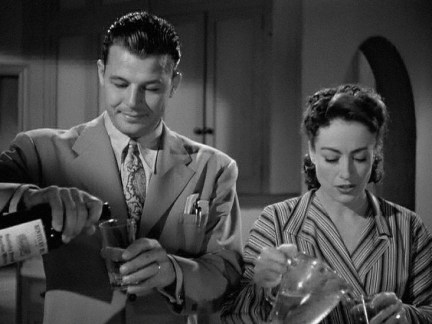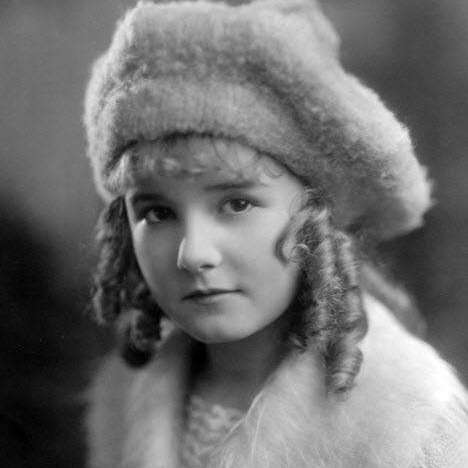
Sylvia Dell

Sylvia Dell

Sylvia Dell ~ A Short Story by Allen Kopp

In 1926 Mrs. Bertha Indelicato of Burbank, California, took her son, Sidney Indelicato, to a movie studio to audition for a part in a motion picture. She dressed him up in a light-blue jumper and a yellow shirt, with pork-pie hat and strapped, patent leather shoes. With Sidney’s cherubic face and naturally curly blond hair, he looked as much like a girl as a boy.

At the audition the casting director, a man named Perkins Belmont Perkins, wearing knickers and argyle stockings, separated the boys from the girls so he could get a better look. When Sidney was herded in with the girls, Mrs. Indelicato didn’t dare object, afraid that doing so might cost him a part in the movie.

When Perkins Belmont Perkins, eyeing Sidney critically, asked for the name, Mrs. Bertha Indelicato stepped forward quickly and gave the name as “Sylvia” Indelicato.

“She’s rather fat,” Perkins Belmont Perkins said, “but I think she has the “look” we’re looking for.”

“Oh, I’m so glad!” Bertha said.

“Have your daughter here at eight o’clock sharp on the fourteenth and I believe we’ll be able to use her.”

“Oh, thank you!” Bertha said. “We’ll be here! Of that you can be sure!”

After they left the studio, Bertha took Sidney to a drugstore down the street to get a banana split.

“Just think!” she said to him as he stuffed ice cream into his mouth. “We’re in!”

“In where, mama?” he asked.

“Why, didn’t you hear the nice man say they were giving you a part in the movie, honey?”

“What do I got to do?”

“Just look sweet and the director will tell you everything to do. Mama will be right beside you every step of the way.”

When Bertha’s husband, Buster Indelicato, came home from his job as a Ford salesman, Bertha told him the good news: Sidney landed a part in a movie.

“There’s just one thing,” she said. “They think Sidney is a girl.”

“What?”

“I had to think fast. I told them his name is ‘Sylvia’ Indelicato.”

“And they believed that?”

“Yes.”

“You always did dress him more like a girl than a boy.”

“If that’s the only way he can get a part in a movie, then a girl he will be!”

“Well, I always wanted a daughter, I guess,” Sidney said, reaching for a beer.

In the few days she had before the fourteenth, Bertha took Sidney shopping and outfitted him with complete feminine attire, down to the lacy bloomers. She fluffed out his hair and gave it some extra curl, insisting that she and Buster call him “Sylvia” at the dinner table and refer to him at all times as “she” and “her” instead of “he” and “him.”

“You’re going to confuse him,” Buster said, “and then we’ll have a mental case on our hands.”

“He’ll be fine,” Bertha said. “I guarantee it.”

“Why do I got to be a girl now?” Sidney asked.

“Because you are an actor,” Bertha said. “You will someday be a great actor. This will be your first acting lesson. Great actors pretend to be who and what they are not.”

“I don’t think I like being a girl.”

“Just remember that underneath the laces and frills you are still a boy. It’s only to the outside world that you are a girl.”

“If I’m an actor,” he said, “I want to be a cowboy.”

“That will come later, dear, after you are an established star.”

“What’s ‘established’ mean?”

On the morning of the fourteenth, Bertha had Sidney at the studio an hour early and was forced to wait nervously in an outer office to be called. Finally, when Sidney was called for a wardrobe fitting, Bertha was given a copy of the script. It was up to her to familiarize herself with the story and tell Sidney, as Sylvia, what he (she) was supposed to do.

The picture was called Baby Bountiful and starred that lovely young motion picture star, Arlette Joseph. She played a young mother who, when she loses her own baby to illness, goes with her handsome young husband to an orphanage to pick out another child. There are so many adorable children to choose from that the young couple can’t decide which one to take. That’s when the orphans show off their singing and dancing talents to help them make up her minds.

The young couple still can’t decide, so they go home, assuring the orphans they will return later and will, most assuredly, choose one of them to take home with them. That night, all the orphans dream of being the chosen one. The next day the young couple returns to the orphanage with some very exciting news. The young mother’s rich uncle has died and left her his millions. Since she will have all that money, she can take all the orphans and they will all live together on a fabulous Long Island estate with their new mommy and daddy.

Sidney was the orphan named Lulu. He wore a white dress and white stockings, a long wig with a large white bow. When the director told the orphans to jump up and down with excitement or to act sad, they did exactly as they were told.

Bertha stood behind the director and the camera, watching. She believed, of course, that Lulu stood out from the other orphans and that her acting was the most realistic. Her eyes brimmed with tears and her heart ached with pride. After all her years of dreaming, her own little Sidney was finally in motion pictures!

When filming was completed for Baby Bountiful, Arlette Joseph thanked all the children personally for playing orphans and everybody packed up to go home. A few days later Bertha received a fat check in the mail for Sidney’s appearance in the film. When she showed the check to Buster, he whistled and said, “That’s more than I make in a month!”

A week later the casting director from the studio called Bertha and asked if Sylvia was available to act in another picture. Bertha nearly dropped out her dentures on the kitchen floor in saying yes.

They hired Sylvia an agent, who promptly changed her name from Sylvia Indelicato to Sylvia Dell. The agent procured parts for her in five pictures the first year and seven the second year, with each part progressively larger than the one before it.

Buster quit his job and began staying home all the time, “seeing to things.” He managed Sylvia’s career from the sidelines with useless advice that nobody listened to. He began wearing double-breasted suits, smoking big cigars, and hosting luncheons at all the fancy restaurants around town.

Sidney, for his part, went along with what was expected of him. When he was at home he could be Sidney, but the minute he went outside the house he had to be Sylvia. Any time he became downhearted, Bertha presented him with a big bowl of ice cream and waved the most recent studio check in his face. When she went to the bank to cash his checks, she always took him along so he could see the big stacks of green and come to know how important they were to his family.

In 1929 the Hollywood studios stopped making silent films and converted to sound. Prepared as she was for any contingency, Bertha hired a diction coach to work with her Sidney. After all they had been through, she wasn’t going to let the advent of sound end her baby’s film career.

The diction coach, aware of how much money was to be made, declared Sylvia a “natural” after a few lessons. If he knew that Sylvia was really a boy instead of a girl, he never let on. He was accustomed to the ways of movie people and wasn’t squeamish about such things.

Sidney’s first sound picture was a big success. He had five lines, which he spoke with a convincing girlish intonation. After that, there were more offers for parts in other motion pictures. The money mounted up as Sylvia’s fame and popularity increased. Sylvia Dell fan clubs sprang up around the country. There were Sylvia Dell coloring books and dolls, an entire line of Sylvia Dell merchandise.

Sidney began to put on a lot of weight. The doctor advised Bertha to put him on a low-calorie diet, but she refused, certain the “pudginess” was part of his appeal. People had come to know him as fat and if he was no longer fat they would no longer know him.

When Sidney inevitably began to show outward signs of becoming an adult male, Bertha and Buster began to panic. They took him to a doctor and wanted to know if there was some way he, the doctor, could medically “alter” Sidney to enhance his feminine qualities and subvert the masculine ones.

“Are you suggesting I castrate him?” the doctor asked.

“If that’s what it takes,” Bertha said.

“Ask him if he wants to be castrated and I can almost assure you what his answer will be.”

“But he’s too young to know what’s best for him,” Bertha said. “He’s only a baby.”

“Good day to you!” the doctor said.

Luckily Sidney was fair-haired and the whiskers on his chin and cheeks could easily be covered up, but his deepening voice was more of a concern. Bertha began plying him with pills that she bought from a “medical consultant” and giving him cognac and whiskey toddies to “calm his nerves” and help him to sleep. In a few months he was a child alcoholic. He took to smoking prodigious numbers of cigarettes, even when he was in character as “Sylvia.” The sweet little girl had turned into a monster. The movie offers began to dry up.

Right before Sidney’s sixteenth birthday, he disappeared. Bertha believed he had been kidnapped and that soon the kidnappers would make their exorbitant demands for his return. She would pay any amount—every cent if she had to—for his return.

The police searched for Sidney but found no sign of him and after a year they gave up. They would keep his file on record, though, and if anything came up they would reopen the case. Bertha began walking the streets at night, looking for him in alleyways. She was certain he was all right and wasn’t very far away. All he needed was for her to find him.

Thirty years went by and Sidney didn’t return home. Bertha and Buster spent all the money and then there was no more. Buster died, leaving Bertha alone in her home with her memories. Her walls with lined with “stills” from Sylvia Dell movies. She never stopped thinking about Sidney.

Small packages began appearing on her doorstep, a packet with fifteen dollars in it and then one with twenty, a potted plant, a loaf of pumpernickel bread. She didn’t know who was leaving these little gifts, but when a box of chocolate-covered cherries appeared, she knew it had to Sidney. Only he would know that had always been her favorite kind of candy.

Copyright © 2016 by Allen Kopp

Somebody Waits for Me

Somebody Waits for Me image 1

Somebody Waits for Me ~ A Short Story by Allen Kopp

I was standing at the window. Inside it was still winter but outside it was spring. The sky was blue, the sun was shining and birds were singing. The woman with the hanging mole on her upper lip came up behind me. I heard her shoes squeaking on the floor and then smelled her perfume.

“You shouldn’t be wandering the halls,” she said.

I ignored her but as she walked away I turned and looked at her and she turned into a puff of blue smoke.

I went back to the room that I had come to identify as my own and lay on my back on the bed and looked up at the ceiling. I knew there was something wrong with me but I couldn’t remember what it was. I couldn’t even remember what place I was in. Oh, well. If it mattered at one time, it didn’t matter any more.

I heard somebody coming and picked up a magazine and opened it and pretended to be reading. I wanted to look busy so they wouldn’t ask me questions or try to engage me in conversation.

It was Theo, all dressed in white as usual. If I saw him in any other color, I wouldn’t recognize him.

“Where’s Miss Deloite?” he asked. “She said she was coming in here to help you with your bath.”

“I’m perfectly capable of taking a bath on my own without a female present, thank you,” I said, not looking up from the page.

I should probably have told him I just turned her into a puff of smoke but I would have to let him figure it out on his own. He should be lucky I didn’t do the same to him.

I crossed my ankles and wished I had a cigarette, and in came Louie from next door. He was wearing a lady’s red kimono with white dragons. I didn’t like Louie and I let him know it.

“What makes you think you can just barge into my room any time you feel like it, Louie? I’m supposed to be taking a bath.”

“I already took mine.”

“I’m so happy for you.”

“Do you have any candy?”

“If I did, I wouldn’t give it to you.”

“That’s not very nice.”

“Shouldn’t you be having your nails done or something?”

“I’m going to tell Miss Deloite you were snotty to me,” Louie said.

“You’ll be telling it to a puff of blue smoke.”

“What?”

Before Louie could annoy me any further, I raised my eyebrows and turned him into a little spider. I laughed as I watched him run on his touchingly small legs across the floor to the wall. He crawled up the wall to the ceiling and looked at me.

“You’re a medical phenomenon,” I said.

I was thinking about taking a nap, for lack of anything better to do, when Theo came back, bearing clean towels.

“Since Miss Deloite is temporarily not to be found,” he said, “I’m going to help you with your bath.”

“I already told you I don’t need help with a bath,” I said.

“Stand up now and take off your clothes, or I’ll do it for you.”

“I don’t want to take off my clothes for you any more than I do for Miss Deloite.”

“Do you want me to go get Stan and Sylvia?”

“Oh, please! Not Stan and Sylvia! I can’t tell them apart. Oh, I remember now. Sylvia’s the one with the mustache, isn’t she?”

“Cut the comedy now. Stand up.”

“Theo, I don’t like your tone of voice!” I said. “It’s not a polite way to speak to a man who isn’t well.”

He came at me with the intention of pulling me off the bed by my arm, but before he knew what was happening I raised my index finger at him and turned him into a blue jay.

Now, I had always though the blue jay a most attractive bird, even though people said he was mean and liked to eat carrion.

Theo flapped his blue wings a couple of times and flew up to the ceiling and ate the tiny spider Louie in one gulp. Louie didn’t even have time to try to get away.

“Good boy!” I said.

He flew around the room a couple of times, bumping painfully into the walls until I stood up and opened the window for him. He didn’t have to be coaxed to fly out and then away over the treetops.

“Be well!” I called to him.

I lay down again. I did not want to take a bath and would be just as obstinate about it as I needed to be. I recalled the good old days when the decision to take a bath was mine alone.

Before I had time to draw another breath, Nurse LaPeezy was upon me with my meds. I eyed the pills suspiciously.

“What if I don’t want to take that stuff?” I said.

“Doctor’s orders,” she said.

“So you’re saying I don’t have a choice?”

“I could call Stan and Sylvia if you like.”

“Oh, no! Not that!”

She handed me a cup of water and I pretended to take the pills. I put them in my mouth and swallowed but I held them under my tongue. When she bent over to pick something up off the floor, I spit them into my fist. The hand is quicker than the eye.

As Nurse LaPeezy was leaving I felt a strong dislike for her. I flicked the little finger on my right hand at her and she turned into a mouse. Realizing she was a mouse, she scurried across the floor the way mice do and disappeared into a conveniently placed mouse hole in the corner. I envied her because I knew she’d find her way to the kitchen where she’d have plenty to eat and find lots of other mice to keep her company. How sweet the life of a mouse must be! Much better than that of a nurse.

The next time somebody came in to help me take a bath, I was going to tell them I had already taken it while everybody was occupied elsewhere. I wanted them to know I had been taking a bath on my own since I was three years old and didn’t need help from anybody.

I was almost asleep when a slight change in the air currents around the bed made me open my eyes. Dr. Felix had come in silently and was standing at the foot of the bed looking at me.

“Sorry to wake you,” he said.

Dr. Felix wore glasses and looked like Franchot Tone. His hands were folded in front of him. I looked at his hairy wrists and his expensive wrist watch so I wouldn’t have to look at his face.

“If you don’t mind, doctor,” I said. “I don’t really feel like talking to you today.”

“Anything wrong in particular?” he asked.

“No. It’s just that I’m here and I don’t know where here is.”

“Here is where you need to be at the moment.”

“I must have a home somewhere, even if I can’t remember it. I want to go home.”

“Everybody feels that way sometimes.”

“That’s comforting.”

“I’m going to increase your antidepressant medication again.”

“You doctors think drugs are the answer to everything, don’t you?”

“You’re spending far too much time alone. That’s not good. I’m going to assign you to some group activities.”

I groaned and closed my eyes. “Don’t trouble yourself,” I said. “I won’t be here.”

“Are you planning on going someplace?”

“Well, you never know,” I said.

He chuckled in his knowing way and turned to go. As he started to put his hand on the door to open it, I blew out a little puff of air in his direction and turned him into a cockroach. He ran under the door and out into the hallway. One of the nurses would see him and scream and step on him and then take a Kleenex out of the pocket of her uniform and pick him up and throw him in the trash can. How fitting is that for Dr. Felix?

Before anybody else had a chance to come in and annoy me, I dressed in some clothes I had been hiding in the bottom of the closet. It was a uniform the maintenance men wore that I had stolen one day when I was exploring in the basement. In the uniform and with the brown cap pulled low over my eyes, nobody would recognize me. Also hidden away in the closet I had some ninety dollars and a pack of cigarettes, which I stuffed into the pants of the uniform.

I took a good look at myself in the mirror over the sink and went out into the hallway. Everything was quiet and nothing out of the ordinary. I made my down the stairs to the main entrance.

The receptionist at the front desk looked up from the magazine she was reading and then looked away. I knew she didn’t know who I was. If she had known, she would have been screaming for help.

I walked out the door into the bright cool air and down the steps, wanting to run but not running because I didn’t want to draw attention to myself. I followed the concrete walk to the driveway and along the edge of the driveway a quarter-mile or so to the main gate. I saw nobody and nobody saw me.

I turned right at the gate out of the place, which seemed to me a better choice than going left, and began walking. I walked for many blocks and saw nothing that looked familiar. I might have been in a foreign country or on another planet, for all I knew. Still, it felt good to be free and on my own.

Checking my pocket to make sure the ninety dollars was still there, I remembered the cigarettes and how long it had been since I had one. I lit one up and as I walked I puffed out a cloud of smoke behind me.

I stopped at a bar that looked inviting and had a beer and a hamburger and after that I kept walking deep into the city. It was a big city but I didn’t know what the name of it was and I didn’t know if I had ever been there before. I saw many people but they seemed to not see me, which altogether suited me.

After what seemed like hours of walking, I felt tired but pleasantly so, and I felt good about the distance I had put between myself and the place I had left behind. When I came to a faded old hotel with a sign that said Clean Rooms and Cheap, I decided that getting a room was the most logical thing I could do.

The desk clerk signed me in without asking for identification or money in advance. He gave me a key to a room on the tenth floor and I went up in an elevator that must have been a hundred years old.

The room was clean and pleasant. There were two windows, a bed, desk, dresser with a large mirror, chair, closet and tiny bathroom. I liked the feeling of being up high. I opened the window a couple of inches to feel the air and to hear the traffic noises from the street, which at that distance I found soothing. After checking the door to make sure it was locked, I lay down on the bed and fell into a deep and restful sleep.

I spent two days and nights in the room, sleeping a lot during the day and walking around the city at night. Nobody ever approached me or bothered me or seemed to find my behavior in any way out of the ordinary. I couldn’t remember ever feeling so free and unencumbered.

More than anything I wanted to go home, but I knew that was never going to happen. I had developed a smoking habit and I preferred tea instead of coffee, but those were about the only things about myself that I knew for sure. My past was like a slate on which nothing had ever been written.

Did I come from a small town or a city like this one? Did I grow up in an apartment in the city or in a house in the wide-open spaces with a big yard and a view of the mountains? Wasn’t it likely that somebody, somewhere was wondering about me, waiting for me to come home?  A mother, maybe? A wife? A lover? A son or daughter? Whoever he or she was, I could feel them and I knew they could feel me.

I also knew the people from the place I had left behind were going to come for me. I had done some bad things, including turning my doctor into a bug. I didn’t see how anybody was going to forgive a thing like that. They would take me back and probably never let me go free again.

On my third day in the room, I had the window open as high as it would go to let in the warm breezes. At any one time, there were as many as five pigeons on the ledge outside the window. They cooed and danced and seemed happy. When I got close to them, they weren’t at all afraid of me. If I had had something to feed them, they would have eaten right out of my hand.

I sat on the bed, looking at myself in the round mirror on the dresser. Wait a minute, I thought. I don’t have to go back to that place or any other place like it. I can do to myself what I did to the others.

I pointed at my reflection in the mirror and turned myself into a pigeon. I flapped my wings on the bed to try them out. From the bed I jumped to the floor and then to the window ledge. There were three pigeons already there to greet me. They knew I was somebody they had never seen before, so they were curious about where I had come from. After introductions were made, they were all eager to show me around the city.

Copyright © 2016 by Allen Kopp

Six and a Half

Six and a Half image 2

Six and a Half ~ A Short Story by Allen Kopp

A loud, insistent knock. She opened the door, quickly, so as not to have to hear another knock like that one, and there, standing on her doorstep, was a strange, blonde-haired woman holding a young girl by the hand.

“Mrs. Tovey?” the strange woman asked, smiling, or trying to smile.

“Yes,” Mrs. Tovey said, already annoyed by the sight of the woman. “If you’re soliciting for something or trying to get me to vote for a certain political candidate, I’m not interested.”

“Oh, no!” the woman said. “It isn’t anything like that! I was wondering if I might have a word with you.”

“Do I know you?” Mrs. Tovey asked.

“No, but you might know of me.”

“What is this about?”

A car went by on the street and the woman looked nervously over her shoulder. “Can we come in?” she asked.

Mrs. Tovey sighed and stood aside to let the woman and the little girl enter her home. Closing the door, she gestured toward the couch like a TV hostess, where the woman sat down, pulling the little girl down beside her. Mrs. Tovey remained standing.

“First off, I’d better tell you my name,” the woman said, leaning forward on the couch and crossing her ankles. “I’m Gilda Gray.”

“I’m sure we haven’t met,” Mrs. Tovey said. “What can I do for you?”

“I was at your husband’s funeral last week. I know you didn’t see me but I saw you.”

“There were lots of people at my husband’s funeral.”

“I was a friend of his.”

“Oh? I wasn’t aware that my husband had any friends that I didn’t know about.”

“Of course you didn’t know who I was or anything about me, but I figured you at least knew that I existed.”

“Why would I know anything about you at all?”

Gilda Gray put her arm around the little girl beside her. “This is my daughter,” she said. “She’s six and a half. We call her Ta-Ta.”

“That’s a ridiculous name,” Mrs. Tovey said.

“Her name is really Tatiana.”

Mrs. Tovey sighed. “I don’t mean to be rude,” she said, “but I’m awfully busy and it’s taking you a very long time to say what it is you want to say.”

“Does Ta-Ta look at all familiar to you?”

Mrs. Tovey drew in her breath and lowered her gaze at Ta-Ta. “She looks like thousands of other little girls I’ve seen. I’ve never seen her before, either.”

“The shape of her face or the way her chin sticks out?”

“Where is all this leading?”

“Your husband and I have been very good friends for about eight years. Right up until the time of his death.”

“I’m trying to be patient,” Mrs. Tovey said, “but I’m quite sure I don’t have time for this. Now, if you’ll excuse me…”

Gilda Gray drew from her purse an envelope and handed it to Mrs. Tovey. “This might help explain things a little better,” she said.

Mrs. Tovey opened the envelope and withdrew a little packet of pictures, which she glanced through and quickly handed back.

“I don’t know what you’re trying to do,” she said, “but it’s not going to work! That is not my husband in those pictures!”

“They were taken when we—your husband and I—were in Florida together.”

“My husband was never in Florida.”

“I assure you he was!”

“How do I know those pictures are real? Anybody can change a picture to make one person look like another.”

“I also have these,” Gilda Gray said.

“And just what is that?”

“It’s letters your husband wrote to me. He had a very distinctive handwriting. Are you going to tell me that’s not his writing?”

“I have no intention of reading your letters!” Mrs. Tovey said. “And if you don’t get out of my house in about five seconds, I’m going to call the police.”

“Your husband made me a lot of promises. He told me he would get a divorce and marry me. I was young and naïve and I believed every word. Of course, none of it turned out to be true.”

“If you proved to me in a court of law that my husband wrote those letters, I still wouldn’t believe you.”

“You’ll believe what you choose to believe.”

“What exactly is it you want?”

“I’m not a very good mother.”

“That I can easily believe! Your daughter is overweight and has far too much curl in her hair.”

“I don’t have a job. I can’t take care of her. I can’t even take care of myself.”

“Why should that be my concern?”

“You have this big house and property, and know you have plenty of dough in the bank.”

“That is no concern of yours.”

“I’m appealing to your sense of decency.”

“What makes you think I have one?”

“I’d like a hundred thousand dollars.”

“I think it’s safe to say that anybody would like a hundred thousand dollars.”

“It’s what your husband would have given me if he had lived.”

“You should have taken it up with him before he died.”

“I can get myself a lawyer if you refuse to play fair.”

“I can get myself a lawyer, too!” Mrs. Tovey said. “In fact, I already have one who was a good friend of my husband’s. He won’t stand for any kind of a shakedown like this.”

“You really think it’s a shakedown?”

“Indeed, I do!”

“You can’t see that I am in any way entitled to a hundred thousand dollars?”

“I cannot!”

“I could cause you a considerable amount of trouble. If I wanted to.”

“I’m sure you think you could!”

“So, you’re refusing the hundred thousand dollars?”

“I most emphatically am!”

“I have a counter-proposal, then.”

“You are in no position to propose anything! I believe you are only a thieving liar who heard about my husband’s death and are conducting—or trying to conduct—a scam.”

“I propose that you adopt Ta-Ta and raise her as your own daughter.”

What? Why would I do that?”

“Because I believe you know in your heart that what I’m saying is true and you wouldn’t want your husband’s child to live a disadvantaged life.”

“The kind of life your daughter lives is no concern of mine!”

“If you adopted her, I would completely remove myself from the picture. I swear I would never bother you again!”

“You are a lying, thieving tramp! It’s written all over you!”

Little Ta-Ta looked from her mother to Mrs. Tovey and back again at her mother and then began crying. She sobbed and wiped at her eyes with her knuckles.

“There, there, darling!” Gilda Gray said. “We’ll go in just a little bit. Mother is just finishing up here.”

“There’s nothing more to say!” Mrs. Tovey said. “You might as well take her and go right now!”

Gilda Gray stood up from the couch. “All right, I’ll go,” she said. “I won’t give you the satisfaction of throwing me out.”

“And if you ever think of coming here again, my door will not be open to you!”

After Gilda Gray was gone, Mrs. Tovey tried to put the episode out of her head. She knew, or thought she knew, that there was no woman like that in her husband’s life. He was too conventional, too boring. No young woman would ever have found him attractive or even mildly interesting. In the morning she would call the police and tell them what happened and she was sure they would be sympathetic. She hoped they would tell her that there had been a rash of these cases and it was nothing to worry about. It happens all the time and all you can do to protect yourself is be a little bit smarter than they are.

Just as it was getting dark that evening, there was another knock at the door, a small, timid knock. When Mrs. Tovey opened the door, there was little Ta-Ta looking up at her. She raised her little fist in greeting and the corners of her mouth turned down as though she knew she would not be welcome.

Mrs. Tovey looked behind Ta-Ta, but there was no one else there. “Why, where’s your mother?” she asked.

“They let me out of the car and drove on,” Ta-Ta said.

“Who did?”

“My mother and a man.”

“And I bet they’re laughing their socks off about now.”

“Can I come in?” Ta-Ta asked.

“I guess you’ll have to,” Mrs. Tovey said.

“My mother said you would love me and take care of me. Do you love me?”

“Why, child, I don’t even know you.”

“I’m very smart.”

“I’m sure you are.”

“Can I have a hot dog?”

“I don’t think I have any hot dogs, but come on into the kitchen and we’ll see what’s there.”

Mrs. Tovey pulled a chair out from the table for Ta-Ta to sit on and went to the refrigerator to see what she might fix for her to eat. There was some leftover liver and onions and some congealed spinach, but she was sure they weren’t appropriate for a child. She fixed her a ham and cheese sandwich and slathered it with mayonnaise.

After Ta-Ta had taken a couple of bites, she said, “This is so good!”

“You haven’t eaten for a while?” Mrs. Tovey asked.

“I don’t remember. Can I watch TV?”

“Finish eating and then we’ll see.”

“Can I stay here forever and ever? My mother said I could.”

“You can stay the night.”

“Can I sleep with you?”

“No. You can sleep in one of the spare bedrooms upstairs.”

“I might get scared.”

“That’s a chance you’ll have to take.”

Copyright © 2016 by Allen Kopp

I Went Home for Christmas

I Went Home for Christmas

I Went Home for Christmas ~ A Short Story by Allen Kopp

There’s a little man inside my head who sees with my eyes. I don’t know if he’s an angel or a devil or a combination of both. He told me I was dying and I told him I was too young. Not exactly young but too young to die.

It was December twenty-third and I was walking down a city street, right in the shopping district. You can imagine the press of people and the noise, the car exhaust and the oppressive feeling of being one of thousands in a herd. I crossed one street and just as I made it to the other side I felt a crushing pain; my vision began to fade and I crumpled to the sidewalk like a puppet with its strings cut.

When I woke up, I was lying in a high bed. Everything around me was white. An old woman, a nurse, I presume, stepped into my field of vision but didn’t look directly at me. I wanted to ask her what had happened to me, but the words wouldn’t come.

I drifted in and out, or, to put it another way, I was aware of what was going on around me and then I wasn’t. Doctors and nurses came and went; I was lifted, moved, probed and prodded. Finally, the little man inside my head told me to prepare myself for the unexpected. When I asked him what he was talking about, he wouldn’t tell me.

I don’t know how I came to be there, but I was in our old neighborhood on Vine Street. I was a child again and as I walked up the hill toward our old house, it was nearly dark. It was snowing a little and somehow I knew it was Christmas Eve.

The big sycamore trees, the yard, the house, everything looked just the same. I was sure I was dreaming because the house—the entire neighborhood, in fact—wasn’t even there anymore. I walked up the steps and entered the front door. I was so surprised at seeing my mother standing there, who had been dead for fifteen years, that I couldn’t speak.

“Feed the dogs before it gets dark,” she said, barely looking at me. “When you’re done with that, go up to your room and make your bed and straighten up. We’re having guests. You don’t want people to think you’re a pig, do you?”

What was it she told me to do? Didn’t she know that she was dead, that the house was gone and I was now older than she was?

“How old am I?” I asked, taking off my cap with the ear flaps.

“What? Did you say something?”

“I asked you how old I am.”

“You’re eight,” she said. “Did you forget?”

“No.”

“Are you all right? You don’t have that stomach thing that’s going around, do you?”

She put her palm on my forehead. She smelled like cinnamon and cigarette smoke.

“I’m fine,” I said.

“Well, you want to get your chores done before everybody gets here.”

When we were all sitting around the dining room table, I could hardly keep from staring. There was grandma with her shiny new false teeth and her beauty parlor hairdo; it was good to hear her laugh again. Next to her was grandpa with his scented pipe tobacco and his shiny bald head. I wanted to ask them where they had been all the time I thought they were dead, but I knew I couldn’t say that because they didn’t know what I knew. Is that what death is? Reverting back to some moment or other in your childhood? Why this moment in particular of all my childhood memories?

Father sat at one end of the table and mother at the other. Father couldn’t have been more than about forty when I was eight and I couldn’t remember him looking so young. He would only have about sixteen more years before he would die of the heart disease that plagued his family.

Next to mother was her unmarried, school-teacher sister, Doris. Mother used to get mad at us for making fun of Doris’s prissy ways. She fluttered her hands and sucked in her breath because she had emphysema. She wouldn’t live much past the age of fifty.

My sixteen-year-old brother, Jeff, sat to father’s left. People used to make me mad by calling us Mutt and Jeff. I was Mutt, of course. As usual, Jeff and I didn’t have much to say to each other. If he wasn’t making fun of me, he was stealing from me or punching me in the arms, so I had learned to avoid him as much as possible.

Father’s brother, my uncle Quinn, was there with his new wife, Shirley. She was Quinn’s third wife and she didn’t seem to have much to say to any of us other than “Lovely to see you again” or “Thank you for having us.”  Quinn’s daughter from his first wife, my cousin Beryl, sat between Quinn and Shirley. Beryl was fourteen and looked miserable. She had pimples and awful hair. She avoided looking at any of us, I was sure she hated Shirley and I wasn’t sure Shirley didn’t hate her back.

At one point during the meal, grandma looked at me and said, “You’re awful quiet tonight, hon. You’re not sick, are you?”

“Sick in the head!” Jeff said, and guffawed.

“No, I’m not sick,” I said.

“He had a rough day at school,” father said.

“No, I didn’t!” I said defensively. Truthfully, I couldn’t remember a thing about the day before I saw the house from down the street.

“You need to get a good night’s sleep tonight,” grandma said. “You don’t want to be sick on Christmas.”

“I’m not sick,” I said.

“You never know what’s going on inside his head,” grandpa said, and everybody looked at me. Jeff was smirking at me and Beryl looked at me with curiosity.

Nothing’s going on inside my head,” I said.

I felt guilty with the terrible knowledge I had of everybody at the table, but I tried to keep it from showing on my face. I smiled and nibbled at my ham and sweet potatoes.

After dinner Doris played the piano. She liked to play Bach and Mozart but nobody wanted to hear that. She usually ended up playing My Melancholy Baby or My Funny Valentine. Since it was Christmas, she played I Saw Mommy Kissing Santa Claus and Silent Night, singing along in her quavering soprano.

“Doris should have been a professional musician,” grandma said.

“She became a school teacher instead,” mother said.

With the adults all sitting around drinking coffee and wine and Jeff talking to his latest girlfriend on the phone, I put on my coat and boots and went outside. I was surprised to see Beryl standing in the front yard smoking a cigarette. She tried to hide it, but I saw the smoke coming out her mouth.

“You won’t tell my dad I was smoking, will you?” she said.

“I don’t care,” I said. I wanted to tell her she shouldn’t be smoking at her age, but I knew it was none of my business.

“Where are you going?” she asked as I walked past her.

“Just for a little walk,” I said.

I was afraid she was going to ask if she could come with me, so I broke out into a little run.

In all those decades, more than forty years, everything in the neighborhood looked the same. I remembered every detail, every tree, every house, bush and street light. I had to remind myself that none of it was real and it existed only in my mind. If I was having a dream, it was one of the most life-like dreams I ever had. I was an eight-year-old boy carrying around the thoughts and memories of a man over six times eight. If I wasn’t dead, it had to be the result of a fever.

I took a couple turns around the neighborhood and by the time I got back home it was snowing heavily. Perfect for Christmas Eve, as perfect as it could be.

Father, grandpa and Quinn were in the dining room talking about football and politics. The women were all in the kitchen, laughing and smoking cigarettes, I knew. Beryl sat in the living room alone. She smiled at me and flipped her hair back from her forehead.

“I think your brother is cute,” she said.

“Uh-huh,” I said. “He’s a jerk.”

“Do you think he likes me?”

“I don’t think he likes anybody very much.”

I took off my coat and went into the kitchen and had a peanut butter cookie and a piece of fudge. Mother was sitting at the table writing out a recipe for grandma.

“Where have you been?” she asked me.

“I just went for a little walk,” I said.

“You might have at least told me you were going.”

Grandma started in on a story about a couple of girls who were abducted and murdered and I went upstairs to my room.

My flannel pajamas were right where I had left them, in the middle drawer of the dresser. I slipped out of my clothes and into the pajamas and got into the old bed, which, I have to tell you, was the most comfortable bed I ever slept in. I was cold so I pulled the covers up over my head. It was so quiet I could hear the snowflakes falling outside my window. Soon I went to sleep.

I was only eight, so my mother and I still practiced the conceit that Santa was real and I believed in him wholeheartedly. He left for me by the tree downstairs, on Christmas morning, a red bike, a sled, some books, a new coat and lots of other things. In my stocking were nuts in the shell, an orange, hard candy and a carton of Christmas candy cigarettes. I got candy cigarettes every year in my stocking and, in past years, had made everybody laugh by pretending I was lighting up and smoking. The more I hammed it up, the more they laughed.

After we had opened all the presents, we all got dressed up and went over to grandma and grandpa’s. Grandma always cooked Christmas dinner. Besides turkey and dressing, we had roast beef, mashed potatoes and gravy, cranberry salad, macaroni and cheese baked in the oven that was the best I ever tasted and, for dessert, orange peel cake, apricot bars, cherry pie and pumpkin pie with real whipped cream. I didn’t mind sitting at the kids’ table with Beryl and my cousins Naomi, Tibby, Gloria and Bennett. Beryl was disappointed that Jeff was old enough to sit at the main table. He didn’t look at her the whole time.

After dinner the kids played in the snow and the adults sat around in the house smoking and drinking cocktails. Grandpa went upstairs to take a nap. Doris played the piano again for a while and when she was finished playing grandma played some Christmas records.

There were people at grandma and grandpa’s that Christmas Day that I didn’t even know, uncles and cousins and people from out of town. They would look at me and ask me how old I was, what grade I was in at school and if I had been a good boy during the year. I could have amazed them with what I knew if I had wanted to.

Mother helped grandma put away the leftovers and clean up in the kitchen and, after we all had another piece of fruit cake or pumpkin pie, we packed up and went home. I was tired and I went to my room early. Mother was still convinced I was sick, so she didn’t give me any chores to do. Everything could wait until the next day.

I put on the flannel pajamas and got into bed and turned off the light. It had stopped snowing, the moon and stars were shining and the light coming in at the window was blue-tinged and restful. I was about to drift off to sleep when the little man in my head spoke to me again.

“Have you had a good time?” he asked.

“Yes, yes,” I said, “but I don’t understand what I’m doing here. Is this what happens when you die?”

“You think you’re dead?”

“I don’t know. Am I?”

“There are no simple answers to these questions. Or, to put it another way, it’s not for us to know.”

“I don’t want to be eight years old again forever and I don’t want to live the same stupid life over again. Going through the ninth grade again the same as it was before? No, thank you!”

“Hah-hah-hah!” he said. “You’re such a complainer. Always were!”

When I awoke again, I was in the same high bed. I blinked my eyes a few times and looked toward the window where I could see blue sky and white clouds.

“What day is it?” I asked a woman in white who was standing there.

“It’s December the twenty-seventh,” she said.

“I went home for Christmas,” I said.

She smiled uneasily and nodded her head.

“It was the best Christmas ever. They were all there. All the dead ones. I didn’t know it could be that way. Einstein was right, wasn’t he?”

The woman in white shrugged her shoulders and looked away. I had to look at her again to make sure she wasn’t an angel.

Copyright © 2015 by Allen Kopp

If You Don’t Tell Santa What You Want, You Won’t Get Anything

If You Don't Tell Santa What You Want, You Won't Get Anything

If You Don’t Tell Santa What You Want, You Won’t Get Anything ~ A Short Story by Allen Kopp

We lived in a small town with small stores, where there was no sit-down Santa to talk to. The nearest big stores were in the city two hours away. Every year my mother and grandma took my sister and me to see Santa and do some Christmas shopping.

I was little and didn’t know any better so I liked the city, which was so unlike the town we lived in. I liked the cars and the crowds of people standing on the street corners waiting for the light to change so they could walk across; the tall buildings and the roaring buses that had a particular smell of their own. I liked the whistle of the policeman directing traffic and the clang of the bell-ringing Santa on the sidewalk (not the real Santa, I knew) who was trying to get people to drop money into his pot. Of course, it had to be cold weather (the colder the better) and not raining, or none of this would have held any appeal for me. Cold weather was absolutely essential to get the feel of Christmas.

I was six so I still firmly believed in the myth of Santa Claus. I also believed that if you weren’t able to talk to Santa and tell him what you wanted in the run-up to Christmas, you would be out of luck and would get nothing. No presents, no Santa, no nothing. I already knew the world was a hard place.

Mother had lived in the city before she was married so she knew her way around downtown. As she maneuvered the car through the traffic to get to where she wanted to park, I was still sleepy from the Dramamine I had been given before we left home but I didn’t feel like vomiting, so that was the important thing. She parked in a pay parking lot a few blocks from where we were going and we all got out of the car.

“They charge a dollar now for parking,” mother said. “I don’t know what the world is coming to. Just last year it was fifty cents.”

Grandma helped my sister and me on with our hats and gloves and we began the several-blocks walk down to the department store where Santa was.

This store was famous for its animated Christmas windows. We stopped to take a look at them but there were so many people crowded around that we couldn’t see them very well, so we went on inside the store. I was starting to feel little-kid anxiety about seeing Santa. I might freeze up when I sat on his lap and not be able to tell him what I wanted. I felt my throat constrict at the thought.

To get in to where Santa was, you had to walk through the “Winter Wonderland” that was supposed to be the North Pole. There was a wooden walkway to get through it and there were plenty of elves around to make sure nobody left the walkway and tried to walk on the fake snow, pull on the fake trees (trees at the North Pole?) or try to get a closer look at the reindeer. It was all very pretty, with Christmas music blasting over the sound system, but I couldn’t wait to get through it and in to see Santa.

After we passed through “Winter Wonderland,” There were ropes on poles to keep all the people in a neat line. It was about half adults and half kids. Some of the women held tiny babies or pushed them in strollers. You knew they were too young and would only waste Santa’s time. Most of the kids, you could tell, were trying to hold still and not squirm too much. A few of them looked as nervous as I felt.

In about fifteen minutes, we finally came to the place where we could see Santa on his throne. I breathed a sigh of relief when I was actually able to see him and know he was there. There were still about twenty more little kids in front of me, though, before it would be my turn.

Santa was flanked by yet more elves to keep the line moving and keep any one child from taking up too much of his time. Each child was placed on Santa’s lap, Santa leaned over to let the child speak into his ear for about twenty seconds and then the child was removed in an elfin movement of robotic efficiency.

My heart was beating too fast as I got nearer to Santa. I tried to keep in my mind what I was going to say, but I wasn’t sure if I’d be able to remember it. I knew my mother, sister and grandma were somewhere behind me, watching me, but I wasn’t thinking about them. I only wanted to get this over with.

Finally it was my turn. A burly elf with acne put his hands on either side of my rib cage and hoisted me up; I swung my legs over and found myself face to face with Santa. He smiled at me and I could see his thick lips through his whiskers. He breathed on the side of my head.

“What would you like for Santa to bring you?” he asked.

“Uh, I want a sled and a pair of cowboy boots and…”

“What else?”

“A Howdy-Doody puppet and a racing car set and some books and…”

“Yes?”

“That’s all I can think of right now.”

“Have you been a good boy this year?” he asked.

“Oh, yes!”

He gave me a candy cane, and the same elf who had lifted me up then lifted me down. I realized then how silly all this was.

After my sister had her turn with Santa, I rejoined mother and grandma. “Did you tell him everything you wanted?” mother asked me.

“Everything I could think of,” I said.

“Now, that doesn’t mean you’ll get everything just because you told him you wanted it.”

“How does he remember what people tell him without writing it down?” I asked.

“I guess he has a photographic memory.”

“He’s really something, isn’t he?”

We had lunch on the mezzanine level where you could look down and see hundreds of people moving around like ants. There was nothing like that back home. Then after lunch it was on to the serious shopping.

Copyright © 2015 by Allen Kopp

Looks Like Wally Fay

Looks Like Wally Fay image 2

Looks Like Wally Fay ~ A Short Story by Allen Kopp

“Did you get a good look at the man?” Officer Miggles asked.

“Oh, yes,” Miss Dragonette said.

“Can you describe him for me?”

“Well, he was kind of heavy-set without being what I would call fat, if you know what I mean.”

“So he was moderately overweight?”

“Yes, I suppose so.”

“Did you notice anything else about him? The color of his hair?”

“He was wearing a hat so I couldn’t see his hair. I would imagine it would be dark, though. Underneath the hat.”

“How tall was he?”

“Rather on the tall side. About six feet and one inch, I’d say.”

“What was he wearing?”

“A long brown topcoat that came down to his ankles. Cashmere, I think.”

“Cashmere?”

“Yes, that’s right.”

“Can you tell me anything else about him?”

“He was wearing a brown tie with little yellow birds on it, like parrots.”

“All right. How old would you say he was?”

“If I had to guess, I’d guess late thirties. Thirty-eight or thirty-nine.”

“How would you describe his face?”

“Well, let me think, now. He needed a shave. I did notice that right off.”

“So he had stubble on his face.”

“Yes, dark stubble. The color of the stubble on his face was what made me think he would have dark hair, even though I couldn’t see his hair because of the hat he was wearing.”

“Can you tell me anything else about his face?”

“He looked like that actor in that movie about the woman with a spoiled daughter who shoots the woman’s husband.”

“I don’t know what you’re talking about, ma’am.”

“I know! It was Joan Crawford!”

“So, the man looked like Joan Crawford?”

“No! It was a Joan Crawford movie. The man looked like one of the actors in the movie.”

“Do you know the actor’s name?”

“No, I can’t think of it offhand. It wasn’t the playboy who was Joan Crawford’s second husband and it wasn’t the first husband, either. It was the other man. The one in business with Joan Crawford’s first husband.”

“Okay, ma’am. I don’t think we’re making much progress here.”

“I remember now! His name was Wally Fay.”

“Whose name?”

“The man in the movie with Joan Crawford. The name of the character he played was Wally Fay. I can’t think of his real name, though. It’ll come to me later, I’m sure.”

“I’m afraid that isn’t much help.”

“I know. I’m sorry.”

“Can you tell me anything else about him at all?”

“He was in another movie where he played Paul Newman’s brother.”

“No! Can you tell me anything else about the man who fired the gun?”

“Paul Newman was married to Elizabeth Taylor and he had this brother they called Gooper. I suppose that was a nickname, though.”

“I don’t need to hear about a movie.”

“Gooper was married to a coarse fat woman named May. She and Gooper had a lot of little kids, and Paul Newman’s wife, the character played by Elizabeth Taylor, didn’t much care for them because they made so much noise.”

“That won’t help us to catch the man we’re looking for, ma’am.”

“Well, I’m trying to remember! I’m cooperating with you. It seems the least you can do is be patient and polite.”

“I’m sorry if I seem impatient but I don’t need to hear about any movie.”

“Where was I? Oh, yes. Paul Newman and his brother Gooper had a rich old father who didn’t like anybody in his family. Well, the entire family was gathered because the father had just found out he had a fatal disease and the two sons—especially Gooper—were worried about who was going to inherit the estate. It was in the South, somewhere. Mississippi, I think.”

“Okay, that’s enough about movies. Can you describe for me what you saw the man do?”

“Well, I was just walking along the sidewalk, minding my own business, on my way to buy a new pair of shoes. I heard a commotion in the street and I stopped to see what it was. I saw a bunch of police cars with flashing lights. It seemed to be something terribly important, but I didn’t know what it was.”

“Then what happened?”

“A bunch of people had gathered along the sidewalk to watch, but I stayed back. That’s when I noticed the man in the cashmere coat come out of an alleyway.”

“What made you notice him?”

“He just stood there, looking very dignified. He wasn’t trying to elbow in to get a closer look, the way the other people were. He just looked straight ahead as though in a trance or something.”

“Then what happened?”

“Well, after all the police cars had passed with their lights going, I saw the big black car of the governor. I could see him in the car smiling and waving—I recognized him from his pictures—and I knew then what all the commotion was about. All the people were trying to get in to get a closer look at him.”

“So you didn’t know until that moment that the governor was going to be visiting here that day?”

“No. Why should I?”

“Don’t you read the newspapers? Don’t you watch the news on television?”

“Never.”

“Go on.”

“When the car carrying the governor came about even with where I was standing on the sidewalk, the man in the cashmere coat took a few steps forward.”

“Toward the car?”

“That’s right.”

“Then what did he do?”

“I looked away for a moment and that’s when I heard the gunshots.”

“How many gunshots?”

“Three, I think. Some of the people screamed or ducked down as if they thought they were going to be shot, but I wasn’t afraid because I saw where the bullets came from and I knew they weren’t directed at me.”

“All right. Then what?”

“After the man fired the shots, he just simply disappeared.”

“People don’t disappear.”

“I know they don’t, but that’s the way it seemed to me. He was there and then he wasn’t.”

“Okay. Then what?”

“The governor’s car stopped and all the police cars stopped and everybody was running around trying to find out where the bullets came from. There were more people than ever now crowding around to get a better view. You know what people are like.”

“I suppose I do.”

“Well, the police spotted me standing on the sidewalk and, well, I guess it seemed to them that the bullets had come from about where I was standing, so they asked me if I had seen anything and I said I had and that’s when all these questions started. Can I go now? I’m feeling a little shaky after all the excitement.”

“It seems you were the only one who saw the man in the cashmere coat.”

“Yes, that’s because I was the only one standing back where he was standing. Everybody else was crowding toward the front.”

“As the only witness, you’ll need to make yourself available for further questioning.”

“Please, I’d rather you kept me out of this, if you don’t mind.”

After Office Miggles took her name and address, Miss Dragonette continued two blocks up the street and stepped off the curb between two parked cars. Looking around to make sure she wasn’t being observed, she took the gun out of her purse and threw it down a storm drain from which could be heard the sound of rushing water.

Satisfied that she wasn’t seen, she snapped her purse shut smartly and crossed the sidewalk to a store window where two high-fashion female mannequins in fur coats stood side by side. She looked into the face of the mannequin on the right and returned the artificial smile. “I can’t tell you how happy I am to make your acquaintance,” she said before continuing on her way.

Copyright © 2015 by Allen Kopp  

City Dump ~ A Short Story

City Dump image 1

City Dump
~ A Short Story by Allen Kopp ~

When I was in the eighth grade, the Dutchman decided our old house needed a new roof. Instead of consulting the Yellow Pages to find a reputable roofer, he decided to save a few greenbacks by—no, not by doing the job himself—but by having a “friend” do it at a cut-rate price.

The price at which the friend agreed to replace the roof didn’t, oddly enough, include any clean-up. That means that pieces of the old roof dating from the time the house was built—boards, shingles, chunks of asbestos, nails, what-have-you—were scattered in the yard on all four sides of the house, looking like the scene of an unspeakable natural disaster. How many houses, I ask you, have a new roof while the old roof adorns the yard in the ugliest way imaginable?

The Dutchman’s solution to the clean-up was simple. He had a thirteen-year-old son: me. I weighed ninety-two pounds but was more than capable of picking chunks of debris out of the shrubs and off the lawn and placing them in a washtub. How many washtubs full does it take to hold the thousands of splintered pieces of an old roof? More than you can imagine.

He didn’t own a pickup truck so he borrowed one from another “friend.” (Where do all these friends come from?) It was an old dark blue truck that had seen better days. It was only a one-day loan, so that meant we only had one day to get rid of all the crap that surrounded the house. I was wishing I would lose consciousness and not regain it until well into the next week. I would rather have thirty hours of gym class than a day of enforced yard clean-up with the Dutchman.

After I got the washtub loaded up with stuff, it was too heavy to lift on my own. “Candy ass,” the Dutchman said. “You’re not worth the powder to blow you to hell.”

“I know,” I said. And I did know, as this phrase had been repeated to me in some form or another almost every day of my life.

The Dutchman saw that I could manage the loaded washtub only if he took the other handle. It occurred to him then for the first time that I didn’t have the strength of a grown man. Who knew?

With about eight tubs full of stuff, we had enough in the back of the truck to make a full load. I had to take a rake and distribute the stuff so we could get more in. Then, when the Dutchman was convinced the truck would hold no more, we headed for the city dump, about two miles outside of town. It felt good to sit down, even if the inside of the truck smelled like an old woman who never takes a bath.

At the city dump, the Dutchman carefully backed the truck as close to the edge of the embankment as he could get without going over the side, and we got out and started unloading. I stood up in the bed of the truck and tossed the stuff over the side but, of course, I wasn’t doing it fast enough to suit the Dutchman.

“Do you want to still be working at this at midnight?” he asked.

“I’m starting to feel sick,” I said.

By the time we got back to the house to begin work on the second load, it had started to rain the kind of rain you get in November: slow, cold and steady. The Dutchman made me put on a hat—not to protect my health but because he was thinking about how much money it might cost him if I got sick and had to see a doctor.

The second truckload to the city dump didn’t go any faster than the first one and, after two loads, we had made very little progress. This was taking a lot longer than the Dutchman thought it would. There weren’t going to be enough hours in the day. I was happy, maybe for the first time in my life, at the prospect of going to school the next day.

It was when we were working on the third load that an old man from the neighborhood stepped into the yard and motioned to us. The Dutchman stopped what he was doing and went over to him. I was near enough that I could hear.

“I know somebody that will take all that stuff away for you for a good price,” the old man said.

The Dutchman thought about it for a minute and shook his head. “No, thanks,” he said. “I can do it myself.”

“Looks like that boy there’s about worn out,” the old man said. He meant me, of course.

The Dutchman looked at me as though noticing me for the first time. “He’s stronger than he looks,” he said with a little laugh.

My mother came out of the house then in her plastic rain bonnet. “You know somebody that’ll do this hard work?” she asked.

“My nephew and his friend,” the old man said. “They’ve got themselves an old truck and will do little jobs here and there to earn enough money to fill it up with gas.”

“Does your nephew have a phone number?” she asked.

The old man gave the number and my mother said she would remember it without writing it down. She thanked the old man and he left.

“You come into the house,” she said to me, “and get cleaned up before supper.”

“He’s not going in,” the Dutchman said, “until the work is finished.”

“Says you,” she said.

She put her hand on my shoulder and drew me along with her into the house. It was one of the few times I ever saw her stand up to the Dutchman.

I took a bath as hot as I could stand it to get the roof grit off and put on my pajamas. I had the sniffles afterwards and there were some bleeding cuts on my hands, but I was happy and was sure I would be all right.

The next day when I came home from school, all the roof junk in the yard had been taken away. Mother told me she paid for it out of her own money and that it had been a real bargain. I was beaming with satisfaction at the dinner table that evening while the Dutchman looked unhappy and defeated, too dispirited even to complain that the mashed potatoes weren’t the way he liked them.

Copyright © 2024 by Allen Kopp

If You Can’t Be Civil Be Silent

If You Can't Be Civil image

If You Can’t Be Civil Be Silent ~ A Short Story by Allen Kopp

“You’re driving too fast, Dick, dear,” mother said.

He ignored her, lit a cigarette and blew the smoke out the corner of his mouth in her direction.

“Why Mr. Grumpy?” she asked. “Are you tired, darling?”

“No, I ain’t tired,” Dick said. “I just don’t like being asked questions while I’m driving.”

She moved over next to him and rested her head on his shoulder. “Aren’t you excited about our little trip?”

“Oh, sure, I’m excited as hell!” he said.

Dick Dubois was mother’s latest boyfriend. He was three years younger than she was and owned his own business. She was always trying to get signs from him that he loved her.

“I just don’t think you care about me at all,” she said.

“Ho-hum,” he said, putting his hand over his mouth to cover a yawn.

“We’re going to have such fun! As soon as we get checked in to our cabin, we’ll go for a little swim.”

“Oh, goody!” Coral Anne said from the back seat.

“I think I’ll just stay in the room,” Sully said. “I’m feeling a little car sick.”

“Oh, you’re such a big baby!” Coral Anne said. “You always have to spoil everything!”

“I have some Pepto-Bismol in my bag,” mother said, “but it’s in the trunk.”

“I don’t need any Pepto-Bismol.”

“Oh, mother!” Coral Anne said. “Don’t you know? He’s just pretending to be sick to get sympathy.”

“Shut up!” Sully said.

You shut up!”

“You both shut up or I’m going to stop the car and put you out alongside the road,” Dick said.

“Don’t you tell my children to shut up!” mother said.

“Oh, I’ll do whatever I want, bitch face!”

She pouted for a minute and then nestled her cheek against his shoulder. “Let’s not have any unpleasantness,” she said. “Let’s just have fun and enjoy ourselves.”

“Is such a thing possible?” he asked.

“Mother, how deep is the lake?” Coral Anne asked.

“How would you expect me to know?”

“It goes down so far it doesn’t even have a bottom,” Dick said.

“There’s monsters that live at the bottom of the lake,” Sully said. “When they see your chubby ass in your red swimsuit bobbing up and down, they’ll grab you and take you down to the bottom and feed you to their young.”

“Mother, did you hear what he said to me?” Coral Anne said. “He’s making fun of me!”

“That’s enough of that kind of talk, Sully,” mother said. “Be civil to your sister. If you can’t be civil, be silent.”

“If I have to be civil to her, she has to be civil to me,” Sully said.

“Woman don’t think that way,” Dick said. “You have to be nice to them but they don’t have to be nice to you.”

“Oh, you!” mother said. “You’re the voice of experience when it comes to women, aren’t you?”

“I’ve been around the block a few times.”

“I still can’t figure out how you got to be thirty-eight years old without ever being married.”

“I’m not giving away any of my secrets.”

“Don’t you want to have some children of your own before it’s too late?”

“Hell, no!”

“Mother, are you and Dick going to get married?” Coral Anne asked.

“You’d have to ask Dick that question,” mother said.

“I thought we were supposed to be having fun,” Sully said.

Copyright © 2015 by Allen Kopp

By and By

By and By

By and By ~ A Short Story by Allen Kopp 

The Cemetery of the Holy Ghost was sprawling and composed of many parts, reflecting different eras in the history of the country. There was the very old part that contained the bones of people from so long ago that some of them had fought the British and had laid eyes on George Washington. And then, moving on to the more recent past—but still long ago—there were bones of those who had fought in the Civil War, including a famous general or two and their wives and offspring. After that, there were the rich industrialists and beer barons of the 1890s who built their elaborate mausoleums at great expense, looking like small gothic churches, to house their remains and those of their families. From there we move on to the boys who fought and died in the First World War and, farther along, the Second World War. Mixed in are some famous writers, a mistress of a president or two, a long-forgotten North Pole explorer, a famous operatic tenor, and on and on, not to mention the tens of thousands who never did anything to distinguish themselves while they were living and certainly had no plan to do so while they were dead.

Somewhere between the Civil War and the Spanish-American War, one might find the grave of Reginald Maxim Winfield, known to his intimates as “Reggie.” He was born in 1886 and died in 1896 at the age of ten years, five months and eighteen days. The cause of his death doesn’t matter, except to say that he wasn’t sick more than a day or two and didn’t feel much of anything when he passed from the realm of the living to the realm of the dead.

At Reggie’s graveside service, his mother, still not quite believing he was dead, moaned softly behind her veil. Just before the coffin was lowered into the earth, she bent over and, placing her arms around it as though she meant to pick it up, whispered a few words in the region close to where Reggie’s ear would be. When asked later what words she had spoken, she claimed she didn’t remember, being mollified by her grief as she was.

Several lifetimes passed by, the world changed as much as it had ever changed in a hundred and more years, and Reggie’s spirit still remained in the Cemetery of the Holy Ghost; still hadn’t moved on as it should have done. Reggie was lonely, waiting behind, but only doing what he believed he had to do. Certain living people had seen Reggie’s restless spirit over the years, but those people were few and were uncertain, after the fact, of exactly what they had seen. After a couple of startling encounters (startling for Reggie), he assiduously avoided any contact with the living people who, for whatever reason, found themselves in the cemetery. He was a shy spirit, as most spirits are, and believed that nothing good—for him, anyway—would ever come of anybody who still had a beating heart.

When he first laid eyes on the young girl, though, he didn’t run away as he usually did because he wasn’t sure if she was alive or, like him, dead. She was dressed in filthy rags and her skin, what could be seen of it, was caked with layers of dirt. She was so wan and pale and appeared so underfed that she was, he deduced, one of those unfortunate living people who didn’t have a home and who ended up in the Cemetery of the Holy Ghost because it was a good place to hide and also because she had no place else to go. If she wasn’t a spirit yet, she would be one soon. That’s why he felt a connection to her.

The second time he saw her, he made sure she also saw him.

“Have you seen my mother?” he asked.

She stopped and looked at him, not certain if he had spoken to her. “Who are you?” she asked. “I haven’t seen you before.”

“I’ve seen you,” he said.

“Where?”

“Right here.”

“Why are you dressed in such funny clothes?” she asked.

“They’re not funny.”

“They look funny to me. A little bit out of the run of normal fashion for boys.”

“Getting back to my original question,” he said, “have you seen my mother?”

“What does she look like?”

“She’s tall for a woman. She has hazel eyes and auburn hair and always dresses stylishly.”

“I don’t think I’ve ever seen anybody like that in my entire life. What is her name?”

“Dorothy Abbot Winfield. She’s married to my father, George Herbert Winfield.”

“No, sorry.”

“How long is ‘by and by’?”

“What?”

“I said, how long is ‘by and by’? My mother told me to wait for her here and she would be along ‘by and by’.”

The girl closed her eyes and opened them again, putting her hand to her forehead as though she might faint. “I’m not sure I’m even seeing you,” she said. “I haven’t been feeling well lately.”

“Are you hungry?” he asked.

“Uh, I don’t think so.”

“So you haven’t seen my mother?”

“I haven’t seen anybody since…oh, I can’t remember!”

“If you see her, tell her I’m waiting here for her.”

“If I see anybody answering to that description…wait a minute! You’re a ghost, aren’t you? You lived a long time ago.”

“I thought maybe you were a ghost, too,” he said.

“What year were you born?”

“Why, 1886,” he said. “What difference does that make?”

“What year was your mother born?”

“1860.”

“There! That’s it! You are a ghost and your mother came and went a long time ago and you missed her.”

“That can’t be,” he said. “She told me to wait here for her and she would be along ‘by and by’.”

“I’m sorry,” the girl said. “I’m afraid I can’t help you. I don’t think you’re real, anyway, but if I see your mother I’ll tell her you’re looking for her.”

When she started to walk away, the boy put his hand on her arm. “What’s your name?” he asked.

“Vicki-Vicki.”

“What are you doing in the cemetery? You’re not just visiting somebody’s grave, are you?”

“I’m staying here for a while until I find a better place to stay.”

“You’re not afraid?”

“What’s there to be afraid of? There’s usually nobody here but me. It’s peaceful. I like it.”

“Where do you sleep?”

“That’s enough questions,” she said. “If anybody should be asking questions, it’s me! How often do I get a chance to talk to a dead person?”

“I’m as alive as you are, just on a different plane.”

“I’m sure it’s all very interesting,” she said, “but you’re not even here and I feel a little foolish talking to nothing.”

She went to the nearest large tree and sat down with her back to it; put her head back, closed her eyes, drew in her legs and seemed to go to sleep. He stood looking at her for a while and then moved on to continue his search for his mother.

The next time he saw the girl she was sleeping in a pile of leaves between two very large gravestones. He didn’t want to wake her but as he approached he saw her eyes were open.

“It’s you again,” she said. “I know now you really are a ghost because you walk on the leaves without making a sound.”

“You look sick,” he said.

“I think I’m dying. Somebody needs to come along and put me under the earth. I wouldn’t mind a bit.”

“Maybe you can help me find my mother.”

She laughed. “How do I do that?”

“I don’t know. You’re alive and you seem to have a facility for communicating with ghosts. Maybe you’ll see the ghost of my mother and if you do you can tell her where I am.”

“I’d like to help but I don’t think I can.”

“Why not?”

“I have to get out of the cemetery today and go back to the city. There’s going to be a purge tonight. They’re cracking down on the vags, like me.”

“What’s a ‘vag’?”

“You’re looking at one.”

“Oh, I see. It’s a bum, a wayward person who doesn’t have a home.”

“Yes, that’s me. A girl bum.”

“You had a home but you left it?”

“We won’t go into that now. Maybe some other time when I’m feeling up to it.”

“I think my mother is close by. I can feel it.”

“I’m sorry,” she said. “We all have our troubles. You have yours and I have mine.”

“Will you help me find her?”

“Right now I don’t think I could even find my nose.”

“You need a doctor.”

“If you see one, give him my regards.”

“I think maybe you are my mother. That’s why I’m seeing you and you’re seeing me.”

She gave a weak, snorting laugh. “I’m nobody’s mother,” she said. “I’ve never even been married.”

“No!” he said. “You don’t understand. I think my mother’s spirit is in your body. Same spirit, different body.”

“I don’t think so, but if it makes you feel better to believe it, then I guess there’s no harm in it.”

He heard voices and thought someone was coming, so he ducked out of sight. A little while later when he went back to the pile of leaves between the two grave stones, the girl was gone.

That night he heard the commotion of the purge, screaming and rollicking laughter, the tromping of feet over the hallowed ground. He hoped the girl had left in time and had gone to some safe place.

In the morning just as the sun was coming up, he found her, bleeding and barely breathing, hiding in some bushes. One of the night watchmen had hit her in the head with his night stick and split her head open. He knelt beside her and put his face close to hers.

“Why didn’t you leave when you had the chance?” he asked.

“No place to go.”

“You’re hurt bad.”

“Have to get out of this place,” she said.

She struggled to stand up but her arms and legs wouldn’t work.

She died with the birds singing in the trees over her head. He stayed beside her and then when the end came he wasn’t too surprised to see the spirit of his mother, Dorothy Abbot Winfield, rise out of the girl’s body. She wasn’t dressed in mourning but was wearing a beautiful brown dress for autumn and looked exactly as he remembered her.

“Mother!” he said. “I’ve waited all this time!”

“Reggie!” she said. “I knew you’d be here!”

She wrapped her arms around him, held him tightly and kissed his head.

“You told me to wait, that you’d be along ‘by and by,’ and I did wait and now you’re here.”

“I’m so glad!” she said. “So happy!”

“Where are father and Jacqueline and Edward?”

“They’re waiting for us just over the hill.”

He took her by the hand and together they walked into the radiant light of early morning. Nothing would ever keep them apart again.

Copyright © 2015 by Allen Kopp

Your Friend August Wellington

Your Friend August Wellington image

Your Friend August Wellington ~ A Short Story by Allen Kopp

He selected several pairs of swimsuits from the men’s-small rack and locked himself in the dressing room. After checking the door three times to make sure nobody could get in, he took everything off except his underpants and, standing before the mirror, began trying them on: first a plaid pair that he immediately rejected because they were too skimpy; then a yellow pair with a black stripe up each side and a slit at the thigh that made him look like something he wasn’t; then a black, baggy pair that hung down almost to his knees and made him look like an old man; then a red pair that wasn’t too baggy or too tight. He turned this way and that, looking at himself from every angle. The red pair would do, even though he hated the way he looked with his chest, arms and legs uncovered. No doubt about it, he was meant to be clothed. He wasn’t sure he would ever let anybody see him in the red swimsuit, but buying it was the first step and then he would see. He couldn’t look any worse than a lot of other people.

Of course, he had already turned down the invitation to the pool party, but he still might change his mind. He could see himself calling at the last minute and graciously accepting, after all, the invitation that he had declined. “I thought I was having abdominal surgery that day but it turns out the doctor says I don’t need the operation after all. Hah-hah-hah!”

When he got home, Aunt Vivian was waiting for him in her Cadillac, smoking a cigarette. She saw him in her rearview mirror and jumped out.

“August, where the hell have you been?” She reeked of perfume and her lipstick was smeared down to her chin.

“I had some shopping to do,” he said.

“I was about to call the police.”

“Why?”

“You didn’t answer the door. I thought something terrible must have happened to you.”

“And how many martinis did you have for lunch today?” he asked.

She stood behind him while he fumbled with the key in the lock and when he opened the door she went inside behind him as if the house belonged to her.

“I want you to come and stay at our house until your daddy gets back from his business trip,” she said.

“I’ve already said I’m not going to do that.”

“When you’re in school, it’s different, but now that school is out you don’t have any business staying in this big house all alone.”

“I like being alone.”

“You get lonely.”

“No, I don’t!”

“You daddy had no business going off and leaving you alone. You’re still a child.”

“No, I’m not!”

“I worry about you.”

“No need.”

“So you’re saying you won’t come and stay at my house?”

“That’s what I’m saying.”

“I could still put you over my knee and whale the living daylights out of you,” she said.

“I don’t think so,” he said. “I’m bigger than you are.”

She swiped her fingers on the dining room table to see how much dust had collected there and then she went into the kitchen, opening the refrigerator and all the cabinets and looking inside.

“Are you eating properly?” she asked.

“Of course.”

“I’m afraid you’re just eating pizza and junk food.”

“I don’t even like pizza that much.”

“I could bring you some things.”

“No need.”

“You know how to cook?”

“I have a cookbook,” he said. “I can cook when I need to. Do you want me to show you?”

“You have eggs and milk?”

“I have flour, sugar, coffee and tea. What I don’t have I can go buy.”

“All right. I know you had to grow up fast with your mother dying so young the way she did.”

“Please don’t mention that to me again.”

“I hope Dana gets married again, for his sake and for yours.”

“He said something before he left about getting married soon.”

She nodded her head and smiled. “Oh, well, that’s encouraging! Have you met her?”

“I don’t think he has anybody in mind yet.”

“Is he seeing someone?”

“He was seeing a Mrs. Bone with three daughters but I think that romance fell through. I didn’t like her, so that might have had something to do with it.”

“You met her?”

“He took me out to dinner with them one night.”

“Oh, that’s lovely! Did you have a nice time?”

“No. Father isn’t supposed to eat lobster but he ate it anyway and got sick. While he was in the men’s room vomiting, I had a little tête-à-tête with Mrs. Bone. I think I scared her off.”

“Was that your intention?”

“I just told her the way things are.”

“I’m sure that was very naughty of you!”

A few minutes after Aunt Vivian left, there was a knock at the door. It was his friend from school, Colin Mayhew. He was carrying his gym bag.

“Is the paterfamilias still gone?” Colin asked.

“Who wants to know?” August asked.

“I’d like to stay here tonight if you don’t mind.”

“Why?”

“My parents are fighting again. I had to get away from all the yelling.”

“You can stay only if you promise you aren’t carrying any bugs or communicable diseases.”

“Very funny.”

“You can sleep on the couch or in the guest bedroom. You’re not sleeping with me.”

“Thank goodness! I was afraid that was going to be a condition for letting me stay.”

After they consumed a jar of peanuts and two glasses of wine apiece, the talk turned to the pool party.

“I’ve decided to go after all,” August said. “I bought a red swimsuit this morning.”

“You can’t do that,” Colin said. “You already turned down the invitation.”

“Yes, I can.”

“It would be very rude to show up after you’ve said you’re not coming.”

“Why are you always so concerned about what’s rude and what’s not?”

“I’m just telling you what I think.”

“That’s what’s wrong with the world. Too many people expressing their opinions.”

“Pardon me for living.”

“So you think I should call Beulah Buffington and tell her I’d like to come after all?”

“I know her. She’ll probably take your head off.”

“Let her try.”

“I wouldn’t have the nerve.”

“Are you still going?”

“Of course!” Colin said. “My dad’s letting me take the car.”

“You can come by and pick me up and we’ll go together.”

“I don’t think you should do that.”

“Why not?”

“If you told Beulah you’re not coming, that’s the same as not being invited at all. You don’t want to be a gate crasher, do you?”

“I’ll call her first and arrange it.”

Colin picked up the phone, handed it to August and dialed the number. Beulah answered on the first ring.

“Hello?” August said. “Is that you, Beulah?”

“Yes. Who is this?”

“This is August.”

“August who?”

“Wellington.”

“Do I know you?”

“From school?”

“Um, I don’t seem to remember you. Can you describe yourself?”

“Look, Beulah, I know why you’re doing this.”

“Doing what?”

”Pretending not to know me.”

“I’m terribly busy,” she said. “I’m going to have to hang up now.”

“I just wanted to ask you a question.”

“What is it?”

“It’s about your pool party.”

“What about it?”

“I was wondering if it would be all right if I change my mind and accept your invitation after all.”

An icy silence on the other end, after which she said, “I don’t want to be mean, August, but I’m afraid you weren’t on the invitation list.”

“You called me just the other day and invited me.”

“I did? Are you sure it was me?”

“Well, yes. I had no reason to believe it was anybody else.”

“This is very odd,” she said. “I’ve never had anybody call and invite themselves to one of my parties. Are you sure this isn’t a joke?”

“No, it’s not a joke. I just thought…”

“What did you say your name is again?”

“It’s okay, Beulah. Just forget it.”

“Well, I suppose it’ll be all right for you to come since you place yourself in such an awkward position, but I have to warn you. We’ve already invited more people than we can handle and we probably won’t have room for all of them. We’re hoping some of them change their minds and don’t show up after all.”

“No, I wouldn’t dream of…”

“I have to go now,” Beulah said. “It was awfully lovely speaking to you.”

August hung up and shook his head at Colin.

“What did she say?” Colin asked.

“She was very obtuse. She pretended she didn’t know me. She said she never called and invited me to the party.”

“Are you sure it was her?”

“She said I could come anyway but there probably wouldn’t be enough room.”

“That’s terrible.”

“No, it isn’t. I don’t care.”

“You don’t want to go?”

“No.”

“I’ll fill you in on everything that happens,” Colin said.

“Do you mean you’re still going?”

“Why wouldn’t I?”

“I thought you were my friend.”

“I am.”

“We’ve known each other since the beginning of school.”

“What does that have to do with anything?”

“You can still go knowing that I’m not invited?”

“Yes.”

“Loyalty means nothing to you?”

“Look, August, just because you’re a loser doesn’t mean I have to be one, too.”

“So now I’m a loser, am I?”

“I only meant…”

“I don’t care what you meant. I want you to get out of my house.”

“If it means that much to you, I won’t go.”

“No, it’s too late now. I’ve already discovered what a rat you are.”

“Do you want me to talk to Beulah and wangle you an invitation?”

“No! I want you to leave. Right now!”

“I thought it’d be fun to come over here and spend the night with you. I was wrong.”

“Colin, if you don’t get out of my house right now, I’m going to stick a knife all the way through you!”

“Nobody likes you, August, but you’re not able to see it.”

“Do you want me to throw you out?”

“I know your mother killed herself because she was crazy. I think craziness runs in your family.”

August picked up a letter opener and began brandishing it in Colin’s face. “Have you ever seen a person stabbed with one of these things?” he said.

“I hope your father marries a horrible woman!” Colin said. “I hope you end up with a stepmother who makes your life miserable!”

August threw the letter opener, narrowly missing Colin’s head. As he was looking around for something else to throw, Colin grabbed his gym bag and ran for the door. August watched him as he ran across the street and disappeared down the block.

He went upstairs to his room and locked himself in, slowly took off all his clothes and put on the red swimsuit he had bought just that morning. He turned this way and that, looking at himself in the full-length mirror. To himself he looked like a hairless monkey, all joints and angles, his skin as white as paste. He could hear people in his head laughing and making fun of him for trying to get invited to Beulah’s party.

“This will never do,” he said.

He took the scissors and cut the swimsuit into strips, feeling he was relieving himself of a burden. And he left the strips on the floor around his bed to remind himself of just how foolish he had been.

Copyright © 2015 by Allen Kopp