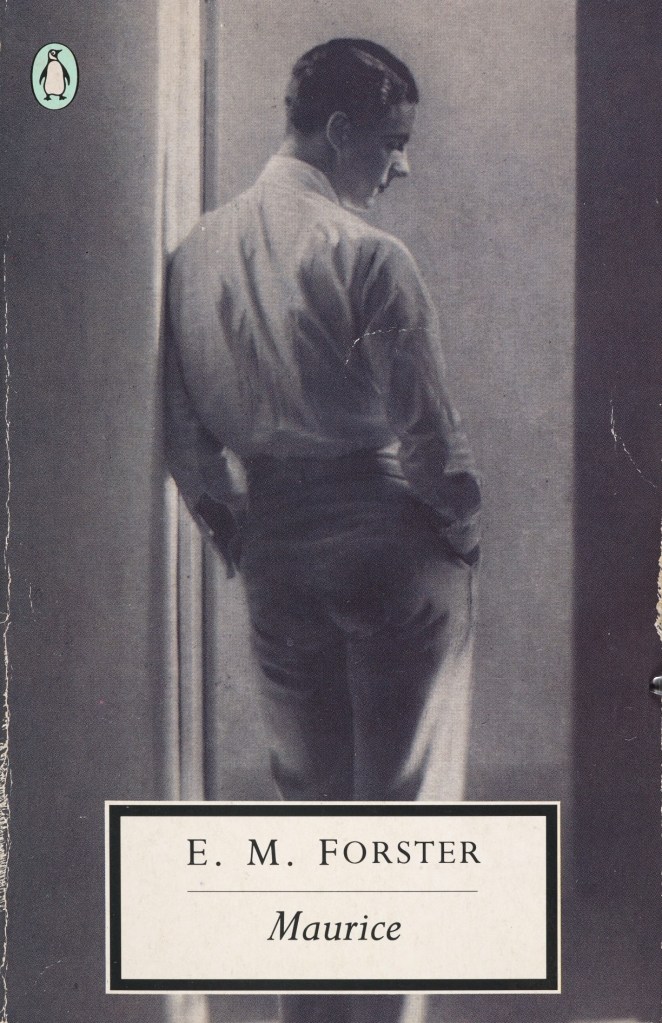
Maurice ~ A Capsule Book Review

Maurice ~ A Capsule Book Review by Allen Kopp 

E. M. Forster (1879-1970) was one of the best English novelists of the twentieth century. His novels are intelligent and literate, while also being entertaining and broadly appealing. He wrote the novel Maurice in 1913, but, because of its unconventional subject matter, it wasn’t published for decades, not until 1971.

The novel is set during the years before World War I. Maurice Hall is an upper middle-class youth from a conventional family; his father is dead; he has a mother and two sisters. He attends Cambridge University, where he meets and comes to know Clive Durham. These two “boys” (young men) are quite different from each other. Maurice doesn’t mind breaking the rules when it suits him, which eventually gets him “sent down” (expelled) from school. Clive is more mindful of convention.

As was common with English schoolboys living away from home, Maurice and Clive enter into a furtive homosexual relationship. For Maurice, his passion for Clive is all-consuming, all-important, and built to last a lifetime. He comes to care more for Clive than for anything else in the world.

The love affair (to others, it’s a very close friendship) between Maurice and Clive continues after school. Maurice works in the business his father worked in. Clive manages his family’s estate and gives dinner parties. Maurice spends as many evenings a week with Clive (and weekends) as he can manage.

A bad bout of influenza at age twenty-four leaves Clive weak and debilitated, but, more to the point, it leaves him preferring women. He and Maurice are finished as lovers but they can, of course, remain friends. Clive soon lands a woman named Anne, with whom he becomes besotted in a very short time. They soon marry, which is what every young man is supposed to do.

Maurice doesn’t really understand how Clive can suddenly prefer Anne over him, but he takes the news with apparent equanimity. As hurt as he is, he knows, logically, that turning to women is the exact right thing for men of his sort. He consults a medical doctor who instructs him to quit having morbid thoughts. A hypnotist advises him to move to Italy or France, where homosexuality is not recognized as a crime.

Enter Alec Scudder. He is an uncouth country lad, the gamekeeper on Clive’s estate. Even though Maurice and Alec are of separate classes, Alec recognizes in Maurice a fellow traveler. They come together when Maurice is visiting Clive’s estate and soon they are in love. As Maurice says, there is “one chance in a thousand” that he and Alec found each other. The only problem is that Alec is emigrating to the Argentine in about a week. Can Maurice persuade him to remain in England? Any kind of a longtime relationship between the two is by definition going to be fraught with difficulties. Not only are they of different classes, but they are outcasts from the world. (He was despise-ed, he was rejected, and acquainted with grief.)

The novel has a happy ending. How can that be? The happy ending is why the novel wasn’t publishable at the time it was written. Homosexuality was a criminal offense in England. Any novel, regardless of its literary merit, that allows two homosexual men to go on their merry way without destroying themselves or ending up in prison was an outrage against public morals. People wanted to see these people punished. Not happy. Never happy.

Copyright © 2020 by Allen Kopp
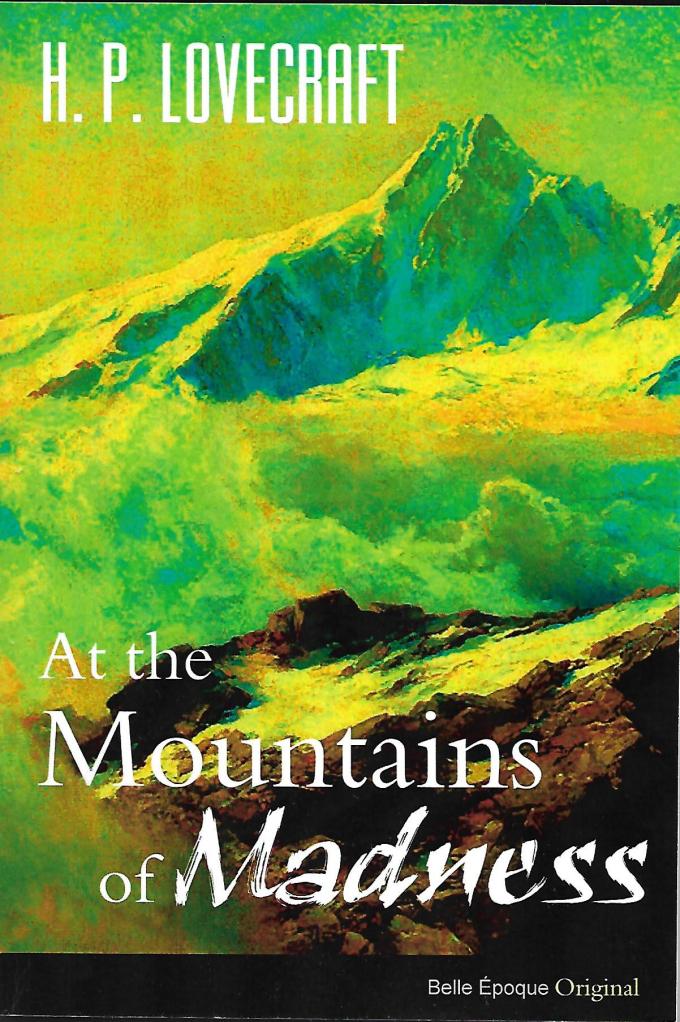
At the Mountains of Madness ~ A Capsule Book Review

At the Mountains of Madness ~ A Capsule Book Review by Allen Kopp

H. P. Lovecraft (1890-1937) wrote At the Mountains of Madness in 1931. (It was first published in serialized form in a magazine in 1936). It’s a horror/fantasy/science fiction novel about an exploratory expedition to Antarctica, possibly the most inhospitable place on earth, where men go, not to get a good suntan or to meet girls, but to engage in scientific research. Besides frigid temperatures, rugged terrain, discomfort and loneliness, these explorers must also deal with something unexplained: the massive ruins of a fantastic, ancient city. (“Ancient” in this case meaning 500 million years.)

The Antarctic expedition in At the Mountains of Madness is led by a geologist named William Dyer from the fictional Miskatonic University from the fictional Arkham, Connecticut. He is relating the story in his first-person voice. After the explorers discover the remains of fourteen prehistoric life forms, previously unknown to science and also unidentifiable as either plants or animals, they find a vast, abandoned stone city, alien to any human architecture. By exploring these fantastic structures, they learn through hieroglyphic murals that the creatures (dubbed the “Elder Things”) who built the mysterious city came to earth shortly after the moon took form and built their cities with the help of “shoggoths,” biological entities created to perform any task, assume any form, and reflect any thought. There is a suggestion that life on earth evolved from cellular material left over from creation of the shoggoths.

The explorers soon realize the Elder Things have returned to life and to their ancient city. They (the explorers) are ultimately drawn towards the entrance of a tunnel, into the subterranean region depicted in murals. Here, they find evidence of various Elder Things killed in a brutal struggle and blind six-foot-tall penguins wandering placidly, apparently used as livestock. They are then confronted by a black, bubbling mass, which they identify as a shoggoth, and escape. The survivors of the expedition then make it their mission to discourage any future exploration to the region.

H. P. Lovecraft is considered the premiere American fantasy writer of the twentieth century. I think he is not an easy writer to read. His work is generally very wordy, laden with ponderous description. It’s not light or breezy reading. You have to pay particular attention to the text and if you’re reading late it night, it might put you to sleep.

Along with the short novel At the Mountains of Madness, there are three short stories in this Belle Epoque Original edition: “The White Ship,” “The Doom that Came to Sarnath,” and “Herbert West—Reanimator.” “The White Ship” and “The Doom that Came to Sarnath” are verbose fantasies set in other realms. “Herbert West—Reanimator” is the famous story about a doctor obsessed with bringing the dead back to life. He rifles cemeteries for fresh corpses, aided by his assistant and friend, also a doctor. These two “mad scientists” conduct unholy experiments with dead people, often with tragic and horrifying results. Delicious.

Copyright © 2020 by Allen Kopp
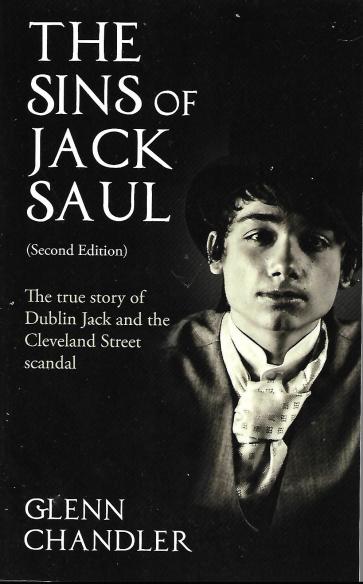
The Sins of Jack Saul ~ A Capsule Book Review

The Sins of Jack Saul ~ A Capsule Book Review by Allen Kopp

Who the hell is John “Jack” Saul, you might ask. He was a real-life person who lived from 1857 to 1904. He was five feet, five inches tall, well-endowed sexually, slightly effeminate, and a notorious male prostitute. He was born in Dublin, Ireland, and when he went to London he was widely known as “Dublin Jack.” He is known today for writing (or at least partly writing) a pornographic novel titled The Sins of the Cities of the Plain and for being a witness in a high-profile libel case involving an important person known as Henry James Fitzroy, Earl of Euston, who was reported to have visited a male brothel in London at 19 Cleveland Street. When the male brothel was discovered and publicized, it became the major sex scandal of the Victorian Era.

Lord Euston filed a suit and (and won) against a crusading newspaper man, Ernest Parke, who claimed that he (Lord Euston) went to the brothel to have sex with young men. Lord Euston claimed in court that he was taken to the brothel under false pretenses and that when he realized what kind of establishment he was in, he left. Jack Saul was a witness for the defense, meaning that he testified against Lord Euston. He was defiant on the witness stand and admitted he was a professional male prostitute and that Lord Euston did indeed visit the male brothel at 19 Cleveland Street to engage in forbidden sex acts with men. The court eventually decided the case in favor of Lord Euston, although his later life was plagued with blackmail and allegations of homosexuality.

In the 1880s, as now, the news media and the public love a good sex scandal, especially if it involves important or highly connected persons. Other important or notable people were implicated in the Cleveland Street brothel scandal, including Lord Arthur Somerset (equerry to the Prince of Wales) and several high-ranking army officers. (There was a persistent rumor at the time, that has never been disproved, that Prince Albert Victor, son of the Prince of Wales and grandson of Queen Victoria, second in line for the English throne, was a visitor to the brothel.) At this time in English history, any sex act between two men was illegal and punishable by imprisonment. Many of the male prostitutes working in the brothel were only about seventeen and worked as messenger boys for the post office. They became prostitutes to supplement their meager wages.

The Sins of Jack Saul by Glenn Chandler is as much about the times (Victorian era) as it is about a single person. Jack Saul had a sad, difficult, dangerous life, oftentimes picking up men on the street to have sex with them. He worked at several “legitimate” jobs from time to time, but nothing was as lucrative for him as prostitution. He could read and write, as many of his contemporaries could not. He died at age forty-six in 1904 of tuberculosis in his native Dublin. There has been a renewed interest in his life because he was a kind of symbol of gay defiance long before there was anything resembling gay rights. (He disproved the belief, widely held at the time, that homosexuality was a vice of the wealthy that corrupted the innocent.) He was what he was and if you didn’t like it, that was just too bad. He claimed to be covered in shame, but on the other hand he made no apologies and always sent money home to his mother.

Copyright 2019 by Allen Kopp

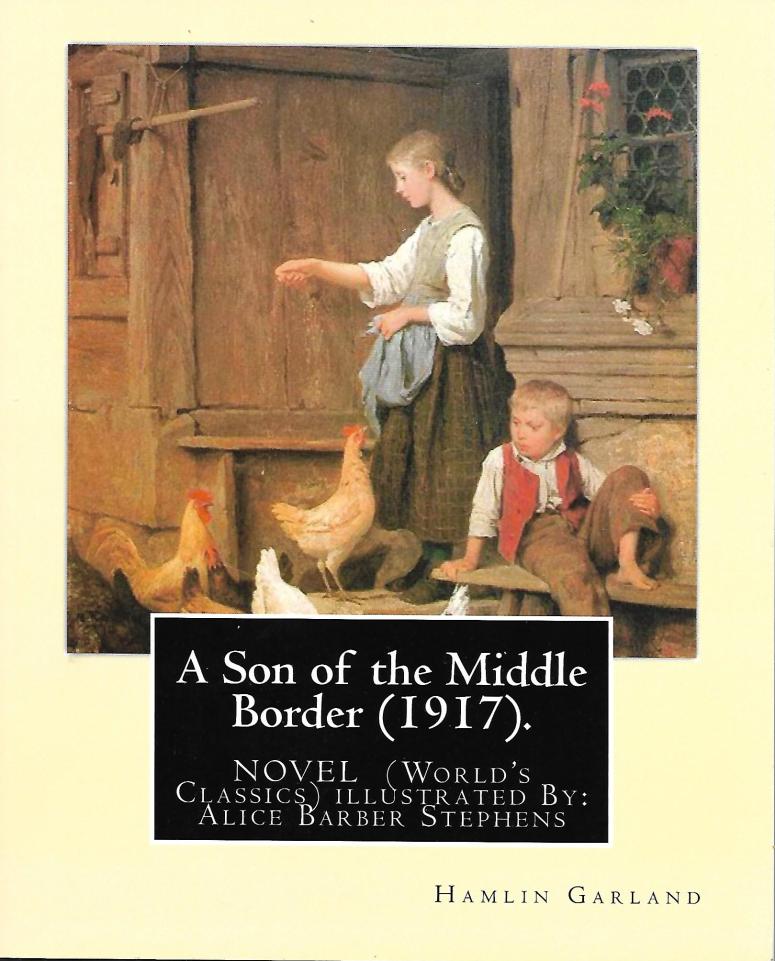
A Son of the Middle Border ~ A Capsule Book Review

A Son of the Middle Border ~ A Capsule Book Review by Allen Kopp

Hamlin Garland was an American writer who lived from 1860 to 1940. His memoir novel, A Son of the Middle Border, was first published in 1917. It’s the story of Hamlin Garland’s farm childhood and his struggles to gain success as a writer in early adulthood.

The Garland family lived in the Wisconsin wilderness, in a deep ravine known as a “coulee.” His father, Richard Garland, came home from the Civil War in 1865. He was forever after a military man who believed in military discipline, even when dealing with his four small children. He became disenchanted with life in Wisconsin and moved his family father west to the barren plains of Iowa, where he became a wheat farmer.

Life in Iowa for the Garland family was no better than it had been in Wisconsin. The barren Iowa plains were lacking in vegetation, brutally cold in winter and blisteringly hot in summer. Every living thing, man and animal, suffered in Iowa. When the wheat crops were abundant, a farmer could make a living for himself and his family, but the trouble was that wheat farming was dependent on the whims of weather and nature. When “chinch bugs” destroyed the wheat crops two years in a row, many wheat farmers had to sell out and find an easier way to make a living.

The lure of the West was strong for many people during this time. Richard Garland once again moved his family farther west, this time to the Dakotas. He tried various enterprises but was never able to attain more than marginal success as a tiller of the soil. His long-suffering wife always went along with whatever he wanted without complaint, but anybody could see that she was fast becoming an old woman before her time. Of the Garlands’ four children, their two daughters died in young adulthood without ever escaping the farm.

Despite Hamlin Garland’s hard life as an Iowa farm boy, he was determined to get an education and not be a poor farmer all his life. Sometimes his work on the farm left him little time or energy for anything else, but he overcame many obstacles and went to school whenever and wherever he could. The third act of A Son of the Middle Border concerns how he, as a young man, left the farm, went away to Boston and established himself in the literary world. It is a particularly American story about how one man, born poor and with few advantages in life, went after what he most desired in life and succeeded.

Copyright © 2019 by Allen Kopp

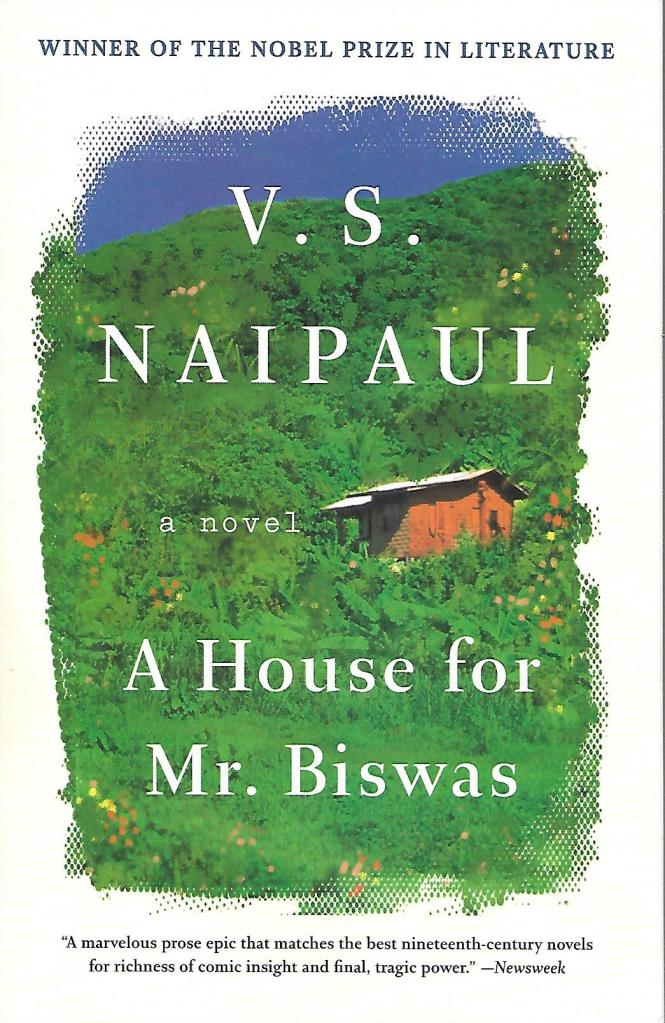
A House for Mr. Biswas ~ A Capsule Book Review

A House for Mr. Biswas ~ A Capsule Book Review by Allen Kopp

Trinidad is a small island off the coast of Venezuela. Tobago is an even smaller island to the northeast of Trinidad. The two together make the Republic of Trinidad and Tobago, the southernmost island country in the Caribbean. V. S. Naipaul was a Trinidadian and Tobagonian British writer of works of fiction and nonfiction in English who lived from 1932 to 2018. His 1961 novel, A House for Mr. Biswas, was the first of his many books that brought him international acclaim as a writer. It ranks number 78 on the Modern Library’s List of the Hundred Greatest Novels in English of the Twentieth Century.

Mohun Biswas is the “everyman” protagonist of A House for Mr. Biswas. He is the son of immigrant parents from India, a Hindu, living in the Caribbean country of Trinidad. Mr. Biswas (the title by which he is known throughout the novel) is a the “little man,” the “one against the world.” A House for Mr. Biswas is the story of his unspectacular life. We are told on the very first page of the novel that he dies in his mid-forties. He marries Shama, a woman from a family of many daughters. It is a strictly matriarchal family, dominated by Shama’s mother, Mrs. Tulsi. He doesn’t like being dominated by his wife’s family, but he doesn’t seem to be able to help it. He and Shama never seem to care very much for each other, never seem to share any kind of an emotional bond, but they have four children, one boy and three girls.

Not being particularly well-educated, smart or competent, Mr. Biswas seems to have trouble making a meager living for himself and his family. He manages a “rum shop,” works as a sign-painter, and works in his wife’s family’s store, which seems to be kind of “everything” store. His main ambition in life is to be independent (from his wife’s family and from anybody else) and to have his own home that belongs to him and nobody else. About midway through the novel he undertakes to have his own house built by an anything-but-reliable builder, but it doesn’t go well, and his unfinished house is destroyed in a storm. In the second half of the novel, he gets a job as a journalist for a small newspaper, where he writes a column about “deserving destitutes.” This is a step-up for him, where he makes about $150 a month, and he eventually he owns his own car, but still lives by his wife’s family’s dictates (especially his wife’s mother) in a house they own.

Despite its length (568 pages) and exotic setting, A House for Mr. Biswas isn’t difficult to read. It’s in clear, concise, easy-to-understand English. There are no tangled sentences, no tortured descriptive passages. There are lots of character names, though, sometimes difficult to remember and keep straight because many of them are similar (Shama, Sharma, Savi, Chinta, etc.). This is a minor quibble, though, and no reason not to read the book. For American readers, A House for Mr. Biswas is a glimpse at a life in another country, on another continent, in another culture. If you think life is difficult for you, consider the life of Mr. Mohun Biswas.

Copyright © 2019 by Allen Kopp

Psycho ~ A Capsule Book Review

Psycho ~ A Capsule Book Review by Allen Kopp

Alfred Hitchcock’s 1960 movie, Psycho, is a slice of pure cinema. In the directorial hands of a master, it’s a movie where all the different parts—writing, acting, music, film editing, sound, set design, directing—come together in just the right way to create an enduring film masterpiece that has easily stood the test of time. In the hands of a less talented director, it could easily have been just another schlocky, soon-to-be-forgotten stab movie with breasts, a scintillating boudoir scene, and a sensational shower scene, complete with blood going down the drain.

Psycho is a horror movie about a cross-dressing, knife-wielding, multiple-personality maniac, but it’s a high-class horror movie that somehow manages to be tasteful, eschewing blood and cheap horror for a more subtle brand of thrills. It broke new artistic ground and set the standard for movies of its kind. It has been copied, imitated, parodied and emulated, but the one thing it never has been is equaled.

There never would have been the movie Psycho without the novel Psycho by Robert Bloch. Before the movie comes the novel. When Alfred Hitchcock chose the novel to make into a movie, he plucked it from almost certain obscurity. Not that it wasn’t read by readers of its day, but if would never have lasted the way it has if the Hitchcock movie hadn’t made it famous. It is “pop” fiction with little literary merit, except that it makes entertaining reading.

We all know the story. Norman Bates is an odd boy-man who runs an obscure motel on an out-of-the-way California highway. The Bates Motel doesn’t get many guests, except one rainy night, a runaway girl who has lost her way stumbles onto the motel and decides to spend the night. She has just stolen forty thousand big ones from her employer and is on her way to her debt-ridden boyfriend in Fairvale, California.

If the runaway girl, Mary Crane (Marian in the movie), has a secret, Norman Bates has an even bigger one. He has always had a mother fixation. He murdered his dear old mother out of jealousy (she had a lover, you see), but mother’s not resting in her grave. Years earlier, Norman stole her body from her grave and keeps it in the creepy old house behind the motel. He has a split personality. He’s Norman, but he’s also mother. He dresses up in her clothes and wears her wig and, as mother, stabs Mary Crane to death as she’s taking a shower. He hides the body, of course, crying to cover up mother’s crime. Then he has the arduous task of keeping people from finding out what he is and what he has done.

All right, if you want some light reading and you want to read a story that by now is familiar to you, you can’t go wrong with Robert Bloch’s Psycho. It’s not Sister Carrie, but it’s plenty engaging and will keep you turning the pages. The movie follows the novel closely, but, as I said, it makes a much better movie than it does a novel. The movie is distinctive and the novel is not.

Copyright © 2019 by Allen Kopp

God’s Secretaries ~ A Capsule Book Review

God’s Secretaries ~ A Capsule Book Review by Allen Kopp

England’s Queen Elizabeth I died in 1603, after a reign of forty-four years. She failed to produce an heir, a successor, during her lifetime, so James I of Scotland succeeded her to the English throne. He was the son of Elizabeth’s cousin and political rival, Mary Queen of Scots. The twenty-two years that he sat on the throne of England is called the “Jacobean Age” because “Jacobus” is Latin for James.

Hundreds of years ago in England, religion was of the utmost importance, much more important than it is today. People were willing to fight and to die for their religion. There was much in-fighting between Catholics and Protestants and between other sects and splinter groups. It was about this time that a small group of religious dissenters who weren’t happy with the way they were treated in their own country came to the “New World” for a fresh start in a new place where they could decide the dictates of their own religion. They were what we today might call the “lunatic fringe.”

Early in his reign (which turned out to be fairly disastrous for the country), King James I commissioned a new translation of the Bible. There were existing translations of the Bible, of course, including the Geneva Bible and the Bishops’ Bible, but they were considered inadequate (for whatever reason) and there was a perceived need for a uniform Bible. The King James translation of the Bible was to be a Bible for all the people, not just for the elite and educated. It was to be written in elegant, yet accessible to everyone, Jacobean English.

The translation was a huge undertaking, involving some fifty Translators and taking about eight years. The Translators were not writers or journalists but high-level churchmen, bishops and ministers. They used as their source material existing versions of the Bible, principally that of William Tyndale. King James, who had taken a personal interest in the translation, kept a close watch on the project through to its completion in 1611.

The King James translation of the Bible was not an immediate success. For many years, people still preferred other translations. However, it still remains the “standard” Bible translation hundreds of years later. There are more modern translations but, for millions of people, the stately, soaring language of the King James Bible is the voice of Christianity.

God’s Secretaries by Adam Nicholson is not only about the King James Bible but about the times in which it was written, the king who brought the translation about, and the political climate of the times. It was a time in which the government was in charge of religion; church attendance was mandatory; religion played a central role in everyday life. Churchmen were some of the most powerful people in the country. People lived and breathed the Scriptures. If you were not of the proper faith, you just mind find yourself dead. How different the times are in which we live today!

Copyright © 2019 by Allen Kopp

Tomato Red ~ A Capsule Book Review

Tomato Red ~ A Capsule Book Review by Allen Kopp

Daniel Woodrell (b. 1953) is one of the best and most innovative of current American writers. His 1998 novel, Tomato Red, is set in the fictional town of West Table, in the Missouri Ozarks, in a poor section of town known as Venus Holler. Jamalee Merridew is nineteen years old, with hair the color of tomatoes. She has a seventeen-year-old brother named Jason Merridew, “the prettiest boy in the Ozarks.” (He has green eyes and full, pouty lips.) “Grown-up women,” Jamalee says, “throw their underpants at Jason with their phone numbers written on them in the grocery store.” Jason is a hairdresser; the fact that he is gay does not deter his female admirers.

Bev Merridew is Jamalee and Jason’s mother. She is about forty years old, is a whore and apparently has always been a whore. She lives in a shack in Venus Holler, next door to the shack that Jamalee and Jason live in. She drinks and smokes cigarettes and entertains men. “If she had all the dicks sticking out of her that she’s had stuck in her,” Jamalee says, “she’d look like a porcupine.”

Enter one Sammy Barlach, a decidedly trashy drifter, twenty-four years old. (The novel is told in Sammy’s first-person voice.) One night when Sammy is doing a little house-breaking in the expensive part of West Table, he meets Jamalee and Jason in a mansion-like home. He believes they live there, but soon discovers they are also house-breakers like him. He latches on to them and later their mother, Bev, as his adopted family. He refers to them as “the bunch that would have me.”

Jamalee, Jason and their mother Bev are constantly reminded that they are “trash” and “rednecks” because of where they live, their low socio-economic status, their drinking and their general all-around “no-goodness.” Many people around town are openly hostile to them.

When Jason fails as a pay-for-his-services stud for the ladies (he just doesn’t have it in him), Jamalee goes for an interview at the country club for a job as hostess, during which she encounters the meanness of the country club set toward her “kind.” When she is bodily ejected, she and Jason and Sammy (they have been waiting outside in the car for her) are drawn into an ugly and insulting brawl with some of the country club people that results in fists being thrown.

In retaliation for their rejection and humiliation, Jamalee, Jason and Sammy make a middle-of-the-night raid on the country club and do some serious and costly damage to the golf course. Their mischief may give them some temporary satisfaction, but it ends up having serious consequences for them. In a battle between “white trash” and the “country club set,” guess who is always going to win?

Tomato Red is an almost perfect contemporary American novel, with fascinating and believable characters, killer dialogue, and an unhappy, but completely satisfying and pitch-perfect, ending. I’ve read it twice and I might read it again before the curtain falls. Another novel I love, also by Daniel Woodrell, is The Death of Sweet Mister. It’s another fascinating foray into the world of trashy rednecks and a perfect companion piece to Tomato Red.

Copyright © 2019 by Allen Kopp

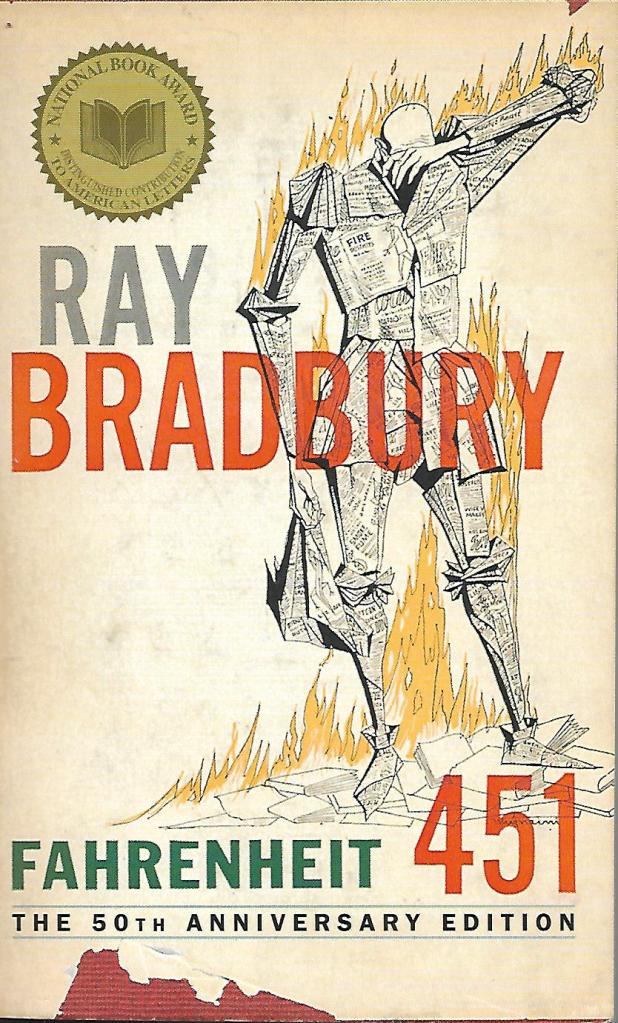
Fahrenheit 451 ~ A Capsule Book Review

Fahrenheit 451 ~ A Capsule Book Review by Allen Kopp

Paper burns at a temperature of 451 degrees Fahrenheit. What more perfect title could Ray Bradbury have chosen for his 1953 novel about a “fireman” in a future society whose job it is to burn books? Yes, books have been declared subversive and dangerous in this future time and owning them—specifically reading them—is a crime for which you might pay with your life.

In this future society (no time is given), books are seen as giving people ideas and making them think. Thinking is dangerous and makes people unhappy. A bunch of people got together and decided to ban all books and, not only ban them, but make a public exhibition of destroying them while also destroying the homes and lives of anybody who might have the audacity to resist. “Firemen” don’t go around putting out fires to save lives and property; they carry flame throwers fueled with kerosene and set fire to books or to homes where books are kept, and they don’t mind setting fire to any book owners who get in their way.

Fireman Guy Montag, thirty years old, is the protagonist of Fahrenheit 451. He has a shallow, hideous wife name Mildred who is addicted to her “wall screens” (a future version of wide-screen TV) and her “parlor families” (TV characters). Guy and Mildred obviously don’t care for each other at all. Guy meets a seventeen-year-old girl named Clarisse McClellan in the neighborhood who is, in every way, the opposite of Mildred. She makes Guy see the world in a different way; she makes him see the shallowness and narrowness of his own life.

When the firemen go out on a call, Guy takes pity (something firemen should never do) on a defiant older woman who chooses to burn up with her books. He develops an unhealthy curiosity for books; if people are willing to die for books, they must be very powerful and compelling. On some of his professional calls, he begins stealing books, one or two at a time, and hiding them in an air conditioning vent in his house. His own wife, Mildred, reports him, and when the firemen show up to burn his house, headed by his boss, Captain Beatty, he is driven to extreme measures and desperate acts.

Guy Montag, the fireman in Fahrenheit 451, is similar to Winston Smith, the office worker in George Orwell’s 1949 novel, 1984. Both characters live in future, repressive societies. They both take a look at their lives, don’t like what they see, and rebel against the dehumanization and enforced conformity of their worlds. Both novels, Fahrenheit 451 and 1984, foreshadow present-day America. There are plenty of people, including some running for high political office, who would strip away our rights and freedoms, make us all the same, and make us forget how unique we are as individuals. We can’t let that happen. It’s a dangerous precedent when only one viewpoint is allowed and any opposing viewpoint is shouted down or not tolerated. That’s a violation of our Constitutional rights. It’s how tyrannical regimes get started.

Copyright © 2019 by Allen Kopp

Ethan Frome ~ A Capsule Book Review

Ethan Frome ~ A Capsule Book Review by Allen Kopp

American author Edith Wharton (1862-1937) gained fame for her novels about wealthy New Yorkers during America’s Gilded Age, such as House of Mirth and The Age of Innocence. Her 1911 novel, Ethan Frome, is not about high society but is instead about a poor farmer in a bleak New England village, set at some unidentified time in the late eighteenth century.

Ethan Frome has a wife named Zenobia (“Zeena”) that he doesn’t like very much, and who can blame him? He married her out of convenience (inertia) in a weak moment when she came to help him take care of his sick mother. Zeena is older than Ethan and is a bundle of complaints and physical ailments. There is no warmth or kind feelings between Ethan and Zeena.

Zeena has a “poor relation” (even more poor than Ethan and Zeena) named Mattie Silver. Mattie comes and lives in the Frome household to help Zeena with the farm work. Mattie is the opposite of Zeena. She is young, pretty and sunny. Zeena doesn’t like Mattie very much and is always quick to find fault with her.

Ethan is naturally drawn to Mattie Silver. He knows it’s wrong to have “feelings” for her, right in the house under Zeena’s nose, but Mattie makes him feel good, maybe for the first time in his life. Zeena is such a whiny old thing, so sick all the time. Why doesn’t she just die and leave Ethan and Mattie alone in their little love nest? Hah! No such luck!

This ménage a trois can’t end well. Ethan dreams of running away with Mattie, but they are desperately poor, and where would they go and how would they get there? Is he really the kind of man to leave his life for a younger, prettier woman? Has he no decency? Well, yes, he has.

A new doctor advises Zeena to bring in a “hired girl,” meaning somebody who is more competent than Mattie. That means Mattie Silver is going to be tossed out of the Frome household on her ear. On the day that Mattie is supposed to go, Ethan’s hand is forced. Is he just going to keep his mouth shut and let Mattie Silver go out of his life forever without even letting her know how he feels about her? When he discovers that the feelings he has for her are reciprocated, will that make a difference, or will it just lead to an ill-advised action on his part?

Ethan Frome is an American classic about a love affair that is doomed from the start, set in a snowy Massachusetts landscape. It’s a simple story about loneliness, alienation and hidden feelings. When Ethan married Zeena, he missed his chance of ever meeting a woman like Mattie Silver who might have made him happy. He missed the boat and then he paid the price, as so many people do.

Copyright © 2019 by Allen Kopp