What Belongs to You ~ A Capsule Book Review

What Belongs to You ~ A Capsule Book Review by Allen Kopp

He’s an American teacher living in Sofia, Bulgaria, teaching English at a prestigious American school. We never know his name. He is telling the story in his first-person voice. The story revolves around the narrator’s destructive relationship with a rent boy named Mitko, and, while their relationship is a sexual one, we never have to suffer through any explicit details.

The narrator comes to love Mitko, knowing all along that he is a user, a liar, and a self-aggrandizing manipulator; he is charming and good-looking and he knows how to use these qualities to his benefit. He can also at times be menacing and threatening when he doesn’t get his way. We see a portrait here of a mentally unbalanced young man who knows how to manipulate people to achieve his ends.

We come to see that Mitko has a terrible life, and, despite his youth, is in failing health. While the narrator tries to live a respectable life in his apartment, going to work every day, Mitko shows up periodically at his doorstep whenever he wants something. He frequently lies to get money, which makes him an extortionist, among all the other things he is. The love that the narrator feels for Mitko soon turns to pity as he sees that Mitko is falling apart. He cannot deny Mitko anything, knowing all along that lies and betrayal are a part of everything Mitko does.

While What Belongs to You is the story of a friendship, it is also a story about the nature of destructive and obsessive love. One of the best novels I’ve read in a while and unlike anything I’ve read before. Written in a unique, compelling and accessible style by a writer named Garth Greenwell. There are a lot of words in this novel, but never too many, always just right. Every word rings true.

The first-person narration is all introspective but never self-indulgent or whiny, as it could have been. On a different level, it’s a story, which I found fascinating, about life in modern-day Bulgaria, a country of 7.2 million in southeast Europe, a country that is collapsing and crumbling in many ways, a country that has lived through Soviet occupation, a country that is not what it once was. As a stranger in a strange land, the narrator navigates his way through two different health clinics, knowing only a smattering of the language, the public transportation system, and everyday life in a foreign capital. Some books are so good and so different from anything else that reading them is like being given a gift. This is one of them.

Copyright © 2017 by Allen Kopp 
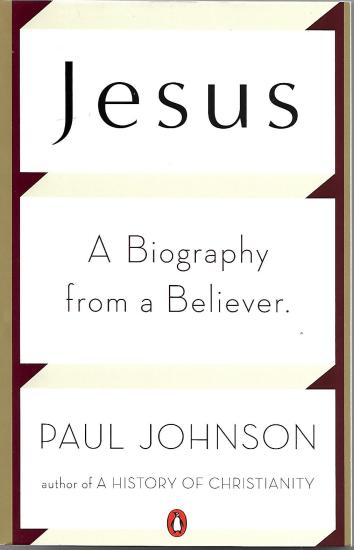
Jesus, a Biography from a Believer ~ A Capsule Book Review

Jesus, A Biography from a Believer ~ A Capsule Book Review by Allen Kopp

Jesus, A Biography from a Believer by Paul Johnson is exactly what it says it is: a concise, reverent chronicle of the life and times of Jesus of Nazareth, the most influential person who ever lived. He was without politics or national identity. He was a revolutionary, a threat to the status quo because they didn’t understand him. They didn’t understand that his kingdom was not of the world, but a kingdom of heaven. He didn’t come to the earth to lay down a set of rules for people to follow. He came to prepare people, anyone who believed in him, for the next world. He extolled the lowly and the powerless among men, the weak and the poor. Whoever is last shall be first, he said. He loved people from all strata of society and would always take the time to talk to anybody who wanted to speak to him. He spoke in a way that was easy for people to understand. His speech was poetic but never lofty or scholarly. People were drawn to him because of his easy and open manner. And then there were the miracles. He performed miracles sparingly and only when he thought the occasion warranted it. He didn’t want to be thought of as a wizard or a magician. Those who saw him perform miracles became easy believers, but he knew that most people would never have the benefit of seeing the miracles firsthand. In people, what he most admired were humility, sincerity, but, above all, faith.

If there’s nothing much new in this book that we didn’t already know, we at least get a feeling of what Jesus was really like as a man. He knew that people were weak and flawed and corrupt—he lived in a corrupt world—but he forgave those who could believe in him. If you already have faith, reading this book will strengthen your faith.

Copyright © 2017 by Allen Kopp    
Boy Erased ~ A Capsule Book Review

Boy Erased ~ A Capsule Book Review by Allen Kopp

Boy Erased is a nonfiction book, a “memoir,” by a writer named Garrard Conley. It is a first-hand account of a Christian-based therapy program whose goal is to turn homosexual people (male and female) into heterosexual people.

In 1973, the American Psychiatric Association declassified homosexuality as a mental illness. However, that didn’t stop the formation of Love in Action (LIA), a nondenominational fundamentalist Christian organization that promised to cure all LGBT (lesbian, gay, bisexual, transgender) congregants of their “sexual addictions.”

Garrard Conley is the “boy” in question. He is from a strictly religious, Missionary Baptist family in Arkansas. His father is a fundamentalist minister who believes in a strict interpretation of God’s word. When Garrard realizes he’s gay, he has to keep it a secret because he knows his parents will never understand or accept his sexuality. They discover the truth about him when he is a college student. They view homosexuality as a “condition” or an “addiction” like alcoholism that can be “cured” through prayer and counseling. (LIA uses some of the techniques of Alcoholics Anonymous.) Garrard’s father tells him he will not continue to finance his education unless he submits to “ex-gay” therapy and becomes “cured.”

The therapy consists of first writing about and then talking through one’s sexual feelings in front of a group of strangers, feeling contrite and ashamed, and praying that God will make you “pure.” The idea is to remove all temptation and sinful thoughts that lead to sinful acts that will assure the practitioner will spend eternity burning in the fires of hell. It is a kind of brainwashing that sometimes leaves participants suicidal. There is no evidence, from a scientific point of view, that a person’s sexual orientation can be changed in this way.

Boy Erased is an interesting story about what one young man went through in an effort to please his parents and make himself acceptable in the eyes of the world. A better idea might have been to provide “re-orientation” therapy and counseling to the parents to get them to accept their son and his sexuality. The upshot of the book is that ex-gay therapy doesn’t work and apparently does more harm than good.

Copyright © 2017 by Allen Kopp  

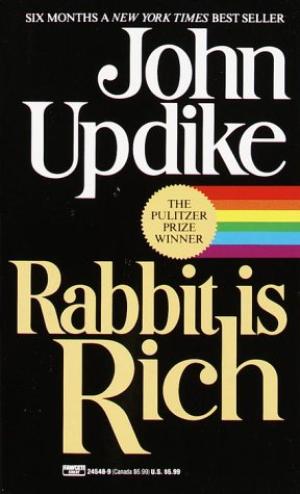
Rabbit is Rich ~ A Capsule Book Review

Rabbit is Rich ~ A Capsule Book Review by Allen Kopp

John Updike (1933-2009) was an American writer who wrote compellingly about ordinary people. He was a chronicler of his age, in much the same way that F. Scott Fitzgerald and John O’Hara were of their age.

Updike’s series of four “Rabbit” novels (Rabbit Run, Rabbit Redux, Rabbit is Rich, Rabbit at Rest) are about the different stages in the life of one Harold (Harry) “Rabbit” Angstrom: high school basketball star, linotype operator, husband, son, father, brother, lover, and Toyota dealer.

Rabbit Angstrom is a sort of contemporary antihero. He is flawed. He is less than admirable. He is sentimental. He is sex-obsessed (as Updike male characters always are). In Rabbit is Rich, he is forty-six years old and overweight, in what you might call the third quarter of his life. He has reached the stage of his life where he knows affluence for the first time, thanks to his father-in-law, Fred Springer, who brought him into his Toyota dealership in Brewer, Pennsylvania, and then conveniently died, leaving Rabbit in charge. Rabbit and his ditzy wife Janice live with his crabby, Charlie’s Angels-loving mother-in-law, Bessie, in her stately house.

Rabbit and Janice have a son, Nelson, a confused and rebellious young man who dropped out of Kent State one year short of graduating. Nelson has just married pregnant Pru (whose real name is Teresa). Pru and Nelson seem mismatched. We know it’s a union that isn’t going to last. Rabbit is sexually drawn to Pru. (When it comes to sex, nothing is off limits with these people.) Nelson doesn’t want to return to college but instead wants to work at the not-very-successful-these-days Toyota lot with his father. Rabbit will have to let one of his long-term employees go to make a place for Nelson and he doesn’t want to do that. The women in his life (his mother-in-law and his wife) are pressuring him to bring Nelson on. He knows that Nelson will mess it up, as he has messed up everything else in his life.

Rabbit thinks a lot about death. He can’t stop thinking about his deceased working-class parents and about the other people in his life who have died. He and Janice had an infant daughter named Becky who Janice accidentally drowned in the bathtub when she was drunk. Rabbit has, or believes he has, an illegitimate daughter from an affair he had twenty years ago. He is sentimental about his supposed illegitimate daughter; he fantasizes about encountering her and introducing himself to her as her father, even though she believes another man holds that title.

Rabbit is Rich is a slice of late-1970s life. It’s a rich reading experience about marriage, disillusionment, mortality, fatherhood and success. It shows us how good contemporary American literature (after Hemingway, Steinbeck, Faulkner, and Fitzgerald) can be in the hands of a master. If you are a reader, you owe it to yourself to read all four of the Rabbit novels in order.

Copyright © 2017 by Allen Kopp

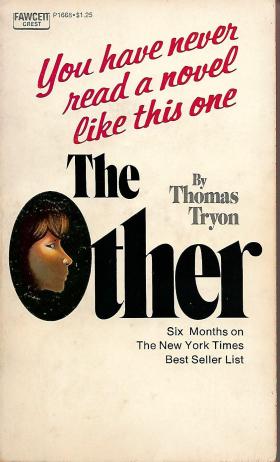
The Other ~ A Capsule Book Review

The Other ~ A Capsule Book Review by Allen Kopp

The Other is a gothic horror novel by actor-turned-writer Thomas Tryon (1926-1991) that has become something of an American classic and has sold millions of copies. It is set in 1935 in a small Connecticut town.

The Perry family has had more than its share of tragedy. The father died accidentally when a trap door fell on him as he was going down stairs to a cellar. His widow, Alexandra, is fluttery and nervous and can’t leave her room. A visiting cousin, named Russell, falls on a pitchfork concealed in hay while playing in the barn and dies. A neighbor woman dies mysteriously and her body isn’t discovered for a week. A newborn baby disappears and a frantic search is underway to find her. Alexandra is badly injured when she falls down the stairs. What is going on here?

Niles and Holland are twins, age thirteen. Alexandra is their mother and Ada, Alexandra’s mother, is their grandmother. Ada is the matriarch of the family. She is a Russian immigrant and speaks with an accent. She brings superstitions with her from the old country. She teaches Holland and Niles a game of transference in which they imagine they are something or someone other than themselves. This game of transference is an important plot point.

Even though Holland and Niles shared the same womb for nine months, they are very different. Holland is cruel and sadistic. He enjoys hurting and killing people and animals. Niles is just the opposite. He is a ray of sunshine and a help to his shut-in mother and his elderly Russian grandmother. Niles worships Holland. The good drawn to the bad. A moth to flame.

The Other is a breezy and clever (you might say, gimmicky) 288 pages and full of atmosphere. Can you guess the secret of The Others? If you can’t, the secret is revealed about three-quarter of the way through the novel. It has to do with twins Holland and Niles and the game of transference their grandmother teaches them. Holland gets what he deserves, but does angelic Niles deserve what he gets? It is, in a way, a story about mental illness.

Copyright © 2017 by Allen Kopp

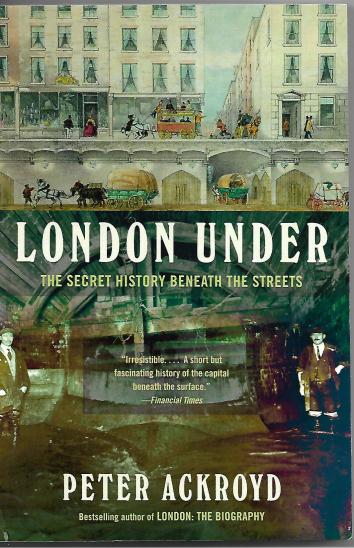
London Under ~ A Capsule Book Review

London Under ~ A Capsule Book Review by Allen Kopp

London Under, written by Peter Ackroyd, tells the story what’s going on underneath the ground of one of the largest, busiest and oldest cities in the world. In two thousand years of continuous occupancy, a lot of history has happened on the site. The Romans first established the city as Londimium in 43 A.D. Its location was desirable because of its proximity to the Thames river, allowing ships access by sea. During medieval times, toilets emptied into the river, making life generally unpleasant, with diseases such as cholera, typhoid, plague, and assorted fevers. Millions of people have been buried under the ground and then forgotten, with nothing to tell succeeding generations of their existence.

London has the oldest subway system in the world, going back 150 years. It’s a system that has developed a mythology and superstition of its own. When excavations began, certain superstitious people believed that a dark world, the world of the devil, was being unleashed on the world. There are many abandoned and unused subway tunnels—mysterious passages and stairways going nowhere—that have become home to thieves and murderers, those who dwell in the darkness; not to mention rats and a whole host of unpleasant creatures that dwell in the darkness. People claim to have seen spirits in the subways, especially at sites where fatal accidents have occurred. During World War II, many Londoners used subway tunnels for shelter during air raids. This led to a kind of psychosis whereby a person does not feel safe aboveground.

Ancient underground rivers vie for space beneath London with a vast sewer system that must accommodate a city of millions. (It must take a certain kind of person to be able to work in the dark world of sewers to service and maintain them.) Also, there are vast myriads of underground fiber optic cables, pipes, conduits, etc., for communications and utilities. An entire subterranean world exists that most people, casual visitors to the city, will never know about.

Copyright © 2017 by Allen Kopp

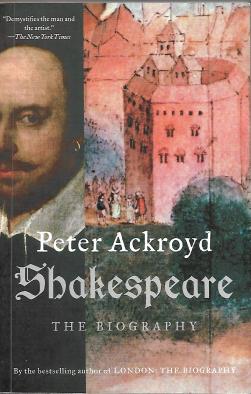
Shakespeare: The Biography ~ A Capsule Book Review

Shakespeare: The Biography ~ A Capsule Book Review by Allen Kopp

Shakespeare: The Biography, written by Peter Ackroyd, is a long (572 pages), minutely detailed account of the life and times and of the most famous dramatist/poet who ever lived. Many of the details of Shakespeare’s life are known—where he lived, mother and father, wife and children, brothers and sisters—but much about Shakespeare, especially about his writing, is speculative and endlessly debated by scholars and historians. As Peter Ackroyd says, “Wherever we look in Shakespeare’s work, we see the impossibility of assigning purpose or unassailable meaning.”

William Shakespeare was born in 1564 in the small (2000 people) English town of Stratford-upon-Avon, a hundred miles from London. His father, John Shakespeare, was a glover (maker of gloves), landowner, and local official. The family, if not exactly wealthy, was affluent and had pretensions of nobility. His mother, Mary Shakespeare, was a remote member of the noble Arden family. The Shakespeares were adherents to the “old” faith (Catholic), while the “approved” and accepted religion was the Anglican (Church of England) faith. The Queen, Elizabeth I, had originally taken a middle road on religion, but when her crown was threatened by the Catholic Mary Queen of Scots and her followers, she adopted a harsh tone against “recusants,” those who still practiced the old religion.

Shakespeare was educated in the grammar school near his home and never attended college or university. When he was eighteen, he married a woman several years older than he was named Anne Hathaway. She was carrying his child when they were married and she soon gave birth to a daughter, Susannah Shakespeare. Several years later, the couple had twins: a son, Hamnet, and a daughter, Judith. (Hamnet would die at age eleven.) Leaving his wife and three small children behind in his hometown, Shakespeare decamped to London where he could pursue a theatrical career (writing plays and acting on the stage).

The London of Shakespeare’s time was a busy, exciting, place—noisy, crowded, dirty and dangerous. The plague made periodic visitations upon the populace, usually during the summer months, killing thousands of people at a time. (Theatres and public gathering places were routinely shut down during plague epidemics.) Shakespeare thrived in London and soon made a name for himself in the theatre. He acted in many of the plays he wrote and also acted in plays written by other people. He and his acting troupe performed for the sovereign at court, first Queen Elizabeth I and then her successor, King James I. Unlike many great writers, Shakespeare enjoyed tremendous success and renown in his life.

There is much in this book about Shakespeare’s brilliance and his “assimilative” mind. He wasn’t as well educated or as cultured as some of his contemporaries. To write his plays, especially the histories, he always started out with some source material, making it uniquely his own. He also “borrowed” heavily from other writers, which led to jealousy and personal attacks, especially after his plays became so successful. There were other celebrated playwrights during his time, but none so inventive and with so agile a mind and facile a talent. He died on his fifty-third birthday (April 23, 1616) in his hometown of Stratford-upon-Avon. The cause of death is not known today, but there is speculation that he died of typhoid fever. He was buried underneath the floor in the chancel of the old church near where he grew up.

Shakespeare: The Biography is everything you ever wanted to know about Shakespeare and then some. He had many friends, colleagues, relatives, business acquaintances, and rivals, and we meet them all here. There are so many names in this book that’s it’s sometimes hard to keep them straight, but it’s a wonderful, mostly fascinating biography of a great man and an evocation of a time long past.

Copyright © 2017 by Allen Kopp

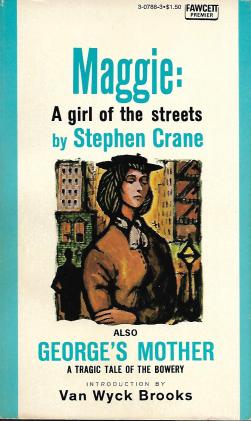
Maggie: A Girl of the Streets and George’s Mother ~ A Capsule Book Review

Maggie: A Girl of the Streets and George’s Mother ~ A Capsule Book Review by Allen Kopp

This slim volume contains two short novels by Stephen Crane: Maggie, A Girl of the Streets (1893) and George’s Mother (1896). Both explore the lives of lower working-class people in the section of New York known as the Bowery in the 1890s. These people speak fractured English, labor in factories and sweatshops, and most of them drink to excess to make their lives more endurable. They are contemptuous of people of wealth, refinement and education, and they have little or no hope of ever rising above their class.

The title character in Maggie: A Girl of the Streets lives with her family in a wretched tenement. Her mother is a drunken harridan and her brother a brutish lout almost devoid of human feeling. Despite her surroundings and her family, Maggie somehow manages to be attractive to men (the quality that will prove to be her downfall). Pete is a friend of Maggie’s brother who takes an interest in her. He is a bartender and Maggie believes he is sophisticated and worldly wise. She begins going around with him and they engage in sexual relations. After he gets tired of her, he discards her in favor of another girl. Maggie, at this point, is seen as “ruined” in the eyes of the world because she has given herself to a man who has rejected her. She has no chance for redemption.

The subtitle of George’s Mother is A Tragic Tale of the Bowery. George Kelcey is a laborer who lives with his mother in a Bowery tenement. Since all her other children have died, George’s mother is especially attentive to him. She harangues him to hang up his coat when he returns from work and to do all the things a mother thinks a son is supposed to do. She wants nothing more than for him to be the type of son she thinks he should be. He has an overwhelming fondness for alcohol, though, and he loves to spend evenings in the company of his male friends. After alcohol and merriment get the best of him, he loses his job and his irresponsible behavior begins to wear on his mother’s health.

Stephen Crane was one of the first, if not the first, American writers to write in a naturalistic or realistic style. His most famous work is his Civil War novel, The Red Badge of Courage, which he wrote without ever seeing combat. His life and writing career were cut short when he died of tuberculosis in 1900 at age 28.

Copyright © 2017 by Allen Kopp

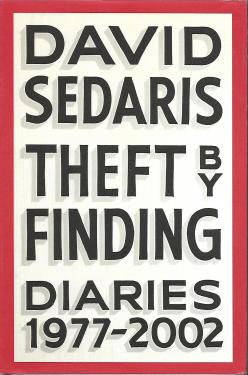
Theft by Finding ~ A Capsule Book Review

Theft by Finding ~ A Capsule Book Review by Allen Kopp

David Sedaris is a humor writer whose work is not raunchy or cruel. I’ve read all his books (Let’s Explore Diabetes with Owls, Squirrel Seeks Chipmunk, When You are Engulfed in Flames, Dress Your Family in Corduroy and Denim, Me Talk Pretty One Day, Holidays on Ice, Naked, Barrel Fever) and I usually buy his latest book from Amazon as soon as it comes out. I stood in line for over an hour at one of his book signings to get him to sign my copies of Holidays on Ice and Me Talk Pretty One Day. Then I sat down and rested.

His books are made up of engaging stories that, since they are true and not fiction, are informal “essays.” He writes about his family, people he’s met, his travels, and things that have happened to him, good or bad. His latest book, Theft by Finding, is something of a departure for him, because it’s not these informal essays but is instead diary entries going back forty years.

That’s what Theft by Finding is: 512 pages of diary entries. Some of the entries are little anecdotes and some are less than that. In his introduction, he says that he imagines people not reading the whole book page for page, but instead “dipping in” the way you would with a high school yearbook. I read the whole book page for page. If you think it’s tedious, it isn’t, especially after you’ve read for a while. The most engaging diary entries are the ones where he is recounting things he’s heard people say and things he’s seen them do, as in the IHOP restaurants where he used to hang out a lot, first in his home town of Raleigh, North Carolina, and then in Chicago. When he’s not hanging out at the IHOP, he’s struggling to make a living cleaning apartments or sanding furniture. He has not had an easy life, or if he has an easy life now, it hasn’t always been that way. He is kind of an “everyman,” uncovering the absurdity of living in the world today. You easily recognize yourself in what he’s saying. That must be the key to his popularity.    

Copyright © 2017 by Allen Kopp

Room 1219 ~ A Capsule Book Review

Room 1219 ~ A Capsule Book Review by Allen Kopp

Room 1219, by Greg Merritt, is an American success story; how one man from humble beginnings rose to the pinnacle of his profession. It’s also a true crime story showing how that same man was ruined by a press that is more interested in dishing dirt and promulgating scandal than in being fair and objective and getting at the truth.

Roscoe “Fatty” Arbuckle was the biggest movie star in the world, the first to sign a contract for a million dollars a year. His onscreen persona (a good-natured, bumbling man-child) was the most recognized in the world. He lived in a mansion (for which he paid $250,000) in the most exclusive section of Hollywood. At a time when a Model T Ford cost $370 (what most people were driving, if they drove at all), Fatty drove a custom-made, $34,000 Pierce-Arrow.

On Labor Day in 1921, Fatty Arbuckle’s world came crashing down. He drove his Pierce-Arrow the 350 miles from Los Angeles to San Francisco (the road wasn’t even paved the whole way yet), rented three adjoining suites on the twelfth floor in the exclusive St. Francis Hotel in San Francisco, and hosted a little party for a handful of his friends.

A minor movie actress named Virginia Rappe with pretentions of making it into the big time was in attendance at Fatty’s Labor Day party, along with three other women and three other men, besides Fatty. Miss Rappe was 30 but was always shaving a few years off her age, so it was given variously as 23 or 25. She was a showgirl, an alcoholic, and was no stranger to men or to sex. (Later, much to Fatty’s detriment, she was characterized as pure, unsullied and virginal.)

During the course of the party, Virginia Rappe became ill, apparently (to most observers) from drinking too much liquor. She began tearing at her clothes and complaining of terrible abdominal pain. She was crying and carrying on and saying things like “He hurt me” and “I’m dying.” When a doctor was summoned, the doctor determined that she had only had too much to drink and would be all right. Four days later she was dead. An autopsy revealed she had a punctured bladder resulting in peritonitis. What caused her bladder to puncture could not be determined; the autopsy doctor could only conclude it was from an “external force.”

Immediately Fatty Arbuckle, who had since returned to his home in Hollywood believing that nothing was amiss, was accused of Miss Rappe’s death. The love the world bore for him instantly turned to hate. The press labeled him as a beast and an ogre, a gross fat man with salacious appetites. He became a symbol for excess and for all that was morally wrong in America, particularly in the motion picture industry. Conversely, Virginia Rappe became a symbol for outraged purity. Both extremes were untrue and especially unfair in Fatty’s case.

What, if anything, did Fatty Arbuckle do to Virginia Rappe in that San Francisco hotel room that contributed to her death? That was the question the whole world was asking.

Fatty’s defense team (assembled at great expense) believed he would be charged with manslaughter (the grand jury’s recommendation). Crusading San Francisco district attorney Matthew Brady, however, had other notions: he sought a murder conviction. He was courting the women’s vote (woman had just been given the right to vote in 1920) and believed that women everywhere wanted Fatty to get the maximum punishment. The charge was changed from manslaughter to murder but, in the preliminary hearing, the judge determined that a murder conviction wasn’t warranted and again reduced the charge to manslaughter.

So, with much hoopla and publicity, Fatty was tried for manslaughter in a sensational trial that was the talk of the country. The trial resulted in a hung jury (10 to 2 favoring acquittal), so the whole thing had to be done over.

In the second trial, Fatty’s defense team seemed over-confident. They didn’t bother to put Fatty on the stand to explain for himself what had happened in the hotel room, and they didn’t give closing arguments. The result was another hung jury, but this time 10 to 2 for conviction.

Fatty was called to the stand to testify in his third trial. The jury believed him (the truth has a sound of its own) and, after about five minutes of deliberation, voted to acquit him. Finally, the ordeal was over. He was free to return home and resume his shattered motion picture (acting/writing/directing) career.

Not so fast, though! Six days after Fatty’s acquittal, all his movies were banned from American movie screens by the Motion Picture Producers and Distributors of America (MPPDA). (Studio heads wanted a clean slate, with Fatty gone.) So, after the terrible ordeal he had been through, he was not going to be given a chance to redeem himself in the eyes of the public. His career was effectively over. At thirty-five years of age, with possibly many more years of productivity ahead of him, he was ruined.

Copyright © 2017 by Allen Kopp