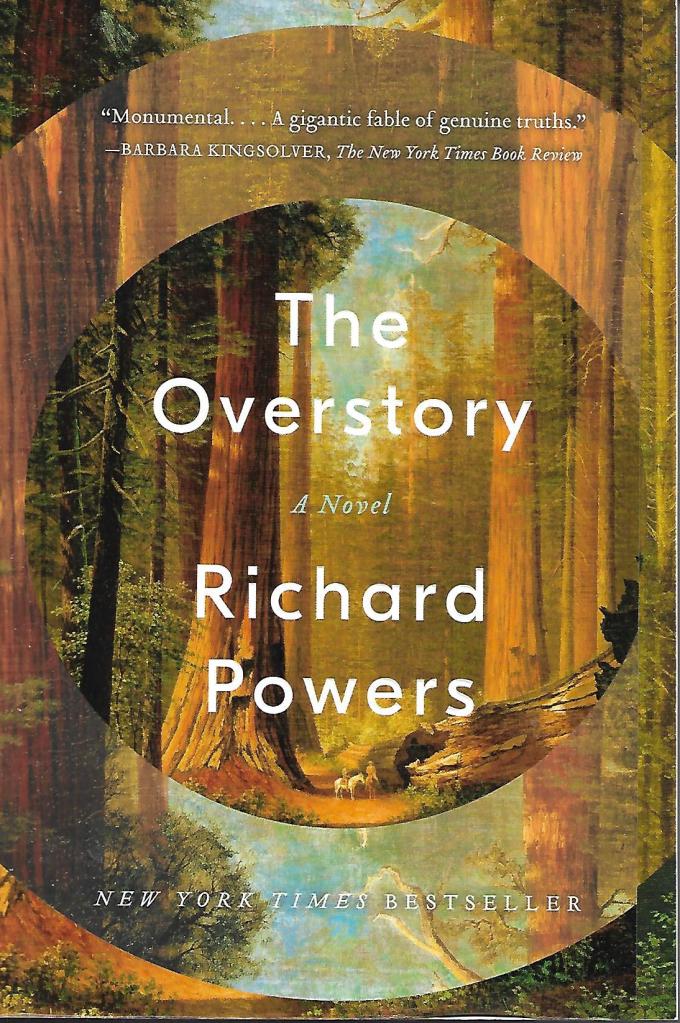
The Overstory ~ A Capsule Book Review

The Overstory ~ A Capsule Book Review by Allen Kopp

Richard Powers’ novel, The Overstory, is this year’s Pulitzer Prize winner for fiction. It’s a big novel, 500 dense pages, that took me almost three weeks to read. It’s a big story about big ideas. People don’t matter much where big ideas are concerned. You see, the earth has grown too overcrowded. The earth has to sustain seven billion (and counting) people. Trees are something that most people don’t ever think about. Trees play an important part in keeping the world functioning the way it’s supposed to. They replenish the air we breathe. Their roots keep the soil from coming apart. They provide food and medicine. Birds and small animals live in trees and rely on them for their livelihood. Trees are beautiful and capable of inspiring awe in insignificant humans—that is, those humans who are able to put aside their cell phones long enough to pay attention.

The world’s forests are dwindling at an alarming rate. The human race is an insatiable beast that must be fed. People must be kept happy and comfortable, oftentimes at the expense of the earth’s resources. People don’t seem to be aware of what’s going on, or, if they are aware, they don’t much care. Many species of trees in the world are extinct and more are becoming extinct every year. A few dedicated souls are establishing seed banks where seeds can be stored and replanted at a later time but, if the human race is dead, who is going to plant the seeds? Aliens from outer space?

All the characters in The Overstory come to see the importance and significance of trees, each in his or her own way and in ways that most people don’t ever imagine. Nick is a lonely Iowa boy-man. He’s a sketch artist who sketches trees. His legacy is a gigantic and unusual tree that graced his family farm for generations. His life lacks meaning until one day Olivia comes along and changes it for him. She’s a self-absorbed college girl, a self-described “bitch,” who is electrocuted in her room at school and brought back to life. After she is revived, she hears “voices” that tell her to travel across the country to California because ancient trees there are being sacrificed to “progress.” Armed with nothing but their “cause,” Olivia and Nick set out across the country to California, where they become “environmental activists.” They “tree sit” in a California redwood that is marked for destruction; it’s a thousand years old and hundreds of feet high. The idea is that the tree can’t be cut down while people are living in it. Nick and Olivia live in the tree for almost a year until they are forced out and the tree is cut down. The lesson here is simple: When you fight the law, the law always wins. From being an “environmental activist,” it isn’t a very large step to being an “environmental terrorist.” Nick and Olivia make the step easily enough, along with others.

There are also other interesting and compelling characters in The Overstory. Dr. Patricia Westerford is a tree scientist. If anybody in the novel can be called the “lone voice in the wilderness,” it is her. She advances the theory that trees communicate with each other, help each other, know how to heal themselves, and know when they are going to die. She sounds the alarm about the number of species of trees that are vanishing, but most people are not willing to listen. These environmental people are very passionate, willing to give up everything they have, to die, even, for their cause.

Neelay Mehta is an Indian-American who, from an early age, is a computer whiz. As a high school student, he falls out of a tree he is climbing and breaks his back. From that point on, he is a paraplegic. His stunted body doesn’t keep him from achieving success, however. He starts a software computer company that makes wildly successful computer games. Despite his wealth and success, happiness eludes him. He wants always to create bigger and better programs that mirror the diversity and complexity of life on earth. In this way, he is God in miniature.

The Overstory is long, involved, and mostly involving. Reading it through to the end takes a considerable amount of time and effort but, despite its environmental subject matter, it never seems preachy, condescending, or pretentious. As long as it is, it’s not difficult to grasp for the, let us say, casual or unscientific reader. I would never have read it if it hadn’t won the Pulitzer Prize. I’m glad now that I did. I learned some things and it opened my eyes on the subject of trees and forests and the few people who will do anything, go to any lengths, to protect and preserve them.

Copyright © 2019 by Allen Kopp
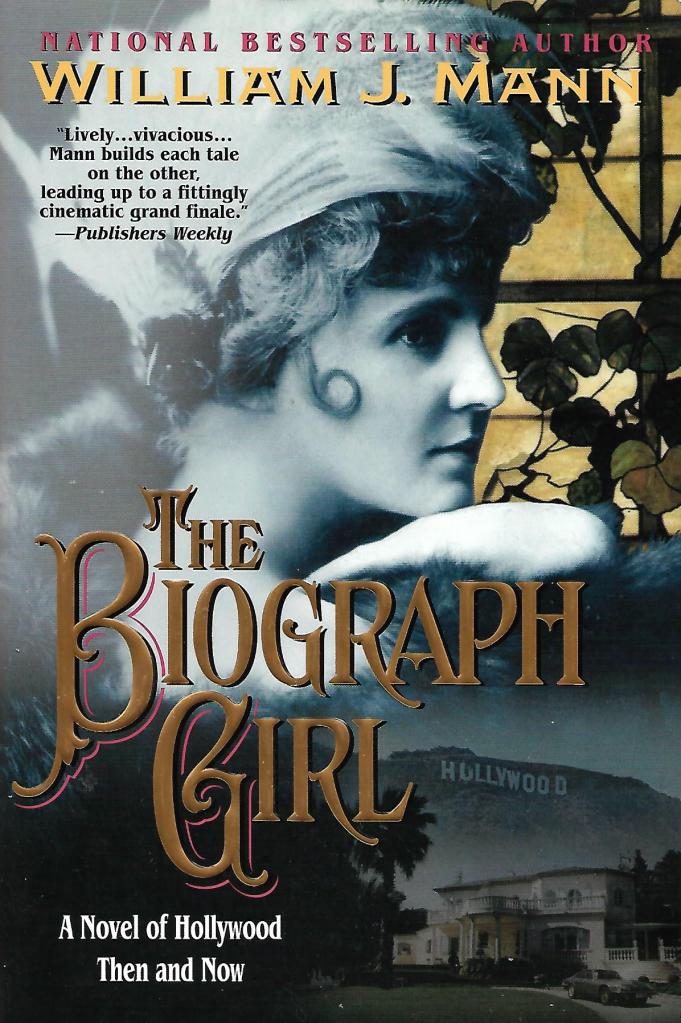
The Biograph Girl ~ A Capsule Book Review

The Biograph Girl ~ A Capsule Book Review by Allen Kopp

Back in the early days of silent movies, in the first and second decades of the twentieth century, actors in movies were not identified to the public by name. The cult of personality surrounding the larger-than-life personages on the movie screen had not yet begun. It was not until the 1910s that one movie actor became known to the public by her own name. She was the official “first” movie star. She became wildly famous and popular, mobbed by adoring fans wherever she went. She was Florence Lawrence, known as the Biograph Girl, after the movie studio where she worked.

Florence Lawrence rode the wave of popularity and stardom for a number of years but, as always happens in Hollywood, the fickle public soon turned to other darlings of the screen such as Mary Pickford, and poor Florence Lawrence became one of the first in a long line of Hollywood has-beens whose name came to mean nothing. In 1938, at about age 50, she poisoned herself in her modest Hollywood home. Try as she might, she had never been able to regain her footing in the motion picture industry and reignite her early fame and success.

The Biograph Girl by William J. Mann is an imaginative “what-if” novel about Florence Lawrence. What if she really didn’t die in 1938? What if she used another woman’s suicide to make people think it was her and then continued to live for a long, long time? Not likely, you say? Well, strange and unexpected things can and do happen.

Fast-forward to the late 1990s. Two twin brothers, Richard and Ben Sheehan, one a journalist and the other a documentary film maker, discover a very old woman, 107 years old, living in a posh Catholic old folks’ home. After talking to her and finding out about her life, they discover that she is none other than Florence Lawrence, the Biograph Girl. They both immediately begin to calculate how they might exploit her. The documentary film maker, Ben, wants to make a film about her life, while his brother, Richard, wants to write a book about her. Not to worry, though. Florence Lawrence has an intrepid nun, Sister Jean, to stand in the way of all interlopers and protect her from the harsh and ugly realities of the modern world.

After Florence Lawrence is “re-discovered,” she becomes famous all over again, with appearances on TV talk shows and write-ups in magazines. She is so vital and lively to be 107 years old! How does she do it? Soon questions are raised about how Florence Lawrence faked her own death. Did she kill a woman to make people think it was her? Well, as might be expected, all the fame, publicity, eventual suspicion—and the surrounding innuendo—begin to wear the old woman down.

The Biograph Girl is entirely a fictional, speculative story based on the sad life of a real person from the early days of Hollywood and not in any way to be taken for reality or any facsimile of reality. It’s pop fiction for those seeking “light” reading. It’s way too long for what it is, nearly 500 big pages, and it takes a long time to get to the “pay-off” at the end. If it wasn’t so easy to read, you might stop reading about halfway through and read something else instead.

Copyright © 2019 by Allen Kopp

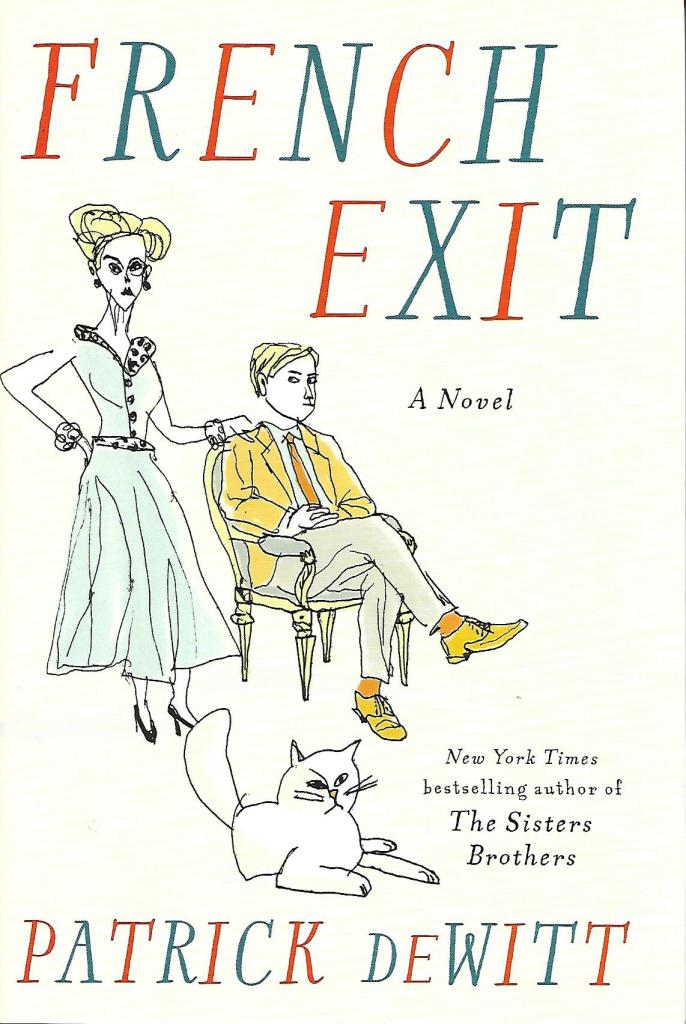
French Exit ~ A Capsule Book Review

French Exit ~ A Capsule Book Review by Allen Kopp

Patrick DeWitt is an American novelist (b. 1975), whose previous works include The Sisters Brothers and Undermajordomo Minor. His latest is French Exit, a comic novel about a feckless New York widow, Francis Price (age 65), who spends her money without regard for how much might be left. When she discovers she has spent too freely and her money is all gone, she and her grown son, Malcom (age 32), are faced with the prospect of having to alter their way of living.

Francis Price has a very old cat named Small Frank. We discover, although we suspected it beforehand, that Francis’s husband, Franklin Price, who died twenty years earlier of a heart attack, lives inside (occupies) the cat. Francis didn’t especially like her husband and doesn’t especially like Small Frank but instead seems only to tolerate him. Small Frank goes everywhere Francis and Malcolm go. As a cat, he is completely self-sufficient. He is immune even to the dangers that city streets might pose to any other cat.

When Francis’s husband died in his bedroom, there was some controversy surrounding his death. Francis discovered Franklin dead and then went on a three-day skiing trip without letting anybody know what had happened. She was, subsequently, suspected of some wrongdoing in his death and spent a short time behind bars. It was, apparently, immediately after Franklin’s death that a cat (who later came to be Small Frank), was seen hanging around Franklin and seemed to be tête-à-tête, or at least mouth-to-mouth, with him.

Being the child of rich parents, laconic Malcolm Price never prepared himself to make a living and get along in the world on his own. As a 32-year-old man, he lives with his mother and is as dependent on her for his support as he was when he was a child. He has a girlfriend named Susan but, as with most things in his life, he can take her or leave her.

With all their money gone, Francis and Malcolm are locked out of their fancy New York apartment and need a place to live. Francis’s good friend, another wealthy socialite named Joan, tells Francis that she and Malcolm can live in her apartment in Paris, which is currently unoccupied. Francis and Malcolm board a passenger ship and set sail across the Atlantic for Paris, just as wealthy people used to do long ago. They take Small Frank with them to get on the boat but are told they will have to leave him behind because they don’t have any “papers” for him. With barely a backward glance, they leave Small Frank standing there alone at the point of embarkation. Not to worry, however. Small Frank manages to make his way to Francis’s stateroom, where he makes himself quite comfortable. Francis and Malcolm even take Small Frank into the dining salon with them, where he sits on a chair at the table. When a fussy waiter ejects Small Frank, he comes right back in when the waiter has his back turned, as cats are wont to do.

Francis and Malcolm live in Paris in much the same way they lived in New York; that is, with little thought of the future and blissfully unaware of the consequences of their own actions. Francis has retained a little of her fortune from the sale of some personal items, but she seems intent on spending the last of her money any foolish way she can. It seems she has a plan in mind for the future, or at least her own future. When Small Frank leaves home and takes up residence on the streets of Paris as a homeless cat, Francis consults a “psychic” named Madeleine she and Malcolm met coming over on the boat to try to locate him. Madeleine is able to contact Small Frank through the use of a séance, even though he isn’t dead but just in a bad way living on the Paris streets.

French Exit is perfectly written, far removed from reality, entertaining, clever, droll, witty, whimsical, offbeat, and unlike anything else. If you’re looking for these qualities in a novel, they are here in abundance.

Copyright © 2019 by Allen Kopp
The Martian Chronicles ~ A Capsule Book Review

The Martian Chronicles ~ A Capsule Book Review by Allen Kopp

The Martian Chronicles, by Ray Bradbury, was first published in 1950 and is set in a future time in the early 21st century, a time that we have now exceeded and passed. It is a collection of interrelated short stories that are almost but not quite a novel. The stories are all set on the planet Mars and are about earth people traveling to Mars, living on Mars and trying to survive on Mars. Mars may be the one planet in our solar system that is most like earth but, as the people in the book discover, living on Mars is not quite the same as living on earth.

In The Martian Chronicles, tens of thousands of people from earth are traveling to Mars because—you guessed it—mankind has defiled and annihilated earth and, for people to go on living, they must find a new planetary home. Mars, as we see it, is an eerie, lonely planet, with dried-up oceans, deserts and canals, and remnants of Martian cities that are thousands of years old.

Earth people on Mars, as you might imagine, are not good for Mars. They set about destroying Mars the same way they destroy earth and there’s nobody to stop them. The once-proud Martian race has all but died by the time the bulk of earth people arrive. There may be a few Martians still living, but they keep themselves hidden in the hills and are rarely seen.

The stories in The Martian Chronicles are divided into three parts. The first part is about the attempts of men from earth to reach Mars and the methods Martians use to keep them away. In the second part, humans from earth set about colonizing Mars, having all but wiped out the Martians with earth diseases, and are preoccupied with making Mars as much like earth as they can. However, as earth is about to be destroyed in a nuclear war, most of the earth colonists on Mars pack up and return home. The third part deals with the aftermath of the destructive war on earth and the few earth people still remaining who will become the new Martians because earth is gone and they have no place to return to.

The Martian Chronicles is intelligent, inventive and engaging, with just a touch of creepiness to enlighten the proceedings, as when an inventor, whose wife and children have died on Mars, makes look-alike robots to replace them, or when the Martians eliminate one of the expeditions from earth by using telepathy to make the men of the expedition think their long-dead relatives are alive and well on Mars. It’s classic sci-fi fantasy as only Ray Bradbury can do it.

Copyright © 2019 by Allen Kopp

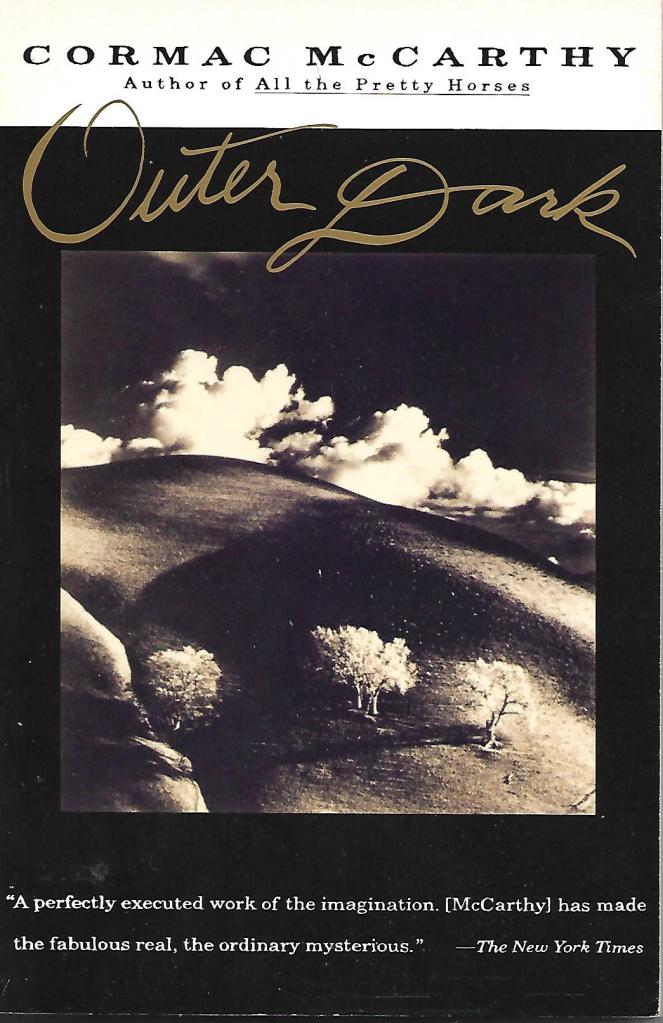
Outer Dark ~ A Capsule Book Review

Outer Dark ~ A Capsule Book Review by Allen Kopp

The two main characters in Cormac McCarthy’s novel Outer Dark, brother and sister Culla and Rinthy Holme, are victims of poverty and ignorance. (She has no shoes, while he wears stolen boots.) Rinthy is nineteen. Culla is some older. Rinthy has a baby and Culla is the father. Apparently because he is ashamed of impregnating his own sister, Culla takes the nameless baby, a boy, and leaves him alone in the woods to die. The baby is picked up by a ragtag, itinerant tinker who travels around with his cart. Where the tinker takes the baby or for what reason is never made quite clear, but it can’t be for any good or because he is concerned for the baby’s welfare.

Rinthy and Culla undertake separate journeys, Rinthy to find the baby (her “chap”) and Culla to find Rinthy, or maybe he’s just looking for work. Wherever Rinthy goes in her quest to find her baby, she is mostly met with kindness, with people who feed and shelter her. With Culla it is just the opposite. Death and disaster follow in his wake. The people he encounters are menacing and more than once threaten him in some way. (Does the trio of despicable desperadoes who seem to be trailing him really exist, or have they been called forth by his sin?) Even nature is unforgiving for Culla. When he is crossing a ferry on a river, the cable holding the ferry in place inexplicably breaks and Culla nearly drowns. He survives, but would have possibly been better off to have drowned, considering what happens to him afterwards.

Can we say, then, that Rinthy is a child of light and Culla a child of darkness because of his sin of engaging in incestuous relations with his sister and then trying to destroy the evidence of the relationship? His biggest sin, however, is possibly his lack of awareness of his sin and his failure to seek redemption. (At the end of the book, Rinthy finds herself in a glade and Culla in a swamp.)

Cormac McCarthy, now 85 years old, is one of America’s greatest living writers, the only writer we have comparable to William Faulkner. Outer Dark is a fascinating exploration of sin and retribution (or the absence of retribution). I’ve read it twice, years apart, and found it compelling both times. It’s an example of how good contemporary American literature can be in the hands of an undisputed master.

Copyright © 2019 by Allen Kopp

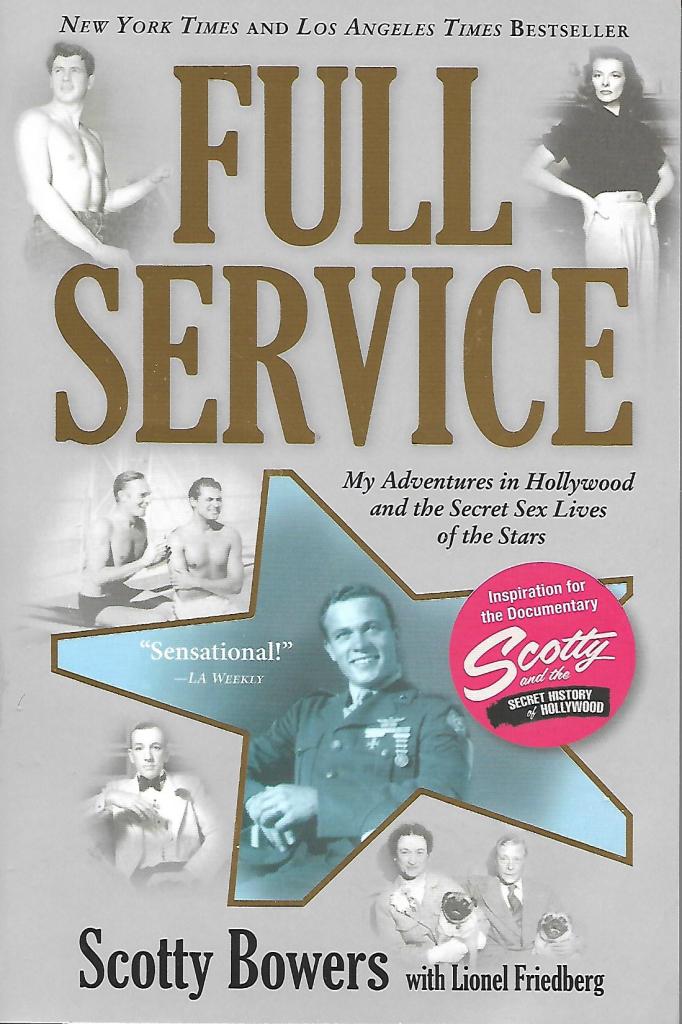
Full Service ~ A Capsule Book Review

Full Service ~ A Capsule Book Review by Allen Kopp

Scotty Bowers was born in 1923 and is now 95 years old. He grew up in a small town in Illinois, served in the Marine Corps in World War II and began living in California after the war. He started out as a gas station attendant in Hollywood in the 1940s and became a male prostitute (for either sex), a procurer (for anybody of any sexual orientation who wanted a sex partner), bartender, handyman (repairing anything from plumbing to electrical wiring), husband and father, sexual powerhouse, friend to many, including famous and celebrated people in and out of the movie industry, including Ramon Navarro (silent screen star), Katharine Hepburn, Spencer Tracy, Harold Lloyd (silent film comedian), George Cukor (movie director), Cary Grant, Randolph Scott, Vivien Leigh, Laurence Olivier, Walter Pidgeon, Charles Laughton, Noel Coward (English playwright), Cecil Beaton (English photographer and set designer), Cole Porter, Rita Hayworth, William Randolph Hearst, Marion Davies, Lana Turner, Errol Flynn, Vincent Price, Rock Hudson, J. Edgar Hoover, Tennessee Williams, Mae West, Edith Piaf (French singer), Tyrone Power and the Duke and Duchess of Windsor. The list goes on and on. According to Scotty Bowers’ memoir, Full Service, everybody loved Scotty and looked upon him as a great friend. He was the “go-to-guy” for fulfillment of many of their desires and needs. There was nobody ever who didn’t need and love Scotty. He was known as “Mr. Sex.”

If all of Scotty Bowers’ claims are true, he was one of the most extraordinary human beings who ever lived. He was equally accommodating for sex with either gender—of how many heterosexual men have you known this to be true?—and could perform easily at least three times a day. He was never squeamish about bizarre or repellant sexual practices or fetishes and could engage in them without reservation. According to Scotty Bowers, it’s all about giving and receiving pleasure and, as long as those requirements are met, what could possibly be wrong?

Full Service is an entertaining memoir by a man who claims to have “been there,” done it all, and known just about everybody worth knowing in the Hollywood of the 1940s, ‘50s, ‘60s and ’70s. Whether or not you believe that one man could know so many famous and celebrated people and be as prodigiously sexual as Scotty Bowers claims to have been is up to you. As with Kenneth Anger’s equally entertaining Hollywood Babylon, it might be a good idea to consider large parts of Full Service as pure fiction, especially since all the people mentioned are dead now and can’t be solicited for their opinions (and can’t sue from wherever they are).

Copyright © 2019 by Allen Kopp

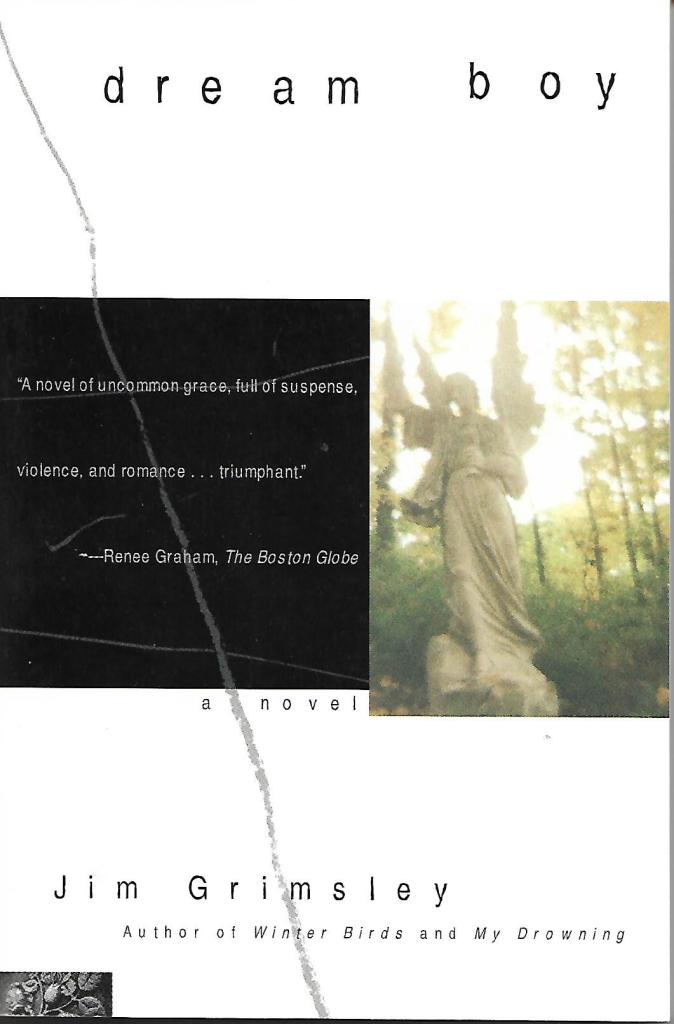
Dream Boy ~ A Capsule Book Review

Dream Boy ~ A Capsule Book Review by Allen Kopp

The novel Dream Boy by Jim Grimsley is set in rural North Carolina. No time is given when the novel takes place, so we’ll assume it’s in the 1950s since it has a 1950s feel. Nathan and Roy live on neighboring farms. Nathan has just moved to the area with his mother and his creepy, alcoholic father, so he’s new to the local high school. Roy is older than Nathan but still in high school. Roy drives the school bus and when they start out in the morning, Nathan is his first passenger. Nathan seems troubled and withdrawn. Roy reaches out to Nathan and they become friends, despite their obvious differences.

Since they live in an isolated farming community, Nathan and Roy have lots of chances to be alone together. They take long walks in the lonely woods where they discover an old cemetery and, later, an abandoned and long-neglected plantation house. Expectedly or not, surprisingly or not, their friendship develops into a furtive sexual relationship. Later, Roy becomes jealous when Nathan seems to be experienced in the practice of being with another man. Where did he learn it, Roy wonders?

Nathan has a secret. We know it if Roy doesn’t. Since he was a small boy, Nathan has been sexual abused by his own father, a person who has plenty of problems of his own, alcoholism being just one of them. Nathan’s mother just hangs in the background and, doing nothing to help, wallows in her own sorrows.

Afraid that his father will come into his room at night and try to rape him, Nathan begins sleeping in Roy’s barn or in the old cemetery that he and Roy discovered on one of their walks. Roy knows that something is wrong with Nathan but doesn’t suspect what it is. He helps Nathan all he can and tries to protect him. When Nathan and Roy go on a weekend camping trip with two other boys, the other boys learn firsthand the nature of Nathan and Roy’s special friendship, leading to the novel’s tragic conclusion.

Jim Grimsley is a talented, interesting writer. Besides Dream Boy, I’ve read some of his other books, including Boulevard, My Drowning, and Winter Birds. Dream Boy is a slim novel, under 200 pages, with elements of the southern gothic. The ending is a little ambiguous, but I suppose that’s the way it’s meant to be. Nathan’s victimhood is to become Roy’s lifelong sorrow.

Copyright © 2019 by Allen Kopp

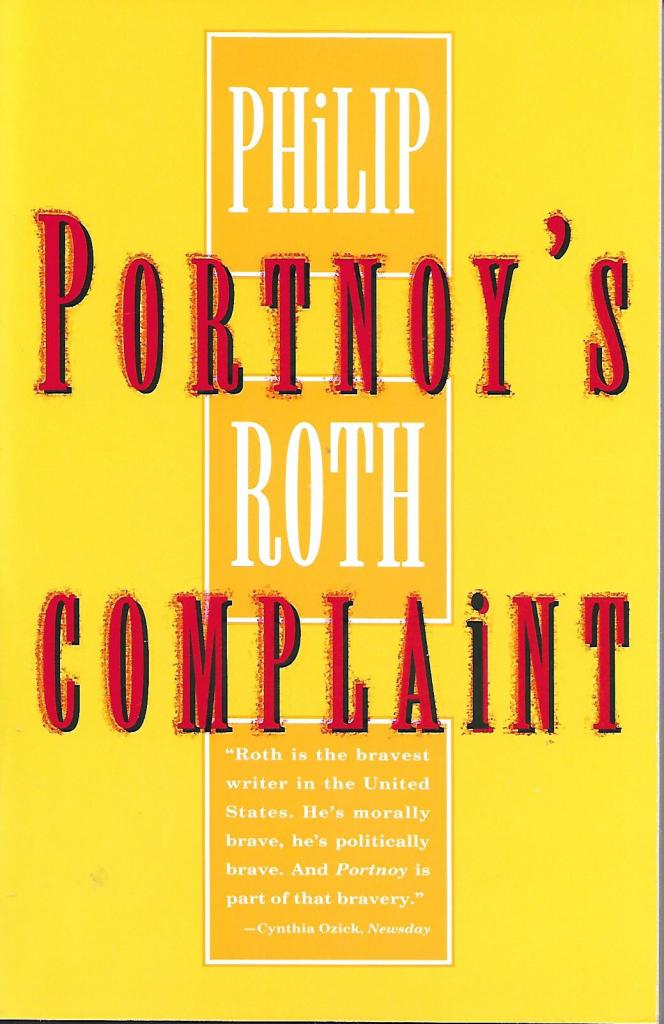
Portnoy’s Complaint ~ A Capsule Book Review

Portnoy’s Complaint ~ A Capsule Book Review by Allen Kopp

Alexander Portnoy’s father, Jack, is a downtrodden insurance salesman, under-appreciated professionally and personally. He is perpetually constipated (presumably from worry) and obsessed with his bowel movements. Alexander Portnoy’s mother, Sophie, is a stereotypical Jewish mother, a loud-mouthed, opinionated yenta who knows all the clichés and doesn’t mind using them liberally. (These two elder Portnoys are, as Alexander says, “masters of guilt.”) Alexander Portnoy’s older sister, Hannah, is a plain, quiet, mousey girl who knuckles down under Jewish parental authority and makes her parents happy by marrying a nice Jewish boy and becoming a mother.

Alexander Portnoy himself is a sex-obsessed adolescent and then a sex-obsessed adult. He is complex-ridden, psychologically “constipated,” unable to find the one thing or one person that will make him whole and satisfied. He has lots of girlfriends but, when all is said and done, he doesn’t really like any of them very much. He is confused by love and its various meanings. He is “screwed up,” presumably by his Jewishness and by his parents’ own particular brand of lunacy. When he reaches his thirties and still has not taken a wife and “settled down,” his parents wonder where they went wrong.

This is Portnoy’s Complaint, Philip Roth’s satirical, fantastical (at times), outrageous, irreverent (nothing is sacred), sexually explicit, compulsively readable, funny, 1969 novel. (It must have offended a lot of Puritans back in 1969.) It’s an unusual novel, a novel not in the traditional sense of the word, but more of a loosely structured, extended monologue by Alexander “Alex” Portnoy (born 1933) to his “therapist,” Dr. Spielvogel. (In talking about his life, A. P. has a lot of territory to cover from his approximately 33 neurotic years.)

Fifty years after its initial publication, Portnoy’s Complaint has stood the test of time and stands as an American classic. It was chosen by Modern Library as number 52 on the list of the hundred greatest novels in the English language of the twentieth century.

Copyright © 2019 by Allen Kopp

Jordan County ~ A Capsule Book Review

Jordan County ~ A Capsule Book Review by Allen Kopp

Shelby Foote was an American writer and historian who lived from 1916 to 2005. He is best known for his monumental, three-volume The Civil War: A Narrative, but he also wrote works of fiction, including Jordan County, called a novel but really a collection of novellas, short stories and sketches, all set in or around the fictional town of Bristol, Mississippi.

The collection begins with “Rain Down Home,” a story about a disturbed World War II veteran returning to his hometown after the war. He just got off the train; it’s early morning and rain is falling. He seems all right when he goes into a café and orders breakfast but before the story ends he is unexpectedly moved to violence.

Since “Ride Out” is fifty pages long, it’s more a novella than a short story. It’s about a young, disadvantaged black man named Duff Conway. He has no father and a decent mother who loves him but is barely able to provide for him. At an early age, he discovers a talent and a love for music, which he apparently inherited from his wayward father. He teaches himself to play rustic instruments and begins hanging out at night spots where jazz is played. He ends up in reform school and when he finally gets out and goes home, he pursues his music earnestly. He has some early success playing the cornet professionally, but he gets mixed up with the “wrong” kind of woman and jealously murders a rival for her affections. He is sentenced to be executed in the electric chair, but here irony intervenes. He has contracted tuberculosis from breathing “bad air” for years in nightclubs where he has played and would be dead soon anyway, even without being executed.

“Child by Fever” is a novella or short novel (150 pages) comprising half the length of Jordan County. It is the story of one Hector Sturgis, child of a wealthy family. He is dominated by his grandmother and, when she dies during an epidemic of yellow fever, his mother (who almost dies in the epidemic but doesn’t) becomes the dominating force in his life (it’s a matriarchal family). He is lonely and isolated from the rest of the world and looks for love in all the wrong places. He marries an unsuitable woman named Ella and, after the initial sexual attraction grows thin, he realizes what a mistake he has made. Ella dies tragically while committing adultery with another man (the man dies too), and Hector lapses into insanity. He stays isolated in his room all the time, imagining that his dead wife Ella has returned to him.

“Pillar of Fire” is the story of one Isaac Jameson, a soldier who fought with Andrew Jackson in the War of 1812 and who is still alive, a very old man, when the Civil War is fought. His life story is the story of much of the history of the South. When Union soldiers burn his lifelong home over his head, he has no other choice but to stand by and watch.

Jordan County is not the best of Southern writing, but if you’ve read all the Flannery O’Connor, William Faulkner and Carson McCullers you can lay your hands on, don’t count it out. It’s engaging and thoughtful writing (if second-tier) that’s worth your time and effort, if you, like me, are a compulsive reader of anything that’s good.

Copyright © 2019 by Allen Kopp

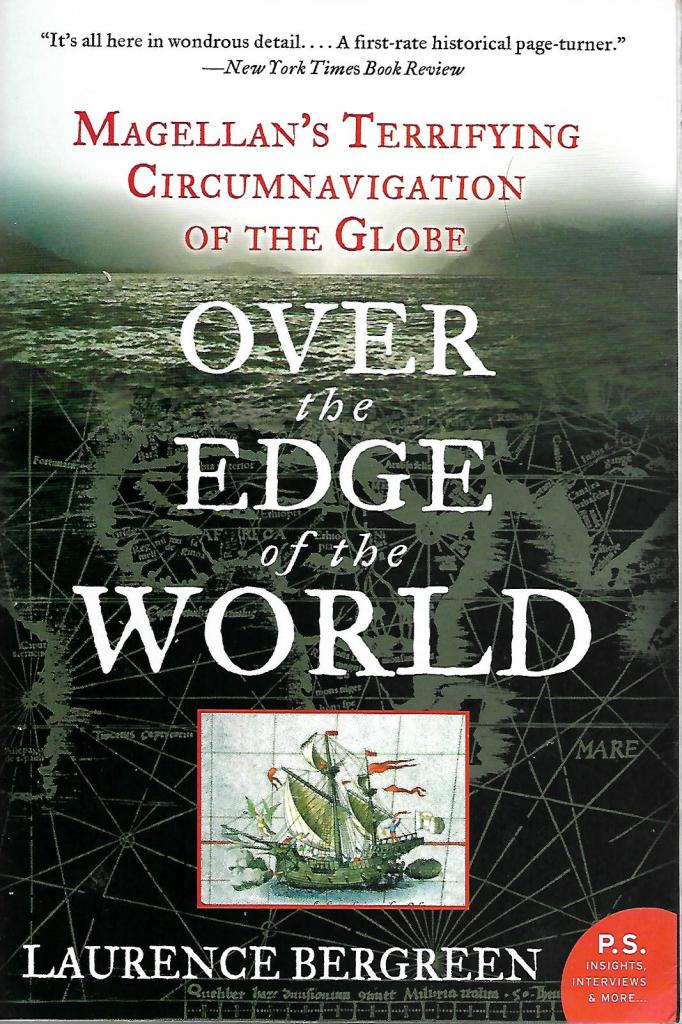
Over the Edge of the World ~ A Capsule Book Review

Over the Edge of the World ~ A Capsule Book Review by Allen Kopp

In the 1500s, many people still believed the earth was flat and that if you sailed far enough, you’d fall over the edge, even though the Bible states (around 800 B.C.) in the Old Testament Book of Isaiah that the world is an orb suspended in nothing. Around 1520, Portuguese explorer and navigator Ferdinand Magellan proved the world was round by sailing west to get to the East. Although Portuguese by nationality, Magellan was employed by Spain for the simple reason that the King of Portugal wouldn’t finance an expedition for him. Magellan set out to find the Spice Islands on the other side of the world to bring back treasure for Spain (all-important spices) that was to be found there.

Spain and Portugal, side-by-side European countries, were both world powers and were involved in a fierce struggle to be the first to the Spice (Molucca) Islands. Spices (nutmeg, cinnamon, cloves, pepper, etc.) were more valuable than gold and were playing an ever-important role in the world’s economy. Whichever country claimed the Spice Islands for its own was going to have an enormous economic and political advantage.

In 1519, Magellan set out with 260 men in five ships. This fleet of ships was called the “Armada de Molucca.” Over the next three years or so, the men of these five ships would experience untold danger, hardship and deprivation. Magellan was a good administrator and manager, but he was driven by ambition and seemed to lack the human element to make him popular with this men. Most of his men despised him for his hardness and cruelty and for his steadfast adherence to rules. He refused at times to give his men as much food as they needed, even when supplies were plentiful.

Magellan’s voyage to find the Spice Islands was only marginally successful, but he has taken his place in the history books because he was the first person to circumnavigate (go all the way around) the earth, a voyage of 60,000 miles. His men believed that, if they were just able to survive the hardships (hunger, danger, extremes of weather, loneliness, fear, discomfort, disease) of the voyage, they’d have enough money at the end of it to live the rest of their lives in financial security. Sadly, their dreams were never to be realized.

Magellan met a bloody end in the Philippine Islands when he overplayed his hand in trying to convert some of the natives to Christianity; some were compliant while others were not. (The irony is that Magellan wasn’t supposed to be trying to convert the natives; he was only there to claim the Spice Islands for Spain.) After Magellan’s death, his men continued on to the Spice Islands, but they knew, even the ones who despised him, that they were at a loss without his guiding hand and managerial skills.

Over the Edge of the World, by Laurence Bergreen, is a fascinating and detailed account of the life and times of Ferdinand Magellan and his daring voyage all the way around the world. It’s a true-life story with an ironic and bitter ending. Once again, we see how truth is stranger than fiction. People play only a small part in controlling their own destinies.

Copyright © 2019 by Allen Kopp