Late of Cherry Street

 Late of Cherry Street image x

Late of Cherry Street ~ A Short Story by Allen Kopp

(Published in Burial Day Books.)

Cora Sue Hightower developed a summer cold, which turned into pneumonia and then into something worse. She was supposed to get better but she didn’t. She faded very fast and died in her own bed on a lovely afternoon in late June with her mother, father, and younger sister at her side. She was only eighteen years old.

Ashenbrenner and Sons came in their shiny black hearse within minutes of being called and took Cora Sue away underneath a blanket on a stretcher. They worked over her body for a day and a half in their basement laboratory, drawing the blood out of her body and replacing it with embalming fluid. They called in a hairdresser and a makeup artist to work their magic and dressed her according to her mother’s explicit instructions. In short, they did all they could to make sure she would look in death exactly as she had looked in life.

Almost everybody who had ever known Cora Sue in her life came for the visitation and viewing: friends past and present, school teachers, acquaintances of her parents who saw her maybe one time when she was five years old, a slew of third and fourth cousins from out of town, and on and on. So many people showed up, in fact, that Ashenbrenner and Sons had to send out for more chairs from the church across the street.

When the visitation was over and everybody had gone home, Manny Ashenbrenner turned off all the lights except for one floor lamp at the foot of Cora Sue’s casket; he always left that one lamp burning overnight whenever he had a body lying in state to keep the place from being so lonely. He left to go home just as the clock was striking eleven.

With everyone gone and the place shut down for the night, it couldn’t have been quieter if it had been on the surface of the moon. It was an almost other-worldly quiet. If a feather had been floating through the air, you would have heard it land on the thick gray carpet. If a mouse had walked across the floor, you would have heard its tiny footfalls.

Some slight sound—was it the wind?—caused Cora Sue to open her eyes. She thought she was in her bed at home and was waking up from a dream. She was aware that she had been surrounded by a lot of people earlier, but she thought they were only dream people and hadn’t been bothered by them. She was just glad when they finally went away with their waggling tongues and hot breath and left her alone.

Her bed seemed awfully narrow and unfamiliar; when she tried to move her hips from side to side, she couldn’t. With some difficulty she pulled herself to a sitting position. When she looked around in the dim light, she knew she wasn’t in her own home, in her own bed, but in a place that was unknown but oddly familiar. She expected her mother or father to be there when she woke up, but there was no one; she was all alone.

Oddly enough, she could smell flowers, chrysanthemums especially. She had always liked chrysanthemums but ever since she was a small child she had associated the smell of them with trips to the funeral home when they went to visit somebody who had died. This gave the flowers a significance that the other flowers, however lovely, didn’t possess. She reached over and took a huge chrysanthemum bloom between her hands and inhaled deeply of its scent. Smiling and feeling happy, she extricated her legs and planted her feet on the floor.

She didn’t feel quite herself—no doubt from being in that cramped little bed—but after she had stood upright for a few seconds and took a few steps, she felt fine again. She walked backwards and forwards in a straight line, heel to toe, when she noticed all the chairs but no people. She thought she must be at the bus station or the library or the medical clinic after they had closed down for the night; nothing felt lonelier. She didn’t want to be the only person in such a place after everybody else has left.

She looked around for a pay phone to call her mother to come and get her, but, even if there had been a phone, she wouldn’t have been able to use it because she didn’t have any money. All she could think to do was walk home on her own, no matter how far it was.

She went outside to the street in front of the building and stopped and looked both ways. To her left was darkness but to the right were lights far off in the distance, so she began walking in that direction. Lights meant people and people meant being able to ask for directions. She would get a taxi to take her home and ask the cab man to wait while she went inside to get some money from her mother. She pictured her mother sitting alone on the couch in her pink chenille bathrobe, waiting for her to come home and relieved to see her. She would be happy to pay the cab man.

Everything she saw was strange to her yet oddly familiar. She didn’t know where she was but she had the feeling of having been there before. Objects—buildings, trees, streetlights, cars—existed just outside her field of vision, but when she looked directly at them they seemed to become something other than what they had been. A house became a tree; a telephone pole became a white cat with black spots; a car with people in it became a cloud of dust. She passed a house with a yellow porch light and apple trees in the yard that she was certain she had passed a few minutes earlier. Or did she? If she was simply going around in circles, she hadn’t been aware of turning any corners. Wherever she was, the ordinary rules of things remaining true to themselves didn’t seem to apply.

After a period of walking—had it been hours or only minutes?—she came to a part of town that she was sure she had never seen before except maybe in a dream. There were bars and cafes, bright lights and lively music; people enjoying themselves everywhere—talking, laughing, standing around in bunches. In a doorway a tall man in a uniform was kissing a woman, both of them apparently oblivious to what was going on around them. A monkey dressed as a policeman walked past, rolling its eyes and tootling a horn. Across the street a boy danced while an identical boy accompanied him on an accordion. A small group of onlookers tossed coins, which the accordion player then picked up. A roman candle shot up into the sky and everybody stopped what they were doing and watched it. When it reaches its apex, it exploded with a pop into a ball of golden fire.

She passed a movie theatre with a crowd of people under the marquee waiting to get inside, a crowded penny arcade aglow with yellow light, a dancehall from which music was piped to the street, a liquor store that sold foreign and domestic beers, wines, liquors. She came to a little stand where an old man was selling ice cream cones. He gave her a kind smile, which emboldened her to ask for directions.

“I live on Cherry Street,” she said. “Can you tell me where that is from here?”

“Haven’t ever heard of no Cherry Street, girlie,” he said.

“I’ve lived in this town my whole life and I’ve never seen this part of it.”

“You don’t tell me.”

“Do you know if there’s a telephone around here where I can call my mother to come and get me?”

“You might try the all-night drug store, but last I head their phone was busted,” he said. “Here, have a cone. It’ll make you feel better.” He extended a cone with two dips of chocolate, which, as good as it looked, she didn’t want to take.

“I’m sorry,” she said. “I don’t have any money with me.”

“That’s okay. You can pay me the next time around.”

She knew the opportunity of ever seeing him again was highly unlikely, but she took the cone anyway and continued on her way, eating it. The old man might not have known where Cherry Street was, but he was right about one thing: eating the two-dip chocolate ice cream cone made her feel quite a lot better.

She came to a hotel that had its doors opened invitingly to the street so she went inside. The lobby was cool and hushed like a museum or a library. She went to the sign-in desk and asked the clerk if there was a telephone she might use.

“Pay phones over there,” he said, pointing.

“I don’t have any change,” she said. “Isn’t there any other phone I could use?”

He looked at her and sighed and reached behind the counter and placed a phone on the desk in front of her. “Don’t let the manager see you.”

She dialed the number that she knew so well and when she heard the phone ringing she felt a wave of relief. At last she would hear her mother’s voice and everything would be all right again. After a few rings, though, she heard a recorded voice telling her: Your call could not be completed as dialed. She dialed the number three more times and the same thing happened every time.

“You couldn’t get through to your party?” the clerk asked, watching her the whole time.

“Line’s busy,” she said.

She left the hotel and continued on her way, feeling a little hopeless. She didn’t know what time it was but it seemed late and she wanted to get home and go to bed. Before she went to bed, though, she would have a ham sandwich and a Coke and a couple of chocolate chip cookies at the table in the kitchen while her mother paced the floor in a cloud of cigarette smoke and lectured her about staying out late on a school night. Or—wait a minute—was it a school night? Was she even still in school? She seemed to remember something about finishing school for good and not having to ever go back again. Oh, she was confused all right. How could a person not know if she was still in school or not? She was thinking that maybe she had been hypnotized the way they do in the movies, or that somebody had given her a drug in a drink that she didn’t know about. When she did get home, she would have a lot to tell her parents. Her mother would want to take her right to the doctor to make sure she was all right.

Passing a pet store, closed for the night, she saw a bunch of blue-gray puppies asleep in the window and stopped to get a better look. There were six puppies in all; they couldn’t have been more than a few weeks old. They were so perfect and so artfully grouped together that they might have not have been real except every now and then one of them moved its head or its paw slightly. They seemed close enough that she could touch them except for the glass that stood between her and them. She was hoping that one of them would open its eyes and look at her, when she felt someone standing behind her.

“You’re thinking about Smoky, aren’t you?” a man’s voice said.

She jumped a little, startled, and just stopped short of letting out a little yelp. She always did hate having somebody sneak up on her. “What was that you said?” she asked, turning around and getting a good look at him.

He was older than her but not by much. She thought she had never seen him before but she couldn’t be sure of anything. She realized she should probably be afraid of a man she had never seen before approaching her on the street, but she wasn’t. You can’t always assume that strangers are going to do you harm.

“I said they remind you of Smoky,” he said.

“I was just thinking I’d like to take one of them home with me but I wouldn’t know which one to take. I would want them all.”

“Greedy girl,” he said.

She gave him a little smile and continued on her way. She was a little surprised when he began walking in step beside her.

“You seem kind of lost,” he said.

“I’m not sure if that’s the right word. I woke up in a strange place hours ago—or maybe days ago—and I’ve been trying to find my way home. Everything I see seems kind of familiar but not so familiar, if you know what I mean. I’ve lived in this town my entire life and I’ve never seen this part of it before tonight.”

“Come along with me and I’ll buy you a something to eat,” he said.

“I don’t know if I should.”

“It’s all right, believe me. There’s nothing to worry about.”

He took her to a little restaurant called Afterlife. They sat at a table for two with a white tablecloth and linen napkins. They had a fish dinner with wine served by a mustached waiter in a white apron. It all seemed very fancy to her.

“I never knew this place was here,” she said.

“It’s an out-of-the-way place.”

“It’s funny,” she said. “I don’t know your name.”

“You can call me Boris if you must call me anything.”

“I never knew anybody named Boris before.”

“I didn’t say it’s my name. I said it’s what you can call me.”

“You’re a strange kind of person.”

“You have to get used to things being different now.”

“Why? What do you mean?”

“You’ll have to find out on your own. If I were to tell you, you wouldn’t believe me.”

“I know my family is worried about me. I wish I could call them.”

“You don’t need to worry about them. They know where you are.”

“I feel like I’m having one of those dreams that lasts all night long. You’re somebody that I know I met a while back but I can’t remember your name or much about you. For some reason, you’re in my dream. You’re not real and neither is any of this.”

“You’re giving me a headache,” he said.

“What was that you said about Smoky when you first came up behind me?”

“I said those young pups in the window made you think of Smoky.”

“How is it that you know about Smoky? Who are you, really?”

“I’ve already told you. I’m Boris.”

“That’s not who you are. That’s just a silly name you made up.”

“Smoky was a dog your family had when you were little. He was really old. When you came home from school one day in third grade, Smoky was gone. Your father told you he had gone to heaven, and someday if you were a good person you would see him again.”

“A stranger wouldn’t know that.”

“Did your mother ever tell you you had a brother?”

“I don’t have a brother.”

“You had a brother. He died when he was three weeks old from a heart defect. That was four years before you were born.”

“I don’t believe it. My mother would have told me.”

“Some people are harder to convince than others. Your mother didn’t tell you because she didn’t want to ever talk about it. It was her right to keep it to herself, wasn’t it?”

“I suppose so, but she never kept anything else to herself. What was my brother’s name?”

“If you don’t eat your fish, they’re going to take it back to the kitchen and give it to somebody else.”

When they left the restaurant, he took her to yet another part of her home town she had never seen before. They passed buildings, cars, and people, all of which were something of a blur to her. They ended up walking a long way in the dark. When she flagged, he took her by the hand and pulled her along. She was getting awfully tired but she didn’t complain.

He took her to a train station where, it seemed, the train was ready to pull out. People were everywhere, some waiting to get on the train and others seeing passengers off. She was happy she was with him because he seemed to know where he was going, while she didn’t have a clue. He took her to a certain car on the train and put her in a window seat and sat down beside her.

“Not everybody goes by train,” he said. “Some go by boat, or plane, or car—some even by hot-air balloon. It’s just a matter of where you’re leaving from.”

“Will it be a short trip?” she asked. “I need to be getting home.”

He laughed and picked up a magazine from the back of the seat in front of him and began turning the pages. In a minute the train started to move, slowly at first and then faster. She settled back in the seat and closed her eyes. She would sleep for a while. When she woke up, she would know then where she was going.

Copyright © 2013 by Allen Kopp

Oz the Great and Powerful ~ A Capsule Movie Review

Oz the Great and Powerful poster

Oz the Great and Powerful ~ A Capsule Movie Review by Allen Kopp 

Oz the Great and Powerful takes place before The Wizard of Oz, so there’s no Dorothy or Toto, no Cowardly Lion, Tin Man, or Scarecrow. There are, however, a Wizard, flying monkeys, the Emerald City, Winkie Guards, Wicked Witches (yes, more than one), singing Munchkins, a hot-air balloon, a cyclone, and a land as beautiful as heaven must be where just about anything might happen.

The story begins in Kansas in 1905 in a carnival. (The first fifteen minutes or so of the movie are in glorious black and white, on a narrow little screen to look the way movies used to look before there was such a thing as wide-screen format.) Oscar Diggs (played by James Franco) is a not-very-convincing carnival magician. It seems he has a penchant for the ladies and finds himself in some trouble when he tries to romance the strong man’s wife. With the strong man in pursuit, he jumps into a waiting hot-air balloon to get away. A fierce storm is brewing just at that time, so the balloon, with Oscar in it, is swept away to parts unknown. Oscar thinks he is going to die, but he finds himself in the magical Land of Oz where everything is different from what he’s used to and where everything is not as it appears. (At this point the screen expands to its usual enormous size and the black and white becomes color.) Right away he discovers that the people of Oz believe he is the long-awaited Wizard that will save them from evil. (Is there a Christ parallel here, or is that just my imagination?)

Oscar learns that when he becomes Wizard, a huge storehouse of gold and treasure will become his. The catch is that he must kill the Wicked Witch to become Wizard, or at least destroy her wand, which will render her powerless. He doesn’t know how he is going to kill the witch, but at least he doesn’t have to do it alone; he has Glinda the Good Witch to help him (who believes in him when he hardly believes in himself), along with Little China Girl (whose legs he glues back on) and a sympathetic flying monkey named Findley. From then on, the story is about the struggle between good and evil.

Oz the Great and Powerful is, according to the credits, based on the works of L. Frank Baum and not on the 1939 The Wizard of Oz, which is, apparently, all tied up with copyrights, including the ruby slippers that Dorothy wears and the wart on the Wicked Witch’s chin. In 3D, it’s expensive-looking and that’s because it’s expensive (two hundred million dollars). The filmmakers have given the Land of Oz depth and dimension and have made it a beautiful place to visit, unless, of course, you are an old crab, don’t like going to the movies at all, and would rather stay at home and watch TV.

With the Wizard installed on the throne as the Wizard of Oz and the Wicked Witch effectively out of the picture (at least for the time being), the Wizard should be expecting a visit any day from a certain Dorothy Gale and a few of her unusual acquaintances. 

Copyright © 2013 by Allen Kopp

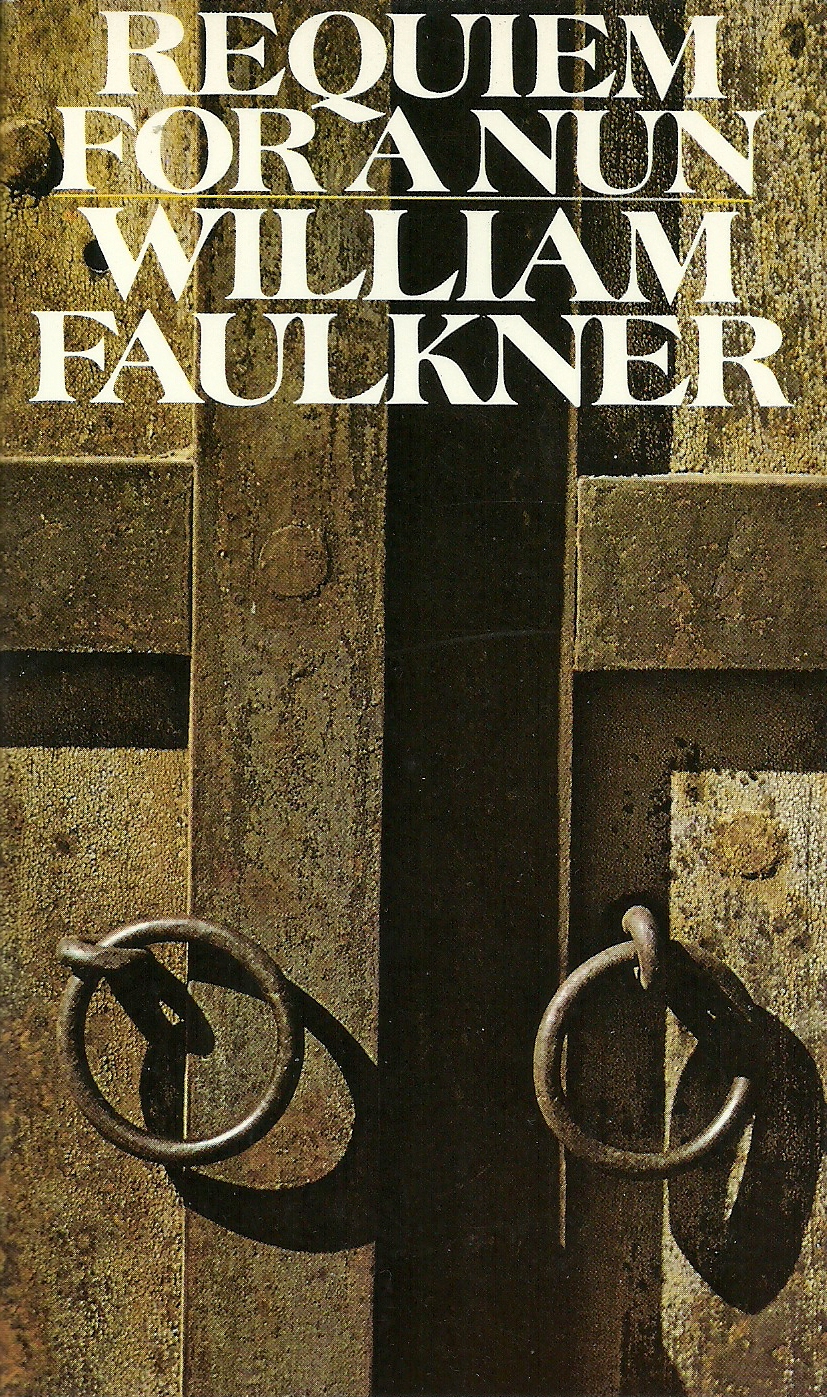
Requiem for a Nun ~ A Capsule Book Review

Requiem for a Nun cover

Requiem for a Nun ~ A Capsule Book Review By Allen Kopp

William Faulkner, the master of twentieth century Southern American gothic writing, wrote Requiem for a Nun as a sort of sequel to his novel Sanctuary, meaning that it’s a brief glimpse into the life of fallen woman Temple Drake eight years after the close of Sanctuary. Requiem for a Nun was written around 1951, when Faulkner was 54 years old, about twenty years after Sanctuary.

Requiem for a Nun is an odd little book, not a traditional novel. The story is told in dramatic form, meaning that reading it is like reading a play. That’s not all, though. The “acts” of the novel are interspersed with some of Faulkner’s dense prose; dense in the sense that sentences are frequently half-a-page long or longer, and you won’t know what he’s saying unless you’re reading carefully and go back and break down the sentences into their various parts. Faulkner is the master of interjectional writing. Great writer though he was, it’s as if his mind was so twisted with interweaving thoughts that he couldn’t finish one thought before he started in on another. I suppose this is part of his “innovation,” although not easy on the reader.

The “narrative” portions of the book that are interspersed with the “dramatic” portions are about the fictional history of the fictional town of Jefferson, Mississippi, in fictional Yoknapatawpha County; specifically the jail, the courthouse, and how the town was begun. These fictional historical details actually have nothing to do with the “story” told in dramatic form.

Readers familiar with the character Temple Drake from Faulkner’s earlier novel Sanctuary know that she ended badly. She was witness to a murder and lied on the witness stand to defend the real murderer, a deformed thug named Popeye, who took her to Memphis and set her up in a whorehouse to keep her from going to the police and telling them what she knew. Requiem for a Nun picks up her story eight years later. She is free of Popeye (he was hanged for another crime that he apparently was innocent of) and is married to her drunken male companion, Gowan Stevens, from Sanctuary. They have two children, an infant daughter and a slightly older son.

Temple has taken a black woman named Nancy Mannigoe, former drug addict and prostitute, into her house as a sort of governess for her two small children. Temple believes she is saving Nancy from her terrible life and giving her a chance to have a better one. When the action of Requiem for a Nun begins, Nancy has murdered Temple and Gowan’s baby daughter in her crib and is going to be executed in a few days for her crime. Temple decides within two days of Nancy’s execution that she herself is responsible for the murder of her own baby, beginning with her actions eight years earlier, and attempts to save Nancy’s life. There is one very long scene where she and her husband’s lawyer uncle go and see the governor of the state in the state capital in the middle of the night to plead for Nancy’s life, even though Temple knows there is no use.

Since there is no nun in Requiem for a Nun, I’m not sure what the title means, although I’m figuring it refers to Nancy Mannigoe. She goes to her death serenely because she believes she deserves to die and because she is a “believer.” Nancy’s serenity is something that Temple Drake cannot touch, understand or share. She is a tormented woman and we get the distinct impression that she will never be anything but that.

Copyright © 2013 by Allen Kopp  

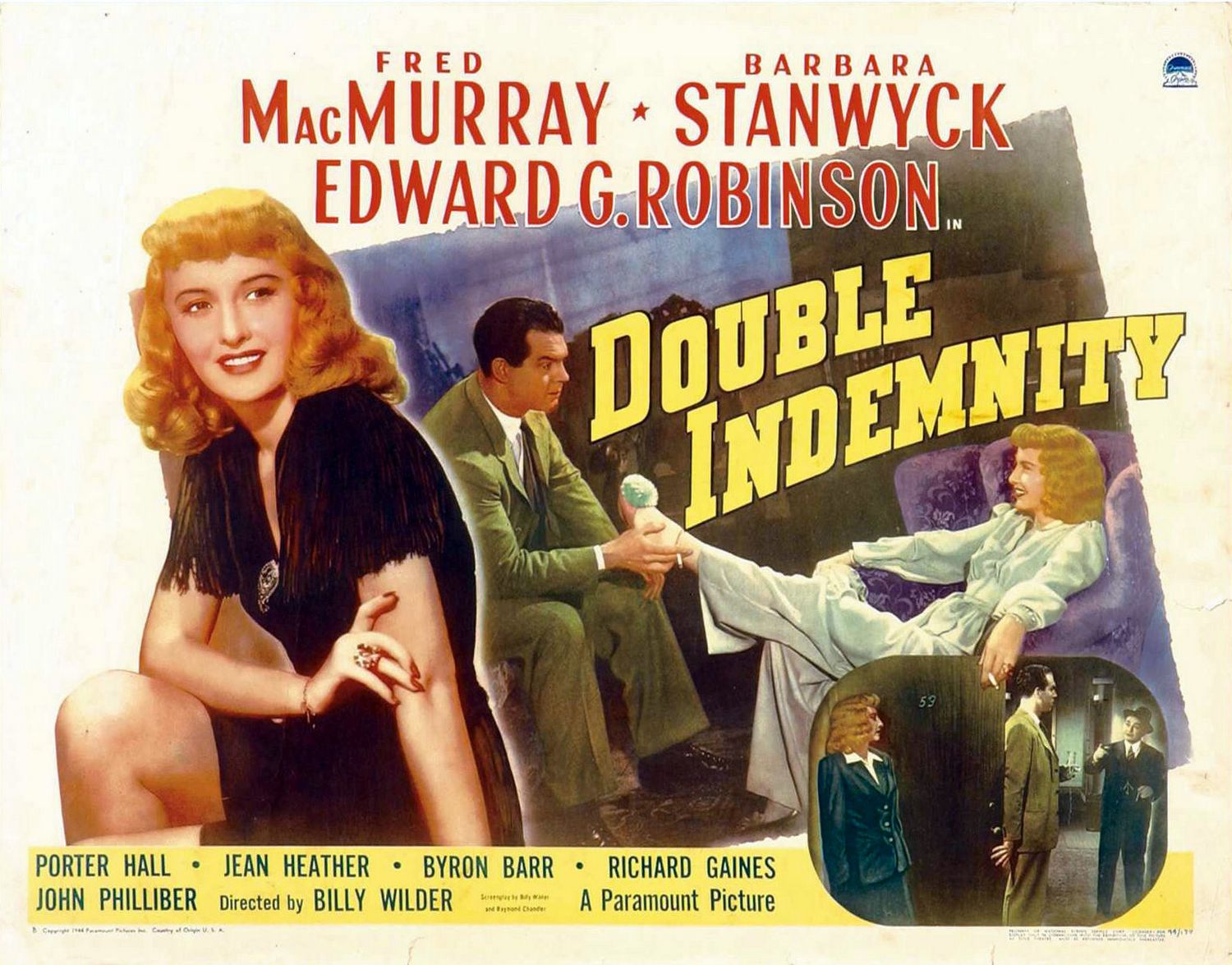
Double Indemnity ~ A Capsule Movie Review

double_indemnity_ver2_xlg

Double Indemnity ~ A Capsule Movie Review By Allen Kopp 

Bored 1940s California housewife Phyllis Dietrichson (Barbara Stanwyck) uses her bewigged allure to get malleable insurance salesman Walter Neff (Fred MacMurray) to help her kill her repulsive husband for the insurance money and for “love.” After Phyllis and Walter execute as neat and ingenious a murder as has ever been committed to celluloid, their happiness is short-lived. Astute claims investigator Barton Keyes (Edward G. Robinson), who works with Walter, does not believe the story that is being put forth about how Phyllis’s husband died and contests payment of the insurance money. As the story progresses and as the figurative noose tightens around Walter’s neck, we learn that Phyllis is not all we thought she was (or not all Walter thought, which is the same thing) and has only been using Walter to attain her ends. She has been messing around with her stepdaughter Lola’s boyfriend, Nino Zachetti, and has probably murdered before. And will murder again if she gets the chance.

Double Indemnity is a genre film and is the best of its genre, which can loosely be classified as film noir. It was made in 1944 and appropriately reflects the cynical wartime mood the country was in. It is such a perfect movie (if such a thing is possible) that seeing it for the first time is something of a revelation. Barbara Stanwyck, Fred MacMurray and Edward G. Robinson are at the top of their form. Screenwriters Billy Wilder (who also directed) and mystery novelist Raymond Chandler take a good story by James M. Cain and make it even better. It is a perfect example of lean writing without any fat. Down to the tiniest detail (cinematography, music, art direction), Double Indemnity is meticulously and beautifully crafted. On a high-definition TV (as broadcast by TCM), it is as clear and crisp as if it was made yesterday instead of sixty-nine years ago.

Copyright © 2013 by Allen Kopp

Where the Frogs Are

Where the Frogs Are image 4

Where the Frogs Are ~ A Short Story by Allen Kopp

Giles knocked loudly. When Eddie opened the door, he was wearing a dressing gown of John Barrymore vintage and smoking a cigarette in a long holder. He had put something on his hair to cause it to stand up. It was flat on top.

“I figured it would be you,” Eddie said as he held the door for Giles to enter.

“I was just in the neighborhood,” Giles said.

“Yeah, yeah, that’s a likely story.”

“Are you all alone?”

“Of course.”

“Do you have anything you want to tell me?”

“Not a thing.”

“There’s a rumor going around school today that a certain party had a little set-to with Miss Cratty and scored a three-day suspension.”

“Word travels fast, doesn’t it?”

“Would you care to tell me how it all came down so I can tell everybody about it tomorrow?”

Eddie puffed on the cigarette holder with a flourish and blew the smoke out through his nose. “How much do you know?” he asked.

“Practically nothing,” Giles said. “Try as I might, I wasn’t able to find out any details. Those who might have known weren’t talking.”

“First a drink,” Eddie said.

He went into the kitchen and when he came back he was carrying two whisky glasses containing Coke and two ice cubes in each glass. He handed one of the glasses to Giles and sat down beside him on the couch.

Giles took a sip and looked at Eddie. “Since I’m the closest thing you have to a best friend, you’d better tell me everything.”

“Can you keep a secret?”

“You know I can’t.”

“What if I said I don’t want everybody to know about this?”

“Everybody will know about it anyway.”

“You know I’ve been having trouble with geometry,” Eddie said. “Failing, in fact.”

“Yeah.”

“Why does there even need to be geometry in the world? It’s an affliction to those who are forced to learn it, not to mention a complete waste of time. No matter what I do in life or where I go, I will never need to know that crap!”

“I’ve heard all this before,” Giles said, “but go on.”

“Miss Cratty, the dear old thing, agreed to let me take a makeup test. She said it was the only way I could come out of the class with a passing grade.”

“That was rather sporting of her.”

“Well, you know that geometry is nothing more than just memorizing stuff. You memorize all these theorems for a test and just as soon as the test is over, you put everything out of your mind as if it had never happened. Education is rather stupid at times.”

“You could write a book.”

“Well, I gave up my fifth period study hall—during which I was planning on catching up on my sleep—to go and take the silly old makeup test. Miss Cratty told me to come to the zoology room where they cut up frogs and starfishes and things because the math room was being used during that period.”

“That seems logical.”

“When I got to the zoology room, I was a couple minutes late and Miss Cratty was already foaming at the mouth because I didn’t get there on time. Right off she gave me a lecture about how rude it was to keep her waiting and how she was giving me the makeup test out of the goodness of her heart and not because she had to. You might say we got off to a really bad start. I mean, you could have cut the ill will with a knife. I never liked Miss Cratty anyway and she obviously feels the same about me.”

“Are you sure you were only a couple minutes late?”

“I figured she would just give me the test paper and then fly off somewhere on her broomstick, but I could see she was going to stay in the room with me the whole time.”

“She didn’t trust you not to cheat.”

“After I had been in the zoology room not more than five minutes, I began to feel sick from the smell.”

“Miss Cratty?”

“No, the smell of formaldehyde or whatever they use when they’re dissecting frogs. You know how sensitive I am to my surroundings.”

“You never let anybody forget.”

“Well, Miss Cratty gave me the test paper and sat down about twelve feel away from me, over to my right, where she could see every move I made. She opened her book of spells and incantations and began reading.”

“She probably feels right at home where the frogs are.”

“When I started the test, I was feeling pretty sick, not only from the smell, but from all the stuff on the test I didn’t know. I had crammed my head full of geometry stuff to prepare for the test but it was all gone by the time I needed it. I was suffering from temporary amnesia. I couldn’t remember a thing. I could hardly even remember my own name.”

“That sounds like a pretty good excuse, but I think you’d have a hard time proving it.”

“I looked over at Miss Cratty. Her head was down and she seemed deeply involved in her reading, almost in a trance or something.”

“I’ve heard that witches do that.”

“I had copied some things I was likely to forget on a tiny little index card and had the card in my pocket.”

“Uh-oh.”

“I thought I could slip the card out of my pocket and put it flat on the desk against my stomach, refer to it as needed, and nobody would be any the wiser.”

“So you cheated.”

“I don’t think of it as cheating. I think of it as helping oneself where one can.” He pinched the butt out of the end of his holder, put a fresh cigarette in and lit it.

“Go on,” Giles said.

“Miss Cratty’s eyes were closed, almost as if she had drifted off to sleep, so I became a little bolder. I was referring to my index card freely, copying the stuff into the test. Then it happened.”

“I know what’s coming.”

“She saw what I was doing and was on me like a duck on a June bug. She tried to snatch the index card away from me to see what it was but I wouldn’t let her have it. She began poking me in the shoulder with the end of her pencil. I told her to stop it and when she didn’t I grabbed the pencil out of her hand and threw it across the room. That enraged her. She began punching me with her bony fingers and saying terrible things to me.”

“What things?”

“She said a person who will cheat on a makeup test is just about the lowest thing in the world. She told me I was a disgrace to the school and to my family. She was screaming right in my face like a lunatic. All I could see was the wart on the end of her nose with the little hairs sticking out of it.”

“So what did you do then?”

“I stood up off the stool I was sitting on, and when I did I stepped on her foot. She thought I did it on purpose. She yowled as if I had stabbed her in the stomach. She started punching me on the shoulder, getting nearer my face. I panicked. All I could think was that I had to get away from her, had to make her stop punching me. I reared back as if I was going to hit her in the face but I did something else instead.”

“What?”

“I pushed her. Her feet got tangled in the stool legs and she fell backward and landed on the floor. Her dress went up over her waist and I saw her underpants. It was the most horrible sight I ever saw in my life. I can’t get it out of my mind. It was like looking upon the face of Satan.”

“You actually saw her underpants?”

“She screamed as one mortally wounded. The art teacher and the janitor heard her and came running. They helped get her up off the floor. She told them I hit her but I didn’t. The art teacher took me by one arm and the janitor by the other, as if I was a dangerous criminal, and took me to the principal’s office with Miss Cratty right behind us.”

“Are you making this up?”

“When Miss Cratty told the principal her version of the story, he wasn’t pleased. He would hardly let me speak at all. He tried to get me to apologize to her but I refused, so he suspended me. To await further review, he said. The only way I can get back in school is to have one or both my parents solicit the principal’s office, in person, for my re-admittance. Miss Cratty is going to prefer charges against me for assault. I’m going to end up behind bars. Nobody will take my word for what happened over hers.”

“What are you going to do?”

“I’m not ever going back to school. I’m leaving tonight. I have a little money.”

“Where are you going?”

“I’m not going to tell you because everyone will suspect that I told you and force you to tell them. You admit yourself that you can’t keep a secret.”

“What do you want me to do?”

“Tell my friends at school tomorrow that I said goodbye.”

At the door as Giles was leaving, Eddie hugged him with tears in his eyes. “I’ve known you since kindergarten,” he said, “and you’ve always been square with me. Maybe we’ll see each other again sometime, but probably not.”

“Are you sure that going away is the only way to deal with this thing?” Giles asked.

“Don’t tell anybody you even saw me today,” Eddie said. “I’m vanishing right before your eyes. I no longer exist.”

Copyright © 2013 by Allen Kopp

Zero Dark Thirty ~ A Capsule Movie Review

Zero Dark Thirty poster

Zero Dark Thirty ~ A Capsule Movie Review by Allen Kopp

I wasn’t going to see Zero Dark Thirty because I had the idea that it was political propaganda, but when I actually saw it I found that it’s neither political nor propaganda. If anybody gets credit for killing Osama bin Laden (the most hated man in America since Adolf Hitler), it’s not politicians or political parties (as they would have us believe), but the Central Intelligence Agency.

In Zero Dark Thirty, a young female CIA operative known only by the name of Maya (played by Jessica Chastain) arrives in the Middle East. She witnesses first hand an “enhanced interrogation” of a known terrorist. She doesn’t like what she sees but she knows that such tactics are necessary to procure the intelligence that will lead to the high-level terrorists who want to kill Americans and annihilate Western Civilization. When one of the suspects pleads with her to help him, she tells him he can help himself by telling them the truth. As the main “interrogator” says: “When you lie to me, I hurt you.” These scenes are not easy to watch.

Maya focuses more and more on finding and killing Osama bin Laden. She knows, or believes she knows, how to interpret the intelligence that comes her way that she believes will lead to Osama. (She states that, in her eight years in the agency, she has done nothing other than pursue Osama.) She encounters resistance from her boss in the agency (and others) nearly every step of the way. She seems alone in her zeal to get Osama and in how she thinks it should be done. I gather, although I don’t know for sure, that Maya is a fictional character, a composite, of CIA operatives who, through their persistence and dedication, led to the ultimate goal.

Finally, after a ten-year search, intelligence reports seem to indicate that Osama is staying in a “complex” in Pakistan with a small retinue of wives and children. Maya is alone in her belief that Osama is there; some of her colleagues believe there is a “soft” 60% chance.

The highlight of Zero Dark Thirty is the daring nighttime raid on the complex in Pakistan where Osama may or may not be living in seclusion. (We know, of course, in retrospect, that Osama was there and was killed.) It was an enormous gamble that paid off.

Copyright © 2013 by Allen Kopp   

Mama ~ A Capsule Movie Review

Mama poster

Mama ~ A Capsule Movie Review by Allen Kopp

I love a good horror film with a literate story that doesn’t involve scantily clad teenagers being menaced by a hatchet-wielding maniac. Some recent examples of good horror films that come to mind are The Others, The Ring, The Haunting in Connecticut, Drag Me to Hell, and Insidious (all involving the supernatural). A new one that can be added to the list is Mama, a pretty good fright fest with a modern-day ghost story rooted in a tragic event of the nineteenth century.

When Mama begins, a man named Jeffrey DeSange has just gone on a murderous rampage, killing his wife, among others. Distraught over what he has done, he kidnaps his two small daughters (Victoria, age three, and Lily, age one). When he is fleeing with them on a mountainous snowy road, his car skids in an isolated area and goes off a steep embankment. Jeffrey, Victoria and Lily are not hurt, but the car is wrecked. Jeffrey takes Victoria and Lily from the car and begins walking with them in the woods, coming upon an abandoned cabin. Once inside the cabin, he plans to kill Victoria and Lily and then himself. When he has the gun held to Victoria’s head and is about to pull the trigger, something (or somebody) jumps him from behind. From then on, we don’t see Jeffrey anymore.

Five years later, Jeffrey’s brother, Lucas, believes somehow that Jeffrey, Victoria and Lily are still alive somewhere and is searching for them. (Jeffrey and Lucas are both played by the same actor.) Miraculously, Victoria and Lily are found, living in deplorable conditions in the abandoned cabin where we last saw them five years earlier. Many questions remain unanswered.

Lucas and his girlfriend Annabel (played by a barely recognizable Jessica Chastain, who seems to be in about every other movie these days) want to take Victoria and Lily and raise them as their own. Victoria, since she is older, is able to assimilate back into the real world, but Lily, who was only one at the time of her disappearance, still remains like an animal. She walks on all fours part of the time, won’t sleep in a bed or sit at a table, and doesn’t speak. She seems rooted to her old life in the woods.

When Annabel tries to show Victoria affection, Victoria tells her to stop because “she” is watching and will be jealous. We learn by degrees that “she” is a ghost, a sort of mother figure that kept Victoria and Lily alive in the abandoned cabin for five years.

Victoria and Lily refer to the “ghost” as “Mama.” In life, Mama was a mental patient with a baby in the 1870s. She escaped from the mental hospital where she was being kept and took her baby from the orphanage. While being pursued, she ran into the woods to a rocky promontory overlooking a lake. She jumped into the lake with the baby, but the baby got caught on a tree limb sticking out of the cliff and died, never making it into the lake. Mama drowned in the lake alone, without her baby. As someone in the movie explains, a ghost is a twisted emotion that has never been resolved. Mama is a ghost who can’t find rest because she is forever seeking her baby. She finds, instead, Victoria and Lily.

Of course, Mama wants to reclaim Victoria and Lily, while Lucas and Annabel want to keep them. In the film’s dramatic, special effects-laden conclusion, Lucas and Annabel attempt to reunite Mama with the skeletal remains of her baby, but that isn’t what Mama wants. She wants Victoria and Lily.

Scoffers will scoff and laugh and laughers will laugh at Mama (they always do), but those of us who know a good story when we see one will enjoy it, no matter how implausible. If you can stop being sophisticated and suspend disbelief for about an hour and forty minutes, you’ll have a good time.

Copyright © 2013 by Allen Kopp 

Lola Fenwick

Lola Fenwick image 1

Lola Fenwick ~ A Short Story by Allen Kopp 

A woman in a trench coat and a stylish hat ran down a city street in the rain, ably but not fast in high-heeled shoes. When she came to a certain apartment building, she ducked inside, stopping just inside the door to shake the water off her coat.

“Elevator’s busted, Miss Fenwick,” the clerk said from behind the desk. “I’m afraid it’s the stairs tonight.”

She gave the man a tense smile and hesitated for only a moment before crossing the lobby to the stairs. She nearly fell on the first step but caught hold of the railing and righted herself. The clerk turned around and watched her until she was out of sight up the stairs. He smiled but there was no telling what the smile meant. It could have meant that he knew something she didn’t know but was about to find out. 

When she came to the sixth floor, she wasn’t out of breath from running up the stairs, but she had an anxious look on her face. She went along the deserted hallway to the door she wanted and inserted the key into the lock and opened the door. She stepped into the darkened room and turned on a lamp.

“Hello, Lola,” a man’s voice said.

She whirled around, drawing in a sharp breath, and faced the man. “Oh!” she said. “It’s you!”   

“Glad to see me?” he asked with a devilish grin.

“I thought you were…” Everybody thought you were…”

“Dead?” he asked. “No, I’m not dead. I’m very much alive and I’ve come back to pick up where we left off.”

Music began faintly in the background and swelled dramatically. With the two of them standing there looking at each other, not speaking and not moving, the picture slowly faded to black.

Dorothy switched off the TV before the commercials began and turned to Vernon. “I knew something like that was going to happen,” she said.

“How did you know?” Vernon asked.

“Oh, the signs were all there,” she said. “The mysterious phone calls. The anonymous letter. I knew Palmer was alive all the time.”

“You did not! You couldn’t have known!”

“Well, anyway, our Lola is certainly in a mess now!”

“He’s going to take that money she has saved for her nephew’s eye operation, I just know it.”

“Maybe he doesn’t know about the money.”

“Of course, he knows! Why else would he come back from the dead?”

“Maybe he really loves her.”

“Bah! He doesn’t know the meaning of the word. He’ll only use her to get what he wants and then run out on her.”

“Just when she was all ready to marry Dr. Blake.”

“Well, she can’t marry Dr. Blake now unless she wants to commit bigamy.”

“I shudder to think what Dr. Blake will do when he finds out that Palmer isn’t really dead and has come back to torment poor Lola again. You know what a temper he has!”

“I hope he kills the son of a bitch,” Vernon said.

“Oh, I don’t think I can wait until tomorrow to see what’s going to happen,” Dorothy said.

“Today is Friday. You’ll have to wait until Monday.”

“Oh, dear! I wish I could just snap my fingers and make it one o’clock Monday afternoon.”

“Wishing your life away, you cluck.” he said.

Dorothy had to go downtown to do some shopping, so Vernon went upstairs to his bedroom and closed the door. He took off his shoes and lay down on the bed and covered up with an afghan. In a few minutes he was lost in sleep.

When he awoke, he knew from the light coming in at the window that it was no longer the middle of the afternoon but was early evening. He wondered if Dorothy was back from shopping yet. As he yawned and started to get up from the bed, he realized there was somebody else in the room with him.

“Hello, darling,” a woman’s voice said.

He turned sharply toward the voice and saw Lola Fenwick from To Live, To Love stand up from the chair in the corner and walk toward the bed in her stiletto heels.

“How did you get in here?” he asked. He knew it was a stupid thing to say but it was the first thing that came into his head.

“I’ve been here all along,” she said.

She smiled indulgently with those ruby lips of hers. She was dressed in a stunning wool dress of a tawny color, showing her trim waist and large breasts. He could smell her perfume that smelled like the lilac bush his mother had in the yard when he was a boy.

“Has Dorothy come home yet?” he asked. “She’s got to see this!”

“Now don’t worry about her. She and I had a long talk while you were asleep. I gave her a nice drink and a pill and she’s sound asleep in her bedroom.”

“I’ve been watching you on To Live, To Love for eight years. You’re more real to me than anybody I know.” He realized as he spoke these words that he had been in love with her almost from the first moment he saw her.

“I know, darling. That’s why I’m here.”

“Darling,” he said. “I’ve imagined many times, by some sort of magic, being able to hear you call me that.”

“Now, I don’t want to rush you, but there isn’t much time and we’re going to have to get a move on. They’ll be here any minute.”

Who will be? Is it that son of a bitch Palmer Belvedere?”

“Yes, him, and all my other past husbands, the good ones and the bad.”

“But what can we do?”

“I want you to take me away from here before something terrible happens.”

“All right, but where to?”

“I’m thinking Mexico.”

“Mexico! But what about Dorothy?”

“She’ll be fine without you. She has often wished that you would go away and leave her in peace.”

“I’ve always wanted to see Mexico, and with you! I must be dreaming!”

“Now, please hurry and get dressed! You don’t need to worry about packing a bag. We’ll buy what we need when we get to where we’re going. I’ll call a taxi and will be waiting for you downstairs.”

“All right, dearest,” he said.

When he went downstairs, she was waiting for him by the front door in her mink coat. She was more lovely than Debra Paget and Kim Novak put together. He felt a thrill that he hadn’t felt in at least twenty years. She took him by the arm and they went out and got into the back seat of the waiting taxicab.

“Bus station,” she said to the driver, “and please hurry!”

“I figured we would go to the airport and fly down in a plane,” Vernon said.

“No, that’s just what they’ll be expecting us to do. They would never think I’d go on a bus. It’s the perfect dodge.”

“But isn’t it an awfully long way to go on the bus?”

“Several hundred miles. We’ll be there in no time.”

“Well, I’m sure you know best,” he said.

When they got to the bus station, they had to wait for over an hour for the southbound bus they wanted, so they went into the diner and sat at a secluded booth in the back and had a bite to eat.

“Oh, I do hope we can get on that bus before anybody tries to stop us,” she said.

“I think we’re fairly safe here,” he said, looking over his shoulder. “Nobody’s paying any attention to us.”

“There are spies everywhere!” she said.

“Don’t worry,” he said. “I’ll protect you.”

“Oh, I just knew you would.” She reached across the table and put her hand over his.

“Maybe I should call Dorothy and tell her where I am,” he said.

“Now, don’t you worry about a thing,” she said. “I took care of all that while you were asleep.”

“You didn’t kill her, did you?”

She laughed her tinkling little laugh. “I can tell when you’re not being serious,” she said. “No, I didn’t kill her. I have some scruples, you know.”

“But what about Dr. Blake? He’s expecting you to marry him. He needs your help with the life-saving serum he’s working on.”

“The marriage to Dr. Blake is off, I’m afraid. When I told him last night that I couldn’t marry him, he threatened to kill me.”

“He’ll never find you, dearest.”

“You’re sweet,” she cooed.

“I’ve seen you through all your marriages, your miscarriages, your near-drowning, your trial for murder, your brain operation, your kidnapping, your amnesia, your car going over the cliff, your alien abduction and your stint in women’s prison. You always look stunning, no matter what terrible thing you’re going through, but I have to tell you that you have never looked any lovelier than you do right now.”

She looked across the table at him and there were tears in her eyes. There was nothing she could say that was equal to the moment. He thought he might be able to lean across the table and manage a little kiss, but the departure of their bus was announced over the loud speaker.

He took her by the hand and led her to the last seat in the back of the bus where nobody would look at them. She slipped off her mink coat and he put it on the overhead rack for her and sat down beside her. She slipped her arm through his and put her head on his shoulder.

They rode all night without getting out of their seats, talking little and sleeping fitfully. When he awoke and felt the warmth of her body against his, he knew he was as happy as he had ever been in his life. This was, perhaps, his last chance at happiness and he intended to take it.

He thought about their coming life in Mexico spread out before them like a sun-drenched dream. They would lie in the sun to the accompaniment of the splashing surf, drinking exotic fruity drinks out of coconut shells. He would rub suntan oil on her shoulders, and everywhere they went people would admire her beauty and envy him for being her man.

Just as the sun was coming up, the bus stopped for a fifteen-minute rest stop. Lola was still sleeping, using her mink coat as a pillow. Vernon stood up so as not to disturb her and tiptoed away to the front of the bus. Most of the other passengers were sleeping, unaware that there was a celebrated international beauty in their midst, slipping away to Mexico with her man.

He stepped off the bus and was making his way to the little building that served as gas station, restaurant and bus stop, when two large men came from around the front end of the bus and approached him.

“Are you Vernon Buckles?” the first man asked.

“Who wants to know?”

He pulled a badge from his pocket and flashed it in Vernon’s face. “We have a warrant for your arrest, sir,” he said.

“For what?”

“For the suspected murder of your wife.”

“You’re crazy! I haven’t done anything!”

“Then you have nothing to worry about, but you’ll have to come with us, anyway. You can tell your story when the time comes.”

“I’m not going anywhere!” Vernon said.

“You can make it easy or you can make it hard,” the second man said.

“I have a traveling companion,” Vernon said. “She’s asleep on the bus. I can’t just go off and leave her without telling her what’s happened!”

The first man considered for a moment. “All right,” he said, “you can go tell her, but I’ll have to come with you.”

Grim-faced, Vernon stepped up the three little steps onto the bus and walked down the aisle, the police officer close behind him. When he came to the back of the bus, Lola wasn’t there. No one was there. He looked for the mink coat but it wasn’t there, either.

The nearest person was a sleeping Mexican four seats away. Vernon grabbed him by the shoulder and shook him roughly awake.

“Where is the lovely young woman that was sitting here?” he asked. “She was wearing a mink coat! You couldn’t miss her!”

The Mexican sat up straight and held up his hands, a frightened look on his face. “Sorry,” he said. “I see no one.”

Copyright © 2013 by Allen Kopp

The Song of Bernadette ~ A Capsule Book Review

The Song of Bernadette cover                                 

The Song of Bernadette ~ A Capsule Book Review by Allen Kopp

The Song of Bernadette, by the Austrian writer Franz Werfel, is a fictional account of the true story of a simple peasant girl, Bernadette Soubirous, who experienced visions of the Virgin Mary in Lourdes, France, in 1858. The novel was first published in 1941 in German and was made in 1943 into what is today considered a classic movie that is usually shown on TV around Christmastime.

At almost six hundred pages, The Song of Bernadette is not an easy book to read. The English translation is filled with oddly arranged and wordy sentences that often require re-reading to understand. You are going to have to be a dedicated reader to get through this book. The story is minutely and scrupulously detailed or, to put it another way, it’s a very slow-moving reading experience. It could have been told in half the number of pages. However, those readers who stick with the book through to the end will be glad they did. It’s a fascinating story of simple faith in a cruel, cynical and unbelieving world. The life of a saint is not an easy path.

Bernadette, following examples set in the Bible, was the least likely person to be singled out for a divine visitation. She was a sickly girl from a poor family that lived in what was known as the “Cachot,” a former prison converted into a poor dwelling place. She suffered from asthma from birth and was not a particularly well-liked or well-disposed child, or a bright student in school. There was nothing remarkable about her; she was, in fact, one of hundreds just like her.

One day when she was gathering firewood with her sister and another girl in an ugly, repellant place near her home, she experienced a vision of what she described as a beautiful lady in a niche in a rock formation. She thereafter referred to the vision as “The Lady,” while it is assumed to have been the Virgin Mary. Bernadette tried to keep the vision a secret but, of course, news of it broke out and everyone wanted to know what it was all about and what it meant.

The Lady instructed Bernadette to come to the place where she first saw her every day for fifteen days. On one of these daily visitations, the Lady instructed Bernadette to get on her hands and knees and dig in the dirt. When Bernadette obeyed this directive, a spring gushed forth beneath her fingers, a spring that was found to have curative powers. Among the first to be “healed” from their afflictions were a blind man whose sight was restored and a two-year-old boy, near death, who suffered from paralysis and convulsions. When word of these miraculous cures spread, the spring and Bernadette became famous. People from all over the world came to Lourdes to be healed of whatever ailed them. Enough genuine healings occurred to convince many that it was real.

With all her notoriety, Bernadette’s troubles were just beginning. For every person who believed she was genuine, there was an equal number who believed she was a charlatan and an instrument of the devil. Local officials and even some members of the clergy took it upon themselves to discredit Bernadette and to find plausible reasons to prove she was a fake.

With all that happened to Bernadette and her family, she never lost her simplicity and her faith in her visions of the Lady. What it meant was for others to figure out. She remained humble throughout her life and wasn’t interested in the ways of the world. She entered a religious order, where she performed menial kitchen duties, and died twenty years after her visions at the age of thirty-four from a painful affliction known as tuberculosis of the bones. When a fellow nun suggested during her illness that she partake of the curative waters of the spring at Lourdes, she stated simply that the cure was not meant for her.

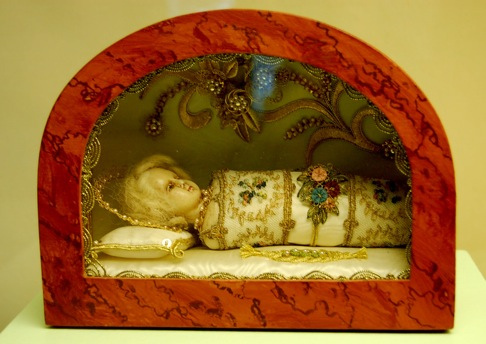
Fifty-four years after her death, in 1931, Bernadette was sanctified as a saint in a ceremony at St. Peter’s Basilica in Rome, with fifty thousand people in attendance. Her body, during the investigative process for sainthood, was found to have not decomposed in all the decades since her death. Her detractors had a logical explanation even for that, saying that she had been expertly embalmed and was merely a “mummy.”

Copyright © 2013 by Allen Kopp

Django Unchained ~ A Capsule Movie Review


Django Unchained poster

Django Unchained ~ A Capsule Movie Review By Allen Kopp 

The new movie Django Unchained is directed by Quentin Tarantino. Those who are familiar with the work of this director know that his movies are inspired by samurai films, “spaghetti westerns” from the 1960s, and exploitation films of the 1970s. Whether you like Quentin Tarantino’s films or not, you have to admit there’s nothing else quite like them.

Django Unchained is entertaining, violent, bloody, intelligently written, long (two hours and 45 minutes), funny at times (as when the vigilantes are trying to decide whether or not they should wear hoods to cover their faces), and completely implausible. Admirers of Quentin Tarantino will think it’s a masterpiece, while others will be put off by the spurting blood, exploding heads, and simplistic moral tone. It has lots of riding and shooting, just like a western, but it’s set in the pre-Civil War South, so it’s technically not a western. Also like a western, there are good guys and bad guys (the bad ones are really bad), and we know from the outset exactly which is which. It’s a story about retribution, about the good people giving to the bad people exactly what they deserve.

Dr. King Shultz (played by Christoph Waltz) is a native of Germany who ended up, somehow, in America and who speaks excellent English, although with a slight German accent. He is a onetime dentist, now a bounty hunter. He delivers the dead bodies of escaped criminals to the U.S. authorities and receives payment for it. He is seeking (and finds) a slave by the name of Django (played by Jamie Foxx) to help him locate three brothers from a certain plantation where Django lived. After Dr. Shultz finds and kills the three brothers, he discovers that Django has an aptitude for being a bounty hunter, so they become partners. They travel around together, with Django pretending to be Dr. Shultz’s valet. Dr. Shultz learns that Django’s one desire in life is to find his wife, Broomhilda, from whom he has been separated for many years.

The search for Broomhilda leads Dr. Shultz and Django to Mississippi to a plantation named “Candie Land,” owned by one Calvin Candie (played by Leonardo DiCaprio). Calvin Candie is not a nice person. He is, in fact, the villain of the story. He and his simpering sister own slaves and they don’t care how badly they are treated. He owns Broomhilda, the young woman that Django seeks.

Dr. Shultz and Django just can’t take Broomhilda and leave with her. Calvin Candie is a powerful man and he would see that Broomhilda is found and returned to him, and there’s no telling what punishment he would mete out to her. Dr. Shultz, to hide his and Django’s real reason for being at Candie Land, pretends to be interested in purchasing a Mandingo wrestler, a demonstration of which affords yet another opportunity for some exaggerated violence. The winner of a Mandingo wrestling match kills the loser with a hammer, which the spectators enjoy immensely.

Django Unchained ends with a shootout to end all shootouts, with predictable results. Retribution is delivered on the evil, with many bodies torn apart by bullets and enough spurting fake blood to fill a swimming pool. When Django shoots Calvin Candie’s silly sister from the staircase, he blows her ass all the way into the next room. If you think she deserves it, you’re probably the kind of person who will enjoy this film.

Copyright © 2013 by Allen Kopp