Double Indemnity ~ A Capsule Movie Review

double_indemnity_ver2_xlg

Double Indemnity ~ A Capsule Movie Review By Allen Kopp 

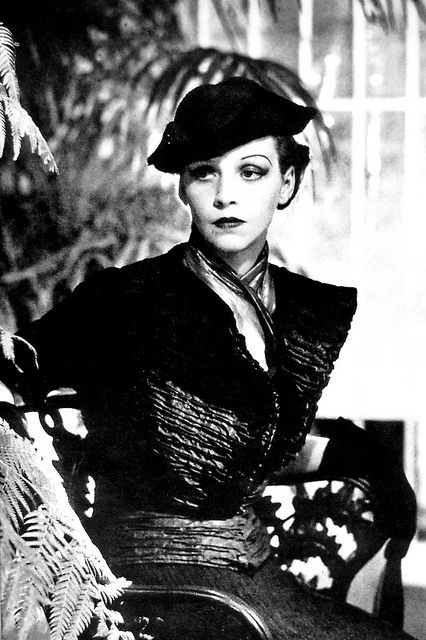
Bored 1940s California housewife Phyllis Dietrichson (Barbara Stanwyck) uses her bewigged allure to get malleable insurance salesman Walter Neff (Fred MacMurray) to help her kill her repulsive husband for the insurance money and for “love.” After Phyllis and Walter execute as neat and ingenious a murder as has ever been committed to celluloid, their happiness is short-lived. Astute claims investigator Barton Keyes (Edward G. Robinson), who works with Walter, does not believe the story that is being put forth about how Phyllis’s husband died and contests payment of the insurance money. As the story progresses and as the figurative noose tightens around Walter’s neck, we learn that Phyllis is not all we thought she was (or not all Walter thought, which is the same thing) and has only been using Walter to attain her ends. She has been messing around with her stepdaughter Lola’s boyfriend, Nino Zachetti, and has probably murdered before. And will murder again if she gets the chance.

Double Indemnity is a genre film and is the best of its genre, which can loosely be classified as film noir. It was made in 1944 and appropriately reflects the cynical wartime mood the country was in. It is such a perfect movie (if such a thing is possible) that seeing it for the first time is something of a revelation. Barbara Stanwyck, Fred MacMurray and Edward G. Robinson are at the top of their form. Screenwriters Billy Wilder (who also directed) and mystery novelist Raymond Chandler take a good story by James M. Cain and make it even better. It is a perfect example of lean writing without any fat. Down to the tiniest detail (cinematography, music, art direction), Double Indemnity is meticulously and beautifully crafted. On a high-definition TV (as broadcast by TCM), it is as clear and crisp as if it was made yesterday instead of sixty-nine years ago.

Copyright © 2013 by Allen Kopp

Where the Frogs Are

Where the Frogs Are image 4

Where the Frogs Are ~ A Short Story by Allen Kopp

Giles knocked loudly. When Eddie opened the door, he was wearing a dressing gown of John Barrymore vintage and smoking a cigarette in a long holder. He had put something on his hair to cause it to stand up. It was flat on top.

“I figured it would be you,” Eddie said as he held the door for Giles to enter.

“I was just in the neighborhood,” Giles said.

“Yeah, yeah, that’s a likely story.”

“Are you all alone?”

“Of course.”

“Do you have anything you want to tell me?”

“Not a thing.”

“There’s a rumor going around school today that a certain party had a little set-to with Miss Cratty and scored a three-day suspension.”

“Word travels fast, doesn’t it?”

“Would you care to tell me how it all came down so I can tell everybody about it tomorrow?”

Eddie puffed on the cigarette holder with a flourish and blew the smoke out through his nose. “How much do you know?” he asked.

“Practically nothing,” Giles said. “Try as I might, I wasn’t able to find out any details. Those who might have known weren’t talking.”

“First a drink,” Eddie said.

He went into the kitchen and when he came back he was carrying two whisky glasses containing Coke and two ice cubes in each glass. He handed one of the glasses to Giles and sat down beside him on the couch.

Giles took a sip and looked at Eddie. “Since I’m the closest thing you have to a best friend, you’d better tell me everything.”

“Can you keep a secret?”

“You know I can’t.”

“What if I said I don’t want everybody to know about this?”

“Everybody will know about it anyway.”

“You know I’ve been having trouble with geometry,” Eddie said. “Failing, in fact.”

“Yeah.”

“Why does there even need to be geometry in the world? It’s an affliction to those who are forced to learn it, not to mention a complete waste of time. No matter what I do in life or where I go, I will never need to know that crap!”

“I’ve heard all this before,” Giles said, “but go on.”

“Miss Cratty, the dear old thing, agreed to let me take a makeup test. She said it was the only way I could come out of the class with a passing grade.”

“That was rather sporting of her.”

“Well, you know that geometry is nothing more than just memorizing stuff. You memorize all these theorems for a test and just as soon as the test is over, you put everything out of your mind as if it had never happened. Education is rather stupid at times.”

“You could write a book.”

“Well, I gave up my fifth period study hall—during which I was planning on catching up on my sleep—to go and take the silly old makeup test. Miss Cratty told me to come to the zoology room where they cut up frogs and starfishes and things because the math room was being used during that period.”

“That seems logical.”

“When I got to the zoology room, I was a couple minutes late and Miss Cratty was already foaming at the mouth because I didn’t get there on time. Right off she gave me a lecture about how rude it was to keep her waiting and how she was giving me the makeup test out of the goodness of her heart and not because she had to. You might say we got off to a really bad start. I mean, you could have cut the ill will with a knife. I never liked Miss Cratty anyway and she obviously feels the same about me.”

“Are you sure you were only a couple minutes late?”

“I figured she would just give me the test paper and then fly off somewhere on her broomstick, but I could see she was going to stay in the room with me the whole time.”

“She didn’t trust you not to cheat.”

“After I had been in the zoology room not more than five minutes, I began to feel sick from the smell.”

“Miss Cratty?”

“No, the smell of formaldehyde or whatever they use when they’re dissecting frogs. You know how sensitive I am to my surroundings.”

“You never let anybody forget.”

“Well, Miss Cratty gave me the test paper and sat down about twelve feel away from me, over to my right, where she could see every move I made. She opened her book of spells and incantations and began reading.”

“She probably feels right at home where the frogs are.”

“When I started the test, I was feeling pretty sick, not only from the smell, but from all the stuff on the test I didn’t know. I had crammed my head full of geometry stuff to prepare for the test but it was all gone by the time I needed it. I was suffering from temporary amnesia. I couldn’t remember a thing. I could hardly even remember my own name.”

“That sounds like a pretty good excuse, but I think you’d have a hard time proving it.”

“I looked over at Miss Cratty. Her head was down and she seemed deeply involved in her reading, almost in a trance or something.”

“I’ve heard that witches do that.”

“I had copied some things I was likely to forget on a tiny little index card and had the card in my pocket.”

“Uh-oh.”

“I thought I could slip the card out of my pocket and put it flat on the desk against my stomach, refer to it as needed, and nobody would be any the wiser.”

“So you cheated.”

“I don’t think of it as cheating. I think of it as helping oneself where one can.” He pinched the butt out of the end of his holder, put a fresh cigarette in and lit it.

“Go on,” Giles said.

“Miss Cratty’s eyes were closed, almost as if she had drifted off to sleep, so I became a little bolder. I was referring to my index card freely, copying the stuff into the test. Then it happened.”

“I know what’s coming.”

“She saw what I was doing and was on me like a duck on a June bug. She tried to snatch the index card away from me to see what it was but I wouldn’t let her have it. She began poking me in the shoulder with the end of her pencil. I told her to stop it and when she didn’t I grabbed the pencil out of her hand and threw it across the room. That enraged her. She began punching me with her bony fingers and saying terrible things to me.”

“What things?”

“She said a person who will cheat on a makeup test is just about the lowest thing in the world. She told me I was a disgrace to the school and to my family. She was screaming right in my face like a lunatic. All I could see was the wart on the end of her nose with the little hairs sticking out of it.”

“So what did you do then?”

“I stood up off the stool I was sitting on, and when I did I stepped on her foot. She thought I did it on purpose. She yowled as if I had stabbed her in the stomach. She started punching me on the shoulder, getting nearer my face. I panicked. All I could think was that I had to get away from her, had to make her stop punching me. I reared back as if I was going to hit her in the face but I did something else instead.”

“What?”

“I pushed her. Her feet got tangled in the stool legs and she fell backward and landed on the floor. Her dress went up over her waist and I saw her underpants. It was the most horrible sight I ever saw in my life. I can’t get it out of my mind. It was like looking upon the face of Satan.”

“You actually saw her underpants?”

“She screamed as one mortally wounded. The art teacher and the janitor heard her and came running. They helped get her up off the floor. She told them I hit her but I didn’t. The art teacher took me by one arm and the janitor by the other, as if I was a dangerous criminal, and took me to the principal’s office with Miss Cratty right behind us.”

“Are you making this up?”

“When Miss Cratty told the principal her version of the story, he wasn’t pleased. He would hardly let me speak at all. He tried to get me to apologize to her but I refused, so he suspended me. To await further review, he said. The only way I can get back in school is to have one or both my parents solicit the principal’s office, in person, for my re-admittance. Miss Cratty is going to prefer charges against me for assault. I’m going to end up behind bars. Nobody will take my word for what happened over hers.”

“What are you going to do?”

“I’m not ever going back to school. I’m leaving tonight. I have a little money.”

“Where are you going?”

“I’m not going to tell you because everyone will suspect that I told you and force you to tell them. You admit yourself that you can’t keep a secret.”

“What do you want me to do?”

“Tell my friends at school tomorrow that I said goodbye.”

At the door as Giles was leaving, Eddie hugged him with tears in his eyes. “I’ve known you since kindergarten,” he said, “and you’ve always been square with me. Maybe we’ll see each other again sometime, but probably not.”

“Are you sure that going away is the only way to deal with this thing?” Giles asked.

“Don’t tell anybody you even saw me today,” Eddie said. “I’m vanishing right before your eyes. I no longer exist.”

Copyright © 2013 by Allen Kopp

Zero Dark Thirty ~ A Capsule Movie Review

Zero Dark Thirty poster

Zero Dark Thirty ~ A Capsule Movie Review by Allen Kopp

I wasn’t going to see Zero Dark Thirty because I had the idea that it was political propaganda, but when I actually saw it I found that it’s neither political nor propaganda. If anybody gets credit for killing Osama bin Laden (the most hated man in America since Adolf Hitler), it’s not politicians or political parties (as they would have us believe), but the Central Intelligence Agency.

In Zero Dark Thirty, a young female CIA operative known only by the name of Maya (played by Jessica Chastain) arrives in the Middle East. She witnesses first hand an “enhanced interrogation” of a known terrorist. She doesn’t like what she sees but she knows that such tactics are necessary to procure the intelligence that will lead to the high-level terrorists who want to kill Americans and annihilate Western Civilization. When one of the suspects pleads with her to help him, she tells him he can help himself by telling them the truth. As the main “interrogator” says: “When you lie to me, I hurt you.” These scenes are not easy to watch.

Maya focuses more and more on finding and killing Osama bin Laden. She knows, or believes she knows, how to interpret the intelligence that comes her way that she believes will lead to Osama. (She states that, in her eight years in the agency, she has done nothing other than pursue Osama.) She encounters resistance from her boss in the agency (and others) nearly every step of the way. She seems alone in her zeal to get Osama and in how she thinks it should be done. I gather, although I don’t know for sure, that Maya is a fictional character, a composite, of CIA operatives who, through their persistence and dedication, led to the ultimate goal.

Finally, after a ten-year search, intelligence reports seem to indicate that Osama is staying in a “complex” in Pakistan with a small retinue of wives and children. Maya is alone in her belief that Osama is there; some of her colleagues believe there is a “soft” 60% chance.

The highlight of Zero Dark Thirty is the daring nighttime raid on the complex in Pakistan where Osama may or may not be living in seclusion. (We know, of course, in retrospect, that Osama was there and was killed.) It was an enormous gamble that paid off.

Copyright © 2013 by Allen Kopp   

Mama ~ A Capsule Movie Review

Mama poster

Mama ~ A Capsule Movie Review by Allen Kopp

I love a good horror film with a literate story that doesn’t involve scantily clad teenagers being menaced by a hatchet-wielding maniac. Some recent examples of good horror films that come to mind are The Others, The Ring, The Haunting in Connecticut, Drag Me to Hell, and Insidious (all involving the supernatural). A new one that can be added to the list is Mama, a pretty good fright fest with a modern-day ghost story rooted in a tragic event of the nineteenth century.

When Mama begins, a man named Jeffrey DeSange has just gone on a murderous rampage, killing his wife, among others. Distraught over what he has done, he kidnaps his two small daughters (Victoria, age three, and Lily, age one). When he is fleeing with them on a mountainous snowy road, his car skids in an isolated area and goes off a steep embankment. Jeffrey, Victoria and Lily are not hurt, but the car is wrecked. Jeffrey takes Victoria and Lily from the car and begins walking with them in the woods, coming upon an abandoned cabin. Once inside the cabin, he plans to kill Victoria and Lily and then himself. When he has the gun held to Victoria’s head and is about to pull the trigger, something (or somebody) jumps him from behind. From then on, we don’t see Jeffrey anymore.

Five years later, Jeffrey’s brother, Lucas, believes somehow that Jeffrey, Victoria and Lily are still alive somewhere and is searching for them. (Jeffrey and Lucas are both played by the same actor.) Miraculously, Victoria and Lily are found, living in deplorable conditions in the abandoned cabin where we last saw them five years earlier. Many questions remain unanswered.

Lucas and his girlfriend Annabel (played by a barely recognizable Jessica Chastain, who seems to be in about every other movie these days) want to take Victoria and Lily and raise them as their own. Victoria, since she is older, is able to assimilate back into the real world, but Lily, who was only one at the time of her disappearance, still remains like an animal. She walks on all fours part of the time, won’t sleep in a bed or sit at a table, and doesn’t speak. She seems rooted to her old life in the woods.

When Annabel tries to show Victoria affection, Victoria tells her to stop because “she” is watching and will be jealous. We learn by degrees that “she” is a ghost, a sort of mother figure that kept Victoria and Lily alive in the abandoned cabin for five years.

Victoria and Lily refer to the “ghost” as “Mama.” In life, Mama was a mental patient with a baby in the 1870s. She escaped from the mental hospital where she was being kept and took her baby from the orphanage. While being pursued, she ran into the woods to a rocky promontory overlooking a lake. She jumped into the lake with the baby, but the baby got caught on a tree limb sticking out of the cliff and died, never making it into the lake. Mama drowned in the lake alone, without her baby. As someone in the movie explains, a ghost is a twisted emotion that has never been resolved. Mama is a ghost who can’t find rest because she is forever seeking her baby. She finds, instead, Victoria and Lily.

Of course, Mama wants to reclaim Victoria and Lily, while Lucas and Annabel want to keep them. In the film’s dramatic, special effects-laden conclusion, Lucas and Annabel attempt to reunite Mama with the skeletal remains of her baby, but that isn’t what Mama wants. She wants Victoria and Lily.

Scoffers will scoff and laugh and laughers will laugh at Mama (they always do), but those of us who know a good story when we see one will enjoy it, no matter how implausible. If you can stop being sophisticated and suspend disbelief for about an hour and forty minutes, you’ll have a good time.

Copyright © 2013 by Allen Kopp 

Lola Fenwick

Lola Fenwick image 1

Lola Fenwick ~ A Short Story by Allen Kopp 

A woman in a trench coat and a stylish hat ran down a city street in the rain, ably but not fast in high-heeled shoes. When she came to a certain apartment building, she ducked inside, stopping just inside the door to shake the water off her coat.

“Elevator’s busted, Miss Fenwick,” the clerk said from behind the desk. “I’m afraid it’s the stairs tonight.”

She gave the man a tense smile and hesitated for only a moment before crossing the lobby to the stairs. She nearly fell on the first step but caught hold of the railing and righted herself. The clerk turned around and watched her until she was out of sight up the stairs. He smiled but there was no telling what the smile meant. It could have meant that he knew something she didn’t know but was about to find out. 

When she came to the sixth floor, she wasn’t out of breath from running up the stairs, but she had an anxious look on her face. She went along the deserted hallway to the door she wanted and inserted the key into the lock and opened the door. She stepped into the darkened room and turned on a lamp.

“Hello, Lola,” a man’s voice said.

She whirled around, drawing in a sharp breath, and faced the man. “Oh!” she said. “It’s you!”   

“Glad to see me?” he asked with a devilish grin.

“I thought you were…” Everybody thought you were…”

“Dead?” he asked. “No, I’m not dead. I’m very much alive and I’ve come back to pick up where we left off.”

Music began faintly in the background and swelled dramatically. With the two of them standing there looking at each other, not speaking and not moving, the picture slowly faded to black.

Dorothy switched off the TV before the commercials began and turned to Vernon. “I knew something like that was going to happen,” she said.

“How did you know?” Vernon asked.

“Oh, the signs were all there,” she said. “The mysterious phone calls. The anonymous letter. I knew Palmer was alive all the time.”

“You did not! You couldn’t have known!”

“Well, anyway, our Lola is certainly in a mess now!”

“He’s going to take that money she has saved for her nephew’s eye operation, I just know it.”

“Maybe he doesn’t know about the money.”

“Of course, he knows! Why else would he come back from the dead?”

“Maybe he really loves her.”

“Bah! He doesn’t know the meaning of the word. He’ll only use her to get what he wants and then run out on her.”

“Just when she was all ready to marry Dr. Blake.”

“Well, she can’t marry Dr. Blake now unless she wants to commit bigamy.”

“I shudder to think what Dr. Blake will do when he finds out that Palmer isn’t really dead and has come back to torment poor Lola again. You know what a temper he has!”

“I hope he kills the son of a bitch,” Vernon said.

“Oh, I don’t think I can wait until tomorrow to see what’s going to happen,” Dorothy said.

“Today is Friday. You’ll have to wait until Monday.”

“Oh, dear! I wish I could just snap my fingers and make it one o’clock Monday afternoon.”

“Wishing your life away, you cluck.” he said.

Dorothy had to go downtown to do some shopping, so Vernon went upstairs to his bedroom and closed the door. He took off his shoes and lay down on the bed and covered up with an afghan. In a few minutes he was lost in sleep.

When he awoke, he knew from the light coming in at the window that it was no longer the middle of the afternoon but was early evening. He wondered if Dorothy was back from shopping yet. As he yawned and started to get up from the bed, he realized there was somebody else in the room with him.

“Hello, darling,” a woman’s voice said.

He turned sharply toward the voice and saw Lola Fenwick from To Live, To Love stand up from the chair in the corner and walk toward the bed in her stiletto heels.

“How did you get in here?” he asked. He knew it was a stupid thing to say but it was the first thing that came into his head.

“I’ve been here all along,” she said.

She smiled indulgently with those ruby lips of hers. She was dressed in a stunning wool dress of a tawny color, showing her trim waist and large breasts. He could smell her perfume that smelled like the lilac bush his mother had in the yard when he was a boy.

“Has Dorothy come home yet?” he asked. “She’s got to see this!”

“Now don’t worry about her. She and I had a long talk while you were asleep. I gave her a nice drink and a pill and she’s sound asleep in her bedroom.”

“I’ve been watching you on To Live, To Love for eight years. You’re more real to me than anybody I know.” He realized as he spoke these words that he had been in love with her almost from the first moment he saw her.

“I know, darling. That’s why I’m here.”

“Darling,” he said. “I’ve imagined many times, by some sort of magic, being able to hear you call me that.”

“Now, I don’t want to rush you, but there isn’t much time and we’re going to have to get a move on. They’ll be here any minute.”

Who will be? Is it that son of a bitch Palmer Belvedere?”

“Yes, him, and all my other past husbands, the good ones and the bad.”

“But what can we do?”

“I want you to take me away from here before something terrible happens.”

“All right, but where to?”

“I’m thinking Mexico.”

“Mexico! But what about Dorothy?”

“She’ll be fine without you. She has often wished that you would go away and leave her in peace.”

“I’ve always wanted to see Mexico, and with you! I must be dreaming!”

“Now, please hurry and get dressed! You don’t need to worry about packing a bag. We’ll buy what we need when we get to where we’re going. I’ll call a taxi and will be waiting for you downstairs.”

“All right, dearest,” he said.

When he went downstairs, she was waiting for him by the front door in her mink coat. She was more lovely than Debra Paget and Kim Novak put together. He felt a thrill that he hadn’t felt in at least twenty years. She took him by the arm and they went out and got into the back seat of the waiting taxicab.

“Bus station,” she said to the driver, “and please hurry!”

“I figured we would go to the airport and fly down in a plane,” Vernon said.

“No, that’s just what they’ll be expecting us to do. They would never think I’d go on a bus. It’s the perfect dodge.”

“But isn’t it an awfully long way to go on the bus?”

“Several hundred miles. We’ll be there in no time.”

“Well, I’m sure you know best,” he said.

When they got to the bus station, they had to wait for over an hour for the southbound bus they wanted, so they went into the diner and sat at a secluded booth in the back and had a bite to eat.

“Oh, I do hope we can get on that bus before anybody tries to stop us,” she said.

“I think we’re fairly safe here,” he said, looking over his shoulder. “Nobody’s paying any attention to us.”

“There are spies everywhere!” she said.

“Don’t worry,” he said. “I’ll protect you.”

“Oh, I just knew you would.” She reached across the table and put her hand over his.

“Maybe I should call Dorothy and tell her where I am,” he said.

“Now, don’t you worry about a thing,” she said. “I took care of all that while you were asleep.”

“You didn’t kill her, did you?”

She laughed her tinkling little laugh. “I can tell when you’re not being serious,” she said. “No, I didn’t kill her. I have some scruples, you know.”

“But what about Dr. Blake? He’s expecting you to marry him. He needs your help with the life-saving serum he’s working on.”

“The marriage to Dr. Blake is off, I’m afraid. When I told him last night that I couldn’t marry him, he threatened to kill me.”

“He’ll never find you, dearest.”

“You’re sweet,” she cooed.

“I’ve seen you through all your marriages, your miscarriages, your near-drowning, your trial for murder, your brain operation, your kidnapping, your amnesia, your car going over the cliff, your alien abduction and your stint in women’s prison. You always look stunning, no matter what terrible thing you’re going through, but I have to tell you that you have never looked any lovelier than you do right now.”

She looked across the table at him and there were tears in her eyes. There was nothing she could say that was equal to the moment. He thought he might be able to lean across the table and manage a little kiss, but the departure of their bus was announced over the loud speaker.

He took her by the hand and led her to the last seat in the back of the bus where nobody would look at them. She slipped off her mink coat and he put it on the overhead rack for her and sat down beside her. She slipped her arm through his and put her head on his shoulder.

They rode all night without getting out of their seats, talking little and sleeping fitfully. When he awoke and felt the warmth of her body against his, he knew he was as happy as he had ever been in his life. This was, perhaps, his last chance at happiness and he intended to take it.

He thought about their coming life in Mexico spread out before them like a sun-drenched dream. They would lie in the sun to the accompaniment of the splashing surf, drinking exotic fruity drinks out of coconut shells. He would rub suntan oil on her shoulders, and everywhere they went people would admire her beauty and envy him for being her man.

Just as the sun was coming up, the bus stopped for a fifteen-minute rest stop. Lola was still sleeping, using her mink coat as a pillow. Vernon stood up so as not to disturb her and tiptoed away to the front of the bus. Most of the other passengers were sleeping, unaware that there was a celebrated international beauty in their midst, slipping away to Mexico with her man.

He stepped off the bus and was making his way to the little building that served as gas station, restaurant and bus stop, when two large men came from around the front end of the bus and approached him.

“Are you Vernon Buckles?” the first man asked.

“Who wants to know?”

He pulled a badge from his pocket and flashed it in Vernon’s face. “We have a warrant for your arrest, sir,” he said.

“For what?”

“For the suspected murder of your wife.”

“You’re crazy! I haven’t done anything!”

“Then you have nothing to worry about, but you’ll have to come with us, anyway. You can tell your story when the time comes.”

“I’m not going anywhere!” Vernon said.

“You can make it easy or you can make it hard,” the second man said.

“I have a traveling companion,” Vernon said. “She’s asleep on the bus. I can’t just go off and leave her without telling her what’s happened!”

The first man considered for a moment. “All right,” he said, “you can go tell her, but I’ll have to come with you.”

Grim-faced, Vernon stepped up the three little steps onto the bus and walked down the aisle, the police officer close behind him. When he came to the back of the bus, Lola wasn’t there. No one was there. He looked for the mink coat but it wasn’t there, either.

The nearest person was a sleeping Mexican four seats away. Vernon grabbed him by the shoulder and shook him roughly awake.

“Where is the lovely young woman that was sitting here?” he asked. “She was wearing a mink coat! You couldn’t miss her!”

The Mexican sat up straight and held up his hands, a frightened look on his face. “Sorry,” he said. “I see no one.”

Copyright © 2013 by Allen Kopp

The Song of Bernadette ~ A Capsule Book Review

The Song of Bernadette cover                                 

The Song of Bernadette ~ A Capsule Book Review by Allen Kopp

The Song of Bernadette, by the Austrian writer Franz Werfel, is a fictional account of the true story of a simple peasant girl, Bernadette Soubirous, who experienced visions of the Virgin Mary in Lourdes, France, in 1858. The novel was first published in 1941 in German and was made in 1943 into what is today considered a classic movie that is usually shown on TV around Christmastime.

At almost six hundred pages, The Song of Bernadette is not an easy book to read. The English translation is filled with oddly arranged and wordy sentences that often require re-reading to understand. You are going to have to be a dedicated reader to get through this book. The story is minutely and scrupulously detailed or, to put it another way, it’s a very slow-moving reading experience. It could have been told in half the number of pages. However, those readers who stick with the book through to the end will be glad they did. It’s a fascinating story of simple faith in a cruel, cynical and unbelieving world. The life of a saint is not an easy path.

Bernadette, following examples set in the Bible, was the least likely person to be singled out for a divine visitation. She was a sickly girl from a poor family that lived in what was known as the “Cachot,” a former prison converted into a poor dwelling place. She suffered from asthma from birth and was not a particularly well-liked or well-disposed child, or a bright student in school. There was nothing remarkable about her; she was, in fact, one of hundreds just like her.

One day when she was gathering firewood with her sister and another girl in an ugly, repellant place near her home, she experienced a vision of what she described as a beautiful lady in a niche in a rock formation. She thereafter referred to the vision as “The Lady,” while it is assumed to have been the Virgin Mary. Bernadette tried to keep the vision a secret but, of course, news of it broke out and everyone wanted to know what it was all about and what it meant.

The Lady instructed Bernadette to come to the place where she first saw her every day for fifteen days. On one of these daily visitations, the Lady instructed Bernadette to get on her hands and knees and dig in the dirt. When Bernadette obeyed this directive, a spring gushed forth beneath her fingers, a spring that was found to have curative powers. Among the first to be “healed” from their afflictions were a blind man whose sight was restored and a two-year-old boy, near death, who suffered from paralysis and convulsions. When word of these miraculous cures spread, the spring and Bernadette became famous. People from all over the world came to Lourdes to be healed of whatever ailed them. Enough genuine healings occurred to convince many that it was real.

With all her notoriety, Bernadette’s troubles were just beginning. For every person who believed she was genuine, there was an equal number who believed she was a charlatan and an instrument of the devil. Local officials and even some members of the clergy took it upon themselves to discredit Bernadette and to find plausible reasons to prove she was a fake.

With all that happened to Bernadette and her family, she never lost her simplicity and her faith in her visions of the Lady. What it meant was for others to figure out. She remained humble throughout her life and wasn’t interested in the ways of the world. She entered a religious order, where she performed menial kitchen duties, and died twenty years after her visions at the age of thirty-four from a painful affliction known as tuberculosis of the bones. When a fellow nun suggested during her illness that she partake of the curative waters of the spring at Lourdes, she stated simply that the cure was not meant for her.

Fifty-four years after her death, in 1931, Bernadette was sanctified as a saint in a ceremony at St. Peter’s Basilica in Rome, with fifty thousand people in attendance. Her body, during the investigative process for sainthood, was found to have not decomposed in all the decades since her death. Her detractors had a logical explanation even for that, saying that she had been expertly embalmed and was merely a “mummy.”

Copyright © 2013 by Allen Kopp
Django Unchained ~ A Capsule Movie Review


Django Unchained poster

Django Unchained ~ A Capsule Movie Review By Allen Kopp 

The new movie Django Unchained is directed by Quentin Tarantino. Those who are familiar with the work of this director know that his movies are inspired by samurai films, “spaghetti westerns” from the 1960s, and exploitation films of the 1970s. Whether you like Quentin Tarantino’s films or not, you have to admit there’s nothing else quite like them.

Django Unchained is entertaining, violent, bloody, intelligently written, long (two hours and 45 minutes), funny at times (as when the vigilantes are trying to decide whether or not they should wear hoods to cover their faces), and completely implausible. Admirers of Quentin Tarantino will think it’s a masterpiece, while others will be put off by the spurting blood, exploding heads, and simplistic moral tone. It has lots of riding and shooting, just like a western, but it’s set in the pre-Civil War South, so it’s technically not a western. Also like a western, there are good guys and bad guys (the bad ones are really bad), and we know from the outset exactly which is which. It’s a story about retribution, about the good people giving to the bad people exactly what they deserve.

Dr. King Shultz (played by Christoph Waltz) is a native of Germany who ended up, somehow, in America and who speaks excellent English, although with a slight German accent. He is a onetime dentist, now a bounty hunter. He delivers the dead bodies of escaped criminals to the U.S. authorities and receives payment for it. He is seeking (and finds) a slave by the name of Django (played by Jamie Foxx) to help him locate three brothers from a certain plantation where Django lived. After Dr. Shultz finds and kills the three brothers, he discovers that Django has an aptitude for being a bounty hunter, so they become partners. They travel around together, with Django pretending to be Dr. Shultz’s valet. Dr. Shultz learns that Django’s one desire in life is to find his wife, Broomhilda, from whom he has been separated for many years.

The search for Broomhilda leads Dr. Shultz and Django to Mississippi to a plantation named “Candie Land,” owned by one Calvin Candie (played by Leonardo DiCaprio). Calvin Candie is not a nice person. He is, in fact, the villain of the story. He and his simpering sister own slaves and they don’t care how badly they are treated. He owns Broomhilda, the young woman that Django seeks.

Dr. Shultz and Django just can’t take Broomhilda and leave with her. Calvin Candie is a powerful man and he would see that Broomhilda is found and returned to him, and there’s no telling what punishment he would mete out to her. Dr. Shultz, to hide his and Django’s real reason for being at Candie Land, pretends to be interested in purchasing a Mandingo wrestler, a demonstration of which affords yet another opportunity for some exaggerated violence. The winner of a Mandingo wrestling match kills the loser with a hammer, which the spectators enjoy immensely.

Django Unchained ends with a shootout to end all shootouts, with predictable results. Retribution is delivered on the evil, with many bodies torn apart by bullets and enough spurting fake blood to fill a swimming pool. When Django shoots Calvin Candie’s silly sister from the staircase, he blows her ass all the way into the next room. If you think she deserves it, you’re probably the kind of person who will enjoy this film.

Copyright © 2013 by Allen Kopp 

A Pack of Cigarettes and Thou

smoking

A Pack of Cigarettes and Thou ~ A Short Story by Allen Kopp 

When she was younger, April Snow liked school, or at least could tolerate it but, now that she was fourteen, things had changed. Her body had changed, had filled out, and that somehow affected her outlook on life. She was no longer a child and she was ready, she felt, to leave all childhood things behind. She had had enough of her mother telling her what to do and of going to school day everyday and abiding by a bunch of rules that seemed to have lost all meaning for her.

As she walked the four blocks to the bus in the morning, her thoughts turned to suicide. She thought back to the day a week ago when she and her mother were having a raging argument and her mother slapped her in the face and knocked her off the toilet and caused her to hit her head on the bathtub. She lay on the floor and screamed that she couldn’t move her arms and legs, but her mother knew she was just putting on an act. She told April that she was insane—insanity ran in the family—and she was going to “put her away” in the place where they had straightjackets and padded cells and shot charges of electricity through people’s heads like in a Frankenstein movie to try to make them less crazy. If she hanged herself or cut on herself enough to bleed to death, she thought, her mother would certainly be sorry she had been so mean to her. People at school would say, “Poor April! If we had only known she was so sad, we might have given her some money or done something to help her, but now it’s too late.”

At the bus stop, she lit a cigarette and pointedly ignored the two skinny girls standing there. They looked liked little children compared to her but one of them was actually older than she was. They needed some fashion advice, some rouge and lipstick; they needed to dress and act more grown up, or they would always be hopeless losers.

The bus was late. Just when April was hoping it wouldn’t come at all and she would be able to go back home and go back to the bed, it came around the corner with a malodorous roar. She flipped her cigarette away with her thumb and forefinger in her grown-woman way, knowing the two skinny girls were looking at her. When she boarded the bus she went all the way to the back as she always did.

Of the thirty or so people on the bus, the only one who interested her in the least was Selma Butts. She sat primly with her books on her lap and her ankles crossed. She had a face like a bird—a tiny pointed nose like a beak. On her head a silly green-and-yellow knit cap she had made herself. She wasn’t interesting in herself but she was the sister of Seymour Butts, so that made her as interesting as she would ever be.

April was in love with Seymour Butts; she had only just realized it on the day her mother slapped her off the toilet. He was the reason they had been fighting in the first place. Her mother didn’t like Seymour, didn’t think he was the “proper” boy for April to associate with. She had heard things about him, bad things that would curdle cream, she said. He was, figuratively speaking, from the wrong side of the tracks, and was—anybody with any sense could see it—headed for the state penitentiary and probably the electric chair.

April had been out with him three times in his car with the “souped-up” engine that she could hear from half-a-mile away. They had gone driving two times; the third time he picked her up in front of her house and took her for an ice cream cone. Each time, she had been thrilled by his pouty expression, his perfectly coiffed hair and the skull-and-crossbones tattoo on his bulging bicep. She had expected him to sweep her off her feet in an ardor of passion—if he had she wouldn’t have been able to resist—but the most he had done was to touch her lightly on the knee to get her attention and put his hand on the back of her neck and squeeze. He was more of a gentleman than she might have expected.

He had quit high school when he was sixteen and worked at mysterious “odd jobs” for his uncle and his cousins. If he really needed a high school diploma, he said, he could get one without having to go through the hell of going to school everyday and listening to those hypocrites spout their lies that anybody with any sense didn’t believe anyway. April thought him deep and endearingly independent. He wasn’t like anybody she had ever known before.

When the bus pulled up in front of the school to let everybody out, April held back a little, keeping her eyes on Selma. She stood up just as Selma did and made sure they almost collided as Selma stepped into the aisle to get off the bus.

“Oh, I’m so sorry,” April said. “Did I step on your foot?”

Selma looked at April and the corners of her mouth turned down. “No, it’s all right,” she said.

“I wasn’t watching where I was going.”

She expected Selma to say something else, but she just kept going with her head down. When she got off the bus, she ran to the door of the school and went inside as if it was raining and she was afraid she would get wet (it wasn’t).

April took her unsatisfying encounter with Selma as rather a bad omen, a bad way to start the day. She had hoped to at least speak Seymour’s name and to gauge Selma’s response, if any. In that way, she might have discovered if Seymour had ever mentioned her name to Selma. On these small things do lovers hang.

In first-period English class, she dozed through a discussion of Endymion, losing interest after “A thing of beauty is a joy forever.” She didn’t much like poetry. It was too hard to figure out.

In physical education class, which she loathed more than all her other classes put together, she feigned illness so she wouldn’t have to change out of her clothes into shorts and a red jersey to play volleyball. How she despised volleyball! She never cared whether the team she was on won or not, so she didn’t even try. The result was a barely passing grade.

While the other girls were playing, she lolled on the cot in the locker room, surreptitiously smoking a cigarette. She went through the lockers that hadn’t been locked and “found” a dollar and eighteen cents that somebody hadn’t bothered to secure. She didn’t think of this as stealing, but, rather, as “finding.” She had no scruples where “finding” was concerned.

In math class she failed a test that she hadn’t bothered to prepare for and, in fact, turned in her test paper with half the problems unanswered. After that was study hall, during which she propped a novel, Forever Amber, in front of her and pretended to read. When the bell rang for lunch, she ran to her locker to put her books away and went downstairs to the lunchroom, where a long line had already formed.

After she got her food (a slab of gelatinous meatloaf, watery mashed potatoes and two stewed prunes) and was looking for a place to sit, she spotted Selma Butts sitting alone at a table in the back of the room. She rushed to claim the spot across from Selma before somebody else got it.

“Hi, there,” she said with a winning smile as she pulled out the chair and sat down.

“Hello,” Selma said.

“I’ll be glad when this day is over.”

“See that boy over there?” Selma said.

April turned to look over her shoulder at a very large boy with blond hair and bulging cheeks.

“He just ate his fifth hot dog.”

“You’re counting?”

“Until you sat down, he was all I could see.”

When April looked at Selma, she felt a little rush of pleasure. Here was somebody who was not only related to Seymour Butts (although she looked nothing like him), but also lived in the same house with him.

“You know my brother, Seymour, don’t you?” Selma asked.

It was almost as if she had read April’s mind!

“Yes, I know him,” April said. She didn’t want to be too obvious but she hoped to convey in those few words that she and Seymour were on very intimate terms.

“Did you hear what he did?” Selma asked.

“No. What?”

“He and his boyfriend moved to California. They just packed up and left without a word to anybody. So impulsive!”

“Did you say ‘boyfriend’?”

“Yeah, didn’t you know he’s ‘that way’? I thought everybody knew it. He doesn’t go around talking about it but he doesn’t exactly make a secret of it, either.”

“When’s he coming back?” April asked with a sick feeling.

“Oh, he’s not ever coming back here,” Selma said. “He’s had it with this place. I can’t say I blame him. I’m going to get away from here, too, just as soon as I can.”

“People can certainly surprise you sometimes,” April said.

After lunch she was feeling too dispirited to remain at school, so she left for the day without telling anybody. Nobody cared where she was, anyway, she told herself; she wouldn’t even be missed.

She couldn’t go home because of her mother, so she just began walking, she didn’t know where. She didn’t have a thought about how she would get home; she didn’t care if she went home or not. She just kept thinking about how she had been so wrong about Seymour Butts and how she would never see him again, just when she realized she was in love with him. How could he just go away like that without saying anything to her? Did she mean nothing to him at all?

After walking for eight or ten blocks, she came to a little park that she had never seen before. She entered the park and went in far enough so she felt hidden from view. She found an inviting bench in the shade of an enormous maple tree and sat down. She cried some, knowing that nobody could see her and, after she had cried as much as she was going to, she lay on her back on the bench and closed her eyes.

When she opened them, a young man—more a boy, really—was standing about ten feet away looking at her. How long had he been standing there? She hadn’t heard him at all. Had he seen her crying?

She sat up, a little embarrassed, and smiled at the young man. He came and sat down beside her on the bench. He was nothing like Seymour Butts but quite interesting in his way. Instead of dark hair, he had fine, sandy-colored hair and the beginnings of a little moustache and hairy forearms. All the things she had been told about not being friendly with strangers passed through her mind and then were gone.

She took out her cigarettes and offered him one. He nodded his head as if a cigarette was the one thing in this world he needed and took one out of the pack. When she had taken one for herself, he lit hers and then his own. She blew out a cloud of smoke and he did the same; the two clouds merged into one. She looked into his eyes and he looked into hers. They hadn’t yet spoken a word. They seemed to have passed into a realm where words are not needed.

In a little while he stood up from the bench and motioned for her to follow him. He led her to another part of the park where there was a clump of bushes as big as a herd of elephants. He crouched down and crawled inside. She followed along behind him, smelling the damp earth and another smell that she was unable to identify. For the first time all day, she was thinking about something other than Seymour Butts.

Copyright © 2012 by Allen Kopp 

Les Misérables ~ A Capsule Movie Review

Les Miserables poster 2

Les Misérables ~ A Capsule Movie Review By Allen Kopp 

I have never seen the stage version of the musical Les Misérables, so I don’t have a lot of basis for comparison, but I think the movie version works very well. It has everything I want in a movie and more. It is a complete escape from reality; I haven’t ever seen anything like it before; it’s a touching story about redemption; the characters are nothing like any real people I know; it’s beautiful to look at. Most of the dialogue is sung by actors who don’t usually sing in the movies they’re in, and there are at least two very memorable songs (“I Dreamed a Dream” and “Bring Him Home).  It is, of course, based on a classic of world literature, Victor Hugo’s massive 1862 novel of the same name, which has never been out of print in 150 years.

Les Misérables is set in France during the turbulent years of 1815 to 1832, the time it takes for a small girl to become an adult. It is about a man, the fictional character Jean Valjean, who is utterly lost but finds redemption through an act of kindness directed toward him. He has served “nineteen winters” in a brutal prison for petty theft. (He stole a loaf of bread because he and his family were starving.) He is granted conditional parole but escapes. He finds refuge in a convent, where nuns and a kindly priest care for him. One night when everybody is asleep he steals some silver plates and flees. When he is captured by the police, he tells them the priest gave him the items he has stolen. The police take him to the convent to confront the priest, who tells them that Jean Valjean was welcome to take the things he stole and gives him a pair of elaborate candlesticks to go with them. This is the act of kindness that changes Jean Valjean’s life.

He “turns away from hatred,” regains his health after the terrible conditions in prison, and “turns his life over to God.” (After that, his life is as directed by God.) He becomes a successful businessman, owning and operating a factory that employs women, specifically a young woman named Fantine, who will play a significant part in his life. Fantine is unjustly fired from the factory (unknown to Jean) and has to turn to prostitution to support her small child, whose name is Cosette. (One of the highlights of the movie is when Fantine [played by Anne Hathaway] sings “I Dreamed a Dream.”) When Jean discovers what has happened to Fantine, she is dying. He promises her that he will take care of her daughter—that she will never want for anything as long as he lives.

In the meantime, Jean Valjean’s past catches up with him. He meets again, by chance, Inspector Javert (played by Russell Crowe), who recognizes him from his prison days and knows that he skipped out on his parole. Javert believes he is duty-bound to send Jean back to prison, in spite of the smallness of his crime and the twenty years he has already spent behind bars.

In the coming years, Javert continues to obsessively pursue Jean Valjean, who always manages to stay just one step ahead of him. Meanwhile, Cosette has grown to adulthood and lives with Jean Valjean as his daughter. She has fallen in love with a young leader of the “June Rebellion” named Marius. Through a twist of fate, Jean is able to save Marius’s life. Through another twist, he spares the life of Javert when he is given the chance to exact revenge and kill him.

If you are tired of the banal “romantic comedies,” sequels, franchises such as James Bond and Spiderman, animated 3D movies for the under-six set, action-adventure movies, and the mindless drivel that passes these days for entertainment, don’t miss Les Misérables. Movies like this one don’t come along very often.

Copyright © 2012 by Allen Kopp

The Hobbit: An Unexpected Journey ~ A Capsule Movie Review

The Hobbit poster

The Hobbit: An Unexpected Journey ~ A Capsule Movie Review By Allen Kopp

The new movie, The Hobbit: An Unexpected Journey, is the first installment of a trilogy based on a novel by J. R. R. Tokien, the world’s foremost fantasy writer. (The other two parts of the trilogy will be out in 2013 and 2014.) It is a cinematic return to Middle Earth after the enormously successful Lord of the Rings trilogy. It is similar in theme and scope to the Lord of the Rings movies but is a different story entirely, involving mostly a different set of characters.

The movie begins with the hobbit, Bilbo Baggins, in his cute little house in the “shire.” He is thoroughly domesticated and lives a comfortable life. (For the uninitiated, a hobbit is a rather human-like being, small in stature, with pointed ears and very large feet—they don’t wear shoes.) One day the wizard, Gandalf the Grey, arrives unexpectedly. Gandalf is very tall in relation to a hobbit. He marks Bilbo’s door to indicate it is to be the meeting place of a delegation of thirteen dwarves. To Bilbo’s dismay, the dwarves arrive and make themselves comfortable in his home, eating his considerable stores of food. It turns out the dwarves are about to embark on a quest to reclaim their homeland from a very bad and very large fire-breathing dragon that loves gold. The dwarves, we are told, are expert at mining gold from the earth and have accumulated enormous piles of it for their greedy king. The dragon flies in, kills the king, takes everything from the dwarves and drives them out into the wilderness.

For some reason that isn’t made clear, the dwarves want Bilbo Baggins the Hobbit to come with them on their quest. He is certain he doesn’t want to leave his comfortable life, but he relents and decides to join them. Almost at once the party of dwarves—plus Bilbo and Gandalf the Grey—encounter dangers and hardships they hadn’t expected. They must deal with Orcs (a kind of brutal, warlike, half-man, half-beast) and disgusting trolls that want to eat them. At one point in the narrative, Bilbo Baggins encounters the Gollum from the Lord of the Rings movies and finds himself in possession of the “ring” that he doesn’t understand the significance of. (The Gollum hasn’t become any more attractive in the intervening years.)

The Hobbit: An Unexpected Journey (and the upcoming two installments of the trilogy) has the same director, writers, and production team as the Lord of the Rings movies, so it is essentially a continuation of what has gone before. It is big, loud, and long. In 3D it is beautiful to look at with its outdoor vistas and computer-generated effects. I’m not a huge fan of this kind of fantasy but I found it engaging and certainly worth the price of admission, plus the nearly three hours running time. My one quibble is that we’re going to have to wait a year (God willing) to find out how the dwarves get the dragon away from the gold. You can bet they’re going to have a huge, special effects-laden fight on their hands!

Copyright © 2012 by Allen Kopp