Hat in the House

card00216_fr

Hat in the House ~ A Short Story by Allen Kopp

Luster Gilman was from one of the poorest families in town. He had six brothers and sisters and he always wore overalls or hand-me-downs from his older brothers. He was small for his age, had intense brown eyes like a little fox and a hit-or-miss haircut given to him by his often-drunk father. All the Gilman boys had the same haircut, usually with a bloody knick or two.

I liked Luster because there was nobody else like him. He was funny in a way that nobody else was and he didn’t mind making fun of the teacher, Miss Meeks, behind her back when she lifted her fat arms above her head and showed the tops of her stockings. He could walk like her and he even claimed to have seen her smoking one time. He said she held the cigarette like she thought she was Lana Turner, which, of course, she wasn’t.

When Luster began to grow tiny horns on his head, he called my attention to them on the playground one morning at recess. They were little nubs about the size of baby beans.

“Now, why in the world would I be growing horns?” he asked.

“Maybe it’s not horns,” I said. “Maybe it’s something else.”

“Like what?”

“I don’t know. Warts.”

“Did you ever know of anybody to grow warts like horns?” he asked.

“Can’t say I have,” I said.

“What can I do about it?”

“Comb your hair over them.”

“It’s too short. Do you know how long it would take to grow my hair long enough to cover them?”

“Well, wear a hat until your hair grows out,” I said.

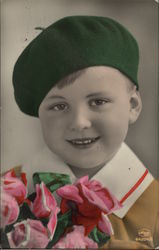
The next day Luster wore a French beret to school. It suited him somehow and nobody seemed to notice it much, but I knew Miss Meeks wouldn’t let it alone. About the middle of the morning, during arithmetic, she stopped what she was doing and looked around the room.

“Does anybody know what a gentleman is?” she asked.

After a moment of thought, somebody said, “A person who lights your cigarette and opens your beer for you?”

“Well, yes,” Miss Meeks said, “but there’s more to it than that.”

“Somebody who opens the door for a lady?” somebody else said.

“Yes, but these are things a gentleman does, not what a gentleman is.”

“A gentleman is a man who abides by all the rules of behavior and who thinks of others before the thinks of himself,” Latrice Laflamme said, eager, as always, to set us straight.

“Very good, Latrice!” Miss Meeks said. “Now can somebody tell me what is the opposite of a gentleman?”

“A lady?” somebody said.

“A bum?”

“A convict?”

“A lawyer?”

“Yes, but we can go farther than that,” Miss Meeks said. “A person who isn’t a gentleman is a selfish person. A lout. Does anybody know what a lout is?”

“A bug?”

“No, a lout is a person who flaunts the rules of polite society and does things that nobody else does just because he thinks he has a right to do them. A lout is a person who. Wears his hat in the house!

She pointed to Luster Gilman with a flourish and everybody turned and looked at him.

“Go hang the hat in the cloakroom, Luster,” Miss Meeks said.

“What?”

“I said take off the hat and go hang it up.”

When Luster came back from the cloakroom, minus the beret, everybody was laughing at him and pointing. Miss Meeks just let them go wild for a few minutes before settling them down again to arithmetic.

After school that day I waited to have a word with Miss Meeks as she was leaving.

“Miss Meeks,” I said. “Luster had on that hat for a reason.”

“What? What hat?”

“The hat you made him take off.”

“Nobody has a hat on in the house for a reason,” she said.

“He’s growing horns and he was trying to cover them up to keep people from seeing them and laughing at him.”

“He’s growing horns?” she said, staring at me with her frog-like eyes. “Why would he be growing horns?”

“He doesn’t know why.”

“Evolution seems to have taken a strange turn with him,” she said.

“So you’ll let him wear the hat in class?” I asked.

“Absolutely not! If I let him wear a hat in the classroom, others will want special privileges for themselves. We can’t let that kind of thing get started. There are rules, you know.”

When Luster’s horns grew to be about an eighth of an inch long, everybody started noticing them. He tried to cover them up with his lank, sandy-colored hair, but they still stood out like nipples on a boar hog. People began calling him names like goat boy, nipple head, and the little devil.

After a few days of teasing, ribbing, and name-calling, Luster was sick of the whole thing.

“I’m going to take a knife and gouge them out,” he said.

“That’d hurt too much and they might grow back,” I said.

“I wish I was dead.”

“There’s worse things than growing horns.”

“Like what?”

“I don’t know. Having two heads.”

“I’m going to run away,” he said.

“Where to?”

“Someplace where horns are appreciated and other people have them besides me.”

I wasn’t surprised when Luster disappeared. He was there and then he wasn’t. Everybody thought he had been kidnapped or murdered. Volunteers searched for him in the woods. They dragged the rivers but, of course, found no trace of him.

Luster’s mother and father were in the newspaper and on TV. They were both suspected at first of doing away with Luster but were eventually cleared. I had to believe they were secretly relieved they had one less child to take care of.

In a few months people stopped talking about Luster and moved on to something else. If most people chose to believe he was dead, I believed he was alive somewhere, laughing at the colossal joke he had played on the world.

Twenty-five years later I had escaped the small town and was living in the city. One evening I was at the library, thinking about absolutely nothing, when I noticed a man sitting at a table looking at me. I looked at him, looked away, and then looked back. Something about him was terribly familiar.

He stood up and, as he came toward me, I knew it was Luster Gilman as a grown man. The same fox-like eyes, small nose and ears. I couldn’t tell if he still had the horns because if they were there his hair covered them up.

“I think I know you,” he said.

“You’re Luster Gilman,” I said.

“You remembered.”

“Everybody thought you were dead.”

“I know.”

“Where were you?”

“If I told you, you probably wouldn’t believe me,” he said.

“Is it that fantastic?”

He looked over his shoulder. “I can’t talk here,” he said. “I only have a minute. Give me your phone number and I’ll call you in a few days.”

I wrote my address and phone number on a piece of paper and gave it to him and he was gone.

I waited for Luster Gilman to call me but he never did. Not in a few days. Not ever. I tried to find him but there was no trace of him in the phone listings or anyplace else. I even consulted a private investigator but he came up with nothing.

Had Luster Gilman as a man even existed? Had I imagined seeing him at the library because there was a part of me that needed an answer to what happened to him? Was my seeing him just another one of his impish jokes? Maybe I would have to wait another twenty-five years to find out. There had to be an answer somewhere.

Copyright © 2015 by Allen Kopp

She Wants a Boy She Can Dominate

She Wants a Boy She Can Dominate

She Wants a Boy She Can Dominate ~ A Short Story by Allen Kopp 

Joe Gillis was bored and he wasn’t used to being bored. He paced the floor of his spacious bedroom, looked out one window and then another. Crossing to the desk, he picked up a cigarette and lit it. How many had he smoked since breakfast? Dozens, probably, but he didn’t care. He crushed out the cigarette, not really wanting it, and lay down on the bed. He stared at the ceiling, at the ugly water stain there in the shape of Antarctica, and picked up the novel from the bedside table, The Naked and the Dead.

He read about five pages before Norma came bursting into the room. He was used to his privacy and didn’t like people walking in on him whenever they felt like it, even if that person was the great Norma Desmond. He would have to insist that a lock be installed on the door, even though it was a house without locks.

“What is it, Norma?” he asked, closing his eyes and resting the open book on his chest. “Can’t you see I’m busy?”

“How is the script coming, Joe dear?” she asked.

“It’s finished,” he said.

“Oh, Joe, you really are a marvel!” she said. “My only regret is that I didn’t meet you years ago. What a team we make!”

“That makes four scripts I’ve written for you. What good is a movie script that’s never filmed? It’s like a symphony that’s never played.”

“Oh, they will be filmed, my darling! Of that you can be sure! The great directors of the day will line up for the chance to film them. Just wait and see.”

“If that happens, Norma, I’ll be very happy for you.”

“Don’t say it that way, Joe. It isn’t only for me. It’s for you, too!”

“Whatever you say, dear.”

“I have a wonderful idea for our next project,” she said.

“Oh, Norma! I want to take a little time off. Get out of the house for a while.”

“Don’t you like it here?”

“That’s not what I’m saying. I need a change of scenery. The chance to see some friends.”

“There’ll be plenty of time for that later, Joe. I want to keep working while I have the fire in me.”

“Last time I noticed, I was doing all the working.”

“I want you to write a film treatment of Tolstoy’s Anna Karenina.”

“With you playing Anna, of course!”

“Isn’t that the idea?”

“Norma, you’re too old for Anna.”

“I could pass for thirty-five.”

“Do you realize what a huge undertaking it would be to write a script from a novel of that size, Norma? It’s over eight hundred pages.”

“I know, Joe, it’ll be a big job, but you can do it. I know you can. I have such confidence in you!”

“It would take months.”

“That’s all right, Joe. Take as much time as you need.”

“And after I put all the time and effort into writing the script, will anybody be interested?”

“Of course they will!”

Anna Karenina has already been filmed.”

“I know, but not with me in it!”

“Does anybody want to see a fifty-year-old woman playing a character in her thirties?”

“There you go harping on age again! Age doesn’t matter!”

“Tell that to the world.”

“True stars are ageless! I could play the part at any age!”

“Maybe you could play all the parts. Including the men.”

“Oh, Joe, that isn’t funny.”

“Why don’t you get yourself a new agent and re-enter films by playing character parts. Grandmothers and goofy aunts.”

“Do you know what you’re saying? Stars of my stature don’t play secondary parts. I’m a star! I was born to be star and a star I shall always be.”

“Whatever you say, Norma.”

“So you’ll get started on the script tomorrow?”

“Why not today?”

“There’s just one thing,” she said.

“I’ll probably be sorry I asked, but what is it?”

“I want our version of Anna to have a more upbeat ending.”

“Meaning what?”

“I don’t want her to kill herself this time.”

“I don’t know, Norma. The suicide is what makes Anna what it is.”

“We’ll demand that the audience see Anna in a different light. Instead of being crushed by her disillusionment, she’ll vow to fight on, to make her life meaningful and not so self-centered. That’s the lesson she will have learned from her travails.”

“Who am I to tamper with Tolstoy?”

“What do you mean, Joe?”

“If I do a screen adaptation of Anna Karenina, I’ll have to do it the way Tolstoy intended.”

“Are you saying you won’t write the ending I tell you to write?”

“Yes, that’s what I’m saying, Norma. To preserve what tiny shred of artistic integrity I have, I will only do it as it was originally written.”

“Do you want me to get somebody else?”

“It’s a moot point, anyway, Norma. Nobody will ever produce a screenplay of Anna Karenina with you playing Anna.”

“And just why not?”

“Audiences aren’t interested in literary adaptations. They want laughs. Singing and dancing.”

“I can do that, too!”

“So, you would make Anna Karenina into a musical comedy?”

“I don’t know why not! I can do my Chaplin impression. People love that!”

“How do you explain Chaplin in a story that’s set before he was even born?”

“I don’t know. You’ll think of a way.”

“Norma, I can’t tell you to get out because it’s your room in your house, but if you don’t go away and give me some peace, I’m going to jump out the window and make sure I land on my head!”

“Oh, Joe, now you’re being abrasive. I know that side of you is always there, but I do hate seeing it. I think people should always remain ladies and gentlemen.”

“I have a terrible headache,” he said, “and my stomach hurts from all that rich food you serve in this house.”

“You’re being a big baby now,” she said.

“I don’t care what you call me.”

She lay down on the bed beside him, took hold of his arm and wrapped it around her neck. “What can mama do to make her little boy feel better? I know what! Let’s go to my boudoir and have a little afternoon lie-down. We’ve got the whole house to ourselves. We can make as much noise as we want. Max is out polishing the car.”

“You’re not my mama, Norma, and I’m not your little boy, and, anyway, little boys don’t do with their mamas what you’re suggesting.”

“Oh, Joe, you’re such as old stick! There are times when you have absolutely no sense of humor!”

She attempted to nuzzle his ear but he moved away from her.

“Get off me, Norma! You’re making me sick!”

“Oh, I make you sick, do I?”

“Just go away and leave me along and I won’t feel compelled to hurt you.”

She sat up on the bed, sighed and lit a cigarette. “I have something very important to tell you, Joe.”

“Can’t it wait? I told you I have a headache.”

“I want to get it out in the open.”

“Well, just say it, then, and let’s be done with it.”

“I’m going to have a child, Joe. Your child.”

He raised himself on his elbow and looked at her. “Don’t you think that’s carrying things a little too far, Norma?”

“It’s true.”

He laughed. “I think it’s just a cruel joke you’re playing on me to get me to do what you want. I’ll bet Max is in on it, too, isn’t he?”

She took his hand and put it on her stomach. “Don’t you feel it?”

“Wait a minute,” he said. “I’ve only been here two months.”

“What does that prove?”

“If it’s true—and I’m not saying it is—how do I know it’s mine? How do I know it doesn’t belong to Max or the gardener or the boy who delivers the groceries?”

“Now you really are being insulting!” she said. “It’s true there have been many men in my life but never more than one at a time.”

“Have you had it confirmed by a doctor?”

“I don’t need to.”

“How do you know it’s not a tumor or something? I won’t believe it’s true until it’s been confirmed by a doctor.”

“Very well. If you promise to go with me, I’ll make the appointment.”

“How is it even possible? I’m thirty-two and you’re fifty.”

“Age has nothing to do with it. Some women’s childbearing years extend well into middle age.”

“Why didn’t you take precautions?”

“Men always leave everything up to the women, don’t they?”

“You’ll be seventy years old when he’s in college. If he even lives that long!”

“We’ll raise him together, Joe. We’ll take care of him while we grow old together.”

“What are you saying, Norma?”

“I want us to get married, Joe. We’ll sneak away like a couple of young lovers and drive up the coast. We’ll find one of those scenic little chapels that overlooks the ocean and have the ceremony performed there. Oh, Joe, it’ll be so lovely! Just like a scene from one of my pictures!”

“I’ll never marry you, Norma!”

“Why not? You’re not already married, are you?”

“No, I’m not already married, but the list of reasons I won’t marry you is a long one. The first item on the list is I don’t want to be married. To anybody, but especially not to you!”

“You don’t need to resort to cruelty, Joe.”

“Sometimes that’s all that’s left.”

“You don’t want to be a part of your son’s life?”

“No!”

“I know what to do, then. I’ll go downtown at midnight. It’s sure to be raining. I’ll find the address that was given to me by a nefarious friend. There’ll be a single lightbulb over a doorway in an alley. I’ll knock and be admitted by a hard-faced woman in a dirty white uniform. I won’t be able to see the doctor’s face because he’ll have it hidden behind a surgical mask. He’ll have blood stains on his white coat, which will be the last thing I see before he puts me under the anesthetic.”

“Which one of your pictures is that from, Norma?”

“I won’t have to go alone, though,” she said. “Faithful Max will go with me and hold my hand.”

“Yes, what would we do without Max?”

“So, that’s what you want to see happen?”

“Of course not!”

“Then you do care? At least a little?”

“When it’s confirmed that there really is a baby, we’ll talk then about what’s to be done.”

“Oh, Joe, I think that’s a good plan!”

“And, in the meantime, could we possibly not talk about it? And, please, please, please, don’t tell Max or anybody else until you’re sure!”

“All right. Anything you say, darling.”

She went to the mirror, began primping her hair and face, wiping away the rivulets of mascara.

“I have a wonderful idea,” she said. “Let’s go out someplace for dinner.”

“I wasn’t planning on having any dinner,” he said.

“You’ll have to eat something. How about some spaghetti and meatballs? That’s what I’d like to have. Does that sound good to you?”

“I’m not fit to be seen in public.”

“Take a shower and put on some clean clothes. I’ll wait for you.”

“Anything you say, dear.”

“I’ll have Max get the car out. Come down when you’re ready. And don’t dawdle! I’m hungry!”

“Yes, sir!”

He felt a little conspicuous in the open car with her. He felt people turning their heads and looking at him. Older woman, obviously rich and eccentric. Younger man, a little rough around the edges. He had gigolo written all over him.

They hadn’t gone very far when Norma realized she was out of the brand of cigarettes she liked. She had Max stop at the curb in front of a drugstore and sent Joe in to get them, not without giving him the money for them, though.

“And hurry up!” she said. “It’s no fun sitting in the car like this waiting for you to come back.”

He bought the cigarettes and as he was leaving he saw his old friend Artie Green sitting at the counter having his dinner. He went over and sat down beside him.

“Hey!” Artie said. “Joe Gillis! Whatever happened to you? I thought you were dead.”

“I’ve been here all the time, Artie,” he said.

“Are you all right? I mean, you haven’t been sick or anything, have you?”

“No, not sick. I’ve been working, is all.”

“That girl, Betty Schaefer, that you were working with at the studio, told me she went to your apartment and found you had moved out and left no forwarding address.”

“That’s right. I’ve been staying with a friend temporarily.”

“Every time Betty sees me, she asks if I’ve heard from you or seen you. You must have really made an impression with her.”

“Artie, can you hide for a few days?”

“What? Why would I do that?”

“There’s a dragon waiting outside for me in a golden chariot. She’s going to kill me and I know I deserve to die, but, worse than that, she’s going to force me to marry her because she says she’s going to have my baby.”

“What? I think you’re hallucinating!”

“I’m not sure there is a baby but if there is the blame is going to fall on me and I don’t see how there’s any way to get out of marrying her unless I disappear or unless I kill myself. What would you do if it was you?”

“You’re not making any sense, buddy boy! Explain it to me slowly.”

“Is there a back way out of this place?”

“For employees only, I think.”

“Can you hide me at least for tonight?”

“Yeah, I guess I could put you up.”

“Let’s go.”

Before Artie had a chance to ask a store employee if it was all right for them to use the back way out, Joe was already gone.

He ran down an alley, almost falling a couple of times, turned right down another alley and ran for two blocks. He didn’t stop to wait for Artie but believed he would catch up and would know where he was.

He turned left into another alley, believing it was the way back to the street and far enough from the car so that Norma and Max wouldn’t spot him. He stopped to retie his shoelace and when he looked up, there was a man standing there in a shadow. He didn’t know until the man stepped out of the shadow that it was Max.

“You can’t stop me!” Joe said.

“No, I can’t stop you,” Max said in his heavy German accent. “We can find you, though.”

“Why can’t you just leave me alone?”

“You raped Madame and left her carrying your child. You can’t run out on her now when she needs you most.”

“It’s a lie,” Joe Gillis said, but even he knew how feeble those three words sounded. The biggest rat who ever lived. And with her old enough to be his mother.

Copyright © 2015 by Allen Kopp
Into the Woods ~ A Capsule Movie Review

Into the Woods

Into the Woods ~ A Capsule Movie Review by Allen Kopp 

Into the Woods was a Broadway musical with music by Stephen Sondheim and is now a movie. It’s set in a mythical kingdom, populated by a childless baker and his wife; a wicked old witch (Meryl Streep); Rapunzel, whom the wicked witch passes off as her own daughter but who is really the younger sister of the baker; Cinderella (Anna Kendrick); Cinderella’s wicked stepmother and two wicked stepsisters (“beautiful of face and black of heart”); not one, but two, handsome princes (Chris Pine and Billy Magnuson); Jack (of “and the beanstalk”) and his harried mother (Tracey Ullman); Red Riding Hood and a hungry wolf (Johnny Depp); and an angry female giant who is at first mistaken for an earthquake. They all sing at the full capacity of their lungs (except for the giant) and they all want something. Desire of some kind seems to be the subtext for all fairytales.

There are some funny moments, as when the wicked stepmother cuts off part of each of her daughter’s foot (“If you’re married to a prince,” she says, “you won’t need to walk.”) to accommodate the slipper that Cinderella left behind as she was fleeing the ball at midnight; and when the baker and his wife attempt haplessly to get their hands on the articles (Red Riding Hood’s cape, a white cow, a golden slipper, and hair as yellow as corn) the wicked witch requires to reverse the spell she has placed on them that has made them childless. Also funny is the scene where Meryl Streep is transformed from an ugly witch into a beautiful witch, making her look like a drag queen.

To me the Stephen Sondheim music is unmelodic and highly forgettable (not exactly Rodgers and Hammerstein), but Into the Woods is beautiful to look at, with engaging and likeable characters (except for the wicked stepsisters, one of whom smacks Cinderella in the face and knocks her down). Not a bad way to spend a couple of hours between Christmas and New Year’s. I just wish I could have seen more of that angry female giant.

Copyright © 2014 by Allen Kopp

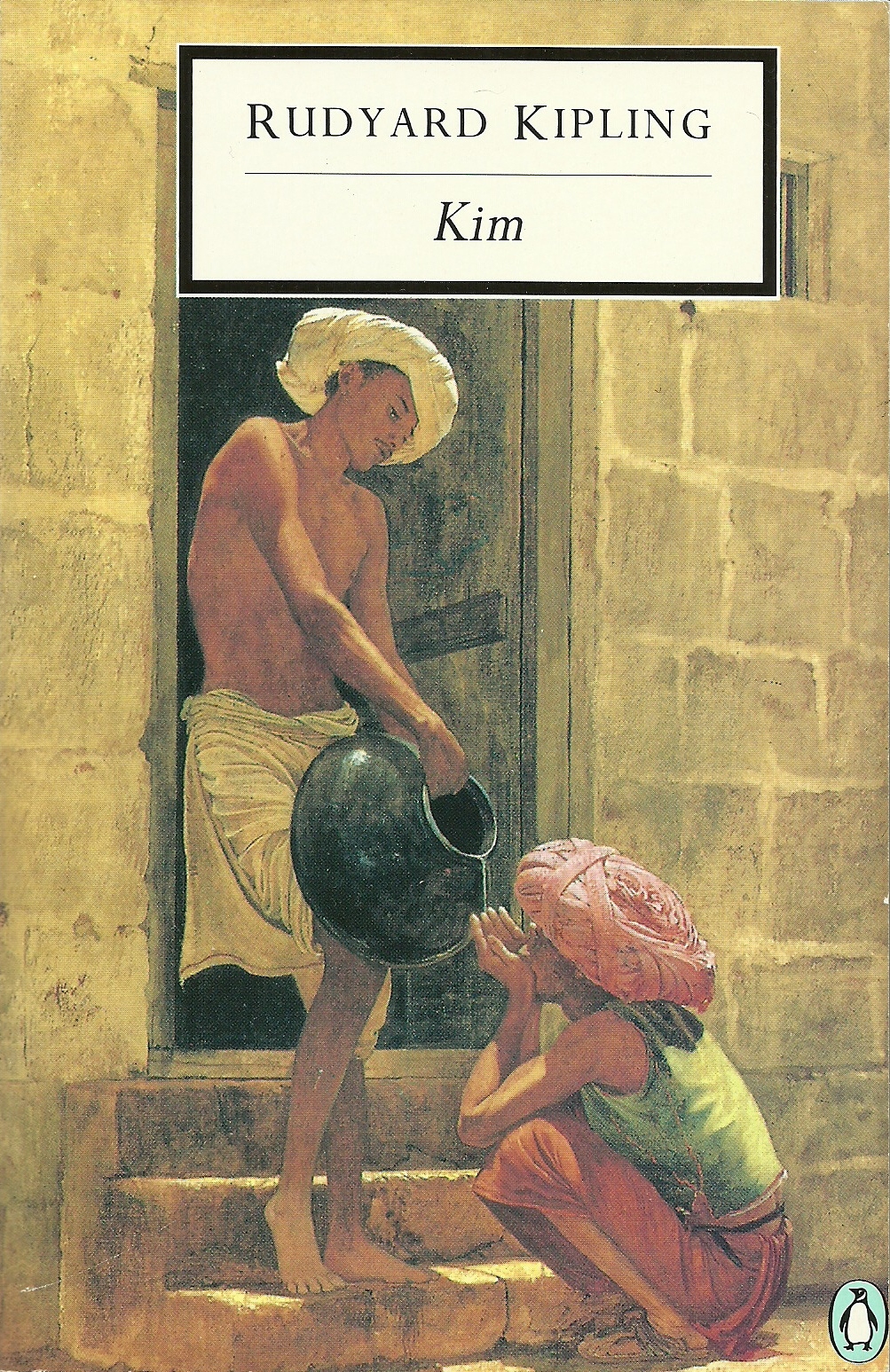
Kim ~ A Capsule Book Review

Kim by Rudyard Kipling

Kim ~ A Capsule Book Review by Allen Kopp 

Rudyard Kipling’s novel about India, Kim, was first published in 1901. Its principal character is an orphaned Irish boy, Kimball “Kim” O’Hara. At the beginning of the book, Kim is twelve years old. He dresses like a native and can speak Hindi, so he can go anywhere, blend in, and be accepted as one who belongs. When he meets a traveling Tibetan lama, an old man looking for a sacred river that was supposedly formed when the Buddha shot an arrow, he decides to travel with the lama as his chela. This friendship between Kim and the lama is one of the enduring “male-bonding” friendships in English literature.

Kim and the lama travel throughout India, intermingling with the many ethnic and religious groups. When they come upon (apparently by accident) the army regiment that Kim’s father belonged to, Kim meets Colonel Creighton. When Colonel Creighton sees how smart and resourceful Kim is and how he is able to blend into any part of India, he trains Kim as a British spy and mapmaker. There are secret plans afoot for a war to begin and Kim can assist by ferreting out information in the unlikeliest of places. It turns out that Kim’s friend Mahbub Ali, besides being a horse trader and a sort of father figure to Kim, is also a member of the British Indian Secret Service.

Kim spends three years in an English-run boarding school (that the lama pays for), where he learns English customs and ways. All the rest of the time he continues to bum around with the lama. The book ends five years after it begins, in the hills of Tibet, with Kim on the verge of manhood and the lama achieving the kind of spiritual enlightenment he always wanted.

Kim is not an easy book to read. Since it is a picaresque, it has hardly any plot or “story” to speak of and very little emotional resonance. It is mostly a set of characters moving around from place to place, speaking in “thee” and “thou” language, and having “adventures” that hardly seem relevant or fitting into any kind of cohesive whole. Maybe Kipling fancied himself inventing a new kind of storytelling with this novel, his most famous work.

The Penguin Twentieth-Century Classics version that I read has a forty-page “introduction” that is dry, academic and completely unnecessary. I read the whole thing, but it is painful reading. Adding to my problems with Kim is the heavily footnoted text. Almost every page has multiple footnotes and, instead of the footnotes being at the bottom of each page (which I would have found helpful), they are all gathered in a special section at the back of the book. So, if you are reading every word, you will find yourself having to flip through the pages to the back of the book far too often. To make matters worse, many of the footnotes are explaining obscure place names in India that don’t matter and aren’t essential to what is going on. As soon as you read them, you will forget them.

If Kim is a “juvenile classic” (because the main character is a child), I can’t imagine school kids voluntarily reading and enjoying it. This adult barely made it through the entire 300 pages. If I had tried to read it in eighth or ninth grade, I wouldn’t have made it through the first chapter and would have been begging to read something else instead, just as long as it wasn’t Moby Dick or Little Women.

Copyright © 2014 by Allen Kopp

The Hobbit: The Battle of the Five Armies ~ A Capsule Movie Review

The Hobbit, the Battle of the Five Armies

The Hobbit: The Battle of the Five Armies ~ A Capsule Movie Review by Allen Kopp 

We come now, finally, to the third installment of the Hobbit trilogy: The Hobbit: The Battle of the Five Armies. Smaug, the ill-tempered, fire-breathing dragon that has been sitting on a tremendous horde of gold inside the Lonely Mountain for a long time (centuries, it seems) was unleashed in December 2013 at the end of the second installment. For reasons that are not clear, Smaug is intent on destroying Middle Earth. Smaug manages to destroy a large part of the town called Laketown but is killed by one of its intrepid citizens, the one named Bard, with a special arrow that pierces his otherwise unpierceable hide. Of course, Bard wouldn’t have been able to do it without the help of his young son, whose name, I believe, is Bain.

So, with Smaug dead, that leaves all that glorious gold inside the mountain unattended, which, naturally, everybody wants for their own. The armies of the different races (dwarves, elves, orcs, and men) converge on the mountain to fight it out. Is all that gold worth fighting a war over? Of course, it is. Which army will prevail in the end? Will it be a force of good or will it be the army of orcs (a cruel, ugly, war-like, humanoid race) sent by arch-villain Saruman?

Thorin Oakenshield, a dwarf who is also an exiled king, is supposed to represent the force of good in the war over the gold, but something happens to him. Just being inside the mountain makes him greedy. He begins to believe that the gold means more than honor, integrity and commitment to his people. He is suffering from what one dwarf calls “dragon fever.” How will the hobbit, Bilbo Baggins, and the thirteen dwarves he has been traveling with since the beginning of the adventure make Thorin Oakenshield see how wrong he is?

The Hobbit: The Battle of the Five Armies is worth another visit to Middle Earth, apparently the last one there will ever be. Peter Jackson, the director who directed this trilogy and also the Lord of the Rings trilogy with a master’s touch, says he will not make any more movies based on the fantastical works of J. R. R. Tolkien. It’s been a lot of fun and a great run. 

Copyright © 2014 by Allen Kopp 

Exodus: Gods and Kings ~ A Capsule Movie Review

Exodus, Gods and Kings

Exodus: Gods and Kings ~ A Capsule Movie Review by Allen Kopp 

There aren’t many movie spectacles anymore like Exodus: Gods and Kings. It is a retelling of the familiar story of Moses (played by Christian Bale) and how he led the Hebrew people to freedom after four hundred years of slavery by the Egyptians. (And how did Egypt use all those slaves? To build its monuments and tombs, some of which still stand today.) John Turturro (an odd choice) plays the pharaoh Seti (with a strange British accent). When Seti dies, his son, Ramses II (Joel Edgerton), becomes pharaoh. Ramses may be a god to his people, but he has the full range of human frailties (self-doubt, fear, etc.) He’s no strutting, arrogant jerk here, as we have seen him portrayed before.

The foundling Moses is, of course, raised by the Egyptian royal family as their own. He and Ramses are like brothers, although they are nothing alike. When Moses, as a man, kills a slavemaster, it becomes apparent that he and Ramses are on opposing sides. Moses is exiled, or chooses exile on his own, and flees across the Red Sea. When he is rescued, near death, from a terrible storm by a tribe of Bedouins, he marries a woman of their tribe and they have a son. In the meantime, God is speaking to Moses through the “Burning Bush.” God’s messenger to Moses is a small boy who appears to be about twelve years old with a grownup’s command of the language. God instructs Moses to return to Egypt and lead the Hebrew people from slavery. Why was Moses chosen out of all the others to carry out this task?

Egypt needs its slaves to build its tombs and monuments and has no intention of giving them up without a fight. (As Ramses explains, the monuments, which are so necessary, represent power.) God unleashes the Ten Plagues on Egypt, not only as punishment, but also to contrast His own power with the power of the Egyptian deities. After the tenth plague (death of the firstborn), which costs Ramses his infant son, he capitulates, bringing about the exodus of the Hebrew people from Egypt.

I can’t attest to the historical or biblical accuracy of Exodus: God and Kings, but, for my money it’s solid entertainment on a spectacular scale, far superior to most of the mainstream crap that’s out there. (Horrible Bosses 2? Oh, please! And do we really need another Dumb and Dumber?) There’s something about seeing the grandeur of ancient Egypt in a big-budget Hollywood movie that makes it worth the time and effort. Just enjoy the ride and don’t pay any attention to those people whose job it is to tear everything down.

Copyright © 2014 by Allen Kopp

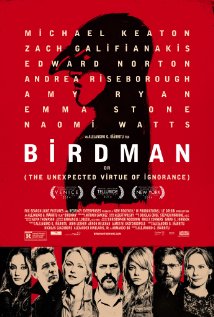
Birdman (The Unexpected Virtue of Ignorance) ~ A Capsule Movie Review

Birdman

Birdman (The Unexpected Virtue of Ignorance) ~ A Capsule Movie Review by Allen Kopp 

An aging, has-been movie star named Riggan Thomson (played by Michael Keaton), whose greatest glory was playing a “Birdman” character on the screen, tries to show the world twenty years later that he is still “relevant” and an actor of substance by writing, directing, and starring in an unlikely stage adaptation on Broadway of a play based on the works of writer Raymond Carver. That’s the premise of the movie with the unwieldy title Birdman (The Unexpected Virtue of Ignorance). 

Right away, Riggan Thomson is beset with problems, as you might expect. His lead actor is injured when a light falls on his head, so he brings in a replacement named Mike (Edward Norton), a prima donna to whom nothing is real except acting. (When he has to remove his clothes for a wardrobe fitting, he isn’t wearing any underwear.) Riggan has a pothead daughter named Sam (Emma Stone) who resents him because he was never around when she was growing up. Sam, who works as a sort of stage assistant, is drawn to the unappealing Mike for some reason, even though she is about half his age. Mike, we learn, suffers from sexual dysfunction, as attested to by his girlfriend, Lesley (the ubiquitous Naomi Watts), who is a cast member in the play.

Riggan has invested all his money in the play, so if it fails he is financially ruined, not to mention what it will do to his prestige. He desperately needs to make it work, and we feel his desperation. Compounding his problems are an ex-wife who shows up every now and then, a might-be-pregnant girlfriend, a nagging lawyer trying to keep him on track, and a vengeful (and apparently powerful) female critic who tells Riggan she will “ruin” his play with a terrible review (even before seeing it) because she hates him and all he represents. (Riggan’s confrontation with the critic in a bar is a high point.) 

Birdman (The Unexpected Virtue of Ignorance) is unusual in its execution and subject matter. (For one thing, it’s set almost entirely in a New York theatre. For another thing, Riggan levitates in his underpants and can make things move at will—I’m not sure what that is all about.) It’s the kind of movie that critics love because it pushes the boundaries of “art.” (The music score, except for some well-known excepts from classical pieces, is almost entirely composed of rifts on drums.) For regular moviegoers who are not critics, it’s either going to be a boring, pretentious blabfest or the best movie of the year. Maybe somewhere in between. Watch as it wins tons of awards for acting and writing.

Copyright © 2014 by Allen Kopp

Your Loving Husband, Alonzo P. Winterbottom

Your Loving Husband, Alonzo P. Winterbottom

Your Loving Husband, Alonzo P. Winterbottom ~ A Short Story by Allen Kopp 

Adele Winterbottom had the best custom-made draperies for the living room that money could buy. When her husband, Alonzo Winterbottom, received the bill for them, he was not happy.

“Ten thousand dollars for curtains!” he shrieked. “Have you lost your mind?”

“They went a little over the original estimate,” Adele said.

“How much over?”

“Four thousand dollars.”

“What are they made of? Spun gold?”

“No, just regular brocade.”

“You have to send them back and ask for a refund,” Alonzo said.

“I can’t do that. They’re special made. Nobody else would want them. Just look at them. Don’t you think they’re smart?”

He ran into the living room and started pulling at the curtains. When Adele saw that he was tearing them to pieces with his bare hands, she began tugging at his arm to try to get him stop, but he pushed her and knocked her down. She screamed and threw a statue of the Buddha at him but missed.

She had seen him angry before but never to such an extent. She was going to call the police to get them to come and calm him down (or arrest him for domestic disturbance), but she had a better solution closer to hand. She went into the kitchen and picked up her old cast iron skillet that had belonged to her mother and, coming up behind, hit him on the side of the head with it just above the right ear.

He staggered and fell. Afraid she had hit him a little harder than she meant to, she ran to him and placed a pillow under his head. His eyes were opened but unfocused.

“Are you all right?” she asked, slapping his cheek.

“What did? What did you?”

“Do you want me to get the doctor?” she said.

“Uh.”

“I’ll get the doctor for you on one condition. And that is that you don’t tell him I hit you with the skillet. If you tell him the truth, I might be in trouble.

“What yuh?”

“Is that a ‘yes’ or a ‘no’?”

“Yuh, yuh, nah.”

“Are we agreed, then?”

He closed his eyes then and seemed to go to sleep. She figured he just needed to lie still for a while, so she went into another part of the house and put him out of her mind for the time being.

After a couple of hours he was still lying in the same position. She touched him on the arm and he opened his eyes.

“Are you all right?” she asked.

“Head hurts.”

“You know you had it coming, don’t you?”

“Wha?”

“I couldn’t just stand by and let you tear up our lovely new drapes. I had to stop you.”

“Hit me,” he said.

“Yes, I hit you in the head with my mother’s cast iron skillet.”

“B-b-bitch,” he said.

“Yes, I’m sure that’s what I am, but still it’s not a nice name to call a lady. That kind of behavior is what has brought you to this pass.”

“B-b-bed,” he said.

“You want me to help you to the bed?”

“Yuh.”

She got him to his feet and half-carried, half-dragged him to his bedroom. She got him undressed and into bed, where he immediately began to snore.

“You’ll be all right in the morning,” she said. “I’ll fix you a nice breakfast.”

The next morning he was dead.

She called the police and told them her husband had taken a spill on the stairs and hit his head. She tried to get him to see a doctor but he refused, saying he would be all right in the morning. She helped him to bed, after which she retired to her own room. When she went to get him up in the morning, she found that he had expired sometime in the night.

Her tears, while she was telling the story, were real. The police never suspected there was anything other than the truth in what she was saying. The death was ruled accidental. Case closed.

She was sorry in a way to have killed Alonzo but happy also to be free of him. He had never been what she would call a good husband. She thought back to when they first met and the first years of their marriage. Had she ever cared for him at all? Really, she wasn’t able to remember.

So, she would carry her guilty little secret around with her for the rest of her life. She was sure there were plenty of other wives who had killed their husbands and husbands their wives, with nobody any the wiser. Life isn’t like detective dramas on TV where no murder ever goes undetected and unpunished.

With the life insurance money, along with Alonzo’s stocks and bonds, she was comfortably set for the rest of her life. She traded her three-year-old car in on a more expensive, sportier model; had her hair styled in one of the trendier, more youthful cuts (telling the hairdresser to cover up the streaks of gray any way he could); bought a whole new wardrobe of flashy, colorful garments that made her look like a college girl.

After a suitable period of grief (three months), she threw out all of Alonzo’s clothes and personal belongings, keeping nothing for sentimental value. Then she had his bedroom painted and papered and took the room as her own since it was the largest and most commodious in the house. She bought all new furniture and had custom draperies made for the rest of the windows, laughing at the cost. She made little jokes to her friends about hearing Alonzo turning over in his grave.

With her amazing transformation, only one thing was missing: she was lonely and desired the companionship of a good man. She began socializing more and more and, at a bridge party, met a man named Wallace Lexcaster to whom she was instantly drawn. He was handsome—she didn’t mind that he wore a wig and a girdle and had false teeth—and he had the added attraction of being something of a celebrity because he was a TV weather forecaster.

She and Wallace Lexcaster began seeing a lot of each other. They found they had a lot in common and enjoyed each other’s company. He took her to the smartest clubs and restaurants, lavished her with expensive gifts. He told her stories about his former wives (a growing club); she hung on his every word and proffered just the right amount of sympathy. She told him the fiction of how her husband fell and hit his head and how he refused to see a doctor. How she put him to bed, thinking he would be all right in the morning and how he died sometime in the night.

“It’s good to die in your own bed,” Wallace Lexcaster said. “That’s the way I want to go when my time comes.”

Unable to speak, she put her hand over his as her eyes filled with tears.

She was having a good time with Wallace Lexcaster, but the important thing was that she was happy, maybe for the first time in her life. She began to think she would marry him if he asked her and, no, she wouldn’t be just one more wife in a continuing string of wives. She would be the last wife he would ever have or want to have.

On a Friday afternoon when she was driving home after a three-martini lunch with Wallace, she somehow became distracted on the highway and ran the car off the road. She righted herself in a few seconds, though, and was back on the highway, happy that nobody was there to witness her carelessness.

When she got home, her head hurt and she didn’t know why. She thought she must have hit it somehow without knowing. She took some aspirin and got into bed and slept the whole night through.

In the morning the phone woke her. She felt a rush of pleasure, thinking it was Wallace Lexcaster calling to wish her a good morning.

“Guess who this is?” a male voice (not Wallace Lexcaster) said.

“Um, I think you have the wrong number,” she said.

“No, I’ve got the right number.”

“Who were you calling?”

“I was calling you.”

She hung up the phone and lit a cigarette, her hands trembling. She was thinking she needed to cut down on her consumption of martinis when the phone rang again.

“Don’t hang up on me again, you bitch!”

“Who is this?”

“You know who it is.”

“Wallace? Is that you? Is this some kind of a joke?”

“No more Wallace,” he said. “You can forget Wallace.”

“Who is this?”

“I’ll give you a hint,” he said. “You recently bashed in my head with an old frying pan. I wasn’t the first person you murdered, either; only the most recent. When you were fifteen, you pushed your cousin down the stairs because you were jealous of her. She died later that day of massive internal bleeding.”

“If you don’t stop bothering me,” she said, “I’m going to call the police!”

“Hah-hah-hah! And a lot of good that would do!”

“If this is somebody’s idea of a joke, I don’t think it’s the least bit funny!”

“Now, darling, calm down. I’m trying to break it to you gently. That’s why I’m calling first before I come to you. That little dust-up you had on the highway was a lot worse than you thought. Sadly, you’re just a statistic now.”

“What are you talking about?”

“You bashed in your skull but you just don’t know it yet. Isn’t it ironic? Doesn’t it seem like some kind of crazy symmetry?”

“You’re not fooling me,” she said. “This is some kind of a practical joke, isn’t it? Well, if it is, I think it’s gone too far.”

“I’ll be there in two shakes of a lamb’s tail,” he said. “And don’t even think about trying to keep me out. I have my key.”

“Don’t come here!” she shrieked.

“Don’t be that way, baby,” he said. “You and I are bound together for all eternity. You can bash in my head every day and I’ll still be there the next day.”

“And don’t think I won’t, either!” she said.

Copyright © 2014 by Allen Kopp

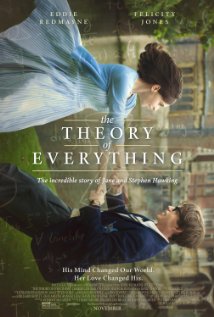
The Theory of Everything ~ A Capsule Movie Review

The Theory of Everything

The Theory of Everything ~ A Capsule Movie Review by Allen Kopp 

Probably everybody on earth has heard the name Stephen Hawking. He is the English physicist who became famous for his theories of the universe and for the books that he wrote, among them A Brief History of Time that has sold ten million copies.

Stephen Hawking is also famous for something else. When he was still a college student, he was found to have ALS (Lou Gehrig’s disease), a disease of progressive muscular degeneration. He was told he had two years to live, being made to understand that, as his body deteriorated, his mind would be unaffected.

The Theory of Everything is Stephen Hawking’s story, based on a book by his wife, Jane Hawking. Eddie Redmayne, who was memorable in My Week with Marilyn and Les Misérables, plays Stephen, and Felicity Jones plays his (nearly saintly) wife, who, even in middle age, appears to be about twelve years old. (A minor quibble.)

When Stephen first discovers that he has ALS, he tries to send Jane away, believing he has no future and nothing to offer her, but she persists. (She takes the idea of romantic love literally.) She will stick by Stephen for as long as he has. (Stephen’s father tells Jane that Stephen’s disease won’t be a fight but will instead be a crushing defeat for all of them.) Stephen and Jane are married and soon have a child.

Living with Stephen and taking care of him is not easy for Jane, but she soldiers on through the years as Stephen becomes world-famous and continues to defy the probability that he will die soon. Jane and Stephen end up having three children. A turning point comes when Jane’s mother suggests that Jane join the choir at church. (“That may be the most English thing that anybody has ever said,” Jane says.) She takes her mother’s suggestion and meets the handsome and charming choir director, Jonathan Hellyer Jones (played by Charlie Cox, who played a likeable character on Boardwalk Empire who met a bad end). Jonathan becomes a friend and helper to both Jane and Stephen. Jane soon admits that she has “feelings” for Jonathan and Jonathan feels the same way about Jane. Stephen, meanwhile, is drawn to a pretty therapist named Elaine.

You don’t have to understand Stephen Hawking’s science (black holes, the theory of relativity, boundaries of the universe, etc.) to be drawn in to The Theory of Everything. It’s a very good movie that, like other very good movies, will probably not appear at the local multiplex that only does mainstream. You might have to go a little farther and expend a little more effort to see it, but it’s worth it. If it’s not one of the best movies of the year, it’ll have to do until the real thing comes along.

Copyright © 2014 by Allen Kopp

Tarzan of the Apes ~ A Capsule Book Review

1914 First Edition Cover

Tarzan of the Apes by Edgar Rice Burroughs ~ A Capsule Book Review by Allen Kopp 

Tarzan of the Apes, by American writer Edgar Rice Burroughs, was first published in All-Story Magazine in 1912 and in book form in 1914. The book proved so popular that Burroughs wrote more than twenty sequels over the next thirty years. The first movie version of the novel was in 1918, with many others following. It was during the 1930s, however, that Tarzan became a genuine movie icon. The movies made the story of the jungle ape man much more famous and popular than it would otherwise have been.

As the book begins, John Clayton and his wife, Anne (Lord and Lady Greystoke) have set out from England for Africa. John Clayton is going to assume a post in Africa for the British government. Things do not turn out well for them, however. The crew of the ship they are on mutinies, kills the officers, and puts John Clayton and his wife ashore in an isolated and remote part of Africa where they have very little chance of surviving. Anne is going to have a baby, but that is the least of the couple’s worries. They set about building a small cabin in the jungle where they can keep themselves safe from jungle predators.

Anne delivers herself of the baby, but she and her husband soon die, leaving the baby alone. The baby would also die if a female ape named Kala, who had recently lost her own baby, hadn’t come across him and adopted him as her own. Kala belongs to a tribe of apes that are described as being somewhere between gorillas and man on the evolutionary scale. They are brutal and vicious predators, but Kala takes care of and protects the baby until he grows to about ten years of age, at which time she is herself killed. The apes name the boy Tarzan, which means “white skin.”

Tarzan soon discovers that he is not like the other apes. The most striking difference is that he isn’t covered with fur. As he grows into manhood, he begins to display the best of both worlds: the cunning and intelligence of a man and the strength and agility of a jungle predator. He swings from tree to tree, from branch to branch, with ease, apparently defying gravity. When he is hungry, he kills a jungle animal and eats it raw. Eventually he comes across the little cabin that his father built (not knowing, of course, that it was his father) and discovers the books that belonged to his parents. Their skeletal remains are, in fact, inside the cabin.

With much painstaking effort, Tarzan teaches himself to read English from the books in the cabin without ever having heard it spoken. He gradually puts the pieces together to learn the truth about himself, that he is descended from an English Lord and is an English Lord himself, Lord Greystoke, but it doesn’t matter to him. He is still Tarzan, king of the apes.

When Tarzan is at the height of his muscularity and physical beauty, a small band of white people find themselves in his jungle. (Included in this group is, ironically, Tarzan’s cousin, William Clayton.) The whites are lost and abandoned, in much the same way that Tarzan’s parents were, and, finding Tarzan’s cabin, use it as their own.

Among these white people is one Jane Porter, an American girl traveling with her professor father. She is the first white woman Tarzan has ever seen and he falls in love with her. He becomes the benefactor and protector of all the whites, but he is really doing it for Jane. When he rescues her, they have a romantic interlude in the jungle. The jungle adventure at this point turns into a love story.

Tarzan rescues one of the party of whites, the Frenchman Paul D’Arnot, from torture by cannibals. D’Arnot and Tarzan are then separated from the others for an extended period of time as Tarzan nurses D’Arnot back to health. During this time, Tarzan learns much more about civilization from D’Arnot and learns to speak French.

When D’Arnot is well enough, he and Tarzan make their way back to the camp of the whites, but they have gone way. They waited one week longer for the return of Tarzan and D’Arnot at the urging of Jane Porter, but, alas, they finally go away, believing that Tarzan and D’Arnot are probably dead.

Becoming more and more familiar with the ways of civilization, Tarzan, along with D’Arnot, make their way back to civilization and eventually to America, where Tarzan wants to claim Jane Porter as his own, only to discover that she has agreed to marry his cousin, William Clayton. We learn that she is marrying Clayton only for money to help her father, when it’s Tarzan she really loves.

Tarzan of the Apes is written simply, obviously for a youth audience, but it is engaging enough for an adult audience. If it lacks the depth and nuance of great literature, it still has literary merit. That it is still in print and still being read after a hundred years says a lot.

Copyright © 2014 by Allen Kopp