Marcel Proust ~ A Capsule Book Review

Marcel Proust

Marcel Proust ~ A Capsule Book Review by Allen Kopp 

French author Marcel Proust lived from the Belle Époque (born 1871) to the Roaring Twenties (died 1922.) Of all the writing that he did in his relatively short life, he is best known for his monumental seven-volume novel (approximately 4300 pages), In Search of Lost Time, or, as it has previously been translated, Remembrance of Things Past. Many people believe In Search of Lost Time to be the ultimate in novelistic art and Proust the greatest writer of his time.

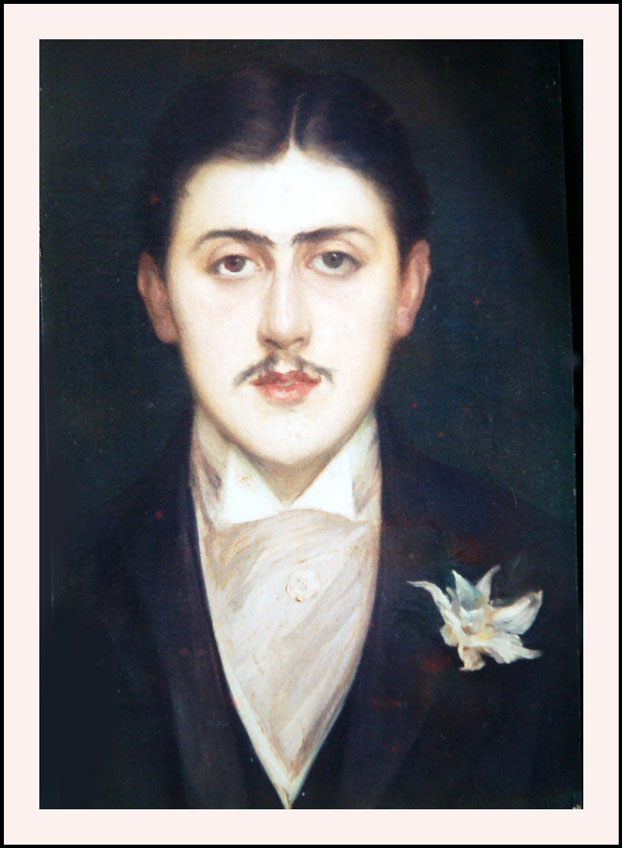
Proust didn’t always enjoy such a lofty reputation, however. Early in his writing career he was dismissed as a socialite and a snob, incapable of producing anything of lasting value. He was slight of stature (one hundred pounds), always in poor health from asthma (there were times when he was virtually an invalid); had piercing dark eyes and a small black moustache. His homosexuality (which he took pains to conceal in certain quarters) led him into inappropriate liaisons, often with heterosexual social climbers who used him to get from him what they could.

Unlike other writers of his generation (the so-called “modernists”), Proust’s literary style is one of wordy, flowery sentences and the persistent use of metaphors. He practically invented a new style of writing fiction in which “involuntary memory” and autobiography play a large part. He frequently wrote about male partners with whom he shared dalliances and turned them into female characters in his writing. The “Narrator” of the novel (presumably Proust himself) is a raging heterosexual, even though many of his characters are gay.

Proust had a hard time finding a publisher for the first volume of In Search of Lost Time, which he called Swann’s Way. When it was published in 1913, it was dismissed as long and pointless by some leading critics. It wasn’t until subsequent volumes came out that people came to see it as a groundbreaking literary masterwork. (Apparently one has to read all seven volumes to get the full effect and understand Proust’s vision.) The final volume (volume 7) wasn’t published until 1927, five years after Proust’s death at the age of 51.

Edmund White, who has studied Proust at great length and taught courses about him, wrote this biography, Marcel Proust, for the Penguin Lives series. For the literature student who wants an overview of the life and times of Proust without spending too much time and effort, this book is an excellent choice. Edmund White concludes the book with an analysis of why Proust is even more popular today than ever before. In his words, “Proust is the first contemporary writer of the twentieth century, for he was the first to describe the permanent instability of our times.”

Marcel Proust 2

Copyright © 2015 by Allen Kopp

They Sailed Away for a Year and a Day

They Sailed Away for a Year and a Day image 3

They Sailed Away for a Year and a Day ~ A Short Story
by Allen Kopp 

It was a lonely, rocky place with liquid water and an atmosphere like earth’s. They had only each other to keep from going crazy while collecting the data they would take back home. Vance was older with other missions to his credit; Fiske younger, not long out of training.

Fiske was tired, had caught a bit of a cold. (“How do you catch a cold when there’s nobody to catch it from?”) Vance told him to relax while he prepared the evening meal. When the food was ready, Fiske was asleep. Vance touched him lightly on the shoulder. Fiske opened his eyes and sat up.

“Come and eat before I give it to the hogs,” Vance said.

“The nearest hog is millions of miles away,” Fiske said.

“We don’t know that for sure. I think I heard some rooting around outside last night.”

“Why didn’t you wake me earlier? Wasn’t it my turn to cook?”

“Thought you needed to sleep.”

“You’re too good to me.”

Before eating, Fiske did what he always did, marked another day off the calendar.

“How many to go?” Vance asked.

“A hundred and thirty-seven.”

“A cakewalk.”

A storm was brewing, so after the meal was finished Vance went outside to make sure everything was secure and nothing would blow away. When he came back inside, Fiske was checking the day’s transmissions from earth.

“Anything important?” Vance asked.

“Usual stuff. Status updates. Nothing very interesting.”

“No personal messages?”

“No.”

“Want to play a hand of cards before bed?”

“Not tonight,” Fiske said. “Headache.”

Vance opened the medicine chest and gave Fiske a couple of pills. “These will help you to sleep,” he said.

When they were in bed, Fiske turned his face toward the wall and made little snorting sounds.

“Having trouble breathing?” Vance asked.

“No, I guess I’ll live.”

“Are you crying?”

“Of course not.”

“If you want to cry, it’s all right.”

“I said I’m not crying!”

“What’s the matter, then?”

“I didn’t get a message from Linda. Again.”

“She’s probably busy with that day job of hers and taking care of her mother.”

“I think it’s more than that. It seems she no longer has anything to say to me. We were going to get married as soon as I got home.”

“Were?”

“I’m not so sure now that it’s the right thing to do.”

“Maybe you weren’t meant to marry Linda. Isn’t it better to know now before it’s too late?”

“Does it make any difference to you?” Fiske asked. “Not having anybody to go back to on earth?”

“What makes you think I don’t have anybody to go back to?”

“I don’t know. I just figured.”

“There is somebody, but I don’t talk about it to the people I work with.”

“You can talk about it to me.”

“It’s better if I don’t. You don’t expect me to give away all my secrets, do you?”

“Ever been married?”

“Once. We went our separate ways after five years.”

“Must have been tough.”

“Not really. Not as bad as having a tooth pulled.”

“Do you ever see her? Talk to her?”

“No. That was the point of getting the divorce.”

“You don’t know where she is?”

“I don’t care.”

“Couldn’t you at least have remained friends with her?”

“No.”

“You’re a hard case.”

“Not really.”

“I don’t think I’m going to be able to sleep tonight,” Fiske said. “I keep thinking about Linda.”

“Read a book. Get your mind on something else.”

“I’ve never been much of a reader. I’m more of a doer.”

“Get up and do some work, then.”

“This storm has me on edge. Just listen to the wind howl!”

“I don’t mind it,” Vance said. “I’ve always liked being snug inside with a storm raging outside.”

“I’ve accepted that we’re going to die here.”

“From the storm? I don’t think so. We’ve seen worse storms than this.”

“People die on alien planets all the time.”

“I have no intention of dying.”

“What do you miss most about earth?”

“I don’t know,” Vance said. “Fresh fruits and vegetables, I suppose. Bananas. How about you? What do you miss most? Besides Linda, I mean?”

“Oh, everything,” Fiske said. “Trees and grass. Birds and flowers.”

“When people colonize this planet,” Vance said, “they’ll bring those things with them.”

“Maybe people have no business living in places like this,” Fiske said.

“Earth is no longer big enough. It’s time for the human population to expand beyond our puny little planet.”

“Humans! We think we’re so important but we’re not. The earth would be better off without us.”

“You don’t want to see other planets colonized?”

“Not especially. I just want to go home.”

“Go to sleep. You’ll feel better in the morning.”

“I’m glad you’re here,” Fiske said. “I would never have been able to stand this place without you.”

“That sounds strangely like a compliment,” Vance said.

“I just want you to know how I feel before it’s too late.”

The next day radio communication with earth was lost. Vance believed it was a temporary aberration that would correct itself in a day or two, but Fiske took it as another sign that he and Vance were going to die.

“They’re not coming to get us,” Fiske said.

“What do you mean?” Vance said. “Of course they’re coming, but it’s not time yet. They’ll come at the designated time.”

“We’ll be dead long before then.”

Fiske became ill with his lungs and Vance, not being a doctor, didn’t know what to do with him. All he could do was keep him comfortable the best he could.

“Soon you’ll be at home with Linda,” Vance said.

“That’s all over,” Fiske said. “I won’t ever see her again. She’s nothing to me. Only you matter to me now. I only want to be with you at the end.”

“You don’t know what you’re saying.”

Two weeks later, radio communication with earth still had not been restored.

“Maybe everybody on earth is  dead,” Fiske said.

“That’s absurd,” Vance said. “Of course they’re not dead.”

“I wouldn’t care if they were.”

“You’ll feel better in a couple of days,” Vance said, “and you’ll stop having those gruesome thoughts.”

“It’s just you and me now and I’m happy.”

Soon Fiske was not able to leave the bed. Vance lay beside him for hours at a time and when Fiske needed something Vance got up and did it. If Fiske was shivering, Vance held him in his arms until they both slept.

Vance soon became ill in the same way that Fiske was. He was no longer able to take care of himself or Fiske either. He believed for the first time that he and Fiske were indeed going to die and it seemed proper and fitting that it should be so, just the way Fiske had said.

Sometimes when he slept he had frightening dreams about being in a place of inky blackness where he couldn’t move his arms and legs and where he called out for help but no help was forthcoming. Once when he awoke from one of these dreams, he stood up to get a drink of water and as he was crossing the tiny space in the dark, something odd about the radio registered in his brain. All the controls were turned off. He hadn’t thought to turn them on. That’s why radio communication with earth had been lost for all those weeks. He laughed at himself and returned to bed.

Fiske stirred in his sleep and Vance leaned his weight against him, threw his left arm over him and put his nose near Fiske’s ear the way he was used to doing, but something wasn’t right. Fiske didn’t have the bulk, the volume, of a human man. Vance turned on the light and gasped when he saw that what he thought was Fiske was a pillow and a rolled-up blanket.

He stood up and looked around the room to see what had become of Fiske. He called Fiske’s name but there was no answer, just the way it had been in his dream. It wasn’t until he saw his own reflection in a mirror that he knew that Fiske wasn’t there, had never been there.

Vance had been the only man to volunteer for the mission that could accommodate only one person. He didn’t mind the loneliness, he said. He had known loneliness before and loneliness was nothing.

Hadn’t there been someone named Fiske back on earth?

Oh, yes. Fiske was a dark-haired younger man with fetchingly arched eyebrows that Vance had been drawn to. Fiske was like no other, sensitive and sweet. The two of them became close in a way that nobody would have guessed, even if they had tried. When Vance saw that Fiske meant to marry a debutante named Linda, he was wounded. He had had too much to drink, made a scene at a party and embarrassed Fiske and himself. Everybody was talking about it. That was why he volunteered for the lonely mission. He hoped he would die and never have to face those people again.

His fever broke and he drank some water and ate some food, after which he slept for many hours. When he awoke, he sent a transmission back to earth to the effect that he had been sick but now believed he would live. My head is bloody but unbowed, he said. I am master of my fate and captain of my soul.

Copyright 2015 by Allen Kopp

Virginia Woolf ~ A Capsule Book Review

Virginia Woolf

Virginia Woolf ~ A Capsule Book Review by Allen Kopp 

Virginia Woolf (1882-1941) was one of the leading lights of English literature of the twentieth century. Her famous novels include Orlando, Mrs. Dalloway and To the Lighthouse. Edward Albee’s play, Who’s Afraid of Virginia Woolf?, has added to her fame, or at least to her name recognition, even though it has nothing to do with her. She was married to Leonard Woolf, a publisher and writer, from 1912 until her death in 1941. They never had any children.

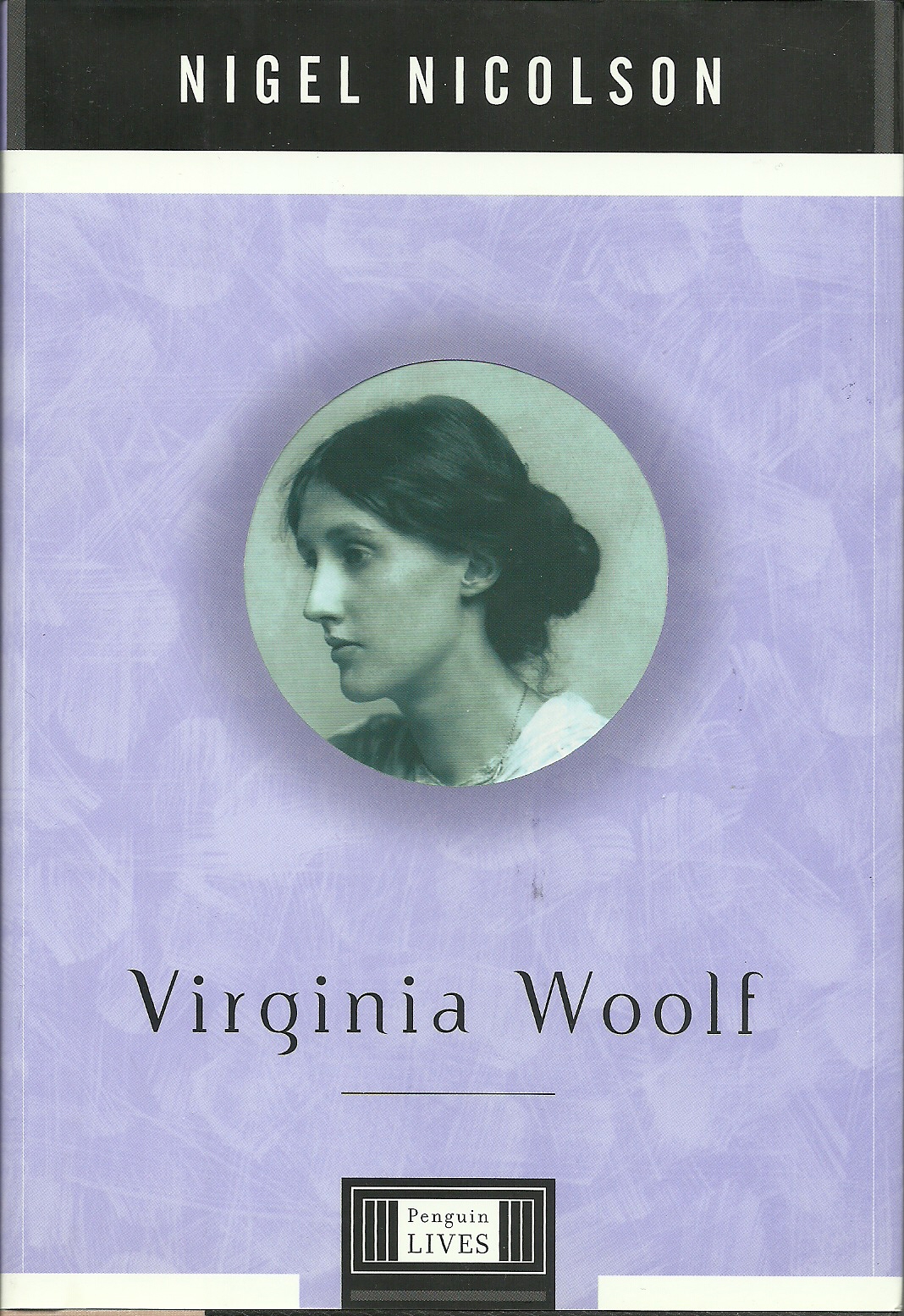
Besides being a brilliant writer, Virginia Woolf was a feminist (extreme in her views that women had always been held back by men), lecturer (she would spend a year preparing a series of lectures she was going to give), snob (she believed America or Americans had never produced anything of value), pacifist (her lack of patriotism and indifference in World War I were mitigated by her fear of Hitler and the outbreak of World War II), and a lesbian. One of her long-term lesbian lovers was the writer Vita Sackville-West. Vita was married to Harold Nicholson, a writer who was also a homosexual. In spite of their sexual proclivities, Vita and Harold had two sons, Ben and Nigel. Nigel Nicholson was born in 1917 and knew Virginia Woolf when he was a child and she was an adult. (We should assume, I suppose, that he didn’t know the nature of his mother’s relationship with Virginia Woolf until many years later.) Nigel Nicholson wrote this brief (190 pages), engaging biography, Virginia Woolf, for the Penguin Lives series.

During Virginia Woolf’s life, she was as famous for her day-to-day activities as for her writing. She was a leader and outspoken member of the Bloomsbury Group, an aggregation of writers, thinkers and intellectuals whose works and outlook influenced literature, aesthetics, criticism and modern outlooks on pacifism, feminism and sexuality. Members of the Bloomsbury Group were well-known for their love affairs and espoused what later would be called “free love.” The Bloomsbury Group included (among others) writers E. M. Forster and Lytton Strachey and painters Dora Carrington and Virginia’s sister, Vanessa Bell.

What most people today know about Virginia Woolf (thanks, in part, to the novel and movie, The Hours) is that she had “bouts of insanity.” She suffered from a form of mental illness, probably manic depression or bipolar disorder, that could today be controlled by medication. After a number of suicide attempts throughout her life, she drowned herself in the River Ouse near her home in 1941 at the height (for Britain) of World War II, age fifty-nine. Her life and legacy live on in her work.

For students of twentieth century English literature, Virginia Woolf by Nigel Nicholson is a fascinating, easy-to-read overview of the author’s life and times. Nigel Nicholson has the added advantage of having known Virginia Woolf firsthand and says in 190 pages what other writers would say in 500.

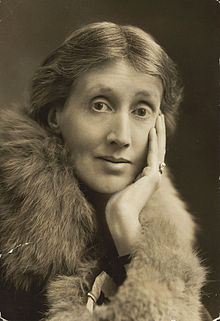
Virginia Woolf in 1927

Copyright © 2015 by Allen Kopp  

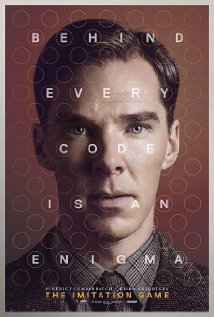
The Imitation Game ~ A Capsule Movie Review

The Imitation Game

The Imitation Game ~ A Capsule Movie Review by Allen Kopp

In the early days of World War II (1939, before America entered the war), Germany, with its sophisticated encoding system called Enigma, was winning the war. All of Germany’s communications (battle plans, troop movements, U-boat positions, etc.) were encoded. Britain desperately needed to break Germany’s Enigma code to have a chance of gaining the upper hand and winning the war. Many people believed the code was unbreakable because it was changed every night at midnight. If the team of cryptographers and mathematicians working on the problem had made any progress on any given day, the code the next day would have been completely different and they would have had to start over from the beginning. No one was able to break the code until a brilliant mathematician named Alan Turing (played by Benedict Cumberbatch who is unlike any other actor) decided that a different approach was needed.

He invented a digital machine that, in effect, became the world’s first computer. As improbable as it seemed to his government employers (who thwarted him at every turn and wanted to fire him), and to almost everybody else, his “machine” did exactly what he said it would do. After many failures, much effort and much heartbreak, he was finally able to break the German code by “programming” his machine with the expectation that certain words would appear in every message; such words, for example, as “Heil, Hitler!” Breaking the code was, of course, a triumph, but, as Alan Turing said, “Now the hard part begins.” Germany could never know the British had broken the code. The knowledge (used by the British) of what Germans were thinking and what they were going to do next had to be used sparingly and strategically.

Alan Turing was a tortured genius. He was a homosexual in a time when being a homosexual was recognized as a crime by his government. His sexual predilections made him isolated and this on top of being a mathematical genius, a kind of personality not particular known for its charm and tact. He had no social skills and seemed at times to not know how to interact with people. That he was a genuine (though unlikely) hero in the war effort cannot, however, be disputed. At the end of the movie, we are told that his breaking of the Enigma code shortened the war by two years and saved approximately fourteen million lives.

The Imitation Game is a movie that is actually about something, instead of a fictitious story with made-up characters. The breaking of the Enigma code and its effect on the war effort is one of the most compelling true stories of the twentieth century. About Alan Turing it can be said, “The people from whom nothing is expected are often the people who do the things that nobody ever expected.”

Copyright © 2015 by Allen Kopp

Shirley ~ A Capsule Book Review

Shirley

Shirley ~ A Capsule Book Review by Allen Kopp 

Shirley is an odd little novel by a writer named Susan Scarf Merrell about the celebrated American writer Shirley Jackson, who was born in 1916 and died in her sleep of apparently undiagnosed heart disease in 1965 at the age of 48. Shirley Jackson is known today mostly for her short stories (of which my favorite is The Daemon Lover), but she also wrote a handful of novels. She was an eccentric, as writers or artists very often are, and was married to the literary critic Stanley Edgar Hyman, who was a professor at Bennington College in Vermont. He and Shirley Jackson had four children and lived near the Bennington campus.

Entering the odd world of Shirley Jackson, her husband and family is the fictional character, Rose Nemser. Rose is the first-person narrator of Shirley. Her husband, Fred, is a protégé of Shirley Jackson’s husband, Stanley Hyman. Rose and Fred have sort of been adopted by Shirley Jackson and her husband and live with the family in their large house. Fred has a job teaching at Bennington College with Stanley. Rose and Fred have an infant daughter, Natalie.

Rose is very young, has literary aspirations of her own, and is awed to be in the household with the celebrated writer Shirley Jackson and her not-quite-as-celebrated husband. Rose helps out with the housework and the cooking and becomes a confidante and friend of Shirley Jackson. Rose also comes to understand the strange marriage that is Shirley and Stanley’s. Shirley is a large woman, unattractive and bespectacled. Stanley is exposed every day to willing young college girls who adore their professors, no matter how unattractive they are. That Stanley is cheating on Shirley is understood, even by Shirley. (“He’s a magician of the loins,” Shirley says.) In a scene reminiscent of the movie, Terms of Endearment, Rose discovers that her own husband is also cheating with a female student.

Hanging over the Jackson-Hyman household (for Rose, anyway) is the unsolved murder of a Bennington college student from years earlier, one Paula Welden, who was lost in the Vermont mountains and was never seen again. Rose comes to believe that Paula Welden was one of Stanley’s extramarital dalliances and that Shirley, in a fit of jealousy, might have done away with her. Of course, we never know for sure.

Shirley is an interesting (though speculative) account of Shirley Jackson’s private life. We come to see Shirley Jackson as a real person, rather than just a shadowy literary figure. People who have an interest in Shirley Jackson or her work will find the book intriguing. About ninety-nine percent of other people, though, will know she’s not Jennifer Lopez and will say: “Who the hell is Shirley Jackson?” Not everybody majored in English.

Copyright © 2015 by Allen Kopp

Still Alice ~ A Capsule Movie Review

Still Alice

Still Alice ~ A Capsule Movie Review by Allen Kopp 

Still Alice is a weepy woman’s movie about a vibrant fifty-year-old woman who develops early-onset Alzheimer’s disease. Alice Howland (Julianne Moore, who will probably pick up an Oscar later this month for this role) has a fantasy life. She is a linguistics professor, something of an expert in her field who values communication above everything else. She has a successful marriage to a doctor (Alec Baldwin) and three perfect, grown children (an actress, a doctor and, you guessed it, a lawyer) who are just as dazzling and successful in their own right as their parents. In the middle of all this perfection, Alice begins to realize she has something wrong with her. She begins to forget the names of objects. She says the same things over and over and doesn’t remember appointments. Her husband is put out with her that she “blew their dinner plans.” She wets her pants because she can’t remember where the bathroom is in her own house. When she seeks the help of a neurologist, he discovers that she has a rare form of Alzheimer’s disease that is genetic (familial) and that strikes its victims at an early age. Perhaps the worst thing about Alice’s disease is that she will most certainly pass it on to her brilliant children.

Still Alice is stuff we’ve seen before. It’s like a TV movie, one of those disease-of-the-week things. What purpose does it serve? (I suppose the answer to that is that it makes money for its investors.) The victims are always brilliant: poets, doctors, lawyers, professors, scientists. (We are told that a person with a higher level of education loses “it” faster than a person who only went to high school.) Wouldn’t it be just as tragic if the victim was a factory worker or an elementary school teacher? A mail carrier or a clerk in a department store? Maybe we never see the victim as an “average” person because it just isn’t as tragic, or as much fun, to watch the unsophisticated and uneducated degenerate right before our eyes. They just don’t have as much to lose.

Copyright © 2015 by Allen Kopp

Marion

Marion 1

Marion ~ A Short Story by Allen Kopp 

Bruno loved the carnival, the noise, the laughter and gaiety, the calliope music, the merry-go-round, the shooting gallery and games of chance, the fun house with its crazy mirrors, the man who would guess your weight for a quarter, the fortune teller, the fat lady and the sword swallower. He marveled at how beautiful the Ferris wheel looked, outlined against the night sky in lights of blue, red, yellow and green.

He wore a dark suit as if he had come from a funeral and kept his hat pulled down low over his face. As he walked among the crowds, he felt invisible because nobody looked at him. The air was cool and soft on his face. He ate his popcorn and smiled, genuinely happy.

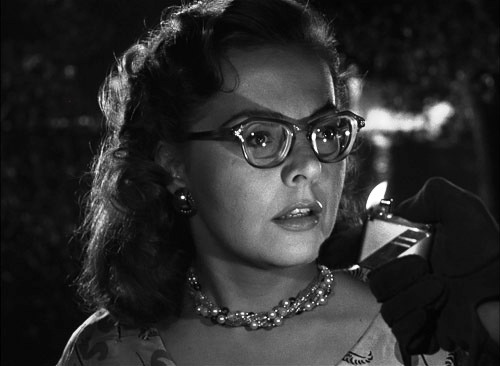
When Bruno saw Marion, he knew right away she was the one he wanted. She was standing in line at the Ferris wheel, accompanied by not one young man but two. She had brown hair, curled and pulled to the back of her head. She wore a print dress, glasses, lots of lipstick, earrings and a necklace. Her appearance said that she thought quite a lot of herself. She was nothing to rave about but she wasn’t ugly, either.

Bruno watched the three of them, Marion and her two young men, as they got on the Ferris wheel and the fellow closed the bar over them so they wouldn’t fall out. Before the Ferris wheel started moving again, she looked over at Bruno and something passed between them. Call it a spark or a look of recognition. He felt it and he was sure she felt it, too.

The Ferris wheel went around a few times and Bruno kept his eyes on the car that Marion was in. When the ride was over and it was time for her to get out, he was still standing in the same spot looking at her. As she and her two young men walked away from the Ferris wheel, her shoulder brushed lightly against Bruno’s. He stepped back with deference and she turned and looked at him over her shoulder and gave him a little smile that he believed was fraught with meaning.

The next time Bruno saw Marion was at the shooting gallery. One of her young men was trying to shoot the metal ducks and was missing most of the time. When he failed to win Marion a teddy bear, she punched him on the arm and pretended to sulk. Before the other young man picked up the gun to give the ducks a try, Marion cast a quick glance behind her. Bruno was standing beside the refreshment booth looking at her. She quickly looked away, but he knew she had seen him and had expected him to be there.

Then it was on to the merry-go-round. Marion sat side-saddle on the outside horse, her purse dangling from her elbow, and clung to the pole. There was room for only one of her young men on the horse beside her, so the other one stood awkwardly by the horse’s head, holding on to the reins. Bruno stood in a spot so that every time the merry-go-round went around Marion would see him.

Round and round it went and Bruno was there, looking intently at Marion with that fixed smile of his while he slowly chewed his popcorn. And then he wasn’t there. He was playing a little trick on her. He could still see her but he had moved to a spot farther away where she couldn’t see him. When she saw he was no longer there, she craned her head around abruptly as far as the movement of the merry-go-round would allow. Her smile faded and she looked, to Bruno, disappointed.

At Lovers’ Lane, the three of them got into a small boat, Marion between the two young men. The idea was to row across the lake to a little island, from which all the bright lights of the carnival could be seen as in a picture. Bruno let the two other couples waiting in line go ahead of him and then he took the next boat after them and rowed across.

On the island, Bruno stood in the shadows and watched. He knew that Marion wasn’t far away. He heard her shriek playfully and figured that one of the young men was trying to get overly familiar with her in the dark. He saw her running with both young men chasing her. The three of them stopped out in the open and laughed, like children playing a game of tag.

After that, Marion and the two young men went to another part of the island, presumably to neck and to be alone. Bruno waited patiently, though, leaning his back against a tree. He knew Marion would come to him. He smoked one cigarette down to the end and had just lighted another one when he saw her.

She walked across the open space between the trees, alone, toward him. He didn’t know yet if she knew he was there, but soon she would know. He stepped out of the shadows and went to meet her. She smiled familiarly at him and he smiled back.

“Marion?” he said.

“Why, yes,” she said.

She had been about to ask him how he came to know her name when he surprised her by putting his hands around her neck and squeezing. Her expression changed to one of surprise and then of fear and pain. She put her hands on his to try to get him to stop, but she had little resistance against his far-superior strength. He watched her closely as he strangled her and for a moment he saw the face of his father.

He knew how to apply just the right amount of pressure with the thumbs and in a short time she was dead. He let her body fall gently to his feet. The two young men would come along soon looking for her and he wanted to be gone when they did. He crossed over to the far side of the island and circled back around to the little pier where the boats were kept.

After he left the carnival, he wasn’t ready to go home yet, so he drove around for a while before stopping off at a bar. He sat on a stool, drinking his drink and smoking his cigarette, enjoying the feeling of anonymity the place gave him. No one looked at him or spoke to him. He was nameless and faceless.

When he got home, it was almost midnight. His mother was waiting up for him, sitting on one of the leather chairs in her green bathrobe in the elegant sitting room. She rose to kiss him when he came in.

“Mother, you should be in bed!” he said.

“Did you have a good time, dear?” she asked.

“I always have a good time.”

“I worry when you stay out so late.”

“I know you do,” he said, putting his arm around her shoulder, “but there’s no reason for you to.”

“Your father and I had a terrible row after dinner,” she said. “It has put me in such a frightful state!”

“What was it about?”

“Oh, you know. The usual.”

“Is he here now?”

“He’s in his room,” she said. “Been asleep for hours.”

“Mother, what if I was to tell you that soon we’ll be rid of him?”

“What do you mean?”

“I can’t really tell you now, except to say that we’re going to be so happy when it’s just the two us. We’ll be able to breathe freely and do all the things together we always wanted to do.”

“Oh, if only!” she said, her eyes glistening like a child’s.

“Now, you go on to bed,” he said, “and we’ll speak in the morning.”

“All right, Bruno dear.” She kissed him and was gone.

He walked down the hallway to his own room and closed the door. After taking off his jacket and throwing it on the bed and kicking off his shoes, he sat down at his writing desk. He took a blank piece of paper and wrote two brief sentences (I did your murder. Not it’s time for you to do mine.) in his beautiful handwriting, folded the paper and put it in an envelope. After sealing the envelope, he wrote the address on it of a man he had met one time on a train and left it on the desk standing upright against a book so he would see it and remember to mail it in the morning.

Copyright 2015 by Allen Kopp

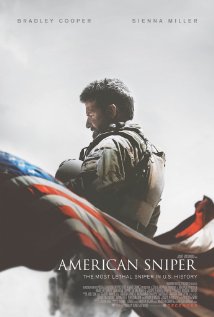
American Sniper ~ A Capsule Movie Review

American Sniper

American Sniper ~ A Capsule Movie Review by Allen Kopp 

From producer/director Clint Eastwood comes American Sniper, the true story of Chris Kyle, the Navy Seal (Sea, Air and Land) who became something of a hero and a legend during four tours of duty in Iraq due to his sharpshooting skills. With at least 160 confirmed kills, Chris Kyle became the most successful (deadly to the enemy) sniper in American military history.

Chris Kyle is a Texan and starts out wanting to be a cowboy, but he is moved to serve his country when it is attacked on September 11, 2001. He joins the Navy Seals and finds himself fighting the enemy in Iraq. After one tour of duty, he has the deep conviction that he is still needed and signs up for another tour, and then a third and a fourth. With a wife and two small children at home, he is torn between his duty to them and what he sees as his duty to his country.

Bradley Cooper, who we have seen in a lot of other movies lately, plays Chris Kyle with a clenched-jaw Texas accent that at times I find difficult to understand. Once again, we are left with getting the gist of what is being said without the actual words. No other actor could have played Chris Kyle any better, though; he even bears a strong physical resemblance to him.

American Sniper isn’t a justification for war and isn’t making a political statement. Rather, it is about the people who fight the war (one person in particular) and the actions they must take to survive and to help their fellow soldiers survive. If that means shooting and killing a woman or a child who is lobbing missiles at Americans, then so be it.

Not the least amazing thing about American Sniper is that Clint Eastwood is still making action movies like this in his 85th year.

Copyright © 2015 by Allen Kopp

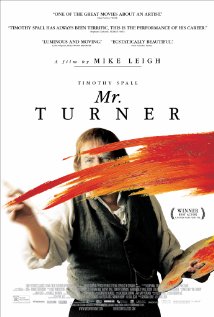
Mr. Turner ~ A Capsule Movie Review

Mr. Turner

Mr. Turner ~ A Capsule Movie Review by Allen Kopp 

J.M.W. Turner was an English landscape painter who lived from 1775 to 1851. The new movie, Mr. Turner, is a stately (slow-moving) look at his life and times. Timothy Spall plays Turner and the movie was directed by celebrated director Mike Leigh.

While Turner (known to his friends as “William”) was a profoundly gifted painter whose work influenced landscape painting for generations, the movie focuses more on his eccentric private life than on his work. He lives with his elderly father and calls him “daddy” until the older gentleman’s death. He never marries but fathers two daughters with a shrewish woman who comes around periodically to berate him and his work and to tell him how worthless he is. He cares little for the woman or the two daughters but must, seemingly, tolerate them. (When one of the daughters dies as a young woman, he barely bats an eyelash.) He has an unattractive housekeeper, one Hannah Danby (she reminds me of the character actress Margaret Hamilton, who played the wicked witch in The Wizard of Oz), with whom he enjoys furtive sexual congress from time to time. He travels a lot, seeking inspiration for his work, and it is on one of these trips that he meets Mrs. Booth, a widow with a soothing nature. The two are drawn to each other, not for the sake of physical appearance (“When I look in the mirror, I see a gargoyle,” he says.), but for what each sees in the other. He has a dalliance with Mrs. Booth that lasts eighteen years or so, in effect leading a double life apart from his life in London. He is at the home of Mrs. Booth when he dies at the age of 76 of a heart ailment. Hannah Danby is, wordlessly, left with a broken heart.

Mr. Turner is an English art film, rather than a mainstream movie, so its audience is limited. Turner is very jowly (or at least that’s the way he is portrayed here), so I had a little trouble understanding what he was saying, especially in the early going. The other characters are, mostly, more intelligible. Sometimes we are left to catch the gist of what they are saying, rather than the words themselves. All in all, though, Mr. Turner is a fascinating glimpse, for the serious moviegoer, at the life of a nineteenth century genius.

Copyright © 2015 by Allen Kopp

A Woman Named Ruby

Ruby 7

~ A Woman Named Ruby ~

(This is for my old friend, Rick DeGrant, who departed for the other shore on November 25th, 2014.) 

Ruby Upjohn, Ruby Goldfarb, Ruby Hagwell, Ruby Pickles, Ruby Fudge, Ruby Bankhead, Ruby Sherwood, Ruby Tubbs, Ruby Costello, Ruby DeFazio, Ruby Peebles, Ruby Hackles, Ruby Ludlow, Ruby Fuddles, Ruby Jitters, Ruby Feeney, Ruby Butts, Ruby Wang, Ruby Smoot, Ruby Fish, Ruby Gambini, Ruby Weiner, Ruby Frogley, Ruby Bumpus, Ruby Zasa, Ruby Farquhar, Ruby Pompadour, Ruby Clutch, Ruby Toddler, Ruby Peabody, Ruby Jerkewitz, Ruby Buggs, Ruby Cornblatt, Ruby Blathers, Ruby Dalzell, Ruby Shockley, Ruby Wooley, Ruby Wimpy, Ruby Belanovi, Ruby Slapwell, Ruby Snitley, Ruby Flywheel, Ruby Frankfurter, Ruby Dunkfeather, Ruby Chin, Ruby Arbuckle, Ruby Clapsaddle, Ruby Bumble, Ruby Davenport, Ruby Dejesus, Ruby Dill, Ruby Diesel, Ruby Ghostley, Ruby Dibble, Ruby Gooch, Ruby Hardapple, Ruby Hoyden, Ruby Mangles, Ruby Polkratz, Ruby Mims, Ruby Nugent, Ruby Punsley, Ruby Poovey, Ruby Rickets, Ruby Teetlebaum, Ruby Dithers, Ruby Waddler, Ruby Snork, Ruby Tudball, Ruby Hunsdorfer, Ruby Oglethorpe, Ruby Pilbeam, Ruby Flan, Ruby Buckles, Ruby Glasscock, Ruby Woo, Ruby Gulwart, Ruby Mushnick, Ruby Zorina, Ruby Stickles, Ruby Turnblad, Ruby Fishpaw, Ruby Ziffle, Ruby Van Peep, Ruby Wagstaff, Ruby Gribble, Ruby Dillweed, Ruby Moonlove, Ruby Snitzler, Ruby Hogwaters, Ruby Clohessy, Ruby Bobolinski, Ruby Ouspenskaya, Ruby Nermi, Ruby Nankler, Ruby Bitchelli, Ruby Lupino, Ruby Pasquesi, Ruby Shumway, Ruby Hogchow, Ruby Wigglesworth, Ruby Skeffington, Ruby Beragon, Ruby Hudson, Ruby Broadnax. Ruby Lafarge, Ruby Wellenmellon, Ruby Thorndike, Ruby Dubois, Ruby Sheeny, Ruby Tull, Ruby Gaylord, Ruby Weems, Ruby Ogilvie, Ruby Moncrieff, Ruby Cumberbunch, Ruby Gombell, Ruby Ignatowski, Ruby Mayfair, Ruby Snitzler, Ruby Otis Skinner, Ruby Chomley, Ruby Toluboff, Ruby Tenuta, Ruby Heeny, Ruby Terhune, Ruby Laflamme, Ruby Montague, Ruby Miggles, Ruby Gummidge, Ruby Dalrymple, Ruby Nemecek, Ruby Gilhooley, Ruby Delmage, Ruby Mullendorfer, Ruby Odets, Ruby Chuffee, Ruby Philpotts, Ruby Mudge, Ruby Mertz, Ruby Yurka, Ruby Ricardo, Ruby Flynn of the Memphis Flynns, Ruby E. Tata, Ruby Rifka, Ruby Fafara, Ruby Frizzell, Ruby Rapf, Ruby Fonzarello, Ruby Beavers, Ruby Finkelstein, Ruby Nerdlinger, Ruby Scafie, Ruby Lipchitz, Ruby Dragonette, Ruby Franzoni, Ruby Frimmle, Ruby Morehead, Ruby Magarulian, Ruby Tweedy, Ruby Schwump, Ruby DeFafa, Ruby Belcher, Ruby Bigglesworth, Ruby Blodney, Ruby “Champagne” King, Ruby Biggerstaff, Ruby Wang, Ruby Wigmore, Ruby Lashutsky, Ruby Flipwig, Ruby DeGasse, Ruby DeBouva, Ruby Noddler, Ruby Grody, Ruby Jigglewater, Ruby Fuddington, Ruby Fromkiss, Ruby Creech, Ruby Firpo, Ruby Hathaway, Ruby Won Fat Ching, Ruby Zizz, Ruby Bartholomew, Ruby Foster Kane, Ruby Sisley, Ruby Nazimova, Ruby Rambova, Ruby Wiggenstein, Ruby Terwilliger, Ruby Fortescue, Ruby Chickwell, Ruby Noodleman, Ruby Scammington, Ruby Cundiff, Ruby Fontaine, Ruby Whipsnade, Ruby Ritz, Ruby Hickey, Ruby Clawmute, Ruby Traherne of the sleepy Trahernes, Ruby Meisenbach, Ruby Gonzales the Fastest Bitch in all Meh-e-co. Two hundred and four were not enough.

Copyright © 2015 by Allen Kopp