By and By

By and By

By and By ~ A Short Story by Allen Kopp 

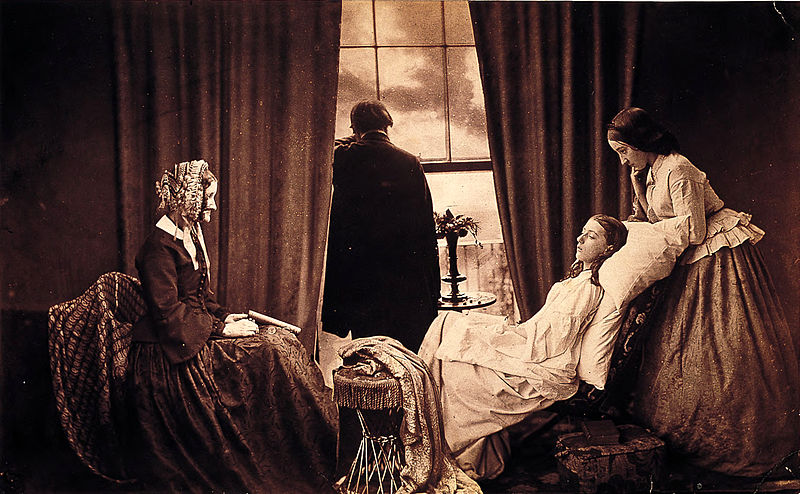
The Cemetery of the Holy Ghost was sprawling and composed of many parts, reflecting different eras in the history of the country. There was the very old part that contained the bones of people from so long ago that some of them had fought the British and had laid eyes on George Washington. And then, moving on to the more recent past—but still long ago—there were bones of those who had fought in the Civil War, including a famous general or two and their wives and offspring. After that, there were the rich industrialists and beer barons of the 1890s who built their elaborate mausoleums at great expense, looking like small gothic churches, to house their remains and those of their families. From there we move on to the boys who fought and died in the First World War and, farther along, the Second World War. Mixed in are some famous writers, a mistress of a president or two, a long-forgotten North Pole explorer, a famous operatic tenor, and on and on, not to mention the tens of thousands who never did anything to distinguish themselves while they were living and certainly had no plan to do so while they were dead.

Somewhere between the Civil War and the Spanish-American War, one might find the grave of Reginald Maxim Winfield, known to his intimates as “Reggie.” He was born in 1886 and died in 1896 at the age of ten years, five months and eighteen days. The cause of his death doesn’t matter, except to say that he wasn’t sick more than a day or two and didn’t feel much of anything when he passed from the realm of the living to the realm of the dead.

At Reggie’s graveside service, his mother, still not quite believing he was dead, moaned softly behind her veil. Just before the coffin was lowered into the earth, she bent over and, placing her arms around it as though she meant to pick it up, whispered a few words in the region close to where Reggie’s ear would be. When asked later what words she had spoken, she claimed she didn’t remember, being mollified by her grief as she was.

Several lifetimes passed by, the world changed as much as it had ever changed in a hundred and more years, and Reggie’s spirit still remained in the Cemetery of the Holy Ghost; still hadn’t moved on as it should have done. Reggie was lonely, waiting behind, but only doing what he believed he had to do. Certain living people had seen Reggie’s restless spirit over the years, but those people were few and were uncertain, after the fact, of exactly what they had seen. After a couple of startling encounters (startling for Reggie), he assiduously avoided any contact with the living people who, for whatever reason, found themselves in the cemetery. He was a shy spirit, as most spirits are, and believed that nothing good—for him, anyway—would ever come of anybody who still had a beating heart.

When he first laid eyes on the young girl, though, he didn’t run away as he usually did because he wasn’t sure if she was alive or, like him, dead. She was dressed in filthy rags and her skin, what could be seen of it, was caked with layers of dirt. She was so wan and pale and appeared so underfed that she was, he deduced, one of those unfortunate living people who didn’t have a home and who ended up in the Cemetery of the Holy Ghost because it was a good place to hide and also because she had no place else to go. If she wasn’t a spirit yet, she would be one soon. That’s why he felt a connection to her.

The second time he saw her, he made sure she also saw him.

“Have you seen my mother?” he asked.

She stopped and looked at him, not certain if he had spoken to her. “Who are you?” she asked. “I haven’t seen you before.”

“I’ve seen you,” he said.

“Where?”

“Right here.”

“Why are you dressed in such funny clothes?” she asked.

“They’re not funny.”

“They look funny to me. A little bit out of the run of normal fashion for boys.”

“Getting back to my original question,” he said, “have you seen my mother?”

“What does she look like?”

“She’s tall for a woman. She has hazel eyes and auburn hair and always dresses stylishly.”

“I don’t think I’ve ever seen anybody like that in my entire life. What is her name?”

“Dorothy Abbot Winfield. She’s married to my father, George Herbert Winfield.”

“No, sorry.”

“How long is ‘by and by’?”

“What?”

“I said, how long is ‘by and by’? My mother told me to wait for her here and she would be along ‘by and by’.”

The girl closed her eyes and opened them again, putting her hand to her forehead as though she might faint. “I’m not sure I’m even seeing you,” she said. “I haven’t been feeling well lately.”

“Are you hungry?” he asked.

“Uh, I don’t think so.”

“So you haven’t seen my mother?”

“I haven’t seen anybody since…oh, I can’t remember!”

“If you see her, tell her I’m waiting here for her.”

“If I see anybody answering to that description…wait a minute! You’re a ghost, aren’t you? You lived a long time ago.”

“I thought maybe you were a ghost, too,” he said.

“What year were you born?”

“Why, 1886,” he said. “What difference does that make?”

“What year was your mother born?”

“1860.”

“There! That’s it! You are a ghost and your mother came and went a long time ago and you missed her.”

“That can’t be,” he said. “She told me to wait here for her and she would be along ‘by and by’.”

“I’m sorry,” the girl said. “I’m afraid I can’t help you. I don’t think you’re real, anyway, but if I see your mother I’ll tell her you’re looking for her.”

When she started to walk away, the boy put his hand on her arm. “What’s your name?” he asked.

“Vicki-Vicki.”

“What are you doing in the cemetery? You’re not just visiting somebody’s grave, are you?”

“I’m staying here for a while until I find a better place to stay.”

“You’re not afraid?”

“What’s there to be afraid of? There’s usually nobody here but me. It’s peaceful. I like it.”

“Where do you sleep?”

“That’s enough questions,” she said. “If anybody should be asking questions, it’s me! How often do I get a chance to talk to a dead person?”

“I’m as alive as you are, just on a different plane.”

“I’m sure it’s all very interesting,” she said, “but you’re not even here and I feel a little foolish talking to nothing.”

She went to the nearest large tree and sat down with her back to it; put her head back, closed her eyes, drew in her legs and seemed to go to sleep. He stood looking at her for a while and then moved on to continue his search for his mother.

The next time he saw the girl she was sleeping in a pile of leaves between two very large gravestones. He didn’t want to wake her but as he approached he saw her eyes were open.

“It’s you again,” she said. “I know now you really are a ghost because you walk on the leaves without making a sound.”

“You look sick,” he said.

“I think I’m dying. Somebody needs to come along and put me under the earth. I wouldn’t mind a bit.”

“Maybe you can help me find my mother.”

She laughed. “How do I do that?”

“I don’t know. You’re alive and you seem to have a facility for communicating with ghosts. Maybe you’ll see the ghost of my mother and if you do you can tell her where I am.”

“I’d like to help but I don’t think I can.”

“Why not?”

“I have to get out of the cemetery today and go back to the city. There’s going to be a purge tonight. They’re cracking down on the vags, like me.”

“What’s a ‘vag’?”

“You’re looking at one.”

“Oh, I see. It’s a bum, a wayward person who doesn’t have a home.”

“Yes, that’s me. A girl bum.”

“You had a home but you left it?”

“We won’t go into that now. Maybe some other time when I’m feeling up to it.”

“I think my mother is close by. I can feel it.”

“I’m sorry,” she said. “We all have our troubles. You have yours and I have mine.”

“Will you help me find her?”

“Right now I don’t think I could even find my nose.”

“You need a doctor.”

“If you see one, give him my regards.”

“I think maybe you are my mother. That’s why I’m seeing you and you’re seeing me.”

She gave a weak, snorting laugh. “I’m nobody’s mother,” she said. “I’ve never even been married.”

“No!” he said. “You don’t understand. I think my mother’s spirit is in your body. Same spirit, different body.”

“I don’t think so, but if it makes you feel better to believe it, then I guess there’s no harm in it.”

He heard voices and thought someone was coming, so he ducked out of sight. A little while later when he went back to the pile of leaves between the two grave stones, the girl was gone.

That night he heard the commotion of the purge, screaming and rollicking laughter, the tromping of feet over the hallowed ground. He hoped the girl had left in time and had gone to some safe place.

In the morning just as the sun was coming up, he found her, bleeding and barely breathing, hiding in some bushes. One of the night watchmen had hit her in the head with his night stick and split her head open. He knelt beside her and put his face close to hers.

“Why didn’t you leave when you had the chance?” he asked.

“No place to go.”

“You’re hurt bad.”

“Have to get out of this place,” she said.

She struggled to stand up but her arms and legs wouldn’t work.

She died with the birds singing in the trees over her head. He stayed beside her and then when the end came he wasn’t too surprised to see the spirit of his mother, Dorothy Abbot Winfield, rise out of the girl’s body. She wasn’t dressed in mourning but was wearing a beautiful brown dress for autumn and looked exactly as he remembered her.

“Mother!” he said. “I’ve waited all this time!”

“Reggie!” she said. “I knew you’d be here!”

She wrapped her arms around him, held him tightly and kissed his head.

“You told me to wait, that you’d be along ‘by and by,’ and I did wait and now you’re here.”

“I’m so glad!” she said. “So happy!”

“Where are father and Jacqueline and Edward?”

“They’re waiting for us just over the hill.”

He took her by the hand and together they walked into the radiant light of early morning. Nothing would ever keep them apart again.

Copyright © 2015 by Allen Kopp
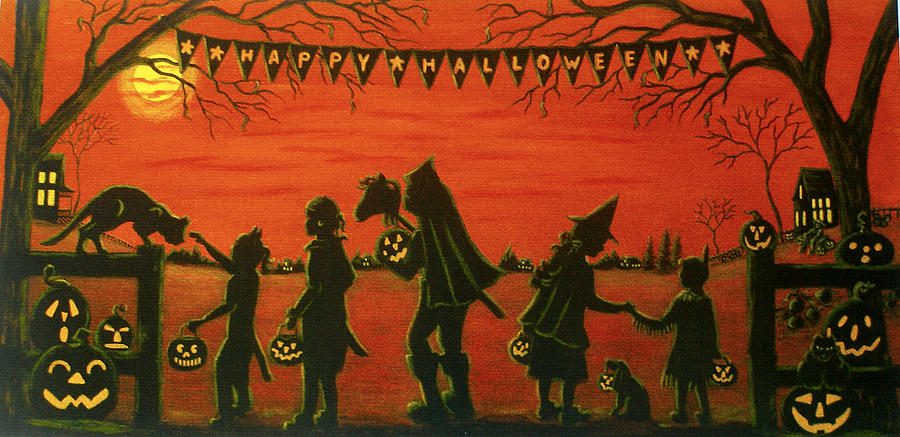
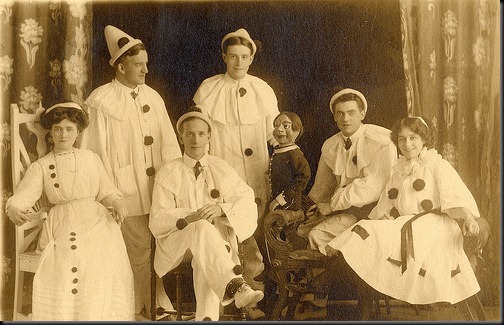
Vintage Halloween

~ Vintage Halloween ~ 

After we get “older” we remember what Halloween was like when we were in grade school before the world got so messed up. We went trick-or-treating without adult supervision (even when it rained), accepted candy from strangers, and nobody I ever knew was poisoned.

Vintage Halloween 1

Vintage Halloween 2

Vintage Halloween 3

Vintage Halloween 4

Vintage Halloween 5

Vintage Halloween 7

Vintage Halloween 8

Vintage Halloween 12

Vintage Halloween 13

Vintage Halloween 9

Vintage Halloween


Crimson Peak ~ A Capsule Movie Review

Crimson Peak

Crimson Peak ~ A Capsule Movie Review by Allen Kopp 

Crimson Peak is the kind of new movie we don’t see very often, a costume drama set in a long-ago time (early 1900s), when the automobile was a novelty and a lot of the streets weren’t paved yet, at least in America. It’s a combination gothic love story, Victorian ghost story and horror fantasy, with touches of Henry James, Edith Wharton and Charlotte Bronte thrown in.

Edith Cushing (Mia Wasikowska) lives with her well-to-do father, Carter Cushing, in a beautiful house in Buffalo, New York. When she is ten years old, the ghost of her mother appears to her (a black, horrible, decaying ghost) to give her a warning about “crimson peak.” She doesn’t know what it means but she knows it has some meaning that will be revealed to her at a later time. Fourteen years later she is an aspiring novelist who has the usual problems that novice writers have—she’s not writing about what she knows or feels and she can’t get a publisher interested in her work. She has an old friend named Alan McMichael who is an ophthalmologist. While Alan is romantically interested in Edith, she doesn’t seem to reciprocate his feelings. Then along comes a handsome aristocrat from England. He’s a baronet and his name is Sir Thomas Sharpe (Tom Hiddleston). He’s in America with his forbidding sister, Lady Lucille Sharpe (Jessica Chastain), trying to get funding for a machine he has invented that extracts clay from the earth that is used in brick-making.

Edith’s father doesn’t like Sir Thomas Sharpe and, not only does he turn him down for funding for his machine, he has him investigated when it becomes apparent that Sir Thomas and Edith are becoming romantically involved. The investigation turns up some dirt on Sir Thomas and his sister, but it’s no less than Edith’s father suspected. He gives the Sharpes a sizeable check to leave America and go back to England, thereby breaking Edith’s heart and insulting her writing in the bargain.

Soon Edith’s father is brutally and mysteriously murdered, leaving Edith the recipient of all his money. Just when we thought Sir Thomas had gone back to England with his sister, he turns up again. With Edith’s father out of the way, he is free to marry Edith and take her to his family home, a decaying gothic mansion that sits on top of a clay mine in an extremely isolated region in England. The place is in such disrepair, we learn, because the once-wealthy Sharpe family is now poor. Edith’s money is going to come in very handy here.

Edith is visited by another hideous ghost in the Sharpe mansion, delivering yet another warning. (It turns out to be the ghost of Sir Thomas and Lucille’s mother, whom Lucille murdered). In a series of startling and distasteful revelations, Edith discovers that she is just one in a succession of “heiresses” who have fallen prey to the Sharpes. She also discovers that Lucille, who has always been too eager to have her drink a cup of tea, has been poisoning her. That’s why she hasn’t been feeling very well lately. Soon, however, her admirer from America, Dr. Alan McMichael, shows up unexpectedly. Will he be able to rescue Edith, or will he also fall prey to the Sharpes’ machinations?

Crimson Peak has a throwback-to-an-earlier-time feel to it, so, for that reason, a lot of people probably aren’t going to like it. If you are one of those who can suspend disbelief and put away your skepticism for a couple of hours, you might enjoy it. Besides ghosts, there are some fabulous sets and period costumes, and who can do evil better than Jessica Chastain? If you don’t want to kill her when her back is turned, well, you’re just not a very feeling person.

Copyright © 2015 by Allen Kopp
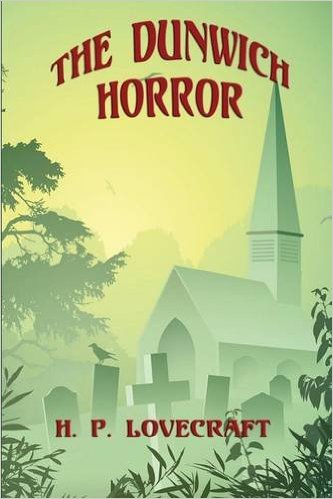
The Dunwich Horror ~ A Capsule Book Review

The Dunwich Horror cover

The Dunwich Horror ~ A Capsule Book Review by Allen Kopp

P. Lovecraft (1890-1937) and Edgar Allan Poe (1809-1849) are often mentioned in the same sentence. Poe belonged to the nineteenth century and Lovecraft to the twentieth, and while their writing styles are dissimilar and reflect the times in which they lived, the two writers share certain similarities. Lovecraft was an avowed fan, if not an imitator, of Poe. They were both New Englanders and trod upon some of the same ground, principally in Providence, Rhode Island. They both wrote about the dark world that most of us never see. Poe wrote about murder, death, sadness and alienation and Lovecraft wrote about unseen terrors and monsters from another realm. They were neither very successful in their own lives but both are more famous long after they lived than they might have ever imagined being when they were alive.

The Dunwich Horror is one of Lovecraft’s most famous stories. It’s either a very long short story or a very short novel, so let’s say for the sake of argument that it’s a “novella” or a “novelette.” It’s set in the Miskatonic Valley in Massachusetts in a remote village known as Dunwich in the early twentieth century. Dunwich is old and seedy and is not a pleasant place to visit. Something odd is going on in Dunwich that people can’t explain. The Whateley family is strange, even by Dunwich standards. Old man Whateley is a wizard of some kind. When his weird albino daughter gives birth to a “child,” Wilbur Whateley, speculation is rife as to who the father is.

Wilbur Whateley is hideously ugly. Before he is one year old, he walks and speaks. When he is three years old, he seems as old as twelve and he grows a beard. Long before he is old enough to be of adult height, he is seven-and-a-half and then eight feet tall. More odd than his appearance, though, is his behavior. He can barely speak English but deals in ancient forbidden texts. Strange noises come from underneath the ground at the Whateley home and whippoorwills, ordinarily a serene and peaceful bird, trill violently all night long, as though trying to convey a warning.

As the story progresses, we learn that Wilbur Whateley is not human but is only in human form (he’s not fooling anybody). He is one of an alien race of “elder beings from another dimension” that wants to kill all human, animal and plant life on the earth and then “strip the earth and drag it away from the solar system and cosmos of matter into some other plane or phase of entity from which it had once fallen, vigintillions of eons ago.”

Wilbur is killed by a guard dog, however, when he breaks into a library late at night to gain access to one of the “forbidden books” that contains ancient spells he needs. After that, three “experts,” one of them a professor from the university, travel to Dunwich to confront the evil that threatens the world.

The Dunwich Horror was first published in Weird Tales magazine in 1929. It is classic American science fiction, by a master of the genre. It has some wordy descriptions, typical of Lovecraft, and some mildly annoying conversations in the mountain dialect, but they’re not that hard to get through. All in all, an interesting reading experience. I haven’t seen the movie version that came out in 1970, but from the description I read of it, it seems to bear little resemblance to the original story. They’ve concocted a “love interest” for Wilbur Whateley (in the person of Sandra Dee) that doesn’t seem to fit at all. So much for movie versions of books.

Copyright © 2015 by Allen Kopp
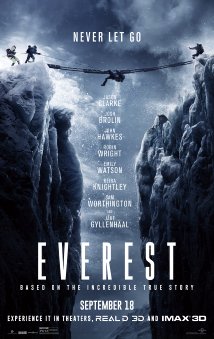
Everest ~ A Capsule Movie Review

Everest

Everest ~ A Capsule Movie Review by Allen Kopp

Why do ordinary people risk death and injury, spend lots of money and tolerate untold pain and discomfort for months at a time in some of the harshest weather conditions on earth to climb Mount Everest, the highest mountain peak on earth? Have they been deprived of something in life, or they just looking to fill some inexplicable empty spot? Whatever the reasons, there are plenty of people who try it and fail. Failure means never making it to the summit or never making it back home alive.

Everest chronicles one such expedition in 1996 to the top of Mount Everest by a group of people who might be our next-door neighbors. There’s the Texan (Josh Brolin) who has a “dark cloud of depression following him around all the time”…except for the time that he’s on a mountain. There’s the New Zealander (Jason Clarke) with the pregnant wife (Keira Knightley) back home; he’s the leader of the expedition and it’s up to him to watch out for the others. There’s the 47-year-old Japanese woman who has been to six of the seven highest peaks on earth; Everest will be her seventh. There’s the divorced loser (John Hawkes) who delivers the mail and is out for the thrill of a lifetime. There’s the nouveau hippy (Jake Guyllenhaal) badly in need of a shave and a haircut who seems to serve no purpose other than to be annoying. Back at the base camp is the “surrogate mother” (Emily Watson) who tries to help the climbers through radio transmissions and who suffers vicariously with them. We know at the outset that some of them will make it and some of them won’t. If all of them had made it back alive, there wouldn’t be a movie being made about them almost twenty years later.

For movie fans there are lots of familiar faces in Everest, but the characters don’t matter. The people are ciphers. It’s like filling the SS Poseidon with the likes of Shelley Winters, Gene Hackman, Roddy McDowell, Stella Stevens, Carol Lynley, Red Buttons and Ernest Borgnine and then turning the ship over in a storm. We know some of the characters will make it and some will not. Figuring out who will and who won’t make it might help you to pass the time during all the dialogue that, no matter how inane it is, you can’t understand it anyway.

Everest is a predictable action-adventure movie with some beautiful scenery and a spectacular storm (I like storms). It’s another one of those man-versus-nature stories where nature wins. No matter how much star power they put on the screen with no matter how many Oscar nominations, the real star is the mountain. Nature wins. Man loses. Now, if the mountain had been Godzilla or an alien from outer space, man would most certainly have come out on top.

Copyright © 2015 by Allen Kopp
Poe-Land ~ A Capsule Book Review

Poe-Land

Poe-Land ~ A Capsule Book Review by Allen Kopp

The overarching themes of Edgar Allan Poe’s life is that his all-too-brief span on this earth was tragic and unhappy and his towering literary genius went mostly unrecognized until after his death. His parents were itinerant actors. He was born in Boston on January 19, 1809, because that’s where his parents happened to be working at the time. His father abandoned the family when Edgar was small and his mother died of consumption at the age of twenty-four. Edgar, his brother and his sister were then placed in separate foster homes. Edgar ended up in the home of one John Allan and his wife Frances of Richmond, Virginia. John Allan had inherited wealth but was parsimonious with his young foster son, whom he never bothered to adopt legally. Edgar and John Allan most likely would have killed each other gladly if they could have managed it without being detected.

Edgar Allan Poe seemed destined from the beginning to never find his place in life. He was, to put it mildly, not like anybody else. At a time when most people must have stayed in one place all their lives out of necessity, Edgar moved around a lot. He spent a few years of his childhood in England with his foster family, which probably accounts for the European “feel” of some of his writing. As a young man, he attended college at the University of Virginia in Richmond, but John Allan wouldn’t give him enough money to live decently, so he ran up gambling debts, further infuriating Mr. Allan. He tried the army and did better than one might have expected, but when he ended up at West Point Military Academy after his military stint, he lasted only a few months before being expelled.

So, Edgar was a talented misfit. He made a little money from his published stories and poems but never enough. He moved around from place to place, never gaining wide acceptance in the literary world, although there were a few who recognized his uniqueness. (The most fame he would ever achieve during his own lifetime was with his poem The Raven, which is, arguably the most famous poem in American literature.) He had several ill-fated romances with different women, but they didn’t really work out either the way he had hoped. At the age of twenty-seven, he married his thirteen-year-old cousin, Virginia Clemm, and lived with her and her mother (or they lived with him) until Virginia herself died of consumption at the age of twenty-four, exactly as Poe’s mother had. Are we able to see now the pattern of his life?

Poe-Land by J. W. Ocker is an exploration of Poe’s life (a sort of travelogue/biography) through all the places he lived or at least spent some time. Besides Boston, these places include Providence, Rhode Island; the Bronx and Manhattan in New York; Great Britain; Baltimore; Richmond, Virginia; Philadelphia; Fort Moultrie on Sullivan’s Island in South Carolina; Fort Independence in Massachusetts and Fort Monroe in Virginia. One of the ironies of Poe is that, however he might have been dismissed during his own life as a no-talent crackpot, almost any place he ever lived or even spent some time is today almost a sacred site or a tourist attraction. Anything Poe ever touched or anybody he ever knew is today of interest because of his association. The New England states abound with Poe sites or museums, including places he lived or worked and places that he somehow signified with his presence, no matter how briefly. Poe fans are legion all over the world, some of them to the point of obsession. Of course, one of the things that makes him so interesting is his death in Baltimore at the too-young age of forty, on October 7, 1849, of unknown or mysterious causes. He was found, apparently desperately ill, and admitted to a Baltimore hospital, where he died in a delirious state after several days. His attending physician became a sort of celebrity but never seemed to be able to cast any light on the cause of Poe’s death, changing his story as it seemed to fit the circumstances.

One of the many interesting details I learned about the life and death of Edgar Allan Poe from reading Poe-Land is that, when he died, he was placed in an undistinguished grave toward the back of Westminster Cemetery in Baltimore. Within twenty-five years of his death, his literary stature had grown to the point where people began to realize that his grave wasn’t as good as it should be, so his body was exhumed and he was moved to a more prominent place in the cemetery with a much more showy headstone, which still stands today. After twenty-five years in a wooden box in the Maryland earth, there wasn’t much left of dear old Edgar except for bones, hair and clothing. Chunks of his decayed original coffin became coveted collectors’ items and are on display in Poe museums today.

The story of Poe’s life is enough to make you wish in an afterlife so that he might know what became of his literary “legacy” after he died. Today he is probably the most famous of American writers and is almost universally recognized and loved throughout the world. Not only did he practically invent a new literary genre, that of the detective story, but he found a new way of writing poetry, quite unlike anything that had ever been done before. All we see or seem is but a dream within a dream.

Copyright © 2015 by Allen Kopp

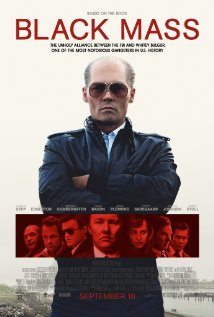
Black Mass ~ A Capsule Movie Review

Black Mass

Black Mass ~ A Capsule Movie Review by Allen Kopp

For decades James “Whitey” Bulger was an organized crime boss in Boston, head of the Boston Irish mob known as the Winter Hill Gang. He demanded absolute loyalty from his associates and, if he didn’t get it, he was prepared to kill without compunction. In the 1970s he made a deal with shady FBI agent John Connolly to become an informer with the purpose of bringing down a rival mob run by Italians. He hated informers, he said, but he became one to do to his rivals what they deserved. If you rat on somebody who deserves it (so his reasoning went), it isn’t so bad.

In Black Mass Johnny Depp plays Whitey Bulger with receding hairline and crazed, blue-eyed intensity. (How do they get his eyes to look that way? At times he looks like an evil doll.) And, as psychotic as he is, he has his sweet side. He has a young son whom he loves, he allows his elderly mother to cheat him at gin rummy and he’s kind to the old ladies in the neighborhood. For those who knew him, though (even for their whole lives), he was to be feared. You never knew what he was thinking or what he might do. He was inclined never to forget even the smallest slight or insult.

Joel Edgerton, who last year played Pharaoh Ramses II in Exodus: Gods and Kings (with plenty of eye makeup), looks bloated as FBI guy John Connolly. (At times his Boston accent seems over the top.) Of course, associating himself with Whitey Bulger isn’t a good career move for him. While he is ostensibly on the side of “good,” things don’t work out well for him.

There’s a great cast of supporting players in Black Mass, including Rory Cochrane (who conveys a lot of feeling without words) as Steve Flemmi and Jesse Plemons as dough-faced Kevin Weeks (not very bright but a game player). Benedict Cumberbatch, last seen as gay Alan Turing in The Imitation Game, plays Whitey Bulger’s straight-shooting (or is he?) politician brother, Billy Bulger. Juno Temple, always a standout, plays a hooker/drug addict who meets a not-very-pleasant end at the hands of Whitey Bulger, just when she was beginning to think he was on her side.

Adding to the irony of this story is that Whitey Bulger, regardless of the number of souls he dispatched to the next world, still lives in this one. After sixteen years as a fugitive, he was captured in California, living under an assumed name in 2011. He was put on trial and today serves as an inmate in a federal prison in Florida. He is 86 years old.

What makes Black Mass so interesting (if maybe a little reminiscent of other crime movies, including The Departed) is that it’s a true story rather than a fictional one. After a summer of youth-oriented fluff in movie theatres, isn’t it refreshing to see a movie that is actually about something?

Copyright © 2015 by Allen Kopp

The Canterbury Tales ~ A Capsule Book Review

The Canterbury Tales

The Canterbury Tales (A Prose Version in Modern English) ~ A Capsule Book Review by Allen Kopp

Geoffrey Chaucer (1343-1400) lived during the Middle Ages, almost two hundred years before Shakespeare. The English spoken at the time he lived is called Middle English, to distinguish it from Old English and Early Modern English (the language that Shakespeare spoke and wrote in). Chaucer’s most famous work is The Canterbury Tales, a collection of about twenty stories (some in prose but most in verse) with a simple premise: A group of diverse “pilgrims” (a nun, a knight, a miller, a priest, a doctor, a pardoner, a “wife,” etc.) on their way to Canterbury to pay homage to Thomas Becket (who “helped them when they were sick”) tell stories to pass the time and relieve the tedium of the road. Each pilgrim is required to tell a story, whether they want to or not. The stories range from bawdy, low humor to tragedy and give us a picture of what life was like in England at the end of the fourteenth century.

No matter how you’ve been spending your time lately, you probably haven’t been reading The Canterbury Tales in its original Middle English, unless, of course, you’re a graduate student preparing a thesis on the subject. If you’ve ever heard Middle English spoken, it’s beautiful to hear but not that easy to understand for modern speakers of English. A lot of the words are the same and are easily recognizable, but a lot of the words no longer exist in the language. (If you’d like to hear an example of spoken Middle English, here is an easy link to “The Nun’s Priest’s Tale” from The Canterbury Tales on YouTube: https://www.youtube.com/watch?v=3C6rS0aL0DM

Since Middle English is beyond the ken of most people (including me), there’s this “Prose Version in Modern English” by David Wright. A lot of the “feel” of The Canterbury Tales, I’m sure, is lost is this translation (sort of like the “modern American translation” of the King James’ version of the Bible), but if you need to read The Canterbury Tales and you want to be able to understand it, this is the best, most accessible way. Of course, you have to be a dedicated reader if, like me, you’re reading it only for enjoyment and out of curiosity and not because you have to. After all these years since high school English class, I finally know what the Wife of Bath is all about.

Copyright © 2015 by Allen Kopp

Your Friend August Wellington

Your Friend August Wellington image

Your Friend August Wellington ~ A Short Story by Allen Kopp

He selected several pairs of swimsuits from the men’s-small rack and locked himself in the dressing room. After checking the door three times to make sure nobody could get in, he took everything off except his underpants and, standing before the mirror, began trying them on: first a plaid pair that he immediately rejected because they were too skimpy; then a yellow pair with a black stripe up each side and a slit at the thigh that made him look like something he wasn’t; then a black, baggy pair that hung down almost to his knees and made him look like an old man; then a red pair that wasn’t too baggy or too tight. He turned this way and that, looking at himself from every angle. The red pair would do, even though he hated the way he looked with his chest, arms and legs uncovered. No doubt about it, he was meant to be clothed. He wasn’t sure he would ever let anybody see him in the red swimsuit, but buying it was the first step and then he would see. He couldn’t look any worse than a lot of other people.

Of course, he had already turned down the invitation to the pool party, but he still might change his mind. He could see himself calling at the last minute and graciously accepting, after all, the invitation that he had declined. “I thought I was having abdominal surgery that day but it turns out the doctor says I don’t need the operation after all. Hah-hah-hah!”

When he got home, Aunt Vivian was waiting for him in her Cadillac, smoking a cigarette. She saw him in her rearview mirror and jumped out.

“August, where the hell have you been?” She reeked of perfume and her lipstick was smeared down to her chin.

“I had some shopping to do,” he said.

“I was about to call the police.”

“Why?”

“You didn’t answer the door. I thought something terrible must have happened to you.”

“And how many martinis did you have for lunch today?” he asked.

She stood behind him while he fumbled with the key in the lock and when he opened the door she went inside behind him as if the house belonged to her.

“I want you to come and stay at our house until your daddy gets back from his business trip,” she said.

“I’ve already said I’m not going to do that.”

“When you’re in school, it’s different, but now that school is out you don’t have any business staying in this big house all alone.”

“I like being alone.”

“You get lonely.”

“No, I don’t!”

“You daddy had no business going off and leaving you alone. You’re still a child.”

“No, I’m not!”

“I worry about you.”

“No need.”

“So you’re saying you won’t come and stay at my house?”

“That’s what I’m saying.”

“I could still put you over my knee and whale the living daylights out of you,” she said.

“I don’t think so,” he said. “I’m bigger than you are.”

She swiped her fingers on the dining room table to see how much dust had collected there and then she went into the kitchen, opening the refrigerator and all the cabinets and looking inside.

“Are you eating properly?” she asked.

“Of course.”

“I’m afraid you’re just eating pizza and junk food.”

“I don’t even like pizza that much.”

“I could bring you some things.”

“No need.”

“You know how to cook?”

“I have a cookbook,” he said. “I can cook when I need to. Do you want me to show you?”

“You have eggs and milk?”

“I have flour, sugar, coffee and tea. What I don’t have I can go buy.”

“All right. I know you had to grow up fast with your mother dying so young the way she did.”

“Please don’t mention that to me again.”

“I hope Dana gets married again, for his sake and for yours.”

“He said something before he left about getting married soon.”

She nodded her head and smiled. “Oh, well, that’s encouraging! Have you met her?”

“I don’t think he has anybody in mind yet.”

“Is he seeing someone?”

“He was seeing a Mrs. Bone with three daughters but I think that romance fell through. I didn’t like her, so that might have had something to do with it.”

“You met her?”

“He took me out to dinner with them one night.”

“Oh, that’s lovely! Did you have a nice time?”

“No. Father isn’t supposed to eat lobster but he ate it anyway and got sick. While he was in the men’s room vomiting, I had a little tête-à-tête with Mrs. Bone. I think I scared her off.”

“Was that your intention?”

“I just told her the way things are.”

“I’m sure that was very naughty of you!”

A few minutes after Aunt Vivian left, there was a knock at the door. It was his friend from school, Colin Mayhew. He was carrying his gym bag.

“Is the paterfamilias still gone?” Colin asked.

“Who wants to know?” August asked.

“I’d like to stay here tonight if you don’t mind.”

“Why?”

“My parents are fighting again. I had to get away from all the yelling.”

“You can stay only if you promise you aren’t carrying any bugs or communicable diseases.”

“Very funny.”

“You can sleep on the couch or in the guest bedroom. You’re not sleeping with me.”

“Thank goodness! I was afraid that was going to be a condition for letting me stay.”

After they consumed a jar of peanuts and two glasses of wine apiece, the talk turned to the pool party.

“I’ve decided to go after all,” August said. “I bought a red swimsuit this morning.”

“You can’t do that,” Colin said. “You already turned down the invitation.”

“Yes, I can.”

“It would be very rude to show up after you’ve said you’re not coming.”

“Why are you always so concerned about what’s rude and what’s not?”

“I’m just telling you what I think.”

“That’s what’s wrong with the world. Too many people expressing their opinions.”

“Pardon me for living.”

“So you think I should call Beulah Buffington and tell her I’d like to come after all?”

“I know her. She’ll probably take your head off.”

“Let her try.”

“I wouldn’t have the nerve.”

“Are you still going?”

“Of course!” Colin said. “My dad’s letting me take the car.”

“You can come by and pick me up and we’ll go together.”

“I don’t think you should do that.”

“Why not?”

“If you told Beulah you’re not coming, that’s the same as not being invited at all. You don’t want to be a gate crasher, do you?”

“I’ll call her first and arrange it.”

Colin picked up the phone, handed it to August and dialed the number. Beulah answered on the first ring.

“Hello?” August said. “Is that you, Beulah?”

“Yes. Who is this?”

“This is August.”

“August who?”

“Wellington.”

“Do I know you?”

“From school?”

“Um, I don’t seem to remember you. Can you describe yourself?”

“Look, Beulah, I know why you’re doing this.”

“Doing what?”

”Pretending not to know me.”

“I’m terribly busy,” she said. “I’m going to have to hang up now.”

“I just wanted to ask you a question.”

“What is it?”

“It’s about your pool party.”

“What about it?”

“I was wondering if it would be all right if I change my mind and accept your invitation after all.”

An icy silence on the other end, after which she said, “I don’t want to be mean, August, but I’m afraid you weren’t on the invitation list.”

“You called me just the other day and invited me.”

“I did? Are you sure it was me?”

“Well, yes. I had no reason to believe it was anybody else.”

“This is very odd,” she said. “I’ve never had anybody call and invite themselves to one of my parties. Are you sure this isn’t a joke?”

“No, it’s not a joke. I just thought…”

“What did you say your name is again?”

“It’s okay, Beulah. Just forget it.”

“Well, I suppose it’ll be all right for you to come since you place yourself in such an awkward position, but I have to warn you. We’ve already invited more people than we can handle and we probably won’t have room for all of them. We’re hoping some of them change their minds and don’t show up after all.”

“No, I wouldn’t dream of…”

“I have to go now,” Beulah said. “It was awfully lovely speaking to you.”

August hung up and shook his head at Colin.

“What did she say?” Colin asked.

“She was very obtuse. She pretended she didn’t know me. She said she never called and invited me to the party.”

“Are you sure it was her?”

“She said I could come anyway but there probably wouldn’t be enough room.”

“That’s terrible.”

“No, it isn’t. I don’t care.”

“You don’t want to go?”

“No.”

“I’ll fill you in on everything that happens,” Colin said.

“Do you mean you’re still going?”

“Why wouldn’t I?”

“I thought you were my friend.”

“I am.”

“We’ve known each other since the beginning of school.”

“What does that have to do with anything?”

“You can still go knowing that I’m not invited?”

“Yes.”

“Loyalty means nothing to you?”

“Look, August, just because you’re a loser doesn’t mean I have to be one, too.”

“So now I’m a loser, am I?”

“I only meant…”

“I don’t care what you meant. I want you to get out of my house.”

“If it means that much to you, I won’t go.”

“No, it’s too late now. I’ve already discovered what a rat you are.”

“Do you want me to talk to Beulah and wangle you an invitation?”

“No! I want you to leave. Right now!”

“I thought it’d be fun to come over here and spend the night with you. I was wrong.”

“Colin, if you don’t get out of my house right now, I’m going to stick a knife all the way through you!”

“Nobody likes you, August, but you’re not able to see it.”

“Do you want me to throw you out?”

“I know your mother killed herself because she was crazy. I think craziness runs in your family.”

August picked up a letter opener and began brandishing it in Colin’s face. “Have you ever seen a person stabbed with one of these things?” he said.

“I hope your father marries a horrible woman!” Colin said. “I hope you end up with a stepmother who makes your life miserable!”

August threw the letter opener, narrowly missing Colin’s head. As he was looking around for something else to throw, Colin grabbed his gym bag and ran for the door. August watched him as he ran across the street and disappeared down the block.

He went upstairs to his room and locked himself in, slowly took off all his clothes and put on the red swimsuit he had bought just that morning. He turned this way and that, looking at himself in the full-length mirror. To himself he looked like a hairless monkey, all joints and angles, his skin as white as paste. He could hear people in his head laughing and making fun of him for trying to get invited to Beulah’s party.

“This will never do,” he said.

He took the scissors and cut the swimsuit into strips, feeling he was relieving himself of a burden. And he left the strips on the floor around his bed to remind himself of just how foolish he had been.

Copyright © 2015 by Allen Kopp

The Confidential Agent ~ A Capsule Book Review

The Confidential Agent image 2

The Confidential Agent ~ A Capsule Book Review by Allen Kopp

The hero/protagonist of Graham Greene’s novel The Confidential Agent is referred to only as “D.” That’s how confidential he is. He’s a middle-aged man (think Charles Boyer), a foreigner, travelling in Britain, and he’s not there to see the sights, either. He is a lecturer in the Romance Languages, a scholar and peace-loving man, but things haven’t been going so well for him. His country is at war, he’s been in prison for two years apparently because he was on the wrong side, and his wife was shot and killed by the enemy. He’s in Britain to negotiate a coal deal with the owner of a huge coal-mining conglomerate, a certain Lord Benditch. His side must have the coal to have a chance of winning the war. If the enemy gets the coal, D.’s side is certain to lose. Well, guess what? There’s another “confidential agent” from the other side, known to us as “L.” who also wants the coal. Will “L.” kill “D.” to keep him from getting the coal, or will “D.” kill “L.” to keep him from getting it? It’s a cat-and-mouse game from the beginning. D. is badly beaten (although it doesn’t seem to stop him) and his papers that establish his identity are stolen, and this is just the beginning of the obstacles that are placed in his way.

We realize early that the business about the war or D.’s side needing the coal doesn’t really matter. We learn nothing of the politics of the war or who is fighting whom. This is only a device to propel the plot. Don’t waste any time or expend any brain power trying to figure out the war.

Of course, there always has to be a “femme fatale” in a story like this. In this case she is the daughter (what a coincidence!) of Lord Benditch, the coal magnate, and her name is Rose Cullen (think Lauren Bacall). She seems to know D. and to know the importance of his mission, but where do her loyalties lay? Is she to be trusted? After a while she claims to be in love with D., in spite of their age difference and also in spite of his not being very lovable. Can D. make a go of it with Rose Cullen or he is only deceiving himself? Will they have a future together after the war business is settled, or is she only sucking up to him, seeking his vulnerable side to knife him in the back? In a story like this, you can never be sure.

We are told that Graham Greene wrote The Confidential Agent in 1939 in a matter of a few short weeks, fueled by Benzedrine (whatever that is), and that he wrote it for money. After it was finished, he was so unhappy with it that he wanted to disavow it and publish it under a pseudonym, but it was published under his own name and it turned out to be well-received by critics and the reading public alike. It’s rather formulaic, a “thriller” (in other words, “light” reading), but it lives up to its subtitle: An Entertainment.

Copyright © 2015 by Allen Kopp