Nausea ~ A Capsule Book Review

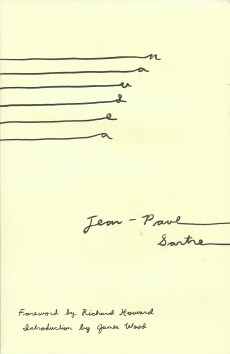
Nausea

Nausea ~ A Capsule Book Review by Allen Kopp

Jean-Paul Sartre, French writer and philosopher, lived from 1905 to 1980. His philosophical novel Nausea, first published in 1938, is one of the landmark works of twentieth century French literature and Sartre’s most famous work. In it, the fictional character Antoine Roquetin (Sartre himself?) is a Parisian writer who is in the medium-sized French city that he calls “Bouville” (means “Mudtown” and is probably Le Havre), researching the life of—and writing a historical book about—an eighteenth-century aristocrat and political figure, the Marquis de Rollebon. The novel is set in 1932 when Antoine Roquetin is thirty years old.

There is really not much of a story or plot to Nausea. It is told in the form of diary entries and is mostly the stream of consciousness impressions of Roquetin as he goes about living from day to day. He observes the people around him and the things they say and do, whether he’s in a café, his hotel, the library or some other place. He anticipates reuniting with an old girlfriend from his past named Anny. He has a superficial dalliance with a waitress. He takes long walks in the fog. He contemplates, at great length, portraits hanging in the library of the city’s founding fathers. He befriends a man whom he calls the Self-Taught Man, who is reading all the books in the library in alphabetical order.

Roquetin is afflicted with a sort of moral paralysis that he calls “nausea.” It’s not a physical malady but a degeneration of the spirit. Human life to him is unnecessary. Existence is pointless and there is no God, which is the essence of the philosophy known as “existentialism.” He eventually gives up his writing and research in Bouville to return to Paris to—what?—probably just waste away. Aren’t we all going through the paces of living just so we can die? Seems that way, doesn’t it? But, wait a minute! If we were to write a song that will be remembered long after we die, or to sing that song on a recording that will be listened to for a long time to come, maybe that (or something like it) is enough is rescue us from the awful pointlessness of existence. What do you think?

Nausea is philosophical treatise disguised as fiction. It’s fitfully interesting, fascinating at times and tedious at other times. If you’re a student of French literature or a student of Sartre, it’s going to be essential reading. If you are just looking for a good “story” because you enjoy reading, Nausea probably isn’t it. Not exactly painful reading, but you’ll almost certainly be glad when you reach the last page. I think I’ll take my diary and turn it into a depressing philosophical novel. It won’t matter that it doesn’t have a story, a beginning, a middle or an end, will it? Everything is pointless, anyway.   

Copyright © 2016 by Allen Kopp

The End is Not as Good as the Beginning

The End image

The End is Not as Good as the Beginning ~ A Short Story
by Allen Kopp

“It’s a beautiful day,” Harmon Bracegirdle said as he approached Chaz Spurlock. He put his arm over Chaz’s shoulders and pulled him closer. “Thank you so much for meeting me here today!”

“Not at all,” Chaz said. “I’m free this afternoon.”

“I love the park, don’t you?” Harmon said.

“Indeed, I do!” Chaz said.

“I asked you here today, not so we could take in the scenery, but to have a little talk, just the two of us. A little private talk. There are so many interruptions at the studio, people coming in and out all the time.”

“I understand how it is, Mr. Bracegirdle, sir!”

“Please, Chaz! Call me Harmon!”

“All right, sir! Harmon!

They walked a little way and sat down on a bench at the edge of a scenic pond, home to a flock of geese and ducks.

“They’re so beautiful!” Harmon said. “Nature is so beautiful!”

“I quite agree, sir,” Chaz said.

“Whenever you begin to feel dehumanized by what you do for a living, just come here and forget your troubles and in a little while you’ll begin to feel inner peace.”

“Inner peace, sir. Yes, sir!”

“But I digress. I didn’t come here to discuss nature.”

“I didn’t think you did, sir.”

“The picture business is a cruel business,” Harmon said, looking over his shoulder up the hill to his car, where his two associates and his driver were waiting. “It’s 1935 and there have been so many changes.”

“Don’t I know it, sir!”

“First sound and then color, and God only knows what’ll be next.”

“You roll with the punches, sir. It’s all you can do.”

“It isn’t easy being head of the largest picture studio in the country.”

“I don’t imagine for a second that it is, sir.”

“I’m responsible for hundreds of jobs. My decisions affect hundreds of workers and their families. If I don’t make the right decisions, a lot of people will suffer.”

“I wouldn’t want that much responsibility on my shoulders, sir.”

“The studio isn’t as profitable as it once was. Competition is fierce!

“Terrible, sir! I’m sure it’s just terrible!”

“You were one of our most bankable stars for five or six years, Chaz, but your last three pictures have lost money.”

“Not my fault, sir! Those pictures just weren’t right for me.”

“I know. Each person has his own version of where things went wrong.”

“The studio is picking the wrong properties for me.”

“Do you think you could do better choosing your own scripts?”

“I’m sure I could, sir!”

“Well, that isn’t the way our system works. When you’re a contract player in a large studio, those decisions, whether right or wrong, are made for you.”

“I have high hopes, though, for my next picture.”

“The one based on the Russian novel?”

“Yes, sir.”

“Literary adaptations haven’t done well for us in the past, I’m afraid.”

“We have a couple of top-notch directors interested in the project and I’m pretty sure we can get Lola Lola to play the female lead.”

“Lola Lola won’t be available to appear in that picture.”

“I just spoke to her yesterday. She said…”

“She has commitments abroad.”

“Oh? She didn’t mention…”

“In fact, we won’t be making that picture at all, Chaz. I’m sorry.”

“Why not?”

“We just received word this morning that another studio has started production on that same story, using a different title.”

“Oh.”

“I know you’re disappointed, Chaz, but that’s the way things are in the picture business. As I said. Cruel.”

“There’ll be something else come along. What about that Western that everybody’s talking about?”

“I don’t think so.”

“I know I can be on top again with my next picture if I’m given the chance. I know I can!”

Harmon put his hand on Chaz’s leg and squeezed his inner thigh. “I’m afraid you’ve come to the end of your run, buddy. I’m sorry.”

“What are you saying? I’ve been with the studio twelve years! I have two years left on my contract!”

“We’re going to buy out your contract. Our lawyers are working on it now.”

“What if I say no?”

“The decision has already been made. I wanted to give you the news myself before you heard it from somebody else.”

“This is so unfair! My pictures have made a lot of money for the studio.”

“You’ve had three flops in a row. Last year alone, Intemperate Stranger and Rascal at Arms were our biggest box office flops. You’re only as good as your last picture.”

“I hope you’ll reconsider.”

“I’m afraid not. The die has already been cast.”

“Just one more picture. One more chance.”

“You have the very best wishes of all of us at the studio.”

“I’m just stunned. I don’t know what to say.”

Harmon gestured to his two associates up the hill, who were at that moment standing beside the front fender of the car smoking cigarettes. They came down in a wide arc so Chaz wouldn’t see them from where he was sitting.

“It’s going to be all right, buddy,” Harmon Bracegirdle said. “Just drink in the splendor of nature arrayed before you.”

“I think you’re making a big mistake,” Chaz said.

“That’s the nature of my job, kiddo. I have to make these hurtful decisions.”

Like children playing a game, the larger of the two men went up behind Chaz so as not to be detected. He waited for a signal from the other man, indicating that no one was watching, and when he received the signal he crept up behind Chaz, took a gun from inside his coat and shot him in the back of the head. One shot and Chaz lurched forward, dead before he hit the ground.

“Get his wallet and his wrist watch,” Harmon Bracegirdle said, standing up quickly. “That’ll satisfy the press.”

The news spread all over the world: Movie Star Shot Dead in Park. Robbery Suspected Motive.”

The funeral was well attended. Leading the pack of motion picture luminaries was studio head Harmon Bracegirdle, in dark glasses and tailor-made suit. On his arm was the great star Lola Lola, looking stunning as she wept behind her lace handkerchief. The picture of her placing one lily on the casket made all the pictures the next day.

Copyright © 2016 by Allen Kopp

Beyond Paradise ~ A Capsule Book Review

Beyond Paradise

Beyond Paradise ~ A Capsule Book Review by Allen Kopp

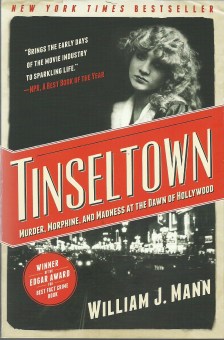
Most people today will not have heard of Ramon Navarro, or, if they’ve heard of him at all, it’s because of his vicious murder at the hands of two “male hustlers,” Paul and Tom Ferguson, in 1968, and the sensational trial that followed. With his death, Navarro’s closely guarded, decades-long secret was out: he was a Hollywood homosexual and, in his later years, was in the habit of inviting “male escorts” to his home and paying them for sex. With his sexual predilections and his uncontrolled alcoholism (many run-ins with the law for drunk driving), he was, as one of the lawyers said at his murder trial, an “accident waiting to happen.”

Ramon Novarro (née Ramon Gil Samiengo), was born in Durango, Mexico, in 1899, into a large, devoutly Catholic family. As a teen, he made his way to Hollywood and, after a series of lucky breaks (bit parts and dancing stints), he became the protégé of Rex Ingram, an influential director of silent movies. Ingram used Navarro to great effect in some of the popular movies he directed in the 1920s and—if not overnight, at least pretty fast—Navarro became a bona fide “star,” with a loyal and devoted legion of fans at home and abroad. Between 1925 and 1932, he was THE top male movie star in the world. In 1925, he starred in Ben-Hur, the biggest and most expensive movie made during the silent era.

When movies switched to sound in the late 1920s, it was with his pleasant (though heavily accented) speaking and singing voice that Ramon Navarro segued into sound movies, while many of his contemporaries in silent films were not able to make the transition. Though small of stature (5 feet, six inches) and slightly pudgy, he had other assets that made him a favorite of audiences: a handsome face, an undeniable charm and appeal, coupled with a genuine talent for screen acting. Women loved him and men did not feel threatened by him.

Every star that rises, however, must fall. After 1932, his bosses at MGM (Mayer and Thalberg) began putting him in movies that were not only unsuitable for him (at age 32, he played a college football player in a movie called Huddle) but were almost destined from the start to fail. After a series of box office flops, the studio dumped him in 1935 and, at age 36, he was washed up. He tried for decades to recapture his box office magic, but nobody wanted him anymore and he was relegated to playing small parts in cheap productions. He was successful for a while on the concert circuit and in summer stock, but soon his heavy drinking began to undermine everything he attempted. From the age of 36 to the end of his life at 69, he was merely a “once-was” or a “has-been.” Many of the once-great stars of his generation shared the same fate.

Beyond Paradise by André Soares is the fascinating and unforgettable story of a likeable star (to some a hero) who, in the end, became a tragic figure. Ramon Navarro’s story is a story of the twentieth century and of one of the defining industries of that century. Beyond Paradise reads like a novel, is never boring and is never bogged down in extraneous detail the way some nonfiction books are. The final chapters that cover Navarro’s murder and the subsequent trial are gripping. Highly recommended for those interested in Hollywood biography and lore from the golden age of movie making. A time and place that are no more and will never be again.

Copyright © 2016 by Allen Kopp

Before His Time

Before His Time image

Before His Time ~ A Short Story by Allen Kopp

What can you say about addicts? That they engage in irrational behavior to get whatever it is they are addicted to? That they will kill if necessary, even if they don’t see themselves as killers? Did he really believe that going into a pharmacy with a gun and killing a woman and shooting another person was the right thing to do? Did he think nobody would know it was him? Did he really believe he would get away before he was caught?

His name was Gerald Lashley, but that wasn’t his real name. He broke his back in an accident. (It hurts so bad!) Doctors thought he might never walk again but he did. A long, slow recovery. He took pain killers for two years and came to depend on them. After two years, the doctor said to him, “You’re well enough now that you’re on your own. I will give you no more pain killers.”

Except that he still had pain. A lot of it. He tried to get along without the pain pills but he just couldn’t do it. He drank prodigious amounts of whiskey to take the place of the pills. Whiskey dulled the pain some but not enough. He began laying around all the time, drinking and not eating. Not washing himself and not speaking to anybody.

He saw himself many times going into a drugstore and stealing the pills he needed but he was afraid. He wasn’t the type of man to steal. He had been brought up in the church and had the fear of God in him.

Finally the pain got the best of him. When he called his doctor once again to try to get some help, the young girl who answered the phone told him the doctor was on vacation. (Do people still do that?) He slammed down the phone and sat on the couch and sobbed. He was thinking about the various ways that he might kill himself, but this, also, was against his moral beliefs.

He didn’t remember who the gun belonged to. Somebody in his family. It was still in an old wooden box in the basement along with some other junk. Also some bullets. He loaded the gun and put it in the pocket of his bathrobe and in that moment he felt better than he had felt in a long time. With hope in his heart, he went to sleep and when he woke up he knew exactly what it was he was going to do.

Except that it would never work without careful planning. There were drugstores anywhere but he would have to pick the right one. Not one in his hometown, either, where people knew him, but away, in some other town. And he would take the loaded gun along, of course, but never use it. It would just be to make sure people knew he meant business and to scare them. Not to hurt anybody.

After two weeks of planning he arrived at the “when,” the “where” and the “how.” The drug store was about twenty-five miles away in a town that was connected to the town he lived in by an old, seldom-used country road. He knew they had the kind of pain medicine he needed because he had called and asked. Yes, sir, the lady said, we have in a fresh supply; always happy to oblige. The pieces were falling into place for him.

He chose a Saturday morning at the end of winter. The sky was gray, threatening rain, like so many other days. He wore a lightweight coat with zip pockets and a knit cap pulled down to just above his eyebrows. That would make it harder for people to identify him later, if it came to that. He put the gun in the right-hand pocket—he was right-handed—and zipped it up.

Traffic was light, as he knew it would be. Not a lot of people out stirring on a dreary Saturday morning. He tried to look at the sky and concentrate on the scenery because when he thought about what he was about to do he felt light-headed and breathless. He believed his nerve might fail him, but only if he let it.

The town was nearly deserted. There were a few cars parked at the drug store and other businesses in the block, but not many. He drove around the block and parked on the street in the direction he would need to take to get away. He checked the gun in his pocket one last time and went inside.

The prescription counter was all the way in the back of the store. As he approached it, a female worker came forward, smiled, and asked if she could help him. He handed her the note he had written out beforehand and showed her the gun, holding it close to his side so nobody else would see it. She nodded her head, one time, and then turned away.

When she was gone for more than thirty seconds, he began to panic. She was taking too much time. She was telling somebody else what was happening. She would try to stall him while somebody in the back called the police. But then she reappeared from the back bearing a white plastic bag of the stuff he wanted and he felt relieved for the moment.

“Anything else?” she asked, and he knew she said this to every customer.

Before he took the bag from her, he said, “Put all the money from the cash drawer in there with the medicine.”

At that moment he was jumped from behind by somebody he didn’t see. His gun discharged with the reflex of his hand and he was aware that the bullet struck the female worker and she went down behind the counter as he was being pulled back.

The pain from the weight on his back nearly tore him in two, but he was able to throw the person off, which, he saw in just a moment, was a small old man with bent back and white hair. As the old man got up from the floor and began to charge him again, he fired the gun again. The bullet struck the old man in the upper thigh, taking him down.

Before the female worker went down, she had put at least some money in the white plastic bag with the stuff and the bag lay on the counter. He grabbed for it and ran for the front of the store, hearing gasps and screams as people in the store realized what was happening.

His hands were shaking as he opened the car door and started the engine. He sped away from the curb without even looking to see if the way was clear and drove through town.

As he was about to make the left-hand turn on the edge of town to get onto the highway, two speeding police cars appeared, their sirens deafening. One of them pulled around in front of him and stopped at an angle to keep him from going any farther and the other one stopped behind him. Officers swarmed from both cars and in a moment had him facedown on the ground. The whole thing had taken seventeen minutes.

He was taken to the town jail and then to the county jail. He was wailing and blubbering and couldn’t speak, so he was put on suicide watch and given a shot that made him feel like he was falling down a black hole that had no bottom. When he woke up he was questioned by a roomful of officers whose job it was to piece together what had happened.

During his various court appearances, he didn’t understand what was being said, but he knew there would be no trial since he had given a full confession. There would only a hearing to decide what to do with him. His lawyer told him it didn’t look good for him. The old man would recover, but the woman, mother of three, had died. The prosecution was seeking the death penalty.

After much wrangling between lawyers, he was spared the death penalty—due to “mitigating circumstances”—and sentenced instead to life in prison with no possibility of parole.

Twenty-two years went by in prison. He was an old man before his time. He walked with a terrible limp or not at all. One morning when he woke up he was too sick to get out of bed and was moved to the infirmary. That same day, as he lay dying, he saw a hill on his grandfather’s farm from his childhood. He looked up the hill and shaded his eyes to see if he saw there any sign of the forgiveness that he wanted more than anything else on earth.

Copyright © 2016 by Allen Kopp  

Versailles ~ A Capsule Book Review

Versailles

Versailles: A Biography of a Palace ~ A Capsule Book Review by Allen Kopp 

The Palace of Versailles is possibly the most famous structure of its kind in the world. Situated about twelve miles outside of Paris, it was built in the 1680s by Louis XIV. For the next roughly hundred years it served as the seat of French government and home for the royal families and royal courts under three kings: Louis XIV, Louis XV and Louis XVI. Versailles: A Biography of a Palace, by Tony Spawforth, is a history of the Palace of Versailles, a history of the people who lived there, good and bad, the court intrigues, the adulterous affairs, the arrogance, the corruption, the extravagance and the bad press that eventually brought down the monarchy and replaced it with a republic. After Louis XVI and his queen, Marie Antoinette, were deposed and eventually guillotined in the 1790s, the Palace of Versailles came to represent tyranny and extravagance to the French people. There were calls for it to be demolished as a hated symbol of the repressive past, but it still stands today, a monument to what once was and never will be again.

Louis XIV, who built Versailles and made it what it would be for about the next hundred years, was a monarch down to his fingertips. He believed in the divine right of the French king, that the kind should live extravagantly and luxuriously. Up until the time of Louis XIV, the seat of French government had been the Louvre in Paris, but Louis wanted something different. He moved to the French countryside outside of Paris, to a little town known as Versailles. He destroyed three small villages to build what would become the sprawling palace that housed thousands of people at one time: courtiers and aristocrats, family of the king and queen, office holders, ministers and functionaries, appointees, cooks and lackeys, servants and attendants. Many of the people who lived in the palace were essentially leeches and served no real purpose, but were part of the elaborate system that comprised the king’s court.

After Louis XIV’s death, the reputation of the king and royalty in general began to deteriorate with the public and the press. Whereas Louis XIV was beloved and an inspiration to his people, Louis XV, his successor, was less punctilious in his kingly duties. He wasn’t so particular about his public image and openly engaged in adulterous affairs with many women, including the infamous Madame de Pompadour and Comtesse du Barry. He would flaunt his affairs of the heart to the world and didn’t seem to care about the ramifications. The image of the monarchy began to suffer.

Upon Louis XV’s death from smallpox in the year 1774, his grandson Louis XVI became king. Louis XVI resembled a pudgy schoolboy and wasn’t much interested in being king. He seemed feckless and completely bereft of the attributes necessary to run a great country. The worst thing that ever happened to him was being married off to an Austrian princess, who would later become known as Marie Antoinette. After her function of providing a male heir to the king was fulfilled, she indulged in her whims and mostly locked herself away from court functions and her role as queen. She wanted her own privacy and a good time and she didn’t care who knew it. She developed a terrible reputation with the public and in the press, which only became worse as her extravagances were revealed, and this while many “regular” people were starving because economic conditions were so bad in the country. Fairly or not, she came to represent the excesses of the monarchy at their worst. She and her husband, Louis XVI, were eventually beheaded in a cruel public spectacle. She was hated and reviled for years after her death but  remains a compelling figure to this day, around whom a cult of admiration has developed.

If you’ve ever visited the Palace of Versailles, as I have, Versailles: The Biography of a Palace will make compelling reading, but it will even if you haven’t been there. It’s a readable history for the “casual” historical reader, never dull or academic; full of anecdotes and the “small” moments that history is made of. If you are a fan of the 1938 MGM movie, Marie Antoinette, you can’t help imagining Robert Morley and Norma Shearer as Louis XVI and Marie Antoinette, and Tyrone Power as the queen’s would-be boyfriend, Count de Fersen, who remained sympathetic to the end. As Count de Fersen hears the cheers of the crowd as the queen is beheaded, tears fill his eyes and he looks off into the middle distance, filled for the moment with thoughts of what might have been.

Copyright © 2016 by Allen Kopp

Sylvia Dell

Sylvia Dell

Sylvia Dell ~ A Short Story by Allen Kopp

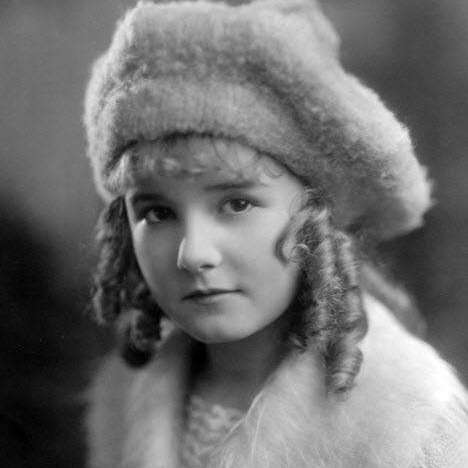
In 1926 Mrs. Bertha Indelicato of Burbank, California, took her son, Sidney Indelicato, to a movie studio to audition for a part in a motion picture. She dressed him up in a light-blue jumper and a yellow shirt, with pork-pie hat and strapped, patent leather shoes. With Sidney’s cherubic face and naturally curly blond hair, he looked as much like a girl as a boy.

At the audition the casting director, a man named Perkins Belmont Perkins, wearing knickers and argyle stockings, separated the boys from the girls so he could get a better look. When Sidney was herded in with the girls, Mrs. Indelicato didn’t dare object, afraid that doing so might cost him a part in the movie.

When Perkins Belmont Perkins, eyeing Sidney critically, asked for the name, Mrs. Bertha Indelicato stepped forward quickly and gave the name as “Sylvia” Indelicato.

“She’s rather fat,” Perkins Belmont Perkins said, “but I think she has the “look” we’re looking for.”

“Oh, I’m so glad!” Bertha said.

“Have your daughter here at eight o’clock sharp on the fourteenth and I believe we’ll be able to use her.”

“Oh, thank you!” Bertha said. “We’ll be here! Of that you can be sure!”

After they left the studio, Bertha took Sidney to a drugstore down the street to get a banana split.

“Just think!” she said to him as he stuffed ice cream into his mouth. “We’re in!”

“In where, mama?” he asked.

“Why, didn’t you hear the nice man say they were giving you a part in the movie, honey?”

“What do I got to do?”

“Just look sweet and the director will tell you everything to do. Mama will be right beside you every step of the way.”

When Bertha’s husband, Buster Indelicato, came home from his job as a Ford salesman, Bertha told him the good news: Sidney landed a part in a movie.

“There’s just one thing,” she said. “They think Sidney is a girl.”

“What?”

“I had to think fast. I told them his name is ‘Sylvia’ Indelicato.”

“And they believed that?”

“Yes.”

“You always did dress him more like a girl than a boy.”

“If that’s the only way he can get a part in a movie, then a girl he will be!”

“Well, I always wanted a daughter, I guess,” Sidney said, reaching for a beer.

In the few days she had before the fourteenth, Bertha took Sidney shopping and outfitted him with complete feminine attire, down to the lacy bloomers. She fluffed out his hair and gave it some extra curl, insisting that she and Buster call him “Sylvia” at the dinner table and refer to him at all times as “she” and “her” instead of “he” and “him.”

“You’re going to confuse him,” Buster said, “and then we’ll have a mental case on our hands.”

“He’ll be fine,” Bertha said. “I guarantee it.”

“Why do I got to be a girl now?” Sidney asked.

“Because you are an actor,” Bertha said. “You will someday be a great actor. This will be your first acting lesson. Great actors pretend to be who and what they are not.”

“I don’t think I like being a girl.”

“Just remember that underneath the laces and frills you are still a boy. It’s only to the outside world that you are a girl.”

“If I’m an actor,” he said, “I want to be a cowboy.”

“That will come later, dear, after you are an established star.”

“What’s ‘established’ mean?”

On the morning of the fourteenth, Bertha had Sidney at the studio an hour early and was forced to wait nervously in an outer office to be called. Finally, when Sidney was called for a wardrobe fitting, Bertha was given a copy of the script. It was up to her to familiarize herself with the story and tell Sidney, as Sylvia, what he (she) was supposed to do.

The picture was called Baby Bountiful and starred that lovely young motion picture star, Arlette Joseph. She played a young mother who, when she loses her own baby to illness, goes with her handsome young husband to an orphanage to pick out another child. There are so many adorable children to choose from that the young couple can’t decide which one to take. That’s when the orphans show off their singing and dancing talents to help them make up her minds.

The young couple still can’t decide, so they go home, assuring the orphans they will return later and will, most assuredly, choose one of them to take home with them. That night, all the orphans dream of being the chosen one. The next day the young couple returns to the orphanage with some very exciting news. The young mother’s rich uncle has died and left her his millions. Since she will have all that money, she can take all the orphans and they will all live together on a fabulous Long Island estate with their new mommy and daddy.

Sidney was the orphan named Lulu. He wore a white dress and white stockings, a long wig with a large white bow. When the director told the orphans to jump up and down with excitement or to act sad, they did exactly as they were told.

Bertha stood behind the director and the camera, watching. She believed, of course, that Lulu stood out from the other orphans and that her acting was the most realistic. Her eyes brimmed with tears and her heart ached with pride. After all her years of dreaming, her own little Sidney was finally in motion pictures!

When filming was completed for Baby Bountiful, Arlette Joseph thanked all the children personally for playing orphans and everybody packed up to go home. A few days later Bertha received a fat check in the mail for Sidney’s appearance in the film. When she showed the check to Buster, he whistled and said, “That’s more than I make in a month!”

A week later the casting director from the studio called Bertha and asked if Sylvia was available to act in another picture. Bertha nearly dropped out her dentures on the kitchen floor in saying yes.

They hired Sylvia an agent, who promptly changed her name from Sylvia Indelicato to Sylvia Dell. The agent procured parts for her in five pictures the first year and seven the second year, with each part progressively larger than the one before it.

Buster quit his job and began staying home all the time, “seeing to things.” He managed Sylvia’s career from the sidelines with useless advice that nobody listened to. He began wearing double-breasted suits, smoking big cigars, and hosting luncheons at all the fancy restaurants around town.

Sidney, for his part, went along with what was expected of him. When he was at home he could be Sidney, but the minute he went outside the house he had to be Sylvia. Any time he became downhearted, Bertha presented him with a big bowl of ice cream and waved the most recent studio check in his face. When she went to the bank to cash his checks, she always took him along so he could see the big stacks of green and come to know how important they were to his family.

In 1929 the Hollywood studios stopped making silent films and converted to sound. Prepared as she was for any contingency, Bertha hired a diction coach to work with her Sidney. After all they had been through, she wasn’t going to let the advent of sound end her baby’s film career.

The diction coach, aware of how much money was to be made, declared Sylvia a “natural” after a few lessons. If he knew that Sylvia was really a boy instead of a girl, he never let on. He was accustomed to the ways of movie people and wasn’t squeamish about such things.

Sidney’s first sound picture was a big success. He had five lines, which he spoke with a convincing girlish intonation. After that, there were more offers for parts in other motion pictures. The money mounted up as Sylvia’s fame and popularity increased. Sylvia Dell fan clubs sprang up around the country. There were Sylvia Dell coloring books and dolls, an entire line of Sylvia Dell merchandise.

Sidney began to put on a lot of weight. The doctor advised Bertha to put him on a low-calorie diet, but she refused, certain the “pudginess” was part of his appeal. People had come to know him as fat and if he was no longer fat they would no longer know him.

When Sidney inevitably began to show outward signs of becoming an adult male, Bertha and Buster began to panic. They took him to a doctor and wanted to know if there was some way he, the doctor, could medically “alter” Sidney to enhance his feminine qualities and subvert the masculine ones.

“Are you suggesting I castrate him?” the doctor asked.

“If that’s what it takes,” Bertha said.

“Ask him if he wants to be castrated and I can almost assure you what his answer will be.”

“But he’s too young to know what’s best for him,” Bertha said. “He’s only a baby.”

“Good day to you!” the doctor said.

Luckily Sidney was fair-haired and the whiskers on his chin and cheeks could easily be covered up, but his deepening voice was more of a concern. Bertha began plying him with pills that she bought from a “medical consultant” and giving him cognac and whiskey toddies to “calm his nerves” and help him to sleep. In a few months he was a child alcoholic. He took to smoking prodigious numbers of cigarettes, even when he was in character as “Sylvia.” The sweet little girl had turned into a monster. The movie offers began to dry up.

Right before Sidney’s sixteenth birthday, he disappeared. Bertha believed he had been kidnapped and that soon the kidnappers would make their exorbitant demands for his return. She would pay any amount—every cent if she had to—for his return.

The police searched for Sidney but found no sign of him and after a year they gave up. They would keep his file on record, though, and if anything came up they would reopen the case. Bertha began walking the streets at night, looking for him in alleyways. She was certain he was all right and wasn’t very far away. All he needed was for her to find him.

Thirty years went by and Sidney didn’t return home. Bertha and Buster spent all the money and then there was no more. Buster died, leaving Bertha alone in her home with her memories. Her walls with lined with “stills” from Sylvia Dell movies. She never stopped thinking about Sidney.

Small packages began appearing on her doorstep, a packet with fifteen dollars in it and then one with twenty, a potted plant, a loaf of pumpernickel bread. She didn’t know who was leaving these little gifts, but when a box of chocolate-covered cherries appeared, she knew it had to Sidney. Only he would know that had always been her favorite kind of candy.

Copyright © 2016 by Allen Kopp

Undermajordomo Minor ~ A Capsule Book Review

Undermajordomo Minor

Undermajordomo Minor ~ A Capsule Book Review by Allen Kopp 

Undermajordomo Minor is a novel by Patrick DeWitt set in an unidentified and unidentifiable time and place. It might be a European country and it might not. The characters travel by train, but there is no mention of cars, electricity or any other modern convenience, so it’s a story that could have or might have taken place a long time ago. It’s set almost entirely in a castle, Castle Von Aux, that is owned by the absentee (at first) Baron and Baroness Von Aux. A seventeen-year-old boy, Lucien “Lucy” Minor, has left his not-very-loving home and traveled by train to Castle Von Aux to take up a position there as a servant. Since his job will entail many and multifarious duties, his title is to be “undermajordomo.” The “majordomo” (if there is one) under which Lucy will be employed is an odd gentleman named Mr. Olderglough, who has been at the castle for many years. Lucy finds out that his predecessor, a Mr. Broom, met an untimely end, but he doesn’t find out for the longest kind of time exactly what happened to Mr. Broom because nobody wants to talk about it.

In the squalid village down the mountain from Castle Von Aux, Lucy meets an odd old man (everybody in this book is odd) named Memel. Memel is a pickpocket and thief of sorts and he has a daughter named Klara, with whom Lucy falls in love. There’s just one problem with Klara, though. She has a boyfriend, an “exceptionally handsome” man named Adolphus. In the inexplicable war that rages in the hills around Castle Von Aux, Adolphus is an important player, a general or something. Adolphus is forceful and is everything that Lucy is not. He claims to love Klara and doesn’t like it that Lucy loves her, too.

At Castle Von Aux, Lucy becomes aware of an oddly deranged man who skulks about the castle at night, filthy and practically naked. Lucy believes at first that this might be the mysterious Mr. Broom but discovers in time that it is Baron Von Aux. When Mr. Olderglough receives word that the long-gone Baroness Von Aux is returning for a visit, it’s up to him and Lucy to take Baron Von Aux in hand, get him cleaned up, and make him seem as “normal” as possible. (This isn’t going to be easy.)

Baroness Von Aux arrives with much fanfare and Lucy sees that she is very beautiful. He learns, then, that Mr. Broom was in love with Baroness Von Aux and took his own life by throwing himself into the “Very Large Hole” up the mountain from the castle. Much to Lucy’s surprise, though, Baron Von Aux has undergone a transformation and is ever so much more presentable than he expected him to be. He can even speak and wear clothes. When Baron and Baroness Von Aux entertain out-of-town guests, the Duke and Duchess and the Count and Countess, Lucy witnesses the strange goings-on of the three couples in the ballroom, which includes a sort of free-for-all sex orgy. Considering what Lucy already knows about Baron and Baroness Von Aux, he can’t be too surprised at their behavior.

Eventually Lucy’s jealousy for Adolphus leads him to the thought of murder. He attempts to kill Adolphus by pushing him into the Very Large Hole, but Adolphus sidesteps him and Lucy falls in himself. He falls for a very long way but, since he lands in water, the fall doesn’t kill him. What he finds in the Very Large Hole is unexpected but makes absolute sense in light of what has gone before.

Undermajordomo Minor is quirky and thoroughly engaging reading. It takes us where we hadn’t expected to go, but when we’re there we find it’s a good place to be. Like The Sisters Brothers, Patrick DeWitt’s earlier novel, it is breezy, almost effortless, reading and goes down like Rocky Road ice cream.

Copyright © 2016 by Allen Kopp

Risen ~ A Capsule Movie Review

Risen

Risen ~ A Capsule Movie Review by Allen Kopp 

Risen is a fictional story surrounding the Crucifixion and Resurrection of Jesus Christ. Joseph Fiennes, who doesn’t look much older now than he did in 1998 when he played Shakespeare in Shakespeare in Love, plays a Roman tribune named Clavius. Clavius doesn’t seem to believe in much of anything except his own ambition. He’s present at the Crucifixion, and when he sees the suffering that occurs and the devotion of Jesus’s followers, something is stirred deep inside him. He looks long at the face of the man on the cross.

After Jesus’s body is entombed, the trouble seems to have ended for the Roman government, except that three days later the huge stone that was covering the entrance to the sepulcher is rolled away and the body is gone, leaving only the shroud that covered it. The guards who were supposed to be guarding the tomb were found to have been in a drunken stupor. The story that’s advanced is that Jesus’s followers stole the body and have it hidden somewhere to advance their own agenda. Pontius Pilate, in a tizzy over a visit by the Emperor that is supposed to take place in a few days, charges Clavius with finding the body of the man some call a king and thus ending the stories about him that are embarrassing to himself and the government.

Clavius doesn’t believe that anything supernatural has taken place. He admits that the one thing in the world that scares him the most is being wrong. He begins looking everywhere for the body of a 33-year-old man who has been crucified. His investigation leads eventually to the followers of Christ, those who call themselves the Disciples. He finds that these men are sincere and, although they can’t explain what they believe and what they have seen, they believe it wholeheartedly. When Clavius and some of his men burst in on a meeting of the Disciples, he finds sitting among them the living image of the man he saw die on the cross. He is mystified but has no explanation.

To satisfy his own curiosity, Clavius begins traveling with the Disciples. Christ appears to them miraculously at times and Clavius witnesses firsthand some of his miracles, including the curing of an outcast leper. When Christ appears to the Disciples for the last time, he tells them to spread his message to every country in the world. After these events take place, Clavius, if not quite a believer, at least admits that he has been changed forever by what he has witnessed.

Risen is not for everybody, of course. Either you’re a believer, or you’re not. If you aren’t a believer, a movie isn’t going to change your mind. If you are a believer, no further explanation is needed. 

Copyright © 2016 by Allen Kopp

Pride and Prejudice and Zombies ~ A Capsule Movie Review

Pride and Prejudice and Zombies

Pride and Prejudice and Zombies ~ A Capsule Movie Review by Allen Kopp

The fluttery, husband-hunting Bennet sisters from Jane Austen’s Pride and Prejudice are back, but with one important element added: Now they are intrepid zombie killers, trained in the art of war. That doesn’t mean they’re not still on the lookout for suitable men (spurred on by their mother), but they are always at the ready to defend themselves, their homes and their England with sharp knives, guns, swords or whatever other weapons come to hand, from the dreaded zombie scourge. Welcome to the zombiefied, but still genteel, world of Pride and Prejudice and Zombies, which was first a novel by Seth Grahame-Smith (who also wrote Abraham Lincoln Vampire Hunter) and is now a movie.

It seems that zombies began to proliferate after a plague epidemic; the plague victims arose from the dead as zombies. How inconvenient that is for non-zombies, because the zombies eat the brains of humans—that’s how they become full-fledged zombies—and their goal is to turn all humans into zombies. Once a person is bitten, he has no other choice but to become a zombie and succumb to his desire to eat brains. (The “Zombie Apocalypse” is upon us!) Zombies are easy to kill, however, if you know how (have been trained) and have the proper weapons.  There’s lots of zombie death in Pride and Prejudice and Zombies, but none of it is overly graphic. This movie doesn’t go in for squirting, splashing blood. The gore is restrained and the zombies are not like other zombies we’ve seen. They have parts of their faces missing and we can see the bones and tissue underneath. Pretty creepy but all part of the fun.

The two principal Bennet sisters, Elizabeth and Jane, are as pretty as Mr. Mr. Darcy, Mr. Bingley and George Wickham are handsome. Mr. Darcy is drawn to Elizabeth but she rejects him at first because she has been misled about him and believes he is something that he’s not. (These romantic complications will work themselves out in due course.) There’s something a little peculiar about Mr. Wickham, though (played by Jack Huston, who was so memorable as maimed World War I veteran Richard Harrow in HBO’s Boardwalk Empire). He is sympathetic toward the zombies and he advocates appeasement. He just might turn out to be the anti-Christ the zombie hoards are waiting for to lead them in the Zombie Apocalypse against the human race. This brewing war between good and evil is where we are left at the end of Pride and Prejudice and Zombies. If it generates enough revenue at the box office, there is certain to be a sequel.

Copyright © 2016 by Allen Kopp

The Sisters Brothers ~ A Capsule Book Review

The Sisters Brothers

The Sisters Brothers ~ A Capsule Book Review by Allen Kopp 

The Sisters Brothers by Patrick DeWitt is a novel set in the American West in the 1850s. Eli and Charlie Sisters are hired guns (glorified errand boys) working for a powerful man in Oregon City known simply as “the Commodore.” The story is related in the first-person voice of Eli Sisters. Eli is more passive and inward-directed than his brother Charlie. He is sympathetic toward animals and doesn’t take very well to killing. Charlie, on the other hand, is an expert marksman and doesn’t mind killing whenever the occasion calls for it. Eli is on the fat side and has freckles. Although we aren’t told much about the way he looks, we get the impression that Charlie is better looking and has better luck with the ladies than Eli. Charlie is the leader and Eli the follower.

The Commodore has his panties in a bunch over what he refers to simply as “the formula,” which he doesn’t bother to explain to Eli and Charlie. He only tells them he wants the formula and he sends them to San Francisco to get it. He has previously sent a hireling known as Morris to get it, but Morris has apparently defected to the other side, as represented by one Hermann Kermit Warm, the inventor of the formula. Eli and Charlie have picaresque adventures as they travel from Oregon to California and, once they are in San Francisco and find Morris and Warm, they discover, through a “journal” left behind by Morris (how convenient!), what the formula is all about.

California has recently been gripped by gold rush fever. Thousands of people are flocking to the West with the hope of becoming rich. The prospectors who don’t extract the gold from the ground pan for it in mountain streams, a tedious pursuit, at best. The formula is a toxic mix of chemicals that, when poured into the river, cause the gold nuggets to “light up” in such a way that they can be easily extracted from the dirt and rock. There are some problems with the formula, however. The gold lights up for only about fifteen minutes, and the formula, when it comes into contact with human skin, is highly corrosive, causing painful, oozing blisters and serious injury.

Morris and Hermann Kermit Warm have a story of their own. When Morris was back in “civilization,” he was a perfumed “dandy,” rather effeminate and obviously gay, although that word is never used. He and Warm have discovered they are simpatico and have allied themselves with each other. It is an unusual “friendship” for the time and place. Although Eli and Charlie are supposed to kill Morris for the Commodore, they join up with Morris and Warm in an alliance that they believe will make them rich and independent of the Commodore.

The Sisters Brothers is a “noir western,” definitely on the dark side but with a touch of “gallows” humor. What happens to Eli’s horse, Tub, is not in the least funny; nor is the fate that befalls Morris and Warm or Charlie’s shooting hand. All in all, though, it’s a breezy and entertaining 325 pages. For the compulsive reader like me, it’s a compulsively readable novel.

Copyright © 2016 by Allen Kopp