13 Hours: The Secret Soldiers of Benghazi ~ A Capsule Movie Review

13 Hours

13 Hours: The Secret Soldiers of Benghazi ~ A Capsule Movie Review by Allen Kopp

If you follow the news at all, you will have heard about the terrorist attack on the American embassy in Benghazi, Libya, on September 11, 2012, that resulted in the deaths of four Americans, including ambassador Christopher Stevens. Benghazi was known to be one of the most dangerous and volatile places in the world, but still the United States continued to operate its embassy there, with dozens of employees in residence. When the terrorist attack occurred, the people on the ground were unprepared. When they repeatedly asked for help from American forces, they were denied (for whatever reason, political or otherwise). The attack could have (and should have) been prevented. The people “in charge” weren’t paying attention, underestimated the threat, or were preoccupied with partying or fundraising for their upcoming political races. To make matters worse, certain politicians lied in the aftermath of the attack in an attempt to cover their own asses. Yes, we know from this and other events that the people in charge of this country routinely lie to us for their own political expediency.

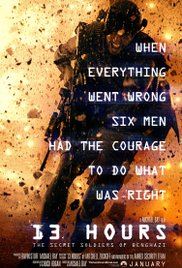
13 Hours: The Secret Soldiers of Benghazi is about the six military men who, despite orders to “stand down,” risked their lives to face the terrorists on their own and take control of the situation, without any outside help. There’s no political statement here, no political right or wrong, just a straightforward account of what happened, told entirely from the point of view of the Americans, especially one young American named Jack Silva, who wants to make it back home to his family but knows full well that he may die in a country “he doesn’t care about.” In this movie, we don’t find out anything about the terrorists or even see their faces. All we are told in the beginning is that Libya is a dangerous and crazy place and Americans have no business being there. The ones who are there certainly aren’t on a lark but are there with a sincere desire to help.

13 Hours: The Secret Soldiers of Benghazi is not exactly entertaining in the traditional sense but is well worth seeing so we may know what people oversees in dangerous places go through to protect lives and the interests of their country. The amazing thing about this movie is that it feels so authentic, with an absolute sense of immediacy, even though it was filmed in Malta and not in Benghazi. If moviemakers can make us believe that Malta is Benghazi, they could make us believe almost anything.

Copyright © 2016 by Allen Kopp

The Revenant ~ A Capsule Movie Review

The Revenant

The Revenant ~ A Capsule Movie Review by Allen Kopp 

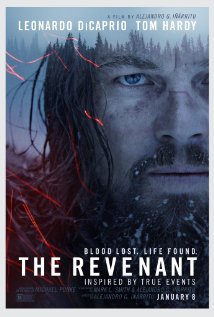
The Revenant (meaning “one who returns from the dead”) is set in the 1820s in an unspecified American wilderness where there are Indians, snow and bears. It’s an inhospitable place for men, especially white men, but that doesn’t keep them from being there. Leonardo DiCaprio plays a character named Hugh Glass who doesn’t believe in giving up as long as he has a breath left in his body. He and his half-Indian son named Hawk (his Indian wife is killed) are with a party of trappers. Their troubles begin when they are set upon by Indians who want to steal the pelts they have gathered to use in trading with the French. The Indians mean business and are proficient with killing white men with their arrows (often through the neck). A lot of the men in the trapping party are killed, while Hugh Glass, his son, and a handful of others get away.

In an encounter with a very angry grizzly bear, Hugh Glass is horribly injured. When the men of his party find him, he is near death. They do what they can for him, which isn’t much, and they expect him to die quickly. At least one of them, John Fitzgerald (Tom Hardy), wants Glass to die as soon as possible so they can move on before they are attacked by Indians again (and so he can get the money he has coming to him and go to Texas and buy some land). When Glass lingers for days (with his son Hawk always by his side), they are going to “do the proper thing” and shoot him in the head for the sake of their own convenience, but their leader, Captain Andrew Henry (Domhnall Gleeson) can’t go through with it. He agrees to leave volunteers behind to look after Glass until they can get back to civilization and send somebody after them. Hawk, of course, volunteers to stay behind, along with Fitzgerald and a very young man named Bridger (Will Poulter).

When Hawk finds Fitzgerald trying to smother his helpless father, he, of course, tries to stop him. Fitzgerald ends up killing Hawk, which Glass sees from where he is lying on the ground. Fitzgerald then attempts to bury Glass in a very shallow grave, even though he is still alive. Fitzgerald lies to the only person remaining, the decent Bridger, and tells him they are about to be attacked again by Indians and that they have to leave quickly before they are killed. Bridger doesn’t feel right about going off and leaving Glass, but he does it because he believes it is his only choice, leaving behind his canteen of water for Glass.

Glass lives and claws himself out of the makeshift grave that Fitzgerald put him in. He can barely walk but he somehow survives alone in the wilderness, eating fish or dead meat or whatever disgusting food he can find. Along the way he is befriended and helped by an Indian who sees how badly he is wounded. When a snowstorm hits, the friendly Indian builds a shelter for Glass to stay in. When the snowstorm passes and Glass awakes, he finds that his Indian friend has been hanged by a band of Frenchmen. As Glass gradually gains strength and is able to walk again, he has one thought in his head: to find Fitzgerald and make him pay for killing his son Hawk, the only thing, Glass says, that he has in the world. This is a story that reminds us how cruel and unrelenting nature is for every living thing (or indifferent, depending on how you look at it). And, of course, the most brutal beast in the wilderness is always going to be man.

Filmed using only natural light, The Revenant is somber and dark (not only in tone but in the way it looks), as it takes place in the winter when there is a heavy cloud cover. With its snowy vistas, rivers, animals, etc., it is beautiful to look at, absent any bright colors. The bear attack early in the movie and the Indian raid have an intense “you are there” feel to them. The music score is haunting and memorable. People will complain about the all-male cast but, after all, this is not Pride and Prejudice.

Copyright © 2016 by Allen Kopp

The Call of Cthulhu ~ A Capsule Book Review

The Call of Cthulhu

The Call of Cthulhu ~ A Capsule Book Review by Allen Kopp

H. P. Lovecraft (1890-1937), like Edgar Allan Poe, is one of those American writers who achieved little success or recognition during his lifetime but whose fame and worldwide reputation grew after his death. This “Belle Époque Original” contains Lovecraft’s novella The Dream Quest of Unknown Kadath and the short stories “The Call of Cthulhu,” “The Statement of Randolph Carter” and “The Doom that Came to Sarnath.”

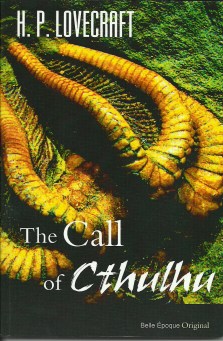
“The Call of Cthulhu” is one of Lovecraft’s most famous stories. A race of gigantic beings from beyond the stars once ruled earth before men existed. (They have dragon-like bodies, wings, and tentacles on their faces.) An earthquake or cataclysmic event caused the beings to become submerged in the ocean in a fabulous city. Though they are gone for the present, they are only sleeping and will one day return to their position of prominence on the earth. One of these beings, Cthulhu, controls the dreams of certain super-sensitive individuals (humans) who will keep the “Cult of Cthulhu” alive until the time that it (the beings) will rise again.

“The Statement of Randolph Carter” is a slight, though interesting, story of two friends who, while conducting unexplained “experiments” with the dead in a very old cemetery, encounter more than they bargained for.

“The Doom that Came to Sarnath” is a about a fabulous ancient city called Sarnath, the most glorious city on earth. For Sarnath to come into being and prosper, a race of undesirable beings from the moon (“in hue as green as the lake and the mists that rise above it; with bulging eyes, pouty, flabby lips, curious ears and without voice”) had to be conquered and eliminated. The moon beings never forget what happened to them, though, to make way for Sarnath and, after a thousand years, return to wreak their vengeance.

The Dream Quest of Unknown Kadath is too long to be a short story, so it must be a novella. It is a fantastic dreamscape that takes place entirely in the mind (dreams) of one Randolph Carter (the same name as in one of the short stories). In his wild and very imaginative dreams, Randolph Carter is on a quest to find the gods atop unknown Kadath and the “marvelous sunset city they so strangely withhold from his slumbers.” In his dreams he encounters many dangers and many hideous, unearthly creatures such as shantaks, night-gaunts, zoogs, moon-beasts, gugs, ghouls, etc. As repulsive as the ghouls are, they aid Carter in his quest because he facilitates the rescue of some of them who are being tortured by the moon-beasts. The quest to find what he is looking for is so difficult and dangerous that we have to wonder if it’s worth it or not, but apparently to Carter it is, possibly because he knows he is only dreaming and is never in any real physical danger.

The Dream Quest of Unknown Kadath is one continuous narrative with no chapter or section breaks. As usual with Lovecraft, the writing is dense and wordy, with long and effusive description, sometimes almost entirely description. I’m not a big fan of fantasy writing in this style, but Lovecraft is the grand master of the genre. He is such a good writer that he elevates genre writing to another level.

Copyright © 2016 by Allen Kopp  

The Big Short ~ A Capsule Movie Review

The Big Short

The Big Short ~ A Capsule Movie Review by Allen Kopp 

The Big Short exposes the Byzantine world of big banking and specifically the crisis that led to the worst financial crisis of the modern era in 2008, when the mortgage industry collapsed and brought the world economy down with it. We already knew that Wall Street is a morass of corruption and greed. This true story tells us just how bad it is. As one of the characters says, “Wall Street deliberately confuses people. They confuse people into believing that only they can do what they do.” To phrase it another way, nobody understands what’s going on on Wall Street and that’s the way Wall Street wants it.

There’s lots of talk, talk, talk in The Big Short. I hear all the words, all right, but I don’t know what they’re talking about a lot of time, which is all right, I guess, because I’m deliberately supposed to be confused. Most of the time talk that I don’t understand is boring and tedious, but in this case it’s not tedious because you know that something tremendous is underway, a crisis so bad that it “could well be the end of capitalism.” There were a few forward-seeing individuals who foresaw what was coming and did what they could to prepare for it, while most of the “experts” tried to assure the world that everything was fine and the banking industry never on a sounder footing. They couldn’t have been more wrong or more foolish. People don’t want to believe that something bad is going to happen, even when the handwriting is clearly on the wall. This is a statement on human nature.

The Big Short is a very fast two hours and ten minutes. While big banking is not a subject I’m interested in, this is a compelling story because we were all affected by what happened and we see that the level of corruption, greed and stupidity in the highest echelons of the nation’s banking system is astounding. And did banking suffer from the crisis and learn from its mistakes? No, it did not. The middle class bore the cost of the crisis (loss of homes and jobs), while banking executives took their obscene bonuses and laughed all the way to their estates in Nantucket. And will banking make sure that such a crisis never occurs again? No, it will not. After the dust settled, they went right back to doing what they had done that caused the crisis in the first place. Do what you can to protect yourself because it will all happen again, and it could be even worse next time.

Copyright © 2015 by Allen Kopp

I Went Home for Christmas

I Went Home for Christmas

I Went Home for Christmas ~ A Short Story by Allen Kopp

There’s a little man inside my head who sees with my eyes. I don’t know if he’s an angel or a devil or a combination of both. He told me I was dying and I told him I was too young. Not exactly young but too young to die.

It was December twenty-third and I was walking down a city street, right in the shopping district. You can imagine the press of people and the noise, the car exhaust and the oppressive feeling of being one of thousands in a herd. I crossed one street and just as I made it to the other side I felt a crushing pain; my vision began to fade and I crumpled to the sidewalk like a puppet with its strings cut.

When I woke up, I was lying in a high bed. Everything around me was white. An old woman, a nurse, I presume, stepped into my field of vision but didn’t look directly at me. I wanted to ask her what had happened to me, but the words wouldn’t come.

I drifted in and out, or, to put it another way, I was aware of what was going on around me and then I wasn’t. Doctors and nurses came and went; I was lifted, moved, probed and prodded. Finally, the little man inside my head told me to prepare myself for the unexpected. When I asked him what he was talking about, he wouldn’t tell me.

I don’t know how I came to be there, but I was in our old neighborhood on Vine Street. I was a child again and as I walked up the hill toward our old house, it was nearly dark. It was snowing a little and somehow I knew it was Christmas Eve.

The big sycamore trees, the yard, the house, everything looked just the same. I was sure I was dreaming because the house—the entire neighborhood, in fact—wasn’t even there anymore. I walked up the steps and entered the front door. I was so surprised at seeing my mother standing there, who had been dead for fifteen years, that I couldn’t speak.

“Feed the dogs before it gets dark,” she said, barely looking at me. “When you’re done with that, go up to your room and make your bed and straighten up. We’re having guests. You don’t want people to think you’re a pig, do you?”

What was it she told me to do? Didn’t she know that she was dead, that the house was gone and I was now older than she was?

“How old am I?” I asked, taking off my cap with the ear flaps.

“What? Did you say something?”

“I asked you how old I am.”

“You’re eight,” she said. “Did you forget?”

“No.”

“Are you all right? You don’t have that stomach thing that’s going around, do you?”

She put her palm on my forehead. She smelled like cinnamon and cigarette smoke.

“I’m fine,” I said.

“Well, you want to get your chores done before everybody gets here.”

When we were all sitting around the dining room table, I could hardly keep from staring. There was grandma with her shiny new false teeth and her beauty parlor hairdo; it was good to hear her laugh again. Next to her was grandpa with his scented pipe tobacco and his shiny bald head. I wanted to ask them where they had been all the time I thought they were dead, but I knew I couldn’t say that because they didn’t know what I knew. Is that what death is? Reverting back to some moment or other in your childhood? Why this moment in particular of all my childhood memories?

Father sat at one end of the table and mother at the other. Father couldn’t have been more than about forty when I was eight and I couldn’t remember him looking so young. He would only have about sixteen more years before he would die of the heart disease that plagued his family.

Next to mother was her unmarried, school-teacher sister, Doris. Mother used to get mad at us for making fun of Doris’s prissy ways. She fluttered her hands and sucked in her breath because she had emphysema. She wouldn’t live much past the age of fifty.

My sixteen-year-old brother, Jeff, sat to father’s left. People used to make me mad by calling us Mutt and Jeff. I was Mutt, of course. As usual, Jeff and I didn’t have much to say to each other. If he wasn’t making fun of me, he was stealing from me or punching me in the arms, so I had learned to avoid him as much as possible.

Father’s brother, my uncle Quinn, was there with his new wife, Shirley. She was Quinn’s third wife and she didn’t seem to have much to say to any of us other than “Lovely to see you again” or “Thank you for having us.”  Quinn’s daughter from his first wife, my cousin Beryl, sat between Quinn and Shirley. Beryl was fourteen and looked miserable. She had pimples and awful hair. She avoided looking at any of us, I was sure she hated Shirley and I wasn’t sure Shirley didn’t hate her back.

At one point during the meal, grandma looked at me and said, “You’re awful quiet tonight, hon. You’re not sick, are you?”

“Sick in the head!” Jeff said, and guffawed.

“No, I’m not sick,” I said.

“He had a rough day at school,” father said.

“No, I didn’t!” I said defensively. Truthfully, I couldn’t remember a thing about the day before I saw the house from down the street.

“You need to get a good night’s sleep tonight,” grandma said. “You don’t want to be sick on Christmas.”

“I’m not sick,” I said.

“You never know what’s going on inside his head,” grandpa said, and everybody looked at me. Jeff was smirking at me and Beryl looked at me with curiosity.

Nothing’s going on inside my head,” I said.

I felt guilty with the terrible knowledge I had of everybody at the table, but I tried to keep it from showing on my face. I smiled and nibbled at my ham and sweet potatoes.

After dinner Doris played the piano. She liked to play Bach and Mozart but nobody wanted to hear that. She usually ended up playing My Melancholy Baby or My Funny Valentine. Since it was Christmas, she played I Saw Mommy Kissing Santa Claus and Silent Night, singing along in her quavering soprano.

“Doris should have been a professional musician,” grandma said.

“She became a school teacher instead,” mother said.

With the adults all sitting around drinking coffee and wine and Jeff talking to his latest girlfriend on the phone, I put on my coat and boots and went outside. I was surprised to see Beryl standing in the front yard smoking a cigarette. She tried to hide it, but I saw the smoke coming out her mouth.

“You won’t tell my dad I was smoking, will you?” she said.

“I don’t care,” I said. I wanted to tell her she shouldn’t be smoking at her age, but I knew it was none of my business.

“Where are you going?” she asked as I walked past her.

“Just for a little walk,” I said.

I was afraid she was going to ask if she could come with me, so I broke out into a little run.

In all those decades, more than forty years, everything in the neighborhood looked the same. I remembered every detail, every tree, every house, bush and street light. I had to remind myself that none of it was real and it existed only in my mind. If I was having a dream, it was one of the most life-like dreams I ever had. I was an eight-year-old boy carrying around the thoughts and memories of a man over six times eight. If I wasn’t dead, it had to be the result of a fever.

I took a couple turns around the neighborhood and by the time I got back home it was snowing heavily. Perfect for Christmas Eve, as perfect as it could be.

Father, grandpa and Quinn were in the dining room talking about football and politics. The women were all in the kitchen, laughing and smoking cigarettes, I knew. Beryl sat in the living room alone. She smiled at me and flipped her hair back from her forehead.

“I think your brother is cute,” she said.

“Uh-huh,” I said. “He’s a jerk.”

“Do you think he likes me?”

“I don’t think he likes anybody very much.”

I took off my coat and went into the kitchen and had a peanut butter cookie and a piece of fudge. Mother was sitting at the table writing out a recipe for grandma.

“Where have you been?” she asked me.

“I just went for a little walk,” I said.

“You might have at least told me you were going.”

Grandma started in on a story about a couple of girls who were abducted and murdered and I went upstairs to my room.

My flannel pajamas were right where I had left them, in the middle drawer of the dresser. I slipped out of my clothes and into the pajamas and got into the old bed, which, I have to tell you, was the most comfortable bed I ever slept in. I was cold so I pulled the covers up over my head. It was so quiet I could hear the snowflakes falling outside my window. Soon I went to sleep.

I was only eight, so my mother and I still practiced the conceit that Santa was real and I believed in him wholeheartedly. He left for me by the tree downstairs, on Christmas morning, a red bike, a sled, some books, a new coat and lots of other things. In my stocking were nuts in the shell, an orange, hard candy and a carton of Christmas candy cigarettes. I got candy cigarettes every year in my stocking and, in past years, had made everybody laugh by pretending I was lighting up and smoking. The more I hammed it up, the more they laughed.

After we had opened all the presents, we all got dressed up and went over to grandma and grandpa’s. Grandma always cooked Christmas dinner. Besides turkey and dressing, we had roast beef, mashed potatoes and gravy, cranberry salad, macaroni and cheese baked in the oven that was the best I ever tasted and, for dessert, orange peel cake, apricot bars, cherry pie and pumpkin pie with real whipped cream. I didn’t mind sitting at the kids’ table with Beryl and my cousins Naomi, Tibby, Gloria and Bennett. Beryl was disappointed that Jeff was old enough to sit at the main table. He didn’t look at her the whole time.

After dinner the kids played in the snow and the adults sat around in the house smoking and drinking cocktails. Grandpa went upstairs to take a nap. Doris played the piano again for a while and when she was finished playing grandma played some Christmas records.

There were people at grandma and grandpa’s that Christmas Day that I didn’t even know, uncles and cousins and people from out of town. They would look at me and ask me how old I was, what grade I was in at school and if I had been a good boy during the year. I could have amazed them with what I knew if I had wanted to.

Mother helped grandma put away the leftovers and clean up in the kitchen and, after we all had another piece of fruit cake or pumpkin pie, we packed up and went home. I was tired and I went to my room early. Mother was still convinced I was sick, so she didn’t give me any chores to do. Everything could wait until the next day.

I put on the flannel pajamas and got into bed and turned off the light. It had stopped snowing, the moon and stars were shining and the light coming in at the window was blue-tinged and restful. I was about to drift off to sleep when the little man in my head spoke to me again.

“Have you had a good time?” he asked.

“Yes, yes,” I said, “but I don’t understand what I’m doing here. Is this what happens when you die?”

“You think you’re dead?”

“I don’t know. Am I?”

“There are no simple answers to these questions. Or, to put it another way, it’s not for us to know.”

“I don’t want to be eight years old again forever and I don’t want to live the same stupid life over again. Going through the ninth grade again the same as it was before? No, thank you!”

“Hah-hah-hah!” he said. “You’re such a complainer. Always were!”

When I awoke again, I was in the same high bed. I blinked my eyes a few times and looked toward the window where I could see blue sky and white clouds.

“What day is it?” I asked a woman in white who was standing there.

“It’s December the twenty-seventh,” she said.

“I went home for Christmas,” I said.

She smiled uneasily and nodded her head.

“It was the best Christmas ever. They were all there. All the dead ones. I didn’t know it could be that way. Einstein was right, wasn’t he?”

The woman in white shrugged her shoulders and looked away. I had to look at her again to make sure she wasn’t an angel.

Copyright © 2015 by Allen Kopp

The Immortal Nicholas ~ A Capsule Book Review

The Immortal Nicholas

The Immortal Nicholas ~ A Capsule Book Review by Allen Kopp 

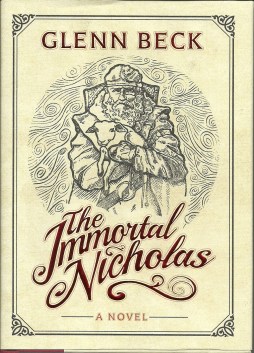
The Immortal Nicholas by Glenn Beck is an unusual Christmas-themed novel that never mentions the word “Christmas” and isn’t any traditional Christmas story as we’ve come to know it. The main character is a man named Agios (Ah-GEE-os). He is embittered because his wife dies and then his young son dies through what he believes is his own carelessness while harvesting frankincense from trees growing on a mountainside that he himself has protected from intruders with poisonous snakes. He has no hope in life and wants only to die. When he is forced to leave his home, he encounters in his travels a young man named Krampus who is physically handicapped and who has been tortured by the Romans. He immediately takes up with Krampus and becomes his protector and, in a way, his father. His knowledge of frankincense and his possession of a small amount of the precious substance eventually leads him into the company of three “kings” (Balthazar, Melchior and Caspar) who are following a star that they believe will lead to the foretold Messiah who will save the world.

Agios finds himself in Bethlehem with the three kings at the stable where Jesus lay as a tiny baby. He wholeheartedly believes in the promise of Jesus’ birth and from that moment vows to protect Jesus, Mary and Joseph from those who would do them harm. He and Krampus follow Jesus around through the years, always staying in the background. He loses sight of Jesus until Jesus is a grown man and is going around ministering to the masses. Agios hears of Jesus’ ability to heal the lame and sick and he somehow believes that Jesus can cure Krampus of whatever is wrong with him if Agios can get him close enough to him. Agios and Krampus are present at the Sermon on the Mount but are not able to get very close to Jesus because of all the people. Finally, after all they go through to keep an eye on Jesus while staying always on the fringes of what is going on, they are there to witness the crucifixion. Agios is deeply stirred by the cruel death of the savior and goes away an embittered man. He believes that is the end of the promise that the birth of Jesus Christ gave to the world.

For some reason Agios doesn’t die but lives for centuries, to watch Krampus die and everybody else he ever cared about. While living as a hermit in the mountains centuries after the death of Jesus, he befriends a shepherd boy named Nicholas and learns from him that Jesus arose after his crucifixion, proving that his promise to the world was true and that he overcame death. From that moment on, Agios’ life is different. Despite his desire to not want to be near other people, he and Nicholas become close and Agios becomes a surrogate father to him. As Nicholas grows into adulthood, he becomes a priest with a very generous spirit and out of that the legend of Saint Nicholas grows, with a direct link back, through Agios, to the ministry of Jesus Christ.

The notes on the dust jacket tell us that Glenn Beck expanded The Immortal Nicholas into a novel for adults that started out as a children’s story. It’s simply written but smart and engaging enough for adults. It took a few surprising turns for me. When I started reading it, I didn’t know how a story about a man who lived at the beginning of the Christian Era could have anything to do with Saint Nicholas. I deliberately didn’t want to read any synopsis or summary while reading the book because I wanted to find out for myself where it would lead. Think what you will of Glenn Beck and his conservative principles, he is a very effective fiction writer.

Copyright © 2015 by Allen Kopp
In the Heart of the Sea ~ A Capsule Movie Review

In the Heart of the Sea

In the Heart of the Sea ~ A Capsule Movie Review by Allen Kopp

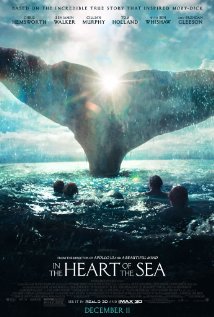
In the Heart of the Sea was directed by Ron “Opie” Howard and is based on a non-fiction book by Nathan Philbrick called In the Heart of the Sea: The Tragedy of the Whaleship Essex. It’s a true-life story that happened in 1820-21 and that thirty years later inspired Herman Melville to write his epic sea novel, Moby Dick.

The movie is structured as a flashback. The young author Herman Melville (played by Ben Whishaw, who was poet John Keats in Bright Star) visits a grizzled, middle-aged sea veteran named Tom Nickerson (Brendan Gleeson), who, thirty years earlier, at age fourteen, sailed on the whaleship Essex. Melville intends to write a novel about the Essex, but especially about the monster whale that was said to have rammed the ship and destroyed it, leaving its crew members stranded in the southern Pacific Ocean for more than ninety days. Nickerson doesn’t want to talk about his experiences on the Essex, but Melville (and Nickerson’s wife) persuades him to loosen his tongue and the two men spend all night talking about what happened, with Melville taking notes.

The captain of the ship, George Pollard (Benjamin Walker, who played Lincoln in Abraham Lincoln, Vampire Hunter) and the more-experienced first mate Owen Chase (Chris Hemsworth) don’t like each other very much. Captain Pollard, from an old navy family, doesn’t let Owen Chase, the son of a farmer, forget that he is in charge and has final authority in all matters. Pollard has promised investors that he will return with his ship full of whale oil (which might take as long as two or three years) and isn’t interested in taking precautions that Owen Chase believes are necessary to protect the lives of the men on board. What’s a life here or there when there’s money to be made?

They go out to isolated areas of the ocean and find whales and kill them (I know, it’s cruel), cut them open and extract oil from them. After several months at sea, they haven’t found enough whale oil to satisfy Captain Pollard, so he is willing to risk going to an area in the southern Pacific that he has been warned against. The Essex has an encounter with a giant white whale a hundred feet long, but the men are not able to kill it because it’s so big. (When it’s man against nature, man always loses.) They succeed in angering the god-like whale and it eventually “stoves” the ship, leaving all surviving crew members to toddle around in life boats thousands of miles from the coast of South America.

For those of us of a literary bent, In the Heart of the Sea is interesting because of its connection to Herman Melville and the creation of an American literary masterpiece, Moby Dick. It’s an old-fashioned kind of movie that could have been made in the 1940s or ‘50s (using the latest in 3D technology, of course) and for that reason it’s not going to be for everybody. (For my money, a true-life seafaring adventure like this one is much more interesting than a fabricated, flight-of-fancy piece of fluff like The Martian.) During the action sequences, the dialogue is almost unintelligible, so we can only get the gist of what’s being said, but that’s usually all we need. Christ Hemsworth as the star is not as commanding or charismatic as other male actors (for example, Tom Hardy in Mad Max Fury Road), but that’s only my opinion. Those considerations aside, there’s plenty in In the Heart of the Sea to recommend it to the discriminating moviegoer.

Copyright © 2015 by Allen Kopp

Krampus ~ A Capsule Movie Review

Krampus

Krampus ~ A Capsule Movie Review by Allen Kopp

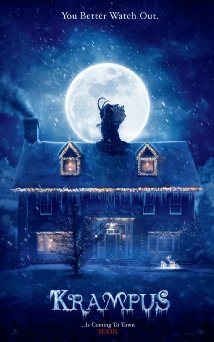
If you like Christmas movies and also horror movies, Krampus is a combination of both. A boy named Max lives with his family in their beautiful suburban home. As Max sees all the Christmas superficiality around him, he wishes that Christmas could be the way it used to be. When his creepily androgynous cousins tease him at the dinner table about still believing in Santa and one of them steals and reads Max’s letter to Santa out loud, Max has what my mother would call a fit and says he hates Christmas and all his relatives. That’s when things begin to change for the family. A monster blizzard hits the neighborhood, the streets become impassable, the power goes off, it’s still a couple of days before Christmas and the house is crammed with sickening relatives.

In Austro-German folklore, Krampus is a demonic spirit who is the opposite of Santa Claus. If Santa rewards you for being good during the year, Krampus punishes you for being bad. Max has a German-speaking grandmother who, we see via animated flashback, had her own experience with Krampus when she was a little girl during World War II. Max’s declaration that he is through with Christmas brings down the hideous Krampus, the antithesis of Santa and the opposite of holiday cheer, on himself and his family. Krampus starts out as a shadowy, hulking being that jumps from house to house in the neighborhood, and things only get worse from there. The nearly silent grandmother makes sure the fire is kept burning hotly because she knows that if Krampus enters, it will be through the chimney.

Krampus is full of creepy snowstorm effects (I like snowstorms) and demons galore, including murderous Christmas cookies. Besides Krampus himself (itself?), there is a whole host of hideous elves to help him wreak havoc. In the not-very-likeable family, most of us will probably recognize some of our own relatives, especially in the grouchy aunt and the nasty-at-the-core cousins. With a nod toward Dickens, Krampus resolves itself at the end in the expected way. We’re all going to wake up and everything will be all right, won’t it?

Copyright © 2015 by Allen Kopp
Slade House ~ A Capsule Book Review

Slade House

Slade House ~ A Capsule Book Review by Allen Kopp

Slade House is a horror/mystery/fantasy novel by English novelist David Mitchell. There’s something very peculiar about the house in Slade House. To the casual observer, it doesn’t even exist in this “small English city.” The place where the house is (or was), however, has been the scene of several unexplained disappearances. On the last Friday in October in 1979, a middle-aged woman, Mrs. Bishop, and her adolescent son, Nathan, disappear without a trace. Then, nine years later, on the last Friday in October in 1988, a young, divorced policeman named Inspector Detective Gordon Edmonds disappears. Then, nine years later, in 1997, it’s an unhappy, overweight college girl named Sally Timms (along with several “friends” who are exploring psychic phenomena). In 2006, it’s Sally Timms’ lesbian, journalist sister, Freya Timms, who is trying to uncover some clues into the disappearance of her sister. We learn that all these people who vanished have something in common: they are all “Engifteds,” meaning they have a special “sense” that allows them to see beyond the veil of the unknown.

Gradually we learn the secret of the house, which I won’t give away too much here. There are two “proprietors” of the house and they are twins, Jonah and Norah Grayer, who are well over a hundred years old. They are “soul vampires,” but they won’t be satisfied with just any souls—only the souls of the rare people who are the “Engifteds” will do.

The secret of the house is ingenious: the real house that sat on the site was destroyed by German bombs in World War II. The “house” of Jonah and Norah Grayer exists in what is called an “orison,” which is a “reality bubble.” The people whom Jonah and Norah choose to come to them are able to find the “aperture” in the brick wall in the alleyway; the aperture, a small iron door, is a “portal” into the orison in which the house exists. Each of those lured in have (or think they have) a special reason for wanting to get in. Once inside, they are tricked into eating or drinking a substance called “banjax” that will make it easy for Jonah and Norah to extract their souls. (They must have a soul every nine years to continue to exist.)

Slade House is a fascinating, compulsively readable novel, spare and concise in its 238 pages. It’s also smart and ingenious, not quite like anything I ever read before—a new twist on the traditional haunted house story. Now, if somebody will just make a quality movie out of it that’s as intelligent as the book, that’s a movie I would certainly pay money to see. Just don’t put Sylvester Stallone in it.

Copyright © 2015 by Allen Kopp

If You Don’t Tell Santa What You Want, You Won’t Get Anything

If You Don't Tell Santa What You Want, You Won't Get Anything

If You Don’t Tell Santa What You Want, You Won’t Get Anything ~ A Short Story by Allen Kopp

We lived in a small town with small stores, where there was no sit-down Santa to talk to. The nearest big stores were in the city two hours away. Every year my mother and grandma took my sister and me to see Santa and do some Christmas shopping.

I was little and didn’t know any better so I liked the city, which was so unlike the town we lived in. I liked the cars and the crowds of people standing on the street corners waiting for the light to change so they could walk across; the tall buildings and the roaring buses that had a particular smell of their own. I liked the whistle of the policeman directing traffic and the clang of the bell-ringing Santa on the sidewalk (not the real Santa, I knew) who was trying to get people to drop money into his pot. Of course, it had to be cold weather (the colder the better) and not raining, or none of this would have held any appeal for me. Cold weather was absolutely essential to get the feel of Christmas.

I was six so I still firmly believed in the myth of Santa Claus. I also believed that if you weren’t able to talk to Santa and tell him what you wanted in the run-up to Christmas, you would be out of luck and would get nothing. No presents, no Santa, no nothing. I already knew the world was a hard place.

Mother had lived in the city before she was married so she knew her way around downtown. As she maneuvered the car through the traffic to get to where she wanted to park, I was still sleepy from the Dramamine I had been given before we left home but I didn’t feel like vomiting, so that was the important thing. She parked in a pay parking lot a few blocks from where we were going and we all got out of the car.

“They charge a dollar now for parking,” mother said. “I don’t know what the world is coming to. Just last year it was fifty cents.”

Grandma helped my sister and me on with our hats and gloves and we began the several-blocks walk down to the department store where Santa was.

This store was famous for its animated Christmas windows. We stopped to take a look at them but there were so many people crowded around that we couldn’t see them very well, so we went on inside the store. I was starting to feel little-kid anxiety about seeing Santa. I might freeze up when I sat on his lap and not be able to tell him what I wanted. I felt my throat constrict at the thought.

To get in to where Santa was, you had to walk through the “Winter Wonderland” that was supposed to be the North Pole. There was a wooden walkway to get through it and there were plenty of elves around to make sure nobody left the walkway and tried to walk on the fake snow, pull on the fake trees (trees at the North Pole?) or try to get a closer look at the reindeer. It was all very pretty, with Christmas music blasting over the sound system, but I couldn’t wait to get through it and in to see Santa.

After we passed through “Winter Wonderland,” There were ropes on poles to keep all the people in a neat line. It was about half adults and half kids. Some of the women held tiny babies or pushed them in strollers. You knew they were too young and would only waste Santa’s time. Most of the kids, you could tell, were trying to hold still and not squirm too much. A few of them looked as nervous as I felt.

In about fifteen minutes, we finally came to the place where we could see Santa on his throne. I breathed a sigh of relief when I was actually able to see him and know he was there. There were still about twenty more little kids in front of me, though, before it would be my turn.

Santa was flanked by yet more elves to keep the line moving and keep any one child from taking up too much of his time. Each child was placed on Santa’s lap, Santa leaned over to let the child speak into his ear for about twenty seconds and then the child was removed in an elfin movement of robotic efficiency.

My heart was beating too fast as I got nearer to Santa. I tried to keep in my mind what I was going to say, but I wasn’t sure if I’d be able to remember it. I knew my mother, sister and grandma were somewhere behind me, watching me, but I wasn’t thinking about them. I only wanted to get this over with.

Finally it was my turn. A burly elf with acne put his hands on either side of my rib cage and hoisted me up; I swung my legs over and found myself face to face with Santa. He smiled at me and I could see his thick lips through his whiskers. He breathed on the side of my head.

“What would you like for Santa to bring you?” he asked.

“Uh, I want a sled and a pair of cowboy boots and…”

“What else?”

“A Howdy-Doody puppet and a racing car set and some books and…”

“Yes?”

“That’s all I can think of right now.”

“Have you been a good boy this year?” he asked.

“Oh, yes!”

He gave me a candy cane, and the same elf who had lifted me up then lifted me down. I realized then how silly all this was.

After my sister had her turn with Santa, I rejoined mother and grandma. “Did you tell him everything you wanted?” mother asked me.

“Everything I could think of,” I said.

“Now, that doesn’t mean you’ll get everything just because you told him you wanted it.”

“How does he remember what people tell him without writing it down?” I asked.

“I guess he has a photographic memory.”

“He’s really something, isn’t he?”

We had lunch on the mezzanine level where you could look down and see hundreds of people moving around like ants. There was nothing like that back home. Then after lunch it was on to the serious shopping.

Copyright © 2015 by Allen Kopp