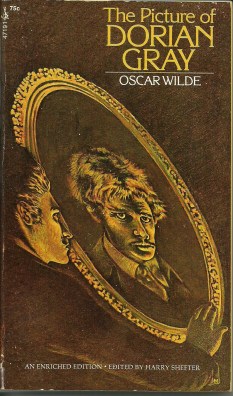
The Picture of Dorian Gray ~ A Capsule Book Review

The Picture of Dorian Gray cover

The Picture of Dorian Gray ~ A Capsule Book Review by Allen Kopp

London in the 1880s: Not only is Dorian Gray young, innocent, and fabulously wealthy (he doesn’t have to earn his daily bread), he is also extravagantly beautiful. When sometimes-mediocre painter Basil Hallward meets the beautiful young Dorian, he becomes obsessed and infatuated. “Gay attraction” and “love” are never mentioned, but isn’t that what we’re talking about here? After all, it’s Oscar Wilde.

Basil Hallward rises above his own mediocrity when he paints Dorian’s portrait. It is, everybody agrees, his masterpiece. He could sell it for a tidy sum but decides to give it to Dorian. Dorian mouths an innocent (or not so innocent) prayer to the effect that he wishes he could always remain young and beautiful, while his portrait would show the inevitable signs of aging and living. In a touch of “magic realism” (how else do you explain it?), he gets his wish.

Early in the story, Dorian meets Lord Henry Wotton, a character who could be Wilde himself. He’s worldly, cynical, intelligent, and in possession of a scathing wit. He speaks in epigrams (“The only thing worse than being talked about is not being talked about.”) and doesn’t believe in goodness or much of anything else. He becomes an important character in the story because he is a corrupting influence on Dorian in his youth. Dorian admires him and is drawn to him and seeks to emulate him, even though he has a lot of the devil in him.

Dorian begins to live recklessly. He “falls in love” (or believes he does) with a young Shakespearean actress named Sybil Vane. Sybil’s biggest failing is that she doesn’t know what Dorian is all about or what she is getting herself into. Dorian believes she is a divinely talented actress and says he wants to marry her. When he brings his friends to the theatre to see her in a performance of Romeo and Juliet, she is terrible. She disappoints Dorian and embarrasses him in front of his friends. When he sees her after the performance, he is cruel to her. He tells her she is not what he thought she was and he can’t marry her and doesn’t want to see her again, while she says that her happiness at being his betrothed has robbed her of her “art.” He leaves her heartbroken and the next day discovers that she has committed suicide.

From Sybil Vane’s suicide, Dorian goes on to do other bad deeds. People are naturally drawn to him because he’s so attractive, but he turns out to be poison to everybody who comes into his sphere, male and female alike. Several young men are “ruined” because they acquire the taint of scandal from being Dorian’s “intimates.” (Homosexuality is still a crime in England at this time.) There are ruined careers and other suicides. Dorian immerses himself in a world of vice and degradation, frequenting opium dens and other low places of ill repute. Eventually he commits murder.

While Dorian becomes more and more immersed in sin, he remains young-looking and beautiful. At age thirty-eight, he still looks the same as he did at twenty-three. We (the reader) know what his secret is if nobody else does. The portrait that Basil Hallward painted of him (which he keeps locked away in the attic of his house) bears his shame and the marks of his vice and sin. It becomes more and more hideous while Dorian himself remains unscathed. The painting is, in a way, his soul and his conscience. We know this isn’t going to end well for Dorian.

There are elements of Stevenson’s The Strange Case of Dr. Jekyll and Mr. Hyde in The Picture of Dorian Gray; also elements of Poe, although The Picture of Dorian Gray is generally easier reading than Poe. (We are told in the introduction that it started out as a shorter piece until Wilde expanded it into a novel.) It’s a readable classic, worth revisiting, if you read it once a long time ago, as I did, and want to experience it again now that you’re older and wiser. (If you’re interested in the life and too-early death of Oscar Wilde, the 1997 British movie, Wilde, makes for fascinating viewing.)

Copyright © 2016 by Allen Kopp
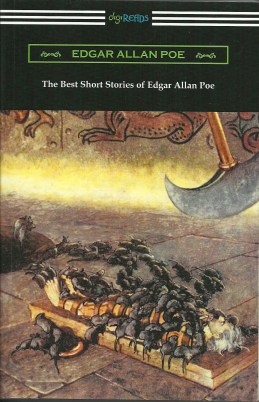
The Best Short Stories of Edgar Allan Poe ~ A Capsule Book Review

The Best Short Stories of Edgar Allan Poe

The Best Short Stories of Edgar Allan Poe ~ A Capsule Book Review by Allen Kopp

In this collection are twenty-eight short stories by Edgar Allan Poe, from the really well known (“The Tell-Tale Heart,” “The Pit and the Pendulum,” “The Fall of the House of Usher”) to the less well known (“A Tale of the Ragged Mountains,” “The Sphinx,” “The Imp of the Perverse”). Poe’s best stories are the ones where he gets right to the story and doesn’t theorize or provide dry, unnecessary information, as in the first couple of pages of “The Murders in the Rue Morgue,” a fine story if you start reading about the third page. And, no, there’s no morgue in this story where dead bodies are kept. The “Rue Morgue” is a street in Paris where two women, mother and daughter, are brutally murdered, stumping police, especially since the body of the daughter is stuffed up inside a chimney. The 1932 movie version of the story, a vehicle for Bela Lugosi, bears little or no resemblance to the original story. Yes, there’s a killer ape in the story and also in the movie, but that’s where the similarity ends.

The movies have not been kind to the works of Edgar Allan Poe. His stories just aren’t cinematic. Maybe some day somebody will make a movie from one of his stories that is faithful to the original story. In the 1960s, somebody thought it would be a good idea to make a series of movies based on the works of Poe starring that master of horror, Vincent Price. These movies were not serious attempts to translate the works of Poe to the screen but were mostly a way for filmmakers to make money, and I’m sure they succeeded in this goal, or there wouldn’t have been so many of them. To know what the stories of Poe are really like, you have to read them in their original form and not watch cheesy “B” movies.

Poe wrote on subjects that probably most other writers of his generation would have found too distasteful: mutilation murder, lunacy, drug addiction, being interred alive, being closed up in a wall to die, rotting corpses, rats, catacombs, disease, jealousy, revenge, etc. He was preoccupied with dying and death and the dark side of things; he probably suffered from some sort of undiagnosed mental illness. He didn’t write about monsters from another realm as H. P. Lovecraft did, but about monsters that exist right here on earth that you might just bring upon yourself if you’re not careful. In “The Imp of the Perverse,” a man commits a successful murder and has an easy life living on the money from the person he killed. Everything is going well for him, but he just can’t keep from confessing the murder and he ends up on the gallows. In “The Premature Burial,” a man who experiences catalepsy (trances that resemble death) has a morbid fear of being buried alive. In “The Black Cat,” an alcoholic who loves animals begins to have a consuming hatred for, and fear of, a certain black cat. In “The Facts in the Case of M. Valdemar,” a “Mesmerist” hypnotizes a man who is on the brink of death from tuberculosis. As an experiment, he keeps the dying man in a state of suspended, hypnotic animation, neither alive or dead, for a period of seven months. “The Pit and the Pendulum” is about a prisoner of the Spanish Inquisition being tortured in a fiendish and cruel way. In “Hop-Frog,” one of Poe’s best stories, a dwarf who is court jester for a cruel king exacts his revenge in the most dramatic way possible.

Poe elevated and legitimized the short story. In some ways, he is the father of the American short story. If you read his stories now, you will see why he endures. The best of his stories are the best ever written.     

Copyright © 2016 by Allen Kopp 

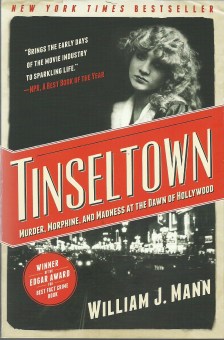
Tinseltown: Murder, Morphine, and Madness at the Dawn of Hollywood ~ A Capsule Book Review

Tinseltown cover

Tinseltown: Murder, Morphine, and Madness at the Dawn of Hollywood ~ A Capsule Book Review by Allen Kopp 

In the early 1920s sound was still several years off, but the movies didn’t need sound; they were more popular than ever after the First World War. Even without sound, movies were becoming more technically advanced and were evolving into a truly American art form. Every town in America had its own movie theatre. Every movie-goer had his or her favorite star and was willing to plunk down hard cash to see them on the screen. Stars made huge sums of money and their movies reaped enormous profits for the movie studios. Overseas markets held huge potential for additional profits. What a business!

All was not sunny in sunny Hollywood, however. Movie stars lived extravagantly and were often seen by the world at large as unprincipled and immoral. Then, as now, everybody loved a juicy scandal. Just a hint of scandal involving a famous person elicited sensational headlines. Mabel Normand, for example, was a huge comedic star at the top of her game, but she was also a notorious party girl who became as well known for her appetites for booze and cocaine as for her screen performances. Roscoe “Fatty” Arbuckle was a popular comedic actor even more famous than Mabel Normand. He hosted a wild party that didn’t turn out so well. A young starlet named Virginia Rappé was seriously injured at the party and later died. There were those who said Fatty Arbuckle raped her, although he vehemently denied it. Popular star Wallace Reid, known for his wholesome good looks, developed a morphine habit. He had morphine delivered to his home every day and died at a tragically young age in a sanatorium. Beautiful young star Olive Thomas died of an accidental poisoning in Paris after an evening of drug- and booze-fueled partying in Paris nightclubs. The effect of all these scandals was to galvanize reformers and do-gooders into calling for censorship and stringent regulation of the movie industry by the government.

The biggest scandal of them all, however, was the murder, in early 1922, of distinguished movie director William Desmond Taylor in his own home. People outside of Hollywood had never heard of William Desmond Taylor, but after he was murdered everybody heard of him. His murder and its solution became a national obsession. This scandal was just one more reason, reformers said, for measures to be taken to “clean up” Hollywood. If the things actors did on the screen weren’t bad enough, their own private lives were ten times worse.

The murder of William Desmond Taylor is the scandal at the center of Tinseltown: Murder, Morphine, and Madness at the Dawn of Hollywood by William Mann. All the other scandals paled in comparison. What made the Taylor scandal so sensational and so intriguing to so many people was that it was all but insoluble. Did Mable Normand kill Taylor? She was his “best friend.” Because she was the last to see him alive, she immediately became a suspect. Or could it have been Mary Miles Minter, the little blonde star not yet twenty who was obsessed with Taylor and believed herself in love with him, even though he was almost thirty years older? More likely than not, it was Charlotte Shelby, Minter’s mother. She was known to have a raging temper and was vehemently against her daughter’s association with the much older man. How about light-fingered Edward Sands, Taylor’s former valet, who had a criminal past? Or maybe it was Henry Peavey, Taylor’s swishy valet at the time of his death. If he had a reason for killing Taylor, what might it have been?

And then there was Hollywood bottom feeder Margaret “Gibby” Gibson (otherwise known as Patricia Palmer), a would-be actress who struggled for years to become a star and never made it. She seemed to be willing to do almost anything to get ahead and was known to associate with low-life “bunco” artists who made a living by “shaking down” millionaires. (Just mention the Mann Act and they were almost certainly willing to pay any amount to stay out of trouble.) Did she kill Taylor as part of a scheme hatched by one of her nefarious friends?

Tinseltown: Murder, Morphine, and Madness at the Dawn of Hollywood is a fascinating true crime story with a rich cast of real-life characters. For those interested in the dazzled and dazzling 1920s (before the bad old Depression) and specifically in the still-young movie industry, this book is going to be hard to resist. I could hardly put it down and that’s something I can’t say about very many of the thousands of books I’ve read in my lifetime. It’s not great literature, but it will transport you to another time and place for a while and there’s a lot to be said for that.

Copyright © 2016 by Allen Kopp

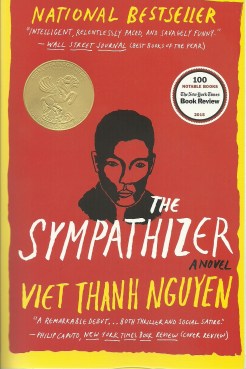
The Sympathizer ~ A Capsule Book Review

The Sympathizer cover

The Sympathizer ~ A Capsule Book Review by Allen Kopp

The Sympathizer by first-time novelist Viet Thanh Nguyen is this year’s Pulitzer Prize winner for fiction. It’s about the Vietnam War, the Vietnam era and, in particular, one man’s role in the whole mess. (What ever happened to the rule about novels having to be about American life to be considered for a Pulitzer Prize?) It’s 400 (almost) densely packed pages (no quotation marks; the dialogue is blended in here and there wherever it occurs). The Vietnam War and the Vietnam era would not be on my list of favorite subjects for fiction, but, for me, the saving grace of The Sympathizer is that it’s so good and such accessible, interesting reading.

The story of The Sympathizer is being told in the first-person by a narrator whose name we never know. We learn toward the end of the book that he is writing this whole thing as a confession while in solitary confinement as part of his “re-education” (another word for torture) at the hands of the communists. He is the bastard son of an illiterate Vietnamese woman and a French priest. Since he has spent part of his youth in America, he is “Americanized” and knows English well, but, in spite of that, he never feels like an American but always a bastard, the unwanted foreigner. After the fall of Vietnam and his narrow escape, along with many others, to America, he and many of his fellow countrymen want only to return to help liberate their country. What is more important that freedom and independence? The answer is nothing. (Nothing becomes a very important word to him at the end of the book.) Wait a minute, though! There’s something funny about this man. He claims to be on the side of the anticommunists, but the truth is he’s a secret communist agent. Where is he going with that? Is it safe to say he is conflicted? In the interview at the end of the novel, the author of the book, Viet Thanh Nguyen, says he deliberately wants to rattle the reader. I wouldn’t exactly say I was rattled, but only a little mystified.

For me the best parts of the book are the harrowing escape (by the narrator and his friends) from Saigon on the day it falls and the long section in the middle of the book where the narrator travels to the Philippines with an American movie crew to work as consultant on a movie that is being shot about the Vietnam War. (Ostensibly the movie is Apocalypse Now.) He wants to ensure that Vietnamese people are treated fairly in the movie but falls far short of that goal. There are a few lighter moments in The Sympathizer, as when the narrator is “dating” a much older Japanese woman who doesn’t care for him as much as he cares for her and, later, his infatuation with a beautiful Vietnamese girl named Lana (Lan); but there are also some horrible things, such as a couple of murders, a gang rape, people being dismembered by land mines, torture and other terrible things humans do to other humans in the name of some noble cause. This is a book, after all, about war. Did I need to read a book about Vietnam? Probably not, but now that I’ve read it through to the end, I’m glad to be done with it. If anybody ever asks me, I may be the only person in the room to have read it.

Copyright © 2016 by Allen Kopp 

Penny Dreadful, Season 3 ~ A Capsule Review

Penny Dreadful poster

Penny Dreadful, Season 3 ~ A Capsule Review by Allen Kopp

Showtime’s gothic horror series set in Victorian London, Penny Dreadful, draws its inspiration from classic dark literature and horror films: The Picture of Dorian Gray, Frankenstein, Dracula, Dr. Jekyll and Mr. Hyde, The Wolf Man. If you think those themes have been done to death, well, Penny Dreadful puts a new spin on all of them.

Season three has shown the advent of a few new characters, namely Dracula, in the guise of a natural historian named Dr. Alexander Sweet; Dr. Henry Jekyll, a “wog” (half-caste Indian) who was Dr. Victor Frankenstein’s only friend going back to medical school; an “alienist” named Dr. Seward (played by Patti Lupone, forbidding but oddly comforting) who undertakes the job of “analyzing” and counseling Vanessa Ives with her many supernatural problems; a “girl of the streets” named Justine, taken up by Lily and Dorian as their new protégé in evil; and Mr. Renfield, a mousey young man who works as secretary for Dr. Seward and who is in thrall to Dracula. Mr. Renfield finds out all he can about Vanessa and reports back to Dracula. (Vanessa, if you will remember going back to the previous season, is much desired by the forces of darkness.) But, wait a minute, isn’t there something familiar about Dr. Seward? Didn’t Vanessa meet her in another place and another time and in a different persona? Vanessa is sure of it, no matter how much Dr. Seward denies it.

When season three begins, soulful, cleft-chinned Dr. Victor Frankenstein is still pining over Lily, who was Brona before she died of consumption and he “reanimated” her. When his old friend Dr. Henry Jekyll arrives on the scene again, Victor is in a bad way with his obsession over Lily and his addiction to morphine, which he injects into his arm. Dr. Jekyll works with dangerous mental patients in Bedlam hospital. After Victor tells him the story of Lily, he says he can help make Lily what Victor wants her to be, by using the treatment he uses on out-of-control insane people at Bedlam. They can help each other. Victor knows how to resurrect people from the dead and Henry can make them docile and amenable.

Ethan Chandler, the wolf man, has been extradited back to America by a one-armed Scotland Yard man named Bartholomew Rusk. (Ethan, you will remember, butchered several people in England, but didn’t they, as the saying goes, have it coming?) In the wild New Mexico Territory, on a train enroute to the place where justice will be administered, the party is waylaid by a band of men who kidnap Ethan because Ethan’s father sent them. Have they saved him or is there something more sinister afoot? But—wait one damn minute!—besides the party who kidnapped Ethan, two other men are on his trail: a mysterious Indian named Kaetenay and our old friend Sir Malcolm Murray who has been recruited by Kaetenay to, as he says, “save our son.” What does he mean by this?

And then there is our friend, “the creature,” whom we met almost all the way back at the beginning of the series. Dr. Frankenstein “created” him, unhappily it seems, and he has been constantly dogging Dr. Frankenstein to do something to help him. His original intention of wanting a mate seems to have been superseded by other, more pressing, desires. He loves poetry and he seems to only want to be loved, but he will rip your head off if you give him any reason to do so. In season three, we are finding out more about his origins and how he came to be changed from a “normal” man into a monster. There is some connection between him and poor, tormented Vanessa Ives. As season three progresses, we will learn more about this.

A recurring theme in Penny Dreadful is the duality in human nature: every good that exists is counterbalanced by an equal or greater amount of bad; in every angel there’s a demon waiting to get out and in every demon an angel. It’s fantasy TV, not for everybody, of course, but for the thinking person who is fed up with raunchy sit-coms and mind-numbing commercials and drivel that TV serves up every minute of every day. It could have been schlock but it’s not. It’s intelligent and engaging, always a little surprising. (Some of the dialogue is brilliant, as in the exchanges between Dr. Seward and Vanessa.) Every episode is beautiful to look at, whether it’s the deserts of the American Southwest or the dreary, crowded streets of Victorian London. The acting is sincere; the actors never seem to think themselves superior to the material, even if it’s campy or overly familiar. I’m a big fan of Penny Dreadful and I have been since the very beginning. You can have Veep, Girls, and Game of Thrones. I’ll take Penny Dreadful.

Copyright © 2016 by Allen Kopp

Woman in the Dunes ~ A Capsule Movie Review

Woman in the Dunes

Woman in the Dunes ~ A Capsule Movie Review by Allen Kopp

I read the Japanese novel (in English translation, of course) Woman in the Dunes by Kôbô Abe in 1992, but had never seen the 1964 movie version of the novel until it was shown on “TCM Imports” on Sunday night. It’s a simple story with two principal characters and a handful of “villagers” that we never see for more than a minute or two at a time.

A young, child-like Japanese woman, whose name we never know, lives in a crude wooden shack at the bottom of a ravine from which there is no escape. It’s a barren, isolated place. Sand is all we ever see and the sand moves all the time (from wind and gravity), like a creepy, sinister entity, down into the ravine in which the woman lives. She must shovel the sand day and night to keep from being buried in it. (We learn after a while that her husband and daughter are both buried there.) She hoists the sand up to the villagers who sell it to be used in bricks or building materials. In return, they send her a scant amount of food and water. While most people would believe that the perpetual shoveling of sand is just another version of hell, the Japanese woman thinks of it as her life and the ravine as her home. She states at one point, “Nobody would even bother with me if it wasn’t for the sand.” She thinks it’s what she deserves.

A young man from Tokyo named Niki Jumpei is a teacher and entomologist. He is looking for a certain specimen of sand beetle and if he can find one that hasn’t been classified yet, he’ll get his name in the journals. When he misses the last bus home in the evening, he asks a villager if there is someplace nearby where he might stay for the night. The villager leads him to the ravine where the young woman lives. A rope ladder hangs there which he might easily climb down. The woman feeds him and he spends the night there. In the morning he prepares to leave but discovers that the rope ladder that he used to climb down into the ravine is gone. He is trapped in much the same way that he traps his insect specimens.

Niki Jumpei spends a lot of time calculating how he might get out of the ravine and go home, but the young woman is cheerful and unmoved. He begins to help her with the shoveling and she prepares his food. He tells himself that when he doesn’t return, the people at home will come looking for him. He tries everything he can think of to get out of the ravine, but nothing works. The one time he does get out, he loses his way, gets caught in quicksand, and the villagers find him and lower him back into the ravine.

In time, Niki Jumpei and the young woman are drawn to each other in a sexual way, as nature dictates when two heterosexual people of opposing genders are thrown together. She bathes him as he stands in the middle of the floor naked. She asks him how she compares with the girls in Tokyo. Does he have a wife? She is clearly delighted at his being there and horrified at the thought that he might get away.

For such a simple, stark story, there is a considerable amount of tension in Woman in the Dunes, accompanied by eerie (though appropriate) Japanese music and the perpetual effects of the sand closing in. What’s going to happen? Will Niki Jumpei kill the young woman? Will he be able to escape? Will he escape and take her with him? Will she finally relent and get the villagers to let him go? There are any number of possible outcomes and the way the story finally ends is something we didn’t see coming.

The “director’s cut” of Woman in the Dunes is almost two-and-a-half hours long. In Japanese with English subtitles, it’s not for everybody, of course, but it’s accessible and memorable for those willing to spend the time. Foreign movies, like grand opera, are an acquired taste. Some people will resist both as a matter of principle. It’s hard for some of us to overcome our hillbilly origins.

Copyright © 2016 by Allen Kopp

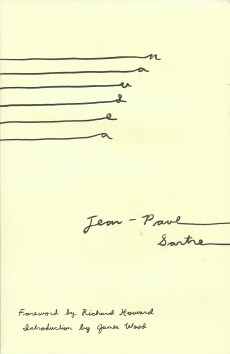
Nausea ~ A Capsule Book Review

Nausea

Nausea ~ A Capsule Book Review by Allen Kopp

Jean-Paul Sartre, French writer and philosopher, lived from 1905 to 1980. His philosophical novel Nausea, first published in 1938, is one of the landmark works of twentieth century French literature and Sartre’s most famous work. In it, the fictional character Antoine Roquetin (Sartre himself?) is a Parisian writer who is in the medium-sized French city that he calls “Bouville” (means “Mudtown” and is probably Le Havre), researching the life of—and writing a historical book about—an eighteenth-century aristocrat and political figure, the Marquis de Rollebon. The novel is set in 1932 when Antoine Roquetin is thirty years old.

There is really not much of a story or plot to Nausea. It is told in the form of diary entries and is mostly the stream of consciousness impressions of Roquetin as he goes about living from day to day. He observes the people around him and the things they say and do, whether he’s in a café, his hotel, the library or some other place. He anticipates reuniting with an old girlfriend from his past named Anny. He has a superficial dalliance with a waitress. He takes long walks in the fog. He contemplates, at great length, portraits hanging in the library of the city’s founding fathers. He befriends a man whom he calls the Self-Taught Man, who is reading all the books in the library in alphabetical order.

Roquetin is afflicted with a sort of moral paralysis that he calls “nausea.” It’s not a physical malady but a degeneration of the spirit. Human life to him is unnecessary. Existence is pointless and there is no God, which is the essence of the philosophy known as “existentialism.” He eventually gives up his writing and research in Bouville to return to Paris to—what?—probably just waste away. Aren’t we all going through the paces of living just so we can die? Seems that way, doesn’t it? But, wait a minute! If we were to write a song that will be remembered long after we die, or to sing that song on a recording that will be listened to for a long time to come, maybe that (or something like it) is enough is rescue us from the awful pointlessness of existence. What do you think?

Nausea is philosophical treatise disguised as fiction. It’s fitfully interesting, fascinating at times and tedious at other times. If you’re a student of French literature or a student of Sartre, it’s going to be essential reading. If you are just looking for a good “story” because you enjoy reading, Nausea probably isn’t it. Not exactly painful reading, but you’ll almost certainly be glad when you reach the last page. I think I’ll take my diary and turn it into a depressing philosophical novel. It won’t matter that it doesn’t have a story, a beginning, a middle or an end, will it? Everything is pointless, anyway.   

Copyright © 2016 by Allen Kopp

The End is Not as Good as the Beginning

The End image

The End is Not as Good as the Beginning ~ A Short Story
by Allen Kopp

“It’s a beautiful day,” Harmon Bracegirdle said as he approached Chaz Spurlock. He put his arm over Chaz’s shoulders and pulled him closer. “Thank you so much for meeting me here today!”

“Not at all,” Chaz said. “I’m free this afternoon.”

“I love the park, don’t you?” Harmon said.

“Indeed, I do!” Chaz said.

“I asked you here today, not so we could take in the scenery, but to have a little talk, just the two of us. A little private talk. There are so many interruptions at the studio, people coming in and out all the time.”

“I understand how it is, Mr. Bracegirdle, sir!”

“Please, Chaz! Call me Harmon!”

“All right, sir! Harmon!

They walked a little way and sat down on a bench at the edge of a scenic pond, home to a flock of geese and ducks.

“They’re so beautiful!” Harmon said. “Nature is so beautiful!”

“I quite agree, sir,” Chaz said.

“Whenever you begin to feel dehumanized by what you do for a living, just come here and forget your troubles and in a little while you’ll begin to feel inner peace.”

“Inner peace, sir. Yes, sir!”

“But I digress. I didn’t come here to discuss nature.”

“I didn’t think you did, sir.”

“The picture business is a cruel business,” Harmon said, looking over his shoulder up the hill to his car, where his two associates and his driver were waiting. “It’s 1935 and there have been so many changes.”

“Don’t I know it, sir!”

“First sound and then color, and God only knows what’ll be next.”

“You roll with the punches, sir. It’s all you can do.”

“It isn’t easy being head of the largest picture studio in the country.”

“I don’t imagine for a second that it is, sir.”

“I’m responsible for hundreds of jobs. My decisions affect hundreds of workers and their families. If I don’t make the right decisions, a lot of people will suffer.”

“I wouldn’t want that much responsibility on my shoulders, sir.”

“The studio isn’t as profitable as it once was. Competition is fierce!

“Terrible, sir! I’m sure it’s just terrible!”

“You were one of our most bankable stars for five or six years, Chaz, but your last three pictures have lost money.”

“Not my fault, sir! Those pictures just weren’t right for me.”

“I know. Each person has his own version of where things went wrong.”

“The studio is picking the wrong properties for me.”

“Do you think you could do better choosing your own scripts?”

“I’m sure I could, sir!”

“Well, that isn’t the way our system works. When you’re a contract player in a large studio, those decisions, whether right or wrong, are made for you.”

“I have high hopes, though, for my next picture.”

“The one based on the Russian novel?”

“Yes, sir.”

“Literary adaptations haven’t done well for us in the past, I’m afraid.”

“We have a couple of top-notch directors interested in the project and I’m pretty sure we can get Lola Lola to play the female lead.”

“Lola Lola won’t be available to appear in that picture.”

“I just spoke to her yesterday. She said…”

“She has commitments abroad.”

“Oh? She didn’t mention…”

“In fact, we won’t be making that picture at all, Chaz. I’m sorry.”

“Why not?”

“We just received word this morning that another studio has started production on that same story, using a different title.”

“Oh.”

“I know you’re disappointed, Chaz, but that’s the way things are in the picture business. As I said. Cruel.”

“There’ll be something else come along. What about that Western that everybody’s talking about?”

“I don’t think so.”

“I know I can be on top again with my next picture if I’m given the chance. I know I can!”

Harmon put his hand on Chaz’s leg and squeezed his inner thigh. “I’m afraid you’ve come to the end of your run, buddy. I’m sorry.”

“What are you saying? I’ve been with the studio twelve years! I have two years left on my contract!”

“We’re going to buy out your contract. Our lawyers are working on it now.”

“What if I say no?”

“The decision has already been made. I wanted to give you the news myself before you heard it from somebody else.”

“This is so unfair! My pictures have made a lot of money for the studio.”

“You’ve had three flops in a row. Last year alone, Intemperate Stranger and Rascal at Arms were our biggest box office flops. You’re only as good as your last picture.”

“I hope you’ll reconsider.”

“I’m afraid not. The die has already been cast.”

“Just one more picture. One more chance.”

“You have the very best wishes of all of us at the studio.”

“I’m just stunned. I don’t know what to say.”

Harmon gestured to his two associates up the hill, who were at that moment standing beside the front fender of the car smoking cigarettes. They came down in a wide arc so Chaz wouldn’t see them from where he was sitting.

“It’s going to be all right, buddy,” Harmon Bracegirdle said. “Just drink in the splendor of nature arrayed before you.”

“I think you’re making a big mistake,” Chaz said.

“That’s the nature of my job, kiddo. I have to make these hurtful decisions.”

Like children playing a game, the larger of the two men went up behind Chaz so as not to be detected. He waited for a signal from the other man, indicating that no one was watching, and when he received the signal he crept up behind Chaz, took a gun from inside his coat and shot him in the back of the head. One shot and Chaz lurched forward, dead before he hit the ground.

“Get his wallet and his wrist watch,” Harmon Bracegirdle said, standing up quickly. “That’ll satisfy the press.”

The news spread all over the world: Movie Star Shot Dead in Park. Robbery Suspected Motive.”

The funeral was well attended. Leading the pack of motion picture luminaries was studio head Harmon Bracegirdle, in dark glasses and tailor-made suit. On his arm was the great star Lola Lola, looking stunning as she wept behind her lace handkerchief. The picture of her placing one lily on the casket made all the pictures the next day.

Copyright © 2016 by Allen Kopp

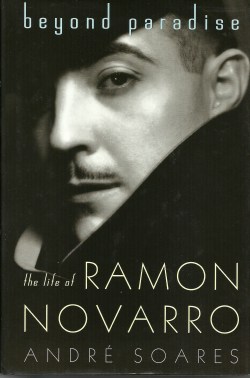
Beyond Paradise ~ A Capsule Book Review

Beyond Paradise

Beyond Paradise ~ A Capsule Book Review by Allen Kopp

Most people today will not have heard of Ramon Navarro, or, if they’ve heard of him at all, it’s because of his vicious murder at the hands of two “male hustlers,” Paul and Tom Ferguson, in 1968, and the sensational trial that followed. With his death, Navarro’s closely guarded, decades-long secret was out: he was a Hollywood homosexual and, in his later years, was in the habit of inviting “male escorts” to his home and paying them for sex. With his sexual predilections and his uncontrolled alcoholism (many run-ins with the law for drunk driving), he was, as one of the lawyers said at his murder trial, an “accident waiting to happen.”

Ramon Novarro (née Ramon Gil Samiengo), was born in Durango, Mexico, in 1899, into a large, devoutly Catholic family. As a teen, he made his way to Hollywood and, after a series of lucky breaks (bit parts and dancing stints), he became the protégé of Rex Ingram, an influential director of silent movies. Ingram used Navarro to great effect in some of the popular movies he directed in the 1920s and—if not overnight, at least pretty fast—Navarro became a bona fide “star,” with a loyal and devoted legion of fans at home and abroad. Between 1925 and 1932, he was THE top male movie star in the world. In 1925, he starred in Ben-Hur, the biggest and most expensive movie made during the silent era.

When movies switched to sound in the late 1920s, it was with his pleasant (though heavily accented) speaking and singing voice that Ramon Navarro segued into sound movies, while many of his contemporaries in silent films were not able to make the transition. Though small of stature (5 feet, six inches) and slightly pudgy, he had other assets that made him a favorite of audiences: a handsome face, an undeniable charm and appeal, coupled with a genuine talent for screen acting. Women loved him and men did not feel threatened by him.

Every star that rises, however, must fall. After 1932, his bosses at MGM (Mayer and Thalberg) began putting him in movies that were not only unsuitable for him (at age 32, he played a college football player in a movie called Huddle) but were almost destined from the start to fail. After a series of box office flops, the studio dumped him in 1935 and, at age 36, he was washed up. He tried for decades to recapture his box office magic, but nobody wanted him anymore and he was relegated to playing small parts in cheap productions. He was successful for a while on the concert circuit and in summer stock, but soon his heavy drinking began to undermine everything he attempted. From the age of 36 to the end of his life at 69, he was merely a “once-was” or a “has-been.” Many of the once-great stars of his generation shared the same fate.

Beyond Paradise by André Soares is the fascinating and unforgettable story of a likeable star (to some a hero) who, in the end, became a tragic figure. Ramon Navarro’s story is a story of the twentieth century and of one of the defining industries of that century. Beyond Paradise reads like a novel, is never boring and is never bogged down in extraneous detail the way some nonfiction books are. The final chapters that cover Navarro’s murder and the subsequent trial are gripping. Highly recommended for those interested in Hollywood biography and lore from the golden age of movie making. A time and place that are no more and will never be again.

Copyright © 2016 by Allen Kopp

Before His Time

Before His Time image

Before His Time ~ A Short Story by Allen Kopp

What can you say about addicts? That they engage in irrational behavior to get whatever it is they are addicted to? That they will kill if necessary, even if they don’t see themselves as killers? Did he really believe that going into a pharmacy with a gun and killing a woman and shooting another person was the right thing to do? Did he think nobody would know it was him? Did he really believe he would get away before he was caught?

His name was Gerald Lashley, but that wasn’t his real name. He broke his back in an accident. (It hurts so bad!) Doctors thought he might never walk again but he did. A long, slow recovery. He took pain killers for two years and came to depend on them. After two years, the doctor said to him, “You’re well enough now that you’re on your own. I will give you no more pain killers.”

Except that he still had pain. A lot of it. He tried to get along without the pain pills but he just couldn’t do it. He drank prodigious amounts of whiskey to take the place of the pills. Whiskey dulled the pain some but not enough. He began laying around all the time, drinking and not eating. Not washing himself and not speaking to anybody.

He saw himself many times going into a drugstore and stealing the pills he needed but he was afraid. He wasn’t the type of man to steal. He had been brought up in the church and had the fear of God in him.

Finally the pain got the best of him. When he called his doctor once again to try to get some help, the young girl who answered the phone told him the doctor was on vacation. (Do people still do that?) He slammed down the phone and sat on the couch and sobbed. He was thinking about the various ways that he might kill himself, but this, also, was against his moral beliefs.

He didn’t remember who the gun belonged to. Somebody in his family. It was still in an old wooden box in the basement along with some other junk. Also some bullets. He loaded the gun and put it in the pocket of his bathrobe and in that moment he felt better than he had felt in a long time. With hope in his heart, he went to sleep and when he woke up he knew exactly what it was he was going to do.

Except that it would never work without careful planning. There were drugstores anywhere but he would have to pick the right one. Not one in his hometown, either, where people knew him, but away, in some other town. And he would take the loaded gun along, of course, but never use it. It would just be to make sure people knew he meant business and to scare them. Not to hurt anybody.

After two weeks of planning he arrived at the “when,” the “where” and the “how.” The drug store was about twenty-five miles away in a town that was connected to the town he lived in by an old, seldom-used country road. He knew they had the kind of pain medicine he needed because he had called and asked. Yes, sir, the lady said, we have in a fresh supply; always happy to oblige. The pieces were falling into place for him.

He chose a Saturday morning at the end of winter. The sky was gray, threatening rain, like so many other days. He wore a lightweight coat with zip pockets and a knit cap pulled down to just above his eyebrows. That would make it harder for people to identify him later, if it came to that. He put the gun in the right-hand pocket—he was right-handed—and zipped it up.

Traffic was light, as he knew it would be. Not a lot of people out stirring on a dreary Saturday morning. He tried to look at the sky and concentrate on the scenery because when he thought about what he was about to do he felt light-headed and breathless. He believed his nerve might fail him, but only if he let it.

The town was nearly deserted. There were a few cars parked at the drug store and other businesses in the block, but not many. He drove around the block and parked on the street in the direction he would need to take to get away. He checked the gun in his pocket one last time and went inside.

The prescription counter was all the way in the back of the store. As he approached it, a female worker came forward, smiled, and asked if she could help him. He handed her the note he had written out beforehand and showed her the gun, holding it close to his side so nobody else would see it. She nodded her head, one time, and then turned away.

When she was gone for more than thirty seconds, he began to panic. She was taking too much time. She was telling somebody else what was happening. She would try to stall him while somebody in the back called the police. But then she reappeared from the back bearing a white plastic bag of the stuff he wanted and he felt relieved for the moment.

“Anything else?” she asked, and he knew she said this to every customer.

Before he took the bag from her, he said, “Put all the money from the cash drawer in there with the medicine.”

At that moment he was jumped from behind by somebody he didn’t see. His gun discharged with the reflex of his hand and he was aware that the bullet struck the female worker and she went down behind the counter as he was being pulled back.

The pain from the weight on his back nearly tore him in two, but he was able to throw the person off, which, he saw in just a moment, was a small old man with bent back and white hair. As the old man got up from the floor and began to charge him again, he fired the gun again. The bullet struck the old man in the upper thigh, taking him down.

Before the female worker went down, she had put at least some money in the white plastic bag with the stuff and the bag lay on the counter. He grabbed for it and ran for the front of the store, hearing gasps and screams as people in the store realized what was happening.

His hands were shaking as he opened the car door and started the engine. He sped away from the curb without even looking to see if the way was clear and drove through town.

As he was about to make the left-hand turn on the edge of town to get onto the highway, two speeding police cars appeared, their sirens deafening. One of them pulled around in front of him and stopped at an angle to keep him from going any farther and the other one stopped behind him. Officers swarmed from both cars and in a moment had him facedown on the ground. The whole thing had taken seventeen minutes.

He was taken to the town jail and then to the county jail. He was wailing and blubbering and couldn’t speak, so he was put on suicide watch and given a shot that made him feel like he was falling down a black hole that had no bottom. When he woke up he was questioned by a roomful of officers whose job it was to piece together what had happened.

During his various court appearances, he didn’t understand what was being said, but he knew there would be no trial since he had given a full confession. There would only a hearing to decide what to do with him. His lawyer told him it didn’t look good for him. The old man would recover, but the woman, mother of three, had died. The prosecution was seeking the death penalty.

After much wrangling between lawyers, he was spared the death penalty—due to “mitigating circumstances”—and sentenced instead to life in prison with no possibility of parole.

Twenty-two years went by in prison. He was an old man before his time. He walked with a terrible limp or not at all. One morning when he woke up he was too sick to get out of bed and was moved to the infirmary. That same day, as he lay dying, he saw a hill on his grandfather’s farm from his childhood. He looked up the hill and shaded his eyes to see if he saw there any sign of the forgiveness that he wanted more than anything else on earth.

Copyright © 2016 by Allen Kopp