Annihilation ~ A Capsule Movie Review

Annihilation ~ A Capsule Movie Review by Allen Kopp

Annihilation is a science fiction/horror story based on a novel by Jeff Vandermeer. Lena (Natalie Portman) is former military, a biologist specializing in cellular development who teaches medical students in a university. Her husband, Kane (Oscar Isaac), also in the military, went on a secret mission a year ago and never came back. Lena wants some answers.

Three years before the action of the story takes place, a streak came out of the sky and settled on a lighthouse on an unspecified beach and, after that, mysterious things began happening. There’s some kind of force field emanating from the lighthouse and it’s getting bigger all the time. Nobody knows what’s going on. When teams of scientists go to the lighthouse to investigate, they never come back. It turns out that Lena’s husband, Kane, was one of those who went to investigate. After being gone for a year, missing and presumed dead, he casually turns up again one day. He’s not himself, though. He doesn’t know where he’s been or what has happened to him. He becomes violently ill, Lena summons an ambulance, and while he and Lena are enroute to the hospital in the ambulance, it is stopped in a not-very-subtle way by what appears to be a convoy; Kane and Lena are taken into custody.

Lena awakens, after being sedated, in what is apparently a military facility. She is told that Kane is very critically ill and is probably dying, but nobody knows exactly what’s wrong with him. Lena isn’t allowed to leave the facility. She becomes acquainted with some of the other people there, who just all happen to be women. Some of them decide they will go on an expedition, led by psychologist Dr. Ventress (Jennifer Jason Leigh), to Area X, the strange area surrounding the lighthouse that is getting bigger all the time (the fear is that it will soon encompass the entire world). This area is also known as the “Shimmer.” It’s probably a suicide mission, because, as we know, none of the people who have gone to investigate the Shimmer have ever returned.

So, we have five women going into the Shimmer on this very dangerous mission, including Lena and Dr. Ventress. The first thing that happens to them is they can’t remember anything and seem to have lost time (days? weeks?) for which they have no explanation.

The Shimmer is a frightening but also a beautiful place where the laws of nature seem to be turned upside down. Unusual and colorful flowers, unlike any seen in the real world, grow in profusion. And, if that isn’t enough, species have apparently been mutated with other species, which the members of the expedition discover when they are attacked by a vicious, enormous alligator that behaves in a very aggressive way and runs as fast as a dog. Later, there is a kind of a faceless bear that is intent on killing them. This is the stuff of nightmares.

Some of the women in the expedition meet horrible deaths, as you might expect, but Lena, our main character, makes it to the lighthouse. What she discovers there will confuse you and leave you wondering but will not bore you. Since Annihilation is the first installment of a trilogy, I’m figuring there will be a sequel, as long as this movie makes enough of a jingle at the box office.

A full explanation is never given of what the Shimmer is, but my takeaway is that it’s an alien life force that will slowly but gradually consume the earth without the aliens (whoever they are) ever lifting a finger (do they have fingers?) or engaging in any kind of warfare with earthlings. Maybe I’m wrong, but this is the only explanation that comes to hand at the moment.

Annihilation is challenging science fiction, unlike silly space adventures geared to the youth market. It’s the same kind of cerebral science fiction as Arrival, a movie from 2016. In both movies, the principal character (a woman in both cases) confronts the profound and unimaginable. We live vicariously through these characters because none of us will ever confront the profound and unimaginable, except maybe when we die.

Copyright © 2018 by Allen Kopp

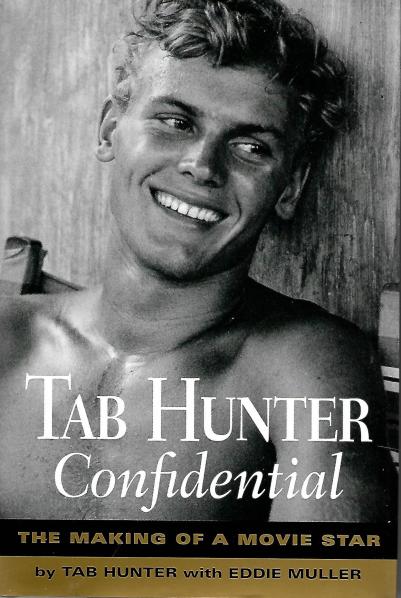
Tab Hunter Confidential ~ A Capsule Book Review

Tab Hunter Confidential ~ A Capsule Book Review by Allen Kopp

Arthur Gelien (pronounced “ge-Leen”) was born in 1931. He grew up in a fatherless home with a struggling mother and an older brother. He was always fond of horses and for a while, in his teens, was a figure skater. When he was twenty, thanks to his blond, photogenic, all-American good looks and his pleasing personality (but no acting experience), he was on the verge of becoming a movie star. A Hollywood agent changed Arthur’s name to Tab Hunter. The same Hollywood agent, Henry Willson, also gave to the world such notable monikers as Rock Hudson, Rory Calhoun, Guy Madison and Troy Donahue. If you ever needed a made-up name, Henry Willson was the man to go to.

Tab landed roles in a few movies, but they were secondary roles that required little or no acting ability. Despite the less-than-satisfactory quality of his movie roles, he made “good copy.” Movie magazines and gossip rags loved to write about him, and he increased their circulation. Teenage girls loved him and he became a bonafide—and profitable—teen idol. Soon he was more famous for being famous than for his movies. (He made a record, although he had never sung before, of a song called “Young Love,” which became a number-one hit.) He was frequently paired with Natalie Wood or other Hollywood starlets, with whom he was photographed at movie premieres and glamorous Hollywood functions.

Most (or all) of the stuff written about Tab Hunter was as phony as his name. He was never romantically interested in Natalie Wood or any other actress because he was (is) gay. He was involved sexually with Anthony Perkins, figure skating champion Robbie Robertson, actor Scott Marlowe, Austrian actor Helmut Berger, ballet star Rudolf Nureyev, and others. The idea was to keep his sexuality hidden so that his millions of adoring female followers believed he was “available” (unmarried) and they might have a chance with him. If they had known he was gay, his viability as a male sex symbol would have been undermined.

Tab worked with big stars like Linda Darnell, Vincent Price, John Wayne, Lana Turner, Sophia Loren, Rita Hayworth and Gary Cooper, but he never achieved top-star status himself. He was typecast as the pretty boy and the parts he was offered were mostly one-dimensional crap. He landed a seven-year studio contract, but he bought his way out of the contract before it expired because nobody would take him seriously as an actor. At the age of thirty, his movie career was essentially finished. He made some television appearances and had his own TV series, The Tab Hunter Show, which failed miserably. He appeared on Broadway with Tallulah Bankhead in a revival of a Tennessee Williams play, The Milk Train Doesn’t Stop Here Anymore, but the play folded after only three performances. He then spent some time in Europe making “spaghetti” westerns and low-budget potboilers for feather-brained audiences. Today he is a Hollywood afterthought, a briefly popular fifties actor who had no substance or staying power.

If you like behind-the-scenes showbiz stories, you’ll love Tab Hunter Confidential. Tab wrote it himself, of course, with the help of a “ghost writer” named Eddie Muller. When you look at people in the movies, you don’t know what they’ve had to go through to get up there on the big screen. Tab Hunter Confidential will give you some idea of what goes on behind the scenes in the life of a movie star. It’s a fun book and it’s easy reading. Take a break from reading the weighty stuff and take a walk on the wild side with Arthur Gelien/Tab Hunter. You’ll be glad you did. You have nothing to feel guilty about.

Copyright © 2018 by Allen Kopp

The Shell Collector ~ A Capsule Book Review

The Shell Collector ~ A Capsule Book Review by Allen Kopp

A volume of short stories by Anthony Doerr:

“The Shell Collector”: (The title of the collection is taken from the first story.) A blind marine biologist who specializes in the study of shells lives a reclusive life on the coast of Africa with his seeing-eye dog in this long (40 pages) short story. When he discovers, by accident, that the potentially deadly sting of a cone shell cures a young woman of malaria and then cures a local nine-year-old girl of a disease from which she is about to die, he is hailed as a healer and his life is turned upside down by the unwanted attention he receives. There are lots of impressive technical details about shells in this story, if you are inclined to be interested in such a thing.

“The Hunter’s Wife”: A man who hunts and fishes for a living (a modern-day Daniel Boone) meets a strange hippy girl much younger than he is. (You know she’s going to be trouble.) He marries her and they live in a rustic cabin in the woods. He continues to pursue his profession, while the hippy wife discovers that she can touch a dead animal (or, later, a dead person) and see what the animal experienced in its life and at the moment of its death and after. She begins to study witchcraft (not surprising) and she eventually leaves the hunter and goes off to pursue her own interests. Twenty years later (the hunter hasn’t seen her in all this time), she is a celebrity of sorts who has written books on the subject of communing with dead things. She invites the hunter to attend one of her public appearances and, at the end, they are reunited in a boy-girl way. There’s lots of sickening imagery here of dead and dying animals. If you find this offensive, as I do, you shouldn’t read this story.

“So Many Chances”: A fourteen-year-old Hispanic girl named Dorotea moves with her parents to the coast of Maine. She meets a sixteen-year-old boy who intrigues her and takes up fly-fishing. Over the course of a summer, she discovers some unsettling truths about herself and her father. (Yawn.)

“For a Long Time This was Griselda’s Story”: An odd, very large, volleyball-playing girl named Griselda Drown goes to a carnival and falls in love with a freak, an older, silent man who eats metal. She goes away with him on very short acquaintance, becoming the object of gossip in her hometown and making life difficult for her mother and her strange, fat sister, Rosemary, who marries a local butcher named Duck. Griselda’s mother dies of shame and frustration at the loss of her daughter. Griselda is not entirely lost, however. Years later, she returns to her hometown as assistant to the metal eater in his one-man, metal-eating freak show that draws crowds at twenty-five dollars a head.

“July Fourth”: No, this story has nothing to do with the holiday. It’s about a group of American men (we never know any of their names) who engage in a fishing competition with a group of British men that takes them all over the world, always looking for the best place to catch the best fish. They will undergo any hardship or deprivation for the sake of fishing. The thing is, the Americans aren’t very good at fishing (or at anything else, it seems) and are always outmaneuvered by their British rivals. When they end up fishing a strange river in Lithuania, they begin to discover the truth about themselves.

“The Caretaker”: At 45 pages the longest story in the collection. (Technically, a 45-page short story is a novella instead of a short story.) Joseph Saleeby is a Liberian who loses everything (family, job, home) in his war-ravaged African country and eventually ends up in Oregon, where he is hired as caretaker for a rich family, the Twymans. Joseph’s job is to tend the family’s estate while they are away, but he neglects his duties and the house and grounds suffer from lack of supervision. He is fired, of course, and his inner life is revealed. He is racked by guilt because of past deeds. While still in his home country, he stole, killed a man, and let his mother do heavy work while he slept. After Joseph is fired from the job of caretaker, the Twymans believe he has left, but he is really hiding out in the woods above the estate. He buries some enormous whale hearts from whales that have become stranded on the beach, and on that site he grows a garden from some seeds he stole. Eventually he meets the Twymans’ unhappy, deaf, fifteen-year-old daughter. She is trying to kill herself by drowning in the ocean and Joseph rescues her. They become friends and Joseph learns some sign language so he can communicate with her. Soon the Twymans discover that Joseph is hiding in the woods near their home and, after verbally abusing him, arrange to have him deported back to Africa.

“A Tangle on the Rapid River”: Mulligan is going fishing (fishing again!) in the wee hours of the morning. He stops by the post office in town where he rents a secret post office box so he can get letters from his paramour. He’s married, don’t you know, and is having an extramarital affair. There is a letter from the she with whom he is cheating on his wife and she’s making demands; she doesn’t like it when he spends too much time with his wife. He reads the letter and then sticks it in the newspaper he has with him. Hours later, after sunup, he is resting underneath a tree when two other fishermen come along. It’s a man and woman and Mulligan knows them. The mannish woman “hunts, fishes, and tracks” and is a niece of his wife. This woman wants to see his newspaper for a moment so she can check the racing results. Mulligan wants to get rid of them, so he tells her to go ahead and take the newspaper. He remembers, AFTER it is too late, that the letter from his mistress is folded up in the newspaper! Oh, my gosh! The niece of his wife is going to find it and read it. What is this philandering son of a bitch going to do now?

“Mkondo”: A man named Ward Beach who works for a museum in Ohio is sent to Africa to find a rare fossil of a prehistoric bird and bring it back with him. While in Africa, he becomes enamored of a local woman, Naima, and ends up spending a lot longer away from home than he intended. Naima’s thing is running. She runs all the time and Ward Beach can’t seem to catch her. (Symbolic. Get it?) He proposes to her and she accepts. (Mistake!) He brings her back to Ohio, where she experiences chronic and severe culture shock. She’s not used to the sky being gray all the time in the winter. It’s very difficult for her to abandon her African ways in the midst of American culture, and Ward Beach changes toward her because she’s not the same as she was in Africa. Wait a minute, though, we’re not finished. Naima discovers photography and it returns her to a love of the world. (If you are paying any attention at all, you will know halfway through this 35-page story how it is going to end.)

The short stories in The Shell Collector are beautifully written, first-rate every step of the way. Anthony Doerr displays an impressive array of knowledge on such subjects as marine biology, wildlife, fishing, African terrain and photography. Whether or not you like the stories and find them engaging, though, is another matter. A person finding himself/herself through fishing or killing animals is completely removed from my realm of experience, as Ernest Hemingway’s stories about bullfighting are. To me the stories in The Shell Collector are kind of sterile. Technically perfect though they might be, they lack feeling. I wasn’t moved by any of them.

Copyright © 2018 by Allen Kopp

When They Come to Get Me I’ll be Gone

When They Come to Get Me I’ll be Gone ~ A Short Story by Allen Kopp

Alva was new to the city and marveled at its wonders: the buildings that reached to the sky, the lines of automobiles that stopped and started and then stopped again, the glittering hotels and restaurants, the crowds of people everywhere, the theatres blazing with electric light, the library that took up an entire block, the department stores, the garish shops and, yes, the soup kitchens. It was 1932 and, in the midst of all this plenty, there were people who had to stand in line to get something to eat because they had no money.

The first time a woman approached him on the street he felt flattered because she wasn’t bad looking. He believed she was interested in him in a friendly way until she started rubbing her hands along his chest and abdomen, and he could tell on close inspection that she wasn’t right somehow. He pushed away from her groping hands and then felt embarrassed that a stranger would have such thoughts in connection with him.

He had always liked books but had never read many. He went into a big bookstore a few blocks from his hotel and spent a long time just walking the aisles, looking at the rows and stacks of books with colorful and interesting covers, more books that he had ever seen before. He hoped one day to live in his own house without interference from anybody and own a lot of books just like these. Even if he didn’t read them, he would enjoy having them on a shelf where he could see them.

A clerk approached. “Can I help you find something, sir?”

He blushed at being called “sir” and shook his head. It occurred to him that maybe he shouldn’t be walking around the way he was if he wasn’t going to buy anything. “No,” he managed to say.

“If you need help finding anything, let me know.”

He nodded his head and then left the store, afraid he might be asked to leave if he didn’t leave on his own.

Down in the next block was a restaurant that touted Italian and American cuisine. He went inside and took a seat at a small table where he could see out the window. A waitress approached and gave him a menu and a glass of icy water. He was still astounded by the freedom of going into a restaurant and ordering whatever he wanted to eat.

Never having eaten spaghetti before, he ordered a plate of spaghetti, and while he was waiting the waitress brought a glass of beer and a little basket full of breadsticks. He began eating the breadsticks and was sure he had never tasted anything so good. The beer tasted bitter at first but after a few sips he liked it and when he emptied the glass the waitress brought him another one as if he was a person of importance.

He took his time eating the spaghetti, savoring its exotic flavor and when he was finished he had a large piece of chocolate cake with pecans. He never knew before that such wonderful things existed in the world.

Any time he did something the mother didn’t like, she hit him on the side of the head, on the left ear, with the flat of her hand. Over time, he developed a ringing in the ear and could no longer hear out of it as well as he could the other ear.

Here was another movie theatre. He slowed and studied the posters. He had never seen movies and wondered about them. Might anybody go? When finally he got up the nerve to buy a ticket and go inside, he was relieved to see how easy it was. Nobody looked at him askance or asked him any questions. Pay your money and they give you a little piece of paper to show you’ve paid and you go inside and give the paper to a boy standing there and then you find yourself a seat and sit down. You may sit anywhere you choose. What freedom! What luxury!

The cartoon began, and in it were picture-book animals that talked and wore clothes. He thought at first this was the movie. The cartoon ended after only a few minutes, though, and then it was the previews of coming attractions to tell the audience about movies that would be shown in the theatre at a future date. The sparse audience watched the previews with rapt attention and then it was time for the feature to begin.

There was a lot of talk at first and arguing among the characters in the movie. They were all men and wore suits and hats. It wasn’t very interesting. After a few minutes, though, it became more so. One of the men shot and killed another man and then there was a scene in a funeral home with a body in a casket and women standing around crying. Then the man who had done the killing was at home with his mother and sister. The mother stood at a stove cooking and spoke in a strange accent so that you could barely understand what she said. The sister was dressed up to go out but the mother pleaded with her to stay at home.

After the first few minutes, Alva was riveted by the movie. He was seeing a side of life he never knew existed. He didn’t care much for the scenes that were mostly talking but he liked the scenes where the characters were doing things, careening through the city streets in expensive-looking cars with machine guns. It seemed so real. He had to remind himself that it was just another kind of make-believe, like reading a story in a book.

When the movie was over, it seemed there was nothing left to do but go back to the hotel. He retrieved his key from the desk clerk and went up to the eighteenth floor in the elevator, another marvel that he never expected to see.

He was tired and his room seemed comforting and inviting. It was his and his alone for as long as he paid for it. He loved the solitude. He opened the curtains and stood for a long time looking off into the distance at the buildings. The lights were like glinting jewels and there were so many of them. He could see no trees, mountains or hills. He was truly in the city.

A siren brought his attention back to the street and he looked down. He had never been so high up before and it was thrilling in a way to be able to look down at the bustling life that never ended, no matter how late. He felt a part of things but also detached.

He opened the window a couple of inches and turned off the light and got into bed. Lying on his back, looking at the ceiling, he listened to the air rushing in at the open window and the faraway sounds from the street. He turned on his side, covered up his head and soon he was asleep.

The father didn’t usually hit him the way the mother did, but he liked to flip his ears from behind with his fingertips and squeeze him painfully at the back of the neck, and sometimes he would grab him by the upper arm and throw him against the wall and the next day there would be the imprint of the hand in his flesh.

In the morning he awoke to the sound of voices outside his door. He got up and dressed and went down in the elevator to the hotel restaurant for breakfast. He took a long time eating, bought a newspaper, and was on his way back to his room when a young man of about thirty years stopped him in the lobby by touching him on the shoulder.

“Might I have a word with you?” the man asked.

Alva looked at him with surprise.

“I’ve been seeing you for several days now,” the man said. “You’re staying here…alone?”

Alva nodded, wary of this stranger.

“Well, my name is Freddie Lindhoven. I…might we sit down?”

Alva went to the nearest chair and sat, placing the newspaper on his knees, and Freddie sat beside him.

“In seeing you alone,” Freddie said, “I thought I might be of some service.”

Alva looked in the other man’s face and shook his head.

Freddie laughed. “I can see you don’t have any idea what I’m getting at, do you?”

“No.”

“You’re from some other place. Let me guess. Arkansas?”

“Texas,” Eugene lied.

“Whereabouts in Texas? Galveston? One of the big cities?”

“Small town.”

“Very good! So you are a stranger to the city!”

“I’ve been here almost a week now,” Alva said.

“Well, I’m, uh, not exactly an employee of this establishment, but I help out some of the guests from time to time.”

“Help out?”

“I get them what they want. No matter what it is.”

Again Alva shook his head.

“I could get you a girl if you wanted one. Any kind of a girl. A Chinese or a black. Or a boy. I could get you a boy. An Asian boy or an Italian lad.”

Alva at last had a glimmer of what Freddie Lindhoven was talking about. “No,” he said. “I don’t know how much longer I’ll be here. I don’t want anything like that.”

“I can get you any kind of booze you want and only the best kind. Also pills of any kind. Pills to dull pain. Pills to send you off into dreamland. Pills to bring you back from dreamland. Pills to make you happy. Pills to overcome shyness.”

“I don’t think so.”

 “I can get you hashish or dope. Any kind of dope. The kind you swallow, smoke or inject into your veins.”

Alva stood up. “No, I don’t want anything,” he said.

Freddie stood up too. “Well, if you think of anything later, let me know.” He handed Alva a card with his name and phone number and at the bottom these words: Fast. Discreet. Any time day or night.

The next day in the lobby, Freddie approached Alva and asked if he’d care to have lunch with him at his “club.” Alva shrugged his shoulders and accepted the invitation with indifference.

The “club” was a private men’s club where Freddie was a member. They were seated at a little round table with a white tablecloth amid a sea of identical tables, all of them occupied. Freddie asked Alva if he had ever eaten duck and when he said he hadn’t, Freddie ordered it for both of them along with a bottle of white wine.

“So, tell me your story,” Freddie said as they were waiting for the duck.

“I don’t have one,” Alva said. “My life began when I came to the city.”

“So, what you’re saying,” Freddie said, “is you don’t want to talk about it.”

“If you don’t say anything,” Alva said, “you don’t have to regret anything you said.”

Hah-hah-hah!” Freddie said. “You are a strange one, but I like you.”

While they were eating, Freddie was more than happy to share his own story. He came from a poor family, one of six children without a father. His mother had to support all of them on the meager wages from her job in a laundry. When Freddie was seventeen, he left home to make his own way and never looked back. At the age of twenty, he married a girl named Myrtle. Six months later she died of an infection.

“And I’ve never looked at another woman since,” he said. “Hah-hah-hah!”

Alva told Freddie about the movie he saw, his first movie ever, and about the cool, cave-like theatre and how all the people sat quietly, like in church, and watched the screen, trance-like.

“You never saw a movie before in your life?” Freddie said. “Don’t they have movies in Texas?”

“Not where I come from.”

When they were finished eating and it was time to pay, Freddie signed his name to a piece of paper and that’s all there was to it.

After they left the club, Freddie took Alva to a burlesque theatre, where half-naked women danced on a dimly lighted stage before an all-male audience. Alva thought the whole thing silly and vulgar. He found the women ugly and unappealing but pretended to like it.

The father laughed at him and called him sissy and other names he didn’t know the meaning of. He asked him if he wore women’s underwear and washed his pussy at night and put powder on it to keep it fresh. The mother might have intervened, but she bent over double with laughter. The slatternly bitch in her filthy dressing gown.

Freddie became the only friend Alva ever had. They spent hours talking. Freddie loved talking about himself and loved having an audience. Alva never spoke of his past life or where he came from. When Freddie asked him about his family, he only said he didn’t have one.

They went around the city together. They rode busses, taxi cabs and the subway. Freddie took Alva to places of interest he would otherwise not have seen. They saw movies together, including a “blue” movie at a little out-of-the-way theatre in an alleyway between buildings. They walked in the park and sat on the grass and fed popcorn to ducks. They went to a concert in a beautiful hall where there were a hundred musicians on a stage and thousands of people sitting in the audience listening to them play. In a labor hall they heard a speech given by a Socialist who advocated overthrow of the government. They saw a serious play in which a man murdered his wife for infidelity.

Alone in his room at midnight, Alva counted out his remaining money on the bed. He only had enough left for two more days in the hotel and modest meals. Time was running out for him.

The next day, while he and Freddie were having lunch in a diner that had once been a railroad car, he asked Freddie a question that had been on his mind.

“You said you have pills for anything?”

“I can get them,” Freddie said, his mouth full.

“What about a pill that makes a person go to sleep and not wake up?”

Freddie looked at him searchingly, took a drink of his Coke and belched. “I’ll have to ask my doctor friend about that. Nobody has ever asked me for that particular thing before.”

The next day when they met in the lobby of the hotel, Freddie grabbed Alva by the arm and pulled him outside to the sidewalk.

“I asked the doc what you wanted to know,” Freddie said.

“Yeah?”

“He says there is such a thing, if you want it bad enough.”

“What does that mean?”

“It’s expensive.”

“How much?”

“Don’t know yet. The doc won’t know how much until he gets it from his source.”

“Okay. Can you get it for me tomorrow?”

“Sure. I guess. Are you sure you want it?”

“Never more sure of anything in my life.”

At ten years of age, he knew he was nothing like the mother or the father, looked nothing like them. When he inquired about it, the mother told him he was adopted. It was a lie he believed for the next ten years.  

Right before he came to the city, he found out the truth. The mother was making him clean out the closet in her bedroom. He found an old yellowed newspaper, twenty years old. There was a story in it about an eighteen-month-old baby, named Draxton Capers, snatched from his parents in a Kansas City suburb. Police had no clue about where the baby might be and sought the help of the public. He was described as having brown hair and green eyes, a quarter-sized birthmark on his right shoulder.

As Alva looked at his brown hair with his green eyes in the mirror, he knew, finally, the truth about the woman and the man, the mother and the father, whom he had thought were his adoptive parents. They were kidnappers. They were the lowest form of human life. His real name was Draxton Capers. The birthmark on his shoulder removed any doubt there might have been.  

The mother always said she had a bad heart and she was always so fat. She needed somebody to do things for her, to fetch and carry, to wash her back and clip her toenails. All she and the father had to do was kidnap a healthy baby and they had an unpaid servant for life.

When he found out the truth, he couldn’t go on. These people had taken away his life. He would rather they had killed him when he was a baby.

The father was sitting at the kitchen table eating his breakfast. Alva stood at the sink washing the cast-iron skillet in which he had cooked the breakfast. He held the skillet in his right hand and dried it with his left. He looked at the back of the father’s head and, wielding the skillet in both hands like a baseball bat, hit him there with all his might.

The father shrieked and fell forward, slid off the table onto the floor. He was bleeding profusely from the head, but he wasn’t dead yet. Alva hit him repeatedly until he was sure he was dead.

The mother was still sleeping. When he went into her bedroom, she was lying on her back, breathing heavily, one enormous tit escaped from her nightgown. With the skillet, Alva smashed her head to liquid pulp. She never woke up. She never knew anything.  

He knew she had money hidden in the house. Ten dollars here, seven-fifty there. When he found it all, he had almost three hundred dollars. He packed a small bag, took the money and left the house in which he had lived all his life.  

He rode on the bus for a day-and-a-half to get to the city and all that time his mind was blank. He felt no remorse or fear. Nothing. The hatred he felt for the mother and the father was gone. They were in the place now where they belonged.

It would be a while before anybody found the bodies, maybe as long as a week. When they did find the bodies and discovered the son was gone, they would assume he had done the terrible deed. He wasn’t right in the head, people would say. He always kept to himself. Afraid to go out of the house.

They would trace him to the city, he knew. They would find him and put him in jail for the rest of his life, maybe even send him to the electric chair. Time was running out. Any day now they’d come for him.  

He didn’t see Freddie at all the next day and was afraid he had run out on him. He wanted to call the number on Freddie’s card but was afraid of what he’d find out. Freddie didn’t exist. The number was a dead end.

On Friday as he was leaving the hotel restaurant after dinner, he saw Freddie sitting across the lobby reading a newspaper. The relief he felt caused him to smile.

“I’m glad to see you again,” he said and meant it.

Freddie looked up from the newspaper. “Sit down, kid,” he said.

Alva sat down and waited until Freddie stopped reading and looked at him.

“Did you get it?” Alva asked. “What we were talking about?”

“Yeah, I got it,” Freddie said. “I don’t know if I’m going to give it to you or not, though, unless you tell me what it’s for.”

“You know what it’s for.”

“You did a bad thing back there in Texas. Maybe stole some money. Believe me, it’ll be a lot better if you go home and face the music, whatever it is, than to do a foolish thing that can never be undone.”

“I’ve already made up my mind. There’s no other way.”

“I’d talk you out of it if I thought I could.”

“You can’t.”

Freddie sighed and took a little white box, like a match box, out of the pocket of his jacket. “The doc says to get into bed and take all of these at once.”

“I can do that,” Alva said. “So easy.”

From his other pocket he took a fifth of whiskey. “The doc says to drink as much of this as you can. It’ll make the pills work better. Mix it with water if you can’t stand the taste.”

Alva took the box of pills and the fifth of whiskey and put them under his coat. “How much do I owe you?” he asked.

“It’s taken care of,” Freddie said.

“What?”

“The last thing I can do for a friend.”

They shook hands, Freddie wishing Alva good luck on his journey, and then he left in a hurry.

It was too early to go up to his room. Not just yet. He still had the rest of the evening.

He took a walk, with the object of making himself tired, but, more importantly, to say goodbye to the city. He walked an impossibly long way from the hotel. He felt calm and happy, kindly disposed toward everybody he saw, even the drunks who asked him for money.

When he got back to the hotel, it was nearly eleven o’clock. He went up in the elevator to his room and took a bath and washed his hair and, when he was finished, dressed himself in his pajamas and turned back the covers on the bed.

He filled a glass half with water and half with whiskey and went to the window and looked out as he drank it. He watched the lights twinkling off and on, heard the traffic down below, and was thankful for the wondrous time he had had in the city and for the friendship of Freddie Lindhoven. All that came before was nothing, or soon would be.

He drank the whiskey mixed with water until the bottle was two-thirds empty. He sat on the edge of the bed and dumped the pills from the little white box into his hand and swallowed them and covered himself up in the bed and switched off the light.

As he drifted off to sleep, he thought of a dog he had when he was little and how much he missed the dog when it ran away. The dog would be over there waiting for him, he knew. He could already see his bright eyes and his happily wagging tail.

Copyright © 2018 by Allen Kopp

Lincoln in the Bardo ~ A Capsule Book Review

Lincoln in the Bardo ~ A Capsule Book Review by Allen Kopp

I didn’t know what “bardo” meant, so I looked it up. It’s a Buddhist concept, meaning the state of being between death and rebirth. Buddhists, of course, believe in reincarnation. When you die, your spirit must go to an in-between place, the bardo, until you are born again into another body. Beings in the bardo, many of them, don’t know there are dead; they believe they only need to “revive” in order to return to the former place, the state of being alive. In the bardo, the ordinary rules of physics that govern the world are suspended. Some beings take strange forms, while others must undergo a kind of punishment before they move on.  

The Lincoln in Lincoln in the Bardo is, of course, Abraham Lincoln. In February 1862, his eleven-year-old son, Willie, dies in the White House of typhoid fever. On top of the already heaven burden Lincoln is bearing with the terrible war that is raging between the North and the South, his grief is almost insupportable.

Willie’s body is placed temporarily in a borrowed crypt in a cemetery. Lincoln has the key to the crypt and begins making nighttime visits, where he opens Willie’s coffin and takes his body out and holds it in his arms. Unknown to Lincoln, Willie, in the bardo, is observing his father while this is going on, trying to get his attention. Other people in the bardo, knowing (or being told) that Lincoln is President of the United States, believe that Willie is a prince who might be able to help them with their problems or help them get what they want.

There are three fictional (deceased) men in the bardo (Roger Bevins III, Hans Vollman, and Reverend Everly Thomas) trying to aid little Willie Lincoln, to help him to move on so he won’t be in the bardo forever. We learn the life stories of these three and how they ended up in the bardo themselves. As the novel progresses, we also pick up some interesting information about Lincoln’s life in the White House, his depression and grief, what people were saying about him at the time, and Willie’s illness and embalmment.

Lincoln in the Bardo, by a writer named George Saunders, is a historical novel and also a fantasy, combining the factual and the fictional. It’s a non-traditional novel, unlike anything I ever read before. Some might even say it’s experimental. I don’t like the designation “experimental,” because it implies that the novel is so “hip” (avant-garde) you can’t stand it and you have to be “ultra-hip” yourself (a hippie or a beatnik, at least) to be able to appreciate it. On the contrary, Lincoln in the Bardo has a sort of old-fashioned feel, a complete departure (thank goodness!) from what life is like today. When you start reading Lincoln in the Bardo, you probably won’t know what’s going on at first, but if you stick with it and don’t give up, you’ll figure it out soon enough—it’s not that difficult. You won’t be bored while you’re reading it and when you get to the end you’ll feel enriched for having had the experience.

Copyright © 2018 by Allen Kopp
Human Blood


Human Blood ~ A Short Story by Allen Kopp

(This is a re-post.) 

School was out. Arlene Buck walked home by herself through the quiet streets of the town. It was a cloudy, warm day in late October. Leaves and debris swirled along the sidewalk in the wind. Arlene turned her head to the side to keep the wind from whipping her in the face.

When she got home, her mother and sister weren’t there. She didn’t like being the first one home with nobody there. She went into the kitchen and had a chocolate chip cookie and a drink of cold water and then left again. She would walk down to Jesus Saves and when she came back her mother and sister would be there.

Jesus Saves was at the bottom of a hill, where the street dead-ended. It was an easy walk down and a harder walk back up. Anybody in the neighborhood who went out for a walk went down to Jesus Saves and back. There weren’t many other places to walk, unless you wanted to go a lot farther.

Since Jesus Saves was where the street ended, people were always using the parking lot there for turning around because they didn’t know until they got to the bottom of the hill that they couldn’t go any farther. Today it was deserted, though, with nobody turning around and no cars parked on the lot. That meant nobody would be getting saved from their sins tonight.

Arlene was superstitious and believed that when she walked down to Jesus Saves, Jesus wouldn’t save her until she touched the low wall on the far side of the parking lot with her foot. She did this and whirled around, when a dark spot on the asphalt caught her eye, glistening and wet as if somebody had spilled a bucket of paint and gone off and left it. She approached the spot to see what it was. She was studying it when the door of Jesus Saves opened and a man came running out. He approached her at a run and for an instant she thought he was going to tackle her like in a football game.

“Hey, you there! What do you think you’re doing? Get away from there!” the man said.

She looked from the spot on the asphalt to the man and back at the spot. “What is this?” she asked. “Did a dog get run over by a car?”

“No, no, no!” he said. “It’s nothing for you to worry about!”

It was Reverend Pearl, a fussy little man in black who preached at funerals and saved souls from going to hell. He wore glasses on a string around his neck. He was no bigger than a thirteen-year-old child but he had broad hips and the mannerisms of a woman.

“I want to know what this is,” she said. “It looks like blood.”

“You go on home, now!” Reverend Pearl said. “You have no business here!”

“I can be here if I want to be. You don’t own the world.”

The door of Jesus Saves opened again and two Sisters of the Church came out, lugging buckets of water and mops. They were large, homely women, wearing loose sack-like dresses and diapers on their heads.

“Over here!” Reverend Pearl called to the women. “Here’s where the mess is!”

The Sisters of the Church went to work, dipping their mops in the water and then swabbing at the spot. They moved the blood around until they had a sloppy pink mess. The water in the buckets, after they had dipped the mops a couple of times, looked like blood.

“We need something to soak it up,” Reverend Pearl said. “You’re just making it worse. Dump this water out and go inside and get some fresh. Jesus! I never saw so much blood in my life! The police left the mess for us to clean up! How do you like that?”

Arlene stood back a few feet and watched as the Sisters of the Church worked over the blood. Reverend Pearl forgot about her for the time being, but when he saw she was still there he advanced on her again.

“Didn’t I tell you to go on home?” he said. “There’s nothing here for you to see! Didn’t your mother ever teach you to obey your elders?”

“You’re not my elder,” Arlene said.

One of the Sisters of the Church stopped mopping and leaned over and whispered into Reverend Pearl’s ear, holding her hand over her mouth.

Oh!” Reverend Pearl said. “Oh, I didn’t know. Oh, my!”

“What did that woman say?” Arlene asked. “She whispered something in your ear about me, didn’t she?”

Reverend Pearl changed his tone now; he even attempted a smile. “I’m sorry if I was cross with you, little girl. A very bad thing happened here last night and it has my nerves on edge.”

What bad thing?”

“It isn’t my place to tell you,” he said. “You run on home now and I’m sure you’ll hear about it soon enough.”

As she began walking up the hill toward home, her heart beat in a funny way and she felt sick like when she had to go to the doctor. She knew something was wrong. Momma didn’t come home last night. Could the blood on the Jesus Saves parking lot having anything to do with that? What had the Sister of the Church whispered in Reverend Pearl’s ear?

She ran up the hill and when she got home, out of breath, her sister Camille was waiting for her.

“Where were you?” Camille asked.

“I’m afraid a very bad thing has happened,” Arlene said.

“Don’t be silly,” Camille said. “Nothing bad has happened.”

They waited all evening for momma to come home or at least to call them and let them know where she was. Camille fixed fish sticks and macaroni and cheese for dinner and while they were eating Arlene told her about the blood on the parking lot at Jesus Saves and what Reverend Pearl said and how he acted mad at first and then sympathetic.

“The blood of Jesus cleanses us of our sins,” Camille said.

“It wasn’t that kind of blood,” Arlene said. “Something bad has happened. I just know it.”

“You worry too much,” Camille said. “Everything will be fine.”

“I think we should call the police and tell them momma didn’t come home last night.”

“She’s stayed out all night before. She likes to have a good time.”

“But she always came home the next morning,” Arlene said. “Here it is night again and we haven’t heard a word from her.”

“We’ll wait until nine o’clock,” Camille said. “If she hasn’t come home by then we’ll call the police.”

They washed the supper dishes and were watching TV when there was a loud knock on the door. Arlene got up off the couch and went to the front door and, opening it, was not very surprised to see her grandma standing there.

“Something’s wrong, isn’t it?” Arlene said, standing aside to let grandma come inside.

“I’m afraid I got some bad news for you,” grandma said, crying and wringing a handkerchief. “Your momma this day has joined the angels.”

What?” Camille said.

“She fell prey to the ravening beast and the beast hath slain her. Oh, Satan! Ruler of the world! What is going to become of us?”

“She was killed?” Camille asked, disbelieving. “By a beast?”

It was worse even than Arlene imagined. It was ironic (although she wouldn’t have known that word) that she just happened to be the one to walk down to Jesus Saves on that day of all days and see the blood. It was as if God or somebody had meant her to see it.

Grandma sat on the couch and wailed while Arlene and Camille packed overnight bags to go home with her. When they left the house, strangers were outside gawking at them.

“What do they want?” Arlene asked.

“There ain’t nothin’ here for you to see!” grandma called out to the strangers. “If you don’t beat it, I’m gonna call the sheriff! Leave us alone in our grief!”

At grandma’s house, the police came and talked to them. All Arlene and Camille could tell them was that momma had a lot of different boyfriends and had stayed out all night before on dates. She had always come home in the morning, though, almost always before Arlene and Camille left for school.

After the police were finished examining momma’s body, they released it to the Sutcliff Brothers’ Mortuary. Momma was laid out in her best navy-blue dress that she always saved for weddings and funerals. Now she was wearing it to her own funeral. She looked fine, as if nothing bad had happened to her. That would erase the terrible image, grandma said, of her being butchered by a savage killer.

Just about everybody momma ever knew came to the funeral home to see her off. Distant relations from other states. People she had grown up with that she hadn’t seen for twenty or thirty years. There were lots of strangers there, too. People who had read about the murder in the newspaper or seen it on TV and wanted to witness a little part of it themselves to be able to say they had been there and seen the grieving next of kin. And now it had the added attraction of being a murder mystery because police still didn’t know who did it or why.

At the funeral home a strange man with pale skin and tousled hair introduced himself to Arlene and Camille. They were sure they had never seen him before, but it so happened he was there father. He had left when Arlene was three and Camille six and neither of them remembered anything of him. All momma had ever said of him was that he was in prison and should be forgotten.

Now that momma was dead, this strange man, their father, wanted Camille and Arlene to come and live with him. He had a new wife, a baby son, and he was ready to be a real father to Camille and Arlene. He lived in a small town in a distant state and they would need to leave their school and all their friends and start over in a new place.

“I don’t want to go!” Arlene said. “Momma would want us to stay here!

“We’ll talk about it later,” grandma said, putting her hand on Arlene’s arm.

On the day of the funeral it rained. Momma’s casket was removed, not to Jesus Saves, but to the Methodist church for the service. The church was full one hour before the service began. People had to be turned away or made to stand out in front of the church in the rain. The front row was reserved for Arlene and Camille, grandma, and the man who said he was their father. To Arlene none of it seemed real.

There were flowers, soft words, organ music and Bible talk that Arlene barely noticed. When the service was finished, everybody got into cars and made a slow procession in the rain the two miles to the cemetery, where momma was laid to rest alongside her own baby brother who died when he was four years old.

During the graveside service, with all the people standing around the open grave, Arlene noticed a tall man standing behind everybody else, looking on. He was wearing a black hat pulled down almost to his eyes. He looked directly at Arlene and smiled and, as if the smile wasn’t enough, he winked. While everybody else was looking sad, he was smiling and winking.

“There’s something about him that’s not right,” Arlene told herself.

Maybe he was one of momma’s boyfriends and maybe not, but Arlene knew all at once, as well as she had ever known anything, that he was the beast, the Satan, who had spilled momma’s blood on the parking lot of Jesus Saves. It was written on his face.

She watched the man during the rest of the service, without seeming to watch him. When the service was over and momma’s casket was being lowered into the ground and everybody was making a dash for their cars in the rain, she kept her eyes on the man until he was out of sight.

She lost him in the crowd but kept watching and saw him again. He was getting into a black car on the far side of where all the cars were parked. She couldn’t see his face but saw the black hat he was wearing and knew it was the same man.

As the crowd dispersed, she had a clear view of the black car as it drove away. She tried desperately to read the license plate, but she slipped in the mud and fell on her backside. When she got up again, the black car was lost among all the other cars trying to get out of the cemetery in the rain.

She turned and began running back to where the others were waiting for her. She had to tell somebody–but most of all she had to tell momma–what she knew and what she had seen. She swerved around a large tree and jumped over some standing water and then, in a flash, it came to her: momma was dead and she’d never be telling her anything, ever again.

Copyright © 2018 by Allen Kopp

The Death of Ivan Ilyich ~ A Capsule Book Review

The Death of Ivan Ilyich ~ A Capsule Book Review by Allen Kopp

The Death of Ivan Ilyich, written by Russian master Leo Tolstoy (1828-1910) in 1886, is a character study and a somber contemplation of death. Ivan Ilyich is a magistrate with a wife and two children, a grown daughter of marriageable age and a schoolboy son. He is ambitious and rises through the ranks of his profession. He and his wife enjoy their place in society afforded by his success.

The thing about Ivan is that, as a magistrate deciding cases in court, he isn’t always as human as he might be. He is incapable of deep feeling or self-contemplation. He has no inner life. To him, duty is more important than feeling, compassion and sympathy. Would you want to be tried by this bastard in court?

In young middle-age, Ivan is seeing to all the details of furnishing and decorating a new home when he falls off a ladder and sustains a blow to his side. He thinks little of it at the time, but this is the beginning of an illness that results in his death. Whether the blow he receives to the side has anything to do with his illness is never established.

Ivan becomes ill and believes at first he will recover. As time progresses, however, he becomes sicker and sicker, until he realizes at last that he is coasting toward a premature death. Doctors, even “celebrated” ones, are ineffectual at finding what’s wrong with him or in finding ways to make him better. All they can do is make him believe he will recover, but after a while he sees this as a lie.

In the state of illness he’s in, Ivan takes a look back on his life. Is he being punished with a horrible illness that will claim his life because he’s been bad? Wait a minute, though; he has done all the things he was supposed to do, so what might he have done differently that would have spared him his undeserved fate?

Instead of accepting what is happening to him and seeking peace within himself, Ivan rails against it. Why has God forsaken him? His mental anguish becomes as great as his physical anguish. He doesn’t get the sympathy he thinks he deserves from his wife, family and friends. They only want to be rid of him so they can get on with his lives. Only his ten-year-old son and a kindly servant named Gerasim seem truly sad to see him in the state he’s in. After a terrible illness, death claims Ivan Ilyich at the age of forty-five. There is no beauty, dignity, or redemption in his death.

The Death of Ivan Ilyich is death from the point of view of the dying man. He isn’t able to find relief, comfort or sympathy in his illness as he sinks toward his inevitable fate. He is unable to look back on his life and say it’s been a life of success and fulfilment, even though it’s being cut short. It’s a simple story, universal because death touches everybody. Although set in nineteenth century Russia, it might be any place at any time.

Copyright © 2018 by Allen Kopp    

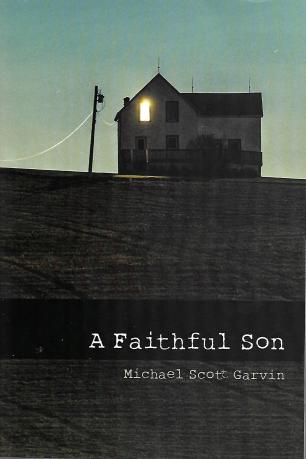
A Faithful Son ~ A Capsule Book Review

A Faithful Son ~ A Capsule Book Review by Allen Kopp

A Faithful Son is a novel by a writer named Michael Scott Garvin. It begins in the late 1950s with the character Zach Nance as an adolescent boy. (Zach is narrating the story in his own voice.) He lives in a small Colorado town with his parents and two sisters. They are a religious, traditional, conservative family.

Zach and his two sisters, Katie and Laura, have an idyllic childhood, doing all the things that kids of this period love to do. They climb mountains and hike in the woods and play and catch the bus every morning to go to school. They have what almost seems to be a perfect life until tragedy strikes. Zach’s younger sister, Katie, is killed in an automobile accident in which the father is driving. In his grief, he turns to the bottle and becomes an irresponsible alcoholic.

Eventually the father drifts out of the family, leaving Zach and his remaining sister Laura and their mother to fend for themselves. Zach grows up the way all boys do, but he has a secret that he knows his mother, sister and the people of his community will never understand: he is gay.

He grows to adulthood, keeping his secret to himself. He works and begins drinking a lot, just as his father and grandfather did (it’s in his genes). He has clandestine dalliances with some of the local boys (one of them serious) but they always drift away and Zach ends up alone. He dates girls but, of course, this is only for show and will never work out.

Finally Zach leaves home and ends up in Los Angeles. He becomes a professional landscaper/gardener, starting out small at first and then growing into a real business where he employs other workers. At a gay bar, he meets a handsome boy named Doug. They seem to hit it off and begin a “relationship.” All the time Zach feels insecure, though, in his sexuality, believing that Doug will find somebody he likes better and leave. In the meantime, Zach’s drunken father has died back in Colorado and his mother develops cancer. It’s just one thing after another.

A Faithful Son is a breezy novel, so easy to read you’ll almost feel like you’re not reading at all. It’s a so-so story, nothing new, a story that has been told many times before. For this reason, I was a little surprised to see the list of awards it has won. The writing contains lots of misplaced (or dangling) modifiers, and it makes you wonder why the publisher didn’t employ an editor to fix these. Since it’s told in the first-person voice of Zach Nance, I suppose the feeling is that misplaced modifiers are just part of colloquial language and are acceptable. Also, there are some troubling anachronisms in the story concerning cell phones, microwave ovens and phone answering machines. I don’t know the age of the writer, Michael Scott Garvin, but I’m guessing that a lot of young people don’t remember a time when there weren’t cell phones, microwave ovens and phone answering machines and assume those things have always been around, like electricity. It is my fervent belief that there were no microwave ovens or answering machines until the 1980s, and cell phones weren’t in widespread use until the 1990s. But, then again, what do I know?

Copyright © 2018 by Allen Kopp

Lady Bird ~ A Capsule Movie Review

Lady Bird ~ A Capsule Movie Review by Allen Kopp

Lady Bird (whose real name is Christine) is going through a bad time, a little thing called adolescence. She has a boyfriend, but she finds out, the hard way, that he’s gay.  She has a pudgy friend named Julie, with whom she goes to Catholic school, where most of the teachers are nuns. (Julie has a crush on the handsome algebra teacher, one of the teachers who isn’t a nun.) She and Julie eat communion wafers like potato chips. “You’re not supposed to eat the wafers,” a classmate says. “They haven’t been consecrated yet,” Lady Bird explains.

It’s 2002 and Lady Bird’s family has been affected by difficult economic times. Her past-middle-aged father has lost his job. They live, Lady Bird says, “on the wrong side of the tracks,” in a house she’s ashamed of. She pretends to live in a large, two-story, well-tended house she likes, which happens to belong to the grandmother of her boyfriend (the one who turns out to be gay). She tells a friend that when she and the boyfriend get married, the house will belong to them when the grandmother dies. “Won’t the parents get it?” the friend asks. “Oh, yeah,” Lady Bird says. “We’ll have to kill them. And the older brother.”

Lady Bird lives in Sacramento, California, “the Midwest of California,” she says. She longs to get away from her home town and her family, but especially her exasperating, critical mother, and go to a college on the East Coast, “where there’s culture.” She doesn’t have the money to go to a “good” school, though, and might end up going to the local community college. She longs to be like the rich, stylish girls in her school who look like fashion models and seem to have it all.

There’s some wry humor and clever dialogue in Lady Bird that manages to rise above the level of TV sitcom. When a teacher asks Lady Bird if that is her “given” name, she says, “Yes, I gave it to myself.” Lady Bird and some of her friends at their Catholic school put a sign on the back of the nuns’ car that says, “Just married to Jesus.” One of the nuns informs Lady Bird later that she didn’t “just” marry Jesus but has been married to him for forty years. “He’s a lucky guy,” Lady Bird says.

Saoirse Ronan, who played an Irish girl who immigrates to America in Brooklyn, plays Lady Bird. Her mother is played by Laurie Metcalf, of TV sitcom fame (Roseanne and Getting On). As in real life, mother and daughter are prickly with each other and aren’t good at understanding each other’s problems. These are characters that seem like real people. How many mothers and daughters have you known that don’t get along very well? It seems to be an epidemic.

Lady Bird is a pleasant enough way to spend ninety-four minutes at the movies on a winter afternoon, even though it covers territory that seems all too familiar. (How many coming-of-age movies have there been about contentious child-parent relationships?) Is it worthy of all the accolades it’s receiving? Probably not. You be the judge.

Copyright © 2018 by Allen Kopp

If Mr. Shinliver Dies

If Mr. Shinliver Dies ~ A Short Story by Allen Kopp

I arrived late to work and as soon as I walked into the office I heard laughter and loud voices. I knew something unusual had happened. Ramona Sugarman, the receptionist, sat at her desk filing her fingernails.

“What’s going on, Ramona?” I asked.

“Mr. Shinliver had a heart attack,” she said casually.

“Oh, my gosh! Is he all right?”

She shrugged her shoulders and trained her cross-eyed gaze on her little finger. “How should I know?”

As I proceeded to my cubicle, all the way in the back by the window, a football whizzed by my head, followed by a burst of laughter.

“Uh-oh,” Chick Chapwick said. “Tremaine is here. Do you think he’s going to tell on us?”

Irvine Beasley caught the ball, gripped it with both hands and pretended to throw it right at my face. “No, Tremaine won’t tell,” he said. “Not if he knows what’s good for him.”

“I’m not seeing this,” I said.

“That’s the spirit!” Chick Chapwick said.

I entered my cubicle and set my briefcase on the desk. Felice Belladonna poked her head up over the partition that separated my cubicle from hers. She held a lighted cigarette in the corner of her mouth like a death row convict.

“I didn’t know you smoked, Felice,” I said.

“I don’t. Until now.”

“Why now?”

“Haven’t you heard the good news?”

“No, I haven’t heard any good news this morning.”

“You know that Mr. Shinliver had to go to Fairfield on business this week and took with Miss Wagstaff with him, don’t you?”

“Who doesn’t know?”

“Well, Mr. Shinliver had a heart attack. Can you believe it?”

“Oh, my goodness!” I said. “Is he all right?”

“They say he was in Miss Wagstaff’s room when it happened. You can only imagine what they were doing.”

“I’d rather not.”

“He’s on one of those machines that does his breathing for him.”

“Sounds serious.”

“It’s the best thing that’s happened around here in a long time.”

“Depends on how you look at it,” I said.

“He’ll be out at least for a couple of weeks. That is, if he doesn’t die. If that happens, he’ll never be back! Hurray!”

“You’re terrible, Felice!

“If the old buzzard dies, you should become the boss.”

“Not me,” I said, yawning. “I don’t want to be the boss.”

“If you want to go back home and go back to bed, I’ll cover for you.”

“No thanks, Felice. Now that I’m here, I’ll stay.”

Nobody was doing any work. Everybody was excited, talking and laughing but mostly speculating about how bad Mr. Shinliver’s condition was and, if he should happen to die, who would take his place.

I heard Ramona Sugarman scream, following by a crash. I figured the football had hit one of the ornamental planters in the reception area and knocked it over.

Somebody went for donuts and then everybody converged on the break room for a donut party. I waited a few minutes and then I went in for my morning cup of tea.

“Did you hear the good news?” Ricky Spears asked me. He was eating an iced jelly donut, jelly dripping down his chin.

“Yes, I heard, Ricky.”

“If Mr. Shinliver dies, you should be the new boss.”

“I don’t want to be the boss, Ricky. Maybe it’ll be you.”

“Not me,” he laughed. “I miss too much work.”

While I heated the water for my tea, I stood and looked over the tray of donuts. I was happy to see that there was still one left that was oozing red jelly out the side like a glorious wound. As I picked the donut up and bit into it, somebody clapped me on the shoulder from behind.

“Well, well, well!” a booming voice said. “Look who bothered to show up for work today!”

“I’m always here, Melville,” I said as I turned around and tried to smile. “I never miss work.”

It was Melville Herman, of course. Mr. Big. The blowhard. The blatherskite. The man who managed to make himself offensive to everybody in the world, including a string of ex-wives.

“Did you hear the good news?”

“About Mr. Shinliver, you mean?”

“If the old boy buys the farm, guess who your new boss will be?”

“I wouldn’t even venture a guess,” I said. I took a step away from him so I wouldn’t have him breathing in my face.

“It’ll be me, you fool!” he said. “Who else?”

“What makes you think so?”

“It’s all but in the bag. Who’s the person with any competence around here? Who keeps this place afloat?”

“I don’t know. Miss Wagstaff?”

“Wagstaff’s just a puppet! And she’s a lesbian, besides.”

“Really? I didn’t know that. I heard that she and Mr. Shinliver were an item.”

He laughed his hyena-like laugh. “You are so funny!” he said. “Nobody talks like that anymore!”

“Like what?”

“I’m going to take some measurements in Mr. Shinliver’s office and see how my furniture is going to fit in there. I think I’m going to want some new curtains, too. The old ones smell like old man Shinliver.”

After Melville left, I sat down at one of the little round tables in the break room and looked out the window. I envied the birds flying across the sky because they were free and didn’t have to work in an office.

In a few seconds, Flora Upjohn was upon me like a charging rhino. Any time I ever found myself near her, I always imagined she was going to crush me. She weighed three hundred and fifty pounds and had an elaborate Louie the Fourteenth hairdo.

“Well, look who’s here!” she said, smacking her hand down on the table, causing me to jump.

“Leave me alone,” I said.

“Heard about Shinliver?”

“Everybody has heard, Flora.”

“Nobody is doing any work.”

“Including me,” I said. “And you.”

“So, what do you think is going to happen with Shinliver?”

“I don’t know, Flora. I left my crystal ball at home this morning.”

“I heard that if Mr. Shinliver dies, you’re going to get a big promotion. I’ll bet you’ve already been in his office taking measurements, haven’t you?”

“That’s Melville Herman,” I said. “He’s picking out new drapes.”

“That clown? He’ll never be boss. Nobody likes him.”

“Nobody likes Mr. Shinliver either, but that hasn’t kept him from being the boss.”

“You’d make a good boss. Everybody looks up to you.”

“No, they don’t. They hate me because I hate them.”

Hah-hah-hah!” she said. “You were always so funny!”

“I can’t be the new boss because I’m leaving this place.”

“What? Have you found a better job?”

“I didn’t say that. I said. I. Am. Leaving. This. Place.”

“Well, you don’t have to be so smart-ass about it.”

“I’m not being smart-ass. I just don’t like having people asking me questions.”

After lunch we were in full party mode. Somebody brought in a radio and put it next to the coffee maker and tuned it to a dance station. One person began dancing and then two and then just about everybody in the office. Men danced with other men and women danced with woman. I think there is nothing more disquieting than seeing mousey accountants dressed all in black and white—one of them wearing red socks—shaking all over, tilting their heads back and closing their eyes in ecstasy.

“They’ve all gone crazy,” I said.

“Their oppressor is gone,” Flora said. “They’re experiencing a heady moment of freedom.”

“It won’t last. Mr. Shinliver will be back or somebody even worse, like Captain Queeg.”

“Captain who?”

A few minutes after three o’clock, I received a call. When I picked up the phone, it was Bertha Wagstaff on the line, Mr. Shinliver’s right-hand man.

“Is this Tremaine?” she said in her foghorn voice.

“Yes, ma’am! What can I do for you?”

“Bertha Wagstaff here.”

“Yes, Miss Wagstaff!”

“I have some news about Mr. Shinliver.”

“Are you sure you don’t want to speak to Melville Herman?”

“No, you’re the one,” she said.

“The one what?”

“Everybody looks up to you. Everybody likes you.”

“No they don’t!” I said defensively.

She imparted her news and then at the end of the conversation instructed me that I was to call everybody into the big conference room and tell them what she had told me.

It took about ten minutes to round everybody up and when I had them all in the conference room, about fifty in number, they thought it was just part of the ongoing party.

I didn’t like euphemisms or stringing people along for dramatic effect, so, after I got everybody quieted down, I told them straight out: “Mr. Shinliver died at eight minutes past noon today.”

There was a stunned silence. The room became so quiet I could hear the blood coursing through my veins. The loud mouths like Melville Herman were quiet for a change. After they had had a couple of minutes to absorb the news, I told them the rest.

“The company ceases to exist as of today.”

What?

“Mr. Shinliver was the company,” I said. “With no Mr. Shinliver, there’ll be no company. It’s the way he wanted it.”

“Where does that leave us?” somebody asked.

“Unemployed,” I said.

What?

“I’m sorry to be the one to deliver this news, but somebody had to do it.”

There were no goodbyes for me. I got away as quickly as I could and, as I left Shinliver and Company for the last time, I felt light with happiness and relief. I stopped at a bakery and bought myself a strawberry pie. I gave a five-dollar bill to an old fellow who asked me for change. All at once I loved the world and everybody in it.

Copyright © 2018 by Allen Kopp