Thanksgiving Like the Pilgrims ~ A Short Story by Allen Kopp
Veradean held up a picture from a magazine of a family seated around a large table for Thanksgiving dinner—all good-looking, clean and healthy, about to partake of the bountiful meal spread out before them.
“I wish this was my family,” Veradean said.
“Do they look poor to you?” Vicki-Vicki asked.
“No.”
“You’re poor. A poor family doesn’t set a table like that.”
“But why are we poor?” Veradean asked. “Why was I born into a poor family?”
“There has to be poor people in the world, I guess.”
“Why?”
“To balance things out. For every twenty or thirty poor people, there is one rich one.”
“Well, that isn’t fair!”
“Yeah, tell me about it,” Vicki-Vicki said.
“When I grow up, I’m going to be a famous movie actress. I’ll make a million dollars and live in a mansion and I’ll never be poor again.”
“Every young person thinks they’re going to be rich and famous, but then when they grow up they see it’s never going to happen. The sooner you face reality, the better off you’ll be.”
“What are we going to have for Thanksgiving dinner?”
“I don’t know. We’ll think of something. You don’t have to worry about it. You won’t go hungry.”
“But are we going to have turkey and all the other stuff they have in the picture?”
“No.”
“Why not?”
“No money.”
“Can’t you get us some money?”
“When you find out a good way, you let me know.”
“I sure wish we had a TV,” Veradean said.
“You say that at least once a day.”
“Everybody I know has a TV.”
“Maybe you should go and live with them.”
“It’s terribly boring sitting here all the time with no TV to watch.”
“Read a book. It doesn’t cost anything.”
“Everything is always about money, isn’t it?”
“I didn’t make the world,” Vicki-Vicki said.
Baby Eddie came into the room laughing, wearing his pajamas backwards. He twirled around so Veradean and Vicki-Vicki could see them from the back.
“You look so stupid!” Veradean said.
Vicki-Vicki groaned. “Go put ‘em on right!” she said.
“No! I like ‘em like this! I’m always gonna wear ‘em like this! I’m gonna start wearin’ all my clothes backwards!”
“That’s because you’re trash,” Veradean said.
“I am not trash! You’re trash!”
“We’re all trash,” Vicki-Vicki said. “That’s why we live in a falling-down dump like this in a rat-infested neighborhood!”
“I’m not trash!” Baby Eddie screamed. “You’re trash! You’re trash! You’re trash!”
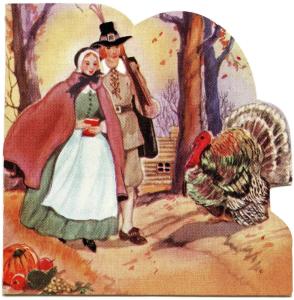
“The pilgrims were trash,” Veradean said. “They didn’t have any money and look what they did.”
“What did they do?”
“They started their own country.”
“What’s a pilgrim?” Baby Eddie screamed.
“Go to bed, Baby Eddie,” Vicki-Vicki said. “You’re giving me a headache.”
“No! I don’t want to go to bed!”
“Miss Edmonds read us a story about the pilgrims,” Veradean said. “They wore black and prayed all the time. The king got mad at them and kicked them out of the country. They didn’t have any place to go so they came over here from England in a little wooden boat. They just about died on the ocean on the way over and when they got here they landed on a big rock. When they climbed down off the rock and looked around, they saw it was nothing but woods and wild animals. There were no hotels or stores or anything like that. The only other people around were Indians and the Indians were afraid of the pilgrims. They hid from them and shot arrows at them.”
“I know what Indians are!” Baby Eddie shrieked.
“The pilgrims didn’t know how to take care of themselves and a lot of them died right away in the snow. They didn’t have any food because they didn’t know how to grow corn and stuff in the ground. Finally the Indians started to feel sorry for the pilgrims and came out of their hiding places and helped them. They showed them how to grow corn and pumpkins and green beans and stuff and raise turkeys so they’d always have something to eat.”
“That’s bullshit!” Baby Eddie said.
“You’re not supposed to use that word,” Vicki-Vicki said.
“But I like to say it! Bullshit! Bullshit! Bullshit!”
“After the first harvest when the pilgrims had all the food they needed, they were so happy they decided to thank God and have a big party. They all sat down at a big table and the Indians served food to them and they all ate so much they had to go lay down. Some of them vomited. That was the first Thanksgiving.”
“The Indians served food to the pilgrims?” Vicki-Vicki asked.
“Yes, they did.”
“When did the Indians eat?”
“They sat down and had their Thanksgiving dinner after all the pilgrims were finished eating.”
“I want a hot dog!” Baby Eddie said.
“So, are we going to have turkey and all the stuff the pilgrims had for our Thanksgiving?” Veradean asked.
“Not unless you know some Indians,” Vicki-Vicki said.
On the day before Thanksgiving, Vicki-Vicki saw the ad in the paper: Thanksgiving Day dinner served at the Heavenly Light Mission. Everybody welcome! Come early! Bring the entire family!
When Veradean came home from school Wednesday afternoon, Vicki-Vicki told her, “We’re going to have turkey on Thanksgiving after all and it’s not going to cost us anything.”
“How we gonna do that?” Veradean asked.
“It’s a surprise.”
On Thursday morning Vicki-Vicki awoke early with a sense of purpose. She made Veradean and Baby Eddie get out of bed and take baths and wash their hair. She dressed Veradean in a hand-me-down schoolgirl dress of plaid material with a sash in the back. For Baby Eddie she found an old sailor suit in grandma’s trunk that some little boy had worn long ago.
For herself she had a gray, vintage suit she had been saving for a special occasion, exactly like the one Kim Novak wore in Vertigo. She always believed that she looked at least a little like Kim Novak without the blond hair and dramatic eyebrows.
Trash though they were, they didn’t have to go looking like trash. They would look distinctive, different from anybody else.
It was a mile or so into town, to the Heavenly Light Mission. A cold wind was blowing and the sky threatened rain.
“What’ll we do if it rains before we get there?” Veradean asked.
“Get wet.”
Baby Eddie complained that his shoes hurt, so Vicki-Vicki had to carry him part of the way, with her high heels pinching her toes every step of the way. Veradean tried carrying him some, but he was too much for her.
“It’s like carrying a calf,” she said.
Finally they reached the Heavenly Light Mission. There were already a lot of people and cars, even though the place hadn’t opened its doors yet. They took their place at the end of the long line.
“How long do we have to wait here?” Veradean asked.
“I’m hungry!” Baby Eddie said.
The doors opened at the appointed time and the line began moving, slowly at first and then faster.
“Oh, boy! I smell the turkey!” Veradean said.
While waiting in line, Vicki-Vicki was aware of a group of young men standing off to the side, talking and laughing. She saw after a while that they had noticed her and were looking her way. She made a point of ignoring them, looking down at Baby Eddie and taking his hand.
After a while one of the young men detached himself from the group and approached her.
“You probably don’t remember me,” he said.
“No.”
“Rollo Ruff? People used to call me RR?”
“I don’t think so.”
“High school?”
“Oh,” she said, feeling let down. “That was a long time ago.”
“Not that long,” he said.
“I know so many people.”
“These your kids?”
Veradean and Baby Eddie both looked at Vicki-Vicki to see what she would say.
“No, they’re foundling children,” she said. “I don’t know where they came from.”
“Sister and brother,” Veradean said.
“Yes, my mother is touring the Continent,” Vicki-Vicki said, “and I stayed behind this time to take care of the little ones.”
“Yes, that’s always a problem with the better people,” he said.
“Well, it was so nice seeing you again. Be sure and remember me to your people.”
“Thought I might call you up some time.”
“That would be rather difficult,” Vicki-Vicki said, “since I live in a house where there are no phones.”
“No phones! Hah-hah! You were always so funny!”
“I don’t know what’s funny about it.”
“Tell me where you live and I’ll drop by later this evening and we can get reacquainted.”
“I’m afraid that isn’t possible,” she said.
“Well, okay for now. I’ll be seeing you again, though. You can be sure of that.”
“You don’t like him?” Veradean asked after he was gone.
“No, I never saw him before in my life.”
“I think he’s cute. He’s got a quiff.”
“He’s got a what?”
“I think a man looks cute with a quiff.”
“Oh, what do you know? You’re in fourth grade.”
“Why didn’t you tell him mama’s in jail?”
“That’s the same as admitting we’re trash,” Vicki-Vicki said.
“We are trash.”
The line lurched forward and they were all the way inside the Heavenly Light Mission. They were handed trays and, as they moved forward in the line, fat women in hairnets and white aprons began thrusting plates of food at them across a counter.
There were rows of tables placed end to end, covered with white table cloths. Balancing her own tray with one hand and helping to keep Baby Eddie from dropping his tray with the other hand, Vicki-Vicki jostled her way through the noisy crowd to the edge and took a seat at the end of a table. Veradean sat on her left and Baby Eddie across from her.
Veradean began stuffing food into her mouth. “This is just like the pilgrims,” she said.
“What’s this stuff?” Baby Eddie asked.
“It’s good,” Vicki-Vicki said. “Eat it.”
Soon Vicki-Vicki noticed a man moving down the table toward them, shaking people’s hands and patting them on the backs. He was dressed all in black like a pilgrim. She knew she was going to have to talk to him.
“So happy to see you here today, sister,” he said, touching Vicki-Vicki on the shoulder and moving around to the end of the table where he stood beside her. “My name is Brother Galvin. I don’t think I’ve seen you here before. What is your name?”
“My name is Vicki-Vicki Novak,” she said, almost choking.
“Are you the mother of these two children?”
“No.”
“I’m her sister and he’s her brother,” Veradean said.
“My, my!” Brother Galvin said. “I might have guessed as much.”
He flashed them all a grin and patted Baby Eddie on the head.
“All are welcome in the house of the Lord,” he said. “All are welcome. I hope the three of you will honor us with your presence at the service that begins in about half an hour in the building next door.”
“Thank you,” Vicki-Vicki said, and Brother Galvin moved on.
“I’ll bet he’s rich,” Veradean whispered. “Maybe you could marry him and we could come and live with you.”
“He’s at least forty years old.”
“What difference does that make as long as he’s got money?”
After they finished eating, they stood up to let others take their places and went outside.
“Now it’s time for church,” Vicki-Vicki said.
“Do we have to go?” Veradean asked.
“It’s the least we can do.”
The church was part of the same building but reached by going out one door and through another. There were about ten people inside sleepily waiting for the service to begin. An old woman played hymns on a small organ at the front.
In a couple of minutes, Brother Galvin came to the front and looked out at the people assembled. He held up his hands and smiled and the organ music stopped.
“Brothers and sisters!” he said. “Is there anybody here who does not believe that this is a day that the Lord hath made.”
“No!” somebody shouted from the back.
“We are so happy that you have made your way into our little fold on this blessed Thanksgiving Day. I’m here to tell you that the Lord loves you, no matter what you’ve done and no matter how low you might have sunk in this life. That is our message of hope at the Heavenly Light Mission: You are loved, in spite of all your transgressions, as only He can love, and you will be redeemed!”
“Amen!”
“Amen!”
“A-men!”
Now,” Brother Galvin said, looking directly at Vicki-Vicki, “I’m going to ask each of you to come forward, one by one, on this glorious Thanksgiving Day, and be washed of your sins in the house of the Lord! What better thing could you do on this Thanksgiving Day than be washed in the blood of our blessed savior?”
Baby Eddie quickly went to sleep, while Veradean played with a piece of string. Vicki-Vicki listened and watched the people stand up one at a time and go forward to the front timidly, where Brother Galvin prayed over them and listened to their oaths that they were ready to turn their lives and hearts over to the Lord Jesus Christ.
Vicki-Vicki knew her turn was coming and she was going to have to go to the front of the church with everybody watching. It was the kind of display she hated and the thought of it made her feel shy and awkward. What if she fell down in her high heels and everybody laughed? She wasn’t going to let that happen.
When Brother Galvin had his eyes closed in prayer, Vicki-Vicki scooped Baby Eddie up in her arms and, with Veradean following closely behind, made for the door. As soon as they were outside, it began to rain.
“We don’t even have an umbrella!” Veradean said.
“Carry me!” Baby Eddie whined.
They hadn’t walked very far when a red-and-white Chevrolet came along slowly and, honking at them first, pulled off the highway in front of them. The driver’s side door opened and a head popped up.
“Care for a lift?” Rollo Ruff asked.
“Who’s that?” Veradean said.
“Oh, it’s that silly boy, Rollo Ruff, from high school,” Vicki-Vicki said.
“What kind of a name is that?”
Other cars were slowing down and people were gawking, thinking they were witnessing an accident.
“Come on!” he yelled. “Get in before we all get killed!”
Vicki-Vicki got into the passenger seat beside Rollo Ruff and Veradean and Baby Eddie got into the back seat.
“I wouldn’t ordinarily accept a ride from a stranger,” Vicki-Vicki said, “but I have these little ones to think about.”
“I’m not such a stranger,” he said. “We knew each other in high school. Remember?”
“Well, if you say so.”
“You don’t remember me at all?”
“I guess I do. You were just one of so many silly boys.”
“I asked you to a Halloween dance once and you turned me down.”
“I’ll bet I wasn’t very nice about it, either, was I?”
He laughed and looked at her appreciatively. “No, you weren’t. You just about broke my heart.”
“You’re exaggerating!”
“Well, maybe a little.”
She hated now to have him know where she lived, but there was no other choice.
“Turn left on Bryson Road going out of town,” she said. “Go past the mill and the sewage treatment plant and I’ll tell you where to turn.”
“Oh, you live down here!” he said and she heard the disappointment in his voice.
“It’s just temporary,” she said. “We plan on moving soon.”
“I didn’t know we were moving,” Veradean said.
When Rollo Ruff pulled up in front of the house, Vicki-Vicki was glad it was raining so hard that he wouldn’t be able to see the peeling paint and sagging porch.
Vicki-Vicki made Veradean and Baby Eddie both thank Rollo Ruff for giving them all a ride and keeping them from having to walk home in the rain.
“Can I see you a little later?” Rollo Ruff asked.
“What for?” Vicki-Vicki asked.
“I can swing by about seven o’clock and we can have a little fun.”
“I don’t think so.”
“Why not?”
She pointed with her thumb toward the back seat.
“Put them to bed and we can go for a drive.”
“I can’t leave them alone. They’re too young.”
“Well, then,” he said, “put them to bed and you and I can just sit and talk.”
“I don’t think so. I’m tired. My feet ache. We walked all that way.”
“I’m not giving up,” Rollo Ruff said. “When I saw you again today, I wondered why I let you get away in high school.”
“You’re a smooth talker, aren’t you?”
“Not really. I’m usually tongue-tied.”
“Well, good night. It was lovely seeing someone from high school again.”
She opened the door and started to get out.
“I can’t call you because you don’t have a phone,” he said. “If I give you my number, will you call me?”
“Well, I suppose I might consider calling you some time when it’s convenient, if I don’t forget.”
“Do you have a piece of paper?”
“No.”
He took a pen out of his pocket and wrote the number on the back of Vicki-Vicki’s hand.
“Write it down before you wash it off,” he said.
“I will,” she said. “If I don’t forget.”
Rollo Ruff drove off into the night and Vicki-Vicki carried Baby Eddie into the house and put him to bed.
“I hope I don’t catch a cold,” Veradean said.
At ten o’clock, Vicki-Vicki and Veradean were sitting at the kitchen table. Vicki-Vicki leafed through a magazine and Veradean shuffled a deck of cards. The house was silent except for the rain on the roof.
“Do you want to play some two-handed pinochle?” Veradean asked.
“I hate card games,” Vicki-Vicki said.
“That was the best Thanksgiving dinner I ever had. It made me feel just like a pilgrim.”
“I’m so happy for you.”
“Are you going to marry that boy?”
“What boy?”
“That Rollo boy.”
“I don’t even know him.”
“I think he really likes you.”
“He’ll get over it.”
“Are you going to call him up sometime?”
“I don’t know. It depends on how bored I get sitting around this dump.”
“If you marry him, will you let me and Baby Eddie come and live with you?”
“I’m not going to marry him.”
“Okay, but if you do.”
“Don’t worry about it.”
“I don’t want to end up in foster care.”
“You worry like an old woman.”
“I wonder if I’ll ever make it to high school,” Veradean said.
“Don’t be in any hurry to get to high school,” Vicki-Vicki said. “It’s a hell hole.”
“It’s supposed to be a good time.”
“Well, it’s not.”
They heard a car out front and then voices and then a thump followed by another thump. Veradean ran and looked out the front window.
“Mama’s coming up the front walk!” she said.
“What?” Vicki-Vicki said, running into the front room.
The front door opened and mama came into the house, dripping wet.
Veradean ran to mama and put her arms around her big waist. “Mama! Oh, mama! Why didn’t you tell us you were coming home?”
“I didn’t know it myself until last night. They let me out to spend Thanksgiving with my family.”
“I’m so glad you’re here!”
“Are you home for good this time?” Vicki-Vicki asked.
“Well, we’ll see, won’t we? Get me a towel. Can’t you see I’m dripping water on the floor?”
Veradean took mama’s little suitcase and mama sat down on the couch, out of breath, and dried her hair with the towel Vicki-Vicki handed her.
“Where’s Baby Eddie?” she asked.
“He was tired out. He went to sleep.”
“I want to see him.”
“Don’t wake him up!” Vicki-Vicki said. “I’ll never get him to go back to sleep.”
“Who do you think are you telling me what to do in my own home?”
“I just meant…”
“I don’t care what you meant.”
“Mama, what did you do to your hair?” Veradean asked. “It’s blond now!”
“You like it?”
“Yes, it looks very glamorous.”
“A gal in prison who murdered her husband fixed it for me. I think it’s a little too short, but I guess it’ll grow out quick enough.
“Oh, it’s elegant!
“Did you kids eat today?”
“Oh, mama! We had the most wonderful Thanksgiving dinner I ever saw. We had turkey and dressing and candied sweet potatoes and corn and pumpkin pie and all the stuff the pilgrims had. The only difference was religious people took the place of the Indians.”
“Where did this take place?”
“At the Heavenly Light Mission in town,” Vicki-Vicki said.
“You walked all that way?”
“It’s the only way we could get there.”
“I was going to stop and pick up some chicken on my way home,” mama said. “I’m glad now I didn’t bother, since you already ate.”
“We started walking home in the rain and one of Vicki-Vicki’s boyfriends came along and gave us a ride.”
“He’s not my boyfriend,” Vicki-Vicki said.
“He was cute, too,” Veradean said.
Mama looked suspiciously at Vicki-Vicki. “You been whoring around while I was gone?”
“Isn’t that what you do? Isn’t that how you get three kids by three different men without ever being married to any one of them?”
“You’d better watch that smart mouth of yours, my girl. I can still slap you silly and don’t think I won’t do it, either!”
“Mama, can I sleep with you tonight?” Veradean said. “I’ve missed you so much!”
“Hell no!” mama said. “I don’t want you breathin’ on me all night. And, anyway, I’ve got a date. I just came home to change clothes. Somebody’s pickin’ me up in about ten minutes.”
She went into the bedroom and closed the door. In a few minutes she emerged wearing her fancy black dress and left in a hurry without speaking another word.
“Can you sleep with me and Baby Eddie tonight?” Veradean asked. “When mama comes home she’ll be drunk and I don’t want to be around her when she’s like that.”
At two in the morning Vicki-Vicki was still awake. She lay in the bed next to Veradean, listening to the rain and wind buffeting the house. Baby Eddie lay in another smaller bed on the other side of the room. Sometimes he made little mouse sounds in his throat like there was something inside that was trying to come out.
There was a flash of lightning, unusual for the time of year, and sirens out on the highway. The sirens usually meant a car wreck. If Vicki-Vicki could have any wish tonight, it would be for one particular traffic fatality. Just the one and no others.
Copyright © 2018 by Allen Kopp