White Boy Rick ~ A Capsule Movie Review

White Boy Rick ~ A Capsule Movie Review by Allen Kopp 

White Boy Rick is set in dismal Detroit, where it seems always to be winter, in the 1980s. Middle-aged dad Rick Wershe senior (Matthew McConaughey) is, by all accounts, a “lowlife” and a “loser” (his wife ran off and left him). He seems, however, to be well-intentioned when it comes to his two kids, Rick junior and Dawn, but they are also lowlifes and losers. Dawn has a haunted, vacant look because she is a drug addict. Scruffy-looking Rick junior at age fifteen is interested in firearms (he stopped going to school) while Rick senior has a workshop in the basement where he modifies guns to make them more deadly. Rick junior takes up with a gang of black hoodlums—he even adopts their patterns of speech—and becomes a gun dealer.

After Rick junior is shot in the abdomen and almost dies because his associates think he knows too much, the police begin using him as an informant. To expand his repertoire, the police encourage him to sell drugs, telling him he can keep any money he makes. (Soon he has a boxful of cash under his bed containing almost a million dollars.) What they fail to emphasize is that he can go to jail for life for dealing drugs. They half-heartedly promise to protect him if he should happen to get caught, but they refuse to put it in writing so we know they don’t really mean it. In the meantime, Rick junior impregnates a black girl (he’s still only sixteen) and doesn’t know about the baby until after it’s born. Rick senior and Rick junior rescue Dawn from a drug house and take her home and lock her up to help her get over her terrible addiction.

White Boy Rick is based, we are told, on a true story. It’s a portrait of a family and is a story of wasted, hopeless lives. It’s bleak from start to finish with nothing pretty about it; there’s no redemption and no Hollywood ending. To top it off, most of the accents are almost incomprehensible; I rarely understood an entire sentence that was spoken. If nothing else, it’s a movie that makes you thankful if your life has some kind of order and morality to it.

Copyright © 2018 by Allen Kopp     

The Last Picture Show ~ A Capsule Book Review

The Last Picture Show ~ A Capsule Book Review by Allen Kopp 

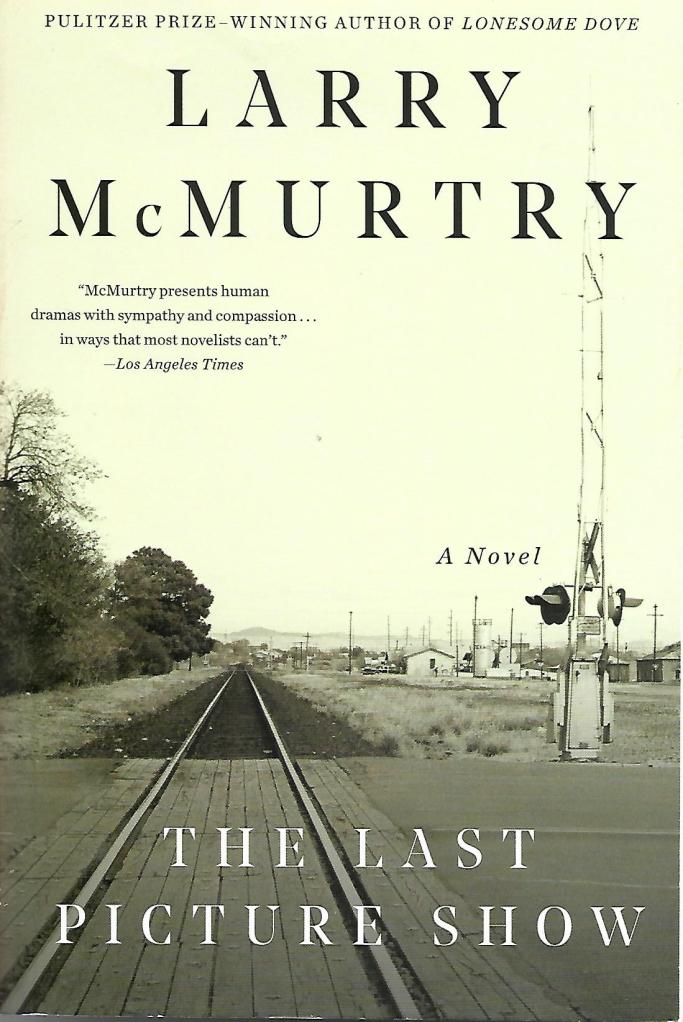
Larry McMurtry’s 1966 novel, The Last Picture Show, is set in the fictional town of Thalia, Texas, in the 1950s. Thalia sits on the edge of the prairie where it’s windy and dusty and hot. There’s a Main Street with a picture show, a café, a poolhall, and not much else. In the way of small towns everywhere, the people of Thalia don’t have much to do, but there’s always gossip—everybody knows everything about everybody else—and if you happen to be different in some way from the other people in the town, you’d better watch out because they’re coming to get you.

Sonny and Duane are high schoolers and best friends. Sonny is sensitive and Duane is a brawler. They both like to drink and carouse and they don’t have to worry about what their parents think because they are both living on their own, free of family. Even though they’re both still in high school, they don’t let it bother them much. They aren’t much interested in education.

Sonny has an unattractive girlfriend named Charlene Duggs. She’s overweight and already possesses the bitchy qualities of a middle-aged shrew. Everybody who knows Sonny believes he could do better. Sonny secretly envies Duane, who dates the prettiest, most-stylish girl in school, Jacy Farrow. Jacy is self-centered, vain, manipulative, and she doesn’t care who she hurts as long as she gets what she wants. (We’ve all known people like this.)

When the good-ol’-boy football coach enlists Sonny to drive his wife, Ruth, to the clinic, Sonny sees that Ruth seems awfully lonely and unhappy. They begin a sexual affair—she’s forty and he’s seventeen—meeting afternoons in her bedroom while the coach is at school. Ruth experiences a sexual reawakening with Sonny. With the age difference, though, you know someone younger is bound to turn Sonny’s head and when it happens it’s none other than Jacy Farrow, who has broken up with Duane. Forty-year-old Ruth is easy for Sonny to put out of his mind when he can have Jacy.

There are other interesting characters in the novel, including Sam the Lion, a sort of father figure to everybody—he owns the poolhall, picture show and café; Genevieve, the world-weary waitress at the café whom the boys secretly lust after; Lois Farrow, Jacy’s smart-mouthed mother, who gave her husband so much hell he just had to go out and make a million dollars just to please her.

The Last Picture Show is a slice of small-town life and also a growing-up, coming-of-age story. It’s about change, the good kind and the bad kind that throws you for a loop and makes you wish you had never been born. It’s a breezy 245 pages that you can read without taxing your brain too much. And who can forget the 1971 movie version (two acting Oscars) of the novel, a good example of how to make a movie from a book and do it right.

Copyright © 2018 by Allen Kopp    

Memoirs of Hadrian ~ A Capsule Book Review

Memoirs of Hadrian ~ A Capsule Book Review by Allen Kopp 

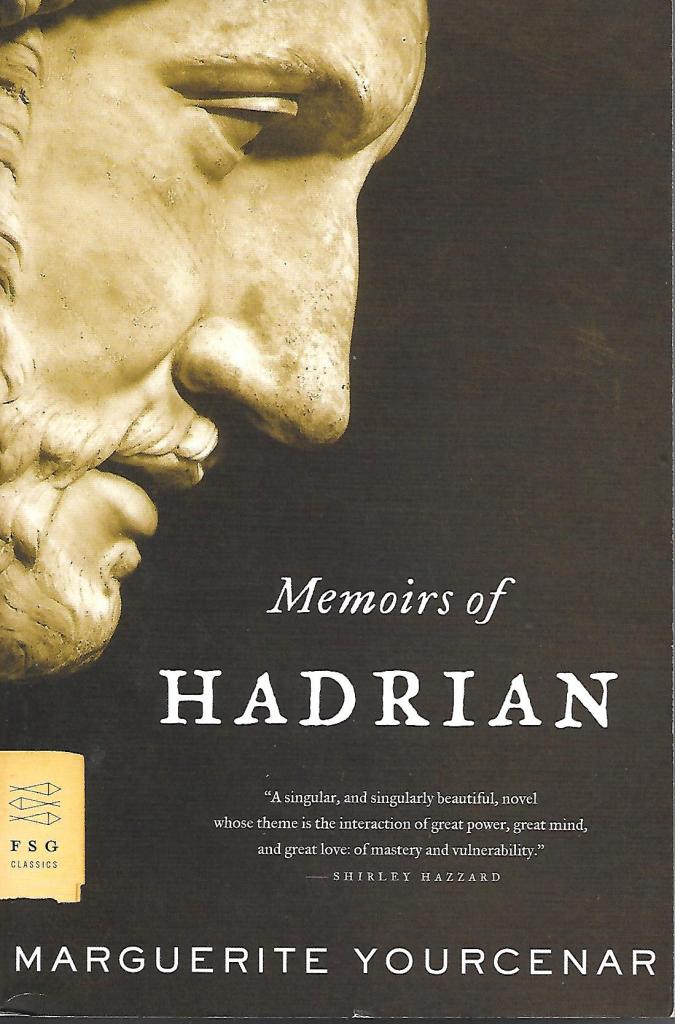
Hadrian was born in 76 A.D. and became emperor of the Roman Empire in the year 117, at age 41. His reign lasted until his death in 138, at age 62. Hadrian was known as one of the five “good emperors,” meaning he was known for his peaceful reign, rather than for cruelty or for the extravagant vices that some of his predecessors were known for. Hadrian is known mainly today for three things: his love for Antinous, a Bithynian youth (Bithynia is today part of Turkey), who died at age 19 by drowning in the Nile River; for having built the famous Pantheon in Rome (or at least having it finished); and for a wall he had built in Britain (parts of which still remain) known as “Hadrian’s Wall,” which was supposed to keep the “barbarian hordes” out of territory belonging to the Roman Empire.

Memoirs of Hadrian, by Marguerite Yourcenar, is a historical novel, a fictional account of Hadrian’s life and times. Although fiction, it is based on extensive historical research, which the Bibliographical Note at the end of the novel explains. It is told in Hadrian’s voice, from his point of view, as if he, from across the centuries, was writing it himself. It is an extended letter to 17-year-old Marcus Aurelius, future emperor-to-be.

Of course, as emperor of one-third of the earth’s population at the time, Hadrian had many problems, many ups and downs. The emperor was essentially a warrior, a general holding together the military factions of his empire and, as such, was often in peril of his life. There were always the greedy, the ambitious, the selfish who wanted to destroy the emperor in an effort to attain their own ends. Hadrian was by all accounts a modest man, not interested so much in being loved or admired. He believed that true love and admiration from the people must be earned, rather than automatically given just because one has fallen heir to a powerful position.

The most dramatic event in Hadrian’s life was his love for Antinous, the beautiful youth whom he watched grow into manhood. Antinous was Hadrian’s better self, his constant companion, the emotional axis of Hadrian’s life during the years they were together. Their love was a love for the ages, like that of Achilles and Patroclus centuries earlier. When Antinous committed suicide (apparently) by drowning himself in the Nile River at age 19, Hadrian was never the same again, living for about eight more years. He “deified” Antinous, building a city (Antinoopolis) in Egypt to his memory. Many statues, coins, and other works of art bore Antinous’s image. A cult was built up around his name and memory. When Hadrian died of a “dropsical” heart in 138 A.D., one can’t help but believe that the two of them were reunited in death.

Memoirs of Hadrian was first published in 1951, in French, and later translated into English. It is a glimpse into another time and place into the mind of a man who lived so long ago that it’s difficult for us to imagine. Despite its historical subject matter and its moderately dense prose, it is never very difficult reading, especially after the first fifty pages or so. Not for everybody, but if you make it through to the end, you will find it immensely rewarding and memorable.

Copyright © 2018 by Allen Kopp 

Night Train

Night Train ~ A Short Story by Allen Kopp

(Published in a slightly different form in Bartleby-Snopes.) 

Martin Haythorne disliked riding trains at night. They moved too slow and made too many stops. At one of the stops a woman boarded the train carrying a sleeping child. Martin was facing the door and as he saw her coming toward him, he hoped she wouldn’t sit in the seat facing him, but she did. He uncrossed his legs and sighed and pulled himself up straighter, thinking it’s going to be a long night.

The woman fussed with getting the child fixed just right in her lap and, after she was settled in the seat across from him, she looked searchingly at Martin until he looked back and gave her a wan smile.

“It’s so crowded tonight,” she said.

He could see all the way down to the other end of the coach and it was more than half empty.

“I think traveling at night is so lonely,” she said. “I like to find somebody I can talk to. It helps to pass the time.”

He looked away and picked up and began reading a newspaper that somebody had left behind, but that didn’t deter the woman.

“This is my little girl,” she said, looking down at the child draped across her lap. “She’s three. Her name is Ivette. She always gets sick to her stomach on a train, so before we left home I gave her a little pill to make her got to sleep. She doesn’t have any idea she’s on the train just now. Don’t you think that was the smart thing for me to do?”

He shook his head and looked at the child, who barely seemed to be breathing. She was tiny and pale, with scraggly blond hair and a throbbing blue vein in her temple. She was wearing a cowboy shirt with a horse embroidered on the yoke, blue jeans and cowboy boots.

“What about you?” the woman asked him. “You have any children?”

“Not me,” Martin said. “I don’t have time.”

“I always thought I would have three or four children, but Ivette is my only one so far. I guess there’s always a chance for more.”

Martin looked longingly at the empty seats, wanting to move but not wanting to appear overly rude. Instead he picked up the newspaper again, turned the pages and, not finding anything of interest, began studying a sofa ad.

“You’re probably wondering where my husband is,” the woman said. “You’re probably asking yourself  why I’m traveling at night by myself with a small child.”

“You need a book or a magazine,” Martin said. “Reading is what really helps to pass the time at night.”

“Oh, I don’t read much and, anyway, reading on a moving train would only make me sick to my stomach.”

He kept looking at the sofa ad with feigned interest, wondering how he might make the woman stop talking. After a while he refolded the paper and set it on the seat beside him. Remembering the pack of cigarettes he had in his pocket, he took one out, lit it and blew out a big cloud of smoke. That would surely make the woman want to take the child and move to a different seat.

She didn’t seem to notice. She moved the child off her lap onto the seat beside her until the child’s head was resting against her thigh and the cowboy books were sticking out in the aisle.

“Aren’t children just the most precious things?” she said. “God’s greatest gift.” She smoothed the child’s hair back from its face.

“Look,” he said, “if you don’t mind, it’s late and I would really like to just sit quietly. When I’m riding on a train at night, I like to just sit and think about things.”

“Oh, no!” she said. “I don’t want to bother you. Just pretend as if I wasn’t even here.”

He leaned his head back, turned his face toward the window and closed his eyes. He could go to sleep if only he was alone.

“You know,” the woman said, “when I’m riding on a train I love to watch the scenery, but at night all you can see is the darkness, unless you pass through a little town where there are lights. The towns always seem kind of lonely and sad, somehow, at night, don’t you think?”

He reopened his eyes and sighed. He was ready to move now to another seat, no matter how rude it seemed. When he started to stand up he saw the woman was crying.

She saw he was looking at her and said, “Oh, don’t mind me! I try not to cry in public but sometimes I just can’t help it.”

She took a handkerchief out of her purse and wiped her eyes.

“Are you sick or something?” he asked. “Do you need to get off the train?”

“No. Why would I want to get off the train all the way out here?”

“I just thought…”

“Look, would you mind getting me a cup of water? I need to take some pills.”

He went to the men’s restroom and filled a tiny, cone-shaped paper cup with water at the wash basin and took it back to her.

“Thanks,” she said. “I sometimes get hysterical, but I have these little pills that help.”

“Look, I’ll move to another seat and you can put your baby here and I’ll just get out of your way.”

“Oh, no, no, no! I want you to stay with me!”

“But I thought…”

“No, I feel better if you’re here.”

He looked at his watch, calculating how much longer the trip would take, and sat back down. The woman put the handkerchief over her face and let loose with a torrent of sobs, causing a throbbing in his head. A crying woman always brought unwelcome associations; his mother used to cry for no reason at all.

When he saw the conductor standing at the front of the car, he stood up and approached him. “I’d like to move to another car,” he said. “There’s a woman who keeps saying things.”

“What kind of things?” the conductor asked. “Indecent things?”

“Oh, no, nothing like that.”

“Well, what is she saying?”

“She’s just bothering me. I want to rest.”

“Well, you can’t move to another car because this is the only car carrying passengers tonight.”

“I see.”

“Why don’t you just move to another seat?”

“I think she would move, too.”

“Well, tell her to stop annoying you. Tell her to shut up. Sometimes that’s what it takes.”

“I will. Thanks.”

He went back to his seat and sat back down. If only he could sleep the rest of the way, blot everything out, he’d feel much better. The time would go by so fast that before he knew it the trip would be over. He wasn’t going to let the woman bother him anymore.

He tried closing his eyes again, leaning his head against the window and folding his arms across his chest. He could feel himself starting to drift off when another train passed by going in the other direction, letting  off a shrill blast.

The blond-haired girl woke up and began screaming. The woman picked her up and set her across her lap.

“My goodness!” she said. “That frightened little baby, didn’t it? Bad old train woke little girl up!”

She jiggled her up and down, but the girl kept screaming. After a while, the screams tapered away to subdued sobbing. “We make quite a pair, don’t we?” the woman said with a laugh. “I don’t know what they’re going to do with us, I swear I don’t!”

When the girl continued crying, the woman took a candy bar out of her purse, unwrapped it and gave it to her. She instantly settled down, making little cooing noises as she ate the candy, looking at the ceiling.

“Sometimes with children things are so simple,” the woman said.

“Look,” he said, “I’ve tried to be patient with you, but you don’t seem to be getting the message. I want to just sit quietly and not be bothered and not talk! Is that so hard to understand?”

“We’ve just been so upset because my husband ran off and left us.”

“I can’t say I blame him.”

“Of course, Ivette is too young to understand, but children know things instinctively.”

“Okay, I’m going to move to another seat now.”

“I wish you wouldn’t. I like talking to you.”

“Well, I don’t like talking to you!”

“He has a kind of recurring amnesia, my husband does. He’s fine for a while and then he has these spells come over him where he forgets things. He forgets he has a wife and a child, and he goes away on the train or the bus, and I have to go get him and bring him back home. He seems to have it in his head that he’s escaping from something.”

“I think I know what he’s escaping.”

“The doctor believes he has a kind of a growth thing on the brain that makes him act the way he does. If we could just get him to agree to have an operation, that might make him just as normal as anybody.”

“Maybe he doesn’t want to be normal.”

“Of course he does. Everybody wants to be normal and live a normal life.”

I don’t!”

“I love my husband very much and little Ivette loves him too, and I believe that in his own peculiar way he loves us just as much. I’ll go to the ends of the earth to bring him back home as many times as it takes.”

“You don’t seem to be getting the message, lady, so I’ll put it to you in very plain language: I don’t care about your troubles and I don’t want to hear about them!

He stood up, picked up his coat, hat and suitcase and moved all the way to the front of the car next to the window. He was so relieved to get away from the woman and the little girl that he felt close to tears and his hands were shaking. He put his suitcase on the seat beside him so she wouldn’t get it into her head to come and sit there.

Sleep at last came to him and he awoke to the sounds of the train pulling into the station. The sun was just coming up. The interminable night was over.

He got off the train as quickly as he could to avoid another encounter, but he didn’t see the woman and the little girl again. He took a cab to the hotel, checked into his room, changed his clothes and went downstairs in the elevator.

The hotel restaurant was crowded, but he didn’t mind it because he got a little table at a remove from the others. After placing his order for breakfast, he lit a cigarette and closed his eyes, feeling pleasantly fatigued. He was looking forward to a day of solitude and relaxation—visiting a museum or two and possibly seeing a movie, and then returning to his hotel room for a nap before dinner.

While eating his ham and eggs, he noticed a woman come into the restaurant. He wouldn’t have noticed her at all if she hadn’t been carrying a small, blond-haired child. She sat down facing him at a table about thirty feet away. She held the child on her lap for a while and then pulled a chair up close on her right side and set the child on the chair.

The woman looked closely at him and when he looked back she smiled at him and he saw then that it was the woman from the train, although she looked much different, dressed in finer clothes and wearing a hat. She reached over and said something to the child and then she pointed her finger at him to indicate to the child that he was there. He wanted to move around to the other side of the table facing away from her, but he knew it was no use. There would be no getting away from her.

I’ve seen her before, he thought, and not just on the train. I’ve seen her many times in many places. I forget about her, and then I see her again, in the least-expected places at the least-expected times. She is everything to me that I abhor in the world, everything I hate and fear, and she will not relent until she has overpowered me and forced me to her will.

He closed his eyes and wished the woman and the blond-haired child gone. He would kill them if he had to, to save himself. He’d buy a small gun that he could conceal easily in his pocket and lure them away from the hotel and kill them. Nobody would ever know, as long as he planned things out carefully. Yes, he could kill a child because this child wasn’t just any child—it was her child.

When he opened his eyes again, the woman and child, to his great relief, were gone. He finished his breakfast, paid for it, and went up to his room on the tenth floor of the hotel and locked himself in. He didn’t want to be disturbed.

The room was quiet and cool. The faraway sounds of the traffic on the street below were comforting. He kicked off his shoes and lay on the bed and put his arm over his eyes.

He fell into a deep sleep, losing track of the passage of time. He woke to the sound of a faint stirring, as of someone in the room with him. He opened his eyes and when he saw the woman from the train standing beside the bed, he jerked himself to a sitting position.

“What the…what the hell is this?” he said, not sure of what he was seeing.

“We’re here,” she said. “We’re both here.”

She touched the head of the blond child standing beside her and then reached down and picked her up in her arms. The child, seeing him lying on the bed, stuck her finger in her mouth and then pointed it at him and leaned far over toward him from her mother’s arms.

“She certainly has missed her daddy!” the woman said.

She placed the child on the bed beside him in a sitting position. It was the same cowboy shirt with a horse embroidered on the yoke, the same blue jeans and cowboy boots.

“Who is this?” he said to the woman.

The child looked at him knowingly. She had the same face, the same upturned nose, the same washed-out blue eyes. When she opened her dribbling mouth and smiled at him, he could see her tiny, animal-like teeth. He was sure he had never seen a more despicable child. He wanted nothing more than to put his hands around her throat and strangle the life out of her and then do the same to the mother.

Copyright © 2018 by Allen Kopp

A Clockwork Orange ~ A Capsule Book Review

A Clockwork Orange ~ A Capsule Book Review by Allen Kopp 

Besides classical music (especially Ludwig van Beethoven and Johann Sebastian Bach), Alex loves ultra-violence. He is only fifteen, but every evening he meets his three “droogs” (Pete, Georgie and Dim) to go out and terrorize anybody unfortunate enough to fall into their clutches on the streets. They especially target the elderly and those incapable of defending themselves. The “millicents” (police) are not very effective against these roving bands of predatory thugs, so most people, if they are able to reason things out, do not go out at night.

Alex lives with his “pee and em” (parents) on the tenth floor of a building of flats. The pee and em think Alex is a good boy who has an evening job that brings in a little money. He is good at making them think whatever he wants them to think. They don’t know that he gets his money from stealing and from robbing innocent victims. (When his father asks him just exactly what his evening job is, he politely sidesteps the issue.)

After a while things start to go bad for Alex, oh my brothers! His droogs turn on him and challenge his authority as their leader. What’s even worse, a “baboochka” (old woman) he beats up during a home burglary dies of her injuries and the millicents, finally, catch him and sentence him to twenty years behind bars. Well, conditions are terrible in prison, with six to a cell, and after a few months Alex kills another prisoner. Because he is young, authorities believe he is worth reclaiming, so they put him in a special treatment program (the Ludovico technique), whereby he will be “cured” of his violent criminal tendencies and released back into society in a fortnight. He doesn’t know, of course, that the treatment is the worst thing he will ever experience in his life.

The treatment consists of, besides drugs, “associative conditioning” in which Alex is forced (strapped to a table, eyes forcibly kept open) to watch films set to music of tortures, rapes, stabbings, murders and assorted acts of violence. The violence he is forced to witness in the films makes Alex so ill that, presumably, he will never be able to commit such acts again himself. But, wait a minute, isn’t the government going too far with this treatment? By taking away Alex’s free will to decide for himself, aren’t they turning him into a “clockwork orange,” a being that is organic and mechanical at the same time? After Alex is cured, maybe he will need a “cure” for the cure.

A Clockwork Orange, by Anthony Burgess, was first published in 1963. It is set in Britain, in a frightening distant future. It is Alex’s story, told in his voice, so it’s what he thinks and what he feels. The slang the characters in the novel use is called “nadsat” (teenage) language. If you are a new reader, approaching A Clockwork Orange for the first time, don’t be put off by the slang. You can almost always tell, by word association, what the word is supposed to be. In the paperback edition I read (two times now), there’s a glossary in the back of the book to translate the slang into recognizable English words.

Copyright © 2018 by Allen Kopp 

True Grit ~ A Capsule Book Review

True Grit ~ A Capsule Book Review by Allen Kopp 

Mattie Ross is the first-person narrator of Charles Portis’s novel, True Grit. She is a fourteen-year-old Arkansas girl whose father is murdered by a drunken hooligan named Tom Chaney (an alias) in Fort Smith, Arkansas, in 1870. Mattie is old beyond her years and knows how to take care of herself in a man’s world. She sets out to seek justice, to avenge the murder of her father, but she’s going to need some help.

When Mattie is advised that a man named Rooster Cogburn is the toughest of the U.S. marshals, she decides he is the right man for the job. She will pay him one hundred dollars, a formidable sum for 1870, to go into the Navajo Nation (Kansas) to bring Tom Chaney back to Fort Smith so she can have the satisfaction of seeing him hang. She will not back down for any reason until she gets what she wants. Danger on the trail, hardship and discomfort, mean nothing to her.

Rooster Cogburn is a crusty old soul who loves his liquor and has been known, on occasion, to be on the wrong side of the law, but he has a streak of decency, which Mattie soon discovers. He will do what’s right, even if he has to resort to extreme measures. He is the perfect complement to Mattie’s character.

In Fort Smith, before departing on their quest, Mattie and Rooster meet LaBoeuf, a swaggering Texas ranger who is also on the trail of Tom Chaney. He and Rooster try to leave Mattie behind, but they soon discover they are no match for her determination.

Mattie, Rooster and LaBoeuf have their setbacks on the trail of Tom Chaney, including winter weather, but Rooster, even in a drunken stupor, knows what he’s doing, knows the land, and knows how to get what, or who, he’s after. Tom Chaney is, after all, a little man and not very bright. He has joined up with a band of outlaws known as the Ned Pepper Gang, notorious for having recently robbed a train.

True Grit is an American classic Western adventure that might be read and appreciated by all age groups. I first read it when I was in college and, since my copy had long-ago fallen by the wayside, I bought it from Amazon and read it again (considerably more expensive the second time I bought it). It was first published in 1968 and was soon after made into a movie with John Wayne as Rooster Cogburn. It was again made into a movie in 2010, in a version by the Coen brothers that more closely follows the novel.

Copyright © 2018 by Allen Kopp

Slaughterhouse-Five ~ A Capsule Book Review

Slaughterhouse-Five ~ A Capsule Book Review by Allen Kopp 

Billy Pilgrim is the main character in Kurt Vonnegut’s anti-war satire, Slaughterhouse-Five. He “comes unstuck in time” and moves all around in his life, from his childhood, to his experiences in World War II, to his wedding night, to a plane crash in Vermont in which he is only one of two survivors, to his time held captive on an alien planet called Tralfamadore millions of light years from earth.

In World War II, Billy Pilgrim is an indifferent warrior. He doesn’t like war and “won’t do anything to protect himself.” He is captured by the Germans (in Germany, no less) and held with a hundred other American soldiers as a prisoner of war. He is present at the horrible firebombing by the Allies (the U.S. and Britain) of the charming German city of Dresden in the closing days of the war. Everybody in Dresden is incinerated, but Billy and the other American POWs survive because they are in a slaughterhouse deep under the earth (“Slaughterhouse-Five”). Everything in Billy’s life happens by chance. He is either very lucky or very unlucky.

After the war Billy becomes an optometrist and manages to be successful in terms of how much money he has. He marries the boss’s unattractive daughter, Valencia Merble, and the two of them eventually have two children: Robert, who is troubled and misguided as a youth but gets himself straightened out and becomes a Green Beret in Vietnam; and Barbara, an authoritative girl who treats Billy in middle-age as if he is helpless and feebleminded. Billy isn’t a very effective or attentive father or husband.

The creatures on Tralfamadore have eyes in their hands. They perceive the world in four dimensions instead of the usual three that earthlings use. This allows them to see all time at once. Maybe this is why Billy Pilgrim moves all around in his life, backward and forward, instead of living a day at a time in progression the way earthlings do. When he is held captive on Tralfamadore, he is treated humanely but held in a sort of zoo where Tralfamadorians look at him all day long. He is “mated” with another captive from earth, a porn actress named Montana Wildhack, and the two of them have a child together.

Slaughterhouse-Five is not a serious novel, even though the pivotal event in the book is the hellish World War II firebombing of Dresden. It is, we are told in the background information, American writer Kurt Vonnegut’s most popular and influential novel. It ranks number 18 on the Modern Library’s list of the hundred best books in English of the twentieth century. During the fifty years of its publishing history, it has been banned by certain schools and libraries because of its language and depiction of sex acts, but it seems very mild by today’s standards. It is not a very long novel and is easy to read, despite its nonlinear structure. If you are confused at first by what his going on, just keep reading and it will all become clear. It’s art and it pushes the boundaries, a little bit but not too much.

Copyright © 2018 by Allen Kopp

The Sheltering Sky ~ A Capsule Book Review

The Sheltering Sky ~ A Capsule Book Review by Allen Kopp

Porter “Port” Moresby and his wife Katherine “Kit” Moresby are affluent Americans traveling in Northern Africa in the 1940s, in the years following World War II. They are “travelers” rather than “tourists,” the difference being that tourists have a destination in mind and a designated time to return home. As we see as the novel unfolds, the region of the Sahara Desert is a not a hospitable place for Americans to travel in; it’s hot and dusty, travel is uncomfortable and unreliable, hotel accommodations are substandard at best, and there’s nothing really to see or do in the Sahara once you’ve taken in the mystery and vastness of the desert, which you can do in one day or less. (All right, let’s go home now.) Why Port and Kit are putting themselves through such torture is never really explained, except that they seem to be trying to get away from something (themselves?) and, also, in choosing where to go, they are interested in parts of the world that haven’t been affected by the war.

Kit Moresby is attractive, which turns out to be her undoing. We’re never told anything about what Port looks like, except that he’s young, so I think it’s probably safe to assume that he’s nothing special in the looks department. They’ve invited along a friend, a man named Tunner, who, though he is handsome, is shallow and something of a nuisance at times. Port doesn’t especially like Tunner but instead tolerates him. Kit is unfaithful with Tunner for at least one night, for which she feels guilty. She wonders if she should confess her infidelity to Port.

In their travels through the cities and towns of the Sahara, Port and Kit encounter fellow travelers Eric Lyle (think Peter Lorre) and his loudmouth mother (think Florence Bates). Eric is cloying and supercilious, dominated by his boorish, petty mother. He asks Port for money and ends up stealing his passport (which can be exchanged for ready cash), causing no end of trouble. These are brilliant and immediately identifiable secondary characters.

After a continual moving about from place to place (with each new place worse than the one before), Port becomes ill with (we learn later) typhoid. There are no doctors to speak of and no hospitals, so he has only a bottle of pills that somebody gives him to help him with his illness. Kit stays by his side while he is sick but after he dies she goes off on her own, not even staying behind to see that he is buried properly. This is where the novel takes on a different aspect with Kit the dominant character.

After all Kit has been through (poor puss), she has a “breakdown” in the desert and doesn’t even seem to know where she is or what she is doing. She is picked up by some Arab men traveling in a caravan and becomes the sex slave of at least two of them. She believes she is in love with the younger of the two Arabs, Belqassim, and submits to him willingly on a daily basis (he “visits” her in the afternoons in the room where she is kept locked up). She becomes his “wife,” even though he already has several wives who are jealous of this odd American lady, whom they believe at first to be a man because that is what Belqassim wants them to believe.

The Sheltering Sky, written by Paul Bowles, was first published in 1947. It is a unique kind of twentieth century American novel, in that its principal characters are American but it doesn’t take place in America and doesn’t deal with the American way of life. It might just as easily have written by an Englishman or a person of any other nationality who knows the Sahara region of North Africa. I’ve read The Sheltering Sky two times in my life, the first time over twenty years ago, and found it just as compulsively readable the second time as the first. If you are a reader, you will love The Sheltering Sky. Of the thousands of books I’ve read in my life, it is one of my favorites and highly recommended.

Copyright © 2018 by Allen Kopp

Time That is No Time

Time That is No Time ~ A Short Story by Allen Kopp

Leatrice awoke and found herself in a strange place. It wasn’t morning and she wasn’t in her familiar room, in the bed where she had slept for the twelve years of her life. All around her was darkness, allowing her to see only a short distance in front of her; she was afraid of what the darkness might be concealing. “Hello! “Hello!” she called out for someone to help her but no one answered.

Finally someone approached her, an old woman. Leatrice had never seen the old woman before but she was somehow familiar.

“Where am I?” she asked. “Who are you? I want my mother!”

The old woman made a shushing motion with her hands. “Not so loud, child! You’ll wake the others.”

“What others?”

She noticed then that the old woman carried a glow inside her chest that allowed one to see inside her to her ribs and veins. The glow made the room a little brighter by about one candle’s worth. “What is that?” Leatrice asked in alarm. “Why are you glowing?”

“You’re glowing too,” the old woman said.

When she looked down she saw it was so. “All right, what is this? Am I dreaming?”

“In a way you are.”

“In what way? Am I asleep?”

“Asleep, yes, but not in the way you’re used to.”

“Can you please tell me where I am?”

“First things first. Tell me your full name.”

“Leatrice Geneva Fitch.”

“And in what year were you born?”

“Nineteen hundred.”

“What year is it now?”

“Nineteen-twelve.”

“That makes you twelve years old.”

“Yes.”

“You will always be twelve years old now. The year, for you, will always be nineteen-twelve.”

“What are you talking about?”

“My dear, haven’t you figured it out yet?”

“Figured what out?”

“You’ve made the transition that we all must make.”

“What transition? What is this place?”

“You have passed from one realm of existence to another, from the physical to the spiritual realm.”

“Are you saying I’m dead?”

“My dear, that word doesn’t mean anything here.”

“Well, am I?”

“If that’s the way you way you want to put it, then, yes, you are. Dead.”

Leatrice let out a breath, mostly to reassure herself that she could still breathe and said, matter-0f-factly, “I don’t like this place. I want to go home.”

“This is your home now.”

“What happened, anyway?” she asked, fighting back tears. “I don’t remember being sick.”

“You weren’t sick. It was very sudden. You got in the way of the streetcar downtown. The conductor rang his bell, but for some reason you didn’t get out of the way.”

“Funny thing, I don’t remember.”

“No, we never do.”

“And who are you, if I may be so bold? You look something like my mother.”

“I’m your mother’s grandmother, your great-grandmother. I’ve been here since long before you were born.”

“Here? Where?

“The family crypt.”

“What?”

“Yes, you’re in the family crypt, in the cemetery, surrounded by all those who went before.”

“Oh, no! That can’t it be!”

“Why can’t it be?”

“I’ve seen the family crypt and I don’t like it.”

“You’ve only seen it from the outside.”

“Yes, and it’s scary. It seems to me that, once you’re on the inside, you’ll never get out again.”

“Well, now you’re on the inside so you’ll know firsthand, won’t you?”

Leatrice let loose with the tears she had been trying to restrain. “I don’t like this place and I want to go home! Where are my mother and father? I want to see them.”

“Where do you think they are? They’re still alive. They’re where they’ve always been.”

“Will I ever see them again?”

“More than likely you will, but who can say for sure?”

“But I have cats. What will happen to my cats now that I’m no longer at home to take care of them?”

“Your brother will take care of them. They’re his cats now.”

“Will they come here to me when they die?”

“You’ll find out in time,” great-grandmother said.

There was a lapse then, a darkness, as of a veil being drawn. When this nothingness ended (and who knows how long it might have lasted because in this place there is no time?) great-grandmother was leading Leatrice by the hand, inviting her to meet the “others.”

Cousins Parry and Lomax, twins, were ten at the time they came to the family crypt. (They went over a waterfall in a rowboat and drowned on a summer’s day.) They looked at Leatrice with curiosity. She knew from their manner that they were shy of her and didn’t know what to say.

Great-grandfather was tall and broad, wearing a dress suit, with the elaborate mustache and side whiskers fashionable at the time of his passing. (He was the one who built the family crypt so he could have his family all together in one place.) He smiled at Leatrice and patted her on the head and then he was gone.

Uncle Evan, great-grandfather’s son, was handsome in his military uniform. He entered the spirit realm in Cuba when a bullet struck him in the neck during the Spanish-American War. He smiled at Leatrice and winked and touched her on the shoulder.

Aunt Ursula was a tall, thin woman with a sad face. She carried her three-month old son, George, in her arms. George entered the spirit world over thirty years before aunt Ursula. Since Aunt Ursula arrived, she had held baby George in her arms and refused to part with him. They would be together forever and forever.

And then there was aunt Zel, great-grandfather’s sister. She was a formidable woman, coiffed and bejeweled. By her side always was her husband, Little Otis. (People called him Little Otis to distinguish him from his father, Big Otis.) He was eight inches shorter than aunt Zel, with one arm missing. (He lost his arm not on the field of battle but from the bite of a skunk.)

Uncle Jordan was dressed in an expensive dress suit, with diamond stickpin and silk cravat. He kissed Leatrice on each cheek and then he was gone. He avoided being around the other family members for very long because they were contemptuous of him. In life, he had enjoyed himself a little too much, spent more money than he had a right to spend and died, deeply in debt, in young middle age of alcoholism.

Cousin Phillip’s appendix burst when he was only thirty-two. Immediately after he entered the spirit world, his young wife married a man she hardly knew named Milt Clausen. Odette was not in the family crypt and never would be. Cousin Phillip had renounced all women, bitter than his lovely young Odette had not honored his memory by staying a widow.

Cousin Gilbert was sixteen when he entered the spirit world as the result of a crushed larynx that he sustained in an impromptu game of keep-it-away with some of his friends. Leatrice immediately saw cousin Gilbert as a kindred spirit. The glow in his chest was a little brighter than anybody else’s. When he touched her hand, she felt a kind of connection with him that she hadn’t felt with any of the others.

“How do you like being a ghost?” he asked her.

She shook her head and looked down, again on the point of tears.

“I was the same way when I first came here,” he said. “I couldn’t believe that God would have me die so young. We learn not to ask why we’re here but just to accept it.”

She nodded her head to show him she understood and he leaned in to her and whispered in her ear, “I can show you around if you’d like.”

There were other introductions but the truth was that Leatrice wasn’t paying much attention after cousin Gilbert. He gave her a glimmer of hope, somehow; not that she could go home but that she might find death and the family crypt more to her liking.

The dark nothingness came upon her then and she and all the others slept peaceably for a piece of time in the place where time no longer existed but peace was in ample supply.

When next she saw cousin Gilbert, she was delighted to learn that she might leave the family crypt at will. He showed her how to press herself against the outer wall. Since the wall was solid and she was not, she could pass through it with the right amount of concentration, a trick of the will.

The cemetery was much larger than Leatrice imagined. Gilbert took her to visit some of his spirit friends: a twenty-seven-year-old policeman in uniform; a Civil War soldier who had exchanged words with Abraham Lincoln; a victim of the Johnstown Flood (“the water came roaring down the mountain and swept away everything in its path”); a governor of the state who one day hoped to be president but never was; a group of twenty girls who died in an orphanage fire (all buried in the same grave); a twelve-year-old boy named Jesse who stood just outside his vault until another spirit came along and engaged him in conversation.

“He’s lonely and seeks companionship,” Gilbert explained.

On one of their forays outside the crypt, they came upon a funeral on a hillside that resembled an aggregation of crows because all the attendees were dressed in black.

“This is the fun part,” Gilbert said.

He walked among the mourners, pretending to kiss or touch or put his arm around certain of them. He also demonstrated the technique of coming up quickly behind them and making the more sensitive of them turn around to see who—or what—was there.

“They sense I’m there but when they turn around they’re not so sure.”

He made her laugh when he floated over a couple of old ladies in large feathered hats and, assuming a reclining position over them, pretended to pat them on the sides of their heads.

“I, for one, love being a ghost!” he said.

“Can I fly, too?” Leatrice asked.

“We don’t really fly like a duck going south for the winter. What we do is float. We float because we’re lighter than air.”

“Can I try it?” Leatrice asked.

“If you want to do it, you can.”

He demonstrated his floating technique and they spent the afternoon floating all over the cemetery.

“Maybe there are some good things about being a spirit,” Leatrice said.

“Of course there are!” Gilbert said cheerily.

“No more head colds. No more stomach aches. No more trips to the doctor. No more nightmares, math quizzes, boring church sermons, liver and onions or squash.”

Gilbert laughed, but then Leatrice started thinking about all the good things she had left behind, such as her cats and her beautiful room at home, and she started to cry.

“I think it’s time to go back,” Gilbert said.

Leatrice began venturing outside the family crypt often, either with Gilbert or on her own. And then, on a beautiful Sunday afternoon in October, she saw them.

She recognized father’s automobile that he was so proud of, and then she saw who was riding inside: father, mother and her brother Reginald. She floated after the car—it wasn’t going very fast—and attached herself to the back of it.

Leatrice held on until father pulled the automobile into the driveway of the old house. She was happy to see that everything looked exactly the same. The first thing she did was to go around back and check on her kittens. They were all there and seemed healthy and happy, halfway on their way to being grown. She cried when she saw they recognized her. She longed to pick them up and nuzzle them against her face and hear their sweet purring.

Her room upstairs was the same. Everything was just as she left it, the books and pencils on her desk, the dolls and stuffed animals on the bed and the chair, the pictures on the wall, the lamp, the rocking chair, the clothes hanging neatly in the closet. Mother hadn’t changed a thing.

While mother, father and Reginald were having dinner in the dining room, Leatrice walked around the table, stopping and putting her hands on the back of each chair, experiencing the odd sensation of being in the same room with those closest to her in life and their not knowing it.

It felt good to be home, but she knew things could never be the same again. She could only observe life going on around her and not be a part of it. But still, wasn’t it better than nothing?

Since she dwelt in the spirit world, time, of course, didn’t exist. All time was the same. A minute was the same as an hour, a day the same as a year. In the time that was no time, her brother grew up, got a job in another state and left home. Mother and father grew old and frail. At ninety-one years, father died in his own bed and mother was left alone.

On winter evenings, while mother sat and read or knitted, or sometimes played the piano, Leatrice was nearby.

“I’m here, mother!” she said. “Don’t you see me? I want you to know you’re not alone!”

At times she was certain mother knew she was there but at other times she wasn’t so sure.

In the time that was no time, mother also died. The house was sold and all the furniture moved out. Another family took up residence, four children, two dogs and no cats.

She couldn’t stay in a house that was no longer hers, even if she was just a spirit, so she went back to the family crypt. Since time didn’t exist in the spirit world, cousin Gilbert and great-grandmother and the others didn’t realize she had been gone, although, in the world of the living it would have been decades.

There were additions to the family crypt, of course, in all that time that was no time. Mother and father were there with their own glows and they had a surprise for her: her cats were there, too—all the cats she had ever owned. Nothing else could have made her happier. She experienced a feeling of completeness, then, of going full circle and ending up back where she had always meant to be. Happy in life and now happy in death. She could never want anything more.

Copyright © 2018 by Allen Kopp 

To Have and Have Not ~ A Capsule Book Review

To Have and Have Not ~ A Capsule Book Review by Allen Kopp 

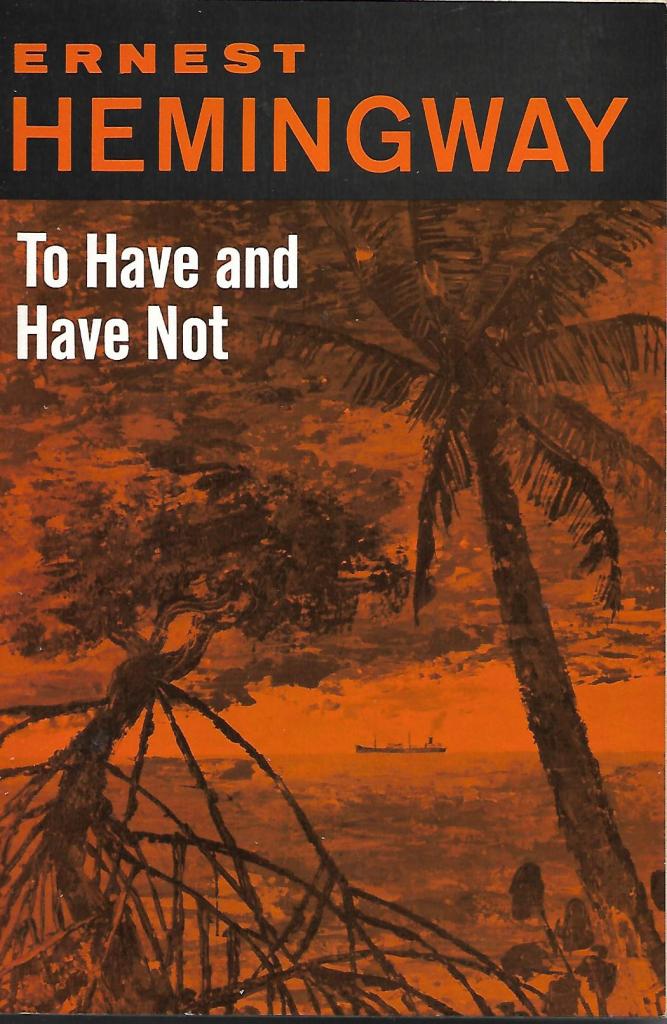
Harry Morgan is the working-class hero of Ernest Hemingway’s 1937 novel, To Have and Have Not. He has a frowzy, overweight, bleach-blonde wife named Marie (very unlike Lauren Bacall) and three young daughters. He owns a fishing boat for hire that runs between Cuba and Key West, Florida. Ordinarily he makes a living by taking rich tourists on deep-sea fishing expeditions, but the Depression is on and times are hard.  

When a tourist runs out without paying him after a three-week run on his boat, Harry is forced to resort to extreme measures (illegal activity) to support himself and his family. First he smuggles Chinese immigrants into Florida from Cuba. When this doesn’t work out very well, he begins to smuggle different types of illegal contraband between the U.S. and Cuba, including alcohol and Cuban revolutionaries. In an encounter with Cuban authorities over a shipment of booze, he is shot in the arm and has to have it amputated. Losing an arm is not the worst that happens to him.   

Harry, his family and friends are among the “have nots” of Key West who are struggling to get by. We also get a glimpse of some of the “haves” on their yachts, who don’t have much to do with the story but add an interesting contrast to Harry Morgan and his friends and associates. As with many novels written during the 1930s, there is an element in To Have and Have Not of social inequality and political unrest.   

The novelist, Richard Gordon, is a character in the novel who doesn’t have much to do with what is going on and doesn’t seem to serve any real purpose. He has written three successful books and is working on another one. He spends a lot of his time drinking in a bar and hobnobbing with the locals. He and his unhappy wife, Helen, both seem to be drifting into infidelity with other partners. Was Hemingway writing about himself in the character of Richard Gordon? What is he saying here?  

Background information tells us that To Have and Have Not started out as two short stories and a separate novella. As interesting as the book is and as much fun as it is to read, it still has that “cobbled together” feel of a novel made up of different parts. It doesn’t really have the “flow” and cohesiveness that a book by a major writer should have, but it’s Hemingway and apparently Hemingway could get away with it. The 1944 Warner Bros. movie of the same name with Humphrey Bogart and Lauren Bacall bears little resemblance to Hemingway’s novel. The movie makers took the title and the fishing boat and did away with most of the rest of the story. That’s what movies do to books.  

Copyright © 2018 by Allen Kopp