The Sun King ~ A Capsule Book Review

The Sun King ~ A Capsule Book Review by Allen Kopp

King Louis XIV was born in 1638 and became king of France in 1643 at age five. He remained king until his death in 1715. His reign of 72 years and 110 days is the longest reign in history for any European monarch. Beginning in 1682 and for about the last 32 years of Louis’s reign, the Palace of Versailles (about twelve miles from Paris) was the seat of French government and the home of the king, his family and the French court.

Louis XIV himself built the Palace of Versailles, starting with a small chateau with a moat, into the most lavish palace in Europe. It remained the seat of French government for over a hundred years, until the beginning of the French Revolution. Today it still stands as one of the most popular tourist destinations in the world.

Louis XIV was anointed by God, or so he believed (and so did everybody else). He was God’s representative on earth. People stood in awe of him; even his own children trembled in his presence. He was a tyrant when he needed to be, but he also had a more human side. He loved and hated in equal measure.

The Sun King by Nancy Mitford is an account of King Louis XIV and his life in the Palace of Versailles, his family and associates, his enemies, his weaknesses, his foibles, his hunting and eating habits, his mistresses, his children (legitimate and otherwise), his wars, and his political successes and failures. He was called the Sun King because he chose the sun as his personal symbol.

The Palace of Versailles was, at any given moment, home to hundreds if not thousands of courtiers, servants, hangers-on, members of the royal family and others. People were always seeking the gain the King’s favor. Most of the jobs in the palace, down to the most menial, were held by members of one family, from generation to generation. These positions were lucrative and much desired.

Life wasn’t always wonderful for the people living at the Palace of Versailles. Many people died young. Infant mortality rates were high. The King himself fathered seventeen children; ten of them died in infancy. Doctors were, at best, barely capable and many were incompetent. No matter what the illness, doctors “bled” the patient, which proved to be largely ineffective. People died of “stone” (kidney or gall). Smallpox was a constant threat, even among the highborn. The king himself had surgery for an anal fistula, without, of course, any anesthetic. He survived it, without complaint.

No matter what was happening in their lives, no matter what tragedy befell them, these lords and ladies loved to go out hunting. Pity the poor stags and other animals that lived in the woods nearby.

The Sun King is mostly fascinating reading. The narrative bogs down, in my estimation, when the focus is on politics and the political rivals of the king. It is sometimes hard to keep all the names straight because different people are referred to at different times by different names. There are so many children, grandchildren, nieces and nephews, friends and enemies of the king (some with unpronounceable and forgettable names) that we don’t always know who’s who, no matter how carefully we’re reading. For example, Mme. de Montespan (sometimes referred to as Athenais) is the King’s longtime mistress. Then the King marries Mme. de Maintenon. Montespan and Maintenon are both prominent characters in the King’s life and their names are almost interchangeable. Such is history.

Copyright © 2020 by Allen Kopp
Other Voices, Other Rooms ~ A Capsule Book Review

Other Voices, Other Rooms ~ A Capsule Book Review by Allen Kopp

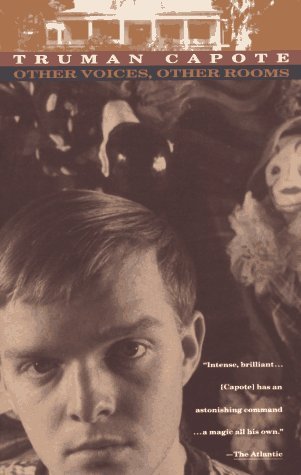
Truman Capote (1925-1984) is one of those twentieth century American writers whose life nearly overshadows his work. In the 1960s and ‘70s he became a media celebrity and a New York fixture of the jet-setting social scene. He counted as his friends politicians, actors, artists, entertainers, and other writers (to whom he wasn’t always very charitable). He was known for his fey wit, his eccentricity, and his alcoholism, which eventually ended his life prematurely at age fifty-nine.

He was only twenty-three or so when he published his famous coming-of-age novel, Other Voices, Other Rooms. It is a floridly descriptive account of an odd thirteen-year-old boy named Joel Harrison Knox (Capote himself). Joel lives with eccentric relatives in New Orleans in, it is to be supposed, the 1940s. When his mother dies, his New Orleans guardian receives a letter from his father (supposedly), inviting Joel to come and live with him in another (unidentified) Southern state.

The place that Joel goes to live is called Skullys Landing, or simply “the Landing.” It is an old house without electricity on the edge of a swamp. It seems the swamp is reclaiming the house; it is slowly sinking (four inches last year). It is the perfect Southern Gothic setting.

The residents of the Landing are—you guessed it!—even more eccentric than the relatives Joel left behind in New Orleans. There’s Zoo, the black girl in her twenties who keeps house for the family. She has a scar on her neck where a bad man tried to slit her throat. She lives in fear that the man will escape from jail and finish the job. Zoo is kind to Joel, so the two of them become friends. Miss Amy is Joel’s stepmother; she is married to Joel’s father and is something of a nonentity. And then there’s flamboyant, fluttery, kimono-wearing Cousin Randolph. He apparently owns the Landing. He talks a lot about the past in flowery language because his present life is that of a shut-in.

But what of Joel’s father? Why is everybody being so mysterious about him? It takes a while for Joel to unravel the mystery of his father. The father does indeed exist but he’s a helpless invalid. (He didn’t write the letter inviting Joel to come and live with him; it was written by Randolph.)

In a long monologue (soliloquy?), Randolph tells the sordid story of the boxer Pepe Alvarez, a woman whom Randolph claimed to be in love with named Delores, Randolph himself, Joel’s father, Miss Amy, and how they all arrived at the point where they are now.

Joel meets other colorful characters while he’s living at the Landing: the rough-and-tumble, acid-tongued tomboy Idabel Thompkins, with whom he plans to run away; the black midget man over a hundred years old named Jesus Fever (he’s Zoo’s grandfather or something); Miss Wisteria, the vivacious, midget circus performer with whom Idabel becomes infatuated.

Other Voices, Other Rooms was a literary sensation when it was first published in 1948, mostly because Truman Capote was only twenty-three years old, it was his first novel and it launched his literary career. It is an essential work in the canon of twentieth century American fiction, not to be missed.

Copyright © 2020 by Allen Kopp       

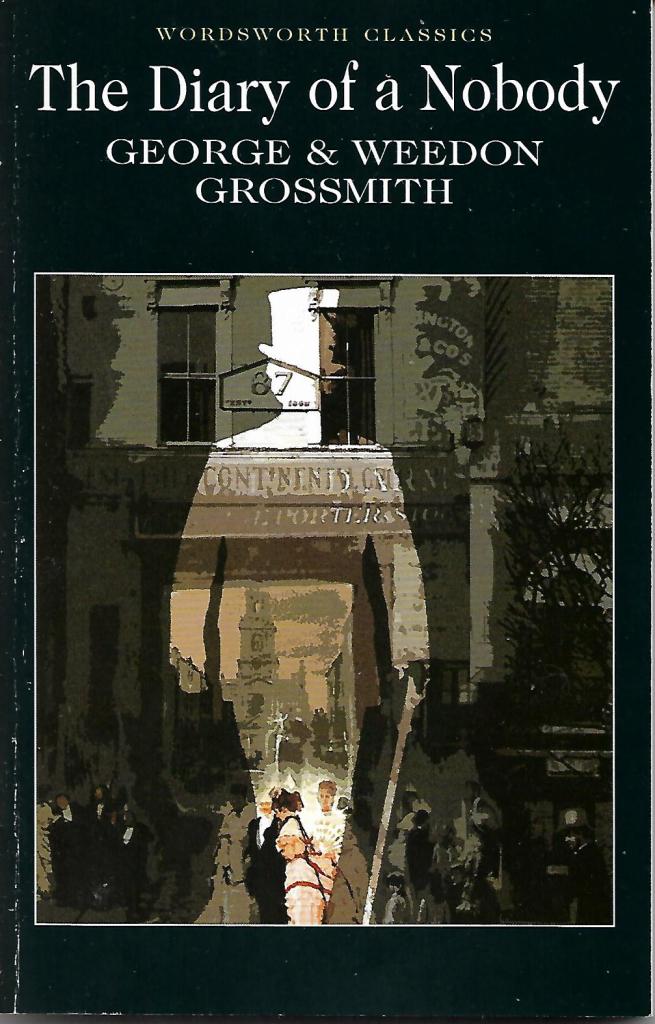
The Diary of a Nobody ~ A Capsule Book Review

The Diary of a Nobody ~ A Capsule Book Review by Allen Kopp

Charlie Pooter is a middle-aged, middle-class Englishman living his proper English life in the 1880s. He has a wife named Carrie and two bosom friends named Mr. Gowing and Mr. Cummings. He also has an exasperating twenty-year-old son named Lupin Pooter. Charlie and his son Lupin almost always find themselves on opposite sides of any issue. Lupin is brash, irreverent, spontaneous and impulsive, all qualities his father deplores.

Charlie is a clerk in an accounting firm. He has an almost reverential respect for his company and for his boss, Mr. Perkupp. He believes that Mr. Perkupp is infallible in all things, almost god-like. He calls Mr. Perkupp his “principal” and his “superior.” We, the reader, see Mr. Perkupp as a company functionary and nothing more, completely unworthy of adoration.

In an attempt to document his thoroughly mundane and uneventful life, Charlie Pooter undertakes the writing of a diary. This diary is the odd little novel called The Diary of a Nobody by a writer named George Grossmith. (The book contains illustrations by Weedon Grossmith, brother of George.) We are told in the background information that George Grossmith was more of a musical performer and an actor than a writer, but he wrote this novel and it has endured for more than 130 years. I never heard of it until recently.

The novel is all diary entries and many of the entries deal with Charlie Pooter being bettered and outdone by his wife, his son, his friends, the servant, or just about anybody else he comes into contact with. Charlie means well, but he is feckless and not very bright. (When he’s leaving a room, trying to be dignified, he will more likely than not catch his foot on the edge of the rug and fall down.) His fondest hope in life is that Mr. Perkupp with take Lupin into his office. When this dream is realized, Lupin discovers right away that he is made for better things. He is never going to be happy with the kind of bowing-and-scraping, subservient life that is good enough for his father.

The Diary of a Nobody is a satire, breezy, light reading, fun to read and entertaining. It may be just the thing you’re looking for after you’ve finished War and Peace.

Copyright © 2020 by Allen Kopp

Cleanness ~ A Capsule Book Review

Cleanness ~ A Capsule Book Review by Allen Kopp

American author Garth Greenwell’s (born 1978) new novel, Cleanness, is told in the first-person voice of an American high school teacher in present-day Sofia, Bulgaria. The narrator of Cleanness never tells us his name. He is only ever known to us as “I” or “me.” Since I don’t know anything about Garth Greenwell, I strongly suspect he’s writing about himself and his own experiences in Bulgaria, since he seems to know the country—and the city of Sofia—so well.

Cleanness is more a collection of interrelated short stories than a plot-driven novel. Each chapter (story) is told in the same voice, the same point of view, but each story could stand alone. There is no plot to speak of, but that doesn’t mean it’s a dud as a novel. Each chapter is compelling in its own right; you don’t know where the whole thing is going until the end. At the end, we get a sense of completeness, of wholeness.

The narrator of  Cleanness is gay but, since he lives in a former communist country that is not particularly welcoming to the gay way of life, he mostly is “closeted,” adhering, as a teacher of high school students, to a code of ethics. He never touches, or becomes too familiar with, any of his male students, no matter how much he might want to. In one chapter near the end of the book he and two of his male students go out drinking in clubs to celebrate his leaving; he is attracted to the older of the two boys, who is about eighteen (and the feeling seems to be reciprocated), but it never goes any farther than dancing together and flirting.

The narrator never mentions his age, but we assume he is in his thirties. He is not a particularly happy man. He alludes to, obliquely, an unhappy childhood that has left him scarred. We get the sense that he’s teaching school in Bulgaria to escape an unhappy life. He says he likes living abroad, so he is in a way a disaffected American. He has a “boyfriend,” known only as “R,” who is younger and from Portugal. He and R. are in love, the narrator says, but it’s a love that’s not going to work out, we see, because R. is young, unsettled, and doesn’t seem to know what he wants.

A couple of the chapters are intensely sexual. In one, the narrator (in trying to recover from a broken heart) has an encounter with an older man he has met on the Internet. The older man is frightening because he is a sadist who likes to inflict pain on his sexual partners. This episode ends up being repellent and distasteful. In another episode, the narrator meets a man who recognizes no limits when it comes to sex. He doesn’t care if his sexual partners are “old and ugly.” He doesn’t care if he gets sick; he only lives for the moment and wants only to be “used.” (This is a not a book I’d recommend to my ninety-year-old mother.)

Garth Greenwell’s previous novel, published in 2016, is What Belongs to You, which is also about an American man teaching high school in Sofia, Bulgaria. It also is told in the first-person point of view. The narrator, it seems, in both novels is the same. Cleanness if not exactly a continuation or a sequel to What Belongs to You, but the two books are enough alike to make a matched pair. For my money, the first book is the stronger of the two. It will be interesting to see what Garth Greenwell does for his next novel. Will he set it in Sofia, Bulgaria again, or some other highly unusual, foreign locale?

Copyright 2020 by Allen Kopp

A Room With a View ~ A Capsule Book Review

A Room With a View ~ A Capsule Book Review by Allen Kopp

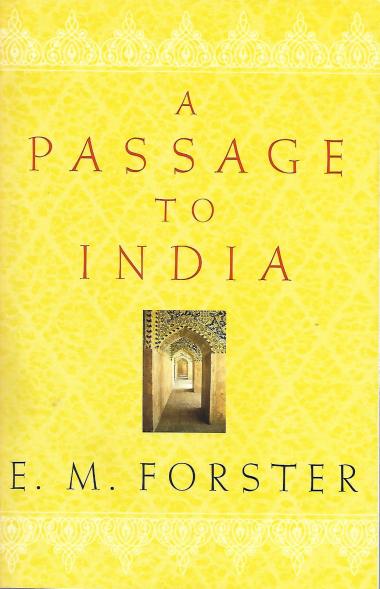
E. M. Forster’s 1908 novel, A Room With a View, has as its heroine an upper-middle-class English girl named Lucy Honeychurch. Lucy is about twenty-two and is a product of her time. She has hairy armpits, plays the piano (too much Beethoven makes her cross), and is thoroughly conventional. She has a fussy mother and an obstreperous eighteen-year-old brother named Freddy.

Lucy is engaged to a fellow name Cecil Vyse. He is everything you might expect in a prospective match for Lucy: snobby, prissy, conventional, priggish. He has his own idea of the “feminine ideal” and expects Lucy to conform to it. He is constantly “correcting” Lucy to “make her better.” Lucy is all too willing to try to be what Cecil wants her to be. At first.

Lucy’s family, even though they’re not rich, have time and money to travel. When Lucy undertakes a trip to Florence, Italy, she takes as her “companion” and “chaperone” her cousin, Miss Charlotte Bartlett. Charlotte is described as a “nervous old maid.” She is annoyingly self-effacing and proper. When Lucy looks at Charlotte, she sees what she is likely to become herself in twenty or twenty-five years if she isn’t careful.

At their “pension” (small hotel) in Florence, Lucy and Charlotte encounter a problem with their room. They were promised a room with a view of the River Arno, but instead have only a view of a courtyard. Two “gentlemen” staying at the pension, Mr. Emerson and his son George, kindly offer to switch rooms with the two English ladies. Charlotte doesn’t think it’s “proper” to exchange rooms with two strange men, but she agrees in the end for Lucy’s sake.

Lucy doesn’t know what to make of the Emersons. Mr. Emerson is eccentric and seems to not have a full row of buttons; he is rumored to have murdered his wife. George is alarmingly uninterested in propriety or in what people might think of him. When he evinces a romantic interest in Lucy (culminating in a furtive kiss among a profusion of flowers on a hillside), she doesn’t know what to make of it. Her instinct is to run away.

Back in England, Lucy is preparing to marry Cecil Vyse, believing she has put the memory of George Emerson behind her. Wait a minute, though! George and his father are renting a “small villa” in the neighborhood where Lucy lives with her mother and brother. She and George will be neighbors and she’ll be running into him around every corner! Gasp! What’s a girl to do?

George and Freddy, Lucy’s brother, become friends. When Freddy invites George to the Honeychurch home for a round of Sunday tennis, George, cad that he is, steals another kiss from Lucy, this time on the “garden path” when he thinks nobody is looking. Now Lucy is completely thrown off-course! Can she go ahead and marry Cecil Vyse when she has such conflicting (hot and cold) feelings about George?

It seems that spending time in Italy has changed Lucy, made her look at life in a different way. She has “found her soul” and it’s all because of Italy. She is ready to slough off the stultifying convention of her age and upbringing. She is ready to step away from the straight-and-narrow course that has been laid out for her and step into a course of her own choosing.

E. M. Forster’s novels are gem-like, so carefully and precisely written; never pretentious or overly wordy. Every word has its place. There’s none of the extraneous claptrap and tortuously twisted sentences that you might find in the work of writers such as Virginia Woolf or Henry James. If you’ve never ready any books by E. M. Forster, you’re missing out on something good. If, on the other hand, you don’t give a rat’s ass about good writing or good fiction, you’re probably better off to have never heard the name.

Copyright © 2020 by Allen Kopp

This Morning It Looked Like Rain

This Morning It Looked Like Rain ~ A Short Story by Allen Kopp

It was the annual end-of-school picnic for the teachers. Another school year filed and put away. Ethel Fix, Pauline Schoonover, Grace Wolfe and Margaret Durfee sat with Mr. Goodapple, the school principal, at his table along with Mr. Goodapple’s son, Zeke. Of the four women, three were married. Only Margaret Durfee was without a husband. Knowing that Mr. Goodapple was a recent divorcee, she made no secret of the fact that she would make herself available to him if he so desired. Mr. Goodapple, for his part, wasn’t interested in Margaret Durfee or anybody else. Whenever he realized that she was looking at him with a secret and suggestive smile (suggestive of what?), the only thing he felt for her was embarrassment.

“It turned out to be a lovely day after all,” Grace Wolfe said.

“Yes, lovely,” Ethel Fix said. “It’s supposed to rain tonight, though.”

“When we’re all safely in our beds.”

“The park is lovely in the springtime,” Pauline Schoonover said.

“Summer is right around the corner,” Grace Wolfe said.

“What are you going to do this summer?” Ethel Fix said.

“My husband and I bought a camping trailer. We thought we’d take a few little trips. Fishing trips, mostly.”

“Do you fish?”

“No, mostly I swat mosquitoes.”

“I’m going to give my house a thorough cleaning during vacation. Do a little painting.”

“Oh, do you paint landscapes or portraits?”

“No. Walls.”

“I’m going to keep to town,” Margaret Durfee said. “I don’t really have any special plans, other than to relax. I’m not seeing anybody special or anything like that. I’ll be alone most of the time.”

“Goodness!” Pauline Schoonover said. “Don’t you get lonely?”

“Well, sometimes. Maybe a little.”

Young Zeke Goodapple, age thirteen, sighed loudly and yawned. All the ladies turned and looked at him.

“I think we’re boring Zeke to death with our talk,” Ethel Fix said.

“I’m sure he didn’t mean to be rude,” Mr. Goodapple said. “Did you, Zeke?”

“Huh?”

“Tell the ladies you didn’t mean to be rude.”

“No.”

“No, what?”

“No, I didn’t mean to be rude.”

“Do you have some interesting plans for the summer, Zeke?” Margaret Durfee asked.

“No.”

“That’s not true, now, is it, Zeke?” Mr. Goodapple said. “You do have some interesting plans.”

“What kind of plans?” Grace Wolfe asked.

“Tell them, Zeke,” Mr. Goodapple said. “Tell the ladies what you’re going to be doing this summer.”

“Um, I don’t remember.”

“Zeke will be taking a couple of remedial courses in summer school so he’ll be ready for junior high when school takes up again. English and math. And that’s not all, is it, Zeke?”

“What?”

“When he’s not in school, he’ll be taking swimming lessons at the YWMC.”

“Oh, won’t that be fun!” Pauline Schoonover said.

“I don’t have a suit,” Zeke said.

“A suit? Why do you need a suit?”

“A swimsuit.”

“Oh, yes! Of course!”

“I don’t really want to go into the pool,” Zeke said. “I’m afraid of the water. I have dreams where I can see myself being pulled out with hooks. Dead.”

“Oh, my!”

“The boy has a vivid imagination,” Mr. Goodapple said. “He reads horror stories every night before going to bed and I’m afraid they make him a little more morbid than he should be.”

“He probably misses his mother,” Margaret Durfee said. “He needs the steadying influence of a woman.”

“We get along fine,” Mr. Goodapple said. “We’ve adjusted quite well to the new order of things.”

“Do you like to read, Zeke?” Grace Wolfe asked.

“Sure. I like stories where all the characters get killed. I also like monster movies. I always want the monsters to win and kill all the people, but that never happens.”

“See what I mean?” Mr. Goodapple said with a laugh.

“Well, I like monster movies, too,” Margaret Durfee said, looking appreciatively at Zeke.

“Did you know my mother went off and left me?” Zeke asked.

“I don’t think we need to talk about that now,” Mr. Goodapple said.

“She married some guy I never met. He already has three kids so they didn’t have room for me.”

“We discussed it at length and decided it was best for Zeke to remain with me,” Mr. Goodapple said.

“That seems the sensible thing,” Pauline Schoonover said.

“They live in New Mexico,” Zeke said. “I don’t think I’d like living in the desert. I have sensitive skin. Mother says she’ll send me the money for a plane ticket so I can come out and visit her sometime and meet her husband and his kids. I’ve never flown in a plane.”

“That should be quite an adventure,” Grace Wolfe said.

“I’m not afraid to fly by myself. If the plane crashes, I’ll probably die quick without really knowing what happened.”

“The plane won’t crash. You’ll be fine.”

“And when you come back,” Ethel Fix said, “you can tell your friends at school all about it.”

“I don’t have many friends,” Zeke said. “I mostly just like to be alone.”

Mr. Goodapple took out a pack of cigarettes and lit up, blowing smoke over the ladies’ heads.

“I didn’t know you smoked, Mr. Goodapple!” Pauline Schoonover said.

“Never at school. Only when I’m out like this.”

“Might I have one, dear?” Margaret Durfee asked, in imitation of a screen vamp.

He handed her the pack and his lighter, avoiding her touch, and looked away as she lit her own.

“You never really know people until you have lunch with them,” Ethel Fix said.

When everybody was finished eating, the ladies started cleaning up.

“Would you like to walk down the hill to the soldiers’ memorial with me, Zeke?” Margaret Durfee asked.

“I’m kind of tired and I have a sore toe,” Zeke said, “but I guess it’ll be all right.”

“Well, let’s go, then!”

Margaret Durfee took him by the hand as if he was a small child, but when he showed her he didn’t like that, she settled with putting her hand on his shoulder.

When they were out of sight, Grace Wolfe leaned over and said confidentially to Mr. Goodapple, “I think Miss Durfee has a terrible crush on you!”

“Don’t you see what she’s doing?” Pauline Schoonover  said. “She’s trying to get to you through your son!”

“I’d watch out for her if I were you!” Ethel Fix said. “She’s one of those crazy, passionate types and you never know what they’re up to!”

He had nothing to say, but only lit another cigarette and looked at his watch. The picnic was over and, thanks be to the Lord, it was time to go home.

Copyright © 2020 by Allen Kopp

Things I Must Have

Things I Must Have ~ A Short Story by Allen Kopp

Mrs. Koenig lay near death. Her four grown children had taken it upon themselves to gather in her house to discuss the disposition of her personal belongings.

“I want the Tiffany lamp,” Gwendolyn said.

“I already said the Tiffany lamp is mine!” Cupcake said.

“I’ve loved that lamp since I was a baby!”

“So? It’s still mine!”

“I want the dining room table and chairs,” Kent said. “Mother said I could have them.”

“Not so fast!” Gwendolyn said. “She said I could have them.”

“When did she say that?”

“I don’t know. Last Christmas, I think.”

“Well, she just told me last month that I could have them, so I guess that cancels you out.”

“I get the antique bed and dresser that were grandma’s,” Cupcake said. “Mother told me when I was fifteen that she wanted me to have them.”

“Well, isn’t that funny, Miss Cupcake!” Gwendolyn said. “I always thought I would get the antique bed and dresser.”

“I want the complete set of Dickens and the set of Britannica,” Kent said.

“You can have them!” Gwendolyn said. “Nobody cares about books.”

I care. The Dickens set is over a hundred years old. It’s valuable. I’m going to sell it and buy a car I’ve been wanting.”

“Why don’t you keep the Dickens books and pass them on to your children, chowderhead?”

“I don’t have any children. Remember?”

“Oh, that’s right! There’s something funny about you, isn’t there?”

“There’s something even funnier about you!”

“I get the set of antique china,” Cupcake said, “and I’m not going to sell it, either.”

“What are you going to do with it, dear?” Gwendolyn asked.

“I’m going to keep it. What do you think? I also want the china cabinet. What good is the china without the cabinet?”

“I want the rolltop desk,” Cupcake said. “Mother told me in high school when I made the honor roll that I could have it.”

“I think the rolltop desk should go to me!” Kent said.

“And why is that?” Cupcake asked.

“It’s a man’s desk. I’m a man. Remember?”

“Oh, yes, darling! I keep forgetting!”

“I get the piano,” Gwendolyn said. “I’m the only one who plays.”

“You haven’t played since you were twelve years old,” Kent said, “and you were horrible! You used to cry when mother made you practice, and then she cried when she heard how bad your playing was.”

“Well, maybe I’ll take it up again. I always feel there’s something lacking in my life. Maybe it’s the piano.”

“Maybe it’s good judgment and common sense!” Cupcake said.

“Oh, and I also get the antique vase from China,” Gwendolyn said. “Mother’s piano wouldn’t be mother’s piano without the vase sitting on it.”

“Wait a minute!” Cupcake said. “I’m the only one here who knows antiques. I think I should get the antique vase from China.”

“I want mother’s photo albums and the big picture in the attic of grandma and grandpa,” Kent said. “Also the hall tree, the antique sideboard, the library table and the brocade sofa.”

“You can have them!” Gwendolyn said. “I never liked them, anyway.”

“Excuse me!” Cupcake said. “The library table is mine! I’ve already decided where I’m going to put it!”

I’ll tell you where you can put it!” Kent said.

“I must have mother’s silver that she only used for special occasions,” Cupcake said. “The china is nothing without the silver to go with it.”

“I’m going to take the grandfather clock,” Kent said. “I’ve had my eye on it for  a long time. I’m sure mother wanted me to have it.”

“Then why didn’t she say so when she was in her right mind?”

“She did! She said it to me!”

“Don’t you think it’s funny she never told any of the rest of us?”

Dickie was the fourth and youngest child. He had not spoken until now. “You should hear yourselves!” he said. “Squabbling like a bunch of old hens over things! Mother’s not even dead yet! She may recover! She may come home from the hospital! She may live many more years!”

“We’re just trying to be prepared for when the time comes,” Kent said.

“These are the things we grew up with,” Gwendolyn said. “They’re meaningful to us. We want to make sure they end up in the right hands.”

“Meaning your hands,” Dickie said.

“Don’t you want to stake your claim to the things you want to keep” Cupcake asked. “To remember mother by?”

“No, I don’t want any of this stuff!”

“Why not?” Gwendolyn said.

“This stuff isn’t your stuff and it’s not my stuff!”

“What are you talking about?” Kent asked. “Of course it’s our stuff! Who else would it belong to?”

“I am in possession of some information that the rest of you sons-of-bitches don’t know!”

“What are you talking about?” Gwendolyn asked.

“Have you lost your mind?” Cupcake asked.

“No, I haven’t lost my mind. Mother’s lawyer called me yesterday. On the phone. Mother knew you would be fighting over her things, so she made a last-minute provision to her will. She wants everything in the house sold at auction and the money—all of it!—to go to charity.”

What?” Cupcake said.

“I don’t think mother would do that!” Gwendolyn said.

“I don’t believe it!” Kent said. “You’re making this up out of spite!”

“And that’s not all!” Dickie said. “She donated the house to the church.”

Church?” Cupcake said. “What church?”

“People from the church talked to her many times about giving them the house when she died. They finally broke her down and got her to sign an agreement.”

“This isn’t right!” Gwendolyn said. “Mother wasn’t right in the head! We can contest it! We can file a lawsuit! We can hold it up for years in the courts!”

“I don’t think so,” Dickie said. “It’s all legal and valid. If you don’t believe me, call mother’s lawyer. His name is Kenneth Ormiston.”

“Mother disinherited us!” Kent said, as if in a daze. “We don’t get anything!”

“Mother wouldn’t do that!” Cupcake said. “Not to me! I was always her favorite!”

“She won’t get away with this!” Gwendolyn said. “I’m going to have her buried face-down!”

“I don’t think it’ll make any difference to her,” Dickie said, “one way or another.”

“I don’t think I can walk!” Cupcake said, sobbing. “I need somebody to take me home!”

“Dickie,  you bastard!” Gwendolyn said. “Look what you did to your sister! I’m going to kill you!”

Copyright © 2020 by Allen Kopp

The Mirage Factory: Illusion, Imagination, and the Invention of Los Angeles ~ A Capsule Book Review

The Mirage Factory: Illusion, Imagination, and the Invention of Los Angeles ~ A Capsule Book Review by Allen Kopp

The Mirage Factory by Gary Krist is “historical narrative,” a fascinating nonfiction book that is as easy to read and as entertaining as good fiction. It is the story of how an improbable city, Los Angeles, came to exist in an improbable place, the parched American Southwest. More significantly, it is the story of how three different people (Amy Semple McPherson, William Mulholland and D. W. Griffith) contributed, in their own unique ways, to the formation, growth, moral fabric, and culture of what would one day be the second-largest city in the United Sates.

In the 1890s, Los Angeles was a small, dusty town in the California desert, where farms and citrus groves were the most prominent feature of the landscape. Nobody at that time envisioned Los Angeles as one day becoming a great American megalopolis. For one thing, there wasn’t enough water. It was, after all, the desert, plenty hot and largely inhospitable to most people’s way of thinking. (And what about those Gila monsters?)

One person, self-taught civil engineer William Mulholland, was largely responsible for bringing Los Angeles the water supply it needed to grow into a major city. People from all parts of the country were drawn to Los Angeles for its “newness” and “cleanness,” its almost perpetual sunshine, its scenic wonders, its proximity to the ocean and its uniquely Anglo-Saxon personality. So what if there wasn’t enough water to sustain a phenomenally growing population? That’s where William Mulholland came onto the scene. He devised and oversaw the building of an elaborate aqueduct system from the Owens River, over two hundred miles from Los Angeles. The project was beset with legal and logistical problems from the first. The residents of the Owens River Valley weren’t too happy about their water supply being commandeered (“stolen”) by distant Los Angeles. The situation erupted into small war.

The movies began as a cheap pastime for the lower classes in the large cities of the eastern United States in the 1890s. For one trifling nickel, a person seeking thrills and excitement could patronize the local “Nickelodeon” and see short films (some of which were only a minute or two long) of mundane scenes, such as an approaching train, a cow nurturing a newborn calf, or a scantily clad woman dancing the hoochie-koochie.

As movies became longer and technically more sophisticated, they gained a wider audience. The making, distribution and exhibition of movies became an industry, settled first around the East coast and then moving to California for its agreeable climate. Soon, movies were a bonafide American artform with the potential of generating obscene amounts of money for its artists. Hollywood and Los Angeles became synonymous.

David Wark Griffith was an early film pioneer. He is known as the “father” of movies, the creator of the movie picture narrative “language.” His vision for making movies was big and bold. His 1915 epic Birth of a Nation was a landmark film that set the standard for movies to follow. It made a tremendous amount of money and emboldened Griffith to make even bigger movies. His Intolerance was also a grand vision and expensive to produce. With its incoherent storyline about man’s inhumanity to man, Intolerance was a critical and commercial failure and a huge career setback for Griffith.

Aimee Semple McPherson was a Canadian Pentecostal evangelist who was instructed by God (she believed) to make Los Angeles her home base. She was a charismatic figure whose message was one of hope and redemption, rather than doom and hellfire. Her sermons were entertaining, uplifting and sometimes theatrical. (She even did “faith healings” on occasion.) She gained a huge and devoted following and established the influential Angelus Temple in Los Angeles. She held coast-to-coast radio services and was soon almost universally known. She became a cultural phenomenon and was arguably the most famous woman in the United States from the 1910s into the Depression era of the 1930s and the war years of the 1940s.

So, what did the Evangelist (Amy Semple McPherson), the Artist (D. W. Griffith), and the Engineer (William Mulholland) have in common? They were all flawed human beings in their own right and each experienced a spectacular fall from grace through pride, overreaching and the taint of early success. Their lives and destinies were inextricably interwoven with Los Angeles during the early days of its phenomenal growth from a small, sleepy desert town to a magnificent city, a megalopolis, that could compete with any other city in the world.

Copyright © 2020 by Allen Kopp

City of Night ~ A Capsule Book Review

City of Night ~ A Capsule Book Review by Allen Kopp

American author John Rechy was born in El Paso, Texas, in 1931. His novel, City of Night, was a literary sensation when it was first published in 1963, a best seller, and now an acknowledged “modern classic.” It’s an unusual novel in that it has no story or plot to speak of and is written in a loosely structured, stream-of-consciousness style.

The novel is narrated in the voice of an unnamed “youngman.” (The words “young” followed by “man” are always one word in the novel.) The narrator is on a nighttime quest for acceptance and validation in America’s largest cities in, let us say, the late 1950s. He is a drunk, a “hustler,” a male prostitute, a versatile homosexual who will never (hardly ever) turn anybody down, no matter how creepy or repellant they are. He gets money in exchange for sex with (all kinds of) strangers, but money isn’t the real reason he does what he does. He does what he does out of loneliness and a need for acceptance.

What large American city the narrator is in doesn’t matter, because when it comes to the nighttime, urban sex scene, all cities are the same, whether it’s New York, Los Angeles, Chicago, San Francisco, or New Orleans. His world is peopled by hustlers like himself, “scores” (men who pay hustlers for sex), sex-starved women, older men who prey on younger men in movie theatres or public toilets, “screaming queens” (gay men who try to be like women), and worn-out hustlers who no longer attract the kind of following they once had because their one saleable commodity, youthful sexual attractiveness, is not what it once was.

This one passage toward the end of City of Night encapsulates the novel perfectly:

Times Square, Pershing Square, Market Street, the concrete beach in Chicago…movie balconies, bars, dark hunting parks: fusing for me into one City…Yes, if I take the subway, I’ll be on 42nd Street. Or in Bryant Park, or on the steps of the library, waiting for Mr. King…or in the park in Chicago, also waiting…Or if I hitchhike on this street, I’ll be on Hollywood Boulevard, which will be lighted like a huge electric snake—and there, I’ll meet…

And ghostfaces, ghostwords, ghostrooms haunt me: Cities joined together by that emotional emptiness, blending with darkcity into a vastly stretching plain, into the city of night of the soul.

Despite its subject matter, City of Night is not overly sexually graphic by today’s standards. It was a “groundbreaking” novel for its time for its candor and explicitness, but that was fifty-seven years ago. What shocked people then does not necessarily shock them now.

Copyright © 2020 by Allen Kopp

Seven Seconds

Seven Seconds ~ A Short Story by Allen Kopp

Angela McNeill traveled down by train to see Harry Vance and they spent that last Sunday together. They walked in the park, holding hands, and sat for a long time watching the swans gliding back and forth across the lake. It was a day in April and the weather could not have been finer.

He took her hand and said he wanted to marry her in June.

She avoided looking directly at him. “That doesn’t give me much time,” she said.

“Time to do what?” he asked.

“A wedding takes a lot of planning,” she said.

“It’s going to be a small wedding,” he said.

“Yes, but I want everything to be just right.”

It was a conversation they had had many times before. She was in “no hurry” to get married, while he couldn’t get it done fast enough. He was a college student and wanted to get the wedding out of the way in June, between semesters. Then, by the beginning of the fall semester, they would have found a place to live and would be “settled.” His parents were giving them a thousand dollars as a wedding gift to “get started” on.

“I don’t think your parents like me very much,” she said.

“Of course they like you! Why wouldn’t they?”

“They think I’m not right for you.”

“Nobody said any such thing! You’re just looking for complications that don’t exist.”

“I just want everything to be right, that’s all.”

“You’re thinking about your parents, aren’t you?” he said.

“No. Why should I?”

“You’re afraid you’ll have a bad marriage just because they did.”

“I didn’t say that.”

“You don’t have to say it. I know what you’re thinking.”

“Let’s not talk about it,” she said. “Let’s not spoil the day.”

Angela hadn’t told Harry the whole truth about her mother. When Angela was little, her mother cast a pall over her family with her dark moods and sudden emotional shifts. In one evening or one afternoon, she would go from laughing and happy to raging and accusing. She’s just high-strung and emotional, Angela’s father used to say. She doesn’t mean anything by it.

Angela thought for years her mother was evil but then she found out the truth: she suffered from hereditary mental illness, passed down to her from her mother and grandmother. Feckless doctors gave her pills that were supposed to “calm her down,” but they only seemed to make her worse. When the pills didn’t provide the kick she wanted, she began supplementing them with whiskey. Soon she was an alcoholic in addition to being a drug abuser. She smoked countless cigarettes and had started at least two small fires in the house.

A divorce followed soon after. Angela and her brothers and sisters (nine all together) went with their father and moved to another city to make a fresh start. Angela’s mother, unable to take care of herself, went to live with her sister, who ran a kind of boarding house.

Angela was certain she was following in her mother’s footsteps. She would not escape the mental illness. She felt it, like a cancer inside her, that would one day consume her: the black moods, the despair, the hopelessness, the days when she couldn’t get out of bed. Could she marry Harry Vance and let him find out too late what she was going on inside her? The answer was no. She wasn’t going to inflict such pain on Harry or any children they might have.

That last Sunday evening they had a lavish, candlelit dinner together, paid for by money that Harry’s father gave him. When they were finished eating, it was almost time for Angela’s train.

“You can spend the night if you want to,” Harry said.

“I have a job to go to in the morning, dear,” she said. “I have to get up early.”

“When we’re married, you’re going to quit that job.”

“And what will we do for money until you graduate and get a job?”

“I don’t know. I can always rob a bank, I guess.”

“I don’t think that’s a very practical idea.”

He got her to the station just in time. She boarded her train and waved to him from the window. It was the last time they would ever see each other.

The next morning she arose at the usual time and ate a light breakfast. She dressed herself with care, making sure everything was exactly right. Before she was ready to go, she sat down at the kitchen table and wrote out a quick note. She didn’t even have to think before she wrote because she had thought it all out beforehand.

When it was time to leave for work, she put the note in her purse, put on her new spring jacket, slipped on her shoes and left her apartment. She didn’t go to her job, though, and didn’t bother to call to say she wasn’t coming.

She took a cab to the tallest building in the city, about twelve blocks from where she lived. She tipped the driver generously and he helped her out of the car and wished her a good day.

As usual, there were lots of people everywhere. Always a busy city. She took the crowded elevator to the eighty-sixth floor. She had been there before and knew there was an observation deck on that floor.

The people on the observation deck were so enthralled by the exhilarating view at more than eight hundred feet (it was like looking down from the top of a mountain) that nobody looked at her.

After standing at the rail for a few minutes, looking down, she took off her coat, folded it neatly and placed it over the rail, putting her purse on the floor underneath the coat. She then swung her legs over the rail, first the left and then the right, until she was sitting on the rail. Before anybody had a chance to see what she was doing and try to stop her, she let go of the railing and leaned forward slightly. Gravity did the rest.

She landed, feet first, on the roof of a parked limousine. Hardly anybody saw it. It happened so fast. Somebody called for an ambulance. In a minute or two, a couple hundred people knew that something had happened and wanted to see what it was.

A student photographer happened to be nearby with his camera. Approximately four minutes after Angela died, the student photographer took her picture. Instead of a grisly, horrifying scene of a smashed body, the picture was of a young woman with her shoes off, her stockings down around her ankles, her clothing barely disarranged. The expression on her face was one of peace and composure. The picture, when printed in the newspaper, bore the caption: The Most Beautiful Suicide.

In her purse was the note she had written right before leaving her apartment: I don’t want anyone in or out of my family to see any part of me. Could you destroy my body by cremation? I beg of you and my family—don’t have any service for me or remembrance for me. My fiancé asked me to marry him in June. I don’t think I would make a good wife for anybody. He is much better off without me. Tell my father I have too many of my mother’s tendencies.

Harry Vance saw no hint (he told everybody), not the slightest suggestion, in all the time he spent with her on Sunday, that she was contemplating such a move. If he had known, he would never have let her out of his sight. She was the one he wanted to marry, the only one. There would be nobody else. Sixty years later, when he went to his grave, it was as a single man.

Copyright © 2020 by Allen Kopp