The City of Falling Angels ~ A Capsule Book Review

The City of Falling Angels cover
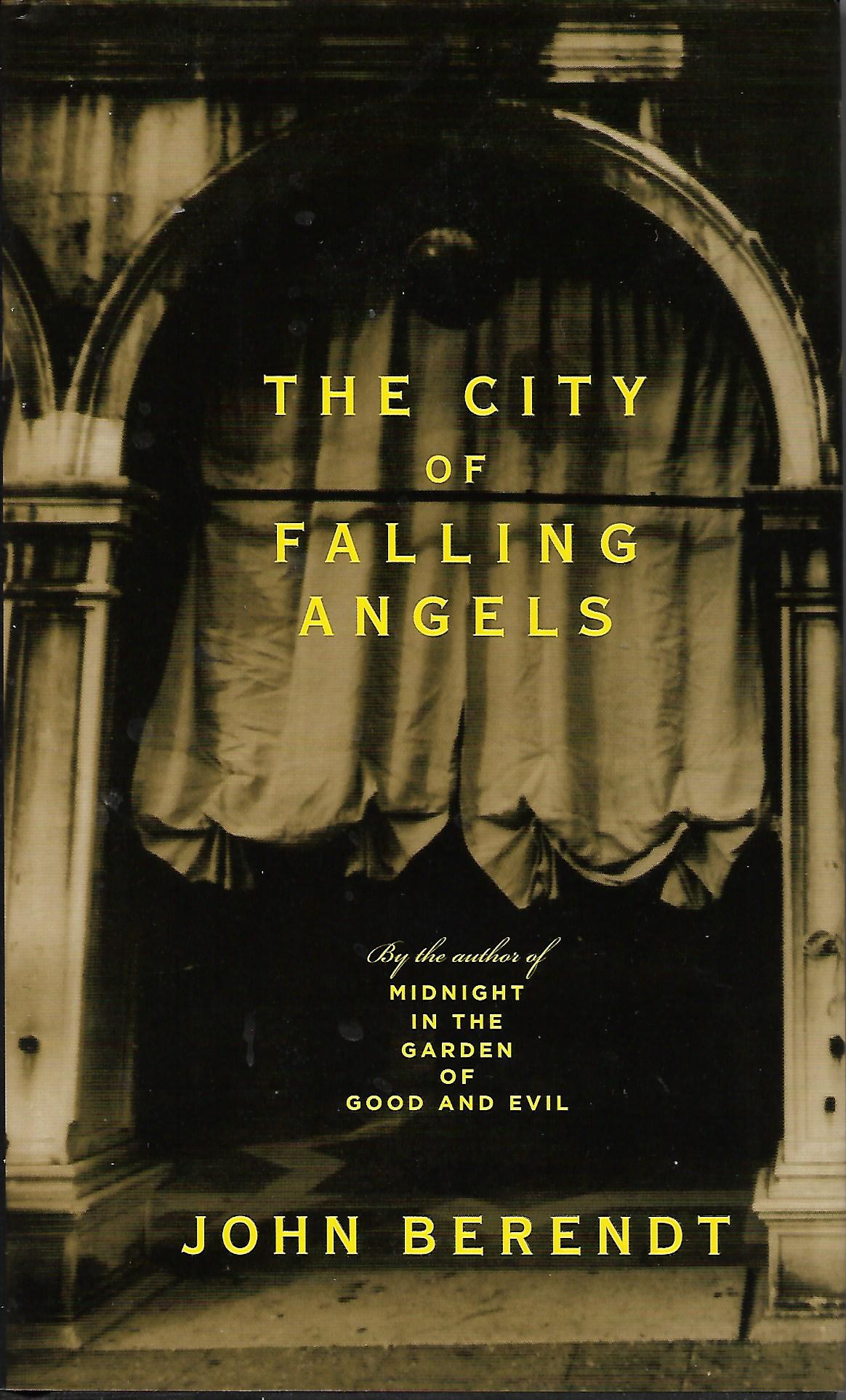
The City of Falling Angels
~ A Capsule Book Review by Allen Kopp ~

American writer John Berendt made the charts in 1994 with his first nonfiction book, Midnight in the Garden of Good and Evil, a real-life murder mystery set in Savannah, Georgia. It was phenomenally successful, occupying the New York Times Best-Seller list for 216 weeks, and was made into a movie in 1997 directed by Clint Eastwood.

John Berendt’s second nonfiction book, The City of Falling Angels, came over ten years after Midnight in the Garden of Good and Evil. The City of Falling Angels is set in Venice, Italy, and, as with Midnight in the Garden of Good and Evil, it’s full of local color and eccentric real-life characters.

Venice is one of the most unique cities in the world. It has been in existence since about the eighth century. It’s a quiet city because, with canals instead of streets, it has no automotive traffic. The people of Venice walk wherever they go, or take the vaporetto, the water taxi. Venice is a quaint and romantic city abounding in history. It was at one time a powerful city state. Many of its buildings are hundreds of years old.

In 1996, a historic Venetian opera house, Teatro La Fenice, over two hundred years old, caught fire and was entirely destroyed. Investigators, of course, had no clue as to what caused the fire. Was it the result of natural causes, or were sinister forces at work?

At the time of the Fenice fire, the theatre was closed to public performances and was undergoing renovation. The fire happened at night, when any daytime workmen had departed. Because the buildings in Venice are so old and so close together, many other structures were threatened by the fire. Firefighters eventually brought the fire under control, but the opera house was destroyed. Would it be possible to rebuild it as it had been before the fire, or was it a case for the wrecking ball?

The City of Falling Angels follows the years-long investigation into the fire, with many twists and turns, many false leads and conspiracy theories; much finger-pointing and gnashing of teeth.

Sometimes The City of Falling Angels veers off into subjects other than the fire, such as a Venetian glass-blowing family of many generations, a Venetian poet who committed suicide, the Ezra Pound Foundation (he was an expatriate American poet who lived in Venice), or in-fighting among the Venetian upper-crust. During these long digressions from the fire, we wish to return to the subject at hand. The fire is much more successful at holding the reader’s interest.

Copyright © 2022 by Allen Kopp  


The Gilded Age ~ A Capsule TV Review

The Gilded Age poster
The Gilded Age
~ A Capsule TV Review by Allen Kopp ~

The year is 1882. Mrs. Bertha Russell and her railroad tycoon husband, George Russell, have just built a gaudy new mansion on Fifth Avenue in New York. They represent the newly rich, or the nouveau riche. The Russells, especially Mrs. Russell, want to be accepted into the insular world of New York high society. This is the world that Henry James and Edith Wharton wrote about.

Right across Fifth Avenue from the Russells lives Mrs. Agnes Van Rhijn with her spinster sister, Ada. Mrs. Van Rhijn represents “old money” New York. She detests the Russells (and all they represent) and wants to keep them out of “her” world.

To celebrate the grand new house, Mrs. Russell gives a lavish reception, inviting all her Fifth Avenue neighbors. Hardly anybody attends. After instructing the servants to bag up all the food that wasn’t eaten, a disappointed Mrs. Russell vows to get revenge on New York high society. (“I’m not sure what New York’s poor will think of lobster salad,” Mr. Russell quips.) Mrs. Russell and Mrs. Van Rhijn across the street are set for an epic “battle of the bitches.”

Mrs. Van Rhijn’s niece, a “poor relation” named Marian Brook, has just arrived in New York to take up residence. She has no money and no job, so Mrs. Van Rhijn is obliged to take her in. Mrs. Van Rhijn doesn’t like Marian very much, but that’s all right because Mrs. Van Rhijn doesn’t like anybody very much. With Marian is a young black woman named Peggy Scott, whom she met while traveling to New York. Peggy has secretarial skills, so Mrs. Van Rhijn gives her employment and allows her to lodge in the servants’ quarters. It’s not going to be easy for Peggy to fit in with a bunch of white people, but her new friend Marian will smooth the way for her.

All right, already, after only one episode, we see a number of cliches, (not to mention some stilted dialogue), but The Gilded Age on HBO is so much fun and so beautiful to look at that we don’t mind these little shortcomings. If you are a fan of the British series, Downton Abbey, you’ll probably want to see The Gilded Age because both series have a lot in common, including a handsome gay man who doesn’t seem to be gay, servants’ lives intersecting with the lives of their employers, lavish sets and costumes, and meticulous attention to period detail. Both series were created by a British writer named Julian Fellowes. The Gilded Age is in a lot of ways like an American Downton Abbey.

Copyright © 2022 by Allen Kopp

Mirror Mirror ~ A Capsule Book Review

Mirror Mirror cover
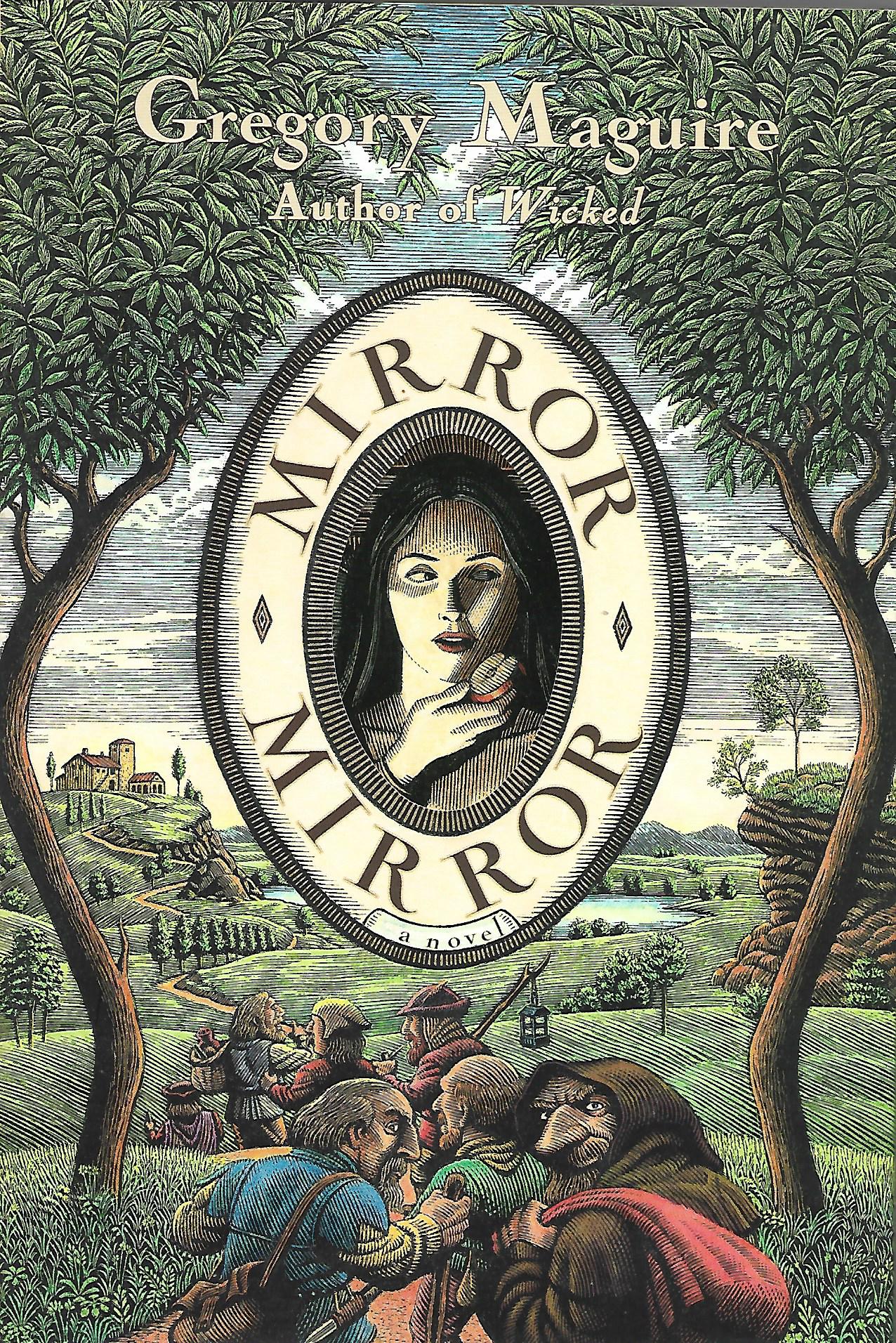
Mirror Mirror
~ A Capsule Book Review by Allen Kopp ~

Gregory Maguire’s 2003 novel, Mirror Mirror, is set in Tuscany, Italy, in the early 1500s. A beautiful girl named Bianca de Nevada lives with her father, Vicente, on an isolated hilltop estate called Montefiore. Bianca, a motherless girl, has lived a sheltered life and doesn’t know much of the world. Lucrezia Borgia, real-life daughter of Pope Alexander VI (the Borgia Pope), comes to Montefiore with her brother, Cesare Borgia. Lucrezia and her brother Cesare are both moved by Bianca in different ways: Cesare wants her for a sex toy, even though she is still a child, and Lucrezia is jealous of Bianca’s girlish beauty, which will soon be womanly beauty.

Lucrezia and Cesare decide they will stay at Montefiore for a while. Cesare is suffering from the French disease (we all know what that is). Cesare sends Bianca’s father on a (nearly) impossible quest (to get him out of the way) to find a fabled branch from the Tree of Life (you know, the one from the Garden of Eden), that still has three perfect apples attached to its branches. Bianca’s father doubts the branch with the apples on it even exists, but he has no other choice but to comply with Cesare’s commands. It might take him years to find it (if it even exists) and he might die in the effort.

With Bianca’s father on his quest, Bianca is left at Montefiore under the questionable care of Lucrezia Borgia, who just might do anything. Since Bianca has flowered into a lovely young woman and is no longer a child, Lucrezia is still jealous of her and has decided she will have her killed. She hires a young man to take Bianca into the woods and do away with her. The young man does as Lucrezia tells him to do, but he finds he is unable to kill her. He leaves her alone in the woods, making Lucrezia think he has done the deed.

Left alone in the woods, Bianca falls into a deep sleep that mimics death. Seven dwarfs (nothing like the Disney variety) find her and, believing she is dead, place her in a glass coffin and watch over her body. She will awake, though, and when she does she will go back to Montefiore. Her father, contrary to all expectations, has returned from his quest, bearing the ever-elusive branch from the Tree of Life.

Mirror Mirror blends elements of legend, history, fairy tale, and fantasy into an imaginative, lightning-speed novel. If you are an admirer of Gregory Maguire’s work (Wicked, Son of a Witch, Notes on a Cowardly Lion, Out of Oz, After Alice, etcetera.), you will find everything here that makes his work unlike anybody else’s. Highly recommended for connoisseurs of the different and unusual.

Copyright © 2021 by Allen Kopp    

Shuggie Bain ~ A Capsule Book Review

Shuggie Bain cover

Shuggie Bain
 A Capsule Book Review by Allen Kopp  

Shuggie Bain’s real name is Hugh. He is a slight, sensitive, preteen boy (at school he is called a “wee tiny poof”) living with his mother and his older half-brother and half-sister in a wretched housing complex in Glasgow, Scotland, in the 1980s. Shuggie doesn’t have a very happy childhood. The family is poor and on the “dole,” but his biggest problem is that his mother, Agnes Bain, is a hopeless alcoholic, “hopeless” in the sense that she will never stop drinking, will never “get better,” and will eventually drink herself to death. Shuggie loves his mother and he believes, unrealistically, that if he stays by her side, when everybody else abandons her, he can protect her and get her to stop drinking.

Shuggie’s  estranged father is Shug Bain, or “Big Shug,” as he is called. He is a real bastard, a self-centered, womanizing, amoral taxi driver. Shuggie’s mother, Agnes, leaves her first husband, taking her two children with her, to marry Big Shug. From that unfortunate union is born the youngest of her three children, Shuggie “Hugh” Bain.

Shuggie’s older half-brother is named Alexander but everybody calls him “Leek.” Shuggie’s half-sister is Catherine. Agnes if the kind of mother who makes her children want to get away from her. She has good intentions as a mother, but she always manages to disgust and alienate her children with her incessant drunkenness. Catherine marries at an early age and moves to South Africa, thousands of miles away from her mother.

The housing complex where Shuggie lives with his family is called Pithead. It was originally intended for coal miners, but most of the coal mines have closed down. The residents of Pithead are crude, spiteful, and cruel. The women hate Agnes Bain because she dresses up whenever she goes out of the house. People who like her tell her she resembles Elizabeth Taylor. Her good looks don’t help her very much.

The Scottish people in Shuggie Bain speak working-class English. They use a lot of words that American readers probably won’t be unfamiliar with. For example, “boak” means vomit; “biro” is an ink pen; a “grass” is a snitch; a “dout” is a cigarette; “wellies” are boots; “papped” means to be thrown out of the house; “weans” are children or offspring; “scheme” is a housing project; “gallus” is an act of boldness or daring. If you don’t have a dictionary of Scottish colloquialisms and slang, these unfamiliar words can usually be deduced from their context in the sentence.

Shuggie Bain is an ambitious (430 pages), rich first novel by a writer named Douglas Stuart. It is a story as much about a self-destructive alcoholic as it is about being the child of an alcoholic. It is a book steeped in time and place (Glasgow, Scotland, of the 1980s). A compulsively readable book, a book well worth reading.

Copyright © 2021 by Allen Kopp

The Last of Our Money

The Last of Our Money image 4
The Last of Our Money
~ A Short Story by Allen Kopp ~

Vance Rutherford was a reckless driver, especially when he was mad or upset. He ran through a red light and barely missed hitting a car going in the other direction. A little farther along, he made a right turn so fast that Rachelle hit her head on the side window.

“Slow down, Vance!” she said. “You’re gonna get a ticket!”

“I don’t care! If they try to stop me, I’ll outrun them!”

Rachelle groaned and rubbed her head. “You don’t want them to start shooting at you, do you?”

“I can always shoot back.”

“How are you going to do that if you don’t have a gun?”

“Who says I don’t have a gun? I have a gun in the inside pocket of my coat.”

“You do not! You are such a liar!”

“I know. I’m a fool, too, and lots of other things.”

“Don’t I know it!”

“Are you sorry you married me?” Vance asked.

“Every day of my life.”

“You can always divorce me, you know.”

“You’re forgetting that little bundle of pink flesh we have waiting for us at home.”

“Oh, yeah. Arlene. I almost forgot about her.”

“She’s the only reason I stay married to you.”

“One day you might decide she’s better off without her daddy.”

“And when that day comes I’ll let you know.”

“I’m a loser, Rachelle. I need money. Bad.

“How much this time?”

“Four hundred.”

“I don’t have four hundred dollars, Vance.”

“I know you don’t. If you did, all my problems would be solved.”

“For the moment. Tomorrow you’d be in trouble again.”

“Are you sorry you married me?”

“Never more than at this moment.”

“Have you talked to your grandma this week?”

“No, I haven’t. And I’m not going to ask her for any more money.”

“You know she’s got it, Rachelle. She’s got whole boxfuls of cash stashed away in that house.”

“That’s just what you believe!”

“You’re her favorite grandchild, Rachelle. You know she would never say no to you.”

“I’m not going to ask her for four hundred dollars, so you can just forget about it.”

“Not even if it would save my skin?”

“It might save your skin today, but tomorrow it’ll be something else. Some other trouble. Some other desperate need for money.”

“No, you’re wrong. I’ve grown up a lot in the last year or so. I’m changing, Rachelle. Really I am.”

“Somehow I just don’t see it.”

“No, I promise. If I can just get my hands on four hundred dollars right now, I’ll be all squared away.”

“For how long, Vance?”

“How long what?”

“How long will you be squared away?”

“You’re not very encouraging, you know that?”

“Let’s go home. I can fix us something to eat.”

“How about if I swing by your grandma’s house and you go inside and ask her for a little loan?”

“You know it’s not a loan, Vance. You don’t ever have any intention of paying it back. A loan is something you pay back.”

“She’ll be sitting in her chair watching TV. She’ll be glad to see you.”

“No!”

“It’s the only way, Rachelle.”

“You’ll have to think of some other way. I’m not going to ask my grandma for more money. She needs her money.”

“For what?”

“She’s old, Vance! Old people like to hang onto their money.”

“So the answer is no?”

“Yes, the answer is definitely no!”

“Just tell her we don’t have any food in the house. The rent is past due and you need your asthma medication. She won’t be able to turn you down if you put it in those terms.”

“I’m not going to lie to her on top of everything else, Vance!”

“It’s not a lie!

“I thought you paid the rent!”

“I was going to but I had to use the money for something else.”

“What did you use it for?”

“I don’t remember now. It was something important.”

“Oh, Vance! You’ll never grow up, will you?”

“I’m as grown up as you.”

“Let’s go home and I’ll cook some spaghetti.”

“No. Grandma’s first.”

Rachelle knew it was useless to object further. In ten minutes, Vance pulled up in front of Rachelle’s grandma’s house.

“I don’t think she’s home,” Rachelle said. “It’s her night for church.”

“All the lights are on, as you can plainly see.”

“Oh, Vance! I don’t want to do this!”

“She’ll be glad to see you. Try to get five hundred.”

“You said four hundred!”

“Well, five hundred would be even better!”

“Oh, Vance, you’re hopeless!”

“I’ll wait right here. Take your time.”

He cracked the window and lit a cigarette and turned on the car radio. He had smoked two cigarettes and was on his third one when Rachelle came back.

“Well, how much did she give you?” he asked impatiently before she was all the way in the car.

“She only had fifty dollars on hand. I think it was her grocery money.”

“Fifty dollars! That’s all she gave you?”

“It’s all she had.”

 “She would let you starve to death? Her favorite grandchild?”

“I’m not going to starve to death, Vance. We can use the fifty dollars to get some groceries.”

“Yeah, but it’s not enough! I feel like going in there and talking to her myself! Fifty dollars! The very idea!”

“Leave her alone, Vance. She has a cold and she’s not feeling well.”

“Well, isn’t that just too bad? I’m not feeling very well, either.”

“Let it go, Vance! We’ll use the fifty dollars to buy some groceries. We can get quite a lot with that.”

“I don’t want any of that stuff. I’m hungry. I want a steak. Let’s go to Roland’s and get a steak. I think that’s the best idea I’ve had all day.”

“That’ll take all the fifty dollars!”

“So what?”

“You would use the last of our money for a steak dinner?”

“Sure. Wouldn’t you? That’s how hungry I am.”

“I told grandma we were going to use it to buy food.”

“We are going to use it to buy food.”

“You’re a pig, Vance.”

“No more of a pig than you are.”

They had to wait for a table at Roland’s. Eating there always made Vance feel like an important person. He always hoped he’d see somebody he knew.

Finally they were seated at a small booth in the back of the room. Vance ordered an expensive bottle of wine. While waiting for their food to arrive, Vance sipped the wine and gave Rachelle a sly grin across the table.

“I have a secret concealed somewhere on my person,” he said.

“How nice for you,” she said.

“Don’t you want to know what it is?”

“Not especially.”

He seemed pleased with himself as he opened his jacket and showed her the gun he had hidden there.

“You’re a lunatic!” she said. “What do you think you’re going to do with that?”

“Well, grandma didn’t come through for us. Now things are getting pretty desperate.”

“What are you going to do? Hold up a liquor store?”

“Not a liquor store, but I do have a plan.”

“What plan?”

“Well, since you are my wife, I’ll tell you. I’m going to drive twenty or thirty miles outside of town where nobody knows me and hold up an all-night gas station.”

“That’s the worst idea I’ve ever heard!”

“I won’t really shoot anybody. I’ll just use the gun to scare them.”

“Don’t think I’ll come and visit you behind bars.”

“You don’t like my idea? Do you have a better one?”

“Why not just rob the bank downtown? I’m sure they’d have a lot more money than an all-night gas station.”

“That’s my alternate plan in case the all-night liquor store doesn’t work out.”

They finished eating and the waiter brought the check. Vance stood up to go to the men’s room, taking off his jacket and laying it carefully across the chair.

Rachelle was sure he wouldn’t be back for at least ten minutes. He’d take his time going to the toilet and when he was finished he’d wash his hands thoroughly and comb his hair in the mirror. She reached around the table where he had been sitting and with one deft movement took the gun out of the pocket of his jacket and hid it in her purse. He had drunk too much wine; he wouldn’t notice for a long time that the gun wasn’t where he thought it was.

Copyright © 2021 by Allen Kopp

Thanksgiving With Mr. Doodles and the Others

Thanksgiving 2021
Thanksgiving With Mr. Doodles and the Others
~ A Short Story by Allen Kopp ~

(This short story is a repost. It has been published in The Literary Hatchet.)

It was Wednesday, the day before Thanksgiving, that great American holiday. The residence halls had to be vacated. The heat would be shut off and the cafeteria closed. Get the hell out and don’t come back until after seven o’clock Sunday night. This means you.

I took my suitcase to my last class Wednesday afternoon so I could leave from there and not have to go back to my room again. When the class was over, I walked the two miles downtown to the bus station in the rain. I had a sore throat that was bound to turn into a chest cold if I didn’t take care of myself. I used my umbrella; I had been called unkind names for carrying an umbrella, but I didn’t care. If there were any names in the dictionary that I hadn’t been called at some time in my life, I don’t know what they were.

The bus was about one-third full of the usual derelicts and undesirables. I sat in the back, next to the window, hoping that nobody came and sat too close. I tried to doze to pass the time but every time I went to sleep the bus gave a lurch or the brakes squealed or somebody coughed or talked in a loud voice and I got woke up. The world is full of people who don’t want you to sleep.

After two-and-a-half fairly uncomfortable hours the bus pulled into my hometown. It was raining there, too, making it only slightly more bleak than usual. I didn’t think much of my hometown and wouldn’t care if I never saw it again. I comforted myself with the thought that someday I would be free of my hometown and everybody who lived in it, my family included. One  day I would be the lucky fellow who got away.

My mother wasn’t happy that I called her and asked her to come and pick me at the bus station.

“I thought you weren’t coming home for Thanksgiving,” she said. I could see the menthol cigarette and the scarf tied around her just-washed hair.

“Everybody had to get out,” I said. “The residence halls are being shut down until Sunday.”

“Well, I never heard of such a thing!”

She slammed down the phone and in ten minutes her tank-like Chevrolet rolled onto the bus station lot. She glared at me while I stowed my suitcase in the back seat and got into the front.

“You don’t seem very happy to see me,” I said.

“I don’t appreciate having to come out in this rain,” she said.

“I didn’t make it rain.”

“Have you suddenly become too lazy to walk a couple of miles?”

“I have a sore throat and, besides, I’m tired.”

“Oh, listen to you! You sound just like your father every time somebody asks him to do something. He’s tired or he has this alarming pain right around the kidneys.”

My parents were divorced and my mother never passed up the chance to denigrate my father. She almost always found him horribly lacking in some way.

As for me, I’m sure my mother cared for me in her own peculiar way, but the truth is she and I were, and always had been, tuned to entirely different frequencies. I concluded in seventh grade that she and my father were both temperamentally unsuited for parenthood. Most people enter into it  (parenthood) blindly, without giving much thought to what’s in store for them. I would advise them to get a kitten or a puppy. They’re a lot more fun and their poop is a lot easier to clean up.

“In a way, it’s good you decided to come home,” she said.

“I didn’t decide. It was decided for me.”

“Your father called and asked if he could come for Thanksgiving dinner. He wants  to bring someone.”

“Who?”

“It seems he has a new girlfriend. Her name is Kitty Fox.”

“Is she a stripper?”

“I didn’t ask.”

“Is she going to pop out of a cake?”

“I guess we’ll find out.”

“Look,” I said. “I don’t feel very well and I’ve been really, really tired lately. I was just planning on staying in bed all day tomorrow. I was hoping you’d bring me my dinner on a tray.”

“I don’t think so, mister. You can help entertain your father and Kitty Fox.”

“I think I’ll just go to a hotel until it’s time to go back to school.”

“You have money for a hotel?”

“Not exactly. I was hoping you’d pay for it.”

“What do you think I am? A genie popping out of a bottle to grant your every wish?”

“I might have something catching.”

“It’s no use. You’re tagged for service tomorrow.”

“Just drop me off downtown. I’ll spend Thanksgiving at the homeless shelter until it’s time to catch the bus back to school.”

Grandma and her best friend Bunny arrived on Thursday morning to help with dinner before I was even out of bed. When I went into the kitchen in my bathrobe, grandma grabbed me and gave me a big kiss.

“Gilbert!” she screeched in my ear. “You’ve changed since the last time I saw you!”

“It’s only been three months,” I said.

As an extension of grandma, Bunny also gave me a kiss and a bear hug. “You’re just so good-looking!” Bunny said. “I don’t know where you get your looks from.”

“Not from his father’s side,” mother said.

Grandma and Bunny both had on their church dresses and their finest costume jewelry. Their shellacked beauty-parlor hairdos glistened in the light. They had known each other all their lives and now, in old age widowhood, were always together. Bunny sold her house after her husband died and moved in with grandma. When they died, they would be in side-by-side graves.

“How are things going up at that school of yours?” grandma asked.

“All right,” I said.

“Are you learning how not to be a loser like your father so you can make a good living?”

“Sure. That’s what I’m majoring in: how not to be a loser like my father.”

“And lots of girls, I’ll bet.”

“Girls?”

“Well, you have girlfriends, don’t you?”

“Oh, sure! Lots!”

“Be sure and marry the right one. We don’t want another failed marriage in the family.”

“I have several lined up right now,” I said. “I’ll let you know when I make my final decision.”

“Good boy!”

I fixed myself some eggs and toast and after I was finished eating mother told me she needed me go to the store to get ten or twelve last-minute items she needed for dinner.

Bunny’s Mexican Chihuahua dog Mr. Doodles was asleep on the floor beside the couch in the living room. When I passed through on my way upstairs to get dressed, he raised his head and growled at me, yawned, and then put his head back down. Bunny had had Mr. Doodles for a long time. Wherever Bunny went, Mr. Doodles went. She wasn’t about to leave him at home by himself on Thanksgiving while she went out and had a good dinner.

I had to drive to three different places to find a store that was open. I got all the stuff on the list and drove back as quick as I could. There were no other cars on the road. Anybody with any sense got themselves inside out of the icy rain.

While I was out, my sister Lindsey and her new boyfriend had arrived. Lindsey and I greeted each other tepidly as I carried the grocery bags into the kitchen and set them down on the table. There was still lots of childhood animosity between Lindsey and me, I suppose. She always pictured a rivalry between the two of us that, to me, never existed. She was jealous that I was going to college while she was stuck working in a bank with a high school diploma.

The boyfriend’s name was Chick Olmstead. He was thirty or so, a little on the short side, with thinning blond hair and stubbly cheeks. He was wearing a suit with a loud bow tie and suspenders. As I shook his hand, I could smell that he had been smoking.

“Chick’s a professional clown,” Lindsey told me.

“Well, that’s a new one!” I said. “Lindsey’s last boyfriend was an accountant.”

Mother gave me a warning looking as I steered Chick Olmstead into the living room. I wanted to hear more about being a professional clown. I knew lots of non-professional clowns and I was fascinated by the idea of one who made a living at it.

“Do you skydive?” Chick Olmstead asked me as we sat on the couch.

“Me? No, I don’t even like flying. I don’t think I’d ever be able to jump out of an airplane. I’d rather die in a crash.”

“It’s the thrill of a lifetime,” he said.

“Not for everybody, though.”

“I’ve been doing it now for about a year. I’m trying to get Lesley to try it, but I think she’s scared.”

“She’s scared of just about everything,” I said.

He laughed loudly and fidgeted with his hands. “Lesley tells me you go to state university.”

“Yeah.”

“That must be fun.”

“It’s a real blast.”

“I see you as the ironic sort,” he said.

“I don’t know. I guess irony can be a useful tool sometime.”

Chick Olmstead looked at me as if he didn’t know what I was talking about. He straightened his tie nervously and cleared his throat.

“Look,” I said, “you don’t have to be nervous around us. We’re just very casual around here. You can take off your jacket and tie. There’s no reason to put on the dog around us.”

“I think I’ll leave them on for now.”

“Would you like a beer?” I asked.

“Not just yet. Thanks.”

“How well do you know Lindsey?”

“Not very well. We’ve seen each other a few times.”

“Keep your right flank covered. She’s not what she appears to be.”

He laughed as if I was making a joke. “What do you mean?”

“She’s more trouble than you know, but you may not realize it until it’s too late.”

“Too late for what?”

“If you stick around long enough, you’ll find out.”

At looked at me with curiosity but didn’t pursue it any farther.

Mr. Doodles stood up, yawned effusively, and began washing his nether parts.

“Is that your dog?” Chick Olmstead asked.

“No, he’s Bunny’s dog. He’s her son. His name is Mr. Doodles.”

“Who’s Bunny?”

“You met her in the kitchen. She’s the old lady in the red church dress. She’s grandma’s best friend. They live together and will die together when the time comes.”

“Oh, yes. The one with orange hair.”

“Fresh from the parlor of beauty,” I said.

Bunny came in from the kitchen carrying Mr. Doodles’ leash. “I want him to have a little walk before dinner,” she said. “Would you be a dear and take him out for me? As soon as he wee-wees and drops a little turd or two, you can bring him back in. He really doesn’t like being outside after he’s finished his business.”

“It would be more than an honor and a privilege,” I said.

I slipped on my jacket and as I was on my way out the door with Mr. Doodles on his leash, Chick Olmstead was right behind me. Lindsey was ignoring him; he felt awkward and wanted to get out of the house. I can’t say I blamed him.

We walked Mr. Doodles down to the corner. He scratched in the wet leaves and relieved himself by the stop sign. Chick Olmstead lit up a cigarette and offered me one, which I declined.

“So, what’s it like being a clown?” I asked.

“It’s just more rewarding than I could ever say.”

“Do you travel with a circus?”

He laughed. “Nothing like that. I do children’s parties and events at the hospital for crippled children. Occasionally I get a gig at a church or a school.”

“Is that year-round work?” I asked.

“It’s seasonal,” he said. “I don’t work all the time.”

“What do you do the rest of the time?” I asked.

“I’m writing a novel,” he said.

When we got back to the house with Mr. Doodles, Bunny was waiting at the door with a towel to dry off his feet. Then I watched in amazement as she slipped little knitted booties on all four of his feet. She ran her fingertips along his nose and head to make sure he hadn’t caught a chill.

“Mr. Doodles is lucky,” I said, “to have someone to care about him so much.”

Mr. Doodles ran through the house and began yipping and begging to be let up on the dining room table, which mother had just laid out with her best china and cutlery. He jumped up on a chair but couldn’t quite make it all the way to the table.

Bunny gave him a little boost and he spent the next few minutes walking on the table among the plates, glasses, bowls, napkins and silverware, without ever touching anything.

“He likes shiny objects,” Bunny explained. “He just wants to take a good look so he doesn’t feel left out.”

While we all admiring how well-behaved Mr. Doodles was on the table in his little booties, the doorbell rang.

“That’ll be Frank,” mother said, meaning my long-lost father.

Mother went to the door and opened it with a put-upon smile. “You’re late,” she said. “We were just about to start eating without you.”

“You said two o’clock,” he said.

“Have you forgotten how to tell time? It’s after two-thirty.”

“Tell it to the marines.”

He stepped inside with his guest. It was Kitty Fox, whose name we already knew and, no, she didn’t look like a stripper; she looked more like a librarian or a schoolteacher. The thing about her that would surprise my mother, grandma and Bunny the most was that she wasn’t the same race as my father.

“I brought a cake,” Kitty Fox said. “I knew there’d be plenty of food, but I wanted to contribute something.”

“Thank you!” mother gushed, taking the cake and handing it to Bunny. “That’s just lovely of you!”

Kitty Fox shook mother’s hand. “You must be Frank’s wife,” she said.

“Used-to-be wife,” mother said.

Kitty Fox shook hands with me, Lindsey, Chick Olmstead, grandma and Bunny.

“Your house is lovely!” Kitty Fox said, as she took off her coat and handed it to grandma.

Father had brought a bottle of champagne. He handed it to me awkwardly and told me to open it and get some glasses. I took the bottle into the kitchen, opened it with a corkscrew, and scouted around in the upper cabinets for some glasses. We didn’t have any champagne glasses, so I settled for wine glasses. I arranged eight of them on a tray with the bottle of champagne in the middle and, with the tray balanced precariously in one hand like a waiter at the Trocadero, I went back into the front room.

Father picked the bottle of champagne off the tray, along with one of the glasses, filled it to the brim and handed it to Kitty Fox.

“Before we sit down for Thanksgiving dinner,” he said, “I have an announcement I want to make.”

“Why all the formality?” grandma asked.

After we all had a glass of the bubbly stuff in our hands, father held his glass high and put his other arm around Kitty Fox.

“This is a happy day for me!” he announced like a sideshow barker. “Maybe the happiest day of my life!”

“What is it, daddy?” Lindsey asked.

He beamed at all of us and I knew from his eyes that he had already had a few, even though he was supposed to have stopped drinking. Once an alcoholic, always an alcoholic.

“Kitty and I have just become man and wife!” he said with tears in his eyes. “And that’s not all!”

We waited breathlessly to hear the rest.

“And sometime next year! Sometime in the summer! Yes, it’s true! Believe it or not, ladies and gentlemen! Sometime next summer we will welcome a new addition to our little family!”

“What?” grandma asked. “You mean she’s going to have a baby?”

He grabbed hold of Kitty and held her against this chest. She squealed like a schoolgirl and tried to push away from him.

“Congratulations,” mother said, but I knew she was anything but pleased. She set down her glass of champagne and went into the kitchen.

“Daddy!” Lindsey said. “Who would have ever thought? At your age?”

“It looks like you’re going to have a little brother,” Chick Olmstead said, shaking my hand as if I should also be congratulated.

Grandma and Bunny went into the kitchen to help mother get the dinner on the table and, finally, we were ready to sit down and eat.

Mother was quiet during dinner. She kept drinking glass after glass of wine and soon she was glassy-eyed. She passed dishes automatically but ate little herself.

Lindsey launched into an involved story about a female co-worker at her bank who embezzled money for years and was finally caught. Nobody paid much attention. Everybody seemed lost in his or her own thoughts.

Mr. Doodles ran around the table yipping, until Bunny picked him up and set him on her lap. She fed him little bites of turkey and mashed potato with the fork she had been eating with. When he was finished eating, he wanted to climb from lap to lap all the way around the table.

“Isn’t he just the most precious little angel you’ve ever seen?” Bunny cooed.

My father and Kitty Fox sat side by side, nuzzling each other and giggling. It was pretty sickening, but I was all for letting them enjoy their moment of happiness. Soon reality and drunkenness would set in.

Grandma and Bunny shot curious glances at Kitty Fox as if they had never expected to see anybody so exotic sitting at the table with them. I hoped they would at least be civil to her, if that’s all they could manage. She seemed too good for my father.

Lindsey glared across the table at me as if she wanted to plunge the carving knife into my heart. She mostly ignored Chick Olmstead during dinner. I felt sorry for him for having Lindsey as his girlfriend. I hardly knew him, but he seemed like a decent fellow and I was certain he deserved better.

Finally the ritual of Thanksgiving dinner, including five different kinds of dessert, was at an end. Mother, grandma and Bunny washed the dishes and cleaned up in the kitchen, stowing all the leftovers in the refrigerator or in the trash can.

My father and Kitty Fox put on their coats to leave. My father surprised me by giving me a bear hug and kissing me on the cheek. He asked me if everything was all right at school and I told him everything was wonderful. He said he hoped to see me at Christmastime, and then they were gone.

Grandma and Bunny didn’t like to drive after dark, so they put Mr. Doodles in his carrier and left right after my father and Kitty Fox. Lindsey wanted to go to a movie and Chick Olmstead was obliged to take her to complete his Thanksgiving obligation, so the two of them also left.

After all the guests were gone, mother sat down on the couch and had a good cry. Crying spells were common with her.

“What’s wrong?” I asked, not really wanting or expecting to hear any kind of an answer. “Feeling a little blue about father’s getting married again?”

“I don’t care what he does. I hope he rots in hell.”

“That’s the spirit.”

“That poor woman doesn’t know what she’s in for, but she’ll soon find out.”

“I was thinking the same thing.”

“And a baby? Can you believe the old bastard is about to become a father again? He’s forty-seven years old!”

“It doesn’t seem real. I’ll have to see it to believe it.”

“Mother and child both have my sympathy.”

The next day mother wanted me to help her put up the artificial Christmas tree, string it with lights and decorate it, which I did without complaint. It was a ritual with her to put the tree up on the day after Thanksgiving and not take it down again until the day after New Year’s.

The Thanksgiving weekend passed in a blur. I ate leftovers and slept at ten-hour intervals. Mother wanted me to go to church with her on Sunday morning but I had a pretty good cough by then and I said I thought I was probably contagious. She accepted that as an excuse and went without me.

On Sunday evening she drove me to the bus station to catch the bus back to school.

“Will you be home for Christmas?” she asked as I was getting out of the car.

“I don’t think so,” I said. “Hang up my stocking and make sure Santa fills it with lots of good stuff.”

She smiled and waved and I slammed the door and boarded my bus. As soon as the bus pulled off the lot and picked up speed on the highway, I was feeling lonely. I was glad it was dark because I felt like I was going to cry.

Copyright © 2021 by Allen Kopp

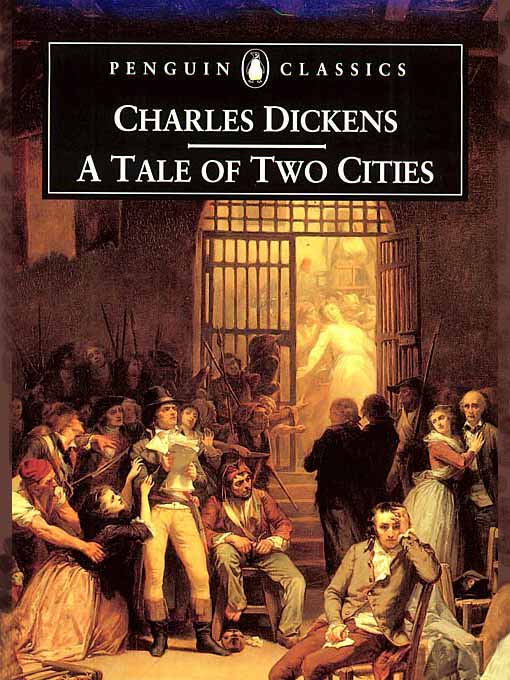
A Tale of Two Cities ~ A Capsule Book Review

A Tale of Two Cities Book Cover 2
A Tale of Two Cities
~ A Capsule Book Review by Allen Kopp ~

Charles Dickens’ superb historical novel, A Tale of Two Cities, is set in the late eighteenth century, before and during the bloody French Revolution. It was first published in 1859 and has long been a mainstay of English literature.

The French Revolution wasn’t called the Reign of Terror for nothing. It was what today might be called “class warfare.” The ordinary people of France had long been poor and oppressed. They saw the aristocracy as a blood-sucking class of soulless degenerates who spent lavishly and lived extravagantly, without regard for anybody of an inferior class. It was natural that the poor should rebel, but when they did, it was without all reason. They killed indiscriminately, anybody that for any reason they didn’t like, or anybody who had had any suspicious alliance with anybody they didn’t like. Ordinary rules of fairness and decency were tossed aside. The bloody Guillotine, used without restraint, became the dreaded symbol of the Revolution.

The plot of A Tale of Two Cities is driven by a handful of characters caught up in the tragic tide of events that is the French Revolution:

  • Alexandre Manette, a French physician wrongly imprisoned in the Bastille for eighteen years because he knows too much about a certain aristocratic family.
  • Lucie Manette, his daughter who believed he was dead.
  • Miss Pross, faithful companion/guardian of Lucie Manette.
  • Monsieur Defarge, the former servant of Dr. Manette who facilitates his release from the Bastille after eighteen years.
  • Madame Defarge, wife of Monsieur Defarge, virulently anti-aristo She personifies all that’s wrong with the Revolution.
  • Charles Darnay, heir of the aristocratic Evrémonde family who relinquishes his birthright and becomes a teacher in England under an assumed identity. He marries Lucie Manette and they are happy together for a while but, of course, the Revolution threatens to ruin their lives.
  • Jarvis Lorry, an elderly banker, a “man of business,” who befriends Alexandre Manette, Lucie Manette and Charles Darnay, and lends a helping hand to them throughout their ordeal.
  • Sydney Carton, a lawyer and drunkard who befriends Charles Darnay, Lucie Manette and Alexandre Manette. He appears to be a wastrel and a disenchanted cynic, but in the end he is the noble hero of the story, making the ultimate sacrifice for those he has come to love.

A Tale of Two Cities is about a radical political ideology that grew out of conditions of poverty and suffering and, while discarding the rule of law, disregarding decency and fairness, destroyed many lives and nearly destroyed a country. It’s a story that would be played out many times and in many places, in many different forms, up to the present day.

The 1936 black-and-white movie version of A Tale of Two Cities with Ronald Colman as Sydney Carton comes highly recommended. It’s moving, entertaining, engaging, perfectly cast, intelligent, and faithful to Charles Dickens’ great novel.

Copyright © 2021 by Allen Kopp

The Beans of Egypt, Maine ~ A Capsule Book Review

The Beans of Egypt, Maine cover
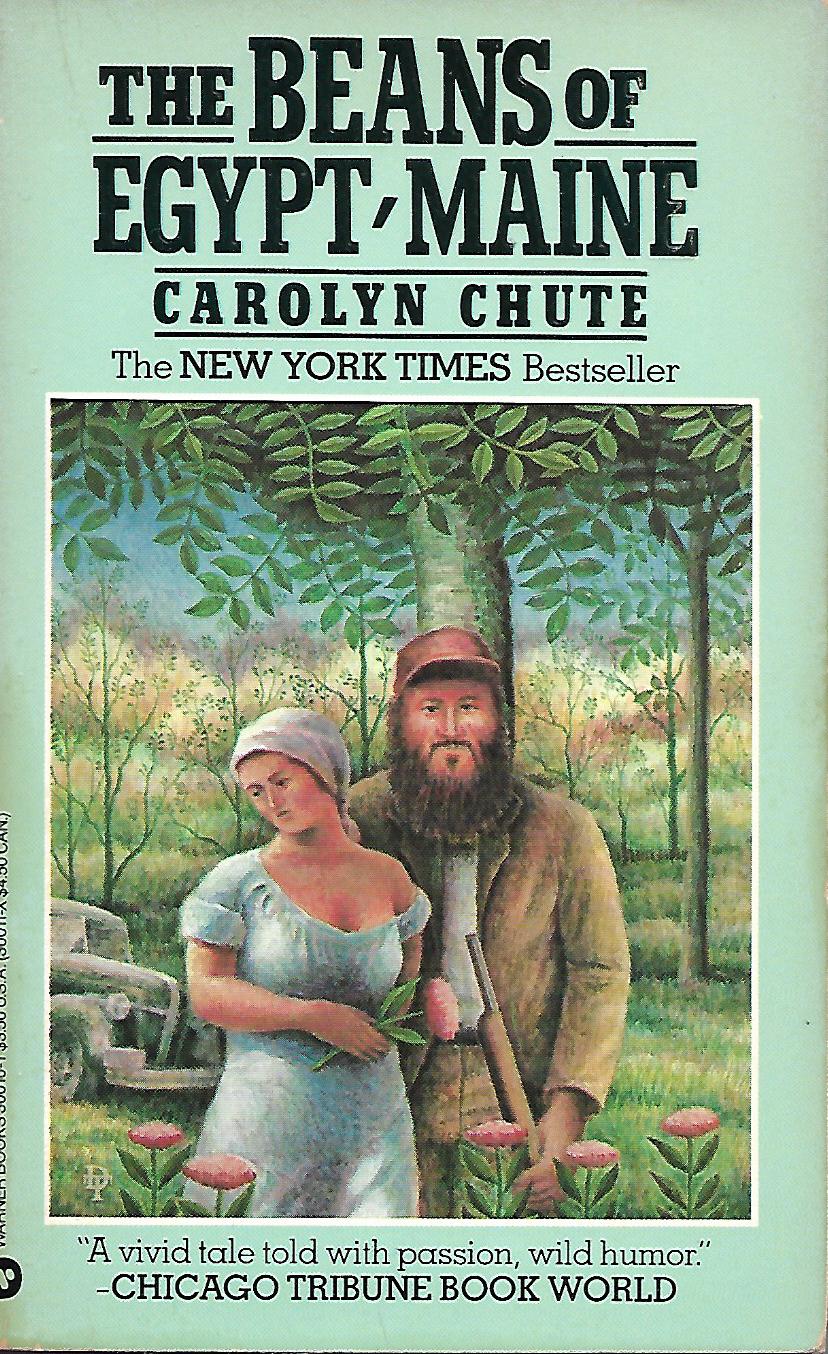
The Beans of Egypt, Maine
~ A Capsule Book Review by Allen Kopp ~

You probably wouldn’t want to live next door to the Bean family. There are a lot of Bean woman, a lot of Bean men, and a lot of Bean children. The Beans conceive children (sometimes with other family members) as carelessly as they raise them, and they are, to put it charitably, redneck trash. There are a lot of other adjectives that might also be applied to them: dirty, poor, ignorant, feckless, troublesome, contentious and scary.

Earlene Pomerleau lives with her tiny father, Lee Pomerleau, across the road from the turquoise-blue Bean trailer that is strung year-round with Christmas lights. As a child, she is alternately repelled and fascinated by the Beans. Her father and her Scripture-spouting grandmother warn her to stay away from the Beans, but she mixes with them every chance she gets.

The head Bean is Rubie (Reuben) Bean. He is large and crude, with a full, black beard. He is also illiterate. He doesn’t have a very good record with wives or with women in general. One of his wives, the one named Marie, says to a visitor: Did I tell you my ex-husband used to beat the shit out of me?

Rubie Bean is fertile and sexual. He has lots of children, maybe some that he doesn’t even know about. One of his sons is Beal Bean. He figures prominently in the story. He is the image of his father, Rubie Bean. He also has a way with women and is the father of many children, including offspring with his aunt.

When Earlene is a young woman, she has a fight with her father when he washes her mouth out with shampoo and runs away from home, where she consequently ends up spending the night with Beal Bean. He impregnates her on that night and she ends up marrying him, much to the chagrin of her father and grandmother. Several months later, she has a daughter whom she names Bonnie Loo.

Earlene’s life with Beal Bean is not an easy one. He is frequently out of work, gets into fights regularly, and is an all-round hell-raiser. Earlene, for some reason we don’t quite understand, is deeply in love with him. He will only ever be trouble for her. As long as she is married to him, she will never rise out of her redneck-trash status.

Carolyn Chute’s 1985 novel, The Beans of Egypt Maine, is a colorful and compelling novel with fascinating characters—funny and memorable reading. It is an important addition to the sub-genre of American literature known as “redneck-trash” literature. Other titles in this sub-genre include The Death of Sweet Mister and Tomato Red by Danial Woodrell and Tobacco Road and God’s Little Acre by Erskine Caldwell. For my money, people on the lower end of the socio-economic scale make for much more interesting reading than the PHDs with their angst-ridden marriages and left-leaning politics.

Copyright © 2021 by Allen Kopp  

Elephants Can Remember ~ A Capsule Book Review

Elephants Can Remember book cover

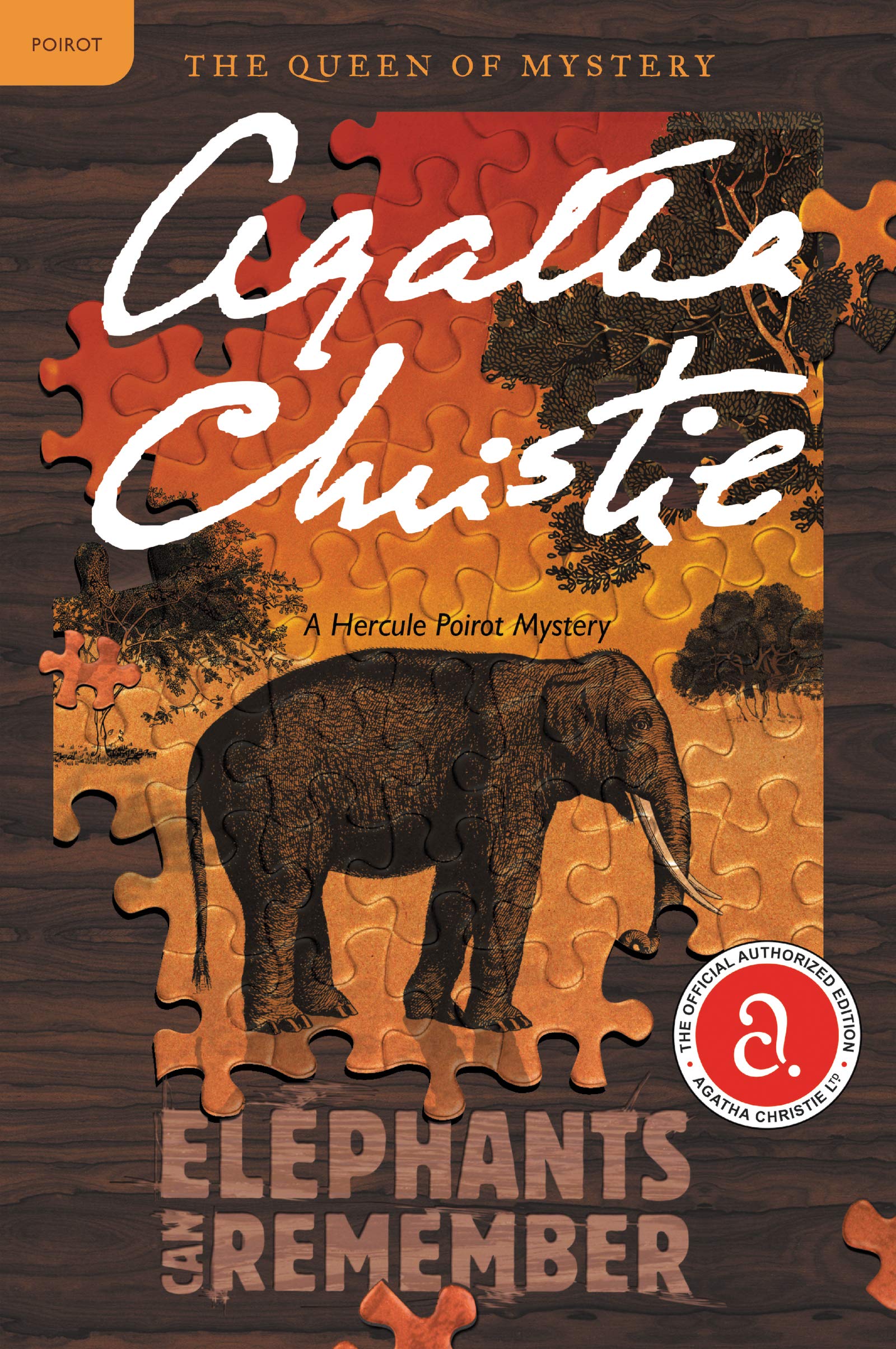
Elephants Can Remember
 A Capsule Book Review by Allen Kopp  

English mystery writer Agatha Christie lived from 1890 to 1976. She wrote sixty-six novels and fourteen short story collections in her long career and is the most published fiction author of all time, with two billion copies of her books in print. She also wrote the world’s longest-running play, The Mousetrap, which ran in London from 1952 to 2020.

One of Agatha Christie’s last published works was her 1972 novel, Elephants Can Remember. The story involves a fifteen-year-old murder-suicide, or what appeared to be a murder-suicide. The “elephants” of the title are the people who remember the tragedy in all its detail because, as you know, elephants remember everything.

Ariadne Oliver is the character in Elephants Can Remember who sets the story in motion. As a successful novelist, she attends a “writers’ luncheon,” where she is accosted by an “odious” woman named Mrs. Burton-Cox. Ariadne Oliver’s goddaughter, a girl named Celia Ravenscroft, is considering marrying Mr. Burton-Cox’s adopted son, Desmond. In considering the murder-suicide tragedy that occurred fifteen years earlier, Mrs. Burton-Cox wants to know if Celia’s mother killed Celia’s father and then killed herself, or if Celia’s father murder Celia’s mother and then killed himself. (Got that?) It seems that Mrs. Burton-Cox can’t allow her adopted son to marry Celia Ravenscroft until this question is answered. She believes Ariadne Oliver knows the answer, or at least can find out.

Not being a detective, Ariadne enlists the aid of her friend Hercule Poirot, the Belgian detective who has solved so many different cases in so many other works of fiction by Agatha Christie. If anybody can find out what really happened, it is he.

Margaret “Molly” Ravenscroft and her husband, General Alistair Ravenscroft, seemed happy. He was about sixty and she thirty-five. People who knew them didn’t know of any reason why they would kill themselves. The police ruled the deaths a simple murder-suicide and nothing more. There are people, though (“elephants”) who never accepted the police version of what really happened. A lot of time has elapsed since the event (fifteen years), so the people Poirot talk to about the case have to dredge up fifteen-year-old memories. A lot of the “elephants” are old by this time.

We find that Mrs. Ravenscroft had an identical twin sister named Dorothea, who had severe mental illness. When Poirot uncovers the “truth” about this crazy twin sister, he is able to piece together what really happened, as only he can.

Elephants Can Remember is formulaic, as all of Agatha Christie’s novels are. They follow a certain predictable pattern. The reader is presented with a set of circumstances and a cast of “suspects”, and in the third act the intrepid detective (in this case, Hercule Poirot) gathers all the suspects together and explains in great detail the solution of the crime. The guilt party (or parties) is carted off to the hoosegow and the innocent suspects breathe a sigh of relief and go on their merry way.

Copyright © 2021 by Allen Kopp
It’s Not the Pale Moon That Excites Me

It's Not the Pale Moon That Excites Me image 2
It’s Not the Pale Moon That Excites Me
~ A Short Story by Allen Kopp ~

(This is a repost. It has been published in The Literary Hatchet.)

They sat on the front porch to catch the cooling breezes. Mrs. Llewellyn fanned herself with a cardboard fan courtesy of Benoist Funeral Home and took pulls on a bottle of “medicinal” whiskey she kept in her apron pocket. Miss Clemson, the nearest neighbor, sat on the steps close to Mrs. Llewellyn, holding her hands demurely around her ankles to keep her skirt in place.

“Gets mighty lonely over at my place sometimes,” Miss Clemson said. “Especially of an evening.”

“You should have found yourself a man to marry,” Mrs. Llewellyn said.

“I still might.”

“At your age?”

“I’m only fifty-four,” Miss Clemson said. “And, anyway, the world don’t revolve around no man. I know plenty of women manage just fine without a man orderin’ ‘em about the place.”

“Well, I’ve had four husbands and I can’t say I’d recommend it,” Mrs. Llewellyn said.

“There’s a rumor going around that you just received a proposal of marriage from a Mr. Chin. Is that right?”

“Yes, a Mr. Chin asked me to marry him,” Mrs. Llewellyn said, “but I turned him down.”

“Is he a Chinaman?”

“No, why would he be a Chinaman?”

“Well, that’s what the name sounds like.”

“No, he ain’t a Chinaman.”

“Well, what then?”

“I don’t know what he is, but he ain’t no Chinaman.”

“Why don’t you marry him if he wants to marry you?”

“Well, for one thing, he’s covered with scales.”

“You mean like a snake?”

“Exactly like a snake.”

“I guess a woman could get used to a few snake scales if the man was a good man,” Miss Clemson said.

“I don’t think I ever could. I’d have to turn away when he was gettin’ dressed, or at least turn the light off.”

“Maybe he’ll just shed them scales in the woods during moltin’ season and not have them anymore.”

“Why are you so interested in Mr. Chin’s scales?”

“Well, if he’s marriage-minded, maybe the two of us ought to meet. We might strike up a real lively friendship.”

“The next time I see him I’ll send him over your way,” Mrs. Llewellyn said.

“Will you really?”

“When you see them scales, you might change your mind.”

“Well, I really don’t think I’d mind the scales all that much as long as he keeps them hidden during the daytime when he’s dressed. The scales are not on his face, are they?”

“Not yet.”

“As long as they’re not on his face, I think we’d be all right, then.”

“The scales is not the only reason I don’t want to marry Mr. Chin,” Mrs. Llewellyn confided.

“What, then?”

“I don’t want him moonin’ around over my granddaughter Laura Louise all the time.”

“Oh, yes. I almost forgot about Laura Louise.”

“She lives with me, you know. I’m all the family she’s got left since her maw killed herself in the river.”

“Do you think Mr. Chin might be particularly drawn to her?”

“I think he’d never stop starin’ at her.”

“Well, if staring’s all he done, that wouldn’t be so bad.”

“Yeah, but the starin’ would lead to pawin’ and the pawin’ would lead to other things.”

“I think I see what you mean. She has turned into a right pretty little thing.”

“She’s got her womanly wiles. It’ll just take the right man to bring it out in her.”

“Do you think Mr. Chin might be the one to do that?”

“I think any man might do it, even one covered in scales.”

“Does she still go swimmin’ naked in the river?”

“I don’t think she swims naked no more, no. Not since she accepted the Lord Jesus Christ as her personal savior.”

“The Lord certainly works in mysterious ways His wonders to perform.”

“Don’t He, though?”

“There for a while she seemed headed down the road to damnation.”

“Most of that was rumor. You know what nasty tongues people have.”

“They said she was havin’ an affair with I-don’t-know-who-all, even Dr. Birke in town.”

“She went to him for a bladder infection. He treated her and she came home and that’s all there was to it.”

“That’s not what people says.”

“Do you think I care what people says?”

“No, I know you don’t care.”

“But, I’ll tell you on the other hand. I didn’t definitely turn Mr. Chin down.”

“What? You think you still might marry him?”

“If that’s the way the chips fall.”

“What do you mean? What chips?”

“Well, since Laura Louise has got herself so keen on religion, she thinks she might want to dedicate her life to the spreading of the Gospel.”

“You mean as a lady preacher?”

“Well, something like that. She’s got it into her head that she wants to go to Darkest Africa and become a missionary.”

“Darkest Africa? What would she do there?”

“She’d teach them headhunters to put down their spears and accept the Lord Jesus Christ as their personal savior, same as she done.”

“Lord, I wouldn’t want to go to Darkest Africa!” Miss Clemson said. “I’d be scared out of my wits every minute!”

“That’s because you’re an ignorant woman. Them missionaries get training before they go. They learn how to deal with them natives and make their sit down and read the Bible and listen to hymns.”

“Well, it might be right for some people, but I don’t think I would ever choose that kind of life for myself.”

“Laura Louise is all the family I got left. All my children and grandchildren has died or run off and left me. Laura Louise is the only one left to sweep out the house and fetch me what I need and cook me a little supper of an evening. She’s the only one left to keep me company in my old age. And she’s the only one to see that I’m put into the ground proper when my time comes.”

“Oh, I think I see what you’re sayin’,” Miss Clemson said. “If Laura Louise goes off to Darkest Africa, you could still marry Mr. Chin and he could do all them things for you that Laura Louise does now.”

“You catch on quick.”

“But you’d only marry Mr. Chin if you don’t still have Laura Louise at home?”

“That’s right.”

“I’m sure the Lord will work it all out for you. He’ll come up with the solution that’s right for all parties concerned.”

“I guess so,” Mrs. Llewellyn said.

“I think I see somebody comin’ up the road now,” Miss Clemson said.

“That’ll be Laura Louise, come from service.”

“Good evening, Laura Louise, dear!” Miss Clemson said in a loud voice. “How are you? There’s going to be a lovely full moon tonight, did you know that? It kind of puts you in mind of romance, don’t it?”

“Hello,” Laura Louise said.

“Them services are gettin’ longer and longer, ain’t they?” Mrs. Llewellyn said. “I’ve been waitin’ for my supper.”

“Your supper will just have to wait, gran,” Laura Louise said. “I just got some good news at the end of service and I’ve just got to tell you what it is!”

“Whatever could it be?” Miss Clemson asked.

“I’ve been accepted in missionary school in Memphis, Tennessee! School starts in two weeks. It’ll last for two months and after that I’ll go over to Darkest Africa to do the Lord’s work!”

“My goodness!” Miss Clemson said. “That is excitin’ news, ain’t it?”

“How long will you be gone?” Mrs. Llewellyn asked.

“Oh, I don’t know! Years and years, I guess! Isn’t it wonderful? Brother Rabbit arranged the whole thing over the telephone. He told the people in Memphis what a good worker I am and how dedicated I am to the Lord. They told him to send me on up. They can’t wait for me to get started.”

“That’s fine,” Mrs. Llewellyn said, “but who’s goin’ to do your work around here while you’re gone?”

“What work?” Laura Louise asked.

“You would say that, wouldn’t you? That’s because you’re so selfish! What work do you suppose? Cleanin’ and cookin’ and washin’ and all the rest of the housework waitin’ to be done, that’s what work!”

“Why, I don’t know, gran. I guess you’ll have to get yourself a hired girl to help out, won’t you?”

“And just where am I goin’ to get the money for that?”

“The Lord will provide.”

“I think it’s just wonderful!” Miss Clemson said. “You were turnin’ out to be such a tramp around these parts, takin’ up with any man that would give you the time of day—including Dr. Birke in town—and now just look at you! The Lord has taken a-holt of you and turned you around into the kind of girl He always wanted you to be! Praise the Lord!”

“I’m just so excited about it I’m about to burst! I don’t think I’ll be able to sleep a wink tonight!”

“Well, just go on in now and get started on my supper now,” Mrs. Llewellyn said. “There’ll be plenty of time later to be excited.”

“Do you want to stay and eat supper with us, Miss Clemson?” Laura Louise asked.

“I don’t think so, honey, but thanks for askin’. I need to get myself on home.”

After Laura Louise went into the house to start cooking supper, Miss Clemson turned to Mrs. Llewellyn and said, “I think I hear wedding bells!”

“Whatever do you mean?”

“Well, now that Laura Louise is goin’ off to Darkest Africa to be a missionary, you’ll want to marry Mr. Chin as fast as you can so he can do all your work for you, won’t you?”

“Not so fast! She thinks right now that she’s goin’ to Darkest Africa to be a missionary, but what if I say she’s not?”

“You mean you gonna try to stop her?”

“I think I’m goin’ to pay a call on Brother Rabbit at the church tomorrow and tell him to stop meddlin’ in my affairs. Laura Louise ain’t nothin’ but a child and she’s almost feeble-minded to boot. She needs her grandma, her only living family, to look after her and keep her safe. She can’t be goin’ off on her own to no Darkest Africa to be no missionary. She’d be a babe in the woods. Why, they’d eat her alive!”

“Well, I don’t know,” Miss Clemson said. “It certainly seems the Lord is pointin’ her in that direction and if He’s decided it’s the right thing for her to do, then He’ll make it happen, no matter what.”

“Well, we’ll see about that.”

“Are you really goin’ to see Brother Rabbit tomorrow at the church?”

“I said I am, didn’t I?”

“Do you want me to go with you?”

“No, I’d rather go alone.”

“Well, good luck, but I don’t think you should go pokin’ your nose in. Laura Louise is a grown woman and if she’s decided she wants to go to Darkest Africa to be missionary, then I think you should just let it alone.”

“Do you have a granddaughter?”

“You know I ain’t. I ain’t ever even been married.”

“Well, until you have your own granddaughter, you can’t know what it’s like to have her leave you and go off to Darkest Africa to be a missionary.”

“Well, all right, then, honey. I won’t say another word about it.”

“Now, if you’ll excuse me, I think my supper is about ready and I’m hungry. I don’t like to be kept waitin’.”

“All right, honey. I’ll go on home now and eat my own lonely supper. And after I’m finished and all the dishes are washed up and put away, I’ll get into bed and look out the window at the big old sad yellow moon. It’ll remind me of all the things that might have been and never were.”

Copyright © 2021 by Allen Kopp