Death Valley Superstars ~ A Capsule Book Review

Death Valley Superstars cover
Death Valley Superstars
~ A Capsule Book Review by Allen Kopp ~ 

I was looking for a book about Steve Cochran, who died at age forty-eight in 1965 on his yacht with an all-girl (and inexperienced) crew somewhere around Tahiti. The non-English speaking girls didn’t know how to navigate the yacht. They drifted until they were rescued, by which time Steve Cochran had been dead for ten days. His body was badly decomposed in the tropical heat; positive identification was difficult.

In case you’re wondering who Steve Cochran is, he was a movie actor in the forties and fifties who specialized in tough-guy roles.  He was in a few good movies, such as White Heat and The Best Years of Our Lives, and plenty of bad ones. If you had ever seen Steve Cochran, you would remember him. He was dark, swarthy and dangerous-looking. He almost always wore a dark suit. He had thick black hair and smoldering eyes. If you messed with him, it would be at your own peril.   

Nobody has ever written a book about Steve Cochran, though. The closest thing I found was a book of “essays” entitled Death Valley Superstars by a writer named Daryl “Duke” Haney. He is a writer and actor, born in 1963. The thing is, you have to read all the way to the end of Death Valley Superstars to get to the part about Steve Cochran. The essay about him is the last chapter in the book.

The subtitle of Death Valley Superstars is Occasional Fatal Adventures in Filmland. On the front cover we are told that it’s “A kaleidoscopic investigation of American pop culture and cinema; at turns dark, intimate and hilarious.” I was never once moved to hilarity in reading Death Valley Superstars. My interest was engaged by most of the essays in the book, even if I didn’t learn anything I didn’t already know before. If you don’t find Jim Morrison wildly fascinating, as so many people do, you can skip the chapter on the séance conducted in a Hollywood motel room where he was known to have stayed. If you just barely remember (or maybe not at all) a movie from the late 1960s called Zabriskie Point, starring a little-known actor named Mark Frechette, you can probably skip over the essay entitled “Pluto in the Twelfth House.” It’s the longest essay in the book and I thought it would never end. The most interesting thing about Mark Frechette (in my humble opinion) is that he robbed a bank to finance a proposed movie and died in prison bench-pressing weights at age twenty-seven.

The essay about actor Christopher Jones, “Catch Me,” is a glimpse at a would-be “star,” an “almost-star,” who quit acting just as he was solidifying his reputation as the “Next James Dean.” He was in a handful of movies, including Ryan’s Daughter and Wild in the Streets. He died at age seventy-two in 2014.

In between sections on Marilyn Monroe, which kicks off the book, and Steve Cochran, ending the book, are sections on:

  • Hugh Hefner, a polarizing figure from the mid-twentieth century who revolutionized girlie magazine publishing while promoting the swinging lifestyle of a voraciously sexual bachelor.
  • Errol Flynn’s son, Sean Flynn, born into show business, disappeared mysteriously in Vietnam in the 1960s.
  • Lee Harvey Oswald, the “patsy” who (supposedly) assassinated President John Kennedy, was influenced by politically themed movies. (Does anybody really believe that Oswald acted alone? He was murdered to shut him up. What a story!)
  • The author’s brief encounter as a child with Elizabeth Taylor at a public appearance event and then recounting her brief (and probably unhappy) marriage to a U.S. Senator from Virginia.
  • William Desmond Taylor, a shadowy movie director murdered in Hollywood a hundred years ago. A whole list of suspects was assembled, but the murder has never been solved.

Books on Hollywood lore can make for interesting reading. Death Valley Superstars is not quite like any of the others. Don’t I have anything better to do that read books like this? Probably not, as I am a compulsive reader. Whenever I see a book online that interests me, I have to get my hands on it. Sometimes it’s a mistake but most of the time it turns out all right.

Copyright © 2022 by Allen Kopp


Calypso ~ A Capsule Book Review

Calypso cover
Calypso
~ A Capsule Book Review by Allen Kopp ~ 

David Sedaris (born 1956) is a well-known American humor writer. He has written a dozen or so books of “essays,” which in reality are first-person short stories that he writes about his own life and experiences, his large family, and his “long-time companion,” a “handsome” man named Hugh. (Yes, David is gay, but he’s more a writer “who happens to be gay” than a “gay writer.”)

I first became of fan of David Sedaris’s books back in the nineties and even, at one time, spent over an hour standing in line at a book-signing in St. Louis to get him to autograph my copy of his book—copies of two of his books, in fact, both of which I still have. In David’s own pointed brand of humor, he admits that he does so many book-readings and book-signings all over the world because he makes money from them—enough money, I would imagine, to sustain an opulent lifestyle. More power to him.

David Sedaris comes from a family that provides much of the material for his writing. He had four sisters (one of whom committed suicide) and one brother, who is five feet two and sounds like a lady on the phone. David also, he admits, is taken for a woman on the phone and is frequently called “ma’am.” David’s mother died of cancer of age sixty-two; his father, at the writing of Calypso, was still living and in his nineties.

Among the topics David Sedaris writes about in Calypso are:

  • His family’s vacation home at Emerald Isle, North Carolina.
  • A large snapping turtle with a tumor on his head.
  • A wild fox near his home in rural England that he bonds with.
  • Buying unusual clothes in Tokyo, including culottes for men.
  • Having an abdominal tumor removed by a stranger after one of his book-signings.
  • Having a stomach virus.
  • Being on a plane with a fellow passenger who craps his pants.
  • Flying in first-class with an obnoxious woman with a loud voice.

David Sedaris’s books are breezy reading and entertaining. If I didn’t think so, I wouldn’t read every new one that comes out. They’re not for everybody, of course, which might be said about anything. I wouldn’t, for example, recommend his books to a person who has no sense of humor and is unable to laugh at the absurdity of life.

My one complaint about Calypso is when the author discusses politics and certain political figures. He stands to offend a large segment of the reading public who doesn’t agree with him politically. Not everybody is of the same political stripe. And besides which, I hate politics. The best politics is no politics.

Copyright © 2022 by Allen Kopp     
Those Dancing Feet ~ A Short Story

Those Dancing Feet image 4 (2)
Those Dancing Feet
~ A Short Story by Allen Kopp ~

(This short story is a re-post. It has been published in The Literary Hatchet.)

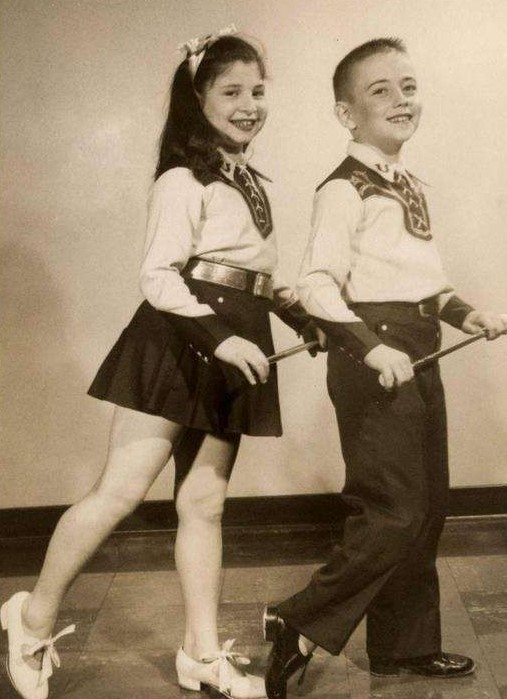
Nine-year-old Edith Mullinex couldn’t keep her legs still and when her legs moved her arms moved and then her whole body moved. When this ceaseless movement turned to dancing, she believed herself to be one of the all-time great dancers of the world. She didn’t know anything about the all-time great dancers of the world but, whoever they were, she was sure she was better than any of them.

She danced her way to school in the morning and she danced her way home in the afternoon and she danced every chance she got between morning and afternoon. She danced her way to the bathroom and she danced her way to the lunchroom and after she had eaten her lump of meatloaf and her cold mashed potatoes and her two canned plums in a puddle of mauve-colored juice, she danced her way back to the fourth-grade classroom, where all of her classmates and her teacher, Miss Divine, watched in open-mouthed wonder as she danced her way to her desk at the back of the room. Stop dancing, people would say, but she just ignored them. She knew they would never be able to understand.

“We have a real dancing problem with little Edith,” Miss Divine told Edith’s mother.

“It’s a phase she’s going through,” Edith’s mother said. “She has somehow got it into her head that she’s one of the all-time great dancers of the world.”

“It’s not normal,” Miss Divine said. “I think it calls for psychiatric evaluation.”

Thirteen-year-old Fairfax taunted Edith mercilessly when she was dancing at home, but she ignored him, as she did all the naysayers. When he tripped her while she was dancing on her way to the kitchen to eat dinner, she made the fall part of her dance and in this way annoyed him even further. When friends of Fairfax’s visited to watch a football game with him on TV, she danced all around them and in front of them, obstructing their view, until suddenly they remembered they had leaves to rake or grass to cut and left to go home.

“Boy, Fairfax sure does have a screwy sister!” they said when they were out the door.

Edith was always improvising new dance steps. When the phone rang, she danced her way to answer it and when it was time to go to bed, she danced her way into her bedroom, making closing the door part of the dance. Her mother sent her to the store with a list of things to buy. She danced her way there and she danced her way up and down the aisles of the store until she had everything on the list. People looked at her curiously, sure she was either filming a television special or was an escapee from the mental hospital.

Edith had a cousin named Pansy Mullinex. Like Edith, Pansy was very thin with lank blond hair to her shoulders and stick-like arms and legs. Edith and Pansy were the exact same age, born five days apart, and could have passed for twins. Pansy should have been in the same fourth-grade class as Edith, but she still read at a first-grade level and was in special education.

On the playground at recess, Edith showed Pansy some of her latest dance steps and soon they were dancing together. They worked up a dance routine to the song “When the Saints Go Marching In.” Edith taught Pansy the words. They sang and danced every day at morning recess and, on a good day, attracted an appreciative crowd of forty of fifty. That’s when Edith knew she loved having an audience.

The school talent contest was coming up. The whole school would be watching. First prize was ten dollars. Edith proposed to Pansy that they enter, and, if they won, they could split the ten dollars. There wasn’t much you could do with half of ten dollars, but it was more money than they were used to having at one time.

Edith chose the songs they would dance to, a combination of classics and bouncy contemporary hits that anybody who listened to the radio would know. There was some Roy Orbison (“Oobie Doobie”), Elvis Presley (“Jailhouse Rock”), Connie Francis (“Lipstick on Your Collar”), Bobby Vee (“Rubber Ball”), Tommy Dorsey (“Sunny Side of the Street”), and even some Perez Prado (“Mambo No. 49”) to add a cute Latin flavor at the end. It was a range of music to show their range and versatility.

For what to wear they chose matching black poodle skirts with white trim; white, short-sleeved sweaters with pompom ties; red ribbons in their hair, saddle oxfords and bobby socks.  To add some pizzazz, Edith bought some taps and tiny nails from a shoe repair store on Main Street and turned both pairs of shoes into tap shoes.

They rehearsed every day for two weeks on a sheet of plywood in an old wasp-infested shed behind Pansy’s house and, when it was time for the talent contest, they were both ready. Neither of them had worn makeup before, but Edith confiscated from her mother’s dressing table some face powder, lipstick and rouge to slather on their faces to keep them from looking ghostly in the spotlights.

Edith knew about the other acts and she considered them stupid. There was a girl twirling two hula-hoops, a boy playing “Yankee Doodle Dandy” on his banjo, a boy acting like Curly from the Three Stooges, a girl moving her lips to the Connie Francis song “Who’s Sorry Now,” another boy playing spoons to the tune of “Swanee River” and other assorted acts. She knew that she and Pansy had more class and more pizzazz in their little fingers than all the others put together and were almost certain to win first prize, unless something bad happened, like freezing up in front of an audience of two hundred people and not being able to dance at all. She was sure nothing like that was going to happen.

They didn’t go on until about an hour into the show. While they waited, they stood just behind the curtain watching the contestants go on and come off. The audience applauded after each act—and there were always a few cheers—but Edith knew they were just being polite. People didn’t go to a show to just sit on their hands; they wanted to participate.

Finally, it was Edith and Pansy’s turn. They started out behind a screen with a big light shining on it from behind so that, to the audience, they were only silhouettes. They danced behind the screen and after a few seconds they came out, Edith on the left and Pansy on the right. After that they owned the talent contest. They tapped and jiggled and turned and swooped. They propelled each other into the air and did some ballet steps. Edith twirled Pansy and then Pansy twirled Edith. They joined hands and jitter-bugged, they waltzed and did some tango steps. They were a two-person conga line and then they drew some laughs when they acted like chickens pecking and scratching at the ground. They jumped, jittered and jived, drawing oohs from the audience when they both did the “splits” at the same time. Pansy remembered all the steps Edith taught her and even improvised some of her own.

When the music stopped and Edith and Pansy finished with a flourish in which they both went down on one knee with their arms extended, the crowd went wild. The clapping, cheering and whistling were deafening. They had to do several curtain calls before the show could go on.

There were more acts waiting to go on, but Edith knew it was all but over.

The show finally ended and then all that was left was for the judges to make their decision. The judges were all teachers and as Edith looked out at them from backstage, she saw they had their heads together to arrive at their decision.

The deliberations among the judges took about five minutes. When they were ready, Miss Mish, the music teacher who was also one of the judges, took to the stage to announce the winners.

Miss Mish wheezed into the microphone, “No matter who wins, there’s one thing on which we can all agree. Everybody on this stage tonight is a winner!”

The audience clapped and cheered and Miss Mish held up her hands to get them to shut up. “Our third-place winner,” she said, “is none other than Marvin Hittler and his banjo!”

Cheers and huzzahs for Marvin Hittler.

“Our second-place winner is Leeman LaFarge for his remarkable impression of Curly Howard of the Three Stooges. Come on out, Leeman, and take a bow.”

Leeman came out from backstage and, to anybody familiar with the Three Stooges, he was a perfect pint-sized version of Curly. He gave the audience a few Curley mannerisms and then he pretended to be shy and had to retreat behind the curtain.

Miss Mish clapped and wheezed into the microphone like a donkey. When the laughter and cheering died down, she brayed: “And now the moment for which we have all been waiting! The first-place winner of this year’s school talent contest is…may I have a drumroll, please!…Edith Mullinex and Pansy Mullinex! For their sparkling and innovative dance routine!”

Edith wasn’t surprised. She knew, unless the show was rigged, that she and Pansy would win first prize. She took Pansy’s hand and they both bowed graciously again and again before the audience. After they left the stage, the audience was still applauding, so they gave a curtain call and then another and another. After a few minutes, Miss Mish took to the microphone again and told everybody to shut up and go home. The show was over.

As the crowd dispersed, everybody wanted to congratulate Edith and Pansy, but especially Edith because the whole thing had been her idea. She was the star of the show.

Edith’s mother, who had been sitting in the audience, was going to give Edith and Pansy a ride home, but Edith wanted to walk home by herself. She was too excited to sit still and ride in the car, she said. She needed to dance her way home.

She said her goodbyes and danced her way down the street away from the school. It felt good to be away from the crowd and to breathe in the cool night air. Her head was still in the clouds. She still heard the music and the applause, the cheering, as her name was announced as the first-place winner and the crowd went wild! It was the happiest moment of her life!

As she danced off the sidewalk into an intersection, she wasn’t thinking about watching for oncoming cars, wasn’t thinking about anything other than how good she felt. She didn’t see the red sportscar speeding toward her.

There was a squeal of brakes, a skidding of tires and impact. A woman standing on the sidewalk screamed. Traffic came to a standstill. Somebody called an ambulance. Within minutes, they came and picked Edith up off the street and took her to the emergency room at the hospital. The hospital people were trying to call Edith’s mother, but she wasn’t home yet.

Edith died two hours later in the hospital. She never regained consciousness and never knew what happened. Everybody who knew Edith and who heard the story afterwards said the same thing: She died happy.

School closed at noon the day of the funeral so everybody could attend. Her entire fourth-grade class was there and all the teachers. She was buried in a white casket with a spray of red roses that her classmates had taken up a collection to buy for her. And, on her headstone, beneath her name, was etched one word: DANCER.

After Pansy got over the shock of Edith’s death, she assumed the dancing mantle for herself. She danced her way to school in the morning and she danced her way home in the afternoon. She danced before, during and after school. She danced her way to the bathroom and she danced her way to the lunchroom to eat lunch.

The special education teacher, Miss Cornapple, called Pansy’s mother and said, “I’m afraid we have a dancing problem with Pansy.”

“It’s a phase she’s going through,” Pansy’s mother said. “She has somehow got it into her head that she’s one of the all-time great dancers of the world.”

“It’s not normal,” Miss Cornapple said. “I think it calls for psychiatric evaluation.”

“Maybe you just can’t stand to see anybody happy,” Pansy’s mother said.

As Pansy’s dancing skills improved, so did her reading skills. Soon she was allowed to move out of special education and take her place in the fourth-grade class. She danced and danced and danced, and she looked so much like Edith, and acted so much like her, that soon people began calling her Edith instead of Pansy and whenever it happened she never bothered to correct them. Edith was back, or maybe she had never left at all.

Copyright © 2022 by Allen Kopp

Heart of Darkness ~ A Capsule Book Review

Heart of Darkness cover

Heart of Darkness
~ A Capsule Book Review by Allen Kopp ~

While reading the novel Heart of Darkness, I discovered the word “tenebrous.” It’s an adjective, meaning dark, shadowy or obscure. That word is a perfect, one-word description for the novel.

Heart of Darkness was written in 1899 by Polish-English writer Joseph Conrad (1857-1924). It is a highly regarded, much-studied novel. It’s number 67 on the Modern Library’s list of the hundred best books in English of the twentieth century.

The story is being narrated in the first-person voice of a character named Charles Marlow. He is on a boat on the Thames River in England, but he’s relating to his boatmates his experiences in what used to be called Darkest Africa.

Charles Marlow, an Englishman, takes a job as a riverboat captain with a Belgian company that trades in the Congo. As he makes his way up the Congo River, he encounters widespread inefficiency in management of the company’s affairs and mistreatment of the natives at the company’s stations. This is part of the book’s indictment of European colonial affairs in places like Africa. One of the novel’s themes is that there is little difference between civilized people and savages.

As he progresses in his journey, Marlow hears people speak highly of a man named Kurtz, a first-class agent and ivory hunter far up the river. He is told that Kurtz has “gone native” and that the natives worship him. From the information he gleans, Marlow deduces that Kurtz is insane.

Marlow and the passengers on board his ship face terrible difficulties. The steamer has sunk and it will take months to wait for the parts to fix it. During this period, Marlow’s interest in Kurtz grows. Kurtz is rumored to be ill. Marlow eventually gets the parts he needs to repair his ship, and he and his crew set out (agents and a crew of cannibals) on a long, difficult voyage up the river. The jungle is dark, silent, and impenetrable, making everybody on board the ship a little nervous. They are surrounded by a thick fog. When a bunch of natives attack the ship with arrows, Marlow scares them away by sounding the steamer’s whistle.

When Marlow and his crew finally arrive at Kurtz’s Inner Station, they expect to find him dead, but are greeted by a Russian trader, who informs them that everything is fine. The Russian claims that Kurtz has enlarged his mind and can’t be subjected to the same moral judgments as other people.

Kurtz has apparently established himself as a god with the natives and has gone on brutal raids in the surrounding territory in search of ivory. The collection of severed heads adorning the fence posts around the station attests to his “methods.” The agents bring Kurtz out of the station-house on a stretcher, and a large group of native warriors emerges from the jungle and surrounds them. Kurtz speaks to them, and the natives disappear into the woods.

The manager of Marlow’s party brings Kurtz, who is quite ill, aboard the steamer. A beautiful native woman, apparently Kurtz’s mistress, appears on the shore and stares out at the ship. The Russian reveals to Marlow, after swearing him to secrecy, that Kurtz had ordered the attack on the steamer to make them believe he was dead so they would turn back and leave him to his plans. Kurtz disappears in the night. When Marlow goes out looking for him, he finds him crawling on all fours toward the native camp. Marlow convinces him to return to the ship. They set off down the river the next morning, but Kurtz is failing fast.

While they travel downriver, Marlow listens to Kurtz talk. Kurtz entrusts Marlow with a packet of personal documents, including a pamphlet he has written on civilizing the savages, at the end of which he declaims: “Exterminate all the brutes!”

When the steamer breaks down and they stop for repairs. Kurtz dies. His last words are: “The horror! The horror!” Marlow himself becomes ill soon after and barely survives. Eventually when he returns to Europe, he goes to meet with Kurtz’s fiancée. She is still in mourning, even though a years has passed since Kurtz’s death. She praises Kurtz as a paragon of virtue and achievement. She asks Marlow what Kurtz’s last words were. Marlow lies and tells her that Kurtz spoke her name right before he died.

We are told that Joseph Conrad didn’t speak fluent English until he was in his twenties (he was Polish). He went on to become a great writer of novels in English. He wrote Heart of Darkness in his early forties, basing it on his own experiences when he was in Africa.

My favorite part of Heart of Darkness is the last few pages of the book when Charles Marlow goes to see Kurtz’s fluttery, naïve girlfriend after he gets back home to England. The dialogue between the two characters in this scene is transcendent.

Copyright © 2022 by Allen Kopp

Boxes: The Secret Life of Howard Hughes ~ A Capsule Book Review

Boxes cover
Boxes: The Secret Life of Howard Hughes
~ A Capsule Book Review by Allen Kopp ~

As a young man, Howard Hughes (born 1905) inherited the Hughes Tool Company from his father, using it as the starting point to build a vast business empire. He was a pioneer of aviation design and a daring test pilot (in 1946 he was nearly killed when the aircraft he was testing crash-landed and burned). In the 1930s and ‘40s, he was a movie maker in Hollywood, having become enamored of the movies as a child. He owned an airline and then another one, getting into trouble with the U.S. government for violating antitrust laws. At one time he owned almost all the gambling casinos in Last Vegas, lending an air of respectability to an unsavory industry. For a while, he was not only the richest man in America, but the richest in the world. He was a playboy, an escort for some of the most beautiful and well-known ladies in Hollywood. He had ties with organized crime and rubbed elbows with some of the most famous political leaders of his time. More than anything else, though, he was known for being extravagantly eccentric, reclusive, and mysterious.

This following quote from the nonfiction book, Boxes: The Secret Life of Howard Hughes (by Douglas Wellman and Mark Musick), tells us a lot about the real Howard Hughes:

“The world of Howard Hughes is sometimes unfathomable. Between the things he did do, the things he didn’t do but was accused of, and the things he did but covered up, his life is a bewildering series of conflicting stories. He was a master of secrecy, intrigue, and diversion, which is apparent from the abundance of books and articles on the man, many of which are contradictory.”

At the height of Howard Hughes’ fame, the world knew him as a rich eccentric. People loved to talk about him and write about him, but much of what was spoken and written was exaggeration or blatantly untrue. Nobody could know Howard Hughes, so people fabricated stories about him to sell books, newspapers and magazines. He was “hot” copy.

The world believes that Howard Hughes died a broken old man at age 71 in April 1976. He had been living in a Las Vegas hotel room, barely kept alive by his uncaring custodians. He was filthy, malnourished, emaciated and addicted to Codeine, Valium, and other drugs that he didn’t need. He left behind a fortune in excess of two billion dollars. At the time of his supposed death, he had at least forty pending lawsuits against him and was being hounded all the time by the U.S. government for non-payment of taxes. Great wealth has its own unique problems.

The premise of the nonfiction book Boxes: The Secret Life of Howard Hughes is that Hughes didn’t really die in 1976. A decoy died in his place, a Howard Hughes stand-in, presumably a Las Vegas derelict of about the same age, with similar physical characteristics. Why would a man like Howard Hughes fake his own death? The answer should be obvious. He wanted to be left alone, to live the rest of his life in peace and seclusion. The forfeiting of his great wealth was the price he was willing to pay.

We hear all the time about people faking their own deaths, but if anybody could do it, it was Howard Hughes. He had the means to do it and the “enablers” to carry out his wishes and keep their mouths shut. He assumed the name and identity of Verner “Nik” Nicely. He married a woman named Eva McClelland. He died in 2001 at the age of 95.

The book presents plenty of compelling evidence that the mysterious and eccentric old man named Verner “Nik” Nicely was in reality Howard Hughes. Mr. Nicely had burn scars on his body, consistent with the scars that Howard Hughes sustained in a crash in his test pilot days. He was the same height as Howard Hughes, had the same physical characteristics, and was in possession of encyclopedic knowledge of aviation and mechanics. His wife, Eva, who died a few years after he died, was certain that she was married to the once-famous Howard Hughes. Read the book and decide for yourself if she was telling the truth.

Copyright © 2022 by Allen Kopp    

Brumm’s Drug Store ~ A Short Story

Brumm's Drug Store image 2

Brumm’s Drug Store
~ A Short Story by Allen Kopp ~

Mayfleur had worked at her new job for only two weeks and already she was thinking about quitting. There was always so much to do, she had never had to work so hard before. She was on her feet all day long without ever a moment to herself. The worst part, though, was Mrs. Brumm watching her all the time.

Some people named Brumm owned the store. Mr. Brumm was the pharmacist. He stayed behind the pharmacy counter all the time. He smiled a lot and hardly ever said a word to anybody. If anybody asked him a question, he pointed to his wife to answer it. And his wife, Mrs. Brumm, seemed to be everywhere all at once. Nothing escaped her scrutiny. She was all-knowing and all-seeing.

There was only one customer at the lunch counter drinking coffee so Mayfleur wasn’t very busy at the moment, but she knew that Mrs. Brumm was lurking around somewhere—she could smell the stench of her sweet perfume—so she tried to look busier than she was. When the man drinking coffee asked for a refill, she was glad to be in motion for a few seconds with something specific to do. She gave him a sweet smile as she filled his cup and asked if he would like anything else.

“Mayflower!” Mrs. Brumm came around the corner without a sound. “The magazines are a mess! They need straightening! Right now!

Mayfleur jumped at the sound of Mrs. Brumm’s voice and sloshed some of the hot coffee on her hand. She put the pot back on the warmer with a clatter and then nearly fell down where somebody had dribbled some water on the floor. Her day was not going well and she had more than six hours to go.

Mrs. Brumm was right. The magazine rack was a mess. It was one of Mayfleur’s responsibilities to keep it in order, and Mrs. Brumm would accept nothing less than perfection. Mayfleur was just separating Look from Life and Superman from Justice League America, when Mrs. Brumm barked at her to drop what she was doing and fill a food order. Miss Tolley upstairs wanted a tuna salad sandwich on toast, a chocolate milk shake with a jigger of rum mixed in, a pack of Lucky Strikes—and she wanted them now.

Mayfleur knew that Miss Tolley was Mrs. Brumm’s sister and there was something funny about her. Something not quite right, but Mayfleur didn’t know what it was. Maybe she had a missing leg or something and couldn’t get out of bed. When she took the food order upstairs, she’d find out for sure.

She went behind the lunch counter and began preparing the food order, not bothering to wash her hands first. She put the wrapped tuna sandwich on toast in a white paper bag, along with the Lucky Strikes, and then she set about making the chocolate milk shake with the rum in it. (The bottle of rum was kept under the counter especially for that purpose.) She fastened a plastic lid on the milk shake and put it in its own white paper bag. When the order was ready, she carried it out the front door and around the corner to the door where the stairs were. She went up the steps slowly, looking at the grooves in the wood underneath her feet. The grooves made her think of all the people who had gone up the stairs who were now dead.

There were four apartments over the drug store. She found Miss Tolley’s door and knocked hesitantly, as though afraid she might wake someone. She heard the undoing of the locks from the inside and then the door opened and there stood Miss Tolley in a red Japanese kimono.

Mayfleur was only moderately surprised to see that Miss Tolley was a midget, no more than three feet tall. She realized it could have been a lot worse. She might have had leprosy or no arms or been covered in scales.

“Are you Miss Tolley?” Mayfleur asked.

“Well, I ain’t Virginia Mayo!”

“I have your food order from downstairs.”

“Okay.”

She took the two bags from Mayfleur and set them down. Mayfleur turned and started to leave, but Miss Tolley gestured for her to sit on her sagging sofa and “take a load off.”

“What’s your name?” Miss Tolley asked.

“Mayfleur Pickering.”

“How is Bertha treating you?”

“Who? Do you mean Mrs. Brumm?

Hah-hah-hah! Is that what she makes you call her?”

“That’s what she told me to call her from the first day.”

Hah-hah-hah! She’s a riot! I’ll bet she doesn’t give you a moment’s peace, does she?”

“Well, she is kind of demanding.”

“You don’t have to sugarcoat it for me, honey. She’s my sister. I know what a demon she is. How long you been on the payroll?”

“Two weeks.”

“I’ll bet it seems like a couple of years already, don’t it?”

Mayfleur felt uncomfortable hearing Miss Tolley talk about Mrs. Brumm that way and she wished she might go back downstairs and disappear behind the soda fountain.

“Well, if there’s nothing else,” Mayfleur said, “I really need to get back downstairs.”

“You don’t need to worry about it,” Miss Tolley said. “I call the shots around here and if Bertha don’t like it, she knows what she can do about it.”

“You ‘call the shots’?”

“I own the drugstore. Didn’t you know that?”

“No, nobody told me.”

“Not only do I own the drugstore, I also own these apartments and three other buildings besides.”

“Oh.”

“So, two weeks, you say?”

“That’s right.”

“I bet you think every day about quitting, don’t you?”

“Well, I…”

“You can be truthful with me, dearie. I know nobody can stand working for Bertha for long. You would not believe how many girls she has had working for her! I think we average about one a month.”

“Well, I don’t like to complain. I had a little trouble finding a job, so when this one came along I was glad to get it. I’d like to keep it for a while.”

“But still, you’d like to tell Bertha to take it and shove it, wouldn’t you?”

“Well, I…”

“And what do you think of the mister?”

“Who?”

“The pharmacist. His name is Lloyd Brumm. He’s Bertha’s husband, if you can call it that.”

“Oh, him! I don’t usually see him unless I have to go behind the pharmacy counter for something.”

“Don’t let the smile and the quiet demeanor fool you. He’s a drug addict and he’s just as crazy as Bertha.”

“He seems all right.”

“He’s in the perfect profession for an addict. One day he’s going to overdose himself. Do you know he used to go around telling people he was a doctor? He did it to impress the ladies. They’d see the white coat and believe him. Oh, he’s quite the ladies’ man, he is!”

“He seems harmless enough.”

“Let me warn you about him, though. He’s quite the skirt chaser. He’ll go after any female over fourteen years old. It don’t matter if she’s married or ugly or obese or covered in fur. Drugs are not the only thing he’s addicted to!”

“Does Mrs. Brumm know?”

“Of course she knows, and it don’t matter to her! It’s a marriage in name only.”

“I do feel a little sorry for him being married to her.”

“You and me both, honey, but you don’t want to waste too much sympathy on him, though. And, take my advice. Don’t ever let him get you alone if you can help it. That’s what he likes to do. Get a girl in the room alone, and then he’s all over her!”

“I never would have known!”

“And, something else I gotta tell you: he peeps at you when you’re going to the toilet.”

What?

“He’s got a peep hole in the wall. He spies on you when you’re in the bathroom.”

“Are—are you sure?”

“Yes, he’s a very sick person!”

“Why don’t you plug up the peep hole?”

“Because I’m waiting for the right time. I’m going to bust him and I’m going to bust her, too! I’m going to squash them both like bugs! Do you want to know why she watches you all the time?”

“No. Why?”

“She’s hoping to catch you stealing from her.”

“I’m not going…”

“She’s always on the lookout for a thief so she can call the police and have them arrested.”

“Why would she do that?”

“She enjoys getting people in trouble. That’s her thing. She’s an absolute lunatic. She wants to embarrass you in front of other people. If she so much as caught you taking a toothpick that didn’t belong to you, she’d be on you like a dive bomber. She’s hoping you steal money, though, out of the cash drawer.”

“I would never…”

“Her favorite thing, though, would be to catch you with him.”

“With who?”

“With Lloyd, her husband. The pharmacist. If she caught you dallying with him in the back room, that would push her over the edge.”

“I thought you said it was a marriage in name only.”

“It is, but she’s still jealous of his attentions to other women. She’s a drama queen down to her toenails. She loves explosive, emotional scenes. She watches soap operas on TV all the time. That’s where she gets a lot of her material.”

“Believe me, Miss Tolley, I would never dally with him in the back room or anywhere else! The thought of it makes me sick!”

“Makes me sick, too!”

“And I would never steal money from her. Or anything else.”

“I believe you’re a good girl, or I wouldn’t be telling you these things.”

“I’d better get back downstairs. She’ll think I’m taking too long.”

“Don’t worry about it, Mayflower. If she says anything, just tell her to talk to me. I’ve got your ass covered.”

She went back downstairs, expecting a large dose of Mrs. Brumm’s anger for taking so long with Miss Tolley’s food order, but Mrs. Brumm was standing in the back of the store near the pharmacy counter, talking to two men. When Mrs. Brumm saw Mayfleur come in the door, she stopped talking in mid-sentence and pointed. The two men turned and looked at Mayfleur. Breathless, Mrs. Brumm strode forward in a few sprinting steps.

“Here she is!” Mrs. Brumm said. “Here’s the girl! She’s the one!”

As the men came toward her, Mayfleur saw they were uniformed police officers, but still she didn’t know what was happening.

“You work for this woman?” one the officers asked.

“Yes,” Mayfleur said.

“How long?”

“Two weeks.”

“She says you’ve been stealing money from her. Money from her cash register.”

“I haven’t!”

“Of course she’d lie about it!” Mrs. Brumm said. “They always do!”

Mayfleur saw that there were several customers in the store and they had all stopped what they were doing and were looking at her. Mr. Brumm had come out from behind the pharmacy counter and was looking at her with a strange smile on his face. Mrs. Brumm was performing for the assemblage.

“She has a hundred and fifty dollars, at least, inside her purse that she keeps in the back room,” Mrs. Brumm said. “Where would a girl like that get a hundred and fifty dollars in cash?”

“I don’t have a hundred and fifty dollars in my purse!” Mayfleur said. “I have two dollars and some change. If there’s a hundred and fifty dollars in my purse, you put it there!”

“I did not!” Mrs. Brumm said.

“Anything else stolen besides the hundred and fifty?” the officer asked Mrs. Brumm.

“Yes, I’m sure she’s been stealing from me all along!”

“Oh, Mrs. Brumm!” Mayfleur said. “The magazines are all messed up. I never got a chance to straighten them earlier. I think I’ll do it now.”

Copyright © 2022 by Allen Kopp

The Confessions of Nat Turner ~ A Capsule Book Review

The Confessions of Nat Turner book cover 2

The Confessions of Nat Turner
~ A Capsule Book Review by Allen Kopp ~

In 1831, about thirty years before the Civil War, in the state of Virginia, a slave uprising resulted in the deaths of 59 white people and significant destruction of property over the course of two days. A slave named Nat Turner (he heard voices and had visions) planned the methodical attack for years, believing he was following the will of God. He saw himself as an avenging angel. He didn’t act alone in the uprising; he recruited followers from among his fellow slaves who were more than willing to wreak havoc against the establishment.

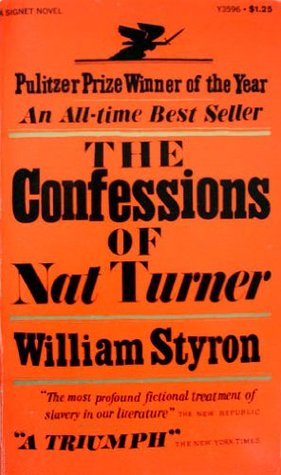
American author William Styron (1925-2006) published his historical novel The Confessions of Nat Turner in 1967. It is a fictional account (historical accuracy not verified) of the only slave uprising of its kind in the Southern United States. The mastermind of the uprising, Nat Turner, narrates the story in his first-person voice. Through the character of Nat Turner, William Styron gives an articulate voice to the enslaved.

The irony of Nat Turner, according to this novel, is that he was favored among slaves. He was intelligent, he could read, he was a skilled carpenter and he possessed mechanical abilities beyond his station in life. He possessed an uncanny knowledge of the Bible, better than most preachers, as one character in the book observes. He passed through several owners, some of them cruel and callous, but, for the most part, he was with people who cared for him, valued his abilities and wanted only the best for him. Already we see the irony of this situation. Why would such a man plan and carry out a bloody and violent attack of vengeance?

Nat Turner spent years planning the bloody insurrection, working out every small detail, even drawing maps. He thought of it as a military operation. He shared his plans with his group of loyal core followers, swearing them to secrecy. They were all willing to give up everything to make the undertaking a success. They hoped that, as they made their bloody way across the landscape, hundreds of other slaves would join them and their numbers would grow into an invincible army. Their plan was to kill every white person in their reach (eventually numbering in the hundreds or thousands), and when they were finished with their march of death and destruction, they would escape into the swamp and never be seen or heard from again.

The operation fell far short of Nat Turner’s expectations. The group of renegade slaves killed 59 white people, including at least one small child, and attracted about two dozen additional slaves to their ranks. The problem with most of these “recruits” was that they were undisciplined and wanted only to drink whiskey and run wild. Ironically, Nat Turner killed only one victim, a young white woman named Margaret Whitehead. She had shared her views of the Bible with him and had only ever been kind to him; he had no reason to want to kill her except for her whiteness. Most of the white people killed were not known for their cruelty or mistreatment of slaves.

The Confessions of Nat Turner is the psychological portrait of a subjugated man and the cruel times in which he lived. It is a fascinating glimpse into a chapter of our long-ago history. It is a thoughtful, intelligent book, beautifully written, filled with bitter irony. If you read no other “serious” book this year, you will have made a wise choice.

Copyright © 2022 by Allen Kopp    

The Ship Sailed On ~ A Short Story

The Ship Sailed On image 2

The Ship Sailed On
~ A Short Story by Allen Kopp ~ 

Wallace Weems didn’t like offices. They were places of confinement and discomfort. He squirmed in the chair, picked up a magazine and, finding it of no interest, threw it down again. He looked at his watch and then at the clock on the wall, confirming that it was fifteen minutes after the time of his appointment. He had arrived on time, and he wondered why they couldn’t extend the same courtesy to him.

He was thinking about getting up and going home, when, finally, the young secretary came out from behind a partition and told him Mr. Strang would see him now.

“How are you?” Mr. Strang asked, shaking his hand without smiling. “Have a seat. I’ll be with you in a minute.”

He sat in the leather chair in front of Mr. Strang’s desk and wondered if he was going to have to wait some more, while Mr. Strang fumbled through some papers on his desk. Finally he set the papers aside and sat down at his desk.

“I was sorry to hear of your mother’s passing,” Mr. Strang said.

“Thank you.”

“I represented her interests for more than twenty years.”

“Oh?”

“I wanted to come to her services, but I found myself unable to get away.”

“There weren’t any services to speak of. Just a simple cremation.”

“No family?”

“Only me.”

“Oh. That’s very sad.”

“Not so sad, really. Just a fact of life.”

“So, what are your plans now that she’s gone?”

“I don’t have any plans. I haven’t had time to think about it. She’s only been gone a few days. I still find myself in a state of shock.”

“That’s perfectly understandable.”

“Even though she was over ninety years old, I had convinced myself she would never die.”

Never die?”

“That’s not quite true. I mean, I knew she would die someday, but I wouldn’t allow myself to think about it. My own death seemed more real to me than her death.”

“It was your own way of coping, I suppose.”

“Yes.”

“It helped you get through the difficult years with her.”

“When I graduated from high school, she was almost fifty years old and in failing health. She had a bad heart and cirrhosis of the liver from heavy drinking. She had smoked two or three packs of cigarettes a day since the seventh grade. She believed she would live for only two or three more years.”

“Uh-huh.”

“I also believed it. I tried to get away from her, but when I saw she was probably going to die soon, I thought I could wait. Two or three years. That’s not so long. I could ease her dying and keep her from being all alone. No more than three years and I’d be free and clear. I’d sell the house and go someplace far away. I always wanted to travel. I thought about Europe or Australia. I had always been attracted to Australia, for some reason.”

“It didn’t quite work out that way, did it?”

“No, it did not! The two or three years turned out to be more than forty years! Forty years is a big chunk out of your life. While I waited for her to die, I missed all my chances.  The boat sailed without me. I missed the chance for a college education or a career or a happy marriage. I didn’t even have any friends. I gave everything up for her!”

“Do you think she appreciated your sacrifice?”

“Of course she didn’t! She was selfish that way. She didn’t see me as a real person.”

“Surely, that’s an exaggeration!”

“No, it isn’t. She only saw me as an extension of herself. She was a person without empathy. She was unable to see anything from my standpoint.”

“Yet you loved her.”

“I wanted to kill her! I used to fantasize about pushing her down the basement steps or putting rat poison in her soup. I wanted to drop her from the highway overpass into rush-hour traffic. I wanted to take her on an ocean cruise and push her overboard in shark-infested waters.”

“Yet you never acted on these impulses.”

“Of course not! What do you think I am?”

“Well, cheer up! You’re not quite sixty. That’s not so old. You have a lot of years remaining to you. The best part is your mother left you some money. You can travel or do whatever you want now, without accounting to anyone.”

“She left me money?”

“Yes, she did.”

“She never talked to me about money, except to complain about not having enough. She always wanted me to think we were one step away from starvation and bankruptcy. We ate plenty of baloney and Ramen noodles because they were cheap.”

“She had money.”

“She wanted me to think we were poor because if I had known there was money, I might have robbed her and gone far away where she’d never find me. It makes perfect sense.”

“Well, your troubles are over. She left you in excess of one million, two hundred thousand dollars.”

What?

“She left you a fortune of over a million dollars.”

“She left me what?”

“One million, two hundred thousand dollars.”

“Are you sure there’s not some mistake?”

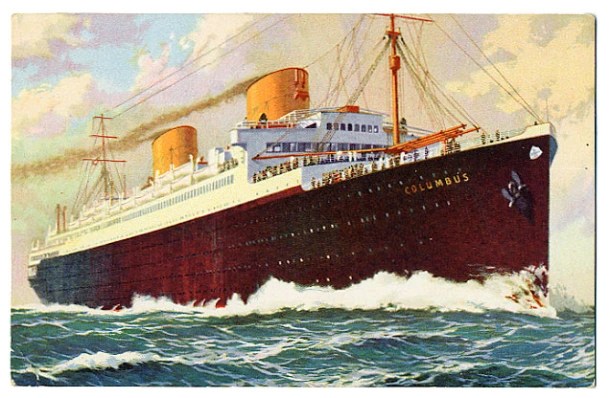
A few weeks later, he was on an ocean liner to the European continent. He wanted to see Paris, Rome and London. He might have flown on a plane and been there in a dozen hours, but he had always imagined himself on a mighty, ocean-going ship, and he couldn’t see it any other way.

He loved being at sea. It was everything he ever dreamed of. He was seasick on the first night out, but he refrained from eating dinner and the next morning he felt better than he had ever felt before. It was the beginning of a new life for him. He was casting off the old life like a snake shedding its skin.

He hadn’t spoken yet to any of the other passengers, but he studied them furtively and wondered what they were thinking. Some of them looked at him appreciatively and smiled knowingly. Surely they found him of some interest, or they wouldn’t bother looking at him at all.

The third night out he enjoyed a lavish dinner in the dining salon. When he was finished with his dinner, he didn’t feel like returning to his cabin alone, so he went into the bar and ordered a champagne cocktail. He found he was enjoying the music and the atmosphere, so he stayed for over an hour and had several drinks.

He returned to his cabin, more drunk than he had ever been in his life. As he switched on the lights and locked himself in, he wasn’t surprised to see his mother sitting in the chair beside the bed.

“Well, well, well!” she said in her raspy smoker’s voice. “What have we here?”

“Leave me alone, mother,” he said. “I’m enjoying myself and I’m just getting started”

“On my money!”

“It’s not your money anymore, mother. It’s my money now.”

“You’ve got a lot of nerve! Squandering my money! How much did this little trip of yours cost?”

“None of your business, mother. It doesn’t in any way concern you. You’re dead.”

“You’ll never be rid of me!”

“It’ll be easier than you think.”

“Why did you have me cremated? You know how I hate cremation!”

“I wanted to make sure you were really and truly gone.”

“I’m not gone! I’m right here beside you!”

“I want to show you something, mother.”

He opened his suitcase out on the bed and pulled out a modest-looking oblong box from underneath the pants and shirts.

“Do you know what this is, mother?”

She watched, fascinated, as he set the box on the bed and took off the lid, revealing a quantity of gray ash nestled in a plastic bag.

“This is you, mother! It’s you!”

“I think you’ve taken leave of your senses!”

“Not at all, mother. And do you know what I’m going to do with you? Come along with me and I’ll show you.”

Carrying the box of ashes, reeling from the liquor he had consumed, he left his cabin like a mad man and went out onto the deck. The wind was blowing and the sea was rough, but he was not to be deterred.

“Watch me now, mother!” he said. “This is where you and I part company!”

He lifted the plastic bag out of the box and began emptying his mother’s ashes over the railing. He leaned out a little too far and when the boat gave a little lurch he lost his balance and fell headlong into the sea.

He struggled to right himself in the frigid water. He emitted one pitiful little scream, but it was already too late. No one had seen him fall. No one heard him scream. The ship sailed on. The waves closed over his head. His absence was not noted for two carefree days.

Copyright © 2022 by Allen Kopp

Ramses, the Son of Light ~ A Capsule Book Review

Ramses, The Son of Light Book Cover
Ramses, The Son of Light
~ A Capsule Book Review by Allen Kopp ~

Egyptian Pharaoh Ramses II (also known as Ramses the Great) lived an astonishing ninety years, from 1303 BCE to 1213 BCE, about twelve hundred years before Christ. As Pharaoh, he was a builder of mighty monuments and an effective administrator. His father, Seti, was Pharaoh before him. Seti made Ramses his regent when Ramses was only fourteen years old, meaning he would be Pharaoh after Seti.

French writer Christian Jacq has written a series of six fictional books about the long-ago life of Ramses. The first book in the series is Ramses, the Son of Light. It’s about the early life of Ramses, from childhood into young adulthood. Though he was born into privilege, he did not have an easy life. There were always those who wanted to destroy him or marginalize him. His older brother, Shaanar, was his biggest rival and his greatest enemy. Shaanar saw himself as the future Pharaoh and would have done anything to remove Ramses from the scene, especially after it became clear that Seti wanted Ramses to succeed him.

Being regent meant that Ramses had to undergo many tests to prove that he could be an effective Pharaoh when the time came for him to ascend the throne. Not only would he have to deal with treachery and opposition in his own sphere, he would have to keep Egypt’s enemies at bay and do what needed to be done to avoid war.

Ramses was precocious, as one might expect, and manly in his teen years. He had a girlfriend, Iset the Fair, with whom he shared many passionate embraces, beginning when they were barely out of their teens. When it came time to marry, though, Ramses chose Nefertari as his blushing bride. A Pharaoh wasn’t limited to only one wife, so Iset the Fair became his number-two wife after Nefertari. With Nefertari he felt love, while with Iset the Fair he felt passion.

Ramses, the Son of Light is lightweight reading. It’s not a serious examination of a long-ago monarch or the time in which he lived. It’s what is called pop fiction instead of serious literature. Book two in the series, which I haven’t read, will be sure to pick up at the beginning of Ramses’ long and successful reign as Pharoah. There will be wars, there will be rivals, there will be intrigue, there will be dishonesty, there will be plenty of ugly and destructive human nature to go around.

Copyright © 2022 by Allen Kopp   

Swimsuit Optional ~ A Short Story

From the Shallow to the Deep image x
Swimsuit Optional
~ A Short Story by Allen Kopp ~

Gideon Sayers had just finished tenth grade and would move on to the eleventh when school took up again. He didn’t have any specific plans for summer, but he was looking forward to having plenty of time to himself and doing exactly as he pleased. His father would be at work all day.

On the very first day of summer vacation a girl from his class named Joyce Mahoney called him on the phone.

“I don’t think I remember you,” he said. “I can’t place the name.”

“What do you mean you don’t remember me?” she said. “You see me every day at school!”

“I’m not good with names,” he said. “Describe yourself.”

“Well, let’s see. I’m taller than most of the other girls. I have short brown hair. I’m not fat like a lot of the girls.”

“A lot of people fit that description.”

“I failed the Constitution test two times. I passed it on the third try.”

“Oh, yeah! You had a crying fit in American history class and you called the teacher an effing bastard.”

“That’s me!” she said. “If I had known I was going to have to describe myself, I wouldn’t have bothered calling.”

“Oh, that’s all right,” he laughed. “The thing with girls is that they all kind of blend together for me.”

“I can see this wasn’t a good idea,” she said.

“No, no, that’s all right! What was it you wanted to talk to me about?”

“Next week is Christine Swanson’s seventeenth birthday and we’re having a pool party at my house to surprise her.”

“I didn’t know you had a pool.”

“There isn’t any reason why you should.”

“Who did you say the party is for?”

“Christine Swanson.”

“I don’t think I know her.”

“Gideon, you are impossible!”

“Can you describe her for me?”

“She’s only the most popular girl in school! She’s a cheerleader. She was yearbook queen. Her picture is absolutely everywhere.”

“Oh, yeah, I think I’ve heard or her. What about her?”

“We’re having a pool party for her at my house.”

“I didn’t know you had a pool.”

“We’re calling everybody in drama club. We didn’t want to leave anybody out.”

“I’m not in drama club.”

“That’s funny. Your name is on the list.”

“I’m not in drama club.”

“Well, somebody made a mistake, I guess.”

“Now that you’ve invited me, do you want to uninvite me?”

“No, I made the mistake of inviting you, so the invitation still stands, I suppose.”

“That’s awfully sweet of you, Janet, but I don’t really know how to swim.”

“It’s Joyce. My name is Joyce.”

“Oh. Right. I forgot for a moment to whom I was speaking. As I was saying, I’m not a swimmer. I don’t know how to swim.”

“That’s all right. Nobody knows how to swim. We just splash around in the water. The boys try to drown each other. There’s a diving board but nobody knows how to dive—they just jump off into the water. There’ll be water volleyball, music and lots of food.”

“I don’t know how to play water volleyball.”

“It doesn’t matter. Anybody can play.”

“Would I need to wear a swimsuit?”

“We have a swimsuits-optional policy.”

“What does that mean?”

“It means you can swim naked if you have the nerve.”

“And what day is that?”

“Thursday next week.”

“What time?”

“Three o’clock.”

“Um, hold on a minute! I have to check my social calendar.”

He kept her hanging on for five minutes or more and when he went back to the phone, he said, “Janet, are you still there?”

“It’s Joyce.”

“Oh, yeah. Sorry. Joyce. Well, I’m sorry, Joyce, but I won’t be able to come that day. I’m having abdominal surgery.”

“Oh. I see. I didn’t think you’d come, but I thought I’d try anyway since your name is on the list.”

“Well, thank you so much for the call. It was lovely speaking with you.”

“Yeah, you too. Good luck with your surgery.”

As he was hanging up the phone, his father came into the room, reeking of aftershave.

“Who was that on the phone?” his father asked.

“A girl from school. Joyce somebody-or-other. She invited me to a pool party at her house.”

“Are you going?”

“I haven’t decided yet.”

“I think you should go. You’ll have fun. You shouldn’t stay at home all the time by yourself.”

“I like being by myself.”

“I’m going away on business for a few days, until at least Monday or Tuesday. I want you to go stay with Aunt Vivian.”

“I hate staying with Aunt Vivian. I want to stay here.”

“I don’t feel right about leaving a child alone in the house that long.”

“I’m not a child. I’m almost seventeen. I’ll be in eleventh grade.”

“You’re not afraid here by yourself?”

“Of course not!”

“I can trust you to behave responsibly?”

“Of course you can!”

“And if there’s an emergency involving fire?”

“I’ll call the fire department. And if there’s an emergency involving crime, I’ll call the police department.”

“Good. I think we understand each other.”

“I’m going to need some money.”

“What for?”

“A swimsuit.”

“Of course. For the swimming party. How much do you need?”

“I don’t know. I never bought a swimsuit before. I guess about fifty dollars should cover it.”

His father took two fifty-dollar-bills out of his wallet and placed them carefully on the coffee table.

“I don’t want you drinking beer. High school boys seem to think it’s grown-up to drink beer.”

“You don’t have to worry about me. Drinking beer doesn’t interest me.”

His father jangled his keys, picked up his suitcase by the front door, waved goodbye, and then he was gone.

Before his father’s car was all the way out of the driveway, Gideon went to the phone and called his friend David Deluca. David was one of the few people in school with whom he had anything in common. Their hatred for algebra was only exceeded by their hatred for gym class.

“How are you, old friend?” Gideon said cheerily into the phone.

“Fine,” David said. “Who is this?”

“It’s your best friend Gideon Sayers.”

“Oh, yeah. Hi.”

“What’s new and different with you today?”

“My mother is finding jobs for me to do around the house.”

“Why don’t you sneak out and come over?”

“Why would I do that?”

“My father is gone and I have the whole house to myself.”

“I don’t think so, Gideon. If I left now, it would only get her started. Once she gets started, she doesn’t stop.”

“I don’t have a mother.”

“I know. She killed herself.”

“Well, you don’t have to sound so happy about it!”

“I’m not. It’s very sad.”

“Well, I’ve invited you. Are you going to accept the invitation or not?”

“I don’t think so, Gideon. I’m kind of tired.”

“You’re sixteen years old! How can you be tired?”

“My blood sugar is low.”

“Well, eat a Snickers bar and come on over.”

“I don’t think so, Gideon. I have eczema on my feet. It makes walking painful. We’ll make it another day.”

“Well, suit yourself. I had something I wanted to tell you, but now I’ll just keep it to myself.”

“What is it?”

“Joyce Mahoney called me this morning.”

“She called me, too. She’s calling everybody. She’s trying to get a big crowd at her swimming party next week.”

“Oh. She called you too?”

“Yeah, she called me too.”

“Well, are you going?”

“Sure. Why not? I think it’ll be fun. If I’m not having a good time, I can always say I have a funeral to go to and leave.”

“Are you going to swim naked?”

“I don’t think so. I have some new swimming trunks from Brazil. They’re yellow with a red stripe up the side. I want everybody to see me in them.”

“You’ll drive the girls wild, especially the fat ones.”

“How about you? Are you going to swim naked?”

“I’m not going. I told Joyce I’m having abdominal surgery that day.”

“You are such a liar!”

“Well, I had to think of something quick. That was the only thing that came to mind.”

“You should go, you know, and stop being such an old nelly. I think it’ll be fun. I’m going to borrow my brother’s car. If you want, I can stop by and pick you up and we can arrive at the party like a couple of big men on campus.”

“I don’t think so. I already told Joyce I’m not coming.”

“Call her back and tell her you are coming. Tell her your surgery has been postponed until an appropriate donor can be found and you’d be thrilled to come!”

“I don’t know, David. I feel kind of funny doing that.”

“Do you want me to call her for you?”

“No, I’ll do it. I need to think about it first, though.”

“What’s there to think about?”

“I don’t know. It’s just the way I am.”

The next day he walked downtown with his father’s two fifty-dollar bills in his shirt pocket. He went to the clothing store where his mother always bought his school clothes and found the men’s swimwear department. He selected several swim suits, size small, that he wouldn’t be too embarrassed to wear in public. He took the swimsuits into the changing room, quickly, before he met somebody he knew.

After checking the door of the changing room three times to make sure nobody could get in, he took everything off except his underpants and, standing before the mirror, began trying the swimsuits on. A yellow plaid was pleasing to the eye, but it made him look like a clown. A light-blue would have been acceptable but, when he saw it was slightly transparent, he ripped it off. A white one that hung down almost to his knees made him look like an old man and, anyway, white would show stains. He finally settled on a red one, not too tight and not too baggy, that he could see himself wearing in front of his whole class. It only made him look slightly ridiculous, instead of completely ridiculous. Well, he reasoned, he wouldn’t look any worse than a lot of other people.

When he got back home from his successful shopping trip, he felt emboldened to call Joyce Mahoney and tell her he was wrong about the day of his abdominal surgery and would be happy after all to attend the pool party.

Joyce answered on the first ring.

“Hello?” Gideon said. “Is that you, Joyce?”

“Yes, it is. Who is this?”

“This is Gideon.”

“Gideon who?”

“Sayers.”

“Do I know you?”

“From school?”

“Um, I don’t seem to remember you. Can you describe yourself?”

“Look, Joyce, I know why you’re doing this.”

“Doing what?”

”Pretending not to know me.”

“I’m terribly busy,” she said. “I’m going to have to hang up now.”

“I just wanted to ask you a question.”

“What is it?”

“It’s about your pool party.”

“What about it?”

“I was wondering if it would be all right if I change my mind and accept your invitation after all.”

There was a silence on the line, making Gideon wonder if she had hung up.

“What did you say your name is?” Joyce asked.

“Gideon Sayers.”

“Do I know you?”

“I’m in your class at school.”

“I don’t want to be mean, Glenn, but your name wasn’t on the invitation list.”

“It’s Gideon. Not Glenn.”

“Oh, yeah. Sorry. I don’t mean to hurt your feelings, but I don’t know who you are.”

“You just called me yesterday and invited me to your party!”

“Are you sure it was me?”

“Of course it was you! Don’t you remember talking to me?”

“No, I don’t! It must have been somebody playing a trick on you.”

“It’s all right, Joyce. I know what you’re doing. Just forget I called.”

“I have to go now,” Joyce said. “It was lovely speaking with you.”

After his phone conversation with Joyce had ended, he went upstairs to his room and closed the door and locked it, even though he was alone in the house. He took off all his clothes and took the red swimsuit out of the bag and pulled it on, up his legs and over his thin thighs. After tugging the swimsuit into place, he turned and looked at himself in the full-length mirror.

It was worse even than he thought. He looked like a hairless monkey, all joints and angles, his skin as white as paste. He was meant to always be clothed. He looked so ridiculous that he couldn’t keep from cringing.

“I can’t let anybody see me like this!” he said.

He took the scissors and cut the red swimsuit into strips, relieved he would never have to wear it where anybody could see him. And after he was finished, he left the strips of red material on the floor around his bed to remind himself just how close he had come to making a complete fool of himself.

Copyright © 2022 by Allen Kopp