The Third Day of Winter ~ A Short Story


The Third Day of Winter image 4
The Third Day of Winter
~ A Short Story by Allen Kopp ~

(This short story has been published in Offbeat Christmas Story and The Literary Hatchet.)

They had a little party at work, complete with cake and champagne (Here’s to another successful year!), and then everybody was allowed to leave for the day. It was the day before Christmas and nobody had to be back to work for three days. What a festive mood the downtrodden workers were in! There was dancing on tabletops, furtive kissing in corners, drunken laughter.

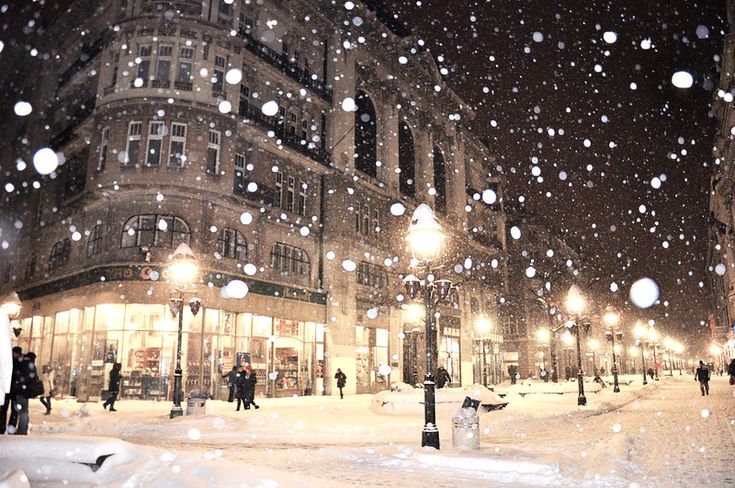
As Vesper left the office, it was just beginning to snow so she decided to walk home instead of taking the bus. She had always liked snow, especially at Christmastime, and had seen too little of it in recent years. She stopped on the way home at a little market and bought a dozen oranges and a small box of chocolate-covered cherries. As she was paying for her purchases, the old man behind the counter gave her a sprig of mistletoe.

When she reached her building, she felt agreeably fatigued and slightly frostbitten. As she climbed the stairs to her third-floor apartment, she couldn’t help noticing how quiet the building was. The usual loud voices, TVs, crying babies and yapping dogs were absent. She seemed to be the only tenant who hadn’t gone out of town for the holiday.

She unlocked the door, kicked off her wet shoes and hung up her coat. It was just beginning to get dark outside so she turned on all the lights. She tied a ribbon around her mistletoe and hung it in the doorway between the kitchen and the living room; plugged in the lights on her little artificial Christmas tree that was made to look real but wasn’t fooling anybody with its brown-and-green plasticity. She stood back and admired the comfort, the appeal, of her little home. It was the first home she had ever had that was hers and hers alone without belonging to somebody else.

“I’m really very lucky,” she said to herself as she stood in the middle of the room.

Already she was missing her friend Marlene at work, even though she had just left her a short time earlier. She wanted to call her and tell her about walking home in the snow and about the mistletoe. She knew that Marlene would enjoy hearing those things and would laugh at them in her usual way.

She went to the phone, not to call Marlene—she would be busy now with family—but to call somebody else.

“Hello?” she said when she heard her mother’s voice, sounding very faint and far away.

“Who’s that?” her mother said.

“It’s Vesper.”

“Is anything wrong?”

“No. I just got home from work and I wanted to call you and wish you a merry Christmas.”

 “You know I don’t go in for that stuff very much.”

“I know. Did you get the silver pin I sent you?”

“Yes, I got it.”

“I thought it would look good on your black coat.”

“Oh, I don’t have that coat anymore. It was a little too funereal for me.”

“It was a beautiful coat.”

“If I had known you liked it so much, I would have given it to you.”

“It doesn’t matter. How’s Stan?”

“We’ve separated. I haven’t seen him since summer.”

“Are you getting a divorce?”

“Oh, I don’t know. There’s a new man in my life now. His name is Milt. He’s talked about marrying me, but I don’t think I want to get married again. I’ve been down that road too many times.”

“Any news of Weston?”

“Nothing, except that he’s living the bohemian life and wants nothing to do with his family.”

“When you see him, tell him I said hello.”

“I will, dear. I really have to run now. I’m meeting some people for dinner. I have a terrible headache and don’t really feel like going out, but I said I’d go and I don’t want to break my word.”

“All right, mother. Goodbye.”

As Vesper hung up the phone she was aware of the hurtful omissions in the conversation. Her mother hadn’t bothered to ask her how she was or what plans she had for Christmas, if she had someone to spend it with or if she was going to be alone. Those things wouldn’t occur to her—she simply didn’t bother herself too much with her grown children. She had delivered them safely to adulthood and that’s all that anybody could reasonably expect.

Vesper went into the kitchen to see what she might dig up for dinner, but the prospect of having the usual everyday fare on Christmas Eve and then dozing on the couch in front of the TV until time to go to bed was suddenly dismaying to her. She didn’t have to do what she always did, just because she always did it. She could make Christmas Eve into something special, even if she did have to spend it alone.

She went into the bedroom and changed her clothes quickly before she gave herself the chance to change her mind. She made herself ready to go out again (boots, scarf, gloves, coat) and turned off all the lights except for one small lamp beside the door.

She began walking, not knowing for certain where she was going. The snow had accumulated to three or four inches and was still coming down, the wind blowing it along the sidewalk and causing it to drift along the building fronts. Nothing made it seem more like Christmas.

Two blocks from her building she came upon two men, an older and a younger one, standing with their hands over a barrel in which a small fire burned. Both men looked down into the barrel, but when she passed near them they turned and looked at her. The older man was the nondescript sort that one sees on the street every day, ragged and undernourished. The younger man was thin, medium-tall and sturdy-looking. He wasn’t wearing a hat (in the light from the fire his hair had a reddish tint) and he wore an enormous overcoat that went down past his knees, with the collar turned up to partly cover his ears. On his cheek was a crescent-shaped scar as if once, long ago, he had been gouged by a shard of glass or the blade of a knife. These details about him registered on her brain in the few seconds she looked at him and then she looked away.

She came to a brightly lighted drugstore and stopped and looked through the frosty window at the rows of displays and the people moving about as if they were underwater. After a moment of indecision, she went inside, passing a perfume display over which two fat women were talking loudly, and went to a rack of magazines in the back. She picked up a magazine, thumbed through it and put it back.

The wall behind the magazine rack was a mirror. As she reached out her hand to put a magazine back on the rack where she had found it, she saw the reflection of a man in the mirror. He was half-a-foot taller than she was and standing behind her, to her right, as though looking over her shoulder. Thinking herself in the way, she stepped aside to give the man more room and that’s when she realized it was the same young man with the scar on his face who had been standing over the fire in the barrel. She felt embarrassed at the thought that he might speak to her, so she left the drugstore and went back out into the freezing night.

She walked on from the drugstore for a block-and-a-half and when she had to stop at a corner with a clot of other people to wait for the light to turn, she took a quick glance over her shoulder to see if the young man had come out of the drugstore after her. She didn’t see him, so she was sure he wasn’t following her. Why would she have ever thought he was?

A little restaurant with the smell of garlic and twinkling lights in the window attracted her attention. It was a place that ordinarily would have been too expensive for her, but she was tired of walking and went inside.

The lights in the restaurant were very dim, giving the place a dreamlike quality after the snowy street. A smiling waiter seated her at a small table near the front and helped her remove her coat. He handed her a menu and when she seemed to be having trouble making up her mind, he suggested fried calamari and polpette di baccala. She didn’t know what it was but readily acceded to his suggestion anyway. Since it was Christmas, she was glad to be able to order something unusual and exotic that she could tell Marlene about.

When the waiter asked her if she wanted a bottle of wine, she said yes and as soon as he brought it she started drinking copious amounts of it and eating delicious garlicky breadsticks out of a little basket while she waited for her food.

The food was very much to her liking but what she liked most was the wine. She ended up drinking the entire bottle before, during and after the meal.

When all the food on her plate was gone, she felt happy and fortunate, happy to be alive and fortunate to have a good-paying job that would allow her to have an extravagant meal on a special occasion. She thanked the waiter effusively, gave him a more-than-generous tip, and wished him a merry Christmas. He helped her into her coat and opened the door for her as she left.

In the next block she slipped on an icy spot on the sidewalk and fell sideways into a pile of snow, unhurt, but attracting some unwelcome attention. As a small crowd of people gathered around to see if she was all right and to help her to stand up again, she saw coming toward her the man in the long coat with the scar on his face. Someone blocked her view for a few seconds and when the way was clear again he was gone. Was she seeing people who weren’t really there? It must have been a result of drinking all that wine.

It was not late at all for Christmas Eve and, in spite of the snow and cutting wind, she wasn’t ready to go home just yet. She would make a night of it. She would have lots to tell Marlene and her other friends at work how she spent Christmas Eve while they were all with their families. They wouldn’t exactly envy her but would admire her for having a good time on her own without having to depend on somebody else.

Four or five blocks farther on was the Odeon movie theatre. She was delighted to see that the show was just about to begin. She paid her admission and went inside and took a seat in the orchestra among a handful of other people. She dozed during the previews of coming attractions and a featurette about a Christmas tree farm, but when the feature began she was fully awake.

In the feature presentation, a woman named Mildred was released from a mental hospital at Christmastime. She had to become reacquainted with her children because she had been away so long they almost forgot she existed. She tried to resume her role in life as wife, mother and society hostess, but she had terrible nightmares and hallucinations that showed she should never have been released from the mental hospital at all. What was even worse, though, was that her fifteen-year-old daughter, Veronica, was showing signs that she had inherited Mildred’s mental illness. She would put her dress on backwards without even knowing it and stand up during mealtimes and scream there were Martians on the roof. These were the exact same things that Mildred had done that caused her to be sent to the mental hospital in the first place when Veronica was in grammar school.

When the picture was over, Vesper sighed heavily, put on her coat and went back out into the cold. She was feeling tired now and the movie, although she had enjoyed it, made her feel like crying. It had been a lovely evening, though.

It was nearly eleven o’clock. The snow had stopped but it seemed colder now because the wind was blowing. When she thought of the long way she had to walk to get back home, she wished she was already there, relaxing in her pajamas, drinking hot chocolate and listening to Christmas music on the radio.

The streets that had been so crowded before were almost deserted now. Everybody had gone home to celebrate Christmas. A drunk stepped out of the shadows and asked her for a dollar but she sidestepped him and kept going without looking back.

Two blocks from her building she came upon two men, an older and a younger one, standing with their hands over a barrel in which a small fire burned. Both men looked down into the barrel, but when she passed near them they turned and looked at her. The older man was the nondescript sort that one sees on the street every day, ragged and undernourished. The younger man was thin, medium-tall and sturdy-looking. He wasn’t wearing a hat (in the light from the fire his hair had a reddish tint) and he wore an enormous overcoat that went down past his knees, with the collar turned up to partly cover his ears. On his cheek was a crescent-shaped scar as if once, long ago, he had been gouged by a shard of glass or the blade of a knife.

As she walked past these two men, looking straight ahead, the younger man disengaged himself from the older and began following her. She didn’t hear  a sound—his footsteps in the snow were silent—but she knew, she felt, that he was a few paces behind her.

She came to her building and climbed the stairs to the third floor, opened the door with her key, let herself in, and reclosed the door without locking it.  Without turning on any lights, she went to the window overlooking the front of the building and looked down. Standing there in the snow, looking up at her, was the young man in the long overcoat with the crescent-shaped scar on his cheek.

She wrote on a piece of note paper from beside the phone these words: Come up, apartment 320. She wadded the paper into a little ball and opened the window just wide enough to insert the ball of paper and let it drop to the ground. She stood there in the dark and watched the man approach the paper, pick it up and read it. She took a couple of deep breaths and in a few seconds she heard his footsteps on the stairs, exactly in time to the beating of her own heart.

Copyright © 2025 by Allen Kopp


My Christmas Eve That Year ~ A Short Story

I Want to Spend Christmas with You
My Christmas Eve That Year
~ A Short Story by Allen Kopp ~ 

My parents got their divorce the summer I was fifteen and sold the house we lived in. My mother, my little brother, and I moved into a small, four-room flat in an old apartment building downtown. It was on the fifth floor and there were no elevators, so that meant we were constantly walking up and down the stairs.

The flat wasn’t big enough for me to have my own room, so we moved my bed into a little space off the kitchen, which was originally meant to be a pantry. It was tiny and cramped, but the best thing about it was that I had my own window with a good view of buildings and trees far off in the distance. I liked to lay in bed at night and look out at the sky. The best nights were when there was a full moon. When there were thunderstorms, it felt like the lightning was going to come in through the window and zap me into oblivion.  

Now it was Christmas again, or almost. Our first Christmas in the apartment. Our Christmas tree stood in the corner of the front room, aglow with multi-colored lights and loaded down with tinsel and ornaments, stacks of presents beneath its branches. A sprig of holly hung in the doorway into the kitchen. On the front door was a wreath that would probably be stolen before Christmas morning ever arrived.

My little brother Georgie, age six, jumped up and down on the couch and screamed. He was wholly invested in Christmas. It was snowing out, he didn’t have to go back to school until after New Year’s, and he believed that Santa was going to be especially generous with him this year.

“You’d better calm down,” I said. “Santa will pass you by if he gets word that you’ve been bad.”

“I haven’t been bad!” he screeched.

My mother came in from her bedroom, where she had been putting on makeup and fixing her hair. She was afraid I was going to divulge the great secret that Santa doesn’t really exist.

“What did you just say to him?” she asked, looking at me threateningly.

“I didn’t say anything,” I said. “I just told him he’s giving me a headache.”

“Get down from there, Georgie! You know you’re not supposed to use the couch as a trampoline! The couch is for sitting, not for jumping.”

“All this Christmas stuff is making me puke,” I said. “A person can only take so much.”

“Well, it’s too bad you’ve forgotten what it’s like to be excited about Christmas,” she said. “I guess you’ve grown too sophisticated for your family.”

“He’s grown too sophisticated!” screamed Georgie.  

“Shut up!” I said.

“When do we get to open the presents?” Georgie screamed.

“For the eighty-seventh time, we will open the presents on Christmas morning after we’ve had a good breakfast.”

“Why do we have to wait so long?”

“Because I said so, that’s why!” She sat on the other end of the sofa and patted her hair in back.  

“I want to open one now!”

“No! We’ve been all through that a dozen times. You have to wait like everybody else.”

“Tomorrow’s Christmas and we haven’t heard anything from daddy yet,” I said.

“No, and you probably won’t, either. He’s probably laying up in some hotel room, drunk as a skunk.”

 “Drunk as a skunk!” Georgie screamed.

 “I thought he’d send at least send us a present.”

 “You’re old enough to know you can’t count on him for anything.”

“We always had a good Christmas with him,” I said.

“I know, but those days are over. Your daddy is out of the picture now. He was the one that wanted the divorce.”

“I’m going to the movies tonight,” I said. “It’s a Christmas Eve horror double feature.”

“I don’t care what it is,” she said. “You’re not going to the movies on Christmas Eve. You’re going to spend the evening with your family.”

“But I’m meeting someone.”

“Call whoever it is and tell them you can’t make it.”

“Is he going to be here?”

He has a name, you know.”

“Is Regis going to be here?”

“Yes, he’s going to be here in time to eat dinner with us and later we’re all going to church.”

“I don’t feel like going to church.”  

“You feel like going to the movies but you don’t feel like going to church?”

“Church gives me a headache.”

“You’re insane.”

“If I am, I get it from you. Insanity runs in your family.”

“I think Regis is going to ask me to marry him.”

“Why would you want to marry Regis?”

“Why shouldn’t I marry him? He’s the sweetest, kindest man I’ve ever met and he’s got a good job.”

“He sells washing machines in an appliance store.”

“Someday he’ll be manager. There’s really good money in that.”

“What about daddy?”

“What about him?”

“You’re going to marry Regis without telling daddy first?”

“You’re a smart boy, but you just don’t seem to understand. There is no longer any connection between me and your daddy. We are kaput!”

“What does that mean?”

“Your daddy and I are finished with each other. All ties are severed.”

“All ties are severed!” Georgie shrieked.

“If you marry Regis, does that mean we can move out of this crummy apartment?”

“Not right away. Regis will probably move in here with us. His business hasn’t been so good lately. He’s a little strapped for cash at the moment. He expects things to pick up next year, though.”

“If Regis moves in here with us, I’m moving out.”

“Why don’t you like Regis?”

“He belongs to a bowling league.”

“A lot of men belong to bowling leagues.”

“He’s old!”

“He’s forty-three.”

“He wears cologne that smells like bug spray.”

“I’ll get him to stop wearing it after a while.”

“He has hairs sprouting out of his ears. Haven’t you ever noticed that?”

“Of course, I’ve noticed it. His grooming isn’t the best. That’s because he lives alone. All that will change after we’re married.”

“I think you should check with daddy first before you marry Regis. He might want to come back. If you marry Regis, it’ll be too late.”

“Your daddy is not coming back. Ever.”

“You might be surprised.”

“It’s time for you to face reality.”

“I am facing reality and I don’t like it.”

“I think I see Santa way up in the sky over there,” Georgie said, standing at the window.

“You’re hallucinating again,” I said.

“It’s too early for Santa,” mother said. “He won’t come until we’re all asleep. He doesn’t like for people to look at him.”

“I can certainly see why,” I said.

“I hope he remembers everything I wanted,” Georgie said.

Mother went back into the bedroom and in a little while came back out in her red Christmas dress that in my opinion was too tight. She had dowsed herself in perfume. When she saw me lying on the couch staring at the ceiling, she decided I needed something to do.  

“I want you to go down to Friedlander’s market and buy a carton of eggnog for tonight,” she said, digging in her purse for some money. 

“I don’t like eggnog,” I said.

“Well, are you the only one here? Regis says it’s not Christmas without eggnog.”

“Regis says. Regis says. What else does Regis say?”

“Can I go to the store, too?” Georgie asked excitedly.

“No! You stay here and help me wrap Regis’s present.”

“Regis, Regis, Regis,” I said as he went out the door. “He’s certainly a big man around here, isn’t he?”

The snow was falling heavier now. Cars made hissing sounds on the pavement as they passed by. Last-minute shoppers were still keeping the stores busy. With the setting of the sun, Christmas Eve had officially arrived.

The store only had one carton of eggnog left, so I grabbed it and went and stood in the long line to pay. When the cashier smiled at me and wished me a merry Christmas, I gave him a sour look.   

When I got back home, Regis had arrived with presents for all of us. He was throwing Georgie up near the ceiling and then catching him on the way down. Georgie squealed with delight. Mother stood at the stove and beamed her approval.

Regis had brought Georgie a stuffed elephant and some other toys. My present from him, still wrapped in a big box with a red bow, was at my place at the table. Before I sat down, I picked up the box and set it on the floor.

“Aren’t you going to open your present from Regis?” mother asked.

“I’ll open it later. I have a headache now.”

When we were all seated at the table, mother insisted we join hands while Regis said grace. Regis’s hand felt clammy and unclean in mine. When he finally let go, I wiped my hand back and forth along my leg before I touched any food.

While we ate, I could see that mother was wearing a diamond engagement ring. This, of course, would be her Christmas present from Regis. So, it was official, then. He had proposed and she had said yes.

Regis talked about his day at work and laughed while we ate. Mother didn’t say much. Georgie kept looking out the window for signs of Santa. When Regis seemed to have run out of things to say for the moment, mother looked at me and said she had something she wanted to tell me and Georgie.

“What is it?” I asked with a sick feeling.

“Regis has asked me to be his wife and I’ve consented. We’re going to be married on New Year’s Eve.”

“What’s the rush?” I asked.

“I think it’s so romantic to be married on New Year’s Eve,” she gushed. “It will be a new start of a new year for all of us.”

She turned and looked at Regis. There were tears in her eyes. Regis took hold of her hand and pulled her in for a kiss. I knew he was getting ham grease all over her.

“I think I hear Santa’s sleigh outside!” Georgie said.

After we finished eating, mother told me to go put on my dress pants and a white shirt for church. She would help me with my tie before we left for church.

Except there wasn’t going to be any church for me. I grabbed my coat and hat and ran out the front door before she had a chance to see what I was doing.

The snow must have been five or six inches by that time. I still had on my tennis shoes and I could feel the snow soaking through to my socks after a few steps, but I didn’t mind. I needed to talk to daddy.

I knew that Colson’s Drug Store, about four blocks down from where we lived, had a pay phone. I had a pocket full of change especially for that purpose.

Right after the divorce, daddy gave me his private number where I could reach him any time. If I ever needed him, all I had to do was give him a call.

There were a lot of people at Colson’s, mostly at the pharmacy counter. Nobody paid any attention to me as I went all the way to the back, where the pay phone was.

I was sure he would answer. He would probably figure it was me calling on Christmas Eve.

The phone rang ten or twelves times, but finally he answered.

“Hello,” a little groggily.

“Daddy?” I said. “Is that you?”

“Who is this? Is this Evan?

“Yeah, it’s me. Evan.”

“I couldn’t hear you very well at first.”

“Can you hear me better now?”

“Yeah, I hear you fine now.”

“Well, since it’s Christmas Eve, I wanted to call and wish you a merry Christmas.”

“Merry Christmas to you, Evan!”

“Do you know where we’re living now?”

“No.”

“In an apartment downtown, on the fifth floor of an old building.”

“I’ve been wanting to come and visit you and Georgie, but I wasn’t sure where you were living. How’s Georgie?”

“He’s fine. Waiting for Santa to bring him everything he asked for.”

“Where are you now?”

“I’m in Colson’s Drug Store, near where we live. Do you know where that is?”

“Yeah, I’ve been to Colson’s a few times. Don’t you have a phone in the apartment?”

“We do, but I didn’t want mother to know I was calling you.”

“How is your mother?”

“She’s fine, but she’s the main reason I wanted to talk to you.”

“She’s not sick, is she?”

“No, she’s not sick. She’s getting married on New Year’s Eve.”

Daddy was silent for a moment and then he laughed. “Who is she marrying?”

“His name is Regis. He’s a creep. He smells funny. I don’t like him.”

“Maybe that’s because you don’t know him very well.”

“I want you to come and get me.”

“What?”

“I said I want you to come to Colson’s Drug Store and get me. I want to spend Christmas with you.”

“Wait a minute, Evan! I’m afraid that’s not possible. I’m not living in a very nice place. I don’t even have a tree.”

“That’s all right. I don’t need a tree.”

“If your mother doesn’t know where you are, she’ll be worried.”

“I’ll call her from your place.”

I started to cry like a blubbery crybaby. I hadn’t meant to cry, but I couldn’t seem to help myself.

“Is it that bad?” he asked.  

“Mother just isn’t herself. I don’t want to be around her. She acts like Regis is some kind of a god. They make me sick.”

“All right. If it’s that bad, I’ll come and get you.”

“How long? How long will it take?”

“Give me a half-hour or so.”

“Colson’s Drug Store. I’ll be waiting outside for you.”

It was still snowing, harder than ever now, but I didn’t mind waiting in the snow for a half-hour. People coming in and out of Colson’s looked at me and then looked away. Maybe some of them thought I was going to try to rob them. I tried leaning back against the building, crossing my legs and putting my hands in my pockets. I tried to look casual, but I felt conspicuous. 

I wasn’t sure what kind of car daddy would be driving, but I looked at every car. One of them would be him.

The half-hour passed and then an hour and then two hours. I was determined to wait as long as it took. I would wait all night. I would still be waiting on Christmas Morning if I had to. My fingers and toes were numb. I could no longer feel them. I wasn’t sure if they would ever work right again or not. I didn’t much care.

Copyright © 2025 by Allen Kopp

The House He Lived In ~ A Short Story

The House He Lived In image 1

The House He Lived In
~ A Short Story by Allen Kopp ~ 

Sid Bone was small for his age. He was the boy in school with the funny clothes: the pants too big and the sweater too small, the shoe with the flapping sole and the holes in his socks. His classmates never invited him to any of their parties because he wasn’t the party type and, anyway, he had a funny smell.

Sid Bone would never grow to manhood. When he was twelve, his liquor-addled mother gave him sleeping pills to make him unconscious and then she wrapped an electrical cord around his neck and strangled him. She just couldn’t take care of a twelve-year-old boy anymore, she said. It cost too much money to feed him and just having a kid underfoot all the time wore on her nerves. Without him, she’d be able to get her life in order, get off the booze, find a decent man. Then, later on, when everything was jake, she’d have another baby and they’d all be happy. Maybe the new one would be a girl who would take care of her in her old age.

After she sobered up a little, she was sorry for what she had done to Sid Bone. She would never have had the courage to do it if she hadn’t been drunk. She sat in her easy chair and blubbered and wailed for a while. Since there was no one to hear her, she let loose with some anguished screams. After she had cried herself out, she gave a little laugh, peed in her pants because she couldn’t get up, and reached for the bottle again.

After a day and a night spent in the chair, drinking and feeling bad about her terrible life, she made herself get up and go into the bathroom and clean up, wash her face, comb the mats out of her hair and put on some clean clothes. She was going to have to call the police. They would send someone out. She needed to make herself look decent and presentable.

She had the story straight in her head. She worked out all the details. Her boy, Sid Bone, had met with a bad accident. She had been sick, sleeping in the other room; she didn’t hear a sound and she wasn’t even sure what happened. When she found him lying on the bed, unconscious, she tried to revive him, but, of course, it was too late. He must have done himself in because the kids at school laughed at him. There could be no other explanation.

For a while, several days at least, Sid Bone didn’t realize he was dead. He woke up in the morning and sleepily went to school as he always did. He thought it was a little funny that his mother wasn’t in any of her usual places, on her bed or sitting at the kitchen table, but he didn’t mind her not being there; he could manage fine on his own without her.

At school, he sat at his desk all day long, as he always did, doing what he was supposed to do: listen to teacher talk, copy problems off the blackboard, read this or that book, get up for recess or lunch. Then when school ended, he walked home as he always did. The next thing he knew, he was getting out of bed in the morning to start his day all over again. He had no recollection of anything in between.

On the fourth day, Sid Bone knew something was different; something had changed. Somebody new was sitting at the desk he had occupied all year. When he went to the front of the room and tried to ask teacher about it, she didn’t seem to see him but instead looked right through him. He turned around and faced the room at large, thirty-two of his classmates, and screamed Hey! in his loudest voice, but nobody looked up or turned their heads in his direction. It was if he no longer existed.

Not knowing what else to do, he went upstairs to the nurse’s office. Miss Faulk should be able to look at him, touch his head and tell what was wrong. She was better than any doctor.

Miss Faulk wasn’t in her office, though. The only person there was a woman he had never seen before, sitting at Miss Faulk’s desk, writing. When he paused in the doorway, she looked up at him and motioned for him to come into the room. He was a little relieved to know that somebody was seeing him, even if it was somebody he didn’t know.

“I’ve been waiting for you,” the woman said, standing up and coming around to the front of the desk. He saw that she was quite short and her face was crisscrossed with tiny lines like a road map.

“You have?” he asked, genuinely surprised. “Do you know me?”

“Well, I know of you. I’m Miss Munsendorfer. I used to be a teacher here a long time ago.”

“In horse-and-buggy days?”

“Not quite that long ago. We had cars then.”

“I was looking for Miss Faulk.”

“She’s not here right now, but I am here.”

“I wanted to see if Miss Faulk could take my temperature or something and see if I might be sick.”

“I think I can tell you you’re not sick.”

“How do you know?”

“You’ll never be sick again.”

“How do you know?”

“You don’t need to come to school anymore, either.”

“Why not?”

“I don’t know how best to explain it to you, so I’ll just show you.”

She took him by the hand. Before he knew it, they were outside on the playground and then they were walking down the hill away from the school. Then, in the beat of a heart and the blink of an eye, they were in the church on Windsor Avenue.

“What are we doing here?” Sid Bone asked.

“You’ll see,” Miss Munsendorfer said. “Just be patient.”

The church was full of people, a funeral in progress. There was a closed casket at the front of the church draped in yellow-and-white flowers. All the people in the church looked solemn. Some of them dabbed at their eyes. An old man, a minister, was standing at the pulpit talking about evil in the world and how the only way to accept it is to recognize it as part of God’s plan. The words coming from the minister’s mouth sounded funny as if they were being spoken underwater.

Just when Sid Bone was looking out over the sea of faces in the church, picking out the ones he knew, Miss Munsendorfer touched his hand again and they were outside, moving away from the church and, once again, before he knew what was happening, they were in a different place: they were standing on the street where he lived.

The street was there, of course, but the falling-down house that he lived in with his mother was gone, as if by magic. In its place was bare dirt; even the junk and debris in the yard were gone.

Sid Bone was beginning to catch on. He wasn’t especially surprised the house was gone; he would have been more surprised if it had still been there.

Miss Munsendorfer again took him by the hand and, again, in the beat of a heart and the blink of an eye, they were standing in the hallway of the women’s penitentiary two hundred miles away.

“What is this place?” Sid Bone said. “I don’t like it here.”

Miss Munsendorfer pointed into one of the cells. When Sid Bone turned his head and looked, he saw his mother in the cell, sitting on the bed. She looked a human wreck: dejected, wretched, forlorn. He turned away before he started to cry.

Miss Munsendorfer again took by the hand, standing in that hallway of the women’s penitentiary, and in a flash they were back in the nurse’s office at school. Miss Faulk still wasn’t there.

Sid Bone found himself overpoweringly sleepy. He lay down on the nurse’s cot they kept in the corner for the suddenly ill and Miss Munsendorfer covered him over with an army blanket, tucking him in the way a mother would, with all but the kiss goodnight.

“Are you an angel?” Sid Bone asked her.

“No, I’m not an angel. I’m only here to help you.”

“Okay.”

“But you don’t need my help any more. You can do the rest on your own.”

She patted him on his shoulder and then she was gone.

When he awoke, he was in a place he had never been before. There were flowers and birds and lots of trees; animals of all kinds, but even the lions and bears wouldn’t hurt him because they were tame and gentle; he could walk right up to them and tug at their fur and they would only look at him. There were also people, some of whom he remembered or thought he remembered, but they left him alone whenever he wanted to be left alone. Most surprising of all, it never rained or got dark until he was ready.

Copyright © 2025 by Allen Kopp


Queen of the Monkey Women ~ A Short Story

Queen of the Monkey Women
~ A Short Story by Allen Kopp ~

(Published in Ear Hustler Magazine.)

I’ve lived in the same small, dreary town my entire life. You’ll hear me use the word “dreary” a lot in describing my life. I graduated from high school three years ago. After high school I tried taking some college classes, but I hated them and stopped going. I work in an insurance office, where all day long I sit at a desk, hold a pencil in my hand with a frown of concentration on my face, and try to give the impression that I’m working. Trying to appear that you’re working is probably harder than actually working, but you get better at it with practice.

I live with my parents. My mother is depressed and takes a lot of pills. My father is gone most of the time, and when he’s at home he’s usually sleeping or hiding out in the basement or back yard to avoid my mother. He’s probably cheating on her and, if it was anybody other than my father, I would probably say he has every right.

Since it’s Saturday night I want to go downtown and see a movie. I call my friend Vernon Pinkston, who I’ve known since second grade. When I hear his voice, I remember that the last time I saw him we hadn’t parted on the best of terms. We had an argument about—what?—I don’t remember.

“Who is this?” Vernon asks.

“Sabu, the Elephant Boy,” I say. I think he’ll laugh but he doesn’t.

“I don’t know anybody by that name,” he says.

I know he knows who I am but is just playing with me. “It’s Warren Peace,” I say.

“What do you want, Warren?” he asks. “I’m busy.”

Queen of the Monkey Women is playing at the Regency tonight. Do you want to go? It’ll be fun.”

“No,” he says.

“Why not?”

“I told you. I’m busy.”

“Busy doing what?”

“I’m having some friends over.”

“What friends?” I ask, trying to sound like I don’t care.

“You don’t know them. They’re from work.”

Since Vernon works in the produce section of a food market, I can only imagine what his evening with his “friends” will be like. They’ll probably sit around and talk about sorting cabbages.

“Well, okay, I’ll ask somebody else then,” I say, and he hangs up without saying anything else.

I’m getting the distinct impression that Vernon doesn’t like me very much. If truth be told, I don’t like him, either. He was always a fat loser.  His mother was old when she had him and that’s why Vernon is the way he is. He was still wetting his pants in high school. Ever since I’ve known him, he’s walked around with a bewildered look on his face.

I don’t want to go to the movies alone. Since it’s Saturday night, there’ll be a lot of young kids there, screaming and throwing popcorn. I consider just staying at home and getting into bed and reading, but I did that last night and the night before. I get dressed and put on my coat and shoes and leave the house without really knowing where I’m going.

I stop at the corner market and buy a pack of cigarettes and some gum and head downtown. It’s mid-October and the wind is cold; I put my hands in my pockets to try to keep them warm.

I haven’t eaten since morning so I stop at Willy Fong’s place for a plate of chop suey. I sit at a tiny table toward the back against the wall, and when the waiter comes out he doesn’t look real. He’s a grown man but he’s tiny—maybe three-quarters size—dressed in traditional Chinese garb that’s almost like silk pajamas. He looks like a doll. The only thing missing is the pigtail.

After I tell the doll what I want to eat, he leans down toward me and says in a confidential tone, “You want see girls in back?”

I look at him, not sure if I heard him right. “No,” I say, embarrassed.

“You want see boys in back?”

“No!”

He bows and smiles and walks away. I wonder what the girls and boys are doing in back while they’re waiting for somebody to want to see them, and then I light a cigarette. In a few minutes my chop suey arrives.

The pot of tea the waiter brings me tastes better than the chop suey and I drink all of it. I push the food around on my plate. I think it has some shrimp in it. I’m allergic to shell fish and just the thought of it makes me want to throw up. I pick the shrimp out and push it to one side of the plate. I take my time and when I’m finished I smoke another cigarette and pay my tab and go back out into the night.

Down the street is the Rio Rita Roller Rink, always a lively place. I haven’t been there since high school. I buy my ticket and go inside. The place is crowded and noisy, as I knew it would be on a Saturday night. The people who aren’t skating are talking and laughing and having a good time.

I go to the counter where they have the skates and show the man my ticket. When he asks me what size skate I want, I realize it’s Mr. Elmo, my old history teacher from high school. He recognizes me as he hands me the skates and smiles.

“How are you, Warren?” he says.

“You work here?” I asked, genuinely surprised.

“I own the place,” he says.

I check my shoes and my coat and sit down and put the skates on and take a couple of turns around the floor to loosen up. The recorded organ music sounds good. They’re playing March of the Wooden Soldiers, a corny old tune but good to skate to. After that it’s American Patrol and then That Old Black Magic.

I spot a girl I knew in high school named Mimi Boynton. She looks like she’s gained fifty pounds at least. Her hair looks like it’s been whacked off with a machete and she’s wearing ugly red capri pants and a white sweatshirt. I know she sees me and recognizes me. She says something to the girl she’s with and the girl turns and looks at me and they both laugh. At what, I wonder?

When I sit down for a minute to take a breather and tighten the laces on my skates, Mimi Boynton comes and stands beside me. I grimace at the effort of bending over and look up at her.

“Hello, Warren,” she says. “Remember me?”

“Sure,” I say. “High school.”

“On the next couples promenade, would you skate with me?” she asks.

“No, no,” I say. “I’m with some people. They’re waiting for me over by the concession stand.”

“Oh, I see,” she says, embarrassed.

She stands there looking at me for a minute as though she expects me to say something else, and then she says, “Well, it was nice seeing you again,” and turns around and goes back to where her girlfriend is waiting for her.

“Yeah, you too,” I say, but I don’t think she hears me.

I skate for about an hour, until the place starts to give me a headache, and then I decide to leave and go someplace else. When I turn my skates back in, I want to ask Mr. Elmo to give me a job (anything has to be better than working in an insurance office), but he’s busy and I don’t get a chance to speak to him. I tell myself I’ll call him on Monday and then I leave the place.

Outside, traffic is stopped for a red light and somebody hollers at me from a car window, but I ignore it and keep walking. I walk down the street a couple of blocks and cross the street to a little bar I remember being in once before. I’m thirsty from all the skating and decide to go in and buy myself a beer.

The bar seems dark and quiet after the roller rink. The juke box is playing, but it’s not very loud so people can talk and be heard. I sit at the bar and tell the bartender I want a beer. He looks at me skeptically and I think he’s going to give me some trouble, but he serves me anyway. I don’t like the taste of beer very much, but I drink the first one down fast and order another one.

After I’ve started on my second beer, I light a cigarette and look around. The place is not very crowded for a Saturday night. Three or four drunks sit hunched over the bar and a few people sit at the small tables, talking intimately. I hear a woman complaining drunkenly to the bartender about her drink, but the man she’s with quiets her down and they soon leave.

In a little while somebody comes in and sits on the stool to my right. When I turn my head slightly to catch a glimpse, I see it’s a middle-aged woman wearing a black dress and a black hat with a see-through veil that covers her eyes and nose. Oddly enough, there’s a cluster of red cherries on the hat and that’s what you look at first thing because it stands out on the black. She orders a drink and puts a cigarette in her mouth but she can’t seem to find a match, so she turns to me.

“You got a light, hon?” she asks.

I give her my matches and she lights her cigarette and gives me back the matches and smiles. I consider getting up and leaving, but I don’t.

“Could I buy you a drink?” she asks.

I hold up my beer that’s still about half-full and say, “Just leaving.”

“Well, what do you think about me?” she says. “I just came from an undertaker’s conference. Don’t I look the part?”

I look at her and shrug my shoulders. I don’t care what she is.

“You’re not an embalmer, are you?” she asks.

“No,” I say.

“You look like you might be an embalmer. I know the type.”

“Well, I’m not.”

“I want to open my own funeral home but I don’t have the capital. I’m looking for an embalmer with money to go partners with me.”

When I don’t say anything, she says, “What do you do? Do you go to school somewhere?”

“I work in an office, but I’m not going to be there much longer.”

“Oh,” she says.

That seems to end the conversation, so I start to get up to leave.

“Are you sure I can’t buy you a drink?” she asks.

“No,” I say. “I have to get home.”

She looks at me and narrows her eyes as if she’s looking at me from a long way off. “Got a wife at home waiting for you?” she asks.

“No.”

“Girlfriend?”

“I live with my parents.”

“Oh,” she says knowingly. “So it’s like that, is it?

I don’t like her tone. “Like what?” I ask.

“Even though you’re a grown man, they still treat you like a baby.”

“It isn’t that way at all,” I say. “I’ve been roller skating and I’m tired. I still have to walk home.”

“How about if we go for a drive along the river?” she asks. “It’s a lovely night and there’s a full moon.”

“No,” I say. “Not for me.”

“There’s a full moon for everybody,” she says, and I can see she’s already drunk.

“Well, good night,” I say, standing up.

“Wait a minute,” she says, putting her hand on my arm. “I’d really like you to stay a little longer. I need somebody to talk to. These other people here are duds. They’re all drunk.”

I sit back down and she says to the bartender, “Bring this young gentleman here another drink. He’s going to stay and talk to me.”

She lights another cigarette and seems for the moment to forget I’m there. After a minute or so, she turns and looks at me as if she’s seeing me for the first time and says, “I think you’re kind of cute in spite of what everybody else says.”

“I think you need to go home and sleep it off,” I say.

“Did I tell you I’m very lonely? You probably can’t tell by looking at me, but I’ve been married three times.”

The bartender sets the drink on the bar in front of me and I take a sip, even though I don’t want it.

“Men are such bastards,” she says, “but of course you are one so you already know.”

I don’t say anything but put my hands on the bar and look straight ahead.

“I’ve offended you,” she says.

“It doesn’t matter,” I say. “Nothing you say matters to me.”

“You’re sweet,” she says.

“I’m not what you think I am,” I say. “You’ve got me all wrong.”

“Now, don’t go jumping to conclusions,” she says. “Just relax and have another drink.”

I light a cigarette and then she puts her cigarette out and takes a fresh one and wants to light the fresh one from mine.

“I like you,” she says, “and you ought to be very flattered because there aren’t many people I like.”

“You don’t even know me,” I say.

“That’s true, but I can tell a lot about you just from the way you move and from the way you shift your eyes about.”

“You can’t tell anything about me,” I say. “And I don’t care whether you like me or not. How do you know I’m not a psychopathic killer?”

“Because you’re not,” she says.

“Well, I could be,” I say.

She laughs and pats me on the arm indulgently the way you would a small child.

“I’ve really got to be going,” I say.

“Past your bedtime, is it?” she asks.

“If you must know,” I say, “it is.”

“I’ve got a bottle of Kentucky bonded bourbon in my car. We can have a party.”

“No,” I say. “I hate bourbon.”

“Finish your drink and we’ll go for that drive.”

“I’m not what you think I am,” I say. “I’m not anybody you want to know.”

I don’t know why I leave with her, but I do. I suppose you could say it’s because nobody has asked me to do anything with them for a long time and I just wasn’t ready to go home.

When we get outside, she hands me the keys to her car, an ancient Cadillac the color of brown eggs parked down the street from the bar.

“You drive,” she says.

“Where to?” I ask.

“I’ll tell you.”

We get into the car and I start it and pull away from the curb as she makes herself cozy on the seat beside me. She takes off her hat with the veil and the cherries and throws it in the back seat and takes her bottle of bourbon out of the glove compartment and uncaps it and takes a drink and offers me the bottle, which I refuse.

She has me drive outside of town, to an old country road that I haven’t been on since I was a child. The road is hilly and curvy and I have to pay close attention to keep the car on the road. After I’ve driven a few miles, she tells me to turn off to the left. I hesitate at first because it seems there’s nothing there, but after I turn off I see there’s another road downhill that seems to go off nowhere into the woods.

“Where does this road lead to?” I ask.

“You’ll see,” she says, taking a swig of the bourbon.

“I don’t like it here,” I say.

We come to an old cemetery and she tells me to slow down and turn off the road. I do as she says and stop just short of an old wrought iron gate, part of which is missing.

“This is the place,” she says.

“Why are we here?” I ask, turning off the engine.

“I love this spot,” she says. “It’s the perfect place to think.”

“We probably aren’t supposed to be here,” I say, looking over my left shoulder.

“Come with me,” she says.

She takes a blanket out of the back seat and heads into the cemetery. She seems to be able to see where she’s going, so I just follow her. She goes far in, where some of the old grave markers are taller than our heads. When she comes to a little clearing cut off from view of anybody who might be on the road, she spreads the blanket on the ground and lays down on it, leaving plenty of room for me beside her.

“It’s so restful here,” she says. “There’s no noise. Only the sounds of nature.” She points up into the trees where a brisk wind is rustling the leaves.

I stand looking off into the distance, thinking I see movement. Something or somebody is watching us, but it’s so dark that I can’t be sure of anything. The full moon seems to have gone behind a cloud, or maybe it’s the trees.

“What’s the matter?” she asks. “Why are you standing there like a statue?”

“I’m sick,” I say.

I bend over and vomit on the ground near her feet on the blanket. I didn’t drink enough to be sick. I didn’t touch the bourbon. I’m sure it’s the shrimp from Willy Fong’s chop suey.

“I need to go home,” I say. “I’m sick and I’m not what you think I am and I didn’t want to come here in the first place.”

I turn my back on her and take a few steps away because I’m going to vomit again and I don’t want her looking at me. After I’ve vomited for the second time and am recovering a little bit, I turn to her but she’s gone. While I had my back turned she had picked up her blanket and left.

I almost panic at being left alone in such a dark and unfamiliar place and I start running in the direction of her car, thinking I can catch her before she drives away, but I run headlong into a grave stone and fall on the ground and hurt my knee. As I pull myself up and see that my pants are torn and my knee is bleeding. I hear the Cadillac start and then I see the headlights moving through the trees fifty yards away. As she drives off, I realize I don’t know where I am but—worse than that—I don’t know what I’m doing there.

Copyright © 2025 by Allen Kopp

Beautiful in the Way of Mannequins ~ A Short Story

Mannequins 4

Beautiful in the Way of Mannequins
~ A Short Story by Allen Kopp ~ 

Poppa’s face was dry and lined, like old leather. The red pouches under his eyes made his eyes look half-closed, even when they were open all the way. His mouth was a thin, lipless line in which a Marlboro cigarette was inserted. For sixty of his seventy years, he had smoked Marlboros, an untold and uncalculated number of them.

He reclined in his chair that had molded itself to the shape of his body—or his body had molded itself to the shape of the chair. The room was dark and low, the perpetual cloud of smoke hanging like a pall between Poppa and the ceiling. A small lamp with a little cluster of red flowers painted on the lampshade, the only color in the room, sat on a table between his chair and Momma’s.

Poppa and Momma both puffed on their cigarettes. For them, puffing on a cigarette was part of the act of breathing. A breath wasn’t a breath without a puff to complement it. And while they puffed away they both kept their eyes on the screen a few feet in front of them. The screen was the eye on the world, the only eye, to which they had given their fealty. It didn’t matter what was on—a boxing match, a train wreck, news of the world, cowboys and Indians, romance, dancing, drama, music or laughter—it was all the same: they regarded everything the eye brought to them with the same fish-eyed blankness.

The door opened and Elma entered. Momma and Poppa didn’t look up but instead kept looking at the eye. Elma took off her coat and hat and stood in the middle of the room; she looked expectantly at Momma and Poppa, though the eyes through which she saw them were only slits.

“Beer, beer, beer!” Poppa said.

“Popcorn, popcorn!” Momma said. “Peanuts, Peanuts!”

Elma went into the kitchen to get the things they wanted and took them back into the living room. When she set the bottle of beer on the table next to Poppa’s arm, he didn’t look up, but his arm reached out, seemingly of its own accord, and brought the bottle to his lips. He took a long drink and smacked his lips and set the bottle back down.

Elma had mixed the peanuts and popcorn together in one bowl, the way Momma liked them. Momma grabbed the bowl and began eating hungrily, never looking away from the eye. Elma opened a new carton of Marlboros and stacked the packs on the table, five on Poppa’s side and five on Momma’s, and when these things were done she went up the winding stairs to her own people.

The room seemed crowded now with twelve of them. They sat or stood about in different poses. Elma had dressed, wigged and hatted them according to her own whims. There was the society lady with the fox fur, the businessman with a pencil-line mustache, the small boy standing beside the dresser in play togs, ready to catch a ball, the lady with one leg canted out, hands on hips. They all had beautiful, painted-on, perfectly proportioned faces, luminous eyes and pearl-like teeth.

Some had movable arms and legs so they might be posed sitting or reclining. Elma liked these best because they seemed more real. To amuse herself, she would sometimes dress a man in a lady’s dress—including a hat with a veil—or a lady in a man’s work clothes or overalls. She also tried different wigs and hats to get a different look or feel. In this way she amused herself for hours and kept from being lonely.

There was one man in particular she liked to whom she had given the name Frankie. His arms and legs moved and his head swiveled from side to side. His skin was soft and pliable and warm to the touch. Elma dressed him in silk pajamas and put him beside her in the bed and covered him up. On cold nights, with the light off, she would have almost sworn there was a living, breathing man in the bed beside her. It gave her a feeling of well-being unlike anything else.

For twelve of her thirty-nine years, Elma had worked in the office of a mannequin factory. All day long she sat at a desk and typed letters or did small errands for the two bosses. They liked her because she always did what she was told to do without complaint, worked for very little money, never missed work, and didn’t mind working an hour or two over when the work was piling up. She was the very rare woman who had little to say and didn’t believe that her opinions were of any importance. If they could have ordered a dozen more like Elma, they would have.

Anytime a mannequin couldn’t be used or was defective in any way, Elma asked if she might have it to keep for her own. Nobody at the mannequin factory ever asked her why she wanted the mannequins or what she did with them, but they were always willing to comply. These mannequins that Elma rescued from the trash heap she added to her collection. When she carried one of the mannequins home, people stopped to look at her, but nobody ever suggested that she was doing something she shouldn’t do or that she should be stopped. Poppa and Momma, of course, never noticed what she did and never went up the winding stairs to her rooms.

One day Elma noticed a man looking at her at the mannequin factory. She discovered his name was Alexander A. Alexander but he went by the name of Shakespeare. She thought at first that he was looking at her because he was new and didn’t know anybody yet, but a week later he was still looking at her, although she didn’t know any reason why he should.

She was delivering a typed report to one of the bosses when she met Shakespeare face to face in an otherwise deserted hallway. Instead of veering away from her and keeping on his side, he stepped in front of her and stopped her in her tracks. He put his hand familiarly on the underside of her wrist and smiled.

“I believe I know you,” he said.

All she could do was shake her head and step around him and walk on. When she got back to her desk, she was breathless and a little confused. No man had ever paid any attention to her before and when she looked at herself in the mirror she knew why. By the kindest and most generous assessment, she was hideously ugly. Her nose was crooked, her hair mouse-brown, her eyes small and ferret-like, her teeth misshapen and brown. She could never remember a time in her life when she had cared much about the way she looked or about the effect that she might have on other people. If Shakespeare spoke to her again, she would ignore him or register a complaint.

On a blustery day in fall when she was walking home in the near-dark, she realized Shakespeare had fallen into step beside her. She hadn’t seen where he came from; he was just there.

“Leave me alone!” she said. “You don’t have any business bothering me!”

She looked at him and when she saw the hurt in his eyes, she knew she had been more unkind than she needed to be.

At home it was always the same. Momma and Poppa never looked at her or spoke to her. They just sat puffing and looking at the eye. She brought their food, which some days was only pretzels, candy, popcorn or beer. When she fixed them a sandwich or a bowl of soup, they hardly ever ate it and she ended up throwing it out.

In the evening after she saw they only wanted to be left alone with their cigarettes and with the eye, she retreated to her rooms and to the people there with whom she felt comfort and peace. She began to ask herself: What kind of life is this I’m living and do I plan on doing these same things every day of my life until I die? The answer, if there was one, did not make itself known.

For the first time in her life, her sleep was disturbed by nightmares, and during the day at the mannequin factory she began to be nervous and tense. She took much longer to do her work than usual and any time one of the bosses sent her on an errand, she usually managed to find a private place, in the ladies’ room or elsewhere, to stand quietly and stare at the wall for a half-hour or so in a trance-like state before returning to her desk.

She didn’t see Shakespeare for several days and wondered what had happened to him. Maybe he wasn’t suited to his job, spray-painting mannequins, and had already been fired. She was more than willing to put him out of her mind.

The next time she saw Shakespeare, it was not at the mannequin factory but on the sidewalk down the street. When she saw him coming toward her in a crowd, she looked away but, again, he stopped her in her tracks and put his hand on her arm.

“I believe we knew each other once,” he said.

She stepped around him and kept going, eyes to the ground.

“Have you ever thought about trying a little makeup?” he said in a loud voice.

“Mind your own business!” she snapped.

Then one day Elma found herself on a tiny elevator with Shakespeare, going up to the fourth floor. For a couple of minutes, at least, she was stuck with him in close quarters and couldn’t walk away.

“We knew each other in school,” he said.

She looked at him with distaste. “I don’t remember,” she said.

“It was a long time ago.”

“I never saw you before,” she insisted.

On a rainy Friday as she was leaving work, Shakespeare was going out the door at the same time she was.

“Would you like to talk?” he asked.

“No!” she said.

He walked along beside her and there was nothing she could do but keep walking with her eyes down and pretend he wasn’t there. When they came to an establishment where liquor was sold, he looked at her and inclined his head to indicate they should enter. Without knowing why, she let herself be led inside.

They sat side by side at a bar. She had never been inside a barroom before and only wanted to leave. When a beer in a glass was set in front of her, she looked at it and didn’t seem to know what she was supposed to do.

“It’s a small world,” he said. “Isn’t it?”

“I don’t know why you’re bothering me,” she said, “but I want it to stop.”

“Do you think whenever a person speaks to you, they’re bothering you?”

“I want to be left alone,” she said. “I have to be getting home.”

“Wait a minute,” he said. “I have something I want to give you.”

“I don’t want it.”

He gave her a tiny pill that he took out of a little brown envelope in his pocket. She looked at the pill in her palm and started to give it back. “What is it?” she asked.

“It’s something that will make you feel better. About the world and about life. Take it and see if it doesn’t.”

“You’re a dope dealer?” she asked.

He laughed, showing his long teeth. “All things are relative,” he said.

“I don’t know what that means,” she said. “I have to be getting home.”

“Put it in your pocket and take it with you. Tomorrow is Saturday and you don’t have to go to work. Take the pill in the morning when you’re alone and see if you don’t have a wonderful day.”

“I won’t take it,” she said. “I’ll flush it down the toilet.”

He laughed again. “Suit yourself!”

When she walked into the house, she was more than usually disgusted by the sight of Momma and Poppa sitting in their chairs staring at the eye and puffing on their cigarettes. She wanted to leave again but the thought of the bleak, wet, lonely streets leading nowhere stopped her. Without acknowledging to Poppa and Momma even that she was home, she went up the winding stairs to her rooms and to the only people in the world who knew and loved her.

*****

Elma awoke, more than ever conscious that Frankie, in the bed beside her in silk pajamas, wasn’t a real person, but a mannequin with movable arms and legs. She groaned and sat up and covered Frankie with the blanket so she wouldn’t have to look at him. It was Monday morning and a squinty-eyed look at the clock revealed that it was already later than she thought.

On this morning she took more pains with her appearance than usual. She stood under a spray of scalding water and washed her hair; after it was dry, she brushed it vigorously in an attempt to give it some body. She had found an ancient tube of lipstick and this she dabbed to her lips, sparingly, to give her face a little color. When she was dressed, she tied a red-and-blue scarf around her shoulders, looking at herself in the smoky dresser mirror to determine if any of these little blandishments had made a difference.

At the mannequin factory, she didn’t say a word to anybody. She went to her desk and began doing the work that had been left to her by people she never saw and who treated her, not badly, but like a piece of the furniture.

In the middle of the morning, she was aware of somebody standing in the doorway looking at her. She turned toward the wall and blew her nose loudly into a wad of used tissue. When she turned back around, the person was still standing there, making clucking sounds with his tongue to get her attention. She looked up and when she saw it was Shakespeare, her heart gave a little lurch in spite of itself.

“Are you looking for someone?” she asked.

“Only you,” he said.

She bit her lip and said, “Humph!”

“You’re looking radiant today,” he said.

She knew how hideously ugly she was; she believed that anybody who suggested otherwise was making fun of her.

“Do you want me to tell Mr. Hilyer you’re here to see him?” she asked.

“I’m not,” Shakespeare said. “I’m here to see you.”

“How many times do I have to tell you?” she said. “I’m not interested in your little games.”

“You don’t mean that,” he said. “Your heart cries out.”

She stood up and walked to the door of Mr. Hilyer’s office and put her hand on the knob and started to open the door. It was the cue for Shakespeare to leave.

“I’ll see you later,” he said, waggling his fingers at her and disappearing around the corner.

She sat back down at her desk and Mr. Hilyer came out of his office. He was unused to hearing her speak at all, so he asked, “Who were you talking to?”

“Nobody,” she said. “Nobody here.”

At lunchtime she went down to the lunchroom to get a little carton of milk to have with her roll and apple. Shakespeare was sitting at one of the tables and when he saw her he jumped up and came toward her. She got her milk as fast as she could and turned her back to him, but he followed along behind her.

“Stay and talk for a little while,” he said. “Have a cigarette.”

“No!” she said. “Some of us have work to do!”

“Don’t you want to ask me anything?” he asked.

“Only why you’re bothering me!”

“So you want me to leave you alone, then?”

“Yes!”

“Well, why didn’t you say so?” He laughed and was gone.

When she left work at the end of the day, Shakespeare was waiting for her at the door, as if it was something he did every day.

She groaned and said, “I don’t want to see you!”

“I have a car today,” he said. “I’ll give you a ride home.”

“I don’t want it!”

Nevertheless, she let herself be led to his car, an old black Cadillac, and got in on the passenger side when he unlocked the door.

“At least it isn’t raining today,” he said as he got in and started the car. The car made a vroom-vroom sound and he said, “This is a classic. They don’t make them like this anymore.”

“You can let me out anywhere,” she said. “I’m used to walking.”

“You don’t want to have a drink with me?” he asked.

“No! I don’t drink!”

He turned and looked at her with a smile and she turned her face away.

“You don’t much like the way you look, do you?” he said.

“What business is it of yours?”

“I can help you if you’ll let me.”

“Let me out at the next corner.”

“All your life you’ve been told you’re ugly and they’ve got you believing it.”

“That’s enough. Let me out!”

“No, I don’t want to,” he said.

“Why do you persist in bothering me?” she asked. “Just look at me!”

“You know I spray paint mannequins at the mannequin factory?”

“I’m so happy for you!”

“No, you’re not. You’re very unhappy.”

“You know nothing about me.”

“I know more than you think I know.”

“If you don’t stop bothering me, I’m going to tell Mr. Hilyer.”

“What do you think he’d do? Is he your boyfriend or something?”

“You can let me out anywhere,” she said. “I’ve had enough of this and I’m going to walk the rest of the way.”

“Did you take the pill I gave you on Friday?”

“Pill?”

“Don’t you remember? In the bar after work I gave you a pill and told you to take it when you got home.”

“I remember saying I was going to flush it down the toilet.”

“Did you take it?”

“I flushed it down the toilet.”

“I wanted you to take it.”

“Why?”

“Because it will make you happy and beautiful, at least for a little while.”

“I was going to call the police and tell them you’re distributing illegal drugs, but I couldn’t remember your name and I didn’t think you were worth it, anyway.”

When he pulled up in front of her house, she realized she hadn’t told him where she lived. “How did you know?” she asked.

“I’m a good guesser.”

She opened the door and started to get out.

“Wait a minute,” he said. “I have something I want to give you.”

“I don’t want anything you have,” she said.

He took a pill out of a little bottle and put it in the palm of her hand. “Don’t flush this one down the toilet,” he said.

“What is it?”

“It wouldn’t help you to know the name.”

“You’re not going to make a dope fiend out of me, if that’s what your little game is.”

“It’s not like that,” he said.

“What will it do to me?”

“It won’t hurt you, I promise.”

“What will it do to me?”

“You’ll see the Celestial City.”

“Does that mean I die?”

“There is no death in the Celestial City.”

“I don’t know what you’re talking about, but the main thing is I don’t give a shit.”

“You will,” he said. “Give it time.”

For the rest of the week she didn’t see Shakespeare at the mannequin factory. She was both relieved and alarmed.

By the time the work week was over, she was sick. She had caught a cold and ached in every part of her body. When she tried to eat a little breakfast on Saturday morning, she threw up on the kitchen floor. After she cleaned up the mess, she locked herself in her room and went back to bed.

As she lay there, she remembered the pill that Shakespeare had given her. Without thinking too much about it, she arose from the bed, took it out of its hiding place in the dresser drawer, and swallowed it.

She lay back down on the bed, composing herself for death, legs straight out and hands over her abdomen. She knew she was taking a terrible chance by swallowing a pill that a person like Shakespeare had given her, but she was past caring. If she died, she would never have to see Momma and Poppa again or the mannequin factory, which had lately become more and more odious to her.

She felt nothing for a few minutes, but then the room began to move, not in a vertiginous but in a joyful, musical way. The people around her, the mannequins she had rescued from destruction at the mannequin factory, began to move around her in time to a beautiful melody. They were fluid in their motions, even the mustachioed outdoorsman and the little boy at play. She felt herself—saw herself—being lifted up from the bed, suspended in the air, surrounded by the mannequins in a circle of light and love. And just above her head, where the ceiling had been, the Celestial City opened up in a burst of brilliant light and untold beauty. A man stepped forward from the light, perhaps a mannequin and perhaps not; she wanted to go to him but was for the moment unable to move her arms and legs. Slowly the man dissolved into nothingness and she fell back on the bed in blackness and utter despair.

*****

She was without illusion. She was ugly. She would never be anything but ugly. Ugly was not without its compensations, though. People didn’t ask her for directions or to lift things down for them at the grocery story; they looked through her as if she wasn’t there. She had heard about women (mostly from watching the eye, which she didn’t bother with much, anymore) having terrible problems with boyfriends and husbands, or just men in general. And, then, of course, there were the children that resulted from the relationships with these men; the children were a whole different set of problems that one might avoid by being ugly. She didn’t choose to be ugly; it was just the way things happened. If she had been given a choice, would she have chosen to be beautiful with all its attendant problems? No, she would have chosen not to be born at all.

Shakespeare might have had any of a dozen women at the mannequin factory—and not just mannequin women, either, but real ones. He was, if not exactly good-looking, at least passable, with a good smile, abundant hair, clean fingernails and a flat stomach. Why he would pay any attention at all to Elma the Ugly was beyond her ken.

She was sitting at her desk when he came in and placed a chocolate bar with nuts in front of her. Her first instinct was to say she didn’t want it, but when she saw the way he was smiling at her she couldn’t bring herself to say it.

“What’s this for?” she asked.

“You don’t like chocolate?” he asked.

“Why me?”

“Because we’re friends.”

“No, we’re not.”

Her voice didn’t have quite the edge that it had before. She was softening toward him.

“Have lunch with me today,” he said.

“I never eat lunch.”

“I have something I want to discuss with you.”

“I don’t want to hear it.”

“Mr. Hilyer is out of town at a mannequin convention.”

“So?”

“Nobody will know if you step out for lunch today.”

“I’m not hungry.”

“I’ll come by about a quarter to twelve. We’ll go to a spaghetti place I know.”

“I don’t like spaghetti.”

 “I’ll see you at a quarter to twelve.”

She spent ten minutes in the ladies’ fluffing up her hair and painting her lips with a lipstick she had taken to carrying around with her. At a quarter to twelve, her heart was pounding and she felt nauseated.

He showed up exactly on time and she was waiting for him.

The spaghetti restaurant was a ten-minute walk from the mannequin factory. He walked leisurely, as if he had all day. She worried about how much time she was going to be away from the mannequin factory but said nothing.

Over a plate of spaghetti, he leaned forward and said, “You look different now. Better.”

“There is no reason for you to make personal remarks about the way I look,” she said.

“You saw the Celestial City,” he said. “That’s why you look different.”

“I will admit that I took the stupid pill you gave me because I was feeling very bad.”

“And you were looking for an escape.”

“I thought I was going to die and I wouldn’t have cared much if I had.”

“You saw the Celestial City.”

“I saw something. I don’t know what it was. I won’t ever do it again.”

“It made you feel better, though, didn’t it?”

“I don’t know why I don’t call the police and report you for the drug dealer that you are.”

“That’s not what I am.”

“I have to get back to the mannequin factory. I shouldn’t even be here.”

“Nobody will know you’re gone.”

“Thanks for the lunch,” she said. “Let’s not do it again.”

“I have something important I want to discuss with you,” he said.

“No matter what you have to say, I don’t want to hear it.”

“I want you to meet me after work on Friday.”

“How do I know you won’t murder me?”

He surprised her by laughing. “If I wanted to murder you,” he said, “I could have already done it. Remember, I know where you live.”

“Let’s just forget the whole thing,” she said. “Forget you’ve ever seen me. Forget you know where I live.”

“It’s about your parents.”

“You don’t know anything about them. They keep to themselves and so do I.”

“I don’t want to say more now than what I’ve already said. Meet me on Friday at five o’clock.”

“I won’t,” she said.

“Yes, you will.”

He was waiting for her at the door as she exited the mannequin factory on Friday. She sighed when she saw him but went with him to his Cadillac.

He drove out of the city into the country and stopped at an old cemetery, the Cemetery of the Holy Ghost.

“Is this where you’re going to kill me?” she said.

“If I was going to kill you, this would probably be the place to do it,” he said.

They got out of the car and he led her past a myriad of grave monuments, down a hill and then up another hill to a recent grave that didn’t have a headstone. The dirt was still mounded up and there were some remnants of old flowers.

“I need to get home,” she said. “I have things to do.”

“I’ll bet you’d never guess whose grave this is,” he said.

“No, and I don’t care.”

“It’s my mother. She died almost four months ago.”

“All right. Now that we’ve seen it, can we go?”

“Not just yet. She made me promise before she died that I’d find you and tell you the truth.”

“The truth about what?”

“Let’s find someplace to sit down.”

“I’d rather stand. That way I’m closer to leaving.

“Suit yourself. Do you want to hear this or not?”

“Do I have a choice, now that you’ve dragged me out here?”

“Your father is Percy Costello and your mother is Estelle Costello? Is that right?”

“How do you know their names?”

“When my mother was young, she was a baby snatcher and she was never caught.”

“She was a what?”

“Just let me explain. She made her living as a baby snatcher. She was never married to my father and she needed money to raise me.”

“What does that have to do with me?”

“Percy and Estelle Costello are not your real parents.”

“Are you crazy? What are you talking about?”

“When you were nine months old, my mother kidnapped you from your real parents and sold you to Percy and Estelle for a thousand dollars.”

“That’s not true.”

“The police looked for you but after about three years they figured you were dead and gave up. Your real parents were dead by then, anyway, killed in a plane crash, so there was no reason to keep up the search.”

“I don’t know what your game is, but I don’t believe a word you’re saying.”

“My mother told me all about it from the time I was old enough to understand. She never stopped feeling guilty over it. She used to sit at night and cry about it. She had newspaper clippings about your disappearance as a baby and how the police never had any leads.”

“I don’t believe you.”

“Your real name is Paulette Merriman. Your father was a policeman and your mother a high school teacher. You were an only child. You lived in Lincoln, Nebraska.”

“I was never in Nebraska.”

“Percy and Estelle wanted you to help around the house because they had trouble walking and doing things for themselves. They promised my mother they would never mistreat you and would give you a good home, like a puppy or a kitten. She told them she’d keep an eye on them to make sure they kept up their end of the bargain. If there was any reason for her to think you were being neglected or mistreated, she threatened to go to the police and tell them the whole story.”

“I think you have me confused with somebody else. I never knew anybody named Paulette Merriman. That’s not my name.”

“When I was in high school, we lived about three blocks from you and we both went to the same school. I used to see you at school every day. You were so shy you wouldn’t even look at me.”

“I don’t remember.”

“My mother used to park on the street and watch you go in and out of your house. She would ask me almost every day if I saw you at school. She would want to know what you were wearing and if you seemed clean and happy.”

“What did you tell her?”

“That you were like a little mouse afraid of being eaten by the cat.”

“I don’t believe any of this.”

“There was an English teacher with a fake nose. Her name was Miss Jilson.  I’ll bet you remember her, don’t you?”

“That doesn’t mean you went to the same school.”

“A boy a grade ahead of us got drunk and passed out on the highway at midnight and was hit by a car and killed. Everybody talked about it for weeks.”

“Ellis Persons,” she said. “That was his name.”

“Now do you think I’m lying?”

“Just because you know about Ellis Persons isn’t proof that what you’re saying is true.”

“Just think about what I’ve told you. I think it’ll all start to make sense after a while.”

“You’re a liar. Take me home now.”

“Ask Percy and Estelle if they’re your real parents. Ask to see your birth certificate. Ask them where you were born and when.”

“They’d only pretend they don’t know what I’m talking about. I’d never get the truth out of them.”

“Didn’t you always having the feeling there was something missing in the way Percy and Estelle behaved toward you? They didn’t mistreat you, but not mistreating you was the only good thing you could say about them.”

“How do you know so much about it? I want to go home now.”

On the way back to town, despite her objections, he stopped at a road house. They went inside and sat at a back booth, had chili and ribs. The place was quiet. She had her first beer out of a bottle and then a second.

She didn’t say anything for a long time and then she said, “All these years I’ve cleaned up after them, taken them their snacks, breathed their cigarette smoke, helped them to bed and to the toilet, and I’m not even related to them.”

“So, do you believe me now?”

“If it’s true—and I’m going to have to see some proof—I’m going to kill them.”

“No, you’re not. You’d go to prison.”

“Not if I do it right.”

“I have eighteen thousand dollars. That’s enough for you to go far away and live decently until you can find a job.”

“I don’t want money from you.”

“It’s not from me. It’s from the person who kidnapped you and ruined your life. I told her I’d see that you got it. She thought it would square her in heaven.”

He didn’t take her home until eleven o’clock, and when he pulled up in front of her house he shut off the engine.

“I want you to see my people,” Elma said.

“Percy and Estelle?”

“No. I mean my real people upstairs in my room.”

Momma and Poppa were sitting in front of the eye, puffing away in a fog of cigarette smoke. When Elma came into the house with a person they didn’t know and had never seen before, they didn’t even look up.

“Get me some cheese crackers!” Momma said.

“About out of smokes here!” Poppa said.

“Good evening, sir!” Shakespeare said. “How are you, ma’am?”

“They don’t hear you,” Elma said. “They’re in a trance. That’s what the eye does to them. And the Marlboros.”

“This is no way for a person to live,” Shakespeare said.

After Elma got Momma and Poppa the things they wanted, she took Shakespeare up the winding stairs to the rooms above and, once they were inside, she locked the door.

Shakespeare’s enthusiasm for the mannequins was equal to Elma’s own. He admired all the figures in her collection, their clothes and especially the way their faces made you feel that everything was going to be all right.

“I paint their faces, you know,” he said. “They speak to me in my dreams.”

Frankie, in the bed in the silk pajamas, was her favorite, she said. She pulled back the covers and picked Frankie up and set him on his feet beside the bed.

“I have another pair,” she said. “I want you to put them on and take Frankie’s place tonight.”

She took a pair of yellow-and-red silk pajamas out of the dresser drawer and handed them to Shakespeare. As he undressed, she turned away and prepared herself for bed.

So now she lay in bed, with Shakespeare beside her in Frankie’s favorite silk pajamas. She turned off the light and lay back and pulled the covers up to her chin. She didn’t need the Celestial City or anything else as long as he was there beside her, living and breathing.

*****

Shakespeare was gone in the morning and in his place in the bed was Frankie the mannequin. Elma couldn’t remember at first what had happened the night before, but when she saw the yellow-and-red silk pajamas folded neatly on the chair, it all came back to her.

She and the man from the mannequin factory she had been trying to repel, the man who angered her and made her forget what she was doing, the man known as Shakespeare, had spent the night sleeping side by side in the bed. Only sleeping, it must be emphasized—neither of them had crossed the invisible line that ran down the middle of the bed.

She gave Momma and Poppa their breakfast of sugar corn pops and donuts and, after they were finished eating and installed in front of the eye, she set out to the market to buy beer nuts and Marlboros. It was a cold, blustery day and she wore her coat made of genuine artificial monkey fur, the only one of its kind in the world, and the white fur hat with her hair tucked up inside. People looked at her curiously but she ignored them, even though she thought them rude.

She bought three cartons of Marlboros instead of two and, as she stood in line to pay for them, she thought of the many, many Marlboros she had bought in her life. Sometimes it seemed all she had ever done in her life was buy Marlboros. Momma and Poppa should rightly be dead by now, considering how many Marlboros they smoked and how much unhealthy food they ate, but the years went by and still they sat in their chairs, smoking, eating snacks and staring at the eye.

As she walked home, she told herself that the three cartons of Marlboros would be the last she would ever buy because she was going to kill Momma and Poppa. She didn’t know yet how she would do the deed; it was going to take some careful planning.

A door that had always been closed was now open. She had no blood connection to Momma and Poppa. They had bought her for a thousand dollars when she was a baby. Not only had they used her all her life as an unpaid servant, but they had lied to her. She would have gone on in the same way through all the weary years to come, but not now, though—now that she knew the truth.

After high school, she had no friends and no life other than keeping house for Momma and Poppa and taking care of them. She rarely left the house except to buy food and other things they needed. Poppa had an old car that he kept locked up in the garage out back, but when Elma told him she wanted to learn to drive, he refused, saying that the car was too valuable to entrust to somebody like her. And, besides, she had two legs, didn’t she? That’s all she, or any other woman, would ever need.

When Elma was twenty, Momma had a serious operation and almost died. She was in the hospital for weeks. When she went home, she had a trained nurse to help her to recover, but she dismissed the nurse after two days and insisted that Elma do the nurse’s job. Through many long days and nights, Elma stayed by her bedside, while Poppa sat in his chair smoking Marlboros, watching westerns, news broadcasts, and war movies on the eye.

Elma always thought she would get a job the way other people do, but Momma and Poppa wouldn’t let her. They said she had too much work to do at home. She would have to prove to them she could handle the pressures of a job and all her work at home besides before they would even consider letting her get a job. They wanted her to get a full night’s sleep every night so she would be able to do all the things they needed her to do during the day. No, working at a job outside the home was out of the question.

In high school she took typing and shorthand and was good at them. She bought an old typewriter from the school for twenty dollars and this she used to keep up with her typing. She didn’t want to be completely useless in the world. Instinct told her that Momma and Poppa would die, or maybe turn her out after they got tired of her, and that she would have to earn her own living.

Poppa had some financial reverses when Elma was in her mid-twenties and it turned out that he and Momma didn’t have nearly as much money as they thought they had. There wasn’t going to be enough money to keep up with monthly expenses, so Elma went to work at the mannequin factory.

The job didn’t pay much, but Elma had never worked before so it seemed a princely sum. And, if she was frightened out her wits to be out in the world for the first time, she quickly adapted. In spite of her odd appearance and her eccentricity, she was good at her job because she ignored all the distractions that other people had. She didn’t care about her appearance, never socialized with the other employees and never, ever took smoke breaks or coffee breaks.

She had been at the mannequin factory now for twelve years. Her youth was gone and where did it go? Her beauty? She never had any to begin with. She was what they call a spinster. She had never been out on a date with a boy or a man and, when she looked at herself in the mirror, she knew why.

She had gone through a period in school where boys made fun of her, made pig sounds or monkey sounds when she walked into a room, but after they grew tired of her and desisted, they ignored her entirely, which, in a way, was worse than being laughed at. No male of the species had ever paid her any attention at all until Shakespeare came to work at the mannequin factory.

She still didn’t know quite what to make of Shakespeare. Now that she had had a day and a night to think about all he told her at his mother’s grave, the whole thing made perfect sense—all the pieces fell into place. Momma and Poppa never had any real regard for her because they had purchased her the way they would purchase a refrigerator. To them she was nothing more than a commodity. How could she have not seen it before? Did she not know enough about the world by the time she was grown to know how parents are supposed to behave with a daughter?

Sunday evening there was a knock at the door. Elma never answered the door, but she somehow knew it was going to be Shakespeare and it was.

“Can I come in?” he asked.

“No,” she said. “I’d rather you didn’t.”

“You’re getting better,” he said. “A while back you would have told me to leave you alone and then slammed the door in my face.”

She attempted a small smile but it turned into a grimace. “I was just about to roll up my hair,” she said.

“Come out for a while,” he said.

“Another cemetery?”

“No, just…out and back.”

She put on her coat and hat and left without a word. Momma and Poppa wouldn’t even know she was gone. They had all the smokes and all the snacks they would need for the evening.

“Have you thought about what I told you on Friday?” he asked after he had driven a couple of miles through town, out past the high school, the shoe factory and the sewage treatment plant.

“Yeah, I’ve thought about it,” she said.

“Do you believe me?” he asked.

“Yes, I believe you. Why would you say such a thing if it wasn’t true?”

“Nobody ever offered to give me eighteen thousand dollars to go away and start a new life,” he said.

“I told you I’m not going to take any money from you,” she said.

“It’s not from me. It’s from my mother. I thought I already made that clear.”

“It doesn’t matter. I’m going to stay right here and kill Momma and Poppa after what they did to me.”

“Do you want to go to prison?”

“It’d be worth it to see them dead,” she said.

“Don’t you think it would be better if you quit your job at the mannequin factory and went far away and didn’t tell Momma and Poppa where you were going? Wouldn’t that be punishment enough? Then they’d have to do things for themselves, get their own beer and cigarettes, instead of having somebody to wait on them.”

“No, I know them. They’d find themselves another small child to buy, the way they bought me. Probably an older one that would be beneficial to them right away. Six or seven years old. Old enough to fetch and carry and make beds and clean floors. I’m not going to let them do that.”

“Go to the police, then, and tell them the whole story.”

“I don’t have any proof. They’d think I was just some neurotic bitch with an axe to grind against my parents.”

“Killing them is not the answer, though.”

“Haven’t you ever heard of a revenge killing?”

“Only in the movies.”

He drove twelve miles to the next town and into the shopping district. The stores were closed and the streets nearly deserted, but he parked the Cadillac on the street and got out. She followed him, afraid to sit in the car alone.

He walked into the middle of the next block, to Pasquale’s Department Store, purveyors of high fashion. People with money shopped at Pasquale’s.

“What are we doing here?” she asked. “The store is closed. It’s Sunday night.”

“I want to show you something.”

In a broad display window were four female mannequins, spaced evenly apart: one blonde, one brunette, one auburn-haired and one with hair the same color as Elma’s fur hat.

“This one’s Rochelle and that one is Vivian,” he said. “The next one is Ruby and on the end is Charlotte.”

They were all beautiful, of course, dressed in evening gowns and swathed in jewels and furs. They were the society ladies that factory workers don’t ordinarily see.

“You drove all the way over here to see them?” Elma asked.

“We made them at the mannequin factory. I painted the faces. Aren’t they lifelike?”

“You can almost see them breathe.”

“Which one do you like best? Which one would you most like to look like?”

She chose auburn-haired Vivian in the gold gown, and he said, “I thought you’d choose her.”

“Does she have a last name?”

“Vincent. Vivian Vincent.”

“At least it’s not a grave you’re showing me this time.”

“I can make you as beautiful as Vivian Vincent.”

He took hold of her arms from behind and moved her to the side so that her face was reflected in the glass over Vivian Vincent’s face. “See? Elma becomes Vivian Vincent.”

“She’s a mannequin,” Elma said. “I’m not. What are you going to do? Paint my face the way you would a mannequin’s? And what about the clothes? All my clothes are ugly, just like me.”

He laughed. “It doesn’t hurt to imagine, does it? You play imaginary games with your mannequins all the time in your room, don’t you? You imagine that Frankie in your bed in the silk pajamas is a real man and that the other mannequins talk to each other and talk to you. It makes you feel good. Less alone in the world. There’s nothing wrong with that.”

“This morning when I woke up, I thought Frankie was you, or you were Frankie. You and Frankie are the same. I think I’m insane and always have been.”

“No more insane than anybody else,” he said. “You have to be at least a little insane to live in this world.”

On the way back, he said, “You don’t have to kill Momma and Poppa. I’ll take care of them for you.”

“You’ll kill them?”

“No, better than that.”

When he pulled up in front of Elma’s house, he turned off the ignition and, without a word, the two of them went inside. Poppa and Momma were immersed in their Sunday evening programs and didn’t even look up.

“Good evening, sir!” Shakespeare said. “Good evening, ma’am!”

“They don’t hear you,” Elma said.

As before, she took him up the winding stairs to her rooms and, once they were inside, she locked the door. They listened to the wind outside for a while and then Shakespeare gently removed Frankie from the bed and set him on his feet, as before. He slipped out of his clothes and into the red-and-yellow silk pajamas and he and Elma got into bed, both observing the invisible line down the middle.

“Do you want to see the Celestial City?” he whispered.

He took two pills out of the pocket and gave one to Elma and took the other one himself. In two minutes, the room began to shimmer and whirl and the mannequins began to dance with each other around the bed. The ceiling receded and in its place was the Celestial City, filled with unearthly light and happiness. Elma saw herself and she was as lovely as Vivian Vincent, even more so, and Shakespeare was handsome beyond believing—every bit as handsome as Frankie in the silk pajamas but better because he was alive.

The Celestial City was not a place for human language, but Shakespeare somehow conveyed to Elma this message: When you wake up you’ll find Momma and Poppa greatly changed.

Elma didn’t know how long she was in the Celestial City—it was time without measure. When she woke up, she wasn’t surprised to find that Frankie the mannequin, instead of Shakespeare, was in the bed beside her. Her first thought, though, besides Frankie and Shakespeare, was how, and in what way, Momma and Poppa were “greatly changed.” She put on her bathrobe and slippers and went down the winding stairs.

Momma and Poppa were in their chairs, as usual. Momma held a cigarette on the way to her mouth and Poppa held one between his lips, although both cigarettes had gone out. Across the room, the eye was blatting at them in its usual way, but Momma and Poppa weren’t seeing it because their eyes were made of unseeing glass. If Elma had taken a knife and cut them open, she would have found only stuffing inside.

Though they were now mannequins, they weren’t beautiful in the way of mannequins, but as ugly as they had been in life. Every wrinkle on their faces, every pouch and every crease was there; their eyes were small and rodent-like and their mouths hard and mean. Momma’s hair was iron-gray and unkempt and Poppa’s shirtfront held dribbles of all the food he had eaten in the last week. Elma gave them one long and satisfying stare and went back up the winding stairs.

Frankie had risen from the bed and was sitting in the chair, his face radiant with warmth and good will. His flexible arm was extended and in his flexible hand was an envelope with Elma’s name written on it. When she opened it, she found eighteen thousand dollars in cash.

She bought, for the first time in her life, some fashionable clothes that looked good on her and that complemented her luxurious auburn hair. She bought a large suitcase and packed all her new things in it and left the old things out.

She said goodbye to the mannequins in her room and left the house for the last time. She took a taxi to the train station and there bought a ticket to Lincoln, Nebraska, traveling under the name of Paulette Merriman.

She would spend a few days in Lincoln and see if there was any of her real family left who might remember what had happened to her when she was a baby. After that, she would keep going as far west on the North American continent as she could until the tracks ran out.

Copyright 2025 by Allen Kopp

Birth of the Dodo ~ A Short Story

Dodo Bird 6
Birth of the Dodo
~ A Short Story by Allen Kopp ~

I was ill but I recovered. When I awoke, I was in a place I had never been before and found myself purchasing a house. A large house it was, many-windowed, a hundred yards or so up the hill from a river. The river, with its protruding rocks and swift current, provided a scenic background to the setting.

I didn’t remember choosing the house out of other houses but, here I was, turning over a fat envelope full of cash to the owner and seller of the house, a woman named Mrs. Goldoni. She had platinum blond hair like a Hollywood starlet and a thin, lipless mouth. Her face was shriveled like a Mayan mummy and, due to an arthritic condition (she said), she didn’t always walk upright, but parallel to the floor like an insect, which is to say a cockroach or cricket. I’m not sure how many legs she had, but I’d say at least six.

As soon as the house was transferred over to me, I thought Mrs. Goldoni, the bug woman, would clear out and leave me to it, but she seemed reluctant to leave. Her husband was dead, she said, and her many children scattered to the four winds.

“I don’t have any place else to go,” she said pitifully.

“Why did you sell your house then?” I asked.

I agreed to keep her on as housekeeper, at least until one of her innumerable daughters could arrange to take her in. I pictured her children and I wondered what form they had taken, if they were insects like their mother or something else entirely. I was probably better off not knowing.

The day after I moved in, I was in one of the upstairs rooms putting things away, when I stopped what I was doing and looked out the window at the river. I heard Mrs. Goldoni’s rapid, tapping little footsteps come up behind me and I turned and spoke to her.

“What is the name of that river?” I asked.

“What river, sir?”

“There’s only one river out there, Mrs. Goldoni!”

“It’s the River Ishcabob, sir.”

Ishcabob? I haven’t ever seen it on a map. Does it ever flood?”

“Oh, no, sir!” she said. “I’ve never heard of it flooding. Why ever would it flood?”

“Where I come from, rivers sometimes flood and cause a lot of trouble and damage.”

“Well, rivers may flood, but I’ve never known the River Ishcabob to flood.”

While I was watching the river, I saw a person, a man, floating along on the current. I could distinctly see his face and head and his struggling, flailing arms. In a few seconds there was  another man and then another one.

“Oh, I my Lord!” I said. “Somebody has fallen into the river and is being swept away on the current! Not just one but three! I saw three different men! They were naked and they were struggling to keep their heads above the water. We should try to get them some help for them before they drown!”

“Oh, bless my soul, sir!” Mrs. Goldoni said. “It’s nothing to be alarmed about. It happens all the time.”

“What does?”

“People in the river. Those are the Transgressors.”

“The what?”

 “You have to understand. Some poor souls are brought to the river.”

“What do you mean, brought to the river?”

“Is that the telephone phone ringing?” she asked.

“We don’t have a phone,” I said.

Mrs. Goldoni dropped to her tiny feet and skittered out of the room. I was left with the distinct impression she was evading my question.

“What kind of arthritis makes you grow extra legs and walk like a bug?” I asked, but of course she was gone and didn’t hear me.

While I was eating lunch, I noticed a small crowd of people standing in the doorway looking at me.

“Who are those people?” I asked Mrs. Goldoni, who was serving.

“Oh, they’re always here,” she said. “They won’t bother you.”

“Now, look here!” I said. “My privacy is important to me. I don’t want lots of strange people hanging around.”

“You usually have to be here a lot longer before you see them.”

“Who are they?”

“Don’t worry yourself about them, sir. After a while you’ll forget they’re here.”

“I still want to know who they are and why they’re here!”

“They’re always here,” she said. “We just don’t always see them!”

“Tell them to leave!”

After lunch I took a walk down the hill. It was the first time I had seen the river up close. I stood for a while close to the edge and looked down at its churning, blue-green depths. It was beautiful and mesmerizing but also frightening in a way because I had the feeling it (the river) had a will of its own and would suck me under if it could. I didn’t relish the thought of drowning—which I certainly would do if I ever fell in—or of being in uncontrollable water over my head. I suppose I had always had a fear of water. I would stay as far back from the river as I could.

While I was walking back up the hill, I noticed movement over to my left and turned and looked in that direction. What I saw was a clown dressed in a billowing red suit with a tremendous ruffled collar and enormous shoes. I was going to say something to the clown or at least wish him a good morning, but he was juggling a series of balls so fast while walking that they (the balls) were only a blur. He was the best juggler I had ever seen.

When I got back home, Mrs. Goldoni met me at the door. She was entertaining her good friend in the kitchen, Baby Estelle. Baby Estelle was not a baby but was instead a tiny, doll-like woman with flaming red hair and a twinkling smile. She curtsied and smiled demurely.

“Would you like to see me dance?” Baby Estelle asked.

“Um, I guess so,” I said.

She stood up and in the space between the table and the kitchen sink twisted and turned, jumped and dived, sashayed and pirouetted with absolute abandon. In five minutes she was out of breath and so completed her performance with an elaborate bow to the floor.

Mrs. Goldoni applauded enthusiastically. “Isn’t she a wonderful dancer?” she said. “I just don’t know how she does it!”

“I haven’t ever seen anything like that before,” I said.

“I was trained at the Sore Bone Academy,” Baby Estelle said.

“Isn’t that in Paris, France?” I asked.

“Of course not, silly!” Baby Estelle said. “It’s right here!”

“Right where?”

“Right under your nose,  Mr. Smarty Pants.”

I didn’t know what she was talking about, but I didn’t care to pursue it any further.

“And that’s not all!” Mrs. Goldoni gushed. “Baby Estelle’s husband is a clown!”

“I think I just saw him!” I said.

Where?” Baby Estelle asked.

“I walked down to the river and as I was walking back up the hill I saw a clown dressed in red off in the distance. I was going to speak to him, but he was juggling balls and he didn’t even know I was there.”

“That’s him!” Baby Estelle said. “The very one! That’s the clown in question! That’s Mr. Winklebottom!”

“Mr. Winklebottom is so handsome!” Mrs. Goldoni said. “So distinguished!”

“You must come and see us perform some night!” Baby Estelle said.

“I look forward to it,” I said.

Baby Estelle curtsied again and danced her way out the door.

“Baby Estelle is such a doll!” Mrs. Goldoni said. “I just love her to pieces!”

“I’m going to take a little nap,” I said. “Call me when dinner is ready.”

A couple of nights later I was sleeping soundly when Mrs. Goldoni knocked on my door and woke me up.

Sir!” she called. “Sir! Wake up! I thought you would want to know!”

“Know what?” I asked. “There’s not a fire, is there?”

“No, sir, there’s no fire. Your wife is giving birth!”

I jumped out of the bed and opened the door. I didn’t mind her seeing me only partially dressed after such an absurd statement.

“What did you say?”

“I said your wife is giving birth!”

“Very funny!” I said. “You know I don’t have a wife.”

“Come with me!”

I followed her into a part of the house I hadn’t seen before, down some stairs and into a dark corridor to a doorway. Standing around the doorway were several women I didn’t recognize. As Mrs. Goldoni and I approached the doorway, the women stood aside to let me enter.

The room was dark with only a couple of candles burning. There was a large, high bed, and in the middle of the bed was a human-sized female doll. The doll’s face was turned toward the candle. She had painted circles on each cheek. Her eyes were large and expressive and her eyelashes long and curved like spider’s legs.

“What is all this?” I asked. I still wasn’t happy about being woke up at such an hour.

“Why, don’t you recognize her, sir!” Mrs. Goldoni asked. “It’s your wife, Curlicue. She’s about to give birth.”

“How many times do I have to tell you I don’t have a wife? And even if I had a wife, I wouldn’t have a doll for a wife!”

“You don’t have to worry, sir. She’s in a good hands. All will be well.”

“I’ll wake up in a minute and discover I’m having a nightmare.”

“Why don’t you go back to bed, sir? I’ll call you as soon as the baby is safely delivered.”

“Call me for when breakfast is ready and, other than that, don’t call me at all!”

“Just as you wish, sir, but what shall we do about the baby?”

“Give it to Baby Estelle and Mr. Winklebottom! I’m sure they can make it part of their act!”

“Yes, sir, but I think you’ll change your mind when see you the little darling little thing!”

Despite my instructions to the contrary, Mrs. Goldoni came to my bedroom again at eight o’clock to tell me the news that Curlicue had been safely delivered of a baby at four o’clock in the morning.

“A baby what?” I asked.

“You’re going to want to see it, sir!”

I wasn’t dressed yet, but I pulled on my robe and followed Mrs. Goldoni again, down the same stairs and the same dark corridor to the same doorway to the same room where I had seen Curlicue lying in the middle of the big bed the night before.

Curlicue looked no different. She had the same half smile on her lips and the same dreamy, expressionless eyes of a doll.

“Very funny!” I said. “I don’t see a baby at all.”

With a pleased smiled, Mrs. Goldoni pulled out from under the covers a fully formed dodo bird. She held it up so I could get a good look at it. It gave out with a couple of pitiful peeps and flapped its flightless wings. I heard people behind me gasp in wonder.

“That can’t be a dodo bird!” I said. “They lived on the island of Madagascar and they’ve been extinct for hundreds of years!”

“It’s your very own son. Wouldn’t you like to hold him?”

Not waiting for an answer, Mrs. Goldoni thrust the dodo bird into my arms and I had no other choice but to hold him. He looked into my eyes and made little cooing sounds.

“Oh, he knows his daddy!” Mrs. Goldoni said. “Isn’t he the smartest boy? And already just as cute as a bug!”

While I was still holding the dodo bird, Mrs. Goldoni leaned over the bed and put her ear to Curlicue’s mouth.

“She’s wants to name him Sheridan and she wants to know if the name meets with your approval, sir.”

“I can’t think of a better name for a dodo bird,” I said. “Now, can I get some breakfast, please?”

By the time I was finished with breakfast, I was already thinking of the dodo bird as Sheridan, as a unique individual. Of course, I wasn’t his father—and I didn’t want anybody to entertain the notion that I was—but I felt a certain amount of pride and proprietary interest in him. I recognized the significance of having the rarest of rare birds in my possession: a bird that had been extinct for hundreds of years, a bird that no living person had ever laid eyes on, and it was in my very own house!

It occurred to me that nobody was going to believe that I had a real, living, extinct-no-longer dodo bird in my possession. People would think I was a dangerous lunatic if I tried to tell them. I had to have photographic proof! I wasn’t in possession of a workable camera at the moment, but I was a mile or so from the good-sized town of New Garland and was sure there would be a store there where I could buy one, no matter the cost.

I changed clothes and put on my walking shoes and told Mrs. Goldoni I was going to be gone for a while and not to await luncheon on my account. Then I set out walking. Still within sight of the house, I was passing the River Ischabob over to my left, intent on the long walk ahead of me, when I saw a sight in the middle of the river that stopped me in my tracks.

On one of the large rocks protruding from the water, Sheridan the dodo bird was perched at a perilous angle, struggling to keep from sliding into the raging water. How did he get out of the house and down to the river? Wasn’t anybody watching him? I couldn’t let him be swept away on the current!

I couldn’t swim a stroke but, without concern for my own safety, I started trying to make my way from one rock to another over to the rock where Sheridan was sitting. He looked at me pitifully and squawked and I knew he recognized and remembered me. He would come to me if only he wasn’t paralyzed by fear.

I was within five feet of Sheridan when he gave a couple of surprising hops away from me, until he was all the way across the river to the other side. He was safe, but I couldn’t say the same for myself.

It became impossible for me to hang onto my rock any longer and I found myself in the river, being carried away on the current like an insignificant piece of flotsam. I flailed my arms and legs, but I knew it was no use. As I was swept away, I clearly saw Mrs. Goldoni standing on the bank of the river looking at me, along with Baby Estelle and the juggling Mr. Winklebottom. Sitting in a wheelchair in front of Mrs. Goldoni was Curlicue the human-sized doll, her alarming eyes with their spiderly lashes turned in my direction. None of them did anything to help me.

The current carried me away and away. I had the sensation of drowning over and over until I could drown no more. All went dark and I was lost.

But I would wake again.

When next I came to myself, I was in a large cage and hundreds people, it seemed, were looking at me. I knew, somehow, that hundreds more were lined up outside waiting to look at me. To express my indignation, I squawked at a large woman in a disgusting hat and flapped my flightless wings. When I didn’t get the response I hoped for, I turned around backwards and tucked my head under my barely adequate wing and hid my face  the best I could.

Copyright © 2025 by Allen Kopp

Pass Without Paying ~ A Short Story

Pass Without Paying
~ A Short Story by Allen Kopp ~

Lester Fane had been to the store to buy a couple of items that his mother simply couldn’t do without. He was on his way back home, worrying about what other jobs she might decide to make him do, when he spotted Jingo Lanky and his homely sister, Lynette, standing on the street corner up ahead. He was going to turn around and walk home a different way, but he knew that Jingo and Lynette had spotted him so he kept on going.

Jingo Lanky was only a couple of years older than Lester, but he seemed much older. He was as tall as a grown man and he had whiskers and bulging biceps. He smoked cigarettes that he rolled himself; he was said to drink beer and even whiskey and do other adult things that Jingo had only a vague knowledge of. He lived in a falling-down house on the edge of town with his hag of a mother and his eight miserable brothers and sisters. He had been expelled from school and had been in jail more than once for drunken and disorderly conduct and for shoplifting candy and cigarettes and other small items that he attempted, not always successfully, to conceal in his clothing. Everybody who knew him believed he was on his way to living a useless and crime-ridden life and would one day end up in the state penitentiary.

Lynette was about twenty and had been in girls’ reformatory. She had pale, pockmarked skin and orange hair that could only come from a bottle. She wore falsies because her breasts had never developed the way they were supposed to and tight denim skirts that showed the contours of her buttocks.

Lester put his head down and walked faster, believing he could get past Jingo and Lynette without having to speak to them or even look at them. Maybe they wouldn’t even notice him.

“Well, well, well,” Jingo said, grabbing Lester by the upper arm and stopping him. Where in the hell do you think you’re going, you little punk?”

“Let me go!” Lester said.

“I asked where you’re going, you little turd.”

“I’m going home. My mother is waiting for me. She’s sick and I’ve got to take her some medicine.”

“She’s probably been sick ever since she gave birth to a little freak like you.”

“I’m not a freak!”

“What have you got there?” He pointed to the paper bag Lester was carrying. “You got anything to eat in there?” He grabbed the bag and unfolded the top and looked inside.

“Give me that!” Lester said. “It’s none of your business!”

“What is it?” Lynette asked, trying to see inside the bag.

“Looks like…toothpaste and some kind of pills,” Jingo said.

“It’s roach paste and suppositories for hemorrhoids, if you must know,” Lester said.

“What the hell?” Lynette said. “That’s some weird shit!”

“Hey, man, that’s disgusting!” Jingo said. “Who goes to the store and buys stuff like that?” He threw the bag back and Lester caught it.

“Ask him what his mother uses the roach paste for,” Lynette said. “Does she use in cooking when she wants to poison somebody?”

Lester started to run but Jingo grabbed him by the shoulder and held him. “You can’t go until you give me a dollar.” He squeezed Lester’s upper arm painfully.

“You’re hurting me!” Lester yelped. “I don’t have a dollar!”

“You don’t pass until you give me some money.”

“You don’t own the street!” Lester said. “I can pass without paying if I want to.”

“Leave him alone,” Lynette said. You’re going to make the poor little thing cry.”

“Hah-hah-hah!” Jingo laughed, shaking Lester by the shoulders. I wouldn’t want to make the little girl baby cry. You aren’t going to cry now, are you, sweetie pie?”

“You’re a dirty pig!” Lester said.

“Hey, man, you hurt my feelings. Why do you want to go and do that?”

“You’re hurting me!” Lester said. He squirmed to get loose, but Jingo held him immobile.

“Hey, man, do you want to have sex with my sister?

“Oh, come on, now,” Lynette said. “Don’t you think he’s a little young?”

“She’ll have sex with you if you pay her.”

Lynette laughed. “He wouldn’t have enough money to make me want to have sex with him,” she said.

“Let me go!” Lester said.

He saw an old man open his front door, look out, and close the door quickly.

“I’ll bet you’ve got some money,” Jingo said. “Don’t be stingy with an old pal.” He wrapped his arms around Lester and slipped his hands into his pockets. When he saw that his pockets were empty, he let him go. “Hey, you really don’t have any money, do you?” he said.

Lester tried to kick Jingo in the leg but missed. Jingo laughed and held up his hands in surrender.

“Come back in about ten years,” Lynette said haughtily.

“And next time you’d better have some money,” Jingo said, “or you don’t get past. Remember that.”

“Go to hell!” Lester said.

“Is that the best you can do, tough boy?” Jingo said.

“You’re a shit-faced hog and I hope you go to the electric chair!”

“Hah-hah-hah!”

“That’s pretty cruel,” Lynette said. “You ought to be ashamed of yourself for speaking to people that way.”

Lester was trying to think of other names he might call Jingo, when a white car came around the corner very fast and pulled up at the curb. Lester saw right away that it was Harry Harris, the town sheriff, driving the unmarked patrol car. When Harry Harris jumped out of the car without turning off the engine, Jingo Lanky started running.

“Hey, you!” Harry Harris yelled. “Come back here! I want to talk to you!”

Moving with surprising agility for a man of his years, Harry Harris began running after Jingo. In the middle of the next block, just as Jingo was about to cut across somebody’s lawn, Harry Harris overtook him and tackled him, knocking him face down on the ground.

Lester and Lynette watched as Harry Harris cuffed Jingo’s hands behind his back, jerked him to a standing position and brought him back to the patrol car. Lester thought he would enjoy seeing Jingo handcuffed and in the custody of the law, but he didn’t. Jingo was out of breath and his face had suddenly gone white. His nose was bleeding and starting to swell. He had the look of a trapped, injured animal.

When Harry Harris opened the rear door of the unmarked patrol car and began to push Jingo into the back seat, Jingo twisted around toward Lynette.

“Tell mother what happened,” he said, blood pouring from his nose into his mouth. “And tell her I don’t know when I’ll be home again.”

Lester suddenly felt sorry for Jingo and was sorry for what he had said about the electric chair. Maybe he really would go to the electric chair now.

“What did he do?” Lester asked Lynette as they watched the unmarked patrol car speed away.

“What didn’t he do?” she said, shrugging.

“I wonder what they’ll do to him,” Lester said, believing for the first time that maybe Jingo wasn’t so bad after all.

“I’m sorry for what I said about your mother poisoning people,” Lynette said. “I didn’t mean it. I was only making a joke.”

“That’s okay. I know you didn’t mean it. I’m sorry I called your brother a dirty pig.”

“It’s not the first time he’s been called that. Do you want a cigarette?”

“No, I’ve got to be getting home.”

“Maybe I’ll see you around sometime.”

“Yeah,” Lester said. “Maybe so.” When he turned to look at her he saw she was crying real tears. “Can you make it home all right?” he asked.

“What other choice do I have?” she said, cupping her hands around a match to light a cigarette.

Copyright © 2025 by Allen Kopp

If Mother Goes to the Penitentiary ~ A Short Story

If Mother Goes to the Penitentiary
~ A Short Story by Allen Kopp ~ 

(This short story has been published in The Bone Parade.)

Daddy Earl drove slowly on the night-time street, looking for an address. When he found the one he wanted, he parked the car under a street lamp and killed the engine.

“This looks like the place,” he said. “You two wait here. This shouldn’t take long.”

“What do you think Daddy Earl does on these calls he makes?” Freda said to Julian after Daddy Earl was gone.

“How should I know?” Julian said. He was lying on his back looking upside down out the window.

“Well, I hope this doesn’t take long. It’s boring just sitting here in the dark and it’s kind of scary.”

“I’m not scared,” Julian said.

“If anybody walking along the street tries to bother us, I’ll honk the horn to attract somebody’s attention.”

“What do you think mother’s doing right now?” Julian asked.

“She’s probably sitting on the bunk in her little jail cell in her plain gray prison dress, thinking about where she stashed those jewels.”

“What jewels?”

“The jewels she stole, silly. I just know she has them hidden away in a safe place and when she gets out of jail she’ll know right where they are and go and get them. Then we’ll have to go away to Mexico or Nicaragua or someplace like that to keep the police from locking her away in jail again.”

“Daddy Earl too?” Julian asked.

“No, I think Daddy Earl will stay here,” Freda said.

“Maybe mother and Daddy Earl will get married.”

“I don’t think so. I don’t think Daddy Earl gives mother much of a thrill. He’s nice and everything, but he’s not very good looking and he’s kind of dumb. He sleeps in his socks.”

“How do you know he sleeps in his socks?”

“Mother told me, silly. It’s to keep his feet warm. He doesn’t have good circulation, so his feet are cold all the time.”

“I sleep in my socks, too,” Julian said. “Sometimes.”

“That’s just because you’re ignorant and you don’t know any better.”

“You’re just as ignorant as I am.”

“Yes, but I’m trying to overcome my ignorance, but you’ll go through your whole life getting more ignorant all the time.”

Julian yawned and then coughed. “Do you see Daddy Earl coming?”

“It’s only been about two minutes,” Freda said. “He wouldn’t be back this soon.”

“Why did they put mother in jail?” Julian asked.

“It was her third conviction, that’s why.”

“What’s ‘conviction’?”

“It means she was caught three times stealing jewelry and stuff. On the third time, they lock you up to try to teach you a lesson.”

“What’s the lesson?”

“I don’t know. I guess it’s not to steal anymore.”

“I heard Daddy Earl telling somebody on the phone that mother’s shoplifting is a psychological addiction,” Julian said. “She can’t keep from doing it, even if it means she’ll have to go to jail.”

“Who was Daddy Earl talking to?”

“How should I know?”

“Maybe it was a lawyer.”

“He said she’s going to end up in the penitentiary if she’s not careful.”

“It’s kind of funny to have a criminal for a mother,” Freda said. “I mean funny in an odd way, not in a laughing way.”

“Hah-hah-hah,” Julian said.

“If mother goes to the penitentiary, I think I have a pretty good idea what will happen to us,” Freda said.

“Us?”

“Yeah, you and me, dumbbell! We’re minors. Do you think they’re going to leave us with Daddy Earl?”

“I don’t know.”

“Daddy Earl doesn’t want us for all the time. He’ll only let us stay with him until mother gets out of jail and then all bets are off.”

“All bets are off,” Julian said. “Maybe we can go live in the penitentiary with mother.”

“Do you think they let kids stay there?”

“I don’t know why not.”

“Well, that shows how much you know! You wouldn’t want to live in the penitentiary even if you could.

“Why not?”

“They eat gruel and stale bread every meal. There are rats and cockroaches everywhere and the people roaming around there would slit your throat just for looking at them. If the guards catch you doing something you’re not supposed to do, they lock you up in solitary confinement.”

“What’s solitary confinement?”

“It’s a dark place where they lock you away from everybody else and they only give you a little sip of water and a crust of moldy bread, and that’s all you get for the whole day.”

“Do they have TV in solitary confinement?”

“Of course not, silly! What would be the point in that? You don’t have books or newspapers or music or anything. That makes the punishment worse. Then when they finally let you out, you’re so grateful to be out that you promise you won’t ever act up again.”

“I don’t think I’d like it very much,” Julian said.

“No, if mother goes to the penitentiary, it’s off to foster care for you and me.”

“What’s foster care?”

“It means they put you in a place with strangers where they watch you all the time to make sure you’re not going to turn out to be a criminal, too. They make you scrub floors and wash dishes and go to church.”

“Why do they make you go to church?”

“Why do you think? They want to scare you into thinking you’re going to go to hell if you don’t try to be a good person.”

“I try to be a good person.”

“That’s because you’re only a small child. When you get older, you’ll get into things like gambling and drinking and chasing after women.”

“How do you know so much about it?”

“I’ve read a lot of books beyond my grade level and have watched a lot of TV. You find out about life from reading books and watching TV.”

“Like the Three Stooges?”

“No, I don’t mean like the Three Stooges. I mean real-life drama shows like detective shows and doctor shows and old movies that they show late at night.”

“Oh, I don’t like those.”

“You’ll never get past the Three Stooges phase, I’m afraid.”

The windows were starting to steam up. Freda swiped the sleeve of her coat across the glass.

“I wish he’d come on.” she said. “I want to get home.”

“Why?”

“It’s Saturday night and I’ve got a date.”

“Who with?”

“None of your business, that’s who with.”

“I’m going to tell mother!”

“Yeah, she’s in prison. Do you think she cares if I have a date?”

“She’d tell you you can’t go.”

“I’ll bet you didn’t know I had a boyfriend, did you?”

“Who cares?” Julian said. “What’s his name?”

“His name is Mickey Littlejohn, if it’s any of your business. He’s in the tenth grade, two years older than I am.”

“Is he the one with rotten teeth?”

“No, that’s Harvey Greaves. They’re nothing alike.”

“I don’t know him.”

“Mickey Littlejohn and I are going to run off and get married. We’re that much in love.”

“Mother won’t let you.”

“I don’t know how she can stop me, since she’s in prison.”

“She’ll tell Daddy Earl to stop you.”

“Did you ever notice how Daddy Earl doesn’t ever look right at us? He looks through us like we’re not even there. It’s like he’s thinking about something else all the time.”

“What’s he thinking about?”

“I don’t know. He’s a sphinx.”

“What’s a sphinx?”

“You’re too young to know.”

“I don’t care, anyway.”

Freda took a comb out of her purse and began combing her hair in the dark, imagining she was seeing herself in a mirror. “Mickey’s not going to like it when he comes by to pick me up tonight and I’m not at home because I’m waiting in some old car on some old street with my little brother.”

“Daddy Earl would chase him away.”

“Daddy Earl doesn’t know anything about Mickey and that’s the way I want to keep it.”

“Why?”

“Mickey Littlejohn is the one person in the world who will keep me from having to go to foster care when mother goes to live at the penitentiary.”

“How is he going to do that?”

“If they see I’m married and am living with Mickey in his own home with his parents, they’ll have to leave me alone. They won’t make me go to foster care because I’ll be a married woman living with my husband. It’s the law.”

“Can I come and live with you and Mickey Littlejohn?”

“Of course not, silly! You’ll have to go to foster care. A newly married woman doesn’t take her little brother along to live with her husband.”

“I don’t know why not!”

“It just isn’t done.”

“I’m not going to foster care,” Julian said.

“Oh, yes, you will! You’ll have to do what you’re told to do because you’re a minor. When you’re a minor, you don’t get to make any decisions for yourself.”

“Oh. I’ll go and live with my father, then.”

“You don’t have a father, dope!”

“Does he live in the penitentiary too?”

“Nobody knows where he is. Mother doesn’t know. He was just a brief infatuation for her.”

“I’ll put an ad in the paper and I’ll find him that way,” Julian said.

“He doesn’t want to be found, silly. That’s the way it is when you’re a man and a woman you’re not married to has a baby by you.”

“Don’t we have a grandma or an aunt or somebody that I could go live with?”

“All dead,” Freda said. “It’s foster care for you.”

“I’m not going!”

“When the time comes, they won’t ask you. They’ll pack you off no matter how much you cry and scream.”

“No, they won’t. I’ll buy a gun and kill them.”

Freda sighed deeply and knowingly. “Oh, well,” she said. “I wouldn’t worry about it if I were you. Mother’s not in the penitentiary yet and maybe she won’t even have to go.”

“She needs to promise she won’t ever steal any more jewels,” Julian said.

“She should never have become a mother in the first place,” Freda said, “but these things will happen.”

“I think I see Daddy Earl coming now,” Julian said.

“No,” Freda said. “It’s only a tree moving in the wind.”

Copyright © 2025 by Allen Kopp

Haunt, Part 2 (All the Spirits in the Place) ~ A Short Story

The Spirits in the Hotel image 3
Haunt, Part 2 (All the Spirits in the Place)
~ A Short Story by Allen Kopp ~

I always liked staying in a good hotel, even one that was falling apart and hadn’t seen a paying guest in fifty years. The Hotel Argyle was on the riverfront, in a cluster of other derelict buildings. It was twenty stories tall and could be seen from a long way off because the hotel name had been painted in huge letters on the side of the building. It stood as a symbol of urban blight. There’s nothing spirits love more than urban blight.

I walked into the lobby of the Argyle and was surprised to see a ghostly apparition at the registration desk. He seemed to be made of purple-and-green smoke. He gestured to the registration book and I knew what to do. It must have been somebody’s idea of a joke because spirits don’t use the names they had when they were alive. I made a little mark on the book. That seemed to satisfy him because he smiled his grotesque smile and gestured for me to take the stairs.

There were many vacancies at the Argyle. I would venture to guess that I could pick almost any room, on any floor, and it would be vacant. I went all the way to the top floor, the twentieth, and found the room I wanted at the end of the hall. It showed no signs of occupancy, so I took it as my own.

I was a tired old spook. I had traveled a long way to get here. I needed a rest, so I was happy for that reason that the hotel was quiet. The other spirits in residence were probably sleeping, since it was the middle of the day and the sun was shining brightly. If there’s anything a spirit hates, it’s bright sunlight.

I stared out the window at the skyline of the city for a while and then, hovering near the ceiling, I went into a trancelike state, which was as near as I ever came to sleeping. As long as I’m not disturbed, I can stay in this state for years at a time, but, of course, when you’re a spirit, a year means nothing. We think in terms of eternity. Time has no meaning.

In this trancelike state, I thought of—dreamed of—many things. I had been in the spirit world now for eighty years. I was only thirty-five when I crossed over. I had two wives when I was alive. I regret that I wasn’t very kind to either of them. I had a drinking problem. Luckily there were no children. I would have been a terrible father.

After my divorce, I had no job and no money, so I went back home to live with my mother. She and I never understood each other. We fought constantly. I should have known better, even if she didn’t. She nagged me about my drinking; she thought I could stop if I only tried. She wanted me to go to church with her the way I did as a child. She thought if I just read my Bible I’d be the kind of man God wanted me to be.

I got a part-time job driving a truck. I was never that keen on driving. I hated it. All my organs were pickled in alcohol. One hot July afternoon, my hundred-proof heart stopped when I was parked on a street downtown. I took off my shoes, put them side by side, laid down on the seat, and died. I knew I was dying and I didn’t care. I thought it was the best thing that could happen to me.

When I found myself in the spirit world, I was surprised there was any kind of existence after death. I thought it was punishment for all the bad things I had done. Everybody else went to heaven, I thought, but not me. That, of course, wasn’t true. The spirit world is teeming with spirits who never made it to heaven.

That night I met two of them. I was going out for a little city night life when I met them in the lobby of the hotel. I remembered them from before, a long time ago, in another incarnation. They went by the names Jocko and Howdy. They recognized me immediately and I them.

“We heard you were here,” Jocko said. “When did you get in?”

“A few days ago. I’ve been resting up in my room on the top floor.”

“We were just going out to do the town,” Howdy said. “Why don’t you join us for old time’s sake?”

“I’ll go if you promise not to scare me too much,” I said.

Hah-hah-hah!”

On our way downtown, Jocko, Howdy and I walked side by side, as if we were living instead of dead.  Howdy made a show of knocking people out of the way but, of course, they didn’t know he was there because he was invisible to them and, also, they were solid and he wasn’t. It’s only fair to mention that we met a few other spirits, but they were mostly in haughty groups and didn’t pay any attention to us. Howdy would get into a brawl with some of them if he could. He was a brawler and a mischief-maker.

On the way downtown, I asked Jocko and Howdy if the Hotel Argyle was a good place for a spook to live.

“It’s dead most of the time,” Jocko said.

“What do you mean?”

“Not much action there, man,” Howdy said.

“It seems perfect to me,” I said. “An abandoned hotel on the riverfront of a major city. Doesn’t it abound with ghosts?”

“Yeah, but ghosts are boring if they’re not doing anything,” Jocko said.

“So, you’re saying the ghosts in the hotel are all retired?”

“Well, something like that.”

“Don’t they like to scare little girls? Make them scream?”

“Yeah, but that’s the point. There aren’t any little girls to scare. What’s the fun of having the ability to scare people if there aren’t any people to scare?”

“You have to find out where the people are and scare them where they live,” I said.

“The people who own the hotel should turn it into a haunted-house attraction for Halloween,” Jocko said. “A lot of people would pay good money to tour a vintage hotel full of real ghosts instead of fake ones.”

“The people who own the hotel are dead,” Howdy said.

“The city owns the hotel,” Jocko said. “They’re just waiting for the right time to bring in the wrecking balls.”

“If they tear it down, they’re going to put a lot of ghosts out of a home,” I said.

“Not so many. Most of the spirits moved on a long time ago. Only losers stay at the Argyle now.”

“I was just beginning to like the atmosphere,” I said. “I had to leave my last home because a vengeful witch started throwing fireballs and burned the place down.”

“You have to watch out for those fireball-throwing witches!” Howdy said.

“The best way to deal with them is to cut off their heads and then burn their bodies,” Jocko said. “You have to be sure to remember to burn their bodies because some of them can go on living without a head.”

“Here, now!” Howdy said. “Let’s stop talking about witches and have some fun!”

Howdy was one of those spirits who engage in mayhem. He caused two cars to collide and then doubled over with laughter. When I asked him how he did it, he said it was a secret he learned during the war.

“What war was that?” I asked, but he didn’t answer me.

We couldn’t go to a bar or a restaurant and sit at a table the way other fellows do, so we walked all over downtown. We went into a movie theatre and watched part of the movie that was playing.

“I don’t like this movie!” Jocko said after a while. He then caused the projection equipment to break down when the movie was halfway through.

“That’s the way it’s done,” he said, laughing hysterically.

We entered a library and did some moaning and then we pulled down some shelves of books. Pretty tame stuff, but spirits have to make their own kind of fun.

Next we went to a dance hall where men buy tickets and use them to dance with weary-looking dames. It was a sorry-looking spectacle. I don’t know which was worse, the men or the women. What fools these mortals be.

We stood apart from the crowd against the wall. Knowing we were watching him, Howdy made as if to cut in on certain dancing couples, but he only brushed up against the ladies. They could feel it, of course, but not see it, so they were confused about what was happening to them. Some of them thought somebody was playing a trick on them. Maybe some of them knew it was spirits, but I doubt if any of them were smart enough to figure that out.

After the dance hall, we went to the oldest and biggest cemetery in the city. There were some really old corpses there—Civil War and before. The place needed some livening up. We built a small fire and joined hands and danced around it. We moaned and sang and chanted. Soon we had a couple of dozen spirits gathered around. They were delighted  we were there. They were happy to join in any kind of foolishness. They danced and sang and were happy.

Howdy, always the smooth operator, found himself a lady spirit. She was wearing a long, flowing white dress and a tiara on her head. She looked like a queen. She made eyes at Howdy, he made eyes at her, and then they joined hands and went off together into the darkness.

“How will we find him when it’s time to go?” I said to Jocko.

“Don’t worry about Howdy. He’ll make short work of her.”

We made merry in the cemetery until the first traces of dawn began to light up the eastern sky. Then the spirits reluctantly began to drift back to wherever they came from. Surprised that the night had passed so quickly, Jocko, Howdy, and I went back to the Argyle. It had been a most enjoyable evening.

We returned often to the cemetery, where we made some good friends. The spirits there were always happy to see us. We brought the good times with us. I had never had so much fun before.

I began spending all my evenings with Jocko and Howdy, resting in my room at the Argyle during the daylight hours. We took in all the attractions that the city had to offer. We spooked people left and right, sometimes causing them to doubt their own sanity. Howdy was a spirit who enjoyed mayhem, such as causing traffic lights to malfunction or streets to flood for no reason. Because we were with him, Jocko and I were more often than not willing to go along with him.

In the winter we had some excitement at the humdrum Argyle. A team of paranormal investigators set up shop in the old ballroom on the tenth floor. They were investigating the existence of life after death. It gave us all a good laugh.

All the spirits in the hotel were excited at the prospect of proving, beyond a shadow of a doubt, that they had lived and that they went right on living after they died.

The psychic investigators (or ghost-hunters as they came to be called) had ultra-sensitive sound-recording equipment that would pick up the sound of a mouse breathing. They all left to go home at night but left their sound-recording equipment running to pick up every infinitesimal (ghostly) sound. In the mornings when they returned, they listened to what had been recorded during the night.

From the first night, all the spirits went to the ballroom with messages for the ghost-hunters. Some of them sang songs or recited poetry. Others laughed, moaned, or gave out with nonsense words of their own devising. Some of the spirits swore or made farting sounds. It was a lot of fun for everybody and a way to express our disdain for the living.

Regardless of what they said about the Argyle, I was beginning to like to and to think of it as home. And then something bad happened, and it wasn’t the wrecking balls, either. A fire started on one of the lower floors and soon spread to every floor. When all the spirits in the place realized what was happening, they all escaped out the windows. We all gathered outside and watched the place burn like a torch and collapse in on itself, all twenty stories. Whatever the cause of the fire, it saved the city a lot of trouble.

Jocko, Howdy and I bucked up the other spirits and urged them not to be downhearted. We had a plan.

We took them all, a procession of two hundred spirits or more (like a parade of the dead), to the cemetery, where we had been made to feel welcome before. All the spirits in the cemetery were delighted we had returned and had brought along lots of new friends. Everybody was welcome. The old cemetery had everything a spirit could want, and more.

Copyright © 2025 by Allen Kopp

Haunt ~ A Short Story

Haunted House 4
Haunt
~ A Short Story by Allen Kopp ~

A spirit needs a house to haunt. I’ve haunted a church, a theatre, a department store and a graveyard, but there’s nothing like a house. A house is where people have lived. Where things have happened. Where tears have been shed. Where people have been born and people have died. A spirit can feel all of it and more.

After looking at thirty or forty houses, I found one I liked. It was large, with many rooms, three floors, built in the old style. It was abandoned, in an advanced state of neglect, but still plenty sturdy. The cellar was like a dungeon with chains hanging from the beams. Behind the house was an old cemetery. All in all, the house had much to recommend it.

As a spirit, all I needed to do to claim a house as my own was to move in and take possession. If anybody else was haunting it, all I had to do was kick them out.

I soon discovered other spirits in residence. There was a woman who committed suicide every night at midnight, with piercing shrieks, by hanging herself from the upstairs banister. I don’t know why she did it every night since she was already dead, but I suppose she enjoyed the drama. One night, just before midnight, I grabbed her by the throat and threw her out of the house. She didn’t see me, not knowing of the existence of other spirits, and didn’t know what had happened to her. She wandered around on the outside of the house, not knowing how to get back in. Finally she flew up into the trees, and as far as I know she’s still there.

Then I found an eight-year-old female spirit haunting the attic. When she was alive, her cruel mother locked her in the attic with the mice and spiders to punish her. She was deathly afraid of the dark. While locked in the attic and unable to free herself, her mother was stabbed to death in a quarrel with her young lover. The girl never knew what happened to her mother. She starved to death, waiting for her dinner.

The girl in the attic wasn’t as annoying as the woman who hanged herself every night. I didn’t know what to do about her. I didn’t think it was right to just throw her out. I opened the attic door so she could come out if she wanted to, but she stayed where she was. She had been in the attic so long it was all she knew.

The spirit of a very old man haunted the cellar. He owned the house when he was alive. After he died, he didn’t want anybody else living in the house. He rattled chains and moaned at night to try to keep anybody away, living or dead. He didn’t scare anybody except maybe himself. He was the kind of spirit other spirits laughed at.

There were two boys, twins, who haunted the whole house but most especially the upstairs rooms. They had both died there of scarlet fever. They didn’t know yet that they were dead, even though it had been over a hundred years. They were constantly playing tricks, trying to scare each other. I heard them laughing all the time. Anytime they saw me, they ran as if we were playing a game. I wanted to grab one of them in each hand and throw them out of the house.

I was an old spirit; I had been in the spirit world for eighty years or more. I had seen everything and done everything a spirit could do. Now I longed for the quiet, pastoral life, and I didn’t want a lot of other spirits around me. I came to this house hoping to escape the clamor of the spirit world, hoping to be alone.

At night when I tried to rest instead of haunt, I could hear the old spirit in the cellar kicking up a fuss. He knew there were other spirits in the house besides himself and he wanted to scare them away. He thought the louder he became, the scarier he would be. He didn’t scare me, though. He did annoy me, however, and I wanted him gone.

Through most of the night, I could hear the twins laughing and running up and down the stairs. I wondered why they never slept. Then I realized they slept during the daylight hours. That would be the best time to catch them and run them out of the house, but first I’d have to find out where they slept. Even though they were children, they had been in the spirit world longer than I had and they knew all the ways to protect themselves.

Then I started finding dead, rotting bodies all over the house. Some were only skeletons and others still wore part of their human bodies. All were long dead. I knew right away they were from the graveyard behind the house. Many of them still wore remnants of the fine clothes they had been buried in: men in white-tie-and-tails and women in ball gowns or wedding dresses. Oh, what a world!

First there were one or two bodies and then eight or ten and then dozens and then hundreds. Finally they filled the downstairs parlor from floor to ceiling. I was past the point of pretending they weren’t there. Even though I was a spirit myself, I didn’t like dead bodies. They were part of the physical world that I left behind long ago. A rotting body was an affront to me. Hundreds of rotting bodies were an abomination!

After two or three days of observation, I discovered the twins sleeping during the daylight hours in a barely noticeable niche in the wall of their bedroom. I stormed in on them, waking them from a stupor, and was able to grab each of them by the neck. Before they knew what was happening, I clapped their heads together like cymbals. While they were stunned and nearly immobile, I threw them out of the house.

While I was brushing my hands off and congratulating myself on a job well done, I realized somebody was standing on the stairs looking at me. It was the little starveling girl from the attic. Her face was a glowing white and her eyes completely engulfed in black circles. She surprised me by speaking.

“It wasn’t them,” she said.

“What?” I asked.

“They weren’t the ones who brought the bodies from the graveyard into the house.”

“Who was it, then?”

She mimed hanging herself, and I knew right away what she meant.

Every night there were more bodies in the downstairs rooms. I could hardly go into any of these rooms without becoming ill. I had seen many vile things during my existence, but now I had seen the worst.

I waited until the middle of the night, three hours past midnight and three hours before sunup. I went quietly downstairs at this unholy hour and, standing on the stairs about halfway down, I saw her come in from outside, dragging her burden of dead bodies, as many as she could manage at one time. It was the hanging woman. I wanted to throttle her. I wanted to finish her off. I wanted to make sure she was gone for good and would never come back.

“Just what do you think you’re doing?” I said, although it was obvious.

“It’s you!” she said. “What do I have to do to get you to leave my house?”

“Leave it yourself! It’s my house now! And make sure you clean up this mess before you go!”

She came at me then, teeth bared, but I was able to sidestep her. She hit her head on the banister with a crack that split the wood, but, without missing a beat, she got up and came at me again. Again I sidestepped her.

“You’re wasting your time!” I said. “I’m younger than you, stronger and smarter. You’re just a worn-out old hag of a spook. I think you were in your prime about the time of the Revolutionary War!”

“I’ll show you!” she said.

She hurled an unexpected fireball at me. I hadn’t counted on her being a witch, in addition to everything else.

The fireball was directed at my face and chest, but I was able to get out of the way just in time. It hit the wall behind me and set fire to it.

“You’re going to have to do better than that!” I said.

Next came a barrage of fireballs, more fireballs than I could count. Soon the wall and stairway behind me were a wall of fire. With her out-of-control emotions, she had set fire to the entire house in just a few seconds. All I could do was get out.

“Now look what you’ve done, you horrible old witch!” I said as I ran past her for the front door. “Now it’s nobody’s house!”

I went out to the road and watched the house as it burned all the way down to the foundation. I figured the hanging woman burned up in the house because I didn’t see her come out. Nobody can blame that one on me.

I stayed and haunted the cemetery for a few days, not knowing what else to do. Then I went to the city again and took up residence in a waterfront hotel. I had some friends there that I had known before. It was a good time for me.

Copyright © 2025 by Allen Kopp