My Policeman ~ A Capsule Book Review

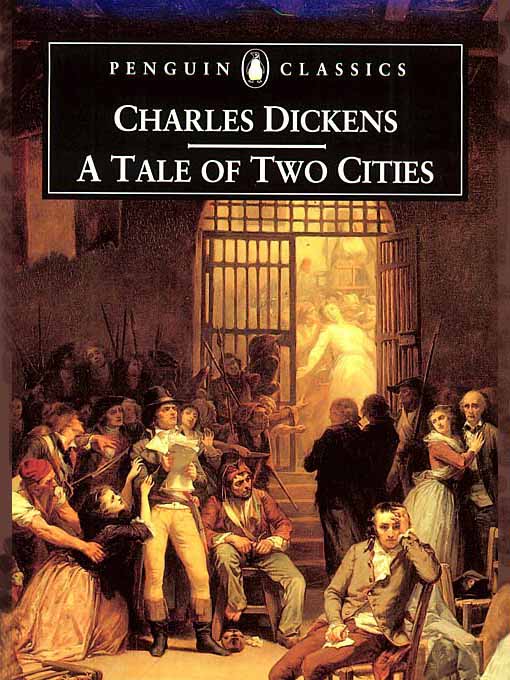
My Policeman cover

My Policeman
~ A Capsule Book Review by Allen Kopp ~

My Policeman, a novel by Bethan Roberts, is set mostly in 1957 in the seaside town of Brighton, England. Marion Taylor is an unmarried teacher of small children. There is a man she likes named Tom Burgess. She doesn’t understand Tom very well; she wonders why he is cool toward her and rather aloof. He is handsome, blond, athletic and well-built; he goes swimming in the sea every morning and he eventually teaches her to swim.

Tom is what might be called a straight-arrow type. As a police officer, he is interested in projecting an image of conventionality and respectability. Marion falls in love with him, while he remains blasé on the whole matter of courtship and marriage. She begins to suspect he is gay but believes that she can get him to change, if only he will marry her. Because marriage is what is expected of every young man and because he must project an image of respectability to the world, Tom marries Marion. We can see it’s a marriage that probably isn’t going to be a smashing success.

Tom meets a man thirteen years older than himself named Patrick Hazelwood. Patrick is worldly and sophisticated; he works as a curator in a museum and knows the world of art, music and books. He is also unabashedly gay, at a time in England when sexual activity between men was still a crime and punishable by confinement in prison.

Patrick and Tom begin a “discreet” relationship, although Tom, as a police constable, must be very careful that his “secret” is never revealed. Marion knows that Tom and Patrick are “friends” but doesn’t suspect (at first) the true nature of the relationship. She wants to believe that Tom, with her help, might be cured of his “affliction.” (None so blind as those who will not see.)

Patrick invites Tom to go on a trip with him to romantic Venice. While Tom thinks there is nothing wrong with the two of them going to Venice together, Marion, as Tom’s wife, doesn’t take it well; she is jealous and moved to commit an uncharitable act, to put it mildly. It is this trip to Venice that provides the catalyst for the novel’s tragic third act.

The novel alternates between first-person passages narrated first by Marion and then by Patrick. They are both besotted with Tom. While most of the action takes place in the late 1950s, some of the novel is set in the late 1990s, showing how these three characters change over forty years through the unique dynamic they share.

My Policeman espouses the themes of jealousy, guilt, and the stupidity of laws that govern human sexual behavior (the lengths to which these laws force people to go to conceal their true natures). It is a memorable, intelligent, adult story. It’s not a story I would recommend to my elderly mother but, then, she and I are tuned to completely different frequencies.

Copyright © 2021 by Allen Kopp   

Gender Ambiguity

Rita Hayworth
Gender Ambiguity
~ A Short Story by Allen Kopp ~

They sat in a semicircle in front of the television. Old black-and-white movies, they agreed, were the best thing to watch on TV. Not only were they clean, but they brought back memories of happier times.

“Rita Hayworth is certainly a lovely woman,” Ivy said.

Woman!” Jane said. “Don’t you know she’s really a man?”

“Rita Hayworth is a man? I don’t think so!”

“Hell yes, she’s a man! Everybody knows she’s a man!”

“That must have come as a surprise to Mr. Orson Welles,” Vernon said.

“He knew she was a man before he married her.”

“How do you know so much about it?” Ivy asked.

“I read those newspapers they sell at the supermarket checkout,” Jane said.

“Of course, that makes you an authority,” George said.

“I know what I see. If I see it in print, I believe it.”

“Haven’t you ever heard of being skeptical?”

“What’s that?”

Myrtle sat forward in her chair and pretended to burp her baby, a lifelike doll made of rubber. Everybody turned and looked at her.

“How is Baby Doe, Myrtle?” Ivy asked.

“He’s the best baby in the world,” Myrtle said.

“That’s because he’s not a real boy,” George said.

“Is he eating his carrots?”

“Oh, yes! He eats everything I give him!”

“We believe what we want to believe,” Vernon said with a roll of the eyes.

“Do you know today is my birthday?” Ivy asked.

“I don’t think so, dear,” Jane said. “I think your birthday is in December, isn’t it? Right before Christmas?”

“If I want today to be my birthday, then it’s my birthday.”

“How old are you?” George asked.

“You should never ask a lady her age,” Jane said.

“I’m as old as I want to be,” Ivy said. “If I want to be twenty-one today, then I’m twenty-one.”

“There you go!” Vernon said.

“I wouldn’t want to be twenty-one again and have to go through all that shit again,” George said. “When I was twenty-one, I was in jail.”

“What for?”

“They got me on a robbery charge but I was innocent. I was in the slammer for two and a half years.”

“I’m surprised they let you out,” Ivy said.

“I paid my debt.”

“I thought you said you were innocent.”

“I was.”

“Then why did you owe a debt?”

“Twenty-one was so long ago that I can’t even remember back that far,” Jane said.

“Wasn’t that about the time Lee surrendered to Grant?” George asked.

“It’s time for me to put Baby Doe down for his nap,” Myrtle said. She threw the baby by the arm behind the couch, hitting the wall with a thud. “He’ll be fine until his two o’clock feeding.”

“Whatever happened to your husband?” Ivy asked.

“He’s still in the war,” Myrtle said.

“What war is that?”

“Isn’t there always a war going on someplace?”

“When was the last time you saw him?”

“I don’t know. I think it’s been about fifty-seven years.”

“But what about Baby Doe? Are you saying that somebody besides your husband is Baby Doe’s father?”

“Of course, not! What kind of a tramp do you think I am?”

“She creates her own reality,” Vernon said, “which is not altogether a bad thing when you think about it.”

“And when my husband sees Baby Doe, he is going to be so happy!” Myrtle said, tears in her eyes.

“What is your husband’s name?” Jane said. “I haven’t ever met him.”

“His name is Percival, I think. Unless he’s changed it.”

“Why would he change it?”

“He’s impulsive that way.”

“Fifty-seven years is a long time for your man to be away at war.”

“Don’t I know it? I get so lonely for him sometimes I think I’m going to go mad! I don’t know what I’d do without my little Baby Doe.”

“My own children were never much of a comfort to me,” Jane said. “They never liked me very much.”

“That’s because they had a witch for a mother,” George said.

“And if you want to know the truth, I never liked them all that much, either.”

“How many children did you have, dear?” Myrtle asked.

“Seven.”

“That’s a lot for somebody who doesn’t like kids!” Vernon said.

“Where are they now?”

“I don’t know. Some are dead, I think. Some are in prison.”

“Hey!” Ivy said. “The movie with Rita Hayworth is over and another one is beginning.”

“Which movie is it?”

“This one stars Bette Davis.”

“Oh, I like her!”

“It’s the one where she steals Olivia de Havilland’s husband and drives her car through a fence and breaks her neck when the police are after her.”

In This Our Life,” Vernon said.

“What a memory you have for an old bastard!”

“We just watched it last week. Don’t you remember?”

“Is Bette Davis really a man?” Ivy asked.

“No, I believe she’s really a woman,” Jane said. “I’m not too sure about Olivia de Havilland, though.”

“I think Olivia is definitely a woman,” George said.

“I wouldn’t be too sure of that.”

“What is that movie where Lana Turner and John Garfield kill her husband?” Ivy asked.

The Postman Always Rings Twice.”

“Yes, that’s it. I’d like to see that one again.”

“Is Lana Turner really a man?”

“She started out as a man,” Jane said, “but she had a sex-change operation. Now she’s a woman.”

“Maybe she’ll go back to being a man again,” Vernon said.

“Anything goes with those motion picture people.”

“They get sick and die just like the rest of us,” Jane said. “Beauty fades and then what do you have?”

“Ugly.”

As if on cue, Nurse Tillinghast came into the room, rolling the medicine cart.

“Time for your meds, people,” she said in her voice that was like fingernails on a blackboard.

You take it,” George said. “I don’t want any.”

“Just what the doctor ordered,” Nurse Tillinghast said. “Take your meds and then you can get back to your movie.”

“We were just discussing whether Lana Turner is really a man,” George said. “We’re about evenly divided.”

“A lot of those movie actresses are really men, or so we’ve been told,” Ivy said.

“Everything is all illusion, you see,” Vernon said.

“I wish I had nothing better to do,” Nurse Tillinghast said, “than sit around all day and talk about which women might really be men.”

“Are you really a man? George asked.

“That’s for me to know and you to find out!” Nurse Tillinghast said. “To you, I’m just a sexless dispenser of meds. Now take your meds and let me get on with my rounds.”

The meds were handed out and swallowed and Nurse Tillinghast pushed the cart out of the room.

“What is that movie about a women’s prison where they have a cruel matron who shaves somebody’s head?” Jane asked.

Caged,” Vernon said.

“That’s it! Tillinghast looks just like the cruel matron in Caged.”

“The matron’s name is Evelyn.”

“That’s right. How do you remember all that stuff?”

“I’m having a really lucid day today. Tomorrow I might not remember a thing.”

“Come to think of it, I think Nurse Tillinghast really is a man,” George said. “She has a big nose and big hands.”

“That doesn’t mean anything,” Ivy said. “I think we should accept at face value all we see. That’s what God wants us to do.”

“How do you know what God wants?”

“I talk to Him all the time!”

“It’s all illusion,” Vernon said. “We create our own illusion. If you want to believe you’re talking to God, then you’re talking to God. If you want to believe that Bette Davis is really a man, then she’s a man.”

“Yes, isn’t it wonderful?”

Copyright © 2021 by Allen Kopp